
Optimal Cholesterol Ingredients & Drug Interactions
What is this page for?
First and foremost: checking Optimal Cholesterol against your medications. The heart of this page is the interaction checker and the full interaction report — how this product’s ingredients may interact with prescription and over-the-counter medicines you may be taking.
Around that, we add a pharmacist’s high-level view of the product as a whole — what’s inside, the evidence for its stated use, how transparent the label is, and what safety data exists — so you can see the full picture in one place. It’s educational information from our licensed clinical databases and the clinical staff at HelloPharmacist — not medical advice — and we don’t sell or endorse products. Our editorial policy
Optimal Cholesterol is a dietary supplement by Longevity Medical Clinic with 3 active ingredients. Its ingredients are commonly taken for inflammation and swelling, sinus and nasal congestion, digestion support.Based on those ingredients, 971 medications have a known interaction with it, the most serious rated moderate. The ingredients most likely to interact are Arjuna, Policosanol, Bromelain. Use the checker below to test your specific medication, or read the full HelloPharmacist Interaction Report.
Check Your Meds Against Optimal Cholesterol by Longevity Medical Clinic
Ask about any prescription or over-the-counter medication and we check it for interactions with Optimal Cholesterol by Longevity Medical Clinic — and tell you which ingredient is responsible.
AI summaries are generated from our interaction database for education only — always confirm with your pharmacist. How we use AI
Ask the Pharmacist
A licensed pharmacist will answer your question by email — free, usually within 24 hours.
Got it — thank you!
A licensed pharmacist will answer within 24 hours. Keep an eye on your email (worth checking spam, just in case).
HelloPharmacist Scorecard of Optimal Cholesterol by Longevity Medical Clinic
Our pharmacy team’s full take, with four database checks built into the cards below — a summary of what is known, not a grade of the product itself.
What’s inside
Full disclosure
Optimal Cholesterol contains three active ingredients: bromelain (an enzyme from pineapple), arjuna (also called Terminalia, a traditional Ayurvedic herb), and policosanol (a plant-derived alcohol mixture). The product also includes inactive ingredients—rice flour, maltodextrin, gelatin, and purified water—that serve as fillers and capsule material.
Does it work?
Strong evidence
The evidence for these ingredients is mixed and often limited. Bromelain has insufficient reliable evidence for the conditions listed in our data, including hay fever, burns, cancer, neuropathy, chronic vein problems, and diabetes.
Arjuna similarly shows insufficient evidence for the heart and metabolic conditions tracked here—obesity, high cholesterol, and high blood pressure. Policosanol is rated likely effective for intermittent claudication (leg pain from poor blood flow during walking), but has insufficient evidence for coronary heart disease and familial high cholesterol.
How safe is it?
Well-documented data
Bromelain is generally well tolerated in the short term, though long-term safety data is limited. Common side effects are diarrhea, flatulence, stomach upset, and headache; topical use may cause itching or hives.
In rare cases, it can trigger allergic reactions, and if inhaled (occupationally), it may cause asthma-like symptoms and throat or eye irritation. Bromelain is not recommended during pregnancy or while breastfeeding due to insufficient safety data.
Arjuna is generally well tolerated short-term in studies, but long-term safety varies by product quality. No adverse effects are documented in our data.
It should be avoided during pregnancy and breastfeeding. Policosanol is usually well tolerated; a small number of trial participants experienced mild headache, dizziness, insomnia, or upset stomach.
Weight loss has been reported but is uncommon. Like the others, policosanol is not recommended in pregnancy or while breastfeeding.
Meds to double-check
Moderate interaction found
Before taking Optimal Cholesterol, double-check with your doctor or pharmacist if you use blood thinners or antiplatelet drugs (like warfarin, aspirin, or clopidogrel)—bromelain, arjuna, and policosanol all raise bleeding risk. If you take beta-blockers or other blood pressure medications, policosanol may lower your pressure too much.
Check if you take any medications metabolized by the liver enzymes CYP2D6, CYP2C9, or CYP3A4 (a huge list of common drugs)—arjuna may raise their levels. If you take diabetes medications or blood sugar drugs, both arjuna and policosanol may increase their effect.
Also check if you're on omeprazole (Prilosec) or chlorzoxazone—arjuna may raise their levels—or tetracycline antibiotics, which bromelain may affect.
The bottom line
Scorecard at a glanceFully disclosed formula with clinical evidence supporting its stated purpose. Moderate medication interactions have been identified, and safety information is well characterized.
This product may help with leg pain from poor circulation (policosanol) but lacks strong evidence for cholesterol or heart health. It carries Moderate interactions with blood thinners, blood pressure medications, diabetes drugs, and several liver enzymes that affect hundreds of common medications.
If you take any prescription or over-the-counter medications, talk with your doctor or pharmacist before starting—especially if you're on blood thinners, heart drugs, or diabetes treatments.
Educational only — not medical advice; always confirm with your pharmacist. Our editorial policy · How we use AI
Assessment coverage: 3 of 3 active ingredients matched to our full ingredient reviews (monographs). Based on the product label dated May 23, 2024.
This Scorecard evaluates available label information, ingredient evidence, and known medication-safety considerations. It does not independently verify product identity, purity, potency, contamination, or manufacturing quality. How these ratings are computed
General information
Key facts about Optimal Cholesterol, straight from the product label.
| Brand | Longevity Medical Clinic |
|---|---|
| Net contents | 120 Capsule(s) |
| Market status | On market |
| Date entered into DSLD | May 23, 2024 |
| DSLD ID | 308079 |
| Product type | Other Combinations |
| Supplement form | Capsule |
| Dietary claims / uses | All Other, Structure/Function |
| Intended target group(s) | Adult (18 - 50 Years) |
Everything in this section is reproduced from the manufacturer’s own product label — it’s the label speaking, not HelloPharmacist. We show it so you can see exactly what the maker states; we don’t verify or endorse those statements.
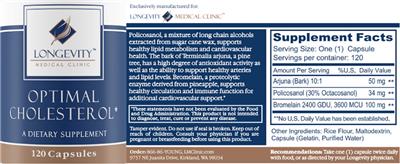
Supplement Facts
The label details for Optimal Cholesterol by Longevity Medical Clinic, sourced from the NIH Dietary Supplement Label Database.
Supplement Facts
| Ingredient | Amount | % DV |
|---|---|---|
| Bromelain | 100 mg | -- |
| Arjuna | 50 mg | -- |
| Policosanol | 34 mg | -- |
Other ingredients: Rice Flour, Maltodextrin, Gelatin, Water, Purified
Tap any ingredient to jump to its full detail below.
These statements are the manufacturer’s wording, reproduced from the product label — the label is saying it, not HelloPharmacist. We don’t verify or endorse them.
FDA Statement of Identity
A Dietary Supplement
Formula
Policosanol, a mixture of long chain alcohols extracted from sugar cane wax, supports healthy lipid metabolism and cardiovascular health. The bark of Terminalia arjuna, a pine tree, has a high degree of antioxidant activity as well as the ability to support healthy arteries and lipid levels. Bromelain, a proteolytic enzyme derived from pineapple, supports healthy circulation and immune function for additional cardiovascular support.
FDA Disclaimer Statement
These statements have not been evaluated by the Food and Drug Administration. This product is not intended to diagnose, treat, cure or prevent any disease.
Precautions
Tamper evident. Do not use if seal is broken.
Keep out of reach of children.
Consult your physician if you are pregnant or breastfeeding before using this product.
Suggested/Recommended/Usage/Directions
Recommendations: Take one (1) capsule twice daily with food, or as directed by your Longevity physician.
Is this label outdated? Report a formula or label change and our pharmacy team will review it.
Optimal Cholesterol by Longevity Medical Clinic label
The label scan from the NIH Dietary Supplement Label Database. Tap to enlarge.
Label images are published by the NIH Dietary Supplement Label Database for the version of this product on file. Always read your actual product label.
View the full label (PDF)The Ingredients in Optimal Cholesterol by Longevity Medical Clinic
These are the 3 active ingredients this product is made of. Select any to open its full monograph.
Serving size1 Capsule(s) Dosage formCapsule Servings per container120 Amounts shown are per serving.
Most supplement products combine several ingredients, and a medication can interact with the product through any one of them. Each ingredient below shows whether it has known drug interactions.
Bromelain
Interacts with141 drugs
Bromelain is a group of protein-digesting enzymes from pineapple that people take mainly for inflammation, swelling, and sinus problems. Some early st...
Bromelain monograph & interactionsArjuna
Interacts with935 drugs
Terminalia is a group of traditional Ayurvedic tree species (most notably Terminalia arjuna) used for heart, digestive, and general wellness purposes....
Arjuna monograph & interactionsPolicosanol
Interacts with242 drugs
Policosanol is a mix of waxy alcohols (mostly octacosanol) made from sugar cane or other plant waxes, and it is often marketed as a natural way to low...
Policosanol monograph & interactionsOther (inactive) ingredients: Rice Flour, Maltodextrin, Gelatin, Water, Purified. These complete the product’s ingredient list but are not active constituents.
Optimal Cholesterol by Longevity Medical Clinic Drug Interactions
HelloPharmacist Interaction Report
Optimal Cholesterol by Longevity Medical Clinic does interact with medications, through its bromelain, arjuna, and policosanol content.
The most serious interactions are Moderate in severity and span three broad categories: blood thinners and antiplatelet drugs, enzymes that metabolize many medications, and blood pressure drugs.
Read the full breakdown — every affected drug type, severity by severity
Bromelain may increase bleeding risk if you're taking blood thinners (anticoagulants) or antiplatelet medications like aspirin. It may also theoretically raise levels of tetracycline antibiotics, though one study in healthy adults found no meaningful change.
Arjuna raises similar bleeding concerns with blood thinners and antiplatelet drugs. More significantly, arjuna inhibits three major liver enzymes—CYP2D6, CYP2C9, and CYP3A4—that break down hundreds of common medications, meaning those drugs could build up to higher levels in your blood.
Arjuna may also increase the effect of blood sugar medications and specific drugs like omeprazole (Prilosec) and chlorzoxazone (a muscle relaxant).
Policosanol lowers blood pressure and may add to the effect of beta-blockers (including propranolol) and nitroprusside, raising the risk of blood pressure dropping too low. It also has antiplatelet effects, increasing bleeding risk with warfarin and other blood thinners.
Like arjuna, policosanol may boost the effect of blood sugar medications. Altogether, these interactions span 970 individual medications.
Before starting this product, check your exact medications with your doctor or pharmacist using the search tool on this page.
Check your own medications below · Editorial policy · How we use AI
Want to check YOUR meds against Optimal Cholesterol?
Ask about interactions with your drugs in plain English — “Can I take it with lisinopril?” — and we find you the answer in seconds, ingredient by ingredient.
Go to the checkerIngredients driving the most interactions
Individual Drug Interactions
The ingredients in Optimal Cholesterol interact with 971 drugs. Click any drug to see the details.
3 of the 3 ingredients in Optimal Cholesterol interact with drugs. Each result below shows which ingredient is responsible. Arjuna Policosanol Bromelain
Ado-trastuzumab EmtansineKadcyla
How Ado-trastuzumab Emtansine interacts with Optimal Cholesterol — through 1 ingredient. Tap an ingredient for the detail:
ArjunaCytochrome P450 3a4 (cyp3a4) Substrates Moderate
Interaction Summary
Theoretically, use of Terminalia arjuna may increase the levels and clinical effects of CYP3A4 substrates.
Read the full Arjuna + Ado-trastuzumab Emtansine interactionAbciximabReoPro
How Abciximab interacts with Optimal Cholesterol — through 3 ingredients. Tap an ingredient for the detail:
BromelainAnticoagulant/antiplatelet Drugs Moderate
Interaction Summary
Bromelain may have antiplatelet effects and may increase the risk of bleeding if used with anticoagulant or antiplatelet drugs.
Read the full Bromelain + Abciximab interactionArjunaAnticoagulant/antiplatelet Drugs Moderate
Interaction Summary
Theoretically, concomitant use of Terminalia arjuna with anticoagulant or antiplatelet drugs may increase the risk of bleeding in some patients.
Read the full Arjuna + Abciximab interactionPolicosanolAnticoagulant/antiplatelet Drugs Moderate
Interaction Summary
Theoretically, taking policosanol with other antiplatelet or anticoagulant drugs might increase the risk of bruising and bleeding.
Read the full Policosanol + Abciximab interactionAbemaciclibVerzenio
How Abemaciclib interacts with Optimal Cholesterol — through 1 ingredient. Tap an ingredient for the detail:
ArjunaCytochrome P450 3a4 (cyp3a4) Substrates Moderate
Interaction Summary
Theoretically, use of Terminalia arjuna may increase the levels and clinical effects of CYP3A4 substrates.
Read the full Arjuna + Abemaciclib interactionAbiraterone
How Abiraterone interacts with Optimal Cholesterol — through 1 ingredient. Tap an ingredient for the detail:
ArjunaCytochrome P450 3a4 (cyp3a4) Substrates Moderate
Interaction Summary
Theoretically, use of Terminalia arjuna may increase the levels and clinical effects of CYP3A4 substrates.
Read the full Arjuna + Abiraterone interactionAbiraterone AcetateYonsa, Zytiga
How Abiraterone Acetate interacts with Optimal Cholesterol — through 1 ingredient. Tap an ingredient for the detail:
ArjunaCytochrome P450 3a4 (cyp3a4) Substrates Moderate
Interaction Summary
Theoretically, use of Terminalia arjuna may increase the levels and clinical effects of CYP3A4 substrates.
Read the full Arjuna + Abiraterone Acetate interactionAbrocitinibCibinqo
How Abrocitinib interacts with Optimal Cholesterol — through 3 ingredients. Tap an ingredient for the detail:
PolicosanolAnticoagulant/antiplatelet Drugs Moderate
Interaction Summary
Theoretically, taking policosanol with other antiplatelet or anticoagulant drugs might increase the risk of bruising and bleeding.
Read the full Policosanol + Abrocitinib interactionArjunaAnticoagulant/antiplatelet Drugs, Cytochrome P450 2c9 (cyp2c9) Substrates Moderate
Interaction Summary
Theoretically, concomitant use of Terminalia arjuna with anticoagulant or antiplatelet drugs may increase the risk of bleeding in some patients.
Read the full Arjuna + Abrocitinib interactionBromelainAnticoagulant/antiplatelet Drugs Moderate
Interaction Summary
Bromelain may have antiplatelet effects and may increase the risk of bleeding if used with anticoagulant or antiplatelet drugs.
Read the full Bromelain + Abrocitinib interactionAcalabrutinibCalquence
How Acalabrutinib interacts with Optimal Cholesterol — through 1 ingredient. Tap an ingredient for the detail:
ArjunaCytochrome P450 3a4 (cyp3a4) Substrates Moderate
Interaction Summary
Theoretically, use of Terminalia arjuna may increase the levels and clinical effects of CYP3A4 substrates.
Read the full Arjuna + Acalabrutinib interactionAcarboseGlucobay, Prandase, Precose
How Acarbose interacts with Optimal Cholesterol — through 2 ingredients. Tap an ingredient for the detail:
PolicosanolAntidiabetes Drugs Moderate
Interaction Summary
Theoretically, policosanol might have additive effects with antidiabetes drugs and increase the risk of hypoglycemia.
Read the full Policosanol + Acarbose interactionArjunaAntidiabetes Drugs Moderate
Interaction Summary
Theoretically, concomitant use of Terminalia bellirica or Terminalia chebula with antidiabetes drugs could affect blood sugar control and increase the risk of hypoglycemia.
Read the full Arjuna + Acarbose interactionAcebutololRhotral, Sectral
How Acebutolol interacts with Optimal Cholesterol — through 1 ingredient. Tap an ingredient for the detail:
PolicosanolBeta-blockers Moderate
Interaction Summary
Concomitant use of policosanol with beta-blockers can cause additive blood pressure-lowering effects.
Read the full Policosanol + Acebutolol interactionAcenocoumarolSintrom
How Acenocoumarol interacts with Optimal Cholesterol — through 3 ingredients. Tap an ingredient for the detail:
PolicosanolAnticoagulant/antiplatelet Drugs Moderate
Interaction Summary
Theoretically, taking policosanol with other antiplatelet or anticoagulant drugs might increase the risk of bruising and bleeding.
Read the full Policosanol + Acenocoumarol interactionBromelainAnticoagulant/antiplatelet Drugs Moderate
Interaction Summary
Bromelain may have antiplatelet effects and may increase the risk of bleeding if used with anticoagulant or antiplatelet drugs.
Read the full Bromelain + Acenocoumarol interactionArjunaAnticoagulant/antiplatelet Drugs Moderate
Interaction Summary
Theoretically, concomitant use of Terminalia arjuna with anticoagulant or antiplatelet drugs may increase the risk of bleeding in some patients.
Read the full Arjuna + Acenocoumarol interactionAcetaminophen, AspirinGemnisyn
How Acetaminophen, Aspirin interacts with Optimal Cholesterol — through 3 ingredients. Tap an ingredient for the detail:
ArjunaAnticoagulant/antiplatelet Drugs Moderate
Interaction Summary
Theoretically, concomitant use of Terminalia arjuna with anticoagulant or antiplatelet drugs may increase the risk of bleeding in some patients.
Read the full Arjuna + Acetaminophen, Aspirin interactionPolicosanolAnticoagulant/antiplatelet Drugs Moderate
Interaction Summary
Theoretically, taking policosanol with other antiplatelet or anticoagulant drugs might increase the risk of bruising and bleeding.
Read the full Policosanol + Acetaminophen, Aspirin interactionBromelainAnticoagulant/antiplatelet Drugs Moderate
Interaction Summary
Bromelain may have antiplatelet effects and may increase the risk of bleeding if used with anticoagulant or antiplatelet drugs.
Read the full Bromelain + Acetaminophen, Aspirin interactionAcetaminophen, Aspirin, CaffeineExcedrin, Excedrin Extra Strength, Excedrin Migraine
How Acetaminophen, Aspirin, Caffeine interacts with Optimal Cholesterol — through 3 ingredients. Tap an ingredient for the detail:
BromelainAnticoagulant/antiplatelet Drugs Moderate
Interaction Summary
Bromelain may have antiplatelet effects and may increase the risk of bleeding if used with anticoagulant or antiplatelet drugs.
Read the full Bromelain + Acetaminophen, Aspirin, Caffeine interactionArjunaAnticoagulant/antiplatelet Drugs, Cytochrome P450 3a4 (cyp3a4) Substrates Moderate
Interaction Summary
Theoretically, concomitant use of Terminalia arjuna with anticoagulant or antiplatelet drugs may increase the risk of bleeding in some patients.
Read the full Arjuna + Acetaminophen, Aspirin, Caffeine interactionPolicosanolAnticoagulant/antiplatelet Drugs Moderate
Interaction Summary
Theoretically, taking policosanol with other antiplatelet or anticoagulant drugs might increase the risk of bruising and bleeding.
Read the full Policosanol + Acetaminophen, Aspirin, Caffeine interactionAcetaminophen, Butalbital, CaffeineEsgic, Esgic Plus, Fiogesic, Fioricet, Repan, Tecnal +1 more
How Acetaminophen, Butalbital, Caffeine interacts with Optimal Cholesterol — through 1 ingredient. Tap an ingredient for the detail:
ArjunaCytochrome P450 3a4 (cyp3a4) Substrates Moderate
Interaction Summary
Theoretically, use of Terminalia arjuna may increase the levels and clinical effects of CYP3A4 substrates.
Read the full Arjuna + Acetaminophen, Butalbital, Caffeine interactionAcetaminophen, Butalbital, Caffeine, CodeineEsgic with Codeine, Fioricet w/ Codeine
How Acetaminophen, Butalbital, Caffeine, Codeine interacts with Optimal Cholesterol — through 1 ingredient. Tap an ingredient for the detail:
ArjunaCytochrome P450 3a4 (cyp3a4) Substrates, Cytochrome P450 2d6 (cyp2d6) Substrates Moderate
Interaction Summary
Theoretically, use of Terminalia arjuna may increase the levels and clinical effects of CYP3A4 substrates.
Read the full Arjuna + Acetaminophen, Butalbital, Caffeine, Codeine interactionAcetaminophen, Butalbital, CodeineBancap w/ Codeine
How Acetaminophen, Butalbital, Codeine interacts with Optimal Cholesterol — through 1 ingredient. Tap an ingredient for the detail:
ArjunaCytochrome P450 2d6 (cyp2d6) Substrates Moderate
Interaction Summary
Theoretically, use of Terminalia arjuna may increase the levels and clinical effects of CYP2D6 substrates.
Read the full Arjuna + Acetaminophen, Butalbital, Codeine interactionAcetaminophen, Butalbital, Codeine PhosphatePhrenilin #3
How Acetaminophen, Butalbital, Codeine Phosphate interacts with Optimal Cholesterol — through 1 ingredient. Tap an ingredient for the detail:
ArjunaCytochrome P450 2d6 (cyp2d6) Substrates Moderate
Interaction Summary
Theoretically, use of Terminalia arjuna may increase the levels and clinical effects of CYP2D6 substrates.
Read the full Arjuna + Acetaminophen, Butalbital, Codeine Phosphate interactionAcetaminophen, Caffeine, Chlorpheniramine, Hydrocodone, PhenylephrineHycomine Compound
How Acetaminophen, Caffeine, Chlorpheniramine, Hydrocodone, Phenylephrine interacts with Optimal Cholesterol — through 1 ingredient. Tap an ingredient for the detail:
ArjunaCytochrome P450 2d6 (cyp2d6) Substrates, Cytochrome P450 3a4 (cyp3a4) Substrates Moderate
Interaction Summary
Theoretically, use of Terminalia arjuna may increase the levels and clinical effects of CYP2D6 substrates.
Read the full Arjuna + Acetaminophen, Caffeine, Chlorpheniramine, Hydrocodone, Phenylephrine interactionAcetaminophen, Caffeine, CodeineGesic C15, Gesic C30, Gesic C8, Lenoltec 1, Lenoltec 2, Lenoltec 3 +1 more
How Acetaminophen, Caffeine, Codeine interacts with Optimal Cholesterol — through 1 ingredient. Tap an ingredient for the detail:
ArjunaCytochrome P450 3a4 (cyp3a4) Substrates, Cytochrome P450 2d6 (cyp2d6) Substrates Moderate
Interaction Summary
Theoretically, use of Terminalia arjuna may increase the levels and clinical effects of CYP3A4 substrates.
Read the full Arjuna + Acetaminophen, Caffeine, Codeine interactionAcetaminophen, Caffeine, Codeine, SalicylamideCodalan No.1, Codalan No.2, Codalan No.3
How Acetaminophen, Caffeine, Codeine, Salicylamide interacts with Optimal Cholesterol — through 1 ingredient. Tap an ingredient for the detail:
ArjunaCytochrome P450 2d6 (cyp2d6) Substrates, Cytochrome P450 3a4 (cyp3a4) Substrates Moderate
Interaction Summary
Theoretically, use of Terminalia arjuna may increase the levels and clinical effects of CYP2D6 substrates.
Read the full Arjuna + Acetaminophen, Caffeine, Codeine, Salicylamide interactionAcetaminophen, Caffeine, DihydrocodeineDHC Plus, Panlor DC, Panlor SS
How Acetaminophen, Caffeine, Dihydrocodeine interacts with Optimal Cholesterol — through 1 ingredient. Tap an ingredient for the detail:
ArjunaCytochrome P450 3a4 (cyp3a4) Substrates, Cytochrome P450 2d6 (cyp2d6) Substrates Moderate
Interaction Summary
Theoretically, use of Terminalia arjuna may increase the levels and clinical effects of CYP3A4 substrates.
Read the full Arjuna + Acetaminophen, Caffeine, Dihydrocodeine interactionAcetaminophen, Caffeine, IsomethepteneMigralam
How Acetaminophen, Caffeine, Isometheptene interacts with Optimal Cholesterol — through 1 ingredient. Tap an ingredient for the detail:
ArjunaCytochrome P450 3a4 (cyp3a4) Substrates Moderate
Interaction Summary
Theoretically, use of Terminalia arjuna may increase the levels and clinical effects of CYP3A4 substrates.
Read the full Arjuna + Acetaminophen, Caffeine, Isometheptene interactionAcetaminophen, Caffeine, PyrilamineMidol Max Strength Menstrual
How Acetaminophen, Caffeine, Pyrilamine interacts with Optimal Cholesterol — through 1 ingredient. Tap an ingredient for the detail:
ArjunaCytochrome P450 3a4 (cyp3a4) Substrates Moderate
Interaction Summary
Theoretically, use of Terminalia arjuna may increase the levels and clinical effects of CYP3A4 substrates.
Read the full Arjuna + Acetaminophen, Caffeine, Pyrilamine interactionAcetaminophen, Chlorpheniramine Maleate, Dextromethorphan HbrVicks Formula 44M Cough, Cold & Flu Relief
How Acetaminophen, Chlorpheniramine Maleate, Dextromethorphan Hbr interacts with Optimal Cholesterol — through 1 ingredient. Tap an ingredient for the detail:
ArjunaCytochrome P450 2d6 (cyp2d6) Substrates, Cytochrome P450 3a4 (cyp3a4) Substrates Moderate
Interaction Summary
Theoretically, use of Terminalia arjuna may increase the levels and clinical effects of CYP2D6 substrates.
Read the full Arjuna + Acetaminophen, Chlorpheniramine Maleate, Dextromethorphan Hbr interactionAcetaminophen, Chlorpheniramine, Codeine, PhenylephrineColrex
How Acetaminophen, Chlorpheniramine, Codeine, Phenylephrine interacts with Optimal Cholesterol — through 1 ingredient. Tap an ingredient for the detail:
ArjunaCytochrome P450 2d6 (cyp2d6) Substrates, Cytochrome P450 3a4 (cyp3a4) Substrates Moderate
Interaction Summary
Theoretically, use of Terminalia arjuna may increase the levels and clinical effects of CYP2D6 substrates.
Read the full Arjuna + Acetaminophen, Chlorpheniramine, Codeine, Phenylephrine interactionAcetaminophen, Chlorpheniramine, DextromethorphanCoricidin II Extra Strength Cold and Flu
How Acetaminophen, Chlorpheniramine, Dextromethorphan interacts with Optimal Cholesterol — through 1 ingredient. Tap an ingredient for the detail:
ArjunaCytochrome P450 2d6 (cyp2d6) Substrates, Cytochrome P450 3a4 (cyp3a4) Substrates Moderate
Interaction Summary
Theoretically, use of Terminalia arjuna may increase the levels and clinical effects of CYP2D6 substrates.
Read the full Arjuna + Acetaminophen, Chlorpheniramine, Dextromethorphan interactionAcetaminophen, Chlorpheniramine, Dextromethorphan HydrobromideCoricidin HBP Maximum Strength Flu
How Acetaminophen, Chlorpheniramine, Dextromethorphan Hydrobromide interacts with Optimal Cholesterol — through 1 ingredient. Tap an ingredient for the detail:
ArjunaCytochrome P450 3a4 (cyp3a4) Substrates, Cytochrome P450 2d6 (cyp2d6) Substrates Moderate
Interaction Summary
Theoretically, use of Terminalia arjuna may increase the levels and clinical effects of CYP3A4 substrates.
Read the full Arjuna + Acetaminophen, Chlorpheniramine, Dextromethorphan Hydrobromide interactionAcetaminophen, Chlorpheniramine, Dextromethorphan, PhenylpropanolamineMulti Symptom Cold Relief
How Acetaminophen, Chlorpheniramine, Dextromethorphan, Phenylpropanolamine interacts with Optimal Cholesterol — through 1 ingredient. Tap an ingredient for the detail:
ArjunaCytochrome P450 2d6 (cyp2d6) Substrates, Cytochrome P450 3a4 (cyp3a4) Substrates Moderate
Interaction Summary
Theoretically, use of Terminalia arjuna may increase the levels and clinical effects of CYP2D6 substrates.
Read the full Arjuna + Acetaminophen, Chlorpheniramine, Dextromethorphan, Phenylpropanolamine interactionAcetaminophen, Chlorpheniramine, Dextromethorphan, PseudoephedrineChildren's Tylenol Cold Plus Cough, Tylenol Cold Ex Strength
How Acetaminophen, Chlorpheniramine, Dextromethorphan, Pseudoephedrine interacts with Optimal Cholesterol — through 1 ingredient. Tap an ingredient for the detail:
ArjunaCytochrome P450 3a4 (cyp3a4) Substrates, Cytochrome P450 2d6 (cyp2d6) Substrates Moderate
Interaction Summary
Theoretically, use of Terminalia arjuna may increase the levels and clinical effects of CYP3A4 substrates.
Read the full Arjuna + Acetaminophen, Chlorpheniramine, Dextromethorphan, Pseudoephedrine interactionAcetaminophen, Chlorpheniramine, Guaifenesin, Phenylephrine, SalicylamideRhinogesic GG
How Acetaminophen, Chlorpheniramine, Guaifenesin, Phenylephrine, Salicylamide interacts with Optimal Cholesterol — through 1 ingredient. Tap an ingredient for the detail:
ArjunaCytochrome P450 3a4 (cyp3a4) Substrates Moderate
Interaction Summary
Theoretically, use of Terminalia arjuna may increase the levels and clinical effects of CYP3A4 substrates.
Read the full Arjuna + Acetaminophen, Chlorpheniramine, Guaifenesin, Phenylephrine, Salicylamide interactionAcetaminophen, Chlorpheniramine, PhenylephrineAlka-Seltzer PLUS, Histex SR, Protid
How Acetaminophen, Chlorpheniramine, Phenylephrine interacts with Optimal Cholesterol — through 1 ingredient. Tap an ingredient for the detail:
ArjunaCytochrome P450 3a4 (cyp3a4) Substrates Moderate
Interaction Summary
Theoretically, use of Terminalia arjuna may increase the levels and clinical effects of CYP3A4 substrates.
Read the full Arjuna + Acetaminophen, Chlorpheniramine, Phenylephrine interactionEach ingredient & the kinds of drugs it affects
For each ingredient in Optimal Cholesterol with known interactions, here are the types of medications they can affect. Open any type for the detail — or search your exact drug in the checker above.
Arjuna
Anticoagulant/Antiplatelet Drugs
Theoretically, concomitant use of Terminalia arjuna with anticoagulant or antiplatelet drugs may increase the risk of bleeding in some patients.
In vitro, Terminalia arjuna bark extract inhibits platelet aggregation, decreases platelet activation, and shows antithrombotic properties.
Antidiabetes Drugs
Theoretically, concomitant use of Terminalia bellirica or Terminalia chebula with antidiabetes drugs could affect blood sugar control and increase the risk of hypoglycemia.
Animal and in vitro research shows that Terminalia bellirica and Terminalia chebula fruit and seed extract have hypoglycemic effects.
Chlorzoxazone (Parafon Forte, Paraflex)
Theoretically, use of Terminalia chebula may increase the risk of adverse effects from chlorzoxazone.
Animal research shows that enteral administration of Terminalia chebula for 15 days prior to administration of chlorzoxazone increases blood levels of chlorzoxazone and decreases chlorzoxazone clearance. It is speculated that Terminalia chebula reduces the metabolism of chlorzoxazone by inhibiting cytochrome P450 2E1.
Cytochrome P450 2C9 (Cyp2C9) Substrates
Theoretically, use of Terminalia arjuna may increase the levels and clinical effects of CYP2C9 substrates.
In vitro research shows that Terminalia arjuna extract inhibits CYP2C9 enzymes and reduces CYP2C9 substrate metabolism.
Cytochrome P450 2D6 (Cyp2D6) Substrates
Theoretically, use of Terminalia arjuna may increase the levels and clinical effects of CYP2D6 substrates.
In vitro research shows that Terminalia arjuna extract inhibits CYP2D6 enzymes and reduces CYP2D6 substrate metabolism.
Cytochrome P450 3A4 (Cyp3A4) Substrates
Theoretically, use of Terminalia arjuna may increase the levels and clinical effects of CYP3A4 substrates.
In vitro research shows that Terminalia arjuna extract inhibits CYP3A4 enzymes and reduces CYP3A4 substrate metabolism.
Omeprazole (Prilosec)
Theoretically, use of Terminalia chebula may increase the risk of adverse effects from omeprazole.
Animal research shows that enteral administration of Terminalia chebula for 15 days prior to administration of omeprazole increases blood levels of omeprazole and decreases omeprazole clearance. It is speculated that Terminalia chebula reduces the metabolism of omeprazole by inhibiting cytochrome P450 2C19.
Policosanol
Anticoagulant/Antiplatelet Drugs
Theoretically, taking policosanol with other antiplatelet or anticoagulant drugs might increase the risk of bruising and bleeding.
Some clinical research shows that taking policosanol 10-50 mg daily for 7-15 days can inhibit platelet aggregation in healthy patients. Although, one clinical trial shows that taking policosanol 10 mg twice daily for 2 weeks prior to warfarin dosing does not affect warfarin pharmacokinetics or warfarin response. Furthermore, a study in patients undergoing percutaneous coronary intervention with a drug-eluting stent found that taking policosanol 40 mg plus clopidogrel and aspirin daily for 30 days modestly reduced the risk for minor bleeding events when compared with taking clopidogrel and aspirin alone. Until more is known, use with caution.
Antidiabetes Drugs
Theoretically, policosanol might have additive effects with antidiabetes drugs and increase the risk of hypoglycemia.
Clinical research shows that policosanol can lower blood glucose levels.
Beta-Blockers
Concomitant use of policosanol with beta-blockers can cause additive blood pressure-lowering effects.
Clinical research shows that policosanol 5 mg daily can have additive blood pressure-lowering effects in patients with hypertension who are taking beta-blockers. Also, animal research shows that policosanol can increase the blood-pressure lowering effects of propranolol.
Nitroprusside (Nitropress)
Theoretically, concomitant use of policosanol with nitroprusside might cause additive blood pressure-lowering effects.
Animal research shows that taking policosanol along with nitroprusside can increase the blood pressure-lowering effects of nitroprusside.
Propranolol (Inderal)
Animal research shows that taking policosanol along with propranolol can increase the blood pressure-lowering effects of propranolol.
Warfarin (Coumadin)
Theoretically, taking policosanol with warfarin might increase the risk of bruising and bleeding.
Some clinical research shows that taking policosanol 10-50 mg daily for 7-15 days can inhibit platelet aggregation in healthy patients. However, one clinical trial shows that taking policosanol 10 mg twice daily for 2 weeks prior to warfarin dosing does not affect warfarin pharmacokinetics or warfarin response.
Bromelain
Anticoagulant/Antiplatelet Drugs
Bromelain may have antiplatelet effects and may increase the risk of bleeding if used with anticoagulant or antiplatelet drugs.
There is one case report of a patient experiencing minor bruising while taking bromelain with naproxen. Bromelain is thought to have antiplatelet activity. Whether this interaction is of concern with topical bromelain is unclear. Interference with coagulation of burn wounds has been reported in a patient receiving bromelain-based enzymatic debridement. However, observational research has found that topical bromelain debridement is not associated with increases or decreases in laboratory markers of coagulation when compared with surgical debridement.
Tetracycline Antibiotics
Theoretically, bromelain might increase levels of tetracycline antibiotics.
Laboratory research suggests that bromelain might increase the absorption of tetracycline antibiotics. However, a study in healthy adults reported no difference in tetracycline plasma levels when a 500 mg dose was taken with or without bromelain 80 mg.
Brand information
Manufacturer and brand details for Optimal Cholesterol, from the product label.
Longevity Medical Clinic
See all Longevity Medical Clinic products- Name
- Longevity Medical Clinic
- Street Address
- 9757 NE Juanita Drive
- City
- Kirkland
- State
- WA
- ZipCode
- 98034
- Phone Number
- 866-869-6864
- Web Address
- LMClinic.com
Optimal Cholesterol by Longevity Medical Clinic: Common Questions
Does Optimal Cholesterol by Longevity Medical Clinic interact with any medications?
How can one product interact with so many drugs?
Where does this information come from?
Can I take this if I'm pregnant or breastfeeding?
What is bromelain, and why is it in here?
Does arjuna really help with cholesterol and blood pressure?
What is policosanol good for?
What are the most common side effects?
Is this safe to take long-term?
Written and reviewed by the HelloPharmacist editorial staff. Our editorial policy
Not sure if Optimal Cholesterol is safe with your meds?
Our pharmacists answer your medication & supplement questions — free.
Label information is sourced from the NIH Dietary Supplement Label Database and reflects the product version on file; always read your actual product label. This page is for education only and is not a substitute for professional medical advice. Confirm with your pharmacist or doctor before combining supplements and medications.
The Full Monographs Behind Optimal Cholesterol’s Ingredients
Every ingredient we hold a full HelloPharmacist monograph for — uses, evidence, safety, and the complete interaction list.
Bromelain
Interacts with 141 drugsBromelain is a group of protein-digesting enzymes from pineapple that people take mainly for inflammation, swelling, and sinus problems. Some early studies are promising, but the overall evi...
Read the full Bromelain monograph → Herb & supplement monographTerminalia
Interacts with 935 drugsTerminalia is a group of traditional Ayurvedic tree species (most notably Terminalia arjuna) used for heart, digestive, and general wellness purposes. Some small studies suggest possible ben...
Read the full Terminalia monograph → Herb & supplement monographPolicosanol
Interacts with 242 drugsPolicosanol is a mix of waxy alcohols (mostly octacosanol) made from sugar cane or other plant waxes, and it is often marketed as a natural way to lower cholesterol. Early studies from Cuba...
Read the full Policosanol monograph →Sources & How We Checked
Optimal Cholesterol's label data comes from the NIH Dietary Supplement Label Database; the ingredient interaction data is from the Natural Medicines database, reviewed by our pharmacists.
- NIH Dietary Supplement Label Database (DSLD) — The official product label on file for this supplement.
- Natural Medicines (Therapeutic Research Center) — Evidence-graded clinical reference behind the ingredient interaction data.
Content is written and reviewed by licensed HelloPharmacist pharmacists. See our data sources and editorial standards for how this information is built and checked.
The 43 references behind this product’s interaction data
Every citation that drives the interaction findings for this product’s ingredients, from the evidence-graded Natural Medicines (TRC Healthcare) database. Open an ingredient to browse its citations — links open the study on PubMed or the publisher’s site.
Bromelain 19 references
- Nettis E, Napoli G, Ferrannini A, Tursi A. IgE-mediated allergy to bromelain. Allergy 2001;56:257-8. PubMed
- Taussig SJ, Batkin S. Bromelain, the enzyme complex of pineapple (Ananas comosus) and its clinical application. An update. J Ethnopharmacol 1988;22:191-203.. PubMed
- Bradbrook ID, Morrison PJ, Rogers HJ. The effect of bromelain on the absorption of orally administered tetracycline. Br J Clin Pharmacol 1978;6:552-4. PubMed
- Bush TM, Rayburn KS, Holloway SW, et al. Adverse interactions between herbal and dietary substances and prescription medications: a clinical survey. Altern Ther Health Med 2007;13:30-5.
- Brien S, Lewith G, Walker AF, et al. Bromelain as an adjunctive treatment for moderate-to-severe osteoarthritis of the knee: a randomized placebo-controlled pilot study. QJM 2006;99:841-50. PubMed
- Mori S, Ojima Y, Hirose T, et al. The clinical effect of proteolytic enzyme containing bromelain and trypsin on urinary tract infection evaluated by double blind method. Acta Obstet Gynaecol Jpn 1972;19:147-53.
- Glaser D, Hilberg T. The influence of bromelain on platelet count and platelet activity in vitro. Platelets 2006;17:37-41. PubMed
- Heinicke R M, van der Wal L, Yokoyama M. Effect of bromelain (Ananase) on human platelet aggregation. Experientia 1972;28:844-5. PubMed
- Gailhofer, G., Wilders-Truschnig, M., Smolle, J., and Ludvan, M. Asthma caused by bromelain: an occupational allergy. Clin Allergy 1988;18(5):445-450. PubMed
- Mattei, O., Fabri, G., and Farina, G. [Occupational health experience regarding four cases of asthma due to bromelain (author's transl)]. Medicina del Lavoro 1979;70(5):404-409.
- Galleguillos, F. and Rodriguez, J. C. Asthma caused by bromelin inhalation. Clin Allergy 1978;8(1):21-24. PubMed
- Perez-Camo I, Quirce S, Duran MA, and et al. Latex allergy: evidence of cross-reactivity with papain and bromelain [abstract]. Allergy 1996;51(suppl 31):48.
- Martin GJ, Ehrenreich J, and Asbell N. Bromelain: pineapple proteases with anti-edema activity. Exp Med Surg 1962;20:227-247.
- Kasemsuk T, Saengpetch N, Sibmooh N, Unchern S. Improved WOMAC score following 16-week treatment with bromelain for knee osteoarthritis. Clin Rheumatol. 2016 Oct;35(10):2531-40. PubMed
- Kutlu Ö, DemirbaS A, Elmas ÖF, Güvenç U, Metin A. Fixed drug eruption: a new side effect of bromelain. Contact Dermatitis 2020. Online ahead of print. PubMed
- Shoham Y, Shapira E, Haik J, et al. Bromelain-based enzymatic debridement of chronic wounds: Results of a multicentre randomized controlled trial. Wound Repair Regen 2021;29(6):899-907. PubMed
- Pfister P, Garcia Wendel PD, Kim BS, et al. Coagulation side effects of enzymatic debridement in burned patients. Burns 2022. PubMed
- Hasham S, Riyat H, Fletcher A, O'Boyle CP, Alexander S. To bleed or not to bleed? Case series and discussion of haemorrhage risk with enzymatic debridement in burn injuries. Scars Burn Heal 2023;9:20595131231168333. PubMed
- Leelakanok N, Petchsomrit A, Janurai T, Saechan C, Sunsandee N. Efficacy and safety of bromelain: A systematic review and meta-analysis. Nutr Health 2023. PubMed
Terminalia 9 references
- Sabu, M. C. and Kuttan, R. Anti-diabetic activity of medicinal plants and its relationship with their antioxidant property. J Ethnopharmacol. 2002;81(2):155-160. PubMed
- Rao, N. K. and Nammi, S. Antidiabetic and renoprotective effects of the chloroform extract of Terminalia chebula Retz. seeds in streptozotocin-induced diabetic rats. BMC.Complement Altern.Med 2006;6:17. PubMed
- Murali, Y. K., Anand, P., Tandon, V., Singh, R., Chandra, R., and Murthy, P. S. Long-term effects of Terminalia chebula Retz. on hyperglycemia and associated hyperlipidemia, tissue glycogen content and in vitro release of insulin in streptozotocin induced
- Senthilkumar, G. P. and Subramanian, S. Evaluation of antioxidant potential of Terminalia chebula fruits studies in streptozotocin-induced diabetic rats. Pharmaceutical Biology (Netherlands) 2007;45:511-518.
- Malik N, Dhawan V, Bahl A, Kaul D. Inihbitory effects of Terminalia arjuna on platelet activation in vitro in healthy subjects and patients with coronary artery disease. Platelets. 2009;20(3):183-1190.
- Varghese A, Savai J, Pandita N, Gaud RS. In vitro modulatory effects of Terminalia arjuna, arjunic acid, arjunetin, and arjungenin on CYP3A4, CYP2D6, and CYP2C9 enzyme activity in human liver microsomes. Toxicology Reports. 2015(2):806-16. PubMed
- Wu G, Dong Z, Dong J, et al. Effects of mongolian medicine Terminalia chebula Retz. on 6 CYP450 enzymes in rats. Int J Clin Exp Pathol 2020;13(12):3128-3138.
- Das A, Naveen J, Sreerama YN, Gnanesh Kumar BS, Baskaran V. Low-glycemic foods with wheat, barley and herbs (Terminalia chebula, Terminalia bellerica and Emblica officinalis) inhibit a-amylase, a-glucosidase and DPP-IV activity in high fat and low dose st
- Eltimamy M, Elshamarka M, Aboelsaad M, Sayed M, Moawad H. Effects of alcoholic extract of Terminalia Chebula dried fruit on blood biochemical profile in diabetic rats. J Diabetes Metab Disord 2022;21(1):159-170. PubMed
Policosanol 15 references
- Carbajal D, Arruzazabala ML, Valdes S, Mas R. Effect of policosanol on platelet aggregation and serum levels of arachidonic acid metabolites in healthy volunteers. Prostaglandins Leukot Essent Fatty Acids 1998;58:61-4.
- Arruzazabala ML, Valdes S, Mas R, et al. Comparative study of policosanol, aspirin and the combination therapy policosanol-aspirin on platelet aggregation in healthy volunteers. Pharmacol Res 1997;36:293-7. PubMed
- Valdes S, Arruzazabala ML, Fernandez L. Effect of policosanol on platelet aggregation in healthy volunteers. Int J Clin Pharmacol Res 1996;16:67-72.
- Greyling A, De Witt C, Oosthuizen W, Jerling JC. Effects of a policosanol supplement on serum lipid concentrations in hypercholesterolaemic and heterozygous familial hypercholesterolaemic subjects. Br J Nutr 2006;95:968-75. PubMed
- Abdul MI, Jiang X, Williams KM, et al. Pharmacokinetic and pharmacodynamic interactions of echinacea and policosanol with warfarin in healthy subjects. Br J Clin.Pharmacol. 2010;69:508-15. PubMed
- Molina, Cuevas, V, Arruzazabala, M. L., Carbajal, Quintana D., Mas, Ferreiro R., and Valdes, Garcia S. Effect of policosanol on arterial blood pressure in rats. Study of the pharmacological interaction with nifedipine and propranolol. Arch Med Res 1998;29
- Castano G, Fernandez L, Mas R, et al. Comparison of the efficacy, safety and tolerability of original policosanol versus other mixtures of higher aliphatic primary alcohols in patients with type II hypercholesterolemia. Int.J.Clin.Pharmacol.Res. 2002;22:5
- Arruzazabala, M. L., Carbajal, D., Mas, R., Valdes, S., and Molina, V. Pharmacological Interaction Between Policosanol and Nitroprusside in Rats. J Med Food 2001;4(2):67-70. PubMed
- Castano G, Mas R, Gamez R, et al. Concomitant use of policosanol and beta-blockers in older patients. Int J Clin Pharmacol.Res 2004;24:65-77.
- Francini-Pesenti F, Brocadello F, Beltramolli D, et al. Sugar cane policosanol failed to lower plasma cholesterol in primitive, diet-resistant hypercholesterolaemia: A double blind, controlled study. Complement Ther Med 2008;16:61-65. PubMed
- Castaño G, Fernández L, Mas R, Illnait J, Mesa M, Fernández JC. Comparison of the effects of policosanol and atorvastatin on lipid profile and platelet aggregation in patients with dyslipidaemia and type 2 diabetes mellitus. Clin Drug Investig. 2003;23(10 PubMed
- Fernandez L, Mas R, Illnait J, Fernandez JC. Policosanol: results of a postmarketing surveillance study of 27,879 patients. Curr Ther Res 1998;59(10):717-22. DOI
- Wang HY, Jiao QP, Chen SY, et al. Efficacy and safety of policosanol plus fenofibrate combination therapy in elderly patients with mixed dyslipidemia: A randomized, controlled clinical study. Am J Med Sci. 2018;356(3):254-261. PubMed
- Xu K, Liu X, Li Y, Wang Y, Zang H, Guo L, et al. Safety and efficacy of policosanol in patients with high on-treatment platelet reactivity after drug-eluting stent implantation: two-year follow-up results. Cardiovasc Ther. 2016 Oct;34(5):337-42. doi: 10.1 PubMed
- Li C, Ding Y, Si Q, Li K, Xu K. Multiple functions of policosanol in elderly patients with dyslipidemia. J Int Med Res. 2020;48(7):300060520936082. PubMed
Parts of this content are provided by the Therapeutic Research Center, LLC.
DISCLAIMER: Currently this does not check for drug-drug interactions. This is not an all-inclusive comprehensive list of potential interactions and is for informational purposes only. Not all interactions are known or well-reported in the scientific literature, and new interactions are continually being reported. Input is needed from a qualified healthcare provider including a pharmacist before starting any therapy. Application of clinical judgment is necessary.
© 2021 Therapeutic Research Center, LLC