
Probiotic + Prebiotic 60 Billion CFU Ingredients & Drug Interactions
by FREZZOR
What is this page for?
First and foremost: checking Probiotic + Prebiotic 60 Billion CFU against your medications. The heart of this page is the interaction checker and the full interaction report — how this product’s ingredients may interact with prescription and over-the-counter medicines you may be taking.
Around that, we add a pharmacist’s high-level view of the product as a whole — what’s inside, the evidence for its stated use, how transparent the label is, and what safety data exists — so you can see the full picture in one place. It’s educational information from our licensed clinical databases and the clinical staff at HelloPharmacist — not medical advice — and we don’t sell or endorse products. Our editorial policy
Probiotic + Prebiotic 60 Billion CFU is a dietary supplement by FREZZOR with 51 active ingredients. Its ingredients are commonly taken for constipation, irritable bowel syndrome (ibs), diarrhea.Based on those ingredients, 1,514 medications have a known interaction with it, the most serious rated major. The ingredients most likely to interact are Ginger, Grape Seed Extract, Beet. Use the checker below to test your specific medication, or read the full HelloPharmacist Interaction Report.
Check Your Meds Against Probiotic + Prebiotic 60 Billion CFU by FREZZOR
Ask about any prescription or over-the-counter medication and we check it for interactions with Probiotic + Prebiotic 60 Billion CFU by FREZZOR — and tell you which ingredient is responsible.
AI summaries are generated from our interaction database for education only — always confirm with your pharmacist. How we use AI
Ask the Pharmacist
A licensed pharmacist will answer your question by email — free, usually within 24 hours.
Got it — thank you!
A licensed pharmacist will answer within 24 hours. Keep an eye on your email (worth checking spam, just in case).
HelloPharmacist Scorecard of Probiotic + Prebiotic 60 Billion CFU by FREZZOR
Our pharmacy team’s full take, with four database checks built into the cards below — a summary of what is known, not a grade of the product itself.
What’s inside
Low disclosure
This formula contains 51 total ingredients, including a proprietary probiotic blend and additional probiotic strains. The active ingredients are six species of live beneficial bacteria—Bacillus coagulans, Lactobacillus acidophilus, Bifidobacterium breve, Bifidobacterium longum, Bifidobacterium bifidum, and Lactobacillus gasseri—along with several plant-based ingredients: spirulina (blue-green algae), grape seed extract, pine bark extract, beet, onion, brown rice, broccoli (included twice), barley grass, alfalfa, asparagus, and fulvic acid.
We don't have interaction data on file for L. lactis, L. casei, L. paracasei, B. animalis lactis, or sweet potato. The product also contains inactive ingredients: cellulose and silicon dioxide (a flow agent).
Does it work?
Moderate evidence
The evidence for this product's benefits is mixed and depends on the ingredient. Bacillus coagulans is possibly effective for constipation and irritable bowel syndrome (IBS) but has insufficient evidence for antibiotic-associated diarrhea.
L. acidophilus is possibly effective for IBS, Helicobacter pylori infection, antibiotic-associated diarrhea, and bacterial vaginosis. B. bifidum is possibly effective for IBS and respiratory tract infections.
Spirulina is possibly effective for high blood pressure but not well established for other uses. Grape seed extract is possibly effective for chronic venous insufficiency (poor circulation in the legs) but possibly ineffective for weight loss.
Pine bark extract is possibly effective for osteoarthritis, chronic venous insufficiency, and asthma. Beet is possibly effective for athletic performance and exercise-related muscle soreness.
Broccoli is possibly effective for colorectal cancer. Barley grass is likely effective for high cholesterol and coronary heart disease.
For most other ingredients and uses—including B. breve, B. longum, L. gasseri, onion, brown rice, alfalfa, asparagus, and fulvic acid—the evidence in our data is either not established or rated insufficient to make a clear recommendation.
How safe is it?
Well-documented data
Most of these ingredients are generally well tolerated in healthy adults, though safety data vary. The probiotic strains can cause mild gas, bloating, abdominal discomfort, diarrhea, and flatulence in some people, especially when first starting.
A serious but rare concern with all probiotics is that in critically ill, immunocompromised, or preterm infants, live organisms can occasionally cause bloodstream infection (bacteremia) or sepsis; this risk is very low in healthy people with intact immune systems. Spirulina may cause stomach upset, headache, nausea, or allergic reactions (including rare anaphylaxis) in sensitive individuals.
Grape seed extract can cause abdominal pain, diarrhea, dry mouth, and headache. Pine bark extract may cause dizziness, vertigo, or gastrointestinal complaints.
Beet commonly causes red or black stools (harmless) but rarely kidney damage at very high doses. Onion can cause heartburn and abdominal pain; allergic reactions are rare but possible.
Broccoli extracts may cause loose stools or cramping, especially at high doses. Barley grass contains gluten and may trigger allergic reactions in sensitive individuals.
Alfalfa can cause gas, bloating, and diarrhea; chronic use rarely triggers a lupus-like syndrome. Fulvic acid may cause diarrhea, headache, or sore throat.
During pregnancy, safety data are limited or advise against use for alfalfa, pine bark, and fulvic acid; grape seed extract is likely safe; most others lack sufficient data—talk with your doctor. Breastfeeding data are similarly sparse.
Meds to double-check
Major interaction found
Before taking this product, double-check with your pharmacist if you use blood thinners or antiplatelet drugs (warfarin, aspirin, clopidogrel, apixaban), diabetes medications, antibiotics, immunosuppressants (including cyclosporine), thyroid hormones, lithium, diuretics, or liver-metabolized drugs like certain heart or anxiety medications. The interaction between alfalfa and warfarin is the most serious.
If you must take antibiotics, separate them from this product by at least 2 hours to preserve the probiotics' viability.
The bottom line
Scorecard at a glanceFormula with limited ingredient disclosure with some supporting evidence for its stated purpose. Major medication interactions have been identified, and safety information is well characterized.
This is a comprehensive multi-ingredient probiotic plus prebiotic formula with potential benefits for digestive health, circulation, and general wellness. However, it contains many active ingredients with documented interactions, especially with blood thinners, diabetes medications, immunosuppressants, and antibiotics.
If you take any prescription medications—particularly warfarin, blood thinners, diabetes drugs, thyroid hormones, lithium, or antibiotics—check with your pharmacist before starting. Those with severely weakened immune systems or indwelling catheters should discuss probiotic safety with their doctor first.
Educational only — not medical advice; always confirm with your pharmacist. Our editorial policy · How we use AI
Assessment coverage: 33 of 51 active ingredients matched to our full ingredient reviews (monographs). Based on the product label dated Jan 23, 2025.
This Scorecard evaluates available label information, ingredient evidence, and known medication-safety considerations. It does not independently verify product identity, purity, potency, contamination, or manufacturing quality. How these ratings are computed
General information
Key facts about Probiotic + Prebiotic 60 Billion CFU, straight from the product label.
| Brand | FREZZOR |
|---|---|
| Barcode (UPC) | 631169121079 |
| Net contents | 90 Veg Capsule(s) |
| Market status | On market |
| Date entered into DSLD | Jan 23, 2025 |
| DSLD ID | 320808 |
| Product type | Other Combinations |
| Supplement form | Capsule |
| Dietary claims / uses | All Other, Structure/Function |
| Intended target group(s) | Adult (18 - 50 Years) |
Everything in this section is reproduced from the manufacturer’s own product label — it’s the label speaking, not HelloPharmacist. We show it so you can see exactly what the maker states; we don’t verify or endorse those statements.
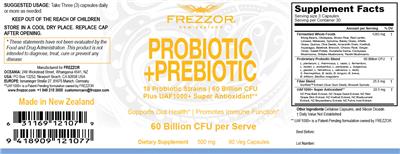
Supplement Facts
The label details for Probiotic + Prebiotic 60 Billion CFU by FREZZOR, sourced from the NIH Dietary Supplement Label Database.
Supplement Facts
Other ingredients: Cellulose, Silicon Dioxide
Tap any ingredient to jump to its full detail below.
These statements are the manufacturer’s wording, reproduced from the product label — the label is saying it, not HelloPharmacist. We don’t verify or endorse them.
Suggested/Recommended/Usage/Directions
Suggested usage: Take three (3) capsules daily or more as needed.
Precautions
Keep out of the reach of children
Storage
Store in a cool dry place. Replace cap after opening.
FDA Disclaimer Statement
These statements have not been evaluated by the Food and Drug Administration. This product is not intended to diagnose, treat, cure or prevent any disease.
Brand IP Statement(s)
UAF1000+ is a Patent-Pending formulation owned by FREZZOR
Formulation
Made in New Zealand
Supports gut health Promotes immune function
Formula
18 probiotic strains 60 billion CFU Plus UAF1000+ Super Antioxidant 60 billion CFU per serve 500 mg
FDA Statement of Identity
Dietary Supplement
General Statements
9 418909 121077
Is this label outdated? Report a formula or label change and our pharmacy team will review it.
Probiotic + Prebiotic 60 Billion CFU by FREZZOR label
The label scan from the NIH Dietary Supplement Label Database. Tap to enlarge.
Label images are published by the NIH Dietary Supplement Label Database for the version of this product on file. Always read your actual product label.
View the full label (PDF)The Ingredients in Probiotic + Prebiotic 60 Billion CFU by FREZZOR
These are the 51 active ingredients this product is made of. Select any to open its full monograph.
Serving size3 Capsule(s) Dosage formCapsule Servings per container30 Amounts shown are per serving.
Most supplement products combine several ingredients, and a medication can interact with the product through any one of them. Each ingredient below shows whether it has known drug interactions.
Proprietary Probiotic Blend
- › L. lactis
- › Bacillus coagulans
- › L. acidophilus
- › L. casei
- › L. paracasei
- › B. breve
- › B. longum
- › B. bifidum
- › L. plantarum
- › B. animalis lactis
- › L. gasseri
- › L. rhamnosus
- › S. thermophilus
- › L. bulgaricus
- › L. salivarius
- › L. helveticus
- › L. reuteri
- › L. fermentum
Fiber Blend
- › Broccoli
- › Sunfiber
Fermented Whole Foods
- › Spirulina
- › Beet
- › Onion
- › Brown Rice
- › Broccoli
- › Barley Grass
- › Alfalfa
- › Asparagus
- › Sweet Potato
- › Chicory
- › Shiitake Mushroom
- › Molasses
- › Mung Beans
- › Red Lentils
- › Linseed
- › Quinoa
- › Cordyceps Mushroom
- › Chia
- › Reishi Mushroom
- › Dunaliella salina
- › Ginger
- › Chickpeas
- › Amaranth
- › Kiwifruit
UAF1000+ Super Antioxidant
- › Grape Seed Extract
- › Pine Bark Extract
- › Fulvic Acid
- › Red Grape skin extract
- › Black Currant Extract
- › Kiwifruit extract
- › Boysenberry Extract
Other (inactive) ingredients: Cellulose, Silicon Dioxide. These complete the product’s ingredient list but are not active constituents.
Probiotic + Prebiotic 60 Billion CFU by FREZZOR Drug Interactions
HelloPharmacist Interaction Report
FREZZOR's Probiotic + Prebiotic 60 Billion CFU contains multiple ingredients that interact with medications.
The most serious interaction involves alfalfa and warfarin (Coumadin), a blood thinner (anticoagulant). Alfalfa is high in vitamin K, which can reduce warfarin's effectiveness at preventing clots.
Read the full breakdown — every affected drug type, severity by severity
Several other ingredients carry Moderate-severity interactions. Spirulina may increase bleeding risk with blood thinners (anticoagulants/antiplatelets) and could raise the risk of low blood sugar (hypoglycemia) if you take diabetes medications or suppress your immune system if you're on immunosuppressants.
Grape seed extract affects how your liver processes multiple drug types—including some heart and anxiety medications, blood thinners, and the immunosuppressant cyclosporine—potentially making them stronger or weaker. Pine bark extract similarly raises bleeding risk with blood thinners and may lower blood sugar with diabetes drugs.
Beet may affect drugs metabolized through specific liver pathways (CYP3A4 and CYP1A2) and theoretically could lower blood pressure. Onion may increase bleeding risk with blood thinners, raise hypoglycemia risk with diabetes drugs, and interact with the mood stabilizer lithium.
Broccoli (listed twice in the formula) induces liver enzymes that speed up clearance of certain medications. Barley grass interacts with the antiparasitic drug triclabendazole.
Fulvic acid may decrease blood thinner effectiveness, interfere with thyroid hormone therapy, and suppress immunosuppressants. Asparagus may interact with diuretics and lithium.
The probiotic species (Bacillus coagulans, L. acidophilus, B. breve, B. longum, B. bifidum, and L. gasseri) all theoretically lose effectiveness if taken simultaneously with antibiotics.
We could not check L. lactis, L. casei, L. paracasei, B. animalis lactis, or sweet potato against our database. Altogether, these interactions span 1,495 individual medications.
Please check your exact medications with the tool on this page before starting this product.
Check your own medications below · Editorial policy · How we use AI
Want to check YOUR meds against Probiotic + Prebiotic 60 Billion CFU?
Ask about interactions with your drugs in plain English — “Can I take it with lisinopril?” — and we find you the answer in seconds, ingredient by ingredient.
Go to the checkerIngredients driving the most interactions
Individual Drug Interactions
The ingredients in Probiotic + Prebiotic 60 Billion CFU interact with 1,514 drugs. Click any drug to see the details.
25 of the 51 ingredients in Probiotic + Prebiotic 60 Billion CFU interact with drugs. Each result below shows which ingredient is responsible. Ginger Grape Seed Extract Beet Alfalfa Reishi Mushroom Spirulina Pine Bark Extract Shiitake Mushroom Kiwifruit Onion Fulvic Acid Cordyceps Mushroom Broccoli Bacillus coagulans L. acidophilus B. breve B. longum B. bifidum L. gasseri L. bulgaricus L. helveticus Black Currant Extract Chicory Asparagus Barley Grass
WarfarinWarfarin
How Warfarin interacts with Probiotic + Prebiotic 60 Billion CFU — through 13 ingredients. Tap an ingredient for the detail:
AlfalfaWarfarin (coumadin) Major
Interaction Summary
Theoretically, alfalfa might reduce the anticoagulant activity of warfarin.
Read the full Alfalfa + Warfarin interactionFulvic AcidAnticoagulant/antiplatelet Drugs Moderate
Interaction Summary
Theoretically, taking fulvic acid may decrease the effectiveness of anticoagulant and antiplatelet drugs.
Read the full Fulvic Acid + Warfarin interactionPine Bark ExtractAnticoagulant/antiplatelet Drugs Moderate
Interaction Summary
Theoretically, maritime pine bark extract might increase the risk of bleeding when used with antiplatelet or anticoagulant drugs.
Read the full Pine Bark Extract + Warfarin interactionBroccoliCytochrome P450 1a2 (cyp1a2) Substrates Moderate
Interaction Summary
Theoretically, broccoli might reduce the levels and effects of drugs metabolized by CYP1A2.
Read the full Broccoli + Warfarin interactionBlack Currant ExtractAnticoagulant/antiplatelet Drugs Moderate
Interaction Summary
Theoretically, black currant seed oil might increase the risk of bleeding if used in combination with anticoagulant or antiplatelet drugs.
Read the full Black Currant Extract + Warfarin interactionSpirulinaAnticoagulant/antiplatelet Drugs Moderate
Interaction Summary
Theoretically, spirulina blue-green algae might increase the risk of bleeding if used with other anticoagulant or antiplatelet drugs.
Read the full Spirulina + Warfarin interactionCordyceps MushroomAnticoagulant/antiplatelet Drugs Moderate
Interaction Summary
Theoretically, cordyceps may increase the risk of bleeding when used with antiplatelet or anticoagulant drugs.
Read the full Cordyceps Mushroom + Warfarin interactionReishi MushroomAnticoagulant/antiplatelet Drugs Moderate
Interaction Summary
Theoretically, high doses of reishi mushroom might increase the risk of bleeding.
Read the full Reishi Mushroom + Warfarin interactionOnionAnticoagulant/antiplatelet Drugs Moderate
Interaction Summary
Theoretically, concomitant use of anticoagulant or antiplatelet drugs with onion might increase the risk of bleeding.
Read the full Onion + Warfarin interactionBeetCytochrome P450 3a4 (cyp3a4) Substrates, Cytochrome P450 1a2 (cyp1a2) Substrates Moderate
Interaction Summary
Theoretically, beet might increase the levels of CYP3A4 substrates.
Read the full Beet + Warfarin interactionGingerCytochrome P450 3a4 (cyp3a4) Substrates, Cytochrome P450 2c9 (cyp2c9) Substrates +3 Moderate
Interaction Summary
Ginger might increase or decrease the levels of CYP3A4 substrates.
Read the full Ginger + Warfarin interactionKiwifruitAnticoagulant/antiplatelet Drugs Moderate
Interaction Summary
Clinical research suggests that kiwi inhibits platelet aggregation.
Read the full Kiwifruit + Warfarin interactionRed Grape Skin ExtractCytochrome P450 2c9 (cyp2c9) Substrates, Anticoagulant/antiplatelet Drugs +2 Moderate
Interaction Summary
It is unclear if grape juice or grape seed extract inhibits CYP2C9; research is conflicting.
Read the full Red Grape Skin Extract + Warfarin interactionWarfarin SodiumCoumadin, Panwarfin, Sofarin
How Warfarin Sodium interacts with Probiotic + Prebiotic 60 Billion CFU — through 13 ingredients. Tap an ingredient for the detail:
AlfalfaWarfarin (coumadin) Major
Interaction Summary
Theoretically, alfalfa might reduce the anticoagulant activity of warfarin.
Read the full Alfalfa + Warfarin Sodium interactionRed Grape Skin ExtractCytochrome P450 1a2 (cyp1a2) Substrates, Anticoagulant/antiplatelet Drugs +2 Moderate
Interaction Summary
Theoretically, grape juice might reduce the levels of CYP1A2 substrates.
Read the full Red Grape Skin Extract + Warfarin Sodium interactionCordyceps MushroomAnticoagulant/antiplatelet Drugs Moderate
Interaction Summary
Theoretically, cordyceps may increase the risk of bleeding when used with antiplatelet or anticoagulant drugs.
Read the full Cordyceps Mushroom + Warfarin Sodium interactionBeetCytochrome P450 1a2 (cyp1a2) Substrates, Cytochrome P450 3a4 (cyp3a4) Substrates Moderate
Interaction Summary
Theoretically, beet might decrease the levels and clinical effects of CYP1A2 substrates.
Read the full Beet + Warfarin Sodium interactionBroccoliCytochrome P450 1a2 (cyp1a2) Substrates Moderate
Interaction Summary
Theoretically, broccoli might reduce the levels and effects of drugs metabolized by CYP1A2.
Read the full Broccoli + Warfarin Sodium interactionFulvic AcidAnticoagulant/antiplatelet Drugs Moderate
Interaction Summary
Theoretically, taking fulvic acid may decrease the effectiveness of anticoagulant and antiplatelet drugs.
Read the full Fulvic Acid + Warfarin Sodium interactionBlack Currant ExtractAnticoagulant/antiplatelet Drugs Moderate
Interaction Summary
Theoretically, black currant seed oil might increase the risk of bleeding if used in combination with anticoagulant or antiplatelet drugs.
Read the full Black Currant Extract + Warfarin Sodium interactionPine Bark ExtractAnticoagulant/antiplatelet Drugs Moderate
Interaction Summary
Theoretically, maritime pine bark extract might increase the risk of bleeding when used with antiplatelet or anticoagulant drugs.
Read the full Pine Bark Extract + Warfarin Sodium interactionOnionAnticoagulant/antiplatelet Drugs Moderate
Interaction Summary
Theoretically, concomitant use of anticoagulant or antiplatelet drugs with onion might increase the risk of bleeding.
Read the full Onion + Warfarin Sodium interactionSpirulinaAnticoagulant/antiplatelet Drugs Moderate
Interaction Summary
Theoretically, spirulina blue-green algae might increase the risk of bleeding if used with other anticoagulant or antiplatelet drugs.
Read the full Spirulina + Warfarin Sodium interactionReishi MushroomAnticoagulant/antiplatelet Drugs Moderate
Interaction Summary
Theoretically, high doses of reishi mushroom might increase the risk of bleeding.
Read the full Reishi Mushroom + Warfarin Sodium interactionGingerWarfarin (coumadin), Cytochrome P450 1a2 (cyp1a2) Substrates +3 Moderate
Interaction Summary
Ginger might increase the risk of bleeding with warfarin.
Read the full Ginger + Warfarin Sodium interactionKiwifruitAnticoagulant/antiplatelet Drugs Moderate
Interaction Summary
Clinical research suggests that kiwi inhibits platelet aggregation.
Read the full Kiwifruit + Warfarin Sodium interaction6-mercaptopurinePurinethol
How 6-mercaptopurine interacts with Probiotic + Prebiotic 60 Billion CFU — through 6 ingredients. Tap an ingredient for the detail:
Fulvic AcidImmunosuppressants Moderate
Interaction Summary
Theoretically, taking fulvic acid might decrease the effects of immunosuppressive therapy.
Read the full Fulvic Acid + 6-mercaptopurine interactionPine Bark ExtractImmunosuppressants Moderate
Interaction Summary
Theoretically, maritime pine bark extract might decrease the effectiveness of immunosuppressant therapy.
Read the full Pine Bark Extract + 6-mercaptopurine interactionSpirulinaImmunosuppressants Moderate
Interaction Summary
Theoretically, concurrent use of blue-green algae might interfere with immunosuppressive therapy.
Read the full Spirulina + 6-mercaptopurine interactionShiitake MushroomImmunosuppressants Moderate
Interaction Summary
Theoretically, taking shiitake mushroom might decrease the effects of immunosuppressive therapy.
Read the full Shiitake Mushroom + 6-mercaptopurine interactionCordyceps MushroomImmunosuppressants Moderate
Interaction Summary
Theoretically, concurrent use of cordyceps might interfere with immunosuppressive therapy.
Read the full Cordyceps Mushroom + 6-mercaptopurine interactionAlfalfaImmunosuppressants Moderate
Interaction Summary
Theoretically, alfalfa might decrease the efficacy of immunosuppressive therapy.
Read the full Alfalfa + 6-mercaptopurine interactionAdo-trastuzumab EmtansineKadcyla
How Ado-trastuzumab Emtansine interacts with Probiotic + Prebiotic 60 Billion CFU — through 3 ingredients. Tap an ingredient for the detail:
BeetCytochrome P450 3a4 (cyp3a4) Substrates Moderate
Interaction Summary
Theoretically, beet might increase the levels of CYP3A4 substrates.
Read the full Beet + Ado-trastuzumab Emtansine interactionGingerCytochrome P450 3a4 (cyp3a4) Substrates Moderate
Interaction Summary
Ginger might increase or decrease the levels of CYP3A4 substrates.
Read the full Ginger + Ado-trastuzumab Emtansine interactionRed Grape Skin ExtractCytochrome P450 3a4 (cyp3a4) Substrates Moderate
Interaction Summary
It is unclear if grape seed extract inhibits or induces CYP3A4; research is conflicting.
Read the full Red Grape Skin Extract + Ado-trastuzumab Emtansine interactionAbciximabReoPro
How Abciximab interacts with Probiotic + Prebiotic 60 Billion CFU — through 10 ingredients. Tap an ingredient for the detail:
SpirulinaAnticoagulant/antiplatelet Drugs Moderate
Interaction Summary
Theoretically, spirulina blue-green algae might increase the risk of bleeding if used with other anticoagulant or antiplatelet drugs.
Read the full Spirulina + Abciximab interactionOnionAnticoagulant/antiplatelet Drugs Moderate
Interaction Summary
Theoretically, concomitant use of anticoagulant or antiplatelet drugs with onion might increase the risk of bleeding.
Read the full Onion + Abciximab interactionReishi MushroomAnticoagulant/antiplatelet Drugs Moderate
Interaction Summary
Theoretically, high doses of reishi mushroom might increase the risk of bleeding.
Read the full Reishi Mushroom + Abciximab interactionCordyceps MushroomAnticoagulant/antiplatelet Drugs Moderate
Interaction Summary
Theoretically, cordyceps may increase the risk of bleeding when used with antiplatelet or anticoagulant drugs.
Read the full Cordyceps Mushroom + Abciximab interactionRed Grape Skin ExtractAnticoagulant/antiplatelet Drugs Moderate
Interaction Summary
Theoretically, grape extracts may have antiplatelet effects and may increase the risk of bleeding if used with anticoagulant or antiplatelet drugs.
Read the full Red Grape Skin Extract + Abciximab interactionGingerAnticoagulant/antiplatelet Drugs Moderate
Interaction Summary
Ginger may have antiplatelet effects and may increase the risk of bleeding if used with anticoagulant or antiplatelet drugs.
Read the full Ginger + Abciximab interactionKiwifruitAnticoagulant/antiplatelet Drugs Moderate
Interaction Summary
Clinical research suggests that kiwi inhibits platelet aggregation.
Read the full Kiwifruit + Abciximab interactionFulvic AcidAnticoagulant/antiplatelet Drugs Moderate
Interaction Summary
Theoretically, taking fulvic acid may decrease the effectiveness of anticoagulant and antiplatelet drugs.
Read the full Fulvic Acid + Abciximab interactionBlack Currant ExtractAnticoagulant/antiplatelet Drugs Moderate
Interaction Summary
Theoretically, black currant seed oil might increase the risk of bleeding if used in combination with anticoagulant or antiplatelet drugs.
Read the full Black Currant Extract + Abciximab interactionPine Bark ExtractAnticoagulant/antiplatelet Drugs Moderate
Interaction Summary
Theoretically, maritime pine bark extract might increase the risk of bleeding when used with antiplatelet or anticoagulant drugs.
Read the full Pine Bark Extract + Abciximab interactionAbemaciclibVerzenio
How Abemaciclib interacts with Probiotic + Prebiotic 60 Billion CFU — through 3 ingredients. Tap an ingredient for the detail:
Red Grape Skin ExtractCytochrome P450 3a4 (cyp3a4) Substrates Moderate
Interaction Summary
It is unclear if grape seed extract inhibits or induces CYP3A4; research is conflicting.
Read the full Red Grape Skin Extract + Abemaciclib interactionBeetCytochrome P450 3a4 (cyp3a4) Substrates Moderate
Interaction Summary
Theoretically, beet might increase the levels of CYP3A4 substrates.
Read the full Beet + Abemaciclib interactionGingerCytochrome P450 3a4 (cyp3a4) Substrates Moderate
Interaction Summary
Ginger might increase or decrease the levels of CYP3A4 substrates.
Read the full Ginger + Abemaciclib interactionAbiraterone
How Abiraterone interacts with Probiotic + Prebiotic 60 Billion CFU — through 3 ingredients. Tap an ingredient for the detail:
GingerCytochrome P450 3a4 (cyp3a4) Substrates Moderate
Interaction Summary
Ginger might increase or decrease the levels of CYP3A4 substrates.
Read the full Ginger + Abiraterone interactionBeetCytochrome P450 3a4 (cyp3a4) Substrates Moderate
Interaction Summary
Theoretically, beet might increase the levels of CYP3A4 substrates.
Read the full Beet + Abiraterone interactionRed Grape Skin ExtractCytochrome P450 3a4 (cyp3a4) Substrates Moderate
Interaction Summary
It is unclear if grape seed extract inhibits or induces CYP3A4; research is conflicting.
Read the full Red Grape Skin Extract + Abiraterone interactionAbiraterone AcetateYonsa, Zytiga
How Abiraterone Acetate interacts with Probiotic + Prebiotic 60 Billion CFU — through 3 ingredients. Tap an ingredient for the detail:
Red Grape Skin ExtractCytochrome P450 3a4 (cyp3a4) Substrates Moderate
Interaction Summary
It is unclear if grape seed extract inhibits or induces CYP3A4; research is conflicting.
Read the full Red Grape Skin Extract + Abiraterone Acetate interactionBeetCytochrome P450 3a4 (cyp3a4) Substrates Moderate
Interaction Summary
Theoretically, beet might increase the levels of CYP3A4 substrates.
Read the full Beet + Abiraterone Acetate interactionGingerCytochrome P450 3a4 (cyp3a4) Substrates Moderate
Interaction Summary
Ginger might increase or decrease the levels of CYP3A4 substrates.
Read the full Ginger + Abiraterone Acetate interactionAbrocitinibCibinqo
How Abrocitinib interacts with Probiotic + Prebiotic 60 Billion CFU — through 12 ingredients. Tap an ingredient for the detail:
GingerCytochrome P450 2c9 (cyp2c9) Substrates, Anticoagulant/antiplatelet Drugs Moderate
Interaction Summary
Theoretically, ginger might increase the levels of CYP2C9 substrates.
Read the full Ginger + Abrocitinib interactionSpirulinaImmunosuppressants, Anticoagulant/antiplatelet Drugs Moderate
Interaction Summary
Theoretically, concurrent use of blue-green algae might interfere with immunosuppressive therapy.
Read the full Spirulina + Abrocitinib interactionKiwifruitAnticoagulant/antiplatelet Drugs Moderate
Interaction Summary
Clinical research suggests that kiwi inhibits platelet aggregation.
Read the full Kiwifruit + Abrocitinib interactionRed Grape Skin ExtractCytochrome P450 2c9 (cyp2c9) Substrates, Anticoagulant/antiplatelet Drugs Moderate
Interaction Summary
It is unclear if grape juice or grape seed extract inhibits CYP2C9; research is conflicting.
Read the full Red Grape Skin Extract + Abrocitinib interactionAlfalfaImmunosuppressants Moderate
Interaction Summary
Theoretically, alfalfa might decrease the efficacy of immunosuppressive therapy.
Read the full Alfalfa + Abrocitinib interactionCordyceps MushroomAnticoagulant/antiplatelet Drugs, Immunosuppressants Moderate
Interaction Summary
Theoretically, cordyceps may increase the risk of bleeding when used with antiplatelet or anticoagulant drugs.
Read the full Cordyceps Mushroom + Abrocitinib interactionReishi MushroomAnticoagulant/antiplatelet Drugs Moderate
Interaction Summary
Theoretically, high doses of reishi mushroom might increase the risk of bleeding.
Read the full Reishi Mushroom + Abrocitinib interactionShiitake MushroomImmunosuppressants Moderate
Interaction Summary
Theoretically, taking shiitake mushroom might decrease the effects of immunosuppressive therapy.
Read the full Shiitake Mushroom + Abrocitinib interactionOnionAnticoagulant/antiplatelet Drugs Moderate
Interaction Summary
Theoretically, concomitant use of anticoagulant or antiplatelet drugs with onion might increase the risk of bleeding.
Read the full Onion + Abrocitinib interactionPine Bark ExtractAnticoagulant/antiplatelet Drugs, Immunosuppressants Moderate
Interaction Summary
Theoretically, maritime pine bark extract might increase the risk of bleeding when used with antiplatelet or anticoagulant drugs.
Read the full Pine Bark Extract + Abrocitinib interactionFulvic AcidAnticoagulant/antiplatelet Drugs, Immunosuppressants Moderate
Interaction Summary
Theoretically, taking fulvic acid may decrease the effectiveness of anticoagulant and antiplatelet drugs.
Read the full Fulvic Acid + Abrocitinib interactionBlack Currant ExtractAnticoagulant/antiplatelet Drugs Moderate
Interaction Summary
Theoretically, black currant seed oil might increase the risk of bleeding if used in combination with anticoagulant or antiplatelet drugs.
Read the full Black Currant Extract + Abrocitinib interactionAcalabrutinibCalquence
How Acalabrutinib interacts with Probiotic + Prebiotic 60 Billion CFU — through 3 ingredients. Tap an ingredient for the detail:
GingerP-glycoprotein Substrates, Cytochrome P450 3a4 (cyp3a4) Substrates Moderate
Interaction Summary
Ginger might increase the absorption and blood levels of P-glycoprotein (P-gp) substrates.
Read the full Ginger + Acalabrutinib interactionBeetCytochrome P450 3a4 (cyp3a4) Substrates Moderate
Interaction Summary
Theoretically, beet might increase the levels of CYP3A4 substrates.
Read the full Beet + Acalabrutinib interactionRed Grape Skin ExtractCytochrome P450 3a4 (cyp3a4) Substrates Moderate
Interaction Summary
It is unclear if grape seed extract inhibits or induces CYP3A4; research is conflicting.
Read the full Red Grape Skin Extract + Acalabrutinib interactionAcarboseGlucobay, Prandase, Precose
How Acarbose interacts with Probiotic + Prebiotic 60 Billion CFU — through 7 ingredients. Tap an ingredient for the detail:
GingerAntidiabetes Drugs Moderate
Interaction Summary
Theoretically, taking ginger with antidiabetes drugs might increase the risk of hypoglycemia.
Read the full Ginger + Acarbose interactionSpirulinaAntidiabetes Drugs Moderate
Interaction Summary
Theoretically, taking blue-green algae with antidiabetes drugs might increase the risk of hypoglycemia.
Read the full Spirulina + Acarbose interactionAlfalfaAntidiabetes Drugs Moderate
Interaction Summary
Theoretically, alfalfa might increase the risk of hypoglycemia when taken with antidiabetes drugs.
Read the full Alfalfa + Acarbose interactionChicoryAntidiabetes Drugs Moderate
Interaction Summary
Theoretically, chicory might increase the risk of hypoglycemia when taken with antidiabetes drugs.
Read the full Chicory + Acarbose interactionPine Bark ExtractAntidiabetes Drugs Moderate
Interaction Summary
Theoretically, maritime pine bark extract might increase the risk of hypoglycemia when used with antidiabetes drugs.
Read the full Pine Bark Extract + Acarbose interactionOnionAntidiabetes Drugs Moderate
Interaction Summary
Concomitant use of antidiabetes drugs with onion may increase the risk of hypoglycemia.
Read the full Onion + Acarbose interactionReishi MushroomAntidiabetes Drugs Moderate
Interaction Summary
Theoretically, reishi mushroom might have additive effects with antidiabetes drugs.
Read the full Reishi Mushroom + Acarbose interactionAcebutololRhotral, Sectral
How Acebutolol interacts with Probiotic + Prebiotic 60 Billion CFU — through 3 ingredients. Tap an ingredient for the detail:
Reishi MushroomAntihypertensive Drugs Moderate
Interaction Summary
Theoretically, concurrent use of reishi mushroom with antihypertensive drugs might increase the risk of hypotension.
Read the full Reishi Mushroom + Acebutolol interactionKiwifruitAntihypertensive Drugs Moderate
Interaction Summary
Clinical research suggests that consuming kiwi reduces systolic and diastolic blood pressure in hypertensive individuals.
Read the full Kiwifruit + Acebutolol interactionBeetAntihypertensive Drugs Minor
Interaction Summary
Beet and beetroot contain nitrates, which can cause vasodilation, potentially leading to lower blood pressure.
Read the full Beet + Acebutolol interactionAcenocoumarolSintrom
How Acenocoumarol interacts with Probiotic + Prebiotic 60 Billion CFU — through 10 ingredients. Tap an ingredient for the detail:
GingerAnticoagulant/antiplatelet Drugs Moderate
Interaction Summary
Ginger may have antiplatelet effects and may increase the risk of bleeding if used with anticoagulant or antiplatelet drugs.
Read the full Ginger + Acenocoumarol interactionKiwifruitAnticoagulant/antiplatelet Drugs Moderate
Interaction Summary
Clinical research suggests that kiwi inhibits platelet aggregation.
Read the full Kiwifruit + Acenocoumarol interactionRed Grape Skin ExtractAnticoagulant/antiplatelet Drugs Moderate
Interaction Summary
Theoretically, grape extracts may have antiplatelet effects and may increase the risk of bleeding if used with anticoagulant or antiplatelet drugs.
Read the full Red Grape Skin Extract + Acenocoumarol interactionReishi MushroomAnticoagulant/antiplatelet Drugs Moderate
Interaction Summary
Theoretically, high doses of reishi mushroom might increase the risk of bleeding.
Read the full Reishi Mushroom + Acenocoumarol interactionCordyceps MushroomAnticoagulant/antiplatelet Drugs Moderate
Interaction Summary
Theoretically, cordyceps may increase the risk of bleeding when used with antiplatelet or anticoagulant drugs.
Read the full Cordyceps Mushroom + Acenocoumarol interactionOnionAnticoagulant/antiplatelet Drugs Moderate
Interaction Summary
Theoretically, concomitant use of anticoagulant or antiplatelet drugs with onion might increase the risk of bleeding.
Read the full Onion + Acenocoumarol interactionSpirulinaAnticoagulant/antiplatelet Drugs Moderate
Interaction Summary
Theoretically, spirulina blue-green algae might increase the risk of bleeding if used with other anticoagulant or antiplatelet drugs.
Read the full Spirulina + Acenocoumarol interactionPine Bark ExtractAnticoagulant/antiplatelet Drugs Moderate
Interaction Summary
Theoretically, maritime pine bark extract might increase the risk of bleeding when used with antiplatelet or anticoagulant drugs.
Read the full Pine Bark Extract + Acenocoumarol interactionBlack Currant ExtractAnticoagulant/antiplatelet Drugs Moderate
Interaction Summary
Theoretically, black currant seed oil might increase the risk of bleeding if used in combination with anticoagulant or antiplatelet drugs.
Read the full Black Currant Extract + Acenocoumarol interactionFulvic AcidAnticoagulant/antiplatelet Drugs Moderate
Interaction Summary
Theoretically, taking fulvic acid may decrease the effectiveness of anticoagulant and antiplatelet drugs.
Read the full Fulvic Acid + Acenocoumarol interactionAcepromazineAtravet
How Acepromazine interacts with Probiotic + Prebiotic 60 Billion CFU — through 2 ingredients. Tap an ingredient for the detail:
Black Currant ExtractPhenothiazines Moderate
Interaction Summary
Theoretically, black currant seed oil might increase the risk of seizure in patients receiving phenothiazines.
Read the full Black Currant Extract + Acepromazine interactionAlfalfaPhotosensitizing Drugs Moderate
Interaction Summary
Theoretically, concomitant use of alfalfa with photosensitizing drugs might have additive effects.
Read the full Alfalfa + Acepromazine interactionAcetaminophenChildren's Tylenol, Children's Tylenol Meltaways, Tylenol, Tylenol Ex Strength
How Acetaminophen interacts with Probiotic + Prebiotic 60 Billion CFU — through 5 ingredients. Tap an ingredient for the detail:
BroccoliCytochrome P450 1a2 (cyp1a2) Substrates Moderate
Interaction Summary
Theoretically, broccoli might reduce the levels and effects of drugs metabolized by CYP1A2.
Read the full Broccoli + Acetaminophen interactionRed Grape Skin ExtractCytochrome P450 2e1 (cyp2e1) Substrates, Cytochrome P450 1a2 (cyp1a2) Substrates Moderate
Interaction Summary
Theoretically, grape seed extract might increase the levels of CYP2E1 substrates.
Read the full Red Grape Skin Extract + Acetaminophen interactionOnionCytochrome P450 2e1 (cyp2e1) Substrates Moderate
Interaction Summary
Theoretically, taking onion might increase the levels and clinical effects of drugs metabolized by CYP2E1.
Read the full Onion + Acetaminophen interactionBeetCytochrome P450 1a2 (cyp1a2) Substrates Minor
Interaction Summary
Theoretically, beet might decrease the levels and clinical effects of CYP1A2 substrates.
Read the full Beet + Acetaminophen interactionGingerCytochrome P450 1a2 (cyp1a2) Substrates Minor
Interaction Summary
Theoretically, ginger might increase the levels of CYP1A2 substrates.
Read the full Ginger + Acetaminophen interactionAcetaminophen, AspirinGemnisyn
How Acetaminophen, Aspirin interacts with Probiotic + Prebiotic 60 Billion CFU — through 12 ingredients. Tap an ingredient for the detail:
Reishi MushroomAnticoagulant/antiplatelet Drugs Moderate
Interaction Summary
Theoretically, high doses of reishi mushroom might increase the risk of bleeding.
Read the full Reishi Mushroom + Acetaminophen, Aspirin interactionSpirulinaAnticoagulant/antiplatelet Drugs Moderate
Interaction Summary
Theoretically, spirulina blue-green algae might increase the risk of bleeding if used with other anticoagulant or antiplatelet drugs.
Read the full Spirulina + Acetaminophen, Aspirin interactionOnionAnticoagulant/antiplatelet Drugs, Cytochrome P450 2e1 (cyp2e1) Substrates +1 Moderate
Interaction Summary
Theoretically, concomitant use of anticoagulant or antiplatelet drugs with onion might increase the risk of bleeding.
Read the full Onion + Acetaminophen, Aspirin interactionRed Grape Skin ExtractAnticoagulant/antiplatelet Drugs, Cytochrome P450 1a2 (cyp1a2) Substrates +1 Moderate
Interaction Summary
Theoretically, grape extracts may have antiplatelet effects and may increase the risk of bleeding if used with anticoagulant or antiplatelet drugs.
Read the full Red Grape Skin Extract + Acetaminophen, Aspirin interactionCordyceps MushroomAnticoagulant/antiplatelet Drugs Moderate
Interaction Summary
Theoretically, cordyceps may increase the risk of bleeding when used with antiplatelet or anticoagulant drugs.
Read the full Cordyceps Mushroom + Acetaminophen, Aspirin interactionBroccoliCytochrome P450 1a2 (cyp1a2) Substrates Moderate
Interaction Summary
Theoretically, broccoli might reduce the levels and effects of drugs metabolized by CYP1A2.
Read the full Broccoli + Acetaminophen, Aspirin interactionBlack Currant ExtractAnticoagulant/antiplatelet Drugs Moderate
Interaction Summary
Theoretically, black currant seed oil might increase the risk of bleeding if used in combination with anticoagulant or antiplatelet drugs.
Read the full Black Currant Extract + Acetaminophen, Aspirin interactionFulvic AcidAnticoagulant/antiplatelet Drugs Moderate
Interaction Summary
Theoretically, taking fulvic acid may decrease the effectiveness of anticoagulant and antiplatelet drugs.
Read the full Fulvic Acid + Acetaminophen, Aspirin interactionPine Bark ExtractAnticoagulant/antiplatelet Drugs Moderate
Interaction Summary
Theoretically, maritime pine bark extract might increase the risk of bleeding when used with antiplatelet or anticoagulant drugs.
Read the full Pine Bark Extract + Acetaminophen, Aspirin interactionGingerCytochrome P450 1a2 (cyp1a2) Substrates, Anticoagulant/antiplatelet Drugs Moderate
Interaction Summary
Theoretically, ginger might increase the levels of CYP1A2 substrates.
Read the full Ginger + Acetaminophen, Aspirin interactionKiwifruitAnticoagulant/antiplatelet Drugs Moderate
Interaction Summary
Clinical research suggests that kiwi inhibits platelet aggregation.
Read the full Kiwifruit + Acetaminophen, Aspirin interactionBeetCytochrome P450 1a2 (cyp1a2) Substrates Minor
Interaction Summary
Theoretically, beet might decrease the levels and clinical effects of CYP1A2 substrates.
Read the full Beet + Acetaminophen, Aspirin interactionAcetaminophen, Aspirin, CaffeineExcedrin, Excedrin Extra Strength, Excedrin Migraine
How Acetaminophen, Aspirin, Caffeine interacts with Probiotic + Prebiotic 60 Billion CFU — through 12 ingredients. Tap an ingredient for the detail:
GingerCytochrome P450 1a2 (cyp1a2) Substrates, Cytochrome P450 3a4 (cyp3a4) Substrates +1 Moderate
Interaction Summary
Theoretically, ginger might increase the levels of CYP1A2 substrates.
Read the full Ginger + Acetaminophen, Aspirin, Caffeine interactionKiwifruitAnticoagulant/antiplatelet Drugs Moderate
Interaction Summary
Clinical research suggests that kiwi inhibits platelet aggregation.
Read the full Kiwifruit + Acetaminophen, Aspirin, Caffeine interactionBeetCytochrome P450 1a2 (cyp1a2) Substrates, Cytochrome P450 3a4 (cyp3a4) Substrates Moderate
Interaction Summary
Theoretically, beet might decrease the levels and clinical effects of CYP1A2 substrates.
Read the full Beet + Acetaminophen, Aspirin, Caffeine interactionOnionAspirin, Cytochrome P450 2e1 (cyp2e1) Substrates +1 Moderate
Interaction Summary
Concomitant use of aspirin with onion may worsen onion allergy.
Read the full Onion + Acetaminophen, Aspirin, Caffeine interactionReishi MushroomAnticoagulant/antiplatelet Drugs Moderate
Interaction Summary
Theoretically, high doses of reishi mushroom might increase the risk of bleeding.
Read the full Reishi Mushroom + Acetaminophen, Aspirin, Caffeine interactionSpirulinaAnticoagulant/antiplatelet Drugs Moderate
Interaction Summary
Theoretically, spirulina blue-green algae might increase the risk of bleeding if used with other anticoagulant or antiplatelet drugs.
Read the full Spirulina + Acetaminophen, Aspirin, Caffeine interactionRed Grape Skin ExtractCytochrome P450 2e1 (cyp2e1) Substrates, Anticoagulant/antiplatelet Drugs +2 Moderate
Interaction Summary
Theoretically, grape seed extract might increase the levels of CYP2E1 substrates.
Read the full Red Grape Skin Extract + Acetaminophen, Aspirin, Caffeine interactionCordyceps MushroomAnticoagulant/antiplatelet Drugs Moderate
Interaction Summary
Theoretically, cordyceps may increase the risk of bleeding when used with antiplatelet or anticoagulant drugs.
Read the full Cordyceps Mushroom + Acetaminophen, Aspirin, Caffeine interactionPine Bark ExtractAnticoagulant/antiplatelet Drugs Moderate
Interaction Summary
Theoretically, maritime pine bark extract might increase the risk of bleeding when used with antiplatelet or anticoagulant drugs.
Read the full Pine Bark Extract + Acetaminophen, Aspirin, Caffeine interactionBroccoliCytochrome P450 1a2 (cyp1a2) Substrates Moderate
Interaction Summary
Theoretically, broccoli might reduce the levels and effects of drugs metabolized by CYP1A2.
Read the full Broccoli + Acetaminophen, Aspirin, Caffeine interactionFulvic AcidAnticoagulant/antiplatelet Drugs Moderate
Interaction Summary
Theoretically, taking fulvic acid may decrease the effectiveness of anticoagulant and antiplatelet drugs.
Read the full Fulvic Acid + Acetaminophen, Aspirin, Caffeine interactionBlack Currant ExtractAnticoagulant/antiplatelet Drugs Moderate
Interaction Summary
Theoretically, black currant seed oil might increase the risk of bleeding if used in combination with anticoagulant or antiplatelet drugs.
Read the full Black Currant Extract + Acetaminophen, Aspirin, Caffeine interactionAcetaminophen, Brompheniramine, PhenylpropanolamineDimetapp Cold and Flu
How Acetaminophen, Brompheniramine, Phenylpropanolamine interacts with Probiotic + Prebiotic 60 Billion CFU — through 6 ingredients. Tap an ingredient for the detail:
BroccoliCytochrome P450 1a2 (cyp1a2) Substrates Moderate
Interaction Summary
Theoretically, broccoli might reduce the levels and effects of drugs metabolized by CYP1A2.
Read the full Broccoli + Acetaminophen, Brompheniramine, Phenylpropanolamine interactionOnionCytochrome P450 2e1 (cyp2e1) Substrates Moderate
Interaction Summary
Theoretically, taking onion might increase the levels and clinical effects of drugs metabolized by CYP2E1.
Read the full Onion + Acetaminophen, Brompheniramine, Phenylpropanolamine interactionAlfalfaPhotosensitizing Drugs Moderate
Interaction Summary
Theoretically, concomitant use of alfalfa with photosensitizing drugs might have additive effects.
Read the full Alfalfa + Acetaminophen, Brompheniramine, Phenylpropanolamine interactionRed Grape Skin ExtractCytochrome P450 2e1 (cyp2e1) Substrates, Cytochrome P450 1a2 (cyp1a2) Substrates Moderate
Interaction Summary
Theoretically, grape seed extract might increase the levels of CYP2E1 substrates.
Read the full Red Grape Skin Extract + Acetaminophen, Brompheniramine, Phenylpropanolamine interactionGingerCytochrome P450 1a2 (cyp1a2) Substrates Minor
Interaction Summary
Theoretically, ginger might increase the levels of CYP1A2 substrates.
Read the full Ginger + Acetaminophen, Brompheniramine, Phenylpropanolamine interactionBeetCytochrome P450 1a2 (cyp1a2) Substrates Minor
Interaction Summary
Theoretically, beet might decrease the levels and clinical effects of CYP1A2 substrates.
Read the full Beet + Acetaminophen, Brompheniramine, Phenylpropanolamine interactionAcetaminophen, ButalbitalAxocet, Bancap, Bucet, Butex Forte, Esgic CF, Orbivan CF +5 more
How Acetaminophen, Butalbital interacts with Probiotic + Prebiotic 60 Billion CFU — through 5 ingredients. Tap an ingredient for the detail:
Red Grape Skin ExtractCytochrome P450 2e1 (cyp2e1) Substrates, Cytochrome P450 1a2 (cyp1a2) Substrates Moderate
Interaction Summary
Theoretically, grape seed extract might increase the levels of CYP2E1 substrates.
Read the full Red Grape Skin Extract + Acetaminophen, Butalbital interactionBroccoliCytochrome P450 1a2 (cyp1a2) Substrates Moderate
Interaction Summary
Theoretically, broccoli might reduce the levels and effects of drugs metabolized by CYP1A2.
Read the full Broccoli + Acetaminophen, Butalbital interactionOnionCytochrome P450 2e1 (cyp2e1) Substrates Moderate
Interaction Summary
Theoretically, taking onion might increase the levels and clinical effects of drugs metabolized by CYP2E1.
Read the full Onion + Acetaminophen, Butalbital interactionGingerCytochrome P450 1a2 (cyp1a2) Substrates Minor
Interaction Summary
Theoretically, ginger might increase the levels of CYP1A2 substrates.
Read the full Ginger + Acetaminophen, Butalbital interactionBeetCytochrome P450 1a2 (cyp1a2) Substrates Minor
Interaction Summary
Theoretically, beet might decrease the levels and clinical effects of CYP1A2 substrates.
Read the full Beet + Acetaminophen, Butalbital interactionAcetaminophen, Butalbital, CaffeineEsgic, Esgic Plus, Fiogesic, Fioricet, Repan, Tecnal +1 more
How Acetaminophen, Butalbital, Caffeine interacts with Probiotic + Prebiotic 60 Billion CFU — through 5 ingredients. Tap an ingredient for the detail:
BeetCytochrome P450 1a2 (cyp1a2) Substrates, Cytochrome P450 3a4 (cyp3a4) Substrates Moderate
Interaction Summary
Theoretically, beet might decrease the levels and clinical effects of CYP1A2 substrates.
Read the full Beet + Acetaminophen, Butalbital, Caffeine interactionBroccoliCytochrome P450 1a2 (cyp1a2) Substrates Moderate
Interaction Summary
Theoretically, broccoli might reduce the levels and effects of drugs metabolized by CYP1A2.
Read the full Broccoli + Acetaminophen, Butalbital, Caffeine interactionRed Grape Skin ExtractCytochrome P450 3a4 (cyp3a4) Substrates, Cytochrome P450 2e1 (cyp2e1) Substrates +1 Moderate
Interaction Summary
It is unclear if grape seed extract inhibits or induces CYP3A4; research is conflicting.
Read the full Red Grape Skin Extract + Acetaminophen, Butalbital, Caffeine interactionGingerCytochrome P450 1a2 (cyp1a2) Substrates, Cytochrome P450 3a4 (cyp3a4) Substrates Moderate
Interaction Summary
Theoretically, ginger might increase the levels of CYP1A2 substrates.
Read the full Ginger + Acetaminophen, Butalbital, Caffeine interactionOnionCytochrome P450 2e1 (cyp2e1) Substrates Moderate
Interaction Summary
Theoretically, taking onion might increase the levels and clinical effects of drugs metabolized by CYP2E1.
Read the full Onion + Acetaminophen, Butalbital, Caffeine interactionAcetaminophen, Butalbital, Caffeine, CodeineEsgic with Codeine, Fioricet w/ Codeine
How Acetaminophen, Butalbital, Caffeine, Codeine interacts with Probiotic + Prebiotic 60 Billion CFU — through 6 ingredients. Tap an ingredient for the detail:
OnionCytochrome P450 2e1 (cyp2e1) Substrates Moderate
Interaction Summary
Theoretically, taking onion might increase the levels and clinical effects of drugs metabolized by CYP2E1.
Read the full Onion + Acetaminophen, Butalbital, Caffeine, Codeine interactionShiitake MushroomCytochrome P450 2d6 (cyp2d6) Substrates Moderate
Interaction Summary
Theoretically, shiitake mushroom might decrease levels of drugs metabolized by CYP2D6.
Read the full Shiitake Mushroom + Acetaminophen, Butalbital, Caffeine, Codeine interactionRed Grape Skin ExtractCytochrome P450 1a2 (cyp1a2) Substrates, Cytochrome P450 2d6 (cyp2d6) Substrates +2 Moderate
Interaction Summary
Theoretically, grape juice might reduce the levels of CYP1A2 substrates.
Read the full Red Grape Skin Extract + Acetaminophen, Butalbital, Caffeine, Codeine interactionBeetCytochrome P450 3a4 (cyp3a4) Substrates, Cytochrome P450 1a2 (cyp1a2) Substrates Moderate
Interaction Summary
Theoretically, beet might increase the levels of CYP3A4 substrates.
Read the full Beet + Acetaminophen, Butalbital, Caffeine, Codeine interactionBroccoliCytochrome P450 1a2 (cyp1a2) Substrates Moderate
Interaction Summary
Theoretically, broccoli might reduce the levels and effects of drugs metabolized by CYP1A2.
Read the full Broccoli + Acetaminophen, Butalbital, Caffeine, Codeine interactionGingerCytochrome P450 3a4 (cyp3a4) Substrates, Cytochrome P450 1a2 (cyp1a2) Substrates Moderate
Interaction Summary
Ginger might increase or decrease the levels of CYP3A4 substrates.
Read the full Ginger + Acetaminophen, Butalbital, Caffeine, Codeine interactionAcetaminophen, Butalbital, CodeineBancap w/ Codeine
How Acetaminophen, Butalbital, Codeine interacts with Probiotic + Prebiotic 60 Billion CFU — through 6 ingredients. Tap an ingredient for the detail:
Shiitake MushroomCytochrome P450 2d6 (cyp2d6) Substrates Moderate
Interaction Summary
Theoretically, shiitake mushroom might decrease levels of drugs metabolized by CYP2D6.
Read the full Shiitake Mushroom + Acetaminophen, Butalbital, Codeine interactionOnionCytochrome P450 2e1 (cyp2e1) Substrates Moderate
Interaction Summary
Theoretically, taking onion might increase the levels and clinical effects of drugs metabolized by CYP2E1.
Read the full Onion + Acetaminophen, Butalbital, Codeine interactionRed Grape Skin ExtractCytochrome P450 1a2 (cyp1a2) Substrates, Cytochrome P450 2e1 (cyp2e1) Substrates +1 Moderate
Interaction Summary
Theoretically, grape juice might reduce the levels of CYP1A2 substrates.
Read the full Red Grape Skin Extract + Acetaminophen, Butalbital, Codeine interactionBroccoliCytochrome P450 1a2 (cyp1a2) Substrates Moderate
Interaction Summary
Theoretically, broccoli might reduce the levels and effects of drugs metabolized by CYP1A2.
Read the full Broccoli + Acetaminophen, Butalbital, Codeine interactionGingerCytochrome P450 1a2 (cyp1a2) Substrates Minor
Interaction Summary
Theoretically, ginger might increase the levels of CYP1A2 substrates.
Read the full Ginger + Acetaminophen, Butalbital, Codeine interactionBeetCytochrome P450 1a2 (cyp1a2) Substrates Minor
Interaction Summary
Theoretically, beet might decrease the levels and clinical effects of CYP1A2 substrates.
Read the full Beet + Acetaminophen, Butalbital, Codeine interactionAcetaminophen, Butalbital, Codeine PhosphatePhrenilin #3
How Acetaminophen, Butalbital, Codeine Phosphate interacts with Probiotic + Prebiotic 60 Billion CFU — through 6 ingredients. Tap an ingredient for the detail:
BroccoliCytochrome P450 1a2 (cyp1a2) Substrates Moderate
Interaction Summary
Theoretically, broccoli might reduce the levels and effects of drugs metabolized by CYP1A2.
Read the full Broccoli + Acetaminophen, Butalbital, Codeine Phosphate interactionOnionCytochrome P450 2e1 (cyp2e1) Substrates Moderate
Interaction Summary
Theoretically, taking onion might increase the levels and clinical effects of drugs metabolized by CYP2E1.
Read the full Onion + Acetaminophen, Butalbital, Codeine Phosphate interactionShiitake MushroomCytochrome P450 2d6 (cyp2d6) Substrates Moderate
Interaction Summary
Theoretically, shiitake mushroom might decrease levels of drugs metabolized by CYP2D6.
Read the full Shiitake Mushroom + Acetaminophen, Butalbital, Codeine Phosphate interactionRed Grape Skin ExtractCytochrome P450 1a2 (cyp1a2) Substrates, Cytochrome P450 2d6 (cyp2d6) Substrates +1 Moderate
Interaction Summary
Theoretically, grape juice might reduce the levels of CYP1A2 substrates.
Read the full Red Grape Skin Extract + Acetaminophen, Butalbital, Codeine Phosphate interactionGingerCytochrome P450 1a2 (cyp1a2) Substrates Minor
Interaction Summary
Theoretically, ginger might increase the levels of CYP1A2 substrates.
Read the full Ginger + Acetaminophen, Butalbital, Codeine Phosphate interactionBeetCytochrome P450 1a2 (cyp1a2) Substrates Minor
Interaction Summary
Theoretically, beet might decrease the levels and clinical effects of CYP1A2 substrates.
Read the full Beet + Acetaminophen, Butalbital, Codeine Phosphate interactionAcetaminophen, Caffeine, Chlorpheniramine, Hydrocodone, PhenylephrineHycomine Compound
How Acetaminophen, Caffeine, Chlorpheniramine, Hydrocodone, Phenylephrine interacts with Probiotic + Prebiotic 60 Billion CFU — through 7 ingredients. Tap an ingredient for the detail:
Red Grape Skin ExtractCytochrome P450 2e1 (cyp2e1) Substrates, Cytochrome P450 3a4 (cyp3a4) Substrates +2 Moderate
Interaction Summary
Theoretically, grape seed extract might increase the levels of CYP2E1 substrates.
Read the full Red Grape Skin Extract + Acetaminophen, Caffeine, Chlorpheniramine, Hydrocodone, Phenylephrine interactionGingerCytochrome P450 1a2 (cyp1a2) Substrates, Cytochrome P450 3a4 (cyp3a4) Substrates Moderate
Interaction Summary
Theoretically, ginger might increase the levels of CYP1A2 substrates.
Read the full Ginger + Acetaminophen, Caffeine, Chlorpheniramine, Hydrocodone, Phenylephrine interactionBroccoliCytochrome P450 1a2 (cyp1a2) Substrates Moderate
Interaction Summary
Theoretically, broccoli might reduce the levels and effects of drugs metabolized by CYP1A2.
Read the full Broccoli + Acetaminophen, Caffeine, Chlorpheniramine, Hydrocodone, Phenylephrine interactionShiitake MushroomCytochrome P450 2d6 (cyp2d6) Substrates Moderate
Interaction Summary
Theoretically, shiitake mushroom might decrease levels of drugs metabolized by CYP2D6.
Read the full Shiitake Mushroom + Acetaminophen, Caffeine, Chlorpheniramine, Hydrocodone, Phenylephrine interactionOnionCytochrome P450 2e1 (cyp2e1) Substrates Moderate
Interaction Summary
Theoretically, taking onion might increase the levels and clinical effects of drugs metabolized by CYP2E1.
Read the full Onion + Acetaminophen, Caffeine, Chlorpheniramine, Hydrocodone, Phenylephrine interactionBeetCytochrome P450 1a2 (cyp1a2) Substrates, Cytochrome P450 3a4 (cyp3a4) Substrates Moderate
Interaction Summary
Theoretically, beet might decrease the levels and clinical effects of CYP1A2 substrates.
Read the full Beet + Acetaminophen, Caffeine, Chlorpheniramine, Hydrocodone, Phenylephrine interactionAlfalfaPhotosensitizing Drugs Moderate
Interaction Summary
Theoretically, concomitant use of alfalfa with photosensitizing drugs might have additive effects.
Read the full Alfalfa + Acetaminophen, Caffeine, Chlorpheniramine, Hydrocodone, Phenylephrine interactionAcetaminophen, Caffeine, CodeineGesic C15, Gesic C30, Gesic C8, Lenoltec 1, Lenoltec 2, Lenoltec 3 +1 more
How Acetaminophen, Caffeine, Codeine interacts with Probiotic + Prebiotic 60 Billion CFU — through 6 ingredients. Tap an ingredient for the detail:
BeetCytochrome P450 1a2 (cyp1a2) Substrates, Cytochrome P450 3a4 (cyp3a4) Substrates Moderate
Interaction Summary
Theoretically, beet might decrease the levels and clinical effects of CYP1A2 substrates.
Read the full Beet + Acetaminophen, Caffeine, Codeine interactionBroccoliCytochrome P450 1a2 (cyp1a2) Substrates Moderate
Interaction Summary
Theoretically, broccoli might reduce the levels and effects of drugs metabolized by CYP1A2.
Read the full Broccoli + Acetaminophen, Caffeine, Codeine interactionRed Grape Skin ExtractCytochrome P450 1a2 (cyp1a2) Substrates, Cytochrome P450 2e1 (cyp2e1) Substrates +2 Moderate
Interaction Summary
Theoretically, grape juice might reduce the levels of CYP1A2 substrates.
Read the full Red Grape Skin Extract + Acetaminophen, Caffeine, Codeine interactionGingerCytochrome P450 3a4 (cyp3a4) Substrates, Cytochrome P450 1a2 (cyp1a2) Substrates Moderate
Interaction Summary
Ginger might increase or decrease the levels of CYP3A4 substrates.
Read the full Ginger + Acetaminophen, Caffeine, Codeine interactionOnionCytochrome P450 2e1 (cyp2e1) Substrates Moderate
Interaction Summary
Theoretically, taking onion might increase the levels and clinical effects of drugs metabolized by CYP2E1.
Read the full Onion + Acetaminophen, Caffeine, Codeine interactionShiitake MushroomCytochrome P450 2d6 (cyp2d6) Substrates Moderate
Interaction Summary
Theoretically, shiitake mushroom might decrease levels of drugs metabolized by CYP2D6.
Read the full Shiitake Mushroom + Acetaminophen, Caffeine, Codeine interactionAcetaminophen, Caffeine, Codeine, SalicylamideCodalan No.1, Codalan No.2, Codalan No.3
How Acetaminophen, Caffeine, Codeine, Salicylamide interacts with Probiotic + Prebiotic 60 Billion CFU — through 6 ingredients. Tap an ingredient for the detail:
OnionCytochrome P450 2e1 (cyp2e1) Substrates Moderate
Interaction Summary
Theoretically, taking onion might increase the levels and clinical effects of drugs metabolized by CYP2E1.
Read the full Onion + Acetaminophen, Caffeine, Codeine, Salicylamide interactionShiitake MushroomCytochrome P450 2d6 (cyp2d6) Substrates Moderate
Interaction Summary
Theoretically, shiitake mushroom might decrease levels of drugs metabolized by CYP2D6.
Read the full Shiitake Mushroom + Acetaminophen, Caffeine, Codeine, Salicylamide interactionRed Grape Skin ExtractCytochrome P450 3a4 (cyp3a4) Substrates, Cytochrome P450 1a2 (cyp1a2) Substrates +2 Moderate
Interaction Summary
It is unclear if grape seed extract inhibits or induces CYP3A4; research is conflicting.
Read the full Red Grape Skin Extract + Acetaminophen, Caffeine, Codeine, Salicylamide interactionBeetCytochrome P450 3a4 (cyp3a4) Substrates, Cytochrome P450 1a2 (cyp1a2) Substrates Moderate
Interaction Summary
Theoretically, beet might increase the levels of CYP3A4 substrates.
Read the full Beet + Acetaminophen, Caffeine, Codeine, Salicylamide interactionBroccoliCytochrome P450 1a2 (cyp1a2) Substrates Moderate
Interaction Summary
Theoretically, broccoli might reduce the levels and effects of drugs metabolized by CYP1A2.
Read the full Broccoli + Acetaminophen, Caffeine, Codeine, Salicylamide interactionGingerCytochrome P450 1a2 (cyp1a2) Substrates, Cytochrome P450 3a4 (cyp3a4) Substrates Moderate
Interaction Summary
Theoretically, ginger might increase the levels of CYP1A2 substrates.
Read the full Ginger + Acetaminophen, Caffeine, Codeine, Salicylamide interactionAcetaminophen, Caffeine, DihydrocodeineDHC Plus, Panlor DC, Panlor SS
How Acetaminophen, Caffeine, Dihydrocodeine interacts with Probiotic + Prebiotic 60 Billion CFU — through 6 ingredients. Tap an ingredient for the detail:
GingerCytochrome P450 3a4 (cyp3a4) Substrates, Cytochrome P450 1a2 (cyp1a2) Substrates Moderate
Interaction Summary
Ginger might increase or decrease the levels of CYP3A4 substrates.
Read the full Ginger + Acetaminophen, Caffeine, Dihydrocodeine interactionBeetCytochrome P450 1a2 (cyp1a2) Substrates, Cytochrome P450 3a4 (cyp3a4) Substrates Moderate
Interaction Summary
Theoretically, beet might decrease the levels and clinical effects of CYP1A2 substrates.
Read the full Beet + Acetaminophen, Caffeine, Dihydrocodeine interactionShiitake MushroomCytochrome P450 2d6 (cyp2d6) Substrates Moderate
Interaction Summary
Theoretically, shiitake mushroom might decrease levels of drugs metabolized by CYP2D6.
Read the full Shiitake Mushroom + Acetaminophen, Caffeine, Dihydrocodeine interactionOnionCytochrome P450 2e1 (cyp2e1) Substrates Moderate
Interaction Summary
Theoretically, taking onion might increase the levels and clinical effects of drugs metabolized by CYP2E1.
Read the full Onion + Acetaminophen, Caffeine, Dihydrocodeine interactionRed Grape Skin ExtractCytochrome P450 2e1 (cyp2e1) Substrates, Cytochrome P450 1a2 (cyp1a2) Substrates +2 Moderate
Interaction Summary
Theoretically, grape seed extract might increase the levels of CYP2E1 substrates.
Read the full Red Grape Skin Extract + Acetaminophen, Caffeine, Dihydrocodeine interactionBroccoliCytochrome P450 1a2 (cyp1a2) Substrates Moderate
Interaction Summary
Theoretically, broccoli might reduce the levels and effects of drugs metabolized by CYP1A2.
Read the full Broccoli + Acetaminophen, Caffeine, Dihydrocodeine interactionAcetaminophen, Caffeine, IsomethepteneMigralam
How Acetaminophen, Caffeine, Isometheptene interacts with Probiotic + Prebiotic 60 Billion CFU — through 5 ingredients. Tap an ingredient for the detail:
BroccoliCytochrome P450 1a2 (cyp1a2) Substrates Moderate
Interaction Summary
Theoretically, broccoli might reduce the levels and effects of drugs metabolized by CYP1A2.
Read the full Broccoli + Acetaminophen, Caffeine, Isometheptene interactionOnionCytochrome P450 2e1 (cyp2e1) Substrates Moderate
Interaction Summary
Theoretically, taking onion might increase the levels and clinical effects of drugs metabolized by CYP2E1.
Read the full Onion + Acetaminophen, Caffeine, Isometheptene interactionGingerCytochrome P450 1a2 (cyp1a2) Substrates, Cytochrome P450 3a4 (cyp3a4) Substrates Moderate
Interaction Summary
Theoretically, ginger might increase the levels of CYP1A2 substrates.
Read the full Ginger + Acetaminophen, Caffeine, Isometheptene interactionBeetCytochrome P450 3a4 (cyp3a4) Substrates, Cytochrome P450 1a2 (cyp1a2) Substrates Moderate
Interaction Summary
Theoretically, beet might increase the levels of CYP3A4 substrates.
Read the full Beet + Acetaminophen, Caffeine, Isometheptene interactionRed Grape Skin ExtractCytochrome P450 3a4 (cyp3a4) Substrates, Cytochrome P450 1a2 (cyp1a2) Substrates +1 Moderate
Interaction Summary
It is unclear if grape seed extract inhibits or induces CYP3A4; research is conflicting.
Read the full Red Grape Skin Extract + Acetaminophen, Caffeine, Isometheptene interactionAcetaminophen, Caffeine, PyrilamineMidol Max Strength Menstrual
How Acetaminophen, Caffeine, Pyrilamine interacts with Probiotic + Prebiotic 60 Billion CFU — through 6 ingredients. Tap an ingredient for the detail:
Red Grape Skin ExtractCytochrome P450 2e1 (cyp2e1) Substrates, Cytochrome P450 3a4 (cyp3a4) Substrates +1 Moderate
Interaction Summary
Theoretically, grape seed extract might increase the levels of CYP2E1 substrates.
Read the full Red Grape Skin Extract + Acetaminophen, Caffeine, Pyrilamine interactionGingerCytochrome P450 3a4 (cyp3a4) Substrates, Cytochrome P450 1a2 (cyp1a2) Substrates Moderate
Interaction Summary
Ginger might increase or decrease the levels of CYP3A4 substrates.
Read the full Ginger + Acetaminophen, Caffeine, Pyrilamine interactionBroccoliCytochrome P450 1a2 (cyp1a2) Substrates Moderate
Interaction Summary
Theoretically, broccoli might reduce the levels and effects of drugs metabolized by CYP1A2.
Read the full Broccoli + Acetaminophen, Caffeine, Pyrilamine interactionOnionCytochrome P450 2e1 (cyp2e1) Substrates Moderate
Interaction Summary
Theoretically, taking onion might increase the levels and clinical effects of drugs metabolized by CYP2E1.
Read the full Onion + Acetaminophen, Caffeine, Pyrilamine interactionBeetCytochrome P450 1a2 (cyp1a2) Substrates, Cytochrome P450 3a4 (cyp3a4) Substrates Moderate
Interaction Summary
Theoretically, beet might decrease the levels and clinical effects of CYP1A2 substrates.
Read the full Beet + Acetaminophen, Caffeine, Pyrilamine interactionAsparagusDiuretic Drugs Moderate
Interaction Summary
Theoretically, asparagus root might increase diuresis and electrolyte loss when used with diuretic drugs.
Read the full Asparagus + Acetaminophen, Caffeine, Pyrilamine interactionAcetaminophen, Chlorpheniramine Maleate, Dextromethorphan HbrVicks Formula 44M Cough, Cold & Flu Relief
How Acetaminophen, Chlorpheniramine Maleate, Dextromethorphan Hbr interacts with Probiotic + Prebiotic 60 Billion CFU — through 7 ingredients. Tap an ingredient for the detail:
BeetCytochrome P450 1a2 (cyp1a2) Substrates, Cytochrome P450 3a4 (cyp3a4) Substrates Moderate
Interaction Summary
Theoretically, beet might decrease the levels and clinical effects of CYP1A2 substrates.
Read the full Beet + Acetaminophen, Chlorpheniramine Maleate, Dextromethorphan Hbr interactionAlfalfaPhotosensitizing Drugs Moderate
Interaction Summary
Theoretically, concomitant use of alfalfa with photosensitizing drugs might have additive effects.
Read the full Alfalfa + Acetaminophen, Chlorpheniramine Maleate, Dextromethorphan Hbr interactionBroccoliCytochrome P450 1a2 (cyp1a2) Substrates Moderate
Interaction Summary
Theoretically, broccoli might reduce the levels and effects of drugs metabolized by CYP1A2.
Read the full Broccoli + Acetaminophen, Chlorpheniramine Maleate, Dextromethorphan Hbr interactionRed Grape Skin ExtractCytochrome P450 1a2 (cyp1a2) Substrates, Cytochrome P450 2e1 (cyp2e1) Substrates +2 Moderate
Interaction Summary
Theoretically, grape juice might reduce the levels of CYP1A2 substrates.
Read the full Red Grape Skin Extract + Acetaminophen, Chlorpheniramine Maleate, Dextromethorphan Hbr interactionGingerCytochrome P450 1a2 (cyp1a2) Substrates, Cytochrome P450 3a4 (cyp3a4) Substrates Moderate
Interaction Summary
Theoretically, ginger might increase the levels of CYP1A2 substrates.
Read the full Ginger + Acetaminophen, Chlorpheniramine Maleate, Dextromethorphan Hbr interactionOnionCytochrome P450 2e1 (cyp2e1) Substrates Moderate
Interaction Summary
Theoretically, taking onion might increase the levels and clinical effects of drugs metabolized by CYP2E1.
Read the full Onion + Acetaminophen, Chlorpheniramine Maleate, Dextromethorphan Hbr interactionShiitake MushroomCytochrome P450 2d6 (cyp2d6) Substrates Moderate
Interaction Summary
Theoretically, shiitake mushroom might decrease levels of drugs metabolized by CYP2D6.
Read the full Shiitake Mushroom + Acetaminophen, Chlorpheniramine Maleate, Dextromethorphan Hbr interactionEach ingredient & the kinds of drugs it affects
For each ingredient in Probiotic + Prebiotic 60 Billion CFU with known interactions, here are the types of medications they can affect. Open any type for the detail — or search your exact drug in the checker above.
Ginger
Anticoagulant/Antiplatelet Drugs
Ginger may have antiplatelet effects and may increase the risk of bleeding if used with anticoagulant or antiplatelet drugs. However, research is conflicting.
Laboratory research suggests that ginger inhibits thromboxane synthetase and decreases platelet aggregation. However, this has not been demonstrated unequivocally in humans, with mixed results from clinical trials. Theoretically, excessive amounts of ginger might increase the risk of bleeding when used with anticoagulant/antiplatelet drugs.
Antidiabetes Drugs
Theoretically, taking ginger with antidiabetes drugs might increase the risk of hypoglycemia.
Animal and human research suggests that ginger might increase insulin levels and/or decrease blood glucose levels.
Cytochrome P450 3A4 (Cyp3A4) Substrates
Ginger might increase or decrease the levels of CYP3A4 substrates.
In vitro research and some case reports suggest that ginger inhibits CYP3A4 activity. Three case reports from the World Health Organization (WHO) adverse drug reaction database describe increased toxicity in patients taking ginger and cancer medications that are CYP3A4 substrates (imatinib, dabrafenib, and crizotinib). However, the causality of this interaction is unclear due to the presence of multiple interacting drugs and routes of administration.
Conversely, other in vitro research suggests that ginger induces CYP3A4 activity, leading to reduced levels of CYP3A4 substrates. However, this interaction has not been reported in humans.
Losartan (Cozaar)
Theoretically, ginger might increase levels of losartan and the risk of hypotension.
In animal research, ginger increased the levels and hypotensive effects of a single dose of losartan. It is not clear if ginger alters the concentration or effects of losartan when taken continuously. Additionally, this interaction has not been shown in humans.
Nifedipine (Procardia)
Ginger may have antiplatelet effects and increase the risk of bleeding if used with nifedipine.
Clinical research shows that combined treatment with ginger 1 gram plus nifedipine 10 mg significantly inhibits platelet aggregation when compared to nifedipine or ginger alone.
P-Glycoprotein Substrates
Ginger might increase the absorption and blood levels of P-glycoprotein (P-gp) substrates.
In vitro research and case reports suggest that ginger inhibits drug efflux by P-gp, potentially increasing absorption and serum levels of P-gp substrates. Two case reports from the World Health Organization (WHO) adverse drug reaction database describe increased toxicity in patients taking ginger and cancer medications that are P-gp substrates (trametinib, crizotinib). However, the causality of this interaction is unclear due to the presence of multiple interacting drugs and routes of administration.
Phenprocoumon (Marcoumar, Others)
Ginger might increase the risk of bleeding with phenprocoumon.
Phenprocoumon, a warfarin-related anticoagulant, might increase the international normalized ratio (INR) when taken with ginger. There is one case report of a 76-year-old woman with a stable INR on phenprocoumon that increased to greater than 10 when she began consuming dried ginger and ginger tea.
Warfarin (Coumadin)
Ginger might increase the risk of bleeding with warfarin.
Laboratory research suggests that ginger might inhibit thromboxane synthetase and decrease platelet aggregation. In one case report, ginger increased the INR when taken with phenprocoumon, which has similar pharmacological effects as warfarin. In another case report, ginger increased the INR when taken with a combination of warfarin, hydrochlorothiazide, and acetaminophen. A longitudinal analysis suggests that taking ginger increases the risk of bleeding in patients taking warfarin for at least 4 months. However, research in healthy people suggests that ginger has no effect on INR, or the pharmacokinetics or pharmacodynamics of warfarin. Until more is known, monitor INRs closely in patients taking large amounts of ginger.
Calcium Channel Blockers
Theoretically, taking ginger with calcium channel blockers might increase the risk of hypotension.
Some animal and in vitro research suggests that ginger has hypotensive and calcium channel-blocking effects. Another animal study shows that concomitant administration of ginger and the calcium channel blocker amlodipine leads to greater reductions in blood pressure when compared with amlodipine alone.
Cyclosporine (Neoral, Sandimmune)
Theoretically, when taken prior to cyclosporine, ginger might decrease cyclosporine levels.
In an animal model, ginger juice taken 2 hours prior to cyclosporine administration reduced the maximum concentration and area under the curve of cyclosporine by 51% and 40%, respectively. This effect was not observed when ginger juice and cyclosporine were administered at the same time.
Cytochrome P450 1A2 (Cyp1A2) Substrates
Theoretically, ginger might increase the levels of CYP1A2 substrates.
In vitro research shows that ginger inhibits CYP1A2 activity. However, this interaction has not been reported in humans.
Cytochrome P450 2B6 (Cyp2B6) Substrates
Theoretically, ginger might increase the levels of CYP2B6 substrates.
In vitro research shows that ginger inhibits CYP2B6 activity. However, this interaction has not been reported in humans.
Cytochrome P450 2C9 (Cyp2C9) Substrates
Theoretically, ginger might increase the levels of CYP2C9 substrates.
In vitro research shows that ginger inhibits CYP2C9 activity. However, this interaction has not been reported in humans.
Metronidazole (Flagyl)
Theoretically, ginger might increase levels of metronidazole.
In an animal model, ginger increased the absorption and plasma half-life of metronidazole. In addition, the elimination rate and clearance of metronidazole was significantly reduced.
Grape Seed Extract
Anticoagulant/Antiplatelet Drugs
Theoretically, grape extracts may have antiplatelet effects and may increase the risk of bleeding if used with anticoagulant or antiplatelet drugs.
In vitro evidence suggests that grape extracts might decrease platelet aggregation.
Cyclosporine (Neoral, Sandimmune)
Ingesting grape juice with cyclosporine can reduce cyclosporine absorption.
A small pharmacokinetic study in healthy young adults shows that intake of purple grape juice 200 mL along with cyclosporine can decrease the absorption of cyclosporine by up to 30% when compared with water. Separate doses of grape juice and cyclosporine by at least 2 hours to avoid this interaction.
Cytochrome P450 1A2 (Cyp1A2) Substrates
Theoretically, grape juice might reduce the levels of CYP1A2 substrates.
A small pharmacokinetic study in healthy adults shows that ingestion of 200 mL of grape juice decreases phenacetin plasma levels. This is thought to be due to induction of CYP1A2.
Cytochrome P450 2D6 (Cyp2D6) Substrates
Theoretically, grape seed extract may increase the levels of CYP2D6 substrates.
In vitro evidence suggests that grape seed extract might inhibit CYP2D6 enzymes. However, this interaction has not been reported in humans.
Cytochrome P450 2E1 (Cyp2E1) Substrates
Theoretically, grape seed extract might increase the levels of CYP2E1 substrates.
In vitro and animal research suggests that grape seed proanthocyanidin extract inhibits CYP2E1 enzymes. However, this interaction has not been reported in humans.
Cytochrome P450 3A4 (Cyp3A4) Substrates
It is unclear if grape seed extract inhibits or induces CYP3A4; research is conflicting.
In vitro evidence suggests that grape seed extract might inhibit CYP3A4 enzymes. However, evidence from animal research shows that grape seed extract may induce CYP3A4 in the liver. So far, these interactions have not been reported in humans.
Midazolam (Versed)
Theoretically, long-term intake of grape seed extract might decrease the effects of midazolam.
Animal research shows that subchronic ingestions of grape seed extract can increase the elimination of intravenous midazolam by increasing hepatic CYP3A4 activity. Single doses of grape seed extract do not appear to affect midazolam elimination.
Phenacetin
Grape juice might decrease phenacetin absorption.
A small pharmacokinetic study in healthy adults shows that ingestion of 200 mL of grape juice decreases phenacetin plasma levels. This is thought to be due to induction of cytochrome P450 1A2 (CYP1A2).
Cytochrome P450 2C9 (Cyp2C9) Substrates
It is unclear if grape juice or grape seed extract inhibits CYP2C9; research is conflicting.
In vitro evidence shows that grape seed extract or grape juice might inhibit CYP2C9 enzymes. However, a small pharmacokinetic study in healthy adults shows that drinking 8 ounces of grape juice once does not affect the clearance of flurbiprofen, a probe-drug for CYP2C9 metabolism. The effects of continued grape juice consumption are unclear.
Beet
Cytochrome P450 3A4 (Cyp3A4) Substrates
Theoretically, beet might increase the levels of CYP3A4 substrates.
In vitro research suggests that betanin, the major pigment in beet, competitively inhibits CYP3A4 in a dose-dependent manner similarly to strong CYP3A4 inhibitor ketoconazole.
Antihypertensive Drugs
Beet and beetroot contain nitrates, which can cause vasodilation, potentially leading to lower blood pressure. However, a study published in the European Journal of Clinical Nutrition using concentrated beetroot juice found no significant impact on blood pressure or heart rate in different age groups. Other small clinical studies suggest that while beet consumption might transiently lower blood pressure due to vessel dilation, there's no consistent evidence of a lasting effect. Overall, the theoretical risk of reduced blood pressure due to beet's nitrate content exists, but studies generally indicate a low and temporary impact rather than a sustained decrease.
Cytochrome P450 1A2 (Cyp1A2) Substrates
Theoretically, beet might decrease the levels and clinical effects of CYP1A2 substrates.
In vitro research suggests that beet induces CYP1A2 enzymes.
Alfalfa
Warfarin (Coumadin)
Theoretically, alfalfa might reduce the anticoagulant activity of warfarin.
Alfalfa contains a large amount of vitamin K. This could theoretically interfere with the activity of warfarin.
Antidiabetes Drugs
Theoretically, alfalfa might increase the risk of hypoglycemia when taken with antidiabetes drugs.
Animal research suggests that alfalfa decreases blood sugar in diabetic mice. Also, in one case report, a diabetic patient experienced hypoglycemia after consuming alfalfa extract. Monitor blood glucose levels closely. Dose adjustments might be necessary.
Contraceptive Drugs
Theoretically, alfalfa might interfere with the activity of contraceptive drugs.
Alfalfa contains coumestrol, a phytoestrogen, and isoflavonoids, which have estrogenic effects.
Estrogens
Theoretically, alfalfa might interfere with hormone therapy.
Alfalfa contains coumestrol, a phytoestrogen, and isoflavonoids, which have estrogenic effects.
Immunosuppressants
Theoretically, alfalfa might decrease the efficacy of immunosuppressive therapy.
In vitro research and human case reports suggest that alfalfa may have immunostimulant effects.
Photosensitizing Drugs
Theoretically, concomitant use of alfalfa with photosensitizing drugs might have additive effects.
Animal research suggests that excessive doses of alfalfa may increase photosensitivity, possibly due to its chlorophyll content. It is unclear if this effect would be clinically relevant in humans.
Reishi Mushroom
Anticoagulant/Antiplatelet Drugs
Theoretically, high doses of reishi mushroom might increase the risk of bleeding.
A dose of 1.5 grams daily of reishi mushroom does not seem to decrease platelet aggregation, but a higher dose of 3 grams daily does.
Antidiabetes Drugs
Theoretically, reishi mushroom might have additive effects with antidiabetes drugs.
Animal research suggests that reishi mushroom decreases blood sugar. However, in patients with type 2 diabetes, taking reishi mushroom does not reduce fasting glucose levels, and its effects on glycated hemoglobin are inconsistent.
Antihypertensive Drugs
Theoretically, concurrent use of reishi mushroom with antihypertensive drugs might increase the risk of hypotension.
Reishi mushroom has shown hypotensive activity in animal research. Clinical evidence suggests that reishi mushroom reduces blood pressure in some, but not all, patients with hypertension.
Spirulina
Anticoagulant/Antiplatelet Drugs
Theoretically, spirulina blue-green algae might increase the risk of bleeding if used with other anticoagulant or antiplatelet drugs. However, this is unlikely.
Spirulina blue-green algae have shown antiplatelet and anticoagulant effects in vitro. However, one preliminary study in 24 patients receiving spirulina blue-green algae 2.3 grams daily for 2 weeks showed no effect on platelet activation or measures of clotting time.
Antidiabetes Drugs
Theoretically, taking blue-green algae with antidiabetes drugs might increase the risk of hypoglycemia.
Human research shows that spirulina blue-green algae can have hypoglycemic effects in patients with diabetes, at least some of whom were using antidiabetes drugs. However, blue-green algae does not seem to improve glycated hemoglobin (HbA1c) levels in patients with diabetes. A meta-analysis of animal studies also suggests that spirulina blue-green algae have hypoglycemic effects.
Immunosuppressants
Theoretically, concurrent use of blue-green algae might interfere with immunosuppressive therapy.
Blue-green algae have been shown to stimulate the immune system.
Pine Bark Extract
Anticoagulant/Antiplatelet Drugs
Theoretically, maritime pine bark extract might increase the risk of bleeding when used with antiplatelet or anticoagulant drugs.
Clinical research suggests that maritime pine bark extract inhibits platelet aggregation. However, the clinical significance of this effect is unclear.
Antidiabetes Drugs
Theoretically, maritime pine bark extract might increase the risk of hypoglycemia when used with antidiabetes drugs.
One clinical study shows that maritime pine bark extract decreases blood sugar in patients with diabetes being treated with antidiabetes agents. Monitor blood glucose levels closely. Dose adjustments might be necessary.
Immunosuppressants
Theoretically, maritime pine bark extract might decrease the effectiveness of immunosuppressant therapy.
In vitro and animal research suggests that maritime pine bark extract has immunostimulant activity. This effect has not been reported in humans.
Shiitake Mushroom
Cytochrome P450 2D6 (Cyp2D6) Substrates
Theoretically, shiitake mushroom might decrease levels of drugs metabolized by CYP2D6.
In vitro studies suggest that the shiitake mushroom extract AHCC might induce the CYP2D6 enzyme. This effect has not been reported in humans.
Immunosuppressants
Theoretically, taking shiitake mushroom might decrease the effects of immunosuppressive therapy.
In vitro evidence suggests that shiitake mushroom extracts stimulate immune function.
Kiwifruit
Anticoagulant/Antiplatelet Drugs
Clinical research suggests that kiwi inhibits platelet aggregation. Theoretically, kiwi might increase the risk of bleeding when used with antiplatelet or anticoagulant drugs. Some anticoagulant or antiplatelet drugs include aspirin, clopidogrel (Plavix), dalteparin (Fragmin), enoxaparin (Lovenox), heparin, ticlopidine (Ticlid), warfarin (Coumadin), and others.
Antihypertensive Drugs
Clinical research suggests that consuming kiwi reduces systolic and diastolic blood pressure in hypertensive individuals. Theoretically, concomitant use of kiwi and antihypertensive drugs may increase the risk of hypotension when used in combination with drugs that lower blood pressure. These include captopril (Capoten), enalapril (Vasotec), losartan (Cozaar), valsartan (Diovan), diltiazem (Cardizem), amlodipine (Norvasc), hydrochlorothiazide (HydroDiuril), furosemide (Lasix), and many others.
Onion
Anticoagulant/Antiplatelet Drugs
Theoretically, concomitant use of anticoagulant or antiplatelet drugs with onion might increase the risk of bleeding.
In vitro research shows that onion inhibits platelet aggregation.
Antidiabetes Drugs
Concomitant use of antidiabetes drugs with onion may increase the risk of hypoglycemia.
Animal research and clinical research shows that taking onion can lower blood glucose levels. Monitor blood glucose levels closely.
Aspirin
Concomitant use of aspirin with onion may worsen onion allergy.
In one case report, a patient with a mild onion allergy reported worsening allergy, including swelling and severe urticaria, after taking aspirin.
Cytochrome P450 2E1 (Cyp2E1) Substrates
Theoretically, taking onion might increase the levels and clinical effects of drugs metabolized by CYP2E1.
Animal research shows that taking onion powder inhibits CYP2E1. However, this interaction has not been reported in humans.
Lithium
Onion is thought to have diuretic properties. Theoretically, due to these potential diuretic effects, onion might reduce excretion and increase levels of lithium. The dose of lithium might need to be decreased.
Fulvic Acid
Anticoagulant/Antiplatelet Drugs
Theoretically, taking fulvic acid may decrease the effectiveness of anticoagulant and antiplatelet drugs.
In vitro evidence shows that fulvic acid, formed from the oxidation and polymerization of protocatechuic acid, can shorten prothrombin time in human plasma, increasing the risk of clot formation.
Immunosuppressants
Theoretically, taking fulvic acid might decrease the effects of immunosuppressive therapy.
Animal research shows that fulvic acid stimulates immune function.
Thyroid Hormone
Theoretically, taking fulvic acid with thyroid hormone therapy might interfere with the ability to normalize thyroid function.
Animal research shows that fulvic acid increases the plasma level of thyroid-stimulating hormone (TSH) and decreases the thyroxine (T4):triiodothyronine (T3) ratio.
Cordyceps Mushroom
Anticoagulant/Antiplatelet Drugs
Theoretically, cordyceps may increase the risk of bleeding when used with antiplatelet or anticoagulant drugs.
In vitro and animal research suggests that cordyceps extract inhibits platelet aggregation and function. However, this interaction has not been reported in humans.
Immunosuppressants
Theoretically, concurrent use of cordyceps might interfere with immunosuppressive therapy.
Animal and in vitro research suggests that cordyceps stimulates the immune system. However, limited clinical research suggests that taking cordyceps may lower the necessary therapeutic dose of the immunosuppressant cyclosporine, which suggests that cordyceps may have an immunosuppressive effect.
Testosterone
Theoretically, concurrent use of cordyceps and testosterone might have additive effects.
Animal research suggests that cordyceps can increase testosterone levels. The clinical significance of this finding is unclear.
Broccoli
Cytochrome P450 1A2 (Cyp1A2) Substrates
Theoretically, broccoli might reduce the levels and effects of drugs metabolized by CYP1A2.
Pharmacokinetic research in humans shows that eating 500 grams of fresh broccoli daily for 6-12 days can increase CYP1A2 activity by 10% to 200%. Induction of CYP1A2 activity by broccoli is attributed to its glucosinolate constituents.
Cytochrome P450 2A6 (Cyp2A6) Substrates
Theoretically, broccoli might reduce the levels and effects of drugs metabolized by CYP2A6.
Pharmacokinetic research in humans shows that eating 500 grams of broccoli daily for 6 days increases CYP2A6 activity by 135% to 550%. Induction of CYP2A6 activity is attributed to its glucosinolate constituents.
Bacillus coagulans
Antibiotic Drugs
Theoretically, taking antibiotics with Bacillus coagulans might decrease the effectiveness of B. coagulans.
B. coagulans preparations usually contain live and active organisms. Therefore, simultaneously taking antibiotics might kill a significant number of the organisms. Tell patients to separate administration of antibiotics and B. coagulans preparations by at least two hours.
L. acidophilus
Antibiotic Drugs
Theoretically, taking Lactobacillus acidophilus with antibiotic drugs might decrease the effectiveness of L. acidophilus.
L. acidophilus preparations usually contain live and active organisms. Therefore, simultaneously taking antibiotics might kill a significant number of the organisms. Tell patients to separate administration of antibiotics and L. acidophilus preparations by at least two hours.
B. breve
Antibiotic Drugs
Theoretically, taking Bifidobacterium breve with antibiotic drugs might decrease the effectiveness of B. breve.
Since B. breve preparations usually contain live and active organisms, simultaneously taking antibiotics might kill a significant number of the organisms. Tell patients to separate administration of antibiotics and B. breve preparations by at least 2 hours.
B. longum
Antibiotic Drugs
Theoretically, taking Bifidobacterium longum with antibiotic drugs might decrease the effectiveness of B. longum.
Since B. longum preparations usually contain live and active organisms, simultaneously taking antibiotics might kill a significant number of the organisms. Tell patients to separate administration of antibiotics and B. longum preparations by at least 2 hours.
B. bifidum
Antibiotic Drugs
Theoretically, taking Bifidobacterium. bifidum with antibiotic drugs might decrease the effectiveness of B. bifidum.
Since B. bifidum preparations usually contain live and active organisms, simultaneously taking antibiotics might kill a significant number of the organisms. Tell patients to separate administration of antibiotics and B. bifidum preparations by at least 2 hours.
L. gasseri
Antibiotic Drugs
Theoretically, taking Lactobacillus gasseri with antibiotic drugs might decrease the effectiveness of L. gasseri.
Lactobacillus gasseri preparations usually contain live and active organisms. Therefore, simultaneously taking antibiotics might kill a significant number of the organisms. Tell patients to separate administration of antibiotics and L. gasseri preparations by at least two hours.
L. bulgaricus
Antibiotic Drugs
Theoretically, taking Lactobacillus delbrueckii with antibiotic drugs might decrease the effectiveness of L. delbrueckii.
Lactobacillus delbrueckii preparations usually contain live and active organisms. Therefore, simultaneously taking antibiotics might kill a significant number of the organisms. Tell patients to separate administration of antibiotics and L. delbrueckii preparations by at least two hours.
L. helveticus
Antibiotic Drugs
Theoretically, taking Lactobacillus helveticus with antibiotic drugs might decrease the effectiveness of L. helveticus.
Lactobacillus helveticus preparations usually contain live and active organisms. Therefore, simultaneously taking antibiotics might kill a significant number of the organisms. Tell patients to separate administration of antibiotics and L. helveticus preparations by at least two hours.
Black Currant Extract
Anticoagulant/Antiplatelet Drugs
Theoretically, black currant seed oil might increase the risk of bleeding if used in combination with anticoagulant or antiplatelet drugs.
Gamma-linolenic acid (GLA), a constituent of black currant seed oil, appears to have antiplatelet effects.
Phenothiazines
Theoretically, black currant seed oil might increase the risk of seizure in patients receiving phenothiazines.
Black currant seed oil contains gamma-linolenic acid (GLA). There is some concern that taking supplements containing GLA might cause seizures, or lower the seizure threshold, when taken with phenothiazines, although there is no evidence that black currant seed oil causes seizures. In one report, three patients with schizophrenia who had received phenothiazines developed EEG changes suggestive of temporal lobe epilepsy after starting treatment with GLA, although none experienced an actual seizure. In another report, two patients with schizophrenia who were stabilized on phenothiazines developed seizures when evening primrose 4 grams daily, which contains GLA, was added. One of these patients had a prior history of seizures.
Chicory
Antidiabetes Drugs
Theoretically, chicory might increase the risk of hypoglycemia when taken with antidiabetes drugs.
Animal and in vitro research shows that chicory extracts have antidiabetic effects.
Asparagus
Diuretic Drugs
Theoretically, asparagus root might increase diuresis and electrolyte loss when used with diuretic drugs.
Animal studies show that asparagus root extracts have diuretic effects. This effect has not been reported in humans.
Lithium
Theoretically, asparagus root might cause diuresis, reducing lithium clearance.
Animal studies show that asparagus root extracts have diuretic effects. Theoretically, this might reduce excretion and increase levels of lithium. The dose of lithium might need to be decreased.
Barley Grass
Triclabendazole (Egaten)
Theoretically, barley might decrease the clinical effects of triclabendazole.
Animal research suggests that a diet supplemented with barley can reduce the bioavailability of triclabendazole when taken concomitantly. This effect has not been shown in humans.
Brand information
Manufacturer and brand details for Probiotic + Prebiotic 60 Billion CFU, from the product label.
FREZZOR
See all FREZZOR products- Name
- FREZZOR Oceania
- Street Address
- 249 Wicksteed Street
- City
- Wanganui 4541
- Phone Number
- 1 949 215 3055
- Web Address
- www.frezzor.com
Probiotic + Prebiotic 60 Billion CFU by FREZZOR: Common Questions
Does Probiotic + Prebiotic 60 Billion CFU by FREZZOR interact with any medications?
How can one product interact with so many drugs?
Where does this information come from?
Will this probiotic work if I'm taking antibiotics?
Is this safe during pregnancy?
Can I take this if I'm on warfarin (Coumadin)?
What are the most common side effects?
Does this product contain any common allergens?
Will grape seed extract in this product interact with my heart or anxiety medications?
Written and reviewed by the HelloPharmacist editorial staff. Our editorial policy
Not sure if Probiotic + Prebiotic 60 Billion CFU is safe with your meds?
Our pharmacists answer your medication & supplement questions — free.
Label information is sourced from the NIH Dietary Supplement Label Database and reflects the product version on file; always read your actual product label. This page is for education only and is not a substitute for professional medical advice. Confirm with your pharmacist or doctor before combining supplements and medications.
The Full Monographs Behind Probiotic + Prebiotic 60 Billion CFU’s Ingredients
Every ingredient we hold a full HelloPharmacist monograph for — uses, evidence, safety, and the complete interaction list.
Bacillus Coagulans
Interacts with 182 drugsBacillus coagulans is a spore-forming probiotic that survives stomach acid well and may help with some digestive problems such as IBS, constipation, and certain types of diarrhea. The eviden...
Read the full Bacillus Coagulans monograph → Herb & supplement monographLactobacillus Acidophilus
Interacts with 182 drugsLactobacillus acidophilus is a 'friendly' bacterium used as a probiotic to support gut and vaginal health. It is generally well tolerated in healthy people, and there is reasonable evidence...
Read the full Lactobacillus Acidophilus monograph → Herb & supplement monographBifidobacterium Breve
Interacts with 182 drugsBifidobacterium breve is a 'friendly' gut bacterium taken as a probiotic, most often to support digestion and balance the gut microbiome. Some studies suggest possible benefits for certain d...
Read the full Bifidobacterium Breve monograph → Herb & supplement monographBifidobacterium Longum
Interacts with 182 drugsBifidobacterium longum is a 'friendly' bacterium found naturally in the human gut and used as a probiotic. It is generally well tolerated and is most studied for digestive issues, though evi...
Read the full Bifidobacterium Longum monograph → Herb & supplement monographBifidobacterium Bifidum
Interacts with 182 drugsBifidobacterium bifidum is a 'friendly' bacteria (probiotic) that naturally lives in the human gut and is taken to support digestion and gut balance. Some evidence suggests probiotics may he...
Read the full Bifidobacterium Bifidum monograph → Herb & supplement monographLactobacillus Gasseri
Interacts with 182 drugsLactobacillus gasseri is a 'friendly' probiotic bacterium found naturally in the human gut, mouth, and vaginal tract, and in some fermented foods. Early research suggests it may help with di...
Read the full Lactobacillus Gasseri monograph → Herb & supplement monographStreptococcus Thermophilus
Streptococcus thermophilus is a friendly bacterium used as a probiotic, often combined with other strains in yogurt and supplements. It is generally well tolerated in healthy people and may...
Read the full Streptococcus Thermophilus monograph → Herb & supplement monographLactobacillus Delbrueckii
Interacts with 182 drugsLactobacillus delbrueckii is a 'friendly' bacterium used in food fermentation and sold as a probiotic, often as part of multi-strain products. It is generally considered safe for healthy peo...
Read the full Lactobacillus Delbrueckii monograph → Herb & supplement monographLactobacillus Helveticus
Interacts with 182 drugsLactobacillus helveticus is a lactic acid bacterium used as a probiotic, often combined with other strains in mood, gut, and general wellness products. Early research is interesting—especial...
Read the full Lactobacillus Helveticus monograph → Herb & supplement monographBroccoli
Interacts with 187 drugsBroccoli is a nutritious cruciferous vegetable rich in fiber, vitamins, and plant compounds like sulforaphane that have drawn scientific interest for health benefits. Eating broccoli as food...
Read the full Broccoli monograph → Herb & supplement monographBlue-green Algae
Interacts with 327 drugsBlue-green algae are nutrient-rich aquatic microorganisms (such as spirulina and Klamath Lake algae) taken as a supplement for energy, nutrition, and general wellness. Evidence for most heal...
Read the full Blue-green Algae monograph → Herb & supplement monographBeet
Interacts with 863 drugsBeet, especially beetroot juice, is a nitrate-rich food that may modestly lower blood pressure and slightly improve exercise performance in some people. It is generally safe as a food, but s...
Read the full Beet monograph → Herb & supplement monographOnion
Interacts with 275 drugsOnion is a common food with a long history in traditional medicine, and it contains antioxidants like quercetin and sulfur compounds. Eating onion as part of a balanced diet is safe for most...
Read the full Onion monograph → Herb & supplement monographBrown Rice
Brown rice is a whole grain that keeps its fiber-rich bran and nutrient-packed germ, making it more nutritious than white rice. As part of a balanced diet, it may support heart health, diges...
Read the full Brown Rice monograph → Herb & supplement monographBarley
Interacts with 1 drugBarley is a nutritious whole grain that is a good source of soluble fiber called beta-glucan, which has solid evidence for modestly lowering LDL ('bad') cholesterol when eaten regularly. It...
Read the full Barley monograph → Herb & supplement monographAlfalfa
Interacts with 583 drugsAlfalfa is a nutrient-rich legume that people use for high cholesterol, menopause symptoms, and general wellness, but solid human evidence for most of these uses is limited. It is best avoid...
Read the full Alfalfa monograph → Herb & supplement monographAsparagus
Interacts with 76 drugsAsparagus is a nutritious vegetable that is safe and healthy to eat as part of a normal diet. Most of its claimed medicinal benefits, such as use as a diuretic or for urinary health, come fr...
Read the full Asparagus monograph → Herb & supplement monographChicory
Interacts with 86 drugsChicory is best known as a caffeine-free coffee substitute and as a source of inulin, a soluble prebiotic fiber that may support digestion and regularity. Strong human evidence for most othe...
Read the full Chicory monograph → Herb & supplement monographShiitake Mushroom
Interacts with 312 drugsShiitake is a popular edible mushroom that is nutritious and safe to eat as food for most people. Some of its extracts (like lentinan and AHCC) have been studied as immune support, mainly al...
Read the full Shiitake Mushroom monograph → Herb & supplement monographQuinoa
Quinoa is a nutritious, gluten-free seed eaten like a grain, rich in protein, fiber, and minerals. It is best thought of as a healthy food rather than a medicine, and most people can enjoy i...
Read the full Quinoa monograph → Herb & supplement monographCordyceps
Interacts with 249 drugsCordyceps is a fungus used in traditional Chinese medicine for energy, exercise performance, and lung and immune support. Human research is limited and mostly low quality, so its benefits ar...
Read the full Cordyceps monograph → Herb & supplement monographChia
Chia seeds are a nutritious whole food rich in fiber, plant-based omega-3 fats (ALA), and protein. They are generally safe as part of a healthy diet, and may modestly help with regularity an...
Read the full Chia monograph → Herb & supplement monographReishi Mushroom
Interacts with 375 drugsReishi is a traditional Asian mushroom widely used to support the immune system and overall wellness. Human evidence for most of its claimed benefits is limited or low-quality, so it should...
Read the full Reishi Mushroom monograph → Herb & supplement monographGinger
Interacts with 1,008 drugsGinger is a widely used culinary spice with a long history in traditional medicine, and it has the strongest evidence for helping with nausea and vomiting, including from motion sickness, pr...
Read the full Ginger monograph → Herb & supplement monographAmaranth
Amaranth is a nutritious plant whose seeds are used as a gluten-free pseudocereal and whose leaves are eaten as a vegetable. It is generally considered safe as a food, but evidence for its m...
Read the full Amaranth monograph → Herb & supplement monographKiwi
Interacts with 289 drugsKiwi is a nutritious fruit that is rich in vitamin C, fiber, and antioxidants, and it is generally safe to eat as a food. The strongest evidence is for helping with constipation and overall...
Read the full Kiwi monograph → Herb & supplement monographGrape
Interacts with 912 drugsGrapes and grape products like grape seed extract contain antioxidant compounds such as resveratrol and proanthocyanidins that may support heart and blood vessel health. While the food is he...
Read the full Grape monograph → Herb & supplement monographMaritime Pine
Interacts with 327 drugsMaritime pine bark extract (often sold as Pycnogenol) is a plant-based antioxidant most studied for circulation, vein, and skin health. Some research is promising, but many studies are small...
Read the full Maritime Pine monograph → Herb & supplement monographFulvic Acid
Interacts with 257 drugsFulvic acid is a natural compound formed when plants and microbes break down in soil, and it is sold as a supplement for energy, gut, and overall wellness. Human research is very limited, so...
Read the full Fulvic Acid monograph → Herb & supplement monographBlack Currant
Interacts with 140 drugsBlack currant is a nutritious berry that is rich in vitamin C and antioxidants, and its seed oil contains the omega-6 fatty acid GLA. While it is enjoyed safely as a food and is popular as a...
Read the full Black Currant monograph →Sources & How We Checked
Probiotic + Prebiotic 60 Billion CFU's label data comes from the NIH Dietary Supplement Label Database; the ingredient interaction data is from the Natural Medicines database, reviewed by our pharmacists.
- NIH Dietary Supplement Label Database (DSLD) — The official product label on file for this supplement.
- Natural Medicines (Therapeutic Research Center) — Evidence-graded clinical reference behind the ingredient interaction data.
Content is written and reviewed by licensed HelloPharmacist pharmacists. See our data sources and editorial standards for how this information is built and checked.
The 528 references behind this product’s interaction data
Every citation that drives the interaction findings for this product’s ingredients, from the evidence-graded Natural Medicines (TRC Healthcare) database. Open an ingredient to browse its citations — links open the study on PubMed or the publisher’s site.
Bacillus Coagulans 20 references
- Saxelin M, Chuang NH, Chassy B, et al. Lactobacilli and bacteremia in southern Finland 1989-1992. Clin Infect Dis 1996;22:564-6. PubMed
- Tynkkynen S, Singh KV, Varmanen P. Vancomycin resistance factor of Lactobacillus rhamnosus GG in relation to enterococcal vancomycin resistance (van) genes. Int J Food Microbiol 1998;41:195-204. PubMed
- Klein G, Zill E, Schindler R, et al. Peritonitis associated with vancomycin-resistant Lactobacillus rhamnosus in a continuous ambulatory peritoneal dialysis patient; organism identification, antibiotic therapy, and case report. J Clin Microbiol 1998;36:
- Kalima P, Masterton RG, Roddie PH, et al. Lactobacillus rhamnosus infection in a child following bone marrow transplant. J Infect 1996;32:165-7. PubMed
- Goldin BR. Health Benefits of probiotics. Br J Nutr 1998;80:S203-7. DOI
- Rautio M, Jousimies-Somer H, Kauma H, et al. Liver abscess due to Lactobacillus rhamnosus strain indistinguishable from L. rhamnosus strain GG. Clin Infect Dis 1999;28:1159-60.
- MacGregor G, Smith AJ, Thakker B, Kinsella J. Yoghurt biotherapy: contraindicated in immunosuppressed patients? Postgrad Med J 2002;78:366-7. PubMed
- Land MH, Rouster-Stevens K, Woods CR, et al. Lactobacillus sepsis associated with probiotic therapy. Pediatrics 2005;115:178-81.
- De Groote MA, Frank DN, Dowell E, et al. Lactobacillus rhamnosus GG bacteremia associated with probiotic use in a child with short gut syndrome. Pediatr Infect Dis J 2005;24:278-80. PubMed
- Vahabnezhad E, Mochon AB, Wozniak LJ, Ziring DA. Lactobacillus bacteremia associated with probiotic use in a pediatric patient with ulcerative colitis. J Clin Gastroenterol. 2013;47(5):437-9. PubMed
- Pruccoli G, Silvestro E, Pace Napoleone C, Aidala E, Garazzino S, Scolfaro C. Are probiotics safe? Bifidobacterium bacteremia in a child with severe heart failure. Infez Med. 2019;27(2):175-178.
- Sendil S, Shrimanker I, Mansoora Q, Goldman J, Nookala VK. Lactobacillus rhamnosus bacteremia in an immunocompromised renal transplant patient. Cureus. 2020;12(2):e6887. PubMed
- Albarillo FS, Shah U, Joyce C, Slade D. Lactobacillus rhamnosus Infection: A single-center 4-year descriptive analysis. J Glob Infect Dis. 2020;12(3):119-123. PubMed
- Pasala S, Singer L, Arshad T, Roach K. Lactobacillus endocarditis in a healthy patient with probiotic use. IDCases. 2020;22:e00915. PubMed
- Agrawal S, Tuchman ES, Bruce MJ, Theodorou ME. Fatal Lactobacillus endocarditis in a patient with transcatheter aortic valve replacement. BMJ Case Rep. 2020;13(11):e236835.
- Antoun M, Hattab Y, Akhrass FA, Hamilton LD. Uncommon pathogen, Lactobacillus, causing infective endocarditis: Case report and review. Case Rep Infect Dis. 2020;2020:8833948. PubMed
- Rossi F, Amadoro C, Gasperi M, Colavita G. Lactobacilli infection case reports in the last three years and safety implications. Nutrients. 2022;14(6):1178. PubMed
- Franko B, Vaillant M, Recule C, Vautrin E, et al. Lactobacillus paracasei endocarditis in a consumer of probiotics. Med Mal Infect. 2013;43(4):171-3. PubMed
- Campbell RE, Miller A, Afroze A. Native valve endocarditis secondary to Lactobacillus paracasei bacteremia. Consultant. 2020;60(9):27-8. DOI
- Kato K, Funabashi N, Takaoka H, et al. Lactobacillus paracasei endocarditis in a consumer of probiotics with advanced and severe bicuspid aortic valve stenosis complicated with diffuse left ventricular mid-layer fibrosis. Int J Cardiol. 2016;224:157-161. PubMed
Blue-green Algae 22 references
- Jensen GS, Ginsberg DJ, Huerta P, et al. Consumption of Aphanizomenon flos-aquae has rapid effects on the circulation and function of immune cells in humans. A novel approach to nutritional mobilization of the immune system. JANA 2000;2:50-6.
- Iwasa M, Yamamoto M, Tanaka Y, et al. Spirulina-associated hepatotoxicity. Am J Gastroenterol 2002;97:3212-13. PubMed
- Hayashi O, Katoh T, Okuwaki Y. Enhancement of antibody production in mice by dietary Spirulina platensis. J Nutr Sci Vitaminol (Tokyo) 1994;40:431-41.. PubMed
- Vitale S, Miller NR, Mejico LJ, et al. A randomized, placebo-controlled, crossover clinical trial of super blue-green algae in patients with essential blepharospasm or Meige syndrome. Am J Ophthalmol 2004;138:18-32. PubMed
- Mani UV, Desai S, Iyer U. Studies on the long-term effect of spirulina supplementation on serum lipid profile and glycated proteins in NIDDM patients. J Nutraceut 2000;2(3):25-32. DOI
- Chiu HF, Yang SP, Kuo YL, et al. Mechanisms involved in the antiplatelet effect of C-phycocyanin. Br J Nutr 2006;95:435-40. PubMed
- Hsiao G, Chou PH, Shen MY, et al. C-phycocyanin, a very potent and novel platelet aggregation inhibitor from Spirulina platensis. J Agric Food Chem 2005;53:7734-40.
- Katz M, Levine AA, Kol-Degani H, Kav-Venaki L. A compound herbal preparation (CHP) in the treatment of children with ADHD: a randomized controlled trial. J Atten Disord 2010;14:281-91. PubMed
- Madhyastha, H. K., Radha, K. S., Sugiki, M., Omura, S., and Maruyama, M. Purification of c-phycocyanin from Spirulina fusiformis and its effect on the induction of urokinase-type plasminogen activator from calf pulmonary endothelial cells. Phytomedicine PubMed
- Mazokopakis, E. E., Karefilakis, C. M., Tsartsalis, A. N., Milkas, A. N., and Ganotakis, E. S. Acute rhabdomyolysis caused by Spirulina (Arthrospira platensis). Phytomedicine. 2008;15(6-7):525-527. PubMed
- Halidou, Doudou M., Degbey, H., Daouda, H., Leveque, A., Donnen, P., Hennart, P., and Dramaix-Wilmet, M. [The effect of spiruline during nutritional rehabilitation: systematic review]. Rev.Epidemiol.Sante Publique 2008;56(6):425-431.
- Konno, T., Umeda, Y., Umeda, M., Kawachi, I., Oyake, M., and Fujita, N. [A case of inflammatory myopathy with widely skin rash following use of supplements containing Spirulina]. Rinsho Shinkeigaku 2011;51(5):330-333. PubMed
- Le TM, Knulst AC, Röckmann H. Anaphylaxis to Spirulina confirmed by skin prick test with ingredients of Spirulina tablets. Food Chem Toxicol 2014;74:309-10. PubMed
- Rzymski P, Niedzielski P, Kaczmarek N, Jurczak T, Klimaszyk P. The multidisciplinary approach to safety and toxicity assessment of microalgae-based food supplements following clinical cases of poisoning. Harmful Algae 2015;46:34-42. DOI
- Petrus M, Culerrier R, Campistron M, et al. First case report of anaphylaxis to spirulin: identification of phycocyanin as responsible allergen. Allergy 2010;65(7):924-5. PubMed
- Marles RJ, Barrett ML, Barnes J, et al. United States Pharmacopeia safety evaluation of spirulina. Crit Rev Food Sci Nutr 2011;51(7):593-604. PubMed
- Majdoub H, Ben Mansour M, Chaubet F, et al. Anticoagulant activity of a sulfated polysaccharide from the green alga Arthrospira platensis. Biochim Biophys Acta 2009;1790(10):1377-81. PubMed
- Cha BG, Kwak HW, Park AR, et al. Structural characteristics and biological performance of silk fibroin nanofiber containing microalgae spirulina extract. Biopolymers 2014;101(4):307-18. PubMed
- Jensen GS, Drapeau C, Lenninger M, Benson KF. Clinical safety of a high dose of phycocyanin-enriched aqueous extract from Arthrospira (Spirulina) platensis: results from a randomized, double-Blind, placebo-controlled study with a focus on anticoagulant ac
- Hamedifard Z, Milajerdi A, Reiner Z, Taghizadeh M, Kolahdooz F, Asemi Z. The effects of spirulina on glycemic control and serum lipoproteins in patients with metabolic syndrome and related disorders: A systematic review and meta-analysis of randomized con
- Moradi S, Zobeiri M, Feizi A, Clark CCT, Entezari MH. The effects of spirulina (Arthrospira platensis) supplementation on anthropometric indices, blood pressure, sleep quality, mental health, fatigue status and quality of life in patients with ulcerative
- Ghanbari F, Amerizadeh A, Behshood P, Moradi S, Asgary S. Effect of microalgae arthrospira on biomarkers of glycemic control and glucose metabolism: a systematic Review and meta-analysis. Curr Probl Cardiol 2022;47(10):100942. PubMed
Grape 34 references
- Kiesewetter H, Koscielny J, Kalus U, et al. Efficacy of orally administered extract of red vine leaf AS 195 (folia vitis viniferae) in chronic venous insufficiency (stages I-II). A randomized, double-blind, placebo-controlled trial. Arzneimittelforschung
- Xiao Dong S, Zhi Ping Z, Zhong Xiao W, et al. Possible enhancement of the first-pass metabolism of phenacetin by ingestion of grape juice in Chinese subjects. Br J Clin Pharmacol 1999;48:638-40. PubMed
- Vaswani SK, Hamilton RG, Carey RN, et al. Anaphylaxis recurrent urticaria and angioedema from grape hypersensitivity. J Allergy Clin Immunol 1998;101:S31.
- Chevallier A. The Encyclopedia of Medicinal Plants. London, UK: Dorling Kindersley, Ltd., 1996.
- Bernstein DI, Bernstein CK, Deng C, et al. Evaluation of the clinical efficacy and safety of grapeseed extract in the treatment of fall seasonal allergic rhinitis: a pilot study. Ann Allergy Asthma Immunol 2002;88:272-8.. PubMed
- Greenblatt DJ, von Moltke LL, Perloff ES, et al. Interaction of flurbiprofen with cranberry juice, grape juice, tea, and fluconazole: in vitro and clinical studies. Clin Pharmacol Ther 2006;79:125-33. PubMed
- Ward NC, Hodgson JM, Croft KD, et al. The combination of vitamin C and grape-seed polyphenols increases blood pressure: a randomized, double-blind, placebo-controlled trial. J Hypertens 2005;23:427-34.. PubMed
- Ray, S. D., Parikh, H., Hickey, E., Bagchi, M., and Bagchi, D. Differential effects of IH636 grape seed proanthocyanidin extract and a DNA repair modulator 4-aminobenzamide on liver microsomal cytochrome 4502E1-dependent aniline hydroxylation. Mol Cell B PubMed
- O'Byrne, D. J., Devaraj, S., Grundy, S. M., and Jialal, I. Comparison of the antioxidant effects of Concord grape juice flavonoids alpha-tocopherol on markers of oxidative stress in healthy adults. Am J Clin.Nutr. 2002;76(6):1367-1374.
- Schaefer, E., Peil, H., Ambrosetti, L., and Petrini, O. Oedema protective properties of the red vine leaf extract AS 195 (Folia vitis viniferae) in the treatment of chronic venous insufficiency. A 6-week observational clinical trial. Arzneimittelforschun PubMed
- Nishikawa, M., Ariyoshi, N., Kotani, A., Ishii, I., Nakamura, H., Nakasa, H., Ida, M., Nakamura, H., Kimura, N., Kimura, M., Hasegawa, A., Kusu, F., Ohmori, S., Nakazawa, K., and Kitada, M. Effects of continuous ingestion of green tea or grape seed extra
- de Lange, D. W., Scholman, W. L., Kraaijenhagen, R. J., Akkerman, J. W., and van de Wiel, A. Alcohol and polyphenolic grape extract inhibit platelet adhesion in flowing blood. Eur.J Clin.Invest 2004;34(12):818-824. PubMed
- Samet, J. M. and Coultas, D. B. Reduced forced vital capacity in California grape workers. What does it mean? Am Rev.Respir.Dis 1992;145(2 Pt 1):255-256. PubMed
- Gamsky, T. E., McCurdy, S. A., Samuels, S. J., and Schenker, M. B. Reduced FVC among California grape workers. Am Rev.Respir.Dis 1992;145(2 Pt 1):257-262. PubMed
- de Lange, D. W., Verhoef, S., Gorter, G., Kraaijenhagen, R. J., van de Wiel, A., and Akkerman, J. W. Polyphenolic grape extract inhibits platelet activation through PECAM-1: an explanation for the French paradox. Alcohol Clin.Exp.Res 2007;31(8):1308-1314 PubMed
- Etheridge, A. S., Black, S. R., Patel, P. R., So, J., and Mathews, J. M. An in vitro evaluation of cytochrome P450 inhibition and P-glycoprotein interaction with goldenseal, Ginkgo biloba, grape seed, milk thistle, and ginseng extracts and their constitu
- Krikorian, R., Nash, T. A., Shidler, M. D., Shukitt-Hale, B., and Joseph, J. A. Concord grape juice supplementation improves memory function in older adults with mild cognitive impairment. Br J Nutr. 2010;103(5):730-734. PubMed
- Ingersoll, G. L., Wasilewski, A., Haller, M., Pandya, K., Bennett, J., He, H., Hoffmire, C., and Berry, C. Effect of concord grape juice on chemotherapy-induced nausea and vomiting: results of a pilot study. Oncol.Nurs.Forum 2010;37(2):213-221. PubMed
- Oliveira-Freitas, V. L., Dalla, Costa T., Manfro, R. C., Cruz, L. B., and Schwartsmann, G. Influence of purple grape juice in cyclosporine bioavailability. J Ren Nutr. 2010;20(5):309-313. PubMed
- Hollis, J. H., Houchins, J. A., Blumberg, J. B., and Mattes, R. D. Effects of concord grape juice on appetite, diet, body weight, lipid profile, and antioxidant status of adults. J Am Coll.Nutr. 2009;28(5):574-582. PubMed
- Dohadwala, M. M., Hamburg, N. M., Holbrook, M., Kim, B. H., Duess, M. A., Levit, A., Titas, M., Chung, W. B., Vincent, F. B., Caiano, T. L., Frame, A. A., Keaney, J. F., Jr., and Vita, J. A. Effects of Concord grape juice on ambulatory blood pressure in
- Rabe, E., Stucker, M., Esperester, A., Schafer, E., and Ottillinger, B. Efficacy and tolerability of a red-vine-leaf extract in patients suffering from chronic venous insufficiency--results of a double-blind placebo-controlled study. Eur.J Vasc.Endovasc. PubMed
- Trotta, M., Cesaretti, M., Conzi, R., Derchi, L. E., and Borgonovo, G. Elderly male with mesogastric pain. Small bowel obstruction caused by an intact fresh grape. Ann.Emerg.Med 2011;58(4):e1-e2. PubMed
- McCurdy, S. A., Wiggins, P., Schenker, M. B., Munn, S., Shaieb, A. M., Weinbaum, Z., Goldsmith, D., McGillis, S. T., Berman, B., and Samuels, S. Assessing dermatitis in epidemiologic studies: occupational skin disease among California grape and tomato ha
- Winter, C. K. and Kurtz, P. H. Factors influencing grape worker susceptibility to skin rashes. Bull.Environ.Contam Toxicol. 1985;35(3):418-426. PubMed
- Yamasaki, R., Dekio, S., and Jidoi, J. Contact dermatitis from grape bud. Contact Dermatitis 1985;12(4):226-227. PubMed
- Cox, J. and Grigg, M. Small bowel obstruction by an intact grape. J Am Geriatr.Soc 1986;34(7):550. PubMed
- Faircloth, D. E. and Robison, W. J. Obstruction of the sigmoid colon by grape seeds. JAMA 11-27-1981;246(21):2430. PubMed
- Marguerie, C. and Drouet, M. [Occupational eosinophilic lung in a grape grower: role of sulfites]. Allerg.Immunol.(Paris) 1995;27(5):163-167.
- Brito, FF., Martinez, A., Palacios, R., Mur, P., Gomez, E., Galindo, P. A., Borja, J., and Martinez, J. Rhinoconjunctivitis and asthma caused by vine pollen: a case report. J Allergy Clin Immunol 1999;103(2 Pt 1):262-266. PubMed
- Ras RT, Zock PL, Zebregs YE, et al. Effect of polyphenol-rich grape seed extract on ambulatory blood pressure in subjects with pre- and stage I hypertension. Br J Nutr 2013;110(12):2234-41. PubMed
- Berry AC, Nakshabendi R, Abidali H, et al. Adverse effects of grape seed extract supplement: A clinical case and long-term follow-up. J Diet Suppl. 2016;13(2):232-5. PubMed
- Martínez-Maqueda D, Zapatera B, Gallego-Narbón A, Vaquero MP, Saura-Calixto F, Pérez-Jiménez J. A 6-week supplementation with grape pomace to subjects at cardiometabolic risk ameliorates insulin sensitivity, without affecting other metabolic syndrome mark
- Moon SW, Shin YU, Cho H, Bae SH, Kim HK; and for the Mogen Study Group. Effect of grape seed proanthocyanidin extract on hard exudates in patients with non-proliferative diabetic retinopathy. Medicine (Baltimore) 2019;98(21):e15515. PubMed
Maritime Pine 14 references
- Rice-Evans CA, Packer L, eds. Flavonoids in Health and Disease. Manhattan, NY: Marcel Dekker, Inc., 1998.
- Liu FJ, Zhang YX, Lau BH. Pycnogenol enhances immune and haemopoietic functions in senescence-accelerated mice. Cell Mol Life Sci 1998;54:1168-72. PubMed
- Putter M, Grotemeyer KH, Wurthwein G, et al. Inhibition of smoking-induced platelet aggregation by aspirin and pycnogenol. Thromb Res 1999;95:155-61. PubMed
- Kohama T, Inoue M. Pycnogenol alleviates pain associated with pregnancy. Phytother Res 2006;20:232-4.
- Liu X, Zhou HJ, Rohdewald P. French maritime pine bark extract pycnogenol dose-dependently lowers glucose in type 2 diabetic patients (letter). Diabetes Care 2004;27:839. PubMed
- Liu X, Wei J, Tan F, et al. Antidiabetic effect of Pycnogenol French maritime pine bark extract in patients with diabetes type II. Life Sci 2004;75:2505-13. PubMed
- Wilson D, Evans M, Guthrie N et al. A randomized, double-blind, placebo-controlled exploratory study to evaluate the potential of pycnogenol for improving allergic rhinitis symptoms. Phytother Res 2010;24:1115-9.
- Araghi-Niknam, M., Hosseini, S., Larson, D., Rohdewald, P., and Watson, R. R. Pine bark extract reduces platelet aggregation. Integr.Med. 3-21-2000;2(2):73-77. PubMed
- Trebaticka, J., Kopasova, S., Hradecna, Z., Cinovsky, K., Skodacek, I., Suba, J., Muchova, J., Zitnanova, I., Waczulikova, I., Rohdewald, P., and Durackova, Z. Treatment of ADHD with French maritime pine bark extract, Pycnogenol. Eur.Child Adolesc.Psychi PubMed
- Suzuki, N., Uebaba, K., Kohama, T., Moniwa, N., Kanayama, N., and Koike, K. French maritime pine bark extract significantly lowers the requirement for analgesic medication in dysmenorrhea: a multicenter, randomized, double-blind, placebo-controlled study
- Cisar, P., Jany, R., Waczulikova, I., Sumegova, K., Muchova, J., Vojtassak, J., Durackova, Z., Lisy, M., and Rohdewald, P. Effect of pine bark extract (Pycnogenol) on symptoms of knee osteoarthritis. Phytother.Res. 2008;22(8):1087-1092.
- Enseleit, F., Sudano, I., Periat, D., Winnik, S., Wolfrum, M., Flammer, A. J., Frohlich, G. M., Kaiser, P., Hirt, A., Haile, S. R., Krasniqi, N., Matter, C. M., Uhlenhut, K., Hogger, P., Neidhart, M., Luscher, T. F., Ruschitzka, F., and Noll, G. Effects
- Schoonees, A., Visser, J., Musekiwa, A., and Volmink, J. Pycnogenol(R) (extract of French maritime pine bark) for the treatment of chronic disorders. Cochrane.Database.Syst.Rev. 2012;4:CD008294.
- Wang S, Tan D Zhao Y et al. The effect of pycnogenol on the microcirculation, platelet function and ischemic myocardium in patients with coronary artery diseases. Eur Bull Drug Res 1999;7:19-25.
Beet 10 references
- Gruenwald J, Brendler T, Jaenicke C. PDR for Herbal Medicines. 1st ed. Montvale, NJ: Medical Economics Company, Inc., 1998.
- Siervo M, Lara J, Ogbonmwan I, Mathers JC. Inorganic nitrate and beetroot juice supplementation reduces blood pressure in adults: a systematic review and meta-analysis. J Nutr 2013;143:818-26. PubMed
- Wylie LJ, Kelly J, Bailey SJ, et al. Beetroot juice and exercise: pharmacodynamic and dose-response relationships. J Appl Physiol (1985). 2013;115(3):325-36. PubMed
- Garnacho-Castaño MV, Palau-Salvà G, Cuenca E, et al. Effects of a single dose of beetroot juice on cycling time trial performance at ventilatory thresholds intensity in male triathletes. J Int Soc Sports Nutr. 2018;15(1):49. PubMed
- Rasica L, Porcelli S, Marzorati M, et al. Ergogenic effects of beetroot juice supplementation during severe-intensity exercise in obese adolescents. Am J Physiol Regul Integr Comp Physiol. 2018;315(3):R453-R460. PubMed
- Henrohn D, Björkstrand K, Lundberg JO, et al. Effects of oral supplementation with nitrate-rich beetroot juice in patients with pulmonary arterial hypertension-results from BEET-PAH, an exploratory randomized, double-blind, placebo-controlled, crosso
- Serra-Payá N, Garnacho-Castaño MV, Sánchez-Nuño S, et al. The relationship between resistance exercise performance and ventilatory efficiency after beetroot juice intake in well-trained athletes. Nutrients 2021;13(4):1094. PubMed
- Haron MH, Dale O, Martin K, et al. Evaluation of the Herb-Drug Interaction Potential of Commonly Used Botanicals on the US Market with Regard to PXR- and AhR-Mediated Influences on CYP3A4 and CYP1A2. J Diet Suppl 2022. PubMed
- Lim SH, Bae S, Lee HS, Han HK, Choi CI. Effect of Betanin, the Major Pigment of Red Beetroot (Beta vulgaris L.), on the Activity of Recombinant Human Cytochrome P450 Enzymes. Pharmaceuticals (Basel) 2023;16(9):1224. PubMed
- Oscherwitz M, Tamayo RM, Heudebert A, Centor R. A Case of Pseudo-Hematochezia from Beet Supplement Ingestion. Am J Med 2023;136(9):e177-e178. PubMed
Onion 26 references
- Gruenwald J, Brendler T, Jaenicke C. PDR for Herbal Medicines. 1st ed. Montvale, NJ: Medical Economics Company, Inc., 1998.
- Brinker F. Herb Contraindications and Drug Interactions. 2nd ed. Sandy, OR: Eclectic Medical Publications, 1998.
- Bruynzeel DP. Bulb dermatitis. Dermatological problems in the flower bulb industries. Contact Dermatitis 1997;37:70-7.
- Eberhard P, Gall HM, Muller I, Moller R. Dramatic augmentation of a food allergy by acetylsalicylic acid. J Allergy Clin Immunol 2000;105:844 PubMed
- Teyssier, C., Amiot, M. J., Mondy, N., Auger, J., Kahane, R., and Siess, M. H. Effect of onion consumption by rats on hepatic drug-metabolizing enzymes. Food Chem.Toxicol. 2001;39(10):981-987. PubMed
- Moneret-Vautrin, D. A., Morisset, M., Lemerdy, P., Croizier, A., and Kanny, G. Food allergy and IgE sensitization caused by spices: CICBAA data (based on 589 cases of food allergy). Allerg.Immunol.(Paris) 2002;34(4):135-140.
- van Ketel, W. G. and de Haan, P. Occupational eczema from garlic and onion. Contact Dermatitis 1978;4(1):53-54. PubMed
- Mathew, P. T. and Augusti, K. T. Hypoglycaemic effects of onion, Allium cepa Linn. on diabetes mellitus - a preliminary report. Indian J.Physiol Pharmacol. 1975;19(4):213-217.
- Campos, K. E., Diniz, Y. S., Cataneo, A. C., Faine, L. A., Alves, M. J., and Novelli, E. L. Hypoglycaemic and antioxidant effects of onion, Allium cepa: dietary onion addition, antioxidant activity and hypoglycaemic effects on diabetic rats. Int J Food S
- Bajaj, J. S., Shaker, R., and Hogan, W. J. Esophageal veggie spasms: a food-specific cause of chest distress. Am.J Gastroenterol. 2004;99(7):1396-1398. PubMed
- El Demerdash, F. M., Yousef, M. I., and El Naga, N. I. Biochemical study on the hypoglycemic effects of onion and garlic in alloxan-induced diabetic rats. Food Chem.Toxicol. 2005;43(1):57-63. PubMed
- Hubbard, G. P., Wolffram, S., de Vos, R., Bovy, A., Gibbins, J. M., and Lovegrove, J. A. Ingestion of onion soup high in quercetin inhibits platelet aggregation and essential components of the collagen-stimulated platelet activation pathway in man: a pil
- Kook, S., Kim, G. H., and Choi, K. The antidiabetic effect of onion and garlic in experimental diabetic rats: meta-analysis. J Med Food 2009;12(3):552-560. PubMed
- Sharma, K. K., Gupta, R. K., Gupta, S., and Samuel, K. C. Antihyperglycemic effect of onion: effect on fasting blood sugar and induced hyperglycemia in man. Indian J.Med.Res. 1977;65(3):422-429.
- Jain, R. C., Vyas, C. R., and Mahatma, O. P. Letter: Hypoglycaemic action of onion and garlic. Lancet 12-29-1973;2(7844):1491.
- Jain, R. C. and Vyas, C. R. Letter: Hypoglycaemia action of onion on rabbits. Br.Med.J. 6-29-1974;2(5921):730. PubMed
- Veien, N. K., Hattel, T., Justesen, O., and Norholm, A. Causes of eczema in the food industry. Derm.Beruf.Umwelt. 1983;31(3):84-86.
- Tjokroprawiro, A., Pikir, B. S., Budhiarta, A. A., Pranawa, Soewondo, H., Donosepoetro, M., Budhianto, F. X., Wibowo, J. A., Tanuwidjaja, S. J., Pangemanan, M., and . Metabolic effects of onion and green beans on diabetic patients. Tohoku J Exp Med 1983; PubMed
- Brenner, S. and Wolf, R. Possible nutritional factors in induced pemphigus. Dermatology 1994;189(4):337-339. PubMed
- Roussos AP, Hirsch AR. Alliaceous migraines. Headache 2014;54(2):378-82. PubMed
- Akash MS, Rehman K, Chen S. Spice plant Allium cepa: dietary supplement for treatment of type 2 diabetes mellitus. Nutrition 2014;30(10):1128-37. PubMed
- Ebrahimi-Mamaghani M, Saghafi-Asl M, Pirouzpanah S, Asghari-Jafarabadi M. Effects of raw red onion consumption on metabolic features in overweight or obese women with polycystic ovary syndrome: a randomized controlled clinical trial. J Obstet Gynaecol Res PubMed
- Eldin IM, Ahmed EM, HM AE. Preliminary study of the clinical hypoglycemic effects of Allium cepa (red onion) in type 1 and type 2 diabetic patients. Environmental health insights 2010;4:71. PubMed
- Albanesi M, Pasculli C, Giliberti L, et al. Immunological characterization of onion (Allium cepa) allergy. Postepy Dermatol Alergol. 2019;36(1):98-103. PubMed
- Armentia A, Martín-Armentia S, Pineda F, et al. Allergic hypersensitivity to garlic and onion in children and adults. Allergol Immunopathol (Madr). 2019. pii: S0301-0546(19)30091-6. PubMed
- Nishimura M, Muro T, Kobori M, Nishihira J. Effect of daily ingestion of quercetin-rich onion powder for 12 weeks on visceral fat: A randomised, double-Blind, placebo-controlled, parallel-group study. Nutrients. 2019 Dec 28;12(1):91. PubMed
Brown Rice 1 reference
- FDA, Center for Food Safety and Applied Nutrition, Office of Premarket Approval, EAFUS: A food additive database. Website: vm.cfsan.fda.gov/~dms/eafus.html (Accessed 23 February 2006).
Lactobacillus Acidophilus 15 references
- Pierce A. The American Pharmaceutical Association Practical Guide to Natural Medicines. New York: The Stonesong Press, 1999:19.
- Begtrup LM, de Muckadell OB, Kjeldsen J, Christensen RD, Jarbøl DE. Long-term treatment with probiotics in primary care patients with irritable bowel syndrome--a randomised, double-blind, placebo controlled trial. Scand J Gastroenterol 2013;48(10):1127-35 PubMed
- Chatterjee S, Kar P, Das T, Ray S, Gangulyt S, Rajendiran C, Mitra M. Randomised placebo-controlled double blind multicentric trial on efficacy and safety of Lactobacillus acidophilus LA-5 and Bifidobacterium BB-12 for prevention of antibiotic-associated
- Shavakhi A, Tabesh E, Yaghoutkar A, Hashemi H, Tabesh F, Khodadoostan M,Minakari M, Shavakhi S, Gholamrezaei A. The effects of multistrain probiotic compound on bismuth-containing quadruple therapy for Helicobacter pylori infection: a randomized placebo-c
- Karamali M, Dadkhah F, Sadrkhanlou M, et al. Effects of probiotic supplementation on glycaemic control and lipid profiles in gestational diabetes: a randomized, double-blind, placebo-controlled trial. Diabetes Metab 2016;42(4):234-41. PubMed
- Badehnoosh B, Karamali M, Zarrati M, et al. The effects of probiotic supplementation on biomarkers of inflammation, oxidative stress and pregnancy outcomes in gestational diabetes. J Matern Fetal Neonatal Med. 2018 May;31(9):1128-1136.
- Kumar S, Kumar R, Rohilla L, Jacob N, Yadav J, Sachdeva N. A high potency multi-strain probiotic improves glycemic control in children with new-onset type 1 diabetes mellitus: A randomized, double-blind, and placebo-controlled pilot study. Pediatr Diabete
- Shahriari A, Karimi E, Shahriari M, Aslani N, Khooshideh M, Arab A. The effect of probiotic supplementation on the risk of gestational diabetes mellitus among high-risk pregnant women: A parallel double-blind, randomized, placebo-controlled clinical trial PubMed
- Xiao SD, Zhang DZ, Lu H, et al. Multicenter, randomized, controlled trial of heat-killed Lactobacillus acidophilus LB in patients with chronic diarrhea. Adv Ther. 2003;20(5):253-60.
- Rossi F, Amadoro C, Gasperi M, Colavita G. Lactobacilli infection case reports in the last three years and safety implications. Nutrients. 2022;14(6):1178. PubMed
- Ozer M, Goksu SY, Shahverdiani A, Mustafa M. Lactobacillus acidophilus-induced endocarditis and associated splenic abscess. Case Rep Infect Dis 2020;2020:1382709.
- Sadrin S, Sennoune S, Gout B, et al. A 2-strain mixture of Lactobacillus acidophilus in the treatment of irritable bowel syndrome: A placebo-controlled randomized clinical trial. Dig Liver Dis 2020;52(5):534-540. PubMed
- Stoffer JN, Slingsby TJ, Giuliari GP. Lactobacillus acidophilus endophthalmitis after intravitreal bevacizumab injection requiring intraocular lens explantation. Can J Ophthalmol 2022;57(1):e21-e22. PubMed
- Cukovic-Cavka S, Likic R, Francetic I, Rustemovic N, Opacic M, Vucelic B. Lactobacillus acidophilus as a cause of liver abscess in a NOD2/CARD15-positive patient with Crohn's disease. Digestion 2006;73(2-3):107-10.
- Hui J, Ren Y, Wang Y, Han Q. Lactobacillus acidophilus endophthalmitis postcataract operation: A case report with a literature review. Ocul Immunol Inflamm 2023.
See these in context on the Lactobacillus Acidophilus monograph →
Broccoli 5 references
- Kristal AR, Lampe JW. Brassica vegetables and prostate cancer risk: a review of the epidemiological evidence. Nutr Cancer 2002;42:1-9. PubMed
- Chakrabarti A, Prais L, Foulds IS. Allergic contact dermatitis to broccoli. Br J Dermatol 2003;148:172-3. PubMed
- Hakooz, N. and Hamdan, I. Effects of dietary broccoli on human in vivo caffeine metabolism: a pilot study on a group of Jordanian volunteers. Curr Drug Metab 2007;8(1):9-15. PubMed
- Kall MA, Vang O, Clausen J. Effects of dietary broccoli on human drug metabolising activity. Cancer Lett. 1997;114(1-2):169-70. PubMed
- Bauman JE, Hsu CH, Centuori S, et al. Randomized Crossover Trial Evaluating Detoxification of Tobacco Carcinogens by Broccoli Seed and Sprout Extract in Current Smokers. Cancers (Basel). 2022;14(9):2129. Published 2022 Apr 24. PubMed
Fulvic Acid 3 references
- Lu, FJ. Arsenic as a promoter in the effect of humic substances on plasma prothrombin time in vitro. Thromb Res 6-15-1990;58(6):537-541. PubMed
- Vucskits, AV, Hullar, I, Bersenyi, A, Andrasofszky, E, Kulcsar, M, Szabo, J. Effect of fulvic and humic acids on performance, immune response and thyroid function in rats. J Anim Physiol Anim Nutr (Berl) 2010;94(6):721-728. PubMed
- Gandy JJ, Meeding JP, Snyman JR, et al. Phase 1 clinical study of the acute and subacute safety and proof-of-concept efficacy of carbohydrate-derived fulvic acid. Clin Pharmacol. 2012;4:7-11. PubMed
Barley 15 references
- Brinker F. Herb Contraindications and Drug Interactions. 2nd ed. Sandy, OR: Eclectic Medical Publications, 1998.
- Fernandez-Anaya S, Crespo JF, Rodriguez JR, et al. Beer anaphylaxis. J Allergy Clin Immunol 1999;103:959-60.
- Lembo A, Camilleri M. Chronic constipation. N Engl J Med 2003;349:1360-8. . PubMed
- Ferre, I., Giraldez, F. J., Alvarez-Bujidos, M. L., and Mantecon, A. R. Influence of barley supplement on plasma concentration of triclabendazole metabolites in sheep. Vet.Rec. 11-22-1997;141(21):549-551. PubMed
- Curioni, A., Santucci, B., Cristaudo, A., Canistraci, C., Pietravalle, M., Simonato, B., and Giannattasio, M. Urticaria from beer: an immediate hypersensitivity reaction due to a 10- kDa protein derived from barley. Clin Exp Allergy 1999;29(3):407-413. PubMed
- Fernandez-Anaya, S., Crespo, J. F., Rodriguez, J. R., Daroca, P., Carmona, E., Herraez, L., and Lopez-Rubio, A. Beer anaphylaxis. J Allergy Clin Immunol. 1999;103(5 Pt 1):959-960.
- Cronin, E. Contact dermatitis from barley dust. Contact Dermatitis 1979;5(3):196. PubMed
- Block, G., Tse, K. S., Kijek, K., Chan, H., and Chan-Yeung, M. Baker's asthma. Studies of the cross-antigenicity between different cereal grains. Clin Allergy 1984;14(2):177-185.
- van Ketel, W. G. Immediate type allergy to malt in beer. Contact Dermatitis 1980;6(4):297-298. PubMed
- Ellis, H. J., Doyle, A. P., Day, P., Wieser, H., and Ciclitira, P. J. Demonstration of the presence of coeliac-activating gliadin-like epitopes in malted barley. Int Arch Allergy Immunol. 1994;104(3):308-310. PubMed
- Vidal, C. and Gonzalez-Quintela, A. Food-induced and occupational asthma due to barley flour. Ann Allergy Asthma Immunol. 1995;75(2):121-124.
- Gutgesell, C. and Fuchs, T. Contact urticaria from beer. Contact Dermatitis 1995;33(6):436-437. PubMed
- Baker, P. G. and Read, A. E. Oats and barley toxicity in coeliac patients. Postgrad.Med J 1976;52(607):264-268. PubMed
- Nakase, M., Usui, Y., Alvarez-Nakase, A. M., Adachi, T., Urisu, A., Nakamura, R., Aoki, N., Kitajima, K., and Matsuda, T. Cereal allergens: rice-seed allergens with structural similarity to wheat and barley allergens. Allergy 1998;53(46 Suppl):55-57. PubMed
- Pereira, F., Rafael, M., and Lacerda, M. H. Contact dermatitis from barley. Contact Dermatitis 1998;39(5):261-262. PubMed
Alfalfa 32 references
- Newall CA, Anderson LA, Philpson JD. Herbal Medicine: A Guide for Healthcare Professionals. London, UK: The Pharmaceutical Press, 1996.
- The Review of Natural Products by Facts and Comparisons. St. Louis, MO: Wolters Kluwer Co., 1999.
- Leung AY, Foster S. Encyclopedia of Common Natural Ingredients Used in Food, Drugs and Cosmetics. 2nd ed. New York, NY: John Wiley & Sons, 1996.
- Kurzer MS, Xu X. Dietary phytoestrogens. Annu Rev Nutr 1997;17:353-81. PubMed
- Farber JM, Carter AO, Varughese PV, et al. Listeriosis traced to the consumption of alfalfa tablets and soft cheese [Letter to the Editor]. N Engl J Med 1990;322:338. PubMed
- Molgaard J, von Schenck H, Olsson AG. Alfalfa seeds lower low density lipoprotein cholesterol and apolipoprotein B concentrations in patients with type II hyperlipoproteinemia. Atherosclerosis 1987;65:173-9. PubMed
- Light TD, Light JA. Acute renal transplant rejection possibly related to herbal medications. Am J Transplant 2003;3:1608-9. PubMed
- Prete PE. The mechanism of action of L-canavanine in inducing autoimmune phenomena. Arthritis Rheum 1985;28:1198-200. PubMed
- Alcocer-Varela J, Iglesias A, Llorente L, Alarcon-Segovia D. Effects of L-canavanine on T cells may explain the induction of systemic lupus erythematosus by alfalfa. Arthritis Rheum 1985;28:52-7. PubMed
- Roberts JL, Hayashi JA. Exacerbation of SLE associated with alfalfa ingestion. N Engl J Med 1983;308:1361. DOI
- Feingold, R. M. Should we fear "health foods"? Arch Intern Med 7-12-1999;159(13):1502. PubMed
- Taormina, P. J., Beuchat, L. R., and Slutsker, L. Infections associated with eating seed sprouts: an international concern. Emerg.Infect.Dis 1999;5(5):626-634. PubMed
- Backer, H. D., Mohle-Boetani, J. C., Werner, S. B., Abbott, S. L., Farrar, J., and Vugia, D. J. High incidence of extra-intestinal infections in a Salmonella Havana outbreak associated with alfalfa sprouts. Public Health Rep. 2000;115(4):339-345. PubMed
- Mohle-Boetani J, Werner B, Polumbo M, and et al. From the Centers for Disease Control and Prevention. Alfalfa sprouts-- Arizona, California, Colorado, and New Mexico, February-April, 2001. JAMA 2-6-2002;287(5):581-582.
- Howard, M. B. and Hutcheson, S. W. Growth dynamics of Salmonella enterica strains on alfalfa sprouts and in waste seed irrigation water. Appl.Environ.Microbiol. 2003;69(1):548-553.
- Winthrop, K. L., Palumbo, M. S., Farrar, J. A., Mohle-Boetani, J. C., Abbott, S., Beatty, M. E., Inami, G., and Werner, S. B. Alfalfa sprouts and Salmonella Kottbus infection: a multistate outbreak following inadequate seed disinfection with heat and chl
- Strapp, C. M., Shearer, A. E., and Joerger, R. D. Survey of retail alfalfa sprouts and mushrooms for the presence of Escherichia coil O157:H7, Salmonella, and Listeria with BAX, and evaluation of this polymerase chain reaction-based system with experimen
- Akaogi, J., Barker, T., Kuroda, Y., Nacionales, D. C., Yamasaki, Y., Stevens, B. R., Reeves, W. H., and Satoh, M. Role of non-protein amino acid L-canavanine in autoimmunity. Autoimmun.Rev 2006;5(6):429-435. PubMed
- Burden and causes of foodborne disease in Australia: Annual report of the OzFoodNet network, 2005. Commun.Dis Intell. 2006;30(3):278-300.
- Shemesh, M., Lindner, H. R., and Ayalon, N. Affinity of rabbit uterine oestradiol receptor for phyto-oestrogens and its use in a competitive protein-binding radioassay for plasma coumestrol. J Reprod.Fertil. 1972;29(1):1-9. PubMed
- Elakovich, S. D. and Hampton, J. M. Analysis of coumestrol, a phytoestrogen, in alfalfa tablets sold for human consumption. J Agric.Food Chem. 1984;32(1):173-175. PubMed
- Malinow, M. R., Bardana, E. J., Jr., Pirofsky, B., Craig, S., and McLaughlin, P. Systemic lupus erythematosus-like syndrome in monkeys fed alfalfa sprouts: role of a nonprotein amino acid. Science 4-23-1982;216(4544):415-417. PubMed
- Malinow, M. R., McLaughlin, P., and Stafford, C. Alfalfa seeds: effects on cholesterol metabolism. Experientia 5-15-1980;36(5):562-564. PubMed
- Farnsworth, N. R. Alfalfa pills and autoimmune diseases. Am J Clin Nutr. 1995;62(5):1026-1028. DOI
- Herbert, V. and Kasdan, T. S. Alfalfa, vitamin E, and autoimmune disorders. Am J Clin Nutr 1994;60(4):639-640.
- Mahon, B. E., Ponka, A., Hall, W. N., Komatsu, K., Dietrich, S. E., Siitonen, A., Cage, G., Hayes, P. S., Lambert-Fair, M. A., Bean, N. H., Griffin, P. M., and Slutsker, L. An international outbreak of Salmonella infections caused by alfalfa sprouts grow
- Gray, A. M. and Flatt, P. R. Pancreatic and extra-pancreatic effects of the traditional anti- diabetic plant, Medicago sativa (lucerne). Br J Nutr. 1997;78(2):325-334.
- Van Beneden, C. A., Keene, W. E., Strang, R. A., Werker, D. H., King, A. S., Mahon, B., Hedberg, K., Bell, A., Kelly, M. T., Balan, V. K., Mac Kenzie, W. R., and Fleming, D. Multinational outbreak of Salmonella enterica serotype Newport infections due to
- Rubenstein AH, Levin NW, and Elliott GA. Manganese-induced hypoglycemia. Lancet 1962;1348-1351.
- Kaufman W. Alfalfa seed dermatitis. JAMA 1954;155(12):1058-1059. PubMed
- Ponka A, Andersson Y, Siitonen A, and et al. Salmonella in alfalfa sprouts. Lancet 1995;345:462-463. PubMed
- Puschner B, Chen X, Read D, Affolter VK. Alfalfa hay induced primary photosensitization in horses. Vet J. 2016 May;211:32-8. PubMed
Asparagus 14 references
- The Review of Natural Products by Facts and Comparisons. St. Louis, MO: Wolters Kluwer Co., 1999.
- Electronic Code of Federal Regulations. Title 21. Part 182 -- Substances Generally Recognized As Safe. Available at: https://www.accessdata.fda.gov/scripts/cdrh/cfdocs/cfcfr/CFRSearch.cfm?CFRPart=182
- Volz T, Berner D, Weigert C, et al. Fixed food eruption caused by asparagus. J Allergy Clin Immunol 2005;116:1390-2. PubMed
- Huang X, Kong L. Steroidal saponins from roots of Asparagus officinalis. Steroids 2006;71:171-6. PubMed
- Rodriguez R, Jaramillo S, Rodriguez G, et al. Antioxidant activity of ethanolic extracts from several asparagus cultivars. J Agric Food Chem 2005;53:5212-7. PubMed
- Rieker J, Ruzicka T, Neumann NJ, Homey B. Protein contact dermatitis to asparagus. J Allergy Clin Immunol 2004;113:354-5. PubMed
- Tabar AI, Alvarez-Puebla MJ, Gomez B, et al. Diversity of asparagus allergy: clinical and immunological features. Clin Exp Allergy 2004;34:131-6. PubMed
- Rademaker M, Yung A. Contact dermatitis to Asparagus officinalis. Australas J Dermatol 2000;41:262-3.
- Misico, R. I., Nicotra, V. E., Oberti, J. C., Barboza, G., Gil, R. R., and Burton, G. Withanolides and related steroids. Prog.Chem.Org.Nat.Prod. 2011;94:127-229.
- Hausen BM, Wolf C. 1,2,3-Trithiane-5-carboxylic acid, a first contact allergen from Asparagus officinalis (Liliaceae). Am J Contact Dermat 1996;7(1):41-46. PubMed
- Escribano MM, Munoz-Bellido FJ, Serrano P, et al. Acute urticaria after ingestion of asparagus. Allergy 1998;53(6):622-623. PubMed
- Chrubasik S, Droste C, Black A. Asparagus P(R) cannot compete with first-line diuretics in lowering the blood pressure in treatment-requiring antihypertensives. Phytother Res 2009;23:1345-6.
- Gaus BM, Scheiba N, Schäkel K. Asparagus-induced fixed food eruptions mimicking cutaneous lupus. Acta Derm Venereol 2014;94:731-2. PubMed
- Yanagi T, Shimizu H, Shimizu T. Occupational contact dermatitis caused by asparagus. Contact Dermatitis 2010;63:54. PubMed
Bifidobacterium Breve 9 references
- Pierce A. The American Pharmaceutical Association Practical Guide to Natural Medicines. New York: The Stonesong Press, 1999:19.
- Xiao JZ, Takahashi S, Odamaki T, et al. Antibiotic susceptibility of bifidobacterial strains distributed in the Japanese market. Biosci Biotechnol Biochem. 2010;74(2):336-42. PubMed
- Pruccoli G, Silvestro E, Pace Napoleone C, Aidala E, Garazzino S, Scolfaro C. Are probiotics safe? Bifidobacterium bacteremia in a child with severe heart failure. Infez Med. 2019;27(2):175-178.
- Ohishi A, Takahashi S, Ito Y, et al. Bifidobacterium septicemia associated with postoperative probiotic therapy in a neonate with omphalocele. J Pediatr. 2010;156(4):679-81. PubMed
- Sakurai Y, Watanabe T, Miura Y, et al. Clinical and bacteriologic characteristics of six cases of Bifidobacterium breve bacteremia due to probiotic administration in the neonatal intensive care unit. Pediatr Infect Dis J 2022;41(1):62-65. PubMed
- Esaiassen E, Hjerde E, Cavanagh JP, Simonsen GS, Klingenberg C; Norwegian Study Group on Invasive Bifidobacterial Infections. Bifidobacterium bacteremia: Clinical characteristics and a genomic approach to assess pathogenicity. J Clin Microbiol. 2017;55(7) PubMed
- Wakabayashi Y, Nakayama S, Yamamoto A, et al. First case of necrotizing fasciitis and bacteremia caused by Bifidobacteriumbreve. Anaerobe 2022;76:102613.
- Takeda Y, Ota K, Kondo A, et al. A case of necrotizing fasciitis caused by Bifidobacterium breve. IDCases 2022;31:e01667. PubMed
- Suwantarat N, Romagnoli M, Wakefield T, Carroll KC. Ventriculoperitoneal shunt infection caused by Bifidobacterium breve. Anaerobe 2014;28:1-3. PubMed
See these in context on the Bifidobacterium Breve monograph →
Bifidobacterium Longum 21 references
- Ha GY, Yang CH, Kim H, Chong Y. Case of sepsis caused by Bifidobacterium longum. J Clin Microbiol 1999;37:1227-8.
- Pierce A. The American Pharmaceutical Association Practical Guide to Natural Medicines. New York: The Stonesong Press, 1999:19.
- Xiao JZ, Takahashi S, Odamaki T, et al. Antibiotic susceptibility of bifidobacterial strains distributed in the Japanese market. Biosci Biotechnol Biochem. 2010;74(2):336-42. PubMed
- Rautava S, Kainonen E, Salminen S, Isolauri E. Maternal probiotic supplementation during pregnancy and breast-feeding reduces the risk of eczema in the infant. J Allergy Clin Immunol. 2012;130(6):1355-60. PubMed
- Pruccoli G, Silvestro E, Pace Napoleone C, Aidala E, Garazzino S, Scolfaro C. Are probiotics safe? Bifidobacterium bacteremia in a child with severe heart failure. Infez Med. 2019;27(2):175-178.
- Pellonperä O, Vahlberg T, Mokkala K, et al. Weight gain and body composition during pregnancy: a randomised pilot trial with probiotics and/or fish oil. Br J Nutr. 2020 Nov 4:1-11. PubMed
- Pellonperä O, Mokkala K, Houttu N, et al. Efficacy of fish oil and/or probiotic intervention on the incidence of gestational diabetes mellitus in an at-risk group of overweight and obese women: A randomized, placebo-controlled, double-blind clinical trial PubMed
- Shahriari A, Karimi E, Shahriari M, Aslani N, Khooshideh M, Arab A. The effect of probiotic supplementation on the risk of gestational diabetes mellitus among high-risk pregnant women: A parallel double-blind, randomized, placebo-controlled clinical trial PubMed
- Esaiassen E, Hjerde E, Cavanagh JP, Simonsen GS, Klingenberg C; Norwegian Study Group on Invasive Bifidobacterial Infections. Bifidobacterium bacteremia: Clinical characteristics and a genomic approach to assess pathogenicity. J Clin Microbiol. 2017;55(7) PubMed
- Enomoto T, Sowa M, Nishimori K, et al. Effects of bifidobacterial supplementation to pregnant women and infants in the prevention of allergy development in infants and on fecal microbiota. Allergol Int 2014;63(4):575-85. PubMed
- US Food and Drug Administration (FDA). Dear Healthcare Provider Letter: Warning Regarding Use of Probiotics in Preterm Infants. September 2023. Available at: https://www.fda.gov/media/172606/download?attachment. Accessed November 1, 2023.
- Pillai A, Tan J, Paquette V, Panczuk J. Does probiotic bacteremia in premature infants impact clinically relevant outcomes? A case report and updated review of literature. Clin Nutr ESPEN. 2020;39:255-259. PubMed
- Sabaté JM, Iglicki F. Effect of Bifidobacterium longum 35624 on disease severity and quality of life in patients with irritable bowel syndrome. World J Gastroenterol 2022;28(7):732-744.
- Malaguarnera M, Greco F, Barone G, Gargante MP, Malaguarnera M, Toscano MA. Bifidobacterium longum with fructo-oligosaccharide (FOS) treatment in minimal hepatic encephalopathy: a randomized, double-blind, placebo-controlled study. Dig Dis Sci 2007;52(11) PubMed
- Zbinden A, Zbinden R, Berger C, Arlettaz R. Case series of Bifidobacterium longum bacteremia in three preterm infants on probiotic therapy. Neonatology 2015;107(1):56-9.
- Tamaki H, Nakase H, Inoue S, et al. Efficacy of probiotic treatment with Bifidobacterium longum 536 for induction of remission in active ulcerative colitis: A randomized, double-blinded, placebo-controlled multicenter trial. Dig Endosc 2016;28(1):67-74.
- Bertelli C, Pillonel T, Torregrossa A, et al. Bifidobacterium longum bacteremia in preterm infants receiving probiotics. Clin Infect Dis 2015;60(6):924-7. PubMed
- Esaiassen E, Cavanagh P, Hjerde E, Simonsen GS, Støen R, Klingenberg C. Bifidobacterium longum subspecies infantis bacteremia in 3 extremely preterm infants receiving probiotics. Emerg Infect Dis 2016;22(9):1664-6.
- Tena D, Losa C, Medina MJ, Sáez-Nieto JA. Peritonitis caused by Bifidobacterium longum: case report and literature review. Anaerobe 2014;27:27-30. PubMed
- Sangkanjanavanich S, Pradubpongsa P, Mitthamsiri W, Sangasapaviliya A, Boonpiyathad T. Bifidobacterium infantis 35624 efficacy in patients with uncontrolled asthma: A randomized placebo-controlled trial. Ann Allergy Asthma Immunol 2022;129(6):790-792. PubMed
- Wilson HL, Ong CW. Bifidobacterium longum vertebrodiscitis in a patient with cirrhosis and prostate cancer. Anaerobe 2017;47:47-50. PubMed
See these in context on the Bifidobacterium Longum monograph →
Bifidobacterium Bifidum 7 references
- Pierce A. The American Pharmaceutical Association Practical Guide to Natural Medicines. New York: The Stonesong Press, 1999:19.
- Xiao JZ, Takahashi S, Odamaki T, et al. Antibiotic susceptibility of bifidobacterial strains distributed in the Japanese market. Biosci Biotechnol Biochem. 2010;74(2):336-42. PubMed
- Rerksuppaphol S, Rerksuppaphol L. Randomized controlled trial of probiotics to reduce common cold in schoolchildren. Pediatr Int. 2012;54(5):682-7. PubMed
- Karamali M, Dadkhah F, Sadrkhanlou M, et al. Effects of probiotic supplementation on glycaemic control and lipid profiles in gestational diabetes: a randomized, double-blind, placebo-controlled trial. Diabetes Metab 2016;42(4):234-41. PubMed
- Badehnoosh B, Karamali M, Zarrati M, et al. The effects of probiotic supplementation on biomarkers of inflammation, oxidative stress and pregnancy outcomes in gestational diabetes. J Matern Fetal Neonatal Med. 2018 May;31(9):1128-1136.
- Pruccoli G, Silvestro E, Pace Napoleone C, Aidala E, Garazzino S, Scolfaro C. Are probiotics safe? Bifidobacterium bacteremia in a child with severe heart failure. Infez Med. 2019;27(2):175-178.
- Esaiassen E, Hjerde E, Cavanagh JP, Simonsen GS, Klingenberg C; Norwegian Study Group on Invasive Bifidobacterial Infections. Bifidobacterium bacteremia: Clinical characteristics and a genomic approach to assess pathogenicity. J Clin Microbiol. 2017;55(7) PubMed
See these in context on the Bifidobacterium Bifidum monograph →
Lactobacillus Gasseri 12 references
- Pierce A. The American Pharmaceutical Association Practical Guide to Natural Medicines. New York: The Stonesong Press, 1999:19.
- Ramachandran L, Dontaraju VS, Patel K. Lactobacillus-associated spontaneous bacterial peritonitis in a liver cirrhosis patient on probiotics. Cureus. 2020;12(12):e11896. PubMed
- Rossi F, Amadoro C, Gasperi M, Colavita G. Lactobacilli infection case reports in the last three years and safety implications. Nutrients. 2022;14(6):1178. PubMed
- Ranchal P, Gupta R, Goldberg R, A Lobo S, Pascual A, El Khoury MY. Penicillin-sensitive Lactobacillus jensenii bacteremia. Am J Ther 2021;28(2):e250-e252. PubMed
- Grazioli-Gauthier L, Rigamonti E, Leo LA, Martinetti Lucchini G, Lo Priore E, Bernasconi E. Lactobacillus jensenii mitral valve endocarditis: Case report, literature review and new perspectives. IDCases 2022;27:e01401. PubMed
- Toprak NU, Bozan T, Yilmaz S, Buyukbayrak EE, Tigen ET. Polymicrobial bacteremia due to Lactobacillus jensenii and Veillonella montpellierensis in a pregnant patient; case report and review of literature. Anaerobe 2022;75:102576. PubMed
- Chazan B, Raz R, Shental Y, Sprecher H, Colodner R. Bacteremia and pyelonephritis caused by Lactobacillus jensenii in a patient with urolithiasis. Isr Med Assoc J 2008;10(2):164-5.
- Ramos-Coria D, Canto-Losa J, Carrillo-Vázquez D, Carbajal-Morelos L, Estrada-León R, Corona-Rodarte E. Lactobacillus gasseri liver abscess and bacteremia: a case report. BMC Infect Dis 2021;21(1):518. PubMed
- Elikowski W, Malek-Elikowska M, Lisiecka M, Bodora A, Wisniewska K, Oko-Sarnowska Z. Lactobacillus gasseri endocarditis on the aortic valve bioprosthesis - a case report. Pol Merkur Lekarski 2017;43(257):220-223.
- Esquibel A, Dababneh AS, Palraj BR. Lactobacillus gasseri causing bilateral empyema. Case Rep Infect Dis 2017;2017:4895619.
- Tleyjeh IM, Routh J, Qutub MO, Lischer G, Liang KV, Baddour LM. Lactobacillus gasseri causing Fournier's gangrene. Scand J Infect Dis 2004;36(6-7):501-3. PubMed
- Dickgiesser U, Weiss N, Fritsche D. Lactobacillus gasseri as the cause of septic urinary infection. Infection 1984;12(1):14-6. PubMed
See these in context on the Lactobacillus Gasseri monograph →
Chicory 13 references
- Brinker F. Herb Contraindications and Drug Interactions. 2nd ed. Sandy, OR: Eclectic Medical Publications, 1998.
- Stone-Dorshow T, Levitt MD. Gaseous response to ingestion of a poorly absorbed fructo-oligosaccharide sweetener. Am J Clin Nutr 1987;46:61-5. PubMed
- Briet F, et al. Symptomatic response to varying levels of fructo-oligosaccharides consumed occasionally or regularly. Eur J Clin Nutr 1995;49:501-7.
- Bouhnik Y, Vahedi K, Achour L, et al. Short-chain fructo-oligosaccharide administration dose-dependently increases fecal bifidobacteria in healthy humans. J Nutr 1999;129:113-6. PubMed
- Cummings JH, Macfarlane GT, Englyst HN. Prebiotic digestion and fermentation. Am J Clin Nutr 2001;73:415S-420S. PubMed
- Cadot, P., Kochuyt, A. M., van Ree, R., and Ceuppens, J. L. Oral allergy syndrome to chicory associated with birch pollen allergy. Int.Arch.Allergy Immunol. 2003;131(1):19-24. PubMed
- Friis, B., Hjorth, N., Vail, J. T., Jr., and Mitchell, J. C. Occupational contact dermatitis from Cichorium (chicory, endive) and Lactuca (lettuce). Contact Dermatitis 1975;1(5):311-313.
- Nemery, B. and Demedts, M. Occupational asthma in a chicory grower. Lancet 3-25-1989;1(8639):672-673. PubMed
- Pirson F, Detry B, Pilette C. Occupational rhinoconjunctivitis and asthma caused by chicory and oral allergy syndrome associated with bet v 1-related protein. J Investig Allergol Clin Immunol 2009;19(4):306-10.
- Willi R, Pfab F, Huss-Marp J, et al. Contact anaphylaxis and protein contact dermatitis in a cook handling chicory leaves. Contact Dermatitis 2009;60(4):226-7. PubMed
- Street RA, Sidana J, Prinsloo G. Cichorium intybus: traditional uses, phytochemistry, pharmacology, and toxicology. Evid Based Complement Alternat Med 2013;2013:579319.
- Bonnema AL, Kolberg LW, Thomas W, Slavin JL. Gastrointestinal tolerance of chicory inulin products. J Am Diet Assoc 2010;110(6):865-8. PubMed
- Devi Kt R, Sivalingam N. Cichorium intybus attenuates Streptozotocin-induced pancreatic ß-cell damage by inhibiting NF-?B activation and oxidative stress. J Appl Biomed 2020;18(2-3):70-9. PubMed
Shiitake Mushroom 67 references
- Hitosugi M, Kitamura O, Takatsu A, Yoshino Y. Autopsy case of duodenal obstruction from impacted mushroom. J Gastroenterol 1998;33:562-5. PubMed
- Hanada K, Hashimoto I. Flagellate mushroom (Shiitake) dermatitis and photosensitivity. Dermatol 1998;197:255-7. PubMed
- Levy AM, Kita H, Phillips SF, et al. Eosinophilia and gastrointestinal symptoms after ingestion of shiitake mushrooms. J Allergy Clin Immunol 1998;101:613-20. PubMed
- Murakami M, Kawabe K, Hosoi Y, et al. Decreased pulmonary perfusion in hypersensitivity pneumonitis caused by Shiitake mushroom spores. J Intern Med 1997;241:85-8. PubMed
- Matsui S, Nakazawa T, Umegae Y, Mori M. Hypersensitivity pneumonitis induced by Shiitake mushroom spores. Intern Med 1992;31:1204-6.
- Nakamura T. Shiitake (Lentinus edodes) dermatitis. Contact Dermatitis 1992;27:65-70.
- Ueda A, Obama K, Aoyama K, et al. Allergic contact dermatitis in shiitake (Lentinus edodes (Berk) Sing) growers. Contact Dermatitis 1992;26:228-33.
- Burikhanov, R. B., Wakame, K., Igarashi, Y., Wang, S., and Matsuzaki, S. Suppressive effect of active hexose correlated compound (AHCC) on thymic apoptosis induced by dexamethasone in the rat. Endocr.Regul. 2000;34(4):181-188.
- Gao, Y., Zhang, D., Sun, B., Fujii, H., Kosuna, K., and Yin, Z. Active hexose correlated compound enhances tumor surveillance through regulating both innate and adaptive immune responses. Cancer Immunol.Immunother. 2006;55(10):1258-1266. PubMed
- Ritz, B. W., Nogusa, S., Ackerman, E. A., and Gardner, E. M. Supplementation with active hexose correlated compound increases the innate immune response of young mice to primary influenza infection. J Nutr. 2006;136(11):2868-2873. PubMed
- Aviles, H., O'Donnell, P., Sun, B., and Sonnenfeld, G. Active hexose correlated compound (AHCC) enhances resistance to infection in a mouse model of surgical wound infection. Surg.Infect.(Larchmt.) 2006;7(6):527-535. PubMed
- Spierings, E. L., Fujii, H., Sun, B., and Walshe, T. A Phase I study of the safety of the nutritional supplement, active hexose correlated compound, AHCC, in healthy volunteers. J Nutr Sci Vitaminol.(Tokyo) 2007;53(6):536-539. PubMed
- Aviles, H., O'Donnell, P., Orshal, J., Fujii, H., Sun, B., and Sonnenfeld, G. Active hexose correlated compound activates immune function to decrease bacterial load in a murine model of intramuscular infection. Am J Surg. 2008;195(4):537-545. PubMed
- Ritz, B. W. Supplementation with active hexose correlated compound increases survival following infectious challenge in mice. Nutr.Rev. 2008;66(9):526-531. PubMed
- Terakawa, N., Matsui, Y., Satoi, S., Yanagimoto, H., Takahashi, K., Yamamoto, T., Yamao, J., Takai, S., Kwon, A. H., and Kamiyama, Y. Immunological effect of active hexose correlated compound (AHCC) in healthy volunteers: a double-blind, placebo-controll
- Mach, C. M., Fugii, H., Wakame, K., and Smith, J. Evaluation of active hexose correlated compound hepatic metabolism and potential for drug interactions with chemotherapy agents. J Soc Integr.Oncol. 2008;6(3):105-109.
- Wang, S., Welte, T., Fang, H., Chang, G. J., Born, W. K., O'Brien, R. L., Sun, B., Fujii, H., Kosuna, K., and Wang, T. Oral administration of active hexose correlated compound enhances host resistance to West Nile encephalitis in mice. J Nutr. 2009;139(3 PubMed
- Sumiyoshi, Y., Hashine, K., Kakehi, Y., Yoshimura, K., Satou, T., Kuruma, H., Namiki, S., and Shinohara, N. Dietary administration of mushroom mycelium extracts in patients with early stage prostate cancers managed expectantly: a phase II study. Jpn.J Cl PubMed
- Yin, Z., Fujii, H., and Walshe, T. Effects of active hexose correlated compound on frequency of CD4+ and CD8+ T cells producing interferon-gamma and/or tumor necrosis factor-alpha in healthy adults. Hum.Immunol. 2010;71(12):1187-1190.
- Lee, W. W., Lee, N., Fujii, H., and Kang, I. Active Hexose Correlated Compound promotes T helper (Th) 17 and 1 cell responses via inducing IL-1beta production from monocytes in humans. Cell Immunol. 2012;275(1-2):19-23.
- Daddaoua, A., Martinez-Plata, E., Ortega-Gonzalez, M., Ocon, B., Aranda, C. J., Zarzuelo, A., Suarez, M. D., de Medina, F. S., and Martinez-Augustin, O. The nutritional supplement Active Hexose Correlated Compound (AHCC) has direct immunomodulatory actio
- Roman, B. E., Beli, E., Duriancik, D. M., and Gardner, E. M. Short-term supplementation with active hexose correlated compound improves the antibody response to influenza B vaccine. Nutr Res. 2013;33(1):12-17. PubMed
- Uno, K., Kosuna, K., Sun, B., Fujii, H., Wakame, K., Chikumaru, S., Hosokawa, G., and Ueda, Y. Active Hexose Correlated Compound (AHCC) Improves Immunological Parameters and Performance Status of Patients with Solid Tumors. Biotherapy 2000;14(3):303-309.
- Ghoneum, M., Wimbley, M., Salem, F., McKlain, A., Attallah, N., and Gill, G. Immunomodulatory and anticancer effects of active hexose correlated compound (AHCC). Int J Immunother 1995;11:23-28.
- Thaiudom, S., Piyaniran, W., and Chutaputthi, A. A study of the efficacy of Active Hexose Correlated Compound (AHCC) in the treatment of chronic Hepatitis C patients at Phramongkutklao Hospital. The Medical News (Thailand) 2010;325:13-16.
- Smith, J. A., Hunter, R. J., Fujii, H., Wakame, K., and Wolf, J. Defining Synergistic Activity ofthe Combination of Active Hexose Correlated Compound (AHCC) with Liposomal Doxorubicin (Doxil). Presented at the 18th International Congress on Nutrition and
- Sia, G. M. and Candlish, J. K. Effects of shiitake (Lentinus edodes) extract on human neutrophils and the U937 monocytic cell line. Phytother.Res. 1999;13(2):133-137. DOI
- Fujiwara, K., Sato, T., Yonei, T., Genba, K., Nogami, N., and Yamadori, I. [A case of chronic hypersensitivity pneumonitis induced by shiitake mushroom spores]. Nihon Kokyuki.Gakkai Zasshi 2000;38(12):908-913.
- Lippert, U., Martin, V., Schwertfeger, C., Junghans, V., Ellinghaus, B., and Fuchs, T. Shiitake dermatitis. Br.J Dermatol. 2003;148(1):178-179.
- Lobanok, A. G., Babitskaia, V. G., Plenina, L. V., Puchkova, T. A., and Osadchaia, O. V. [Composition and biological activity of submerged mycelium of the xylotrophic basidiomycete Lentinus edodes]. Prikl.Biokhim.Mikrobiol. 2003;39(1):69-73. DOI
- Curnow, P. and Tam, M. Contact dermatitis to Shiitake mushroom. Australas.J.Dermatol. 2003;44(2):155-157. PubMed
- Mak, R. K. and Wakelin, S. H. Shiitake dermatitis: the first case reported from a European country. Br J Dermatol 2006;154(4):800-801. PubMed
- Sastre, J., Ibanez, M. D., Lopez, M., and Lehrer, S. B. Respiratory and immunological reactions among Shiitake (Lentinus edodes) mushroom workers. Clin.Exp.Allergy 1990;20(1):13-19.
- Liu, M., Li, J., Kong, F., Lin, J., and Gao, Y. Induction of immunomodulating cytokines by a new polysaccharide-peptide complex from culture mycelia of Lentinus edodes. Immunopharmacology 1998;40(3):187-198. PubMed
- Ade R, Sukut C, Wiser HJ, Shockman S, Buescher L. Shiitake dermatitis demonstrating Köebner phenomenon. Int J Dermatol. 2015;54(5):e179-81.
- Adler MJ, Larsen WG. Clinical variability of shiitake dermatitis. J Am Acad Dermatol. 2012 Oct;67(4):e140-1. PubMed
- Adriano AR, Acosta ML, Azulay DR, Quiroz CD, Talarico SR. Shiitake dermatitis: the first case reported in Brazil. An Bras Dermatol. 2013 May-Jun;88(3):417-9. PubMed
- Ampere A, Delhaes L, Soots J, Bart F, Wallaert B. Hypersensitivity pneumonitis induced by Shiitake mushroom spores. Med Mycol. 2012 Aug;50(6):654-7. PubMed
- Baran W, Batycka-Baran A, Maj J, Szepietowski JC. Shiitake dermatitis - now also in Poland. Acta Derm Venereol. 2015 Jan;95(1):102-3. PubMed
- Boels D, Landreau A, Bruneau C, et al. Shiitake dermatitis recorded by French Poison Control Centers - new case series with clinical observations. Clin Toxicol (Phila). 2014 Jul;52(6):625-8. PubMed
- Chu EY, Anand D, Dawn A, Elenitsas R, Adler DJ. Shiitake dermatitis: a report of 3 cases and review of the literature. Cutis. 2013 Jun;91(6):287-90.
- Corazza M, Zauli S, Ricci M, et al. Shiitake dermatitis: toxic or allergic reaction? J Eur Acad Dermatol Venereol. 2015 Jul;29(7):1449-51. PubMed
- Czarnecka AB, Kreft B, Marsch WCh. Flagellate dermatitis after consumption of Shiitake mushrooms. Postepy Dermatol Alergol. 2014 Jun;31(3):187-90. PubMed
- Dai X, Stanilka JM, Rowe CA, et al. Consuming Lentinula edodes (Shiitake) Mushrooms Daily Improves Human Immunity: A Randomized Dietary Intervention in Healthy Young Adults. J Am Coll Nutr. 2015;34(6):478-87.
- Hamer SE, Kulkarni K, Cohen SN. Shiitake dermatitis with oral ulceration and pustules. Clin Exp Dermatol. 2015 Apr;40(3):332-3. PubMed
- Hiernickel C, Metz S, Elsner P. Shiitake dermatitis: an impressive case report. J Dtsch Dermatol Ges. 2015 May;13(5):455-6. PubMed
- Karanovic S, George S, Topham E. Don't miss shiitake dermatitis: a case report. Br J Gen Pract. 2014 Aug;64(625):426-7. PubMed
- Kopp T, Mastan P, Mothes N, Tzaneva S, Stingl G, Tanew A. Systemic allergic contact dermatitis due to consumption of raw shiitake mushroom. Clin Exp Dermatol. 2009 Dec;34(8):e910-3. PubMed
- Lingström P, Zaura E, Hassan H, et al. The anticaries effect of a food extract (shiitake) in a short-term clinical study. J Biomed Biotechnol. 2012;2012:217164. PubMed
- Loo HV, Oon HH. Flagellate dermatitis following consumption of shiitake mushroom. Dermatol Reports. 2011 Oct 5;3(2):e21. PubMed
- Luber AJ, Ackerman LS. Flagellate shiitake mushroom dermatitis. Dermatol Online J. 2015 Aug 15;21(8). pii: 13030/qt7rm57553. DOI
- Mendonça CN, Silva PM, Avelleira JC, Nishimori FS, Cassia Fde F. Shiitake dermatitis. An Bras Dermatol. 2015 Mar-Apr;90(2):276-8.
- Netchiporouk E, Pehr K, Ben-Shoshan M, Billick RC, Sasseville D, Singer M. Pustular flagellate dermatitis after consumption of shiitake mushrooms. JAAD Case Rep. 2015 May 2;1(3):117-9. PubMed
- Nguyen AH, Gonzaga MI, Lim VM, Adler MJ, Mitkov MV, Cappel MA. Clinical features of shiitake dermatitis: a systematic review. Int J Dermatol. 2017 Jun;56(6):610-616. PubMed
- Poppe LM, Anders D, Kneitz H, Bröcker EB, Benoit S. Flagellate dermatitis caused by shiitake mushrooms. An Bras Dermatol. 2012 May-Jun;87(3):463-5. PubMed
- Pravettoni V, Primavesi L, Piantanida M. Shiitake mushroom (Lentinus edodes): a poorly known allergen in Western countries responsible for severe work-related asthma. Int J Occup Med Environ Health. 2014 Oct;27(5):871-4. PubMed
- Ricar J, Pizinger K, Cetkovska P. Shiitake dermatitis: a distinctive clinical entity. Int J Dermatol. 2013 Dec;52(12):1620-1. PubMed
- Shozushima M, Ohata K, Nonaka K, Matsuhashi N. Shiitake mushroom-induced ileus managed using double-balloon enteroscopy. Endoscopy. 2013;45 Suppl 2 UCTN:E437. PubMed
- Uslu U, Linkner RV. Shiitake mushroom dermatitis. Cutis. 2015 May;95(5):E11-2.
- Wang AS, Barr KL, Jagdeo J. Shiitake mushroom-induced flagellate erythema: A striking case and review of the literature. Dermatol Online J. 2013 Apr 15;19(4):5. DOI
- Tan J, Yuan K, Zuo J, et al. Two cases of small bowel obstruction due to a shiitake mushroom. Gastroenterol Rep (Oxf) 2019;7(4):298-300. doi: 10.1093/gastro/gox028. PubMed
- Boels D, Greillet C, Langrand J, et al. Shiitake dermatitis: experience of the Poison Control Centre Network in France from 2014 to 2019. Clin Toxicol (Phila) 2022. PubMed
- Miyagishima D, Inoue M, Kinjo K, et al. A case of bowel obstruction due to shiitake mushrooms: Diagnostic features on computed tomography. Intern Med 2022. PubMed
- Soga K, Mukai H, Kitae H. Management of shiitake mushroom-induced ileus using balloon enteroscopy. Dig Endosc 2022;34(4):e58-e59. PubMed
- Ma JY, Liu JW. Shiitake flagellate dermatitis. Mayo Clin Proc 2022;97(12):2192-2193. PubMed
- Booms A, Rashid Z, Al-Rubaie V, Bal A. Shiitake dermatitis: a case report of a rare mushroom-induced dermatitis in the United States. Int J Dermatol 2022. PubMed
- Sudy E, Urbina F. Shiitake dermatitis: clinical forms of presentation. Int J Dermatol 2023. PubMed
Quinoa 5 references
- El-Qutob López D, Bartolomé Zavala B, Ortiz I. Cross-reactivity between buckwheat and quinoa in a patient with eosinophilic esophagitis caused by wheat. J Investig Allergol Clin Immunol. 2014;24(1):56-7.
- Li L, Lietz G, Bal W, Watson A, Morfey B, Seal C. Effects of quinoa (Chenopodium quinoa Willd.) consumption on markers of CVD risk. Nutrients. 2018;10(6). pii: E777. PubMed
- De Carvalho FG, Ovídio PP, Padovan GJ, Jordão Junior AA, Marchini JS, Navarro AM. Metabolic parameters of postmenopausal women after quinoa or corn flakes intake--a prospective and double-blind study. Int J Food Sci Nutr. 2014;65(3):380-5. PubMed
- Hong J, Convers K, Reeves N, Temprano J. Anaphylaxis to quinoa. Ann Allergy Asthma Immunol. 2013;110(1):60-1. PubMed
- Astier C, Moneret-Vautrin DA, Puillandre E, Bihain BE. First case report of anaphylaxis to quinoa, a novel food in France. Allergy. 2009;64(5):819-20. PubMed
Streptococcus Thermophilus 21 references
- Saxelin M, Chuang NH, Chassy B, et al. Lactobacilli and bacteremia in southern Finland 1989-1992. Clin Infect Dis 1996;22:564-6. PubMed
- Tynkkynen S, Singh KV, Varmanen P. Vancomycin resistance factor of Lactobacillus rhamnosus GG in relation to enterococcal vancomycin resistance (van) genes. Int J Food Microbiol 1998;41:195-204. PubMed
- Klein G, Zill E, Schindler R, et al. Peritonitis associated with vancomycin-resistant Lactobacillus rhamnosus in a continuous ambulatory peritoneal dialysis patient; organism identification, antibiotic therapy, and case report. J Clin Microbiol 1998;36:
- Kalima P, Masterton RG, Roddie PH, et al. Lactobacillus rhamnosus infection in a child following bone marrow transplant. J Infect 1996;32:165-7. PubMed
- Goldin BR. Health Benefits of probiotics. Br J Nutr 1998;80:S203-7. DOI
- Rautio M, Jousimies-Somer H, Kauma H, et al. Liver abscess due to Lactobacillus rhamnosus strain indistinguishable from L. rhamnosus strain GG. Clin Infect Dis 1999;28:1159-60.
- MacGregor G, Smith AJ, Thakker B, Kinsella J. Yoghurt biotherapy: contraindicated in immunosuppressed patients? Postgrad Med J 2002;78:366-7. PubMed
- Land MH, Rouster-Stevens K, Woods CR, et al. Lactobacillus sepsis associated with probiotic therapy. Pediatrics 2005;115:178-81.
- De Groote MA, Frank DN, Dowell E, et al. Lactobacillus rhamnosus GG bacteremia associated with probiotic use in a child with short gut syndrome. Pediatr Infect Dis J 2005;24:278-80. PubMed
- Vahabnezhad E, Mochon AB, Wozniak LJ, Ziring DA. Lactobacillus bacteremia associated with probiotic use in a pediatric patient with ulcerative colitis. J Clin Gastroenterol. 2013;47(5):437-9. PubMed
- Dolatkhah N, Hajifaraji M, Abbasalizadeh F, Aghamohammadzadeh N, Mehrabi Y, Abbasi MM. Is there a value for probiotic supplements in gestational diabetes mellitus? A randomized clinical trial. J Health Popul Nutr. 2015;33:25. PubMed
- Pruccoli G, Silvestro E, Pace Napoleone C, Aidala E, Garazzino S, Scolfaro C. Are probiotics safe? Bifidobacterium bacteremia in a child with severe heart failure. Infez Med. 2019;27(2):175-178.
- Sendil S, Shrimanker I, Mansoora Q, Goldman J, Nookala VK. Lactobacillus rhamnosus bacteremia in an immunocompromised renal transplant patient. Cureus. 2020;12(2):e6887. PubMed
- Albarillo FS, Shah U, Joyce C, Slade D. Lactobacillus rhamnosus Infection: A single-center 4-year descriptive analysis. J Glob Infect Dis. 2020;12(3):119-123. PubMed
- Pasala S, Singer L, Arshad T, Roach K. Lactobacillus endocarditis in a healthy patient with probiotic use. IDCases. 2020;22:e00915. PubMed
- Agrawal S, Tuchman ES, Bruce MJ, Theodorou ME. Fatal Lactobacillus endocarditis in a patient with transcatheter aortic valve replacement. BMJ Case Rep. 2020;13(11):e236835.
- Antoun M, Hattab Y, Akhrass FA, Hamilton LD. Uncommon pathogen, Lactobacillus, causing infective endocarditis: Case report and review. Case Rep Infect Dis. 2020;2020:8833948. PubMed
- Rossi F, Amadoro C, Gasperi M, Colavita G. Lactobacilli infection case reports in the last three years and safety implications. Nutrients. 2022;14(6):1178. PubMed
- Franko B, Vaillant M, Recule C, Vautrin E, et al. Lactobacillus paracasei endocarditis in a consumer of probiotics. Med Mal Infect. 2013;43(4):171-3. PubMed
- Campbell RE, Miller A, Afroze A. Native valve endocarditis secondary to Lactobacillus paracasei bacteremia. Consultant. 2020;60(9):27-8. DOI
- Kato K, Funabashi N, Takaoka H, et al. Lactobacillus paracasei endocarditis in a consumer of probiotics with advanced and severe bicuspid aortic valve stenosis complicated with diffuse left ventricular mid-layer fibrosis. Int J Cardiol. 2016;224:157-161. PubMed
See these in context on the Streptococcus Thermophilus monograph →
Cordyceps 14 references
- Zhu JS, Halpern GM, Jones K. The scientific rediscovery of an ancient Chinese herbal medicine: Cordyceps sinensis: part I. J Altern Complement Med 1998;4:289-303.
- Zhu JS, Halpern GM, Jones K. The scientific rediscovery of a precious ancient Chinese herbal regimen: Cordyceps sinensis: part II. J Altern Complement Med 1998;4:429-57.
- Chen YJ, Shiao MS, Lee SS, Wang SY. Effect of Cordyceps sinensis on the proliferation and differentiation of human leukemic U937 cells. Life Sci 1997;60:2349-59. PubMed
- Zhao Y. [Inhibitory effects of alcoholic extract of Cordyceps sinensis on abdominal aortic thrombus formation in rabbits]. Chung Hua I Hsueh Tsa Chih (Taipei) 1991;71:612-5, 42.
- Chen GZ, Chen GL, Sun T, et al. Effects of Cordyceps sinensis on murine T lymphocyte subsets. Chin Med J (English) 1991;104:4-8.
- Zhu XY, Yu HY. [Immunosuppressive effect of cultured Cordyceps sinensis on cellular immune response]. Chung Hsi I Chieh Ho Tsa Chih 1990;10:485-7, 454.
- Hsu, C. C., Huang, Y. L., Tsai, S. J., Sheu, C. C., and Huang, B. M. In vivo and in vitro stimulatory effects of Cordyceps sinensis on testosterone production in mouse Leydig cells. Life Sci 9-5-2003;73(16):2127-2136. PubMed
- Ikumoto, T., Sasaki, S., Namba, H., Toyama, R., Moritoki, H., and Mouri, T. [Physiologically active compounds in the extracts from tochukaso and cultured mycelia of Cordyceps and Isaria]. Yakugaku Zasshi 1991;111(9):504-509. PubMed
- Wu, T. N., Yang, K. C., Wang, C. M., Lai, J. S., Ko, K. N., Chang, P. Y., and Liou, S. H. Lead poisoning caused by contaminated Cordyceps, a Chinese herbal medicine: two case reports. Sci.Total Environ. 4-5-1996;182(1-3):193-195. PubMed
- Hong T, Zhang M, Fan J. Cordyceps sinensis (a traditional Chinese medicine) for kidney transplant recipients (Review). Cochrane Database Syst Rev. 2015;(10):CD009698. doi: 10.1002/14651858.CD009698.pub2.
- Zhang HW, Lin ZX, Tung YS, Kwan TH, Mok CK, Leung C, Chan LS. Cordyceps sinensis (a traditional Chinese medicine) for treating chronic kidney disease (Review). Cochrane Database Syst Rev. 2014;(12):CD008353. doi: 10.1002/14651858.CD008353.pub2. PubMed
- Bee Yean O, Zoriah A. Efficacy of Cordyceps sinensis as an adjunctive treatment in hemodialysis patients: a systematic review and Meta-analysis. J Tradit Chin Med. 2019;39(1):1-14.
- Thurian D, Montani M, Stickel F. Drug-induced, mixed-type hepatitis following ingestion of Cordyceps sinensis. Int J Clin Pharmacol Ther 2022;60(2):115-120. PubMed
- Yu X, Mao Y, Shergis JL, et al. Effectiveness and safety of oral Cordyceps sinensis on stable COPD of GOLD stages 2-3: Systematic review and meta-analysis. Evid Based Complement Alternat Med. 2019;2019:4903671.
Black Currant 6 references
- Guivernau M, Meza N, Barja P, Roman O. Clinical and experimental study on the long-term effect of dietary gamma-linolenic acid on plasma lipids, platelet aggregation, thromboxane formation, and prostacyclin production. Prostaglandins Leukot Essent Fatty A PubMed
- Fa-lin Z, Zhen-yu W, Yan H, et al. Efficacy of blackcurrant oil soft capsule, a Chinese herbal drug, in hyperlipidemia treatment. Phytother Res 2010;24 Suppl 2:S209-13. PubMed
- Holman CP and Bell AF. A trial of evening primrose oil in the treatment of chronic schizophrenia. J Orhtomolecular Psych 1983;12:302-304.
- Vaddadi KS. The use of gamma-linolenic acid and linoleic acid to differentiate between temporal lobe epilepsy and schizophrenia. Prostaglandins Med 1981;6(4):375-379. PubMed
- Norred, C. L. and Brinker, F. Potential coagulation effects of preoperative complementary and alternative medicines. Alt Ther 2001;7(6):58-67.
- Puri BK. The safety of evening primrose oil in epilepsy. Prostaglandins Leukotrienes Essential Fatty Acids 2007;77:101-3. PubMed
Chia 12 references
- Kolonel LN, Nomura AM, Cooney RV. Dietary fat and prostate cancer: current status. J Natl Cancer Inst 1999;91:414-28. PubMed
- Ramon JM, Bou R, Romea S, et al. Dietary fat intake and prostate cancer risk: a case-control study in Spain. Cancer Causes Control 2000;11:679-85. PubMed
- De Stefani E, Deneo-Pellegrini H, Boffetta P, et al. Alpha-linolenic acid and risk of prostate cancer: a case-control study in Uruguay. Cancer Epidemiol Biomarkers Prev 2000;9:335-8.
- Giovannucci E, Rimm EB, Colditz GA, et al. A prospective study of dietary fat and risk of prostate cancer. J Natl Cancer Inst 1993;85:1571-9. PubMed
- Laaksonen DE, Laukkanen JA, Niskanen L, et al. Serum linoleic and total polyunsaturated fatty acids in relation to prostate and other cancers: a population-based cohort study. Int J Cancer 2004;111:444-50.. PubMed
- Leitzmann MF, Stampfer MJ, Michaud DS, et al. Dietary intake of n-3 and n-6 fatty acids and the risk of prostate cancer. Am J Clin Nutr 2004;80:204-16. PubMed
- Brouwer IA, Katan MB, Zock PL. Dietary alpha-linolenic acid is associated with reduced risk of fatal coronary heart disease, but increased prostate cancer risk: a meta-analysis. J Nutr 2004;134:919-22.
- Chavarro JE, Stampfer MJ, Li H, et al. A prospective study of polyunsaturated fatty acid levels in blood and prostate cancer risk. Cancer Epidemiol Biomarkers Prev 2007;16:1364-70. PubMed
- Brouwer IA, Geleijnse JM, Klaasen VM, Smit LA, Giltay EJ, de Goede J, Heijboer AC, Kromhout D, Katan MB. Effect of alpha linolenic acid supplementation on serum prostate specific antigen (PSA): results from the alpha omega trial. PLoS One. 2013 Dec 11;8(1 PubMed
- García Jiménez S, Pastor Vargas C, de las Heras M, Sanz Maroto A, Vivanco F, Sastre J. Allergen characterization of chia seeds (Salvia hispanica), a new allergenic food. J Investig Allergol Clin Immunol. 2015;25(1):55-6.
- Vuksan V, Jenkins AL, Brissette C, et al. Salba-chia (Salvia hispanica L.) in the treatment of overweight and obese patients with type 2 diabetes: a double-blind randomized controlled trial. Nutr Metab Cardiovasc Dis 2017;27(2):138-46. PubMed
- Zbinden-Foncea H, Ramos-Navarro C, Hevia-Larraín V, et al. Neither Chia Flour nor Whey Protein Supplementation Further Improves Body Composition or Strength Gains after a Resistance Training Program in Young Subjects with a Habitual High Daily Protein Int
Reishi Mushroom 17 references
- McGuffin M, Hobbs C, Upton R, Goldberg A, eds. American Herbal Products Association's Botanical Safety Handbook. Boca Raton, FL: CRC Press, LLC 1997.
- Tao J, Feng KY. Experimental and clinical studies on inhibitory effect of ganoderma lucidum on platelet aggregation. J Tongji Med Univ 1990;10:240-3. PubMed
- Singh AB, Gupta SK, Pereira BM, Prakash D. Sensitization to Ganoderma lucidum in patients with respiratory allergy in India. Clin Exp Allergy 1995;25:440-7.
- Lee SY, Rhee HM. Cardiovascular effects of mycelium extract of Ganoderma lucidum: inhibition of sympathetic outflow as a mechanism of its hypotensive action. Chem Pharm Bull (Tokyo) 1990;38:1359-64. PubMed
- Kwok Y, Ng KFJ, Li, CCF, et al. A prospective, randomized, double-blind, placebo-controlled study of the platelet and global hemostatic effects of Ganoderma lucidum (Ling-Zhi) in healthy volunteers. Anesth Analg 2005;101:423-6. PubMed
- Wanmuang, H., Leopairut, J., Kositchaiwat, C., Wananukul, W., and Bunyaratvej, S. Fatal fulminant hepatitis associated with Ganoderma lucidum (Lingzhi) mushroom powder. J Med Assoc Thai. 2007;90(1):179-181.
- Seto, S. W., Lam, T. Y., Tam, H. L., Au, A. L., Chan, S. W., Wu, J. H., Yu, P. H., Leung, G. P., Ngai, S. M., Yeung, J. H., Leung, P. S., Lee, S. M., and Kwan, Y. W. Novel hypoglycemic effects of Ganoderma lucidum water-extract in obese/diabetic (+db/+db
- Chu, T. T., Benzie, I. F., Lam, C. W., Fok, B. S., Lee, K. K., and Tomlinson, B. Study of potential cardioprotective effects of Ganoderma lucidum (Lingzhi): results of a controlled human intervention trial. Br.J.Nutr. 2012;107(7):1017-1027.
- Jin, X., Ruiz, Beguerie J., Sze, D. M., and Chan, G. C. Ganoderma lucidum (Reishi mushroom) for cancer treatment. Cochrane.Database.Syst.Rev. 2012;6:CD007731.
- Kabir, Y., Kimura, S., and Tamura, T. Dietary effect of Ganoderma lucidum mushroom on blood pressure and lipid levels in spontaneously hypertensive rats (SHR). J Nutr Sci Vitaminol.(Tokyo) 1988;34(4):433-438. PubMed
- Kanmatsuse, K., Kajiwara, N., Hayashi, K., Shimogaichi, S., Fukinbara, I., Ishikawa, H., and Tamura, T. [Studies on Ganoderma lucidum. I. Efficacy against hypertension and side effects]. Yakugaku Zasshi 1985;105(10):942-947. PubMed
- Gao, Y., Lan, J., Dai, X., Ye, J., and Zhou, S. A Phase I/II Study of Ling Zhi Mushroom Ganoderma lucidum(W.Curt: Fr.) Lloyd (Aphyllophoromycetideae) Extract in Patients with Type II Diabetes Mellitus. International Journal of Medicinal Mushrooms 2004;6. DOI
- Jin H, Zhang G, Cao X, and et al. Treatment of hypertension by linzhi combined with hypotensor and its effects on arterial, arteriolar and capillary pressure and microcirculation. In: Niimi H, Xiu RJ, Sawada T, and et al. Microcirculatory Approach to Asi
- Klupp NL, Chang D, Hawke F, Kiat H, Cao H, Grant SJ, Bensoussan A. Ganoderma lucidum mushroom for the treatment of cardiovascular risk factors. Cochrane Database Syst Rev. 2015 Feb 17;2:CD007259. PubMed
- Zhao H, Zhang Q, Zhao L, Huang X, Wang J, Kang X. Spore Powder of Ganoderma lucidum Improves Cancer-Related Fatigue in Breast Cancer Patients Undergoing Endocrine Therapy: A Pilot Clinical Trial. Evid Based Complement Alternat Med. 2012;2012:809614.
- Pazzi F, Adsuar JC, Domínguez-Muñoz FJ, García-Gordillo MA, Gusi N, Collado-Mateo D. Ganoderma lucidum effects on mood and health-related quality of life in women with fibromyalgia. Healthcare (Basel) 2020;8(4):520. PubMed
- Kogure T, Koiwai A, Fukushi D, et al. Hypereosinophilia with hepatic nodule formation caused by Ganoderma lucidum. Intern Med 2021;60(24):3897-3903.
Lactobacillus Delbrueckii 9 references
- Pierce A. The American Pharmaceutical Association Practical Guide to Natural Medicines. New York: The Stonesong Press, 1999:19.
- Rossi F, Amadoro C, Gasperi M, Colavita G. Lactobacilli infection case reports in the last three years and safety implications. Nutrients. 2022;14(6):1178. PubMed
- Ranchal P, Gupta R, Goldberg R, A Lobo S, Pascual A, El Khoury MY. Penicillin-sensitive Lactobacillus jensenii bacteremia. Am J Ther 2021;28(2):e250-e252. PubMed
- Grazioli-Gauthier L, Rigamonti E, Leo LA, Martinetti Lucchini G, Lo Priore E, Bernasconi E. Lactobacillus jensenii mitral valve endocarditis: Case report, literature review and new perspectives. IDCases 2022;27:e01401. PubMed
- Toprak NU, Bozan T, Yilmaz S, Buyukbayrak EE, Tigen ET. Polymicrobial bacteremia due to Lactobacillus jensenii and Veillonella montpellierensis in a pregnant patient; case report and review of literature. Anaerobe 2022;75:102576. PubMed
- Chazan B, Raz R, Shental Y, Sprecher H, Colodner R. Bacteremia and pyelonephritis caused by Lactobacillus jensenii in a patient with urolithiasis. Isr Med Assoc J 2008;10(2):164-5.
- Neonakis IK, Skamagkas I, Stafylaki D, Maraki S. Lactobacillus delbrueckii urinary tract infection in a male patient: a case report. Germs 2022;12(2):304-307. PubMed
- Maillet F, Passeron A, Podglajen I, Ranque B, Pouchot J. Lactobacillus delbrueckii urinary tract infection in a male patient. Med Mal Infect 2019;49(3):226-228. PubMed
- Darbro BW, Petroelje BK, Doern GV. Lactobacillus delbrueckii as the cause of urinary tract infection. J Clin Microbiol 2009;47(1):275-7.
See these in context on the Lactobacillus Delbrueckii monograph →
Lactobacillus Helveticus 2 references
- Pierce A. The American Pharmaceutical Association Practical Guide to Natural Medicines. New York: The Stonesong Press, 1999:19.
- Rossi F, Amadoro C, Gasperi M, Colavita G. Lactobacilli infection case reports in the last three years and safety implications. Nutrients. 2022;14(6):1178. PubMed
See these in context on the Lactobacillus Helveticus monograph →
Ginger 64 references
- Fischer-Rasmussen W, Kjaer SK, Dahl C, Asping U. Ginger treatment of hyperemesis gravidarum. Eur J Obstet Gynecol Reprod Biol 1991;38:19-24. PubMed
- Jewell D, Young G. Interventions for nausea and vomiting in early pregnancy. Cochrane Database Syst Rev 2000;(2):CD000145. PubMed
- Vutyavanich T, Kraisarin T, Ruangsri R. Ginger for nausea and vomiting in pregnancy: randomized, double-masked, placebo-controlled trial. Obstet Gynecol 2001;97:577-82. DOI
- Backon J. Ginger in preventing nausea and vomiting of pregnancy; a caveat due to its thromboxane synthetase activity and effect on testosterone binding. Eur J Obstet Gynecol Reprod Biol 1991;42:163-4. PubMed
- Srivastava KC. Effect of onion and ginger consumption on platelet thromboxane production in humans. Prostaglandins Leukot Essent Fatty Acids 1989;35:183-5. PubMed
- Stewart JJ, Wood MJ, Wood CD, Mims ME. Effects of ginger on motion sickness susceptibility and gastric function. Pharmacology 1991;42:111-20. PubMed
- Smith C, Crowther C, Willson K, et al. A randomized controlled trial of ginger to treat nausea and vomiting in pregnancy. Obstet Gynecol 2004;103:639-45. PubMed
- Portnoi G, Chng LA, Karimi-Tabesh L, et al. Prospective comparative study of the safety and effectiveness of ginger for the treatment of nausea and vomiting in pregnancy. Am J Obstet Gynecol 2003;189:1374-7.. PubMed
- Wigler I, Grotto I, Caspi D, Yaron M. The effects of Zintona EC (a ginger extract) on symptomatic gonarthritis. Osteoarthritis Cartilage 2003;11:783-9. PubMed
- Ghayur MN, Gilani AH. Ginger lowers blood pressure through blockade of voltage-dependent calcium channels. J Cardiovasc Pharmacol 2005;45:74-80. PubMed
- Thomson M, Al-Qattan KK, Al-Sawan SM, et al. The use of ginger (Zingiber officinale Rosc.) as a potential anti-inflammatory and antithrombotic agent. Prostaglandins Leukot Essent Fatty Acids 2002;67:475-8. PubMed
- Kanerva L, Estlander T, Jolanki R. Occupational allergic contact dermatitis from spices. Contact Dermatitis 1996;35:157-62. PubMed
- Akhani SP, Vishwakarma SL, Goyal RK. Anti-diabetic activity of Zingiber officinale in streptozotocin-induced type I diabetic rats. J Pharm Pharmacol 2004;56:101-5.
- Kruth P, Brosi E, Fux R, et al. Ginger-associated overanticoagulation by phenprocoumon. Ann Pharmacother 2004;38:257-60. PubMed
- Jiang X, Williams KM, Liauw WS, et al. Effect of ginkgo and ginger on the pharmacokinetics and pharmacodynamics of warfarin in healthy subjects. Br J Clin Pharmacol 2005;59:425-32. PubMed
- Borrelli F, Capasso R, Aviello G, et al. Effectiveness and safety of ginger in the treatment of pregnancy-induced nausea and vomiting. Obstet Gynecol 2005;105:849-56. PubMed
- Smith C, Crowther C, Wilson K et al. A randomized controlled trial of ginger to treat nausea and vomiting in pregnancy. Obstet Gynecol 2004;103:639-45. PubMed
- Jiang X, Blair EY, McLachlan AJ. Investigation of the effects of herbal medicines on warfarin response in healthy subjects: a population pharmacokinetic-pharmacodynamic modeling approach. J Clin Pharmacol 2006;46:1370-8. PubMed
- Chittumma P, Kaewkiattikun K, Wiriyasiriwach B. Comparison of the effectiveness of ginger and vitamin B6 for treatment of nausea and vomiting in early pregnancy: a randomized double-blind controlled trial. J Med Assoc Thai 2007;90:15-20.
- Ozgoli G, Goli M, Moattar F. Comparison of effects of ginger, mefenamic acid, and ibuprofen on pain in women with primary dysmenorrhea. J Altern Complement Med 2009;15:129-32. PubMed
- Black CD, Herring MP, Hurley DJ, O'Connor PJ. Ginger (Zingiber officinale) reduces muscle pain caused by eccentric exercise. J Pain 2010;11:894-903. PubMed
- Heitmann K, Nordeng H, Holst L. Safety of ginger use in pregnancy: results from a large population-based cohort study. Eur J Clin Pharmacol 2012 Jun 17. PubMed
- Ryan JL, Heckler CE, Roscoe JA, et al. Ginger (Zingiber officinale) reduces acute chemotherapy-induced nausea: a URCC CCOP study of 576 patients. Support Care Cancer. 2012;20:1479-89. PubMed
- Backon J. Ginger as an antiemetic: possible side effects due to its thromboxane synthetase activity. Anaesthesia. 1991;46(8):705-6.. PubMed
- Abebe W. Herbal medication: potential for adverse interactions with analgesic drugs. J Clin Pharm Ther. 2002;27:391-401. PubMed
- Argento A, Tiraferri E, Marzaloni M. [Oral anticoagulants and medicinal plants. An emerging interaction]. Ann Ital Med Int. 2000;15:139-43.
- Young HY, Liao JC, Chang YS, et al. Synergistic effect of ginger and nifedipine on human platelet aggregation: a study in hypertensive patients and normal volunteers. Am J Chin Med. 2006;34:545-51. PubMed
- Greenway FL, Liu Z, Martin CK, et al. Safety and efficacy of NT, an herbal supplement, in treating human obesity. Int J Obes (Lond). 2006;30:1737-41. PubMed
- Shalansky S, Lynd L, Richardson K, et al. Risk of warfarin-related bleeding events and supratherapeutic international normalized ratios associated with complementary and alternative medicine: a longitudinal analysis. Pharmacotherapy. 2007;27:1237-47. PubMed
- Lesho EP, Saullo L, Udvari-Nagy S. A 76-year-old woman with erratic anticoagulation. Cleve Clin J Med. 2004;71:651-6. PubMed
- Okonta JM, Uboh M, Obonga WO. Herb-Drug Interaction: A Case Study of Effect of Ginger on the Pharmacokinetic of Metronidazole in Rabbit. Indian Journal of Pharmaceutical Sciences (India) 2008;70(230):232. PubMed
- Chiang HM, Chao PD, Hsiu SL, et al. Ginger significantly decreased the oral bioavailability of cyclosporine in rats. Am J Chin Med. 2006;34:845-55. PubMed
- Bhandari U, Kanojia R, Pillai KK. Effect of ethanolic extract of Zingiber officinale on dyslipidaemia in diabetic rats. J Ethnopharmacol. 2005;97:227-30. PubMed
- Ojewole JA. Analgesic, antiinflammatory and hypoglycaemic effects of ethanol extract of Zingiber officinale (Roscoe) rhizomes (Zingiberaceae) in mice and rats. Phytother Res. 2006;20:764-72.
- Al-Amin ZM, Thomson M, Al-Qattan KK, et al. Anti-diabetic and hypolipidaemic properties of ginger (Zingiber officinale) in streptozotocin-induced diabetic rats. Br J Nutr. 2006;96:660-6.
- Islam MS, Choi H. Comparative effects of dietary ginger (Zingiber officinale) and garlic (Allium sativum) investigated in a type 2 diabetes model of rats. J Med Food. 2008;11:152-9.
- Cady RK, Goldstein J, Nett R, et al. A double-blind placebo-controlled pilot study of sublingual feverfew and ginger (LipiGesic M) in the treatment of migraine. Headache 2011;51:1078-86.
- Futrell, J. M. and Rietschel, R. L. Spice allergy evaluated by results of patch tests. Cutis 1993;52(5):288-290.
- Sripramote, M. and Lekhyananda, N. A randomized comparison of ginger and vitamin B6 in the treatment of nausea and vomiting of pregnancy. J Med Assoc.Thai. 2003;86(9):846-853.
- Lohsiriwat, S., Rukkiat, M., Chaikomin, R., and Leelakusolvong, S. Effect of ginger on lower esophageal sphincter pressure. J.Med.Assoc.Thai. 2010;93(3):366-372.
- Liu, P. H. and Ho, H. L. Ginger and drug bezoar induced small bowel obstruction. J R.Coll.Surg.Edinb. 1983;28(6):397-398.
- Maghbooli M, Golipour F, Moghimi Esfandabadi A, Yousefi M. Comparison between the efficacy of ginger and sumatriptan in the ablative treatment of the common migraine. Phytother Res 2014;28(3):412-5. PubMed
- Mahluji S, Attari VE, Mobasseri M, Payahoo L, Ostadrahimi A, Golzari SE. Effects of ginger (Zingiber officinale) on plasma glucose level, HbA1c and insulin sensitivity in type 2 diabetic patients. Int J Food Sci Nutr 2013;64(6):682-6.
- Mozaffari-Khosravi H, Talaei B, Jalali BA, Najarzadeh A, Mozayan MR. The effect of ginger powder supplementation on insulin resistance and glycemic indices in patients with type 2 diabetes: a randomized, double-blind, placebo-controlled trial. Complement PubMed
- Paramdeep G. Efficacy and tolerability of ginger (Zingiber officinale) in patients of osteoarthritis of knee. Indian J Physiol Pharmacol 2013;57(2):177-83.
- Rahnama P, Montazeri A, Huseini HF, Kianbakht S, Naseri M. Effect of Zingiber officinale R. rhizomes (ginger) on pain relief in primary dysmenorrhea: a placebo randomized trial. BMC Complement Altern Med 2012;12:92. PubMed
- Viljoen E, Visser J, Koen N, Musekiwa A. A systematic review and meta-analysis of the effect and safety of ginger in the treatment of pregnancy-associated nausea and vomiting. Nutr J 2014;13:20. PubMed
- Bartels EM, Folmer VN, Bliddal H, et al. Efficacy and safety of ginger in osteoarthritis patients: a meta-analysis of randomized placebo-controlled trials. Osteoarthritis Cartilage. 2015;23(1):13-21. PubMed
- Choi JS, Han JY, Ahn HK, et al. Assessment of fetal and neonatal outcomes in the offspring of women who had been treated with dried ginger (Zingiberis rhizoma siccus) for a variety of illnesses during pregnancy. J Obstet Gynaecol. 2015;35(2):125-30.
- Marx W, McKavanagh D, McCarthy AL, Bird R, Ried K, Chan A, Isenring L. The effect of ginger (Zingiber officinale) on platelet aggregation: A systematic literature review. PLoS One. 2015;10(10):e0141119. PubMed
- Crichton M, Marshall S, Marx W, McCarthy AL, Isenring E. Efficacy of ginger (Zingiber officinale) in ameliorating chemotherapy-induced nausea and vomiting and chemotherapy-related outcomes: A systematic review update and meta-analysis. J Acad Nutr Diet. 2 PubMed
- Martins LB, Rodrigues AMDS, Monteze NM, et al. Double-blind placebo-controlled randomized clinical trial of ginger (Zingiber officinale Rosc.) in the prophylactic treatment of migraine. Cephalalgia. 2020;40(1):88-95.
- Martins LB, Rodrigues AMDS, Rodrigues DF, Dos Santos LC, Teixeira AL, Ferreira AVM. Double-blind placebo-controlled randomized clinical trial of ginger (Zingiber officinale Rosc.) addition in migraine acute treatment. Cephalalgia. 2019;39(1):68-76.
- Ahad A, Raish M, Bin Jardan YA, Alam MA, Al-Mohizea AM, Al-Jenoobi FI. Effect of Hibiscus sabdariffa and Zingiber officinale on the antihypertensive activity and pharmacokinetic of losartan in hypertensive rats. Xenobiotica. 2020:1-11.
- Okuhira H, Nakatani Y, Furukawa F, Kanazawa N. Anaphylaxis to ginger induced by herbal medicine. Allergol Int. 2020;69(1):159-160. PubMed
- Yamprasert R, Chanvimalueng W, Mukkasombut N, Itharat A. Ginger extract versus Loratadine in the treatment of allergic rhinitis: a randomized controlled trial. BMC Complement Med Ther. 2020;20(1):116. PubMed
- Ebrahimzadeh A, Ebrahimzadeh A, Mirghazanfari SM, Hazrati E, Hadi S, Milajerdi A. The effect of ginger supplementation on metabolic profiles in patients with type 2 diabetes mellitus: a systematic review and meta-analysis of randomized controlled trials. PubMed
- Alam MA, Bin Jardan YA, Alzenaidy B, et al. Effect of Hibiscus sabdariffa and Zingiber officinale on pharmacokinetics and pharmacodynamics of amlodipine. J Pharm Pharmacol 2021;73(9):1151-60.
- Akbarzadeh E, Heydari M, Atarzadeh F, Jaladat AM. Chronic dysuria following ginger (Zingiber officinale) use: a case report. Galen Med J 2018;7:e1086. DOI
- Haron MH, Dale O, Martin K, et al. Evaluation of the Herb-Drug Interaction Potential of Commonly Used Botanicals on the US Market with Regard to PXR- and AhR-Mediated Influences on CYP3A4 and CYP1A2. J Diet Suppl 2022. PubMed
- Rostamkhani H, Veisi P, Niknafs B, Jafarabadi MA, Ghoreishi Z. The effect of zingiber officinale on prooxidant-antioxidant balance and glycemic control in diabetic patients with ESRD undergoing hemodialysis: a double-blind randomized control trial. BMC Co PubMed
- Husain I, Dale OR, Idrisi M, et al. Evaluation of the Herb-Drug Interaction (HDI) Potential of Zingiber officinale and Its Major Phytoconstituents. J Agric Food Chem. 2023;71(19):7521-7534.
- Committee on Practice Bulletins-Obstetrics. ACOG Practice Bulletin No. 189: Nausea And Vomiting Of Pregnancy. Obstet Gynecol. 2018;131(1):e15-e30. PubMed
- Pochet S, Lechon AS, Lescrainier C, et al. Herb-anticancer drug interactions in real life based on VigiBase, the WHO global database. Sci Rep 2022;12(1):14178. PubMed
Kiwi 32 references
- The Review of Natural Products by Facts and Comparisons. St. Louis, MO: Wolters Kluwer Co., 1999.
- Diez-Gomez ML, Quirce S, Aragoneses E, Cuevas M. Asthma caused by Ficus benjamina latex: evidence of cross-reactivity with fig fruit and papain. Ann Allergy Asthma Immunol 1998;80:24-30.
- Forastiere F, Pistelli R, Sestini P, et al. Consumption of fresh fruit rich in vitamin C and wheezing symptoms in children. Thorax 2000;55:283-8. DOI
- Carey IM, Strachan DP, Cook DG. Effects of changes in fresh fruit consumption on ventilatory function in healthy British adults. Am J Respir Crit Care Med 1998;158:728-33. PubMed
- Schwartz J, Weiss ST. Relationship between dietary vitamin C intake and pulmonary function in the First National Health and Nutrition Examination Survey (NHANES I). Am J Clin Nutr 1994;59:110-4. PubMed
- Butland BK, Fehily AM, Elwood PC. Diet, lung function, and lung function decline in a cohort of 2512 middle aged men. Thorax 2000;55:102-8. PubMed
- Troisi RJ, Willett WC, Weiss ST, et al. A prospective study of diet and adult-onset asthma. Am J Respir Crit Care Med 1995;151:1401-8. PubMed
- Blanco C, Diaz-Perales A, Collada C, et al. Class I chitinases as potential panallergens involved in the latex-fruit syndrome. J Allergy Clin Immunol 1999;103(3 Pt 1):507-13. PubMed
- Diaz-Perales A, Collada C, Blanco C, et al. Cross-reactions in the latex-fruit syndrome: A relevant role of chitinases but not of complex asparagine-linked glycans. J Allergy Clin Immunol 1999;104:681-7. PubMed
- Rance, F. and Dutau, G. Labial food challenge in children with food allergy. Pediatr Allergy Immunol. 1997;8(1):41-44. PubMed
- Kim, K. T. and Hussain, H. Prevalence of food allergy in 137 latex-allergic patients. Allergy Asthma Proc 1999;20(2):95-97. PubMed
- Ishida, T., Murai, K., Yasuda, T., Satou, T., Sejima, T., and Kitamura, K. [Oral allergy syndrome in patients with Japanese cedar pollinosis]. Nippon Jibiinkoka Gakkai Kaiho 2000;103(3):199-205. PubMed
- Lucas, J. S., Lewis, S. A., and Hourihane, J. O. Kiwi fruit allergy: a review. Pediatr.Allergy Immunol. 2003;14(6):420-428. PubMed
- Eriksson, N. E., Moller, C., Werner, S., Magnusson, J., Bengtsson, U., and Zolubas, M. Self-reported food hypersensitivity in Sweden, Denmark, Estonia, Lithuania, and Russia. J Investig.Allergol.Clin Immunol. 2004;14(1):70-79.
- Lucas, J. S., Grimshaw, K. E., Collins, K., Warner, J. O., and Hourihane, J. O. Kiwi fruit is a significant allergen and is associated with differing patterns of reactivity in children and adults. Clin.Exp.Allergy 2004;34(7):1115-1121. PubMed
- Hemmer, W., Focke, M., Gotz, M., and Jarisch, R. Sensitization to Ficus benjamina: relationship to natural rubber latex allergy and identification of foods implicated in the Ficus-fruit syndrome. Clin.Exp.Allergy 2004;34(8):1251-1258.
- Duttaroy, A. K. and Jorgensen, A. Effects of kiwi fruit consumption on platelet aggregation and plasma lipids in healthy human volunteers. Platelets. 2004;15(5):287-292. PubMed
- Chan, A. O., Leung, G., Tong, T., and Wong, N. Y. Increasing dietary fiber intake in terms of kiwifruit improves constipation in Chinese patients. World J Gastroenterol. 9-21-2007;13(35):4771-4775. PubMed
- Chang, C. C., Lin, Y. T., Lu, Y. T., Liu, Y. S., and Liu, J. F. Kiwifruit improves bowel function in patients with irritable bowel syndrome with constipation. Asia Pac.J Clin.Nutr. 2010;19(4):451-457.
- Brevik, A., Gaivao, I., Medin, T., Jorgenesen, A., Piasek, A., Elilasson, J., Karlsen, A., Blomhoff, R., Veggan, T., Duttaroy, A. K., and Collins, A. R. Supplementation of a western diet with golden kiwifruits (Actinidia chinensis var.'Hort 16A':) effect
- Veraldi, S. and Schianchi-Veraldi, R. Contact urticaria from kiwi fruit. Contact Dermatitis 1990;22(4):244. PubMed
- Garcia, B. E., de la Cuesta, C. G., Santos, F., Feliu, X., and Cordoba, H. A rare case of food allergy: monosensitivity to kiwi (Actinidia chinensis). Allergol.Immunopathol.(Madr.) 1989;17(4):217-218.
- Falliers, C. J. Anaphylaxis to Kiwi fruit and related "exoti"" items. J.Asthma 1983;20(3):193-196.
- Shimizu, T. and Morikawa, A. Anaphylaxis to kiwi fruit in a 12-year-old boy. J.Asthma 1995;32(2):159-160. PubMed
- Novembre, E., Bernardini, R., Bertini, G., Massai, G., and Vierucci, A. Skin-prick-test-induced anaphylaxis. Allergy 1995;50(6):511-513. PubMed
- Castillo, R., Delgado, J., Quiralte, J., Blanco, C., and Carrillo, T. Food hypersensitivity among adult patients: epidemiological and clinical aspects. Allergol.Immunopathol.(Madr.) 1996;24(3):93-97.
- Rademaker, M. Allergic contact dermatitis from kiwi fruit vine (actinidia chinensis). Contact Dermatitis 1996;34(3):221-222. PubMed
- Gastaminza, G., Bernaola, G., and Camino, M. E. Acute pancreatitis caused by allergy to kiwi fruit. Allergy 1998;53(11):1104-1105. PubMed
- Svendsen, M., Klemsdal, T. O., Heggen, E., Holme, I., Pedersen, T. R., Seljeflot, I., Blomhoff, R., and Tonstad, S. Effect of Dietary Intake of Kiwi Fruit on 24-Hour Ambulatory Blood Pressure (Abstract 16175). Circulation 2011;
- Eady SL, Wallace AJ, Hedderley DI, Bentley-Hewitt KL, Butts CA. The effects on immune function and digestive health of consuming the skin and flesh of Zespri SunGold Kiwifruit (Actinidia Chinensis var. Chinensis 'Zesy002') in healthy and IBS-constipated i
- Gabrielli S, Clarke AE, Morris J, et al. Fruit-induced anaphylaxis: clinical presentation and management. J Allergy Clin Immunol Pract 2021;9(7):2825-30. PubMed
- Ukleja-Sokolowska N, Zacniewski R, Lis K, Zbikowska-Gotz M, Kuzminski A, Bartuzi Z. Exercise induced anaphylaxis in kiwi allergic patient: case report. Allergy Asthma Clin Immunol 2021;17(1):91. PubMed
Amaranth 6 references
- Maier SM, Turner ND, Lupton JR. Serum lipids in hypercholesterolemic men and women consuming oat bran and amaranth products. Cereal Chem 2000:77;297-302. DOI
- Martirosyan, D. M., Miroshnichenko, L. A., Kulakova, S. N., Pogojeva, A. V., and Zoloedov, V. I. Amaranth oil application for coronary heart disease and hypertension. Lipids Health Dis. 2007;6:1.
- Cherkas A, Zarkovic K, Cipak Gasparovic A, et al. Amaranth oil reduces accumulation of 4-hydroxynonenal-histidine adducts in gastric mucosa and improves heart rate variability in duodenal peptic ulcer patients undergoing Helicobacter pylori eradication. F
- Dus-Zuchowska M, Walkowiak J, Morawska A, et al. Amaranth oil increases total and LDL cholesterol levels without influencing early markers of atherosclerosis in an overweight and obese population: A randomized double-blind cross-over study in comparison w
- Orsango AZ, Loha E, Lindtjørn B, Engebretsen IMS. Efficacy of processed amaranth-containing bread compared to maize bread on hemoglobin, anemia and iron deficiency anemia prevalence among two-to-five year-old anemic children in Southern Ethiopia: A cluste
- Moszak M, Zawada A, Juchacz A, Grzymislawski M, Bogdanski P. Comparison of the effect of rapeseed oil or amaranth seed oil supplementation on weight loss, body composition, and changes in the metabolic profile of obese patients following 3-week body mass
Parts of this content are provided by the Therapeutic Research Center, LLC.
DISCLAIMER: Currently this does not check for drug-drug interactions. This is not an all-inclusive comprehensive list of potential interactions and is for informational purposes only. Not all interactions are known or well-reported in the scientific literature, and new interactions are continually being reported. Input is needed from a qualified healthcare provider including a pharmacist before starting any therapy. Application of clinical judgment is necessary.
© 2021 Therapeutic Research Center, LLC