
ProSynbiotic Ingredients & Drug Interactions
What is this page for?
First and foremost: checking ProSynbiotic against your medications. The heart of this page is the interaction checker and the full interaction report — how this product’s ingredients may interact with prescription and over-the-counter medicines you may be taking.
Around that, we add a pharmacist’s high-level view of the product as a whole — what’s inside, the evidence for its stated use, how transparent the label is, and what safety data exists — so you can see the full picture in one place. It’s educational information from our licensed clinical databases and the clinical staff at HelloPharmacist — not medical advice — and we don’t sell or endorse products. Our editorial policy
ProSynbiotic is a dietary supplement by SP Standard Process with 5 active ingredients. Its ingredients are commonly taken for digestive health and balance, diarrhea (including antibiotic-related), vaginal yeast and bacterial infections.Based on those ingredients, 308 medications have a known interaction with it, the most serious rated moderate. The ingredients most likely to interact are Lactobacillus acidophilus, Inulin, Saccharomyces boulardii. Use the checker below to test your specific medication, or read the full HelloPharmacist Interaction Report.
Check Your Meds Against ProSynbiotic by SP Standard Process
Ask about any prescription or over-the-counter medication and we check it for interactions with ProSynbiotic by SP Standard Process — and tell you which ingredient is responsible.
AI summaries are generated from our interaction database for education only — always confirm with your pharmacist. How we use AI
Ask the Pharmacist
A licensed pharmacist will answer your question by email — free, usually within 24 hours.
Got it — thank you!
A licensed pharmacist will answer within 24 hours. Keep an eye on your email (worth checking spam, just in case).
HelloPharmacist Scorecard of ProSynbiotic by SP Standard Process
Our pharmacy team’s full take, with four database checks built into the cards below — a summary of what is known, not a grade of the product itself.
What’s inside
Low disclosure
ProSynbiotic contains 5 active ingredients: three live probiotics (Lactobacillus paracasei, Lactobacillus acidophilus, Bifidobacterium animalis lactis, and Saccharomyces boulardii), plus inulin, a soluble fiber that acts as a prebiotic — food for the beneficial bacteria. The probiotics are intended to support gut health, while inulin promotes the growth of those friendly organisms.
The capsule also contains inactive ingredients: cellulose, water, and calcium stearate.
Does it work?
Moderate evidence
The probiotics and inulin in this blend each have research behind them. Lactobacillus acidophilus is rated possibly effective for irritable bowel syndrome, Helicobacter pylori infection, antibiotic-associated diarrhea, and bacterial vaginosis.
Saccharomyces boulardii is possibly effective for rotaviral diarrhea, travelers' diarrhea, antibiotic-associated diarrhea, Clostridioides difficile infection, and Helicobacter pylori. Inulin is possibly effective for obesity, constipation, and diabetes.
That said, we hold no effectiveness ratings for Lactobacillus paracasei and Bifidobacterium animalis lactis.
How safe is it?
Well-documented data
Lactobacillus acidophilus and Saccharomyces boulardii are generally well tolerated in healthy people, though the product contains live organisms — in rare cases, these have caused serious infections in critically ill patients or those with weakened immunity. Inulin commonly causes gas, bloating, constipation, diarrhea, and cramping, especially at higher doses.
All three probiotics can also cause mild gastrointestinal symptoms like abdominal discomfort and flatulence. Lactobacillus acidophilus is rated possibly safe in pregnancy; inulin is rated likely safe in pregnancy and lactation.
Safety data for the other ingredients in pregnancy and breastfeeding aren't on file.
Meds to double-check
Moderate interaction found
Check with your pharmacist before combining this with antibiotic drugs (the probiotics may lose effectiveness), antifungal drugs (Minor interaction with Saccharomyces boulardii), and antidiabetes drugs (Minor interaction with inulin). If you're on any of these, timing your doses or separating them may help — ask your pharmacist.
The bottom line
Scorecard at a glanceFormula with limited ingredient disclosure with some supporting evidence for its stated purpose. Moderate medication interactions have been identified, and safety information is well characterized.
ProSynbiotic is a multi-ingredient probiotic and prebiotic blend aimed at gut health. If you take antibiotics, antifungals, or antidiabetes drugs, check your medications with the tool below before starting — timing matters with some of these interactions.
Expect possible gas and bloating, especially when you first start. If you're critically ill or immunocompromised, talk to your doctor first.
Educational only — not medical advice; always confirm with your pharmacist. Our editorial policy · How we use AI
Assessment coverage: 3 of 5 active ingredients matched to our full ingredient reviews (monographs). Based on the product label dated Sep 25, 2025.
This Scorecard evaluates available label information, ingredient evidence, and known medication-safety considerations. It does not independently verify product identity, purity, potency, contamination, or manufacturing quality. How these ratings are computed
General information
Key facts about ProSynbiotic, straight from the product label.
| Brand | SP Standard Process |
|---|---|
| Barcode (UPC) | 812122014335 |
| Net contents | 90 Capsule(s) |
| Market status | On market |
| Date entered into DSLD | Sep 25, 2025 |
| DSLD ID | 340369 |
| Product type | Other Combinations |
| Supplement form | Capsule |
| Dietary claims / uses | All Other, Structure/Function |
| Intended target group(s) | Vegetarian, Adult (18 - 50 Years), Gluten Free |
Everything in this section is reproduced from the manufacturer’s own product label — it’s the label speaking, not HelloPharmacist. We show it so you can see exactly what the maker states; we don’t verify or endorse those statements.
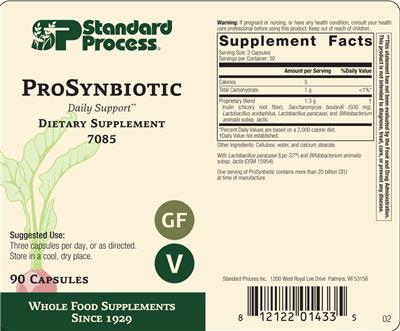
Supplement Facts
The label details for ProSynbiotic by SP Standard Process, sourced from the NIH Dietary Supplement Label Database.
Supplement Facts
| Ingredient | Amount | % DV |
|---|---|---|
| Calories | 5 Calorie(s) | -- |
| Total Carbohydrates | 1 Gram(s) | 1% |
| Proprietary Blend | 1.3 Gram(s) | -- |
| Lactobacillus paracasei | 0 NP | -- |
| Lactobacillus acidophilus | 0 NP | -- |
| Bifidobacterium animalis lactis | 0 NP | -- |
| Inulin | 0 NP | -- |
| Saccharomyces boulardii | 500 mg | -- |
Other ingredients: Cellulose, Water, Calcium Stearate
Tap any ingredient to jump to its full detail below.
These statements are the manufacturer’s wording, reproduced from the product label — the label is saying it, not HelloPharmacist. We don’t verify or endorse them.
Formulation
Daily Support
V
GF Gluten Free
FDA Statement of Identity
Dietary Supplement
Suggested/Recommended/Usage/Directions
Suggested Use: Three capsules per day, or as directed.
Storage
Store in a cool, dry place.
General Statements
Whole Food Supplements Since 1929
Precautions
Warning: If pregnant or nursing, or have any health condition, consult your healthcare professional before using this product.
Keep out of reach of children.
Formula
ProSynbiotic With Lactobacillus paracasei (Lpc-37®) and Bifidobacterium animalis subsp. lactis (DSM 15954).
One serving of ProSynbiotic contains more than 20 billion CFU at time of manufacture.
FDA Disclaimer Statement
This statement has not been evaluated by the Food and Drug Administration. This product is not intended to diagnose, treat, cure, or prevent any disease.
Is this label outdated? Report a formula or label change and our pharmacy team will review it.
ProSynbiotic by SP Standard Process label
The label scan from the NIH Dietary Supplement Label Database. Tap to enlarge.
Label images are published by the NIH Dietary Supplement Label Database for the version of this product on file. Always read your actual product label.
View the full label (PDF)The Ingredients in ProSynbiotic by SP Standard Process
These are the 5 active ingredients this product is made of. Select any to open its full monograph.
Serving size3 Capsule(s) Dosage formCapsule Servings per container30 Amounts shown are per serving.
Most supplement products combine several ingredients, and a medication can interact with the product through any one of them. Each ingredient below shows whether it has known drug interactions.
Proprietary Blend
- › Lactobacillus paracasei
- › Lactobacillus acidophilus
- › Bifidobacterium animalis lactis
- › Inulin
- › Saccharomyces boulardii
Other (inactive) ingredients: Cellulose, Water, Calcium Stearate. These complete the product’s ingredient list but are not active constituents.
ProSynbiotic by SP Standard Process Drug Interactions
HelloPharmacist Interaction Report
ProSynbiotic by SP Standard Process contains live microorganisms and a prebiotic fiber that together create a few interactions to watch for.
The most serious is with antibiotic drugs: Lactobacillus acidophilus, one of the probiotics in this blend, may lose effectiveness if you take antibiotics at the same time, since antibiotics can kill the live organisms in the supplement.
Read the full breakdown — every affected drug type, severity by severity
Inulin, the fiber ingredient, carries a Minor interaction with antidiabetes drugs — theoretically it might increase the risk of low blood sugar (hypoglycemia), though the evidence is mixed on whether it actually lowers blood sugar. Saccharomyces boulardii, another probiotic, has a Minor interaction with antifungal drugs; antifungals could reduce its effectiveness by killing the live yeast cells.
We couldn't check Lactobacillus paracasei and Bifidobacterium animalis lactis — we hold no data for those ingredients. Altogether, these interactions span 308 individual medications.
Use the medication checker below to see if any of your prescriptions are affected.
Check your own medications below · Editorial policy · How we use AI
Want to check YOUR meds against ProSynbiotic?
Ask about interactions with your drugs in plain English — “Can I take it with lisinopril?” — and we find you the answer in seconds, ingredient by ingredient.
Go to the checkerIngredients driving the most interactions
Individual Drug Interactions
The ingredients in ProSynbiotic interact with 308 drugs. Click any drug to see the details.
3 of the 5 ingredients in ProSynbiotic interact with drugs. Each result below shows which ingredient is responsible. Lactobacillus acidophilus Inulin Saccharomyces boulardii
Oritavancin DiphosphateKimyrsa, Orbactiv
How Oritavancin Diphosphate interacts with ProSynbiotic — through 1 ingredient. Tap an ingredient for the detail:
Lactobacillus AcidophilusAntibiotic Drugs Moderate
Interaction Summary
Theoretically, taking Lactobacillus acidophilus with antibiotic drugs might decrease the effectiveness of L.
Read the full Lactobacillus Acidophilus + Oritavancin Diphosphate interactionOxacillinBactocill, Prostaphlin
How Oxacillin interacts with ProSynbiotic — through 1 ingredient. Tap an ingredient for the detail:
Lactobacillus AcidophilusAntibiotic Drugs Moderate
Interaction Summary
Theoretically, taking Lactobacillus acidophilus with antibiotic drugs might decrease the effectiveness of L.
Read the full Lactobacillus Acidophilus + Oxacillin interactionOxytetracyclineTerramycin
How Oxytetracycline interacts with ProSynbiotic — through 1 ingredient. Tap an ingredient for the detail:
Lactobacillus AcidophilusAntibiotic Drugs Moderate
Interaction Summary
Theoretically, taking Lactobacillus acidophilus with antibiotic drugs might decrease the effectiveness of L.
Read the full Lactobacillus Acidophilus + Oxytetracycline interactionOxytetracycline, Phenazopyridine, SulfamethizoleUrobiotic
How Oxytetracycline, Phenazopyridine, Sulfamethizole interacts with ProSynbiotic — through 1 ingredient. Tap an ingredient for the detail:
Lactobacillus AcidophilusAntibiotic Drugs Moderate
Interaction Summary
Theoretically, taking Lactobacillus acidophilus with antibiotic drugs might decrease the effectiveness of L.
Read the full Lactobacillus Acidophilus + Oxytetracycline, Phenazopyridine, Sulfamethizole interactionOzenoxacinXepi
How Ozenoxacin interacts with ProSynbiotic — through 1 ingredient. Tap an ingredient for the detail:
Lactobacillus AcidophilusAntibiotic Drugs Moderate
Interaction Summary
Theoretically, taking Lactobacillus acidophilus with antibiotic drugs might decrease the effectiveness of L.
Read the full Lactobacillus Acidophilus + Ozenoxacin interactionParomomycin SulfateHumatin
How Paromomycin Sulfate interacts with ProSynbiotic — through 1 ingredient. Tap an ingredient for the detail:
Lactobacillus AcidophilusAntibiotic Drugs Moderate
Interaction Summary
Theoretically, taking Lactobacillus acidophilus with antibiotic drugs might decrease the effectiveness of L.
Read the full Lactobacillus Acidophilus + Paromomycin Sulfate interactionPenicillin GPfizerpen
How Penicillin G interacts with ProSynbiotic — through 1 ingredient. Tap an ingredient for the detail:
Lactobacillus AcidophilusAntibiotic Drugs Moderate
Interaction Summary
Theoretically, taking Lactobacillus acidophilus with antibiotic drugs might decrease the effectiveness of L.
Read the full Lactobacillus Acidophilus + Penicillin G interactionPenicillin G BenzathineBicillin L-A, Permapen
How Penicillin G Benzathine interacts with ProSynbiotic — through 1 ingredient. Tap an ingredient for the detail:
Lactobacillus AcidophilusAntibiotic Drugs Moderate
Interaction Summary
Theoretically, taking Lactobacillus acidophilus with antibiotic drugs might decrease the effectiveness of L.
Read the full Lactobacillus Acidophilus + Penicillin G Benzathine interactionPenicillin G Benzathine, ProcaineBicillin C-R
How Penicillin G Benzathine, Procaine interacts with ProSynbiotic — through 1 ingredient. Tap an ingredient for the detail:
Lactobacillus AcidophilusAntibiotic Drugs Moderate
Interaction Summary
Theoretically, taking Lactobacillus acidophilus with antibiotic drugs might decrease the effectiveness of L.
Read the full Lactobacillus Acidophilus + Penicillin G Benzathine, Procaine interactionPenicillin G PotassiumPen-Tids, Pentids, Pentids 400, Pentids 800, Wycillin
How Penicillin G Potassium interacts with ProSynbiotic — through 1 ingredient. Tap an ingredient for the detail:
Lactobacillus AcidophilusAntibiotic Drugs Moderate
Interaction Summary
Theoretically, taking Lactobacillus acidophilus with antibiotic drugs might decrease the effectiveness of L.
Read the full Lactobacillus Acidophilus + Penicillin G Potassium interactionPenicillin G, ProcainePenicillin G Procaine
How Penicillin G, Procaine interacts with ProSynbiotic — through 1 ingredient. Tap an ingredient for the detail:
Lactobacillus AcidophilusAntibiotic Drugs Moderate
Interaction Summary
Theoretically, taking Lactobacillus acidophilus with antibiotic drugs might decrease the effectiveness of L.
Read the full Lactobacillus Acidophilus + Penicillin G, Procaine interactionPenicillin VPen-Vee
How Penicillin V interacts with ProSynbiotic — through 1 ingredient. Tap an ingredient for the detail:
Lactobacillus AcidophilusAntibiotic Drugs Moderate
Interaction Summary
Theoretically, taking Lactobacillus acidophilus with antibiotic drugs might decrease the effectiveness of L.
Read the full Lactobacillus Acidophilus + Penicillin V interactionPenicillin V PotassiumBeepen-VK, Ledercillin, Pen VK, Pen-Vee K, V-Cillin K, Veetids
How Penicillin V Potassium interacts with ProSynbiotic — through 1 ingredient. Tap an ingredient for the detail:
Lactobacillus AcidophilusAntibiotic Drugs Moderate
Interaction Summary
Theoretically, taking Lactobacillus acidophilus with antibiotic drugs might decrease the effectiveness of L.
Read the full Lactobacillus Acidophilus + Penicillin V Potassium interactionPenicillin VkRobicillin
How Penicillin Vk interacts with ProSynbiotic — through 1 ingredient. Tap an ingredient for the detail:
Lactobacillus AcidophilusAntibiotic Drugs Moderate
Interaction Summary
Theoretically, taking Lactobacillus acidophilus with antibiotic drugs might decrease the effectiveness of L.
Read the full Lactobacillus Acidophilus + Penicillin Vk interactionPentamidinePentam 300
How Pentamidine interacts with ProSynbiotic — through 1 ingredient. Tap an ingredient for the detail:
Lactobacillus AcidophilusAntibiotic Drugs Moderate
Interaction Summary
Theoretically, taking Lactobacillus acidophilus with antibiotic drugs might decrease the effectiveness of L.
Read the full Lactobacillus Acidophilus + Pentamidine interactionPhenazopyridine, SulfamethizoleThiosulfil-A, Thiosulfil-A Forte
How Phenazopyridine, Sulfamethizole interacts with ProSynbiotic — through 1 ingredient. Tap an ingredient for the detail:
Lactobacillus AcidophilusAntibiotic Drugs Moderate
Interaction Summary
Theoretically, taking Lactobacillus acidophilus with antibiotic drugs might decrease the effectiveness of L.
Read the full Lactobacillus Acidophilus + Phenazopyridine, Sulfamethizole interactionPhenazopyridine, SulfisoxazoleAzo-Gantrisin
How Phenazopyridine, Sulfisoxazole interacts with ProSynbiotic — through 1 ingredient. Tap an ingredient for the detail:
Lactobacillus AcidophilusAntibiotic Drugs Moderate
Interaction Summary
Theoretically, taking Lactobacillus acidophilus with antibiotic drugs might decrease the effectiveness of L.
Read the full Lactobacillus Acidophilus + Phenazopyridine, Sulfisoxazole interactionPiperacillinPipracil
How Piperacillin interacts with ProSynbiotic — through 1 ingredient. Tap an ingredient for the detail:
Lactobacillus AcidophilusAntibiotic Drugs Moderate
Interaction Summary
Theoretically, taking Lactobacillus acidophilus with antibiotic drugs might decrease the effectiveness of L.
Read the full Lactobacillus Acidophilus + Piperacillin interactionPiperacillin , TazobactamZosyn
How Piperacillin , Tazobactam interacts with ProSynbiotic — through 1 ingredient. Tap an ingredient for the detail:
Lactobacillus AcidophilusAntibiotic Drugs Moderate
Interaction Summary
Theoretically, taking Lactobacillus acidophilus with antibiotic drugs might decrease the effectiveness of L.
Read the full Lactobacillus Acidophilus + Piperacillin , Tazobactam interactionPivampicillinPondicillin
How Pivampicillin interacts with ProSynbiotic — through 1 ingredient. Tap an ingredient for the detail:
Lactobacillus AcidophilusAntibiotic Drugs Moderate
Interaction Summary
Theoretically, taking Lactobacillus acidophilus with antibiotic drugs might decrease the effectiveness of L.
Read the full Lactobacillus Acidophilus + Pivampicillin interactionPivmecillinamSelexid
How Pivmecillinam interacts with ProSynbiotic — through 1 ingredient. Tap an ingredient for the detail:
Lactobacillus AcidophilusAntibiotic Drugs Moderate
Interaction Summary
Theoretically, taking Lactobacillus acidophilus with antibiotic drugs might decrease the effectiveness of L.
Read the full Lactobacillus Acidophilus + Pivmecillinam interactionPlazomicin SulfateZemdri
How Plazomicin Sulfate interacts with ProSynbiotic — through 1 ingredient. Tap an ingredient for the detail:
Lactobacillus AcidophilusAntibiotic Drugs Moderate
Interaction Summary
Theoretically, taking Lactobacillus acidophilus with antibiotic drugs might decrease the effectiveness of L.
Read the full Lactobacillus Acidophilus + Plazomicin Sulfate interactionPretomanidPretomanid
How Pretomanid interacts with ProSynbiotic — through 1 ingredient. Tap an ingredient for the detail:
Lactobacillus AcidophilusAntibiotic Drugs Moderate
Interaction Summary
Theoretically, taking Lactobacillus acidophilus with antibiotic drugs might decrease the effectiveness of L.
Read the full Lactobacillus Acidophilus + Pretomanid interactionPyrazinamideTebrazid
How Pyrazinamide interacts with ProSynbiotic — through 1 ingredient. Tap an ingredient for the detail:
Lactobacillus AcidophilusAntibiotic Drugs Moderate
Interaction Summary
Theoretically, taking Lactobacillus acidophilus with antibiotic drugs might decrease the effectiveness of L.
Read the full Lactobacillus Acidophilus + Pyrazinamide interactionQuinupristin, DalfopristinSynercid
How Quinupristin, Dalfopristin interacts with ProSynbiotic — through 1 ingredient. Tap an ingredient for the detail:
Lactobacillus AcidophilusAntibiotic Drugs Moderate
Interaction Summary
Theoretically, taking Lactobacillus acidophilus with antibiotic drugs might decrease the effectiveness of L.
Read the full Lactobacillus Acidophilus + Quinupristin, Dalfopristin interactionRetapamulinAltabax, Altargo
How Retapamulin interacts with ProSynbiotic — through 1 ingredient. Tap an ingredient for the detail:
Lactobacillus AcidophilusAntibiotic Drugs Moderate
Interaction Summary
Theoretically, taking Lactobacillus acidophilus with antibiotic drugs might decrease the effectiveness of L.
Read the full Lactobacillus Acidophilus + Retapamulin interactionRifabutinMycobutin
How Rifabutin interacts with ProSynbiotic — through 1 ingredient. Tap an ingredient for the detail:
Lactobacillus AcidophilusAntibiotic Drugs Moderate
Interaction Summary
Theoretically, taking Lactobacillus acidophilus with antibiotic drugs might decrease the effectiveness of L.
Read the full Lactobacillus Acidophilus + Rifabutin interactionRifampinRifadin, Rifadin Injection, Rimactane, Rofactor
How Rifampin interacts with ProSynbiotic — through 1 ingredient. Tap an ingredient for the detail:
Lactobacillus AcidophilusAntibiotic Drugs Moderate
Interaction Summary
Theoretically, taking Lactobacillus acidophilus with antibiotic drugs might decrease the effectiveness of L.
Read the full Lactobacillus Acidophilus + Rifampin interactionRifamycinAemcolo
How Rifamycin interacts with ProSynbiotic — through 1 ingredient. Tap an ingredient for the detail:
Lactobacillus AcidophilusAntibiotic Drugs Moderate
Interaction Summary
Theoretically, taking Lactobacillus acidophilus with antibiotic drugs might decrease the effectiveness of L.
Read the full Lactobacillus Acidophilus + Rifamycin interactionRifapentinePriftin
How Rifapentine interacts with ProSynbiotic — through 1 ingredient. Tap an ingredient for the detail:
Lactobacillus AcidophilusAntibiotic Drugs Moderate
Interaction Summary
Theoretically, taking Lactobacillus acidophilus with antibiotic drugs might decrease the effectiveness of L.
Read the full Lactobacillus Acidophilus + Rifapentine interactionEach ingredient & the kinds of drugs it affects
For each ingredient in ProSynbiotic with known interactions, here are the types of medications they can affect. Open any type for the detail — or search your exact drug in the checker above.
Lactobacillus acidophilus
Antibiotic Drugs
Theoretically, taking Lactobacillus acidophilus with antibiotic drugs might decrease the effectiveness of L. acidophilus.
L. acidophilus preparations usually contain live and active organisms. Therefore, simultaneously taking antibiotics might kill a significant number of the organisms. Tell patients to separate administration of antibiotics and L. acidophilus preparations by at least two hours.
Inulin
Antidiabetes Drugs
Theoretically, inulin might increase the risk of hypoglycemia with antidiabetes drugs.
Some clinical research shows that inulin improves glycemic control in patients with diabetes; however, it is unclear if it has hypoglycemic effects.
Saccharomyces boulardii
Antifungals
Theoretically, taking antifungals with Saccharomyces boulardii might decrease the effectiveness of Saccharomyces boulardii.
S. boulardii is a live yeast. Therefore, simultaneously taking antifungals might kill a significant number of the organisms.
Brand information
Manufacturer and brand details for ProSynbiotic, from the product label.
SP Standard Process
See all SP Standard Process products- Name
- Standard Process Inc.
- Street Address
- 1200 West Royal Lee Drive
- City
- Palmyra
- State
- WI
- ZipCode
- 53156
ProSynbiotic by SP Standard Process: Common Questions
Does ProSynbiotic by SP Standard Process interact with any medications?
How can one product interact with so many drugs?
Where does this information come from?
Will this interfere with my antibiotics?
What's inulin and why is it in here?
Will this give me gas or bloating?
Is this safe if I'm on blood thinners or antidepressants?
Can I take this while pregnant or nursing?
What if I'm immunocompromised — is this safe for me?
Written and reviewed by the HelloPharmacist editorial staff. Our editorial policy
Not sure if ProSynbiotic is safe with your meds?
Our pharmacists answer your medication & supplement questions — free.
Label information is sourced from the NIH Dietary Supplement Label Database and reflects the product version on file; always read your actual product label. This page is for education only and is not a substitute for professional medical advice. Confirm with your pharmacist or doctor before combining supplements and medications.
The Full Monographs Behind ProSynbiotic’s Ingredients
Every ingredient we hold a full HelloPharmacist monograph for — uses, evidence, safety, and the complete interaction list.
Lactobacillus Acidophilus
Interacts with 182 drugsLactobacillus acidophilus is a 'friendly' bacterium used as a probiotic to support gut and vaginal health. It is generally well tolerated in healthy people, and there is reasonable evidence...
Read the full Lactobacillus Acidophilus monograph → Herb & supplement monographInulin
Interacts with 86 drugsInulin is a type of plant fiber (a prebiotic) found naturally in foods like chicory root, onions, and garlic, and it is widely added to supplements and processed foods. It may help with regu...
Read the full Inulin monograph → Herb & supplement monographSaccharomyces Boulardii
Interacts with 40 drugsSaccharomyces boulardii is a beneficial yeast used as a probiotic, with the strongest evidence for preventing and treating certain types of diarrhea, including antibiotic-associated diarrhea...
Read the full Saccharomyces Boulardii monograph →Sources & How We Checked
ProSynbiotic's label data comes from the NIH Dietary Supplement Label Database; the ingredient interaction data is from the Natural Medicines database, reviewed by our pharmacists.
- NIH Dietary Supplement Label Database (DSLD) — The official product label on file for this supplement.
- Natural Medicines (Therapeutic Research Center) — Evidence-graded clinical reference behind the ingredient interaction data.
Content is written and reviewed by licensed HelloPharmacist pharmacists. See our data sources and editorial standards for how this information is built and checked.
The 58 references behind this product’s interaction data
Every citation that drives the interaction findings for this product’s ingredients, from the evidence-graded Natural Medicines (TRC Healthcare) database. Open an ingredient to browse its citations — links open the study on PubMed or the publisher’s site.
Lactobacillus Acidophilus 15 references
- Pierce A. The American Pharmaceutical Association Practical Guide to Natural Medicines. New York: The Stonesong Press, 1999:19.
- Begtrup LM, de Muckadell OB, Kjeldsen J, Christensen RD, Jarbøl DE. Long-term treatment with probiotics in primary care patients with irritable bowel syndrome--a randomised, double-blind, placebo controlled trial. Scand J Gastroenterol 2013;48(10):1127-35 PubMed
- Chatterjee S, Kar P, Das T, Ray S, Gangulyt S, Rajendiran C, Mitra M. Randomised placebo-controlled double blind multicentric trial on efficacy and safety of Lactobacillus acidophilus LA-5 and Bifidobacterium BB-12 for prevention of antibiotic-associated
- Shavakhi A, Tabesh E, Yaghoutkar A, Hashemi H, Tabesh F, Khodadoostan M,Minakari M, Shavakhi S, Gholamrezaei A. The effects of multistrain probiotic compound on bismuth-containing quadruple therapy for Helicobacter pylori infection: a randomized placebo-c
- Karamali M, Dadkhah F, Sadrkhanlou M, et al. Effects of probiotic supplementation on glycaemic control and lipid profiles in gestational diabetes: a randomized, double-blind, placebo-controlled trial. Diabetes Metab 2016;42(4):234-41. PubMed
- Badehnoosh B, Karamali M, Zarrati M, et al. The effects of probiotic supplementation on biomarkers of inflammation, oxidative stress and pregnancy outcomes in gestational diabetes. J Matern Fetal Neonatal Med. 2018 May;31(9):1128-1136.
- Kumar S, Kumar R, Rohilla L, Jacob N, Yadav J, Sachdeva N. A high potency multi-strain probiotic improves glycemic control in children with new-onset type 1 diabetes mellitus: A randomized, double-blind, and placebo-controlled pilot study. Pediatr Diabete
- Shahriari A, Karimi E, Shahriari M, Aslani N, Khooshideh M, Arab A. The effect of probiotic supplementation on the risk of gestational diabetes mellitus among high-risk pregnant women: A parallel double-blind, randomized, placebo-controlled clinical trial PubMed
- Xiao SD, Zhang DZ, Lu H, et al. Multicenter, randomized, controlled trial of heat-killed Lactobacillus acidophilus LB in patients with chronic diarrhea. Adv Ther. 2003;20(5):253-60.
- Rossi F, Amadoro C, Gasperi M, Colavita G. Lactobacilli infection case reports in the last three years and safety implications. Nutrients. 2022;14(6):1178. PubMed
- Ozer M, Goksu SY, Shahverdiani A, Mustafa M. Lactobacillus acidophilus-induced endocarditis and associated splenic abscess. Case Rep Infect Dis 2020;2020:1382709.
- Sadrin S, Sennoune S, Gout B, et al. A 2-strain mixture of Lactobacillus acidophilus in the treatment of irritable bowel syndrome: A placebo-controlled randomized clinical trial. Dig Liver Dis 2020;52(5):534-540. PubMed
- Stoffer JN, Slingsby TJ, Giuliari GP. Lactobacillus acidophilus endophthalmitis after intravitreal bevacizumab injection requiring intraocular lens explantation. Can J Ophthalmol 2022;57(1):e21-e22. PubMed
- Cukovic-Cavka S, Likic R, Francetic I, Rustemovic N, Opacic M, Vucelic B. Lactobacillus acidophilus as a cause of liver abscess in a NOD2/CARD15-positive patient with Crohn's disease. Digestion 2006;73(2-3):107-10.
- Hui J, Ren Y, Wang Y, Han Q. Lactobacillus acidophilus endophthalmitis postcataract operation: A case report with a literature review. Ocul Immunol Inflamm 2023.
See these in context on the Lactobacillus Acidophilus monograph →
Inulin 17 references
- Williams CM. Effects of inulin on lipid parameters in humans. J Nutr 1999 Jul;129(7 Suppl):1471S-3S. PubMed
- Pedersen A, Sandstrom B, Van Amelsvoort JM. The effect of ingestion of inulin on blood lipids and gastrointestinal symptoms in healthy females. Br J Nutr 1997;78:215-22. PubMed
- Cummings JH, Macfarlane GT, Englyst HN. Prebiotic digestion and fermentation. Am J Clin Nutr 2001;73:415S-420S. PubMed
- Bonnema AL, Kolberg LW, Thomas W, Slavin JL. Gastrointestinal tolerance of chicory inulin products. J Am Diet Assoc 2010;110(6):865-8. PubMed
- Dehghan P, Gargari BP, Jafar-Abadi MA, Aliasgharzadeh A. Inulin controls inflammation and metabolic endotoxemia in women with type 2 diabetes mellitus: a randomized-controlled clinical trial. Int J Food Sci Nutr 2014;65(1):117-23. PubMed
- Guess ND, Dornhorst A, Oliver N, Frost GS. A randomised crossover trial: the effect of inulin on glucose homeostasis in subtypes of prediabetes. Ann Nutr Metab 2016;68(1):26-34. PubMed
- Marteau P, Jacobs H, Cazaubiel M, Signoret C, Prevel JM, Housez B. Effects of chicory inulin in constipated elderly people: a double-blind controlled trial. Int J Food Sci Nutr 2011;62(2):164-70. PubMed
- Mensink MA, Frijlink HW, van der Voort Maarschalk K, Hinrichs WL. Inulin, a flexible oligosaccharide I: review of its physicochemical characteristics. Carbohydr Polym 2015;130:405-19. PubMed
- Slavin J, Feirtag J. Chicory inulin does not increase stool weight or speed up intestinal transit time in healthy male subjects. Food Funct. 2011;2(1):72-7. PubMed
- Micka A, Siepelmeyer A, Holz A, Theis S, Schön C. Effect of consumption of chicory inulin on bowel function in healthy subjects with constipation: a randomized, double-blind, placebo-controlled trial. Int J Food Sci Nutr. 2017;68(1):82-89. PubMed
- Smiljanec K, Mitchell CM, Privitera OF, Neilson AP, Davy KP, Davy BM. Pre-meal inulin consumption does not affect acute energy intake in overweight and obese middle-aged and older adults: A randomized controlled crossover pilot trial. Nutr Health. 2017;23 PubMed
- Cai X, Yu H, Liu L, et al. Milk powder co-supplemented with inulin and resistant dextrin improves glycemic control and insulin resistance in elderly type 2 diabetes mellitus: a 12-week randomized, double-blind, placebo-controlled trial. Mol Nutr Food Res PubMed
- Rao M, Gao C, Xu L, et al. Effect of inulin-type carbohydrates on insulin resistance in patients with type 2 diabetes and obesity: a systematic review and meta-analysis. J Diabetes Res. 2019;2019:5101423. PubMed
- Mitchell CM, Davy BM, Ponder MA, et al. Prebiotic Inulin Supplementation and Peripheral Insulin Sensitivity in adults at Elevated Risk for Type 2 Diabetes: A Pilot Randomized Controlled Trial. Nutrients 2021;13(9):3235. PubMed
- Li L, Li P, Xu L. Assessing the effects of inulin-type fructan intake on body weight, blood glucose, and lipid profile: A systematic review and meta-analysis of randomized controlled trials. Food Sci Nutr 2021;9(8):4598-4616. PubMed
- Ziaei R, Shahshahan Z, Ghasemi-Tehrani H, Heidari Z, Ghiasvand R. Effects of inulin-type fructans with different degrees of polymerization on inflammation, oxidative stress and endothelial dysfunction in women with polycystic ovary syndrome: A randomized,
- Risso D, Kaczmarczyk M, Laurie I, et al. Moderate intakes of soluble corn fibre or inulin do not cause gastrointestinal discomfort and are well tolerated in healthy children. Int J Food Sci Nutr 2022;73(8):1104-1115. PubMed
Saccharomyces Boulardii 26 references
- Niault M, Thomas F, Prost J, et al. Fungemia due to Saccharomyces species in a patient treated with enteral Saccharomyces boulardii. Clin Infect Dis 1999;28:930.
- Pletinex M, Legein J, Vandenplas Y. Fungemia with Saccharomyces boulardii in a 1-year-old girl with protracted diarrhea. J Pediatr Gastroenterol Nutr 1995;21:113-5. DOI
- Fredenucci I, Chomarat M, Boucaud C, et al. Saccharomyces boulardii fungemia in a patient receiving ultra-levure therapy. Clin Infect Dis 1998;27:222-3.
- Elmer GW, McFarland LV, Surawicz CM, et al. Behaviour of Saccharomyces boulardii in recurrent Clostridium difficile disease patients. Aliment Pharmacol Ther 1999;13:1663-8.
- Lewis SJ, Freedman AR. Review article: the use of biotherapeutic agents in the prevention and treatment of gastrointestinal disease. Aliment Pharmacol Ther 1998;12:807-22. PubMed
- Cesaro S, Chinello P, Rossi L, Zanesco L. Saccharomyces cerevisiae fungemia in a neutropenic patient treated with Saccharomyces boulardii. Support Care Cancer 2000;8:504-5. PubMed
- Hennequin C, Thierry A, Richard GF, et al. Microsatellite typing as a new tool for identification of Saccharomyces cerevisiae strains. J Clin Microbiol 2001;39:551-9.
- Plein K, Hotz J. Therapeutic effects of Saccharomyces boulardii on mild residual symptoms in a stable phase of Crohn's disease with special respect to chronic diarrhea - a pilot study. Z Gastroenterol 1993;31:129-34.
- Borriello SP, Hammes WP, Holzapfel W, et al. Safety of probiotics that contain lactobacilli or bifidobacteria. Clin Infect Dis 2003;36:775-80. PubMed
- Marteau P, Seksik P. Tolerance of probiotics and prebiotics. J Clin Gastroenterol 2004;38:S67-9. PubMed
- Munoz P, Bouza E, Cuenca-Estrella M, et al. Saccharomyces cerevisiae fungemia: an emerging infectious disease. Clin Infect Dis 2005;40:1625-34. PubMed
- Lherm, T., Monet, C., Nougiere, B., Soulier, M., Larbi, D., Le Gall, C., Caen, D., and Malbrunot, C. Seven cases of fungemia with Saccharomyces boulardii in critically ill patients. Intensive Care Med 2002;28(6):797-801. PubMed
- Riquelme, A. J., Calvo, M. A., Guzman, A. M., Depix, M. S., Garcia, P., Perez, C., Arrese, M., and Labarca, J. A. Saccharomyces cerevisiae fungemia after Saccharomyces boulardii treatment in immunocompromised patients. J Clin.Gastroenterol. 2003;36(1):41- PubMed
- Cherifi, S., Robberecht, J., and Miendje, Y. Saccharomyces cerevisiae fungemia in an elderly patient with Clostridium difficile colitis. Acta Clin Belg. 2004;59(4):223-224. PubMed
- Ellouze O, Berthoud V, Mervant M, Parthiot JP, Girard C. Septic shock due to Sacccaromyces boulardii. Med Mal Infect. 2016;46(2):104-105.
- Appel-da-Silva MC, Narvaez GA, Perez LRR, Drehmer L, Lewgoy J. Saccharomyces cerevisiae var. boulardii fungemia following probiotic treatment. Med Mycol Case Rep. 2017;18:15-7. PubMed
- Atici S, Soysal A, Karadeniz Cerit K, et al. Catheter-related Saccharomyces cerevisiae Fungemia Following Saccharomyces boulardii Probiotic Treatment: In a child in intensive care unit and review of the literature. Med Mycol Case Rep. 2017;15:33-35. PubMed
- Martin IW, Tonner R, Trivedi J, et al. Saccharomyces boulardii probiotic-associated fungemia: questioning the safety of this preventive probiotic's use. Diagn Microbiol Infect Dis. 2017;87(3):286-8. PubMed
- Romanio MR, Coraine LA, Maielo VP, Abramczyc ML, Souza RL, Oliveira NF. Saccharomyces cerevisiae fungemia in a pediatric patient after treatment with probiotics. Rev Paul Pediatr 2017;35(3):361-4.
- Roy U, Jessani LG, Rudramurthy SM, et al. Seven cases of Saccharomyces fungaemia related to use of probiotics. Mycoses 2017;60(6):375-380.
- Romanio MR, Coraine LA, Maielo VP, Abramczyc ML, Souza RL, Oliveira NF. Saccharomyces cerevisiae fungemia in a pediatric patient after treatment with probiotics. Rev Paul Pediatr. 2017 Jul-Sep;35(3):361-364. doi: 10.1590/1984-0462/;2017;35;3;00014.
- Flatley EA, Wilde AM, Nailor MD. Saccharomyces boulardii for the prevention of hospital onset Clostridium difficile infection. J Gastrointestin Liver Dis. 2015;24(1):21-4. PubMed
- Ventoulis I, Sarmourli T, Amoiridou P, et al. Bloodstream infection by Saccharomyces cerevisiae in two COVID-19 patients after receiving supplementation of Saccharomyces in the ICU. J Fungi (Basel). 2020;6(3):98. PubMed
- Wombwell E, Bransteitter B, Gillen LR. Incidence of Saccharomyces cerevisiae fungemia in hospitalised patients administered Saccharomyces boulardii probiotic. Mycoses 2021;64(12):1521-1526.
- Rannikko J, Holmberg V, Karppelin M, et al. Fungemia and Other Fungal Infections Associated with Use of Saccharomyces boulardii Probiotic Supplements. Emerg Infect Dis 2021;27(8):2090-6.
- Awoyemi A, Mayerhofer C, Felix AS, et al. Rifaximin or Saccharomyces boulardii in heart failure with reduced ejection fraction: Results from the randomized GutHeart trial. EBioMedicine 2021;70:103511. PubMed
See these in context on the Saccharomyces Boulardii monograph →
Parts of this content are provided by the Therapeutic Research Center, LLC.
DISCLAIMER: Currently this does not check for drug-drug interactions. This is not an all-inclusive comprehensive list of potential interactions and is for informational purposes only. Not all interactions are known or well-reported in the scientific literature, and new interactions are continually being reported. Input is needed from a qualified healthcare provider including a pharmacist before starting any therapy. Application of clinical judgment is necessary.
© 2021 Therapeutic Research Center, LLC