
Spagyric Greens Ingredients & Drug Interactions
by Energetix
What is this page for?
First and foremost: checking Spagyric Greens against your medications. The heart of this page is the interaction checker and the full interaction report — how this product’s ingredients may interact with prescription and over-the-counter medicines you may be taking.
Around that, we add a pharmacist’s high-level view of the product as a whole — what’s inside, the evidence for its stated use, how transparent the label is, and what safety data exists — so you can see the full picture in one place. It’s educational information from our licensed clinical databases and the clinical staff at HelloPharmacist — not medical advice — and we don’t sell or endorse products. Our editorial policy
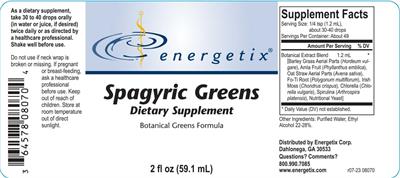
Spagyric Greens is a dietary supplement by Energetix with 8 active ingredients. Its ingredients are commonly taken for source of iodine and minerals, thyroid support, respiratory issues and cough.Based on those ingredients, 1,452 medications have a known interaction with it, the most serious rated major. The ingredients most likely to interact are Fo-Ti Root Extract, Chlorella Extract, Spirulina Extract. Use the checker below to test your specific medication, or read the full HelloPharmacist Interaction Report.
Check Your Meds Against Spagyric Greens by Energetix
Ask about any prescription or over-the-counter medication and we check it for interactions with Spagyric Greens by Energetix — and tell you which ingredient is responsible.
AI summaries are generated from our interaction database for education only — always confirm with your pharmacist. How we use AI
Ask the Pharmacist
A licensed pharmacist will answer your question by email — free, usually within 24 hours.
Got it — thank you!
A licensed pharmacist will answer within 24 hours. Keep an eye on your email (worth checking spam, just in case).
HelloPharmacist Scorecard of Spagyric Greens by Energetix
Our pharmacy team’s full take, with four database checks built into the cards below — a summary of what is known, not a grade of the product itself.
What’s inside
Low disclosure
Spagyric Greens contains 8 active ingredients, primarily plant extracts. The main components are oat straw aerial parts, fo-ti root, amla (Indian gooseberry) fruit, barley grass, chlorella, and spirulina — all chosen for their traditional nutritional or wellness roles.
There's also an herbal blend and nutritional yeast extract. The product is delivered as a liquid in a base of purified water and ethyl alcohol.
Does it work?
Strong evidence
The evidence for this product's ingredients is mixed. Oat straw and barley grass are likely effective for high cholesterol and heart health.
Amla fruit extract is possibly effective for acid reflux (GERD) and high cholesterol. Spirulina is possibly effective for high blood pressure.
For other claimed uses — such as cognitive decline, hair loss, bone health, and fatigue — the evidence is insufficient to rate, meaning we don't have solid data showing these ingredients work for those purposes.
How safe is it?
Well-documented data
Oat straw is generally well tolerated; the main side effects are digestive — bloating, gas, and abdominal distension, which usually fade with continued use. Barley grass is safe as food but contains gluten.
Chlorella is generally well tolerated short term, though product quality varies widely and allergic reactions including anaphylaxis have been rare reports. Spirulina is well tolerated but quality and contamination risk vary.
Fo-ti, however, carries a caution flag: it has been linked to liver injury in around 450 documented cases, ranging from mild hepatitis to cirrhosis, and should be used carefully under professional guidance. For pregnancy and breastfeeding: oat straw from food is considered safe in pregnancy and while breastfeeding, but concentrated supplements are less studied.
Fo-ti is best avoided in pregnancy and breastfeeding due to insufficient safety data. Amla and chlorella also lack adequate pregnancy and breastfeeding safety data and are best avoided unless your doctor approves.
Meds to double-check
Major interaction found
Check with your pharmacist before taking this product if you're on blood thinners like warfarin or clopidogrel (Plavix), diabetes medications or insulin, immunosuppressants, heart medications (digoxin/Lanoxin, or drugs processed by your liver's CYP2B6 or CYP2C8 pathways), stimulant laxatives, diuretics, or photosensitizing drugs. Fo-ti and chlorella pose the greatest risks; oat straw and spirulina add moderate concerns with diabetes and blood-clotting drugs.
The bottom line
Scorecard at a glanceFormula with limited ingredient disclosure with strong clinical evidence behind its ingredients' uses. Major medication interactions have been identified, and safety information is well characterized.
This product combines several plant extracts with some evidence behind them — especially for cholesterol and heart health — but it carries real interaction risks, chiefly with blood thinners and diabetes medications. Fo-ti's history of liver injury is a serious concern.
If you take any prescription medications, especially blood thinners, diabetes drugs, or heart medications, check this product with your pharmacist or doctor before starting it.
Educational only — not medical advice; always confirm with your pharmacist. Our editorial policy · How we use AI
Assessment coverage: 8 of 8 active ingredients matched to our full ingredient reviews (monographs). Based on the product label dated May 21, 2025.
This Scorecard evaluates available label information, ingredient evidence, and known medication-safety considerations. It does not independently verify product identity, purity, potency, contamination, or manufacturing quality. How these ratings are computed
General information
Key facts about Spagyric Greens, straight from the product label.
Everything in this section is reproduced from the manufacturer’s own product label — it’s the label speaking, not HelloPharmacist. We show it so you can see exactly what the maker states; we don’t verify or endorse those statements.
Supplement Facts
The label details for Spagyric Greens by Energetix, sourced from the NIH Dietary Supplement Label Database.
Supplement Facts
| Ingredient | Amount | % DV |
|---|---|---|
| Irish Moss Extract | 0 NP | -- |
| Oat Straw Aerial Parts Extract | 0 NP | -- |
| Botanical Extract Blend | 1.2 mL | -- |
| Fo-Ti Root Extract | 0 NP | -- |
| Amla Fruit Extract | 0 NP | -- |
| Barley Grass Aerial Parts Extract | 0 NP | -- |
| Chlorella Extract | 0 NP | -- |
| Nutritional Yeast Extract | 0 NP | -- |
| Spirulina Extract | 0 NP | -- |
Other ingredients: Water, Purified, Ethyl Alcohol
Tap any ingredient to jump to its full detail below.
These statements are the manufacturer’s wording, reproduced from the product label — the label is saying it, not HelloPharmacist. We don’t verify or endorse them.
Suggested/Recommended/Usage/Directions
As a dietary supplement, take 30 to 40 drops orally (in water or juice, if desired) twice daily or as directed by a healthcare professional. Shake well before use.
Precautions
Do not use if neck wrap is broken or missing.
If pregnant or breast-feeding, ask a healthcare professional before use.
Keep out of reach of children.
Storage
Store at room temperature out of direct sunlight.
FDA Statement of Identity
Dietary Supplement
Formulation
Botanical Greens Formula
Is this label outdated? Report a formula or label change and our pharmacy team will review it.
Spagyric Greens by Energetix label
The label scan from the NIH Dietary Supplement Label Database. Tap to enlarge.
Label images are published by the NIH Dietary Supplement Label Database for the version of this product on file. Always read your actual product label.
View the full label (PDF)The Ingredients in Spagyric Greens by Energetix
These are the 8 active ingredients this product is made of. Select any to open its full monograph.
Serving size1.2 mL Dosage formLiquid Servings per container49 Amounts shown are per serving.
Most supplement products combine several ingredients, and a medication can interact with the product through any one of them. Each ingredient below shows whether it has known drug interactions.
Botanical Extract Blend
Other (inactive) ingredients: Water, Purified, Ethyl Alcohol. These complete the product’s ingredient list but are not active constituents.
Spagyric Greens by Energetix Drug Interactions
HelloPharmacist Interaction Report
Spagyric Greens by Energetix contains several ingredients with documented interactions with medications.
The most serious concern is fo-ti root extract, which has been linked to liver injury that can affect blood clotting. This poses a Moderate risk with blood thinners (anticoagulants) like warfarin — in one documented case, a patient stable on warfarin developed acute hepatitis with a dangerously elevated clotting time after 90 days of fo-ti use.
Read the full breakdown — every affected drug type, severity by severity
Oat straw and oat-derived ingredients interact with diabetes medications and insulin at Moderate severity, potentially increasing the risk of low blood sugar (hypoglycemia). Amla fruit extract and spirulina also carry Moderate-severity interactions with diabetes drugs and blood thinners.
Fo-ti additionally interacts with several drug-metabolizing enzyme pathways (CYP2B6 and CYP2C8 substrates) and stimulant laxatives, all Moderate severity. Chlorella may reduce warfarin effectiveness and theoretically adds effects with photosensitizing drugs (Moderate).
Barley grass has one documented Moderate interaction with a specific antiparasitic drug. Irish moss extract and nutritional yeast extract were not checked — we hold no interaction data for them.
Altogether, these interactions span 1,381 individual medications.
Before starting this product, run your exact medications through the interaction checker below, especially if you take blood thinners, diabetes drugs, immunosuppressants, or heart medications.
Check your own medications below · Editorial policy · How we use AI
Want to check YOUR meds against Spagyric Greens?
Ask about interactions with your drugs in plain English — “Can I take it with lisinopril?” — and we find you the answer in seconds, ingredient by ingredient.
Go to the checkerIngredients driving the most interactions
Individual Drug Interactions
The ingredients in Spagyric Greens interact with 1,452 drugs. Click any drug to see the details.
8 of the 8 ingredients in Spagyric Greens interact with drugs. Each result below shows which ingredient is responsible. Fo-Ti Root Extract Chlorella Extract Spirulina Extract Amla Fruit Extract Nutritional Yeast Extract Oat Straw Aerial Parts Extract Irish Moss Extract Barley Grass Aerial Parts Extract
AmphetamineAdensys XR-ODT, Adzenys ER, Dyanavel XR, Mydayis
How Amphetamine interacts with Spagyric Greens — through 2 ingredients. Tap an ingredient for the detail:
Nutritional Yeast ExtractMonoamine Oxidase Inhibitors (maois) Major
Interaction Summary
Theoretically, taking brewer's yeast with MAOIs might increase the risk of hypertension.
Read the full Nutritional Yeast Extract + Amphetamine interactionFo-ti Root ExtractCytochrome P450 2d6 (cyp2d6) Substrates Moderate
Interaction Summary
Theoretically, fo-ti may increase the levels and clinical effects of drugs metabolized by CYP2D6.
Read the full Fo-ti Root Extract + Amphetamine interactionIsocarboxazidMarplan
How Isocarboxazid interacts with Spagyric Greens — through 1 ingredient. Tap an ingredient for the detail:
Nutritional Yeast ExtractMonoamine Oxidase Inhibitors (maois) Major
Interaction Summary
Theoretically, taking brewer's yeast with MAOIs might increase the risk of hypertension.
Read the full Nutritional Yeast Extract + Isocarboxazid interactionMoclobemideManerix, Moclobemide
How Moclobemide interacts with Spagyric Greens — through 2 ingredients. Tap an ingredient for the detail:
Nutritional Yeast ExtractMonoamine Oxidase Inhibitors (maois) Major
Interaction Summary
Theoretically, taking brewer's yeast with MAOIs might increase the risk of hypertension.
Read the full Nutritional Yeast Extract + Moclobemide interactionFo-ti Root ExtractCytochrome P450 2c19 (cyp2c19) Substrates Moderate
Interaction Summary
Theoretically, fo-ti may increase the levels and clinical effects of drugs metabolized by CYP2C19.
Read the full Fo-ti Root Extract + Moclobemide interactionOzanimod HydrochlorideZeposia
How Ozanimod Hydrochloride interacts with Spagyric Greens — through 3 ingredients. Tap an ingredient for the detail:
Nutritional Yeast ExtractMonoamine Oxidase Inhibitors (maois) Major
Interaction Summary
Theoretically, taking brewer's yeast with MAOIs might increase the risk of hypertension.
Read the full Nutritional Yeast Extract + Ozanimod Hydrochloride interactionFo-ti Root ExtractHepatotoxic Drugs, Cytochrome P450 2c8 (cyp2c8) Substrates Moderate
Interaction Summary
Theoretically, fo-ti might increase the risk of liver damage when taken with hepatotoxic drugs.
Read the full Fo-ti Root Extract + Ozanimod Hydrochloride interactionSpirulina ExtractImmunosuppressants Moderate
Interaction Summary
Theoretically, concurrent use of blue-green algae might interfere with immunosuppressive therapy.
Read the full Spirulina Extract + Ozanimod Hydrochloride interactionPhenelzine SulfateNardil
How Phenelzine Sulfate interacts with Spagyric Greens — through 1 ingredient. Tap an ingredient for the detail:
Nutritional Yeast ExtractMonoamine Oxidase Inhibitors (maois) Major
Interaction Summary
Theoretically, taking brewer's yeast with MAOIs might increase the risk of hypertension.
Read the full Nutritional Yeast Extract + Phenelzine Sulfate interactionRasagilineAzilect
How Rasagiline interacts with Spagyric Greens — through 3 ingredients. Tap an ingredient for the detail:
Nutritional Yeast ExtractMonoamine Oxidase Inhibitors (maois) Major
Interaction Summary
Theoretically, taking brewer's yeast with MAOIs might increase the risk of hypertension.
Read the full Nutritional Yeast Extract + Rasagiline interactionFo-ti Root ExtractCytochrome P450 1a2 (cyp1a2) Substrates Moderate
Interaction Summary
Theoretically, fo-ti might increase or decrease the levels and clinical effects of drugs metabolized by CYP1A2.
Read the full Fo-ti Root Extract + Rasagiline interactionChlorella ExtractPhotosensitizing Drugs Moderate
Interaction Summary
Theoretically, chlorella might have additive effects with photosensitizing drugs.
Read the full Chlorella Extract + Rasagiline interactionSafinamide MesylateXadago
How Safinamide Mesylate interacts with Spagyric Greens — through 1 ingredient. Tap an ingredient for the detail:
Nutritional Yeast ExtractMonoamine Oxidase Inhibitors (maois) Major
Interaction Summary
Theoretically, taking brewer's yeast with MAOIs might increase the risk of hypertension.
Read the full Nutritional Yeast Extract + Safinamide Mesylate interactionSelegilineCarbex, Eldepryl, Emsam, Zelapar
How Selegiline interacts with Spagyric Greens — through 2 ingredients. Tap an ingredient for the detail:
Nutritional Yeast ExtractMonoamine Oxidase Inhibitors (maois) Major
Interaction Summary
Theoretically, taking brewer's yeast with MAOIs might increase the risk of hypertension.
Read the full Nutritional Yeast Extract + Selegiline interactionChlorella ExtractPhotosensitizing Drugs Moderate
Interaction Summary
Theoretically, chlorella might have additive effects with photosensitizing drugs.
Read the full Chlorella Extract + Selegiline interactionTranylcypromineParnate
How Tranylcypromine interacts with Spagyric Greens — through 1 ingredient. Tap an ingredient for the detail:
Nutritional Yeast ExtractMonoamine Oxidase Inhibitors (maois) Major
Interaction Summary
Theoretically, taking brewer's yeast with MAOIs might increase the risk of hypertension.
Read the full Nutritional Yeast Extract + Tranylcypromine interaction6-mercaptopurinePurinethol
How 6-mercaptopurine interacts with Spagyric Greens — through 2 ingredients. Tap an ingredient for the detail:
Spirulina ExtractImmunosuppressants Moderate
Interaction Summary
Theoretically, concurrent use of blue-green algae might interfere with immunosuppressive therapy.
Read the full Spirulina Extract + 6-mercaptopurine interactionFo-ti Root ExtractHepatotoxic Drugs Moderate
Interaction Summary
Theoretically, fo-ti might increase the risk of liver damage when taken with hepatotoxic drugs.
Read the full Fo-ti Root Extract + 6-mercaptopurine interactionAdo-trastuzumab EmtansineKadcyla
How Ado-trastuzumab Emtansine interacts with Spagyric Greens — through 1 ingredient. Tap an ingredient for the detail:
Fo-ti Root ExtractCytochrome P450 3a4 (cyp3a4) Substrates Moderate
Interaction Summary
Theoretically, fo-ti might increase the levels and clinical effects of drugs metabolized by CYP3A4.
Read the full Fo-ti Root Extract + Ado-trastuzumab Emtansine interactionAbacavir Sulfate, Dolutegravir, LamivudineTriumeq
How Abacavir Sulfate, Dolutegravir, Lamivudine interacts with Spagyric Greens — through 1 ingredient. Tap an ingredient for the detail:
Fo-ti Root ExtractHepatotoxic Drugs Moderate
Interaction Summary
Theoretically, fo-ti might increase the risk of liver damage when taken with hepatotoxic drugs.
Read the full Fo-ti Root Extract + Abacavir Sulfate, Dolutegravir, Lamivudine interactionAbacavir, LamivudineEpzicom
How Abacavir, Lamivudine interacts with Spagyric Greens — through 1 ingredient. Tap an ingredient for the detail:
Fo-ti Root ExtractHepatotoxic Drugs Moderate
Interaction Summary
Theoretically, fo-ti might increase the risk of liver damage when taken with hepatotoxic drugs.
Read the full Fo-ti Root Extract + Abacavir, Lamivudine interactionAbciximabReoPro
How Abciximab interacts with Spagyric Greens — through 3 ingredients. Tap an ingredient for the detail:
Amla Fruit ExtractAnticoagulant/antiplatelet Drugs Moderate
Interaction Summary
Theoretically, Indian gooseberry may increase the risk of bleeding if used with anticoagulant or antiplatelet drugs; however, research is conflicting.
Read the full Amla Fruit Extract + Abciximab interactionFo-ti Root ExtractAnticoagulant/antiplatelet Drugs Moderate
Interaction Summary
Fo-ti has been linked to cases of acute liver failure which can decrease clotting factor production and increase the effects of anticoagulants.
Read the full Fo-ti Root Extract + Abciximab interactionSpirulina ExtractAnticoagulant/antiplatelet Drugs Moderate
Interaction Summary
Theoretically, spirulina blue-green algae might increase the risk of bleeding if used with other anticoagulant or antiplatelet drugs.
Read the full Spirulina Extract + Abciximab interactionAbemaciclibVerzenio
How Abemaciclib interacts with Spagyric Greens — through 1 ingredient. Tap an ingredient for the detail:
Fo-ti Root ExtractCytochrome P450 3a4 (cyp3a4) Substrates Moderate
Interaction Summary
Theoretically, fo-ti might increase the levels and clinical effects of drugs metabolized by CYP3A4.
Read the full Fo-ti Root Extract + Abemaciclib interactionAbiraterone
How Abiraterone interacts with Spagyric Greens — through 1 ingredient. Tap an ingredient for the detail:
Fo-ti Root ExtractCytochrome P450 3a4 (cyp3a4) Substrates, Hepatotoxic Drugs Moderate
Interaction Summary
Theoretically, fo-ti might increase the levels and clinical effects of drugs metabolized by CYP3A4.
Read the full Fo-ti Root Extract + Abiraterone interactionAbiraterone AcetateYonsa, Zytiga
How Abiraterone Acetate interacts with Spagyric Greens — through 1 ingredient. Tap an ingredient for the detail:
Fo-ti Root ExtractHepatotoxic Drugs, Cytochrome P450 3a4 (cyp3a4) Substrates Moderate
Interaction Summary
Theoretically, fo-ti might increase the risk of liver damage when taken with hepatotoxic drugs.
Read the full Fo-ti Root Extract + Abiraterone Acetate interactionAbrocitinibCibinqo
How Abrocitinib interacts with Spagyric Greens — through 3 ingredients. Tap an ingredient for the detail:
Fo-ti Root ExtractCytochrome P450 2c9 (cyp2c9) Substrates, Cytochrome P450 2c19 (cyp2c19) Substrates +1 Moderate
Interaction Summary
Theoretically, fo-ti may increase the levels and clinical effects of drugs metabolized by CYP2C9.
Read the full Fo-ti Root Extract + Abrocitinib interactionSpirulina ExtractAnticoagulant/antiplatelet Drugs, Immunosuppressants Moderate
Interaction Summary
Theoretically, spirulina blue-green algae might increase the risk of bleeding if used with other anticoagulant or antiplatelet drugs.
Read the full Spirulina Extract + Abrocitinib interactionAmla Fruit ExtractAnticoagulant/antiplatelet Drugs Moderate
Interaction Summary
Theoretically, Indian gooseberry may increase the risk of bleeding if used with anticoagulant or antiplatelet drugs; however, research is conflicting.
Read the full Amla Fruit Extract + Abrocitinib interactionAcalabrutinibCalquence
How Acalabrutinib interacts with Spagyric Greens — through 1 ingredient. Tap an ingredient for the detail:
Fo-ti Root ExtractCytochrome P450 3a4 (cyp3a4) Substrates Moderate
Interaction Summary
Theoretically, fo-ti might increase the levels and clinical effects of drugs metabolized by CYP3A4.
Read the full Fo-ti Root Extract + Acalabrutinib interactionAcarboseGlucobay, Prandase, Precose
How Acarbose interacts with Spagyric Greens — through 5 ingredients. Tap an ingredient for the detail:
Fo-ti Root ExtractAntidiabetes Drugs, Hepatotoxic Drugs Moderate
Interaction Summary
Theoretically, fo-ti might increase the risk of hypoglycemia when taken with antidiabetes drugs.
Read the full Fo-ti Root Extract + Acarbose interactionNutritional Yeast ExtractAntidiabetes Drugs Moderate
Interaction Summary
Taking brewer's yeast with antidiabetes drugs might increase the risk of hypoglycemia.
Read the full Nutritional Yeast Extract + Acarbose interactionSpirulina ExtractAntidiabetes Drugs Moderate
Interaction Summary
Theoretically, taking blue-green algae with antidiabetes drugs might increase the risk of hypoglycemia.
Read the full Spirulina Extract + Acarbose interactionAmla Fruit ExtractAntidiabetes Drugs Moderate
Interaction Summary
Taking Indian gooseberry with antidiabetes drugs might increase the risk of hypoglycemia.
Read the full Amla Fruit Extract + Acarbose interactionOat Straw Aerial Parts ExtractAntidiabetes Drugs Moderate
Interaction Summary
Theoretically, oats may have additive effects with antidiabetic agents and might increase the risk of hypoglycemia.
Read the full Oat Straw Aerial Parts Extract + Acarbose interactionAcebutololRhotral, Sectral
How Acebutolol interacts with Spagyric Greens — through 1 ingredient. Tap an ingredient for the detail:
Fo-ti Root ExtractHepatotoxic Drugs Moderate
Interaction Summary
Theoretically, fo-ti might increase the risk of liver damage when taken with hepatotoxic drugs.
Read the full Fo-ti Root Extract + Acebutolol interactionAcenocoumarolSintrom
How Acenocoumarol interacts with Spagyric Greens — through 3 ingredients. Tap an ingredient for the detail:
Spirulina ExtractAnticoagulant/antiplatelet Drugs Moderate
Interaction Summary
Theoretically, spirulina blue-green algae might increase the risk of bleeding if used with other anticoagulant or antiplatelet drugs.
Read the full Spirulina Extract + Acenocoumarol interactionAmla Fruit ExtractAnticoagulant/antiplatelet Drugs Moderate
Interaction Summary
Theoretically, Indian gooseberry may increase the risk of bleeding if used with anticoagulant or antiplatelet drugs; however, research is conflicting.
Read the full Amla Fruit Extract + Acenocoumarol interactionFo-ti Root ExtractAnticoagulant/antiplatelet Drugs Moderate
Interaction Summary
Fo-ti has been linked to cases of acute liver failure which can decrease clotting factor production and increase the effects of anticoagulants.
Read the full Fo-ti Root Extract + Acenocoumarol interactionAcepromazineAtravet
How Acepromazine interacts with Spagyric Greens — through 1 ingredient. Tap an ingredient for the detail:
Chlorella ExtractPhotosensitizing Drugs Moderate
Interaction Summary
Theoretically, chlorella might have additive effects with photosensitizing drugs.
Read the full Chlorella Extract + Acepromazine interactionAcetaminophenChildren's Tylenol, Children's Tylenol Meltaways, Tylenol, Tylenol Ex Strength
How Acetaminophen interacts with Spagyric Greens — through 1 ingredient. Tap an ingredient for the detail:
Fo-ti Root ExtractHepatotoxic Drugs, Cytochrome P450 1a2 (cyp1a2) Substrates Moderate
Interaction Summary
Theoretically, fo-ti might increase the risk of liver damage when taken with hepatotoxic drugs.
Read the full Fo-ti Root Extract + Acetaminophen interactionAcetaminophen, AspirinGemnisyn
How Acetaminophen, Aspirin interacts with Spagyric Greens — through 3 ingredients. Tap an ingredient for the detail:
Fo-ti Root ExtractCytochrome P450 1a2 (cyp1a2) Substrates, Hepatotoxic Drugs +1 Moderate
Interaction Summary
Theoretically, fo-ti might increase or decrease the levels and clinical effects of drugs metabolized by CYP1A2.
Read the full Fo-ti Root Extract + Acetaminophen, Aspirin interactionAmla Fruit ExtractAnticoagulant/antiplatelet Drugs, Aspirin Moderate
Interaction Summary
Theoretically, Indian gooseberry may increase the risk of bleeding if used with anticoagulant or antiplatelet drugs; however, research is conflicting.
Read the full Amla Fruit Extract + Acetaminophen, Aspirin interactionSpirulina ExtractAnticoagulant/antiplatelet Drugs Moderate
Interaction Summary
Theoretically, spirulina blue-green algae might increase the risk of bleeding if used with other anticoagulant or antiplatelet drugs.
Read the full Spirulina Extract + Acetaminophen, Aspirin interactionAcetaminophen, Aspirin, CaffeineExcedrin, Excedrin Extra Strength, Excedrin Migraine
How Acetaminophen, Aspirin, Caffeine interacts with Spagyric Greens — through 3 ingredients. Tap an ingredient for the detail:
Amla Fruit ExtractAspirin, Anticoagulant/antiplatelet Drugs Moderate
Interaction Summary
Theoretically, Indian gooseberry may increase the risk of bleeding if used with aspirin; however, research is conflicting.
Read the full Amla Fruit Extract + Acetaminophen, Aspirin, Caffeine interactionSpirulina ExtractAnticoagulant/antiplatelet Drugs Moderate
Interaction Summary
Theoretically, spirulina blue-green algae might increase the risk of bleeding if used with other anticoagulant or antiplatelet drugs.
Read the full Spirulina Extract + Acetaminophen, Aspirin, Caffeine interactionFo-ti Root ExtractCytochrome P450 1a2 (cyp1a2) Substrates, Hepatotoxic Drugs +2 Moderate
Interaction Summary
Theoretically, fo-ti might increase or decrease the levels and clinical effects of drugs metabolized by CYP1A2.
Read the full Fo-ti Root Extract + Acetaminophen, Aspirin, Caffeine interactionAcetaminophen, Brompheniramine, PhenylpropanolamineDimetapp Cold and Flu
How Acetaminophen, Brompheniramine, Phenylpropanolamine interacts with Spagyric Greens — through 2 ingredients. Tap an ingredient for the detail:
Chlorella ExtractPhotosensitizing Drugs Moderate
Interaction Summary
Theoretically, chlorella might have additive effects with photosensitizing drugs.
Read the full Chlorella Extract + Acetaminophen, Brompheniramine, Phenylpropanolamine interactionFo-ti Root ExtractCytochrome P450 1a2 (cyp1a2) Substrates, Hepatotoxic Drugs Moderate
Interaction Summary
Theoretically, fo-ti might increase or decrease the levels and clinical effects of drugs metabolized by CYP1A2.
Read the full Fo-ti Root Extract + Acetaminophen, Brompheniramine, Phenylpropanolamine interactionAcetaminophen, ButalbitalAxocet, Bancap, Bucet, Butex Forte, Esgic CF, Orbivan CF +5 more
How Acetaminophen, Butalbital interacts with Spagyric Greens — through 1 ingredient. Tap an ingredient for the detail:
Fo-ti Root ExtractHepatotoxic Drugs, Cytochrome P450 1a2 (cyp1a2) Substrates Moderate
Interaction Summary
Theoretically, fo-ti might increase the risk of liver damage when taken with hepatotoxic drugs.
Read the full Fo-ti Root Extract + Acetaminophen, Butalbital interactionAcetaminophen, Butalbital, CaffeineEsgic, Esgic Plus, Fiogesic, Fioricet, Repan, Tecnal +1 more
How Acetaminophen, Butalbital, Caffeine interacts with Spagyric Greens — through 1 ingredient. Tap an ingredient for the detail:
Fo-ti Root ExtractCytochrome P450 1a2 (cyp1a2) Substrates, Cytochrome P450 3a4 (cyp3a4) Substrates +1 Moderate
Interaction Summary
Theoretically, fo-ti might increase or decrease the levels and clinical effects of drugs metabolized by CYP1A2.
Read the full Fo-ti Root Extract + Acetaminophen, Butalbital, Caffeine interactionAcetaminophen, Butalbital, Caffeine, CodeineEsgic with Codeine, Fioricet w/ Codeine
How Acetaminophen, Butalbital, Caffeine, Codeine interacts with Spagyric Greens — through 1 ingredient. Tap an ingredient for the detail:
Fo-ti Root ExtractCytochrome P450 1a2 (cyp1a2) Substrates, Hepatotoxic Drugs +2 Moderate
Interaction Summary
Theoretically, fo-ti might increase or decrease the levels and clinical effects of drugs metabolized by CYP1A2.
Read the full Fo-ti Root Extract + Acetaminophen, Butalbital, Caffeine, Codeine interactionEach ingredient & the kinds of drugs it affects
For each ingredient in Spagyric Greens with known interactions, here are the types of medications they can affect. Open any type for the detail — or search your exact drug in the checker above.
Fo-Ti Root Extract
Anticoagulant/Antiplatelet Drugs
Fo-ti has been linked to cases of acute liver failure which can decrease clotting factor production and increase the effects of anticoagulants. In one case, a patient who had been stable on warfarin presented with acute hepatitis and an INR elevated to 14.98. The patient had been taking fo-ti for 90 days prior to admission. Discontinuation of warfarin and fo-ti lead to a decrease in the INR and full recovery. Theoretically, concomitant use of fo-ti with anticoagulant or antiplatelet drugs may increase the risk of bleeding in some patients. Until more is known, monitor patients taking fo-ti and drugs that affect bleeding.
Some of these drugs include aspirin, clopidogrel (Plavix), dalteparin (Fragmin), dipyridamole (Persantine), enoxaparin (Lovenox), heparin, ticlopidine (Ticlid), warfarin (Coumadin), and others.
Antidiabetes Drugs
Theoretically, fo-ti might increase the risk of hypoglycemia when taken with antidiabetes drugs.
Fo-ti reportedly has hypoglycemic effects.
Contraceptive Drugs
Theoretically, taking large amounts of fo-ti might interfere with contraceptive drugs due to competition for estrogen receptors.
In vitro research suggests that fo-ti extract has estrogenic activity.
Cytochrome P450 1A2 (Cyp1A2) Substrates
Theoretically, fo-ti might increase or decrease the levels and clinical effects of drugs metabolized by CYP1A2.
In vitro research suggests that fo-ti might inhibit CYP1A2. Additionally, in vitro research suggests that the degree of CYP1A2 inhibition depends on the type of fo-ti extract (i.e., the raw plant leads to greater inhibition than extensively processed extracts). However, in an animal study, an aqueous extract of fo-ti inhibited CYP1A2 while an alcoholic extract of fo-ti induced CYP1A2. Induction or inhibition of CYP1A2 by fo-ti has not been reported in humans.
Cytochrome P450 2B6 (Cyp2B6) Substrates
Theoretically, fo-ti might increase the levels and clinical effects of drugs metabolized by CYP2B6.
Animal research suggests that fo-ti might inhibit CYP2B6. One in vitro study suggests that the degree of CYP2B6 inhibition may depend on the type of fo-ti extract (i.e., the raw plant leads to greater inhibition than extensively processed extracts). However, this interaction has not been reported in humans.
Cytochrome P450 2C19 (Cyp2C19) Substrates
Theoretically, fo-ti may increase the levels and clinical effects of drugs metabolized by CYP2C19.
Animal and in vitro research suggests that fo-ti may inhibit CYP2C19. An in vitro study suggests that the degree of CYP2C19 inhibition may depend on the type of fo-ti extract (i.e., the raw plant leads to greater inhibition than extensively processed extracts). However, this interaction has not been reported in humans.
Cytochrome P450 2C8 (Cyp2C8) Substrates
Theoretically, fo-ti might increase the levels and clinical effects of drugs metabolized by CYP2C8.
In vitro research suggests that fo-ti might inhibit CYP2C8. However, this interaction has not been reported in humans.
Cytochrome P450 2C9 (Cyp2C9) Substrates
Theoretically, fo-ti may increase the levels and clinical effects of drugs metabolized by CYP2C9.
Animal and in vitro research suggests that fo-ti may inhibit CYP2C9. However, this interaction has not been reported in humans.
Cytochrome P450 2D6 (Cyp2D6) Substrates
Theoretically, fo-ti may increase the levels and clinical effects of drugs metabolized by CYP2D6.
Animal research suggests that fo-ti might inhibit CYP2D6. Additionally, an in vitro study suggests that the degree of CYP2D6 inhibition may depend on the type of fo-ti extract (i.e., the raw plant leads to greater inhibition than extensively processed extracts). However, this interaction has not been reported in humans.
Cytochrome P450 3A4 (Cyp3A4) Substrates
Theoretically, fo-ti might increase the levels and clinical effects of drugs metabolized by CYP3A4.
In vitro research suggests that fo-ti might inhibit CYP3A4. One in vitro study suggests that the degree of CYP3A4 inhibition may depend on the type of fo-ti extract (i.e., the raw plant leads to greater inhibition than extensively processed extracts). However, this evidence conflicts with animal research suggesting that fo-ti does not inhibit CYP3A4. This interaction has not been reported in humans.
Digoxin (Lanoxin)
Theoretically, fo-ti, particularly raw fo-ti root, might increase the risk of hypokalemia and cardiotoxicity when taken with digoxin.
Raw fo-ti root contains anthraquinone derivatives, which might have stimulant laxative effects. In vitro research shows that fermented and processed fo-ti root have reduced laxative effects compared with raw fo-ti root.
Diuretic Drugs
Theoretically, fo-ti, particularly raw fo-ti root, might increase the risk of hypokalemia when taken with diuretic drugs.
Raw fo-ti root contains anthraquinone derivatives, which might have stimulant laxative effects and compound diuretic-induced potassium loss. In vitro research shows that fermented and processed fo-ti root have reduced laxative effects compared with raw fo-ti root.
Estrogens
Theoretically, taking large amounts of fo-ti might interfere with hormone replacement therapy through competition for estrogen receptors.
In vitro research suggests that fo-ti extract has estrogenic activity.
Hepatotoxic Drugs
Theoretically, fo-ti might increase the risk of liver damage when taken with hepatotoxic drugs.
Fo-ti has been linked to liver damage in many reports.
Stimulant Laxatives
Theoretically, fo-ti, particularly raw fo-ti root, might increase the risk of fluid and electrolyte depletion when taken with stimulant laxatives.
Raw fo-ti root contains anthraquinone derivatives, which might have stimulant laxative effects. However, in vitro research shows that fermented and processed fo-ti root have reduced laxative effects compared with raw fo-ti root.
Sulindac (Clinoril)
Theoretically, fo-ti might increase or decrease the levels and clinical effects of sulindac.
Animal research suggests that the type of fo-ti extract might affect the levels of sulindac differently; the raw plant may increase levels, but processed parts may decrease levels. Induction or inhibition of CYP1A2 by fo-ti has not been reported in humans.
Warfarin (Coumadin)
Theoretically, fo-ti might increase the effects and adverse effects of warfarin.
Fo-ti may have stimulant laxative effects and cause diarrhea, especially when the raw or unprocessed fo-ti root is used. Diarrhea can increase the effects of warfarin, increase international normalized ratio (INR), and increase the risk of bleeding. Also, fo-ti has been linked to cases of acute liver failure which can decrease clotting factor production and increase the effects of warfarin. In one case, a patient who had been stable on warfarin presented with acute hepatitis and an INR elevated to 14.98. The patient had been taking fo-ti for 90 days prior to admission. Discontinuation of warfarin and fo-ti lead to a decrease in the INR and full recovery.
Chlorella Extract
Photosensitizing Drugs
Theoretically, chlorella might have additive effects with photosensitizing drugs.
Chlorella has been reported to cause photosensitization. In five case reports, patients who had ingested chlorella exhibited swelling followed by erythematopurpuric lesions on sun-exposed areas of the body. Theoretically, concomitant use with photosensitizing drugs may exacerbate effects.
Warfarin (Coumadin)
Theoretically, chlorella might reduce the clinical effects of warfarin.
Chlorella contains significant amounts of vitamin K. There is at least one case report of warfarin therapy becoming sub-therapeutic after initiation of chlorella supplements.
Spirulina Extract
Anticoagulant/Antiplatelet Drugs
Theoretically, spirulina blue-green algae might increase the risk of bleeding if used with other anticoagulant or antiplatelet drugs. However, this is unlikely.
Spirulina blue-green algae have shown antiplatelet and anticoagulant effects in vitro. However, one preliminary study in 24 patients receiving spirulina blue-green algae 2.3 grams daily for 2 weeks showed no effect on platelet activation or measures of clotting time.
Antidiabetes Drugs
Theoretically, taking blue-green algae with antidiabetes drugs might increase the risk of hypoglycemia.
Human research shows that spirulina blue-green algae can have hypoglycemic effects in patients with diabetes, at least some of whom were using antidiabetes drugs. However, blue-green algae does not seem to improve glycated hemoglobin (HbA1c) levels in patients with diabetes. A meta-analysis of animal studies also suggests that spirulina blue-green algae have hypoglycemic effects.
Immunosuppressants
Theoretically, concurrent use of blue-green algae might interfere with immunosuppressive therapy.
Blue-green algae have been shown to stimulate the immune system.
Amla Fruit Extract
Anticoagulant/Antiplatelet Drugs
Theoretically, Indian gooseberry may increase the risk of bleeding if used with anticoagulant or antiplatelet drugs; however, research is conflicting.
Clinical research shows that taking Indian gooseberry 500 mg as a single dose or twice daily for 10 days reduces platelet aggregation by about 24% to 36%, increases bleeding time by about 3.8-5.9 seconds, and increases clotting time by about 9.8-12.7 seconds when compared to baseline. However, taking Indian gooseberry 500 mg along with clopidogrel 75 mg or ecosprin 75 mg, as a single dose or for 10 days, does not significantly reduce platelet aggregation or increase bleeding time or clotting time when compared with clopidogrel 75 mg or ecosprin 75 mg alone. Until more is known, use caution when taking Indian gooseberry in combination with anticoagulant/antiplatelet drugs.
Antidiabetes Drugs
Taking Indian gooseberry with antidiabetes drugs might increase the risk of hypoglycemia.
Clinical research shows that taking Indian gooseberry fruit or fruit extract alone or in conjunction with antidiabetes medications can lower blood glucose levels. Dose adjustments to diabetes medications might be necessary.
Aspirin
Theoretically, Indian gooseberry may increase the risk of bleeding if used with aspirin; however, research is conflicting.
Clinical research shows that taking Indian gooseberry 500 mg as a single dose or twice daily for 10 days reduces platelet aggregation by about 24% to 36%, increases bleeding time by about 3.8-5.9 seconds, and increases clotting time by about 9.8-12.7 seconds when compared to baseline. However, taking a single dose of Indian gooseberry 500 mg along with ecosprin 75 mg, or taking a combination of Indian gooseberry 500 mg twice daily plus ecosprin 75 mg once daily for 10 days, does not significantly reduce platelet aggregation or increase bleeding time or clotting time when compared with ecosprin 75 mg alone.
Clopidogrel (Plavix)
Theoretically, Indian gooseberry may increase the risk of bleeding if used with clopidogrel; however, research is conflicting.
Clinical research shows that taking Indian gooseberry 500 mg as a single dose or twice daily for 10 days reduces platelet aggregation by about 24% to 36%, increases bleeding time by about 3.8-5.9 seconds, and increases clotting time by about 9.8-12.7 seconds when compared to baseline. However, taking a single dose of Indian gooseberry 500 mg along with clopidogrel 75 mg, or taking a combination of Indian gooseberry 500 mg twice daily plus clopidogrel 75 mg once daily for 10 days, does not significantly reduce platelet aggregation or increase bleeding time or clotting time when compared with clopidogrel 75 mg alone.
Nutritional Yeast Extract
Monoamine Oxidase Inhibitors (Maois)
Theoretically, taking brewer's yeast with MAOIs might increase the risk of hypertension.
Brewer's yeast contains tyramine. Taking brewer's yeast with MAOIs might increase the risk for hypertensive crisis.
Antidiabetes Drugs
Taking brewer's yeast with antidiabetes drugs might increase the risk of hypoglycemia.
Clinical research shows that taking chromium-containing brewer's yeast can decrease levels of blood glucose in diabetic patients being treated with antidiabetes drugs.
Lithium
Theoretically, taking brewer's yeast with lithium might cause additive effects and side effects.
Some brewer's yeast products contains lithium.
Antifungals
Theoretically, taking antifungals with some brewer's yeast products might decrease the effectiveness of brewer's yeast.
Some brewer's yeast products contain live yeast. Therefore, simultaneously taking antifungals might kill a significant number of the organisms.
Oat Straw Aerial Parts Extract
Antidiabetes Drugs
Theoretically, oats may have additive effects with antidiabetic agents and might increase the risk of hypoglycemia.
Consuming oats can decrease blood glucose in patients with diabetes. In those who require insulin, taking oats 100 grams daily for 2 days reduces the insulin dose required to achieve metabolic control.
Insulin
Concomitant use of oats and insulin might increase the risk of hypoglycemia.
In patients with insulin-dependent type 2 diabetes, taking oats 100 grams daily for 2 days reduces the insulin dose required to achieve metabolic control.
Irish Moss Extract
Amiodarone (Cordarone)
Theoretically, combining sea moss with amiodarone might cause excessively high iodine levels.
Amiodarone contains 37.3% iodine and can increase iodine levels. Concomitant use with sea moss, which contains approximately 4-7 mcg of iodine per gram, might increase the risk of adverse effects from iodine, including altered thyroid function.
Antithyroid Drugs
Due to its iodine content, sea moss might alter the effects of antithyroid drugs.
Sea moss contains approximately 4-7 mcg of iodine per gram. Iodine in high doses has been reported to cause both hyperthyroidism and hypothyroidism, depending on the individual's past medical history. Taking sea moss could theoretically alter the effects of antithyroid drugs.
Thyroid Hormone
Due to its iodine content, sea moss might alter the effects of thyroid hormone.
Sea moss contains approximately 4-7 mcg of iodine per gram. Iodine in high doses has been reported to cause both hyperthyroidism and hypothyroidism, depending on the individual's past medical history. Taking sea moss could theoretically alter the effects of thyroid hormone.
Barley Grass Aerial Parts Extract
Triclabendazole (Egaten)
Theoretically, barley might decrease the clinical effects of triclabendazole.
Animal research suggests that a diet supplemented with barley can reduce the bioavailability of triclabendazole when taken concomitantly. This effect has not been shown in humans.
Brand information
Manufacturer and brand details for Spagyric Greens, from the product label.
Energetix
See all Energetix products- Name
- Energetix Corp.
- City
- Dahlonega
- State
- GA
- ZipCode
- 30533
- Phone Number
- 800.990.7085
- Web Address
- www.energetix.com
Spagyric Greens by Energetix: Common Questions
Does Spagyric Greens by Energetix interact with any medications?
How can one product interact with so many drugs?
Where does this information come from?
Does this product contain gluten?
Is it safe to take while pregnant?
Will this help my high cholesterol?
What are the most common side effects?
Is this product safe if I have liver disease?
Can I take this while breastfeeding?
Written and reviewed by the HelloPharmacist editorial staff. Our editorial policy
Not sure if Spagyric Greens is safe with your meds?
Our pharmacists answer your medication & supplement questions — free.
Label information is sourced from the NIH Dietary Supplement Label Database and reflects the product version on file; always read your actual product label. This page is for education only and is not a substitute for professional medical advice. Confirm with your pharmacist or doctor before combining supplements and medications.
The Full Monographs Behind Spagyric Greens’s Ingredients
Every ingredient we hold a full HelloPharmacist monograph for — uses, evidence, safety, and the complete interaction list.
Sea Moss
Interacts with 22 drugsSea moss is a type of red seaweed that is naturally rich in iodine and several minerals, and it is popular as a 'whole-food' supplement. Strong human evidence for most of its health claims i...
Read the full Sea Moss monograph → Herb & supplement monographOats
Interacts with 86 drugsOats are a well-studied whole grain whose soluble fiber (beta-glucan) can help lower cholesterol and support heart health when eaten regularly. As a food, oats are safe for most people, and...
Read the full Oats monograph → Herb & supplement monographFo-ti
Interacts with 1,257 drugsFo-ti (He Shou Wu) is a root used in traditional Chinese medicine, often promoted for healthy aging and hair. High-quality human evidence for these benefits is limited, and processed Fo-ti h...
Read the full Fo-ti monograph → Herb & supplement monographIndian Gooseberry
Interacts with 208 drugsIndian gooseberry (amla) is a vitamin C-rich fruit used in Ayurvedic medicine for many purposes, from antioxidant support to cholesterol and digestion. Early research is promising for some u...
Read the full Indian Gooseberry monograph → Herb & supplement monographBarley
Interacts with 1 drugBarley is a nutritious whole grain that is a good source of soluble fiber called beta-glucan, which has solid evidence for modestly lowering LDL ('bad') cholesterol when eaten regularly. It...
Read the full Barley monograph → Herb & supplement monographChlorella
Interacts with 337 drugsChlorella is a nutrient-rich freshwater green algae taken as a supplement for general wellness, immune support, and 'detox.' Some small studies suggest possible benefits for cholesterol, blo...
Read the full Chlorella monograph → Herb & supplement monographBrewer's Yeast
Interacts with 136 drugsBrewer's yeast is a nutrient-rich fungus that provides B vitamins, protein, and minerals, and a related yeast product (S. boulardii) is used for some types of diarrhea. Most other health cla...
Read the full Brewer's Yeast monograph → Herb & supplement monographBlue-green Algae
Interacts with 327 drugsBlue-green algae are nutrient-rich aquatic microorganisms (such as spirulina and Klamath Lake algae) taken as a supplement for energy, nutrition, and general wellness. Evidence for most heal...
Read the full Blue-green Algae monograph →Sources & How We Checked
Spagyric Greens's label data comes from the NIH Dietary Supplement Label Database; the ingredient interaction data is from the Natural Medicines database, reviewed by our pharmacists.
- NIH Dietary Supplement Label Database (DSLD) — The official product label on file for this supplement.
- Natural Medicines (Therapeutic Research Center) — Evidence-graded clinical reference behind the ingredient interaction data.
Content is written and reviewed by licensed HelloPharmacist pharmacists. See our data sources and editorial standards for how this information is built and checked.
The 106 references behind this product’s interaction data
Every citation that drives the interaction findings for this product’s ingredients, from the evidence-graded Natural Medicines (TRC Healthcare) database. Open an ingredient to browse its citations — links open the study on PubMed or the publisher’s site.
Sea Moss 3 references
- Darias-Rosales J, Rubio C, Gutiérrez ÁJ, Paz S, Hardisson A. Risk assessment of iodine intake from the consumption of red seaweeds (Palmaria palmata and Chondrus crispus). Environ Sci Pollut Res Int 2020;27(36):45737-45741. PubMed
- U.S. Department of Agriculture (USDA). Agricultural Research Service. FoodData Central. Seaweed, irishmoss, raw. April 2019. Available at: https://fdc.nal.usda.gov/fdc-app.html#/food-details/168456/nutrients. Accessed Aug. 30, 2022.
- Palmieri B, Vadalà M, Laurino C. Clinical effects of overwintered-stressed Chondrus Crispus and non-overwintered-stressed Chondrus crispus dietary supplementations. Asian J Med Sci. 2018; 9(6): 7-13. DOI
Oats 13 references
- Cooper SG, Tracey EJ. Small-bowel obstruction caused by oat-bran bezoar. N Engl J Med 1989;320:1148-9. DOI
- Pick ME, Hawrysh ZJ, Gee MI, et al. Oat bran concentrate bread products improve long-term control of diabetes: a pilot study. J Am Diet Assoc 1996;96:1254-61. PubMed
- Braaten JT, Scott FW, Wood PJ, et al. High beta-glucan oat bran and oat gum reduce postprandial blood glucose and insulin in subjects with and without type 2 diabetes. Diabet Med 1994;11:312-8.
- Rosario PG, Gerst PH, Prakash K, Albu E. Dentureless distention: oat bran bezoars cause obstruction. J Am Geriatr Soc 1990;38:608. PubMed
- Food and Drug Administration. Food labeling: health claims: oats and coronary heart disease. Fed Regist 1996;61:296-313.
- Foulke J. FDA Allows Whole Oat Foods To Make Health Claim on Reducing the Risk of Heart Disease. FDA Talk Paper. 1997. Available at: http://www.fda.gov/bbs/topics/ANSWERS/ANS00782.html.
- Chandalia M, Garg A, Lutjohann D, et al. Beneficial effects of high dietary fiber intake in patients with type 2 diabetes mellitus. N Engl J Med 2000;342:1392-8. PubMed
- Lembo A, Camilleri M. Chronic constipation. N Engl J Med 2003;349:1360-8. . PubMed
- De Paz Arranz S, Perez Montero A, Remon LZ, Molero MI. Allergic contact urticaria to oatmeal. Allergy 2002;57:1215. . PubMed
- Delgado G, Kleber ME, Krämer BK, et al. Dietary intervention with oatmeal in patients with uncontrolled type 2 diabetes mellitus - A crossover study. Exp Clin Endocrinol Diabetes. 2019;127(9):623-629. PubMed
- Sobhan M, Hojati M, Vafaie SY, Ahmadimoghaddam D, Mohammadi Y, Mehrpooya M. The efficacy of colloidal oatmeal cream 1% as add-on therapy in the management of chronic irritant hand eczema: A double-blind study. Clin Cosmet Investig Dermatol. 2020;13:241-25
- Hou Q, Li Y, Li L, Cheng G, Sun X, Li S, Tian H. The metabolic effects of oats intake in patients with type 2 diabetes: A systematic review and meta-analysis. Nutrients. 2015;7(12):10369-87. PubMed
- González-Afonso M, Cañas JA, Sastre B, et al. A Case of Anaphylaxis After Ingestion of Oats: Research Into New Allergens. J Investig Allergol Clin Immunol 2022;32(6):506-508. PubMed
Fo-ti 28 references
- Foster S, Tyler VE. Tyler's Honest Herbal: A Sensible Guide to the Use of Herbs and Related Remedies. 3rd ed., Binghamton, NY: Haworth Herbal Press, 1993.
- McGuffin M, Hobbs C, Upton R, Goldberg A, eds. American Herbal Products Association's Botanical Safety Handbook. Boca Raton, FL: CRC Press, LLC 1997.
- Brinker F. Herb Contraindications and Drug Interactions. 2nd ed. Sandy, OR: Eclectic Medical Publications, 1998.
- Covington TR, et al. Handbook of Nonprescription Drugs. 11th ed. Washington, DC: American Pharmaceutical Association, 1996.
- Park GJ, Mann SP, Ngu MC. Acute hepatitis induced by Shou-Wu-Pian, a herbal product derived from Polygonum multiflorum. J Gastroenterol Hepatol 2001;16:115-7.
- But PP, Tomlinson B, Lee KL. Hepatitis related to the Chinese medicine Shou-wu-pian manufactured from Polygonum multiflorum. Vet Hum Toxicol 1996;38:280-2.
- Oerter Klein KO, Janfaza M, Wong JA, Chang RJ. Estrogen bioactivity in Fo-Ti and other herbs used for their estrogen-like effects as determined by a recombinant cell bioassay. J Clin Endocrinol Metab 2003;88:4077-9.. PubMed
- Unger M, Frank A. Simultaneous determination of the inhibitory potency of herbal extracts on the activity of six major cytochrome P450 enzymes using liquid chromatography/mass spectrometry and automated online extraction. Rapid Commun Mass Spectrom 2004;1 PubMed
- UK Medicines and Healthcare Products Regulatory Agency. Polygonum multiflorum and liver reactions. April 2006. Available at: www.mhra.gov.uk/home/idcplg?IdcService= SS_GET_PAGE&useSecondary=true&ssDocName= CON2023590&ssTargetNodeId= 833 (Accessed 10 May 2
- Panis B, Wong DR, Hooymans PM, De Smet PA, Rosias PP. Recurrent toxic hepatitis in a Caucasian girl related to the use of Shou-Wu-Pian, a Chinese herbal preparation. J Pediatr Gastroenterol Nutr 2005;41:256-8. PubMed
- Mazzanti G, Battinelli L, Daniele C, et al. New case of acute hepatitis following the consumption of Shou Wu Pian, a Chinese herbal product derived from Polygonum multiflorum. Ann Intern Med 2004;140:E589-90.
- Cardenas A, Restrepo JC, Sierra F, Correa G. Acute hepatitis due to shen-min: a herbal product derived from Polygonum multiflorum. J Clin Gastroenterol 2006;40:629-32. PubMed
- Zhang CZ, Wang SX, Zhang Y, et al. In vitro estrogenic activities of Chinese medicinal plants traditionally used for the management of menopausal symptoms. J Ethnopharmacol 2005;98:295-300. PubMed
- Laird AR, Ramchandani N, deGoma EM, et al. Acute hepatitis associated with the use of an herbal supplement (Polygonum multiflorum) mimicking iron-overload syndrome. J Clin Gastroenterol 2008;42:861-2. PubMed
- Jung KA, Min HJ, Yoo SS, et al. Drug-Induced Liver Injury: Twenty Five Cases of Acute Hepatitis Following Ingestion of Polygonum multiflorum Thunb. Gut Liver 2011;5(4):493-9. PubMed
- Kang, S. C., Lee, C. M., Choi, H., Lee, J. H., Oh, J. S., Kwak, J. H., and Zee, O. P. Evaluation of oriental medicinal herbs for estrogenic and antiproliferative activities. Phytother Res 2006;20(11):1017-1019. PubMed
- Yuen, M. F., Tam, S., Fung, J., Wong, D. K., Wong, B. C., and Lai, C. L. Traditional Chinese medicine causing hepatotoxicity in patients with chronic hepatitis B infection: a 1-year prospective study. Aliment.Pharmacol.Ther 10-15-2006;24(8):1179-1186. PubMed
- Zhang, L., Yang, X., Sun, Z., and Qu, Y. [Retrospective study of adverse events of Polygonum multiflorum and risk control]. Zhongguo Zhong.Yao Za Zhi. 2009;34(13):1724-1729.
- Bae, S. H., Kim, D. H., Bae, Y. S., Lee, K. J., Kim, D. W., Yoon, J. B., Hong, J. H., and Kim, S. H. [Toxic hepatitis associated with Polygoni multiflori]. Korean J.Hepatol. 2010;16(2):182-186. PubMed
- Furukawa, M., Kasajima, S., Nakamura, Y., Shouzushima, M., Nagatani, N., Takinishi, A., Taguchi, A., Fujita, M., Niimi, A., Misaka, R., and Nagahara, H. Toxic hepatitis induced by show-wu-pian, a Chinese herbal preparation. Intern.Med. 2010;49(15):1537-1 PubMed
- McGuffin, M., Hobbs, C., Upton, R., and Goldberg, A. American Herbal Products Association's Botanical Safety Handbook. Boca Raton, FL: CRC Press, LLC;1997.
- Dong H, Slain D, Cheng J, Ma W, Liang W. Eighteen cases of liver injury following ingestion of Polygonum multiflorum. Complement Ther Med 2014;22(1):70-4. PubMed
- Lei X, Chen J, Ren J, et al. Liver damage associated with Polygonum multiflorum Thunb.: a systematic review of case reports and case series. Evid Based Complement Alternat Med 2015;2015:459749.
- Ma KF, Zhang XG, Jia HY. CYP1A2 polymorphism in Chinese patients with acute liver injury induced by Polygonum multiflorum. Genet Mol Res 2014;13(3):5637-43. PubMed
- Zhang Y, Ding T, Diao T, Deng M, Chen S. Effects of Polygonum multiflorum on the activity of cytochrome P450 isoforms in rats. Pharmazie 2015;70(1):47-54. DOI
- Yu J, Xie J, Mao XJ, et al. Comparison of laxative and antioxidant activities of raw, processed and fermented Polygoni multiflori radix. Chin J Nat Med 2012;10(1):63-7. DOI
- Shao YL, Ma CM, Wu JM, Guo FC, Zhang SC. Concurrent severe hepatotoxicity and agranulocytosis induced by Polygonum multiflorum: A case report. World J Clin Cases 2022;10(27):9921-9928.
- Xing Y, Yu Q, Zhou L, et al. Cytochrome P450-mediated herb-drug interaction (HDI) of Polygonum multiflorum Thunb. based on pharmacokinetic studies and in vitro inhibition assays. Phytomedicine 2023;112:154710. PubMed
Indian Gooseberry 6 references
- Sabu, M. C. and Kuttan, R. Anti-diabetic activity of medicinal plants and its relationship with their antioxidant property. J Ethnopharmacol. 2002;81(2):155-160. PubMed
- Fatima N, Pingali U, Muralidhar N. Study of pharmacodynamic interaction of Phyllanthus emblica extract with clopidogrel and ecosprin in patients with type II diabetes mellitus. Phytomedicine. 2014;21(5):579-85. PubMed
- Shanmugarajan D, Girish C, Harivenkatesh N, Chanaveerappa B, Prasanna Lakshmi NC. Antihypertensive and pleiotropic effects of Phyllanthus emblica extract as an add-on therapy in patients with essential hypertension-A randomized double-blind placebo-contro
- Akhtar MS, Ramzan A, Ali A, Ahmad M. Effect of amla fruit (Emblica officinalis Gaertn.) on blood glucose and lipid profile of normal subjects and type 2 diabetic patients. Int J Food Sci Nutr. 2011;62(6):609-16.
- Usharani P, Fatima N, Muralidhar N. Effects of Phyllanthus emblica extract on endothelial dysfunction and biomarkers of oxidative stress in patients with type 2 diabetes mellitus: a randomized, double-blind, controlled study. Diabetes Metab Syndr Obes. 20 PubMed
- Majeed M, Mundkur L, Paulose S, Nagabhushanam K. Novel Emblica officinalis extract containing ß-glucogallin vs. metformin: a randomized, open-label, comparative efficacy study in newly diagnosed type 2 diabetes mellitus patients with dyslipidemia. Food Fu
Barley 15 references
- Brinker F. Herb Contraindications and Drug Interactions. 2nd ed. Sandy, OR: Eclectic Medical Publications, 1998.
- Fernandez-Anaya S, Crespo JF, Rodriguez JR, et al. Beer anaphylaxis. J Allergy Clin Immunol 1999;103:959-60.
- Lembo A, Camilleri M. Chronic constipation. N Engl J Med 2003;349:1360-8. . PubMed
- Ferre, I., Giraldez, F. J., Alvarez-Bujidos, M. L., and Mantecon, A. R. Influence of barley supplement on plasma concentration of triclabendazole metabolites in sheep. Vet.Rec. 11-22-1997;141(21):549-551. PubMed
- Curioni, A., Santucci, B., Cristaudo, A., Canistraci, C., Pietravalle, M., Simonato, B., and Giannattasio, M. Urticaria from beer: an immediate hypersensitivity reaction due to a 10- kDa protein derived from barley. Clin Exp Allergy 1999;29(3):407-413. PubMed
- Fernandez-Anaya, S., Crespo, J. F., Rodriguez, J. R., Daroca, P., Carmona, E., Herraez, L., and Lopez-Rubio, A. Beer anaphylaxis. J Allergy Clin Immunol. 1999;103(5 Pt 1):959-960.
- Cronin, E. Contact dermatitis from barley dust. Contact Dermatitis 1979;5(3):196. PubMed
- Block, G., Tse, K. S., Kijek, K., Chan, H., and Chan-Yeung, M. Baker's asthma. Studies of the cross-antigenicity between different cereal grains. Clin Allergy 1984;14(2):177-185.
- van Ketel, W. G. Immediate type allergy to malt in beer. Contact Dermatitis 1980;6(4):297-298. PubMed
- Ellis, H. J., Doyle, A. P., Day, P., Wieser, H., and Ciclitira, P. J. Demonstration of the presence of coeliac-activating gliadin-like epitopes in malted barley. Int Arch Allergy Immunol. 1994;104(3):308-310. PubMed
- Vidal, C. and Gonzalez-Quintela, A. Food-induced and occupational asthma due to barley flour. Ann Allergy Asthma Immunol. 1995;75(2):121-124.
- Gutgesell, C. and Fuchs, T. Contact urticaria from beer. Contact Dermatitis 1995;33(6):436-437. PubMed
- Baker, P. G. and Read, A. E. Oats and barley toxicity in coeliac patients. Postgrad.Med J 1976;52(607):264-268. PubMed
- Nakase, M., Usui, Y., Alvarez-Nakase, A. M., Adachi, T., Urisu, A., Nakamura, R., Aoki, N., Kitajima, K., and Matsuda, T. Cereal allergens: rice-seed allergens with structural similarity to wheat and barley allergens. Allergy 1998;53(46 Suppl):55-57. PubMed
- Pereira, F., Rafael, M., and Lacerda, M. H. Contact dermatitis from barley. Contact Dermatitis 1998;39(5):261-262. PubMed
Chlorella 13 references
- Peirce A. The American Pharmaceutical Association Practical Guide to Natural Medicines. New York, NY: William Morrow and Co., 1999.
- Ng TP, Tan WC, Lee YK. Occupational asthma in a pharmacist induced by chlorella, a unicellular algae preparation. Resp Med 1994;88:555-7. PubMed
- Jitsukawa K, Suizu R, Hidano A. Chlorella photosensitization. New phytophotodermatosis. Int J Dermatol 1984;23:263-8. PubMed
- Merchant RE, Carmack CA, Wise CM. Nutritional supplementation with Chlorella pyrenoidosa for patients with fibromyalgia syndrome: a pilot study. Phytother Res 2000;14:167-73.
- Merchant RE, Rice CD, Young HF. Dietary Chlorella pyrenoidosa for patients with malignant glioma: effects on immunocompetence, quality of life, and survival. Phytother Res 1990;4:220-31.
- Halperin SA, Smith B, Nolan C, et al. Safety and immunoenhancing effect of a Chlorella-derived dietary supplement in healthy adults undergoing influenza vaccination: randomized, double-blind, placebo-controlled trial. CMAJ 2003;169:111-7..
- Ohtake, T., Negishi, K., Okamoto, K., Oka, M., Maesato, K., Moriya, H., and Kobayashi, S. Manganese-induced Parkinsonism in a patient undergoing maintenance hemodialysis. Am J Kidney Dis 2005;46(4):749-753. PubMed
- Ng, T. P., Tan, W. C., and Lee, Y. K. Occupational asthma in a pharmacist induced by Chlorella, a unicellular algae preparation. Respir.Med. 1994;88(7):555-557. PubMed
- Ohkawa, S., Yoneda, Y., Ohsumi, Y., and Tabuchi, M. [Warfarin therapy and chlorella]. Rinsho Shinkeigaku 1995;35(7):806-807.
- Azocar J, Diaz A. Efficacy and safety of chlorella supplementation in adults with chronic hepatitis C virus infection. World J Gastroenterol 2013;19(7):1085-90. PubMed
- Panahi Y, Badeli R, Karami GR, Badeli Z, Sahebkar A. A randomized controlled trial of 6-week Chlorella vulgaris supplementation in patients with major depressive disorder. Complement Ther Med 2015;23(4):598-602. PubMed
- Nakano S, Takekoshi H, Nakano M. Chlorella pyrenoidosa supplementation reduces the risk of anemia, proteinuria and edema in pregnant women. Plant Foods Hum Nutr 2010;65(1):25-30. PubMed
- Yavasoglu I, Turgutkaya A, Bolaman Z. Chlorella-induced thrombocytopenia. Sao Paulo Med J 2018;136(6):602-3. PubMed
Brewer's Yeast 6 references
- Blumenthal M, ed. The Complete German Commission E Monographs: Therapeutic Guide to Herbal Medicines. Trans. S. Klein. Boston, MA: American Botanical Council, 1998.
- Lewis SJ, Freedman AR. Review article: the use of biotherapeutic agents in the prevention and treatment of gastrointestinal disease. Aliment Pharmacol Ther 1998;12:807-22. PubMed
- Bahijiri, S. M., Mira, S. A., Mufti, A. M., and Ajabnoor, M. A. The effects of inorganic chromium and brewer's yeast supplementation on glucose tolerance, serum lipids and drug dosage in individuals with type 2 diabetes. Saudi.Med.J. 2000;21(9):831-837. DOI
- Schrauzer, G. N. and de, Vroey E. Effects of nutritional lithium supplementation on mood. A placebo-controlled study with former drug users. Biol.Trace Elem.Res. 1994;40(1):89-101. PubMed
- Gayathri R, Aruna T, Malar S, Shilpa B, Dhanasekar KR. Efficacy of Saccharomyces cerevisiae CNCM I-3856 as an add-on therapy for irritable bowel syndrome. Int J Colorectal Dis. 2020;35(1):139-145. PubMed
- Mourey F, Decherf A, Jeanne JF, et al. Saccharomyces cerevisiae I-3856 in irritable bowel syndrome with predominant constipation. World J Gastroenterol 2022;28(22):2509-2522.
Blue-green Algae 22 references
- Jensen GS, Ginsberg DJ, Huerta P, et al. Consumption of Aphanizomenon flos-aquae has rapid effects on the circulation and function of immune cells in humans. A novel approach to nutritional mobilization of the immune system. JANA 2000;2:50-6.
- Iwasa M, Yamamoto M, Tanaka Y, et al. Spirulina-associated hepatotoxicity. Am J Gastroenterol 2002;97:3212-13. PubMed
- Hayashi O, Katoh T, Okuwaki Y. Enhancement of antibody production in mice by dietary Spirulina platensis. J Nutr Sci Vitaminol (Tokyo) 1994;40:431-41.. PubMed
- Vitale S, Miller NR, Mejico LJ, et al. A randomized, placebo-controlled, crossover clinical trial of super blue-green algae in patients with essential blepharospasm or Meige syndrome. Am J Ophthalmol 2004;138:18-32. PubMed
- Mani UV, Desai S, Iyer U. Studies on the long-term effect of spirulina supplementation on serum lipid profile and glycated proteins in NIDDM patients. J Nutraceut 2000;2(3):25-32. DOI
- Chiu HF, Yang SP, Kuo YL, et al. Mechanisms involved in the antiplatelet effect of C-phycocyanin. Br J Nutr 2006;95:435-40. PubMed
- Hsiao G, Chou PH, Shen MY, et al. C-phycocyanin, a very potent and novel platelet aggregation inhibitor from Spirulina platensis. J Agric Food Chem 2005;53:7734-40.
- Katz M, Levine AA, Kol-Degani H, Kav-Venaki L. A compound herbal preparation (CHP) in the treatment of children with ADHD: a randomized controlled trial. J Atten Disord 2010;14:281-91. PubMed
- Madhyastha, H. K., Radha, K. S., Sugiki, M., Omura, S., and Maruyama, M. Purification of c-phycocyanin from Spirulina fusiformis and its effect on the induction of urokinase-type plasminogen activator from calf pulmonary endothelial cells. Phytomedicine PubMed
- Mazokopakis, E. E., Karefilakis, C. M., Tsartsalis, A. N., Milkas, A. N., and Ganotakis, E. S. Acute rhabdomyolysis caused by Spirulina (Arthrospira platensis). Phytomedicine. 2008;15(6-7):525-527. PubMed
- Halidou, Doudou M., Degbey, H., Daouda, H., Leveque, A., Donnen, P., Hennart, P., and Dramaix-Wilmet, M. [The effect of spiruline during nutritional rehabilitation: systematic review]. Rev.Epidemiol.Sante Publique 2008;56(6):425-431.
- Konno, T., Umeda, Y., Umeda, M., Kawachi, I., Oyake, M., and Fujita, N. [A case of inflammatory myopathy with widely skin rash following use of supplements containing Spirulina]. Rinsho Shinkeigaku 2011;51(5):330-333. PubMed
- Le TM, Knulst AC, Röckmann H. Anaphylaxis to Spirulina confirmed by skin prick test with ingredients of Spirulina tablets. Food Chem Toxicol 2014;74:309-10. PubMed
- Rzymski P, Niedzielski P, Kaczmarek N, Jurczak T, Klimaszyk P. The multidisciplinary approach to safety and toxicity assessment of microalgae-based food supplements following clinical cases of poisoning. Harmful Algae 2015;46:34-42. DOI
- Petrus M, Culerrier R, Campistron M, et al. First case report of anaphylaxis to spirulin: identification of phycocyanin as responsible allergen. Allergy 2010;65(7):924-5. PubMed
- Marles RJ, Barrett ML, Barnes J, et al. United States Pharmacopeia safety evaluation of spirulina. Crit Rev Food Sci Nutr 2011;51(7):593-604. PubMed
- Majdoub H, Ben Mansour M, Chaubet F, et al. Anticoagulant activity of a sulfated polysaccharide from the green alga Arthrospira platensis. Biochim Biophys Acta 2009;1790(10):1377-81. PubMed
- Cha BG, Kwak HW, Park AR, et al. Structural characteristics and biological performance of silk fibroin nanofiber containing microalgae spirulina extract. Biopolymers 2014;101(4):307-18. PubMed
- Jensen GS, Drapeau C, Lenninger M, Benson KF. Clinical safety of a high dose of phycocyanin-enriched aqueous extract from Arthrospira (Spirulina) platensis: results from a randomized, double-Blind, placebo-controlled study with a focus on anticoagulant ac
- Hamedifard Z, Milajerdi A, Reiner Z, Taghizadeh M, Kolahdooz F, Asemi Z. The effects of spirulina on glycemic control and serum lipoproteins in patients with metabolic syndrome and related disorders: A systematic review and meta-analysis of randomized con
- Moradi S, Zobeiri M, Feizi A, Clark CCT, Entezari MH. The effects of spirulina (Arthrospira platensis) supplementation on anthropometric indices, blood pressure, sleep quality, mental health, fatigue status and quality of life in patients with ulcerative
- Ghanbari F, Amerizadeh A, Behshood P, Moradi S, Asgary S. Effect of microalgae arthrospira on biomarkers of glycemic control and glucose metabolism: a systematic Review and meta-analysis. Curr Probl Cardiol 2022;47(10):100942. PubMed
Parts of this content are provided by the Therapeutic Research Center, LLC.
DISCLAIMER: Currently this does not check for drug-drug interactions. This is not an all-inclusive comprehensive list of potential interactions and is for informational purposes only. Not all interactions are known or well-reported in the scientific literature, and new interactions are continually being reported. Input is needed from a qualified healthcare provider including a pharmacist before starting any therapy. Application of clinical judgment is necessary.
© 2021 Therapeutic Research Center, LLC