
The Pump Is The Cure Ingredients & Drug Interactions
by Fit Factor
What is this page for?
First and foremost: checking The Pump Is The Cure against your medications. The heart of this page is the interaction checker and the full interaction report — how this product’s ingredients may interact with prescription and over-the-counter medicines you may be taking.
Around that, we add a pharmacist’s high-level view of the product as a whole — what’s inside, the evidence for its stated use, how transparent the label is, and what safety data exists — so you can see the full picture in one place. It’s educational information from our licensed clinical databases and the clinical staff at HelloPharmacist — not medical advice — and we don’t sell or endorse products. Our editorial policy
The Pump Is The Cure is a dietary supplement by Fit Factor with 5 active ingredients. Its ingredients are commonly taken for athletic performance and endurance, high-intensity exercise capacity, reducing muscle fatigue.Based on those ingredients, 294 medications have a known interaction with it, the most serious rated major. The ingredients most likely to interact are N-Acetyl Cysteine. Use the checker below to test your specific medication, or read the full HelloPharmacist Interaction Report.
Check Your Meds Against The Pump Is The Cure by Fit Factor
Ask about any prescription or over-the-counter medication and we check it for interactions with The Pump Is The Cure by Fit Factor — and tell you which ingredient is responsible.
AI summaries are generated from our interaction database for education only — always confirm with your pharmacist. How we use AI
Ask the Pharmacist
A licensed pharmacist will answer your question by email — free, usually within 24 hours.
Got it — thank you!
A licensed pharmacist will answer within 24 hours. Keep an eye on your email (worth checking spam, just in case).
HelloPharmacist Scorecard of The Pump Is The Cure by Fit Factor
Our pharmacy team’s full take, with four database checks built into the cards below — a summary of what is known, not a grade of the product itself.
What’s inside
Full disclosure
The Pump Is The Cure contains 5 active ingredients designed to support athletic and physical performance. Beta-alanine and creatine alpha-amino-N-butyrate are amino acid derivatives thought to enhance muscle strength and exercise output.
N-acetyl cysteine is an amino acid derivative that supports respiratory and immune function. Citrulline malate and cyclic dextrin round out the formula to aid nutrient delivery and energy.
The powder also contains inactive ingredients — citric acid, natural and artificial flavors, silica, sucralose, and FD&C Red #40 — which are used for taste, texture, and color.
Does it work?
Moderate evidence
Beta-alanine is possibly effective for athletic performance and physical performance based on available evidence. Its effectiveness for cognitive decline, cognitive function, COPD, or menopausal symptoms is not established from the data we hold.
Creatine is possibly effective for muscle strength, athletic performance, and sarcopenia. N-acetyl cysteine, citrulline malate, and cyclic dextrin effectiveness data for athletic or muscle-building purposes is not on file.
If you're considering this product for a specific fitness goal, talk with your trainer or pharmacist about whether the evidence supports it.
How safe is it?
Well-documented data
Beta-alanine and creatine are generally well tolerated in healthy adults. Beta-alanine commonly causes a harmless tingling feeling (paresthesia), usually on the scalp within 20 minutes, that spreads to the body and lasts about an hour — this is dose-dependent and very mild at low doses.
Creatine may cause dehydration, diarrhea, stomach upset, muscle cramps, or water retention; those with kidney problems should be careful. N-acetyl cysteine is generally well tolerated at normal doses, though it can cause diarrhea, dry mouth, nausea, or stomach upset at high doses.
Pregnancy safety has not been well studied for N-acetyl cysteine and creatine — both should be avoided in pregnancy and breastfeeding. Beta-alanine also lacks safety data in pregnancy and breastfeeding.
Talk to your doctor if you are pregnant, planning pregnancy, or nursing before taking this product.
Meds to double-check
Major interaction found
Before taking this product, check your medications against our database if you take nitroglycerin (a Major interaction), antihypertensive drugs, blood thinners or antiplatelet medications, chloroquine, or activated charcoal — all have Moderate interactions with N-acetyl cysteine in this formula. If you're unsure, use the medication checker on this page.
The bottom line
Scorecard at a glanceFully disclosed formula with some supporting evidence for its stated purpose. Major medication interactions have been identified, and safety information is well characterized.
This is a pre-workout powder aimed at athletes and people training for strength and endurance. If you take nitroglycerin, blood pressure medications, blood thinners, or chloroquine, check with your pharmacist first — N-acetyl cysteine in this product can interact with them.
If you have kidney disease, talk to your doctor before using it. Pregnant or breastfeeding?
Skip it until you've discussed it with your healthcare provider.
Educational only — not medical advice; always confirm with your pharmacist. Our editorial policy · How we use AI
Assessment coverage: 3 of 5 active ingredients matched to our full ingredient reviews (monographs). Based on the product label dated Aug 22, 2025.
This Scorecard evaluates available label information, ingredient evidence, and known medication-safety considerations. It does not independently verify product identity, purity, potency, contamination, or manufacturing quality. How these ratings are computed
General information
Key facts about The Pump Is The Cure, straight from the product label.
| Brand | Fit Factor |
|---|---|
| Net contents | 516 Gram(s) |
| Market status | On market |
| Date entered into DSLD | Aug 22, 2025 |
| DSLD ID | 333277 |
| Product type | Non-nutrient/non-botanical |
| Supplement form | Powder |
| Dietary claims / uses | All Other, Structure/Function |
| Intended target group(s) | Adult (18 - 50 Years) |
Everything in this section is reproduced from the manufacturer’s own product label — it’s the label speaking, not HelloPharmacist. We show it so you can see exactly what the maker states; we don’t verify or endorse those statements.
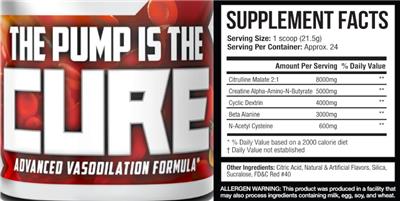
Supplement Facts
The label details for The Pump Is The Cure by Fit Factor, sourced from the NIH Dietary Supplement Label Database.
Supplement Facts
| Ingredient | Amount | % DV |
|---|---|---|
| Beta-Alanine | 3000 mg | -- |
| N-Acetyl Cysteine | 600 mg | -- |
| Citrulline Malate | 8000 mg | -- |
| Cyclic Dextrin | 4000 mg | -- |
| Creatine Alpha-Amino-N-Butyrate | 5000 mg | -- |
Other ingredients: Citric Acid, Natural & Artificial Flavors, Silica, Sucralose, FD&C Red #40
Tap any ingredient to jump to its full detail below.
These statements are the manufacturer’s wording, reproduced from the product label — the label is saying it, not HelloPharmacist. We don’t verify or endorse them.
Formulation
Advanced vasodilation formula
Precautions
Allergen warning: This product was produced in a facility that may also process ingredients containing milk, egg, soy, and wheat.
Is this label outdated? Report a formula or label change and our pharmacy team will review it.
The Pump Is The Cure by Fit Factor label
The label scan from the NIH Dietary Supplement Label Database. Tap to enlarge.
Label images are published by the NIH Dietary Supplement Label Database for the version of this product on file. Always read your actual product label.
View the full label (PDF)The Ingredients in The Pump Is The Cure by Fit Factor
These are the 5 active ingredients this product is made of. Select any to open its full monograph.
Serving size21.5 Gram(s) Dosage formPowder Servings per container24 Amounts shown are per serving.
Most supplement products combine several ingredients, and a medication can interact with the product through any one of them. Each ingredient below shows whether it has known drug interactions.
Beta-Alanine
No knowninteractions
Beta-alanine is an amino acid taken mostly by athletes to raise muscle carnosine, which may help buffer acid and reduce fatigue during short, high-int...
Beta-Alanine monograph & interactionsN-Acetyl Cysteine
Interacts with294 drugs
N-acetyl cysteine (NAC) is a supplement form of the amino acid cysteine and a building block for the antioxidant glutathione. It has well-established...
N-Acetyl Cysteine monograph & interactionsCitrulline Malate
Cyclic Dextrin
Creatine Alpha-Amino-N-Butyrate
No knowninteractions
Creatine is one of the most studied sports supplements, with solid evidence that it can boost strength and performance during short, high-intensity ac...
Creatine Alpha-Amino-N-Butyrate monograph & interactionsOther (inactive) ingredients: Citric Acid, Natural & Artificial Flavors, Silica, Sucralose, FD&C Red #40. These complete the product’s ingredient list but are not active constituents.
The Pump Is The Cure by Fit Factor Drug Interactions
HelloPharmacist Interaction Report
The Pump Is The Cure by Fit Factor has documented interactions with several medication types, primarily through its N-acetyl cysteine ingredient.
The most serious concern is with nitroglycerin (a heart medication) — N-acetyl cysteine can cause dangerous drops in blood pressure and severe headaches when combined with intravenous or transdermal nitroglycerin.
Read the full breakdown — every affected drug type, severity by severity
N-acetyl cysteine also has Moderate-severity interactions with blood pressure medications (antihypertensives), blood thinners and antiplatelet drugs, and chloroquine (an antimalarial). It may lower blood pressure further or increase bleeding risk.
It can also interfere with chloroquine's antimalarial effects and reduce how well activated charcoal works if you take both.
Beta-alanine, creatine alpha-amino-N-butyrate, and citrulline malate are either well-tolerated with no known interactions or have not been checked for interactions. Cyclic dextrin has not been checked either.
Altogether, these interactions span 292 individual medications. Use the medication checker on this page to see if any of your prescriptions are affected before you start.
Check your own medications below · Editorial policy · How we use AI
Want to check YOUR meds against The Pump Is The Cure?
Ask about interactions with your drugs in plain English — “Can I take it with lisinopril?” — and we find you the answer in seconds, ingredient by ingredient.
Go to the checkerIngredients driving the most interactions
Individual Drug Interactions
The ingredients in The Pump Is The Cure interact with 294 drugs. Click any drug to see the details.
1 of the 5 ingredients in The Pump Is The Cure interact with drugs. Each result below shows which ingredient is responsible. N-Acetyl Cysteine
NitroglycerinGonitro, Nitro Time, Nitro-Bid, Nitrocine Timecaps, Nitrogard, Nitrogard SR +7 more
How Nitroglycerin interacts with The Pump Is The Cure — through 1 ingredient. Tap an ingredient for the detail:
N-acetyl CysteineNitroglycerin Major
Interaction Summary
N-acetyl cysteine can increase the risk for hypotension and headaches when taken with intravenous or transdermal nitroglycerin.
Read the full N-acetyl Cysteine + Nitroglycerin interactionAbciximabReoPro
How Abciximab interacts with The Pump Is The Cure — through 1 ingredient. Tap an ingredient for the detail:
N-acetyl CysteineAnticoagulant/antiplatelet Drugs Moderate
Interaction Summary
Theoretically, N-acetyl cysteine might increase the risk of bleeding when taken with anticoagulant or antiplatelet drugs.
Read the full N-acetyl Cysteine + Abciximab interactionAbrocitinibCibinqo
How Abrocitinib interacts with The Pump Is The Cure — through 1 ingredient. Tap an ingredient for the detail:
N-acetyl CysteineAnticoagulant/antiplatelet Drugs Moderate
Interaction Summary
Theoretically, N-acetyl cysteine might increase the risk of bleeding when taken with anticoagulant or antiplatelet drugs.
Read the full N-acetyl Cysteine + Abrocitinib interactionAcebutololRhotral, Sectral
How Acebutolol interacts with The Pump Is The Cure — through 1 ingredient. Tap an ingredient for the detail:
N-acetyl CysteineAntihypertensive Drugs Moderate
Interaction Summary
Theoretically, N-acetyl cysteine might increase the risk of hypotension when taken with antihypertensive drugs.
Read the full N-acetyl Cysteine + Acebutolol interactionAcenocoumarolSintrom
How Acenocoumarol interacts with The Pump Is The Cure — through 1 ingredient. Tap an ingredient for the detail:
N-acetyl CysteineAnticoagulant/antiplatelet Drugs Moderate
Interaction Summary
Theoretically, N-acetyl cysteine might increase the risk of bleeding when taken with anticoagulant or antiplatelet drugs.
Read the full N-acetyl Cysteine + Acenocoumarol interactionAcetaminophen, AspirinGemnisyn
How Acetaminophen, Aspirin interacts with The Pump Is The Cure — through 1 ingredient. Tap an ingredient for the detail:
N-acetyl CysteineAnticoagulant/antiplatelet Drugs Moderate
Interaction Summary
Theoretically, N-acetyl cysteine might increase the risk of bleeding when taken with anticoagulant or antiplatelet drugs.
Read the full N-acetyl Cysteine + Acetaminophen, Aspirin interactionAcetaminophen, Aspirin, CaffeineExcedrin, Excedrin Extra Strength, Excedrin Migraine
How Acetaminophen, Aspirin, Caffeine interacts with The Pump Is The Cure — through 1 ingredient. Tap an ingredient for the detail:
N-acetyl CysteineAnticoagulant/antiplatelet Drugs Moderate
Interaction Summary
Theoretically, N-acetyl cysteine might increase the risk of bleeding when taken with anticoagulant or antiplatelet drugs.
Read the full N-acetyl Cysteine + Acetaminophen, Aspirin, Caffeine interactionAcetaminophen, IbuprofenCombogesic
How Acetaminophen, Ibuprofen interacts with The Pump Is The Cure — through 1 ingredient. Tap an ingredient for the detail:
N-acetyl CysteineAnticoagulant/antiplatelet Drugs Moderate
Interaction Summary
Theoretically, N-acetyl cysteine might increase the risk of bleeding when taken with anticoagulant or antiplatelet drugs.
Read the full N-acetyl Cysteine + Acetaminophen, Ibuprofen interactionAcetazolamideAk-Zol, Diamox
How Acetazolamide interacts with The Pump Is The Cure — through 1 ingredient. Tap an ingredient for the detail:
N-acetyl CysteineAntihypertensive Drugs Moderate
Interaction Summary
Theoretically, N-acetyl cysteine might increase the risk of hypotension when taken with antihypertensive drugs.
Read the full N-acetyl Cysteine + Acetazolamide interactionAcetylsalicylic AcidEntrophen
How Acetylsalicylic Acid interacts with The Pump Is The Cure — through 1 ingredient. Tap an ingredient for the detail:
N-acetyl CysteineAnticoagulant/antiplatelet Drugs Moderate
Interaction Summary
Theoretically, N-acetyl cysteine might increase the risk of bleeding when taken with anticoagulant or antiplatelet drugs.
Read the full N-acetyl Cysteine + Acetylsalicylic Acid interactionAliskirenTekturna
How Aliskiren interacts with The Pump Is The Cure — through 1 ingredient. Tap an ingredient for the detail:
N-acetyl CysteineAntihypertensive Drugs Moderate
Interaction Summary
Theoretically, N-acetyl cysteine might increase the risk of hypotension when taken with antihypertensive drugs.
Read the full N-acetyl Cysteine + Aliskiren interactionAlteplase, TpaActilyse, Activase
How Alteplase, Tpa interacts with The Pump Is The Cure — through 1 ingredient. Tap an ingredient for the detail:
N-acetyl CysteineAnticoagulant/antiplatelet Drugs Moderate
Interaction Summary
Theoretically, N-acetyl cysteine might increase the risk of bleeding when taken with anticoagulant or antiplatelet drugs.
Read the full N-acetyl Cysteine + Alteplase, Tpa interactionAluminum Hydroxide, Aspirin, Codeine Phosphate, Magnesium HydroxideAscriptin Codeine #2
How Aluminum Hydroxide, Aspirin, Codeine Phosphate, Magnesium Hydroxide interacts with The Pump Is The Cure — through 1 ingredient. Tap an ingredient for the detail:
N-acetyl CysteineAnticoagulant/antiplatelet Drugs Moderate
Interaction Summary
Theoretically, N-acetyl cysteine might increase the risk of bleeding when taken with anticoagulant or antiplatelet drugs.
Read the full N-acetyl Cysteine + Aluminum Hydroxide, Aspirin, Codeine Phosphate, Magnesium Hydroxide interactionAluminum Hydroxide, Aspirin, Magnesium HydroxideAscriptin
How Aluminum Hydroxide, Aspirin, Magnesium Hydroxide interacts with The Pump Is The Cure — through 1 ingredient. Tap an ingredient for the detail:
N-acetyl CysteineAnticoagulant/antiplatelet Drugs Moderate
Interaction Summary
Theoretically, N-acetyl cysteine might increase the risk of bleeding when taken with anticoagulant or antiplatelet drugs.
Read the full N-acetyl Cysteine + Aluminum Hydroxide, Aspirin, Magnesium Hydroxide interactionAmbrisentanLetairis, Volibris
How Ambrisentan interacts with The Pump Is The Cure — through 1 ingredient. Tap an ingredient for the detail:
N-acetyl CysteineAntihypertensive Drugs Moderate
Interaction Summary
Theoretically, N-acetyl cysteine might increase the risk of hypotension when taken with antihypertensive drugs.
Read the full N-acetyl Cysteine + Ambrisentan interactionAmilorideAmilamont, Midamor
How Amiloride interacts with The Pump Is The Cure — through 1 ingredient. Tap an ingredient for the detail:
N-acetyl CysteineAntihypertensive Drugs Moderate
Interaction Summary
Theoretically, N-acetyl cysteine might increase the risk of hypotension when taken with antihypertensive drugs.
Read the full N-acetyl Cysteine + Amiloride interactionAmiloride, HydrochlorothiazideAmil-Co, Amilzide, Moduret 25, Moduretic
How Amiloride, Hydrochlorothiazide interacts with The Pump Is The Cure — through 1 ingredient. Tap an ingredient for the detail:
N-acetyl CysteineAntihypertensive Drugs Moderate
Interaction Summary
Theoretically, N-acetyl cysteine might increase the risk of hypotension when taken with antihypertensive drugs.
Read the full N-acetyl Cysteine + Amiloride, Hydrochlorothiazide interactionAmlodipineNorliqva
How Amlodipine interacts with The Pump Is The Cure — through 1 ingredient. Tap an ingredient for the detail:
N-acetyl CysteineAntihypertensive Drugs Moderate
Interaction Summary
Theoretically, N-acetyl cysteine might increase the risk of hypotension when taken with antihypertensive drugs.
Read the full N-acetyl Cysteine + Amlodipine interactionAmlodipine BenzoateKaterzia
How Amlodipine Benzoate interacts with The Pump Is The Cure — through 1 ingredient. Tap an ingredient for the detail:
N-acetyl CysteineAntihypertensive Drugs Moderate
Interaction Summary
Theoretically, N-acetyl cysteine might increase the risk of hypotension when taken with antihypertensive drugs.
Read the full N-acetyl Cysteine + Amlodipine Benzoate interactionAmlodipine BesilateIstin
How Amlodipine Besilate interacts with The Pump Is The Cure — through 1 ingredient. Tap an ingredient for the detail:
N-acetyl CysteineAntihypertensive Drugs Moderate
Interaction Summary
Theoretically, N-acetyl cysteine might increase the risk of hypotension when taken with antihypertensive drugs.
Read the full N-acetyl Cysteine + Amlodipine Besilate interactionAmlodipine BesylateNorvasc
How Amlodipine Besylate interacts with The Pump Is The Cure — through 1 ingredient. Tap an ingredient for the detail:
N-acetyl CysteineAntihypertensive Drugs Moderate
Interaction Summary
Theoretically, N-acetyl cysteine might increase the risk of hypotension when taken with antihypertensive drugs.
Read the full N-acetyl Cysteine + Amlodipine Besylate interactionAmlodipine Besylate, BenazeprilLotrel
How Amlodipine Besylate, Benazepril interacts with The Pump Is The Cure — through 1 ingredient. Tap an ingredient for the detail:
N-acetyl CysteineAntihypertensive Drugs Moderate
Interaction Summary
Theoretically, N-acetyl cysteine might increase the risk of hypotension when taken with antihypertensive drugs.
Read the full N-acetyl Cysteine + Amlodipine Besylate, Benazepril interactionAmlodipine, CelecoxibConsensi
How Amlodipine, Celecoxib interacts with The Pump Is The Cure — through 1 ingredient. Tap an ingredient for the detail:
N-acetyl CysteineAntihypertensive Drugs Moderate
Interaction Summary
Theoretically, N-acetyl cysteine might increase the risk of hypotension when taken with antihypertensive drugs.
Read the full N-acetyl Cysteine + Amlodipine, Celecoxib interactionAmmonium ChlorideAmmonium Chloride
How Ammonium Chloride interacts with The Pump Is The Cure — through 1 ingredient. Tap an ingredient for the detail:
N-acetyl CysteineAntihypertensive Drugs Moderate
Interaction Summary
Theoretically, N-acetyl cysteine might increase the risk of hypotension when taken with antihypertensive drugs.
Read the full N-acetyl Cysteine + Ammonium Chloride interactionAnacaulase-bcdbNexoBrid
How Anacaulase-bcdb interacts with The Pump Is The Cure — through 1 ingredient. Tap an ingredient for the detail:
N-acetyl CysteineAnticoagulant/antiplatelet Drugs Moderate
Interaction Summary
Theoretically, N-acetyl cysteine might increase the risk of bleeding when taken with anticoagulant or antiplatelet drugs.
Read the full N-acetyl Cysteine + Anacaulase-bcdb interactionAnagrelideAgrylin
How Anagrelide interacts with The Pump Is The Cure — through 1 ingredient. Tap an ingredient for the detail:
N-acetyl CysteineAnticoagulant/antiplatelet Drugs Moderate
Interaction Summary
Theoretically, N-acetyl cysteine might increase the risk of bleeding when taken with anticoagulant or antiplatelet drugs.
Read the full N-acetyl Cysteine + Anagrelide interactionAnisindioneMiradon
How Anisindione interacts with The Pump Is The Cure — through 1 ingredient. Tap an ingredient for the detail:
N-acetyl CysteineAnticoagulant/antiplatelet Drugs Moderate
Interaction Summary
Theoretically, N-acetyl cysteine might increase the risk of bleeding when taken with anticoagulant or antiplatelet drugs.
Read the full N-acetyl Cysteine + Anisindione interactionAntithrombin IiiThrombate III
How Antithrombin Iii interacts with The Pump Is The Cure — through 1 ingredient. Tap an ingredient for the detail:
N-acetyl CysteineAnticoagulant/antiplatelet Drugs Moderate
Interaction Summary
Theoretically, N-acetyl cysteine might increase the risk of bleeding when taken with anticoagulant or antiplatelet drugs.
Read the full N-acetyl Cysteine + Antithrombin Iii interactionApixabanEliquis
How Apixaban interacts with The Pump Is The Cure — through 1 ingredient. Tap an ingredient for the detail:
N-acetyl CysteineAnticoagulant/antiplatelet Drugs Moderate
Interaction Summary
Theoretically, N-acetyl cysteine might increase the risk of bleeding when taken with anticoagulant or antiplatelet drugs.
Read the full N-acetyl Cysteine + Apixaban interactionAprocitentanTryvio
How Aprocitentan interacts with The Pump Is The Cure — through 1 ingredient. Tap an ingredient for the detail:
N-acetyl CysteineAntihypertensive Drugs Moderate
Interaction Summary
Theoretically, N-acetyl cysteine might increase the risk of hypotension when taken with antihypertensive drugs.
Read the full N-acetyl Cysteine + Aprocitentan interactionEach ingredient & the kinds of drugs it affects
For each ingredient in The Pump Is The Cure with known interactions, here are the types of medications it can affect. Open any type for the detail — or search your exact drug in the checker above.
N-Acetyl Cysteine
Nitroglycerin
N-acetyl cysteine can increase the risk for hypotension and headaches when taken with intravenous or transdermal nitroglycerin.
Clinical research shows that concomitant administration of N-acetyl cysteine and intravenous or transdermal nitroglycerin can cause severe hypotension and intolerable headaches. Furthermore, in vitro research suggests that N-acetyl cysteine increases the anticoagulant activity of nitroglycerin.
Activated Charcoal
N-acetyl cysteine might reduce the effects of activated charcoal, while activated charcoal might reduce the absorption of N-acetyl cysteine.
N-acetyl cysteine appears to reduce the capacity of activated charcoal to adsorb acetaminophen and salicylic acid. Conversely, although clinical research suggests that although activated charcoal can reduce the absorption of N-acetyl cysteine by up to 40%, it does not seem to reduce its clinical effects. Other clinical evidence suggests that activated charcoal does not affect the absorption of N-acetyl cysteine.
Anticoagulant/Antiplatelet Drugs
Theoretically, N-acetyl cysteine might increase the risk of bleeding when taken with anticoagulant or antiplatelet drugs.
Clinical research suggests that intravenous N-acetyl cysteine decreases prothrombin time, prolongs coagulation time, decreases platelet aggregation, and increases blood loss in surgical patients. Furthermore, in vitro research suggests that N-acetyl cysteine increases the anticoagulant activity of nitroglycerin.
Antihypertensive Drugs
Theoretically, N-acetyl cysteine might increase the risk of hypotension when taken with antihypertensive drugs.
Animal research suggests that N-acetyl cysteine potentiates the hypotensive effects of the angiotensin-converting enzyme inhibitors (ACEIs) captopril and enalaprilat. Theoretically, combining N-acetyl cysteine with other antihypertensive drugs might increase the risk of hypotension.
Chloroquine (Aralen)
Theoretically, N-acetyl cysteine might interfere with the antimalarial effects of chloroquine.
Animal research suggests that N-acetyl cysteine might reduce the antimalarial effects of chloroquine by increasing cellular levels of glutathione.
Brand information
Manufacturer and brand details for The Pump Is The Cure, from the product label.
The Pump Is The Cure by Fit Factor: Common Questions
Does The Pump Is The Cure by Fit Factor interact with any medications?
How can one product interact with so many drugs?
Where does this information come from?
What's the tingling I might feel when I take this?
Can I take this if I'm pregnant or breastfeeding?
Will this help me build muscle?
What side effects might I get?
Is this safe if I have kidney problems?
Written and reviewed by the HelloPharmacist editorial staff. Our editorial policy
Not sure if The Pump Is The Cure is safe with your meds?
Our pharmacists answer your medication & supplement questions — free.
Label information is sourced from the NIH Dietary Supplement Label Database and reflects the product version on file; always read your actual product label. This page is for education only and is not a substitute for professional medical advice. Confirm with your pharmacist or doctor before combining supplements and medications.
The Full Monographs Behind The Pump Is The Cure’s Ingredients
Every ingredient we hold a full HelloPharmacist monograph for — uses, evidence, safety, and the complete interaction list.
Beta-alanine
Beta-alanine is an amino acid taken mostly by athletes to raise muscle carnosine, which may help buffer acid and reduce fatigue during short, high-intensity exercise. The evidence is moderat...
Read the full Beta-alanine monograph → Herb & supplement monographN-acetyl Cysteine (nac)
Interacts with 294 drugsN-acetyl cysteine (NAC) is a supplement form of the amino acid cysteine and a building block for the antioxidant glutathione. It has well-established prescription uses for acetaminophen over...
Read the full N-acetyl Cysteine (nac) monograph → Herb & supplement monographCreatine
Creatine is one of the most studied sports supplements, with solid evidence that it can boost strength and performance during short, high-intensity activities like weightlifting and sprintin...
Read the full Creatine monograph →Sources & How We Checked
The Pump Is The Cure's label data comes from the NIH Dietary Supplement Label Database; the ingredient interaction data is from the Natural Medicines database, reviewed by our pharmacists.
- NIH Dietary Supplement Label Database (DSLD) — The official product label on file for this supplement.
- Natural Medicines (Therapeutic Research Center) — Evidence-graded clinical reference behind the ingredient interaction data.
Content is written and reviewed by licensed HelloPharmacist pharmacists. See our data sources and editorial standards for how this information is built and checked.
The 185 references behind this product’s interaction data
Every citation that drives the interaction findings for this product’s ingredients, from the evidence-graded Natural Medicines (TRC Healthcare) database. Open an ingredient to browse its citations — links open the study on PubMed or the publisher’s site.
Beta-alanine 13 references
- Harris RC, Tallon MJ, Dunnett M, et al. The absorption of orally supplied beta-alanine and its effect on muscle carnosine synthesis in human vastus lateralis. Amino Acids 2006;30:279-89.
- Hill CA, Harris RC, Kim HJ, et al. Influence of beta-alanine supplementation on skeletal muscle carnosine concentrations and high intensity cycling capacity. Amino Acids 2007;32:225-33.
- Bellinger PM, Minahan CL. The effect of ß-alanine supplementation on cycling time trials of different length. Eur J Sport Sci 2016;16(7):829-36.
- Chung W, Shaw G, Anderson ME, et al. Effect of 10 week beta-alanine supplementation on competition and training performance in elite swimmers. Nutrients 2012;4(10):1441-53. PubMed
- Glenn JM, Gray M, Stewart R, et al. Incremental effects of 28 days of beta-alanine supplementation on high-intensity cycling performance and blood lactate in masters female cyclists. Amino Acids 2015;47(12):2593-600. PubMed
- Gross M, Bieri K, Hoppeler H, Norman B, Vogt M. Beta-alanine supplementation improves jumping power and affects severe-intensity performance in professional alpine skiers. Int J Sport Nutr Exerc Metab 2014;24(6):665-73. PubMed
- Howe ST, Bellinger PM, Driller MW, Shing CM, Fell JW. The effect of beta-alanine supplementation on isokinetic force and cycling performance in highly trained cyclists. Int J Sport Nutr Exerc Metab 2013;23(6):562-70. PubMed
- Sweeney KM, Wright GA, Glenn Brice A, Doberstein ST. The effect of beta-alanine supplementation on power performance during repeated sprint activity. J Strength Cond Res 2010;24(1):79-87.
- Décombaz J, Beaumont M, Vuichoud J, Bouisset F, Stellingwerff T. Effect of slow-release ß-alanine tablets on absorption kinetics and paresthesia. Amino Acids 2012;43(1):67-76. Erratum in: Amino Acids 2013;45(4):1015.
- Stellingwerff T, Anwander H, Egger A, et al. Effect of two ß-alanine dosing protocols on muscle carnosine synthesis and washout. Amino Acids 2012;42(6):2461-72. PubMed
- da Silva RP, de Oliveira LF, Saunders B, et al. Effects of ß-alanine and sodium bicarbonate supplementation on the estimated energy system contribution during high-intensity intermittent exercise. Amino Acids. 2019;51(1):83-96. PubMed
- Varanoske AN, Hoffman JR, Church DD, et al. Comparison of sustained-release and rapid-release ß-alanine formulations on changes in skeletal muscle carnosine and histidine content and isometric performance following a muscle-damaging protocol. Amino Acids. PubMed
- Perim P, Gobbi N, Duarte B, et al. Beta-alanine did not improve high-intensity performance throughout simulated road cycling. Eur J Sport Sci 2021. PubMed
N-acetyl Cysteine (nac) 86 references
- Ellenhorn MJ, et al. Ellenhorn's Medical Toxicology: Diagnoses and Treatment of Human Poisoning. 2nd ed. Baltimore, MD: Williams & Wilkins, 1997.
- Jepsen S, Hansen AB. The influence of N-acetylcysteine on the measurement of prothrombin time and activated partial thromboplastin time in healthy subjects. Scand J Clin Lab Invest 1994;54:543-7. PubMed
- van Zandwijk N, Dalesio O, Pastorino U, et al. EUROSCAN, a randomized trial of vitamin A and N-acetylcysteine in patients with head and neck cancer or lung cancer. For the European Organization for Research and Treatment of Cancer Head and Neck and Lung C DOI
- Horowitz RS, Dart RC, Jarvie DR, et al. Placental transfer of N-acetylcysteine following human maternal acetaminophen toxicity. J Toxicol Clin Toxicol 1997;35:447-51.
- Bailey B, McGuigan MA. Management of anaphylactoid reactions to intravenous N-acetylcysteine. Ann Emerg Med 1998;31:710-5. PubMed
- Spiller HA, Krenzelok EP, Grande GA, et al. A prospective evaluation of the effect of activated charcoal before oral N-acetylcysteine in acetaminophen overdose. Ann Emerg Med 1994;23:519-23. PubMed
- Ardissino D, Merlini PA, Savonitto S, et al. Effect of transdermal nitroglycerin or N-acetylcysteine, or both, in the long-term treatment of unstable angina pectoris. J Am Coll Cardiol 1997;29:941-7. PubMed
- Horowitz JD, Henry CA, Syrjanen ML, et al. Nitroglycerine/N-acetylcysteine in the management of unstable angina pectoris. Eur Heart J 1988;9:95-100. PubMed
- Louwerse ES, Weverling GJ, Bossuyt PM, et al. Randomized, double-blind, controlled trial of acetylcysteine in amyotrophic lateral sclerosis. Arch Neurol 1995;52:559-64. PubMed
- Wiklund O, Fager G, Andersson A, et al. N-acetylcysteine treatment lowers plasma homocysteine but not serum lipoprotein(a) levels. Atherosclerosis 1996;119:99-106. PubMed
- De Flora S, Grassi C, Carati L. Attenuation of influenza-like symptomatology and improvement of cell-mediated immunity with long-term N-acetylcysteine treatment. Eur Respir J 1997;10:1535-41. PubMed
- Iversen HK. N-acetylcysteine enhances nitroglycerin-induced headache and cranial arterial responses. Clin Pharmacol Ther 1992;52:125-33. PubMed
- Behr J, Maier K, Degenkolb B, et al. Antioxidative and clinical effects of high-dose N-acetylcysteine in fibrosing alveolitis. Adjunctive therapy to maintenance immunosuppression. Am J Respir Crit Care Med 1997;156:1897-901.
- Tenenbein PK, Sitar DS, Tenenbein M. Interaction between N-acetylcysteine and activated charcoal: implications for the treatment of acetaminophen poisoning. Pharmacotherapy 2001;21:1331-6.
- Arstall MA, Yang J, Stafford I, et al. N-acetylcysteine in combination with nitroglycerin and streptokinase for the treatment of evolving acute myocardial infarction. Safety and biochemical effects. Circulation 1995;92:2855-62.
- Estensen RD, Levy M, Klopp SJ, et al. N-acetylcysteine suppression of the proliferative index in the colon of patients with previous adenomatous colonic polyps. Cancer Lett 1999;147:109-14. PubMed
- Pela R, Calcagni AM, Subiaco S, et al. N-acetylcysteine reduces the exacerbation rate in patients with moderate to severe COPD. Respiration 1999;66:495-500.. PubMed
- Oldemeyer JB, Biddle WP, Wurdeman RL, et al. Acetylcysteine in the prevention of contrast-induced nephropathy after coronary angiography. Am Heart J 2003;146:E23. . PubMed
- Ekins BR, Ford DC, Thompson MI, et al. The effect of activated charcoal on N-acetylcysteine absorption in normal subjects. Am J Emerg Med. 1987;5(6):483-7. PubMed
- Chamberlain JM, Gorman RL, Oderda GM, Klein-Schwartz W, Klein BL. Use of activated charcoal in a simulated poisoning with acetaminophen: a new loading dose for N-acetylcysteine? Ann Emerg Med. 1993;22(9):1398-402. PubMed
- Renzi FP, Donovan JW, Martin TG, Morgan L, Harrison EF. Concomitant use of activated charcoal and N-acetylcysteine. Ann Emerg Med. 1985;14(6):568-72. DOI
- North DS, Peterson RG, Krenzelok EP. Effect of activated charcoal administration on acetylcysteine serum levels in humans. Am J Hosp Pharm. 1981;38(7):1022-4. DOI
- Loscalzo J. N-Acetylcysteine potentiates inhibition of platelet aggregation by nitroglycerin. J Clin Invest. 1985;76(2):703-8. PubMed
- Ruiz FJ, Salom MG, Inglés AC, et al. N-acetyl-L-cysteine potentiates depressor response to captopril and enalaprilat in SHRs. Am J Physiol. 1994;267(3 Pt 2):R767-72. PubMed
- Deharo E, Barkan D, Krugliak M, Golenser J, Ginsburg H. Potentiation of the antimalarial action of chloroquine in rodent malaria by drugs known to reduce cellular glutathione levels. Biochem Pharmacol. 2003;66(5):809-17. PubMed
- Buckley, N. A., Whyte, I. M., O'Connell, D. L., and Dawson, A. H. Oral or intravenous N-acetylcysteine: which is the treatment of choice for acetaminophen (paracetamol) poisoning? J Toxicol.Clin Toxicol. 1999;37(6):759-767.
- Sunman, W., Hughes, A. D., and Sever, P. S. Anaphylactoid response to intravenous acetylcysteine. Lancet 5-16-1992;339(8803):1231-1232. PubMed
- Reynard, K., Riley, A., and Walker, B. E. Respiratory arrest after N-acetylcysteine for paracetamol overdose. Lancet 9-12-1992;340(8820):675. PubMed
- BERNSTEIN, I. L. and AUSDENMOORE, R. W. IATROGENIC BRONCHOSPASM OCCURRING DURING CLINICAL TRIALS OF A NEW MUCOLYTIC AGENT, ACETYLCYSTEINE. Dis.Chest 1964;46:469-473. PubMed
- REAS, H. W. THE USE OF N-ACETYLCYSTEINE IN THE TREATMENT OF CYSTIC FIBROSIS. J Pediatr 1964;65:542-557. PubMed
- Bibi, H., Seifert, B., Oullette, M., and Belik, J. Intratracheal N-acetylcysteine use in infants with chronic lung disease. Acta Paediatr. 1992;81(4):335-339. PubMed
- Jepsen, S., Herlevsen, P., Knudsen, P., Bud, M. I., and Klausen, N. O. Antioxidant treatment with N-acetylcysteine during adult respiratory distress syndrome: a prospective, randomized, placebo-controlled study. Crit Care Med 1992;20(7):918-923. PubMed
- Roes, E. M., Raijmakers, M. T., Boo, T. M., Zusterzeel, P. L., Merkus, H. M., Peters, W. H., and Steegers, E. A. Oral N-acetylcysteine administration does not stabilise the process of established severe preeclampsia. Eur.J Obstet.Gynecol.Reprod.Biol 2006
- Spiller, H. A., Winter, M. L., Klein-Schwartz, W., and Bangh, S. A. Efficacy of activated charcoal administered more than four hours after acetaminophen overdose. J Emerg.Med 2006;30(1):1-5. PubMed
- Tirouvanziam, R., Conrad, C. K., Bottiglieri, T., Herzenberg, L. A., Moss, R. B., and Herzenberg, L. A. High-dose oral N-acetylcysteine, a glutathione prodrug, modulates inflammation in cystic fibrosis. Proc Natl.Acad.Sci U.S.A 3-21-2006;103(12):4628-463
- Niemi, T. T., Munsterhjelm, E., Poyhia, R., Hynninen, M. S., and Salmenpera, M. T. The effect of N-acetylcysteine on blood coagulation and platelet function in patients undergoing open repair of abdominal aortic aneurysm. Blood Coagul.Fibrinolysis 2006;1 PubMed
- Komisarof, J. A., Gilkey, G. M., Peters, D. M., Koudelka, C. W., Meyer, M. M., and Smith, S. M. N-acetylcysteine for patients with prolonged hypotension as prophylaxis for acute renal failure (NEPHRON). Crit Care Med 2007;35(2):435-441. PubMed
- Grimble, G. K. Adverse gastrointestinal effects of arginine and related amino acids. J Nutr 2007;137(6 Suppl 2):1693S-1701S. PubMed
- Berk, M., Copolov, D. L., Dean, O., Lu, K., Jeavons, S., Schapkaitz, I., Anderson-Hunt, M., and Bush, A. I. N-acetyl cysteine for depressive symptoms in bipolar disorder--a double-blind randomized placebo-controlled trial. Biol Psychiatry 9-15-2008;64(6) PubMed
- Shahin, A. Y., Hassanin, I. M., Ismail, A. M., Kruessel, J. S., and Hirchenhain, J. Effect of oral N-acetyl cysteine on recurrent preterm labor following treatment for bacterial vaginosis. Int J Gynaecol.Obstet. 2009;104(1):44-48. PubMed
- Nigwekar, S. U. and Kandula, P. N-acetylcysteine in cardiovascular-surgery-associated renal failure: a meta-analysis. Ann Thorac.Surg 2009;87(1):139-147. PubMed
- Sandilands, E. A. and Bateman, D. N. Adverse reactions associated with acetylcysteine. Clin Toxicol.(Phila) 2009;47(2):81-88. PubMed
- Wijeysundera, D. N., Karkouti, K., Rao, V., Granton, J. T., Chan, C. T., Raban, R., Carroll, J., Poonawala, H., and Beattie, W. S. N-acetylcysteine is associated with increased blood loss and blood product utilization during cardiac surgery. Crit Care Me PubMed
- Holdiness, M. R. Clinical pharmacokinetics of N-acetylcysteine. Clin Pharmacokinet. 1991;20(2):123-134. PubMed
- Dawson, A. H., Henry, D. A., and McEwen, J. Adverse reactions to N-acetylcysteine during treatment for paracetamol poisoning. Med J Aust. 3-20-1989;150(6):329-331.
- Rasmussen, J. B. and Glennow, C. Reduction in days of illness after long-term treatment with N-acetylcysteine controlled-release tablets in patients with chronic bronchitis. Eur.Respir.J 1988;1(4):351-355. DOI
- Walters, M. T., Rubin, C. E., Keightley, S. J., Ward, C. D., and Cawley, M. I. A double-blind, cross-over, study of oral N-acetylcysteine in Sjogren's syndrome. Scand J Rheumatol.Suppl 1986;61:253-258.
- Cato, A., Goldstein, I., and Millman, M. A double-blind parallel study of acetylcysteine-isoproterenol and saline-isoproterenol in patients with chronic obstructive lung disease. J Int Med Res 1977;5(3):175-183. PubMed
- Parr, G. D. and Huitson, A. Oral Fabrol (oral N-acetyl-cysteine) in chronic bronchitis. Br.J.Dis.Chest 1987;81(4):341-348.
- Dano, G. Bronchospasm caused by acetylcysteine in children with bronchial asthma. Acta Allergol. 1971;26(3):181-190. DOI
- Howatt, W. F. and DeMuth, G. R. A double-blind study of the use of acetylcysteine in patients with cystic fibrosis. Univ Mich.Med Cent.J 1966;32(2):82-85.
- Millman, M. and Grundon, W. Use of acetylcysteine in bronchial asthma and emphysema. J Asthma Res 1969;6(4):199-209. PubMed
- Vale, J. A. and Wheeler, D. C. Anaphylactoid reaction to acetylcysteine. Lancet 10-30-1982;2(8305):988.
- Mant, T. G., Tempowski, J. H., Volans, G. N., and Talbot, J. C. Adverse reactions to acetylcysteine and effects of overdose. Br Med J (Clin Res Ed) 7-28-1984;289(6439):217-219. PubMed
- Myers, C., Bonow, R., Palmeri, S., Jenkins, J., Corden, B., Locker, G., Doroshow, J., and Epstein, S. A randomized controlled trial assessing the prevention of doxorubicin cardiomyopathy by N-acetylcysteine. Semin.Oncol 1983;10(1 Suppl 1):53-55.
- Miller, L. F. and Rumack, B. H. Clinical safety of high oral doses of acetylcysteine. Semin.Oncol 1983;10(1 Suppl 1):76-85.
- Boman, G., Backer, U., Larsson, S., Melander, B., and Wahlander, L. Oral acetylcysteine reduces exacerbation rate in chronic bronchitis: report of a trial organized by the Swedish Society for Pulmonary Diseases. Eur J Respir.Dis 1983;64(6):405-415.
- Tattersall, A. B., Bridgman, K. M., and Huitson, A. Irish general practice study of acetylcysteine (Fabrol) in chronic bronchitis. J Int Med Res 1984;12(2):96-101. PubMed
- Jackson, I. M., Barnes, J., and Cooksey, P. Efficacy and tolerability of oral acetylcysteine (Fabrol) in chronic bronchitis: a double-blind placebo controlled study. J Int Med Res 1984;12(3):198-206. PubMed
- Ho, S. W. and Beilin, L. J. Asthma associated with N-acetylcysteine infusion and paracetamol poisoning: report of two cases. Br Med J (Clin Res Ed) 9-24-1983;287(6396):876-877. PubMed
- Vale, J. A. and Buckley, B. M. Asthma associated with N-acetylcysteine infusion and paracetamol poisoning. Br Med J (Clin Res Ed) 10-22-1983;287(6400):1223. PubMed
- Bateman, D. N., Woodhouse, K. W., and Rawlins, M. D. Adverse reactions to N-acetylcysteine. Hum Toxicol. 1984;3(5):393-398. PubMed
- Gervais, S., Lussier-Labelle, F., and Beaudet, G. Anaphylactoid reaction to acetylcysteine. Clin Pharm 1984;3(6):586-587.
- Tattersall, A. B., Bridgman, K. M., and Huitson, A. Acetylcysteine (Fabrol) in chronic bronchitis--a study in general practice. J Int Med Res 1983;11(5):279-284. PubMed
- Casola, G. and vanSonnenberg, E. Skin damage from acetylcysteine leak during percutaneous abscess drainage. Radiology 1984;152(1):233. PubMed
- Aylward, M., Maddock, J., and Dewland, P. Clinical evaluation of acetylcysteine in the treatment of patients with chronic obstructive bronchitis: a balanced double-blind trial with placebo control. Eur.J Respir.Dis.Suppl 1980;111:81-89.
- Long-term oral acetylcysteine in chronic bronchitis. a double-blind controlled study. Eur.J Respir.Dis.Suppl 1980;111:93-108.
- Chan, T. Y. and Critchley, J. A. Adverse reactions to intravenous N-acetylcysteine in Chinese patients with paracetamol (acetaminophen) poisoning. Hum Exp.Toxicol. 1994;13(8):542-544. PubMed
- Hansen, N. C., Skriver, A., Brorsen-Riis, L., Balslov, S., Evald, T., Maltbaek, N., Gunnersen, G., Garsdal, P., Sander, P., Pedersen, J. Z., and . Orally administered N-acetylcysteine may improve general well-being in patients with mild chronic bronchiti
- Reid, M. B., Stokic, D. S., Koch, S. M., Khawli, F. A., and Leis, A. A. N-acetylcysteine inhibits muscle fatigue in humans. J Clin Invest 1994;94(6):2468-2474. PubMed
- Chirkov, Y. Y. and Horowitz, J. D. N-Acetylcysteine potentiates nitroglycerin-induced reversal of platelet aggregation. J Cardiovasc.Pharmacol 1996;28(3):375-380. PubMed
- Hershkovitz, E., Shorer, Z., Levitas, A., and Tal, A. Status epilepticus following intravenous N-acetylcysteine therapy. Isr.J Med Sci 1996;32(11):1102-1104.
- Stavem, K. [Anaphylactic reaction to N-acetylcysteine after poisoning with paracetamol]. Tidsskr.Nor Laegeforen. 5-30-1997;117(14):2038-2039.
- Walton, N. G., Mann, T. A., and Shaw, K. M. Anaphylactoid reaction to N-acetylcysteine. Lancet 12-15-1979;2(8155):1298. PubMed
- Perry, H. E. and Shannon, M. W. Efficacy of oral versus intravenous N-acetylcysteine in acetaminophen overdose: results of an open-label, clinical trial. J Pediatr 1998;132(1):149-152. PubMed
- Kory, R. C., Hirsch, S. R., and Giraldo, J. Nebulization of N-acetylcysteine combined with a bronchodilator in patients with chronic bronchitis. A controlled study. Chest 1968;54(6):504-509. PubMed
- Nahir, A. M., Scharf, J. M., and Szargel, R. Effects of oral N-acetylcysteine on both ocular and oral manifestations of Sjogren's Syndrome. Curr Ther Res 1989;46:187-192.
- Charley, G., Dean, B. S., and Krenzelok, E. P. Oral N-acetylcysteine-induced urticaria: a case report. Vet.Hum Toxicol. 1987;29:477.
- Jenkins DD, Wiest DB, Mulvihill DM, et al. Fetal and neonatal effects of N-acetylcysteine when used for neuroprotection in maternal chorioamnionitis. J Pediatr. 2016 Jan;168:67-76.e6. PubMed
- Costa DLC, Diniz JB, Requena G, et al. Randomized double-blind, placebo-controlled trial of N-acetylcysteine augmentation for treatment-resistant obsessive-compulsive disorder. J Clin Psychiatry. 2017 Jul;78(7):e799-e773.
- Kranzer K, Elamin WF, Cox H, Seddon JA, Ford N, Drobniewski F. A systematic review and meta-analysis of the efficacy and safety of N-acetylcysteine in preventing aminoglycoside-induced ototoxicity: implications for the treatment of multidrug-resistant TB.
- Wang W, Zhang Y, Liu Y, Xu L, Shi D. Severe chest pain due to N-acetylcysteine-induced esophagitis. Case Rep Med. 2019;2019:8057259.
- Li F, Welling MC, Johnson JA, et al. N-acetylcysteine for pediatric obsessive-compulsive disorder: A small pilot study. J Child Adolesc Psychopharmacol. 2020;30(1):32-37. PubMed
- Monti DA, Zabrecky G, Leist TP, et al. N-acetyl cysteine administration is associated with increased cerebral glucose metabolism in patients with multiple sclerosis: An exploratory study. Front Neurol. 2020;11:88. PubMed
- Gray KM, Carpenter MJ, Baker NL, et al. A double-blind randomized controlled trial of N-acetylcysteine in cannabis-dependent adolescents. Am J Psychiatry. 2012;169(8):805-12.
- Sarris J, Byrne G, Castle D, et al. N-acetyl cysteine (NAC) augmentation in the treatment of obsessive-compulsive disorder: A phase III, 20-week, double-blind, randomized, placebo-controlled trial. Prog Neuropsychopharmacol Biol Psychiatry 2022;117:110550 PubMed
See these in context on the N-acetyl Cysteine (nac) monograph →
Creatine 86 references
- Koshy KM, Griswold E, Schneeberger EE. Interstitial nephritis in a patient taking creatine. N Engl J Med 1999;340:814-5. PubMed
- Vahedi K, Domingo V, Amarenco P, Bousser MG. Ischemic stroke in a sportsman who consumed MaHuang extract and creatine monohydrate for bodybuilding. J Neurol Neurosurg Psychiatr 2000;68:112-3.
- Greenhaff P. Renal dysfunction accompanying oral creatine supplements. Lancet 1998;352:233-4. PubMed
- Vandenberghe K, Goris M, Van Hecke P, et al. Long-term creatine intake is beneficial to muscle performance during resistance training (abstract). J Appl Physiol 1997;83:2055-63. PubMed
- Hultman E, Soderlund K, Timmons JA, et al. Muscle creatine loading in men. J Appl Physiol 1996;81:232-7. PubMed
- Pritchard NR, Kalra PA. Renal dysfunction accompanying oral creatine supplements. Lancet 1998;351:1252-3. PubMed
- Poortmans JR, Auquier H, Renaut V, et al. Effect of short-term creatine supplementation on renal responses in men (abstract). Eur J Appl Physiol Occup Physiol 1997;76:566-7. PubMed
- Poortmans JR, Francaux M. Long-term oral creatine supplementation does not impair renal function in healthy athletes. Med Sci Sports Exerc 1999;31:1108-10. PubMed
- Mihic S, MacDonald JR, McKenzie S, Tarnopolsky MA. Acute creatine loading increases fat-free mass, but does not affect blood pressure, plasma creatinine, or CK activity in men and women. Med Sci Sports Exerc 2000;32:291-6. PubMed
- Rawson ES, Wehnert ML, Clarkson PM. Effects of 30 days of creatine ingestion in older men. Eur J Appl Physiol Occup Physiol 1999;80:139-44. PubMed
- Earnest CP, Almada AL, Mitchell TL. High-performance capillary electrophoresis-pure creatine monohydrate reduces blood lipids in men and women. Clin Sci (Colch) 1996;91:113-8. PubMed
- Juhn MS. Oral creatine supplementation. Separating fact from hype. Phys Sportsmed 1999;27:47-50,53-54,56,61,89. PubMed
- Juhn MS, O'Kane JW, Vinci DM. Oral creatine supplementation in male collegiate athletes: a survey of dosing habits and side effects. J Am Diet Assoc 1999;99:593-5.
- Green AL, Hultman E, Macdonald IA, et al. Carbohydrate ingestion augments skeletal muscle creatine accumulation during creatine supplementation in humans. Am J Physiol 1996;271:E821-6. PubMed
- Balsom PD, Soderlund K, Sjodin B, Ekblom B. Skeletal muscle metabolism during short duration high-intensity exercise: influence of creatine supplementation. Acta Physiol Scand 1995;154:303-10. PubMed
- Snow RJ, McKenna MJ, Selig SE, et al. Effect of creatine supplementation on sprint exercise performance and muscle metabolism. (abstract) J Appl Physiol 1998;84:1667-73. PubMed
- McNaughton LR, Dalton B, Tarr J. The effects of creatine supplementation on high-intensity exercise performance in elite performers. (abstract) Eur J Appl Physiol Occup Physiol 1998;78:236-40. PubMed
- Groeneveld GJ, Veldink JH, van der Tweel I, et al. A randomized sequential trial of creatine in amyotrophic lateral sclerosis. Ann Neurol 2003;53:437-45. . PubMed
- Robinson SJ. Acute quadriceps compartment syndrome and rhabdomyolysis in a weight lifter using high-dose creatine supplementation. J Am Board Fam Pract 2000;13:134-7. PubMed
- Kammer RT. Lone atrial fibrillation associated with creatine monohydrate supplementation. Pharmacotherapy 2005;25:762-4. PubMed
- Gualano B, Ugrinowitsch C, Novaes RB, et al. Effects of creatine supplementation on renal function: a randomized, double-blind, placebo-controlled clinical trial. Eur J Appl Physiol 2008;103:33-40. PubMed
- Pfeffer, G., Majamaa, K., Turnbull, D. M., Thorburn, D., and Chinnery, P. F. Treatment for mitochondrial disorders. Cochrane Database.Syst.Rev. 2012;4:CD004426. PubMed
- Boos, C. J., White, S. H., Bland, S. A., and McAllister, P. D. Dietary supplements and military operations: caution is advised. J R.Army Med Corps 2010;156(1):41-43. PubMed
- Kreider, R. B. Dietary supplements and the promotion of muscle growth with resistance exercise. Sports Med 1999;27(2):97-110. PubMed
- Juhn, M. S., O'Kane, J. W., and Vinci, D. M. Oral creatine supplementation in male collegiate athletes: a survey of dosing habits and side effects. J Am.Diet.Assoc 1999;99(5):593-595.
- Volek, J. S., Duncan, N. D., Mazzetti, S. A., Putukian, M., Gomez, A. L., and Kraemer, W. J. No effect of heavy resistance training and creatine supplementation on blood lipids. Int J Sport Nutr.Exerc.Metab 2000;10(2):144-156. PubMed
- Robinson, T. M., Sewell, D. A., Casey, A., Steenge, G., and Greenhaff, P. L. Dietary creatine supplementation does not affect some haematological indices, or indices of muscle damage and hepatic and renal function. Br.J Sports Med 2000;34(4):284-288. PubMed
- Tarnopolsky, M. A. Potential benefits of creatine monohydrate supplementation in the elderly. Curr.Opin.Clin Nutr.Metab Care 2000;3(6):497-502. PubMed
- Tarnopolsky, M. A. and MacLennan, D. P. Creatine monohydrate supplementation enhances high-intensity exercise performance in males and females. Int J Sport Nutr.Exerc.Metab 2000;10(4):452-463. PubMed
- Arciero, P. J., Hannibal, N. S., III, Nindl, B. C., Gentile, C. L., Hamed, J., and Vukovich, M. D. Comparison of creatine ingestion and resistance training on energy expenditure and limb blood flow. Metabolism 2001;50(12):1429-1434. PubMed
- Chrusch, M. J., Chilibeck, P. D., Chad, K. E., Davison, K. S., and Burke, D. G. Creatine supplementation combined with resistance training in older men. Med Sci.Sports Exerc. 2001;33(12):2111-2117. PubMed
- Cox, G., Mujika, I., Tumilty, D., and Burke, L. Acute creatine supplementation and performance during a field test simulating match play in elite female soccer players. Int J Sport Nutr.Exerc.Metab 2002;12(1):33-46. PubMed
- Kilduff, L. P., Vidakovic, P., Cooney, G., Twycross-Lewis, R., Amuna, P., Parker, M., Paul, L., and Pitsiladis, Y. P. Effects of creatine on isometric bench-press performance in resistance-trained humans. Med Sci.Sports Exerc. 2002;34(7):1176-1183. PubMed
- Brose, A., Parise, G., and Tarnopolsky, M. A. Creatine supplementation enhances isometric strength and body composition improvements following strength exercise training in older adults. J Gerontol A Biol.Sci.Med Sci. 2003;58(1):11-19. PubMed
- Volek, J. S., Ratamess, N. A., Rubin, M. R., Gomez, A. L., French, D. N., McGuigan, M. M., Scheett, T. P., Sharman, M. J., Hakkinen, K., and Kraemer, W. J. The effects of creatine supplementation on muscular performance and body composition responses to
- Tyler, T. F., Nicholas, S. J., Hershman, E. B., Glace, B. W., Mullaney, M. J., and McHugh, M. P. The effect of creatine supplementation on strength recovery after anterior cruciate ligament (ACL) reconstruction: a randomized, placebo-controlled, double-b DOI
- Groeneveld, G. J., Beijer, C., Veldink, J. H., Kalmijn, S., Wokke, J. H., and van den Berg, L. H. Few adverse effects of long-term creatine supplementation in a placebo-controlled trial. Int J Sports Med 2005;26(4):307-313. PubMed
- Astorino, T. A., Marrocco, A. C., Gross, S. M., Johnson, D. L., Brazil, C. M., Icenhower, M. E., and Kneessi, R. J. Is running performance enhanced with creatine serum ingestion? J Strength.Cond.Res 2005;19(4):730-734. PubMed
- Cramer, J. T., Stout, J. R., Culbertson, J. Y., and Egan, A. D. Effects of creatine supplementation and three days of resistance training on muscle strength, power output, and neuromuscular function. J Strength.Cond.Res 2007;21(3):668-677. PubMed
- Young, P., De, Jonghe P., Stogbauer, F., and Butterfass-Bahloul, T. Treatment for Charcot-Marie-Tooth disease. Cochrane.Database.Syst.Rev. 2008;(1):CD006052. PubMed
- Ostojic, S. M. and Ahmetovic, Z. Gastrointestinal distress after creatine supplementation in athletes: are side effects dose dependent? Res.Sports Med. 2008;16(1):15-22. PubMed
- Whitt, K. N., Ward, S. C., Deniz, K., Liu, L., Odin, J. A., and Qin, L. Cholestatic liver injury associated with whey protein and creatine supplements. Semin.Liver Dis. 2008;28(2):226-231. PubMed
- Koenig CA, Benardot D Cody M Thompson WR. Comparison of creatine monohydrate and carbohydrate supplementation on repeated jump height performance. J Strength Cond Res. 2008;22(4):1081-1086. PubMed
- Gordon, P. H., Cheung, Y. K., Levin, B., Andrews, H., Doorish, C., Macarthur, R. B., Montes, J., Bednarz, K., Florence, J., Rowin, J., Boylan, K., Mozaffar, T., Tandan, R., Mitsumoto, H., Kelvin, E. A., Chapin, J., Bedlack, R., Rivner, M., McCluskey, L.
- Bender, A., Samtleben, W., Elstner, M., and Klopstock, T. Long-term creatine supplementation is safe in aged patients with Parkinson disease. Nutr.Res. 2008;28(3):172-178. PubMed
- Parness, J. You're "hot" from pumping iron? Anesth.Analg. 2009;108(3):711-713. PubMed
- Gualano, B., Ferreira, D. C., Sapienza, M. T., Seguro, A. C., and Lancha, A. H., Jr. Effect of short-term high-dose creatine supplementation on measured GFR in a young man with a single kidney. Am.J.Kidney Dis. 2010;55(3):e7-e9. PubMed
- Saidi, H. and Mani, M. Severe metabolic acidosis secondary to coadministration of creatine and metformin, a case report. Am.J.Emerg.Med. 2010;28(3):388-6. PubMed
- Gualano, B., de, Salles Painelli, V, Roschel, H., Lugaresi, R., Dorea, E., Artioli, G. G., Lima, F. R., da Silva, M. E., Cunha, M. R., Seguro, A. C., Shimizu, M. H., Otaduy, M. C., Sapienza, M. T., da Costa, Leite C., Bonfa, E., and Lancha Junior, A. H.
- Neves, M., Jr., Gualano, B., Roschel, H., Lima, F. R., Lucia, de Sa-Pinto, Seguro, A. C., Shimizu, M. H., Sapienza, M. T., Fuller, R., Lancha, A. H., Jr., and Bonfa, E. Effect of creatine supplementation on measured glomerular filtration rate in postmeno
- Gufford, B. T., Sriraghavan, K., Miller, N. J., Miller, D. W., Gu, X., Vennerstrom, J. L., and Robinson, D. H. Physicochemical characterization of creatine N-methylguanidinium salts. J.Diet.Suppl 2010;7(3):240-252.
- Lugaresi, R., Leme, M., de, Salles Painelli, V, Murai, I. H., Roschel, H., Sapienza, M. T., Lancha Junior, A. H., and Gualano, B. Does long-term creatine supplementation impair kidney function in resistance-trained individuals consuming a high-protein di
- Poortmans, J. R. and Francaux, M. Renal dysfunction accompanying oral creatine supplements. Lancet 7-18-1998;352(9123):234. PubMed
- Maganaris, C. N. and Maughan, R. J. Creatine supplementation enhances maximum voluntary isometric force and endurance capacity in resistance trained men. Acta Physiol Scand. 1998;163(3):279-287. PubMed
- Vandebuerie, F., Vanden Eynde, B., Vandenberghe, K., and Hespel, P. Effect of creatine loading on endurance capacity and sprint power in cyclists. Int J Sports Med 1998;19(7):490-495. PubMed
- Juhn, M. S. and Tarnopolsky, M. Oral creatine supplementation and athletic performance: a critical review. Clin J Sport Med 1998;8(4):286-297. PubMed
- Vandenberghe K, Van Hecke P, Van Leemputte M, and et al. Inhibition of muscle phosphocreatine resynthesis by caffeine after creatine loading. Med Sci Sports Exerc 1997;29(5 Supplement):249.
- Ziegenfuss T, Lowery LM, and Lemon PW. Acute fluid volume changes in men during three days of creatine supplementation. J Exerc Physiol Online 1998;1(3): .
- Kuehl K, Goldberg L, and Elliot D. Renal insufficiency after creatine supplementation in a college football athlete. Med Sci Sports Exerc 1998;30(5 Suppl ):S235. DOI
- Balsom PD, Ekblom B, Soderlund K, and et al. Creatine supplementation and dynamic high-intensity intermittent excercise. Scand J Med Sci Sports 1993;3:143-149.
- Kirksey KB, Warren BJ, Stone MH, and et al. The effects of six weeks of creatine monohydrate supplementation in male and female track athletes. Med Sci Sports Exerc 1997;29(5 Suppl):S145.
- Kreider R, Ransom J, Rasmussen C, and et al. Creatine supplementation during pre-season football does not affect markers of renal function. 83rd Annual Experimental Biology Meeting 1999;
- Rasmussen C, Kreider R, Ransom J, and et al. Creatine supplementation during pre-season football training does not affect fluid or electrolyte status. 46th Annual American College of Sports Medicine Annual Meeting 1999; DOI
- Tan CW, Hae Tha M, Joo Ng H. Creatine supplementation and venous thrombotic events. Am J Med 2014;127(8):e7-8. PubMed
- Young C, Oladipo O, Frasier S, et al. Hemorrhagic stroke in young healthy male following use of sports supplement Jack3d. Mil Med 2012;177(12):1450-4. PubMed
- Vilella AL, Limsuwat C, Williams DR, Seifert CF. Cholestatic jaundice as a result of combination designer supplement ingestion. Ann Pharmacother 2013;47(7-8):e33. PubMed
- Li N, Hauser R, Holford T, et al. Muscle-building supplement use and increased risk of testicular germ cell cancer in men from Connecticut and Massachusetts. Br J Cancer 2015;112(7):1247-50. PubMed
- Centers for Disease Control and Prevention (CDC). Hyperthermia and dehydration-related deaths associated with rapid weight loss in three collegiate wrestlers - North Carolina, Wisconsin, and Michigan, November-December 1997. MMWR Morb Mortal Wkly Rep 1998
- Litsky F. Collegiate wrestling deaths raise fears about training. The New York Times. December 19, 1997. Available at: http://www.nytimes.com/1997/12/19/sports/wrestling-collegiate-wrestling-deaths-raise-fears-about-training.html.
- The Associated Press. Creatine ruled out in athletes' deaths. The New York Times. May 2, 1998. Available at: http://www.nytimes.com/1998/05/02/sports/plus-college-wrestling-creatine-ruled-out-in-athletes-deaths.html.
- Creatine in the dock. Men's Fitness Magazine (Australia). September 2013. Available at: http://www.mensfitnessmagazine.com.au/2013/09/creatine-in-the-dock/.
- Galvan E, Walker Dk, Simbo SY, et al. Acute and chronic safety and efficacy of dose dependent creatine nitrate supplementation and exercise performance. J Int Soc Sports Nutr. 2016 Mar 31;13:12. PubMed
- Deminice R, Rosa FT, Pfrimer K, Ferrioli E, Jorao AA, Freitas E. Creatine supplementation increases total body water in soccer players: a deuterium oxide dilution study. Int J Sports Med. 2016 Feb;37(2):149-53. PubMed
- Wilkinson TJ, Lemmy AB, Jones AG, et al. Can creatine supplementation improve body composition and objective physical function in Rheumatoid Arthritis patients? A randomized controlled trial. Arthritis Care Res (Hoboken). 2016 Jun;68(6):729-37. PubMed
- Kreider RB, Kalman DS, Antonio J, et al. International Society of Sports Nutrition position stand: safety and efficacy of creating supplementation in exercise, sport, and medicine. J Int Soc Sports Nutr. 2017;14:18.
- de Guingand DL, Palmer KR, Snow RJ, Davies-Tuck ML, Ellery SJ. Risk of adverse outcomes in females taking oral creatine monohydrate: a systematic review and meta-analysis. Nutrients. 2020;12(6):E1780. PubMed
- Almeida D, Colombini A, Machado M. Creatine supplementation improves performance, but is it safe? Double-blind placebo-controlled study. J Sports Med Phys Fitness. 2020;60(7):1034-9. PubMed
- Mills S, Candow DG, Forbes SC, Neary JP, Ormsbee MJ, Antonio J. Effects of creatine supplementation during resistance training sessions in physically active young adults. Nutrients. 2020;12(6):1880. PubMed
- Whinton AK, Donahoe K, Gao R, et al. Repeated application of a novel creatine cream improves muscular peak and average power in male subjects. J Strength Cond Res. 2020;34(9):2482-2491. PubMed
- Dover S, Stephens S, Schneiderman JE, et al. The effect of creatine supplementation on muscle function in childhood myositis: A randomized, double-blind, placebo-controlled feasibility study. J Rheumatol. 2020:jrheum.191375. PubMed
- Chilibeck PD, Candow DG, Landeryou T, Kaviani M, Paus-Jenssen L. Effects of creatine and resistance training on bone health in postmenopausal women. Med Sci Sports Exerc. 2015;47(8):1587-95. PubMed
- Forbes SC, Candow DG, Ostojic SM, Roberts MD, Chilibeck PD. Meta-analysis examining the importance of creatine ingestion strategies on lean tissue mass and strength in older adults. Nutrients 2021;13(6):1912. PubMed
- Silva C, Fung AWS, Masson V, et al. Vitamin D toxicity from an unusual and unexpected source: a report of 2 cases. Horm Res Paediatr 2022. PubMed
- Delpino FM, Figueiredo LM, Forbes SC, Candow DG, Santos HO. Influence of age, sex, and type of exercise on the efficacy of creatine supplementation on lean body mass: A systematic review and meta-analysis of randomized clinical trials. Nutrition 2022;103- PubMed
- Todorovic N, Korovljev D, Stajer V, Jorga J, Ostojic SM. Creatine consumption and liver disease manifestations in individuals aged 12?years and over. Food Sci Nutr 2022;11(2):1134-1141. PubMed
- Robles EL, Pache KM, Gluck JS. Acute compartment syndrome of the leg caused by cocaine use, creatine supplementation and vigorous exercise. J Surg Case Rep 2022;2022(11):rjac502. PubMed
Parts of this content are provided by the Therapeutic Research Center, LLC.
DISCLAIMER: Currently this does not check for drug-drug interactions. This is not an all-inclusive comprehensive list of potential interactions and is for informational purposes only. Not all interactions are known or well-reported in the scientific literature, and new interactions are continually being reported. Input is needed from a qualified healthcare provider including a pharmacist before starting any therapy. Application of clinical judgment is necessary.
© 2021 Therapeutic Research Center, LLC