
TheraVein Ingredients & Drug Interactions
by Klaire Labs
What is this page for?
First and foremost: checking TheraVein against your medications. The heart of this page is the interaction checker and the full interaction report — how this product’s ingredients may interact with prescription and over-the-counter medicines you may be taking.
Around that, we add a pharmacist’s high-level view of the product as a whole — what’s inside, the evidence for its stated use, how transparent the label is, and what safety data exists — so you can see the full picture in one place. It’s educational information from our licensed clinical databases and the clinical staff at HelloPharmacist — not medical advice — and we don’t sell or endorse products. Our editorial policy
TheraVein is a dietary supplement by Klaire Labs with 5 active ingredients. Its ingredients are commonly taken for chronic venous insufficiency, varicose veins, leg swelling and heaviness.Based on those ingredients, 1,496 medications have a known interaction with it, the most serious rated moderate. The ingredients most likely to interact are Citrus Bioflavonoid Complex, Hesperidin Methyl Chalcone, Gotu Kola extract. Use the checker below to test your specific medication, or read the full HelloPharmacist Interaction Report.
Check Your Meds Against TheraVein by Klaire Labs
Ask about any prescription or over-the-counter medication and we check it for interactions with TheraVein by Klaire Labs — and tell you which ingredient is responsible.
AI summaries are generated from our interaction database for education only — always confirm with your pharmacist. How we use AI
Ask the Pharmacist
A licensed pharmacist will answer your question by email — free, usually within 24 hours.
Got it — thank you!
A licensed pharmacist will answer within 24 hours. Keep an eye on your email (worth checking spam, just in case).
HelloPharmacist Scorecard of TheraVein by Klaire Labs
Our pharmacy team’s full take, with four database checks built into the cards below — a summary of what is known, not a grade of the product itself.
What’s inside
Full disclosure
TheraVein contains five active ingredients designed to support vein and circulation health. Butcher's Broom extract, Horse Chestnut extract, and Gotu Kola extract are the three primary botanical components; Hesperidin Methyl Chalcone is a flavonoid derived from citrus; and Citrus Bioflavonoid Complex rounds out the formula.
The product also includes inactive ingredients — hydroxypropyl methylcellulose (capsule material), water, silicon dioxide, and magnesium stearate — that serve as fillers and binders.
Does it work?
Moderate evidence
The evidence for TheraVein's ingredients is mixed. Butcher's Broom extract is possibly effective for chronic venous insufficiency (CVI) — the condition of poor blood flow in the veins of the legs — but there isn't reliable evidence yet for hemorrhoids, orthostatic low blood pressure (lightheadedness when standing), lymphedema, or diabetic eye damage.
Horse Chestnut extract is also possibly effective for CVI, though evidence for hemorrhoids, irritable bowel syndrome, and kidney stones is insufficient. Gotu Kola extract is possibly effective for venous insufficiency and burns, but the data suggests it may be ineffective for radiation skin damage and cognitive function.
Hesperidin Methyl Chalcone appears possibly ineffective for weight loss and cholesterol, with insufficient evidence for nonalcoholic fatty liver disease. We hold no effectiveness data for Citrus Bioflavonoid Complex.
How safe is it?
Well-documented data
Butcher's Broom is generally well tolerated short-term, though long-term safety data is limited. The most common side effects are stomach upset — nausea, vomiting, diarrhea, heartburn, indigestion, and gastritis.
Horse Chestnut is reasonably well tolerated when properly processed, but raw plant parts are toxic; common side effects include dizziness, stomach upset, headache, and itching. Gotu Kola is generally well tolerated short-term but has raised liver concerns; reported side effects are nausea and stomach irritation, with rare cases of liver damage reported, though causation is unclear.
Hesperidin Methyl Chalcone is well tolerated in food amounts and short-term use, with one case report of allergic skin rash. During pregnancy, Butcher's Broom and Horse Chestnut should be avoided — safety hasn't been established.
Gotu Kola and Hesperidin Methyl Chalcone also lack adequate safety data in pregnancy and should be avoided. During breastfeeding, Butcher's Broom and Horse Chestnut should be avoided, and Gotu Kola is best avoided as well.
Hesperidin Methyl Chalcone carries mixed ratings — some data suggest it may be likely safe or possibly safe, but it's best to discuss with your doctor. No breastfeeding data is on file for Citrus Bioflavonoid Complex.
Meds to double-check
Moderate interaction found
Before taking TheraVein, double-check the following medication types with your pharmacist: blood thinners and antiplatelet drugs (like warfarin, aspirin, clopidogrel) — Moderate risk of increased bleeding; blood pressure medications and calcium channel blockers (verapamil, diltiazem) — theoretical risk of increased effect; CNS depressants (sedatives, sleep aids, opioids) — Moderate risk of increased drowsiness; drugs that can damage the liver (hepatotoxic medications) — Moderate theoretical risk; and alpha-adrenergic agonists and antagonists (some blood pressure and urinary symptom drugs) — Moderate risk of altered effect. For any drug not on this list, we have no documented interactions with the ingredients we could check.
The bottom line
Scorecard at a glanceFully disclosed formula with some supporting evidence for its stated purpose. Moderate medication interactions have been identified, and safety information is well characterized.
TheraVein is formulated for venous insufficiency, particularly the leg symptoms of poor blood flow, and two of its ingredients show possible effectiveness for that use. However, if you take blood thinners, blood pressure medications, sedatives, or drugs that damage the liver, you need to check your exact medications with us first — the interactions are documented and worth verifying.
If you're pregnant or breastfeeding, talk with your doctor or pharmacist before starting.
Educational only — not medical advice; always confirm with your pharmacist. Our editorial policy · How we use AI
Assessment coverage: 5 of 5 active ingredients matched to our full ingredient reviews (monographs). Based on the product label dated Jan 23, 2023.
This Scorecard evaluates available label information, ingredient evidence, and known medication-safety considerations. It does not independently verify product identity, purity, potency, contamination, or manufacturing quality. How these ratings are computed
General information
Key facts about TheraVein, straight from the product label.
| Brand | Klaire Labs |
|---|---|
| Barcode (UPC) | 828054009103 |
| Net contents | 60 Capsule(s) |
| Market status | On market |
| Date entered into DSLD | Jan 23, 2023 |
| DSLD ID | 281262 |
| Product type | Other Combinations |
| Supplement form | Capsule |
| Dietary claims / uses | All Other |
| Intended target group(s) | Adult (18 - 50 Years), Gluten Free, Dairy Free |
Everything in this section is reproduced from the manufacturer’s own product label — it’s the label speaking, not HelloPharmacist. We show it so you can see exactly what the maker states; we don’t verify or endorse those statements.
Supplement Facts
The label details for TheraVein by Klaire Labs, sourced from the NIH Dietary Supplement Label Database.
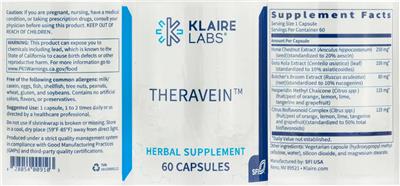
Supplement Facts
| Ingredient | Amount | % DV |
|---|---|---|
| Butcher's Broom extract | 80 mg | -- |
| Horse Chestnut Extract | 250 mg | -- |
| Gotu Kola extract | 150 mg | -- |
| Hesperidin Methyl Chalcone | 125 mg | -- |
| Citrus Bioflavonoid Complex | 125 mg | -- |
Other ingredients: Hydroxypropyl Methylcellulose, Water, Silicon Dioxide, Magnesium Stearate
Tap any ingredient to jump to its full detail below.
These statements are the manufacturer’s wording, reproduced from the product label — the label is saying it, not HelloPharmacist. We don’t verify or endorse them.
Precautions
Caution: If you are pregnant, nursing, have a medical condition, or taking prescription drugs, consult your physician before using this product.
Keep out of reach of children.
Warning: This product can expose you to chemicals including lead, which is known to the State of California to cause birth defects or other reproductive harm. For more information go to www.P65Warnings.ca.gov/food
Do not use if shrinkwrap is broken or missing.
Formulation
Free of the following common allergens: Milk/casein, eggs, fish, shellfish, tree nuts, peanuts, wheat, gluten, and soybeans. Contains no artificial colors, flavors, or preservatives.
Produced under a strict quality management system in compliance with Good Manufacturing Practices (GMPs) and third-party quality certifications.
Suggested/Recommended/Usage/Directions
Suggested Use: 1 capsule, 1 to 2 times daily or as directed by a healthcare professional.
Storage
Store in a cool, dry place (59 degrees F - 85 degrees F) away from direct light.
FDA Statement of Identity
Dietary Supplement
Brand IP Statement(s)
SFI
Is this label outdated? Report a formula or label change and our pharmacy team will review it.
TheraVein by Klaire Labs label
The label scan from the NIH Dietary Supplement Label Database. Tap to enlarge.
Label images are published by the NIH Dietary Supplement Label Database for the version of this product on file. Always read your actual product label.
View the full label (PDF)The Ingredients in TheraVein by Klaire Labs
These are the 5 active ingredients this product is made of. Select any to open its full monograph.
Serving size1 Capsule(s) Dosage formCapsule Servings per container60 Amounts shown are per serving.
Most supplement products combine several ingredients, and a medication can interact with the product through any one of them. Each ingredient below shows whether it has known drug interactions.
Butcher's Broom extract
Interacts with158 drugs
Butcher's broom is a plant extract most often used for circulation problems in the legs, such as chronic venous insufficiency, where some evidence sug...
Butcher's Broom extract monograph & interactionsHorse Chestnut Extract
Interacts with122 drugs
Horse chestnut seed extract is most often used for chronic venous insufficiency, where standardized products may help reduce leg swelling, pain, and h...
Horse Chestnut Extract monograph & interactionsGotu Kola extract
Interacts with579 drugs
Gotu kola is a traditional Ayurvedic and Asian herb that people use for wound healing, circulation, skin problems, and as a calming or memory-supporti...
Gotu Kola extract monograph & interactionsHesperidin Methyl Chalcone
Interacts with702 drugs
Hesperidin is a flavonoid found in citrus fruits that is often combined with diosmin and used for vein and circulation problems like hemorrhoids and v...
Hesperidin Methyl Chalcone monograph & interactionsCitrus Bioflavonoid Complex
Interacts with1,169 drugs
Quercetin is a plant flavonoid with antioxidant and anti-inflammatory properties found in many common foods and sold as a supplement. While early rese...
Citrus Bioflavonoid Complex monograph & interactionsOther (inactive) ingredients: Hydroxypropyl Methylcellulose, Water, Silicon Dioxide, Magnesium Stearate. These complete the product’s ingredient list but are not active constituents.
TheraVein by Klaire Labs Drug Interactions
HelloPharmacist Interaction Report
TheraVein by Klaire Labs contains several ingredients with documented interactions to medications.
The most serious concern involves Hesperidin Methyl Chalcone, which may increase bleeding risk if you're taking blood thinners or antiplatelet drugs (like warfarin or aspirin) — this is a Moderate severity interaction. Altogether, these interactions span 1,027 individual medications.
Read the full breakdown — every affected drug type, severity by severity
Butcher's Broom extract can theoretically reduce the effects of alpha-adrenergic antagonists (drugs that relax blood vessels, often for blood pressure or urinary symptoms) and may increase the effects of alpha-adrenergic agonists (which tighten blood vessels). Horse Chestnut extract carries a Moderate risk of increased bleeding when combined with blood thinners or antiplatelet medications, due to its antiplatelet effects.
Gotu Kola extract may increase drowsiness if you take CNS depressants (sedatives, sleep aids, opioids), and there's a theoretical concern about additive liver stress if you're on drugs that can damage the liver — though this risk is Moderate and not well established in humans. Hesperidin Methyl Chalcone also theoretically increases the effect of certain blood pressure medications and calcium channel blockers (verapamil, diltiazem), may reduce the effect of celiprolol, and could increase levels of other drugs that depend on a liver protein called P-glycoprotein for their clearance.
We could not check Citrus Bioflavonoid Complex — no interaction data is on file for it. Run your exact medications through the checker below before starting this product.
Check your own medications below · Editorial policy · How we use AI
Want to check YOUR meds against TheraVein?
Ask about interactions with your drugs in plain English — “Can I take it with lisinopril?” — and we find you the answer in seconds, ingredient by ingredient.
Go to the checkerIngredients driving the most interactions
Individual Drug Interactions
The ingredients in TheraVein interact with 1,496 drugs. Click any drug to see the details.
5 of the 5 ingredients in TheraVein interact with drugs. Each result below shows which ingredient is responsible. Citrus Bioflavonoid Complex Hesperidin Methyl Chalcone Gotu Kola extract Butcher's Broom extract Horse Chestnut Extract
Acetaminophen, Chlorpheniramine Maleate, Dextromethorphan HbrVicks Formula 44M Cough, Cold & Flu Relief
How Acetaminophen, Chlorpheniramine Maleate, Dextromethorphan Hbr interacts with TheraVein — through 2 ingredients. Tap an ingredient for the detail:
Gotu Kola ExtractHepatotoxic Drugs Moderate
Interaction Summary
Theoretically, taking gotu kola with hepatotoxic drugs might have additive adverse effects.
Read the full Gotu Kola Extract + Acetaminophen, Chlorpheniramine Maleate, Dextromethorphan Hbr interactionCitrus Bioflavonoid ComplexCytochrome P450 2d6 (cyp2d6) Substrates, Cytochrome P450 3a4 (cyp3a4) Substrates Moderate
Interaction Summary
Theoretically, concomitant use might increase the levels and adverse effects of CYP2D6 substrates.
Read the full Citrus Bioflavonoid Complex + Acetaminophen, Chlorpheniramine Maleate, Dextromethorphan Hbr interactionAcetaminophen, Chlorpheniramine, Codeine, PhenylephrineColrex
How Acetaminophen, Chlorpheniramine, Codeine, Phenylephrine interacts with TheraVein — through 4 ingredients. Tap an ingredient for the detail:
Citrus Bioflavonoid ComplexCytochrome P450 2d6 (cyp2d6) Substrates, Cytochrome P450 3a4 (cyp3a4) Substrates Moderate
Interaction Summary
Theoretically, concomitant use might increase the levels and adverse effects of CYP2D6 substrates.
Read the full Citrus Bioflavonoid Complex + Acetaminophen, Chlorpheniramine, Codeine, Phenylephrine interactionHesperidin Methyl ChalconeCns Depressants Moderate
Interaction Summary
Theoretically, concomitant use with CNS depressants may cause additive sedative effects.
Read the full Hesperidin Methyl Chalcone + Acetaminophen, Chlorpheniramine, Codeine, Phenylephrine interactionGotu Kola ExtractHepatotoxic Drugs, Cns Depressants Moderate
Interaction Summary
Theoretically, taking gotu kola with hepatotoxic drugs might have additive adverse effects.
Read the full Gotu Kola Extract + Acetaminophen, Chlorpheniramine, Codeine, Phenylephrine interactionButcher's Broom ExtractAlpha-adrenergic Agonists Moderate
Interaction Summary
Theoretically, butcher's broom might increase the effects and adverse effects of alpha-adrenergic agonists.
Read the full Butcher's Broom Extract + Acetaminophen, Chlorpheniramine, Codeine, Phenylephrine interactionAcetaminophen, Chlorpheniramine, DextromethorphanCoricidin II Extra Strength Cold and Flu
How Acetaminophen, Chlorpheniramine, Dextromethorphan interacts with TheraVein — through 2 ingredients. Tap an ingredient for the detail:
Gotu Kola ExtractHepatotoxic Drugs Moderate
Interaction Summary
Theoretically, taking gotu kola with hepatotoxic drugs might have additive adverse effects.
Read the full Gotu Kola Extract + Acetaminophen, Chlorpheniramine, Dextromethorphan interactionCitrus Bioflavonoid ComplexCytochrome P450 2d6 (cyp2d6) Substrates, Cytochrome P450 3a4 (cyp3a4) Substrates Moderate
Interaction Summary
Theoretically, concomitant use might increase the levels and adverse effects of CYP2D6 substrates.
Read the full Citrus Bioflavonoid Complex + Acetaminophen, Chlorpheniramine, Dextromethorphan interactionAcetaminophen, Chlorpheniramine, Dextromethorphan HydrobromideCoricidin HBP Maximum Strength Flu
How Acetaminophen, Chlorpheniramine, Dextromethorphan Hydrobromide interacts with TheraVein — through 2 ingredients. Tap an ingredient for the detail:
Citrus Bioflavonoid ComplexCytochrome P450 3a4 (cyp3a4) Substrates, Cytochrome P450 2d6 (cyp2d6) Substrates Moderate
Interaction Summary
Theoretically, concomitant use might alter the effects and adverse effects of CYP3A4 substrates.
Read the full Citrus Bioflavonoid Complex + Acetaminophen, Chlorpheniramine, Dextromethorphan Hydrobromide interactionGotu Kola ExtractHepatotoxic Drugs Moderate
Interaction Summary
Theoretically, taking gotu kola with hepatotoxic drugs might have additive adverse effects.
Read the full Gotu Kola Extract + Acetaminophen, Chlorpheniramine, Dextromethorphan Hydrobromide interactionAcetaminophen, Chlorpheniramine, Dextromethorphan, PhenylpropanolamineMulti Symptom Cold Relief
How Acetaminophen, Chlorpheniramine, Dextromethorphan, Phenylpropanolamine interacts with TheraVein — through 3 ingredients. Tap an ingredient for the detail:
Butcher's Broom ExtractAlpha-adrenergic Agonists Moderate
Interaction Summary
Theoretically, butcher's broom might increase the effects and adverse effects of alpha-adrenergic agonists.
Read the full Butcher's Broom Extract + Acetaminophen, Chlorpheniramine, Dextromethorphan, Phenylpropanolamine interactionGotu Kola ExtractHepatotoxic Drugs Moderate
Interaction Summary
Theoretically, taking gotu kola with hepatotoxic drugs might have additive adverse effects.
Read the full Gotu Kola Extract + Acetaminophen, Chlorpheniramine, Dextromethorphan, Phenylpropanolamine interactionCitrus Bioflavonoid ComplexCytochrome P450 2d6 (cyp2d6) Substrates, Cytochrome P450 3a4 (cyp3a4) Substrates Moderate
Interaction Summary
Theoretically, concomitant use might increase the levels and adverse effects of CYP2D6 substrates.
Read the full Citrus Bioflavonoid Complex + Acetaminophen, Chlorpheniramine, Dextromethorphan, Phenylpropanolamine interactionAcetaminophen, Chlorpheniramine, Dextromethorphan, PseudoephedrineChildren's Tylenol Cold Plus Cough, Tylenol Cold Ex Strength
How Acetaminophen, Chlorpheniramine, Dextromethorphan, Pseudoephedrine interacts with TheraVein — through 3 ingredients. Tap an ingredient for the detail:
Citrus Bioflavonoid ComplexCytochrome P450 3a4 (cyp3a4) Substrates, Cytochrome P450 2d6 (cyp2d6) Substrates Moderate
Interaction Summary
Theoretically, concomitant use might alter the effects and adverse effects of CYP3A4 substrates.
Read the full Citrus Bioflavonoid Complex + Acetaminophen, Chlorpheniramine, Dextromethorphan, Pseudoephedrine interactionGotu Kola ExtractHepatotoxic Drugs Moderate
Interaction Summary
Theoretically, taking gotu kola with hepatotoxic drugs might have additive adverse effects.
Read the full Gotu Kola Extract + Acetaminophen, Chlorpheniramine, Dextromethorphan, Pseudoephedrine interactionButcher's Broom ExtractAlpha-adrenergic Agonists Moderate
Interaction Summary
Theoretically, butcher's broom might increase the effects and adverse effects of alpha-adrenergic agonists.
Read the full Butcher's Broom Extract + Acetaminophen, Chlorpheniramine, Dextromethorphan, Pseudoephedrine interactionAcetaminophen, Chlorpheniramine, Guaifenesin, Phenylephrine, SalicylamideRhinogesic GG
How Acetaminophen, Chlorpheniramine, Guaifenesin, Phenylephrine, Salicylamide interacts with TheraVein — through 3 ingredients. Tap an ingredient for the detail:
Butcher's Broom ExtractAlpha-adrenergic Agonists Moderate
Interaction Summary
Theoretically, butcher's broom might increase the effects and adverse effects of alpha-adrenergic agonists.
Read the full Butcher's Broom Extract + Acetaminophen, Chlorpheniramine, Guaifenesin, Phenylephrine, Salicylamide interactionGotu Kola ExtractHepatotoxic Drugs Moderate
Interaction Summary
Theoretically, taking gotu kola with hepatotoxic drugs might have additive adverse effects.
Read the full Gotu Kola Extract + Acetaminophen, Chlorpheniramine, Guaifenesin, Phenylephrine, Salicylamide interactionCitrus Bioflavonoid ComplexCytochrome P450 3a4 (cyp3a4) Substrates Moderate
Interaction Summary
Theoretically, concomitant use might alter the effects and adverse effects of CYP3A4 substrates.
Read the full Citrus Bioflavonoid Complex + Acetaminophen, Chlorpheniramine, Guaifenesin, Phenylephrine, Salicylamide interactionAcetaminophen, Chlorpheniramine, PhenylephrineAlka-Seltzer PLUS, Histex SR, Protid
How Acetaminophen, Chlorpheniramine, Phenylephrine interacts with TheraVein — through 3 ingredients. Tap an ingredient for the detail:
Citrus Bioflavonoid ComplexCytochrome P450 3a4 (cyp3a4) Substrates Moderate
Interaction Summary
Theoretically, concomitant use might alter the effects and adverse effects of CYP3A4 substrates.
Read the full Citrus Bioflavonoid Complex + Acetaminophen, Chlorpheniramine, Phenylephrine interactionGotu Kola ExtractHepatotoxic Drugs Moderate
Interaction Summary
Theoretically, taking gotu kola with hepatotoxic drugs might have additive adverse effects.
Read the full Gotu Kola Extract + Acetaminophen, Chlorpheniramine, Phenylephrine interactionButcher's Broom ExtractAlpha-adrenergic Agonists Moderate
Interaction Summary
Theoretically, butcher's broom might increase the effects and adverse effects of alpha-adrenergic agonists.
Read the full Butcher's Broom Extract + Acetaminophen, Chlorpheniramine, Phenylephrine interactionAcetaminophen, Chlorpheniramine, Phenylephrine, SalicylamideRhinogesic, Rhinogesic JR
How Acetaminophen, Chlorpheniramine, Phenylephrine, Salicylamide interacts with TheraVein — through 3 ingredients. Tap an ingredient for the detail:
Butcher's Broom ExtractAlpha-adrenergic Agonists Moderate
Interaction Summary
Theoretically, butcher's broom might increase the effects and adverse effects of alpha-adrenergic agonists.
Read the full Butcher's Broom Extract + Acetaminophen, Chlorpheniramine, Phenylephrine, Salicylamide interactionGotu Kola ExtractHepatotoxic Drugs Moderate
Interaction Summary
Theoretically, taking gotu kola with hepatotoxic drugs might have additive adverse effects.
Read the full Gotu Kola Extract + Acetaminophen, Chlorpheniramine, Phenylephrine, Salicylamide interactionCitrus Bioflavonoid ComplexCytochrome P450 3a4 (cyp3a4) Substrates Moderate
Interaction Summary
Theoretically, concomitant use might alter the effects and adverse effects of CYP3A4 substrates.
Read the full Citrus Bioflavonoid Complex + Acetaminophen, Chlorpheniramine, Phenylephrine, Salicylamide interactionAcetaminophen, Chlorpheniramine, PhenylpropanolamineAlumadrine, Conex, Sinadrin Max Strength, Sinulin
How Acetaminophen, Chlorpheniramine, Phenylpropanolamine interacts with TheraVein — through 3 ingredients. Tap an ingredient for the detail:
Citrus Bioflavonoid ComplexCytochrome P450 3a4 (cyp3a4) Substrates Moderate
Interaction Summary
Theoretically, concomitant use might alter the effects and adverse effects of CYP3A4 substrates.
Read the full Citrus Bioflavonoid Complex + Acetaminophen, Chlorpheniramine, Phenylpropanolamine interactionGotu Kola ExtractHepatotoxic Drugs Moderate
Interaction Summary
Theoretically, taking gotu kola with hepatotoxic drugs might have additive adverse effects.
Read the full Gotu Kola Extract + Acetaminophen, Chlorpheniramine, Phenylpropanolamine interactionButcher's Broom ExtractAlpha-adrenergic Agonists Moderate
Interaction Summary
Theoretically, butcher's broom might increase the effects and adverse effects of alpha-adrenergic agonists.
Read the full Butcher's Broom Extract + Acetaminophen, Chlorpheniramine, Phenylpropanolamine interactionAcetaminophen, Chlorpheniramine, Phenylpropanolamine, OpiumHista-Derfule
How Acetaminophen, Chlorpheniramine, Phenylpropanolamine, Opium interacts with TheraVein — through 4 ingredients. Tap an ingredient for the detail:
Butcher's Broom ExtractAlpha-adrenergic Agonists Moderate
Interaction Summary
Theoretically, butcher's broom might increase the effects and adverse effects of alpha-adrenergic agonists.
Read the full Butcher's Broom Extract + Acetaminophen, Chlorpheniramine, Phenylpropanolamine, Opium interactionHesperidin Methyl ChalconeCns Depressants Moderate
Interaction Summary
Theoretically, concomitant use with CNS depressants may cause additive sedative effects.
Read the full Hesperidin Methyl Chalcone + Acetaminophen, Chlorpheniramine, Phenylpropanolamine, Opium interactionGotu Kola ExtractHepatotoxic Drugs, Cns Depressants Moderate
Interaction Summary
Theoretically, taking gotu kola with hepatotoxic drugs might have additive adverse effects.
Read the full Gotu Kola Extract + Acetaminophen, Chlorpheniramine, Phenylpropanolamine, Opium interactionCitrus Bioflavonoid ComplexCytochrome P450 3a4 (cyp3a4) Substrates Moderate
Interaction Summary
Theoretically, concomitant use might alter the effects and adverse effects of CYP3A4 substrates.
Read the full Citrus Bioflavonoid Complex + Acetaminophen, Chlorpheniramine, Phenylpropanolamine, Opium interactionAcetaminophen, Chlorpheniramine, Phenylpropanolamine, PhenyltoloxamineNorel Plus
How Acetaminophen, Chlorpheniramine, Phenylpropanolamine, Phenyltoloxamine interacts with TheraVein — through 3 ingredients. Tap an ingredient for the detail:
Citrus Bioflavonoid ComplexCytochrome P450 3a4 (cyp3a4) Substrates Moderate
Interaction Summary
Theoretically, concomitant use might alter the effects and adverse effects of CYP3A4 substrates.
Read the full Citrus Bioflavonoid Complex + Acetaminophen, Chlorpheniramine, Phenylpropanolamine, Phenyltoloxamine interactionButcher's Broom ExtractAlpha-adrenergic Agonists Moderate
Interaction Summary
Theoretically, butcher's broom might increase the effects and adverse effects of alpha-adrenergic agonists.
Read the full Butcher's Broom Extract + Acetaminophen, Chlorpheniramine, Phenylpropanolamine, Phenyltoloxamine interactionGotu Kola ExtractHepatotoxic Drugs Moderate
Interaction Summary
Theoretically, taking gotu kola with hepatotoxic drugs might have additive adverse effects.
Read the full Gotu Kola Extract + Acetaminophen, Chlorpheniramine, Phenylpropanolamine, Phenyltoloxamine interactionAcetaminophen, Chlorpheniramine, PseudoephedrineAlka-Seltzer PLUS Liquid Gels, Children's Tylenol Cold, Codimal, Comtrex, Extra Strength Tylenol Allergy Sinus, Lorsin +3 more
How Acetaminophen, Chlorpheniramine, Pseudoephedrine interacts with TheraVein — through 3 ingredients. Tap an ingredient for the detail:
Gotu Kola ExtractHepatotoxic Drugs Moderate
Interaction Summary
Theoretically, taking gotu kola with hepatotoxic drugs might have additive adverse effects.
Read the full Gotu Kola Extract + Acetaminophen, Chlorpheniramine, Pseudoephedrine interactionButcher's Broom ExtractAlpha-adrenergic Agonists Moderate
Interaction Summary
Theoretically, butcher's broom might increase the effects and adverse effects of alpha-adrenergic agonists.
Read the full Butcher's Broom Extract + Acetaminophen, Chlorpheniramine, Pseudoephedrine interactionCitrus Bioflavonoid ComplexCytochrome P450 3a4 (cyp3a4) Substrates Moderate
Interaction Summary
Theoretically, concomitant use might alter the effects and adverse effects of CYP3A4 substrates.
Read the full Citrus Bioflavonoid Complex + Acetaminophen, Chlorpheniramine, Pseudoephedrine interactionAcetaminophen, ChlorzoxazoneAcetazone Forte, Extra Strength Tylenol Aches & Strains, Parafon Forte
How Acetaminophen, Chlorzoxazone interacts with TheraVein — through 1 ingredient. Tap an ingredient for the detail:
Gotu Kola ExtractHepatotoxic Drugs Moderate
Interaction Summary
Theoretically, taking gotu kola with hepatotoxic drugs might have additive adverse effects.
Read the full Gotu Kola Extract + Acetaminophen, Chlorzoxazone interactionAcetaminophen, Chlorzoxazone, CodeineAcetazone Forte C8, Parafon Forte C8
How Acetaminophen, Chlorzoxazone, Codeine interacts with TheraVein — through 3 ingredients. Tap an ingredient for the detail:
Gotu Kola ExtractHepatotoxic Drugs, Cns Depressants Moderate
Interaction Summary
Theoretically, taking gotu kola with hepatotoxic drugs might have additive adverse effects.
Read the full Gotu Kola Extract + Acetaminophen, Chlorzoxazone, Codeine interactionHesperidin Methyl ChalconeCns Depressants Moderate
Interaction Summary
Theoretically, concomitant use with CNS depressants may cause additive sedative effects.
Read the full Hesperidin Methyl Chalcone + Acetaminophen, Chlorzoxazone, Codeine interactionCitrus Bioflavonoid ComplexCytochrome P450 2d6 (cyp2d6) Substrates Moderate
Interaction Summary
Theoretically, concomitant use might increase the levels and adverse effects of CYP2D6 substrates.
Read the full Citrus Bioflavonoid Complex + Acetaminophen, Chlorzoxazone, Codeine interactionAcetaminophen, CodeineTylenol No.3, Tylenol w/ Codeine
How Acetaminophen, Codeine interacts with TheraVein — through 3 ingredients. Tap an ingredient for the detail:
Citrus Bioflavonoid ComplexCytochrome P450 2d6 (cyp2d6) Substrates Moderate
Interaction Summary
Theoretically, concomitant use might increase the levels and adverse effects of CYP2D6 substrates.
Read the full Citrus Bioflavonoid Complex + Acetaminophen, Codeine interactionHesperidin Methyl ChalconeCns Depressants Moderate
Interaction Summary
Theoretically, concomitant use with CNS depressants may cause additive sedative effects.
Read the full Hesperidin Methyl Chalcone + Acetaminophen, Codeine interactionGotu Kola ExtractHepatotoxic Drugs, Cns Depressants Moderate
Interaction Summary
Theoretically, taking gotu kola with hepatotoxic drugs might have additive adverse effects.
Read the full Gotu Kola Extract + Acetaminophen, Codeine interactionAcetaminophen, Codeine, DoxylamineMersyndol
How Acetaminophen, Codeine, Doxylamine interacts with TheraVein — through 3 ingredients. Tap an ingredient for the detail:
Gotu Kola ExtractCns Depressants, Hepatotoxic Drugs Moderate
Interaction Summary
Theoretically, taking gotu kola might increase the sedative effects of CNS depressants.
Read the full Gotu Kola Extract + Acetaminophen, Codeine, Doxylamine interactionHesperidin Methyl ChalconeCns Depressants Moderate
Interaction Summary
Theoretically, concomitant use with CNS depressants may cause additive sedative effects.
Read the full Hesperidin Methyl Chalcone + Acetaminophen, Codeine, Doxylamine interactionCitrus Bioflavonoid ComplexCytochrome P450 2d6 (cyp2d6) Substrates Moderate
Interaction Summary
Theoretically, concomitant use might increase the levels and adverse effects of CYP2D6 substrates.
Read the full Citrus Bioflavonoid Complex + Acetaminophen, Codeine, Doxylamine interactionAcetaminophen, Codeine, MethocarbamolAcetaminophen, Codeine, Methocarbamol, Robaxacet 8
How Acetaminophen, Codeine, Methocarbamol interacts with TheraVein — through 3 ingredients. Tap an ingredient for the detail:
Citrus Bioflavonoid ComplexCytochrome P450 2d6 (cyp2d6) Substrates Moderate
Interaction Summary
Theoretically, concomitant use might increase the levels and adverse effects of CYP2D6 substrates.
Read the full Citrus Bioflavonoid Complex + Acetaminophen, Codeine, Methocarbamol interactionGotu Kola ExtractHepatotoxic Drugs, Cns Depressants Moderate
Interaction Summary
Theoretically, taking gotu kola with hepatotoxic drugs might have additive adverse effects.
Read the full Gotu Kola Extract + Acetaminophen, Codeine, Methocarbamol interactionHesperidin Methyl ChalconeCns Depressants Moderate
Interaction Summary
Theoretically, concomitant use with CNS depressants may cause additive sedative effects.
Read the full Hesperidin Methyl Chalcone + Acetaminophen, Codeine, Methocarbamol interactionAcetaminophen, Dexbrompheniramine, PseudoephedrineSinadrin Plus
How Acetaminophen, Dexbrompheniramine, Pseudoephedrine interacts with TheraVein — through 2 ingredients. Tap an ingredient for the detail:
Gotu Kola ExtractHepatotoxic Drugs Moderate
Interaction Summary
Theoretically, taking gotu kola with hepatotoxic drugs might have additive adverse effects.
Read the full Gotu Kola Extract + Acetaminophen, Dexbrompheniramine, Pseudoephedrine interactionButcher's Broom ExtractAlpha-adrenergic Agonists Moderate
Interaction Summary
Theoretically, butcher's broom might increase the effects and adverse effects of alpha-adrenergic agonists.
Read the full Butcher's Broom Extract + Acetaminophen, Dexbrompheniramine, Pseudoephedrine interactionAcetaminophen, DextromethorphanTylenol Cough Ex Strength
How Acetaminophen, Dextromethorphan interacts with TheraVein — through 2 ingredients. Tap an ingredient for the detail:
Gotu Kola ExtractHepatotoxic Drugs Moderate
Interaction Summary
Theoretically, taking gotu kola with hepatotoxic drugs might have additive adverse effects.
Read the full Gotu Kola Extract + Acetaminophen, Dextromethorphan interactionCitrus Bioflavonoid ComplexCytochrome P450 2d6 (cyp2d6) Substrates, Cytochrome P450 3a4 (cyp3a4) Substrates Moderate
Interaction Summary
Theoretically, concomitant use might increase the levels and adverse effects of CYP2D6 substrates.
Read the full Citrus Bioflavonoid Complex + Acetaminophen, Dextromethorphan interactionAcetaminophen, Dextromethorphan, Doxylamine, PseudoephedrineVicks NyQuil
How Acetaminophen, Dextromethorphan, Doxylamine, Pseudoephedrine interacts with TheraVein — through 3 ingredients. Tap an ingredient for the detail:
Gotu Kola ExtractHepatotoxic Drugs Moderate
Interaction Summary
Theoretically, taking gotu kola with hepatotoxic drugs might have additive adverse effects.
Read the full Gotu Kola Extract + Acetaminophen, Dextromethorphan, Doxylamine, Pseudoephedrine interactionButcher's Broom ExtractAlpha-adrenergic Agonists Moderate
Interaction Summary
Theoretically, butcher's broom might increase the effects and adverse effects of alpha-adrenergic agonists.
Read the full Butcher's Broom Extract + Acetaminophen, Dextromethorphan, Doxylamine, Pseudoephedrine interactionCitrus Bioflavonoid ComplexCytochrome P450 2d6 (cyp2d6) Substrates, Cytochrome P450 3a4 (cyp3a4) Substrates Moderate
Interaction Summary
Theoretically, concomitant use might increase the levels and adverse effects of CYP2D6 substrates.
Read the full Citrus Bioflavonoid Complex + Acetaminophen, Dextromethorphan, Doxylamine, Pseudoephedrine interactionAcetaminophen, Dextromethorphan, Guaifenesin, PhenylephrineConar-A
How Acetaminophen, Dextromethorphan, Guaifenesin, Phenylephrine interacts with TheraVein — through 3 ingredients. Tap an ingredient for the detail:
Citrus Bioflavonoid ComplexCytochrome P450 3a4 (cyp3a4) Substrates, Cytochrome P450 2d6 (cyp2d6) Substrates Moderate
Interaction Summary
Theoretically, concomitant use might alter the effects and adverse effects of CYP3A4 substrates.
Read the full Citrus Bioflavonoid Complex + Acetaminophen, Dextromethorphan, Guaifenesin, Phenylephrine interactionButcher's Broom ExtractAlpha-adrenergic Agonists Moderate
Interaction Summary
Theoretically, butcher's broom might increase the effects and adverse effects of alpha-adrenergic agonists.
Read the full Butcher's Broom Extract + Acetaminophen, Dextromethorphan, Guaifenesin, Phenylephrine interactionGotu Kola ExtractHepatotoxic Drugs Moderate
Interaction Summary
Theoretically, taking gotu kola with hepatotoxic drugs might have additive adverse effects.
Read the full Gotu Kola Extract + Acetaminophen, Dextromethorphan, Guaifenesin, Phenylephrine interactionAcetaminophen, Dextromethorphan, Guaifenesin, PhenylpropanolamineAnatuss
How Acetaminophen, Dextromethorphan, Guaifenesin, Phenylpropanolamine interacts with TheraVein — through 3 ingredients. Tap an ingredient for the detail:
Gotu Kola ExtractHepatotoxic Drugs Moderate
Interaction Summary
Theoretically, taking gotu kola with hepatotoxic drugs might have additive adverse effects.
Read the full Gotu Kola Extract + Acetaminophen, Dextromethorphan, Guaifenesin, Phenylpropanolamine interactionButcher's Broom ExtractAlpha-adrenergic Agonists Moderate
Interaction Summary
Theoretically, butcher's broom might increase the effects and adverse effects of alpha-adrenergic agonists.
Read the full Butcher's Broom Extract + Acetaminophen, Dextromethorphan, Guaifenesin, Phenylpropanolamine interactionCitrus Bioflavonoid ComplexCytochrome P450 2d6 (cyp2d6) Substrates, Cytochrome P450 3a4 (cyp3a4) Substrates Moderate
Interaction Summary
Theoretically, concomitant use might increase the levels and adverse effects of CYP2D6 substrates.
Read the full Citrus Bioflavonoid Complex + Acetaminophen, Dextromethorphan, Guaifenesin, Phenylpropanolamine interactionAcetaminophen, Dextromethorphan, Guaifenesin, PseudoephedrineRobitussin Cold, Severe Cold, Suphedrine Cold/Cough
How Acetaminophen, Dextromethorphan, Guaifenesin, Pseudoephedrine interacts with TheraVein — through 3 ingredients. Tap an ingredient for the detail:
Citrus Bioflavonoid ComplexCytochrome P450 2d6 (cyp2d6) Substrates, Cytochrome P450 3a4 (cyp3a4) Substrates Moderate
Interaction Summary
Theoretically, concomitant use might increase the levels and adverse effects of CYP2D6 substrates.
Read the full Citrus Bioflavonoid Complex + Acetaminophen, Dextromethorphan, Guaifenesin, Pseudoephedrine interactionButcher's Broom ExtractAlpha-adrenergic Agonists Moderate
Interaction Summary
Theoretically, butcher's broom might increase the effects and adverse effects of alpha-adrenergic agonists.
Read the full Butcher's Broom Extract + Acetaminophen, Dextromethorphan, Guaifenesin, Pseudoephedrine interactionGotu Kola ExtractHepatotoxic Drugs Moderate
Interaction Summary
Theoretically, taking gotu kola with hepatotoxic drugs might have additive adverse effects.
Read the full Gotu Kola Extract + Acetaminophen, Dextromethorphan, Guaifenesin, Pseudoephedrine interactionAcetaminophen, Dextromethorphan, Phenylpropanolamine, PyrilamineTheracaps
How Acetaminophen, Dextromethorphan, Phenylpropanolamine, Pyrilamine interacts with TheraVein — through 3 ingredients. Tap an ingredient for the detail:
Gotu Kola ExtractHepatotoxic Drugs Moderate
Interaction Summary
Theoretically, taking gotu kola with hepatotoxic drugs might have additive adverse effects.
Read the full Gotu Kola Extract + Acetaminophen, Dextromethorphan, Phenylpropanolamine, Pyrilamine interactionButcher's Broom ExtractAlpha-adrenergic Agonists Moderate
Interaction Summary
Theoretically, butcher's broom might increase the effects and adverse effects of alpha-adrenergic agonists.
Read the full Butcher's Broom Extract + Acetaminophen, Dextromethorphan, Phenylpropanolamine, Pyrilamine interactionCitrus Bioflavonoid ComplexCytochrome P450 2d6 (cyp2d6) Substrates, Cytochrome P450 3a4 (cyp3a4) Substrates Moderate
Interaction Summary
Theoretically, concomitant use might increase the levels and adverse effects of CYP2D6 substrates.
Read the full Citrus Bioflavonoid Complex + Acetaminophen, Dextromethorphan, Phenylpropanolamine, Pyrilamine interactionAcetaminophen, Dextromethorphan, PseudoephedrineAlka-Seltzer PLUS Flu Liquid Gels, Non Aspirin Cold Caps, Tylenol Cold, Tylenol Flu Daytime Ex Strength, Tylenol Flu Ex Strength
How Acetaminophen, Dextromethorphan, Pseudoephedrine interacts with TheraVein — through 3 ingredients. Tap an ingredient for the detail:
Citrus Bioflavonoid ComplexCytochrome P450 3a4 (cyp3a4) Substrates, Cytochrome P450 2d6 (cyp2d6) Substrates Moderate
Interaction Summary
Theoretically, concomitant use might alter the effects and adverse effects of CYP3A4 substrates.
Read the full Citrus Bioflavonoid Complex + Acetaminophen, Dextromethorphan, Pseudoephedrine interactionButcher's Broom ExtractAlpha-adrenergic Agonists Moderate
Interaction Summary
Theoretically, butcher's broom might increase the effects and adverse effects of alpha-adrenergic agonists.
Read the full Butcher's Broom Extract + Acetaminophen, Dextromethorphan, Pseudoephedrine interactionGotu Kola ExtractHepatotoxic Drugs Moderate
Interaction Summary
Theoretically, taking gotu kola with hepatotoxic drugs might have additive adverse effects.
Read the full Gotu Kola Extract + Acetaminophen, Dextromethorphan, Pseudoephedrine interactionAcetaminophen, Dichloralantipyrine, IsomethepteneAmidrine, Midchlor, Migquin, Migratine
How Acetaminophen, Dichloralantipyrine, Isometheptene interacts with TheraVein — through 2 ingredients. Tap an ingredient for the detail:
Gotu Kola ExtractHepatotoxic Drugs, Cns Depressants Moderate
Interaction Summary
Theoretically, taking gotu kola with hepatotoxic drugs might have additive adverse effects.
Read the full Gotu Kola Extract + Acetaminophen, Dichloralantipyrine, Isometheptene interactionHesperidin Methyl ChalconeCns Depressants Moderate
Interaction Summary
Theoretically, concomitant use with CNS depressants may cause additive sedative effects.
Read the full Hesperidin Methyl Chalcone + Acetaminophen, Dichloralantipyrine, Isometheptene interactionAcetaminophen, Dichloralphenazone, IsomethepteneMidrin
How Acetaminophen, Dichloralphenazone, Isometheptene interacts with TheraVein — through 2 ingredients. Tap an ingredient for the detail:
Gotu Kola ExtractCns Depressants, Hepatotoxic Drugs Moderate
Interaction Summary
Theoretically, taking gotu kola might increase the sedative effects of CNS depressants.
Read the full Gotu Kola Extract + Acetaminophen, Dichloralphenazone, Isometheptene interactionHesperidin Methyl ChalconeCns Depressants Moderate
Interaction Summary
Theoretically, concomitant use with CNS depressants may cause additive sedative effects.
Read the full Hesperidin Methyl Chalcone + Acetaminophen, Dichloralphenazone, Isometheptene interactionAcetaminophen, Dichlorophenazone, IsometheptaneIsocom
How Acetaminophen, Dichlorophenazone, Isometheptane interacts with TheraVein — through 2 ingredients. Tap an ingredient for the detail:
Hesperidin Methyl ChalconeCns Depressants Moderate
Interaction Summary
Theoretically, concomitant use with CNS depressants may cause additive sedative effects.
Read the full Hesperidin Methyl Chalcone + Acetaminophen, Dichlorophenazone, Isometheptane interactionGotu Kola ExtractHepatotoxic Drugs, Cns Depressants Moderate
Interaction Summary
Theoretically, taking gotu kola with hepatotoxic drugs might have additive adverse effects.
Read the full Gotu Kola Extract + Acetaminophen, Dichlorophenazone, Isometheptane interactionAcetaminophen, DiphenhydramineTylenol PM, Tylenol PM Ex Strength
How Acetaminophen, Diphenhydramine interacts with TheraVein — through 2 ingredients. Tap an ingredient for the detail:
Gotu Kola ExtractCns Depressants, Hepatotoxic Drugs Moderate
Interaction Summary
Theoretically, taking gotu kola might increase the sedative effects of CNS depressants.
Read the full Gotu Kola Extract + Acetaminophen, Diphenhydramine interactionHesperidin Methyl ChalconeCns Depressants Moderate
Interaction Summary
Theoretically, concomitant use with CNS depressants may cause additive sedative effects.
Read the full Hesperidin Methyl Chalcone + Acetaminophen, Diphenhydramine interactionEach ingredient & the kinds of drugs it affects
For each ingredient in TheraVein with known interactions, here are the types of medications they can affect. Open any type for the detail — or search your exact drug in the checker above.
Citrus Bioflavonoid Complex
Antidiabetes Drugs
Theoretically, concomitant use of quercetin and antidiabetes drugs might increase the risk of hypoglycemia.
Clinical research suggests that a combination of quercetin, myricetin, and chlorogenic acid reduce levels of fasting glucose in patients with type 2 diabetes, including those already taking antidiabetes agents. The effect of quercetin alone is unknown.
Antihypertensive Drugs
Theoretically, taking quercetin with antihypertensive drugs might increase the risk of hypotension.
Quercetin can modestly decrease blood pressure in people with mild hypertension. Theoretically, it might have additive blood pressure lowering effects when used with antihypertensive drugs.
Cyclosporine (Neoral, Sandimmune)
Theoretically, concomitant use might increase the levels and adverse effects of cyclosporine.
A small study in healthy volunteers shows that pretreatment with quercetin increases plasma levels and prolongs the half-life of a single dose of cyclosporine, possibly due to inhibition of p-glycoprotein or cytochrome P450 3A4 (CYP3A4), which metabolizes cyclosporin.
Cytochrome P450 2C8 (Cyp2C8) Substrates
Theoretically, concomitant use might increase the levels and adverse effects of CYP2C8 substrates.
In vitro research shows that quercetin inhibits CYP2C8. Inhibition of paclitaxel (Taxol) metabolism via CYP2C8 has been reported in vitro. However, a small study in humans found no effect of quercetin on rosiglitazone (Avandia), which is also a CYP2C8 substrate.
Cytochrome P450 2C9 (Cyp2C9) Substrates
Theoretically, concomitant use might increase the levels and adverse effects of CYP2C9 substrates.
A small clinical study in healthy volunteers shows that taking quercetin 500 mg twice daily for 10 days prior to taking diclofenac, a CYP2C9 substrate, increases diclofenac plasma levels by 75% and prolongs the half-life by 32.5%. Animal research also shows that pretreatment with quercetin increases plasma levels and prolongs the half-life of losartan (Cozaar), a substrate of CYP2C9. Furthermore, laboratory research shows that quercetin inhibits CYP2C9.
Cytochrome P450 2D6 (Cyp2D6) Substrates
Theoretically, concomitant use might increase the levels and adverse effects of CYP2D6 substrates.
In vitro research show that quercetin inhibits CYP2D6. This effect has not been reported in humans.
Cytochrome P450 3A4 (Cyp3A4) Substrates
Theoretically, concomitant use might alter the effects and adverse effects of CYP3A4 substrates.
A small clinical study in healthy volunteers shows that pretreatment with quercetin increases plasma levels and prolongs the half-life of a single dose of cyclosporine (Neoral, Sandimmune), a substrate of CYP3A4. Animal research also shows that pretreatment with quercetin increases plasma levels and prolongs the half-life of losartan (Cozaar) and quetiapine (Seroquel), substrates of CYP3A4. Other laboratory research also shows that quercetin inhibits CYP3A4. However, one clinical study shows that quercetin can increase the metabolism of midazolam, a substrate of CYP3A4, and decrease serum concentrations of midazolam by about 24% in some healthy individuals, suggesting possible induction of CYP3A4.
Diclofenac (Voltaren, Others)
Theoretically, concomitant use might increase the levels and adverse effects of diclofenac.
A small clinical study in healthy volunteers shows that taking quercetin 500 mg twice daily for 10 days prior to taking diclofenac increases diclofenac plasma levels by 75% and prolongs the half-life by 32.5%. This is thought to be due to inhibition of CYP2C9 by quercetin.
Losartan (Cozaar)
Theoretically, concomitant use might increase the effects and adverse effects of losartan and decrease the effects of its active metabolite.
Animal research shows that pretreatment with quercetin increases plasma levels and prolongs the half-life of losartan (Cozaar) while decreasing plasma levels of losartan's active metabolite. This metabolite, which is around 10-fold more potent than losartan, is the result of cytochrome P450 (CYP) 2C9- and CYP3A4-mediated transformation of losartan. Additionally, in vitro research shows that quercetin may inhibit P-glycoprotein-mediated efflux of losartan from the intestines, resulting in increased absorption of losartan. These results suggest that concomitant use of quercetin and losartan might increase systemic exposure to losartan while also decreasing plasma concentrations of losartan's active and more potent metabolite.
Midazolam (Versed)
Theoretically, concomitant use might decrease the levels and effects of midazolam.
A small clinical study in healthy volunteers shows that quercetin can increase the metabolism of midazolam, with a decrease in AUC of about 24%.
Mitoxantrone
Theoretically, quercetin might increase the effects and adverse effects of mitoxantrone.
In vitro research shows that quercetin increases the intracellular accumulation and cytotoxicity of mitoxantrone, possibly through inhibition of breast cancer resistance protein (BCRP), of which mitoxantrone is a substrate. So far, this interaction has not been reported in humans.
Organic Anion Transporter 1 (Oat1) Substrates
Theoretically, concomitant use might increase the effects and adverse effects of OAT1 substrates.
In vitro research shows that quercetin is a strong non-competitive inhibitor of OAT1, with half-maximal inhibitory concentration (IC50) values less than 10 mcM. So far, this interaction has not been reported in humans.
Organic Anion Transporter 3 (Oat3) Substrates
Theoretically, concomitant use might increase the effects and adverse effects of OAT3 substrates.
In vitro research shows that quercetin is a strong non-competitive inhibitor of OAT3, with half-maximal inhibitory concentration (IC50) values as low as 0.75 mcM. So far, this interaction has not been reported in humans.
Organic Anion-Transporting Polypeptide Substrates (Oatp)
Theoretically, concomitant use might increase the effects and adverse effects of OATP substrates.
In vitro evidence shows that quercetin can inhibit organic anion-transporting peptide (OATP) 1B1-mediated uptake of estrone-3-sulfate and pravastatin. Furthermore, clinical research in healthy males shows that intake of quercetin along with pravastatin increases the AUC of pravastatin by 24%, prolongs its half-life by 14%, and decreases its apparent clearance by 18%, suggesting that quercetin modestly inhibits the uptake of pravastatin in hepatic cells.
P-Glycoprotein Substrates
Theoretically, concomitant use might alter the effects and adverse effects of P-glycoprotein substrates.
There is preliminary evidence that quercetin inhibits the gastrointestinal P-glycoprotein efflux pump, which might increase the bioavailability and serum levels of drugs transported by the pump. A small study in healthy volunteers reported that pretreatment with quercetin increased bioavailability and plasma levels after a single dose of cyclosporine (Neoral, Sandimmune). Also, two small studies have shown that quercetin might decrease the absorption of talinolol, a substrate transported by the gastrointestinal P-glycoprotein efflux pump. However, in another small study, several days of quercetin treatment did not significantly affect the pharmacokinetics of saquinavir (Invirase). The reason for these discrepancies is not entirely clear. Until more is known, use quercetin cautiously in combination with P-glycoprotein substrates.
Pravastatin (Pravachol)
Theoretically, concomitant use might increase the effects and adverse effects of pravastatin.
In vitro evidence shows that quercetin can inhibit OATP 1B1-mediated uptake of pravastatin. Also, preliminary clinical research in healthy males shows that intake of quercetin along with pravastatin increases the maximum concentration of pravastatin by 24%, prolongs its half-life by 14%, and decreases its apparent clearance by 18%, suggesting that quercetin modestly inhibits the uptake of pravastatin in hepatic cells.
Prazosin (Minipress)
Theoretically, quercetin might increase the effects and adverse effects of prazosin.
In vitro research shows that quercetin inhibits the transcellular efflux of prazosin, possibly through inhibition of breast cancer resistance protein (BCRP), of which prazosin is a substrate. BCRP is an ATP-binding cassette efflux transporter in the intestines, kidneys, and liver. So far, this interaction has not been reported in humans.
Quetiapine (Seroquel)
Theoretically, concomitant use might increase the effects and adverse effects of quetiapine.
Animal research shows that pretreatment with quercetin can increase plasma levels of quetiapine and prolong its clearance, possibly due to inhibition of cytochrome P450 3A4 (CYP3A4) by quercetin. Additionally, the brain-to-plasma ratio of quetiapine concentrations increased, possibly due to inhibition of P-glycoprotein at the blood-brain barrier. This interaction has not been reported in humans.
Quinolone Antibiotics
Theoretically, concomitant use might inhibit the effects of quinolone antibiotics.
In vitro, quercetin binds to the DNA gyrase site on bacteria, which may interfere with the activity of quinolone antibiotics.
Sulfasalazine (Azulfidine)
Theoretically, quercetin might increase the effects and adverse effects of sulfasalazine.
Animal research shows that quercetin increases the maximum serum concentration (Cmax) and area under the curve (AUC) of sulfasalazine, possibly through inhibition of breast cancer resistance protein (BCRP), of which sulfasalazine is a substrate. So far, this interaction has not been reported in humans.
Warfarin (Coumadin)
Theoretically, quercetin may increase the risk of bleeding if used with warfarin.
Animal and in vitro studies show that quercetin might increase serum levels of warfarin. Quercetin and warfarin have the same human serum albumin (HSA) binding site, and in vitro research shows that quercetin has stronger affinity for the HSA binding site and can theoretically displace warfarin, causing higher serum levels of warfarin. Animal research shows that taking quercetin for 2 weeks before initiating warfarin increases the maximum serum level of warfarin by 30%, the half-life by 10%, and the overall exposure by 63% when compared with control. Concomitant administration of quercetin and warfarin, without quercetin pre-treatment, also increased these measures, but to a lesser degree. Researchers theorize that inhibition of CYP3A4 by quercetin may explain these effects. So far, this interaction has not been reported in humans.
Hesperidin Methyl Chalcone
Anticoagulant/Antiplatelet Drugs
Theoretically, hesperidin may increase the risk of bleeding if used with anticoagulant or antiplatelet drugs.
Animal research suggests that hesperetin, a bioflavonoid aglycone derivative of hesperidin, may have antiplatelet activity.
Antihypertensive Drugs
Theoretically, taking hesperidin with antihypertensive drugs might increase the risk of hypotension.
Some clinical and animal research shows that hesperidin can decrease blood pressure. However, other clinical research shows that hesperidin does not affect blood pressure.
Celiprolol (Celicard)
Theoretically, hesperidin may decrease the levels and clinical effects of celiprolol.
Animal research shows that concomitant use of hesperidin may reduce the plasma area under the curve of celiprolol by up to 75%. This effect has not been reported in humans.
Cns Depressants
Theoretically, concomitant use with CNS depressants may cause additive sedative effects.
Animal studies show that hesperidin has sedative effects, due to opioid receptor activity and can increase sedation when used with diazepam. This effect has not been reported in humans.
Diltiazem (Cardizem, Others)
Theoretically, hesperidin may increase the levels and clinical effects of diltiazem.
Animal research suggests that hesperidin may enhance the bioavailability of diltiazem, increasing the plasma area under the curve of diltiazem by up to 65.3%. This effect has not been reported in humans.
P-Glycoprotein Substrates
Theoretically, hesperidin might inhibit P-glycoprotein-mediated drug efflux and potentially increase levels of drugs that are substrates of P-glycoprotein.
In vitro research shows that hesperidin can inhibit P-glycoprotein efflux. This effect has not been reported in humans.
Verapamil (Calan, Others)
Theoretically, hesperidin might increase the levels and clinical effects of verapamil.
Animal research suggests that hesperidin may enhance the bioavailability of verapamil, increasing the plasma area under the curve of verapamil by 96.8%. This effect has not been reported in humans
Gotu Kola extract
Cns Depressants
Theoretically, taking gotu kola might increase the sedative effects of CNS depressants.
In vitro research suggests that gotu kola may have sedative effects via binding of GABA receptors.
Hepatotoxic Drugs
Theoretically, taking gotu kola with hepatotoxic drugs might have additive adverse effects.
There are at least four case reports of hepatotoxicity associated with the use of gotu kola. However, more information is needed to determine if gotu kola was the causative factor in these cases.
Butcher's Broom extract
Alpha-Adrenergic Agonists
Theoretically, butcher's broom might increase the effects and adverse effects of alpha-adrenergic agonists.
Animal and in vitro studies show that butcher's broom has alpha-adrenergic agonist effects.
Alpha-Adrenergic Antagonists
Theoretically, butcher's broom might reduce the effects of alpha-adrenergic antagonists.
Animal and in vitro studies show that butcher's broom has alpha-adrenergic agonist effects.
Horse Chestnut Extract
Anticoagulant/Antiplatelet Drugs
Horse chestnut may have antiplatelet effects and may increase the risk of bleeding if used with anticoagulant or antiplatelet drugs.
Horse chestnut contains the constituent esculin which has been shown to have antithrombotic effects. Therefore, horse chestnut might have antiplatelet effects. This has not been shown in humans.
Brand information
Manufacturer and brand details for TheraVein, from the product label.
Klaire Labs
See all Klaire Labs products- Name
- SFI USA
- City
- Reno
- State
- NV
- ZipCode
- 89521
- Web Address
- Klaire.com
TheraVein by Klaire Labs: Common Questions
Does TheraVein by Klaire Labs interact with any medications?
How can one product interact with so many drugs?
Where does this information come from?
Will TheraVein make me drowsy?
Is this safe during pregnancy?
Can I take this while breastfeeding?
What stomach side effects should I expect?
Does TheraVein actually work for leg swelling and poor circulation?
What's in the capsule besides the active ingredients?
Written and reviewed by the HelloPharmacist editorial staff. Our editorial policy
Not sure if TheraVein is safe with your meds?
Our pharmacists answer your medication & supplement questions — free.
Label information is sourced from the NIH Dietary Supplement Label Database and reflects the product version on file; always read your actual product label. This page is for education only and is not a substitute for professional medical advice. Confirm with your pharmacist or doctor before combining supplements and medications.
The Full Monographs Behind TheraVein’s Ingredients
Every ingredient we hold a full HelloPharmacist monograph for — uses, evidence, safety, and the complete interaction list.
Butcher's Broom
Interacts with 158 drugsButcher's broom is a plant extract most often used for circulation problems in the legs, such as chronic venous insufficiency, where some evidence suggests it may help reduce swelling and di...
Read the full Butcher's Broom monograph → Herb & supplement monographHorse Chestnut
Interacts with 122 drugsHorse chestnut seed extract is most often used for chronic venous insufficiency, where standardized products may help reduce leg swelling, pain, and heaviness. Raw, unprocessed horse chestnu...
Read the full Horse Chestnut monograph → Herb & supplement monographGotu Kola
Interacts with 579 drugsGotu kola is a traditional Ayurvedic and Asian herb that people use for wound healing, circulation, skin problems, and as a calming or memory-supporting herb. Some early studies suggest poss...
Read the full Gotu Kola monograph → Herb & supplement monographHesperidin
Interacts with 702 drugsHesperidin is a flavonoid found in citrus fruits that is often combined with diosmin and used for vein and circulation problems like hemorrhoids and varicose veins. Some evidence supports th...
Read the full Hesperidin monograph → Herb & supplement monographQuercetin
Interacts with 1,169 drugsQuercetin is a plant flavonoid with antioxidant and anti-inflammatory properties found in many common foods and sold as a supplement. While early research is interesting for allergies, blood...
Read the full Quercetin monograph →Sources & How We Checked
TheraVein's label data comes from the NIH Dietary Supplement Label Database; the ingredient interaction data is from the Natural Medicines database, reviewed by our pharmacists.
- NIH Dietary Supplement Label Database (DSLD) — The official product label on file for this supplement.
- Natural Medicines (Therapeutic Research Center) — Evidence-graded clinical reference behind the ingredient interaction data.
Content is written and reviewed by licensed HelloPharmacist pharmacists. See our data sources and editorial standards for how this information is built and checked.
The 87 references behind this product’s interaction data
Every citation that drives the interaction findings for this product’s ingredients, from the evidence-graded Natural Medicines (TRC Healthcare) database. Open an ingredient to browse its citations — links open the study on PubMed or the publisher’s site.
Butcher's Broom 8 references
- Beltramino R, Penenory A, Buceta AM. An open-label, randomized multicenter study comparing the efficacy and safety of Cyclo 3 Fort versus hydroxyethyl rutoside in chronic venous lymphatic insufficiency. Angiology 2000;51:535-44.. PubMed
- Redman DA. Ruscus aculeatus (butcher's broom) as a potential treatment for orthostatic hypotension, with a case report. J Altern Complement Med 2000;6:539-49..
- Landa, N., Aguirre, A., Goday, J., Raton, J. A., and Diaz-Perez, J. L. Allergic contact dermatitis from a vasoconstrictor cream. Contact Dermatitis 1990;22(5):290-291. PubMed
- Cluzan, R. V., Alliot, F., Ghabboun, S., and Pascot, M. Treatment of secondary lymphedema of the upper limb with CYCLO 3 FORT. Lymphology 1996;29(1):29-35.
- Parrado F, Buzzi A. A study of the efficacy and tolerability of a preparation containing Ruscus aculeatus in the treatment of chronic venous insufficiency of the lower limbs. Clin Drug Invest 1999;18(4):255-61. DOI
- Sadarmin PP, Timperley J. An unusual case of Butcher's Broom precipitating diabetic ketoacidosis. J Emerg Med 2013;45(3):e63-e65. PubMed
- Ramirez-Hernandez M, Garcia-Selles J, Merida-Fernandez C, Martinez-Escribano JA. Allergic contact dermatitis to ruscogenins. Contact Dermatitis 2006;54(1):60. PubMed
- European Medicines Agency. Assessment report on Ruscus Aculeatus L rhizome. EMEA/HMPC/261939/2007. London, September 4, 2008. Available at: http://www.ema.europa.eu/docs/en_GB/document_library/Herbal_-_HMPC_assessment_report/2009/12/WC500018288.pdf. Acces
Horse Chestnut 21 references
- Blumenthal M, ed. The Complete German Commission E Monographs: Therapeutic Guide to Herbal Medicines. Trans. S. Klein. Boston, MA: American Botanical Council, 1998.
- Ellenhorn MJ, et al. Ellenhorn's Medical Toxicology: Diagnoses and Treatment of Human Poisoning. 2nd ed. Baltimore, MD: Williams & Wilkins, 1997.
- Gruenwald J, Brendler T, Jaenicke C. PDR for Herbal Medicines. 1st ed. Montvale, NJ: Medical Economics Company, Inc., 1998.
- Brinker F. Herb Contraindications and Drug Interactions. 2nd ed. Sandy, OR: Eclectic Medical Publications, 1998.
- Greeske K, Pohlmann BK. Horse chestnut seed extract-an effective therapy principle in general practice. Drug therapy of chronic venous insufficiency. Fortschr Med 1996;114:196-200.
- Robbers JE, Tyler VE. Tyler's Herbs of Choice: The Therapeutic Use of Phytomedicinals. New York, NY: The Haworth Herbal Press, 1999.
- Takegoshi K, Tohyama T, Okuda K, et al. A case of Venoplant-induced hepatic injury. Gastroenterol Jpn 1986;21:62-5.
- Jaspersen-Schib R, Theus L, Guirguis-Oeschger M, et al. [Serious plant poisonings in Switzerland 1966-1994. Case analysis from the Swiss Toxicology Information Center]. Schweiz Med Wochenschr 1996;126:1085-98.
- Popp W, Horak F, Jager S, et al. Horse chestnut (Aesculus hippocastanum) pollen: a frequent cause of allergic sensitization in urban children. Allergy 1992;47:380-3.
- Diaz-Perales A, Collada C, Blanco C, et al. Cross-reactions in the latex-fruit syndrome: A relevant role of chitinases but not of complex asparagine-linked glycans. J Allergy Clin Immunol 1999;104:681-7. PubMed
- Blanco C, Diaz-Perales A, Collada C, et al. Class I chitinases as potential panallergens involved in the latex-fruit syndrome. J Allergy Clin Immunol 1999;103:507-13. PubMed
- Comaish JS, Kersey PJ. Contact dermatitis to extract of horse chestnut (esculin). Contact Dermatitis 1980;6:150-1. PubMed
- Pittler MH, Ernst E. Horse chestnut seed extract for chronic venous insufficiency (Cochrane Review). In: The Cochrane Library, Issue 3, 2004. Chichester, UK: John Wiley & Sons, Ltd. PubMed
- Ottillinger, B. and Greeske, K. Rational therapy of chronic venous insufficiency--chances and limits of the therapeutic use of horse-chestnut seeds extract. BMC.Cardiovasc.Disord. 2001;1(1):5. PubMed
- Pittler, M. H. and Ernst, E. Horse chestnut seed extract for chronic venous insufficiency. Cochrane.Database.Syst.Rev. 2004;(2):CD003230. PubMed
- Fang, Y., Zhao, L., Yan, F., Xia, X., Xu, D., and Cui, X. Escin improves sperm quality in male patients with varicocele-associated infertility. Phytomedicine. 2010;17(3-4):192-196. PubMed
- De Smet, P. A., Van den Eertwegh, A. J., Lesterhuis, W., and Stricker, B. H. Hepatotoxicity associated with herbal tablets. BMJ 7-13-1996;313(7049):92.
- Rehn, D., Unkauf, M., Klein, P., Jost, V., and Lucker, P. W. Comparative clinical efficacy and tolerability of oxerutins and horse chestnut extract in patients with chronic venous insufficiency. Arzneimittelforschung 1996;46(5):483-487.
- Edem E, Kahyaoglu B, Çakar MA. Acute Effusive Pericarditis due to Horse Chestnut Consumption. Am J Case Rep. 2016;17:305-8. PubMed
- Costa Santos D, Lérias G, Madruga I. Drug-induced Liver Injury Due to a Horse Chestnut Dietary Supplement. Eur J Case Rep Intern Med 2021;8(3):002389. PubMed
- Yi HY, Lee JY. Poisoning due to consumption of horse chestnut seed. Clin Exp Emerg Med 2021;8(4):333-335. PubMed
Gotu Kola 18 references
- Newall CA, Anderson LA, Philpson JD. Herbal Medicine: A Guide for Healthcare Professionals. London, UK: The Pharmaceutical Press, 1996.
- Pointel JP, Boccalon H, Cloarec M, et al. Titrated extract of Centella asiatica (TECA) in the treatment of venous insufficiency of the lower limbs. Angiol 1987;38:46-50. PubMed
- Brinkhaus B, Lindner M, Schuppan D, Hahn EG. Chemical, pharmacological and clinical profile of the east Asian medical plant Centella asiatica. Phytomedicine 2000;7:427-48.
- Eun HC, Lee AY. Contact dermatitis due to madecassol. Contact Dermatitis 1985;13:310-3.. PubMed
- Hausen BM. Centella asiatica (Indian pennywort), an effective therapeutic but a weak sensitizer. Contact Dermatitis 1993;29:175-9..
- Bilbao I, Aguirre A, Zabala R, et al. Allergic contact dermatitis from butoxyethyl nicotinic acid and Centella asiatica extract. Contact Dermatitis 1995;33:435-6.
- Cesarone MR, Incandela L, De Sanctis MT, et al. Evaluation of treatment of diabetic microangiopathy with total triterpenic fraction of Centella asiatica: a clinical prospective randomized trial with a microcirculatory model. Angiology 2001;52 Suppl 2 DOI
- Bradwejn J, Zhou Y, Koszycki D, Shlik J. A double-blind, placebo-controlled study on the effects of Gotu Kola (Centella asiatica) on acoustic startle response in healthy subjects. J Clin Psychopharmacol 2000;20:680-4. PubMed
- Young GL, Jewell D. Creams for preventing stretch marks in pregnancy. Cochrane Database Syst Rev 2000;(2):CD000066. PubMed
- Jorge OA, Jorge AD. Hepatotoxicity associated with the ingestion of Centella asiatica. Rev Esp Enferm Dig 2005;97:115-24. PubMed
- Mallol J, Belda MA, Costa D, et al. Prophylaxis of striae gravidarum with a topical formulation. A double blind trial. Int J Cosmet Sci 1991;3:51-7.
- Izu, R., Aguirre, A., Gil, N., and Diaz-Perez, J. L. Allergic contact dermatitis from a cream containing Centella asiatica extract. Contact Dermatitis 1992;26(3):192-193.
- Santucci, B., Picardo, M., and Cristaudo, A. Contact dermatitis due to Centelase. Contact Dermatitis 1985;13(1):39. PubMed
- Vena, G. A. and Angelini, G. Contact allergy to Centelase. Contact Dermatitis 1986;15(2):108-109. PubMed
- Marastoni, F., Baldo, A., Redaelli, G., and Ghiringhelli, L. [Centella asiatica extract in venous pathology of the lower limbs and its evaluation as compared with tribenoside]. Minerva Cardioangiol. 1982;30(4):201-207.
- Danese, P., Carnevali, C., and Bertazzoni, M. G. Allergic contact dermatitis due to Centella asiatica extract. Contact Dermatitis 1994;31(3):201.
- Bilbao, I., Aguirre, A., Zabala, R., Gonzalez, R., Raton, J., and Diaz Perez, J. L. Allergic contact dermatitis from butoxyethyl nicotinic acid and Centella asiatica extract. Contact Dermatitis 1995;33(6):435-436.
- Dantuluri S, North-lewis P, Karthik SV. Gotu Kola induced hepatotoxicity in a child - need for caution with alternative remedies. Dig Liver Dis. 2011;43(6):500. PubMed
Hesperidin 14 references
- Fernandez, S. P., Wasowski, C., Paladini, A. C., and Marder, M. Synergistic interaction between hesperidin, a natural flavonoid, and diazepam. Eur.J.Pharmacol. 4-11-2005;512(2-3):189-198. PubMed
- Jin, Y. R., Han, X. H., Zhang, Y. H., Lee, J. J., Lim, Y., Chung, J. H., and Yun, Y. P. Antiplatelet activity of hesperetin, a bioflavonoid, is mainly mediated by inhibition of PLC-gamma2 phosphorylation and cyclooxygenase-1 activity. Atherosclerosis 200
- Loscalzo, L. M., Wasowski, C., Paladini, A. C., and Marder, M. Opioid receptors are involved in the sedative and antinociceptive effects of hesperidin as well as in its potentiation with benzodiazepines. Eur.J.Pharmacol. 2-12-2008;580(3):306-313. PubMed
- Yamamoto, M., Suzuki, A., Jokura, H., Yamamoto, N., and Hase, T. Glucosyl hesperidin prevents endothelial dysfunction and oxidative stress in spontaneously hypertensive rats. Nutrition 2008;24(5):470-476. PubMed
- El-Readi, M. Z., Hamdan, D., Farrag, N., El-Shazly, A., and Wink, M. Inhibition of P-glycoprotein activity by limonin and other secondary metabolites from Citrus species in human colon and leukaemia cell lines. Eur.J.Pharmacol. 1-25-2010;626(2-3):139-145 PubMed
- Buckshee, K., Takkar, D., and Aggarwal, N. Micronized flavonoid therapy in internal hemorrhoids of pregnancy. Int J Gynaecol Obstet 1997;57(2):145-151. PubMed
- Uesawa, Y. and Mohri, K. Hesperidin in orange juice reduces the absorption of celiprolol in rats. Biopharm Drug Dispos. 2008;29(3):185-188. PubMed
- Cho, YA, Choi, DH, and Choi, JS. Effect of hesperidin on the oral pharmacokinetics of diltiazem and its main metabolite, desacetyldiltiazem, in rats. J Pharm Pharmacol. 2009;61(6):825-829. PubMed
- Piao, YJ and Choi, JS. Enhanced bioavailability of verapamil after oral administration with hesperidin in rats. Arch Pharm Res. 2008;31(4):518-522. PubMed
- Andersen KE. Hesperidin methyl chalcone?-?a new cosmetic contact allergen. Contact Dermatitis. 2015;72(6):402-4. PubMed
- Morand C, Dubray C, Milenkovic D, et al. Hesperidin contributes to the vascular protective effects of orange juice: a randomized crossover study in healthy volunteers. Am J Clin Nutr 2011;93(1):73-80. PubMed
- Homayouni F, Haidari F, Hedayati M, Zakerkish M, Ahmadi K. Blood pressure lowering and anti-inflammatory effects of hesperidin in type 2 diabetes; a randomized double-blind controlled clinical trial. Phytother Res. 2018;32(6):1073-1079. PubMed
- Mohammadi M, Ramezani-Jolfaie N, Lorzadeh E, Khoshbakht Y, Salehi-Abargouei A. Hesperidin, a major flavonoid in orange juice, might not affect lipid profile and blood pressure: A systematic review and meta-analysis of randomized controlled clinical trials PubMed
- Valls RM, Pedret A, Calderón-Pérez L, et al. Effects of hesperidin in orange juice on blood and pulse pressures in mildly hypertensive individuals: a randomized controlled trial (Citrus study). Eur J Nutr. 2021;60(3):1277-1288. PubMed
Quercetin 26 references
- Shoskes DA, Zeitlin SI, Shahed A, Rajfer J. Quercetin in men with category III chronic prostatitis: A preliminary prospective, double-blind, placebo-controlled trial. Urol 1999;54:960-3. PubMed
- Starvic B. Quercetin in our diet: from potent mutagen to probable anticarcinogen. Clin Biochem 1994;27:245-8. PubMed
- Ferry DR, Smith A, Malkhandi J, et al. Phase I clinical trial of the flavonoid quercetin: Pharmacokinetics and evidence for in vivo tyrosine kinase inhibition. Clin Cancer Res 1996;2:659-67..
- Obach RS. Inhibition of human cytochrome P450 enzymes by constituents of St. John's wort, an herbal preparation used in the treatment of depression. J Pharmacol Exp Ther 2000;294:88-95. DOI
- Edwards RL, Lyon T, Litwin SE, et al. Quercetin reduces blood pressure in hypertensive subjects. J Nutr 2007;137:2405-11.
- Kim KA, Park PW, Kim HK, et al. Effect of quercetin on the pharmacokinetics of rosiglitazone, a CYP2C8 substrate, in healthy subjects. J Clin Pharmacol 2005;45:941-6. PubMed
- DiCenzo R, Frerichs V, Larppanichpoonphol P, et al. Effect of quercetin on the plasma and intracellular concentrations of saquinavir in healthy adults. Pharmacotherapy 2006;26:1255-61. PubMed
- Choi JS, Choi BC, Choi KE. Effect of quercetin on the pharmacokinetics of oral cyclosporine. Am J Health Syst Pharm 2004;61:2406-9. PubMed
- Choi JS, Jo BW, Kim YC. Enhanced paclitaxel bioavailability after oral administration of paclitaxel or prodrug to rats pretreated with quercetin. Eur J Pharm Biopharm 2004;57:313-8. PubMed
- Vaclavikova R, Horsky S, Simek P, Gut I. Paclitaxel metabolism in rat and human liver microsomes is inhibited by phenolic antioxidants. Naunyn Schmiedebergs Arch Pharmacol 2003;368:200-9. PubMed
- Di Bari L, Ripoli S, Pradhan S, Salvadori P. Interactions between quercetin and warfarin for albumin binding: A new eye on food/drug interference. Chirality 2010;22:593-6. PubMed
- Lamson, D. W. and Brignall, M. S. Antioxidants and cancer, part 3: quercetin. Altern.Med.Rev. 2000;5(3):196-208.
- Duan KM, Wang SY, Ouyang W, Mao YM, Yang LJ. Effect of quercetin on CYP3A activity in Chinese healthy participants. J Clin Pharmacol 2012;52(6):940-6. PubMed
- Wang SY, Duan KM, Li Y, et al. Effect of quercetin on P-glycoprotein transport ability in Chinese healthy subjects. Eur J Clin Nutr 2013;67(4):390-4. PubMed
- Nguyen MA, Staubach P, Wolffram S, Langguth P. Effect of single-dose and short-term administration of quercetin on the pharmacokinetics of talinolol in humans - Implications for the evaluation of transporter-mediated flavonoid-drug interactions. Eur J Pha PubMed
- Wu LX, Guo CX, Chen WQ, et al. Inhibition of the organic anion-transporting polypeptide 1B1 by quercetin: an in vitro and in vivo assessment. Br J Clin Pharmacol 2012;73(5):750-7.
- Ahrens MJ, Thompson DL. Effect of emulin on blood glucose in type 2 diabetics. J Med Food. 2013;16(3):211-5. PubMed
- Larson A, Witman MA, Guo Y, et al. Acute, quercetin-induced reductions in blood pressure in hypertensive individuals are not secondary to lower plasma angiotensin-converting enzyme activity or endothelin-1: nitric oxide. Nutr Res. 2012;32(8):557-64. PubMed
- Bedada SK, Neerati P. Evaluation of the effect of quercetin treatment on CYP2C9 enzyme activity of diclofenac in healthy human volunteers. Phytother Res. 2018 Feb;32(2):305-311. doi: 10.1002/ptr.5978. PubMed
- Zhao Q, Wei J, Zhang H. Effects of quercetin on the pharmacokinetics of losartan and its metabolite EXP3174 in rats. Xenobiotica 2019;49(5):563-8. PubMed
- Bhutani P, Rajanna PK, Paul AT. Impact of quercetin on pharmacokinetics of quetiapine: insights from in-vivo studies in wistar rats. Xenobiotica. 2020:1-7.
- Li C, Wang X, Bi Y, et al. Potent Inhibitors of Organic Anion Transporters 1 and 3 From Natural Compounds and Their Protective Effect on Aristolochic Acid Nephropathy. Toxicol Sci. 2020;175(2):279-291. PubMed
- Ni Y, Duan Z, Zhou D, et al. Identification of Structural Features for the Inhibition of OAT3-Mediated Uptake of Enalaprilat by Selected Drugs and Flavonoids. Front Pharmacol. 2020;11:802. PubMed
- Song YK, Yoon JH, Woo JK, et al. Quercetin is a flavonoid breast cancer resistance protein inhibitor with an impact on the oral pharmacokinetics of sulfasalazine in rats. Pharmaceutics 2020;12(5):397. PubMed
- Ahmad E, Jahangir M, Ismail MA, et al. Influence of quercetin pretreatment on pharmacokinetics of warfarin in rats. Curr Drug Saf 2022. PubMed
- Nambiar A, Kellogg D 3rd, Justice J, et al. Senolytics dasatinib and quercetin in idiopathic pulmonary fibrosis: results of a phase I, single-blind, single-center, randomized, placebo-controlled pilot trial on feasibility and tolerability. EBioMedicine 20 PubMed
Parts of this content are provided by the Therapeutic Research Center, LLC.
DISCLAIMER: Currently this does not check for drug-drug interactions. This is not an all-inclusive comprehensive list of potential interactions and is for informational purposes only. Not all interactions are known or well-reported in the scientific literature, and new interactions are continually being reported. Input is needed from a qualified healthcare provider including a pharmacist before starting any therapy. Application of clinical judgment is necessary.
© 2021 Therapeutic Research Center, LLC