
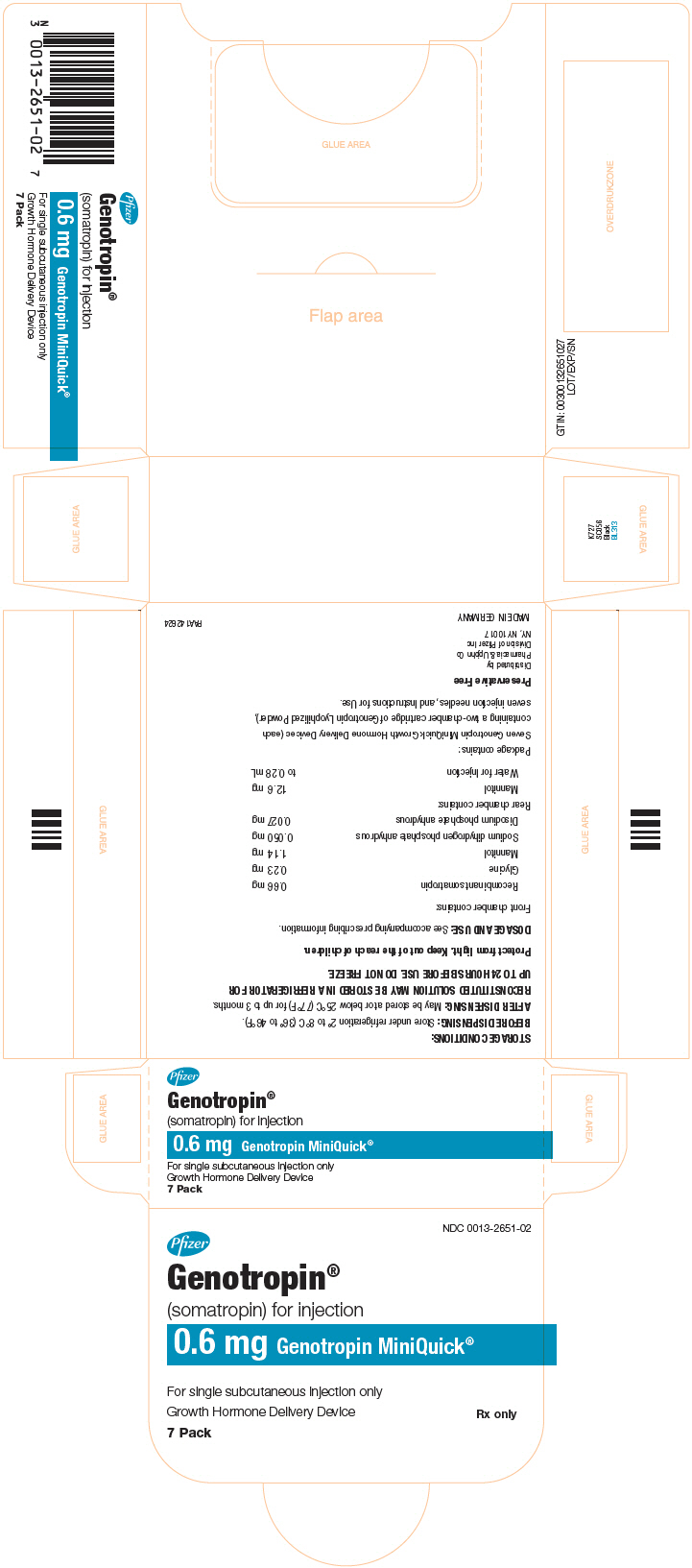
GENOTROPIN somatropin Kit, 7 cartridges — NDC 0013-2651-02 (Billing 00013-2651-02)
This is a package of 7 cartridges of GENOTROPIN somatropin Kit from Pfizer Laboratories Div Pfizer Inc, marketed since Dec 1995 and currently FDA-listed; retail pharmacies pay about $93.05 per cartridge (NADAC). It is this product's only package size.
NDC database record
One package, one record: these facts belong to NDC 0013-2651-02 alone.
- Record
- FDA NDC Directory package listing · Human prescription drug
- Code segments
- 0013 labeler · 2651 product · 02 package
- Package marketed since
- Dec 20, 1995
- Sample package
- No — commercial package
- Listing certified through
- Dec 31, 2027
- Billing quantity
- 7 EA per package
- Barcode (UPC-A, from the NDC)
- 3 0013265102 7
- Medicaid fills, this package
- 1,061 prescriptions in the last four reported quarters
- FDA record last changed
- Aug 20, 2026
Identity & classification
Regulatory identifiers FDA, NLM and CMS codes for this package
Drug-database identifiers Medi-Span GPI and First Databank GCN / HICL / AHFS classification
- GSN (GCN sequence number): 043436
- GCN: 50197
- HICL (First Databank): 002824
- AHFS class code: 68:28.00.00
- RxCUI (RxNorm): 241975
Where does this data come from?
- FDA openFDA NDC Directory · synced Oct 1, 2026
- FDA label on DailyMed · label index refreshed Oct 6, 2026
- RxNorm (NLM RxNav) · catalog refreshed Oct 1, 2026
- Medi-Span GPI (licensed)
- First Databank (licensed) · refreshed Oct 1, 2026
RxNorm drug class
This medicine belongs to the Recombinant Human Growth Hormone class.
Where does this data come from?
- RxClass (NLM) · catalog refreshed Oct 1, 2026
Clinical
Somatropin injection is used to treat growth failure caused by growth hormone deficiency and certain other conditions to increase body weight and endurance in certain people with human immunodeficiency virus (HIV) infection to treat short bowel syndrome in adults who need special nutrition therapy Somatropin is a human growth hormone (hGH) analog. It works by replacing growth hormones that are normally produced in the body, which may result in increased growth, body weight, and improved absorption of nutrients and fluids from the intestines.
Read the full MedlinePlus article ↗- Somatropin is a lab-made version of the growth hormone your body normally produces in the pituitary gland. Your doctor has likely prescribed it because your body isn't making enoug...
- What exactly does somatropin do, and why has my doctor prescribed it?
- You'll give the injection just under the skin — in the abdomen, thigh, upper arm, or buttock. The most important thing is to rotate the spot every time you inject. Using the same s...
- How do I give myself (or my child) the injection, and does the site matter?
Patient education
Supplement & herbal interactions
Where does this data come from?
- MedlinePlus (NLM) · refreshed Oct 1, 2026
- FDA label on DailyMed · label index refreshed Oct 6, 2026
Ask a licensed pharmacist directly — free, answered by our team.
Pricing
A drug doesn't have one price. Each row is a different public payment system, and none is what you'd pay at the counter — that depends on your insurance. The ⓘ on each row explains what it measures.
| Price system | Per ea | Per package |
|---|---|---|
| Retail pharmacies payNADAC · weekly | $93.050 | $651.35 / 7 kit |
| Medicaid paysCMS SDUD · 12 mo | $90.77 | $635.42 / 7 kit |
| Medicare drug plans payPart D · Q2 2026 | $96.13 | $672.93 / 7 kit |
| Medicare Part B allowsASP · J2941 | No ASP payment limit on file for J2941 this quarter. | |
Where does this data come from?
- CMS NADAC weekly file · file of Mar 11, 2026
- CMS ASP pricing files · refreshed Sep 20, 2026
- CMS Medicaid State Drug Utilization Data · through Q4 2025
- CMS Part D plan pricing files · refreshed Sep 24, 2026
- VA National Acquisition Center price file
Billing & reimbursement
Where does this data come from?
- CMS ASP NDC-HCPCS crosswalk · refreshed Sep 22, 2026
- DMEPDAC NDC-HCPCS crosswalk
- openFDA NSDE billing units · refreshed Sep 7, 2026
Packaging — all sizes for this product
| Package NDC | Description | Marketing start | Marketing end | Status |
|---|---|---|---|---|
| 00013-2651-02 You're viewing this Main listing | 7 CARTRIDGE in 1 CARTON / 1 KIT in 1 CARTRIDGE | 1995-12-20 | — | Active |
Therapeutic equivalents
| Product | Labeler | Pack | NADAC/unit | TE | Status | Price vs. this |
|---|---|---|---|---|---|---|
| Genotropin 00013-2649-02 | Pfizer | 7 cartridges | $30.899 | — | Availability likely | save 67% |
| Genotropin 00013-2650-02 | Pfizer | 7 cartridges | $61.640 | — | Availability likely | save 34% |
| Genotropinthis 00013-2651-02 | Pfizer | 7 cartridges | $93.050 | — | FDA listed | — |
| Zomacton 55566-1801-01 | Ferring | 1 kit | $278.604 | — | Availability likely | +199% |
| Omnitrope 00781-4004-36 | Sandoz | 1 kit | $326.248 | — | Availability likely | +251% |
| Genotropin 00013-2626-81 | Pfizer | 1 cartridge | $752.224 | — | Availability likely | +708% |
| Genotropin 00013-2646-81 | Pfizer | 1 cartridge | $1,810.400 | — | Availability likely | +1846% |
| Genotropin 00013-2656-02 | Pfizer | 7 cartridges | — | — | FDA listed | — |
| Genotropin 00013-2653-02 | Pfizer | 7 cartridges | — | — | FDA listed | — |
| Genotropin 00013-2654-02 | Pfizer | 7 cartridges | — | — | FDA listed | — |
| Genotropin 00013-2652-02 | Pfizer | 7 cartridges | — | — | FDA listed | — |
| Genotropin 00013-2655-02 | Pfizer | 7 cartridges | — | — | FDA listed | — |
| Genotropin 00013-2657-02 | Pfizer | 7 cartridges | — | — | FDA listed | — |
| Genotropin 00013-2658-02 | Pfizer | 7 cartridges | — | — | FDA listed | — |
Where does this data come from?
- FDA openFDA NDC Directory · synced Oct 1, 2026
- FDA Purple Book · refreshed Oct 5, 2026
- CMS NADAC weekly file · file of Mar 11, 2026
Availability & biosimilar status
Biologics have no small-molecule generics; biosimilar competition is tracked in the FDA Purple Book.
Where does this data come from?
- FDA Purple Book · refreshed Oct 5, 2026
Inactive Ingredients / Excipients
Inactive ingredients, also called excipients, are components of the drug product other than the active ingredient. They may include fillers, dyes, coatings, preservatives, flavors, or other formulation ingredients.
🧪 Avoiding an ingredient? See Somatropin inactive ingredients by manufacturer: every current product's list side by side, so you can ask your pharmacy for the version that does not list it.
Where does this data come from?
IACT rows and label-wide narrative are kept separate; availability and product-level specificity depend on the submitted label.- FDA label on DailyMed · label index refreshed Oct 6, 2026
- FDA openFDA NDC Directory · synced Oct 1, 2026
Inactive ingredient FAQ
Are inactive ingredients the same for every manufacturer?
Why might an inactive ingredient be missing?
Can inactive ingredients matter?
Manufacturer & labeler
More NDCs from Pfizer Laboratories Div Pfizer Inc labeler code 00013
- Idamycin PFS idarubicin hydrochloride 1 mg/mL Solution NDC 0013-2586-10
- Idamycin PFS idarubicin hydrochloride 1 mg/mL Solution NDC 0013-2596-20
- GENOTROPIN somatropin Kit NDC 0013-2626-81
- GENOTROPIN somatropin Kit NDC 0013-2646-81
- GENOTROPIN somatropin Kit NDC 0013-2649-02
- GENOTROPIN somatropin Kit NDC 0013-2650-02
- GENOTROPIN somatropin Kit NDC 0013-2652-02
- GENOTROPIN somatropin Kit NDC 0013-2653-02
- GENOTROPIN somatropin Kit NDC 0013-2654-02
- GENOTROPIN somatropin Kit NDC 0013-2655-02
- GENOTROPIN somatropin Kit NDC 0013-2656-02
- GENOTROPIN somatropin Kit NDC 0013-2657-02
Where does this data come from?
- FDA openFDA NDC Directory · synced Oct 1, 2026
- Drugs@FDA
Full prescribing information FDA SPL
🎯 Indications and Usage ▾
1 INDICATIONS AND USAGE GENOTROPIN is a recombinant human growth hormone indicated for: • Pediatric: Treatment of children with growth failure due to growth hormone deficiency (GHD), Prader-Willi syndrome, Small for Gestational Age, Turner syndrome, and Idiopathic Short Stature ( 1.1 ) • Adult: Treatment of adults with either adult onset or childhood onset GHD ( 1.2 )
1.1Pediatric Patients GENOTROPIN is indicated for the treatment of pediatric patients who have growth failure due to an inadequate secretion of endogenous growth hormone. GENOTROPIN is indicated for the treatment of pediatric patients who have growth failure due to Prader-Willi syndrome (PWS). The diagnosis of PWS should be confirmed by appropriate genetic testing [see Contraindications (4) ] .
GENOTROPIN is indicated for the treatment of growth failure in pediatric patients born small for gestational age (SGA) who fail to manifest catch-up growth by age 2 years. GENOTROPIN is indicated for the treatment of growth failure associated with Turner syndrome. GENOTROPIN is indicated for the treatment of idiopathic short stature (ISS), also called non-growth hormone-deficient short stature, defined by height standard deviation score (SDS) ≤-2.25, and associated with growth rates unlikely to permit attainment of adult height in the normal range, in pediatric patients whose epiphyses are not closed and for whom diagnostic evaluation excludes other causes associated with short stature that should be observed or treated by other means.
1.2Adult Patients GENOTROPIN is indicated for replacement of endogenous growth hormone in adults with growth hormone deficiency who meet either of the following two criteria: Adult Onset (AO): Patients who have growth hormone deficiency, either alone or associated with multiple hormone deficiencies (hypopituitarism), as a result of pituitary disease, hypothalamic disease, surgery, radiation therapy, or trauma; or Childhood Onset (CO) : Patients who were growth hormone deficient during childhood as a result of congenital, genetic, acquired, or idiopathic causes.
Patients who were treated with somatropin for growth hormone deficiency in childhood and whose epiphyses are closed should be reevaluated before continuation of somatropin therapy at the reduced dose level recommended for growth hormone deficient adults. According to current standards, confirmation of the diagnosis of adult growth hormone deficiency in both groups involves an appropriate growth hormone provocative test with two exceptions: (1) patients with multiple other pituitary hormone deficiencies due to organic disease; and (2) patients with congenital/genetic growth hormone deficiency.
⏱️ Dosage and Administration ▾
2 DOSAGE AND ADMINISTRATION The weekly dose should be divided into 6 or 7 subcutaneous injections. GENOTROPIN must not be injected intravenously. Therapy with GENOTROPIN should be supervised by a physician who is experienced in the diagnosis and management of pediatric patients with growth failure associated with growth hormone deficiency (GHD), Prader-Willi syndrome (PWS), Turner syndrome (TS), those who were born small for gestational age (SGA) or Idiopathic Short Stature (ISS), and adult patients with either childhood onset or adult onset GHD.
GENOTROPIN should be administered subcutaneously ( 2 ) • Pediatric GHD: 0.16 to 0.24 mg/kg/week ( 2.1 ) • Prader-Willi Syndrome: 0.24 mg/kg/week ( 2.1 ) • Small for Gestational Age: Up to 0.48 mg/kg/week ( 2.1 ) • Turner Syndrome: 0.33 mg/kg/week ( 2.1 ) • Idiopathic Short Stature: up to 0.47 mg/kg/week ( 2.1 ) • Adult GHD: Either a non-weight based or a weight based dosing regimen may be followed, with doses adjusted based on treatment response and IGF-I concentrations ( 2.2 ) • Non-weight based dosing: A starting dose of approximately 0.2 mg/day (range, 0.15–0.30 mg/day) may be used without consideration of body weight, and increased gradually every 1–2 months by increments of approximately 0.1–0.2 mg/day.
( 2.2 ) • Weight based dosing: The recommended initial dose is not more than 0.04 mg/kg/week; the dose may be increased as tolerated to not more than 0.08 mg/kg/week at 4–8 week intervals. ( 2.2 ) • GENOTROPIN cartridges are color-coded to correspond to a specific GENOTROPIN PEN delivery device ( 2.3 ) • Injection sites should always be rotated to avoid lipoatrophy ( 2.3 )
2.1Dosing of Pediatric Patients General Pediatric Dosing Information The GENOTROPIN dosage and administration schedule should be individualized based on the growth response of each patient. Response to somatropin therapy in pediatric patients tends to decrease with time. However, in pediatric patients, the failure to increase growth rate, particularly during the first year of therapy, indicates the need for close assessment of compliance and evaluation for other causes of growth failure, such as hypothyroidism, undernutrition, advanced bone age and antibodies to recombinant human GH (rhGH).
Treatment with GENOTROPIN for short stature should be discontinued when the epiphyses are fused. Pediatric Growth Hormone Deficiency (GHD) Generally, a dose of 0.16 to 0.24 mg/kg body weight/week is recommended. Prader-Willi Syndrome Generally, a dose of 0.24 mg/kg body weight/week is recommended.
Turner Syndrom e Generally, a dose of 0.33 mg/kg body weight/week is recommended. Idiopathic Short Stature Generally, a dose up to 0.47 mg/kg body weight/week is recommended. Small for Gestational Age Recent literature has recommended initial treatment with larger doses of somatropin (e.g., 0.48 mg/kg/week), especially in very short children (i.e., height SDS <–3), and/or older/ pubertal children, and that a reduction in dosage (e.g., gradually towards 0.24 mg/kg/week) should be considered if substantial catch-up growth is observed during the first few years of therapy.
On the other hand, in younger SGA children (e.g., approximately <4 years) (who respond the best in general) with less severe short stature (i.e., baseline height SDS values between -2 and -3), consideration should be given to initiating treatment at a lower dose (e.g., 0.24 mg/kg/week), and titrating the dose as needed over time. In all children, clinicians should carefully monitor the growth response, and adjust the somatropin dose as necessary. Generally, a dose of up to 0.48 mg/kg body weight/week is recommended.
2.2Dosing of Adult Patients Adult Growth Hormone Deficiency (GHD) Either of two approaches to GENOTROPIN dosing may be followed: a non-weight based regimen or a weight based regimen. Non-weight based — based on published consensus guidelines, a starting dose of approximately 0.2 mg/day (range, 0.15–0.30 mg/day) may be used without consideration of body… [Excerpted — this section continues on DailyMed.]
💊 Dosage Forms and Strengths ▾
3 DOSAGE FORMS AND STRENGTHS GENOTROPIN is a white, lyophilized powder available as: • For injection: 5 mg or 12 mg in a single-patient-use two-chamber cartridge • For injection: 0.2 mg, 0.4 mg, 0.6 mg, 0.8 mg, 1 mg, 1.2 mg, 1.4 mg, 1.6 mg, 1.8 mg, or 2 mg in a single‑dose Growth Hormone Delivery Device containing a two-chamber cartridge (GENOTROPIN MINIQUICK) For injection: 5 mg or 12 mg lyophilized powder in a single‑patient‑use two‑chamber cartridge ( 3 ) For injection: 0.2 mg, 0.4 mg, 0.6 mg, 0.8 mg, 1 mg, 1.2 mg, 1.4 mg, 1.6 mg, 1.8 mg, or 2 mg lyophilized powder in a single-dose Growth Hormone Delivery Device containing a two-chamber cartridge (GENOTROPIN MINIQUICK) ( 3 )
⛔ Contraindications ▾
4 CONTRAINDICATIONS • Acute Critical Illness ( 4 ) • Children with Prader-Willi syndrome who are severely obese or have severe respiratory impairment – reports of sudden death ( 4 ) • Active Malignancy ( 4 ) • Hypersensitivity to somatropin or excipients ( 4 ) • Active Proliferative or Severe Non-Proliferative Diabetic Retinopathy ( 4 ) • Children with closed epiphyses ( 4 ) GENOTROPIN is contraindicated in patients with: • Acute Critical Illness Treatment with pharmacologic amounts of somatropin is contraindicated in patients with acute critical illness due to complications following open heart surgery, abdominal surgery or multiple accidental trauma, or those with acute respiratory failure [see Warnings and Precautions (5.1) ]. • Prader-Willi Syndrome in Children Somatropin is contraindicated in patients with Prader-Willi syndrome who are severely obese, have a history of upper airway obstruction or sleep apnea, or have severe respiratory impairment.
There have been reports of sudden death when somatropin was used in such patients [see Warnings and Precautions (5.2) ]. • Active Malignancy In general, somatropin is contraindicated in the presence of active malignancy. Any preexisting malignancy should be inactive and its treatment complete prior to instituting therapy with somatropin. Somatropin should be discontinued if there is evidence of recurrent activity.
Since growth hormone deficiency may be an early sign of the presence of a pituitary tumor (or, rarely, other brain tumors), the presence of such tumors should be ruled out prior to initiation of treatment. Somatropin should not be used in patients with any evidence of progression or recurrence of an underlying intracranial tumor. • Hypersensitivity GENOTROPIN is contraindicated in patients with a known hypersensitivity to somatropin or any of its excipients. The 5 mg and 12 mg presentations of GENOTROPIN lyophilized powder contain m-cresol as a preservative.
Systemic hypersensitivity reactions have been reported with postmarketing use of somatropins [see Warnings and Precautions (5.6) ] . • Diabetic Retinopathy Somatropin is contraindicated in patients with active proliferative or severe non-proliferative diabetic retinopathy. • Closed Epiphyses Somatropin should not be used for growth promotion in pediatric patients with closed epiphyses.
⚠️ Warnings and Cautions ▾
5 WARNINGS AND PRECAUTIONS • Acute Critical Illness: Potential benefit of treatment continuation should be weighed against the potential risk ( 5.1 ) • Prader-Willi Syndrome in Children: Evaluate for signs of upper airway obstruction and sleep apnea before initiation of treatment Discontinue treatment if these signs occur ( 5.2 ) • Neoplasm: Monitor patients with preexisting tumors for progression or recurrence. Increased risk of a second neoplasm in childhood cancer survivors treated with somatropin in particular meningiomas in patients treated with radiation to the head for their first neoplasm ( 5.3 ) • Impaired Glucose Tolerance and Diabetes Mellitus: May be unmasked Periodically monitor glucose levels in all patients.
Doses of concurrent antihyperglycemic drugs in diabetics may require adjustment ( 5.4 ) • Intracranial Hypertension: Exclude preexisting papilledema. May develop and is usually reversible after discontinuation or dose reduction ( 5.5 ) • Hypersensitivity: Serious hypersensitivity reactions may occur. In the event of an allergic reaction, seek prompt medical attention ( 5.6 ) • Fluid Retention (i.e., edema, arthralgia, carpal tunnel syndrome – especially in adults): May occur frequently.
Reduce dose as necessary ( 5.7 ) • Hypoadrenalism: Monitor patients for reduced serum cortisol levels and/or need for glucocorticoid dose increases in those with known hypoadrenalism ( 5.8 ) • Hypothyroidism: May first become evident or worsen. Monitor thyroid function periodically ( 5.9 ) • Slipped Capital Femoral Epiphysis: May develop. Evaluate children with the onset of a limp or hip/knee pain ( 5.10 ) • Progression of Preexisting Scoliosis: Monitor any child with scoliosis for progression of the curve ( 5.11 ) • Pancreatitis: Consider pancreatitis in patients with persistent severe abdominal pain ( 5.15 )
5.1Acute Critical Illness Increased mortality in patients with acute critical illness due to complications following open heart surgery, abdominal surgery or multiple accidental trauma, or those with acute respiratory failure has been reported after treatment with pharmacologic amounts of somatropin [see Contraindications (4) ]. Two placebo-controlled clinical trials in non-growth hormone deficient adult patients (n=522) with these conditions in intensive care units revealed a significant increase in mortality (42% vs.
19%) among somatropin-treated patients (doses 5.3–8 mg/day) compared to those receiving placebo. The safety of continuing somatropin treatment in patients receiving replacement doses for approved indications who concurrently develop these illnesses has not been established. Therefore, the potential benefit of treatment continuation with somatropin in patients having acute critical illnesses should be weighed against the potential risk.
5.2Prader-Willi Syndrome in Children There have been reports of fatalities after initiating therapy with somatropin in pediatric patients with Prader-Willi syndrome who had one or more of the following risk factors: severe obesity, history of upper airway obstruction or sleep apnea, or unidentified respiratory infection. Male patients with one or more of these factors may be at greater risk than females. Patients with Prader-Willi syndrome should be evaluated for signs of upper airway obstruction and sleep apnea before initiation of treatment with somatropin.
If during treatment with somatropin, patients show signs of upper airway obstruction (including onset of or increased snoring) and/or new onset sleep apnea, treatment should be interrupted. All patients with Prader-Willi syndrome treated with somatropin should also have effective weight control and be monitored for signs of respiratory infection, which should be diagnosed as early as possible and treated aggressively [see Contraindications (4) ].
5.3Neoplasms In childhood cancer survivors who were treated with radiation to the brain/head for their first neoplasm and who developed subsequent GHD and were treated with… [Excerpted — this section continues on DailyMed.]
🤒 Adverse Reactions ▾
6 ADVERSE REACTIONS The following important adverse reactions are also described elsewhere in the labeling: • Increased mortality in patients with acute critical illness [see Warnings and Precautions (5.1) ] • Fatalities in children with Prader-Willi syndrome [see Warnings and Precautions (5.2) ] • Neoplasms [see Warnings and Precautions (5.3) ] • Glucose intolerance and diabetes mellitus [see Warnings and Precautions (5.4) ] • Intracranial hypertension [see Warnings and Precautions (5.5) ] • Severe hypersensitivity [see Warnings and Precautions (5.6) ] • Fluid retention [see Warnings and Precautions (5.7) ] • Hypoadrenalism [see Warnings and Precautions (5.8) ] • Hypothyroidism [see Warnings and Precautions (5.9) ] • Slipped capital femoral epiphysis in pediatric patients [see Warnings and Precautions (5.10) ] • Progression of preexisting scoliosis in pediatric patients [see Warnings and Precautions (5.11) ] • Otitis media and cardiovascular disorders in patients with Turner syndrome [see Warnings and Precautions (5.12) ] • Lipoatrophy [see Warnings and Precautions (5.13) ] • Pancreatitis [see Warnings and Precautions (5.15) ] Other common somatropin-related adverse reactions include injection site reactions/rashes and lipoatrophy ( 6.1 ) and headaches ( 6.2 ).
To report SUSPECTED ADVERSE REACTIONS, contact Pfizer Inc. at 1-800-438-1985 or FDA at 1-800-FDA-1088 or www.fda.gov/medwatch .
6.1Clinical Trials Experience Because clinical trials are conducted under varying conditions, adverse reaction rates observed during the clinical trials performed with one somatropin formulation cannot always be directly compared to the rates observed during the clinical trials performed with a second somatropin formulation, and may not reflect the adverse reaction rates observed in practice. Clinical Trials in children with GHD In clinical studies with GENOTROPIN in pediatric GHD patients, the following events were reported infrequently: injection site reactions, including pain or burning associated with the injection, fibrosis, nodules, rash, inflammation, pigmentation, or bleeding; lipoatrophy; headache; hematuria; hypothyroidism; and mild hyperglycemia.
Clinical Trials in PWS In two clinical studies with GENOTROPIN in pediatric patients with Prader-Willi syndrome, the following drug-related events were reported: edema, aggressiveness, arthralgia, benign intracranial hypertension, hair loss, headache, and myalgia. Clinical Trials in children with SGA In clinical studies of 273 pediatric patients born small for gestational age treated with GENOTROPIN, the following clinically significant events were reported: mild transient hyperglycemia, one patient with benign intracranial hypertension, two patients with central precocious puberty, two patients with jaw prominence, and several patients with aggravation of preexisting scoliosis, injection site reactions, and self-limited progression of pigmented nevi.
Anti-hGH antibodies were not detected in any of the patients treated with GENOTROPIN. Clinical Trials in children with Turner Syndrome In two clinical studies with GENOTROPIN in pediatric patients with Turner syndrome, the most frequently reported adverse events were respiratory illnesses (influenza, tonsillitis, otitis, sinusitis), joint pain, and urinary tract infection. The only treatment-related adverse event that occurred in more than 1 patient was joint pain.
Clinical Trials in children with Idiopathic Short Stature In two open-label clinical studies with GENOTROPIN in pediatric patients with ISS, the most commonly encountered adverse events include upper respiratory tract infections, influenza, tonsillitis, nasopharyngitis, gastroenteritis, headaches, increased appetite, pyrexia, fracture, altered mood, and arthralgia. In one of the two studies, during GENOTROPIN treatment, the mean IGF-1 standard deviation (SD) scores were maintained in the normal range. IGF-1 SD scores above +2 SD were observed as follows: 1 subject (3%), 10 subjects… [Excerpted — this section continues on DailyMed.]
🔄 Drug Interactions ▾
7 DRUG INTERACTIONS Inhibition of 11ß-Hydroxysteroid Dehydrogenase Type 1: May require the initiation of glucocorticoid replacement therapy. Patients treated with glucocorticoid replacement for previously diagnosed hypoadrenalism may require an increase in their maintenance doses ( 7.1 , 7.2 ). • Glucocorticoid Replacement: Should be carefully adjusted ( 7.2 ) • Cytochrome P450-Metabolized Drugs: Monitor carefully if used with somatropin ( 7.3 ) • Oral Estrogen: Larger doses of somatropin may be required in women ( 7.4 ) • Insulin and/or Oral/Injectable Hypoglycemic Agents: May require adjustment ( 7.5 ) 7.1 11 β-Hydroxysteroid Dehydrogenase Type 1 The microsomal enzyme 11β-hydroxysteroid dehydrogenase type 1 (11βHSD-1) is required for conversion of cortisone to its active metabolite, cortisol, in hepatic and adipose tissue.
GH and somatropin inhibit 11βHSD-1. Consequently, individuals with untreated GH deficiency have relative increases in 11βHSD-1 and serum cortisol. Introduction of somatropin treatment may result in inhibition of 11βHSD-1 and reduced serum cortisol concentrations.
As a consequence, previously undiagnosed central (secondary) hypoadrenalism may be unmasked and glucocorticoid replacement may be required in patients treated with somatropin. In addition, patients treated with glucocorticoid replacement for previously diagnosed hypoadrenalism may require an increase in their maintenance or stress doses following initiation of somatropin treatment; this may be especially true for patients treated with cortisone acetate and prednisone since conversion of these drugs to their biologically active metabolites is dependent on the activity of 11βHSD-1 [see Warnings and Precautions (5.8 )] .
7.2Pharmacologic Glucocorticoid Therapy and Supraphysiologic Glucocorticoid Treatment Pharmacologic glucocorticoid therapy and supraphysiologic glucocorticoid treatment may attenuate the growth‑promoting effects of somatropin in children. Therefore, glucocorticoid replacement dosing should be carefully adjusted in children receiving concomitant somatropin and glucocorticoid treatments to avoid both hypoadrenalism and an inhibitory effect on growth.
7.3Cytochrome P450-Metabolized Drugs Limited published data indicate that somatropin treatment increases cytochrome P450 (CYP450)-mediated antipyrine clearance in man. These data suggest that somatropin administration may alter the clearance of compounds known to be metabolized by CYP450 liver enzymes (e.g., corticosteroids, sex steroids, anticonvulsants, cyclosporine). Careful monitoring is advisable when somatropin is administered in combination with other drugs known to be metabolized by CYP450 liver enzymes.
However, formal drug interaction studies have not been conducted.
7.4Oral Estrogen In patients on oral estrogen replacement, a larger dose of somatropin may be required to achieve the defined treatment goal [see Dosage and Administration (2.2) ].
7.5Insulin and/or Oral/Injectable Hypoglycemic Agents In patients with diabetes mellitus requiring drug therapy, the dose of insulin and/or oral/injectable agent may require adjustment when somatropin therapy is initiated [see Warnings and Precautions (5.4) ].
👥 Use in Specific Populations ▾
8 USE IN SPECIFIC POPULATIONS
8.1Pregnancy Risk Summary Limited available data with somatropin use in pregnant women are insufficient to determine a drug-associated risk of adverse developmental outcomes. In animal studies (rats and rabbits), there was no evidence of embryo‑fetal or neonatal harm following somatropin administration during organogenesis at doses approximately 24 times and 19 times the recommended human therapeutic levels, respectively, based on body surface area ( see Data ) . The estimated background risk of birth defects and miscarriage for the indicated population is unknown.
In the U.S. general population, the estimated background risk of major birth defects and miscarriage in clinically recognized pregnancies is 2-4% and 15-20%, respectively. Data Animal Data Animal reproduction studies with somatropin during the period of organogenesis at doses of 0.3, 1, and 3.3 mg/kg/day administered subcutaneously (SC) in pregnant rats and 0.08, 0.3, and 1.3 mg/kg/day administered intramuscularly in pregnant rabbits were not teratogenic (highest doses approximately 24 times and 19 times the recommended human therapeutic levels, respectively, based on body surface area).
In perinatal and postnatal studies in rats, somatropin doses of 0.3, 1, and 3.3 mg/kg/day produced growth‑promoting effects in the dams but not in the fetuses. Young rats at the highest dose showed increased weight gain during suckling but the effect was not apparent by 10 weeks of age. No adverse effects were observed on gestation, morphogenesis, parturition, lactation, postnatal development, or reproductive capacity of the offspring due to somatropin.
8.2Lactation Risk Summary There is no information regarding the presence of somatropin in human milk. Limited published data indicate that exogenous somatropin does not increase normal breastmilk concentrations of growth hormone. No adverse effects related to somatropin in the breastfeed infant have been reported.
The developmental and health benefits of breastfeeding should be considered along with the mother’s clinical need for GENOTROPIN and any potential adverse effects on the breastfed infant from GENOTROPIN or from the underlying maternal condition.
8.4Pediatric Use Safety and effectiveness of GENOTROPIN in pediatric patients have been established in growth failure due to Prader-Willi syndrome (PWS), growth failure in children born small for gestational age (SGA) with no catch-up growth by age 2 years, growth failure associated with Turner syndrome, idiopathic short stature (ISS) and growth failure due to inadequate secretion of endogenous growth hormone. Growth Failure Due to Prader-Willi Syndrome (PWS) Safety and effectiveness of GENOTROPIN have been established in pediatric patients with growth failure due to Prader-Willi syndrome based on data from two randomized, open-label, controlled clinical trials with GENOTROPIN in 43 pediatric patients.
There have been reports of sudden death after initiating therapy with somatropin in pediatric patients with Prader-Willi syndrome who had one or more of the following risk factors: severe obesity, history of upper airway obstruction or sleep apnea, or unidentified respiratory infection. Male patients with one or more of these factors may be at greater risk than females. Patients with Prader-Willi syndrome should be evaluated for signs of upper airway obstruction and sleep apnea before initiation of treatment with somatropin [see Contraindications (4) , Warnings and Precautions (5.2) , Clinical Studies (14.2) ] .
Short Stature in Pediatric Patients Born Small for Gestational Age (SGA) with No Catch-up Growth by Age 2 Safety and effectiveness of GENOTROPIN have been established in pediatric patients with short stature born SGA with no catch-up growth based on data from 4 randomized, open-label, controlled clinical trials with GENOTROPIN in 209 pediatric patients [see Clinical Studies (14.3) ] . Short Stature associated with Turner Syndrome Safety and eff… [Excerpted — this section continues on DailyMed.]
🤰 Pregnancy ▾
8.1Pregnancy Risk Summary Limited available data with somatropin use in pregnant women are insufficient to determine a drug-associated risk of adverse developmental outcomes. In animal studies (rats and rabbits), there was no evidence of embryo‑fetal or neonatal harm following somatropin administration during organogenesis at doses approximately 24 times and 19 times the recommended human therapeutic levels, respectively, based on body surface area ( see Data ) . The estimated background risk of birth defects and miscarriage for the indicated population is unknown.
In the U.S. general population, the estimated background risk of major birth defects and miscarriage in clinically recognized pregnancies is 2-4% and 15-20%, respectively. Data Animal Data Animal reproduction studies with somatropin during the period of organogenesis at doses of 0.3, 1, and 3.3 mg/kg/day administered subcutaneously (SC) in pregnant rats and 0.08, 0.3, and 1.3 mg/kg/day administered intramuscularly in pregnant rabbits were not teratogenic (highest doses approximately 24 times and 19 times the recommended human therapeutic levels, respectively, based on body surface area).
In perinatal and postnatal studies in rats, somatropin doses of 0.3, 1, and 3.3 mg/kg/day produced growth‑promoting effects in the dams but not in the fetuses. Young rats at the highest dose showed increased weight gain during suckling but the effect was not apparent by 10 weeks of age. No adverse effects were observed on gestation, morphogenesis, parturition, lactation, postnatal development, or reproductive capacity of the offspring due to somatropin.
🧒 Pediatric Use ▾
8.4Pediatric Use Safety and effectiveness of GENOTROPIN in pediatric patients have been established in growth failure due to Prader-Willi syndrome (PWS), growth failure in children born small for gestational age (SGA) with no catch-up growth by age 2 years, growth failure associated with Turner syndrome, idiopathic short stature (ISS) and growth failure due to inadequate secretion of endogenous growth hormone. Growth Failure Due to Prader-Willi Syndrome (PWS) Safety and effectiveness of GENOTROPIN have been established in pediatric patients with growth failure due to Prader-Willi syndrome based on data from two randomized, open-label, controlled clinical trials with GENOTROPIN in 43 pediatric patients.
There have been reports of sudden death after initiating therapy with somatropin in pediatric patients with Prader-Willi syndrome who had one or more of the following risk factors: severe obesity, history of upper airway obstruction or sleep apnea, or unidentified respiratory infection. Male patients with one or more of these factors may be at greater risk than females. Patients with Prader-Willi syndrome should be evaluated for signs of upper airway obstruction and sleep apnea before initiation of treatment with somatropin [see Contraindications (4) , Warnings and Precautions (5.2) , Clinical Studies (14.2) ] .
Short Stature in Pediatric Patients Born Small for Gestational Age (SGA) with No Catch-up Growth by Age 2 Safety and effectiveness of GENOTROPIN have been established in pediatric patients with short stature born SGA with no catch-up growth based on data from 4 randomized, open-label, controlled clinical trials with GENOTROPIN in 209 pediatric patients [see Clinical Studies (14.3) ] . Short Stature associated with Turner Syndrome Safety and effectiveness of GENOTROPIN have been established in pediatric patients with short stature associated with Turner syndrome based on data from two randomized, open-label, clinical trials with GENOTROPIN in 38 pediatric patients [see Clinical Studies (14.4) ].
Idiopathic Short Stature (ISS) Safety and effectiveness of GENOTROPIN have been established in pediatric patients with ISS based on data from one randomized, open-label, clinical trial with GENOTROPIN in 102 pediatric patients [see Clinical Studies (14.5) ] .
🧓 Geriatric Use ▾
8.5Geriatric Use The safety and effectiveness of GENOTROPIN in patients aged 65 and over have not been evaluated in clinical studies. Elderly patients may be more sensitive to the action of GENOTROPIN, and therefore may be more prone to develop adverse reactions. A lower starting dose and smaller dose increments should be considered for older patients [see Dosage and Administration (2.2) ].
🆘 Overdosage ▾
10 OVERDOSAGE Short-Term Short-term overdosage could lead initially to hypoglycemia and subsequently to hyperglycemia. Furthermore, overdose with somatropin is likely to cause fluid retention. Long-Term Long-term overdosage could result in signs and symptoms of gigantism and/or acromegaly consistent with the known effects of excess growth hormone [see Dosage and Administration (2) ].
🧬 Clinical Pharmacology ▾
12 CLINICAL PHARMACOLOGY
12.1Mechanism of Action In vitro, preclinical, and clinical tests have demonstrated that GENOTROPIN lyophilized powder is therapeutically equivalent to human growth hormone of pituitary origin and achieves similar pharmacokinetic profiles in normal adults. In pediatric patients who have growth hormone deficiency (GHD), have Prader-Willi syndrome (PWS), were born small for gestational age (SGA), have Turner syndrome (TS), or have Idiopathic short stature (ISS), treatment with GENOTROPIN stimulates linear growth. In patients with GHD or PWS, treatment with GENOTROPIN also normalizes concentrations of IGF-I (Insulin-like Growth Factor-I/Somatomedin C).
In adults with GHD, treatment with GENOTROPIN results in reduced fat mass, increased lean body mass, metabolic alterations that include beneficial changes in lipid metabolism, and normalization of IGF-I concentrations. In addition, the following actions have been demonstrated for GENOTROPIN and/or somatropin.
12.2Pharmacodynamics Tissue Growth A. Skeletal Growth: GENOTROPIN stimulates skeletal growth in pediatric patients with GHD, PWS, SGA, TS, or ISS. The measurable increase in body length after administration of GENOTROPIN results from an effect on the epiphyseal plates of long bones.
Concentrations of IGF-I, which may play a role in skeletal growth, are generally low in the serum of pediatric patients with GHD, PWS, or SGA, but tend to increase during treatment with GENOTROPIN. Elevations in mean serum alkaline phosphatase concentration are also seen. B.
Cell Growth: It has been shown that there are fewer skeletal muscle cells in short-statured pediatric patients who lack endogenous growth hormone as compared with the normal pediatric population. Treatment with somatropin results in an increase in both the number and size of muscle cells. Protein Metabolism Linear growth is facilitated in part by increased cellular protein synthesis.
Nitrogen retention, as demonstrated by decreased urinary nitrogen excretion and serum urea nitrogen, follows the initiation of therapy with GENOTROPIN. Carbohydrate Metabolism Pediatric patients with hypopituitarism sometimes experience fasting hypoglycemia that is improved by treatment with GENOTROPIN. Large doses of growth hormone may impair glucose tolerance.
Lipid Metabolism In GHD patients, administration of somatropin has resulted in lipid mobilization, reduction in body fat stores, and increased plasma fatty acids. Mineral Metabolism Somatropin induces retention of sodium, potassium, and phosphorus. Serum concentrations of inorganic phosphate are increased in patients with GHD after therapy with GENOTROPIN.
Serum calcium is not significantly altered by GENOTROPIN. Growth hormone could increase calciuria. Body Composition Adult GHD patients treated with GENOTROPIN at the recommended adult dose [see Dosage and Administration (2) ] demonstrate a decrease in fat mass and an increase in lean body mass.
When these alterations are coupled with the increase in total body water, the overall effect of GENOTROPIN is to modify body composition, an effect that is maintained with continued treatment.
12.3Pharmacokinetics Absorption Following a 0.03 mg/kg subcutaneous (SC) injection in the thigh of 1.3 mg/mL GENOTROPIN to adult GHD patients, approximately 80% of the dose was systemically available as compared with that available following intravenous dosing. Results were comparable in both male and female patients. Similar bioavailability has been observed in healthy adult male subjects.
In healthy adult males, following an SC injection in the thigh of 0.03 mg/kg, the extent of absorption (AUC) of a concentration of 5.3 mg/mL GENOTROPIN was 35% greater than that for 1.3 mg/mL GENOTROPIN. The mean (± standard deviation) peak (C max ) serum levels were 23.0 (± 9.4) ng/mL and 17.4 (± 9.2) ng/mL, respectively. In a similar study involving pediatric GHD patients, 5.3 mg/mL GENOTROPIN yielded a mean AUC that was 17% greater than that… [Excerpted — this section continues on DailyMed.]
🧬 Mechanism of Action ▾
12.1Mechanism of Action In vitro, preclinical, and clinical tests have demonstrated that GENOTROPIN lyophilized powder is therapeutically equivalent to human growth hormone of pituitary origin and achieves similar pharmacokinetic profiles in normal adults. In pediatric patients who have growth hormone deficiency (GHD), have Prader-Willi syndrome (PWS), were born small for gestational age (SGA), have Turner syndrome (TS), or have Idiopathic short stature (ISS), treatment with GENOTROPIN stimulates linear growth. In patients with GHD or PWS, treatment with GENOTROPIN also normalizes concentrations of IGF-I (Insulin-like Growth Factor-I/Somatomedin C).
In adults with GHD, treatment with GENOTROPIN results in reduced fat mass, increased lean body mass, metabolic alterations that include beneficial changes in lipid metabolism, and normalization of IGF-I concentrations. In addition, the following actions have been demonstrated for GENOTROPIN and/or somatropin.
📦 How Supplied / Storage and Handling ▾
16 HOW SUPPLIED/STORAGE AND HANDLING
16.1How Supplied GENOTROPIN (somatropin) for injection is a white, lyophilized powder in a single-patient-use or single-dose, two-chamber cartridge intended for subcutaneous injection after reconstitution. The front chamber contains somatropin and the rear chamber contains the diluent. GENOTROPIN lyophilized powder is available in the following packages: 5 mg single‑patient‑use two-chamber cartridge (with preservative) • After reconstitution the final concentration is 5 mg/mL • For use with the GENOTROPIN PEN 5 Growth Hormone Delivery Device. • Package of 1 NDC 0013-2626-81 12 mg single‑patient‑use two-chamber cartridge (with preservative) • After reconstitution the final concentration is 12 mg/mL • For use with the GENOTROPIN PEN 12 Growth Hormone Delivery Device. • Package of 1 NDC 0013-2646-81 GENOTROPIN MINIQUICK, a single-dose Growth Hormone Delivery Device containing a two-chamber cartridge of GENOTROPIN (without preservative) • After reconstitution, each GENOTROPIN MINIQUICK delivers 0.25 mL, regardless of strength.
GENOTROPIN MINIQUICK is available in the following strengths, each in a package of 7: Strength NDC Number 0.2 mg NDC 0013-2649-02 0.4 mg NDC 0013-2650-02 0.6 mg NDC 0013-2651-02 0.8 mg NDC 0013-2652-02 1 mg NDC 0013-2653-02 1.2 mg NDC 0013-2654-02 1.4 mg NDC 0013-2655-02 1.6 mg NDC 0013-2656-02 1.8 mg NDC 0013-2657-02 2 mg NDC 0013-2658-02
16.2Storage and Handling The 5 mg and 12 mg GENOTROPIN single-patient-use cartridges: • Store GENOTROPIN lyophilized powder under refrigeration at 36°F to 46°F (2°C to 8°C) until the expiration date. Store in the package to protect from light. Do not freeze. • After reconstitution, store the pen (with the cartridge) in the pen box with the pen cap on to protect from light.
Store under refrigeration at 36°F to 46°F (2°C to 8°C) between each use, for up to 28 days. Do not shake. Discard the cartridge and any unused medication after 28 days.
Use a GENOTROPIN PEN 5, a medical device, to reconstitute the 5 mg two-chamber cartridge, and use a GENOTROPIN PEN 12 to reconstitute the 12 mg two-chamber cartridge. The 0.2 mg, 0.4 mg, 0.6 mg, 0.8 mg, 1 mg, 1.2 mg, 1.4 mg, 1.6 mg, 1.8 mg and 2 mg single-dose Growth Hormone Delivery Devices containing a two-chamber cartridge (GENOTROPIN MINIQUICK): • Store GENOTROPIN MINIQUICK under refrigeration at 36°F to 46°F (2°C to 8°C) until the expiration date. If needed, may be stored for up to 3 months at room temperature at or below 77°F (25°C) prior to reconstitution.
Do not freeze. • After reconstitution, store GENOTROPIN MINIQUICK in the package with the pen cap on to protect from light. If needed, may be stored under refrigeration at 36°F to 46°F (2°C to 8°C) for up to 24 hours before use. Do not shake.
The GENOTROPIN MINIQUICK should be used only once and then discarded.
📋 Description ▾
11 DESCRIPTION Somatropin is a human growth hormone produced by recombinant DNA technology in Escherichia coli. The protein is comprised of 191 amino acid residues and has a molecular weight of 22,124 daltons. The amino acid sequence is identical to that of human growth hormone of pituitary origin.
GENOTROPIN (somatropin) for injection is a sterile, white, lyophilized powder in a single-patient-use or single-dose, two-chamber cartridge intended for subcutaneous injection after reconstitution. The front chamber contains somatropin and the rear chamber contains diluent. GENOTROPIN 5 mg is a single-patient-use, two-chamber cartridge.
GENOTROPIN 5 mg is designed for use with a reusable device (GENOTROPIN PEN 5) for product reconstitution and drug delivery. After reconstitution, each mL contains 5 mg of somatropin, dibasic sodium phosphate (0.27 mg), glycine (2 mg), mannitol (41 mg), metacresol (3 mg) (as a preservative), monobasic sodium phosphate (0.28 mg) and water for injection. The reconstituted concentration is 5 mg/mL with a deliverable volume of 1 mL.
GENOTROPIN 12 mg is a single‑patient‑use, two-chamber cartridge. GENOTROPIN 12 mg is designed for use with a reusable device (GENOTROPIN PEN 12) for product reconstitution and drug delivery. After reconstitution, each mL contains 12 mg of somatropin, dibasic sodium phosphate (0.4 mg), glycine (2 mg), mannitol (40 mg), metacresol (3 mg) (as a preservative), monobasic sodium phosphate (0.41 mg) and water for injection.
The reconstituted concentration is 12 mg/mL with a deliverable volume of 1 mL. GENOTROPIN MINIQUICK is a single-dose Growth Hormone Delivery Device containing a two-chamber cartridge supplied in the following strengths: 0.2 mg, 0.4 mg, 0.6 mg, 0.8 mg, 1 mg, 1.2 mg, 1.4 mg, 1.6 mg, 1.8 mg, or 2 mg. After reconstitution, each 0.25 mL contains 0.2 mg, 0.4 mg, 0.6 mg, 0.8 mg, 1 mg, 1.2 mg, 1.4 mg, 1.6 mg, 1.8 mg, or 2 mg of somatropin, dibasic sodium phosphate (0.03 mg), glycine (0.21 mg), mannitol (12.5 mg), monobasic sodium phosphate (0.05 mg) and water for injection.
Each cartridge provides a deliverable volume of 0.25 mL. The reconstituted recombinant somatropin solution has an osmolality of approximately 300 mOsm/kg, and a pH of approximately 6.7.
💬 Information for Patients ▾
17 PATIENT COUNSELING INFORMATION Patients being treated with GENOTROPIN (and/or their parents) should be informed about the potential benefits and risks associated with GENOTROPIN treatment. This information is intended to better educate patients (and caregivers); it is not a disclosure of all possible adverse or intended effects. Patients and caregivers who will administer GENOTROPIN should receive appropriate training and instruction on the proper use of GENOTROPIN from the physician or other suitably qualified health care professional.
A puncture-resistant container for the disposal of used syringes and needles should be strongly recommended. Patients and/or parents should be thoroughly instructed in the importance of proper disposal and cautioned against any reuse of needles and syringes. This information is intended to aid in the safe and effective administration of the medication.
GENOTROPIN is supplied in a two-chamber cartridge, with the lyophilized powder in the front chamber and a diluent in the rear chamber. A reconstitution device is used to mix the diluent and powder. The GENOTROPIN 5 mg and 12 mg cartridges are color-coded to help ensure proper use with the GENOTROPIN PEN delivery device.
The 5 mg cartridge has a green tip to match the green pen window on the Pen 5, while the 12 mg cartridge has a purple tip to match the purple pen window on the Pen 12. Follow the directions for reconstitution provided with each device. Do not shake; shaking may cause denaturation of the active ingredient.
Please see accompanying directions for use of the reconstitution and/or delivery device.
🧬 Pharmacokinetics ▾
12.3Pharmacokinetics Absorption Following a 0.03 mg/kg subcutaneous (SC) injection in the thigh of 1.3 mg/mL GENOTROPIN to adult GHD patients, approximately 80% of the dose was systemically available as compared with that available following intravenous dosing. Results were comparable in both male and female patients. Similar bioavailability has been observed in healthy adult male subjects.
In healthy adult males, following an SC injection in the thigh of 0.03 mg/kg, the extent of absorption (AUC) of a concentration of 5.3 mg/mL GENOTROPIN was 35% greater than that for 1.3 mg/mL GENOTROPIN. The mean (± standard deviation) peak (C max ) serum levels were 23.0 (± 9.4) ng/mL and 17.4 (± 9.2) ng/mL, respectively. In a similar study involving pediatric GHD patients, 5.3 mg/mL GENOTROPIN yielded a mean AUC that was 17% greater than that for 1.3 mg/mL GENOTROPIN.
The mean C max levels were 21.0 ng/mL and 16.3 ng/mL, respectively. Adult GHD patients received two single SC doses of 0.03 mg/kg of GENOTROPIN at a concentration of 1.3 mg/mL, with a one- to four-week washout period between injections. Mean C max levels were 12.4 ng/mL (first injection) and 12.2 ng/mL (second injection), achieved at approximately six hours after dosing.
There are no data on the bioequivalence between the 12 mg/mL formulation and either the 1.3 mg/mL or the 5.3 mg/mL formulations. Distribution The mean volume of distribution of GENOTROPIN following administration to GHD adults was estimated to be 1.3 (± 0.8) L/kg. Metabolism The metabolic fate of GENOTROPIN involves classical protein catabolism in both the liver and kidneys.
In renal cells, at least a portion of the breakdown products are returned to the systemic circulation. The mean terminal half-life of intravenous GENOTROPIN in normal adults is 0.4 hours, whereas subcutaneously administered GENOTROPIN has a half-life of 3.0 hours in GHD adults. The observed difference is due to slow absorption from the subcutaneous injection site.
Excretion The mean clearance of subcutaneously administered GENOTROPIN in 16 GHD adult patients was 0.3 (± 0.11) L/hrs/kg. Special Populations Pediatric: The pharmacokinetics of GENOTROPIN are similar in GHD pediatric and adult patients. Gender: No gender studies have been performed in pediatric patients; however, in GHD adults, the absolute bioavailability of GENOTROPIN was similar in males and females.
Race: No studies have been conducted with GENOTROPIN to assess pharmacokinetic differences among races. Renal or hepatic insufficiency: No studies have been conducted with GENOTROPIN in these patient populations. Table 2.
Mean SC Pharmacokinetic Parameters in Adult GHD Patients Bioavailability (%) (N=15) T max (hours) (N=16) CL/F (L/hr × kg) (N=16) Vss/F (L/kg) (N=16) T 1/2 (hours) (N=16) T max = time of maximum plasma concentration CL/F = plasma clearance Vss/F = volume of distribution T 1/2 = terminal half-life SD = standard deviation CI = confidence interval Mean 80.5 5.9 0.3 1.3 3.0 (± SD) The absolute bioavailability was estimated under the assumption that the log-transformed data follow a normal distribution. The mean and standard deviation of the log-transformed data were mean = 0.22 (± 0.241).
(± 1.65) (± 0.11) (± 0.80) (± 1.44) 95% CI 70.5 – 92.1 5.0 – 6.7 0.2 – 0.4 0.9 – 1.8 2.2 – 3.7
🧬 Pharmacodynamics ▾
12.2Pharmacodynamics Tissue Growth A. Skeletal Growth: GENOTROPIN stimulates skeletal growth in pediatric patients with GHD, PWS, SGA, TS, or ISS. The measurable increase in body length after administration of GENOTROPIN results from an effect on the epiphyseal plates of long bones.
Concentrations of IGF-I, which may play a role in skeletal growth, are generally low in the serum of pediatric patients with GHD, PWS, or SGA, but tend to increase during treatment with GENOTROPIN. Elevations in mean serum alkaline phosphatase concentration are also seen. B.
Cell Growth: It has been shown that there are fewer skeletal muscle cells in short-statured pediatric patients who lack endogenous growth hormone as compared with the normal pediatric population. Treatment with somatropin results in an increase in both the number and size of muscle cells. Protein Metabolism Linear growth is facilitated in part by increased cellular protein synthesis.
Nitrogen retention, as demonstrated by decreased urinary nitrogen excretion and serum urea nitrogen, follows the initiation of therapy with GENOTROPIN. Carbohydrate Metabolism Pediatric patients with hypopituitarism sometimes experience fasting hypoglycemia that is improved by treatment with GENOTROPIN. Large doses of growth hormone may impair glucose tolerance.
Lipid Metabolism In GHD patients, administration of somatropin has resulted in lipid mobilization, reduction in body fat stores, and increased plasma fatty acids. Mineral Metabolism Somatropin induces retention of sodium, potassium, and phosphorus. Serum concentrations of inorganic phosphate are increased in patients with GHD after therapy with GENOTROPIN.
Serum calcium is not significantly altered by GENOTROPIN. Growth hormone could increase calciuria. Body Composition Adult GHD patients treated with GENOTROPIN at the recommended adult dose [see Dosage and Administration (2) ] demonstrate a decrease in fat mass and an increase in lean body mass.
When these alterations are coupled with the increase in total body water, the overall effect of GENOTROPIN is to modify body composition, an effect that is maintained with continued treatment.
🔬 Clinical Studies ▾
14 CLINICAL STUDIES
14.1Adult Growth Hormone Deficiency (GHD) GENOTROPIN lyophilized powder was compared with placebo in six randomized clinical trials involving a total of 172 adult GHD patients. These trials included a 6-month double-blind treatment period, during which 85 patients received GENOTROPIN and 87 patients received placebo, followed by an open-label treatment period in which participating patients received GENOTROPIN for up to a total of 24 months. GENOTROPIN was administered as a daily SC injection at a dose of 0.04 mg/kg/week for the first month of treatment and 0.08 mg/kg/week for subsequent months.
Beneficial changes in body composition were observed at the end of the 6-month treatment period for the patients receiving GENOTROPIN as compared with the placebo patients. Lean body mass, total body water, and lean/fat ratio increased while total body fat mass and waist circumference decreased. These effects on body composition were maintained when treatment was continued beyond 6 months.
Bone mineral density declined after 6 months of treatment but returned to baseline values after 12 months of treatment.
14.2Prader-Willi Syndrome (PWS) The safety and efficacy of GENOTROPIN in the treatment of pediatric patients with Prader-Willi syndrome (PWS) were evaluated in two randomized, open-label, controlled clinical trials. Patients received either GENOTROPIN or no treatment for the first year of the studies, while all patients received GENOTROPIN during the second year. GENOTROPIN was administered as a daily SC injection, and the dose was calculated for each patient every 3 months.
In Study 1, the treatment group received GENOTROPIN at a dose of 0.24 mg/kg/week during the entire study. During the second year, the control group received GENOTROPIN at a dose of 0.48 mg/kg/week. In Study 2, the treatment group received GENOTROPIN at a dose of 0.36 mg/kg/week during the entire study.
During the second year, the control group received GENOTROPIN at a dose of 0.36 mg/kg/week. Patients who received GENOTROPIN showed significant increases in linear growth during the first year of study, compared with patients who received no treatment (see Table 3 ). Linear growth continued to increase in the second year, when both groups received treatment with GENOTROPIN.
Table 3. Efficacy of GENOTROPIN in Pediatric Patients with Prader-Willi Syndrome (Mean ± SD) Study 1 Study 2 GENOTROPIN Untreated Control n=12 GENOTROPIN Untreated Control n=9 (0.24 mg/kg/week) n=15 (0.36 mg/kg/week) n=7 Linear growth (cm) Baseline height 112.7 ± 14.9 109.5 ± 12.0 120.3 ± 17.5 120.5 ±
11.2Growth from months 0 to 12 11.6 p ≤ 0.001 ± 2.3 5.0 ± 1.2 10.7 ± 2.3 4.3 ±
1.5Height Standard Deviation Score (SDS) for age Baseline SDS -1.6 ± 1.3 -1.8 ± 1.5 -2.6 ± 1.7 -2.1 ±
1.4SDS at 12 months -0.5 p ≤ 0.002 (when comparing SDS change at 12 months) ± 1.3 -1.9 ± 1.4 -1.4 ± 1.5 -2.2 ±
1.4Changes in body composition were also observed in the patients receiving GENOTROPIN (see Table 4 ). These changes included a decrease in the amount of fat mass, and increases in the amount of lean body mass and the ratio of lean-to-fat tissue, while changes in body weight were similar to those seen in patients who received no treatment. Treatment with GENOTROPIN did not accelerate bone age, compared with patients who received no treatment.
Table 4. Effect of GENOTROPIN on Body Composition in Pediatric Patients with Prader-Willi Syndrome (Mean ± SD) GENOTROPIN Untreated Control n=10 n=14 Fat mass (kg) Baseline 12.3 ± 6.8 9.4 ±
4.9Change from months 0 to 12 -0.9 p < 0.005 ± 2.2 2.3 ±
2.4Lean body mass (kg) Baseline 15.6 ± 5.7 14.3 ±
4.0Change from months 0 to 12 4.7 ± 1.9 0.7 ±
2.4Lean body mass/Fat mass Baseline 1.4 ± 0.4 1.8 ±
0.8Change from months 0 to 12 1.0 ± 1.4 -0.1 ±
0.6Body weight (kg) n=15 for the group receiving GENOTROPIN; n=12 for the Control group Baseline 27.2 ± 12.0 23.2 ±
7.0Change from months 0 to 12 3.7 n.s. ± 2.0 3.5 ± 1.9
14.3Small for Gestational Age Pedi… [Excerpted — this section continues on DailyMed.]
🧪 Nonclinical Toxicology ▾
13 NONCLINICAL TOXICOLOGY
13.1Carcinogenesis, Mutagenesis, Impairment of Fertility Carcinogenicity studies have not been conducted with GENOTROPIN. No potential mutagenicity of GENOTROPIN was revealed in a battery of tests including induction of gene mutations in bacteria (the Ames test), gene mutations in mammalian cells grown in vitro (mouse L5178Y cells), and chromosomal damage in intact animals (bone marrow cells in rats). In a fertility study in male and female rats receiving SC doses during gametogenesis (2 weeks prior to mating for females and 9 weeks prior to mating for males) and continuing up to 7 days of pregnancy, 3.3 mg/kg/day (approximately 24 times human dose by body surface area) produced anestrus or extended estrus cycles in females and fewer and less motile sperm in males.
Lower copulation and pregnancy rates were also observed at 3.3 mg/kg/day. At 1 mg/kg/day (approximately 7 times human dose by body surface area), rats showed slightly extended estrus cycles, whereas at 0.3 mg/kg/day no effects were noted (approximately 2 times human dose by body surface).
📄 Carcinogenesis, Mutagenesis, Impairment of Fertility ▾
13.1Carcinogenesis, Mutagenesis, Impairment of Fertility Carcinogenicity studies have not been conducted with GENOTROPIN. No potential mutagenicity of GENOTROPIN was revealed in a battery of tests including induction of gene mutations in bacteria (the Ames test), gene mutations in mammalian cells grown in vitro (mouse L5178Y cells), and chromosomal damage in intact animals (bone marrow cells in rats). In a fertility study in male and female rats receiving SC doses during gametogenesis (2 weeks prior to mating for females and 9 weeks prior to mating for males) and continuing up to 7 days of pregnancy, 3.3 mg/kg/day (approximately 24 times human dose by body surface area) produced anestrus or extended estrus cycles in females and fewer and less motile sperm in males.
Lower copulation and pregnancy rates were also observed at 3.3 mg/kg/day. At 1 mg/kg/day (approximately 7 times human dose by body surface area), rats showed slightly extended estrus cycles, whereas at 0.3 mg/kg/day no effects were noted (approximately 2 times human dose by body surface).
📖 Instructions for Use ▾
Instructions for Use INSTRUCTIONS FOR USE GENOTROPIN 5 (JEEN-o-tro-pin 5) GENOTROPIN PEN 5 is a medical device used to mix and inject doses of reconstituted GENOTROPIN (somatropin) for injection. Use this device only for administration of GENOTROPIN. Important Note Please read these instructions completely before using the GENOTROPIN PEN 5.
These instructions need to be followed step by step. Please do not use the GENOTROPIN PEN 5 unless your healthcare provider has trained you. If there is anything you do not understand or cannot do, call the Pfizer Bridge Program toll-free number at 1-800-645-1280.
If you have any questions about your dose or your treatment with GENOTROPIN, call your healthcare provider. Your pen should not be used near electrical or electronic equipment, including mobile phones. If your pen has been damaged, it should not be used and should be disposed of as instructed by your healthcare provider.
GENOTROPIN PEN 5 is a reusable multi-dose device holding a 2-chamber cartridge of GENOTROPIN, used to mix and inject GENOTROPIN during a 2 year use period. For your injection you will need: • 1 GENOTROPIN PEN 5 device • 1 GENOTROPIN 5 mg single-patient-use 2-chamber cartridge • 1 new 29 gauge (29 G), 30 gauge (30 G), or 31 gauge (31 G) Becton, Dickinson and Company or embecta pen needle (not included) • Alcohol swab (not included) • 1 sharps disposal container (not included). See " Throwing away (disposing of) used needles, cartridges and your GENOTROPIN PEN 5 " in Step 14.
Parts of the GENOTROPIN PEN 5 ( See Figure A ) Figure A Storage instructions for your GENOTROPIN PEN 5 • Between uses, store your pen (with the cartridge) in the refrigerator 36°F to 46°F (2°C to 8°C) in its protective case. Always remove the needle before storing. • Do not freeze . Protect from light. • Throw away the cartridge within 28 days after mixing, even if the cartridge is not empty. • When travelling, keep your pen in its protective case and carry it in an insulated bag to protect it from heat or freezing.
Put your pen back in the refrigerator as soon as possible. Using your GENOTROPIN PEN 5 Step 1. Wash your hands well with soap and water before using the GENOTROPIN PEN 5.
Step 2. Attach the Needle • Pull off the front cap ( See Figure B ). Figure B • Unscrew the metal front part from the plastic body by turning the metal front part clockwise (to the right) ( See Figure C ).
Figure C • Peel off the foil from the needle. • Push and screw the needle onto the metal front part using the outer needle cover, by turning it counter clockwise (to the left) ( See Figure D ). • Do not remove the outer needle cover and inner needle cap until you are ready to inject. Figure D Step 3. Insert the 2-Chamber Cartridge of GENOTROPIN Use only the 5 mg cartridge. • Open the cartridge pack and take out 1 cartridge. • Check that the color on the cartridge matches the color around the window of the plastic body ( See Figure E ).
Figure E • Hold the metal front part upright, and insert the cartridge. Insert the end of the cartridge with the metal cap first, as shown ( See Figure F ). • Push the cartridge firmly into place. Figure F Step 4.
Prepare your Pen • Press the red release button. The injection button will pop up ( See Figure G ). Figure G • Turn the injection button in a counter clockwise direction (to the left) as far as it will go ( See Figure H ).
This will draw back the plunger rod. Figure H • Check that the plunger rod is not visible through the plunger rod window ( See Figure I ). Do not proceed if the plunger rod is visible, as the medicine will not be properly mixed.
Figure I Step 5. Mix your GENOTROPIN • Make sure that a needle is attached to the metal front part. • While holding your pen upright , gently screw the metal front part and the plastic body back together as shown ( See Figure J ). Make sure that the metal front part is firmly attached to the plastic body.
This mixes the liquid and the powder. Figure J Step 6. Examine the Solutio… [Excerpted — this section continues on DailyMed.]
📄 Package Label / Principal Display Panel ▾
PRINCIPAL DISPLAY PANEL - 5 mg Cartridge Label Genotropin ® (somatropin) for injection Two-chamber cartridge For s.c. injection. Dosage: See Prescribing Information Refrigerate. Protect from light. Mfd by Pharmacia & Upjohn Co LLC 5 mg NDC 0013-2626-81 U.S. License No. 1216 LOT/EXP PAA230853 PRINCIPAL DISPLAY PANEL - 5 mg Cartridge Label
PRINCIPAL DISPLAY PANEL - 5 mg Kit Carton Pfizer Genotropin ® 5 mg (somatropin) for injection NDC 0013-2626-81 For subcutaneous injection Rx only 1 Two-Chamber Cartridge PAA185820 OPEN HERE PRINCIPAL DISPLAY PANEL - 5 mg Kit Carton
PRINCIPAL DISPLAY PANEL - 12 mg Cartridge Label Genotropin ® (somatropin) for injection Two-chamber cartridge For s.c. injection. Dosage: See Prescribing Information Refrigerate. Protect from light. Mfd by Pharmacia & Upjohn Co LLC 12 mg NDC 0013-2646-81 U.S. License No. 1216 LOT/EXP PAA230854 PRINCIPAL DISPLAY PANEL - 12 mg Cartridge Label
PRINCIPAL DISPLAY PANEL - 12 mg Kit Carton Pfizer Genotropin ® 12 mg (somatropin) for injection NDC 0013-2646-81 For subcutaneous injection Rx only 1 Two-Chamber Cartridge PAA185893 OPEN HERE PRINCIPAL DISPLAY PANEL - 12 mg Kit Carton
PRINCIPAL DISPLAY PANEL - 0.2 mg Cartridge Label Genotropin ® (somatropin) for injection Genotropin MiniQuick ® Growth Hormone Delivery Device Mfd by Pharmacia & Upjohn Co LLC U.S. License No. 1216 0.2 mg NDC 0013-2649-01 PAA230927 LOT EXP PRINCIPAL DISPLAY PANEL - 0.2 mg Cartridge Label
PRINCIPAL DISPLAY PANEL - 0.2 mg Kit Carton NDC 0013-2649-02 Pfizer Genotropin ® (somatropin) for injection 0.2 mg Genotropin MiniQuick ® For subcutaneous injection 7 Single-Dose Growth Hormone Delivery Devices Rx only PRINCIPAL DISPLAY PANEL - 0.2 mg Kit Carton
PRINCIPAL DISPLAY PANEL - 0.4 mg Cartridge Label Genotropin ® (somatropin) for injection Genotropin MiniQuick ® Growth Hormone Delivery Device Mfd by Pharmacia & Upjohn Co LLC U.S. License No. 1216 0.4 mg NDC 0013-2650-01 PAA230858 LOT EXP PRINCIPAL DISPLAY PANEL - 0.4 mg Cartridge Label
PRINCIPAL DISPLAY PANEL - 0.4 mg Kit Carton NDC 0013-2650-02 Pfizer Genotropin ® (somatropin) for injection 0.4 mg Genotropin MiniQuick ® For subcutaneous injection 7 Single-Dose Growth Hormone Delivery Devices Rx only PRINCIPAL DISPLAY PANEL - 0.4 mg Kit Carton
PRINCIPAL DISPLAY PANEL - 0.6 mg Cartridge Label Genotropin ® (somatropin) for injection Genotropin MiniQuick ® Growth Hormone Delivery Device Mfd by Pharmacia & Upjohn Co LLC U.S. License No. 1216 0.6 mg NDC 0013-2651-01 PAA230859 LOT EXP PRINCIPAL DISPLAY PANEL - 0.6 mg Cartridge Label
PRINCIPAL DISPLAY PANEL - 0.6 mg Kit Carton NDC 0013-2651-02 Pfizer Genotropin ® (somatropin) for injection 0.6 mg Genotropin MiniQuick ® For single subcutaneous injection only Growth Hormone Delivery Device Rx only 7 Pack Principal Display Panel - 0.6 mg Kit Carton
PRINCIPAL DISPLAY PANEL - 0.8 mg Cartridge Label Genotropin ® (somatropin) for injection Genotropin MiniQuick ® Growth Hormone Delivery Device Mfd by Pharmacia & Upjohn Co LLC U.S. License No. 1216 0.8 mg NDC 0013-2652-01 PAA230860 LOT EXP PRINCIPAL DISPLAY PANEL - 0.8 mg Cartridge Label
PRINCIPAL DISPLAY PANEL - 0.8 mg Kit Carton NDC 0013-2652-02 Pfizer Genotropin ® (somatropin) for injection 0.8 mg Genotropin MiniQuick ® For single subcutaneous injection only Growth Hormone Delivery Device Rx only 7 Pack Principal Display Panel - 0.8 mg Kit Carton
PRINCIPAL DISPLAY PANEL - 1 mg Cartridge Label Genotropin ® (somatropin) for injection Genotropin MiniQuick ® Growth Hormone Delivery Device Mfd by Pharmacia & Upjohn Co LLC U.S. License No. 1216 1 mg NDC 0013-2653-01 PAA230921 LOT EXP PRINCIPAL DISPLAY PANEL - 1 mg Cartridge Label
PRINCIPAL DISPLAY PANEL - 1 mg Kit Carton NDC 0013-2653-02 Pfizer Genotropin ® (somatropin) for injection 1 mg Genotropin MiniQuick ® For single subcutaneous injection only Growth Hormone Delivery Device Rx only 7 Pack Principal Display Panel - 1 mg Kit Carton
PRINCIPAL DISPLAY PANEL - 1.2 mg Cartridge Label Genotropin ® (somatropin) f… [Excerpted — this section continues on DailyMed.]
Medicaid utilization & spend
Medicare Part D spend CMS · PART D · 2026 (Q1)
Reported adverse events (FAERS)
Top reported reactions
Reporter sex
Serious outcomes
Where does this data come from?
About this NDC listing & data coverage
Kit / multi-component package
This NDC identifies a kit — a package containing more than one component. Structured data (pricing, ingredients, equivalents) is often reported per component rather than for the kit NDC itself, which can make this page look thinner than the components' own pages.
What data is (and isn’t) available for this NDC — tap to expand
| NDC identity (package / product / labeler codes) | ✓ Available |
| Labeler | ✓ Available |
| Product & package description | ✓ Available |
| Marketing category & status | ✓ Available |
| Active ingredient / dosage form / route | ✓ Available |
| FDA label (SPL via DailyMed) | ✓ Available |
| Package photos | ✓ Available |
| Inactive ingredients (structured) | — Not published for this NDC The labeler did not submit a structured excipient list, or no SPL is available. |
| NADAC pharmacy acquisition price (CMS) | ✓ Available |
| Orange Book / therapeutic-equivalence data | — Not published for this NDC Applies only to products approved under an NDA/ANDA; many listings are out of scope. |
| HCPCS J-code billing crosswalk | ✓ Available |
| Medicaid utilization (CMS SDUD) | ✓ Available |