
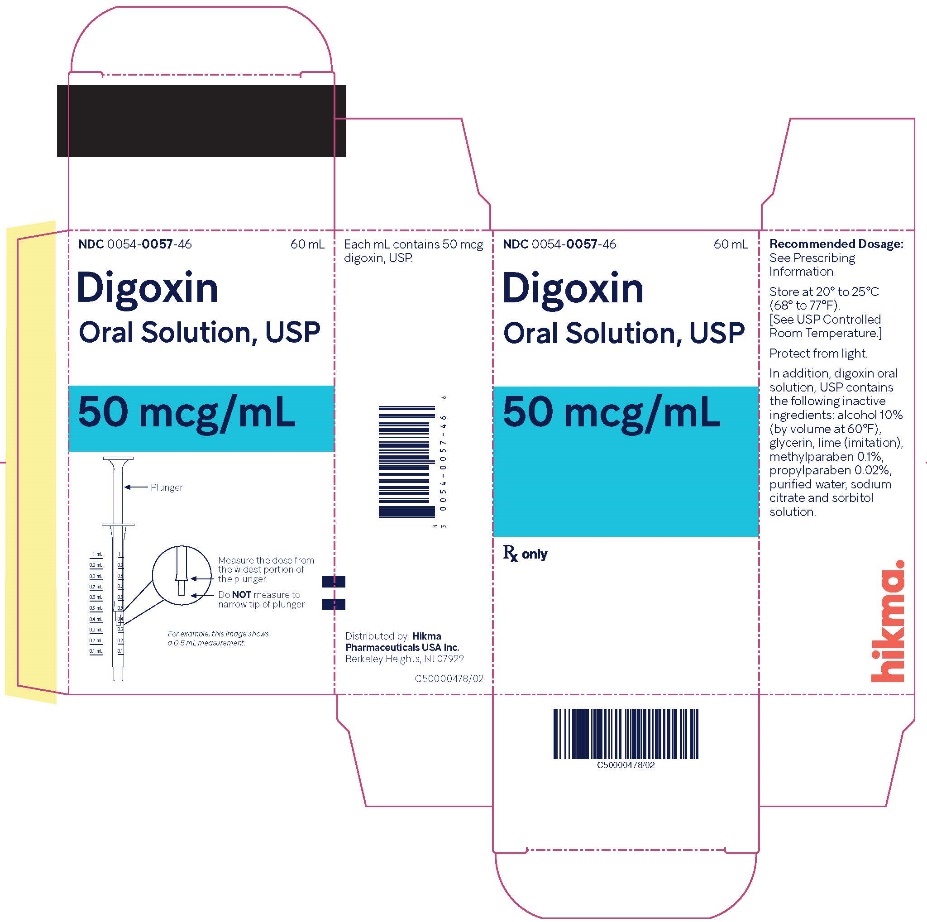
Digoxin .05 mg/mL Solution, 60 mL — NDC 0054-0057-46 (Billing 00054-0057-46)
This is a package of 60 mL of Digoxin .05 mg/mL Solution from Hikma Pharmaceuticals USA Inc., marketed since Aug 2004 and currently FDA-listed; retail pharmacies pay about $1.15 per mL (NADAC). It is this product's only package size.
NDC database record
One package, one record: these facts belong to NDC 0054-0057-46 alone.
- Record
- FDA NDC Directory package listing · Human prescription drug
- Code segments
- 0054 labeler · 0057 product · 46 package
- Package marketed since
- Aug 26, 2004
- Sample package
- No — commercial package
- Listing certified through
- Dec 31, 2026
- Billing quantity
- 60 mL per package
- Barcode (UPC-A, from the NDC)
- 3 0054005746 6
- Medicaid fills, this package
- 3,023 prescriptions in the last four reported quarters
- FDA record last changed
- Jul 24, 2026
Identity & classification
Regulatory identifiers FDA, NLM and CMS codes for this package
Drug-database identifiers Medi-Span GPI and First Databank GCN / HICL / AHFS classification
- GSN (GCN sequence number): 000017
- GCN: 00120
- GPI-14 (Medi-Span): 31200010002040
- HICL (First Databank): 000004
- AHFS class code: 24:04.08.00
- RxCUI (RxNorm): 393245
Where does this data come from?
- FDA openFDA NDC Directory · synced Oct 8, 2026
- FDA label on DailyMed · label index refreshed Oct 8, 2026
- RxNorm (NLM RxNav) · catalog refreshed Oct 1, 2026
- Medi-Span GPI (licensed)
- First Databank (licensed) · refreshed Oct 8, 2026
RxNorm drug class
This medicine belongs to the Cardiac Glycoside class.
Where does this data come from?
- RxClass (NLM) · catalog refreshed Oct 1, 2026
Clinical
Digoxin is used to treat heart failure and abnormal heart rhythms (arrhythmias). It helps the heart work better and it helps control your heart rate.
Read the full MedlinePlus article ↗- It treats mild to moderate heart failure in adults and helps control the heart rate in chronic atrial fibrillation. It is also used in children with heart failure. It can ease symp...
- Take it exactly as your prescriber directs, at about the same time each day. Tablets can be taken with or after meals, but try to be consistent. Avoid high-bran meals around your d...
- Nausea, vomiting, loss of appetite, diarrhea, dizziness, headache and tiredness are among the more common ones. Call me or your doctor if you notice vision changes like blurred or...
- Many medicines interact with digoxin. Heart rhythm drugs, some antibiotics and antacids are common examples, and St. John’s Wort can lower digoxin levels. Always check with me befo...
Patient education
Supplement & herbal interactions
Some supplements/herbs that may interact with Digoxin — tap one for details:
Digoxin may be associated with lower levels of 1 nutrient — worth a chat with your pharmacist, not a cause for alarm.
Where does this data come from?
- MedlinePlus (NLM) · refreshed Oct 8, 2026
- FDA label on DailyMed · label index refreshed Oct 8, 2026
Ask a licensed pharmacist directly — free, answered by our team.
Pricing
A drug doesn't have one price. Each row is a different public payment system, and none is what you'd pay at the counter — that depends on your insurance. The ⓘ on each row explains what it measures.
| Price system | Per mL | Per package |
|---|---|---|
| Retail pharmacies payNADAC · weekly | $1.147 | $68.81 / 60 ml |
| Medicaid paysCMS SDUD · 12 mo | $1.21 | $72.80 / 60 ml |
| Medicare drug plans payPart D · Q2 2026 | $1.45 | $87.11 / 60 ml |
Where does this data come from?
- CMS NADAC weekly file · file of Oct 7, 2026
- CMS ASP pricing files · refreshed Sep 20, 2026
- CMS Medicaid State Drug Utilization Data · through Q4 2025
- CMS Part D plan pricing files · refreshed Sep 24, 2026
- VA National Acquisition Center price file
Packaging — all sizes for this product
| Package NDC | Description | Marketing start | Marketing end | Status |
|---|---|---|---|---|
| 00054-0057-46 You're viewing this Main listing | 60 mL in 1 BOTTLE, DROPPER | 2004-08-26 | — | Active |
Therapeutic equivalents
| Product | Labeler | Pack | NADAC/unit | TE | Status | Price vs. this |
|---|---|---|---|---|---|---|
| Digoxin .05 mg/mLthis 00054-0057-46 | Hikma | 60 ml | $1.147 | AA | Availability likely | — |
| Digoxin .05 mg/mL 66689-0327-02 | VistaPharm, | 1 bottle | $1.147 | AA | Availability likely | — |
| Digoxin .05 mg/mL 69292-0605-60 | Amici | 1 bottle | $1.147 | AA | Availability likely | — |
| Digoxin .05 mg/mL 17856-0057-01 | Atlantic | 2.5 ml | — | AA | FDA listed | — |
Where does this data come from?
- FDA openFDA NDC Directory · synced Oct 8, 2026
- FDA Orange Book · refreshed Oct 3, 2026
- CMS NADAC weekly file · file of Oct 7, 2026
Availability & generic status
FDA-approved generic versions are listed, and recent pricing/market data suggests they may be available — see Therapeutic equivalents.
Where does this data come from?
- FDA Orange Book · refreshed Oct 3, 2026
What it looks like
Where does this data come from?
- FDA label on DailyMed · label index refreshed Oct 8, 2026
Inactive Ingredients / Excipients
Inactive ingredients, also called excipients, are components of the drug product other than the active ingredient. They may include fillers, dyes, coatings, preservatives, flavors, or other formulation ingredients.
🧪 Avoiding an ingredient? See Digoxin inactive ingredients by manufacturer: every current product's list side by side, so you can ask your pharmacy for the version that does not list it.
💡 Tap an ingredient (hover on desktop) to see what it is and why it’s used.
-
UNII 3K9958V90M
A liquid solvent derived from fermentation or chemical synthesis. In medicines, alcohol dissolves active ingredients, helps preserve the product, and improves how the body absorbs certain drugs.
-
UNII RS7A450LGA
A sodium salt derived from citric acid that helps regulate acidity and maintain pH balance in the medicine. It also works as a binding agent to hold tablet ingredients together.
-
UNII PDC6A3C0OX
Glycerin is a clear, thick liquid derived from plant oils or fats. It acts as a humectant to retain moisture, a sweetener, and a solvent in medications.
-
UNII 8CZS546954
A natural extract from lime fruit used as a flavoring agent and source of citric acid. It adds tart taste and may help preserve the medicine.
-
UNII A2I8C7HI9T
Methylparaben is a preservative derived from benzoic acid that prevents growth of bacteria, fungi, and mold in medicines. It extends the product's shelf life and maintains safety during storage.
-
UNII Z8IX2SC1OH
Propylparaben is a chemical preservative used to prevent bacterial and fungal growth in medicines and personal care products. It helps extend shelf life and maintain product safety during storage.
-
UNII 506T60A25R
Sorbitol is a natural sugar alcohol derived from glucose. It serves as a sweetener, humectant, and bulking agent in medications to improve taste and help maintain moisture in the product.
-
UNII 059QF0KO0R
Water is a liquid solvent that dissolves and mixes ingredients together in liquid medicines, syrups, and injections. It helps distribute the active drug evenly throughout the product.
8 inactive ingredients listed in the exact product block matched to this NDC.
Where does this data come from?
ingredient classCode="IACT" elements from the exact product block matched by this NDC. Label-section narrative from DailyMed / the openFDA label index is shown separately when available.- FDA label on DailyMed · label index refreshed Oct 8, 2026
- FDA openFDA NDC Directory · synced Oct 8, 2026
Inactive ingredient FAQ
Are inactive ingredients the same for every manufacturer?
Why might an inactive ingredient be missing?
Can inactive ingredients matter?
Manufacturer & labeler
More NDCs from Hikma Pharmaceuticals USA Inc. labeler code 00054
- PredniSONE 20 mg Tablet NDC 0054-0018-20
- PredniSONE 50 mg Tablet NDC 0054-0019-20
- Lithium Carbonate 450 mg Tablet, Extended Release NDC 0054-0020-25
- Lithium Carbonate 300 mg Tablet, Extended Release NDC 0054-0021-25
- Ipratropium Bromide 21 ug Spray NDC 0054-0045-44
- Ipratropium Bromide 42 ug Spray NDC 0054-0046-41
- Citalopram 10 mg/5mL Solution NDC 0054-0062-58
- Ondansetron Hydrochloride 4 mg/5mL Solution NDC 0054-0064-47
- Torsemide 20 mg Tablet NDC 0054-0077-25
- Balsalazide Disodium 750 mg Capsule NDC 0054-0079-28
- Zaleplon 5 mg Capsule NDC 0054-0084-25
- Zaleplon 10 mg Capsule NDC 0054-0085-25
Where does this data come from?
- FDA openFDA NDC Directory · synced Oct 8, 2026
- Drugs@FDA
Full prescribing information FDA SPL
🎯 Indications and Usage ▾
1 INDICATIONS AND USAGE Digoxin is a cardiac glycoside indicated in adults for the treatment of mild to moderate heart failure and for the control of resting ventricular rate in patients with chronic atrial fibrillation. ( 1.1 , 1.3 ) In pediatric patients with heart failure, digoxin is indicated to increase myocardial contractility. ( 1.2 )
1.1Heart Failure in Adults Digoxin Oral Solution is indicated for the treatment of mild to moderate heart failure. Digoxin increases left ventricular ejection fraction and improves heart failure symptoms as evidenced by increased exercise capacity and decreased heart failure-related hospitalizations and emergency care, while having no effect on mortality. Where possible, digoxin should be used with a diuretic and an angiotensin-converting enzyme inhibitor, but an optimal order for starting these three drugs cannot be specified.
1.2Heart Failure in Pediatric Patients Digoxin is indicated to increase myocardial contractility in pediatric patients with heart failure.
1.3Atrial Fibrillation in Adults Digoxin Oral Solution is indicated for the control of resting ventricular response rate in patients with chronic atrial fibrillation. Digoxin should not be used for the treatment of multifocal atrial tachycardia.
⏱️ Dosage and Administration ▾
2 DOSAGE AND ADMINISTRATION Toxic levels of digoxin are only slightly higher than therapeutic levels. The pharmacokinetics of digoxin are complex and dose determination should take into account patient-specific factors (age, lean body weight, renal function, etc.). ( 2.4 , 2.5 ) Patients should be monitored for toxicity and therapeutic effect and doses should be adjusted, accordingly. ( 2.2 )
2.1General Dosing Considerations The dose of digoxin should be based on clinical assessment but individual patient factors should be taken into consideration. Those factors are: • Lean body weight • Renal function • Patient age • Concurrent disease [see Warnings and Precautions (5) ] • Concomitant medication [see Drug Interactions (7) ] Because the pharmacokinetics of digoxin are complex, and because toxic levels of digoxin are only slightly higher than therapeutic levels, digoxin dosing can be difficult. The recommended approach is to: • estimate the patient’s daily maintenance dose • adjust the estimate to account for patient-specific factors • choose a dosing regimen • decide whether to initiate therapy with a loading dose • monitor the patient for toxicity and for therapeutic effect • adjust the dose Dose titration may be accomplished by either of two general approaches that differ in dosage and frequency of administration, but reach the same total amount of digoxin accumulated in the body. • If rapid titration is considered medically appropriate, administer a loading dose based upon projected peak digoxin body stores.
Maintenance dose can be calculated as a percentage of the loading dose. • More gradual titration may be obtained by beginning an appropriate maintenance dose, thus allowing digoxin body stores to accumulate slowly. Steady-state serum digoxin concentrations will be achieved in approximately five half-lives of the drug for the individual patient. Depending upon the patient’s renal function, this will take between 1 and 3 weeks.
2.2Serum Digoxin Concentrations In general, the dose of digoxin used should be determined on clinical grounds. However, measurement of serum digoxin concentrations can be helpful to the clinician in determining the adequacy of digoxin therapy and in assigning certain probabilities to the likelihood of digoxin intoxication. Studies have shown diminished efficacy at serum levels < 0.5 ng/mL, while levels above 2 ng/mL are associated with increased toxicity without increased benefit.
The inotropic effects of digoxin tend to appear at lower concentrations than the electrophysiological effects. Based on retrospective analysis, adverse events may be higher in the upper therapeutic range. Perform sampling of serum concentrations just before the next scheduled dose of the drug.
If this is not possible, sample at least 6 hours or later after the last dose, regardless of the route of administration or the formulation used. On a once-daily dosing schedule, the concentration of digoxin will be 10% to 25% lower when sampled at 24 versus 8 hours, depending upon the patient’s renal function. On a twice-daily dosing schedule, there will be only minor differences in serum digoxin concentrations whether sampling is done at 8 or 12 hours after a dose.
The serum concentration of digoxin should always be interpreted in the overall clinical context, and an isolated measurement should not be used alone as the basis for increasing or decreasing the dose of the drug. When decision-making is to be guided by serum digoxin levels, the clinician must consider the possibility of reported concentrations that have been falsely elevated by endogenous digoxin-like immunoreactive substances [see Drug Interactions (7.4) ] . If the assay being used is sensitive to these substances, it may be prudent to obtain a baseline measurement before digoxin therapy is started, and correct later values by the reported baseline level.
2.3Loading Dose Loading doses for each age group are given in Table 1 below. In pediatric patients, if a loadin… [Excerpted — this section continues on DailyMed.]
💊 Dosage Forms and Strengths ▾
3 DOSAGE FORMS AND STRENGTHS Each 1 mL of clear, colorless Digoxin Oral Solution, USP contains 50 mcg. The Digoxin Oral Solution bottles are to be used with the graduated oral syringes provided in the carton. Starting at 0.1 mL, this 1 mL oral syringe is marked in divisions of 0.1 mL, corresponding to 5 mcg of digoxin.
NOTE: The calibrated oral syringe supplied with the 60 mL bottle of Digoxin Oral Solution is not appropriate to measure doses below 0.1 mL. Doses less than 0.1 mL require appropriate methods or measuring devices designed to administer an accurate amount to the patient. Oral Solution: Each 1 mL contains 50 mcg of digoxin.
( 3 )
⛔ Contraindications ▾
4 CONTRAINDICATIONS Allergy to digoxin is rare. Digoxin is contraindicated in patients with a known hypersensitivity to digoxin or other forms of digitalis. Digitalis glycosides, such as digoxin, are contraindicated in ventricular fibrillation. • Known hypersensitivity to digoxin or other forms of digitalis. ( 4 ) • Ventricular fibrillation. ( 4 )
⚠️ Warnings and Cautions ▾
5 WARNINGS AND PRECAUTIONS • Accessory AV Pathway: Increased risk of rapid ventricular response leading to ventricular fibrillation. ( 5.1 ) • Sinus Node Disease and AV Block: Digoxin use can exacerbate the condition and may cause advanced or complete heart block. ( 5.2 ) • Misidentification of Digoxin Toxicity: Signs and symptoms of digoxin toxicity may be mistaken for worsening symptoms of congestive heart failure.
( 5.3 ) • Preserved Left Ventricular Systolic Function: Patients with heart failure with preserved left ventricular ejection fraction may be more susceptible to digoxin toxicity. ( 5.4 ) • Impaired Renal Function: Renal impairment results in increased digoxin exposure and requires dosage adjustments. ( 5.5 ) • Electrolyte Disorders: Toxicity is increased by hypokalemia, hypomagnesemia, and hypercalcemia.
( 5.6 ) • Hypermetabolic States: In patients with atrial arrhythmias associated with hypermetabolic states, control of resting ventricular rate is particularly resistant to digoxin treatment. ( 5.8 ) • The use of digoxin may result in potentially detrimental increases in coronary vascular resistance. ( 5.9 ) • Avoid digoxin in patients with myocarditis.
( 5.10 )
5.1Use in Patients with Accessory AV Pathway (Wolff-Parkinson-White Syndrome) Patients with Wolff-Parkinson-White syndrome who develop atrial fibrillation are at high risk of ventricular fibrillation. Treatment of these patients with digoxin leads to greater slowing of conduction in the atrioventricular node than in accessory pathways, and the risks of rapid ventricular response leading to ventricular fibrillation are thereby increased.
5.2Use in Patients with Sinus Node Disease and AV Block Because digoxin slows sinoatrial and AV conduction, the drug commonly prolongs the PR interval. Digoxin may cause severe sinus bradycardia or sinoatrial block particularly in patients with pre-existing sinus node disease and may cause advanced or complete heart block in patients with pre-existing incomplete AV block. In such patients consideration should be given to the insertion of a pacemaker before treatment with digoxin.
5.3Misidentification of Digoxin Toxicity Some signs and symptoms (anorexia, nausea, vomiting, and certain arrhythmias) can equally result from digoxin toxicity as from congestive heart failure. Misidentification of their etiology might lead the clinician to continue or increase digoxin dosing, when dosing should actually be suspended. When the etiology of these signs and symptoms is not obvious, measurement of serum digoxin levels may be helpful.
5.4Use in Patients with Preserved Left Ventricular Systolic Function Patients with certain disorders involving heart failure associated with preserved left ventricular ejection fraction may not benefit from digoxin treatment and may be particularly susceptible to adverse reactions when they are treated with digoxin. In patients with hypertrophic cardiomyopathy (formerly called idiopathic hypertrophic subaortic stenosis), the positive inotropic effect of digoxin leads to an increased subvalvular outflow gradient and therefore, may compromise cardiac output.
Digoxin is rarely beneficial in patients with this condition. Chronic constrictive pericarditis is not generally associated with any inotropic defect, so heart failure of this etiology is unlikely to respond to treatment with digoxin. By slowing the resting heart rate, digoxin may actually decrease cardiac output in these patients.
Digoxin as an inotropic agent is of limited value in patients with restrictive cardiomyopathies, although it has been used for ventricular rate control in the subgroup of patients with atrial fibrillation. In addition, patients with amyloid heart disease may be more susceptible to toxicity from digoxin at therapeutic levels because of an increased binding of digoxin to extracellular amyloid fibrils.
5.5Use in Patients with Impaired Renal Function Digoxin is primarily excreted by the kidneys; therefore, patients with impai… [Excerpted — this section continues on DailyMed.]
🤒 Adverse Reactions ▾
6 ADVERSE REACTIONS The frequency and severity of adverse reactions to digoxin when taken orally depend on the dose and the patient's underlying disease or concomitant therapies [see Warnings and Precautions (5) and Drug Interactions (7) ]. The overall incidence of adverse reactions has been reported as 5% to 20%, with 15% to 20% of them being considered serious (1% to 4% of patients receiving digoxin). Evidence suggests that the incidence of toxicity has decreased since the introduction of the serum digoxin assay and improved standardization of digoxin tablets.
Cardiac toxicity accounts for about one-half, gastrointestinal disturbances for about one-fourth, and CNS and other toxicity for about one-fourth of these adverse reactions. Adverse reactions are less common when digoxin is used within the recommended dose range or therapeutic serum concentration range and when there is careful attention to concurrent medications and conditions. The overall incidence of adverse reactions with digoxin has been reported as 5% to 20%, with 15% to 20% of adverse events considered serious.
Cardiac toxicity accounts for about one-half, gastrointestinal disturbances for about one-fourth, and CNS and other toxicity for about one-fourth of these adverse events. ( 6 ) To report SUSPECTED ADVERSE REACTIONS, contact Hikma Pharmaceuticals USA Inc. at 1-800-962-8364 or FDA at 1-800-FDA-1088 or www.fda.gov/medwatch .
6.1Cardiac In adults, high doses of digoxin may produce a variety of electrocardiographic changes and rhythm disturbances, such as first-degree, second-degree (Wenckebach), or third-degree heart block (including asystole); atrial tachycardia with block; AV dissociation; accelerated junctional (nodal) rhythm; unifocal or multifocal ventricular premature contractions (especially bigeminy or trigeminy); ventricular tachycardia; and ventricular fibrillation. Prophylactic use of a cardiac pacemaker may be considered if the risk of heart block is considered unacceptable.
In pediatric patients, the use of digoxin may produce arrhythmias. The most common are conduction disturbances or supraventricular tachyarrhythmias, such as atrial tachycardia (with or without block) and junctional (nodal) tachycardia. Ventricular arrhythmias are less common.
Sinus bradycardia may be a sign of impending digoxin intoxication, especially in infants, even in the absence of first-degree heart block. Any arrhythmias or alteration in cardiac conduction that develops in a child taking digoxin should initially be assumed to be a consequence of digoxin intoxication.
6.2Gastrointestinal Anorexia, nausea, vomiting and diarrhea may be early symptoms of digoxin toxicity. However, uncontrolled heart failure may also produce such symptoms. The use of digoxin has been associated with abdominal pain, intestinal ischemia, and hemorrhagic necrosis of the intestines.
6.3CNS and Special Senses Digoxin can produce visual disturbances (blurred vision, green-yellow color disturbances, halo effect), headache, weakness, dizziness, apathy, confusion, and mental disturbances (such as anxiety, depression, delirium, and hallucination).
6.4Other Gynecomastia has been reported following the prolonged use of digoxin. Thrombocytopenia, maculopapular rash and other skin reactions have been observed.
🔄 Drug Interactions ▾
7 DRUG INTERACTIONS Digoxin has a narrow therapeutic index, increased monitoring of serum digoxin concentrations and for potential signs and symptoms of clinical toxicity is necessary when initiating, adjusting, or discontinuing drugs that may interact with digoxin. Prescribers should consult the prescribing information of any drug which is co-prescribed with digoxin for potential drug interaction information. • PGP Inducers/Inhibitors: Drugs that induce or inhibit PGP have the potential to alter digoxin pharmacokinetics.
( 7.1 ) • The potential for drug-drug interactions must be considered prior to and during drug therapy. ( 7.2 , 7.3 , 12.3 )
7.1P-Glycoprotein (PGP) Inducers/Inhibitors Digoxin is a substrate for P-glycoprotein, at the level of intestinal absorption, renal tubular section and biliary-intestinal secretion. Therefore, drugs that induce/inhibit P-glycoprotein have the potential to alter digoxin pharmacokinetics.
7.2Pharmacokinetic Drug Interactions on Serum Digoxin Levels in Adults Digoxin Concentrations Increased Greater than 50% Digoxin Serum Concentration Increase Digoxin AUC Increase Recommendations Amiodarone 70% NA Measure serum digoxin concentrations before initiating concomitant drugs. Reduce digoxin dose by approximately 30% to 50% or by modifying the dosing frequency and continue monitoring. Captopril 58% 39% Clarithromycin NA 70% Dronedarone NA 150% Gentamicin 129 to 212% NA Erythromycin 100% NA Itraconazole 80% NA Lapatinib NA 180% Propafenone NA 60 to 270% Quinidine 100% NA Ranolazine 50% NA Ritonavir NA 86% Telaprevir 50% 85% Tetracycline 100% NA Verapamil 50 to 75% NA Digoxin Concentrations Increased Less than 50% Atorvastatin 22% 15% Measure serum digoxin concentrations before initiating concomitant drugs.
Reduce digoxin dose by approximately 15% to 30% or by modifying the dosing frequency and continue monitoring. Carvedilol 16% 14% Conivaptan 33% 43% Diltiazem 20% NA Indomethacin 40% NA Mirabegron 29% 27% Nefazodone 27% 15% Nifedipine 45% NA Propantheline 24% 24% Quinine NA 33% Rabeprazole 29% 19% Saquinavir 27% 49% Spironolactone 25% NA Telmisartan 20 to 49% NA Ticagrelor 31% 28% Tolvaptan 30% 20% Trimethoprim 22 to 28% NA Digoxin Concentrations Increased, but Magnitude is Unclear Alprazolam, Azithromycin, Cyclosporine, Diclofenac, Diphenoxylate, Epoprostenol, Esomeprazole, Ibuprofen, Ketoconazole, Lansoprazole, Metformin, Omeprazole Measure serum digoxin concentrations before initiating concomitant drugs.
Continue monitoring and reduce digoxin dose as necessary. Digoxin Concentrations Decreased Acarbose, Activated Charcoal, Albuterol, Antacids, certain cancer chemotherapy or radiation therapy, Cholestyramine, Colestipol, Exenatide, Kaolin-pectin, Meals High in Bran, Metoclopramide, Miglitol, Neomycin, Penicillamine, Phenytoin, Rifampin, St. John’s Wort, Sucralfate, Sulfasalazine Measure serum digoxin concentrations before initiating concomitant drugs.
Continue monitoring and increase digoxin dose by approximately 20% to 40% as necessary. NA – Not available/reported
7.3Pharmacodynamic Drug Interactions Antiarrhythmics Dofetilide Concomitant administration with digoxin was associated with a higher rate of torsades de pointes . Sotalol Proarrhythmic events were more common in patients receiving sotalol and digoxin than on either alone; it is not clear whether this represents an interaction or is related to the presence of CHF, a known risk factor for proarrhythmia, in patients receiving digoxin. Parathyroid Hormone Analog Teriparatide Sporadic case reports have suggested that hypercalcemia may predispose patients to digitalis toxicity.
Teriparatide transiently increases serum calcium. Thyroid Supplement Thyroid Treatment of hypothyroidism in patients taking digoxin may increase the dose requirements of digoxin. Sympathomimetics Epinephrine Can increase the risk of cardiac arrhythmias.
Norepinephrine Dopamine Neuromuscular Blocking Agents Succinylcholine May cause sudden extrusion of potassium… [Excerpted — this section continues on DailyMed.]
👥 Use in Specific Populations ▾
8 USE IN SPECIFIC POPULATIONS • Geriatric Patients ( 8.5 ): Use caution during dose selection, taking into account renal function, and carefully monitor for side effects. • Renal Impairment ( 8.7 ): Digoxin is excreted by the kidneys. Renal function should be considered during dosage selection.
8.1Pregnancy Risk Summary Experience with digoxin in pregnant women over several decades, based on published retrospective clinical studies and case reports, has not led to the identification of a drug associated risk of major birth defects, miscarriage or adverse maternal and fetal outcomes. Untreated underlying maternal conditions, such as heart failure and atrial fibrillation, during pregnancy pose a risk to the mother and fetus (see Clinical Consideration). Animal reproduction studies have not been conducted with digoxin.
The estimated background risk of major birth defects and miscarriage for the indicated population(s) are unknown. All pregnancies have a background risk of birth defect, loss, or other adverse outcomes, In the U.S. General population, the estimated background risk of major birth defects and miscarriage in clinically recognized pregnancies is 2-4% and 15-20%, respectively.
Clinical Considerations Disease-associated maternal and/or embryo/fetal risk Pregnant women with heart failure are at increased risk for preterm birth. Clinical classification of heart disease may worsen with pregnancy and lead to maternal or fetal death. Pregnant women with atrial fibrillation are at an increased risk of delivering a low birth weight infant.
Atrial fibrillation may worsen with pregnancy and can lead to maternal or fetal death. Fetal/neonatal adverse reactions Digoxin has been shown to cross the placenta and is found in amniotic fluid. Monitor neonates for signs and symptoms of digoxin toxicity, including vomiting, and cardiac arrhythmias.
Dose adjustments during pregnancy and the postpartum period Digoxin requirements may increase during pregnancy and decrease in the postpartum period. Monitor serum digoxin levels during pregnancy and the postpartum period. Labor or Delivery Risk of arrhythmias may increase during the labor and delivery.
Monitor patients continuously during labor and delivery.
8.2Lactation Risk Summary The digoxin dose received through breastfeeding is up to 4% of the neonatal maintenance dosage, which is unlikely to be clinically relevant. There are no data on the effects of digoxin on the breastfed infant or the effects on milk reduction. Data Based on data from two lactation studies in a total of 13 breastfed infants, the digoxin concentrations in breast milk were between 0.4 – 1.0 ng/mL following 0.25 mg once daily dose of digoxin in the lactating mother.
Thus, the amount of digoxin ingested daily by the infants is estimated to be between 0.03 to 0.16 mcg/kg/day. This translates to a relative infant dose of digoxin between 1 to 7% of the maternal weight-adjusted dose and about 0.2 to 4% of the neonatal maintenance dose.
8.4Pediatric Use Digoxin increases myocardial contractility in pediatric patients with congestive heart failure. There are no clinical efficacy studies demonstrating benefit in pediatric patients with heart failure. There are no controlled randomized studies of digoxin in pediatric patients with atrial tachyarrhythmias [see Clinical Studies (14.2) ] .
8.5Geriatric Use The majority of clinical experience gained with digoxin has been in the elderly population. This experience has not identified differences in response or adverse effects between the elderly and younger patients. However, this drug is known to be substantially excreted by the kidney, and the risk of toxic reactions to this drug may be greater in patients with impaired renal function.
Because elderly patients are more likely to have decreased renal function, care should be taken in dose selection, which should be based on renal function, and it may be useful to monitor renal function [see Dosage and Administration (2.4) ] . 8.6… [Excerpted — this section continues on DailyMed.]
🤰 Pregnancy ▾
8.1Pregnancy Risk Summary Experience with digoxin in pregnant women over several decades, based on published retrospective clinical studies and case reports, has not led to the identification of a drug associated risk of major birth defects, miscarriage or adverse maternal and fetal outcomes. Untreated underlying maternal conditions, such as heart failure and atrial fibrillation, during pregnancy pose a risk to the mother and fetus (see Clinical Consideration). Animal reproduction studies have not been conducted with digoxin.
The estimated background risk of major birth defects and miscarriage for the indicated population(s) are unknown. All pregnancies have a background risk of birth defect, loss, or other adverse outcomes, In the U.S. General population, the estimated background risk of major birth defects and miscarriage in clinically recognized pregnancies is 2-4% and 15-20%, respectively.
Clinical Considerations Disease-associated maternal and/or embryo/fetal risk Pregnant women with heart failure are at increased risk for preterm birth. Clinical classification of heart disease may worsen with pregnancy and lead to maternal or fetal death. Pregnant women with atrial fibrillation are at an increased risk of delivering a low birth weight infant.
Atrial fibrillation may worsen with pregnancy and can lead to maternal or fetal death. Fetal/neonatal adverse reactions Digoxin has been shown to cross the placenta and is found in amniotic fluid. Monitor neonates for signs and symptoms of digoxin toxicity, including vomiting, and cardiac arrhythmias.
Dose adjustments during pregnancy and the postpartum period Digoxin requirements may increase during pregnancy and decrease in the postpartum period. Monitor serum digoxin levels during pregnancy and the postpartum period. Labor or Delivery Risk of arrhythmias may increase during the labor and delivery.
Monitor patients continuously during labor and delivery.
🧒 Pediatric Use ▾
8.4Pediatric Use Digoxin increases myocardial contractility in pediatric patients with congestive heart failure. There are no clinical efficacy studies demonstrating benefit in pediatric patients with heart failure. There are no controlled randomized studies of digoxin in pediatric patients with atrial tachyarrhythmias [see Clinical Studies (14.2) ] .
🧓 Geriatric Use ▾
8.5Geriatric Use The majority of clinical experience gained with digoxin has been in the elderly population. This experience has not identified differences in response or adverse effects between the elderly and younger patients. However, this drug is known to be substantially excreted by the kidney, and the risk of toxic reactions to this drug may be greater in patients with impaired renal function.
Because elderly patients are more likely to have decreased renal function, care should be taken in dose selection, which should be based on renal function, and it may be useful to monitor renal function [see Dosage and Administration (2.4) ] .
🆘 Overdosage ▾
10 OVERDOSAGE
10.1Clinical Manifestations In adults, the signs and symptoms of toxicity are similar to those described in Adverse Reactions (6) but may be more frequent and severe. The most common signs and symptoms of digoxin toxicity are nausea, vomiting, anorexia, and fatigue that occur in 30% to 70% of patients who are overdosed. Extremely high serum concentrations produce hyperkalemia especially in patients with impaired renal function.
Almost every type of cardiac arrhythmia has been associated with digoxin overdose and multiple rhythm disturbances in the same patient are common. Peak cardiac effects occur 3 to 6 hours following ingestion and may persist for 24 hours or longer. Arrhythmias that are considered more characteristic of digoxin toxicity are new-onset Mobitz type 1 A-V block, accelerated junctional rhythms, non-paroxysmal atrial tachycardia with A-V block, and bi-directional ventricular tachycardia.
Cardiac arrest from asystole or ventricular fibrillation is usually fatal. Digoxin toxicity is related to serum concentration. As serum levels increase above 1.2 ng/mL, there is a potential for increase in adverse events.
The effect on adverse events is enhanced by lower potassium levels. In adults with heart disease, clinical observations suggest that an overdose of digoxin of 10 to 15 mg results in death of half of patients. A dose above 25 mg ingested by an adult without heart disease appeared to be uniformly fatal if no Digoxin Immune Fab (DIGIBIND ® , DIGIFAB ® ) was administered.
In pediatric patients, signs and symptoms of toxicity can occur during or shortly after the dose of digoxin. Frequent non-cardiac effects are similar to those observed in adults although nausea and vomiting are not seen frequently in infants and small pediatric patients. Other reported manifestations of overdose are weight loss in older age groups, failure to thrive in infants, abdominal pain caused by mesenteric artery ischemia, drowsiness, and behavioral disturbances including psychotic episodes.
Arrhythmias and combinations of arrhythmias that occur in adult patients can also occur in pediatric patients although sinus tachycardia, supraventricular tachycardia, and rapid atrial fibrillation are seen less frequently in pediatric patients. Pediatric patients are more likely to develop A-V conduction disturbances, or sinus bradycardia. Any arrhythmia in a child treated with digoxin should be considered related to digoxin until otherwise ruled out.
In pediatric patients aged 1 to 3 years without heart disease, clinical observations suggest that an overdose of digoxin of 6 to 10 mg would result in death of half of the patients. In the same population, a dose above 10 mg resulted in death if no Digoxin Immune Fab (DIGIBIND ® , DIGIFAB ® ) was administered.
10.2Management of Toxicity Chronic Overdose If there is suspicion of toxicity, digoxin should be discontinued and the patient placed on a cardiac monitor. Contributing factors such as electrolyte abnormalities, thyroid dysfunction, and concomitant medications should be corrected [see Dosage and Administration (2.5) ] . Hypokalemia should be corrected by administering potassium so that serum potassium is maintained between 4.0 and 5.5 mmol/L.
Potassium is usually administered orally, but when correction of the arrhythmia is urgent and serum potassium concentration is low, potassium may be administered cautiously by the intravenous route. The electrocardiogram should be monitored for any evidence of potassium toxicity (e.g. peaking of T waves) and to observe the effect on the arrhythmia. Potassium salts should be avoided in patients with bradycardia or heart block.
Symptomatic arrhythmias may be treated with Digoxin Immune Fab (DIGIBIND ® , DIGIFAB ® ). Acute Overdose Patients who have intentionally or accidently ingested massive doses of digoxin should receive activated charcoal orally or by nasogastric tube regardless of the time since ingestion since digoxin recirculates to the inte… [Excerpted — this section continues on DailyMed.]
🧬 Clinical Pharmacology ▾
12 CLINICAL PHARMACOLOGY
12.1Mechanism of Action All of digoxin’s actions are mediated through its effects on NaK–ATPase. This enzyme, the “sodium pump,” is responsible for maintaining the intracellular milieu throughout the body by moving sodium ions out of and potassium ions into cells. By inhibiting NaK–ATPase, digoxin • causes increased availability of intracellular calcium in the myocardium and conduction system, with consequent increased inotropy, increased automaticity, and reduced conduction velocity; • indirectly causes parasympathetic stimulation of the autonomic nervous system, with consequent effects on the sino-atrial (SA) and atrioventricular (AV) nodes; • reduces catecholamine reuptake at nerve terminals, rendering blood vessels more sensitive to endogenous or exogenous catecholamines; • increases baroreceptor sensitization, with consequent increased carotid sinus nerve activity and enhanced sympathetic withdrawal for any given increment in mean arterial pressure; • increases (at higher concentrations) sympathetic outflow from the central nervous system (CNS) to both cardiac and peripheral sympathetic nerves; and • allows (at higher concentrations) progressive efflux of intracellular potassium, with consequent increase in serum potassium levels.
The cardiologic consequences of these direct and indirect effects are an increase in the force and velocity of myocardial systolic contraction (positive inotropic action), a slowing of the heart rate (negative chronotropic effect), and decreased conduction velocity through the AV node, and a decrease in the degree of activation of the sympathetic nervous system and renin-angiotensin system (neurohormonal deactivating effect).
12.2Pharmacodynamics Short- and long-term treatment with digoxin slows heart rate, increases cardiac output and lowers pulmonary artery pressure, pulmonary capillary wedge pressure, and systemic vascular resistance. These hemodynamic effects are accompanied by an increase in the left ventricular ejection fraction and a decrease in end-systolic and end-diastolic dimensions.
12.3Pharmacokinetics Absorption Following oral administration, peak serum concentrations of digoxin occur at 30 to 90 minutes. In pediatric patients and in adult volunteers, absolute bioavailability of digoxin from the solution formulation is 70% to 85%, similar to that seen (in adults) with standard tablets (60% to 80%). When the solution is taken after meals, the peak serum concentrations increase by 20% and the total amount of digoxin absorbed increases by 43%, but the rate of digoxin absorption is unchanged.
When taken with meals high in bran fiber, however, the amount absorbed from an oral dose may be reduced. Digoxin absorption may also be affected by various concomitant therapy modulating gastric pH and P-glycoprotein [see Drug Interactions (7) ] . Comparisons of the systemic availability and equivalent doses for preparations of digoxin are shown in Table 5 .
Table 5: Comparisons of the Systemic Availability and Equivalent Doses for Preparations of Digoxin Product Absolute Bioavailability Equivalent Doses (mcg) For example, 125 mcg tablets equivalent to 125 mcg solution equivalent to 100 mcg capsules equivalent to 100 mcg injection/IV. Among Dosage Forms Tablets 60% to 80% 62.5 125 250 500 Solution 70% to 85% 62.5 125 250 500 Capsules 90% to 100% 50 100 200 400 Injection/IV 100% 50 100 200 400 In some patients, orally administered digoxin is converted to inactive reduction products (e.g., dihydrodigoxin) by colonic bacteria in the gut.
Data suggested that one in ten patients treated with digoxin will degrade 40% or more of the ingested dose. As a result, certain antibiotics may increase the absorption of digoxin in such patients. The magnitude of rise in serum digoxin concentration relates to the extent of bacterial inactivation, and may be as much as two-fold in some cases.
Distribution Following drug administration, a 6- to 8-hour tissue distribution phase is observed.… [Excerpted — this section continues on DailyMed.]
🧬 Mechanism of Action ▾
12.1Mechanism of Action All of digoxin’s actions are mediated through its effects on NaK–ATPase. This enzyme, the “sodium pump,” is responsible for maintaining the intracellular milieu throughout the body by moving sodium ions out of and potassium ions into cells. By inhibiting NaK–ATPase, digoxin • causes increased availability of intracellular calcium in the myocardium and conduction system, with consequent increased inotropy, increased automaticity, and reduced conduction velocity; • indirectly causes parasympathetic stimulation of the autonomic nervous system, with consequent effects on the sino-atrial (SA) and atrioventricular (AV) nodes; • reduces catecholamine reuptake at nerve terminals, rendering blood vessels more sensitive to endogenous or exogenous catecholamines; • increases baroreceptor sensitization, with consequent increased carotid sinus nerve activity and enhanced sympathetic withdrawal for any given increment in mean arterial pressure; • increases (at higher concentrations) sympathetic outflow from the central nervous system (CNS) to both cardiac and peripheral sympathetic nerves; and • allows (at higher concentrations) progressive efflux of intracellular potassium, with consequent increase in serum potassium levels.
The cardiologic consequences of these direct and indirect effects are an increase in the force and velocity of myocardial systolic contraction (positive inotropic action), a slowing of the heart rate (negative chronotropic effect), and decreased conduction velocity through the AV node, and a decrease in the degree of activation of the sympathetic nervous system and renin-angiotensin system (neurohormonal deactivating effect).
📦 How Supplied / Storage and Handling ▾
16 HOW SUPPLIED/STORAGE AND HANDLING Digoxin Oral Solution, USP 50 mcg per 1 mL is supplied as a (lime-flavored) clear, colorless solution. NDC 0054-0057-46: Bottle of 60 mL with a calibrated oral syringe Storage Store at 20° to 25°C (68° to 77°F). [See USP Controlled Room Temperature.] Protect from light.
📋 Description ▾
11 DESCRIPTION Digoxin is one of the cardiac glycosides, a closely-related group of plant-derived drugs with shared pharmacological effects. The term "digitalis" is used to designate the whole group. Digoxin is extracted from the leaves of the common foxglove, Digitalis lanata .
Like each of the other cardiac glycosides, digoxin consists of a polycyclic core and a sugar side chain. Digoxin’s chemical name is 3β-[O-2,6-dideoxy-β-D-ribo-hexopyranosyl-(1→4)-O-2,6-dideoxy-β-D-ribo-hexopyranosyl-(1→4)-2,6-dideoxy-β-D-ribo-hexopyranosyl)oxy]-12β,14-dihydroxy-5β-card-20(22)-enolide; its structural formula is: Its molecular formula is C 41 H 64 O 14 , and its molecular weight is 780.94. Digoxin is practically insoluble in water and in ether, slightly soluble in 50% ethanol and in chloroform, and freely soluble in pyridine.
Digoxin, USP is a white or almost white powder, or colorless crystals. Digoxin Oral Solution, USP is formulated for oral administration. Each mL contains 50 mcg digoxin.
The lime-flavored solution contains the following inactive ingredients: alcohol 10% (by volume at 60°F), glycerin, lime (imitation), methylparaben 0.1%, propylparaben 0.02%, purified water, sodium citrate and sorbitol solution. digoxin-chemical-structure-08.23.2023.jpg
💬 Information for Patients ▾
17 PATIENT COUNSELING INFORMATION Advise the patient to read the FDA-approved patient labeling ( Instructions for Use ) Patients receiving digoxin should be given the following instructions by the physician. • Advise patients that digoxin is used to treat heart failure and heart arrhythmias. Digoxin helps the heart beat more efficiently in adults and pediatric patients and decreases the heart rate at rest during abnormal rhythms in adults. • Instruct patients to take this medication as directed. The dose of digoxin should not be adjusted without consulting with a physician or other healthcare professional. • Advise patients that many drugs can interact with digoxin.
Patients should be instructed to inform their doctor and pharmacist if they are taking any over the counter medications, including herbal medication, or are started on a new prescription. • The patient should be made aware that blood tests will be necessary to ensure that their digoxin dose is appropriate for them. • Advise patients to contact their doctor or a health care professional if they experience nausea, vomiting, persistent diarrhea, confusion, weakness, or visual disturbances (including blurred vision, green-yellow color disturbances, halo effect) as these could be signs that the dose of digoxin may be too high. • Advise parents or caregivers that the symptoms of having too high digoxin doses may be difficult to recognize in infants and pediatric patients.
Symptoms such as weight loss, failure to thrive in infants, abdominal pain, and behavioral disturbances may be indications of digoxin toxicity. • Instruct the patient to monitor and record their heart rate and blood pressure daily. • Instruct patients to use the calibrated oral syringe to measure their digoxin dose and to avoid less precise measuring tools, such as teaspoons. For doses less than 0.1 mL, provide another measuring syringe to the patient for accurate dosing, since the provided calibrated oral syringe is not appropriate to measure doses less than 0.1 mL. • Instruct women of childbearing potential who become or are planning to become pregnant to consult a physician prior to initiation or continuing therapy with digoxin.
Distributed by: Hikma Pharmaceuticals USA Inc. Berkeley Heights, NJ 07922 C50000480/03
🧬 Pharmacokinetics ▾
12.3Pharmacokinetics Absorption Following oral administration, peak serum concentrations of digoxin occur at 30 to 90 minutes. In pediatric patients and in adult volunteers, absolute bioavailability of digoxin from the solution formulation is 70% to 85%, similar to that seen (in adults) with standard tablets (60% to 80%). When the solution is taken after meals, the peak serum concentrations increase by 20% and the total amount of digoxin absorbed increases by 43%, but the rate of digoxin absorption is unchanged.
When taken with meals high in bran fiber, however, the amount absorbed from an oral dose may be reduced. Digoxin absorption may also be affected by various concomitant therapy modulating gastric pH and P-glycoprotein [see Drug Interactions (7) ] . Comparisons of the systemic availability and equivalent doses for preparations of digoxin are shown in Table 5 .
Table 5: Comparisons of the Systemic Availability and Equivalent Doses for Preparations of Digoxin Product Absolute Bioavailability Equivalent Doses (mcg) For example, 125 mcg tablets equivalent to 125 mcg solution equivalent to 100 mcg capsules equivalent to 100 mcg injection/IV. Among Dosage Forms Tablets 60% to 80% 62.5 125 250 500 Solution 70% to 85% 62.5 125 250 500 Capsules 90% to 100% 50 100 200 400 Injection/IV 100% 50 100 200 400 In some patients, orally administered digoxin is converted to inactive reduction products (e.g., dihydrodigoxin) by colonic bacteria in the gut.
Data suggested that one in ten patients treated with digoxin will degrade 40% or more of the ingested dose. As a result, certain antibiotics may increase the absorption of digoxin in such patients. The magnitude of rise in serum digoxin concentration relates to the extent of bacterial inactivation, and may be as much as two-fold in some cases.
Distribution Following drug administration, a 6- to 8-hour tissue distribution phase is observed. This is followed by a much more gradual decline in the serum concentration of the drug, which is dependent on the elimination of digoxin from the body. Clinical evidence indicates that the early high serum concentrations do not reflect the concentration of digoxin at its sites of action, but that with chronic use, the steady-state post-distribution serum concentrations are in equilibrium with tissue concentrations and correlate with pharmacologic effects.
In individual patients, these post-distribution serum concentrations may be useful in evaluating therapeutic and toxic effects [see Dosage and Administration (2.2) ] . Digoxin is concentrated in tissues and therefore has a large apparent volume of distribution. Digoxin crosses both the blood-brain barrier and the placenta.
At delivery, the serum digoxin concentration in the newborn is similar to the serum concentration in the mother. Approximately 25% of digoxin in the plasma is bound to protein. Serum digoxin concentrations are not significantly altered by large changes in fat tissue weight, so that its distribution space correlates with lean (i.e., ideal) body weight, not total body weight.
Metabolism Sixteen percent of digoxin is metabolized. The end metabolites include 3-β-digoxigenin, 3-keto-digoxigenin, and their glucuronide and sulfate conjugates. The metabolism of digoxin is not dependent on the cytochrome P-450 system, and digoxin is not known to induce or inhibit the cytochrome P-450 system.
Excretion Elimination of digoxin is predominantly renal, although in adult volunteers about a quarter of serum digoxin is eliminated through the intestine, excreted in bile or secreted directly into the lumen by P-glycoprotein. Elimination of digoxin follows first order kinetics. Following intravenous administration to healthy volunteers, 50% to 70% of a digoxin dose is excreted unchanged in the urine.
Renal excretion of digoxin is proportional to glomerular filtration rate. The serum half-life of digoxin in pediatric patients is reported to be 18 to 36 hours, and in adults it is typically 36 to 48 hours… [Excerpted — this section continues on DailyMed.]
🧬 Pharmacodynamics ▾
12.2Pharmacodynamics Short- and long-term treatment with digoxin slows heart rate, increases cardiac output and lowers pulmonary artery pressure, pulmonary capillary wedge pressure, and systemic vascular resistance. These hemodynamic effects are accompanied by an increase in the left ventricular ejection fraction and a decrease in end-systolic and end-diastolic dimensions.
🔬 Clinical Studies ▾
14 CLINICAL STUDIES
14.1Chronic Heart Failure Two small 12-week, double-blind, randomized trials compared digoxin to placebo in adult patients with chronic congestive heart failure, New York Heart Association Class II or III. The enrolled patients had all been receiving digoxin before the trials, but this was withdrawn before randomization. They continued to receive diuretics and (in the larger trial) ACE inhibitors.
The trials enrolled 178 and 88 patients, respectively. In each of these trials, randomization to digoxin was associated with better preservation of exercise capacity and with reduced need of failure-related hospitalization, emergency care, and concomitant heart-failure therapy. NYHA class and patients' global assessments were also improved, although this effect achieved statistical significance only in the larger of the two studies.
The Digitalis Investigation Group (DIG) main trial was a 37-week, multicenter, randomized, double-blind mortality study comparing digoxin to placebo in 6800 adult patients with heart failure and left ventricular ejection fraction ≤0.45. At randomization, 67% were NYHA class I or II, 71% had heart failure of ischemic etiology, 44% had been receiving digoxin, and most were receiving a concomitant ACE inhibitor (94%) and diuretics (82%). As in the smaller trials described above, patients who had been receiving open-label digoxin were withdrawn from this treatment before randomization.
Randomization to digoxin was again associated with a significant reduction in the incidence of hospitalization, whether scored as number of hospitalizations for heart failure (relative risk 75%), risk of having at least one such hospitalization during the trial (RR 72%), or number of hospitalizations for any cause (RR 94%). On the other hand, randomization to digoxin had no apparent effect on mortality (RR 99%, with confidence limits of 91% to 107%).
14.2Atrial Fibrillation Digoxin has also been studied as a means of controlling the ventricular response to chronic atrial fibrillation in adults. Digoxin reduced the resting heart rate, but not the heart rate during exercise. In 3 different randomized, double-blind trials that included a total of 315 adult patients, digoxin was compared to placebo for the conversion of recent-onset atrial fibrillation to sinus rhythm.
Conversion was equally likely, and equally rapid, in the digoxin and placebo groups. In a randomized 120-patient trial comparing digoxin, sotalol, and amiodarone, patients randomized to digoxin had the lowest incidence of conversion to sinus rhythm, and the least satisfactory rate control when conversion did not occur. In at least one study, digoxin was studied as a means of delaying reversion to atrial fibrillation in adult patients with frequent recurrence of this arrhythmia.
This was a randomized, double-blind, 43-patient crossover study. Digoxin increased the mean time between symptomatic recurrent episodes by 54%, but had no effect on the frequency of fibrillatory episodes seen during continuous electrocardiographic monitoring. No controlled randomized study of digoxin in pediatric patients with atrial tachyarrhythmias has been done.
14.3Atrial Flutter There are no reports of controlled trials of digoxin for conversion of atrial flutter, rate control during atrial flutter, or reduction of the frequency of recurrence of atrial flutter in adults.
14.4Supraventricular Tachycardia There are no reports of controlled trials of digoxin for conversion of supraventricular tachycardia (SVT), rate control during SVT, or reduction of the frequency of recurrence of SVT in adults.
🧪 Nonclinical Toxicology ▾
13 NONCLINICAL TOXICOLOGY
13.1Carcinogenesis, Mutagenesis, Impairment of Fertility There have been no long-term studies performed in animals to evaluate carcinogenic potential, nor have studies been conducted to assess the mutagenic potential of digoxin or its potential to affect fertility.
📄 Carcinogenesis, Mutagenesis, Impairment of Fertility ▾
13.1Carcinogenesis, Mutagenesis, Impairment of Fertility There have been no long-term studies performed in animals to evaluate carcinogenic potential, nor have studies been conducted to assess the mutagenic potential of digoxin or its potential to affect fertility.
📖 Instructions for Use ▾
INSTRUCTIONS FOR USE Digoxin Oral Solution, USP Oral Syringe Important information about measuring Digoxin Oral Solution • Always use the oral syringe provided with your Digoxin Oral Solution to make sure you measure the right amount. • Measure the dose of medicine from the widest part of the plunger. Do not measure from the narrow tip. See Figure 1.
1. Insert the tip of the oral syringe into the medicine bottle. 2.
Pull back the plunger to the line that matches the dose prescribed by your healthcare provider. 3. Remove the oral syringe from the medicine bottle.
4. Take your medicine by slowly pushing the plunger until the oral syringe is empty. Figure 1 Distributed by: Hikma Pharmaceuticals USA Inc.
Berkeley Heights, NJ 07922 C50000480/03 Revised April 2025 digoxin-plunger.jpg
📄 Package Label / Principal Display Panel ▾
Package/Label Display Panel Digoxin Oral Solution USP, 60 mL – Folding Carton 0054-0057-46, Rx only fc-os-50-mcg-ml-c50000478-02-k02.jpg
Package/Label Display Panel Digoxin Oral Solution USP, 60 mL - Bottle Label 0054-0057-46, Rx only bl-os-50-mcg-ml-c50000479-02-k02.jpg