
Tolterodine Tartrate 4 mg Capsule, Extended Release, 90-count — NDC 0093-7164-98 (Billing 00093-7164-98)
This is a package of 90 capsules of Tolterodine Tartrate 4 mg Capsule, Extended Release from Teva Pharmaceuticals USA, Inc., marketed since Oct 2020 and currently FDA-listed; retail pharmacies pay about $0.2312 per capsule (NADAC).
NDC database record
One package, one record: these facts belong to NDC 0093-7164-98 alone.
- Record
- FDA NDC Directory package listing · Drug for further processing
- Code segments
- 0093 labeler · 7164 product · 98 package
- Listing certified through
- Dec 31, 2026
- Billing quantity
- 90 EA per package
- Barcode (UPC-A, from the NDC)
- 3 0093716498 2
- Medicaid fills, this package
- 166 prescriptions in the last four reported quarters
- FDA record last changed
- Oct 8, 2026
Identity & classification
Regulatory identifiers FDA, NLM and CMS codes for this package
Drug-database identifiers Medi-Span GPI and First Databank GCN / HICL / AHFS classification
- GSN (GCN sequence number): 047327
- GCN: 12263
- GPI-14 (Medi-Span): 54100060207030
- HICL (First Databank): 018047
- AHFS class code: 86:12.04.00
Where does this data come from?
- FDA openFDA NDC Directory · synced Oct 8, 2026
- FDA label on DailyMed · label index refreshed Oct 8, 2026
- RxNorm (NLM RxNav) · catalog refreshed Oct 1, 2026
- Medi-Span GPI (licensed)
- First Databank (licensed) · refreshed Oct 8, 2026
Clinical
Tolterodine is used to treat overactive bladder (a bladder condition that causes sudden urges to urinate that may be hard to control). Tolterodine is in a class of medications called antimuscarinics. It works by relaxing the bladder muscles.
Read the full MedlinePlus article ↗- It treats overactive bladder, meaning sudden urges to urinate, leaking with those urges, and going very often. It helps calm the bladder muscle.
- It is taken by mouth. If you have the extended-release capsule, such as Detrol LA, take it once daily with water and swallow it whole. Follow your label and prescriber for your exa...
- Dry mouth is the most common. Headache, constipation, dizziness, stomach pain and dry or blurry eyes can also happen. Tell me if any of them bother you.
- Get emergency help for swelling of the face, lips or throat, or trouble breathing. Call your doctor if you cannot pass urine, or if you notice confusion, hallucinations, or a fast...
Patient education
Supplement & herbal interactions
Where does this data come from?
- MedlinePlus (NLM) · refreshed Oct 8, 2026
- FDA label on DailyMed · label index refreshed Oct 8, 2026
Ask a licensed pharmacist directly — free, answered by our team.
Pricing
A drug doesn't have one price. Each row is a different public payment system, and none is what you'd pay at the counter — that depends on your insurance. The ⓘ on each row explains what it measures.
| Price system | Per ea | Per package |
|---|---|---|
| Retail pharmacies payNADAC · weekly | $0.231 | $20.81 / 90 capsules |
| Medicaid paysCMS SDUD · 12 mo | $0.7653 | $68.88 / 90 capsules |
| Medicare drug plans payPart D · Q2 2026 | $0.8047 | $72.42 / 90 capsules |
Where does this data come from?
- CMS NADAC weekly file · file of Oct 7, 2026
- CMS ASP pricing files · refreshed Sep 20, 2026
- CMS Medicaid State Drug Utilization Data · through Q1 2026
- CMS Part D plan pricing files · refreshed Sep 24, 2026
- VA National Acquisition Center price file
Packaging — all sizes for this product
| Package NDC | Description | Per unit | Per pack | Marketing start | Marketing end | Status |
|---|---|---|---|---|---|---|
| 00093-7164-05 0093-7164-05 | 500 CAPSULE, EXTENDED RELEASE in 1 BOTTLE | $0.2312 / ea | $115.58 | 2017-03-20 | — | Active |
| 00093-7164-56 0093-7164-56 Main listing | 30 CAPSULE, EXTENDED RELEASE in 1 BOTTLE | $0.2312 / ea | $6.93 | 2017-03-20 | — | Active |
| 00093-7164-98 You're viewing this | 90 CAPSULE, EXTENDED RELEASE in 1 BOTTLE | $0.2312 / ea | $20.80 | 2017-03-20 | — | Active |
| 00093-7164-99 0093-7164-99 | 16129 CAPSULE, EXTENDED RELEASE in 1 CONTAINER | — | — | — | — | Active |
You're viewing one of 4 pack sizes for this product.
This pack effectively ties for the lowest per-ea cost of the 3 priced pack sizes ($0.2312 NADAC).
This pack accounts for about 20% of this product's recent Medicaid fills; most go to the 30 capsules pack. See all packs ↓
Pack size FAQ
What quantity is in this package?
How does this package differ from NDC 00093-7164-56?
What NDC number is used to bill for this package of Tolterodine Tartrate 4 mg Capsule, Extended Release?
Prices are the latest CMS NADAC pharmacy acquisition cost per NDC; per-pack figures are per-unit × pack quantity, shown only when the pack is denominated in the same measure NADAC prices.
Therapeutic equivalents
| Product | Labeler | Pack | NADAC/unit | TE | Status | Price vs. this |
|---|---|---|---|---|---|---|
| Tolterodine tartrate 4 mg 27241-0192-05 | Ajanta | 500 capsules | $0.229 | AB | Availability likely | save 1% |
| Tolterodine Tartrate 4 mg 70436-0161-02 | Slate | 500 capsules | $0.230 | AB | Availability likely | +0% |
| Tolterodine Tartrate 4 mgthis 00093-7164-98 | Teva | 90 capsules | $0.231 | — | Availability likely | — |
| Tolterodine Tartrate 4 mg 13668-0190-05 | Torrent | 500 capsules | $0.231 | AB | Availability likely | — |
| Tolterodine Tartrate 4 mg 43975-0323-03 | ANI | 30 capsules | $0.231 | AB | Availability likely | — |
| Tolterodine Tartrate 4 mg 60687-0330-21 | American | 1 capsule | $0.231 | AB | Availability likely | — |
| Tolterodine Tartrate Extended Release 4 mg 59762-0048-01 | Mylan | 30 capsules | $0.253 | — | Discontinued | +10% |
| Tolterodine Tartrate 4 mg 00904-6593-04 | Major | 1 capsule | $0.257 | AB | Discontinued | +11% |
| Detrol LA 4 mg 58151-0104-77 | Viatris | 90 capsules | $13.227 | — | Discontinued | +5622% |
| Tolterodine tartrate 4 mg 29300-0307-05 | Unichem | 500 capsules | — | AB | FDA listed | — |
| Tolterodine Tartrate 4 mg 31722-0608-05 | Camber | 500 capsules | — | AB | FDA listed | — |
| Tolterodine Tartrate 4 mg 50090-3475-00 | A-S | 30 capsules | — | AB | FDA listed | — |
| Tolterodine Tartrate 4 mg 51407-0740-05 | Golden | 500 capsules | — | AB | FDA listed | — |
| Tolterodine Tartrate 4 mg 00904-7575-04 | Major | 1 capsule | — | AB | FDA listed | — |
Where does this data come from?
- FDA openFDA NDC Directory · synced Oct 8, 2026
- FDA Orange Book · refreshed Oct 3, 2026
- CMS NADAC weekly file · file of Oct 7, 2026
Availability & generic status
FDA-approved generic versions are listed, and recent pricing/market data suggests they may be available — see Therapeutic equivalents.
Where does this data come from?
- FDA Orange Book · refreshed Oct 3, 2026
What it looks like
Where does this data come from?
- FDA label on DailyMed · label index refreshed Oct 8, 2026
Inactive Ingredients / Excipients
Inactive ingredients, also called excipients, are components of the drug product other than the active ingredient. They may include fillers, dyes, coatings, preservatives, flavors, or other formulation ingredients.
🧪 Avoiding an ingredient? See Tolterodine inactive ingredients by manufacturer: every current product's list side by side, so you can ask your pharmacy for the version that does not list it.
💡 Tap an ingredient (hover on desktop) to see what it is and why it’s used.
-
UNII H3UP11403C
Ethylcellulose is a plant-derived polymer that thickens and forms protective coatings on tablets and capsules. It slows medicine release into the body and protects the contents from moisture and air.
-
UNII H3R47K3TBD
FD&C Blue No. 1 is a synthetic blue dye approved for use in foods and medicines. It serves as a colorant to give the medication its distinctive appearance and help with product identification.
-
UNII XM0M87F357
A dark iron oxide compound that gives medicines their black or dark color. It's used as a colorant in tablets and capsules to help identify the product and make it visually distinctive.
-
UNII 2G86QN327L
Gelatin is a protein derived from animal collagen, commonly used in medicines as a gelling agent and capsule material. It helps create soft or hard capsule shells that hold and release medication, and can also thicken liquid formulations.
-
UNII 5Y0974F5PW
Hydroxypropyl cellulose is a plant-derived thickener and binder made by chemically treating cellulose. In medicines, it helps hold tablets together, thickens liquids, and can form a protective coating on capsules.
-
UNII 0WZ8WG20P6
Hypromellose 2910 is a plant-based cellulose derivative that acts as a thickener, binder, and film-coating agent. It helps control how quickly the medicine dissolves and protects the tablet or capsule from moisture and light.
-
UNII 6DC9Q167V3
Propylene glycol is a clear liquid derived from petroleum or vegetable sources. It acts as a solvent, humectant, and preservative in medicines, helping dissolve active ingredients and maintain product stability.
-
UNII 46N107B71O
Shellac is a natural resin secreted by the lac beetle. It's used as a coating on tablets and capsules to control how quickly the medicine dissolves and to improve appearance and stability.
-
UNII O8232NY3SJ
A plant-based carbohydrate derived from corn kernels. It acts as a filler to add bulk, a binder to hold ingredients together, and a disintegrant to help the tablet break apart in your stomach for absorption.
-
UNII C151H8M554
A natural sugar derived from sugar cane or sugar beets. It's used as a sweetener, filler, and binder to improve taste, add bulk, and help hold tablet or capsule ingredients together.
-
UNII 15FIX9V2JP
Titanium dioxide is a bright white mineral powder commonly used as a colorant and opacifying agent. It makes pills and tablets white or lighter in color and helps make coatings non-transparent.
-
UNII 8Z96QXD6UM
Triethyl citrate is a clear liquid derived from citric acid. It acts as a plasticizer and solvent in tablet coatings and film formulations, helping the coating remain flexible and adhere properly to the medicine.
12 inactive ingredients listed in the exact product block matched to this NDC.
Where does this data come from?
ingredient classCode="IACT" elements from the exact product block matched by this NDC. Label-section narrative from DailyMed / the openFDA label index is shown separately when available.- FDA label on DailyMed · label index refreshed Oct 8, 2026
- FDA openFDA NDC Directory · synced Oct 8, 2026
Inactive ingredient FAQ
Are inactive ingredients the same for every manufacturer?
Why might an inactive ingredient be missing?
Can inactive ingredients matter?
Manufacturer & labeler
More NDCs from Teva Pharmaceuticals USA, Inc. labeler code 00093
- camrese Lo Levonorgestrel/Ethinyl Estradiol and Ethinyl Kit NDC 0093-6148-82
- Budesonide .25 mg/2mL Suspension NDC 0093-6815-55
- Budesonide .5 mg/2mL Suspension NDC 0093-6816-55
- Budesonide 1 mg/2mL Suspension NDC 0093-6817-73
- Nefazodone Hydrochloride 150 mg Tablet NDC 0093-7113-06
- Tolterodine Tartrate 2 mg Capsule, Extended Release NDC 0093-7163-05
- Etodolac 500 mg Tablet, Film Coated, Extended Release NDC 0093-7172-01
- Nefazodone Hydrochloride 50 mg Tablet NDC 0093-7178-01
- Fluoxetine 40 mg Capsule NDC 0093-7198-01
- Pravastatin Sodium 20 mg Tablet NDC 0093-7201-10
- Pravastatin Sodium 40 mg Tablet NDC 0093-7202-10
- Pioglitazone 15 mg Tablet NDC 0093-7271-05
Where does this data come from?
- FDA openFDA NDC Directory · synced Oct 8, 2026
- Drugs@FDA
Full FDA label FDA SPL
🎯 Indications and Usage ▾
1 INDICATIONS AND USAGE Tolterodine tartrate extended-release capsules are indicated for the treatment of overactive bladder with symptoms of urge urinary incontinence, urgency, and frequency [ see CLINICAL STUDIES ( 14 ) ]. Tolterodine tartrate extended-release capsules are an antimuscarinic indicated for the treatment of overactive bladder with symptoms of urge urinary incontinence, urgency, and frequency. ( 1 )
⏱️ Dosage and Administration ▾
2 DOSAGE AND ADMINISTRATION 4 mg capsules taken orally once daily with water and swallowed whole. ( 2.1 ) 2 mg capsules taken orally once daily with water and swallowed whole in the presence of: mild to moderate hepatic impairment (Child-Pugh class A or B) ( 2.2 ) severe renal impairment [Creatinine Clearance (CCr) 10 to 30 mL/min] ( 2.2 ) drugs that are potent CYP3A4 inhibitors. ( 2.2 ) Tolterodine tartrate extended-release capsules are not recommended for use in patients with CCr <10 mL/min.
( 2.2 ) Tolterodine tartrate extended-release capsules are not recommended for use in patients with severe hepatic impairment (Child-Pugh Class C). ( 2.2 )
2.1Dosing Information The recommended dose of tolterodine tartrate extended-release capsules is 4 mg once daily with water and swallowed whole. The dose may be lowered to 2 mg daily based on individual response and tolerability; however, limited efficacy data are available for tolterodine tartrate extended-release capsules, 2 mg [ see CLINICAL STUDIES ( 14 ) ].
2.2Dosage Adjustment in Specific Populations For patients with mild to moderate hepatic impairment (Child-Pugh Class A or B) or severe renal impairment (CCr 10 to 30 mL/min), the recommended dose of tolterodine tartrate extended-release capsules is 2 mg once daily. Tolterodine tartrate extended-release capsules are not recommended for use in patients with severe hepatic impairment (Child-Pugh Class C). Patients with CCr<10 mL/min have not been studied and use of tolterodine tartrate extended-release capsules in this population is not recommended [ see WARNINGS AND PRECAUTIONS ( 5.6 ) and USE IN SPECIFIC POPULATIONS ( 8.6 , 8.7 ) ].
2.3Dosage Adjustment in Presence of Concomitant Drugs For patients who are taking drugs that are potent inhibitors of CYP3A4 [e.g., ketoconazole, clarithromycin, ritonavir], the recommended dose of tolterodine tartrate extended-release capsules is 2 mg once daily [ see DRUG INTERACTIONS ( 7.2 ) ].
💊 Dosage Forms and Strengths ▾
3 DOSAGE FORMS AND STRENGTHS The 2 mg capsules are light green with “7163” imprinted on the body and “TEVA” imprinted on the cap. The 4 mg capsules are aqua blue with “7164” imprinted on the body and “TEVA” imprinted on the cap. Capsules: 2 mg and 4 mg ( 3 )
⛔ Contraindications ▾
4 CONTRAINDICATIONS Tolterodine tartrate extended-release capsules are contraindicated in patients with urinary retention, gastric retention, or uncontrolled narrow-angle glaucoma. Tolterodine tartrate extended-release capsules are also contraindicated in patients with known hypersensitivity to the drug or its ingredients, or to fesoterodine fumarate extended-release tablets which, like tolterodine tartrate extended-release capsules, are metabolized to 5-hydroxymethyl tolterodine [ see WARNINGS AND PRECAUTIONS ( 5.2 ), ( 5.3 ), ( 5.4 ) ].
Tolterodine tartrate extended-release capsules are contraindicated in patients with urinary retention, gastric retention, or uncontrolled narrow-angle glaucoma. Tolterodine tartrate extended-release capsules are also contraindicated in patients with known hypersensitivity to the drug or its ingredients, or to fesoterodine fumarate extended-release tablets which, like tolterodine tartrate extended-release capsules, are metabolized to 5-hydroxymethyl tolterodine. ( 4 )
⚠️ Warnings and Cautions ▾
5 WARNINGS AND PRECAUTIONS Anaphylaxis and angioedema requiring hospitalization and emergency medical treatment have occurred with the first or subsequent doses of tolterodine tartrate extended-release capsules. ( 5.1 ) Urinary Retention: use caution in patients with clinically significant bladder outflow obstruction because of the risk of urinary retention. ( 5.2 ) Gastrointestinal Disorders: use caution in patients with gastrointestinal obstructive disorders or decreased gastrointestinal motility because of the risk of gastric retention.
( 5.3 ) Controlled Narrow-Angle Glaucoma: use caution in patients being treated for narrow-angle glaucoma. ( 5.4 ) Central Nervous System Effects: Somnolence has been reported with tolterodine tartrate extended-release capsules. Advise patients not to drive or operate heavy machinery until they know how tolterodine tartrate extended-release capsules affect them ( 5.5 ) Myasthenia Gravis: use caution in patients with myasthenia gravis.
( 5.8 ) QT Prolongation: consider observations from the thorough QT study in clinical decisions to prescribe tolterodine tartrate extended-release capsules to patients with a known history of QT prolongation or to patients who are taking Class IA (e.g., quinidine, procainamide) or Class III (e.g., amiodarone, sotalol) antiarrhythmic medications. ( 5.9 )
5.1Angioedema Anaphylaxis and angioedema requiring hospitalization and emergency medical treatment have occurred with the first or subsequent doses of tolterodine tartrate extended-release capsules. In the event of difficulty in breathing, upper airway obstruction, or fall in blood pressure, tolterodine tartrate extended-release capsules should be discontinued and appropriate therapy promptly provided.
5.2Urinary Retention Administer tolterodine tartrate extended-release capsules with caution to patients with clinically significant bladder outflow obstruction because of the risk of urinary retention [ see CONTRAINDICATIONS ( 4 ) ].
5.3Gastrointestinal Disorders Administer tolterodine tartrate extended-release capsules with caution in patients with gastrointestinal obstructive disorders because of the risk of gastric retention. Tolterodine tartrate extended-release capsules, like other antimuscarinic drugs, may decrease gastrointestinal motility and should be used with caution in patients with conditions associated with decreased gastrointestinal motility (e.g., intestinal atony) [see CONTRAINDICATIONS ( 4 ) ].
5.4Controlled Narrow-Angle Glaucoma Administer tolterodine tartrate extended-release capsules with caution in patients being treated for narrow-angle glaucoma [see CONTRAINDICATIONS ( 4 ) ].
5.5Central Nervous System Effects Tolterodine tartrate extended-release capsules are associated with anticholinergic central nervous system (CNS) effects [ see ADVERSE REACTIONS ( 6.2 ) ] including dizziness and somnolence [ see ADVERSE REACTIONS ( 6.1 ) ]. Patients should be monitored for signs of anticholinergic CNS effects, particularly after beginning treatment or increasing the dose. Advise patients not to drive or operate heavy machinery until the drug’s effects have been determined.
If a patient experiences anticholinergic CNS effects, dose reduction or drug discontinuation should be considered.
5.6Hepatic Impairment The clearance of orally administered tolterodine immediate release was substantially lower in cirrhotic patients than in the healthy volunteers. For patients with mild to moderate hepatic impairment (Child-Pugh Class A or B), the recommended dose for tolterodine tartrate extended-release capsules is 2 mg once daily. Tolterodine tartrate extended-release capsules are not recommended for use in patients with severe hepatic impairment (Child-Pugh Class C) [ see DOSAGE AND ADMINISTRATION ( 2.2 ) and USE IN SPECIFIC POPULATIONS ( 8.6 ) ].
5.7Renal Impairment Renal impairment can significantly alter the disposition of tolterodine and its metabolites. The dose of tolterodine tartrate extended-releas… [Excerpted — this section continues on DailyMed.]
🤒 Adverse Reactions ▾
6 ADVERSE REACTIONS Because clinical trials are conducted under widely varying conditions, adverse reaction rates observed in the clinical trials of a drug cannot be directly compared to rates in the clinical trials of another drug and may not reflect the rates observed in practice. The most common adverse reactions (incidence ≥4% and >placebo) were dry mouth, headache, constipation, and abdominal pain. ( 6.1 ) To report SUSPECTED ADVERSE REACTIONS, contact Teva at 1-888-838-2872 or FDA at 1-800-FDA-1088 or www.fda.gov/medwatch.
6.1Clinical Trials Experience The efficacy and safety of tolterodine tartrate extended-release capsules was evaluated in 1073 patients (537 assigned to tolterodine tartrate extended-release capsules; 536 assigned to placebo) who were treated with 2, 4, 6, or 8 mg/day for up to 15 months. These included a total of 1012 patients (505 randomized to tolterodine tartrate extended-release capsules, 4 mg once daily and 507 randomized to placebo) enrolled in a randomized, placebo-controlled, double-blind, 12 week clinical efficacy and safety study.
Adverse events were reported in 52% (n=263) of patients receiving tolterodine tartrate extended-release capsules and in 49% (n=247) of patients receiving placebo. The most common adverse events reported by patients receiving tolterodine tartrate extended-release capsules were dry mouth, headache, constipation, and abdominal pain. Dry mouth was the most frequently reported adverse event for patients treated with tolterodine tartrate extended-release capsules occurring in 23.4% of patients treated with tolterodine tartrate extended-release capsules and 7.7% of placebo-treated patients.
Dry mouth, constipation, abnormal vision (accommodation abnormalities), urinary retention, and dry eyes are expected side effects of antimuscarinic agents. A serious adverse event was reported by 1.4% (n=7) of patients receiving tolterodine tartrate extended-release capsules and by 3.6% (n=18) of patients receiving placebo. Table 1 lists the adverse events, regardless of causality, that were reported in the randomized, double-blind, placebo-controlled 12-week study at an incidence greater than placebo and in greater than or equal to 1% of patients treated with tolterodine tartrate extended-release capsules, 4 mg once daily.
Table 1. Incidence* (%) of Adverse Events Exceeding Placebo Rate and Reported in ≥1% of Patients Treated with Tolterodine Tartrate Extended-Release Capsules (4 mg daily) in a 12-week, Phase 3 Clinical Trial Body System Adverse Event % Tolterodine Tartrate Extended-Release Capsules % Placebo n=505 n=507 Autonomic Nervous dry mouth 23 8 General headache 6 5 fatigue 2 1 Central/Peripheral Nervous dizziness 2 1 Gastrointestinal constipation 6 4 abdominal pain 4 2 dyspepsia 3 1 Vision xerophthalmia 3 2 vision abnormal 1 0 Psychiatric somnolence 3 2 anxiety 1 0 Respiratory sinusitis 2 1 Urinary dysuria 1 0 * in nearest integer.
The frequency of discontinuation due to adverse events was highest during the first 4 weeks of treatment. Similar percentages of patients treated with tolterodine tartrate extended-release capsules or placebo discontinued treatment due to adverse events. Dry mouth was the most common adverse event leading to treatment discontinuation among patients receiving tolterodine tartrate extended-release capsules [n=12 (2.4%) vs. placebo n=6 (1.2%)].
6.2Post-marketing Experience The following events have been reported in association with tolterodine use in worldwide post-marketing experience: General : anaphylaxis and angioedema; Cardiovascular : tachycardia, palpitations, peripheral edema; Gastrointestina l: diarrhea ; Central/Peripheral Nervous : confusion, disorientation, memory impairment, hallucinations. Reports of aggravation of symptoms of dementia (e.g., confusion, disorientation, delusion) have been reported after tolterodine therapy was initiated in patients taking cholinesterase inhibitors for the treatment of dementia.
Because these spontaneous… [Excerpted — this section continues on DailyMed.]
🔄 Drug Interactions ▾
7 DRUG INTERACTIONS Potent CYP3A4 Inhibitors: Coadministration may increase systemic exposure to tolterodine tartrate extended-release capsules. Reduce tolterodine tartrate extended-release capsules dose to 2 mg once daily. ( 7.2 ) Other Anticholinergics (antimuscarinics): Concomitant use with other anticholinergic agents may increase the frequency and/or severity of dry mouth, constipation, blurred vision, and other anticholinergic pharmacological effects.
( 7.6 )
7.1Potent CYP2D6 Inhibitors Fluoxetine, a potent inhibitor of CYP2D6 activity, significantly inhibited the metabolism of tolterodine immediate release in CYP2D6 extensive metabolizers, resulting in a 4.8 fold increase in tolterodine AUC. There was a 52% decrease in C max and a 20% decrease in AUC of 5-hydroxymethyl tolterodine (5-HMT), the pharmacologically active metabolite of tolterodine [ see CLINICAL PHARMACOLOGY ( 12.1 ) ]. The sums of unbound serum concentrations of tolterodine and 5-HMT are only 25% higher during the interaction.
No dose adjustment is required when tolterodine and fluoxetine are co-administered [ see CLINICAL PHARMACOLOGY ( 12.3 ) ].
7.2Potent CYP3A4 Inhibitors Ketoconazole (200 mg daily), a potent CYP3A4 inhibitor, increased the mean C max and AUC of tolterodine by 2- and 2.5 fold, respectively, in CYP2D6 poor metabolizers. For patients receiving ketoconazole or other potent CYP3A4 inhibitors such as itraconazole, clarithromycin, or ritonavir, the recommended dose of tolterodine tartrate extended-release capsules is 2 mg once daily [ see DOSAGE AND ADMINISTRATION ( 2.2 ) and CLINICAL PHARMACOLOGY ( 12.3 ) ].
7.3Other Interactions No clinically relevant interactions have been observed when tolterodine was co-administered with warfarin, with a combined oral contraceptive drug containing ethinyl estradiol and levonorgestrel, or with diuretics [ see CLINICAL PHARMACOLOGY ( 12.3 ) ].
7.4Other Drugs Metabolized by Cytochrome P450 Isoenzymes In vivo drug-interaction data show that tolterodine immediate release does not result in clinically relevant inhibition of CYP1A2, 2D6, 2C9, 2C19, or 3A4 as evidenced by lack of influence on the marker drugs caffeine, debrisoquine, S-warfarin, and omeprazole [ see CLINICAL PHARMACOLOGY ( 12.3 ) ].
7.5Drug-Laboratory-Test Interactions Interactions between tolterodine and laboratory tests have not been studied.
7.6Other Anticholinergics The concomitant use of tolterodine tartrate extended-release capsules with other anticholinergic (antimuscarinic) agents may increase the frequency and/or severity of dry mouth, constipation, blurred vision, somnolence, and other anticholinergic pharmacological effects.
👥 Use in Specific Populations ▾
8 USE IN SPECIFIC POPULATIONS Renal Impairment: Tolterodine tartrate extended-release capsules are not recommended for use in patients with CCr <10 mL/min. Dose adjustment in severe renal impairment (CCr: 10 to 30 mL/min). ( 8.6 ) Hepatic Impairment: Not recommended for use in severe hepatic impairment (Child Pugh Class C). Dose adjustment in mild to moderate hepatic impairment (Child Pugh Class A, B). ( 8.7 )
8.1Pregnancy Risk Summary There are no available data with tolterodine tartrate extended-release capsules use in pregnant women to inform drug-associated risks. In animal reproduction studies, oral administration of tolterodine and its 5-HMT metabolite to pregnant mice during organogenesis did not produce adverse developmental outcomes at doses approximately 9 to 12 times the clinical exposure at a dose of 20 mg/kg/day; however, higher doses produced adverse developmental outcomes (see Data). In the U.S. general population, the estimated background rate of major birth defects and miscarriage in clinically recognized pregnancies is 2 to 4% and 15 to 20%, respectively.
Data Animal Data No anomalies or malformations were observed after oral administration of tolterodine to pregnant mice during organogenesis at approximately 9 to 12 times the clinical exposure to the pharmacologically active components of tolterodine tartrate extended-release capsules (based on the AUC of tolterodine and its 5-HMT metabolite at a dose of 20 mg/kg/day). At 14 to 18 times the clinical exposure (doses of 30 to 40 mg/kg/day) in mice, tolterodine was embryo-lethal, caused reduced fetal weight, and increased the incidence of fetal abnormalities (cleft palate, digital abnormalities, intra-abdominal hemorrhage, and various skeletal abnormalities, primarily reduced ossification).
Pregnant rabbits administered tolterodine subcutaneously at about 0.3 to 2.5 times the clinical exposure (dose of 0.8 mg/kg/day) did not show any embryotoxicity or teratogenicity.
8.2Lactation Risk Summary There is no information on the presence of tolterodine or its 5-HMT metabolite in human milk, the effects on the breastfed infant, or the effects on milk production. Based on limited data, tolterodine is excreted into the milk in mice in low amounts (see Data) . The development and health benefits of breastfeeding should be considered along with the mother’s clinical need for tolterodine tartrate extended-release capsules and any potential adverse effects on the breastfed infant from tolterodine tartrate extended-release capsules or from the underlying maternal condition.
Animal Data The use of radiolabeled tolterodine in pregnant mice produced milk: plasma ratios that ranged between 0.0 and 0.7.
8.4Pediatric Use The effectiveness of tolterodine tartrate extended-release capsules has not been established in pediatric patients. Efficacy was not established in two randomized, placebo-controlled, double-blind, 12-week studies that enrolled 710 pediatric patients (486 on tolterodine tartrate extended-release capsules, 224 on placebo) aged 5 to 10 years with urinary frequency and urge incontinence. The percentage of patients with urinary tract infections was higher in patients treated with tolterodine tartrate extended-release capsules (6.6%) compared to patients who received placebo (4.5%).
Aggressive, abnormal, and hyperactive behavior and attention disorders occurred in 2.9% of children treated with tolterodine tartrate extended-release capsules compared to 0.9% of children treated with placebo.
8.5Geriatric Use No overall differences in safety were observed between the older and younger patients treated with tolterodine. In multiple-dose studies in which tolterodine immediate release 4 mg (2 mg bid) was administered, serum concentrations of tolterodine and of 5-HMT were similar in healthy elderly volunteers (aged 64 through 80 years) and healthy young volunteers (aged less than 40 years). In another clinical study, elderly volunteers (aged 71 through 81 years) were give… [Excerpted — this section continues on DailyMed.]
🤰 Pregnancy ▾
8.1Pregnancy Risk Summary There are no available data with tolterodine tartrate extended-release capsules use in pregnant women to inform drug-associated risks. In animal reproduction studies, oral administration of tolterodine and its 5-HMT metabolite to pregnant mice during organogenesis did not produce adverse developmental outcomes at doses approximately 9 to 12 times the clinical exposure at a dose of 20 mg/kg/day; however, higher doses produced adverse developmental outcomes (see Data). In the U.S. general population, the estimated background rate of major birth defects and miscarriage in clinically recognized pregnancies is 2 to 4% and 15 to 20%, respectively.
Data Animal Data No anomalies or malformations were observed after oral administration of tolterodine to pregnant mice during organogenesis at approximately 9 to 12 times the clinical exposure to the pharmacologically active components of tolterodine tartrate extended-release capsules (based on the AUC of tolterodine and its 5-HMT metabolite at a dose of 20 mg/kg/day). At 14 to 18 times the clinical exposure (doses of 30 to 40 mg/kg/day) in mice, tolterodine was embryo-lethal, caused reduced fetal weight, and increased the incidence of fetal abnormalities (cleft palate, digital abnormalities, intra-abdominal hemorrhage, and various skeletal abnormalities, primarily reduced ossification).
Pregnant rabbits administered tolterodine subcutaneously at about 0.3 to 2.5 times the clinical exposure (dose of 0.8 mg/kg/day) did not show any embryotoxicity or teratogenicity.
🧒 Pediatric Use ▾
8.4Pediatric Use The effectiveness of tolterodine tartrate extended-release capsules has not been established in pediatric patients. Efficacy was not established in two randomized, placebo-controlled, double-blind, 12-week studies that enrolled 710 pediatric patients (486 on tolterodine tartrate extended-release capsules, 224 on placebo) aged 5 to 10 years with urinary frequency and urge incontinence. The percentage of patients with urinary tract infections was higher in patients treated with tolterodine tartrate extended-release capsules (6.6%) compared to patients who received placebo (4.5%).
Aggressive, abnormal, and hyperactive behavior and attention disorders occurred in 2.9% of children treated with tolterodine tartrate extended-release capsules compared to 0.9% of children treated with placebo.
🧓 Geriatric Use ▾
8.5Geriatric Use No overall differences in safety were observed between the older and younger patients treated with tolterodine. In multiple-dose studies in which tolterodine immediate release 4 mg (2 mg bid) was administered, serum concentrations of tolterodine and of 5-HMT were similar in healthy elderly volunteers (aged 64 through 80 years) and healthy young volunteers (aged less than 40 years). In another clinical study, elderly volunteers (aged 71 through 81 years) were given tolterodine immediate release 2 or 4 mg (1 or 2 mg bid).
Mean serum concentrations of tolterodine and 5-HMT in these elderly volunteers were approximately 20% and 50% higher, respectively, than concentrations reported in young healthy volunteers. However, no overall differences were observed in safety between older and younger patients on tolterodine in the Phase 3, 12-week, controlled clinical studies; therefore, no tolterodine dosage adjustment for elderly patients is recommended.
🆘 Overdosage ▾
10 OVERDOSAGE Overdosage with tolterodine tartrate extended-release capsules can potentially result in severe central anticholinergic effects and should be treated accordingly. ECG monitoring is recommended in the event of overdosage. In dogs, changes in the QT interval (slight prolongation of 10% to 20%) were observed at a suprapharmacologic dose of 4.5 mg/kg, which is about 68 times higher than the recommended human dose.
In clinical trials of normal volunteers and patients, QT interval prolongation was observed with tolterodine immediate release at doses up to 8 mg (4 mg bid) and higher doses were not evaluated [ see WARNINGS AND PRECAUTIONS ( 5.9 ) and CLINICAL PHARMACOLOGY ( 12.2 ) ]. A 27-month-old child who ingested 5 to 7 tolterodine immediate release 2 mg tablets was treated with a suspension of activated charcoal and was hospitalized overnight with symptoms of dry mouth. The child fully recovered.
🧬 Clinical Pharmacology ▾
12 CLINICAL PHARMACOLOGY
12.1Mechanism of Action Tolterodine acts as a competitive antagonist of acetylcholine at postganglionic muscarinic receptors. Both urinary bladder contraction and salivation are mediated via cholinergic muscarinic receptors. After oral administration, tolterodine is metabolized in the liver, resulting in the formation of 5-hydroxymethyl tolterodine (5-HMT), the major pharmacologically active metabolite.
5-HMT, which exhibits an antimuscarinic activity similar to that of tolterodine, contributes significantly to the therapeutic effect. Both tolterodine and 5-HMT exhibit a high specificity for muscarinic receptors, since both show negligible activity or affinity for other neurotransmitter receptors and other potential cellular targets, such as calcium channels.
12.2Pharmacodynamics Tolterodine has a pronounced effect on bladder function. Effects on urodynamic parameters before and 1 and 5 hours after a single 6.4 mg dose of tolterodine immediate release were determined in healthy volunteers. The main effects of tolterodine at 1 and 5 hours were an increase in residual urine, reflecting an incomplete emptying of the bladder, and a decrease in detrusor pressure.
These findings are consistent with an antimuscarinic action on the lower urinary tract. Cardiac Electrophysiology The effect of 2 mg BID and 4 mg BID of tolterodine tartrate immediate release (tolterodine IR) tablets on the QT interval was evaluated in a 4 way crossover, double-blind, placebo- and active-controlled (moxifloxacin 400 mg QD) study in healthy male (N=25) and female (N=23) volunteers aged 18 to 55 years. Study subjects [approximately equal representation of CYP2D6 extensive metabolizers (EMs) and poor metabolizers (PMs)] completed sequential 4 day periods of dosing with moxifloxacin 400 mg QD, tolterodine 2 mg BID, tolterodine 4 mg BID, and placebo.
The 4 mg BID dose of tolterodine IR (two times the highest recommended dose) was chosen because this dose results in tolterodine exposure similar to that observed upon coadministration of tolterodine 2 mg BID with potent CYP3A4 inhibitors in patients who are CYP2D6 poor metabolizers [ see DRUG INTERACTIONS ( 7.2 ) ]. QT interval was measured over a 12-hour period following dosing, including the time of peak plasma concentration (T max ) of tolterodine and at steady state (Day 4 of dosing). Table 2 summarizes the mean change from baseline to steady state in corrected QT interval (QT c ) relative to placebo at the time of peak tolterodine (1 hour) and moxifloxacin (2 hour) concentrations.
Both Fridericia’s (QT c F) and a population-specific (QT c P) method were used to correct QT interval for heart rate. No single QT correction method is known to be more valid than others. QT interval was measured manually and by machine, and data from both are presented.
The mean increase of heart rate associated with a 4 mg/day dose of tolterodine in this study was 2.0 beats/minute and 6.3 beats/minute with 8 mg/day tolterodine. The change in heart rate with moxifloxacin was 0.5 beats/minute. Table 2.
Mean (CI) change in QTc from baseline to steady state (Day 4 of dosing) at Tmax (relative to placebo) Drug/Dose N QT c F QT c F QT c P QT c P (msec) (msec) (msec) (msec) (manual) (machine) (manual) (machine) Tolterodine 2 mg BID * 48 5.01 1.16 4.45 2.00 (0.28, 9.74) (-2.99, 5.30) (-0.37, 9.26) (-1.81, 5.81) Tolterodine 4 mg BID * 48 11.84 5.63 10.31 8.34 (7.11, 16.58) (1.48, 9.77) (5.49, 15.12) (4.53, 12.15) Moxifloxacin 400 mg QD † 45 19.26 ‡ 8.90 19.10 ‡ 9.29 (15.49, 23.03) (4.77, 13.03) (15.32, 22.89) (5.34, 13.24) * At T max of 1 hr; 95% Confidence Interval. † At T max of 2 hr; 90% Confidence Interval. ‡ The effect on QT interval with 4 days of moxifloxacin dosing in this QT trial may be greater than typically observed in QT trials of other drugs.
The reason for the difference between machine and manual read of QT interval is unclear. The QT effect of tolterodine immediate release tablets appeared greate… [Excerpted — this section continues on DailyMed.]
🧬 Mechanism of Action ▾
12.1Mechanism of Action Tolterodine acts as a competitive antagonist of acetylcholine at postganglionic muscarinic receptors. Both urinary bladder contraction and salivation are mediated via cholinergic muscarinic receptors. After oral administration, tolterodine is metabolized in the liver, resulting in the formation of 5-hydroxymethyl tolterodine (5-HMT), the major pharmacologically active metabolite.
5-HMT, which exhibits an antimuscarinic activity similar to that of tolterodine, contributes significantly to the therapeutic effect. Both tolterodine and 5-HMT exhibit a high specificity for muscarinic receptors, since both show negligible activity or affinity for other neurotransmitter receptors and other potential cellular targets, such as calcium channels.
📦 How Supplied / Storage and Handling ▾
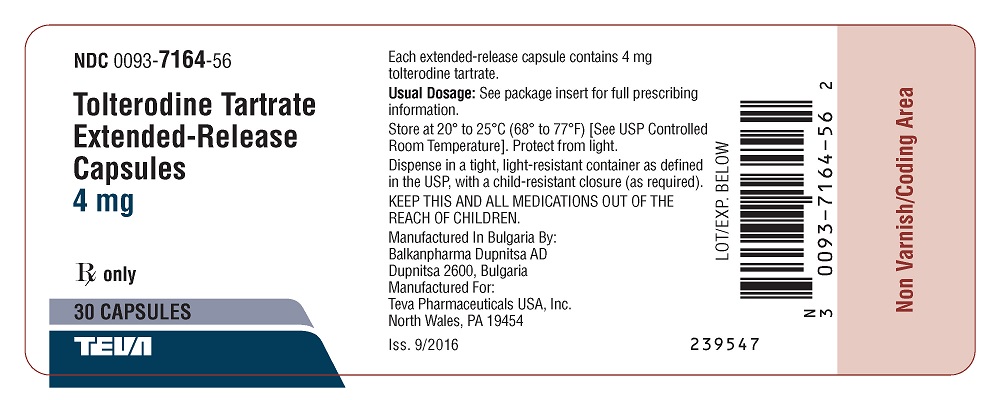
16 HOW SUPPLIED/STORAGE AND HANDLING Tolterodine tartrate extended-release capsules are available as follows: 2 mg: A hard gelatin capsule with a light green opaque cap and body, filled with white to off-white pellets, imprinted on body with “7163” and cap with “TEVA” in bottles of 30 (NDC 0093-7163-56), 90 (NDC 0093-7163-98), and 500 (NDC 0093-7163-05). 4 mg: A hard gelatin capsule with an aqua blue opaque cap and body, filled with white to off-white pellets, imprinted on body with “7164” and cap with “TEVA” in bottles of 30 (NDC 0093-7164-56), 90 (NDC 0093-7164-98), and 500 (NDC 0093-7164-05).
Store at 20° to 25°C (68° to 77°F) [See USP Controlled Room Temperature]. Protect from light. Dispense in a tight, light-resistant container as defined in the USP, with a child-resistant closure (as required).
Keep this and all medications out of the reach of children.
📋 Description ▾
11 DESCRIPTION Tolterodine tartrate extended-release capsules contain Tolterodine Tartrate, USP. The active moiety, tolterodine, is a muscarinic receptor antagonist. The chemical name of Tolterodine Tartrate, USP is ( R )- N , N -diisopropyl-3-(2-hydroxy-5-methylphenyl)-3-phenylpropanamine L -hydrogen tartrate.
The structural formula of Tolterodine Tartrate, USP is: C 26 H 37 NO 7 M.W. 475.6 Tolterodine Tartrate, USP is a white to creamy powder. The pKa value is 9.87 and the solubility in water is 12 mg/mL.
It is soluble in methanol, slightly soluble in ethanol, and practically insoluble in toluene. The partition coefficient (Log D) between n-octanol and water is 1.83 at pH 7.3. Tolterodine Tartrate Extended-Release Capsules for oral administration contains 2 mg or 4 mg of Tolterodine Tartrate, USP.
Inactive ingredients include: ethylcellulose, gelatin, hydroxypropyl cellulose, hypromellose, iron oxide black, propylene glycol, shellac glaze, sugar spheres (which contain sucrose and corn starch), titanium dioxide, and triethyl citrate. Additionally, the 2 mg strength contains D&C yellow 10 and FD&C green 3; the 4 mg strength contains brilliant blue FCF-FD&C blue 1. Chemical Structure
💬 Information for Patients ▾
17 PATIENT COUNSELING INFORMATION Advise the patient to read the FDA-approved patient labeling (Patient Information). Antimuscarinic Effects Inform patients that antimuscarinic agents such as tolterodine tartrate extended-release capsules may have side effects including blurred vision, dizziness, or drowsiness. Advise patients not to drive, operate machinery, or do other potentially dangerous activities until they know how tolterodine tartrate extended-release capsules affects them.
Dispense with Patient Package Insert available at: www.tevausa.com/PatientPI Manufactured In Bulgaria By: Balkanpharma Dupnitsa AD Dupnitsa 2600, Bulgaria Manufactured For: Teva Pharmaceuticals Parsippany, NJ 07054 Rev. C 9/2024
🍼 Nursing Mothers ▾
8.2Lactation Risk Summary There is no information on the presence of tolterodine or its 5-HMT metabolite in human milk, the effects on the breastfed infant, or the effects on milk production. Based on limited data, tolterodine is excreted into the milk in mice in low amounts (see Data) . The development and health benefits of breastfeeding should be considered along with the mother’s clinical need for tolterodine tartrate extended-release capsules and any potential adverse effects on the breastfed infant from tolterodine tartrate extended-release capsules or from the underlying maternal condition.
Animal Data The use of radiolabeled tolterodine in pregnant mice produced milk: plasma ratios that ranged between 0.0 and 0.7.
🧬 Pharmacokinetics ▾
12.3Pharmacokinetics Absorption: In a study with 14 C-tolterodine solution in healthy volunteers who received a 5 mg oral dose, at least 77% of the radiolabeled dose was absorbed. C max and area under the concentration-time curve (AUC) determined after dosage of tolterodine immediate release are dose-proportional over the range of 1 to 4 mg. Based on the sum of unbound serum concentrations of tolterodine and 5-HMT (“active moiety”), the AUC of tolterodine extended release 4 mg daily is equivalent to tolterodine immediate release 4 mg (2 mg bid).
C max and C min levels of tolterodine extended release are about 75% and 150% of tolterodine immediate release, respectively. Maximum serum concentrations of tolterodine extended release are observed 2 to 6 hours after dose administration. Effect of Food: There is no effect of food on the pharmacokinetics of tolterodine extended release.
Distribution: Tolterodine is highly bound to plasma proteins, primarily α 1 -acid glycoprotein. Unbound concentrations of tolterodine average 3.7% ± 0.13% over the concentration range achieved in clinical studies. 5-HMT is not extensively protein bound, with unbound fraction concentrations averaging 36% ± 4.0%.
The blood to serum ratio of tolterodine and 5-HMT averages 0.6 and 0.8, respectively, indicating that these compounds do not distribute extensively into erythrocytes. The volume of distribution of tolterodine following administration of a 1.28 mg intravenous dose is 113 ±
26.7L. Metabolism: Tolterodine is extensively metabolized by the liver following oral dosing. The primary metabolic route involves the oxidation of the 5-methyl group and is mediated by the cytochrome P450 2D6 (CYP2D6) and leads to the formation of a pharmacologically active metabolite, 5-HMT.
Further metabolism leads to formation of the 5-carboxylic acid and N -dealkylated 5-carboxylic acid metabolites, which account for 51% ± 14% and 29% ± 6.3% of the metabolites recovered in the urine, respectively. Variability in Metabolism: A subset of individuals (approximately 7% of Caucasians and approximately 2% of African Americans) are poor metabolizers for CYP2D6, the enzyme responsible for the formation of 5-HMT from tolterodine. The identified pathway of metabolism for these individuals (“poor metabolizers”) is dealkylation via cytochrome P450 3A4 (CYP3A4) to N -dealkylated tolterodine.
The remainder of the population is referred to as “extensive metabolizers.” Pharmacokinetic studies revealed that tolterodine is metabolized at a slower rate in poor metabolizers than in extensive metabolizers; this results in significantly higher serum concentrations of tolterodine and in negligible concentrations of 5-HMT. Excretion: Following administration of a 5 mg oral dose of 14 C-tolterodine solution to healthy volunteers, 77% of radioactivity was recovered in urine and 17% was recovered in feces in 7 days. Less than 1% (<2.5% in poor metabolizers) of the dose was recovered as intact tolterodine, and 5% to 14% (<1% in poor metabolizers) was recovered as 5-HMT.
A summary of mean (± standard deviation) pharmacokinetic parameters of tolterodine extended release and 5-HMT in extensive (EM) and poor (PM) metabolizers is provided in Table 3. These data were obtained following single and multiple doses of tolterodine extended release administered daily to 17 healthy male volunteers (13 EM, 4 PM). Table 3.
Summary of Mean (±SD) Pharmacokinetic Parameters of Tolterodine Extended-Release and its Active Metabolite (5-Hydroxymethyl Tolterodine) in Healthy Volunteers Tolterodine 5-Hydroxymethyl Tolterodine t max* (h) C max (mcg/L) C avg (mcg/L) t ½ (h) t max* (h) C max (mcg/L) C avg (mcg/L) t ½ (h) Single dose 4 mg † EM 4 (2 to 6) 1.3 (0.8) 0.8 (0.57) 8.4 (3.2) 4 (3 to 6) 1.6 (0.5) 1.0 (0.32) 8.8 (5.9) Multiple dose 4 mg EM 4 (2 to 6) 3.4 (4.9) 1.7 (2.8) 6.9 (3.5) 4 (2 to 6) 2.7 (0.90) 1.4 (0.6) 9.9 (4.0) PM 4 (3 to 6) 19 (16) 13 (11) 18 (16) ‡ ‡ ‡ ‡ C max = Maximum serum concentration;… [Excerpted — this section continues on DailyMed.]
🧬 Pharmacodynamics ▾
12.2Pharmacodynamics Tolterodine has a pronounced effect on bladder function. Effects on urodynamic parameters before and 1 and 5 hours after a single 6.4 mg dose of tolterodine immediate release were determined in healthy volunteers. The main effects of tolterodine at 1 and 5 hours were an increase in residual urine, reflecting an incomplete emptying of the bladder, and a decrease in detrusor pressure.
These findings are consistent with an antimuscarinic action on the lower urinary tract. Cardiac Electrophysiology The effect of 2 mg BID and 4 mg BID of tolterodine tartrate immediate release (tolterodine IR) tablets on the QT interval was evaluated in a 4 way crossover, double-blind, placebo- and active-controlled (moxifloxacin 400 mg QD) study in healthy male (N=25) and female (N=23) volunteers aged 18 to 55 years. Study subjects [approximately equal representation of CYP2D6 extensive metabolizers (EMs) and poor metabolizers (PMs)] completed sequential 4 day periods of dosing with moxifloxacin 400 mg QD, tolterodine 2 mg BID, tolterodine 4 mg BID, and placebo.
The 4 mg BID dose of tolterodine IR (two times the highest recommended dose) was chosen because this dose results in tolterodine exposure similar to that observed upon coadministration of tolterodine 2 mg BID with potent CYP3A4 inhibitors in patients who are CYP2D6 poor metabolizers [ see DRUG INTERACTIONS ( 7.2 ) ]. QT interval was measured over a 12-hour period following dosing, including the time of peak plasma concentration (T max ) of tolterodine and at steady state (Day 4 of dosing). Table 2 summarizes the mean change from baseline to steady state in corrected QT interval (QT c ) relative to placebo at the time of peak tolterodine (1 hour) and moxifloxacin (2 hour) concentrations.
Both Fridericia’s (QT c F) and a population-specific (QT c P) method were used to correct QT interval for heart rate. No single QT correction method is known to be more valid than others. QT interval was measured manually and by machine, and data from both are presented.
The mean increase of heart rate associated with a 4 mg/day dose of tolterodine in this study was 2.0 beats/minute and 6.3 beats/minute with 8 mg/day tolterodine. The change in heart rate with moxifloxacin was 0.5 beats/minute. Table 2.
Mean (CI) change in QTc from baseline to steady state (Day 4 of dosing) at Tmax (relative to placebo) Drug/Dose N QT c F QT c F QT c P QT c P (msec) (msec) (msec) (msec) (manual) (machine) (manual) (machine) Tolterodine 2 mg BID * 48 5.01 1.16 4.45 2.00 (0.28, 9.74) (-2.99, 5.30) (-0.37, 9.26) (-1.81, 5.81) Tolterodine 4 mg BID * 48 11.84 5.63 10.31 8.34 (7.11, 16.58) (1.48, 9.77) (5.49, 15.12) (4.53, 12.15) Moxifloxacin 400 mg QD † 45 19.26 ‡ 8.90 19.10 ‡ 9.29 (15.49, 23.03) (4.77, 13.03) (15.32, 22.89) (5.34, 13.24) * At T max of 1 hr; 95% Confidence Interval. † At T max of 2 hr; 90% Confidence Interval. ‡ The effect on QT interval with 4 days of moxifloxacin dosing in this QT trial may be greater than typically observed in QT trials of other drugs.
The reason for the difference between machine and manual read of QT interval is unclear. The QT effect of tolterodine immediate release tablets appeared greater for 8 mg/day (two times the therapeutic dose) compared to 4 mg/day. The effect of tolterodine 8 mg/day was not as large as that observed after four days of therapeutic dosing with the active control moxifloxacin.
However, the confidence intervals overlapped. Tolterodine’s effect on QT interval was found to correlate with plasma concentration of tolterodine. There appeared to be a greater QT c interval increase in CYP2D6 poor metabolizers than in CYP2D6 extensive metabolizers after tolterodine treatment in this study.
This study was not designed to make direct statistical comparisons between drugs or dose levels. There has been no association of Torsade de Pointes in the international post-marketing experience with tolterodine tartrate tablets or tolterodine tartrate extended-release… [Excerpted — this section continues on DailyMed.]
🔬 Clinical Studies ▾
14 CLINICAL STUDIES Tolterodine tartrate extended-release capsules, 2 mg were evaluated in 29 patients in a Phase 2 dose-effect study. Tolterodine tartrate extended-release capsules, 4 mg were evaluated for the treatment of overactive bladder with symptoms of urge urinary incontinence and frequency in a randomized, placebo-controlled, multicenter, double-blind, Phase 3, 12-week study. A total of 507 patients received tolterodine tartrate extended-release capsules, 4 mg once daily in the morning and 508 received placebo.
The majority of patients were Caucasian (95%) and female (81%), with a mean age of 61 years (range, 20 to 93 years). In the study, 642 patients (42%) were 65 to 93 years of age. The study included patients known to be responsive to tolterodine immediate release and other anticholinergic medications, however, 47% of patients never received prior pharmacotherapy for overactive bladder.
At study entry, 97% of patients had at least 5 urge incontinence episodes per week and 91% of patients had 8 or more micturitions per day. The primary efficacy assessment was change in mean number of incontinence episodes per week at week 12 from baseline. Secondary efficacy measures included change in mean number of micturitions per day and mean volume voided per micturition at week 12 from baseline.
Patients treated with tolterodine tartrate extended-release capsules experienced a statistically significant decrease in number of urinary incontinence per week from baseline to last assessment (week 12) compared with placebo as well as a decrease in the average daily urinary frequency and an increase in the average urine volume per void. Mean change from baseline in weekly incontinence episodes, urinary frequency, and volume voided between placebo and tolterodine tartrate extended-release capsules are summarized in Table 4.
Table 4. 95% Confidence Intervals (CI) for the Difference between Tolterodine Tartrate Extended-Release Capsules (4 mg daily) and Placebo for Mean Change at Week 12 from Baseline* Tolterodine Tartrate Extended-Release Capsules (n=507) Placebo (n=508) † Treatment Difference, vs. Placebo (95% CI) Number of incontinence episodes/week Mean Baseline 22.1 23.3 -4.8 ‡ Mean Change from Baseline –11.8 (SD 17.8) –6.9 (SD 15.4) (–6.9, –2.8) Number of micturitions/day Mean Baseline 10.9 11.3 -0.6 ‡ Mean Change from Baseline –1.8 (SD 3.4) –1.2 (SD 2.9) (–1.0, –0.2) Volume voided per micturition (mL) Mean Baseline 141 136 20 ‡ Mean Change from Baseline 34 (SD 51) 14 (SD 41) (14, 26) SD = Standard Deviation *Intent-to-treat analysis. †1 to 2 patients missing in placebo group for each efficacy parameter. ‡The difference between tolterodine tartrate extended-release capsules and placebo was statistically significant.
🧪 Nonclinical Toxicology ▾
13 NONCLINICAL TOXICOLOGY
13.1Carcinogenesis, Mutagenesis, Impairment of Fertility Carcinogenicity studies with tolterodine were conducted in mice and rats. At the maximum tolerated dose in mice (30 mg/kg/day), female rats (20 mg/kg/day), and male rats (30 mg/kg/day), exposure margins were approximately 6 to 9 times, 7 times, and 11 times the clinical exposure to the pharmacologically active components of tolterodine tartrate extended-release capsules (based on AUC of tolterodine and its 5-HMT metabolite). At these exposure margins, no increase in tumors was found in either mice or rats.
No mutagenic or genotoxic effects of tolterodine were detected in a battery of in vitro tests, including bacterial mutation assays (Ames test) in 4 strains of Salmonella typhimurium and in 2 strains of Escherichia coli, a gene mutation assay in L5178Y mouse lymphoma cells, and chromosomal aberration tests in human lymphocytes. Tolterodine was also negative in vivo in the bone marrow micronucleus test in the mouse. In female mice treated for 2 weeks before mating and during gestation with 20 mg/kg/day (about 9 to 12 times the clinical exposure via AUC), neither effects on reproductive performance or fertility were seen.
In male mice, a dose of 30 mg/kg/day did not induce any adverse effects on fertility.
📄 Carcinogenesis, Mutagenesis, Impairment of Fertility ▾
13.1Carcinogenesis, Mutagenesis, Impairment of Fertility Carcinogenicity studies with tolterodine were conducted in mice and rats. At the maximum tolerated dose in mice (30 mg/kg/day), female rats (20 mg/kg/day), and male rats (30 mg/kg/day), exposure margins were approximately 6 to 9 times, 7 times, and 11 times the clinical exposure to the pharmacologically active components of tolterodine tartrate extended-release capsules (based on AUC of tolterodine and its 5-HMT metabolite). At these exposure margins, no increase in tumors was found in either mice or rats.
No mutagenic or genotoxic effects of tolterodine were detected in a battery of in vitro tests, including bacterial mutation assays (Ames test) in 4 strains of Salmonella typhimurium and in 2 strains of Escherichia coli, a gene mutation assay in L5178Y mouse lymphoma cells, and chromosomal aberration tests in human lymphocytes. Tolterodine was also negative in vivo in the bone marrow micronucleus test in the mouse. In female mice treated for 2 weeks before mating and during gestation with 20 mg/kg/day (about 9 to 12 times the clinical exposure via AUC), neither effects on reproductive performance or fertility were seen.
In male mice, a dose of 30 mg/kg/day did not induce any adverse effects on fertility.
📄 Patient Package Insert ▾
Dispense with Patient Package Insert available at: www.tevausa.com/PatientPI PATIENT INFORMATION Tolterodine (tol terˈ oh deen tarˈ trate) Tartrate Extended-Release Capsules Read the Patient Information that comes with tolterodine tartrate extended-release capsules before you start using them and each time you get a refill. There may be new information. This leaflet does not take the place of talking with your doctor about your condition or your treatment.
Only your doctor can determine if treatment with tolterodine tartrate extended-release capsules is right for you. What are tolterodine tartrate extended-release capsules? Tolterodine tartrate extended-release capsules are a prescription medicine for adults used to treat the following symptoms due to a condition called overactive bladder : Having a strong need to urinate with leaking or wetting accidents (urge urinary incontinence).
Having a strong need to urinate right away (urgency). Having to urinate often (frequency). Tolterodine tartrate extended-release capsules did not help the symptoms of overactive bladder when studied in children.
What is overactive bladder? Overactive bladder happens when you cannot control your bladder muscle. When the muscle contracts too often or cannot be controlled, you get symptoms of overactive bladder, which are leakage of urine (urge urinary incontinence), needing to urinate right away (urgency), and needing to urinate often (frequency).
Who should not take tolterodine tartrate extended-release capsules? Do not take tolterodine tartrate extended-release capsules if: You have trouble emptying your bladder (also called “urinary retention”). Your stomach empties slowly (also called “gastric retention”).
You have an eye problem called “uncontrolled narrow-angle glaucoma”. You are allergic to tolterodine tartrate extended-release capsules or to any of their ingredients. See the end of this leaflet for a complete list of ingredients.
You are allergic to TOVIAZ, which contains fesoterodine. What should I tell my doctor before starting tolterodine tartrate extended-release capsules? Before starting tolterodine tartrate extended-release capsules, tell your doctor about all of your medical conditions, including if you: Have any stomach or intestinal problems.
Have trouble emptying your bladder or you have a weak urine stream. Have an eye problem called narrow-angle glaucoma. Have liver problems.
Have kidney problems. Have a condition called myasthenia gravis. Or any family members have a rare heart condition called QT prolongation (long QT syndrome).
Are pregnant or trying to become pregnant. It is not known if tolterodine tartrate extended-release capsules could harm your unborn baby. Are breastfeeding.
It is not known if tolterodine passes into your milk and if it can harm your child. Tell your doctor about all the medicines you take, including prescription and non-prescription medicines, vitamins, and herbal supplements. Other drugs can affect how your body handles tolterodine tartrate extended-release capsules.
Your doctor may use a lower dose of tolterodine tartrate extended-release capsules if you are taking: Certain medicines for fungus or yeast infections such as Nizoral ® (ketoconazole), Sporanox ® (itraconazole), or Monistat ® (miconazole). Certain medicines for bacteria infections such as Biaxin ® (clarithromycin). Certain medicines for treatment of HIV infection such as Norvir ® (ritonavir), Invirase ® (saquinavir), Reyataz ® (atazanavir).
Sandimmune ® (cyclosporine) or Velban ® (vinblastine). Know the medicines you take. Keep a list of them with you to show your doctor or pharmacist each time you get a new medicine.
How should I take tolterodine tartrate extended-release capsules? Take tolterodine tartrate extended-release capsules exactly as prescribed. Your doctor will prescribe the dose that is right for you.
Do not change your dose unless told to do so by your doctor. Take tolterodine tartrate extended-release capsules once a day wi… [Excerpted — this section continues on DailyMed.]
📄 Package Label / Principal Display Panel ▾
Package/Label Display Panel NDC 0093-7163-56 Tolterodine Tartrate Extended-Release Capsules 2 mg Rx only 30 Capsules 1
Package/Label Display Panel NDC 0093-7164-56 Tolterodine Tartrate Extended-Release Capsules 4 mg Rx only 30 Capsules 1
Medicaid utilization & spend
Medicaid utilization by pack size
Medicare Part D spend CMS · PART D · 2026 (Q1)
About this NDC listing & data coverage
What "drug for further processing" means
FDA lists this package under the "drug for further processing" marketing category: Teva Pharmaceuticals USA, Inc. supplies it to other companies for further processing or repackaging (blister cards that are later repackaged or co-packaged are a common example). The units themselves are a finished dosage form — which is why pricing or Medicaid data can still appear — but this exact package code may not be the presentation a retail pharmacy dispenses.
What data is (and isn’t) available for this NDC — tap to expand
| NDC identity (package / product / labeler codes) | ✓ Available |
| Labeler | ✓ Available |
| Product & package description | ✓ Available |
| Marketing category & status | ✓ Available |
| Active ingredient / dosage form / route | ✓ Available |
| FDA label (SPL via DailyMed) | ✓ Available |
| Package photos | ✓ Available |
| Inactive ingredients (structured) | ✓ Available |
| NADAC pharmacy acquisition price (CMS) | ✓ Available |
| Orange Book / therapeutic-equivalence data | — Not published for this NDC Applies only to products approved under an NDA/ANDA; many listings are out of scope. |
| HCPCS J-code billing crosswalk | — Not published for this NDC Most self-administered / retail products have no J-code — that is normal. |
| Medicaid utilization (CMS SDUD) | ✓ Available |