
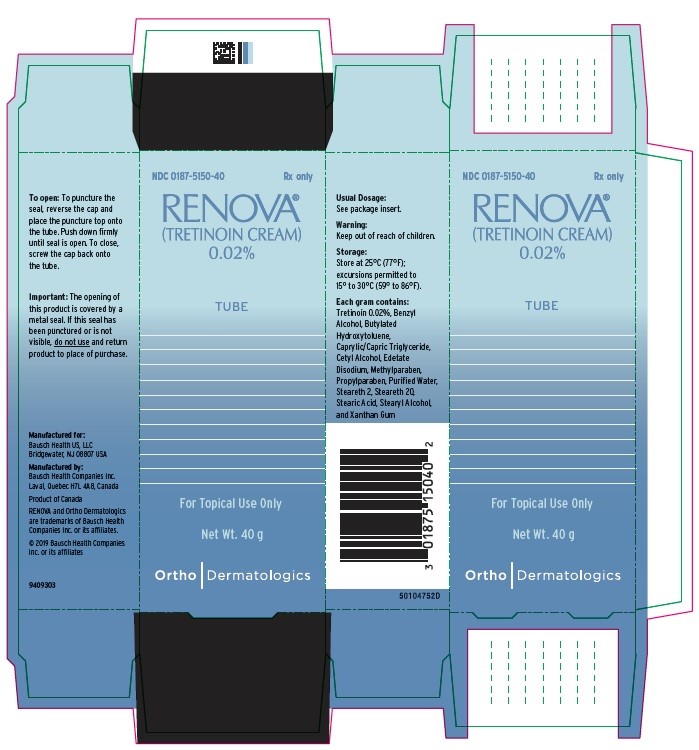
Renova Tretinoin .2 mg/g Cream
🆔 Identity & classification
Where does this data come from?
🏷️ RxNorm drug class
This medicine belongs to the Retinoid class.
Where does this data come from?
🏭 Manufacturer & labeler
Where does this data come from?
🩺 Clinical
- Honestly, it won't erase wrinkles — and the label is pretty direct about that. What it's approved to do is help reduce the appearance of fine wrinkles as part of a full routine tha...
- Will tretinoin actually get rid of my wrinkles?
- Redness, peeling, and irritation in the first couple of weeks are very common and usually mean your skin is adjusting — not that something is wrong. If it's tolerable, try hanging...
- My skin is really red and peeling after the first week — should I stop?
Patient education
Supplement & herbal interactions
Some supplements/herbs that may interact with Tretinoin — tap one for details:
Tretinoin may be associated with lower levels of 1 nutrient — worth a chat with your pharmacist, not a cause for alarm.
Where does this data come from?
Ask a licensed pharmacist directly — free, answered by our team.
🧪 Inactive Ingredients / Excipients
Inactive ingredients, also called excipients, are components of the drug product other than the active ingredient. They may include fillers, dyes, coatings, preservatives, flavors, or other formulation ingredients.
💡 Tap an ingredient (hover on desktop) to see what it is and why it’s used.
-
UNII LKG8494WBH
Benzyl alcohol is a clear liquid used as a preservative and solvent in medicines. It helps prevent bacterial and fungal growth and dissolves other ingredients to create uniform liquid formulations.
-
UNII 1P9D0Z171K
BHT is a synthetic antioxidant that prevents fats and oils in medicines from breaking down and becoming rancid. It helps keep the product stable and effective during storage.
-
UNII 936JST6JCN
Cetyl alcohol is a waxy, fatty substance derived from plant or animal sources. It acts as an emulsifier and thickener in medicines, helping blend oil and water components and giving products a smooth, creamy texture.
-
UNII 7FLD91C86K
Edetate disodium is a chemical compound that binds and removes certain metal ions. In medicines, it acts as a preservative and stabilizer by preventing metals like calcium from interfering with the product's shelf life and consistency.
-
UNII C9H2L21V7U
A fat derived from coconut or palm oil containing shorter fatty acid chains. It serves as a solvent and carrier to help dissolve or suspend active ingredients, improving absorption and stability in liquid formulations.
-
UNII A2I8C7HI9T
Methylparaben is a preservative derived from benzoic acid that prevents growth of bacteria, fungi, and mold in medicines. It extends the product's shelf life and maintains safety during storage.
-
UNII Z8IX2SC1OH
Propylparaben is a chemical preservative used to prevent bacterial and fungal growth in medicines and personal care products. It helps extend shelf life and maintain product safety during storage.
-
UNII V56DFE46J5
Steareth-2 is a synthetic emulsifier made from stearic acid and ethylene oxide. It helps mix oil and water-based ingredients together in the formulation and may improve how the medicine spreads or dissolves.
-
UNII L0Q8IK9E08
A synthetic compound made from stearic acid and polyethylene glycol. It acts as an emulsifier and solubilizer, helping mix oil and water-based ingredients and keeping them blended throughout the medicine's shelf life.
-
UNII 4ELV7Z65AP
Stearic acid is a fatty acid derived from plant or animal sources. It acts as a binder and lubricant in tablets and capsules, helping them hold together and flow smoothly during manufacturing.
-
UNII 2KR89I4H1Y
Stearyl alcohol is a waxy, fatty substance derived from natural oils or made synthetically. It acts as an emulsifier and thickener in medicines, helping mix ingredients together and give the product the right texture.
-
UNII 059QF0KO0R
Water is a liquid solvent that dissolves and mixes ingredients together in liquid medicines, syrups, and injections. It helps distribute the active drug evenly throughout the product.
-
UNII TTV12P4NEE
Xanthan gum is a thickening and stabilizing ingredient made from fermented corn or other sugars. It's added to medicines to improve texture, prevent separation of liquids and solids, and help the product stay consistent.
13 inactive ingredients listed in the exact product block matched to this NDC.
Where does this data come from?
ingredient classCode="IACT" elements from the exact product block matched by this NDC. Label-section narrative from DailyMed / the openFDA label index is shown separately when available.Inactive ingredient FAQ
Are inactive ingredients the same for every manufacturer?
Why might an inactive ingredient be missing?
Can inactive ingredients matter?
💲 Pricing
A drug doesn't have one price. Each row is a different public payment system, and none is what you'd pay at the counter — that depends on your insurance. The ⓘ on each row explains what it measures.
| Price system | Per g | Per package |
|---|---|---|
| Retail pharmacies payNADAC · weekly | Not in the retail survey — common for institutional, discontinued, or low-volume packs. | |
| Medicaid paysCMS SDUD · 12 mo | No recent Medicaid claims on file for this NDC — rare and low-volume NDCs are suppressed in the public data. | |
| Medicare drug plans payPart D · quarterly | No Part D plan price is available for this NDC in our data. | |
Where does this data come from?
🔁 Therapeutic equivalents
| Product | Labeler | Pack | NADAC/unit | TE | Status | Price vs. this |
|---|---|---|---|---|---|---|
| Renova .2 mg/gthis 00187-5150-60 | Bausch | 1 tube | — | — | FDA listed | — |
Where does this data come from?
⏳ Availability & generic status
FDA-approved generic versions are listed, and recent pricing/market data suggests they may be available — see Therapeutic equivalents.
Where does this data come from?
📊 Medicare Part D spend CMS · PART D · 2026 (Q1)
📦 Packaging — all sizes for this product
| Package NDC | Description | Marketing start | Status |
|---|---|---|---|
| 00187-5150-02 | 1 TUBE in 1 CARTON (0187-5150-02) / 2 g in 1 TUBE | 2000-08-31 | Active |
| 00187-5150-20 | 1 TUBE in 1 CARTON (0187-5150-20) / 20 g in 1 TUBE | 2000-08-31 | Active |
| 00187-5150-40 | 1 TUBE in 1 CARTON (0187-5150-40) / 40 g in 1 TUBE | 2000-08-31 | Active |
| 00187-5150-44 | 1 BOTTLE, PUMP in 1 CARTON (0187-5150-44) / 44 g in 1 BOTTLE, PUMP | 2000-08-31 | Active |
| 00187-5150-60 You're viewing this | 1 TUBE in 1 CARTON (0187-5150-60) / 60 g in 1 TUBE | 2000-08-31 | Active |
Pack size FAQ
What quantity is in NDC 00187-5150-60?
What NDC number is used to bill for this package of Renova Tretinoin .2 mg/g Cream?
🧭 About this NDC listing & data coverage
What data is (and isn’t) available for this NDC — tap to expand
| NDC identity (package / product / labeler codes) | ✓ Available |
| Labeler | ✓ Available |
| Product & package description | ✓ Available |
| Marketing category & status | ✓ Available |
| Active ingredient / dosage form / route | ✓ Available |
| FDA label (SPL via DailyMed) | ✓ Available |
| Package photos | ✓ Available |
| Inactive ingredients (structured) | ✓ Available |
| NADAC pharmacy acquisition price (CMS) | — Not published for this NDC CMS publishes NADAC only for NDCs reported in its retail-pharmacy survey. |
| Orange Book / therapeutic-equivalence data | — Not published for this NDC Applies only to products approved under an NDA/ANDA; many listings are out of scope. |
| HCPCS J-code billing crosswalk | — Not published for this NDC Most self-administered / retail products have no J-code — that is normal. |
| Medicaid utilization (CMS SDUD) | — Not published for this NDC CMS reports utilization only for NDCs with Medicaid claims above its privacy threshold. |
Questions about this listing
Why is there no price listed?
Is the NDC printed on the package the same as the 11-digit billing NDC?
What do the three segments of this NDC mean?
Is this package still being marketed?
Does this product come in other package sizes?
Who lists this product with the FDA?
Do I need a prescription for this product?
Where does this data come from?
📄 Full prescribing information FDA SPL
🎯 Indications and Usage ▾
INDICATIONS AND USAGE (To understand fully the indication for this product, please read the entire INDICATIONS AND USAGE section of the labeling.) RENOVA (tretinoin cream) 0.02% is indicated as an adjunctive agent (see second bullet point below) for use in the mitigation (palliation) of fine facial wrinkles in patients who use comprehensive skin care and sunlight avoidance programs. RENOVA (tretinoin cream) 0.02% DOES NOT ELIMINATE WRINKLES, REPAIR SUN-DAMAGED SKIN, REVERSE PHOTOAGING, or RESTORE MORE YOUTHFUL or YOUNGER SKIN.
In double-blind, vehicle-controlled clinical studies, many patients in the vehicle group achieved desired palliative effects on fine wrinkling of facial skin with the use of comprehensive skin care and sunlight avoidance programs including sunscreens, protective clothing, and non-prescription emollient creams. • RENOVA (tretinoin cream) 0.02% has NOT DEMONSTRATED A MITIGATING EFFECT on significant signs of chronic sunlight exposure such as coarse or deep wrinkling, tactile roughness, mottled hyperpigmentation, lentigines, telangiectasia, skin laxity, keratinocytic atypia, melanocytic atypia, or dermal elastosis. • RENOVA (tretinoin cream) 0.02% should be used under medical supervision as an adjunct to a comprehensive skin care and sunlight avoidance program that includes the use of effective sunscreens (minimum SPF of 15) and protective clothing. • Patients with visible actinic keratosis and patients with a history of skin cancer were excluded from clinical trials of RENOVA (tretinoin cream) 0.02%.
Thus the effectiveness and safety of RENOVA (tretinoin cream) 0.02% in these populations are not known at this time. • Neither the safety nor the effectiveness of RENOVA (tretinoin cream) 0.02% for the prevention or treatment of actinic keratoses or skin neoplasms has been established. • Neither the safety nor the efficacy of using RENOVA (tretinoin cream) 0.02% daily for greater than 52 weeks has been established, and daily use beyond 52 weeks has not been systematically and histologically investigated in adequate and well-controlled trials (see WARNINGS ).
Clinical Trials Four adequate and well-controlled multi-center trials and one single-center randomized, controlled trial were conducted involving a total of 324 evaluable patients treated with RENOVA (tretinoin cream) 0.02% and 332 evaluable patients treated with the vehicle cream on the face for 24 weeks with a comprehensive skin care and sun avoidance program, to assess the effects on fine and coarse wrinkling, mottled hyperpigmentation, tactile skin roughness, and laxity. Patients were evaluated at baseline on a 10-unit scale and changes from that baseline rating were categorized as follows: Worsening: Increase of 1 unit or more.
No improvement: No change. Minimal improvement: Reduction of 1 unit. Mild improvement: Reduction of 2 units.
Moderate improvement: Reduction of 3 units or more. In these trials, the fine and coarse wrinkling, mottled hyperpigmentation, tactile roughness, and laxity of the facial skin were thought to be caused by multiple factors which included intrinsic aging or environmental factors, such as chronic sunlight exposure. Two of the five trials provided adequate demonstration of efficacy for mitigation of fine facial wrinkling.
No two of the five trials adequately demonstrated efficacy for mitigation of coarse wrinkling, mottled hyperpigmentation, tactile skin roughness, and laxity. Data for fine wrinkling (the indication for which RENOVA (tretinoin cream) 0.02% demonstrated efficacy) from all five trials (four studies in lightly pigmented subjects with Fitzpatrick Skin Types I-III and one study in darkly pigmented subjects with Fitzpatrick Skin Types IV-VI) is provided below: FINE WRINKLING IN LIGHTLY PIGMENTED SUBJECTS Subjects Using RENOVA (tretinoin cream) 0.02% + CSP * (N=279) Vehicle + CSP * (N=280) A single-center study (N=107) in darkly pigmented, mostly African-American, subjects with Fitzpatrick Skin Types IV-VI demonstr…
⏱️ Dosage and Administration ▾
DOSAGE AND ADMINISTRATION • Do NOT use RENOVA (tretinoin cream) 0.02% if the patient is pregnant or is attempting to become pregnant or is at high risk of pregnancy. • Do NOT use RENOVA (tretinoin cream) 0.02% if the patient is sunburned or if the patient has eczema or other chronic skin conditions of the face. • Do NOT use RENOVA (tretinoin cream) 0.02% if the patient is inherently sensitive to sunlight. • Do NOT use RENOVA (tretinoin cream) 0.02% if the patient is also taking drug(s) known to be photosensitizers (e.g., thiazides, tetracyclines, fluoroquinolones, phenothiazines, sulfonamides) because of the possibility of augmented phototoxicity.
Patients require detailed instruction to obtain maximal benefits and to understand all the precautions necessary to use this product with greatest safety. The physician should review the Patient Package Insert. RENOVA (tretinoin cream) 0.02% should be applied to the face once a day in the evening, using only enough to cover the entire affected area lightly.
Patients should gently wash their faces with a mild soap, pat the skin dry, and wait 20 to 30 minutes before applying RENOVA (tretinoin cream) 0.02%. The patient should apply a small pearl-sized (about ¼ inch or 5 mm diameter) amount of cream to cover the entire affected area lightly. Caution should be taken when applying the cream to avoid the eyes, ears, nostrils, and mouth.
Application of RENOVA (tretinoin cream) 0.02% may cause a transitory feeling of warmth or slight stinging. Mitigation (palliation) of fine facial wrinkling may occur gradually over the course of therapy. Up to 6 months of therapy may be required before the effects are seen.
With discontinuation of RENOVA (tretinoin cream) 0.02% therapy, some patients may lose the mitigating effects of RENOVA (tretinoin cream) 0.02% on fine facial wrinkles. The safety and effectiveness of using RENOVA (tretinoin cream) 0.02% daily for greater than 52 weeks have not been established. Application of larger amounts of medication than recommended may not lead to more rapid or better results, and marked redness, peeling, or discomfort may occur.
Patients treated with RENOVA (tretinoin cream) 0.02% may use cosmetics but the areas to be treated should be cleansed before the medication is applied (see PRECAUTIONS ).
⛔ Contraindications ▾
CONTRAINDICATIONS This drug is contraindicated in individuals with a history of sensitivity reactions to any of its components. It should be discontinued if hypersensitivity to any of its ingredients is noted.
⚠️ Warnings ▾
WARNINGS • RENOVA (tretinoin cream) 0.02% is a dermal irritant, and the results of continued irritation of the skin for greater than 52 weeks in chronic use with RENOVA (tretinoin cream) 0.02% are not known. There is evidence of atypical changes in melanocytes and keratinocytes and of increased dermal elastosis in some patients treated with RENOVA (tretinoin cream) 0.05% for longer than 48 weeks. The significance of these findings and their relevance for RENOVA (tretinoin cream) 0.02% are unknown. • RENOVA (tretinoin cream) 0.02% should not be administered if the patient is also taking drugs known to be photosensitizers (e.g., thiazides, tetracyclines, fluoroquinolones, phenothiazines, sulfonamides) because of the possibility of augmented phototoxicity.
Exposure to sunlight (including sunlamps) should be avoided or minimized during use of RENOVA (tretinoin cream) 0.02% because of heightened sunburn susceptibility. Patients should be warned to use sunscreens (minimum SPF of 15) and protective clothing when using RENOVA (tretinoin cream) 0.02%. Patients with sunburn should be advised not to use RENOVA (tretinoin cream) 0.02% until fully recovered.
Patients who may have considerable sun exposure, e.g., due to their occupation, and those patients with inherent sensitivity to sunlight should exercise caution when using RENOVA (tretinoin cream) 0.02% and follow the precautions outlined in the Patient Package Insert. RENOVA (tretinoin cream) 0.02% should be kept out of the eyes, mouth, angles of the nose, and mucous membranes. Topical use may cause severe local erythema, pruritus, burning, stinging, and peeling at the site of application.
If the degree of local irritation warrants, patients should be directed to use less medication, decrease the frequency of application, discontinue use temporarily, or discontinue use altogether and consider additional appropriate therapy. Tretinoin has been reported to cause severe irritation on eczematous skin and should be used only with caution in patients with this condition. Application of larger amounts of medication than recommended has not been shown to lead to more rapid or better results, and marked redness, peeling, or discomfort may occur.
🤒 Adverse Reactions ▾
ADVERSE REACTIONS (See WARNINGS and PRECAUTIONS .) In double-blind, vehicle-controlled studies involving 339 patients who applied RENOVA (tretinoin cream) 0.02% to their faces, adverse reactions associated with the use of RENOVA (tretinoin cream) 0.02% were limited primarily to the skin. Almost all patients reported one or more local reactions such as peeling, dry skin, burning, stinging, erythema, and pruritus. In 32% of all study patients, skin irritation was reported that was severe, led to temporary discontinuation of RENOVA (tretinoin cream) 0.02%, or led to use of a mild topical corticosteroid.
About 7% of patients using RENOVA (tretinoin cream) 0.02%, compared to less than 1% of the control patients, had sufficiently severe local irritation to warrant short-term use of mild topical corticosteroids to alleviate local irritation. About 4% of patients had to discontinue use of RENOVA (tretinoin cream) 0.02% because of adverse reactions. Approximately 2% of spontaneous postmarketing adverse event reporting for RENOVA (tretinoin cream) 0.05% were for skin hypo- or hyperpigmentation.
Other spontaneously reported adverse events for RENOVA (tretinoin cream) 0.05% predominantly appear to be local reactions similar to those seen in clinical trials. To report SUSPECTED ADVERSE REACTIONS, contact Bausch Health US, LLC at 1-800-321-4576 or FDA at 1-800-FDA-1088 or www.fda.gov/medwatch.
🔄 Drug Interactions ▾
Drug Interactions: Concomitant topical medications, medicated or abrasive soaps, shampoos, cleansers, cosmetics with a strong drying effect, products with high concentrations of alcohol, astringents, spices or lime, permanent wave solutions, electrolysis, hair depilatories or waxes, and products that may irritate the skin should be used with caution in patients being treated with RENOVA (tretinoin cream) 0.02% because they may increase irritation with RENOVA (tretinoin cream) 0.02%. RENOVA (tretinoin cream) 0.02% should not be administered if the patient is also taking drugs known to be photosensitizers (e.g., thiazides, tetracyclines, fluoroquinolones, phenothiazines, sulfonamides) because of the possibility of augmented phototoxicity.
🤰 Pregnancy ▾
Pregnancy: Teratogenic Effects ORAL tretinoin has been shown to be teratogenic in rats, mice, rabbits, hamsters, and subhuman primates. It was teratogenic and fetotoxic in Wistar rats when given orally or topically in doses greater than 1 mg/kg/day (42 times the maximum human systemic dose normalized for total body surface area). However, variations in teratogenic doses among various strains of rats have been reported.
In the cynomolgus monkey, which, metabolically, is closer to humans for tretinoin than the other species examined, fetal malformations were reported at doses of 10 mg/kg/day or greater, but none were observed at 5 mg/kg/day (417 times the maximum human systemic dose adjusted for total body surface area), although increased skeletal variations were observed at all doses. A dose-related increase in embryolethality and abortion was reported. Similar results have also been reported in pigtail macaques.
TOPICAL tretinoin in animal teratogenicity tests has generated equivocal results. There is evidence for teratogenicity (shortened or kinked tail) of topical tretinoin in Wistar rats at doses greater than 1 mg/kg/day (42 times the maximum human systemic dose adjusted for total body surface area). Anomalies (humerus: short 13%, bent 6%, os parietal incompletely ossified 14%) have also been reported when 10 mg/kg/day was dermally applied.
There are other reports in New Zealand White rabbits administered doses of greater than 0.2 mg/kg/day (17 times the maximum human systemic dose adjusted for total body surface area) of an increased incidence of domed head and hydrocephaly, typical of retinoid-induced fetal malformations in this species. In contrast, several well-controlled animal studies have shown that dermally applied tretinoin may be fetotoxic, but not overtly teratogenic, in rats and rabbits at doses of 1.0 and 0.5 mg/kg/day, respectively (42 times the maximum human systemic dose adjusted for total body surface area in both species).
With widespread use of any drug, a small number of birth defect reports associated temporally with the administration of the drug would be expected by chance alone. Thirty human cases of temporally associated congenital malformations have been reported during two decades of clinical use of another formulation of topical tretinoin (Retin-A ® ). Although no definite pattern of teratogenicity and no causal association has been established from these cases, five of the reports describe the rare birth defect category holoprosencephaly (defects associated with incomplete midline development of the forebrain).
The significance of these spontaneous reports in terms of risk to the fetus is not known. Non-teratogenic Effects Dermal tretinoin has been shown to be fetotoxic in rabbits when administered 0.5 mg/kg/day (42 times the maximum human systemic dose normalized for total body surface area). Oral tretinoin has been shown to be fetotoxic, resulting in skeletal variations and increased intrauterine death, in rats when administered 2.5 mg/kg/day (104 times the maximum human systemic dose adjusted for total body surface area).
There are, however, no adequate and well-controlled studies in pregnant women. RENOVA (tretinoin cream) 0.02% should not be used during pregnancy.
🧒 Pediatric Use ▾
Pediatric Use: Safety and effectiveness in patients less than 18 years of age have not been established.
🧓 Geriatric Use ▾
Geriatric Use: In clinical studies with RENOVA (tretinoin cream) 0.02%, patients aged 65 to 71 did not demonstrate a significant difference for improvement in fine wrinkling when compared to patients under the age of 65. Patients aged 65 and over may demonstrate slightly more irritation, although the differences were not statistically significant in the clinical studies for RENOVA (tretinoin cream) 0.02%. Safety and effectiveness of RENOVA (tretinoin cream) 0.02% in individuals older than 71 years of age have not been established.
🆘 Overdosage ▾
OVERDOSAGE Application of larger amounts of medication than recommended has not been shown to lead to more rapid or better results, and marked redness, peeling, or discomfort may occur. Oral ingestion of the drug may lead to the same side effects as those associated with excessive oral intake of Vitamin A.
🧬 Clinical Pharmacology ▾
CLINICAL PHARMACOLOGY Tretinoin is an endogenous retinoid metabolite of Vitamin A that binds to intracellular receptors in the cytosol and nucleus, but cutaneous levels of tretinoin in excess of physiologic concentrations occur following application of a tretinoin-containing topical drug product. Although tretinoin activates three members of the retinoic acid (RAR) nuclear receptors (RARα, RARβ, and RARγ) which may act to modify gene expression, subsequent protein synthesis, and epithelial cell growth and differentiation, it has not been established whether the clinical effects of tretinoin are mediated through activation of retinoic acid receptors, other mechanisms such as irritation, or both.
The effect of tretinoin on skin with chronic photodamage has not been evaluated in animal studies. When hairless albino mice were treated topically with tretinoin shortly after a period of UVB irradiation, new collagen formation was demonstrated only in photodamaged skin. However, in human skin treated topically, adequate data have not been provided to demonstrate any increase in desmosine, hydroxyproline, or elastin mRNA.
Application of 0.1% tretinoin cream to photodamaged human forearm skin was associated with an increase in antibody staining for procollagen I propeptide. No correlation was made between procollagen I propeptide staining with collagen I levels or with observed clinical effects. Thus, the relationships between the increased collagen in rodents, increased procollagen I propeptide in humans, and the clinical effects of tretinoin have not yet been clearly defined.
Tretinoin was shown to enhance UV-stimulated melanogenesis in pigmented mice. Generalized amyloid deposition in the basal layer of tretinoin-treated skin was noted in a 2-year mouse study. In a different study, hyalinization at tretinoin-treated skin sites was noted at doses beginning at 0.25 mg/kg in CD-1 mice.
The transdermal absorption of tretinoin from various topical formulations ranged from 1% to 31% of applied dose, depending on whether it was applied to healthy skin or dermatitic skin. No percutaneous absorption study was conducted with RENOVA (tretinoin cream) 0.02% in human volunteers. When percutaneous absorption of the oil-in-water emulsion formulation at 0.05% concentration was assessed in healthy male subjects with radiolabeled cream after a single application (n=7), as well as after repeated daily applications (n=7) for 28 days, the absorption of tretinoin was less than 2% and the extent of bioavailability was less after repeated application.
No significant difference in endogenous concentrations of tretinoin was observed between single and repeated daily applications.
📦 How Supplied / Storage and Handling ▾
HOW SUPPLIED RENOVA ® (tretinoin cream), 0.02% is supplied in 20 g tube (NDC 0187-5150-20), 40 g tube (NDC 0187-5150-40), 60 g tube (NDC 0187-5150-60), 44 g pump (NDC 0187-5150-44). Storage: Store at 25°C (77°F); excursions permitted to 15° to 30°C (59° to 86°F).
📦 Storage and Handling ▾
Storage: Store at 25°C (77°F); excursions permitted to 15° to 30°C (59° to 86°F).
📋 Description ▾
DESCRIPTION RENOVA ® (tretinoin cream) 0.02% contains the active ingredient tretinoin in a cream base. Tretinoin is a yellow to light-orange crystalline powder having a characteristic floral odor. Tretinoin is soluble in dimethylsulfoxide, slightly soluble in polyethylene glycol 400, octanol, and 100% ethanol.
It is practically insoluble in water and mineral oil, and it is insoluble in glycerin. The chemical name for tretinoin is (all-E)-3,7-dimethyl-9-(2,6,6-trimethyl-1-cyclohexen-1-yl)-2,4,6,8-nonatetraenoic acid. Tretinoin is also referred to as all-trans-retinoic acid and has a molecular weight of 300.44.
The structural formula is represented below: Tretinoin is available as RENOVA at a concentration of 0.02% w/w in an oil-in-water emulsion formulation consisting of benzyl alcohol, butylated hydroxytoluene, caprylic/capric triglyceride, cetyl alcohol, edetate disodium, methylparaben, propylparaben, purified water, stearic acid, stearyl alcohol, steareth 2, steareth 20, and xanthan gum. chemstructure.jpg
💬 Information for Patients ▾
Information for Patients: RENOVA (tretinoin cream) 0.02% is to be used as described below unless otherwise directed by your physician: 1. It is for use on the face. 2.
Avoid contact with the eyes, ears, nostrils, angles of the nose, and mouth. RENOVA (tretinoin cream) 0.02% may cause severe redness, itching, burning, stinging, and peeling if used on these areas. 3.
In the evening, gently wash your face with a mild soap. Pat skin dry and wait 20 to 30 minutes before applying RENOVA (tretinoin cream) 0.02%. Apply only a small pearl-sized (about ¼ inch or 5 mm diameter) amount of RENOVA (tretinoin cream) 0.02% to your face at one time.
This should be enough to cover the entire affected area lightly. 4. Do not wash your face for at least 1 hour after applying RENOVA (tretinoin cream) 0.02%.
5. For best results, you are advised not to apply another skin care product or cosmetic for at least 1 hour after applying RENOVA (tretinoin cream) 0.02%. 6.
In the morning, apply a moisturizing sunscreen, SPF 15 or greater. 7. RENOVA (tretinoin cream) 0.02% is a serious medication.
Do not use RENOVA (tretinoin cream) 0.02% if you are pregnant or attempting to become pregnant. If you become pregnant while using RENOVA (tretinoin cream) 0.02%, please contact your physician immediately. 8.
Avoid sunlight and other medicines that may increase your sensitivity to sunlight. 9. RENOVA (tretinoin cream) 0.02% does not remove wrinkles or repair sun-damaged skin.
Please refer to the Patient Package Insert for additional patient information.