
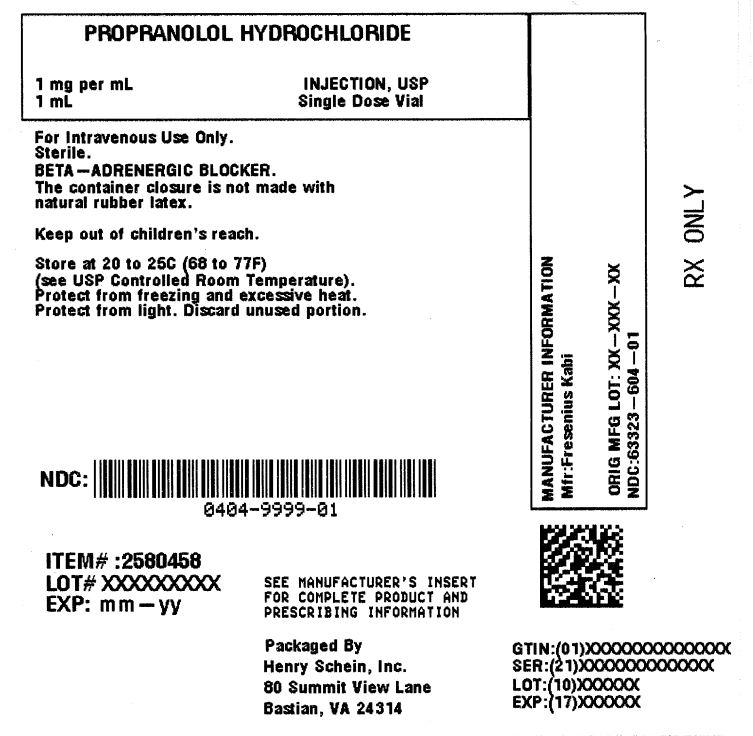
PROPRANOLOL 1 mg/mL Injection, Solution, 1 vial
🆔 Identity & classification
Where does this data come from?
🏷️ RxNorm drug class
This medicine belongs to the beta-Adrenergic Blocker class.
Where does this data come from?
🏭 Manufacturer & labeler
Where does this data come from?
🩺 Clinical
- Please don't stop propranolol on your own — even if you feel great. Stopping suddenly, especially if you have angina or any underlying heart disease, can cause a dangerous rebound...
- Can I stop taking propranolol if I feel fine and my blood pressure is under control?
- Bronchial asthma is actually a contraindication for propranolol, meaning it should not be used if you have asthma. Propranolol blocks receptors in your airways that help keep them...
- I have asthma — is it safe for me to take propranolol?
Patient education
Supplement & herbal interactions
Some supplements/herbs that may interact with Propranolol Hydrochloride — tap one for details:
Propranolol Hydrochloride may be associated with lower levels of 1 nutrient — worth a chat with your pharmacist, not a cause for alarm.
Where does this data come from?
Ask a licensed pharmacist directly — free, answered by our team.
🧪 Inactive Ingredients / Excipients
Inactive ingredients, also called excipients, are components of the drug product other than the active ingredient. They may include fillers, dyes, coatings, preservatives, flavors, or other formulation ingredients.
💡 Tap an ingredient (hover on desktop) to see what it is and why it’s used.
-
UNII 2968PHW8QP
A weak organic acid derived from citrus fruits or made through fermentation. It works as a buffer to control pH, a preservative to extend shelf life, and a flavoring agent in medications.
1 inactive ingredient listed in the exact product block matched to this NDC.
Where does this data come from?
ingredient classCode="IACT" elements from the exact product block matched by this NDC. Label-section narrative from DailyMed / the openFDA label index is shown separately when available.Inactive ingredient FAQ
Are inactive ingredients the same for every manufacturer?
Why might an inactive ingredient be missing?
Can inactive ingredients matter?
💲 Pricing
A drug doesn't have one price. Each row is a different public payment system, and none is what you'd pay at the counter — that depends on your insurance. The ⓘ on each row explains what it measures.
| Price system | Per mL | Per package |
|---|---|---|
| Retail pharmacies payNADAC · weekly | Not in the retail survey — common for institutional, discontinued, or low-volume packs. | |
| Medicaid paysCMS SDUD · 12 mo | No recent Medicaid claims on file for this NDC — rare and low-volume NDCs are suppressed in the public data. | |
| Medicare drug plans payPart D · quarterly | No Part D plan price is available for this NDC in our data. | |
Where does this data come from?
🔁 Therapeutic equivalents
| Product | Labeler | Pack | NADAC/unit | TE | Status | Price vs. this |
|---|---|---|---|---|---|---|
| Propranolol Hydrochloride 1 mg/mL 00143-9872-10 | Hikma | 10 vials | — | AP | FDA listed | — |
| Propranolol 1 mg/mLthis 00404-9999-01 | Henry | 1 vial | — | AP | FDA listed | — |
| Propranolol Hydrochloride 1 mg/mL 51662-1338-01 | HF | 1 ml | — | AP | FDA listed | — |
| Propranolol 1 mg/mL 51662-1700-01 | HF | 1 ml | — | AP | FDA listed | — |
| Propranolol 1 mg/mL 63323-0604-01 | Fresenius | 10 vials | — | AP | FDA listed | — |
| Propranolol Hydrochloride 1 mg/mL 71872-7096-01 | Medical | 1 vial | — | AP | FDA listed | — |
| Propranolol 1 mg/mL 71872-7195-01 | Medical | 1 vial | — | AP | FDA listed | — |
| Propranolol 1 mg/mL 84549-0604-01 | ProPharma | 1 ml | — | AP | FDA listed | — |
Where does this data come from?
⏳ Availability & generic status
This product is an FDA-approved generic. Other versions of the same drug are listed under Therapeutic equivalents, least expensive first.
Where does this data come from?
📦 Packaging — all sizes for this product
| Package NDC | Description | Marketing start | Status |
|---|---|---|---|
| 00404-9999-01 You're viewing this | 1 VIAL, SINGLE-DOSE in 1 BAG (0404-9999-01) / 1 mL in 1 VIAL, SINGLE-DOSE | 2024-07-15 | Active |
🧭 About this NDC listing & data coverage
What data is (and isn’t) available for this NDC — tap to expand
| NDC identity (package / product / labeler codes) | ✓ Available |
| Labeler | ✓ Available |
| Product & package description | ✓ Available |
| Marketing category & status | ✓ Available |
| Active ingredient / dosage form / route | ✓ Available |
| FDA label (SPL via DailyMed) | ✓ Available |
| Package photos | ✓ Available |
| Inactive ingredients (structured) | ✓ Available |
| NADAC pharmacy acquisition price (CMS) | — Not published for this NDC CMS publishes NADAC only for NDCs reported in its retail-pharmacy survey. |
| Orange Book / therapeutic-equivalence data | ✓ Available |
| HCPCS J-code billing crosswalk | — Not published for this NDC Most self-administered / retail products have no J-code — that is normal. |
| Medicaid utilization (CMS SDUD) | — Not published for this NDC CMS reports utilization only for NDCs with Medicaid claims above its privacy threshold. |
Questions about this listing
Why is there no price listed?
Is the NDC printed on the package the same as the 11-digit billing NDC?
What do the three segments of this NDC mean?
Is this package still being marketed?
Who lists this product with the FDA?
Do I need a prescription for this product?
Where does this data come from?
📄 Full prescribing information FDA SPL
🎯 Indications and Usage ▾
INDICATIONS AND USAGE: Cardiac Arrhythmias Intravenous administration is usually reserved for life-threatening arrhythmias or those occurring under anesthesia. 1. Supraventricular arrhythmias Intravenous propranolol is indicated for the short-term treatment of supraventricular tachycardia, including Wolff-Parkinson-White syndrome and thyrotoxicosis, to decrease ventricular rate.
Use in patients with atrial flutter or atrial fibrillation should be reserved for arrythmias unresponsive to standard therapy or when more prolonged control is required. Reversion to normal sinus rhythm has occasionally been observed, predominantly in patients with sinus or atrial tachycardia. 2.
Ventricular tachycardias With the exception of those induced by catecholamines or digitalis, propranolol is not the drug of first choice. In critical situations when cardioversion techniques or other drugs are not indicated or are not effective, propranolol may be considered. If, after consideration of the risks involved, propranolol is used, it should be given intravenously in low dosage and very slowly, as the failing heart requires some sympathetic drive for maintenance of myocardial tone (see DOSAGE AND ADMINISTRATION ).
Some patients may respond with complete reversion to normal sinus rhythm, but reduction in ventricular rate is more likely. Ventricular arrhythmias do not respond to propranolol as predictably as do the supraventricular arrhythmias. Intravenous propranolol is indicated for the treatment of persistent premature ventricular extrasystoles that impair the well-being of the patient and do not respond to conventional measures.
3. Tachyarrhythmias of digitalis intoxication Intravenous propranolol is indicated to control ventricular rate in life-threatening digitalis-induced arrhythmias. Severe bradycardia may occur (see OVERDOSAGE ).
4. Resistant tachyarrhythmias due to excessive catecholamine action during anesthesia Intravenous propranolol is indicated to abolish tachyarrhythmias due to excessive catecholamine action during anesthesia when other measures fail. These arrhythmias may arise because of release of endogenous catecholamines or administration of catecholamines.
All general inhalation anesthetics produce some degree of myocardial depression. Therefore, when propranolol is used to treat arrhythmias during anesthesia, it should be used with extreme caution, usually with constant monitoring of the ECG and central venous pressure (see WARNINGS ).
⏱️ Dosage and Administration ▾
DOSAGE AND ADMINISTRATION: The usual dose is 1 mg to 3 mg administered under careful monitoring, such as electrocardiographiy and central venous pressure. The rate of administration should not exceed 1 mg (1 mL) per minute to diminish the possibility of lowering blood pressure and causing cardiac standstill. Sufficient time should be allowed for the drug to reach the site of action even when a slow circulation is present.
If necessary, a second dose may be given after two minutes. Thereafter, additional drug should not be given in less than four hours. Additional propranolol hydrochloride should not be given when the desired alteration in rate and/or rhythm is achieved.
Transfer to oral therapy as soon as possible. Parenteral drug products should be inspected visually for particulate matter and discoloration prior to administration, whenever solution and container permit.
⛔ Contraindications ▾
CONTRAINDICATIONS: Propranolol is contraindicated in 1) cardiogenic shock, 2) sinus bradycardia and greater than first-degree block, 3) bronchial asthma, 4) in patients with known hypersensitivity to propranolol.
⚠️ Warnings ▾
WARNINGS: Cardiac Failure Sympathetic stimulation may be a vital component supporting circulatory function in patients with congestive heart failure, and its inhibition by beta-blockade may precipitate more severe failure. Although beta-blockers should be avoided in overt congestive heart failure, some have been shown to be highly beneficial when used with close follow-up in patients with a history of failure who are well compensated and are receiving additional therapies, including diuretics as needed. Beta-adrenergic blocking agents do not abolish the inotropic action of digitalis on heart muscle.
Nonallergic Bronchospasm (e.g., Chronic Bronchitis, Emphysema) In general, patients with bronchospastic lung disease should not receive beta-blockers. Propranolol should be administered with caution in this setting since it may block bronchodilation produced by endogenous and exogenous catecholamine stimulation of beta receptors. Major Surgery The necessity or desirability of withdrawal of beta-blocking therapy prior to major surgery is controversial.
It should be noted, however, that the impaired ability of the heart to respond to reflex adrenergic stimuli in propranolol-treated patients might augment the risks of general anesthesia and surgical procedures. Propranolol is a competitive inhibitor of beta-receptor agonists, and its effects can be reversed by administration of such agents, e.g., dobutamine or isoproterenol. However, such patients may be subject to protracted severe hypotension.
Diabetes and Hypoglycemia Beta-adrenergic blockade may prevent the appearance of certain premonitory signs and symptoms (pulse rate and pressure changes) of acute hypoglycemia, especially in labile insulin-dependent diabetes. In these patients, it may be more difficult to adjust the dosage of insulin. Propranolol therapy, particularly in infants and children, diabetic or not, has been associated with hypoglycemia especially during fasting, as in preparation for surgery.
Hypoglycemia has been reported after prolonged physical exertion and in patients with renal insufficiency. Thyrotoxicosis Beta-adrenergic blockade may mask certain clinical signs of hyperthyroidism. Therefore, abrupt withdrawal of propranolol may be followed by an exacerbation of symptoms of hyperthyroidism, including thyroid storm.
Propranolol may change thyroid-function tests, increasing T 4 and reverse T 3 and decreasing T 3 . Wolff-Parkinson-White Syndrome Beta-adrenergic blockade in patients with Wolff-Parkinson-White syndrome and tachycardia has been associated with severe bradycardia requiring treatment with a pacemaker. In one case this resulted after an initial 5 mg dose of intravenous propranolol.
🤒 Adverse Reactions ▾
ADVERSE REACTIONS: To report SUSPECTED ADVERSE REACTIONS, contact Fresenius Kabi USA, LLC at 1-800-551-7176 or FDA at 1-800-FDA-1088 or www.fda.gov/medwatch. In a series of 225 patients, there were 6 deaths (see CLINICAL STUDIES ). Cardiovascular events (hypotension, congestive heart failure, bradycardia, and heart block) were the most common.
The only other event reported by more than one patient was nausea. Other adverse events for intravenous propranolol, reported during postmarketing surveillance include cardiac arrest, dyspnea, and cutaneous ulcers. The following adverse events have been reported with use of formulations of sustained- or immediate-release oral propranolol and may be expected with intravenous propranolol.
Cardiovascular Bradycardia; congestive heart failure; intensification of AV block; hypotension; paresthesia of hands; thrombocytopenic purpura; arterial insufficiency, usually of the Raynaud type. Central Nervous System Lightheadedness; mental depression manifested by insomnia; lassitude, weakness, fatigue; reversible mental depression progressing to catatonia; visual disturbances; hallucinations, vivid dreams, an acute reversible syndrome characterized by disorientation for time and place, short-term memory loss, emotional lability, slightly clouded sensorium, and decreased performance on neuropsychometrics.
For immediate-release formulations, fatigue, lethargy, and vivid dreams appear dose-related. Gastrointestinal Nausea, vomiting, epigastric distress, abdominal cramping, diarrhea, constipation, mesenteric arterial thrombosis, ischemic colitis. Allergic Pharyngitis and agranulocytosis, erythematous rash, fever combined with aching and sore throat, laryngospasm, and respiratory distress.
Respiratory Bronchospasm. Hematologic Agranulocytosis, nonthrombocytopenic purpura, thrombocytopenic purpura. Autoimmune In extremely rare instances, systemic lupus erythematosus has been reported.
Miscellaneous Alopecia, LE-like reactions, psoriasiform rashes, dry eyes, male impotence, and Peyronie’s disease have been reported rarely. Oculomucocutaneous reactions involving the skin, serous membranes and conjunctivae reported for a beta-blocker (practolol) have not been associated with propranolol.
🆘 Overdosage ▾
OVERDOSAGE: Propranolol is not significantly dialyzable. In the event of overdosage or exaggerated response, the following measures should be employed: Hypotension and bradycardia have been reported following propranolol overdose and should be treated appropriately. Glucagon can exert potent inotropic and chronotropic effects and may be particularly useful for the treatment of hypotension or depressed myocardial function after a propranolol overdose.
Glucagon should be administered as 50 to 150 mcg/kg intravenously followed by continuous drip of 1 to 5 mg/hour for positive chronotropic effect. Isoproterenol, dopamine, or phosphodiesterase inhibitors may also be useful. Epinephrine, however, may provoke uncontrolled hypertension.
Bradycardia can be treated with atropine or isoproterenol. Serious bradycardia may require temporary cardiac pacing. The electrocardiogram, pulse, blood pressure, neurobehavioral status and intake and output balance must be monitored.
Isoproterenol and aminophylline may be useful for bronchospasm.
🧬 Clinical Pharmacology ▾
CLINICAL PHARMACOLOGY: General Propranolol is a nonselective beta-adrenergic receptor blocking agent possessing no other autonomic nervous system activity. It specifically competes with beta-adrenergic receptor stimulating agents for available receptor sites. When access to beta-receptor sites is blocked by propranolol, chronotropic, inotropic, and vasodilator responses to beta-adrenergic stimulation are decreased proportionately.
At doses greater than required for beta-blockade, propranolol also exerts a quinidine-like or anesthetic-like membrane action, which affects the cardiac action potential. The significance of the membrane action in the treatment of arrhythmias is uncertain. Mechanism of Action The effects of propranolol are due to selective blockade of beta-adrenergic receptors, leaving alpha-adrenergic responses intact.
There are two well-characterized subtypes of beta receptors (beta 1 and beta 2 ); propranolol interacts with both subtypes equally. Beta 1 -adrenergic receptors are found primarily in the heart. Blockade of cardiac beta 1 -adrenergic receptors leads to a decrease in the activity of both normal and ectopic pacemaker cells and a decrease in A-V nodal conduction velocity.
All of these actions can contribute to antiarrhythmic activity and control of ventricular rate during arrhythmias. Blockade of cardiac beta 1 -adrenergic receptors also decreases the myocardial force of contraction and may provoke cardiac decompensation in patients with minimal cardiac reserve. Beta 2 -adrenergic receptors are found predominantly in smooth muscle-vascular, bronchial, gastrointestinal and genitourinary.
Blockade of these receptors results in constriction. Clinically, propranolol may exacerbate respiratory symptoms in patients with obstructive pulmonary diseases such as asthma and emphysema (see CONTRAINDICATIONS and WARNINGS ). Propranolol’s beta-blocking effects are attributable to its S(-) enantiomer.
Pharmacokinetics and Drug Mechanism Distribution Propranolol has a distribution half-life (T 1/2 alpha) of 5 to 10 minutes and a volume of distribution of about 4 to 5 L/kg. Approximately 90% of circulating propranolol is bound to plasma proteins. The binding is enantiomer-selective.
The S-isomer is preferentially bound to alpha 1 glycoprotein and the R-isomer is preferentially bound to albumin. Metabolism and Elimination The elimination half-life (T 1/2 alpha) is between 2 and 5.5 hours. Propranolol is extensively metabolized with most metabolites appearing in the urine.
The major metabolites include propranolol glucuronide, naphthyloxylactic acid, and glucuronic acid and sulfate conjugates of 4-hydroxy propranolol. Following single-dose intravenous administration, side-chain oxidative products account for approximately 40% of the metabolites, direct conjugation products account for approximately 45 to 50% of metabolites, and ring oxidative products account for approximately 10 to 15% of metabolites. Of these, only the primary ring oxidative product (4-hydroxypropranolol) possesses beta-adrenergic receptor blocking activity.
In vitro studies have indicated that the aromatic hydroxylation of propranolol is catalyzed mainly by polymorphic CYP2D6. Side-chain oxidation is mediated mainly by CYP1A2 and to some extent by CYP2D6. 4-hydroxy propranolol is a weak inhibitor of CYP2D6.
Pharmacodynamics As propranolol concentration increases, so does its beta-blocking effect, as evidenced by a reduction in exercise-induced tachycardia (n=6 normal volunteers). Special Populations Pediatric The pharmacokinetics of propranolol have not been investigated in patients under 18 years of age. Propranolol injection is not recommended for treatment of cardiac arrhythmias in pediatric patients.
Geriatric Elevated propranolol plasma concentrations, a longer mean elimination half-life (254 vs. 152 minutes), and decreased systemic clearance (8 vs. 13 mL/kg/min) have been observed in elderly subjects when compared to young subjects.
However, the a…
📦 How Supplied / Storage and Handling ▾
HOW SUPPLIED: Propranolol Hydrochloride Injection, USP, 1 mg per mL is supplied as follows: Product repackaged by: Henry Schein, Inc., Bastian, VA 24314 From Original Manufacturer/Distributor's NDC and Unit of Sale To Henry Schein Repackaged Product NDC and Unit of Sale Total Strength/Total Volume (Concentration) per unit NDC 63323-604-01 Unit of 10 NDC 0404-9999-01 1 1 mL Single Dose Vial in a bag (Vial bears NDC 63323-604-00) 1 mg per mL The container closure is not made with natural rubber latex. Store at 20° to 25°C (68° to 77°F) [see USP Controlled Room Temperature].
Protect from freezing and excessive heat. www.fresenius-kabi.com/us 45913E Revised: November 2022 Image1.jpg Image2.jpg
📋 Description ▾
DESCRIPTION: Propranolol hydrochloride is a synthetic beta-adrenergic receptor blocking agent chemically described as (+)- 1-(isopropylamino)-3-(1-naphthyloxy)-2-propanol hydrochloride. Its structural formula is: Propranolol hydrochloride is a stable, white, crystalline solid which is readily soluble in water and ethanol. Propranolol Hydrochloride Injection, USP is available as a 1 mg/mL sterile injectable solution for intravenous administration.
Each mL contains 1 mg of propranolol hydrochloride in Water for Injection. The pH is adjusted to 2.8 to 4.0 with citric acid monohydrate. Formula1.jpg