
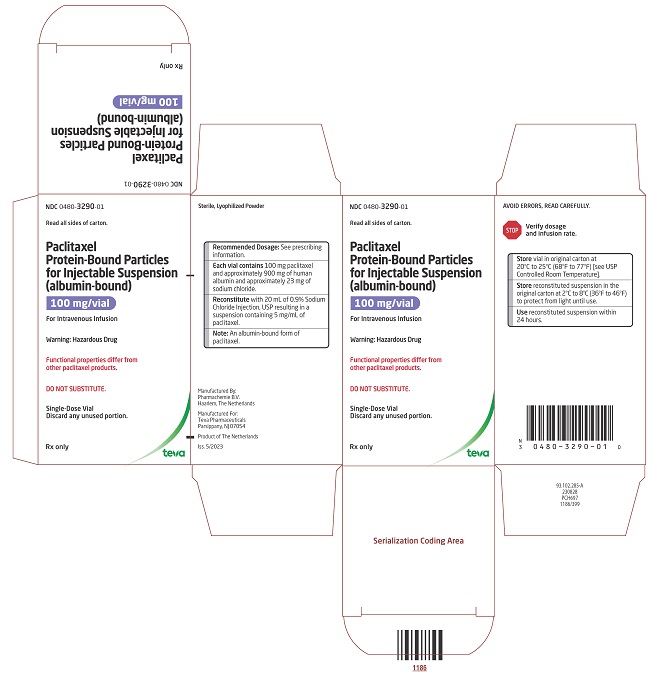
Paclitaxel 100 mg/20mL Injection, Powder, Lyophilized, For Suspension — NDC 0480-3290-01 (Billing 00480-3290-01)
This is a package of Paclitaxel 100 mg/20mL Injection, Powder, Lyophilized, For Suspension from Teva Pharmaceuticals, Inc., marketed since Jul 2024 and currently FDA-listed. It is this product's only package size.
NDC database record
One package, one record: these facts belong to NDC 0480-3290-01 alone.
- Record
- FDA NDC Directory package listing · Human prescription drug
- Code segments
- 0480 labeler · 3290 product · 01 package
- Package marketed since
- Jul 2, 2024
- Sample package
- No — commercial package
- Listing certified through
- Dec 31, 2027
- Barcode (UPC-A, from the NDC)
- 3 0480329001 0
- Medicaid fills, this package
- 3,012 prescriptions in the last four reported quarters
- FDA record last changed
- Jul 24, 2026
Identity & classification
Regulatory identifiers FDA, NLM and CMS codes for this package
Drug-database identifiers Medi-Span GPI and First Databank GCN / HICL / AHFS classification
- GSN (GCN sequence number): 058624
- GCN: 24094
- GPI-14 (Medi-Span): 21500012201920
- HICL (First Databank): 026856
- AHFS class code: 10:00.00.00
- RxCUI (RxNorm): 583214
Where does this data come from?
- FDA openFDA NDC Directory · synced Oct 1, 2026
- FDA label on DailyMed · label index refreshed Oct 6, 2026
- RxNorm (NLM RxNav) · catalog refreshed Oct 1, 2026
- Medi-Span GPI (licensed)
- First Databank (licensed) · refreshed Oct 1, 2026
RxNorm drug class
This medicine belongs to the Microtubule Inhibitor class.
Where does this data come from?
- RxClass (NLM) · catalog refreshed Oct 1, 2026
Clinical
- Paclitaxel can only be given intravenously — there's no pill form. It needs to get directly into your bloodstream to reach cancer cells throughout the body effectively. Your infusi...
- Why is paclitaxel given as an IV infusion instead of a pill?
- Yes, it matters a lot. Standard paclitaxel injection and albumin-bound paclitaxel (such as Abraxane) are not interchangeable — they work differently in the body, are approved for d...
- I've heard there are different 'versions' of paclitaxel — does it matter which one I get?
Patient education
Supplement & herbal interactions
Some supplements/herbs that may interact with Paclitaxel — tap one for details:
Where does this data come from?
- MedlinePlus (NLM) · refreshed Oct 1, 2026
- FDA label on DailyMed · label index refreshed Oct 6, 2026
Ask a licensed pharmacist directly — free, answered by our team.
Pricing
A drug doesn't have one price. Each row is a different public payment system, and none is what you'd pay at the counter — that depends on your insurance. The ⓘ on each row explains what it measures.
| Price system | Per mL | Per package |
|---|---|---|
| Retail pharmacies payNADAC · weekly | Not in the retail survey — common for institutional, discontinued, or low-volume packs. | |
| Medicaid paysCMS SDUD · 12 mo | $1,115.22 | $22,304.36 / 20 ml |
| Medicare drug plans payPart D · quarterly | No Part D plan price is available for this NDC in our data. | |
| Medicare Part B allowsASP · J9264 | $6.586 / J9264 unit | — |
Where does this data come from?
- CMS NADAC weekly file
- CMS ASP pricing files · refreshed Sep 20, 2026
- CMS Medicaid State Drug Utilization Data · through Q1 2026
- CMS Part D plan pricing files · refreshed Sep 24, 2026
- VA National Acquisition Center price file
Billing & reimbursement
Where does this data come from?
- CMS ASP NDC-HCPCS crosswalk · refreshed Sep 22, 2026
- DMEPDAC NDC-HCPCS crosswalk
- openFDA NSDE billing units · refreshed Oct 7, 2026
Packaging — all sizes for this product
| Package NDC | Description | Marketing start | Marketing end | Status |
|---|---|---|---|---|
| 00480-3290-01 You're viewing this Main listing | 1 VIAL, SINGLE-DOSE in 1 CARTON / 20 mL in 1 VIAL, SINGLE-DOSE | 2024-07-02 | — | Active |
Therapeutic equivalents
Where does this data come from?
- FDA openFDA NDC Directory · synced Oct 1, 2026
- FDA Orange Book · refreshed Oct 3, 2026
- CMS NADAC weekly file
Availability & generic status
The FDA lists approved generic versions of this medicine, but that does not always mean a pharmacy can get one today. Patent rules, launch agreements, supply and pricing can affect when generics actually arrive.
Where does this data come from?
- FDA Orange Book · refreshed Oct 3, 2026
Inactive Ingredients / Excipients
Inactive ingredients, also called excipients, are components of the drug product other than the active ingredient. They may include fillers, dyes, coatings, preservatives, flavors, or other formulation ingredients.
🧪 Avoiding an ingredient? See Paclitaxel inactive ingredients by manufacturer: every current product's list side by side, so you can ask your pharmacy for the version that does not list it.
💡 Tap an ingredient (hover on desktop) to see what it is and why it’s used.
-
UNII ZIF514RVZR
A protein derived from human blood plasma. In medicines, it acts as a stabilizer and binder, helping maintain drug potency and form, and may improve how the medication disperses or dissolves in the body.
-
UNII 451W47IQ8X
Sodium chloride is common table salt. It's used in medicines as a buffer to maintain proper pH, as a filler to add bulk, or to adjust the osmotic balance in liquid formulations.
2 inactive ingredients listed in the exact product block matched to this NDC.
Where does this data come from?
ingredient classCode="IACT" elements from the exact product block matched by this NDC. Label-section narrative from DailyMed / the openFDA label index is shown separately when available.- FDA label on DailyMed · label index refreshed Oct 6, 2026
- FDA openFDA NDC Directory · synced Oct 1, 2026
Inactive ingredient FAQ
Are inactive ingredients the same for every manufacturer?
Why might an inactive ingredient be missing?
Can inactive ingredients matter?
Manufacturer & labeler
More NDCs from Teva Pharmaceuticals, Inc. labeler code 00480
- Teriflunomide 7 mg Tablet, Film Coated NDC 0480-3157-56
- Lapatinib 250 mg Tablet, Film Coated NDC 0480-3237-51
- ALVAIZ Eltrombopag 9 mg Tablet, Film Coated NDC 0480-3273-56
- ALVAIZ Eltrombopag 18 mg Tablet, Film Coated NDC 0480-3274-56
- ALVAIZ Eltrombopag 36 mg Tablet, Film Coated NDC 0480-3275-56
- ALVAIZ Eltrombopag 54 mg Tablet, Film Coated NDC 0480-3276-56
- Phentermine and topiramate 15 mg; 92 mg Capsule, Extended Release NDC 0480-3295-56
- Phentermine and topiramate 7.5 mg; 46 mg Capsule, Extended Release NDC 0480-3296-56
- Phentermine and topiramate 3.75 mg; 23 mg Capsule, Extended Release NDC 0480-3297-56
- Theophylline 450 mg Tablet, Extended Release NDC 0480-3309-01
- Theophylline 300 mg Tablet, Extended Release NDC 0480-3310-01
- Tolvaptan Kit NDC 0480-3311-66
Where does this data come from?
- FDA openFDA NDC Directory · synced Oct 1, 2026
- Drugs@FDA
Full prescribing information FDA SPL
🚨 Boxed Warning ▾
WARNING: SEVERE MYELOSUPPRESSION Do not administer Paclitaxel Protein-Bound Particles for Injectable Suspension (albumin-bound) therapy to patients who have baseline neutrophil counts of less than 1,500 cells/mm 3 . [see Contraindications ( 4 )] . Monitor for neutropenia, which may be severe and result in infection or sepsis, [see Warnings and Precautions ( 5.1 , 5.3 )] . Perform frequent complete blood cell counts on all patients receiving Paclitaxel Protein-Bound Particles for Injectable Suspension (albumin-bound) [see Contraindications ( 4 ), Warnings and Precautions ( 5.1 , 5.3 )].
WARNING: SEVERE MYELOSUPPRESSION See full prescribing information for complete boxed warning. Do not administer Paclitaxel Protein-Bound Particles for Injectable Suspension (albumin-bound) therapy to patients with baseline neutrophil counts of less than 1,500 cells/mm 3 . ( 4 ) Monitor for neutropenia, which may be severe and result in infection or sepsis.
( 5.1 , 5.3 ) Perform frequent complete blood cell counts on all patients receiving Paclitaxel Protein-Bound Particles for Injectable Suspension (albumin-bound). ( 5.1 , 5.3 )
🎯 Indications and Usage ▾
1 INDICATIONS AND USAGE Paclitaxel Protein-Bound Particles for Injectable Suspension (albumin-bound) is a microtubule inhibitor indicated for the treatment of: Metastatic breast cancer, after failure of combination chemotherapy for metastatic disease or relapse within 6 months of adjuvant chemotherapy. Prior therapy should have included an anthracycline unless clinically contraindicated. ( 1.1 ) Locally advanced or metastatic non-small cell lung cancer (NSCLC), as first-line treatment in combination with carboplatin, in patients who are not candidates for curative surgery or radiation therapy.
( 1.2 ) Metastatic adenocarcinoma of the pancreas as first-line treatment, in combination with gemcitabine. ( 1.3 )
1.1Metastatic Breast Cancer Paclitaxel Protein-Bound Particles for Injectable Suspension (albumin-bound) is indicated for the treatment of breast cancer after failure of combination chemotherapy for metastatic disease or relapse within 6 months of adjuvant chemotherapy. Prior therapy should have included an anthracycline unless clinically contraindicated.
1.2Non-Small Cell Lung Cancer Paclitaxel Protein-Bound Particles for Injectable Suspension (albumin-bound) is indicated for the first-line treatment of locally advanced or metastatic non-small cell lung cancer, in combination with carboplatin, in patients who are not candidates for curative surgery or radiation therapy.
1.3Adenocarcinoma of the Pancreas Paclitaxel Protein-Bound Particles for Injectable Suspension (albumin-bound) is indicated for the first-line treatment of patients with metastatic adenocarcinoma of the pancreas, in combination with gemcitabine.
⏱️ Dosage and Administration ▾
2 DOSAGE AND ADMINISTRATION Do not substitute Paclitaxel Protein-Bound Particles for Injectable Suspension (albumin-bound) for other paclitaxel products. ( 2.1 ) Extravasation: Closely monitor the infusion site for extravasation and infiltration. ( 2.1 ) Metastatic Breast Cancer (MBC) : Recommended dosage of Paclitaxel Protein-Bound Particles for Injectable Suspension (albumin-bound) is 260 mg/m 2 intravenously over 30 minutes every 3 weeks.
( 2.2 ) Non-Small Cell Lung Cancer (NSCLC) : Recommended dosage of Paclitaxel Protein-Bound Particles for Injectable Suspension (albumin-bound) is 100 mg/m 2 intravenously over 30 minutes on Days 1, 8, and 15 of each 21-day cycle; administer carboplatin on Day 1 of each 21-day cycle immediately after Paclitaxel Protein-Bound Particles for Injectable Suspension (albumin-bound). ( 2.2 ) Adenocarcinoma of the Pancreas : Recommended dosage of Paclitaxel Protein-Bound Particles for Injectable Suspension (albumin-bound) is 125 mg/m 2 intravenously over 30 to 40 minutes on Days 1, 8, and 15 of each 28-day cycle; administer gemcitabine on Days 1, 8, and 15 of each 28-day cycle immediately after Paclitaxel Protein-Bound Particles for Injectable Suspension (albumin-bound).
( 2.4 ) Use in Patients with Hepatic Impairment: Paclitaxel Protein-Bound Particles for Injectable Suspension (albumin-bound) is not recommended for use in patients with AST > 10 x ULN; or bilirubin > 5 x ULN or with metastatic adenocarcinoma of the pancreas who have moderate to severe hepatic impairment. For MBC or NSCLC, reduce starting dose in patients with moderate to severe hepatic impairment. ( 2.5 ) Dose Reductions for Adverse Reactions : Dose reductions or discontinuation may be needed based on severe hematologic, neurologic, cutaneous, or gastrointestinal toxicities.
( 2.6 )
2.1Important Administration Instructions DO NOT SUBSTITUTE FOR OR WITH OTHER PACLITAXEL FORMULATIONS. Paclitaxel Protein-Bound Particles for Injectable Suspension (albumin-bound) has different dosage and administration instructions from other paclitaxel products. Closely monitor the infusion site for extravasation or drug infiltration during administration.
Limiting the infusion of Paclitaxel Protein-Bound Particles for Injectable Suspension (albumin-bound) to 30 minutes may reduce the risk of infusion-related reactions [see Adverse Reactions ( 6.2 )] . Consider premedication in patients who have had prior hypersensitivity reactions to Paclitaxel Protein-Bound Particles for Injectable Suspension (albumin-bound). Do not re-challenge patients who experience a severe hypersensitivity reaction to Paclitaxel Protein-Bound Particles for Injectable Suspension (albumin-bound) [see Contraindications ( 4 ) and Warnings and Precautions ( 5.5 )] .
2.2Recommended Dosage for Metastatic Breast Cancer After failure of combination chemotherapy for metastatic breast cancer or relapse within 6 months of adjuvant chemotherapy, the recommended regimen for Paclitaxel Protein-Bound Particles for Injectable Suspension (albumin-bound) is 260 mg/m 2 administered intravenously over 30 minutes every 3 weeks.
2.3Recommended Dosage for Non-Small Cell Lung Cancer The recommended dose of Paclitaxel Protein-Bound Particles for Injectable Suspension (albumin-bound) is 100 mg/m 2 administered as an intravenous infusion over 30 minutes on Days 1, 8, and 15 of each 21-day cycle. Administer carboplatin on Day 1 of each 21-day cycle immediately after Paclitaxel Protein-Bound Particles for Injectable Suspension (albumin-bound) [see Clinical Studies ( 14.2 )] .
2.4Recommended Dosage for Adenocarcinoma of the Pancreas The recommended dose of Paclitaxel Protein-Bound Particles for Injectable Suspension (albumin-bound) is 125 mg/m 2 administered as an intravenous infusion over 30 to 40 minutes on Days 1, 8, and 15 of each 28-day cycle. Administer gemcitabine immediately after Paclitaxel Protein-Bound Particles for Injectable Suspension (albumin-bound) on Days 1, 8, and 15 of each 28-day cyc… [Excerpted — this section continues on DailyMed.]
💊 Dosage Forms and Strengths ▾
3 DOSAGE FORMS AND STRENGTHS For injectable suspension: white to yellow lyophilized powder containing 100 mg of paclitaxel formulated as albumin-bound particles in a single-dose vial for reconstitution. For injectable suspension: white to yellow, lyophilized powder containing 100 mg of paclitaxel formulated as albumin-bound particles in single-dose vial for reconstitution. ( 3 )
⛔ Contraindications ▾
4 CONTRAINDICATIONS Paclitaxel Protein-Bound Particles for Injectable Suspension (albumin-bound) is contraindicated in patients with: Baseline neutrophil counts of <1,500 cells/mm 3 [see Warnings and Precautions ( 5.1 )] A history of severe hypersensitivity reactions to protein bound paclitaxel [see Warnings and Precautions ( 5.5 )] Neutrophil counts of <1,500 cells/mm 3 . ( 4 ) Severe hypersensitivity reactions to protein bound paclitaxel. ( 4 )
⚠️ Warnings and Cautions ▾
5 WARNINGS AND PRECAUTIONS Sensory neuropathy occurs frequently and may require dose reduction or treatment interruption. ( 5.2 ) Sepsis occurred in patients who received Paclitaxel Protein-Bound Particles for Injectable Suspension (albumin-bound); interrupt Paclitaxel Protein-Bound Particles for Injectable Suspension (albumin-bound) until sepsis resolves, and if neutropenia, until neutrophils are at least 1500 cells/mm 3 , then resume treatment at reduced dose levels. ( 5.3 ) Pneumonitis occurred with the use of protein bound paclitaxel in combination with gemcitabine; permanently discontinue treatment with Paclitaxel Protein-Bound Particles for Injectable Suspension (albumin-bound) and gemcitabine.
( 5.4 ) Severe hypersensitivity reactions with fatal outcome have been reported. Do not rechallenge with this drug. ( 4 , 5.5 ) Exposure and toxicity of paclitaxel can be increased in patients with hepatic impairment, consider dose reduction and closely monitor patients with hepatic impairment.
( 2.5 , 5.6 ) Paclitaxel Protein-Bound Particles for Injectable Suspension (albumin-bound) contains albumin derived from human blood, which has a theoretical risk of viral transmission. ( 5.7 ) Paclitaxel Protein-Bound Particles for Injectable Suspension (albumin-bound) can cause fetal harm. Advise patients of potential risk to a fetus and to use effective contraception.
( 5.8 , 8.1 , 8.3 )
5.1Severe Myelosuppression Severe myelosuppression (primarily neutropenia) is dose-dependent and a dose-limiting toxicity of protein bound paclitaxel. In clinical studies, Grade 3-4 neutropenia occurred in 34% of patients with metastatic breast cancer (MBC), 47% of patients with non-small cell lung cancer (NSCLC), and 38% of patients with pancreatic cancer. Monitor for severe neutropenia and thrombocytopenia by performing complete blood cell counts frequently, including prior to dosing on Day 1 (for MBC) and Days 1, 8, and 15 (for NSCLC and for pancreatic cancer).
Do not administer Paclitaxel Protein-Bound Particles for Injectable Suspension (albumin-bound) to patients with baseline absolute neutrophil counts (ANC) of less than 1,500 cells/mm 3 [see Contraindications ( 4 )] . In the case of severe neutropenia (<500 cells/mm 3 for seven days or more) during a course of Paclitaxel Protein-Bound Particles for Injectable Suspension (albumin-bound) therapy, reduce the dose of Paclitaxel Protein-Bound Particles for Injectable Suspension (albumin-bound) in subsequent courses in patients with either MBC or NSCLC.
In patients with MBC, resume treatment with every-3-week cycles of Paclitaxel Protein-Bound Particles for Injectable Suspension (albumin-bound) after ANC recovers to a level >1,500 cells/mm 3 and platelets recover to a level >100,000 cells/mm 3 . In patients with NSCLC, resume treatment if recommended at permanently reduced doses for both weekly protein-bound paclitaxel for Injectable Suspension (albumin-bound) and every-3-week carboplatin after ANC recovers to at least 1,500 cells/mm 3 and platelet count of at least 100,000 cells/mm 3 on Day 1 or to an ANC of at least 500 cells/mm 3 and platelet count of at least 50,000 cells/mm 3 on Days 8 or 15 of the cycle [see Dosage and Administration ( 2.6 )] .
In patients with adenocarcinoma of the pancreas, withhold Paclitaxel Protein-Bound Particles for Injectable Suspension (albumin-bound) and gemcitabine if the ANC is less than 500 cells/mm 3 or platelets are less than 50,000 cells/mm 3 and delay initiation of the next cycle if the ANC is less than 1,500 cells/mm 3 or platelet count is less than 100,000 cells/mm 3 on Day 1 of the cycle. Resume treatment with appropriate dose reduction if recommended [see Dosage and Administration ( 2.6 )] .
5.2Severe Neuropathy Sensory neuropathy is dose- and schedule-dependent [see Adverse Reactions ( 6.1 )] . If ≥ Grade 3 sensory neuropathy develops, withhold Paclitaxel Protein-Bound Particles for Injectable Suspension (albumin-bound) treatment until resolution to Grade… [Excerpted — this section continues on DailyMed.]
🤒 Adverse Reactions ▾
6 ADVERSE REACTIONS The following adverse reactions are described elsewhere in the labeling: Severe Myelosuppression [see Warnings and Precautions ( 5.1 )] Severe Neuropathy [see Warnings and Precautions ( 5.2 )] Sepsis [see Warnings and Precautions ( 5.3 )] Pneumonitis [see Warnings and Precautions ( 5.4 )] Severe Hypersensitivity [see Warnings and Precautions ( 5.5 )] The most common adverse reactions (≥20%) in metastatic breast cancer are alopecia, neutropenia, sensory neuropathy, abnormal ECG, fatigue/asthenia, myalgia/arthralgia, AST elevation, alkaline phosphatase elevation, anemia, nausea, infections, and diarrhea.
( 6.1 ) The most common adverse reactions (≥ 20%) in NSCLC are anemia, neutropenia, thrombocytopenia, alopecia, peripheral neuropathy, nausea, and fatigue. ( 6.1 ) The most common (≥ 20%) adverse reactions of protein bound paclitaxel in adenocarcinoma of the pancreas are neutropenia, fatigue, peripheral neuropathy, nausea, alopecia, peripheral edema, diarrhea, pyrexia, vomiting, decreased appetite, rash, and dehydration. ( 6.1 ) To report SUSPECTED ADVERSE REACTIONS, contact Teva at 1-888-838-2872 or FDA at 1-800-FDA-1088 or www.fda.gov/medwatch.
6.1Clinical Trials Experience Because clinical trials are conducted under widely varying conditions, adverse reaction rates observed in the clinical trials of a drug cannot be directly compared to rates in the clinical trials of another drug and may not reflect the rates observed in practice. The most common adverse reactions (≥20%) with single-agent use of protein bound paclitaxel in metastatic breast cancer are alopecia, neutropenia, sensory neuropathy, abnormal ECG, fatigue/asthenia, myalgia/arthralgia, AST elevation, alkaline phosphatase elevation, anemia, nausea, infections, and diarrhea [see Adverse Reactions ( 6.1 )] .
The most common adverse reactions (≥ 20%) of protein bound paclitaxel in combination with carboplatin for non-small cell lung cancer are anemia, neutropenia, thrombocytopenia, alopecia, peripheral neuropathy, nausea, and fatigue [see Adverse Reactions ( 6.1 )] . The most common serious adverse reactions of protein bound paclitaxel in combination with carboplatin for non-small cell lung cancer are anemia (4%) and pneumonia (3%). The most common adverse reactions resulting in permanent discontinuation of protein bound paclitaxel are neutropenia (3%), thrombocytopenia (3%), and peripheral neuropathy (1%).
The most common adverse reactions resulting in dose reduction of protein bound paclitaxel are neutropenia (24%), thrombocytopenia (13%), and anemia (6%). The most common adverse reactions leading to withholding or delay in protein bound paclitaxel dosing are neutropenia (41%), thrombocytopenia (30%), and anemia (16%). In a randomized open-label trial of protein bound paclitaxel in combination with gemcitabine for pancreatic adenocarcinoma [see Clinical Studies ( 14.3 )] , the most common (≥ 20%) selected (with a ≥ 5% higher incidence) adverse reactions of protein bound paclitaxel are neutropenia, fatigue, peripheral neuropathy, nausea, alopecia, peripheral edema, diarrhea, pyrexia, vomiting, decreased appetite, rash, and dehydration [see Adverse Reactions ( 6.1 )] .
The most common serious adverse reactions of protein bound paclitaxel (with a ≥ 1% higher incidence) are pyrexia (6%), dehydration (5%), pneumonia (4%), and vomiting (4%). The most common adverse reactions resulting in permanent discontinuation of protein bound paclitaxel are peripheral neuropathy (8%), fatigue (4%), and thrombocytopenia (2%). The most common adverse reactions resulting in dose reduction of protein bound paclitaxel are neutropenia (10%) and peripheral neuropathy (6%).
The most common adverse reactions leading to withholding or delay in protein bound paclitaxel dosing are neutropenia (16%), thrombocytopenia (12%), fatigue (8%), peripheral neuropathy (15%), anemia (5%), and diarrhea (5%). Metastatic Breast Cancer Table 6 shows the frequency of important adverse reaction… [Excerpted — this section continues on DailyMed.]
🔄 Drug Interactions ▾
7 DRUG INTERACTIONS Use caution when concomitantly administering Paclitaxel Protein-Bound Particles for Injectable Suspension (albumin-bound) with inhibitors or inducers of either CYP2C8 or CYP3A4. ( 7 )
7.1Effect of Other Drugs on Paclitaxel Protein-Bound Particles for Injectable Suspension The metabolism of paclitaxel is catalyzed by CYP2C8 and CYP3A4. Caution should be exercised when administering protein bound paclitaxel concomitantly with medicines known to inhibit or induce either CYP2C8 or CYP3A4 [see Clinical Pharmacology ( 12.3 )] .
👥 Use in Specific Populations ▾
8 USE IN SPECIFIC POPULATIONS Lactation : Advise not to breastfeed. ( 8.2 )
8.1Pregnancy Risk Summary Based on its mechanism of action and findings in animals, Paclitaxel Protein-Bound Particles for Injectable Suspension (albumin-bound) can cause fetal harm when administered to a pregnant woman [see Clinical Pharmacology ( 12.1 )] . There are no available human data on Paclitaxel Protein-Bound Particles for Injectable Suspension (albumin-bound) use in pregnant women to inform the drug-associated risk. In animal reproduction studies, administration of paclitaxel formulated as albumin-bound particles to pregnant rats during the period of organogenesis resulted in embryo-fetal toxicity at doses approximately 2% of the daily maximum recommended human dose on a mg/m 2 basis (see Data) .
Advise females of reproductive potential of the potential risk to a fetus. The background rate of major birth defects and miscarriage is unknown for the indicated population. In the U.S. general population, the estimated background risk of major birth defects and miscarriage in clinically recognized pregnancies is 2% to 4% and 15% to 20%, respectively.
Data Animal Data In embryo-fetal development studies, intravenous administration of paclitaxel formulated as albumin-bound particles to rats during pregnancy, on gestation days 7 to 17 at doses of 6 mg/m 2 (approximately 2% of the daily maximum recommended human dose on a mg/m 2 basis) caused embryo-fetal toxicities, as indicated by intrauterine mortality, increased resorptions (up to 5-fold), reduced numbers of litters and live fetuses, reduction in fetal body weight, and increase in fetal anomalies. Fetal anomalies included soft tissue and skeletal malformations, such as eye bulge, folded retina, microphthalmia, and dilation of brain ventricles.
8.2Lactation Risk Summary There are no data on the presence of paclitaxel in human milk, or its effect on the breastfed child or on milk production. In animal studies, paclitaxel and/or its metabolites were excreted into the milk of lactating rats (see Data) . Because of the potential for serious adverse reactions in a breastfed child, advise lactating women not to breastfeed during treatment with Paclitaxel Protein-Bound Particles for Injectable Suspension (albumin-bound) and for two weeks after the last dose.
Data Animal Data Following intravenous administration of radiolabeled paclitaxel to rats on days 9 to 10 postpartum, concentrations of radioactivity in milk were higher than in plasma and declined in parallel with the plasma concentrations.
8.3Females and Males of Reproductive Potential Based on animal studies and mechanism of action, Paclitaxel Protein-Bound Particles for Injectable Suspension (albumin-bound) can cause fetal harm when administered to a pregnant woman [see Use in Specific Populations ( 8.1 )]. Pregnancy Testing Verify the pregnancy status of females of reproductive potential prior to starting treatment with Paclitaxel Protein-Bound Particles for Injectable Suspension (albumin-bound). Contraception Females Advise females of reproductive potential to use effective contraception and avoid becoming pregnant during treatment with Paclitaxel Protein-Bound Particles for Injectable Suspension (albumin-bound) and for at least six months after the last dose.
Males Based on findings in genetic toxicity and animal reproduction studies, advise males with female partners of reproductive potential to use effective contraception and avoid fathering a child during treatment with Paclitaxel Protein-Bound Particles for Injectable Suspension (albumin-bound) and for at least three months after the last dose [see Use in Specific Populations ( 8.1 ) and Nonclinical Toxicology ( 13.1 )]. Infertility Females and Males Based on findings in animals, Paclitaxel Protein-Bound Particles for Injectable Suspension (albumin-bound) may impair fertility in females and males of reproductive potential [see Nonclinical Toxicology ( 13.1 )] .
8.4Pediatric Use Safety an… [Excerpted — this section continues on DailyMed.]
🤰 Pregnancy ▾
8.1Pregnancy Risk Summary Based on its mechanism of action and findings in animals, Paclitaxel Protein-Bound Particles for Injectable Suspension (albumin-bound) can cause fetal harm when administered to a pregnant woman [see Clinical Pharmacology ( 12.1 )] . There are no available human data on Paclitaxel Protein-Bound Particles for Injectable Suspension (albumin-bound) use in pregnant women to inform the drug-associated risk. In animal reproduction studies, administration of paclitaxel formulated as albumin-bound particles to pregnant rats during the period of organogenesis resulted in embryo-fetal toxicity at doses approximately 2% of the daily maximum recommended human dose on a mg/m 2 basis (see Data) .
Advise females of reproductive potential of the potential risk to a fetus. The background rate of major birth defects and miscarriage is unknown for the indicated population. In the U.S. general population, the estimated background risk of major birth defects and miscarriage in clinically recognized pregnancies is 2% to 4% and 15% to 20%, respectively.
Data Animal Data In embryo-fetal development studies, intravenous administration of paclitaxel formulated as albumin-bound particles to rats during pregnancy, on gestation days 7 to 17 at doses of 6 mg/m 2 (approximately 2% of the daily maximum recommended human dose on a mg/m 2 basis) caused embryo-fetal toxicities, as indicated by intrauterine mortality, increased resorptions (up to 5-fold), reduced numbers of litters and live fetuses, reduction in fetal body weight, and increase in fetal anomalies. Fetal anomalies included soft tissue and skeletal malformations, such as eye bulge, folded retina, microphthalmia, and dilation of brain ventricles.
🧒 Pediatric Use ▾
8.4Pediatric Use Safety and effectiveness in pediatric patients have not been established. Pharmacokinetics, safety, and antitumor activity of Paclitaxel Protein-Bound Particles for Injectable Suspension (albumin-bound) were assessed in an open-label, dose escalation, dose expansion study (NCT01962103) in 96 pediatric patients aged 1.4 to < 17 years with recurrent or refractory pediatric solid tumors. The maximum tolerated dose (MTD) normalized for body surface area (BSA) was lower in pediatric patients compared to adults.
No new safety signals were observed in pediatric patients across these studies. Paclitaxel protein-bound exposures normalized by dose were higher in 96 pediatric patients (aged 1.4 to < 17 years) as compared to those in adults.
🧓 Geriatric Use ▾
8.5Geriatric Use Of the 229 patients in the randomized study who received protein bound paclitaxel for the treatment of metastatic breast cancer, 13% were at least 65 years of age and <2% were 75 years or older. This study of protein bound paclitaxel did not include a sufficient number of patients with metastatic breast cancer who were 65 years and older to determine whether they respond differently from younger patients. A subsequent pooled analysis was conducted in 981 patients receiving protein bound paclitaxel monotherapy for metastatic breast cancer, of which 15% were 65 years of age or older and 2% were 75 years of age or older.
A higher incidence of epistaxis, diarrhea, dehydration, fatigue, and peripheral edema was found in patients 65 years of age or older. Of the 514 patients in the randomized study who received protein bound paclitaxel and carboplatin for the first-line treatment of non-small cell lung cancer, 31% were 65 years or older and 3.5% were 75 years or older. Myelosuppression, peripheral neuropathy, and arthralgia were more frequent in patients 65 years or older compared to patients younger than 65 years old.
No overall difference in effectiveness, as measured by response rates, was observed between patients 65 years or older compared to patients younger than 65 years old. Of the 431 patients in the randomized study who received protein bound paclitaxel and gemcitabine for the first-line treatment of pancreatic adenocarcinoma, 41% were 65 years or older and 10% were 75 years or older. No overall differences in effectiveness were observed between patients who were 65 years of age or older and younger patients.
Diarrhea, decreased appetite, dehydration, and epistaxis were more frequent in patients 65 years or older compared with patients younger than 65 years old. Clinical studies of protein bound paclitaxel did not include sufficient number of patients with pancreatic cancer who were 75 years and older to determine whether they respond differently from younger patients.
🆘 Overdosage ▾
10 OVERDOSAGE There is no known antidote for Paclitaxel Protein-Bound Particles for Injectable Suspension (albumin-bound) overdosage. The primary anticipated complications of overdosage would consist of bone marrow suppression, sensory neurotoxicity, and mucositis.
🧬 Clinical Pharmacology ▾
12 CLINICAL PHARMACOLOGY
12.1Mechanism of Action Paclitaxel Protein-Bound Particles for Injectable Suspension (albumin-bound) is a microtubule inhibitor that promotes the assembly of microtubules from tubulin dimers and stabilizes microtubules by preventing depolymerization. This stability results in the inhibition of the normal dynamic reorganization of the microtubule network that is essential for vital interphase and mitotic cellular functions. Paclitaxel induces abnormal arrays or “bundles” of microtubules throughout the cell cycle and multiple asters of microtubules during mitosis.
12.3Pharmacokinetics The pharmacokinetics of total paclitaxel following 30- and 180-minute infusions of protein bound paclitaxel at dose levels of 80 to 375 mg/m 2 (0.31 to 1.15 times the maximum approved recommended dosage) were determined in clinical studies. Dose levels of mg/m 2 refer to mg of paclitaxel in protein bound paclitaxel. Following intravenous administration of protein bound paclitaxel to patients with solid tumors, paclitaxel plasma concentrations declined in a biphasic manner, the initial rapid decline representing distribution to the peripheral compartment and the slower second phase representing drug elimination.
Following protein bound paclitaxel infusion, paclitaxel exhibited linear drug exposure (AUC) across clinical doses ranging from 80 to 300 mg/m 2 (0.31 to 1.15 times the maximum approved recommended dosage). The pharmacokinetics of paclitaxel in protein bound paclitaxel were independent of the duration of intravenous administration. The pharmacokinetic data of 260 mg/m 2 protein bound paclitaxel administered over a 30-minute infusion was compared to the pharmacokinetics of 175 mg/m 2 paclitaxel injection over a 3-hour infusion.
Clearance was larger (43%) and the volume of distribution was higher (53%) for protein bound paclitaxel than for paclitaxel injection. There were no differences in terminal half-lives. Distribution Following protein bound paclitaxel administration to patients with solid tumors, paclitaxel is evenly distributed into blood cells and plasma and is highly bound to plasma proteins (94%).
The total volume of distribution is approximately 1,741 L; the large volume of distribution indicates extensive extravascular distribution and/or tissue binding of paclitaxel. In a within-patient comparison study, the fraction of unbound paclitaxel in plasma was significantly higher with protein bound paclitaxel (6.2%) than with solvent-based paclitaxel (2.3%). This contributes to significantly higher exposure to unbound paclitaxel with protein bound paclitaxel compared with solvent-based paclitaxel, when the total exposure is comparable.
In vitro studies of binding to human serum proteins, using paclitaxel concentrations ranging from 0.1 to 50 mcg/mL, indicated that the presence of cimetidine, ranitidine, dexamethasone, or diphenhydramine did not affect protein binding of paclitaxel. Elimination At the clinical dose range of 80 to 300 mg/m 2 (0.31 to 1.15 times the maximum approved recommended dosage), the mean total clearance of paclitaxel ranges from 13 to 30 L/h/m 2 and the mean terminal half-life ranges from 13 to 27 hours. Metabolism In vitro studies with human liver microsomes and tissue slices showed that paclitaxel in protein bound paclitaxel was metabolized primarily to 6α-hydroxypaclitaxel by CYP2C8; and to two minor metabolites, 3’- p -hydroxypaclitaxel and 6α, 3’- p -dihydroxypaclitaxel, by CYP3A4.
In vitro , the metabolism of paclitaxel to 6α-hydroxypaclitaxel was inhibited by a number of agents (ketoconazole, verapamil, diazepam, quinidine, dexamethasone, cyclosporin, teniposide, etoposide, and vincristine), but the concentrations used exceeded those found in vivo following normal therapeutic doses. Testosterone, 17α-ethinyl estradiol, retinoic acid, and quercetin, a specific inhibitor of CYP2C8, also inhibited the formation of 6α-hydroxypaclitaxel in vitro . The pharmacokinetics of paclitaxel may a… [Excerpted — this section continues on DailyMed.]
🧬 Mechanism of Action ▾
12.1Mechanism of Action Paclitaxel Protein-Bound Particles for Injectable Suspension (albumin-bound) is a microtubule inhibitor that promotes the assembly of microtubules from tubulin dimers and stabilizes microtubules by preventing depolymerization. This stability results in the inhibition of the normal dynamic reorganization of the microtubule network that is essential for vital interphase and mitotic cellular functions. Paclitaxel induces abnormal arrays or “bundles” of microtubules throughout the cell cycle and multiple asters of microtubules during mitosis.
📦 How Supplied / Storage and Handling ▾
16 HOW SUPPLIED/STORAGE AND HANDLING Paclitaxel Protein-Bound Particles for Injectable Suspension (albumin-bound) is supplied as a white to yellow, sterile, lyophilized powder for reconstitution and is available as follows: NDC 0480-3290-01 100 mg of paclitaxel in a single-dose vial, individually packaged in a carton. Store vial in original carton at 20°C to 25°C (68°F to 77°F) [see USP Controlled Room Temperature]. Retain in the original package to protect from light.
Paclitaxel Protein-Bound Particles for Injectable Suspension (albumin-bound) is a hazardous drug. Follow applicable special handling and disposal procedures. 1
📋 Description ▾
11 DESCRIPTION Paclitaxel Protein-Bound Particles for Injectable Suspension (albumin-bound) is paclitaxel, formulated as albumin-bound nanoparticles with a mean particle size of approximately 130 nanometers. Paclitaxel exists in the particles in a non-crystalline, amorphous state. Paclitaxel is a microtubule inhibitor.
The chemical name for paclitaxel is 5β,20-Epoxy-1,2α,4,7β,10β,13α-hexahydroxytax-11-en-9-one 4,10-diacetate 2-benzoate 13-ester with (2 R ,3 S )- N -benzoyl-3-phenylisoserine. The molecular formula is C 47 H 51 NO 14 and the molecular weight is 853.91. Paclitaxel has the following structural formula: Paclitaxel is a white to off-white crystalline powder.
It is highly lipophilic, insoluble in water, and melts at approximately 216°C to 217°C. Paclitaxel Protein-Bound Particles for Injectable Suspension (albumin-bound) is supplied as a white to yellow, sterile, lyophilized powder for reconstitution with 20 mL of 0.9% Sodium Chloride Injection prior to intravenous infusion. Each single-dose vial contains 100 mg of paclitaxel, approximately 900 mg of human albumin (containing sodium caprylate and sodium acetyltryptophanate), and approximately 23 mg sodium chloride.
Each milliliter (mL) of reconstituted suspension contains 5 mg paclitaxel. Paclitaxel Protein-Bound Particles for Injectable Suspension (albumin-bound) is free of solvents. 1
💬 Information for Patients ▾
17 PATIENT COUNSELING INFORMATION Advise the patient to read the approved patient labeling (Patient Information). Severe Myelosuppression Patients must be informed of the risk of low blood cell counts and severe and life-threatening infections and instructed to contact their healthcare provider immediately for fever or evidence of infection [see Warnings and Precautions ( 5.1 ), ( 5.3 )]. Severe Neuropathy Patients must be informed that sensory neuropathy occurs frequently with Paclitaxel Protein-Bound Particles for Injectable Suspension (albumin-bound) and patients should advise their healthcare providers of numbness, tingling, pain, or weakness involving the extremities [see Warnings and Precautions ( 5.2 )].
Pneumonitis Instruct patients to contact their healthcare provider immediately for sudden onset of dry persistent cough, or shortness of breath [see Warnings and Precautions ( 5.4 )] . Severe Hypersensitivity Instruct patients to contact their healthcare provider for signs of an allergic reaction, which could be severe and sometimes fatal [see Warnings and Precautions ( 5.5 )]. Common Adverse Reactions Explain to patients that alopecia, fatigue/asthenia, and myalgia/arthralgia occur frequently with Paclitaxel Protein-Bound Particles for Injectable Suspension (albumin-bound) Instruct patients to contact their healthcare providers for persistent vomiting, diarrhea, or signs of dehydration [see Adverse Reactions ( 6 )] .
Embryo-Fetal Toxicity Paclitaxel Protein-Bound Particles for Injectable Suspension (albumin-bound) can cause fetal harm. Advise patients to avoid becoming pregnant while receiving this drug. Females of reproductive potential should use effective contraception during treatment with Paclitaxel Protein-Bound Particles for Injectable Suspension (albumin-bound) and for at least six months after the last dose [see Warnings and Precautions ( 5.8 ) and Use in Specific Populations ( 8.1 , 8.3 )].
Advise male patients with female partners of reproductive potential to use effective contraception and avoid fathering a child during treatment with Paclitaxel Protein-Bound Particles for Injectable Suspension (albumin-bound) and for at least three months after the last dose [see Use in Specific Populations ( 8.3) ]. Lactation Advise patients not to breastfeed while taking Paclitaxel Protein-Bound Particles for Injectable Suspension (albumin-bound) and for two weeks after receiving the last dose [see Use in Specific Populations ( 8.2 )] .
Infertility Advise males and females of reproductive potential that Paclitaxel Protein-Bound Particles for Injectable Suspension (albumin-bound) may impair fertility [see Use in Specific Populations ( 8.3 )] . Brands listed are the trademarks of their respective owners. Manufactured By: Pharmachemie B.V.
Haarlem, The Netherlands Manufactured For: Teva Pharmaceuticals Parsippany, NJ 07054 Iss. 11/2023
🧬 Pharmacokinetics ▾
12.3Pharmacokinetics The pharmacokinetics of total paclitaxel following 30- and 180-minute infusions of protein bound paclitaxel at dose levels of 80 to 375 mg/m 2 (0.31 to 1.15 times the maximum approved recommended dosage) were determined in clinical studies. Dose levels of mg/m 2 refer to mg of paclitaxel in protein bound paclitaxel. Following intravenous administration of protein bound paclitaxel to patients with solid tumors, paclitaxel plasma concentrations declined in a biphasic manner, the initial rapid decline representing distribution to the peripheral compartment and the slower second phase representing drug elimination.
Following protein bound paclitaxel infusion, paclitaxel exhibited linear drug exposure (AUC) across clinical doses ranging from 80 to 300 mg/m 2 (0.31 to 1.15 times the maximum approved recommended dosage). The pharmacokinetics of paclitaxel in protein bound paclitaxel were independent of the duration of intravenous administration. The pharmacokinetic data of 260 mg/m 2 protein bound paclitaxel administered over a 30-minute infusion was compared to the pharmacokinetics of 175 mg/m 2 paclitaxel injection over a 3-hour infusion.
Clearance was larger (43%) and the volume of distribution was higher (53%) for protein bound paclitaxel than for paclitaxel injection. There were no differences in terminal half-lives. Distribution Following protein bound paclitaxel administration to patients with solid tumors, paclitaxel is evenly distributed into blood cells and plasma and is highly bound to plasma proteins (94%).
The total volume of distribution is approximately 1,741 L; the large volume of distribution indicates extensive extravascular distribution and/or tissue binding of paclitaxel. In a within-patient comparison study, the fraction of unbound paclitaxel in plasma was significantly higher with protein bound paclitaxel (6.2%) than with solvent-based paclitaxel (2.3%). This contributes to significantly higher exposure to unbound paclitaxel with protein bound paclitaxel compared with solvent-based paclitaxel, when the total exposure is comparable.
In vitro studies of binding to human serum proteins, using paclitaxel concentrations ranging from 0.1 to 50 mcg/mL, indicated that the presence of cimetidine, ranitidine, dexamethasone, or diphenhydramine did not affect protein binding of paclitaxel. Elimination At the clinical dose range of 80 to 300 mg/m 2 (0.31 to 1.15 times the maximum approved recommended dosage), the mean total clearance of paclitaxel ranges from 13 to 30 L/h/m 2 and the mean terminal half-life ranges from 13 to 27 hours. Metabolism In vitro studies with human liver microsomes and tissue slices showed that paclitaxel in protein bound paclitaxel was metabolized primarily to 6α-hydroxypaclitaxel by CYP2C8; and to two minor metabolites, 3’- p -hydroxypaclitaxel and 6α, 3’- p -dihydroxypaclitaxel, by CYP3A4.
In vitro , the metabolism of paclitaxel to 6α-hydroxypaclitaxel was inhibited by a number of agents (ketoconazole, verapamil, diazepam, quinidine, dexamethasone, cyclosporin, teniposide, etoposide, and vincristine), but the concentrations used exceeded those found in vivo following normal therapeutic doses. Testosterone, 17α-ethinyl estradiol, retinoic acid, and quercetin, a specific inhibitor of CYP2C8, also inhibited the formation of 6α-hydroxypaclitaxel in vitro . The pharmacokinetics of paclitaxel may also be altered in vivo as a result of interactions with compounds that are substrates, inducers, or inhibitors of CYP2C8 and/or CYP3A4 [see Drug Interactions ( 7 )] .
Excretion After a 30-minute infusion of 260 mg/m 2 doses of protein bound paclitaxel, the mean values for cumulative urinary recovery of unchanged drug (4%) indicated extensive non-renal clearance. Less than 1% of the total administered dose was excreted in urine as the metabolites 6α-hydroxypaclitaxel and 3’- p -hydroxypaclitaxel. Fecal excretion was approximately 20% of the total dose administered.
Specific Populations No… [Excerpted — this section continues on DailyMed.]
🔬 Clinical Studies ▾
14 CLINICAL STUDIES
14.1Metastatic Breast Cancer Data from 106 patients accrued in two single arm open label studies and from 460 patients enrolled in a randomized comparative study were available to support the use of protein bound paclitaxel in metastatic breast cancer. Single Arm Open Label Studies In one study, protein bound paclitaxel was administered as a 30-minute infusion at a dose of 175 mg/m 2 to 43 patients with metastatic breast cancer. The second trial utilized a dose of 300 mg/m 2 as a 30-minute infusion in 63 patients with metastatic breast cancer.
Cycles were administered at 3-week intervals. Objective responses were observed in both studies. Randomized Comparative Study This multicenter trial was conducted in 460 patients with metastatic breast cancer.
Patients were randomized to receive protein bound paclitaxel at a dose of 260 mg/m 2 given as a 30-minute infusion, or paclitaxel injection at 175 mg/m 2 given as a 3-hour infusion. Sixty-four percent of patients had impaired performance status (ECOG 1 or 2) at study entry; 79% had visceral metastases; and 76% had >3 sites of metastases. Fourteen percent of the patients had not received prior chemotherapy; 27% had received chemotherapy in the adjuvant setting, 40% in the metastatic setting and 19% in both metastatic and adjuvant settings.
Fifty-nine percent received study drug as second or greater than second-line therapy. Seventy-seven percent of the patients had been previously exposed to anthracyclines. In this trial, patients in the protein bound paclitaxel treatment arm had a statistically significantly higher reconciled target lesion response rate (the trial primary endpoint) of 21.5% (95% CI: 16.2% to 26.7%), compared to 11.1% (95% CI: 6.9% to 15.1%) for patients in the paclitaxel injection treatment arm.
See Table 11. There was no statistically significant difference in overall survival between the two study arms. Table 11: Efficacy Results from Randomized Metastatic Breast Cancer Trial Protein Bound Paclitaxel 260 mg/m 2 Paclitaxel Injection 175 mg/m 2 Reconciled Target Lesion Response Rate (primary endpoint) a All randomized patients Response Rate [95% CI] 50/233 (21.5%) [16.19% to 26.73%] 25/227 (11.1%) [6.94% to 15.09%] p-value b 0.003 Patients who had failed combination chemotherapy or relapsed within 6 months of adjuvant chemotherapy c Response Rate [95% CI] 20/129 (15.5%) [9.26% to 21.75%] 12/143 (8.4%) [3.85% to 12.94%] a Reconciled Target Lesion Response Rate (TLRR) was the prospectively defined protocol specific endpoint, based on independent radiologic assessment of tumor responses reconciled with investigator responses (which also included clinical information) for the first 6 cycles of therapy.
The reconciled TLRR was lower than the investigator Reported Response Rates, which are based on all cycles of therapy. b From Cochran-Mantel-Haenszel test stratified by 1 st line vs. >1 st line therapy. c Prior therapy included an anthracycline unless clinically contraindicated.
14.2Non-Small Cell Lung Cancer A multicenter, randomized, open-label study was conducted in 1,052 chemotherapy naive patients with Stage IIIb/IV non-small cell lung cancer to compare protein bound paclitaxel in combination with carboplatin to paclitaxel injection in combination with carboplatin as first-line treatment in patients with advanced non-small cell lung cancer. protein bound paclitaxel was administered as an intravenous infusion over 30 minutes at a dose of 100 mg/m 2 on Days 1, 8, and 15 of each 21-day cycle.
Paclitaxel injection was administered as an intravenous infusion over 3 hours at a dose of 200 mg/m 2 , following premedication. In both treatment arms carboplatin at a dose of AUC = 6 mg•min/mL was administered intravenously on Day 1 of each 21-day cycle after completion of protein bound paclitaxel/paclitaxel infusion. Treatment was administered until disease progression or development of an unacceptable toxicity.
The major efficacy outcome measure was overa… [Excerpted — this section continues on DailyMed.]
🧪 Nonclinical Toxicology ▾
13 NONCLINICAL TOXICOLOGY
13.1Carcinogenesis, Mutagenesis, Impairment of Fertility The carcinogenic potential of Paclitaxel Protein-Bound Particles for Injectable Suspension (albumin-bound) has not been studied. Paclitaxel was clastogenic in vitro (chromosome aberrations in human lymphocytes) and in vivo (micronucleus test in mice). Paclitaxel was not mutagenic in the Ames test or the CHO/HGPRT gene mutation assay.
Administration of paclitaxel formulated as albumin-bound particles to male rats at 42 mg/m 2 on a weekly basis (approximately 16% of the daily maximum recommended human exposure on a body surface area basis) for 11 weeks prior to mating with untreated female rats resulted in significantly reduced fertility accompanied by decreased pregnancy rates and increased loss of embryos in mated females. A dose of 42 mg/m 2 also reduced male reproductive organ weights, mating performance, and sperm production. Testicular atrophy/degeneration was observed in single-dose toxicology studies in animals administered paclitaxel formulated as albumin-bound particles at doses lower than the recommended human dose; doses were 54 mg/m 2 in rodents and 175 mg/m 2 in dogs.
Similar testicular degeneration was seen in monkeys administered three weekly doses of 108 mg/m 2 paclitaxel formulated as albumin bound particles. Administration of paclitaxel prior to and during mating produced impairment of fertility in male and female rats. Paclitaxel caused reduced fertility and reproductive indices, and increased embryo-fetal toxicity.
📄 Carcinogenesis, Mutagenesis, Impairment of Fertility ▾
13.1Carcinogenesis, Mutagenesis, Impairment of Fertility The carcinogenic potential of Paclitaxel Protein-Bound Particles for Injectable Suspension (albumin-bound) has not been studied. Paclitaxel was clastogenic in vitro (chromosome aberrations in human lymphocytes) and in vivo (micronucleus test in mice). Paclitaxel was not mutagenic in the Ames test or the CHO/HGPRT gene mutation assay.
Administration of paclitaxel formulated as albumin-bound particles to male rats at 42 mg/m 2 on a weekly basis (approximately 16% of the daily maximum recommended human exposure on a body surface area basis) for 11 weeks prior to mating with untreated female rats resulted in significantly reduced fertility accompanied by decreased pregnancy rates and increased loss of embryos in mated females. A dose of 42 mg/m 2 also reduced male reproductive organ weights, mating performance, and sperm production. Testicular atrophy/degeneration was observed in single-dose toxicology studies in animals administered paclitaxel formulated as albumin-bound particles at doses lower than the recommended human dose; doses were 54 mg/m 2 in rodents and 175 mg/m 2 in dogs.
Similar testicular degeneration was seen in monkeys administered three weekly doses of 108 mg/m 2 paclitaxel formulated as albumin bound particles. Administration of paclitaxel prior to and during mating produced impairment of fertility in male and female rats. Paclitaxel caused reduced fertility and reproductive indices, and increased embryo-fetal toxicity.
📚 References ▾
15 REFERENCES OSHA Hazardous Drugs. OSHA http://www.osha.gov/SLTC/hazardousdrugs/index.html
📄 Patient Package Insert ▾
PATIENT INFORMATION PACLITAXEL (pak li tax el) protein-bound particles for injectable suspension (albumin-bound) What is Paclitaxel Protein-Bound Particles for Injectable Suspension (albumin-bound)? Paclitaxel Protein-Bound Particles for Injectable Suspension (albumin-bound) is a prescription medicine used to treat: advanced breast cancer in people who have already received certain other medicines for their cancer. advanced non-small cell lung cancer (NSCLC), in combination with carboplatin in people who cannot be treated with surgery or radiation. advanced pancreatic cancer, when used in combination with gemcitabine as the first medicine for advanced pancreatic cancer.
It is not known if Paclitaxel Protein-Bound Particles for Injectable Suspension (albumin-bound) is safe and effective in children. Do not receive Paclitaxel Protein-Bound Particles for Injectable Suspension (albumin-bound) if: your white blood cell count is below 1,500 cells/ mm 3 . you have had a severe allergic reaction to protein bound paclitaxel. Before you receive Paclitaxel Protein-Bound Particles for Injectable Suspension (albumin-bound), tell your healthcare provider about all of your medical conditions, including if you: have liver or kidney problems. had a prior allergic reaction to a taxane. are pregnant or plan to become pregnant.
Paclitaxel Protein-Bound Particles for Injectable Suspension (albumin-bound) can harm your unborn baby. Females who are able to become pregnant: Your healthcare provider will check to see if you are pregnant before you start treatment with Paclitaxel Protein-Bound Particles for Injectable Suspension (albumin-bound). You should not become pregnant during your treatment and for at least six months after your last dose of Paclitaxel Protein-Bound Particles for Injectable Suspension (albumin-bound).
You should use effective birth control (contraception) during your treatment and for at least six months after your last dose of Paclitaxel Protein-Bound Particles for Injectable Suspension (albumin-bound). Talk to your healthcare provider about birth control methods you can use during this time. Males with a female sexual partner who can become pregnant: Paclitaxel Protein-Bound Particles for Injectable Suspension (albumin-bound) can harm the unborn baby of your partner.
You should not father a child during your treatment and for at least three months after your last dose of Paclitaxel Protein-Bound Particles for Injectable Suspension (albumin-bound). You should use effective birth control (contraception) during your treatment and for at least three months after your last dose of Paclitaxel Protein-Bound Particles for Injectable Suspension (albumin-bound). • are breastfeeding or plan to breastfeed. Do not breastfeed during your treatment and for two weeks after your last dose of Paclitaxel Protein-Bound Particles for Injectable Suspension (albumin-bound).
Tell your healthcare provider about all the medicines you take, including prescription and over-the-counter medicines, vitamins, and herbal supplements. Know the medicines you take. Keep a list to show your healthcare provider and pharmacist when you get a new medicine.
How will I receive Paclitaxel Protein-Bound Particles for Injectable Suspension (albumin-bound)? Your healthcare provider will prescribe Paclitaxel Protein-Bound Particles for Injectable Suspension (albumin-bound) in an amount that is right for you. Your healthcare provider may give you certain medicines to help prevent allergic reactions if you have had an allergic reaction to protein bound paclitaxel in the past.
Paclitaxel Protein-Bound Particles for Injectable Suspension (albumin-bound) will be given to you by intravenous (IV) infusion over 30 minutes into your vein. Your healthcare provider should do blood tests regularly during treatment with Paclitaxel Protein-Bound Particles for Injectable Suspension (albumin-bound). Your healthcare provider may stop your treatment, delay your treatment, or change your dos… [Excerpted — this section continues on DailyMed.]
📄 Package Label / Principal Display Panel ▾
PACKAGE LABEL.PRINCIPAL DISPLAY PANEL NDC 0480-3290-01 Read all sides of carton. Paclitaxel Protein-Bound Particles for Injectable Suspension (albumin-bound) 100 mg/vial For Intravenous Infusion Warning: Hazardous Drug Functional properties differ from other paclitaxel products. DO NOT SUBSTITUTE. Single-Dose Vial Discard any unused portion. Rx only carton
Medicaid utilization & spend
Medicare Part D spend CMS · PART D · 2026 (Q1)
About this NDC listing & data coverage
What data is (and isn’t) available for this NDC — tap to expand
| NDC identity (package / product / labeler codes) | ✓ Available |
| Labeler | ✓ Available |
| Product & package description | ✓ Available |
| Marketing category & status | ✓ Available |
| Active ingredient / dosage form / route | ✓ Available |
| FDA label (SPL via DailyMed) | ✓ Available |
| Package photos | ✓ Available |
| Inactive ingredients (structured) | ✓ Available |
| NADAC pharmacy acquisition price (CMS) | — Not published for this NDC CMS publishes NADAC only for NDCs reported in its retail-pharmacy survey. |
| Orange Book / therapeutic-equivalence data | ✓ Available |
| HCPCS J-code billing crosswalk | ✓ Available |
| Medicaid utilization (CMS SDUD) | ✓ Available |