
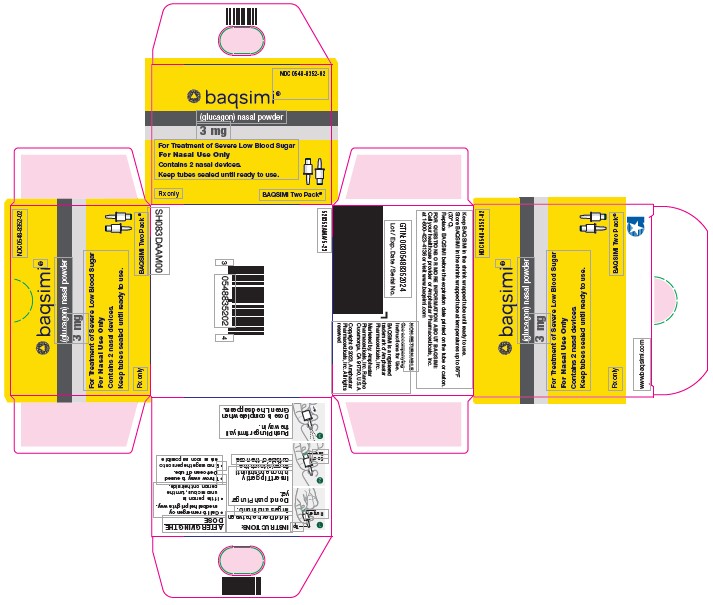
Baqsimi glucagon 3 mg Powder, 2 tubes
Other active recalls for Glucagon (different manufacturers) — 1 · tap to view
🆔 Identity & classification
Where does this data come from?
🏷️ RxNorm drug class
This medicine belongs to the Antihypoglycemic Agent class.
Where does this data come from?
🏭 Manufacturer & labeler
Where does this data come from?
🩺 Clinical
Glucagon nasal powder is used along with emergency medical treatment to treat very low blood sugar in adults and children 4 years of age and older who have diabetes. Glucagon nasal powder is in a class of medications called glycogenolytic agents. It works by causing the liver to release stored sugar to the blood.
Read the full MedlinePlus article ↗- Baqsimi is for severe low blood sugar emergencies — times when the person is unconscious, having a seizure, or so confused they can't safely eat or drink. Use it right away when yo...
- When exactly should I use Baqsimi — and when should I call 911?
- It's designed to be simple. Just take the device out of the tube, hold it under the person's nose, insert the tip into one nostril, and press the plunger all the way in until the g...
- How do I actually give this? Is it hard to use?
Patient education
Supplement & herbal interactions
Some supplements/herbs that may interact with Glucagon — tap one for details:
Glucagon may be associated with lower levels of 1 nutrient — worth a chat with your pharmacist, not a cause for alarm.
Where does this data come from?
Ask a licensed pharmacist directly — free, answered by our team.
🧪 Inactive Ingredients / Excipients
Inactive ingredients, also called excipients, are components of the drug product other than the active ingredient. They may include fillers, dyes, coatings, preservatives, flavors, or other formulation ingredients.
💡 Tap an ingredient (hover on desktop) to see what it is and why it’s used.
-
UNII Q40Q9N063P
Acetic acid is a weak organic acid commonly used in medicines as a buffer and pH adjuster. It helps maintain the proper acidity level to ensure the drug remains stable and effective in its formulation.
-
24 mg
UNII JV039JZZ3A
Betadex is a modified sugar molecule derived from starch. It acts as a solubilizer and stabilizer in medicines, helping dissolve poorly soluble drugs and keep them stable during storage.
-
3 mg
UNII M5CF6282DD
A synthetic surfactant (detergent-like molecule) derived from dodecanol and phosphocholine. It helps dissolve and stabilize active ingredients in liquid or semi-solid formulations.
-
UNII 059QF0KO0R
Water is a liquid solvent that dissolves and mixes ingredients together in liquid medicines, syrups, and injections. It helps distribute the active drug evenly throughout the product.
4 inactive ingredients listed in the exact product block matched to this NDC.
Where does this data come from?
ingredient classCode="IACT" elements from the exact product block matched by this NDC. Label-section narrative from DailyMed / the openFDA label index is shown separately when available.Inactive ingredient FAQ
Are inactive ingredients the same for every manufacturer?
Why might an inactive ingredient be missing?
Can inactive ingredients matter?
💲 Pricing
A drug doesn't have one price. Each row is a different public payment system, and none is what you'd pay at the counter — that depends on your insurance. The ⓘ on each row explains what it measures.
| Price system | Per ea | Per package |
|---|---|---|
| Retail pharmacies payNADAC · weekly | $293.832 | $587.66 / 2 powder |
| Medicaid paysCMS SDUD · 12 mo | $286.52 | $573.04 / 2 powder |
| Medicare drug plans payPart D · Q2 2026 | $295.43 | $590.86 / 2 powder |
Where does this data come from?
🔁 Therapeutic equivalents
| Product | Labeler | Pack | NADAC/unit | TE | Status | Price vs. this |
|---|---|---|---|---|---|---|
| Baqsimi 3 mg 00548-8351-01 | Amphastar | 1 tube | $293.388 | — | Availability likely | +0% |
| Baqsimi 3 mgthis 00548-8352-02 | Amphastar | 2 tubes | $293.832 | — | Availability likely | — |
| Baqsimi 3 mg 85766-0212-03 | Sportpharm | 1 tube | — | — | FDA listed | — |
Where does this data come from?
⏳ Availability & generic status
We did not find an FDA-approved generic match for this exact strength, form and route. Patent/protection dates below may affect future generic timing.
Why the date isn’t exact: Generic timing can change because patents may be challenged, settled, licensed, added, removed, or worked around with a narrower label — and FDA approval does not always mean a pharmacy can get the generic today.
🛈 What do these terms mean?
- Patent
- Legal protection listed in the Orange Book that may delay generic approval or launch. Issued by the U.S. Patent & Trademark Office.
- Substance patent
- Covers the active drug molecule itself — the hardest to design around. A generic generally can’t launch until it expires.
- Formulation (product) patent
- Covers a specific formulation or dosage form. A generic can sometimes work around it with a different formulation.
- Method-of-use patent
- A patent covering one specific approved use of the drug — not necessarily the whole molecule. A generic can sometimes launch with a “skinny label” that carves out the protected use and keeps the others.
- Skinny label
- A generic label that omits a still-patented use when the FDA allows it — letting a generic reach the market for the unprotected uses.
- Exclusivity
- FDA-granted marketing protection, separate from patents — e.g. 5-yr new chemical entity, 7-yr orphan drug, or a +6-month pediatric extension.
- Paragraph IV
- A generic applicant’s formal challenge to a listed patent. It can potentially lead to earlier generic entry, but often involves litigation or a settlement.
- RLD / RS
- Reference Listed Drug — the brand product the FDA uses as the reference for generic applications. Reference Standard — the product the FDA expects generics to compare against in bioequivalence testing.
- TE / AB rating
- FDA therapeutic-equivalence rating. An AB rating generally means the FDA considers a generic therapeutically equivalent to — and substitutable for — the brand.
- LOE (loss of exclusivity)
- The latest patent or exclusivity currently listed — the loss-of-exclusivity / latest-listed-protection date shown on this page. Paragraph-IV challenges and settlements can move the real date earlier; FDA approval and a manufacturer’s decision to market can move it later.
Built from the FDA Orange Book. The bars above are scaled to each protection’s expiry; the red LOE marker is the last one to lapse.
| Patent | Type | Use code | Expires |
|---|---|---|---|
| US 10213487 ↗ | Method of use | U-2604 | Feb 16, 2036 |
| US 12370241 ↗ | Method of use | U-2604 | Feb 16, 2036 |
| US 10765602 ↗ | Drug product | — | Sep 23, 2039 |
| Code | What it grants | Expires |
|---|---|---|
| NPP | New Patient Population | Mar 17, 2028 |
Is there a generic version of BAQSIMI 3 MG SPRAY TWO PACK?
The FDA approved a generic — why can’t I get it at my pharmacy yet?
Why do different websites show different generic release dates?
What does “FDA listed” mean?
What does a patent or protection date mean here?
What does “current Orange Book estimate” mean?
Can a generic come out before the last patent expires?
Can a generic come out after the listed dates?
What is the difference between patents and exclusivity?
Why are there multiple patent dates?
Where does this data come from?
🗺️ Medicaid utilization & spend
📊 Medicare Part D spend CMS · PART D · 2026 (Q1)
🔬 Reported adverse events (FAERS)
Top reported reactions
Age at onset
Reporter sex
Serious outcomes
Where does this data come from?
📦 Packaging — all sizes for this product
| Package NDC | Description | Marketing start | Status |
|---|---|---|---|
| 00548-8352-02 You're viewing this | 2 TUBE in 1 CARTON (0548-8352-02) / 1 BOTTLE, UNIT-DOSE in 1 TUBE / 1 POWDER in 1 BOTTLE, UNIT-DOSE | 2024-02-07 | Active |
📄 Full prescribing information FDA SPL
🎯 Indications and Usage ▾
1 INDICATIONS AND USAGE BAQSIMI™ is indicated for the treatment of severe hypoglycemia in adults and pediatric patients aged 1 year and older with diabetes. BAQSIMI ® is an antihypoglycemic agent indicated for the treatment of severe hypoglycemia in adults and pediatric patients aged 1 year and older with diabetes. ( 1 )
⏱️ Dosage and Administration ▾
2 DOSAGE AND ADMINISTRATION BAQSIMI is for intranasal use only. ( 2.1 ) The recommended dose of BAQSIMI is 3 mg administered as one actuation of the intranasal device into one nostril. ( 2.2 ) Administer BAQSIMI according to the printed instructions on the shrink-wrapped tube label and the Instructions for Use.
( 2.1 ) Administer the dose by inserting the tip into one nostril and pressing the device plunger all the way in until the green line is no longer showing. The dose does not need to be inhaled. ( 2.1 ) Call for emergency assistance immediately after administering the dose.
( 2.1 ) When the patient responds to treatment, give oral carbohydrates. ( 2.1 ) Do not attempt to reuse BAQSIMI. Each BAQSIMI device contains one dose of glucagon and cannot be reused.
Discard any unused portion. ( 2.1 ) If there has been no response after 15 minutes, an additional 3 mg dose may be administered while waiting for emergency assistance. ( 2.2 )
2.1Important Administration Instructions BAQSIMI is for intranasal use only. Instruct patients and their caregivers on the signs and symptoms of severe hypoglycemia. Because severe hypoglycemia requires help of others to recover, instruct the patient to inform those around them about BAQSIMI and its Instructions for Use.
Administer BAQSIMI as soon as possible when severe hypoglycemia is recognized. Instruct the patient or caregiver to read the Instructions for Use at the time they receive a prescription for BAQSIMI. Emphasize the following instructions to the patient or caregiver: Do not push the plunger or test the device prior to administration.
Administer BAQSIMI according to the printed instructions on the shrink-wrapped tube label and the Instructions for Use. Administer the dose by inserting the tip into one nostril and pressing the device plunger all the way in until the green line is no longer showing. The dose does not need to be inhaled.
Call for emergency assistance immediately after administering the dose. If there has been no response after 15 minutes, an additional dose of BAQSIMI may be administered while waiting for emergency assistance. When the patient responds to treatment, give oral carbohydrates to restore the liver glycogen and prevent recurrence of hypoglycemia.
Do not attempt to reuse BAQSIMI. Each BAQSIMI device contains one dose of glucagon and cannot be reused. Discard any unused portion.
2.2Dosage in Adults and Pediatric Patients Aged 1 Year and Older The recommended dose of BAQSIMI is 3 mg administered as one actuation of the intranasal device into one nostril. If there has been no response after 15 minutes, an additional 3 mg dose of BAQSIMI from a new device may be administered while waiting for emergency assistance.
💊 Dosage Forms and Strengths ▾
3 DOSAGE FORMS AND STRENGTHS Nasal Powder: 3 mg glucagon: as a white powder in an intranasal device containing one dose of glucagon Nasal powder: intranasal device containing one dose of glucagon 3 mg ( 3 )
⛔ Contraindications ▾
4 CONTRAINDICATIONS BAQSIMI is contraindicated in patients with: Pheochromocytoma because of the risk of substantial increase in blood pressure [see Warnings and Precautions ( 5.1 )] Insulinoma because of the risk of hypoglycemia [see Warnings and Precautions ( 5.2 )] Prior hypersensitivity reaction to glucagon or to any of the excipients in BAQSIMI. Allergic reactions have been reported with glucagon and include anaphylactic shock with breathing difficulties and hypotension [see Warnings and Precautions ( 5.3 )] Pheochromocytoma ( 4 ) Insulinoma ( 4 ) Known hypersensitivity to glucagon or to any of the excipients ( 4 )
⚠️ Warnings and Cautions ▾
5 WARNINGS AND PRECAUTIONS Substantial Increase in Blood Pressure in Patients with Pheochromocytoma : Contraindicated in patients with pheochromocytoma because BAQSIMI may stimulate the release of catecholamines from the tumor. ( 5.1 ) Hypoglycemia in Patients with Insulinoma : In patients with insulinoma, administration may produce an initial increase in blood glucose; however, BAQSIMI may stimulate exaggerated insulin release from an insulinoma and cause hypoglycemia. If a patient develops symptoms of hypoglycemia after a dose of BAQSIMI, give glucose orally or intravenously.
( 5.2 ) Serious Hypersensitivity Reactions : Serious hypersensitivity reactions have been reported and include generalized rash, and in some cases anaphylactic shock with breathing difficulties, and hypotension. ( 5.3 ) Lack of Efficacy in Patients with Decreased Hepatic Glycogen : BAQSIMI is effective in treating hypoglycemia only if sufficient hepatic glycogen is present. Patients in states of starvation, with adrenal insufficiency or chronic hypoglycemia may not have adequate levels of hepatic glycogen for BAQSIMI to be effective.
Patients with these conditions should be treated with glucose. ( 5.4 )
5.1Substantial Increase in Blood Pressure in Patients with Pheochromocytoma BAQSIMI is contraindicated in patients with pheochromocytoma because glucagon may stimulate release of catecholamines from the tumor [see Contraindications ( 4 )]. If the patient develops a substantial increase in blood pressure and a previously undiagnosed pheochromocytoma is suspected, 5 to 10 mg of phentolamine mesylate, administered intravenously, has been shown to be effective in lowering blood pressure.
5.2Hypoglycemia in Patients with Insulinoma In patients with insulinoma, administration of glucagon may produce an initial increase in blood glucose; however, BAQSIMI administration may directly or indirectly (through an initial rise in blood glucose) stimulate exaggerated insulin release from an insulinoma and cause hypoglycemia. BAQSIMI is contraindicated in patients with insulinoma [see Contraindications ( 4 )]. If a patient develops symptoms of hypoglycemia after a dose of BAQSIMI, give glucose orally or intravenously.
5.3Serious Hypersensitivity Reactions Serious hypersensitivity reactions have been reported with glucagon products, including generalized rash, and in some cases anaphylactic shock with breathing difficulties and hypotension. Discontinue BAQSIMI if symptoms of serious hypersensitivity reactions occur. Advise patients and/or caregivers to seek immediate medical attention if the patient experiences any symptoms of serious hypersensitivity reactions.
BAQSIMI is contraindicated in patients with a prior hypersensitivity reaction [see Contraindications ( 4 )].
5.4Lack of Efficacy in Patients with Decreased Hepatic Glycogen Patients with insufficient hepatic stores of glycogen may not respond to BAQSIMI for the treatment of severe hypoglycemia [see Clinical Pharmacology ( 12.2 )]. Insufficient hepatic stores of glycogen may be present in conditions such as states of starvation or in patients with adrenal insufficiency or chronic hypoglycemia.
🤒 Adverse Reactions ▾
6 ADVERSE REACTIONS The following clinically significant adverse reactions are described elsewhere in labeling: Substantial Increase in Blood Pressure in Patients with Pheochromocytoma [see Warnings and Precautions ( 5.1 )] . Hypoglycemia in Patients with Insulinoma [see Warnings and Precautions ( 5.2 )] . Serious Hypersensitivity Reactions [see Warnings and Precautions ( 5.3 )] .
Lack of Efficacy in Patients with Decreased Hepatic Glycogen [see Warnings and Precautions ( 5.4 )] . Most common (≥10%) adverse reactions associated with BAQSIMI are nausea, vomiting, headache, upper respiratory tract irritation (i.e., rhinorrhea, nasal discomfort, nasal congestion, cough, and epistaxis), watery eyes, redness of eyes, itchy nose, throat and eyes. ( 6.1 ) To report SUSPECTED ADVERSE REACTIONS, contact Amphastar Pharmaceuticals, Inc. at 1-800-423-4136 or FDA at 1-800-FDA-1088 or www.fda.gov/medwatch.
6.1Clinical Trials Experience Because clinical trials are conducted under widely varying conditions, adverse reaction rates observed in the clinical trials of BAQSIMI cannot be directly compared with rates in clinical trials of other drugs and may not reflect the rates observed in practice. Adverse Reactions in Adult Patients Two similarly designed comparator-controlled trials, Study 1 and Study 2, evaluated the safety of a single intranasal dose of BAQSIMI compared to a 1 mg dose of intra-muscular glucagon (IMG) in adult patients with diabetes [see Clinical Studies ( 14.1 )].
Table 1 presents adverse reactions that occurred with BAQSIMI at an incidence of ≥2% in a pool of Study 1 and Study 2. Table 1: Pooled Adverse Reactions (≥2%) in Adult Patients with Type 1 and Type 2 Diabetes in Study 1and Study 2 a Upper Respiratory Tract Irritation: rhinorrhea, nasal discomfort, nasal congestion, cough, and epistaxis. Adverse Reaction BAQSIMI 3 mg (N=153) % Nausea 26 Headache 18 Vomiting 15 Upper Respiratory Tract Irritation a 12 Nasal and ocular symptoms with BAQSIMI were solicited through a patient questionnaire in Study 1 and 2 and these adverse reactions are presented in Table 2 .
Table 2: Solicited Nasal and Non-Nasal Adverse Reactions in Adult Patients with Type 1 and Type 2 Diabetes Pooled from Study 1 and 2 a Patients were asked to report whether they have the symptom, as well as severity (mild, moderate, severe) at baseline, and after glucagon administration. Adverse Reaction a BAQSIMI 3 mg (n=153) % Any increase in symptom severity a Watery eyes 59 Nasal congestion 43 Nasal itching 39 Runny nose 35 Redness of eyes 25 Itchy eyes 22 Sneezing 20 Itching of throat 12 Itching of ears 3 Adverse Reactions in Pediatric Patients Aged 1 Year and Above A single dose of BAQSIMI was compared to weight-based doses of 0.5 mg or 1 mg of IMG in pediatric patients aged 4 to less than 17 years with type 1 diabetes in Study 3 [see Clinical Studies ( 14.2 )].
Table 3 presents adverse reactions that occurred with BAQSIMI in pediatric patients at an incidence of ≥2% in Study 3. Table 3: Adverse Reactions (≥2%) Occurring in Pediatric Patients Aged 4 to less than 17 Years with Type 1 Diabetes in Study 3 a Upper Respiratory Tract Irritation: nasal discomfort, nasal congestion, sneezing. Adverse Reaction BAQSIMI 3 mg (n=36) % Vomiting 31 Headache 25 Nausea 17 Upper Respiratory Tract Irritation a 17 Nasal and ocular symptoms with BAQSIMI were solicited through a patient questionnaire in pediatric patients in Study 3 and these adverse reactions are presented in Table 4 .
Table 4: Solicited Nasal and Non-Nasal Adverse Reactions in Pediatric Patients Aged 4 to less than 17 Years with Type 1 Diabetes in Study 3 a Subjects were asked to report whether they have the symptom, as well as severity (mild, moderate, severe) at baseline, and after glucagon administration. Adverse Reaction a BAQSIMI 3 mg (n=36) % Any increase in symptom severity a Watery eyes 47 Nasal congestion 42 Nasal itching 28 Runny nose 25 Sneezing 19 Itchy eyes 17 Redness of eyes 14 Itching of throat 3…
🔄 Drug Interactions ▾
7 DRUG INTERACTIONS Beta-blockers : Patients taking beta-blockers may have a transient increase in pulse and blood pressure. ( 7.1 ) Indomethacin : In patients taking indomethacin BAQSIMI may lose its ability to raise glucose or may produce hypoglycemia. ( 7.2 ) Warfarin : BAQSIMI may increase the anticoagulant effect of warfarin. ( 7.3 )
7.1Beta-blockers Patients taking beta-blockers may have a transient increase in pulse and blood pressure when given BAQSIMI.
7.2Indomethacin In patients taking indomethacin, BAQSIMI may lose its ability to raise blood glucose or may even produce hypoglycemia.
7.3Warfarin BAQSIMI may increase the anticoagulant effect of warfarin.
👥 Use in Specific Populations ▾
8 USE IN SPECIFIC POPULATIONS
8.1Pregnancy Risk Summary Available data from case reports and a small number of observational studies with glucagon use in pregnant women over decades of use have not identified a drug associated risk of major birth defects, miscarriage or adverse maternal or fetal outcomes. Multiple small studies have demonstrated a lack of transfer of pancreatic glucagon across the human placental barrier during early gestation. In a rat reproduction study, no embryofetal toxicity was observed with glucagon administered by injection during the period of organogenesis at doses representing up to 40 times the human dose, based on body surface area (mg/m 2 ) (see Data).
The estimated background risk of major birth defects and miscarriage for the indicated population is unknown. In the U.S. general population, the estimated background risk of major birth defects and miscarriage in clinically recognized pregnancies is 2-4% and 15-20%, respectively. Data Animal Data In pregnant rats given animal sourced glucagon twice-daily by injection at doses up to 2 mg/kg (up to 40 times the human dose based on body surface area extrapolation, mg/m 2 ) during the period of organogenesis, there was no evidence of increased malformations or embryofetal lethality.
8.2Lactation Risk Summary There is no information available on the presence of glucagon in human or animal milk, the effects of the drug on the breastfed infant, or the effects of the drug on milk production. However, glucagon is a peptide and would be expected to be broken down to its constituent amino acids in the infant's digestive tract and is therefore, unlikely to cause harm to an exposed infant.
8.4Pediatric Use The safety and effectiveness of BAQSIMI for the treatment of severe hypoglycemia in patients with diabetes have been established in pediatric patients aged 1 year and older. Use of BAQSIMI for this indication is supported by evidence from an adequate and well-controlled study in adults with type 1 diabetes mellitus [see Clinical Studies ( 14.1 )] , a study in 48 pediatric patients aged 4 to less than 17 years with type 1 diabetes mellitus [see Clinical Studies ( 14.2 )] , and additional pharmacokinetic and safety data from a study of seven pediatric patients aged 1 to less than 4 years with type 1 diabetes mellitus [see Adverse Reactions ( 6.1 ),Clinical Pharmacology ( 12.2 , 12.3 ), and Clinical Studies ( 14.2 )] .
The safety and effectiveness of BAQSIMI have not been established in pediatric patients younger than 1 year of age.
8.5Geriatric Use Clinical studies of BAQSIMI did not include sufficient numbers of subjects aged 65 and over to determine whether they respond differently from younger adult patients.
🤰 Pregnancy ▾
8.1Pregnancy Risk Summary Available data from case reports and a small number of observational studies with glucagon use in pregnant women over decades of use have not identified a drug associated risk of major birth defects, miscarriage or adverse maternal or fetal outcomes. Multiple small studies have demonstrated a lack of transfer of pancreatic glucagon across the human placental barrier during early gestation. In a rat reproduction study, no embryofetal toxicity was observed with glucagon administered by injection during the period of organogenesis at doses representing up to 40 times the human dose, based on body surface area (mg/m 2 ) (see Data).
The estimated background risk of major birth defects and miscarriage for the indicated population is unknown. In the U.S. general population, the estimated background risk of major birth defects and miscarriage in clinically recognized pregnancies is 2-4% and 15-20%, respectively. Data Animal Data In pregnant rats given animal sourced glucagon twice-daily by injection at doses up to 2 mg/kg (up to 40 times the human dose based on body surface area extrapolation, mg/m 2 ) during the period of organogenesis, there was no evidence of increased malformations or embryofetal lethality.
🧒 Pediatric Use ▾
8.4Pediatric Use The safety and effectiveness of BAQSIMI for the treatment of severe hypoglycemia in patients with diabetes have been established in pediatric patients aged 1 year and older. Use of BAQSIMI for this indication is supported by evidence from an adequate and well-controlled study in adults with type 1 diabetes mellitus [see Clinical Studies ( 14.1 )] , a study in 48 pediatric patients aged 4 to less than 17 years with type 1 diabetes mellitus [see Clinical Studies ( 14.2 )] , and additional pharmacokinetic and safety data from a study of seven pediatric patients aged 1 to less than 4 years with type 1 diabetes mellitus [see Adverse Reactions ( 6.1 ),Clinical Pharmacology ( 12.2 , 12.3 ), and Clinical Studies ( 14.2 )] .
The safety and effectiveness of BAQSIMI have not been established in pediatric patients younger than 1 year of age.
🧓 Geriatric Use ▾
8.5Geriatric Use Clinical studies of BAQSIMI did not include sufficient numbers of subjects aged 65 and over to determine whether they respond differently from younger adult patients.
🆘 Overdosage ▾
10 OVERDOSAGE If overdosage occurs, the patient may experience nausea, vomiting, inhibition of GI tract motility, increase in blood pressure and pulse rate. In case of suspected overdosing, serum potassium levels may decrease and should be monitored and corrected if needed. If the patient develops a dramatic increase in blood pressure, phentolamine mesylate has been shown to be effective in lowering blood pressure for the short time that control would be needed.
In the event of an overdose of BAQSIMI, consider contacting the Poison Help line (1-800-222-1222) or a medical toxicologist for additional overdosage management recommendation.
🧬 Clinical Pharmacology ▾
12 CLINICAL PHARMACOLOGY
12.1Mechanism of Action Glucagon increases blood glucose concentration by activating hepatic glucagon receptors, thereby stimulating glycogen breakdown and release of glucose from the liver. Hepatic stores of glycogen are necessary for glucagon to produce an antihypoglycemic effect.
12.2Pharmacodynamics After administration of BAQSIMI in adult patients with diabetes, the mean maximum glucose increase from baseline was 140 mg/dL ( Figure 1 ). In pediatric patients aged 1 to less than 17 years with type 1 diabetes, the mean maximum glucose increase from baseline was 132 mg/dL (1 to less than 4 years), 138 mg/dL (4 to less than 8 years), 133 mg/dL (8 to less than 12 years), and 102 mg/dL (12 to less than 17 years) ( Figure 2 ). Sex and body weight had no clinically meaningful effects on the pharmacodynamics of BAQSIMI.
Common cold with nasal congestion tested with or without use of decongestant did not impact pharmacodynamics of BAQSIMI. Figure 1 Mean glucose concentration over time after glucagon dose in adult Type 1 Diabetes patients with insulin-induced hypoglycemia. Fi gure 2 Mean glucose concentration over time in pediatric Type 1 Diabetes patients administered BAQSIMI figure1 figure2
12.3Pharmacokinetics Absorption Glucagon absorption via the intranasal route, achieved mean peak plasma levels of 6130 pg/mL at around 15 minutes. Distribution The apparent volume of distribution was approximately 885 L. Elimination The median half-life was approximately 35 minutes.
Metabolism Glucagon is known to be degraded in the liver, kidneys, and plasma. Specific Populations Pediatrics In pediatric patients (aged 1 to less than 17 years), glucagon via the intranasal route, achieved mean peak plasma levels between 10 and 20 minutes. The median half-life was 21 to 31 minutes.
Patients with Colds Common cold with nasal congestion did not impact the pharmacokinetics of BAQSIMI. Drug Interaction Studies Common cold with use of decongestant did not impact the pharmacokinetics of BAQSIMI.
12.6Immunogenicity The observed incidence of anti-drug antibodies (ADA) is highly dependent on the sensitivity and specificity of the assay. Differences in assay methods preclude meaningful comparisons of the incidence of ADA in the studies described below with the incidence of anti-drug antibodies in other studies, including those of glucagon or of other glucagon products. In 3 clinical trials, 3/124 (2%) of BAQSIMI-treated patients had treatment-emergent ADAs as detected by an affinity capture elution (ACE) ligand-binding immunogenicity assay.
No neutralizing antibodies were detected. Because of the low occurrence of ADA, the effect of these antibodies on the pharmacokinetics, pharmacodynamics, and/or effectiveness of BAQSIMI is unknown.
🧬 Mechanism of Action ▾
12.1Mechanism of Action Glucagon increases blood glucose concentration by activating hepatic glucagon receptors, thereby stimulating glycogen breakdown and release of glucose from the liver. Hepatic stores of glycogen are necessary for glucagon to produce an antihypoglycemic effect.
📦 How Supplied / Storage and Handling ▾
16 HOW SUPPLIED/STORAGE AND HANDLING BAQSIMI is supplied as an intranasal device containing one 3 mg dose of glucagon as a preservative free, white powder. BAQSIMI One Pack carton contains 1 intranasal device (NDC 0548-8351-01) BAQSIMI Two Pack carton contains 2 intranasal devices (NDC 0548-8352-02) Store at temperatures up to 86°F (30°C) in the shrink wrapped tube provided. Keep BAQSIMI in the shrink wrapped tube until ready to use.
If the tube has been opened, BAQSIMI may have been exposed to moisture and may not work as expected. Discard BAQSIMI and tube after use.
📋 Description ▾
11 DESCRIPTION BAQSIMI contains glucagon, an antihypoglycemic agent used to treat severe hypoglycemia. Glucagon is a single-chain polypeptide containing 29 amino acid residues and has a molecular weight of 3483, and is identical to human glucagon. Its molecular formula is C 153 H 225 N 43 O 49 S, with the following molecular structure: BAQSIMI is a preservative-free, white powder for intranasal administration in an intranasal device containing one dose of 3 mg glucagon.
BAQSIMI contains glucagon as the active ingredient and betadex, and dodecylphosphocholine as the excipients. structure
💬 Information for Patients ▾
17 PATIENT COUNSELING INFORMATION Advise the patient and family members or caregivers to read the FDA-approved patient labeling ( Patient Information and Instructions for Use ). Recognition of Severe Hypoglycemia: Inform patient and family members or caregivers on how to recognize the signs and symptoms of severe hypoglycemia and the risks of prolonged hypoglycemia. Serious Hypersensitivity Reactions: Inform patients that serious hypersensitivity reactions can occur with BAQSIMI.
Advise patients to seek immediate medical attention if they experience any symptoms of serious hypersensitivity reactions [see Warnings and Precautions ( 5.3 )] . Marketed by: Amphastar Pharmaceuticals, Inc. Rancho Cucamonga, CA 91730, USA.
Copyright© 2025, Amphastar Pharmaceuticals, Inc. All rights reserved. 698351AMD