
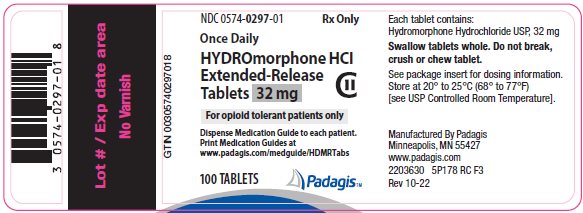
hydromorphone hydrochloride 32 mg Tablet, Extended Release, 100-count — NDC 0574-0297-01 (Billing 00574-0297-01)
This is a package of 100 tablets of hydromorphone hydrochloride 32 mg Tablet, Extended Release from Padagis US LLC, marketed since May 2015 and currently FDA-listed. It is this product's only package size.
NDC database record
One package, one record: these facts belong to NDC 0574-0297-01 alone.
- Record
- FDA NDC Directory package listing · Human prescription drug
- Code segments
- 0574 labeler · 0297 product · 01 package
- Package marketed since
- Sep 29, 2017
- Sample package
- No — commercial package
- Listing certified through
- Dec 31, 2027
- Billing quantity
- 100 EA per package
- Barcode (UPC-A, from the NDC)
- 3 0574029701 8
- FDA record last changed
- Jul 24, 2026
Identity & classification
Regulatory identifiers FDA, NLM and CMS codes for this package
Drug-database identifiers Medi-Span GPI and First Databank GCN / HICL / AHFS classification
- GSN (GCN sequence number): 069860
- GCN: 33088
- GPI-14 (Medi-Span): 65100035107556
- HICL (First Databank): 001695
- AHFS class code: 28:08.08.00
- RxCUI (RxNorm): 902729
Where does this data come from?
- FDA openFDA NDC Directory · synced Oct 1, 2026
- FDA label on DailyMed · label index refreshed Oct 6, 2026
- RxNorm (NLM RxNav) · catalog refreshed Oct 1, 2026
- Medi-Span GPI (licensed)
- First Databank (licensed) · refreshed Oct 1, 2026
RxNorm drug class
This medicine belongs to the Opioid Agonist class.
Where does this data come from?
- RxClass (NLM) · catalog refreshed Oct 1, 2026
Clinical
Hydromorphone is used to relieve severe pain. Hydromorphone is in a class of medications called opiate (narcotic) analgesics. It works by changing the way the brain and nervous system respond to pain.
Read the full MedlinePlus article ↗- It treats pain that is severe enough to need an opioid when other treatments haven't worked or aren't enough. Extended-release tablets are for daily, around-the-clock pain in peopl...
- Take it exactly as prescribed, and never take extra doses. If you have the oral solution, use a proper measuring device, not a kitchen spoon, and check the dose in mL. Keep it lock...
- Constipation, nausea, vomiting, sleepiness, headache and dizziness are the most common. Ask me about options for constipation. Call for help right away if breathing becomes slow or...
- No, avoid alcohol. Combining it with alcohol, benzodiazepines or other sedating drugs can cause dangerous sleepiness, slowed breathing, coma and death. Tell me about everything you...
Patient education
Supplement & herbal interactions
Where does this data come from?
- MedlinePlus (NLM) · refreshed Oct 1, 2026
- FDA label on DailyMed · label index refreshed Oct 6, 2026
Ask a licensed pharmacist directly — free, answered by our team.
Pricing
A drug doesn't have one price. Each row is a different public payment system, and none is what you'd pay at the counter — that depends on your insurance. The ⓘ on each row explains what it measures.
| Price system | Per each | Per package |
|---|---|---|
| Retail pharmacies payNADAC · weekly | Not in the retail survey — common for institutional, discontinued, or low-volume packs. | |
| Medicaid paysCMS SDUD · 12 mo | No recent Medicaid claims on file for this NDC — rare and low-volume NDCs are suppressed in the public data. | |
| Medicare drug plans payPart D · Q2 2026 | $4.93 | $492.51 / 100 tablets |
Where does this data come from?
- CMS NADAC weekly file
- CMS ASP pricing files · refreshed Sep 20, 2026
- CMS Medicaid State Drug Utilization Data · refreshed Oct 6, 2026
- CMS Part D plan pricing files · refreshed Sep 24, 2026
- VA National Acquisition Center price file
Packaging — all sizes for this product
| Package NDC | Description | Marketing start | Marketing end | Status |
|---|---|---|---|---|
| 00574-0297-01 You're viewing this Main listing | 100 TABLET, EXTENDED RELEASE in 1 BOTTLE | 2017-09-29 | — | Active |
Therapeutic equivalents
| Product | Labeler | Pack | NADAC/unit | TE | Status | Price vs. this |
|---|---|---|---|---|---|---|
| hydromorphone hydrochloride 32 mgthis 00574-0297-01 | Padagis | 100 tablets | — | AB | FDA listed | — |
| Hydromorphone Hydrochloride 32 mg 13811-0704-10 | Trigen | 100 tablets | — | AB | FDA listed | — |
| hydromorphone hydrochloride 32 mg 31722-0122-01 | Camber | 100 tablets | — | AB | FDA listed | — |
| hydromorphone hydrochloride 32 mg 72865-0171-01 | XLCare | 100 tablets | — | AB | FDA listed | — |
Where does this data come from?
- FDA openFDA NDC Directory · synced Oct 1, 2026
- FDA Orange Book · refreshed Oct 3, 2026
- CMS NADAC weekly file
Availability & generic status
This product is an FDA-approved generic. Other versions of the same drug are listed under Therapeutic equivalents, least expensive first.
Where does this data come from?
- FDA Orange Book · refreshed Oct 3, 2026
What it looks like
Where does this data come from?
- FDA label on DailyMed · label index refreshed Oct 6, 2026
Inactive Ingredients / Excipients
Inactive ingredients, also called excipients, are components of the drug product other than the active ingredient. They may include fillers, dyes, coatings, preservatives, flavors, or other formulation ingredients.
🧪 Avoiding an ingredient? See Hydromorphone inactive ingredients by manufacturer: every current product's list side by side, so you can ask your pharmacy for the version that does not list it.
💡 Tap an ingredient (hover on desktop) to see what it is and why it’s used.
-
UNII 8GQS4E66YY
A synthetic polymer made from acrylic compounds. It forms a coating on tablets or capsules to control how and where the medicine releases in the digestive system.
-
UNII 47MLB0F1MV
Ethylcellulose is a plant-based thickening agent made from cellulose. It slows how fast the medicine dissolves, helping control drug release in the stomach and intestines.
-
UNII 1K09F3G675
Ferric oxide red is an inorganic iron compound used as a colorant in medicines. It gives tablets, capsules, or other dosage forms a red or reddish tint for identification and appearance.
-
UNII XM0M87F357
A dark iron oxide compound that gives medicines their black or dark color. It's used as a colorant in tablets and capsules to help identify the product and make it visually distinctive.
-
UNII 0VUT3PMY82
Hypromellose 2910 is a plant-derived thickening agent made from cellulose. In medicines, it forms protective coatings on tablets or capsules, controls how fast the drug releases, and thickens liquid formulations.
-
UNII 0WZ8WG20P6
Hypromellose 2910 is a plant-based cellulose derivative that acts as a thickener, binder, and film-coating agent. It helps control how quickly the medicine dissolves and protects the tablet or capsule from moisture and light.
-
UNII 70097M6I30
Magnesium stearate is a salt made from magnesium and stearic acid, a fatty substance. It's used in tablets and capsules as a lubricant and glidant to help ingredients flow smoothly during manufacturing and prevent sticking.
-
UNII 3OWL53L36A
A natural sugar alcohol derived from seaweed or synthesized in the lab. It's used as a filler to add bulk, a sweetener in sugar-free formulas, and a disintegrant to help tablets break apart in the stomach.
-
UNII OP1R32D61U
Microcrystalline cellulose is a purified form of cellulose, a natural fiber from plant sources. It acts as a binder and filler in tablets and capsules, helping hold ingredients together and give the medicine its shape and size.
-
UNII B697894SGQ
Polyethylene glycol 400 is a clear, thick liquid made from petroleum-derived polymers. It acts as a solvent and humectant in medicines, helping dissolve active ingredients and retain moisture in the formulation.
-
UNII U725QWY32X
Povidone K30 is a synthetic polymer made from petroleum. It acts as a binder to hold tablet ingredients together and as a disintegrant to help the tablet break apart in the stomach so the medicine can be absorbed.
-
UNII 6DC9Q167V3
Propylene glycol is a clear liquid derived from petroleum or vegetable sources. It acts as a solvent, humectant, and preservative in medicines, helping dissolve active ingredients and maintain product stability.
-
UNII 46N107B71O
Shellac is a natural resin secreted by the lac beetle. It's used as a coating on tablets and capsules to control how quickly the medicine dissolves and to improve appearance and stability.
-
UNII ETJ7Z6XBU4
Silicon dioxide is a naturally occurring mineral used as a glidant and anti-caking agent. It helps powder ingredients flow smoothly and prevents clumping during manufacturing and storage.
-
UNII 7SEV7J4R1U
A powder made from a naturally occurring mineral. In medicines, talc works as a glidant and anti-caking agent, helping tablets and capsules flow smoothly during manufacturing and preventing clumping.
-
UNII 15FIX9V2JP
Titanium dioxide is a bright white mineral powder commonly used as a colorant and opacifying agent. It makes pills and tablets white or lighter in color and helps make coatings non-transparent.
-
UNII 8Z96QXD6UM
Triethyl citrate is a clear liquid derived from citric acid. It acts as a plasticizer and solvent in tablet coatings and film formulations, helping the coating remain flexible and adhere properly to the medicine.
17 inactive ingredients listed in the exact product block matched to this NDC.
Where does this data come from?
ingredient classCode="IACT" elements from the exact product block matched by this NDC. Label-section narrative from DailyMed / the openFDA label index is shown separately when available.- FDA label on DailyMed · label index refreshed Oct 6, 2026
- FDA openFDA NDC Directory · synced Oct 1, 2026
Inactive ingredient FAQ
Are inactive ingredients the same for every manufacturer?
Why might an inactive ingredient be missing?
Can inactive ingredients matter?
Manufacturer & labeler
More NDCs from Padagis US LLC labeler code 00574
- benazepril hydrochloride and hydrochlorothiazide 20 mg; 12.5 mg Tablet NDC 0574-0229-01
- Paroxetine 7.5 mg Capsule NDC 0574-0279-30
- amiloride hydrochloride 5 mg Tablet NDC 0574-0292-01
- hydromorphone hydrochloride 8 mg Tablet, Extended Release NDC 0574-0293-01
- hydromorphone hydrochloride 12 mg Tablet, Extended Release NDC 0574-0294-01
- hydromorphone hydrochloride 16 mg Tablet, Extended Release NDC 0574-0295-01
- ACTIDOSE activated charcoal 208 mg/mL Suspension NDC 0574-0520-04
- ACTIDOSE AQUA activated charcoal 208 mg/mL Suspension NDC 0574-0521-04
- Podocon 25 Podophyllum resin 1 mg/4mL Tincture NDC 0574-0601-15
- PODOFILOX 5 mg/mL Solution NDC 0574-0611-05
- Podofilox 5 mg/g Gel NDC 0574-0621-05
- methazolamide 25 mg Tablet NDC 0574-0790-01
Where does this data come from?
- FDA openFDA NDC Directory · synced Oct 1, 2026
- Drugs@FDA
Full prescribing information FDA SPL
🚨 Boxed Warning ▾
WARNING: SERIOUS AND LIFE-THREATENING RISKS FROM USE OF HYDROMORPHONE HYDROCHLORIDE EXTENDED-RELEASE TABLETS Addiction, Abuse, and Misuse Because the use of hydromorphone hydrochloride extended-release tablets exposes patients and other users to the risks of opioid addiction, abuse, and misuse, which can lead to overdose and death, assess each patient’s risk prior to prescribing and reassess all patients regularly for the development of these behaviors and conditions [see Warnings and Precautions ( 5.1 )] . Life-Threatening Respiratory Depression Serious, life-threatening, or fatal respiratory depression may occur with use of hydromorphone hydrochloride extended-release tablets, especially during initiation or following a dosage increase.
To reduce the risk of respiratory depression, proper dosing and titration of hydromorphone hydrochloride extended-release tablets are essential. Instruct patients to swallow hydromorphone hydrochloride extended-release tablets whole to avoid exposure to a potentially fatal dose of hydromorphone [see Warnings and Precautions ( 5.2 )] . Accidental Ingestion Accidental ingestion of even one dose of hydromorphone hydrochloride extended-release tablets, especially by children, can result in a fatal overdose of hydromorphone [see Warnings and Precautions ( 5.2 )] .
Risks From Concomitant Use With Benzodiazepines Or Other CNS Depressants Concomitant use of opioids with benzodiazepines or other central nervous system (CNS) depressants, including alcohol, may result in profound sedation, respiratory depression, coma, and death. Reserve concomitant prescribing of hydromorphone hydrochloride extended-release tablets and benzodiazepines or other CNS depressants for use in patients for whom alternative treatment options are inadequate [see Warnings and Precautions ( 5.3 ), Drug Interactions ( 7 )] .
Neonatal Opioid Withdrawal Syndrome (NOWS) Advise pregnant women using opioids for an extended period of time of the risk of Neonatal Opioid Withdrawal Syndrome, which may be life-threatening if not recognized and treated. Ensure that management by neonatology experts will be available at delivery [see Warnings and Precautions ( 5.4 )] . Opioid Analgesic Risk Evaluation and Mitigation Strategy (REMS) Healthcare providers are strongly encouraged to complete a REMS-compliant education program and to counsel patients and caregivers on serious risks, safe use, and the importance of reading the Medication Guide with each prescription [see Warnings and Precautions ( 5.5 )] .
WARNING: SERIOUS AND LIFE-THREATENING RISKS FROM USE OF HYDROMORPHONE HYDROCHLORIDE EXTENDED-RELEASE TABLETS See full prescribing information for complete boxed warning. • Hydromorphone hydrochloride extended-release tablets expose users to risks of addiction, abuse, and misuse, which can lead to overdose and death. Assess patient’s risk before prescribing and reassess regularly for these behaviors and conditions. ( 5.1 ) • Serious, life-threatening, or fatal respiratory depression may occur, especially upon initiation or following a dosage increase.
To reduce the risk of respiratory depression, proper dosing and titration of hydromorphone hydrochloride extended-release tablets are essential. Instruct patients to swallow hydromorphone hydrochloride extended-release tablets whole to avoid exposure to a potentially fatal dose of hydromorphone. ( 5.2 ) • Accidental ingestion of hydromorphone hydrochloride extended-release tablets, especially by children, can result in fatal overdose of hydromorphone.
( 5.2 ) • Concomitant use of opioids with benzodiazepines or other central nervous system (CNS) depressants, including alcohol, may result in profound sedation, respiratory depression, coma, and death. Reserve concomitant prescribing for use in patients for whom alternative treatment options are inadequate. ( 5.3 , 7 ) • Advise pregnant women using opioids for an extended period of time of the risk of Neonatal Opioid Withdrawal Syndrome, which may be l… [Excerpted — this section continues on DailyMed.]
🎯 Indications and Usage ▾
1 INDICATIONS AND USAGE Hydromorphone hydrochloride extended-release tablets are indicated in opioid-tolerant patients for the management of severe and persistent pain that requires an opioid analgesic and that cannot be adequately treated with alternative options, including immediate-release opioids. Patients considered opioid tolerant are those who are receiving, for one week or longer, at least 60 mg oral morphine per day, 25 mcg transdermal fentanyl per hour, 30 mg oral oxycodone per day, 8 mg oral hydromorphone per day, 25 mg oral oxymorphone per day, 60 mg oral hydrocodone per day, or an equianalgesic dose of another opioid.
Limitations of Use • Because of the risks of addiction, abuse, misuse, overdose, and death, which can occur at any dosage or duration and persist over the course of therapy [see Warnings and Precautions ( 5.1 )] , reserve opioid analgesics, including hydromorphone hydrochloride extended-release tablets, for use in patients for whom alternative treatment options are ineffective, not tolerated, or would be otherwise inadequate to provide sufficient management of pain. • Hydromorphone hydrochloride extended-release tablets are not indicated as an as-needed (prn) analgesic.
Hydromorphone hydrochloride extended-release tablets are an opioid agonist indicated in opioid-tolerant patients for the management of severe and persistent pain that requires an opioid analgesic and that cannot be adequately treated with alternative options, including immediate-release opioids. Patients considered opioid tolerant are those who are taking, for one week or longer, at least 60 mg oral morphine per day, 25 mcg transdermal fentanyl per hour, 30 mg oral oxycodone per day, 8 mg oral hydromorphone per day, 25 mg oral oxymorphone per day, 60 mg oral hydrocodone per day, or an equianalgesic dose of another opioid.
( 1 ) Limitations of Use • Because of the risks of addiction, abuse, misuse, overdose, and death, which can occur at any dosage or duration and persist over the course of therapy, reserve opioid analgesics, including hydromorphone hydrochloride extended-release tablets, for use in patients for whom alternative treatment options are ineffective, not tolerated, or would be otherwise inadequate to provide sufficient management of pain. ( 1 , 5.1 ) • Hydromorphone hydrochloride extended-release tablets are not indicated as an as-needed (prn) analgesic.
( 1 )
⏱️ Dosage and Administration ▾
2 DOSAGE AND ADMINISTRATION • Hydromorphone hydrochloride extended-release tablets should be prescribed only by healthcare professionals who are knowledgeable about the use of extended-release/long-acting opioids and how to mitigate the associated risks. ( 2.1 ) • Use the lowest effective dosage for the shortest duration of time consistent with individual patient treatment goals. Reserve titration to higher doses of hydromorphone hydrochloride extended-release tablets for patients in whom lower doses are insufficiently effective and in whom the expected benefits of using a higher dose opioid clearly outweigh the substantial risks.
( 2.1 , 5 ) • Initiate the dosing regimen for each patient individually, taking into account the patient’s underlying cause and severity of pain, prior analgesic treatment and response, and risk factors for addiction, abuse, and misuse ( 2.1 , 5.1 ) • Respiratory depression can occur at any time during opioid therapy, especially when initiating and following dosage increases with hydromorphone hydrochloride extended-release tablets. Consider this risk when selecting an initial dose and when making dose adjustments ( 2.1 , 5.2 ) • For once daily administration IN OPIOID-TOLERANT PATIENTS.
( 2.1 ) • Instruct patients to swallow hydromorphone hydrochloride extended-release tablets intact, and not to cut, break, chew, crush, or dissolve the tablets (risk of potentially fatal overdose). ( 2.1 , 5.1 ) • Discuss opioid overdose reversal agents and options for acquiring them with the patient and/or caregiver, both when initiating and renewing treatment with hydromorphone hydrochloride extended-release tablets, especially if the patient has additional risk factors for overdose, or close contacts at risk for exposure and overdose.
( 2.2 , 5.1 , 5.2 , 5.3 ) • Dose may be increased using increments of 4 to 8 mg every 3 to 4 days as needed to achieve adequate analgesia. ( 2.4 ) • Periodically reassess patients receiving hydromorphone hydrochloride extended-release tablets to evaluate the continued need for opioid analgesics to maintain pain control, for the signs or symptoms of adverse reactions, and for the development of addiction, abuse, or misuse. ( 2.4 ) • Do not rapidly reduce or abruptly discontinue hydromorphone hydrochloride extended-release tablets in a physically-dependent patient because rapid reduction or abrupt discontinuation of opioid analgesics has resulted in serious withdrawal symptoms, uncontrolled pain, and suicide.
( 2.5 , 5.13 ) • Moderate Hepatic Impairment : Initiate treatment with 25% of the dose that would be prescribed for patients with normal hepatic function. Monitor closely for respiratory and central nervous system depression. ( 2.6 ) • Moderate and Severe Renal Impairment : Initiate treatment in patients with moderate renal impairment with 50% and patients with severe renal impairment with 25% of the hydromorphone hydrochloride extended-release tablets dose that would be prescribed for patients with normal renal function.
Monitor closely for respiratory and central nervous system depression. ( 2.7 )
2.1Important Dosage and Administration Instructions • To avoid medication errors, prescribers and pharmacists must be aware that hydromorphone is available as both immediate-release 8 mg tablets and extended-release 8 mg tablets. • Hydromorphone hydrochloride extended-release tablets should be prescribed only by healthcare professionals who are knowledgeable about the use of extended-release/long-acting opioids and how to mitigate the associated risks. • Due to the risk of respiratory depression, hydromorphone hydrochloride extended-release tablets are only indicated for use in patients who are already opioid-tolerant.
Discontinue or taper all other extended-release opioids when beginning hydromorphone hydrochloride extended-release tablets therapy. As hydromorphone hydrochloride extended-release tablets are only for use in opioid-tolerant patients, do not begin any patient on hydromo… [Excerpted — this section continues on DailyMed.]
💊 Dosage Forms and Strengths ▾
3 DOSAGE FORMS AND STRENGTHS Extended-release tablets: available in 8 mg, 12 mg, 16 mg or 32 mg dosage strengths. 8 mg tablets: round, biconvex, dark beige tablets imprinted with “P293” over “8” on one side. 12 mg tablets: round, biconvex, white tablets imprinted with “P294” over “12” on one side.
16 mg tablets: round, biconvex, light beige tablets imprinted with “P295” over “16” on one side. 32 mg tablets: round, biconvex, pink tablets imprinted with "P297" over "32" on one side. Extended-release tablets: 8 mg, 12 mg, 16 mg, 32 mg ( 3 )
⛔ Contraindications ▾
4 CONTRAINDICATIONS Hydromorphone hydrochloride extended-release tablets are contraindicated in: • Opioid non-tolerant patients. Fatal respiratory depression could occur in patients who are not opioid tolerant. • Patients with significant respiratory depression [see Warnings and Precautions ( 5.2 )] . • Acute or severe bronchial asthma in an unmonitored setting or in the absence of resuscitative equipment [see Warnings and Precautions ( 5.7 )] . • Known or suspected gastrointestinal obstruction, including paralytic ileus [see Warnings and Precautions ( 5.11 )] . • Patients who have had surgical procedures and/or underlying disease resulting in narrowing of the gastrointestinal tract, or have “blind loops” of the gastrointestinal tract or gastrointestinal obstruction [see Warnings and Precautions ( 5.11 )] . • Patients with hypersensitivity (e.g., anaphylaxis) to hydromorphone [see Warnings and Precautions ( 5.14 )]. • Opioid non-tolerant patients ( 4 ) • Significant respiratory depression ( 4 ) • Acute or severe bronchial asthma in an unmonitored setting or in absence of resuscitative equipment ( 4 ) • Known or suspected gastrointestinal obstruction, including paralytic ileus ( 4 ) • Narrowed or obstructed gastrointestinal tract ( 4 ) • Known hypersensitivity to any components including hydromorphone hydrochloride and sulfites ( 4 , 5.14 )
⚠️ Warnings and Cautions ▾
5 WARNINGS AND PRECAUTIONS • Opioid-Induced Hyperalgesia and Allodynia : Opioid-Induced Hyperalgesia (OIH) occurs when an opioid analgesic paradoxically causes an increase in pain, or an increase in sensitivity to pain. If OIH is suspected, carefully consider appropriately decreasing the dose of the current opioid analgesic or opioid rotation. ( 5.6 ) • Life-Threatening Respiratory Depression in Patients with Chronic Pulmonary Disease or Elderly Cachectic Debilitated Patients : Regularly evaluate, particularly during initiation and titration.
( 5.7 ) • Adrenal Insufficiency : If diagnosed, treat with physiologic replacement of corticosteroids, and wean patient off of the opioid. ( 5.8 ) • Severe Hypotension : Regularly evaluate during dose initiation and titration. Avoid use of hydromorphone hydrochloride extended-release tablets in patients with circulatory shock.
( 5.9 ) • Risks of Use in Patients with Increased Intracranial Pressure, Brain Tumors, Head Injury, or Impaired Consciousness : Monitor for sedation and respiratory depression. Avoid use of hydromorphone hydrochloride extended-release tablets in patients with impaired consciousness or coma. ( 5.10 )
5.1Addiction, Abuse, and Misuse Hydromorphone hydrochloride extended-release tablets contains hydromorphone, a Schedule II controlled substance. As an opioid, hydromorphone hydrochloride extended-release tablets exposes users to the risks of addiction, abuse, and misuse [see Drug Abuse and Dependence ( 9 )] . Although the risk of addiction in any individual is unknown, it can occur in patients appropriately prescribed hydromorphone hydrochloride extended-release tablets and in those who obtain the drug illicitly.
Addiction can occur at recommended doses and if the drug is misused or abused. The risk of opioid-related overdose or overdose-related death is increased with higher opioid doses, and this risk persists over the course of therapy. In postmarketing studies, addiction, abuse, misuse, and fatal and non-fatal opioid overdose were observed in patients with long-term opioid use [see Adverse Reactions ( 6.2 )] .
Assess each patient’s risk for opioid addiction, abuse, or misuse prior to prescribing hydromorphone hydrochloride extended-release tablets, and reassess all patients receiving hydromorphone hydrochloride extended-release tablets for the development of these behaviors and conditions. Risks are increased in patients with a personal or family history of substance abuse (including drug or alcohol addiction or abuse) or mental illness (e.g., major depression). The potential for these risks should not, however, prevent the prescribing of hydromorphone hydrochloride extended-release tablets for the proper management of pain in any given patient.
Patients at increased risk may be prescribed opioids such as hydromorphone hydrochloride extended-release tablets, but use in such patients necessitates intensive counseling about the risks and proper use of hydromorphone hydrochloride extended-release tablets along with frequent reevaluation for signs of addiction, abuse, and misuse. Consider recommending or prescribing an opioid overdose reversal agent [see Dosage and Administration ( 2.2 ), Warnings and Precautions ( 5.2 )] . Abuse or misuse of hydromorphone hydrochloride extended-release tablets by crushing, chewing, snorting, or injecting the dissolved product will result in the uncontrolled delivery of hydromorphone and can result in overdose and death [see Overdosage ( 10 )] .
Opioids are sought for nonmedical use and are subject to diversion from legitimate prescribed use. Consider these risks when prescribing or dispensing hydromorphone hydrochloride extended-release tablets. Strategies to reduce these risks include prescribing the drug in the smallest appropriate quantity and advising the patient on careful storage of the drug during the course of treatment and proper disposal of unused drug.
Contact local state professional licensing board or state-controlled subs… [Excerpted — this section continues on DailyMed.]
🤒 Adverse Reactions ▾
6 ADVERSE REACTIONS The following serious adverse reactions are discussed elsewhere in the labeling: • Addiction, Abuse, and Misuse [see Warnings and Precautions ( 5.1 )] • Life-Threatening Respiratory Depression [see Warnings and Precautions ( 5.2 )] • Neonatal Opioid Withdrawal Syndrome [see Warnings and Precautions ( 5.4 )] • Interactions with Benzodiazepine or Other CNS Depressants [see Warnings and Precautions ( 5.3 )] • Opioid-Induced Hyperalgesia and Allodynia [see Warnings and Precautions ( 5.6 )] • Adrenal Insufficiency [see Warnings and Precautions ( 5.8 )] • Severe Hypotension [see Warnings and Precautions ( 5.9 )] • Gastrointestinal Adverse Reactions [see Warnings and Precautions ( 5.11 )] • Seizures [see Warnings and Precautions ( 5.12 )] • Withdrawal [see Warnings and Precautions ( 5.13 )] Most common adverse reactions (incidence >10%) are: constipation, nausea, vomiting, somnolence, headache, and dizziness.
( 6.1 ) To report SUSPECTED ADVERSE REACTIONS, contact Padagis ® at 1-866-634-9120 or FDA at 1-800-FDA-1088 or www.fda.gov/medwatch .
6.1Clinical Trial Experience Because clinical trials are conducted under widely varying conditions, adverse reaction rates observed in the clinical trials of a drug cannot be directly compared to rates in the clinical trials of another drug and may not reflect the rates observed in clinical practice. Hydromorphone hydrochloride extended-release tablets was administered to a total of 2,524 patients in 15 controlled and uncontrolled clinical studies. Of these, 423 patients were exposed to hydromorphone hydrochloride extended-release tablets for greater than 6 months and 141 exposed for greater than one year.
The most common adverse reactions leading to study discontinuation were nausea, vomiting, constipation, somnolence, and dizziness. The most common treatment-related serious adverse reactions from controlled and uncontrolled chronic pain studies were drug withdrawal syndrome, overdose, confusional state, and constipation. The overall incidence of adverse reactions in patients greater than 65 years of age was higher, with a greater than 5% difference in rates for constipation and nausea when compared with younger patients.
The overall incidence of adverse reactions in female patients was higher, with a greater than 5% difference in rates for nausea, vomiting, constipation and somnolence when compared with male patients. A 12-week double-blind, placebo-controlled, randomized withdrawal study was conducted in opioid tolerant patients with moderate to severe low back pain [see Clinical Studies ( 14 )] . A total of 447 patients were enrolled into the open-label titration phase with 268 patients randomized into the double-blind treatment phase.
The adverse reactions that were reported in at least 2% of the patients are contained in Table 2 . Table 2. Number (%) of Patients with Adverse Reactions Reported in ≥ 2% of Patients with Moderate to Severe Low Back Pain During the Open-Label Titration Phase or Double-Blind Treatment Phase by Preferred Term Preferred Term Open-Label Titration Phase Hydromorphone Hydrochloride Extended-Release Tablets (N = 447) Double-Blind Treatment Phase Hydromorphone Hydrochloride Extended-Release Tablets (N = 134) Placebo (N = 134) Constipation 69 (15) 10 (7) 5 (4) Nausea 53 (12) 12 (9) 10 (7) Somnolence 39 (9) 1 (1) 0 (0) Headache 35 (8) 7 (5) 10 (7) Vomiting 29 (6) 8 (6) 6 (4) Pruritus 21 (5) 1 (1) 0 (0) Dizziness 17 (4) 3 (2) 2 (1) Insomnia 13 (3) 7 (5) 5 (4) Dry Mouth 13 (3) 2 (1) 0 (0) Edema Peripheral 13 (3) 3 (2) 1 (1) Hyperhidrosis 13 (3) 2 (1) 2 (1) Anorexia/Decreased Appetite 10 (2) 2 (1) 0 (0) Arthralgia 9 (2) 8 (6) 3 (2) Abdominal Pain 9 (2) 4 (3) 3 (2) Muscle Spasms 5 (1) 3 (2) 1 (1) Weight Decreased 3 (1) 4 (3) 3 (2) The adverse reactions that were reported in at least 2% of the total treated patients (N=2,474) in the 14 chronic clinical trials are contained in Table 3 .
Table 3. Number (%) of Patients with Adverse Reactions Reported in ≥ 2%… [Excerpted — this section continues on DailyMed.]
🔄 Drug Interactions ▾
7 DRUG INTERACTIONS Table 4 includes clinically significant drug interactions with hydromorphone hydrochloride extended-release tablets. Table 4. Clinically Significant Drug Interactions with Hydromorphone Hydrochloride Extended-Release Tablets Benzodiazepines and Other Central Nervous System (CNS) Depressants Clinical Impact: Due to additive pharmacologic effect, the concomitant use of benzodiazepines or other CNS depressants, including alcohol, can increase the risk of hypotension, respiratory depression, profound sedation, coma, and death.
Intervention: Reserve concomitant prescribing of these drugs for use in patients for whom alternative treatment options are inadequate. Limit dosages and durations to the minimum required. Inform patients and caregivers of this potential interaction, educate them on the signs and symptoms of respiratory depression (including sedation).
If concomitant use is warranted, consider recommending or prescribing an opioid overdose reversal agent [see Dosage and Administration ( 2.2 ), Warnings and Precautions ( 5.1 , 5.2 , 5.3 )]. Examples: Benzodiazepines and other sedatives/hypnotics, anxiolytics, tranquilizers, muscle relaxants, general anesthetics, antipsychotics, gabapentinoids (gabapentin or pregabalin), other opioids, alcohol. Serotonergic Drugs Clinical Impact: The concomitant use of opioids with other drugs that affect the serotonergic neurotransmitter system has resulted in serotonin syndrome.
Intervention: If concomitant use is warranted, frequently evaluate the patient, particularly during treatment initiation and dose adjustment. Discontinue hydromorphone hydrochloride extended-release tablets immediately if serotonin syndrome is suspected. Examples: Selective serotonin reuptake inhibitors (SSRIs), serotonin and norepinephrine reuptake inhibitors (SNRIs), tricyclic antidepressants (TCAs), triptans, 5-HT3 receptor antagonists, drugs that affect the serotonin neurotransmitter system (e.g., mirtazapine, trazodone, tramadol), certain muscle relaxants (i.e., cyclobenzaprine, metaxalone), monoamine oxidase (MAO) inhibitors (those intended to treat psychiatric disorders and also others, such as linezolid and intravenous methylene blue).
Monoamine Oxidase Inhibitors (MAOIs) Clinical Impact: MAOI interactions with opioids may manifest as serotonin syndrome or opioid toxicity (e.g., respiratory depression, coma) [see Warnings and Precautions ( 5.3 )]. Intervention: The use of hydromorphone hydrochloride extended-release tablets is not recommended for patients taking MAOIs or within 14 days of stopping such treatment. Examples: phenelzine, tranylcypromine, linezolid Mixed Agonist/Antagonist and Partial Agonist Opioid Analgesics Clinical Impact: May reduce the analgesic effect of hydromorphone hydrochloride extended-release tablets and/or precipitate withdrawal symptoms [see Warnings and Precautions ( 5.13 )].
Intervention: Avoid concomitant use. Examples: butorphanol, nalbuphine, pentazocine, buprenorphine Muscle Relaxants Clinical Impact: Hydromorphone may enhance the neuromuscular blocking action of skeletal muscle relaxants and produce an increased degree of respiratory depression [see Warnings and Precautions ( 5.3 )]. Intervention: Because respiratory depression may be greater than otherwise expected, decrease the dosage of hydromorphone hydrochloride extended-release tablets and/or the muscle relaxant as necessary.
Due to the risk of respiratory depression with concomitant use of muscle relaxants and opioids, consider recommending or prescribing an opioid overdose reversal agent [see Dosage and Administration ( 2.2 ), Warnings and Precautions ( 5.2 , 5.3 )] . Examples: cyclobenzaprine, metaxalone Diuretics Clinical Impact: Opioids can reduce the efficacy of diuretics by inducing the release of antidiuretic hormone. Intervention: Evaluate patients for signs of diminished diuresis and/or effects on blood pressure and increase the dosage of the diuretic as needed.
Anticholinergic Drugs Clini… [Excerpted — this section continues on DailyMed.]
👥 Use in Specific Populations ▾
8 USE IN SPECIFIC POPULATIONS • Pregnancy : May cause fetal harm. ( 8.1 ) • Lactation : Not recommended. ( 8.2 ) • Severe Hepatic Impairment : Use not recommended. ( 8.6 ) • Severe Renal Impairment : Consider an alternate analgesic. ( 8.7 )
8.1Pregnancy Risk Summary Use of opioid analgesics for an extended period of time during pregnancy may cause neonatal opioid withdrawal syndrome [see Warnings and Precautions ( 5.4 )]. There are no adequate and well-controlled studies in pregnant women. Based on animal data, advise pregnant women of the potential risk to a fetus.
In animal reproduction studies, reduced postnatal survival of pups, developmental delays, and altered behavioral responses were noted following oral treatment of pregnant rats with hydromorphone during gestation and through lactation at doses 2.1 times the human daily dose of 32 mg/day (HDD), respectively. In published studies, neural tube defects were noted following subcutaneous injection of hydromorphone to pregnant hamsters at doses 4.8 times the HDD and soft tissue and skeletal abnormalities were noted following subcutaneous continuous infusion of 2.3 times the HDD to pregnant mice.
No malformations were noted at 2.1 or 17 times the HDD in pregnant rats or rabbits, respectively [see Data] . Based on animal data, advise pregnant women of the potential risk to a fetus. The estimated background risk of major birth defects and miscarriage for the indicated population is unknown.
All pregnancies have a background risk of birth defect, loss, or other adverse outcomes. In the U.S. general population, the estimated background risk of major birth defects and miscarriage in clinically recognized pregnancies is 2 to 4% and 15 to 20%, respectively. Clinical Considerations Fetal/Neonatal Adverse Reactions Use of opioid analgesics for an extended period of time during pregnancy for medical or nonmedical purposes can result in physical dependence in the neonate and neonatal opioid withdrawal syndrome shortly after birth.
Neonatal opioid withdrawal syndrome presents as irritability, hyperactivity and abnormal sleep pattern, high pitched cry, tremor, vomiting, diarrhea, and failure to gain weight. The onset, duration, and severity of neonatal opioid withdrawal syndrome vary based on the specific opioid used, duration of use, timing and amount of last maternal use, and rate of elimination of the drug by the newborn. Observe newborns for symptoms of neonatal opioid withdrawal syndrome, and manage accordingly [see Warnings and Precautions ( 5.4 )] .
Labor or Delivery Opioids cross the placenta and may produce respiratory depression and psycho-physiologic effects in neonates. An opioid overdose reversal agent, such as naloxone or nalmefene, must be available for reversal of opioid-induced respiratory depression in the neonate. Hydromorphone hydrochloride extended-release tablets are not recommended for use in pregnant women during or immediately prior to labor, when use of shorter-acting analgesics or other analgesic techniques are more appropriate.
Opioid analgesics, including hydromorphone hydrochloride extended-release tablets can prolong labor through actions which temporarily reduce the strength, duration, and frequency of uterine contractions. However, this effect is not consistent and may be offset by an increased rate of cervical dilation, which tends to shorten labor. Monitor neonates exposed to opioid analgesics during labor for signs of excess sedation and respiratory depression.
Data Animal Data Pregnant rats were treated with hydromorphone hydrochloride from Gestation Day 6 to 17 via oral gavage doses of 1.75, 3.5, or 7 mg/kg/day (0.5, 1.1, or 2.1 times the HDD of 32 mg/day based on body surface area, respectively). Maternal toxicity was noted in all treatment groups (reduced food consumption and body weights in the two highest dose groups). There was no evidence of malformations or embryotoxicity reported.
Pregnant rabbits were treated with hydromorphone hydrochlori… [Excerpted — this section continues on DailyMed.]
🤰 Pregnancy ▾
8.1Pregnancy Risk Summary Use of opioid analgesics for an extended period of time during pregnancy may cause neonatal opioid withdrawal syndrome [see Warnings and Precautions ( 5.4 )]. There are no adequate and well-controlled studies in pregnant women. Based on animal data, advise pregnant women of the potential risk to a fetus.
In animal reproduction studies, reduced postnatal survival of pups, developmental delays, and altered behavioral responses were noted following oral treatment of pregnant rats with hydromorphone during gestation and through lactation at doses 2.1 times the human daily dose of 32 mg/day (HDD), respectively. In published studies, neural tube defects were noted following subcutaneous injection of hydromorphone to pregnant hamsters at doses 4.8 times the HDD and soft tissue and skeletal abnormalities were noted following subcutaneous continuous infusion of 2.3 times the HDD to pregnant mice.
No malformations were noted at 2.1 or 17 times the HDD in pregnant rats or rabbits, respectively [see Data] . Based on animal data, advise pregnant women of the potential risk to a fetus. The estimated background risk of major birth defects and miscarriage for the indicated population is unknown.
All pregnancies have a background risk of birth defect, loss, or other adverse outcomes. In the U.S. general population, the estimated background risk of major birth defects and miscarriage in clinically recognized pregnancies is 2 to 4% and 15 to 20%, respectively. Clinical Considerations Fetal/Neonatal Adverse Reactions Use of opioid analgesics for an extended period of time during pregnancy for medical or nonmedical purposes can result in physical dependence in the neonate and neonatal opioid withdrawal syndrome shortly after birth.
Neonatal opioid withdrawal syndrome presents as irritability, hyperactivity and abnormal sleep pattern, high pitched cry, tremor, vomiting, diarrhea, and failure to gain weight. The onset, duration, and severity of neonatal opioid withdrawal syndrome vary based on the specific opioid used, duration of use, timing and amount of last maternal use, and rate of elimination of the drug by the newborn. Observe newborns for symptoms of neonatal opioid withdrawal syndrome, and manage accordingly [see Warnings and Precautions ( 5.4 )] .
Labor or Delivery Opioids cross the placenta and may produce respiratory depression and psycho-physiologic effects in neonates. An opioid overdose reversal agent, such as naloxone or nalmefene, must be available for reversal of opioid-induced respiratory depression in the neonate. Hydromorphone hydrochloride extended-release tablets are not recommended for use in pregnant women during or immediately prior to labor, when use of shorter-acting analgesics or other analgesic techniques are more appropriate.
Opioid analgesics, including hydromorphone hydrochloride extended-release tablets can prolong labor through actions which temporarily reduce the strength, duration, and frequency of uterine contractions. However, this effect is not consistent and may be offset by an increased rate of cervical dilation, which tends to shorten labor. Monitor neonates exposed to opioid analgesics during labor for signs of excess sedation and respiratory depression.
Data Animal Data Pregnant rats were treated with hydromorphone hydrochloride from Gestation Day 6 to 17 via oral gavage doses of 1.75, 3.5, or 7 mg/kg/day (0.5, 1.1, or 2.1 times the HDD of 32 mg/day based on body surface area, respectively). Maternal toxicity was noted in all treatment groups (reduced food consumption and body weights in the two highest dose groups). There was no evidence of malformations or embryotoxicity reported.
Pregnant rabbits were treated with hydromorphone hydrochloride from Gestation Day 6 to 20 via oral gavage doses of 10, 25, or 50 mg/kg/day (4.3, 8.5, or 17 times the HDD of 32 mg/day based on body surface area, respectively). Maternal toxicity was noted in the highest dose group (reduced food consump… [Excerpted — this section continues on DailyMed.]
🧒 Pediatric Use ▾
8.4Pediatric Use The safety and effectiveness of hydromorphone hydrochloride extended-release tablets in patients 17 years of age and younger have not been established.
🧓 Geriatric Use ▾
8.5Geriatric Use Elderly patients (aged 65 years or older) may have increased sensitivity to hydromorphone. In general, use caution when selecting a dosage for an elderly patient, usually starting at the low end of the dosing range, reflecting the greater frequency of decreased hepatic, renal, or cardiac function and of concomitant disease or other drug therapy. Respiratory depression is the chief risk for elderly patients treated with opioids and has occurred after large initial doses were administered to patients who were not opioid-tolerant or when opioids were co-administered with other agents that depress respiration.
Titrate the dosage of hydromorphone hydrochloride extended-release tablets slowly in geriatric patients and frequently reevaluate the patient for signs of central nervous system and respiratory depression [see Warnings and Precautions ( 5.2 )] . Hydromorphone is known to be substantially excreted by the kidney, and the risk of adverse reactions to this drug may be greater in patients with impaired renal function. Because elderly patients are more likely to have decreased renal function, care should be taken in dose selection, and it may be useful to regularly evaluate renal function.
🆘 Overdosage ▾
10 OVERDOSAGE Clinical Presentation Acute overdose with hydromorphone hydrochloride extended-release tablets can be manifested by respiratory depression, somnolence progressing to stupor or coma, skeletal muscle flaccidity, cold and clammy skin, constricted pupils, and, in some cases pulmonary edema, bradycardia, hypotension, hypoglycemia, partial or complete airway obstruction, atypical snoring, and death. Marked mydriasis rather than miosis may be seen with hypoxia in overdose situations [see Clinical Pharmacology ( 12.2 )] .
Toxic leukoencephalopathy has been reported after opioid overdose and can present hours, days, or weeks after apparent recovery from the initial intoxication. Treatment of Overdose In case of overdose, priorities are the re-establishment of a patent and protected airway and institution of assisted or controlled ventilation, if needed. Employ other supportive measures (including oxygen and vasopressors) in the management of circulatory shock and pulmonary edema as indicated.
Cardiac arrest or arrhythmias will require advanced life-support measures. For clinically significant respiratory or circulatory depression secondary to opioid overdose, administer an opioid overdose reversal agent such as naloxone or nalmefene. Because the duration of reversal is expected to be less than the duration of action of hydromorphone in hydromorphone hydrochloride extended-release tablets, carefully monitor the patient until spontaneous respiration is reliably reestablished.
Hydromorphone hydrochloride extended-release tablets will continue to release hydromorphone and add to the hydromorphone load for up to 24 to 48 hours or longer following ingestion, necessitating prolonged monitoring. If the response to an opioid overdose reversal agent is suboptimal or only brief in nature, administer additional reversal agent as directed by the product's prescribing information. In an individual physically dependent on opioids, administration of the recommended usual dosage of the opioid overdose reversal agent will precipitate an acute withdrawal syndrome.
The severity of the withdrawal symptoms experienced will depend on the degree of physical dependence and the dose of the reversal agent administered. If a decision is made to treat serious respiratory depression in the physically dependent patient, administration of the reversal agent should be initiated with care and by titration with smaller than usual doses of the reversal agent.
🧬 Clinical Pharmacology ▾
12 CLINICAL PHARMACOLOGY
12.1Mechanism of Action Hydromorphone, a semi-synthetic morphine derivative, is a hydrogenated ketone of morphine. Hydromorphone is a full opioid agonist and is relatively selective for the mu-opioid receptor, although it can bind to other opioid receptors at higher doses. The principal therapeutic action of hydromorphone is analgesia.
Like all full opioid agonists, there is no ceiling effect for analgesia with morphine. Clinically, dosage is titrated to provide adequate analgesia and may be limited by adverse reactions, including respiratory and CNS depression. The precise mechanism of the analgesic action is unknown.
However, specific CNS opioid receptors for endogenous compounds with opioid-like activity have been identified throughout the brain and spinal cord and are thought to play a role in the analgesic effects of this drug.
12.2Pharmacodynamics CNS Depressant/Alcohol Interaction Additive pharmacodynamic effects may be expected when hydromorphone hydrochloride extended-release tablets are used in conjunction with alcohol, other opioids, legal or illicit drugs that cause central nervous system depression. Effects on the Central Nervous System Hydromorphone produces dose-related respiratory depression by direct action on brain stem respiratory centers. The respiratory depression involves a reduction in the responsiveness of the brain stem respiratory centers to both increases in carbon dioxide tension and to electrical stimulation.
Hydromorphone causes miosis, even in total darkness. Pinpoint pupils are a sign of opioid overdose but are not pathognomic (e.g., pontine lesions of hemorrhagic or ischemic origins may produce similar findings). Marked mydriasis, rather than miosis, may be seen due to severe hypoxia in overdose situations.
Effects on the Gastrointestinal Tract and Other Smooth Muscle Hydromorphone causes a reduction in motility associated with an increase in tone in the antrum of the stomach and duodenum. Digestion of food in the small intestine is delayed and propulsive contractions are decreased. Propulsive peristaltic waves in the colon are decreased, while tone is increased to the point of spasm, resulting in constipation.
Other opioid-induced effects may include a reduction in biliary and pancreatic secretions, spasm of sphincter of Oddi, transient elevations in serum amylase, and opioid-induced esophageal dysfunction (OIED). Effects on the Cardiovascular System Hydromorphone produces peripheral vasodilation which may result in orthostatic hypotension or syncope. Release of histamine may be induced by hydromorphone and can contribute to opioid-induced hypotension.
Manifestations of histamine release or peripheral vasodilation may include pruritus, flushing, red eyes, sweating and/or orthostatic hypotension. Effects on the Endocrine System Opioids inhibit the secretion of ACTH, cortisol, and luteinizing hormone (LH) in humans. They also stimulate prolactin, growth hormone (GH) secretion, and pancreatic secretion of insulin and glucagon.
Use of opioids for an extended period of time may influence the hypothalamic-pituitary-gonadal axis, leading to androgen deficiency that may manifest as low libido, impotence, erectile dysfunction, amenorrhea, or infertility. The causal role of opioids in the clinical syndrome of hypogonadism is unknown because the various medical, physical, lifestyle, and psychological stressors that may influence gonadal hormone levels have not been adequately controlled for in studies conducted to date [see Adverse Reactions ( 6.2 )] .
Effects on the Immune System Opioids have been shown to have a variety of effects on components of the immune system in in vitro and animal models. The clinical significance of these findings is unknown. Overall, the effects of opioids appear to be modestly immunosuppressive.
Concentration-Efficacy Relationships The minimum effective analgesic concentration will vary widely among patients, especially among patients who have been… [Excerpted — this section continues on DailyMed.]
🧬 Mechanism of Action ▾
12.1Mechanism of Action Hydromorphone, a semi-synthetic morphine derivative, is a hydrogenated ketone of morphine. Hydromorphone is a full opioid agonist and is relatively selective for the mu-opioid receptor, although it can bind to other opioid receptors at higher doses. The principal therapeutic action of hydromorphone is analgesia.
Like all full opioid agonists, there is no ceiling effect for analgesia with morphine. Clinically, dosage is titrated to provide adequate analgesia and may be limited by adverse reactions, including respiratory and CNS depression. The precise mechanism of the analgesic action is unknown.
However, specific CNS opioid receptors for endogenous compounds with opioid-like activity have been identified throughout the brain and spinal cord and are thought to play a role in the analgesic effects of this drug.
📦 How Supplied / Storage and Handling ▾
16 HOW SUPPLIED/STORAGE AND HANDLING Hydromorphone Hydrochloride Extended-Release Tablet Strengths Strength Color Tablet Description Bottle Count NDC 8 mg Dark Beige Round, biconvex, imprinted with “P293” over “8” on one side 100 0574-0293-01 12 mg White Round, biconvex, imprinted with “P294” over “12” on one side 100 0574-0294-01 16 mg Light Beige Round, biconvex, imprinted with “P295” over “16” on one side 100 0574-0295-01 32 mg Pink Round, biconvex, imprinted with “P297” over “32” on one side 100 0574-0297-01 Store at 20° to 25°C (68° to 77°F) [see USP Controlled Room Temperature].
Store hydromorphone hydrochloride extended-release tablets securely and dispose of properly [see Patient Counseling Information ( 17 )] .
📋 Description ▾
11 DESCRIPTION Hydromorphone hydrochloride extended-release tablets are for oral use and contain hydromorphone hydrochloride, an opioid agonist. Hydromorphone hydrochloride USP is 4,5α-epoxy-3-hydroxy-17-methylmorphinan-6-one hydrochloride. Hydromorphone hydrochloride is a white or almost white crystalline powder that is freely soluble in water, very slightly soluble in ethanol (96%), and practically insoluble in methylene chloride.
Its empirical formula is C 17 H 19 NO 3 •HCl. The compound has the following structural formula: Hydromorphone hydrochloride extended-release tablets also contain the following inactive ingredients: ammonio methacrylate copolymer, colloidal silicon dioxide, ethylcellulose, magnesium stearate, mannitol, microcrystalline cellulose, povidone, talc and triethyl citrate. The color coating of the tablets contains ferric oxide black, ferric oxide red (8, 16, and 32 mg only), ferric oxide yellow (8 and 16 mg only), hypromellose, polyethylene glycol, polysorbate 80 (12 mg only), propylene glycol, shellac, and titanium dioxide. structural formula
💬 Information for Patients ▾
17 PATIENT COUNSELING INFORMATION Advise the patient to read the FDA-approved patient labeling (Medication Guide). Storage and Disposal Because of the risks associated with accidental ingestion, misuse, and abuse, advise patients to store hydromorphone hydrochloride extended-release tablets securely, out of sight and reach of children, and in a location not accessible by others, including visitors to the home. Inform patients that leaving hydromorphone hydrochloride extended-release tablets unsecured can pose a deadly risk to others in the home [see Warnings and Precautions ( 5.1 , 5.5 ), Drug Abuse and Dependence ( 9.2 )] .
Advise patients and caregivers that when medicines are no longer needed, they should be disposed of promptly. Expired, unwanted, or unused hydromorphone hydrochloride extended-release tablets should be disposed of by flushing the unused medication down the toilet if a drug take-back option is not readily available. Inform patients that they can visit www.fda.gov/drugdisposal for a complete list of medicines recommended for disposal by flushing, as well as additional information on disposal of unused medicines.
Addiction, Abuse, and Misuse Inform patients that the use of hydromorphone hydrochloride extended-release tablets, even when taken as recommended, can result in addiction, abuse, and misuse, which can lead to overdose or death [see Warnings and Precautions ( 5.1 )] . Instruct patients not to share hydromorphone hydrochloride extended-release tablets with others and to take steps to protect hydromorphone hydrochloride extended-release tablets from theft or misuse. Life-Threatening Respiratory Depression Inform patients of the risk of life-threatening respiratory depression, including information that the risk is greatest when starting hydromorphone hydrochloride extended-release tablets or when the dose is increased, and that it can occur even at recommended dosages.
Educate patients and caregivers on how to recognize respiratory depression and emphasize the importance of calling 911 or getting emergency medical help right away in the event of a known or suspected overdose [see Warnings and Precautions ( 5.2 )] . Accidental Ingestion Inform patients that accidental ingestion, especially by children, may result in respiratory depression or death [see Warnings and Precautions ( 5.2 )] . Interactions with Benzodiazepines and Other CNS Depressants Inform patients and caregivers that potentially fatal additive effects may occur if hydromorphone hydrochloride extended-release tablets are used with benzodiazepines or other CNS depressants, including alcohol (e.g., non-benzodiazepine sedative/hypnotics, anxiolytics, tranquilizers, muscle relaxants, general anesthetics, antipsychotics, gabapentinoids [gabapentin or pregabalin], and other opioids), and not to use these concomitantly unless supervised by a health care provider [see Warnings and Precautions ( 5.3 ), Drug Interactions ( 7 )] .
Patient Access to an Opioid Overdose Reversal Agent for the Emergency Treatment of Opioid Overdose Inform patients and caregivers about opioid overdose reversal agents (e.g., naloxone, nalmefene). Discuss the importance of having access to an opioid overdose reversal agent, especially if the patient has risk factors for overdose (e.g., concomitant use of CNS depressants, a history of opioid use disorder, or prior opioid overdose) or if there are household members (including children) or other close contacts at risk for accidental ingestion or opioid overdose.
Discuss with the patient the options for obtaining an opioid overdose reversal agent (e.g., prescription, over-the-counter, or as part of a community-based program) [see Dosage and Administration ( 2.2 ), Warnings and Precautions ( 5.3 )] . Educate patients and caregivers on how to recognize the signs and symptoms of an overdose. Explain to patients and caregivers that effects of opioid overdose reversal agents like naloxone and nalmefene are temporary, and that they mu… [Excerpted — this section continues on DailyMed.]
💬 Medication Guide ▾
Medication Guide Dispense with Medication Guide available at www.padagis.com/medguide/HDMRTabs Medication Guide Hydromorphone Hydrochloride (hy-dr uh -mor-fon hy-dr uh -klawr-ahyd) Extended-Release Tablets, CII Hydromorphone hydrochloride extended-release tablets are: • A strong prescription pain medicine that contains an opioid (narcotic) that is used to manage severe and persistent pain that requires an extended treatment period with a daily opioid pain medicine when other pain medicines do not treat your pain well enough or you cannot tolerate them. • A long-acting (extended-release) opioid pain medicine that can put you at risk for overdose and death.
Even if you take your dose correctly as prescribed you are at risk for opioid addiction, abuse, and misuse that can lead to death. • Not to be taken on an “as needed” basis. Important information about hydromorphone hydrochloride extended-release tablets: • Get emergency help or call 911 right away if you take too much hydromorphone hydrochloride extended-release tablets (overdose). When you first start taking hydromorphone hydrochloride extended-release tablets, when your dose is changed, or if you take too much (overdose), serious or life-threatening breathing problems that can lead to death may occur.
Ask your healthcare provider about medicines like naloxone or nalmefene that can be used in an emergency to reverse an opioid overdose. • Taking hydromorphone hydrochloride extended-release tablets with other opioid medicines, benzodiazepines, gabapentinoids (gabapentin or pregabalin), alcohol, or other central nervous system depressants (including street drugs) can cause severe drowsiness, decreased awareness, breathing problems, coma, and death. • Never give anyone else your hydromorphone hydrochloride extended-release tablets.
They could die from taking it. Selling or giving away hydromorphone hydrochloride extended-release tablets is against the law. • Store hydromorphone hydrochloride extended-release tablets securely, out of sight and reach of children, and in a location not accessible by others, including visitors to the home. Do not take hydromorphone hydrochloride extended-release tablets if you have: • severe asthma, trouble breathing, or other lung problems. • a bowel blockage or have narrowing of the stomach or intestines.
Before taking hydromorphone hydrochloride extended-release tablets, tell your healthcare provider if you have a history of: • head injury, seizures • liver, kidney, thyroid problems • allergy to sulfites • problems urinating • pancreas or gallbladder problems • abuse of street or prescription drugs, alcohol addiction, opioid overdose, or mental health problems. Tell your healthcare provider if you: • notice your pain getting worse. If your pain gets worse after you take hydromorphone hydrochloride extended-release tablets, do not take more of hydromorphone hydrochloride extended-release tablets without first talking to your healthcare provider.
Talk to your healthcare provider if the pain that you have increases, if you feel more sensitive to pain, or if you have new pain after taking hydromorphone hydrochloride extended-release tablets. • are pregnant or planning to become pregnant. Use of hydromorphone hydrochloride extended-release tablets for an extended period of time during pregnancy can cause withdrawal symptoms in your newborn baby that could be life-threatening if not recognized and treated. • are breastfeeding. Not recommended during treatment with hydromorphone hydrochloride extended-release tablets.
It may harm your baby. • are living in a household where there are small children or someone who has abused street or prescription drugs. • are taking prescription or over-the-counter medicines, vitamins, or herbal supplements. Taking hydromorphone hydrochloride extended-release tablets with certain other medicines can cause serious side effects. When taking hydromorphone hydrochloride extended-release tablets: • Do not change your dose.… [Excerpted — this section continues on DailyMed.]
🍼 Nursing Mothers ▾
8.3Females and Males of Reproductive Potential Infertility Use of opioids for an extended period of time may cause reduced fertility in females and males of reproductive potential. It is not known whether these effects on fertility are reversible [see Adverse Reactions ( 6.2 ), Nonclinical Toxicology ( 13.1 )] .
🧬 Pharmacokinetics ▾
12.3Pharmacokinetics Absorption Hydromorphone hydrochloride extended-release tablets are an extended-release formulation of hydromorphone that produces a gradual increase in hydromorphone concentrations. Following a single-dose administration of hydromorphone hydrochloride extended-release tablets, plasma concentrations gradually increase over 6 to 8 hours, and thereafter concentrations are sustained for approximately 18 to 24 hours post-dose. The median T max values ranged from 12 to 16 hours.
The mean half-life was approximately 11 hours, ranging from 8 to 15 hours in most individual subjects. Linear pharmacokinetics has been demonstrated for hydromorphone hydrochloride extended-release tablets over the dose range 8 to 64 mg, with a dose-proportional increase in C max and overall exposure (AUC 0-∞ ) ( see Table 5 ). Steady-state plasma concentrations are approximately twice those observed following the first dose, and steady state is reached after 3 to 4 days of once-daily dosing of hydromorphone hydrochloride extended-release tablets.
At steady state, hydromorphone hydrochloride extended-release tablets given once daily maintained hydromorphone plasma concentrations within the same concentration range as the immediate-release tablet given 4 times daily at the same total daily dose and diminished the fluctuations between peak and trough concentrations seen with the immediate-release tablet ( see Figure 1 ). The bioavailability of hydromorphone hydrochloride extended-release tablets once daily and immediate-release hydromorphone four times daily in adults is comparable, as presented in Table 5 .
Figure 1. Mean Steady-State Plasma Concentration Profile Table 5. Mean (±SD) Hydromorphone Hydrochloride Extended-Release Tablets Pharmacokinetic Parameters Regimen Dosage T max * (hrs) C max (ng/mL) AUC (ng●hr/mL) T 1/2 (hr) Single Dose (N = 31) 8 mg 12 (4-30) 0.93 (1.01) 18.1 (5.8) 10.6 (4.3) 16 mg 16 (6-30) 1.69 (0.78) 36.5 (11.3) 10.3 (2.4) 32 mg 16 (4-24) 3.25 (1.37) 72.2 (24.3) 11.0 (3.2) 64 mg 16 (6-30) 6.61 (1.75) 156.0 (30.6) 10.9 (3.8) Multiple Dose † (N = 29) 16 mg q24h 12 (6-24) 3.54 (0.96) ‡ 57.6 (16.3) NA IR 4 mg q6h 0.75 (0.5-2) 5.28 (1.37) § 54.8 (14.8) NA NA = not applicable * Median (range) reported for T max † Steady-state results on Day 5 (0-24 hours) ‡ C min 2.15 (0.87) ng/mL § C min 1.47 (0.42) ng/mL Food Effect The pharmacokinetics of hydromorphone hydrochloride extended-release tablets are not affected by food as indicated by bioequivalence when administered under fed and fasting conditions.
Therefore, hydromorphone hydrochloride extended-release tablets may be administered without regard to meals. When a 16 mg dose of hydromorphone hydrochloride extended-release tablets was administered to healthy volunteers immediately following a high-fat meal, the median time to C max (T max ) was minimally affected by the high-fat meal occurring at 16 hours compared to 18 hours while fasting. Distribution Following intravenous administration of hydromorphone to healthy volunteers, the mean volume of distribution was 2.9 (±1.3) L/kg, suggesting extensive tissue distribution.
The mean extent of binding of hydromorphone to human plasma proteins was determined to be 27% in an in vitro study. Elimination Metabolism After oral administration of an immediate-release formulation, hydromorphone undergoes extensive first-pass metabolism and is metabolized primarily in the liver by glucuronidation to hydromorphone-3-glucuronide, which follows a similar time course to hydromorphone in plasma. Exposure to the glucuronide metabolite is 35 to 40 times higher than exposure to the parent drug.
In vitro data suggest that hydromorphone in clinically relevant concentrations has minimal potential to inhibit the activity of human hepatic CYP450 enzymes including CYP1A2, 2C9, 2C19, 2D6, 3A4, and 4A11. Excretion Approximately 75% of the administered dose is excreted in urine. Most of the administered hydromorphone dose is excreted as metabolites… [Excerpted — this section continues on DailyMed.]
🧬 Pharmacodynamics ▾
12.2Pharmacodynamics CNS Depressant/Alcohol Interaction Additive pharmacodynamic effects may be expected when hydromorphone hydrochloride extended-release tablets are used in conjunction with alcohol, other opioids, legal or illicit drugs that cause central nervous system depression. Effects on the Central Nervous System Hydromorphone produces dose-related respiratory depression by direct action on brain stem respiratory centers. The respiratory depression involves a reduction in the responsiveness of the brain stem respiratory centers to both increases in carbon dioxide tension and to electrical stimulation.
Hydromorphone causes miosis, even in total darkness. Pinpoint pupils are a sign of opioid overdose but are not pathognomic (e.g., pontine lesions of hemorrhagic or ischemic origins may produce similar findings). Marked mydriasis, rather than miosis, may be seen due to severe hypoxia in overdose situations.
Effects on the Gastrointestinal Tract and Other Smooth Muscle Hydromorphone causes a reduction in motility associated with an increase in tone in the antrum of the stomach and duodenum. Digestion of food in the small intestine is delayed and propulsive contractions are decreased. Propulsive peristaltic waves in the colon are decreased, while tone is increased to the point of spasm, resulting in constipation.
Other opioid-induced effects may include a reduction in biliary and pancreatic secretions, spasm of sphincter of Oddi, transient elevations in serum amylase, and opioid-induced esophageal dysfunction (OIED). Effects on the Cardiovascular System Hydromorphone produces peripheral vasodilation which may result in orthostatic hypotension or syncope. Release of histamine may be induced by hydromorphone and can contribute to opioid-induced hypotension.
Manifestations of histamine release or peripheral vasodilation may include pruritus, flushing, red eyes, sweating and/or orthostatic hypotension. Effects on the Endocrine System Opioids inhibit the secretion of ACTH, cortisol, and luteinizing hormone (LH) in humans. They also stimulate prolactin, growth hormone (GH) secretion, and pancreatic secretion of insulin and glucagon.
Use of opioids for an extended period of time may influence the hypothalamic-pituitary-gonadal axis, leading to androgen deficiency that may manifest as low libido, impotence, erectile dysfunction, amenorrhea, or infertility. The causal role of opioids in the clinical syndrome of hypogonadism is unknown because the various medical, physical, lifestyle, and psychological stressors that may influence gonadal hormone levels have not been adequately controlled for in studies conducted to date [see Adverse Reactions ( 6.2 )] .
Effects on the Immune System Opioids have been shown to have a variety of effects on components of the immune system in in vitro and animal models. The clinical significance of these findings is unknown. Overall, the effects of opioids appear to be modestly immunosuppressive.
Concentration-Efficacy Relationships The minimum effective analgesic concentration will vary widely among patients, especially among patients who have been previously treated with opioid agonists. The minimum effective analgesic concentration of hydromorphone for any individual patient may increase over time due to an increase in pain, the development of a new pain syndrome, and/or the development of analgesic tolerance [see Dosage and Administration ( 2.1 ), ( 2.4 )] . Concentration-Adverse Reaction Relationships There is a relationship between increasing hydromorphone plasma concentration and increasing frequency of dose-related opioid adverse reactions such as nausea, vomiting, CNS effects, and respiratory depression.
In opioid-tolerant patients, the situation may be altered by the development of tolerance to opioid-related adverse reactions [see Dosage and Administration ( 2.1 ), ( 2.3 ), ( 2.4 )] .
🔬 Clinical Studies ▾
14 CLINICAL STUDIES Hydromorphone hydrochloride extended-release tablets was investigated in a double-blind, placebo-controlled, randomized withdrawal study in opioid tolerant patients with moderate-to-severe low back pain. Patients were considered opioid tolerant if they were currently on opioid therapy that was ≥ 60 mg/day of oral morphine equivalent for at least 2 months prior to screening. Patients entered an open-label conversion and titration phase with hydromorphone hydrochloride extended-release tablets, were converted to a starting dose that was approximately 75% of their total daily morphine equivalent dose, and were dosed once daily until adequate pain control was achieved while exhibiting tolerable side effects.
Supplemental immediate-release hydromorphone tablets were allowed throughout the study. Patients who achieved a stable dose entered a 12-week, double-blind, placebo-controlled, randomized treatment phase. Mean daily dose at randomization was 37.8 mg/day (range of 12 mg/day to 64 mg/day).
Fifty-eight (58) percent of patients were successfully titrated to a stable dose of hydromorphone hydrochloride extended-release tablets during the open-label conversion and titration phase. During the double-blind treatment phase, patients randomized to hydromorphone hydrochloride extended-release tablets continued with the stable dose achieved in the conversion and titration phase of the study. Patients randomized to placebo received, in a blinded manner, hydromorphone hydrochloride extended-release tablets and matching placebo in doses tapering from the stable dose achieved in conversion and titration.
During the taper down period, patients were allowed immediate-release hydromorphone tablets as supplemental analgesia to minimize opioid withdrawal symptoms in placebo patients. After the taper period, the number of immediate-release hydromorphone tablets was limited to two tablets per day. Forty-nine (49) percent of patients treated with hydromorphone hydrochloride extended-release tablets and 33% of patients treated with placebo completed the 12-week treatment period.
Hydromorphone hydrochloride extended-release tablets provided superior analgesia compared to placebo. There was a significant difference between the mean changes from Baseline to Week 12 or Final Visit in average weekly pain intensity Numeric Rating Scale (NRS) scores obtained from patient diaries between the two groups. The proportion of patients with various degrees of improvement from screening to Week 12 or Final Visit is shown in Figure 2 .
For this analysis, patients who discontinued treatment for any reason prior to Week 12 were assigned a value of zero improvement. Figure 2. Percent Reduction in Average Pain Intensity from Screening to Week 12 or Final Visit Figure 2.
🔒 Drug Abuse and Dependence ▾
9 DRUG ABUSE AND DEPENDENCE
9.1Controlled Substance Hydromorphone hydrochloride extended-release tablets contains hydromorphone, a Schedule II controlled substance.
9.2Abuse Hydromorphone hydrochloride extended-release tablets contains hydromorphone, a substance with high potential for misuse and abuse, which can lead to the development of substance use disorder, including addiction [see Warnings and Precautions ( 5.1 )] . Misuse is the intentional use, for therapeutic purposes, of a drug by an individual in a way other than prescribed by a healthcare provider or for whom it was not prescribed. Abuse is the intentional, non-therapeutic use of a drug, even once, for its desirable psychological or physiological effects.
Drug addiction is a cluster of behavioral, cognitive, and physiological phenomena that may include a strong desire to take the drug, difficulties in controlling drug use (e.g., continuing drug use despite harmful consequences, giving a higher priority to drug use than other activities and obligations), and possible tolerance or physical dependence. Misuse and abuse of hydromorphone hydrochloride extended-release tablets increases risk of overdose, which may lead to central nervous system and respiratory depression, hypotension, seizures, and death.
The risk is increased with concurrent abuse of hydromorphone hydrochloride extended-release tablets with alcohol and other CNS depressants. Abuse of and addiction to opioids in some individuals may not be accompanied by concurrent tolerance and symptoms of physical dependence. In addition, abuse of opioids can occur in the absence of addiction.
All patients treated with opioids require careful and frequent reevaluation for signs of misuse, abuse, and addiction, because use of opioid analgesic products carries the risk of addiction even under appropriate medical use. Patients at high risk of hydromorphone hydrochloride extended-release tablets abuse include those with a history of prolonged use of any opioid, including products containing hydromorphone, those with a history of drug or alcohol abuse, or those who use hydromorphone hydrochloride extended-release tablets in combination with other abused drugs. "Drug-seeking" behavior is very common in persons with substance use disorders.
Drug-seeking tactics include emergency calls or visits near the end of office hours, refusal to undergo appropriate examination, testing, or referral, repeated “loss” of prescriptions, tampering with prescriptions, and reluctance to provide prior medical records or contact information for other treating healthcare provider(s). “Doctor shopping” (visiting multiple prescribers to obtain additional prescriptions) is common among people who abuse drugs and people with substance use disorder. Preoccupation with achieving adequate pain relief can be appropriate behavior in a patient with inadequate pain control.
Hydromorphone hydrochloride extended-release tablets, like other opioids, can be diverted for nonmedical use into illicit channels of distribution. Careful record-keeping of prescribing information, including quantity, frequency, and renewal requests, as required by state and federal law, is strongly advised. Proper assessment of the patient, proper prescribing practices, periodic reevaluation of therapy, and proper dispensing and storage are appropriate measures that help to limit abuse of opioid drugs.
Risks Specific to Abuse of Hydromorphone Hydrochloride Extended-Release Tablets Abuse of hydromorphone hydrochloride extended-release tablets poses a risk of overdose and death. The risk is increased with concurrent use of hydromorphone hydrochloride extended-release tablets with alcohol and/or other CNS depressants. Taking cut, broken, chewed, crushed, or dissolved hydromorphone hydrochloride extended-release tablets enhances drug release and increases the risk of overdose and death.
Hydromorphone hydrochloride extended-release tablets is approved for oral use only. Inappropriate int… [Excerpted — this section continues on DailyMed.]
🔒 Controlled Substance ▾
9.1Controlled Substance Hydromorphone hydrochloride extended-release tablets contains hydromorphone, a Schedule II controlled substance.
🧪 Nonclinical Toxicology ▾
13 NONCLINICAL TOXICOLOGY
13.1Carcinogenesis, Mutagenesis, Impairment of Fertility Carcinogenesis Long-term studies to evaluate the carcinogenic potential of hydromorphone hydrochloride were completed in both Han-Wistar rats and Crl:CD1® (ICR) mice. Hydromorphone HCl was administered to Han-Wistar rats (2, 5, and 15 mg/kg/day for males, and 8, 25 and 75 mg/kg/day for females) for 2 years by oral gavage. In female rats, incidences of hibernoma (tumor of brown fat) were increased at 10.5 times the maximum recommended daily exposure based on AUC at the mid dose (2 tumor, 25 mg/kg/day) and 53.7 times the maximum recommended human daily exposure based on AUC at the maximum dose (4 tumors, 75 mg/kg/day).
The clinical relevance of this finding to humans has not been established. There was no evidence of carcinogenicity in male rats. The systemic drug exposure (AUC, ng•h/mL) at the 15 mg/kg/day in male rats was 7.6 times greater than the human exposure at a single dose of 32 mg/day of hydromorphone hydrochloride extended-release tablets.
There was no evidence of carcinogenic potential in Crl:CD1® (ICR) mice administered hydromorphone HCl at doses up to 15 mg/kg/day for 2 years by oral gavage. The systemic drug exposure (AUC, ng•h/mL) at the 15 mg/kg/day in mice was 1.1 (in males) and 1.2 (in females) times greater than the human exposure at a single dose of 32 mg/day of hydromorphone hydrochloride extended-release tablets. Mutagenesis Hydromorphone was not mutagenic in the in vitro bacterial reverse mutation assay (Ames assay).
Hydromorphone was not clastogenic in either the in vitro human lymphocyte chromosome aberration assay or the in vivo mouse micronucleus assay. Impairment of Fertility Reduced implantation sites and viable fetuses were noted at 2.1 times the human daily dose of 32 mg/day in a study in which female rats were treated orally with 1.75, 3.5, or 7 mg/kg/day hydromorphone hydrochloride (0.7, 1.4, or 2.8 times a human daily dose of 24 mg/day (HDD) based on body surface area) beginning 14 days prior to mating through Gestation Day 7 and male rats were treated with the same hydromorphone hydrochloride doses beginning 28 days prior to and throughout mating.
📄 Carcinogenesis, Mutagenesis, Impairment of Fertility ▾
13.1Carcinogenesis, Mutagenesis, Impairment of Fertility Carcinogenesis Long-term studies to evaluate the carcinogenic potential of hydromorphone hydrochloride were completed in both Han-Wistar rats and Crl:CD1® (ICR) mice. Hydromorphone HCl was administered to Han-Wistar rats (2, 5, and 15 mg/kg/day for males, and 8, 25 and 75 mg/kg/day for females) for 2 years by oral gavage. In female rats, incidences of hibernoma (tumor of brown fat) were increased at 10.5 times the maximum recommended daily exposure based on AUC at the mid dose (2 tumor, 25 mg/kg/day) and 53.7 times the maximum recommended human daily exposure based on AUC at the maximum dose (4 tumors, 75 mg/kg/day).
The clinical relevance of this finding to humans has not been established. There was no evidence of carcinogenicity in male rats. The systemic drug exposure (AUC, ng•h/mL) at the 15 mg/kg/day in male rats was 7.6 times greater than the human exposure at a single dose of 32 mg/day of hydromorphone hydrochloride extended-release tablets.
There was no evidence of carcinogenic potential in Crl:CD1® (ICR) mice administered hydromorphone HCl at doses up to 15 mg/kg/day for 2 years by oral gavage. The systemic drug exposure (AUC, ng•h/mL) at the 15 mg/kg/day in mice was 1.1 (in males) and 1.2 (in females) times greater than the human exposure at a single dose of 32 mg/day of hydromorphone hydrochloride extended-release tablets. Mutagenesis Hydromorphone was not mutagenic in the in vitro bacterial reverse mutation assay (Ames assay).
Hydromorphone was not clastogenic in either the in vitro human lymphocyte chromosome aberration assay or the in vivo mouse micronucleus assay. Impairment of Fertility Reduced implantation sites and viable fetuses were noted at 2.1 times the human daily dose of 32 mg/day in a study in which female rats were treated orally with 1.75, 3.5, or 7 mg/kg/day hydromorphone hydrochloride (0.7, 1.4, or 2.8 times a human daily dose of 24 mg/day (HDD) based on body surface area) beginning 14 days prior to mating through Gestation Day 7 and male rats were treated with the same hydromorphone hydrochloride doses beginning 28 days prior to and throughout mating.
📄 Recent Major Changes ▾
Boxed Warning 12/2025 Indications and Usage ( 1 ) 12/2025 Dosage and Administration ( 2.2 , 2.3 , 2.5 ) 12/2025 Warnings and Precautions ( 5.1 , 5.2 , 5.3 , 5.11 , 5.13 ) 12/2025
📄 Package Label / Principal Display Panel ▾
PACKAGE/LABEL PRINCIPAL DISPLAY PANEL – 8 mg NDC 0574-0293-01 Rx Only Once Daily HYDROmorphone HCl Extended-Release Tablets 8 mg CII For opioid tolerant patients only Dispense the accompanying Medication Guide to each patient. Print Medication Guides at www.padagis.com/medguide/HDMRTabs 100 TABLETS The following image is a placeholder representing the product identifier that is either affixed or imprinted on the drug package label during the packaging operation. 8mg label serialization template 8mg
PACKAGE/LABEL PRINCIPAL DISPLAY PANEL – 12 mg 0574-0294-01 Rx Only Once Daily HYDROmorphone HCl Extended-Release Tablets 12 mg CII For opioid tolerant patients only Dispense the accompanying Medication Guide to each patient. Print Medication Guides at www.padagis.com/medguide/HDMRTabs 100 TABLETS The following image is a placeholder representing the product identifier that is either affixed or imprinted on the drug package label during the packaging operation. 12mg label serialization template 12mg
PACKAGE/LABEL PRINCIPAL DISPLAY PANEL – 16 mg NDC 0574-0295-01 Rx Only Once Daily HYDROmorphone HCl Extended-Release Tablets 16 mg CII For opioid tolerant patients only Dispense the accompanying Medication Guide to each patient. Print Medication Guides at www.padagis.com/medguide/HDMRTabs 100 TABLETS The following image is a placeholder representing the product identifier that is either affixed or imprinted on the drug package label during the packaging operation. 16mg label serialization template 16mg
Package/Label Display Panel – 32 mg NDC 0574-0297-01 Rx Only Once Daily HYDROmorphone HCl Extended-Release Tablets 32 mg CII For opioid tolerant patients only Dispense the accompanying Medication Guide to each patient. Print Medication Guides at www.padagis.com/medguide/HDMRTabs 100 TABLETS The following image is a placeholder representing the product identifier that is either affixed or imprinted on the drug package label during the packaging operation. 32mg label serialization template 32mg
About this NDC listing & data coverage
What data is (and isn’t) available for this NDC — tap to expand
| NDC identity (package / product / labeler codes) | ✓ Available |
| Labeler | ✓ Available |
| Product & package description | ✓ Available |
| Marketing category & status | ✓ Available |
| Active ingredient / dosage form / route | ✓ Available |
| FDA label (SPL via DailyMed) | ✓ Available |
| Package photos | ✓ Available |
| Inactive ingredients (structured) | ✓ Available |
| NADAC pharmacy acquisition price (CMS) | — Not published for this NDC CMS publishes NADAC only for NDCs reported in its retail-pharmacy survey. |
| Orange Book / therapeutic-equivalence data | ✓ Available |
| HCPCS J-code billing crosswalk | — Not published for this NDC Most self-administered / retail products have no J-code — that is normal. |
| Medicaid utilization (CMS SDUD) | — Not published for this NDC CMS reports utilization only for NDCs with Medicaid claims above its privacy threshold. |