
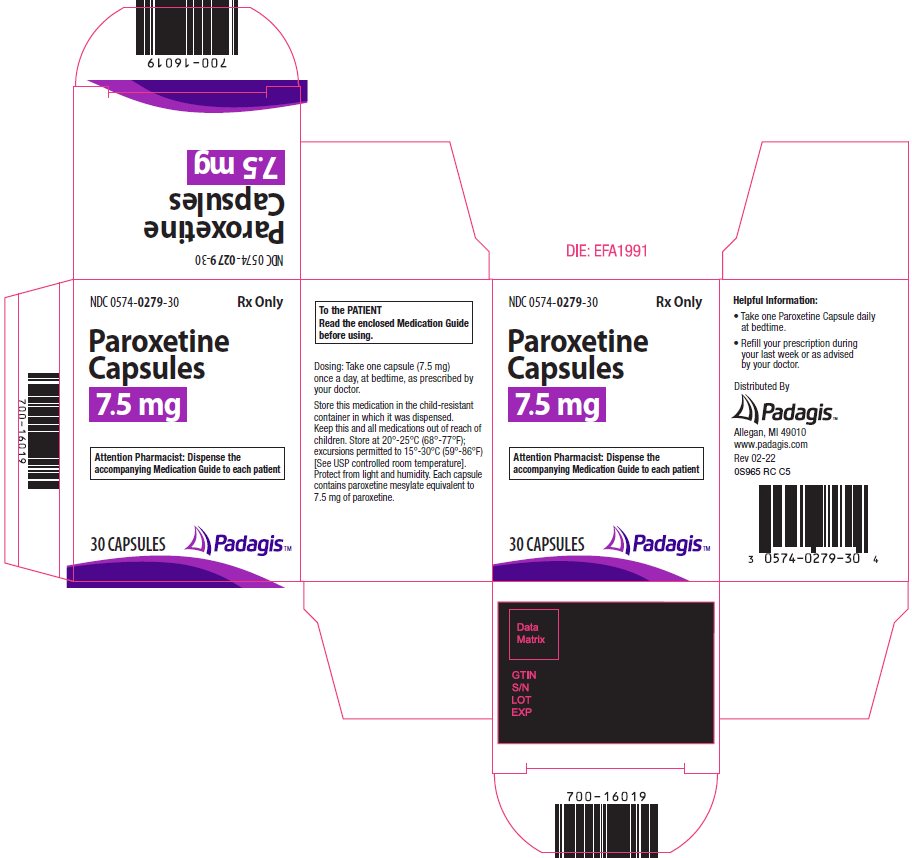
Paroxetine 7.5 mg Capsule, 30-count — NDC 0574-0279-30 (Billing 00574-0279-30)
This is a package of 30 capsules of Paroxetine 7.5 mg Capsule from Padagis US LLC, marketed since Oct 2017 and currently FDA-listed; retail pharmacies pay about $2.62 per capsule (NADAC). It is this product's only package size.
NDC database record
One package, one record: these facts belong to NDC 0574-0279-30 alone.
- Record
- FDA NDC Directory package listing · Human prescription drug
- Code segments
- 0574 labeler · 0279 product · 30 package
- Package marketed since
- Oct 3, 2017
- Sample package
- No — commercial package
- Listing certified through
- Dec 31, 2026
- Billing quantity
- 30 EA per package
- Barcode (UPC-A, from the NDC)
- 3 0574027930 4
- Medicaid fills, this package
- 1,487 prescriptions in the last four reported quarters
- FDA record last changed
- Jul 24, 2026
Identity & classification
Regulatory identifiers FDA, NLM and CMS codes for this package
Drug-database identifiers Medi-Span GPI and First Databank GCN / HICL / AHFS classification
- GSN (GCN sequence number): 071167
- GCN: 34876
- GPI-14 (Medi-Span): 62226060300110
- HICL (First Databank): 025796
- AHFS class code: 28:16.04.20
- RxCUI (RxNorm): 1430122
Where does this data come from?
- FDA openFDA NDC Directory · synced Oct 8, 2026
- FDA label on DailyMed · label index refreshed Oct 6, 2026
- RxNorm (NLM RxNav) · catalog refreshed Oct 1, 2026
- Medi-Span GPI (licensed)
- First Databank (licensed) · refreshed Oct 8, 2026
RxNorm drug class
This medicine belongs to the Serotonin Reuptake Inhibitor class.
Where does this data come from?
- RxClass (NLM) · catalog refreshed Oct 1, 2026
Clinical
Paroxetine is used to treat depression, panic disorder (sudden, unexpected attacks of extreme fear and worry about these attacks), social anxiety disorder (extreme fear of interacting with others or performing in front of others that interferes with normal life), obsessive-compulsive disorder (bothersome thoughts that won't go away and the need to perform certain actions over and over), generalized anxiety disorder (GAD; excessive worrying that is difficult to control), and posttraumatic stress disorder (disturbing psychological symptoms that develop after a frightening experience). Paroxetine...
Read the full MedlinePlus article ↗- It depends on the product. Tablets and oral suspension treat depression, OCD, panic disorder, social anxiety, generalized anxiety, and PTSD in adults. Extended-release tablets trea...
- Take it once a day, usually in the morning, with or without food. The menopause capsule is taken at bedtime. Swallow extended-release tablets whole, and shake the suspension well....
- The most common are nausea, sleepiness, dry mouth, sweating, constipation or diarrhea, dizziness, trouble sleeping, and sexual side effects. Tell me or your doctor if they're bothe...
- Yes. Never combine it with MAOIs, thioridazine, or pimozide. Be careful with other serotonin-affecting drugs like triptans, tramadol, or St. John's Wort, and with aspirin, NSAIDs,...
Patient education
Supplement & herbal interactions
Some supplements/herbs that may interact with Paroxetine — tap one for details:
Paroxetine may be associated with lower levels of 1 nutrient — worth a chat with your pharmacist, not a cause for alarm.
Where does this data come from?
- MedlinePlus (NLM) · refreshed Oct 1, 2026
- FDA label on DailyMed · label index refreshed Oct 6, 2026
Ask a licensed pharmacist directly — free, answered by our team.
Pricing
A drug doesn't have one price. Each row is a different public payment system, and none is what you'd pay at the counter — that depends on your insurance. The ⓘ on each row explains what it measures.
| Price system | Per ea | Per package |
|---|---|---|
| Retail pharmacies payNADAC · weekly | $2.622 | $78.67 / 30 capsules |
| Medicaid paysCMS SDUD · 12 mo | $2.80 | $83.90 / 30 capsules |
| Medicare drug plans payPart D · Q2 2026 | $3.68 | $110.54 / 30 capsules |
Where does this data come from?
- CMS NADAC weekly file · file of Oct 7, 2026
- CMS ASP pricing files · refreshed Sep 20, 2026
- CMS Medicaid State Drug Utilization Data · through Q1 2026
- CMS Part D plan pricing files · refreshed Sep 24, 2026
- VA National Acquisition Center price file
Packaging — all sizes for this product
| Package NDC | Description | Marketing start | Marketing end | Status |
|---|---|---|---|---|
| 00574-0279-30 You're viewing this Main listing | 30 CAPSULE in 1 BOTTLE | 2017-10-03 | — | Active |
Therapeutic equivalents
| Product | Labeler | Pack | NADAC/unit | TE | Status | Price vs. this |
|---|---|---|---|---|---|---|
| Paroxetine 7.5 mgthis 00574-0279-30 | Padagis | 30 capsules | $2.622 | AB | Availability likely | — |
| Paroxetine 7.5 mg 43547-0409-03 | Solco | 30 capsules | $2.622 | AB | Availability likely | — |
| Brisdelle 7.5 mg 83107-0027-30 | Legacy | 30 capsules | — | AB | FDA listed | — |
Where does this data come from?
- FDA openFDA NDC Directory · synced Oct 8, 2026
- FDA Orange Book · refreshed Oct 3, 2026
- CMS NADAC weekly file · file of Oct 7, 2026
Availability & generic status
FDA-approved generic versions are listed, and recent pricing/market data suggests they may be available — see Therapeutic equivalents.
Why the date isn’t exact: Generic timing can change because patents may be challenged, settled, licensed, added, removed, or worked around with a narrower label — and FDA approval does not always mean a pharmacy can get the generic today.
🛈 What do these terms mean?
- Patent
- Legal protection listed in the Orange Book that may delay generic approval or launch. Issued by the U.S. Patent & Trademark Office.
- Substance patent
- Covers the active drug molecule itself — the hardest to design around. A generic generally can’t launch until it expires.
- Formulation (product) patent
- Covers a specific formulation or dosage form. A generic can sometimes work around it with a different formulation.
- Method-of-use patent
- A patent covering one specific approved use of the drug — not necessarily the whole molecule. A generic can sometimes launch with a “skinny label” that carves out the protected use and keeps the others.
- Skinny label
- A generic label that omits a still-patented use when the FDA allows it — letting a generic reach the market for the unprotected uses.
- Exclusivity
- FDA-granted marketing protection, separate from patents — e.g. 5-yr new chemical entity, 7-yr orphan drug, or a +6-month pediatric extension.
- Paragraph IV
- A generic applicant’s formal challenge to a listed patent. It can potentially lead to earlier generic entry, but often involves litigation or a settlement.
- RLD / RS
- Reference Listed Drug — the brand product the FDA uses as the reference for generic applications. Reference Standard — the product the FDA expects generics to compare against in bioequivalence testing.
- TE / AB rating
- FDA therapeutic-equivalence rating. An AB rating generally means the FDA considers a generic therapeutically equivalent to — and substitutable for — the brand.
- LOE (loss of exclusivity)
- The latest patent or exclusivity currently listed — the loss-of-exclusivity / latest-listed-protection date shown on this page. Paragraph-IV challenges and settlements can move the real date earlier; FDA approval and a manufacturer’s decision to market can move it later.
Built from the FDA Orange Book. The bars above are scaled to each protection’s expiry; the red LOE marker is the last one to lapse.
| Patent | Type | Use code | Expires |
|---|---|---|---|
| US 8946251 ↗ | Drug substance | U-904 | Aug 4, 2026 |
| US 9393237 ↗ | Method of use | U-904 | Aug 4, 2026 |
| US 8658663 ↗ | Drug substance | U-904 | Apr 6, 2029 |
Is there a generic version of PAROXETINE MESYLATE 7.5 MG CAP?
The FDA approved a generic — why can’t I get it at my pharmacy yet?
Why do different websites show different generic release dates?
What does “FDA listed” mean?
What does a patent or protection date mean here?
What does “current Orange Book estimate” mean?
Can a generic come out before the last patent expires?
Can a generic come out after the listed dates?
What is the difference between patents and exclusivity?
Why are there multiple patent dates?
Where does this data come from?
- FDA Orange Book · refreshed Oct 3, 2026
What it looks like
Where does this data come from?
- FDA label on DailyMed · label index refreshed Oct 6, 2026
Inactive Ingredients / Excipients
Inactive ingredients, also called excipients, are components of the drug product other than the active ingredient. They may include fillers, dyes, coatings, preservatives, flavors, or other formulation ingredients.
🧪 Avoiding an ingredient? See Paroxetine inactive ingredients by manufacturer: every current product's list side by side, so you can ask your pharmacy for the version that does not list it.
💡 Tap an ingredient (hover on desktop) to see what it is and why it’s used.
-
UNII L11K75P92J
A mineral salt made from calcium and phosphate. It acts as a filler and binder in tablets to add bulk and help hold the medicine together in solid form.
-
UNII PN2ZH5LOQY
A synthetic red dye approved by the FDA for use in foods, medicines, and cosmetics. It serves as a colorant to make tablets, capsules, and liquids visually distinctive for product identification.
-
UNII WZB9127XOA
A synthetic red dye used to color medications and make them easier to identify. It serves as a colorant in tablets, capsules, and liquid formulations.
-
UNII H77VEI93A8
A synthetic yellow dye used to color medications. It helps identify the drug and make it visually distinctive, with no effect on how the medicine works.
-
UNII XM0M87F357
A dark iron oxide compound that gives medicines their black or dark color. It's used as a colorant in tablets and capsules to help identify the product and make it visually distinctive.
-
UNII 2G86QN327L
Gelatin is a protein derived from animal collagen, commonly used in medicines as a gelling agent and capsule material. It helps create soft or hard capsule shells that hold and release medication, and can also thicken liquid formulations.
-
UNII 70097M6I30
Magnesium stearate is a salt made from magnesium and stearic acid, a fatty substance. It's used in tablets and capsules as a lubricant and glidant to help ingredients flow smoothly during manufacturing and prevent sticking.
-
UNII 46N107B71O
Shellac is a natural resin secreted by the lac beetle. It's used as a coating on tablets and capsules to control how quickly the medicine dissolves and to improve appearance and stability.
-
UNII 15FIX9V2JP
Titanium dioxide is a bright white mineral powder commonly used as a colorant and opacifying agent. It makes pills and tablets white or lighter in color and helps make coatings non-transparent.
9 inactive ingredients listed in the exact product block matched to this NDC.
Where does this data come from?
ingredient classCode="IACT" elements from the exact product block matched by this NDC. Label-section narrative from DailyMed / the openFDA label index is shown separately when available.- FDA label on DailyMed · label index refreshed Oct 6, 2026
- FDA openFDA NDC Directory · synced Oct 8, 2026
Inactive ingredient FAQ
Are inactive ingredients the same for every manufacturer?
Why might an inactive ingredient be missing?
Can inactive ingredients matter?
Manufacturer & labeler
More NDCs from Padagis US LLC labeler code 00574
- Flavoxate Hydrochloride 100 mg Tablet, Film Coated NDC 0574-0115-01
- Trospium Chloride ER 60 mg Capsule, Extended Release NDC 0574-0118-30
- Trospium Chloride 20 mg Tablet, Film Coated NDC 0574-0145-60
- Midazolam Hydrochloride 2 mg/mL Syrup NDC 0574-0150-04
- benazepril hydrochloride and hydrochlorothiazide 20 mg; 25 mg Tablet NDC 0574-0228-01
- benazepril hydrochloride and hydrochlorothiazide 20 mg; 12.5 mg Tablet NDC 0574-0229-01
- amiloride hydrochloride 5 mg Tablet NDC 0574-0292-01
- hydromorphone hydrochloride 8 mg Tablet, Extended Release NDC 0574-0293-01
- hydromorphone hydrochloride 12 mg Tablet, Extended Release NDC 0574-0294-01
- hydromorphone hydrochloride 16 mg Tablet, Extended Release NDC 0574-0295-01
- hydromorphone hydrochloride 32 mg Tablet, Extended Release NDC 0574-0297-01
- ACTIDOSE activated charcoal 208 mg/mL Suspension NDC 0574-0520-04
Where does this data come from?
- FDA openFDA NDC Directory · synced Oct 8, 2026
- Drugs@FDA
Full prescribing information FDA SPL
🚨 Boxed Warning ▾
WARNING: SUICIDAL THOUGHTS AND BEHAVIORS Antidepressants, including selective serotonin reuptake inhibitors (SSRIs), have been shown to increase the risk of suicidal thoughts and behavior in pediatric and young adult patients when used to treat major depressive disorder and other psychiatric disorders. Because paroxetine capsules are an SSRI, monitor patients closely for worsening and for emergence of suicidal thoughts and behaviors. Advise families and caregivers of the need for close observation and communication with the prescriber [see Warnings and Precautions (5.1)] .
WARNING: SUICIDAL THOUGHTS AND BEHAVIORS See full prescribing information for complete boxed warning. • Potential for increased risk of suicidal thinking and behavior ( 5.1 ) • Monitor for worsening and emergence of suicidal thoughts and behaviors ( 5.1 ) Monitor for worsening and emergence of suicidal thoughts and behaviors ( 5.1 )
🎯 Indications and Usage ▾
1 INDICATIONS AND USAGE Paroxetine Capsules are indicated for the treatment of moderate to severe vasomotor symptoms (VMS) associated with menopause. Limitation of Use: Paroxetine capsules are not indicated for the treatment of any psychiatric condition. Paroxetine capsules contain a lower dose of paroxetine than that used to treat depression, obsessive compulsive disorder, panic disorder, generalized anxiety disorder, social anxiety disorder, and post-traumatic stress disorder.
The safety and efficacy of this lower dose of paroxetine in paroxetine capsules have not been established for any psychiatric condition. Patients who require paroxetine for treatment of a psychiatric condition should discontinue paroxetine capsules and initiate a paroxetine-containing medication that is indicated for such use. • Paroxetine capsules are a selective serotonin reuptake inhibitor (SSRI) indicated for the treatment of moderate to severe vasomotor symptoms associated with menopause (VMS) ( 1 ) Limitation of Use: Paroxetine capsules are not indicated for the treatment of any psychiatric condition ( 1 )
⏱️ Dosage and Administration ▾
2 DOSAGE AND ADMINISTRATION • The recommended dosage of paroxetine capsules is 7.5 mg once daily, at bedtime (2.1)
2.1Dosage Information The recommended dosage of paroxetine capsules for the treatment of moderate to severe VMS is 7.5 mg once daily, at bedtime, with or without food.
2.2Use of Paroxetine Capsules Before or After a Monoamine Oxidase Inhibitor (MAOI) Wait at least 14 days after discontinuation of an MAOI before initiating therapy with paroxetine capsules. Conversely, allow at least 14 days after stopping paroxetine capsules before starting an MAOI [see Contraindications (4.1), Warnings and Precautions (5.2) and Drug Interactions (7.3)] .
💊 Dosage Forms and Strengths ▾
3 DOSAGE FORMS AND STRENGTHS Paroxetine capsules are available as 7.5 mg pink capsules printed with black edible ink with “BRISDELLE” and “7.5 mg” on the capsule. Each capsule contains 9.69 mg paroxetine mesylate equivalent to 7.5 mg paroxetine base. • Capsules: 7.5 mg (3)
⛔ Contraindications ▾
4 CONTRAINDICATIONS • Concurrent use with monoamine oxidase inhibitors (MAOI) or use within 14 days of MAOI use ( 2.2 , 4.1 , 5.2 , 7.3 ) • Use with thioridazine ( 4.2 , 7.1 ) • Use with pimozide ( 4.3 , 7.1 ) • Hypersensitivity to any ingredient in paroxetine capsules ( 4.4 ) • Pregnancy ( 4.5 , 8.1 )
4.1Monoamine Oxidase Inhibitors Concomitant use of an MAOI with paroxetine capsules or within 14 days of stopping treatment with paroxetine capsules is contraindicated because of an increased risk of serotonin syndrome. The use of paroxetine capsules within 14 days of stopping an MAOI is also contraindicated [see Dosage and Administration (2.2), Warnings and Precautions (5.2) and Drug Interactions (7.3)] . Starting paroxetine capsules in a patient who is being treated with linezolid or intravenous methylene blue, both of which inhibit monoamine oxidase, is also contraindicated because of an increased risk of serotonin syndrome [see Dosage and Administration (2.2), Warnings and Precautions (5.2) and Drug Interactions (7.3)] .
4.2Thioridazine Concomitant use of paroxetine capsules with thioridazine is contraindicated, because thioridazine prolongs the QT interval, and paroxetine can increase thioridazine levels [see Drug Interactions (7.1)] .
4.3Pimozide Concomitant use of paroxetine capsules with pimozide is contraindicated because pimozide prolongs the QT interval, and paroxetine increases pimozide levels [see Drug Interactions (7.1)] .
4.4Hypersensitivity to any Ingredient in Paroxetine Capsules Paroxetine capsules are contraindicated in patients with a history of hypersensitivity to paroxetine or any of the other ingredients in paroxetine capsules.
4.5Pregnancy Menopausal VMS does not occur during pregnancy and paroxetine capsules may cause fetal harm [see Use in Specific Populations (8.1)].
⚠️ Warnings and Cautions ▾
5 WARNINGS AND PRECAUTIONS • Suicidality: Monitor for suicidality or unusual changes in behavior ( 5.1 ) • Serotonin Syndrome: Paroxetine capsules can cause serotonin syndrome with increased risk when co-administered with other serotonergic agents, but also when taken alone. If it occurs, discontinue paroxetine capsules and serotonergic agents and initiate supportive measures ( 5.2 , 7.3 ) • Tamoxifen: Efficacy of tamoxifen may be reduced when administered concomitantly with paroxetine capsules ( 5.3 , 7.1 ) • Abnormal Bleeding: Caution patients about the risk of bleeding associated with the concomitant use of paroxetine capsules and non-steroidal anti-inflammatory drugs (NSAIDs), aspirin, or other drugs that affect coagulation ( 5.4 , 7.1 ) • Angle-Closure Glaucoma: Angle closure glaucoma has occurred in patients who have untreated anatomically narrow angles and who are treated with antidepressants ( 5.5 ) • Hyponatremia: Can occur in association with syndrome of inappropriate antidiuretic hormone secretion (SIADH) ( 5.6 ) • Bone Fracture: Epidemiological studies have reported an association between SSRI treatment and fractures ( 5.7 ) • Activation of Mania/Hypomania: Screen for bipolar disorder and monitor for mania/hypomania ( 5.8 ) • Seizures: Use cautiously in patients with a history of seizures or with conditions that potentially lower the seizure threshold ( 5.9 ) • Akathisia: Can occur, most likely in the first few weeks of treatment ( 5.10 ) • Cognitive and Motor Impairment: May cause impairment; patients should not operate machinery or motor vehicles until certain that paroxetine capsules do not affect them adversely ( 5.11 ) • Sexual Dysfunction: paroxetine capsule use may cause symptoms of sexual dysfunction.
( 5.12 )
5.1Suicidal Thoughts and Behaviors Paroxetine capsules are not approved for any psychiatric condition. Antidepressants, including those that contain an SSRI, increase the risk of suicidal thinking and behavior (suicidality) in pediatric and young adult patients when used to treat major depressive disorder (MDD) and other psychiatric disorders. There is limited information regarding suicidality in women who use paroxetine capsules for treatment of VMS.
The paroxetine capsule trials excluded women with a presence or history of previous psychiatric disorders. Consider discontinuing paroxetine capsules in patients with worsening depression or those who experience emergent suicidality or symptoms that might be precursors to worsening depression or suicidality, especially if these symptoms are severe, abrupt in onset, or were not part of the patient’s presenting symptoms. All patients being treated with paroxetine capsules should be observed closely for clinical worsening, suicidality, and unusual changes in behavior, especially during the initial few months of treatment.
Anxiety, agitation, panic attacks, insomnia, irritability, hostility, aggressiveness, impulsivity, akathisia (psychomotor restlessness), hypomania, and mania have been reported in patients being treated with antidepressants for MDD as well as for other psychiatric and nonpsychiatric indications. Although a causal link between the emergence of such symptoms and either the worsening of depression and/or the emergence of suicidal impulses has not been established, there is concern that such symptoms may represent precursors to emerging suicidality.
Families and caregivers of patients being treated with paroxetine capsules should be alerted about the need to monitor patients for the emergence of agitation, irritability, unusual changes in behavior, and the other symptoms described above, as well as the emergence of suicidality, and to report such symptoms immediately to healthcare providers.
5.2Serotonin Syndrome Paroxetine capsules can precipitate serotonin syndrome, a potentially life-threatening condition. The risk is increased with concomitant use of other serotonergic agents (including triptans, tricyclic antidepressants, fentanyl, tram… [Excerpted — this section continues on DailyMed.]
🤒 Adverse Reactions ▾
6 ADVERSE REACTIONS The following serious adverse reactions are discussed elsewhere in labeling: • Suicidality [see Warnings and Precautions (5.1)] • Serotonin syndrome [see Warnings and Precautions (5.2)] • Abnormal bleeding [see Warnings and Precautions (5.4)] • Angle-Closure Glaucoma [see Warnings and Precautions (5.5)] • Hyponatremia [see Warnings and Precautions (5.6)] • Bone Fracture [see Warnings and Precautions (5.7)] • Mania/Hypomania [see Warnings and Precautions (5.8)] • Seizure [see Warnings and Precautions (5.9)] • Akathisia [see Warnings and Precautions (5.10)] • The most common adverse reactions (≥ 2%) reported in clinical trials were: headache, fatigue, and nausea/vomiting ( 6.1 ) To report SUSPECTED ADVERSE REACTIONS, contact Padagis at 1-866-634-9120 or FDA at 1-800-FDA-1088 or www.fda.gov/medwatch.
6.1Clinical Trials Experience Because clinical trials are conducted under widely varying conditions, adverse reaction rates observed in the clinical trials of a drug cannot directly be compared to rates in the clinical trials of another drug and may not reflect the rates observed in practice. The data described below reflect exposure to paroxetine capsules in the one 8-week Phase 2 randomized, placebo-controlled trial and the two Phase 3 randomized, placebo-controlled, 12-week and 24-week trials for the treatment of moderate to severe VMS [see Clinical Studies (14)] .
In these trials, a total of 635 women were exposed to paroxetine capsules 7.5 mg administered orally once daily and 641 women received placebo. The majority of paroxetine capsule-treated patients were Caucasian (68%) and African American (30%), with a mean age of 55 years (range 40 to 73 years). Women with a history of suicidal ideation or suicidal behavior were excluded from these studies.
Adverse Reactions Leading to Study Discontinuation: A total of 4.7% of women taking paroxetine capsules discontinued from the clinical trials due to an adverse reaction, compared to 3.7% of women on placebo; the most frequent adverse reactions leading to discontinuation among paroxetine-treated women were: abdominal pain (0.3%), attention disturbances (0.3%), headache (0.3%), and suicidal ideation (0.3%). Common Adverse Reactions: Overall, based on investigators’ determinations about what events were likely to be drug-related, about 20% of women treated with paroxetine capsules reported at least 1 adverse reaction in the three controlled studies.
The most common adverse reactions (≥ 2% and more common among paroxetine capsule-treated women) reported in these studies were headache, fatigue/malaise/lethargy, and nausea/vomiting. Of these commonly reported adverse reactions, nausea occurred primarily within the first 4 weeks of treatment and fatigue occurred primarily within the first week of treatment, and decreased in frequency with continued therapy. The adverse reactions that occurred in at least 2% of patients in the paroxetine capsule group and at a higher incidence than placebo are shown in Table 1 for the pooled Phase 2 and Phase 3 trials.
Table 1 Frequency of Adverse Reactions in the Phase 2 and Phase 3 Trials (≥ 2% and at a higher incidence than placebo) Frequency n (%) Paroxetine Capsules (n = 635) Placebo (n = 641) Nervous system disorders Headache 40 (6.3) 31 (4.8) General disorders and administration site conditions Fatigue, malaise, lethargy 31 (4.9) 18 (2.8) Gastrointestinal disorders Nausea, vomiting 27 (4.3) 15 (2.3) Certain symptoms were seen more frequently in women at the time of discontinuation of paroxetine capsules compared to women discontinuing placebo, and have also been reported upon discontinuation of other formulations of paroxetine, particularly when abrupt.
These include increased dreaming/nightmares, muscle cramps/spasms/twitching, headache, nervousness/anxiety, fatigue/tiredness, restless feeling in legs, and trouble sleeping/insomnia. While these events are generally self-limiting, there have been reports of serious discontinuation… [Excerpted — this section continues on DailyMed.]
🔄 Drug Interactions ▾
7 DRUG INTERACTIONS No drug-drug interaction studies have been conducted with paroxetine capsules. Paroxetine is a strong CYP2D6 inhibitor. Co-administration of paroxetine capsules can alter concentrations of other drugs that are metabolized by CYP2D6. Consider potential drug interactions prior to and during therapy ( 5.3 , 7.1 , 7.3 ). See Full Prescribing Information for a list of clinically significant drug interactions ( 7.1 , 7.2 , 7.3 )
7.1Potential for Paroxetine Capsules to Affect Other Drugs Paroxetine is a strong CYP2D6 inhibitor. Clinical drug interaction studies have been performed with substrates of CYP2D6 and show that paroxetine can inhibit the metabolism of drugs metabolized by CYP2D6 [see Clinical Pharmacology (12.3)] . Table 2 contains examples of drugs with a metabolism that may be affected by co-administration with paroxetine capsules.
Table 2 Effects of Paroxetine on Other Drugs Concomitant Drug Name Effect of Paroxetine on Other Drugs Clinical Recommendations Thioridazine Increased plasma concentrations of thioridazine Potential QTc prolongation Concomitant use of thioridazine and paroxetine capsules is contraindicated. Pimozide Increased plasma concentrations of pimozide. Potential QTc prolongation Concomitant use of pimozide and paroxetine capsules is contraindicated.
Tamoxifen Reduced plasma concentrations of active tamoxifen metabolite Consider avoiding concomitant use of tamoxifen and paroxetine capsules. Tricyclic Antidepressants (TCA) (e.g., Desipramine) Increased plasma concentrations and elimination half-life Plasma TCA concentrations may need to be monitored and the dose of TCA may need to be reduced if a TCA is co-administered with paroxetine capsules. Monitor tolerability.
Risperidone Increased plasma concentrations of risperidone A lower dosage of risperidone may be necessary (see the Full Prescribing Information for risperidone). Monitor tolerability. Atomoxetine Increased exposure of atomoxetine A lower dosage of atomoxetine may be necessary (see Full Prescribing Information for atomoxetine).
Monitor tolerability. Drugs Highly Bound to Plasma Protein (e.g., Warfarin) Increased free plasma concentrations The dosage of warfarin may need to be reduced. Monitor tolerability and the International Normalized Ratio.
Digoxin Decreased plasma concentrations of digoxin Dosage of digoxin may need to be increased. Monitor digoxin concentrations and clinical effect. Theophylline Increased plasma concentrations of theophylline Dosage of theophylline may need to be decreased.
Monitor theophylline concentrations and tolerability. Use caution if co-administering paroxetine capsules with other drugs that are metabolized by CYP2D6, including nortriptyline, amitriptyline, imipramine, desipramine, fluoxetine, phenothiazines, risperidone, and Type 1C antiarrhythmics (e.g., propafenone, flecainide, and encainide).
7.2Potential for Other Drugs to Affect Paroxetine Capsules The metabolism and pharmacokinetics of paroxetine may be affected by the induction and inhibition of drug metabolizing enzymes such as CYP2D6. Table 3 contains a list of drugs that may affect the pharmacokinetics of paroxetine capsules when administered concomitantly [see Clinical Pharmacology (12.3)] . Table 3 Effects of Other Drugs on Paroxetine Concomitant Drug Name Effect of Concomitant Drug on Paroxetine Clinical Recommendations Phenobarbital Decreased paroxetine exposure No dose adjustment for paroxetine capsules.
Monitor clinical effect of paroxetine capsules. Phenytoin Decreased paroxetine exposure Fosamprenavir/Ritonavir Decreased plasma concentration of paroxetine Cimetidine Increased plasma concentration of paroxetine Use caution if co-administering paroxetine capsules with other drugs that inhibit CYP2D6 (e.g., quinidine).
7.3Other Potentially Significant Drug Interactions Monoamine Oxidase Inhibitors (MAOIs) Serious adverse reactions such as serotonin syndrome have been reported in patients receiving a concomitant SSRI and MAOI,… [Excerpted — this section continues on DailyMed.]
👥 Use in Specific Populations ▾
8 USE IN SPECIFIC POPULATIONS
8.1Pregnancy Pregnancy Category X Risk Summary Paroxetine capsules are contraindicated in pregnant women because menopausal VMS does not occur during pregnancy and paroxetine can cause fetal harm. Epidemiological studies have shown that infants exposed to paroxetine in the first trimester of pregnancy may have an increased risk of cardiovascular malformations. Cardiac malformations are a common congenital abnormality.
These data would suggest that the risk of a cardiac abnormality following paroxetine exposure in the first trimester may increase the risk from 1% to 2%. Exposure to SSRIs in late pregnancy may lead to an increased risk for neonatal complications requiring prolonged hospitalization, respiratory support, and tube feeding, and/or persistent pulmonary hypertension of the newborn (PPHN). No teratogenicity was seen in reproductive development studies conducted in rats and rabbits.
However, an increase in rat pup deaths was seen during the first 4 days of lactation when dosing occurred during the last trimester of gestation and continued throughout lactation, at a dose approximately equal to the maximum recommended human dose (MRHD) for VMS (7.5 mg) on an mg/m 2 basis. If this drug is used during pregnancy, or if the patient becomes pregnant while taking this drug, the patient should be apprised of the potential hazard to a fetus. Human Data First-Trimester Pregnancy Exposure • Epidemiologic studies which include data from the Swedish National Registry, a retrospective cohort study using United Healthcare data and a meta-analysis of studies (1992-2008) have shown a less than 2-fold increased risk of cardiac malformations, primarily ventricular septal and atrial septal defects, with first-trimester paroxetine exposure.
Two case-control studies using separate databases with > 9000 birth defect cases and > 4000 controls showed 7 and 6 paroxetine-exposed infants respectively, with right ventricular outflow tract obstructions, a 2- to 3-fold increased risk. An increase in overall congenital malformations with first-trimester paroxetine use was not observed in all studies. Third-Trimester Pregnancy Exposure • Neonates exposed to SSRIs late in the third trimester have developed complications requiring prolonged hospitalization, respiratory support, and tube feeding.
Such complications can arise immediately upon delivery. Reported clinical findings have included respiratory distress, cyanosis, apnea, seizures, temperature instability, feeding difficulty, vomiting, hypoglycemia, hypotonia, hypertonia, hyperreflexia, tremor, jitteriness, irritability, and constant crying. These features are consistent with either a direct toxic effect of SSRIs or, possibly, a drug discontinuation syndrome.
It should be noted that in some cases, the clinical picture is consistent with serotonin syndrome [see Warnings and Precautions (5.2)] . • Infants exposed to SSRIs in late pregnancy may have an increased risk for persistent pulmonary hypertension of the newborn (PPHN). PPHN occurs in 1 – 2 per 1000 live births in the general population and is associated with substantial neonatal morbidity and mortality. In a retrospective case-control study of 377 women whose infants were born with PPHN and 836 women whose infants were born healthy, the risk for developing PPHN was approximately 6-fold higher for infants exposed to SSRIs after the 20 th week of gestation compared to infants who had not been exposed to antidepressants during pregnancy.
There is currently no corroborative evidence regarding the risk for PPHN following exposure to SSRIs in pregnancy; this is the first study that has investigated the potential risk. The study did not include enough cases with exposure to individual SSRIs to determine if all SSRIs posed similar levels of PPHN risk. Animal Data Reproduction studies were performed at doses up to 50 mg/kg/day in rats and 6 mg/kg/day in rabbits administered during organogenesis.
These doses are approximat… [Excerpted — this section continues on DailyMed.]
🤰 Pregnancy ▾
8.1Pregnancy Pregnancy Category X Risk Summary Paroxetine capsules are contraindicated in pregnant women because menopausal VMS does not occur during pregnancy and paroxetine can cause fetal harm. Epidemiological studies have shown that infants exposed to paroxetine in the first trimester of pregnancy may have an increased risk of cardiovascular malformations. Cardiac malformations are a common congenital abnormality.
These data would suggest that the risk of a cardiac abnormality following paroxetine exposure in the first trimester may increase the risk from 1% to 2%. Exposure to SSRIs in late pregnancy may lead to an increased risk for neonatal complications requiring prolonged hospitalization, respiratory support, and tube feeding, and/or persistent pulmonary hypertension of the newborn (PPHN). No teratogenicity was seen in reproductive development studies conducted in rats and rabbits.
However, an increase in rat pup deaths was seen during the first 4 days of lactation when dosing occurred during the last trimester of gestation and continued throughout lactation, at a dose approximately equal to the maximum recommended human dose (MRHD) for VMS (7.5 mg) on an mg/m 2 basis. If this drug is used during pregnancy, or if the patient becomes pregnant while taking this drug, the patient should be apprised of the potential hazard to a fetus. Human Data First-Trimester Pregnancy Exposure • Epidemiologic studies which include data from the Swedish National Registry, a retrospective cohort study using United Healthcare data and a meta-analysis of studies (1992-2008) have shown a less than 2-fold increased risk of cardiac malformations, primarily ventricular septal and atrial septal defects, with first-trimester paroxetine exposure.
Two case-control studies using separate databases with > 9000 birth defect cases and > 4000 controls showed 7 and 6 paroxetine-exposed infants respectively, with right ventricular outflow tract obstructions, a 2- to 3-fold increased risk. An increase in overall congenital malformations with first-trimester paroxetine use was not observed in all studies. Third-Trimester Pregnancy Exposure • Neonates exposed to SSRIs late in the third trimester have developed complications requiring prolonged hospitalization, respiratory support, and tube feeding.
Such complications can arise immediately upon delivery. Reported clinical findings have included respiratory distress, cyanosis, apnea, seizures, temperature instability, feeding difficulty, vomiting, hypoglycemia, hypotonia, hypertonia, hyperreflexia, tremor, jitteriness, irritability, and constant crying. These features are consistent with either a direct toxic effect of SSRIs or, possibly, a drug discontinuation syndrome.
It should be noted that in some cases, the clinical picture is consistent with serotonin syndrome [see Warnings and Precautions (5.2)] . • Infants exposed to SSRIs in late pregnancy may have an increased risk for persistent pulmonary hypertension of the newborn (PPHN). PPHN occurs in 1 – 2 per 1000 live births in the general population and is associated with substantial neonatal morbidity and mortality. In a retrospective case-control study of 377 women whose infants were born with PPHN and 836 women whose infants were born healthy, the risk for developing PPHN was approximately 6-fold higher for infants exposed to SSRIs after the 20 th week of gestation compared to infants who had not been exposed to antidepressants during pregnancy.
There is currently no corroborative evidence regarding the risk for PPHN following exposure to SSRIs in pregnancy; this is the first study that has investigated the potential risk. The study did not include enough cases with exposure to individual SSRIs to determine if all SSRIs posed similar levels of PPHN risk. Animal Data Reproduction studies were performed at doses up to 50 mg/kg/day in rats and 6 mg/kg/day in rabbits administered during organogenesis.
These doses are approximately 65 (rat) and 16 (rabbit) t… [Excerpted — this section continues on DailyMed.]
🧒 Pediatric Use ▾
8.4Pediatric Use Safety and effectiveness in pediatric patients have not been established; paroxetine capsules are not indicated in the pediatric population.
🧓 Geriatric Use ▾
8.5Geriatric Use Clinical studies of paroxetine capsules did not include sufficient numbers of subjects aged 65 and over to determine whether they respond differently from younger subjects. Elderly patients may have elevated paroxetine plasma concentrations compared to younger patients. However, no paroxetine capsules dose adjustment is considered necessary in elderly patients [see Clinical Pharmacology (12.3)] .
SSRIs have been associated with cases of clinically significant hyponatremia in elderly patients, who may be at greater risk for this adverse event [see Warnings and Precautions (5.6)] .
🆘 Overdosage ▾
10 OVERDOSAGE The following have been reported with paroxetine tablet overdosage: • Seizures, which may be delayed, and altered mental status including coma. • Cardiovascular toxicity, which may be delayed, including QRS and QTc interval prolongation. Hypertension most commonly seen, but rarely can see hypotension alone or with co-ingestants including alcohol. • Serotonin syndrome (patients with a multiple drug overdosage with other pro-serotonergic drugs may have a higher risk). Gastrointestinal decontamination with activated charcoal should be considered in patients who present early after a paroxetine overdose.
Consider contacting a poison center (1-800-221-2222) or a medical toxicologist for overdose management recommendations.
🧬 Clinical Pharmacology ▾
12 CLINICAL PHARMACOLOGY
12.1Mechanism of Action Nonclinical studies have shown that paroxetine is an SSRI. Paroxetine capsules are not an estrogen, and its mechanism of action for the treatment of VMS is unknown.
12.2Pharmacodynamics Studies at clinically relevant doses in humans have demonstrated that paroxetine blocks the uptake of serotonin into human platelets. In vitro studies in animals also suggest that paroxetine is a selective inhibitor of neuronal serotonin reuptake and has weak effects on norepinephrine and dopamine neuronal reuptake. In vitro radioligand binding studies indicate that paroxetine has little affinity for muscarinic alpha 1 -, alpha 2 -, beta-adrenergic-, dopamine (D 2 )-, 5-HT 1 -, 5-HT 2 -, and histamine (H 1 )-receptors.
12.3Pharmacokinetics Absorption, Distribution, Metabolism and Excretion Absorption Paroxetine is completely absorbed after oral dosing of the mesylate salt. In a study in which healthy postmenopausal women (n=24) received paroxetine 7.5 mg capsules as a daily dose for 14 days, steady-state paroxetine concentrations were achieved by approximately 12 days of dosing for most subjects, although it may take substantially longer in an occasional patient. Peak concentrations were reached at a median of 6 hours (3 to 8 hours range).
Steady-state mean values of C max , C min , and AUC 0-last were 13.10 ng/mL (CV 91%), 7.17 ng/mL (CV 99%), and 237 hr*ng/mL (CV 94%), respectively. Steady-state AUC 0-24 values were about 3 times those of AUC 0-inf following a single dose, indicating non-linear pharmacokinetics. Steady-state C max values were approximately 5 times greater than those attained after a single dose and steady-state exposure based on AUC 0-24 was about 10 times greater than AUC 0-24 after a single dose.
The nonlinear kinetics and excess accumulation are due to the fact that CYP2D6, an enzyme that is in part responsible for paroxetine metabolism, is readily saturable. The effects of food on the bioavailability of paroxetine were studied with paroxetine tablets at higher strength. AUC was only slightly increased (6%) when drug was administered with food but the C max was 29% greater, while the time to reach peak plasma concentration decreased from 6.4 hours post-dosing to 4.9 hours.
Paroxetine capsules can be taken with or without food. Distribution Paroxetine distributes throughout the body, including the central nervous system, with only 1% remaining in the plasma. Approximately 95% and 93% of paroxetine is bound to plasma protein at 100 ng/mL and 400 ng/mL, respectively.
Under clinical conditions, paroxetine concentrations would normally be less than 100 ng/mL. Paroxetine does not alter the in vitro protein binding of phenytoin or warfarin. Metabolism Paroxetine is extensively metabolized after oral administration.
The principal metabolites are polar and conjugated products of oxidation and methylation, which are readily cleared. Conjugates with glucuronic acid and sulfate predominate, and major metabolites have been isolated and identified. Data indicate that the metabolites have no more than 1/50 the potency of the parent compound at inhibiting serotonin uptake.
The metabolism of paroxetine is accomplished in part by cytochrome CYP2D6. Saturation of this enzyme at clinical doses appears to account for the nonlinearity of paroxetine kinetics with increasing dose and increasing duration of treatment. The role of this enzyme in paroxetine metabolism also suggests potential drug-drug interactions [see Drug Interactions (7)] .
At steady state, when the CYP2D6 pathway is essentially saturated, paroxetine clearance is governed by alternative P450 isozymes, which, unlike CYP2D6, show no evidence of saturation. Excretion Approximately 64% of a 30 mg oral solution of paroxetine was excreted in the urine with 2% as the parent compound and 62% as metabolites over a 10-day post-dosing period. About 36% of the dose was excreted in the feces (probably via the bile), mostly as metabolites and… [Excerpted — this section continues on DailyMed.]
🧬 Mechanism of Action ▾
12.1Mechanism of Action Nonclinical studies have shown that paroxetine is an SSRI. Paroxetine capsules are not an estrogen, and its mechanism of action for the treatment of VMS is unknown.
📦 How Supplied / Storage and Handling ▾
16 HOW SUPPLIED/STORAGE AND HANDLING Paroxetine capsules are available as 7.5 mg pink capsules printed with black edible ink with “BRISDELLE” and “7.5 mg” on each capsule. NDC 0574-0279-30, 30 count bottle Store at 20°-25°C (68°-77°F); excursions permitted to 15°-30°C (59°-86°F). Protect from light and humidity.
📋 Description ▾
11 DESCRIPTION Paroxetine is an orally administered selective serotonin reuptake inhibitor (SSRI) for the treatment of moderate to severe VMS associated with menopause. It is identified chemically as (-)- trans -4R- (4’-fluorophenyl) - 3S - [(3’,4’-methylenedioxyphenoxy) methyl] piperidine mesylate and has the empirical formula of C 19 H 20 FNO 3 •CH 3 SO 3 H. The molecular weight is 425.5 (329.4 as free base).
The structural formula is: The mesylate salt of paroxetine is an odorless, off-white powder, having a melting point range of 147° to 150°C and a solubility of more than 1 g/mL in water. Each pink capsule contains 9.69 mg paroxetine mesylate equivalent to 7.5 mg paroxetine base. Inactive ingredients consist of: dibasic calcium phosphate, sodium starch glycolate, magnesium stearate, gelatin, titanium dioxide, FD&C Yellow #6, FD&C Red #3, FD&C Red #40, shellac, and black iron oxide. chemical-structure
💬 Information for Patients ▾
17 PATIENT COUNSELING INFORMATION See FDA-approved patient labeling (Medication Guide). Instruct patients to read the Medication Guide before starting therapy with paroxetine capsules and to reread it each time the prescription is renewed. • Advise patients, their families, and their caregivers to look for the emergence of suicidality, especially early during treatment [see Boxed Warning and Warnings and Precautions (5.1)] . • Instruct patients not to take paroxetine capsules with an MAOI or within 14 days of stopping an MAOI and allow 14 days after stopping paroxetine capsules before starting an MAOI [see Dosage and Administration (2.2) and Contraindications (4.1)] . • Advise patients not to take paroxetine capsules with thioridazine or pimozide [see Contraindications (4.2 and 4.3)] . • Caution patients about the risk of serotonin syndrome, particularly with the concomitant use of paroxetine capsules with triptans, tricyclic antidepressants, opioids, linezolid, tramadol, amphetamines, St.
John’s Wort, lithium, tryptophan supplements, other serotonergic agents, or antipsychotic drugs [see Warnings and Precautions (5.2) and Drug Interactions (7.3)] . Instruct patients to contact their health care provider, or report to the emergency room, should they experience signs or symptoms of serotonin syndrome. • Caution patients that efficacy of tamoxifen may be reduced when administered concomitantly and counsel them about the likely benefit of paroxetine for treating VMS vs. the risk of possible decreased tamoxifen effectiveness [see Warnings and Precautions (5.3)] . • Caution patients about the concomitant use of paroxetine capsules and NSAIDs, aspirin, warfarin, and other anticoagulants because combined use of drugs that interfere with serotonin reuptake has been associated with an increased risk of bleeding [see Warnings and Precautions (5.4)] . • Advise patients that taking paroxetine capsules can cause mild pupillary dilation, which in susceptible individuals, can lead to an episode of angle-closure glaucoma.
Pre-existing glaucoma is almost always open-angle glaucoma because angle-closure glaucoma, when diagnosed, can be treated definitively with iridectomy. Open-angle glaucoma is not a risk factor for angle-closure glaucoma. Patients may wish to be examined to determine whether they are susceptible to angle closure, and have a prophylactic procedure (e.g., iridectomy), if they are susceptible [See Warnings and Precautions (5.5)] . • Caution patients about the risk of hyponatremia, particularly elderly patients and those who are taking diuretics or are volume-depleted [see Warnings and Precautions (5.6)] . • Inform patients that there is the possibility for an increased risk of fracture [see Warnings and Precautions (5.7)] . • Advise patients, their families, and their caregivers to observe for signs of activation of mania/hypomania [see Warnings and Precautions (5.8)] . • Advise patients to notify their physician if they become pregnant during therapy [see Contraindications (4.5) and Use in Specific Populations (8.1)] .
Caution patients about operating hazardous machinery, including motor vehicles, until they are reasonably certain that paroxetine therapy does not affect their ability to engage in such activities [see Warnings and Precautions (5.11)] . • Advise patients to inform their healthcare provider if they are taking, or plan to take, any prescription or over-the-counter drugs, including herbal supplements, because there is a potential for interaction with paroxetine [see Drug Interactions (7.3)]. • Advise patients that paroxetine, the active ingredient in paroxetine capsules, is also the active ingredient in certain other drugs and these medications should not be taken concomitantly [see Indications and Usage (1) and Drug Interactions (7.3)] . • Advise patients that use of paroxetine capsules may cause symptoms of sexual dysfunction in female patients.
Inform patients that they should discuss any changes in sexual functi… [Excerpted — this section continues on DailyMed.]
💬 Medication Guide ▾
MEDICATION GUIDE Paroxetine (pa-ROX-a-teen) Capsules Read the Medication Guide that comes with paroxetine capsules before you start taking it and each time you get a refill. There may be new information. This Medication Guide does not take the place of talking to your healthcare provider about your medical condition or treatment.
Talk with your healthcare provider if there is something you do not understand or want to learn more about. Paroxetine capsules contain a lower dose of paroxetine, a medicine also used to treat a number of psychiatric disorders. The lower dose of paroxetine in paroxetine capsules has not been studied in any psychiatric conditions and paroxetine capsules are not approved for any psychiatric uses.
What is the most important information I should know about paroxetine capsules? Paroxetine Capsules may cause serious side effects. Call your healthcare provider right away if you have any of the following symptoms, or go to the nearest emergency room: 1.
Suicidal thoughts or actions: • Paroxetine capsules, and related antidepressant medicines, may increase suicidal thoughts or actions within the first few months of treatment. • Depression or other serious mental illnesses are the most important causes of suicidal thoughts or actions. • Watch for these changes and call your healthcare provider right away if you notice: o New or sudden changes in mood, behavior, actions, thoughts, or feelings, especially if severe. o Pay particular attention to such changes when paroxetine capsules are started.
Keep all follow-up visits with your healthcare provider and call between visits if you are worried about symptoms. Call your healthcare provider right away or go to the nearest emergency room if you have any of the following symptoms, especially if they are new, worse, or worry you: • attempts to commit suicide • acting on dangerous impulses • acting aggressive or violent • thoughts about suicide or dying • new or worse depression • new or worse anxiety or panic attacks • feeling agitated, restless, angry or irritable • trouble sleeping • an increase in activity or talking more than what is normal for you • other unusual changes in behavior or mood.
2. Serotonin Syndrome. This condition can be life-threatening and may include: • agitation (nervousness), hallucinations, coma or other changes in mental status • coordination problems or muscle twitching (small movements of the muscles that you cannot control) • racing heartbeat, high or low blood pressure • sweating or fever • nausea, vomiting, or diarrhea • muscle rigidity • dizziness • flushing • tremors • seizures 3.
Reduced effectiveness of tamoxifen. Tamoxifen (a medicine used to treat breast cancer) may not work as well if it is taken while you take paroxetine capsules. If you are taking tamoxifen, tell your healthcare provider before starting paroxetine capsules.
4. Abnormal bleeding. Paroxetine capsules may increase your risk of bleeding or bruising, especially if you take the blood thinner warfarin or non-steroidal anti-inflammatory drugs (NSAIDs) like ibuprofen, naproxen, or aspirin.
5. Visual problems. • Eye pain • Changes in vision • Swelling or redness in or around the eye Only some people are at risk for these problems. You may want to undergo an eye examination to see if you are at risk and receive preventative treatment if you are.
6. Low salt (sodium) levels in the blood. Elderly people may be at greater risk for this condition.
Symptoms may include: • headache • weakness or feeling unsteady • confusion, problems concentrating or thinking or memory problems. 7. Bone Fractures.
Women who take paroxetine capsules may have a higher risk of bone fractures. Contact your healthcare provider if you have pain in a bone. 8.
Manic episodes: • greatly increased energy • severe trouble sleeping • racing thoughts • reckless behavior • unusually grand ideas • excessive happiness or irritability • talking more or faster than usual 9. Seizures or convulsions. 10.
Restlessn… [Excerpted — this section continues on DailyMed.]
🧬 Pharmacokinetics ▾
12.3Pharmacokinetics Absorption, Distribution, Metabolism and Excretion Absorption Paroxetine is completely absorbed after oral dosing of the mesylate salt. In a study in which healthy postmenopausal women (n=24) received paroxetine 7.5 mg capsules as a daily dose for 14 days, steady-state paroxetine concentrations were achieved by approximately 12 days of dosing for most subjects, although it may take substantially longer in an occasional patient. Peak concentrations were reached at a median of 6 hours (3 to 8 hours range).
Steady-state mean values of C max , C min , and AUC 0-last were 13.10 ng/mL (CV 91%), 7.17 ng/mL (CV 99%), and 237 hr*ng/mL (CV 94%), respectively. Steady-state AUC 0-24 values were about 3 times those of AUC 0-inf following a single dose, indicating non-linear pharmacokinetics. Steady-state C max values were approximately 5 times greater than those attained after a single dose and steady-state exposure based on AUC 0-24 was about 10 times greater than AUC 0-24 after a single dose.
The nonlinear kinetics and excess accumulation are due to the fact that CYP2D6, an enzyme that is in part responsible for paroxetine metabolism, is readily saturable. The effects of food on the bioavailability of paroxetine were studied with paroxetine tablets at higher strength. AUC was only slightly increased (6%) when drug was administered with food but the C max was 29% greater, while the time to reach peak plasma concentration decreased from 6.4 hours post-dosing to 4.9 hours.
Paroxetine capsules can be taken with or without food. Distribution Paroxetine distributes throughout the body, including the central nervous system, with only 1% remaining in the plasma. Approximately 95% and 93% of paroxetine is bound to plasma protein at 100 ng/mL and 400 ng/mL, respectively.
Under clinical conditions, paroxetine concentrations would normally be less than 100 ng/mL. Paroxetine does not alter the in vitro protein binding of phenytoin or warfarin. Metabolism Paroxetine is extensively metabolized after oral administration.
The principal metabolites are polar and conjugated products of oxidation and methylation, which are readily cleared. Conjugates with glucuronic acid and sulfate predominate, and major metabolites have been isolated and identified. Data indicate that the metabolites have no more than 1/50 the potency of the parent compound at inhibiting serotonin uptake.
The metabolism of paroxetine is accomplished in part by cytochrome CYP2D6. Saturation of this enzyme at clinical doses appears to account for the nonlinearity of paroxetine kinetics with increasing dose and increasing duration of treatment. The role of this enzyme in paroxetine metabolism also suggests potential drug-drug interactions [see Drug Interactions (7)] .
At steady state, when the CYP2D6 pathway is essentially saturated, paroxetine clearance is governed by alternative P450 isozymes, which, unlike CYP2D6, show no evidence of saturation. Excretion Approximately 64% of a 30 mg oral solution of paroxetine was excreted in the urine with 2% as the parent compound and 62% as metabolites over a 10-day post-dosing period. About 36% of the dose was excreted in the feces (probably via the bile), mostly as metabolites and less than 1% as the parent compound over the 10-day post-dosing period.
Specific Populations Renal and Liver Impairment Increased plasma concentrations of paroxetine occur in subjects with renal and hepatic impairment. The mean plasma concentration in patients with creatinine clearance below 30 mL/min was approximately 4 times greater than seen in normal volunteers. Patients with creatinine clearance of 30 to 60 mL/min and patients with hepatic impairment had about a 2-fold increase in plasma concentrations (AUC, C max ).
No paroxetine capsules dose adjustment is considered necessary in patients with renal or hepatic impairment. Elderly Patients In a multiple-dose study in the elderly at daily paroxetine doses of 20, 30, and 40 mg, C min concentration… [Excerpted — this section continues on DailyMed.]
🧬 Pharmacodynamics ▾
12.2Pharmacodynamics Studies at clinically relevant doses in humans have demonstrated that paroxetine blocks the uptake of serotonin into human platelets. In vitro studies in animals also suggest that paroxetine is a selective inhibitor of neuronal serotonin reuptake and has weak effects on norepinephrine and dopamine neuronal reuptake. In vitro radioligand binding studies indicate that paroxetine has little affinity for muscarinic alpha 1 -, alpha 2 -, beta-adrenergic-, dopamine (D 2 )-, 5-HT 1 -, 5-HT 2 -, and histamine (H 1 )-receptors.
🔬 Clinical Studies ▾
14 CLINICAL STUDIES The efficacy of paroxetine capsules as a treatment for moderate to severe VMS associated with menopause was established in two Phase 3 studies (at a dose of 7.5 mg once daily at bedtime) in 1174 postmenopausal women with a minimum of 7-8 moderate to severe vasomotor symptoms per day at baseline (≥ 50 per week) for 30 days prior to receiving study drug. Study 1 was a 12-week, randomized, double-blind, placebo-controlled clinical trial with a total of 606 postmenopausal women (average age 55 years, 65% Caucasian and 33% African American, 18% surgically menopausal and 82% naturally menopausal).
Study 2 was a 24-week, randomized, double-blind, placebo-controlled clinical trial with a total of 568 postmenopausal women (average age 54 years, 76% Caucasian and 22% African American, 20% surgically menopausal and 81% naturally menopausal). The co-primary efficacy endpoints for both studies were the reduction from baseline in VMS frequency and severity at Weeks 4 and 12. Data from Study 1 showed a statistically significant reduction from baseline in the frequency of moderate to severe vasomotor symptoms at Week 4 and Week 12 and a statistically significant reduction in the severity of moderate to severe VMS at Week 4 for paroxetine capsules compared to placebo (Table 4).
Data from Study 2 showed a statistically significant reduction from baseline in the frequency and severity of moderate to severe vasomotor symptoms at Week 4 and Week 12 for paroxetine capsules compared to placebo (Table 5). Table 4 Study 1: Changes in the Daily Frequency and Daily Severity of Moderate to Severe VMS at Weeks 4 and 12 (MITT Population) Frequency Severity Paroxetine Capsules Placebo Paroxetine Capsules Placebo Baseline n Median 301 10.4 305 10.4 301 2.5 305
2.5Change from baseline at Week 4 n Median Treatment Difference * P -value # 289 -4.3 -1.2 <0.01 293 -3.1 281 -0.05 -0.05 <0.01 289
0.00Change from baseline at Week 12 n Median Treatment Difference * P -value # 264 -5.9 -0.9 <0.01 274 -5.0 236 -0.06 -0.04 0.17 253 -0.02 MITT population: all consented and randomized subjects with valid baseline daily hot flash diary data who had taken at least 1 dose of study medication and had at least 1 day of on-treatment daily hot flash diary data. * Treatment Difference: the difference between the median changes from baseline. # P -value is obtained from rank-ANCOVA model. Table 5 Study 2: Changes in the Daily Frequency and Daily Severity of Moderate to Severe VMS at Weeks 4 and 12 (MITT Population) Frequency Severity Paroxetine Capsules Placebo Paroxetine Capsules Placebo Baseline n Median 284 9.9 284 9.6 284 2.5 284
2.5Change from baseline at Week 4 n Median Treatment Difference * P-value # 276 -3.8 -1.3 <0.01 274 -2.5 268 -0.04 -0.03 0.04 271 -0.01 Change from baseline at Week 12 n Median Treatment Difference * P-value # 257 -5.6 -1.7 <0.01 244 -3.9 245 -0.05 -0.05 <0.01 236
0.00MITT population: all consented and randomized subjects with valid baseline daily hot flash diary data who had taken at least 1 dose of study medication and had at least 1 day of on-treatment daily hot flash diary data. * Treatment Difference: the difference between the median changes from baseline. # P -value is obtained from rank-ANCOVA model. Persistence of benefit at 24 weeks in Study 2 was evaluated with a responder analysis where responders were defined as those patients who achieved ≥ 50% reduction from baseline in the frequency of moderate to severe VMS at Week 24.
The proportion of patients achieving a ≥ 50% reduction in the frequency of moderate to severe VMS from baseline to Week 24 was 48% in the paroxetine capsules group and 36% in the placebo group at Week 24.
🧪 Nonclinical Toxicology ▾
13 NONCLINICAL TOXICOLOGY
13.1Carcinogenesis, Mutagenesis, Impairment of Fertility Carcinogenesis Two-year carcinogenicity studies were conducted in rodents given paroxetine in the diet at 1, 5, and 25 mg/kg/day (mice) and 1, 5, and 20 mg/kg/day (rats). The doses used in these carcinogenicity studies were approximately 16 (mouse) and 26 (rat) times the MHRD for VMS. There was a significantly greater number of male rats in the high-dose group with reticulum cell sarcomas (1/100, 0/50, 0/50, and 4/50 for control, low-, middle-, and high-dose groups, respectively) and a significantly increased linear trend across groups for the occurrence of lymphoreticular tumors in male rats.
Female rats were not affected. Although there was a dose-related increase in the number of tumors in mice, there was no drug-related increase in the number of mice with tumors. The relevance of these findings to humans is unknown.
Mutagenesis Paroxetine produced no genotoxic effect in a battery of 5 in vitro and 2 in vivo assays that included the following: bacterial mutation assay, mouse lymphoma mutation assay, unscheduled DNA synthesis assay, and tests for cytogenetic aberrations in vivo in mouse bone marrow and in vitro in human lymphocytes and in a dominant lethal test in rats. Impairment of Fertility A reduced pregnancy rate was found in reproduction studies in rats at a paroxetine dose of 15 mg/kg/day, which is 19 times the MRHD for VMS on an mg/m 2 basis.
Irreversible lesions occurred in the reproductive tract of male rats after dosing in toxicity studies for 2 to 52 weeks. These lesions consisted of vacuolation of epididymal tubular epithelium at 50 mg/kg/day and atrophic changes in the seminiferous tubules of the testes with arrested spermatogenesis at 25 mg/kg/day (65 times and 32 times the MHRD for VMS on an mg/m 2 basis, respectively).
📄 Carcinogenesis, Mutagenesis, Impairment of Fertility ▾
13.1Carcinogenesis, Mutagenesis, Impairment of Fertility Carcinogenesis Two-year carcinogenicity studies were conducted in rodents given paroxetine in the diet at 1, 5, and 25 mg/kg/day (mice) and 1, 5, and 20 mg/kg/day (rats). The doses used in these carcinogenicity studies were approximately 16 (mouse) and 26 (rat) times the MHRD for VMS. There was a significantly greater number of male rats in the high-dose group with reticulum cell sarcomas (1/100, 0/50, 0/50, and 4/50 for control, low-, middle-, and high-dose groups, respectively) and a significantly increased linear trend across groups for the occurrence of lymphoreticular tumors in male rats.
Female rats were not affected. Although there was a dose-related increase in the number of tumors in mice, there was no drug-related increase in the number of mice with tumors. The relevance of these findings to humans is unknown.
Mutagenesis Paroxetine produced no genotoxic effect in a battery of 5 in vitro and 2 in vivo assays that included the following: bacterial mutation assay, mouse lymphoma mutation assay, unscheduled DNA synthesis assay, and tests for cytogenetic aberrations in vivo in mouse bone marrow and in vitro in human lymphocytes and in a dominant lethal test in rats. Impairment of Fertility A reduced pregnancy rate was found in reproduction studies in rats at a paroxetine dose of 15 mg/kg/day, which is 19 times the MRHD for VMS on an mg/m 2 basis.
Irreversible lesions occurred in the reproductive tract of male rats after dosing in toxicity studies for 2 to 52 weeks. These lesions consisted of vacuolation of epididymal tubular epithelium at 50 mg/kg/day and atrophic changes in the seminiferous tubules of the testes with arrested spermatogenesis at 25 mg/kg/day (65 times and 32 times the MHRD for VMS on an mg/m 2 basis, respectively).
📄 Recent Major Changes ▾
Warnings and Precautions, Sexual Dysfunction ( 5.12 ) 09/2023
📄 Package Label / Principal Display Panel ▾
PACKAGE/LABEL PRINCIPAL DISPLAY PANEL NDC 0574-0279-30 Rx Only Paroxetine Capsules 7.5 mg per capsule 30 CAPSULES carton