
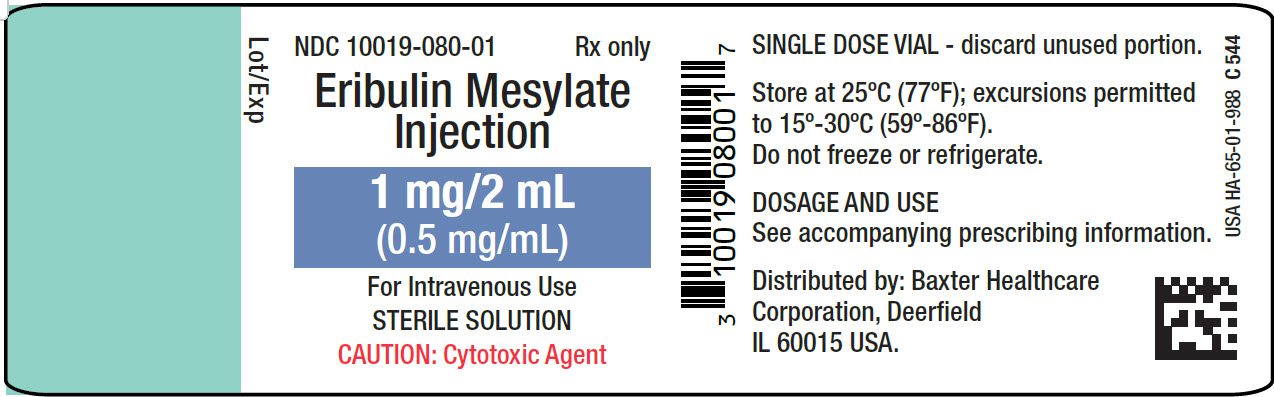
Eribulin Mesylate .5 mg/mL Injection — NDC 10019-080-01 (Billing 10019-0080-01)
This is a package of Eribulin Mesylate .5 mg/mL Injection from Baxter Healthcare Company, marketed since Oct 2024 and currently FDA-listed. It is this product's only package size.
Identity & classification
Regulatory identifiers FDA, NLM and CMS codes for this package
Drug-database identifiers Medi-Span GPI and First Databank GCN / HICL / AHFS classification
- GSN (GCN sequence number): 066838
- GCN: 29249
- GPI-14 (Medi-Span): 21500009202020
- HICL (First Databank): 037256
- AHFS class code: 10:00.00.00
- RxCUI (RxNorm): 1045456
Where does this data come from?
- FDA openFDA NDC Directory · synced Oct 1, 2026
- FDA label on DailyMed · label index refreshed Oct 1, 2026
- RxNorm (NLM RxNav) · catalog refreshed Oct 1, 2026
- Medi-Span GPI (licensed)
- First Databank (licensed) · refreshed Oct 1, 2026
RxNorm drug class
This medicine belongs to the Microtubule Inhibitor class.
Where does this data come from?
- RxClass (NLM) · catalog refreshed Oct 1, 2026
Clinical
Eribulin injection is used to treat breast cancer that has spread to other parts of the body and that has already been treated with certain other chemotherapy medications. Eribulin is in a class of anticancer medications called microtubule dynamics inhibitors. It works by stopping the growth and spread of cancer cells.
Read the full MedlinePlus article ↗- It treats metastatic breast cancer after at least two earlier chemotherapy regimens, including an anthracycline and a taxane. It also treats unresectable or metastatic liposarcoma...
- It's given through a vein by a healthcare professional. Each dose takes only a few minutes. You get it on Days 1 and 8 of a 21-day cycle, and your team follows the plan from your p...
- Common ones are low blood counts, tiredness, hair loss, numbness or tingling, nausea, and constipation. Call your doctor right away for fever or signs of infection, or if numbness...
- Eribulin can lower your white blood cells, which raises the risk of serious infection. Counts are checked before each dose. Your doctor may delay or lower a dose if needed.
Patient education
Supplement & herbal interactions
Some supplements/herbs that may interact with Eribulin Mesylate — tap one for details:
Where does this data come from?
- MedlinePlus (NLM) · refreshed Oct 1, 2026
- FDA label on DailyMed · label index refreshed Oct 1, 2026
Ask a licensed pharmacist directly — free, answered by our team.
Pricing
A drug doesn't have one price. Each row is a different public payment system, and none is what you'd pay at the counter — that depends on your insurance. The ⓘ on each row explains what it measures.
| Price system | Per each | Per package |
|---|---|---|
| Retail pharmacies payNADAC · weekly | Not in the retail survey — common for institutional, discontinued, or low-volume packs. | |
| Medicaid paysCMS SDUD · 12 mo | No recent Medicaid claims on file for this NDC — rare and low-volume NDCs are suppressed in the public data. | |
| Medicare drug plans payPart D · quarterly | No Part D plan price is available for this NDC in our data. | |
| Medicare Part B allowsASP · J9179 | $59.979 / J9179 unit | — |
Where does this data come from?
- CMS NADAC weekly file
- CMS ASP pricing files · refreshed Sep 20, 2026
- CMS Medicaid State Drug Utilization Data · refreshed Oct 2, 2026
- CMS Part D plan pricing files · refreshed Sep 24, 2026
- VA National Acquisition Center price file
Billing & reimbursement
Where does this data come from?
- CMS ASP NDC-HCPCS crosswalk · refreshed Sep 22, 2026
- DMEPDAC NDC-HCPCS crosswalk
- openFDA NSDE billing units · refreshed Sep 7, 2026
Packaging — all sizes for this product
| Package NDC | Description | Marketing start | Marketing end | Status |
|---|---|---|---|---|
| 10019-0080-01 You're viewing this Main listing | 1 VIAL, SINGLE-DOSE in 1 CARTON / 2 mL in 1 VIAL, SINGLE-DOSE | 2024-12-01 | — | Active |
Therapeutic equivalents
| Product | Labeler | Pack | NADAC/unit | TE | Status | Price vs. this |
|---|---|---|---|---|---|---|
| Eribulin Mesylate .5 mg/mL 00143-9167-01 | HIKMA | 1 vial | — | AP | FDA listed | — |
| Eribulin Mesylate .5 mg/mL 00781-3391-94 | Sandoz | 1 vial | — | AP | FDA listed | — |
| Eribulin Mesylate .5 mg/mLthis 10019-0080-01 | Baxter | 1 vial | — | AP | FDA listed | — |
| Eribulin Mesylate .5 mg/mL 39822-2080-01 | XGen | 1 vial | — | AP | FDA listed | — |
| Eribulin Mesylate .5 mg/mL 40033-0364-01 | Kindos | 1 vial | — | AP | FDA listed | — |
| Eribulin Mesylate .5 mg/mL 43598-0125-11 | Dr. | 1 vial | — | AP | FDA listed | — |
| Halaven 1 mg/2mL 43624-0002-01 | BSP | 3 ml | — | AP | FDA listed | — |
| eribulin mesylate .5 mg/mL 60505-6289-00 | Apotex | 1 vial | — | AP | FDA listed | — |
| eribulin mesylate .5 mg/mL 60505-6435-00 | Apotex | 1 vial | — | AP | FDA listed | — |
| Halaven .5 mg/mL 62856-0389-01 | Eisai | 1 vial | — | AP | FDA listed | — |
| Eribulin Mesylate .5 mg/mL 68001-0656-41 | BluePoint | 1 vial | — | AP | FDA listed | — |
| eribulin mesylate .5 mg/mL 68083-0592-01 | Gland | 1 vial | — | AP | FDA listed | — |
| Eribulin Mesylate .5 mg/mL 68462-0770-20 | GLENMARK | 1 vial | — | AP | FDA listed | — |
| Eribulin Mesylate .5 mg/mL 70095-0080-01 | Sun | 1 vial | — | AP | FDA listed | — |
| Eribulin Mesylate .5 mg/mL 71731-4171-01 | Chia | 1 vial | — | AP | FDA listed | — |
| Eribulin Mesylate .5 mg/mL 72603-0368-01 | Northstar | 1 vial | — | AP | FDA listed | — |
| Eribulin Mesylate .5 mg/mL 81298-3890-01 | Long | 1 vial | — | AP | FDA listed | — |
Where does this data come from?
- FDA openFDA NDC Directory · synced Oct 1, 2026
- FDA Orange Book · refreshed Sep 3, 2026
- CMS NADAC weekly file
Availability & generic status
This product is an FDA-approved generic. Other versions of the same drug are listed under Therapeutic equivalents, least expensive first.
Where does this data come from?
- FDA Orange Book · refreshed Sep 3, 2026
Inactive Ingredients / Excipients
Inactive ingredients, also called excipients, are components of the drug product other than the active ingredient. They may include fillers, dyes, coatings, preservatives, flavors, or other formulation ingredients.
💡 Tap an ingredient (hover on desktop) to see what it is and why it’s used.
-
UNII 3K9958V90M
A liquid solvent derived from fermentation or chemical synthesis. In medicines, alcohol dissolves active ingredients, helps preserve the product, and improves how the body absorbs certain drugs.
-
UNII QTT17582CB
A strong acid used to adjust and maintain the proper pH level in liquid medicines, ensuring stability and preventing breakdown of active ingredients.
-
UNII 55X04QC32I
A strong alkaline chemical used to adjust and maintain the pH balance of liquid medicines. It helps keep the medicine stable and ensures it stays effective during storage.
-
UNII 059QF0KO0R
Water is a liquid solvent that dissolves and mixes ingredients together in liquid medicines, syrups, and injections. It helps distribute the active drug evenly throughout the product.
4 inactive ingredients listed in the exact product block matched to this NDC.
Where does this data come from?
ingredient classCode="IACT" elements from the exact product block matched by this NDC. Label-section narrative from DailyMed / the openFDA label index is shown separately when available.- FDA label on DailyMed · label index refreshed Oct 1, 2026
- FDA openFDA NDC Directory · synced Oct 1, 2026
Inactive ingredient FAQ
Are inactive ingredients the same for every manufacturer?
Why might an inactive ingredient be missing?
Can inactive ingredients matter?
Manufacturer & labeler
Where does this data come from?
- FDA openFDA NDC Directory · synced Oct 1, 2026
- Drugs@FDA
Full prescribing information FDA SPL
🎯 Indications and Usage ▾
1 INDICATIONS AND USAGE Eribulin Mesylate Injection is a microtubule inhibitor indicated for the treatment of patients with: • Metastatic breast cancer who have previously received at least two chemotherapeutic regimens for the treatment of metastatic disease. Prior therapy should have included an anthracycline and a taxane in either the adjuvant or metastatic setting. (1.1) • Unresectable or metastatic liposarcoma who have received a prior anthracycline-containing regimen.
(1.2)
1.1Metastatic Breast Cancer Eribulin Mesylate Injection is indicated for the treatment of patients with metastatic breast cancer who have previously received at least two chemotherapeutic regimens for the treatment of metastatic disease. Prior therapy should have included an anthracycline and a taxane in either the adjuvant or metastatic setting [ see Clinical Studies (14.1) ] .
1.2Liposarcoma Eribulin Mesylate Injection is indicated for the treatment of patients with unresectable or metastatic liposarcoma who have received a prior anthracycline-containing regimen [ see Clinical Studies (14.2) ] .
⏱️ Dosage and Administration ▾
2 DOSAGE AND ADMINISTRATION • Administer 1.4 mg/m 2 intravenously over 2 to 5 minutes on Days 1 and 8 of a 21-day cycle. (2.1) • Reduce dose in patients with hepatic impairment or with moderate or severe renal impairment. (2.1) • Do not mix with other drugs or administer with dextrose-containing solutions. (2.3)
2.1Recommended Dose The recommended dose of Eribulin Mesylate Injection is 1.4 mg/m 2 administered intravenously over 2 to 5 minutes on Days 1 and 8 of a 21-day cycle. The recommended dose of Eribulin Mesylate Injection in patients with mild hepatic impairment (Child-Pugh A) is 1.1 mg/m 2 administered intravenously over 2 to 5 minutes on Days 1 and 8 of a 21-day cycle [ see Use in Specific Populations (8.6) ] . The recommended dose of Eribulin Mesylate Injection in patients with moderate hepatic impairment (Child-Pugh B) is 0.7 mg/m 2 administered intravenously over 2 to 5 minutes on Days 1 and 8 of a 21-day cycle [ see Use in Specific Populations (8.6) ] .
The recommended dose of Eribulin Mesylate Injection in patients with moderate or severe renal impairment (creatinine clearance (CLcr) 15-49 mL/min) is 1.1 mg/m 2 administered intravenously over 2 to 5 minutes on Days 1 and 8 of a 21-day cycle [ see Use in Specific Populations (8.7) ] .
2.2Dose Modification Assess for peripheral neuropathy and obtain complete blood cell counts prior to each dose. Recommended dose delays • Do not administer Eribulin Mesylate Injection on Day 1 or Day 8 for any of the following: o ANC < 1,000/mm 3 o Platelets < 75,000/mm 3 o Grade 3 or 4 non-hematological toxicities. • The Day 8 dose may be delayed for a maximum of 1 week. o If toxicities do not resolve or improve to ≤ Grade 2 severity by Day 15, omit the dose. o If toxicities resolve or improve to ≤ Grade 2 severity by Day 15, administer Eribulin Mesylate Injection at a reduced dose and initiate the next cycle no sooner than 2 weeks later.
Recommended dose reductions • If a dose has been delayed for toxicity and toxicities have recovered to Grade 2 severity or less, resume Eribulin Mesylate Injection at a reduced dose as set out in Table 1 . • Do not re-escalate Eribulin Mesylate Injection dose after it has been reduced. Table 1: Recommended Dose Reductions Event Description Recommended Eribulin Mesylate Injection Dose Permanently reduce the 1.4 mg/m 2 Eribulin Mesylate Injection dose for any of the following: 1.1 mg/m 2 ANC <500/mm 3 for >7 days ANC <1,000 /mm 3 with fever or infection Platelets <25,000/mm 3 Platelets <50,000/mm 3 requiring transfusion Non-hematologic Grade 3 or 4 toxicities Omission or delay of Day 8 Eribulin Mesylate Injection dose in previous cycle for toxicity Occurrence of any event requiring permanent dose reduction while receiving 1.1 mg/m 2 0.7 mg/m 2 Occurrence of any event requiring permanent dose reduction while receiving 0.7 mg/m 2 Discontinue Eribulin Mesylate Injection ANC = absolute neutrophil count.
Toxicities graded in accordance with National Cancer Institute (NCI) Common Terminology Criteria for Adverse Events (CTCAE) version 3.0.
2.3Instructions for Preparation and Administration Aseptically withdraw the required amount of Eribulin Mesylate Injection from the single-dose vial and administer undiluted or diluted in 100 mL of 0.9% Sodium Chloride Injection, USP. Do not dilute in or administer through an intravenous line containing solutions with dextrose. Do not administer in the same intravenous line concurrent with the other medicinal products.
Store undiluted Eribulin Mesylate Injection in the syringe for up to 4 hours at room temperature or for up to 24 hours under refrigeration at 4°C (40°F). Store diluted solutions of Eribulin Mesylate Injection for up to 4 hours at room temperature or up to 24 hours under refrigeration at 4°C (40°F). Discard unused portions of the vial.
💊 Dosage Forms and Strengths ▾
3 DOSAGE FORMS AND STRENGTHS Injection: 1 mg/2 mL (0.5 mg/mL) eribulin mesylate is a clear, colorless, sterile solution in a single-dose vial. Injection: 1 mg per 2 mL (0.5 mg per mL) eribulin mesylate in a single-dose vial (3)
⛔ Contraindications ▾
4 CONTRAINDICATIONS None. None (4)
⚠️ Warnings and Cautions ▾
5 WARNINGS AND PRECAUTIONS • Neutropenia : Monitor peripheral blood cell counts and adjust dose as appropriate. (5.1) • Peripheral Neuropathy : Monitor for signs of neuropathy. Manage with dose delay and adjustment.
(5.2) • Embryo-Fetal Toxicity : Can cause fetal harm. Advise females of reproductive potential of the potential risk to the fetus and to use effective contraception. (5.3 , 8.1 , 8.3) • QT Prolongation : Monitor for prolonged QT intervals in patients with congestive heart failure, bradyarrhythmias, drugs known to prolong the QT interval, and electrolyte abnormalities.
Avoid in patients with congenital long QT syndrome. (5.4)
5.1Neutropenia In Study 1, severe neutropenia (ANC < 500/mm 3 ) lasting more than one week occurred in 12% (62/503) of patients with metastatic breast cancer, leading to discontinuation in <1% of patients. Febrile neutropenia (fever ≥38.5°C with Grade 3 or 4 neutropenia) occurred in 5% (23/503) of patients; two patients (0.4%) died from complications of febrile neutropenia [ see Adverse Reactions (6.1) ] . In Study 1, patients with alanine aminotransferase (ALT) or aspartate aminotransferase (AST) > 3 × ULN (upper limit of normal) experienced a higher incidence of Grade 4 neutropenia and febrile neutropenia than patients with normal aminotransferase levels.
Patients with bilirubin > 1.5 × ULN also had a higher incidence of Grade 4 neutropenia and febrile neutropenia. In Study 2, severe neutropenia (ANC < 500/mm 3 ) lasting more than one week occurred in 12% (26/222) of patients with liposarcoma or leiomyosarcoma. Febrile neutropenia occurred in 0.9% of patients treated with Eribulin Mesylate Injection and fatal neutropenic sepsis in 0.9% [ see Adverse Reactions (6.1) ].
Monitor complete blood counts prior to each dose; increase the frequency of monitoring in patients who develop Grade 3 or 4 cytopenias. Delay administration of Eribulin Mesylate Injection and reduce subsequent doses in patients who experience febrile neutropenia or Grade 4 neutropenia lasting longer than 7 days [ see Dosage and Administration (2.2) ] . Clinical studies of Eribulin Mesylate Injection did not include patients with baseline neutrophil counts below 1,500/mm 3 .
5.2Peripheral Neuropathy In Study 1, Grade 3 peripheral neuropathy occurred in 8% (40/503) of patients, and Grade 4 in 0.4% (2/503) of patients with metastatic breast cancer (MBC). Peripheral neuropathy was the most common toxicity leading to discontinuation of Eribulin Mesylate Injection (5% of patients; 24/503) in Study 1. Neuropathy lasting more than one year occurred in 5% (26/503) of patients.
Twenty-two percent (109/503) of patients developed a new or worsening neuropathy that had not recovered within a median follow-up duration of 269 days (range 25-662 days). In Study 2, Grade 3 peripheral neuropathy occurred in 3.1% (7/223) of Eribulin Mesylate Injection-treated patients. Peripheral neuropathy led to discontinuation of Eribulin Mesylate Injection in 0.9% of patients.
The median time to first occurrence of peripheral neuropathy of any severity was 5 months (range: 3.5 months to 9 months). Neuropathy lasting more than 60 days occurred in 58% (38/65) of patients. Sixty three percent (41/65) had not recovered within a median follow-up duration of 6.4 months (range: 27 days to 29 months).
Monitor patients closely for signs of peripheral motor and sensory neuropathy. Withhold Eribulin Mesylate Injection in patients who experience Grade 3 or 4 peripheral neuropathy, until resolution to Grade 2 or less [ see Dosage and Administration (2.2) ] .
5.3Embryo-Fetal Toxicity Based on findings from an animal reproduction study and its mechanism of action, Eribulin Mesylate Injection can cause fetal harm when administered to a pregnant woman. There are no adequate and well-controlled studies of Eribulin Mesylate Injection in pregnant women. In animal reproduction studies, eribulin mesylate caused embryo-fetal toxicity when administered to pregnant rats during orga… [Excerpted — this section continues on DailyMed.]
🤒 Adverse Reactions ▾
6 ADVERSE REACTIONS The most common adverse reactions (≥25%) in metastatic breast cancer were neutropenia, anemia, asthenia/fatigue, alopecia, peripheral neuropathy, nausea, and constipation. (6.1) The most common adverse reactions (≥25%) in liposarcoma and leiomyosarcoma were fatigue, nausea, alopecia, constipation, peripheral neuropathy, abdominal pain, and pyrexia. The most common (≥5%) Grade 3-4 laboratory abnormalities in liposarcoma and leiomyosarcoma were neutropenia, hypokalemia, and hypocalcemia.
(6.1) To report SUSPECTED ADVERSE REACTIONS, contact Baxter Healthcare Corporation at 1-866-888-2472 or FDA at 1-800-FDA-1088 or www.fda.gov/medwatch.
6.1Clinical Trials Experience Because clinical trials are conducted under widely varying conditions, the adverse reaction rates observed in the clinical trials of a drug cannot be directly compared to rates in other clinical trials and may not reflect the rates observed in clinical practice. The following adverse reactions are discussed in detail in other sections of the labeling: • Neutropenia [ see Warnings and Precautions (5.1) ] • Peripheral neuropathy [ see Warnings and Precautions (5.2) ] • QT prolongation [ see Warnings and Precautions (5.4) ] In clinical trials, Eribulin Mesylate Injection has been administered to 1963 patients including 467 patients exposed to Eribulin Mesylate Injection for 6 months or longer.
The majority of the 1963 patients were women (92%) with a median age of 55 years (range: 17 to 85 years). The racial and ethnic distribution was White (72%), Black (4%), Asian (9%), and other (3%). Metastatic Breast Cancer The most common adverse reactions (≥25%) reported in patients receiving Eribulin Mesylate Injection were neutropenia, anemia, asthenia/fatigue, alopecia, peripheral neuropathy, nausea, and constipation.
The most common serious adverse reactions reported in patients receiving Eribulin Mesylate Injection were febrile neutropenia (4%) and neutropenia (2%). The most common adverse reaction resulting in discontinuation of Eribulin Mesylate Injection was peripheral neuropathy (5%). The adverse reactions described in Table 2 were identified in 750 patients treated in Study 1 .
In Study 1, patients were randomized (2:1) to receive either Eribulin Mesylate Injection (1.4 mg/m on Days 1 and 8 of a 21-day cycle) or single agent treatment chosen by their physician (control group). A total of 503 patients received Eribulin Mesylate Injection and 247 patients in the control group received therapy consisting of chemotherapy [total 97% (anthracyclines 10%, capecitabine 18%, gemcitabine 19%, taxanes 15%, vinorelbine 25%, other chemotherapies 10%)] or hormonal therapy (3%). The median duration of exposure was 118 days for patients receiving Eribulin Mesylate Injection and 63 days for patients receiving control therapy.
Table 2 reports the most common adverse reactions occurring in at least 10% of patients in either group. Table 2: Adverse Reactions adverse reactions were graded per National Cancer Institute Criteria for Adverse Events version 4.0. with a Per-Patient Incidence of at Least 10% in Study 1 Adverse Reactions Eribulin Mesylate Injection n=503 Control Group n=247 All Grades ≥ Grade 3 All Grades ≥ Grade 3 Blood and lymphatic system disorders based upon laboratory data. Neutropenia 82% 57% 53% 23% Anemia 58% 2% 55% 4% Nervous system disorders Peripheral neuropathy includes peripheral neuropathy, peripheral sensorimotor neuropathy, peripheral motor neuropathy, polyneuropathy, peripheral sensory neuropathy, and paraesthesia.
35% 8% 16% 2% Headache 19% <1% 12% <1% General disorders Asthenia/Fatigue 54% 10% 40% 11% Pyrexia 21% <1% 13% <1% Mucosal inflammation 9% 1% 10% 2% Gastrointestinal disorders Nausea 35% 1% 28% 3% Constipation 25% 1% 21% 1% Vomiting 18% 1% 18% 1% Diarrhea 18% 0 18% 0 Musculoskeletal and connective tissue disorders Arthralgia/Myalgia 22% <1% 12% 1% Back pain 16% 1% 7% 2% Bone pain 12% 2% 9% 2% Pain in extremity 11% 1% 10% 1% Metabolism… [Excerpted — this section continues on DailyMed.]
🔄 Drug Interactions ▾
7 DRUG INTERACTIONS
7.1Effects of Other Drugs on Eribulin Mesylate Injection No drug-drug interactions are expected with CYP3A4 inhibitors, CYP3A4 inducers or P-glycoprotein (P-gp) inhibitors. Clinically meaningful differences in exposure (AUC) were not observed in patients with advanced solid tumors when Eribulin Mesylate Injection was administered with or without ketoconazole (a strong inhibitor of CYP3A4 and a P-gp inhibitor) and when Eribulin Mesylate Injection was administered with or without rifampin (a CYP3A4 inducer) [ see Clinical Pharmacology (12.3) ] .
7.2Effects of Eribulin Mesylate Injection on Other Drugs Eribulin does not inhibit CYP1A2, CYP2C9, CYP2C19, CYP2D6, CYP2E1 or CYP3A4 enzymes or induce CYP1A2, CYP2C9, CYP2C19 or CYP3A4 enzymes at relevant clinical concentrations. Eribulin is not expected to alter the plasma concentrations of drugs that are substrates of these enzymes [ see Clinical Pharmacology (12.3) ] .
👥 Use in Specific Populations ▾
8 USE IN SPECIFIC POPULATIONS • Lactation: Do not breastfeed. (8.2) • Hepatic Impairment: A lower starting dose is recommended for patients with mild (Child-Pugh A) and moderate (Child-Pugh B) hepatic impairment. Patients with severe hepatic impairment (Child-Pugh C) were not studied. (8.6) • Renal Impairment: A lower starting dose is recommended for patients with moderate (CLcr 30‑49 mL/min) or severe (CLcr 15‑29 mL/min) renal impairment. (8.7)
8.1Pregnancy Risk Summary Based on findings from an animal reproduction study and its mechanism of action, Eribulin Mesylate Injection can cause fetal harm when administered to a pregnant woman [ see Clinical Pharmacology (12.1) ] . There are no available data on the use of Eribulin Mesylate Injection during pregnancy. In an animal reproduction study, eribulin mesylate caused embryo-fetal toxicity when administered to pregnant rats during organogenesis at doses below the recommended human dose [see Data] .
Advise pregnant women of the potential risk to a fetus. The estimated background risks of major birth defects and miscarriage for the indicated populations are unknown. In the U.S. general population, the estimated background risk of major birth defects and miscarriage in clinically-recognized pregnancies is 2% to 4% and 15% to 20%, respectively.
Data Animal Data In an embryo-fetal developmental toxicity study, pregnant rats received intravenous infusion of eribulin mesylate during organogenesis (Gestation Days 8, 10, and 12) at doses approximately 0.04, 0.13, 0.43 and 0.64 times the recommended human dose, based on body surface area. Increased abortion and severe fetal external or soft tissue malformations, including the absence of a lower jaw and tongue, or stomach and spleen, were observed at doses 0.64 times the recommended human dose of 1.4 mg/m 2 based on body surface area.
Increased embryo-fetal death/resorption, reduced fetal weights, and minor skeletal anomalies consistent with developmental delay were also reported at doses at or above a maternally toxic dose of approximately 0.43 times the recommended human dose.
8.2Lactation Risk Summary There is no information regarding the presence of eribulin mesylate or its metabolites in human milk, the effects on the breastfed infant, or the effects on milk production. No lactation studies in animals were conducted. Because of the potential for serious adverse reactions in breastfed infants from eribulin mesylate, advise women not to breastfeed during treatment with Eribulin Mesylate Injection and for 2 weeks after the final dose.
8.3Females and Males of Reproductive Potential Contraception Females Based on findings from an animal reproduction study and its mechanism of action, Eribulin Mesylate Injection can cause fetal harm when administered to a pregnant woman [ see Use in Specific Populations (8.1) ] . Advise females of reproductive potential to use effective contraception during treatment with Eribulin Mesylate Injection and for at least 2 weeks following the final dose. Males Based on its mechanism of action, advise males with female partners of reproductive potential to use effective contraception during treatment with Eribulin Mesylate Injection and for 3.5 months following the final dose.
Infertility Males Based on animal data, Eribulin Mesylate Injection may result in damage to male reproductive tissues leading to impaired fertility of unknown duration [ see Nonclinical Toxicology (13.1) ] .
8.4Pediatric Use The safety and effectiveness of Eribulin Mesylate Injection in pediatric patients have not been established. The safety and effectiveness of Eribulin Mesylate alone or in combination with irinotecan in pediatric patients were assessed but not established in three open-label studies (NCT02171260, NCT03441360, and NCT03245450) in 77 pediatric patients aged 2 to <17 years with relapsed or refractory solid tumors and lymphomas, excluding central nervous system tumors. No new safety signals were observed in these studie… [Excerpted — this section continues on DailyMed.]
🤰 Pregnancy ▾
8.1Pregnancy Risk Summary Based on findings from an animal reproduction study and its mechanism of action, Eribulin Mesylate Injection can cause fetal harm when administered to a pregnant woman [ see Clinical Pharmacology (12.1) ] . There are no available data on the use of Eribulin Mesylate Injection during pregnancy. In an animal reproduction study, eribulin mesylate caused embryo-fetal toxicity when administered to pregnant rats during organogenesis at doses below the recommended human dose [see Data] .
Advise pregnant women of the potential risk to a fetus. The estimated background risks of major birth defects and miscarriage for the indicated populations are unknown. In the U.S. general population, the estimated background risk of major birth defects and miscarriage in clinically-recognized pregnancies is 2% to 4% and 15% to 20%, respectively.
Data Animal Data In an embryo-fetal developmental toxicity study, pregnant rats received intravenous infusion of eribulin mesylate during organogenesis (Gestation Days 8, 10, and 12) at doses approximately 0.04, 0.13, 0.43 and 0.64 times the recommended human dose, based on body surface area. Increased abortion and severe fetal external or soft tissue malformations, including the absence of a lower jaw and tongue, or stomach and spleen, were observed at doses 0.64 times the recommended human dose of 1.4 mg/m 2 based on body surface area.
Increased embryo-fetal death/resorption, reduced fetal weights, and minor skeletal anomalies consistent with developmental delay were also reported at doses at or above a maternally toxic dose of approximately 0.43 times the recommended human dose.
🧒 Pediatric Use ▾
8.4Pediatric Use The safety and effectiveness of Eribulin Mesylate Injection in pediatric patients have not been established. The safety and effectiveness of Eribulin Mesylate alone or in combination with irinotecan in pediatric patients were assessed but not established in three open-label studies (NCT02171260, NCT03441360, and NCT03245450) in 77 pediatric patients aged 2 to <17 years with relapsed or refractory solid tumors and lymphomas, excluding central nervous system tumors. No new safety signals were observed in these studies.
The pharmacokinetics (PK) of eribulin were within range of values of adult patients with metastatic liposarcoma or other tumors given the same dose per body surface area.
🧓 Geriatric Use ▾
8.5Geriatric Use Study 1 did not include sufficient numbers of subjects with metastatic breast cancer aged 65 years and older to determine whether they respond differently from younger subjects. Of the 827 subjects who received the recommended dose and schedule of Eribulin Mesylate Injection in clinical studies with advanced breast cancer, 15% (121/827) were 65 and older, and 2% (17/827) patients were 75 and older. No overall differences in safety were observed between these subjects and younger subjects.
Clinical studies of Eribulin Mesylate Injection did not include a sufficient number of subjects in Study 2 aged 65 years and older to determine whether they respond differently from younger subjects.
🆘 Overdosage ▾
10 OVERDOSAGE Overdosage of Eribulin Mesylate Injection has been reported at approximately 4 times the recommended dose, which resulted in Grade 3 neutropenia lasting seven days and a Grade 3 hypersensitivity reaction lasting one day. There is no known antidote for Eribulin Mesylate Injection overdose.
🧬 Clinical Pharmacology ▾
12 CLINICAL PHARMACOLOGY
12.1Mechanism of Action Eribulin inhibits the growth phase of microtubules without affecting the shortening phase and sequesters tubulin into nonproductive aggregates. Eribulin exerts its effects via a tubulin-based antimitotic mechanism leading to G 2 /M cell-cycle block, disruption of mitotic spindles, and, ultimately, apoptotic cell death after prolonged mitotic blockage. In addition, eribulin treatment of human breast cancer cells caused changes in morphology and gene expression as well as decreased migration and invasiveness in vitro.
In mouse xenograft models of human breast cancer, eribulin treatment was associated with increased vascular perfusion and permeability in the tumor cores, resulting in reduced tumor hypoxia, and changes in the expression of genes in tumor specimens associated with a change in phenotype.
12.2Pharmacodynamics Cardiac Electrophysiology The effect of Eribulin Mesylate Injection on the QTc interval was assessed in an open-label, uncontrolled, multicenter, single-arm dedicated QT trial. A total of 26 patients with solid tumors received 1.4 mg/m 2 of Eribulin Mesylate Injection on Days 1 and 8 of a 21-day cycle. A delayed QTc prolongation was observed on Day 8, with no prolongation observed on Day 1.
The maximum mean QTcF change from baseline (95% upper confidence interval) was 11.4 (19.5) ms.
12.3Pharmacokinetics The pharmacokinetics (PK) of eribulin is linear with a mean elimination half-life of approximately 40 hours, a mean volume of distribution of 43 L/m 2 to 114 L/m 2 and mean clearance of
1.16 L/hr/m 2 to
2.42L/hr/m 2 over the dose range of 0.25 mg/m 2 to 4.0 mg/m 2 . The human plasma protein binding of eribulin at concentrations of 100 ng/mL to 1,000 ng/mL ranges from 49% to 65%. Eribulin exposure after multiple dosing is comparable to that following a single dose.
No accumulation of eribulin is observed with weekly administration. Elimination Metabolism Unchanged eribulin was the major circulating species in plasma following administration of 14 C-eribulin to patients. Metabolite concentrations represented <0.6% of parent compound, confirming that there are no major human metabolites of eribulin.
Cytochrome P450 3A4 (CYP3A4) negligibly metabolizes eribulin in vitro. Excretion Eribulin is eliminated primarily in feces unchanged. After administration of 14 C-eribulin to patients, approximately 82% of the dose was eliminated in feces and 9% in urine.
Unchanged eribulin accounted for approximately 88% and 91% of total eribulin in feces and urine, respectively. Specific Populations Age, Sex, and Race/Ethnicity : Based on a population pharmacokinetic analysis, no clinically meaningful differences in the pharmacokinetics of eribulin were observed based on age, sex, or race. Hepatic Impairment In a study evaluating the effect of hepatic impairment on the PK of eribulin, eribulin exposures increased by 1.8-fold in patients with mild hepatic impairment (Child-Pugh A; n=7) and by 2.5-fold in patients with moderate (Child-Pugh B; n=5) hepatic impairment as compared to patients with normal hepatic function (n=6).
Administration of Eribulin Mesylate Injection at a dose of 1.1 mg/m 2 to patients with mild hepatic impairment and 0.7 mg/m 2 to patients with moderate hepatic impairment resulted in similar exposure to eribulin at a dose of 1.4 mg/m 2 to patients with normal hepatic function [ see Dosage and Administration (2.1) , Use in Specific Populations (8.6) ] . Renal Impairment In a study evaluating the effect of renal impairment on the PK of eribulin, patients with moderate (CLcr 30-49 mL/min; n=7) and severe renal impairment (CLcr 15-29 mL/min; n=6) had 1.5-fold higher eribulin dose-normalized exposures compared to that in patients with normal renal function (CLcr ≥ 80 mL/min; n=6).
There were no clinically meaningful changes in patients with mild renal impairment (CLcr 50-79 mL/min; n=27) [ see Dosage and Administration (2.1) , Use in Specific Populations (8.7) ] . Drug… [Excerpted — this section continues on DailyMed.]
🧬 Mechanism of Action ▾
12.1Mechanism of Action Eribulin inhibits the growth phase of microtubules without affecting the shortening phase and sequesters tubulin into nonproductive aggregates. Eribulin exerts its effects via a tubulin-based antimitotic mechanism leading to G 2 /M cell-cycle block, disruption of mitotic spindles, and, ultimately, apoptotic cell death after prolonged mitotic blockage. In addition, eribulin treatment of human breast cancer cells caused changes in morphology and gene expression as well as decreased migration and invasiveness in vitro.
In mouse xenograft models of human breast cancer, eribulin treatment was associated with increased vascular perfusion and permeability in the tumor cores, resulting in reduced tumor hypoxia, and changes in the expression of genes in tumor specimens associated with a change in phenotype.
📦 How Supplied / Storage and Handling ▾
16 HOW SUPPLIED/STORAGE AND HANDLING NDC 10019-080-01 Injection: 1 mg/2 mL, in a single-dose vial. One vial per carton. Store at 25°C (77°F); excursions permitted to 15° to 30° C (59° to 86° F). Do not freeze or refrigerate. Store the vials in their original cartons. Eribulin Mesylate Injection is a cytotoxic drug. Follow applicable special handling and disposal procedures. 1
📋 Description ▾
11 DESCRIPTION Eribulin Mesylate Injection contains eribulin mesylate, a microtubule dynamics inhibitor. Eribulin mesylate is a synthetic analogue of halichondrin B, a product isolated from the marine sponge Halichondria okadai . The chemical name for eribulin mesylate is 11,15:18,21:24,28-Triepoxy-7,9-ethano-12,15-methano-9 H ,15 H -furo[3,2- i ]furo[2',3':5,6]pyrano[4,3- b ][1,4]dioxacyclopentacosin-5(4 H )-one, 2-[(2 S )-3- amino-2-hydroxypropyl]hexacosahydro-3-methoxy-26-methyl-20,27-bis(methylene)-, (2 R ,3 R ,3a S ,7 R ,8a S ,9 S ,10a R ,11 S ,12 R ,13a R ,13b S ,15 S ,18 S ,21 S ,24 S ,26 R ,28 R ,29a S )-, methanesulfonate (salt).
It has a molecular weight of 826.0 (729.9 for free base). The empirical formula is C 40 H 59 NO 11 •CH 4 O 3 S. Eribulin mesylate has the following structural formula: Eribulin Mesylate Injection is a clear, colorless, sterile solution for intravenous administration.
Each single-dose vial contains 1 mg of eribulin mesylate in 2 mL of solution. Each mL of solution contains 0.5 mg of eribulin mesylate (equivalent to 0.44 mg eribulin) in dehydrated alcohol (5% v/v) and water for injection (95% v/v). Sodium hydroxide or hydrochloric acid may be used for pH adjustment.
Eribulin Structural Formula
💬 Information for Patients ▾
17 PATIENT COUNSELING INFORMATION Advise the patient to read the FDA-approved patient labeling (Patient Information). Neutropenia Advise patients to contact their health care provider for a fever of 100.5°F or greater or other signs or symptoms of infection such as chills, cough, or burning or pain on urination [ see Warnings and Precautions (5.1) ] . Peripheral Neuropathy Advise patients to inform their healthcare providers of new or worsening numbness, tingling and pain in their extremities [ see Warnings and Precautions (5.2) ] .
Embryo-Fetal Toxicity • Advise females of reproductive potential of the potential risk to a fetus and to inform their healthcare provider of a known or suspected pregnancy [ see Warnings and Precautions (5.3) , Use in Specific Populations (8.1) ] . • Advise females of reproductive potential to use effective contraception during treatment with Eribulin Mesylate Injection and for at least 2 weeks after the final dose [ see Use in Specific Populations (8.3) ] . • Advise males with female partners of reproductive potential to use effective contraception during treatment with Eribuin Mesylate Injection and for 3.5 months following the final dose [ see Use in Specific Populations (8.3) ] .
Lactation Advise women not to breastfeed during treatment with Eribuin Mesylate Injection and for 2 weeks after the final dose [ see Use in Specific Populations (8.2) ] . Manufactured for: Baxter Healthcare Corporation Deerfield, IL 60015 USA Product of Germany HA-30-02-157 Baxter is a registered trademark of Baxter International Inc. Revised: 10/2024 PATIENT INFORMATION Eribulin Mesylate Injection, for intravenous use What is the most important information I should know about Eribulin Mesylate Injection?
Eribulin Mesylate Injection can cause serious side effects, including: • Low white blood cell count (neutropenia) . This can lead to serious infections that could lead to death. Your healthcare provider will check your blood cell counts before you receive each dose of Eribulin Mesylate Injection and during treatment.
Call your healthcare provider right away if you develop any of these symptoms of infection: • Numbness, tingling, or pain in your hands or feet (peripheral neuropathy) . Peripheral neuropathy is common with Eribulin Mesylate Injection and sometimes can be severe. Tell your healthcare provider if you have new or worsening symptoms of peripheral neuropathy. • Your healthcare provider may delay, decrease your dose, or stop treatment with Eribulin Mesylate Injection if you have side effects.
See “ What are possible side effects of Eribulin Mesylate Injection?” for more information about side effects . What is Eribulin Mesylate Injection? Eribulin Mesylate Injection is a prescription medicine used to treat people with: • Breast cancer o that has spread to other parts of the body, and o who have already received certain types of anticancer medicines after the cancer has spread • Liposarcoma o that cannot be treated with surgery or has spread to other parts of the body, and o who have received treatment with a certain type of anticancer medicine It is not known if Eribulin Mesylate Injection is safe and effective in children under 18 years of age.
Before you receive Eribulin Mesylate Injection, tell your healthcare provider about all of your medical conditions, including if you: • have liver or kidney problems • have heart problems, including a problem called congenital long QT syndrome • have low potassium or low magnesium in your blood • are pregnant or plan to become pregnant. Eribulin Mesylate Injection can harm your unborn baby. Tell your healthcare provider right away if you become pregnant or think you are pregnant during treatment with Eribulin Mesylate Injection. o Females who are able to become pregnant should use an effective birth control during treatment with Eribulin Mesylate Injection and for at least 2 weeks after the final dose of Eribulin Mesylate Injection. o Males should use an effective form… [Excerpted — this section continues on DailyMed.]
🧬 Pharmacokinetics ▾
12.3Pharmacokinetics The pharmacokinetics (PK) of eribulin is linear with a mean elimination half-life of approximately 40 hours, a mean volume of distribution of 43 L/m 2 to 114 L/m 2 and mean clearance of
1.16 L/hr/m 2 to
2.42L/hr/m 2 over the dose range of 0.25 mg/m 2 to 4.0 mg/m 2 . The human plasma protein binding of eribulin at concentrations of 100 ng/mL to 1,000 ng/mL ranges from 49% to 65%. Eribulin exposure after multiple dosing is comparable to that following a single dose.
No accumulation of eribulin is observed with weekly administration. Elimination Metabolism Unchanged eribulin was the major circulating species in plasma following administration of 14 C-eribulin to patients. Metabolite concentrations represented <0.6% of parent compound, confirming that there are no major human metabolites of eribulin.
Cytochrome P450 3A4 (CYP3A4) negligibly metabolizes eribulin in vitro. Excretion Eribulin is eliminated primarily in feces unchanged. After administration of 14 C-eribulin to patients, approximately 82% of the dose was eliminated in feces and 9% in urine.
Unchanged eribulin accounted for approximately 88% and 91% of total eribulin in feces and urine, respectively. Specific Populations Age, Sex, and Race/Ethnicity : Based on a population pharmacokinetic analysis, no clinically meaningful differences in the pharmacokinetics of eribulin were observed based on age, sex, or race. Hepatic Impairment In a study evaluating the effect of hepatic impairment on the PK of eribulin, eribulin exposures increased by 1.8-fold in patients with mild hepatic impairment (Child-Pugh A; n=7) and by 2.5-fold in patients with moderate (Child-Pugh B; n=5) hepatic impairment as compared to patients with normal hepatic function (n=6).
Administration of Eribulin Mesylate Injection at a dose of 1.1 mg/m 2 to patients with mild hepatic impairment and 0.7 mg/m 2 to patients with moderate hepatic impairment resulted in similar exposure to eribulin at a dose of 1.4 mg/m 2 to patients with normal hepatic function [ see Dosage and Administration (2.1) , Use in Specific Populations (8.6) ] . Renal Impairment In a study evaluating the effect of renal impairment on the PK of eribulin, patients with moderate (CLcr 30-49 mL/min; n=7) and severe renal impairment (CLcr 15-29 mL/min; n=6) had 1.5-fold higher eribulin dose-normalized exposures compared to that in patients with normal renal function (CLcr ≥ 80 mL/min; n=6).
There were no clinically meaningful changes in patients with mild renal impairment (CLcr 50-79 mL/min; n=27) [ see Dosage and Administration (2.1) , Use in Specific Populations (8.7) ] . Drug Interaction Studies Effect of Strong Inhibitors or Inducers of CYP3A4 on Eribulin: The effect of a strong CYP3A4 inhibitor and a P-gp inhibitor, ketoconazole, on the PK of eribulin was studied in a crossover trial of 12 patients with advanced solid tumors. No clinically relevant PK interaction was observed when Eribulin Mesylate Injection was administered with or without ketoconazole (the geometric mean ratio of the AUC: 0.97; 90% CI: 0.83, 1.12).
The effect of a CYP3A4 inducer, rifampin, on the PK of eribulin was studied in a crossover trial of 14 patients with advanced solid tumors. No clinically relevant PK interaction was observed when Eribulin Mesylate Injection was administered with or without rifampin (the geometric mean ratio of the AUC: 1.10; 90 CI%: 0.91, 1.34). Effect of Eribulin on CYP Substrates: Eribulin shows no induction potential for CYP1A, CYP2B6, CYP2C9, CYP2C19, and CYP3A in primary human hepatocytes.
Eribulin inhibits CYP3A4 activity in human liver microsomes, but it is unlikely that eribulin will substantially increase the plasma levels of CYP3A4 substrates. No significant inhibition of CYP1A2, CYP2C9, CYP2C19, CYP2D6, or CYP2E1 was detected with eribulin concentrations up to 5 μM in pooled human liver microsomes. In vitro drug interaction studies indicate that eribulin does not inhibit drugs that are substrates of these enzym… [Excerpted — this section continues on DailyMed.]
🧬 Pharmacodynamics ▾
12.2Pharmacodynamics Cardiac Electrophysiology The effect of Eribulin Mesylate Injection on the QTc interval was assessed in an open-label, uncontrolled, multicenter, single-arm dedicated QT trial. A total of 26 patients with solid tumors received 1.4 mg/m 2 of Eribulin Mesylate Injection on Days 1 and 8 of a 21-day cycle. A delayed QTc prolongation was observed on Day 8, with no prolongation observed on Day 1.
The maximum mean QTcF change from baseline (95% upper confidence interval) was 11.4 (19.5) ms.
🔬 Clinical Studies ▾
14 CLINICAL STUDIES
14.1Metastatic Breast Cancer Study 1 was an open-label, randomized, multicenter trial of 762 patients with metastatic breast cancer who received at least two chemotherapeutic regimens for the treatment of metastatic disease and experienced disease progression within 6 months of their last chemotherapeutic regimen. Patients were required to receive prior anthracycline- and taxane-based chemotherapy for adjuvant or metastatic disease. Patients were randomized (2:1) to receive Eribulin Mesylate Injection (n=508) or a single agent therapy selected prior to randomization (control arm, n=254).
Randomization was stratified by geographic region, HER2/ neu status, and prior capecitabine exposure. Eribulin Mesylate Injection was administered at a dose of 1.4 mg/m 2 on Days 1 and 8 of a 21-day cycle. Eribulin Mesylate Injection-treated patients received a median of 5 cycles (range: 1 to 23 cycles) of therapy.
Control arm therapy consisted of 97% chemotherapy (26% vinorelbine, 18% gemcitabine, 18% capecitabine, 16% taxane, 9% anthracycline, 10% other chemotherapy), and 3% hormonal therapy. The main efficacy outcome was overall survival. Patient demographic and baseline characteristics were comparable between the treatment arms.
The median age was 55 (range: 27 to 85 years) and 92% were White. Sixty-four percent of patients were enrolled in North America/Western Europe/Australia, 25% in Eastern Europe/Russia, and 11% in Latin America/South Africa. Ninety-one percent of patients had a baseline ECOG performance status of 0 or 1.
Tumor prognostic characteristics, including estrogen receptor status (positive: 67%, negative: 28%), progesterone receptor status (positive: 49%, negative: 39%), HER2/neu receptor status (positive: 16%, negative: 74%), triple negative status (ER - , PR - , HER2/ neu - : 19%), presence of visceral disease (82%, including 60% liver and 38% lung) and bone disease (61%), and number of sites of metastases (greater than two: 50%), were also similar in the Eribulin Mesylate Injection and control arms. Patients received a median of four prior chemotherapy regimens in both arms.
In Study 1, a statistically significant improvement in overall survival was observed in patients randomized to the Eribulin Mesylate Injection arm compared to the control arm (see ). An updated, unplanned survival analysis, conducted when 77% of events had been observed (see ), was consistent with the primary analysis. In patients randomized to Eribulin Mesylate Injection, the objective response rate by the RECIST criteria was 11% (95% CI: 8.6%, 14.3%) and the median response duration was 4.2 months (95% CI: 3.8, 5.0 months).
Table 5: Comparison of Overall Survival in Eribulin Mesylate Injection and Control Arm - Study 1 Overall Survival Eribulin Mesylate Injection (n=508) Control Arm (n=254) Primary survival analysis Number of deaths 274 148 Median, months (95% CI) 13.1 (11.8, 14.3) 10.6 (9.3, 12.5) Hazard Ratio (95% CI) Based on Cox proportional hazards model stratified by geographic region, HER2 status, and prior capecitabine therapy. 0.81 (0.66, 0.99) P value Based on a log-rank test stratified by geographic region, HER2 status, and prior capecitabine therapy.
0.041 Updated survival analysis Number of deaths 386 203 Median, months (95% CI) 13.2 (12.1, 14.4) 10.6 (9.2, 12.0) CI = confidence interval Figure 1: Updated Overall Survival Analysis for Study 1 EriBULin Figure 1
14.2Liposarcoma The efficacy and safety of Eribulin Mesylate Injection were evaluated in Study 2, an open-label, randomized (1:1), multicenter, active-controlled trial. Eligible patients were required to have unresectable, locally advanced or metastatic liposarcoma or leiomyosarcoma, at least two prior systemic chemotherapies (one of which must have included an anthracycline), and disease progression within 6 months of the most recent chemotherapy regimen. Patients were randomized to Eribulin Mesylate Injection 1.4 mg/m 2 administered intravenously on Days 1… [Excerpted — this section continues on DailyMed.]
🧪 Nonclinical Toxicology ▾
13 NONCLINICAL TOXICOLOGY
13.1Carcinogenesis, Mutagenesis, Impairment of Fertility Carcinogenicity studies have not been conducted with eribulin mesylate. Eribulin mesylate was not mutagenic in in vitro bacterial reverse mutation assays (Ames test). Eribulin mesylate was positive in mouse lymphoma mutagenesis assays, and was clastogenic in an in vivo rat bone marrow micronucleus assay.
Fertility studies have not been conducted with eribulin mesylate in humans or animals; however, nonclinical findings in repeat-dose dog and rat toxicology studies suggest that male fertility may be compromised by treatment with eribulin mesylate. Rats exhibited testicular toxicity (hypocellularity of seminiferous epithelium with hypospermia/aspermia) following dosing with eribulin mesylate at or above 0.43 times the recommended human dose (based on body surface area) given once weekly for 3 weeks, or at or above 0.21 times the recommended human dose (based on body surface area) given once weekly for 3 out of 5 weeks, repeated for 6 cycles.
Testicular toxicity was also observed in dogs given 0.64 times the recommended human dose (based on body surface area) weekly for 3 out of 5 weeks, repeated for 6 cycles.
📄 Carcinogenesis, Mutagenesis, Impairment of Fertility ▾
13.1Carcinogenesis, Mutagenesis, Impairment of Fertility Carcinogenicity studies have not been conducted with eribulin mesylate. Eribulin mesylate was not mutagenic in in vitro bacterial reverse mutation assays (Ames test). Eribulin mesylate was positive in mouse lymphoma mutagenesis assays, and was clastogenic in an in vivo rat bone marrow micronucleus assay.
Fertility studies have not been conducted with eribulin mesylate in humans or animals; however, nonclinical findings in repeat-dose dog and rat toxicology studies suggest that male fertility may be compromised by treatment with eribulin mesylate. Rats exhibited testicular toxicity (hypocellularity of seminiferous epithelium with hypospermia/aspermia) following dosing with eribulin mesylate at or above 0.43 times the recommended human dose (based on body surface area) given once weekly for 3 weeks, or at or above 0.21 times the recommended human dose (based on body surface area) given once weekly for 3 out of 5 weeks, repeated for 6 cycles.
Testicular toxicity was also observed in dogs given 0.64 times the recommended human dose (based on body surface area) weekly for 3 out of 5 weeks, repeated for 6 cycles.
📚 References ▾
15 REFERENCES 1. OSHA Hazardous Drugs. OSHA. http://www.osha.gov/SLTC/hazardousdrugs/index.html
📄 Package Label / Principal Display Panel ▾
PACKAGE/LABEL PRINCIPAL DISPLAY PANEL Container Label Lot/Exp NDC 10019-080-01 Rx only Eribulin Mesylate Injection 1 mg/2 mL (0.5 mg/mL) For Intravenous Use STERILE SOLUTION CAUTION: Cytotoxic Agent Bar Code 3 10019 08001 7 SINGLE DOSE VIAL - discard unused portion. Store at 25ºC (77ºF); excursions permitted to 15º-30ºC (59º-86ºF). Do not freeze or refrigerate.
DOSAGE AND USE See accompanying prescribing information. Distributed by: Baxter Healthcare Corporation, Deerfield IL 60015 USA. 2D Barcode USA HA-65-01-988 C 544 Carton Label GTIN: SN: LOT: EXP: YYY-MM NDC 10019-080-01 Eribulin Mesylate Injection 1 mg/2 mL (0.5 mg/ mL) For Intravenous Use STERILE SOLUTION CAUTION: Cytotoxic Agent SINGLE-DOSE VIAL-discard unused portion.
DOSAGE AND USE See accompanying prescribing information. Baxter logo HA-80-03-187 USA Each single-dose vial contains 1 mg of eribulin mesylate in 2 mL of solution. Each mL of solution contains 0.5 mg of eribulin mesylate (equivalent to 0.44 mg eribulin) in dehydrated alcohol (5% v/v) and water for injection (95% v/v).
Sodium hydroxide or hydrochloric acid may be used for pH adjustment. Store at 25°C (77°F); excursions permitted to 15°-30°C (59°-86°F). Do not freeze or refrigerate.
C 309 NDC 10019-080-01 Rx only Eribulin Mesylate Injection 1 mg/2 mL (0.5 mg/mL) For Intravenous Use STERILE SOLUTION CAUTION: Cytotoxix Agent SINGLE-DOSE VIAL-discard unused portion. Baxter logo 2206B0012 Barcode Barcode (01)20310019080011 Baxter is a registered trademark of Baxter International Inc. Distributed by: Baxter Healthcare Corporation, Deerfield, IL 60015 USA.
Product of Germany Eriibulin Representative Container Label - NDC 10119-080-01 Eribulin Representative Carton Label - NDC 10119-080-01 -1 of 2 Eribulin Representative Carton Label - NDC 10119-080-01 -2 of 2
Medicare Part D spend CMS · PART D · 2025 (Q1-Q4)
About this NDC listing & data coverage
What data is (and isn’t) available for this NDC — tap to expand
| NDC identity (package / product / labeler codes) | ✓ Available |
| Labeler | ✓ Available |
| Product & package description | ✓ Available |
| Marketing category & status | ✓ Available |
| Active ingredient / dosage form / route | ✓ Available |
| FDA label (SPL via DailyMed) | ✓ Available |
| Package photos | ✓ Available |
| Inactive ingredients (structured) | ✓ Available |
| NADAC pharmacy acquisition price (CMS) | — Not published for this NDC CMS publishes NADAC only for NDCs reported in its retail-pharmacy survey. |
| Orange Book / therapeutic-equivalence data | ✓ Available |
| HCPCS J-code billing crosswalk | ✓ Available |
| Medicaid utilization (CMS SDUD) | — Not published for this NDC CMS reports utilization only for NDCs with Medicaid claims above its privacy threshold. |