
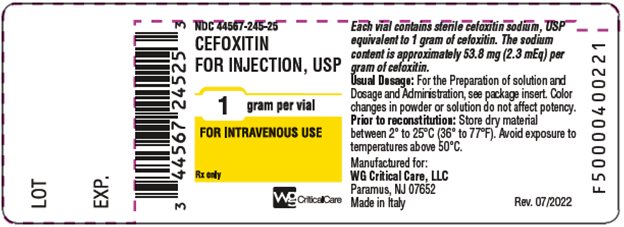
Cefoxitin 1 g Injection, Powder, For Solution, 25 vials — NDC 44567-245-25 (Billing 44567-0245-25)
This is a package of 25 vials of Cefoxitin 1 g Injection, Powder, For Solution from WG Critical Care, LLC, marketed since Feb 2015 and currently FDA-listed. It is the main listing for this product, which comes in 2 package sizes.
Identity & classification
Regulatory identifiers FDA, NLM and CMS codes for this package
Drug-database identifiers Medi-Span GPI and First Databank GCN / HICL / AHFS classification
- GSN (GCN sequence number): 015944
- GCN: 33941
- HICL (First Databank): 003979
- AHFS class code: 08:12.06.08
- RxCUI (RxNorm): 1665102
Where does this data come from?
- FDA openFDA NDC Directory · synced Oct 1, 2026
- FDA label on DailyMed · label index refreshed Oct 1, 2026
- RxNorm (NLM RxNav) · catalog refreshed Oct 1, 2026
- Medi-Span GPI (licensed)
- First Databank (licensed) · refreshed Oct 1, 2026
RxNorm drug class
This medicine belongs to the Cephalosporin Antibacterial class.
Where does this data come from?
- RxClass (NLM) · catalog refreshed Oct 1, 2026
Clinical
- It's an antibiotic for bacterial infections such as pneumonia, urinary tract, abdominal, pelvic, bloodstream, bone, joint and skin infections. It's also used to help prevent infect...
- It's given through a vein by a healthcare professional, usually every several hours. Your prescriber chooses the dose and length based on your infection and kidney function. Follow...
- The most common are irritation at the IV site, diarrhea, nausea, vomiting, and rash or itching. Tell your care team if you notice these, especially if they bother you.
- Get help immediately for trouble breathing, facial swelling, hives or a severe rash. Also call for severe or watery diarrhea, which can show up even weeks to months after treatment...
Patient education
Supplement & herbal interactions
Some supplements/herbs that may interact with Cefoxitin — tap one for details:
Cefoxitin may be associated with lower levels of 7 nutrients — worth a chat with your pharmacist, not a cause for alarm.
Where does this data come from?
- MedlinePlus (NLM) · refreshed Oct 1, 2026
- FDA label on DailyMed · label index refreshed Oct 1, 2026
Ask a licensed pharmacist directly — free, answered by our team.
Pricing
A drug doesn't have one price. Each row is a different public payment system, and none is what you'd pay at the counter — that depends on your insurance. The ⓘ on each row explains what it measures.
| Price system | Per mL | Per package |
|---|---|---|
| Retail pharmacies payNADAC · weekly | Not in the retail survey — common for institutional, discontinued, or low-volume packs. | |
| Medicaid paysCMS SDUD · 12 mo | $1.13 | — |
| Medicare drug plans payPart D · Q2 2026 | $5.04 | — |
| Medicare Part B allowsASP · J0694 | $4.285 / J0694 unit | — |
Where does this data come from?
- CMS NADAC weekly file
- CMS ASP pricing files · refreshed Sep 20, 2026
- CMS Medicaid State Drug Utilization Data · through Q4 2025
- CMS Part D plan pricing files · refreshed Sep 24, 2026
- VA National Acquisition Center price file
Billing & reimbursement
Where does this data come from?
- CMS ASP NDC-HCPCS crosswalk · refreshed Sep 22, 2026
- DMEPDAC NDC-HCPCS crosswalk
- openFDA NSDE billing units · refreshed Sep 7, 2026
Packaging — all sizes for this product
| Package NDC | Description | Marketing start | Marketing end | Status |
|---|---|---|---|---|
| 44567-0245-25 You're viewing this Main listing | 25 VIAL in 1 CARTON / 1 INJECTION, POWDER, FOR SOLUTION in 1 VIAL | 2015-02-18 | — | Active |
| 44567-0245-85 44567-245-85 | 25 VIAL in 1 CARTON / 1 INJECTION, POWDER, FOR SOLUTION in 1 VIAL | 2017-07-10 | — | Active |
Pack size FAQ
What quantity is in this package?
How does this package differ from NDC 44567-0245-85?
What NDC number is used to bill for this package of Cefoxitin 1 g Injection, Powder, For Solution?
Therapeutic equivalents
| Product | Labeler | Pack | NADAC/unit | TE | Status | Price vs. this |
|---|---|---|---|---|---|---|
| Cefoxitin 1 g 00143-9878-25 | Hikma | 25 vials | — | AP | FDA listed | — |
| Cefoxitin and Dextrose 1 g/50mL 00264-3123-11 | B. | 50 ml | — | AP | FDA listed | — |
| Cefoxitin 1 g 25021-0109-10 | Sagent | 10 vials | — | AP | FDA listed | — |
| Cefoxitin 1 gthis 44567-0245-25 | WG | 25 vials | — | AP | FDA listed | — |
| Cefoxitin 1 g 63323-0341-25 | Fresenius | 25 vials | — | AP | FDA listed | — |
Where does this data come from?
- FDA openFDA NDC Directory · synced Oct 1, 2026
- FDA Orange Book · refreshed Oct 3, 2026
- CMS NADAC weekly file
Availability & generic status
This product is an FDA-approved generic. Other versions of the same drug are listed under Therapeutic equivalents, least expensive first.
Where does this data come from?
- FDA Orange Book · refreshed Oct 3, 2026
Inactive Ingredients / Excipients
Inactive ingredients, also called excipients, are components of the drug product other than the active ingredient. They may include fillers, dyes, coatings, preservatives, flavors, or other formulation ingredients.
Where does this data come from?
IACT rows and label-wide narrative are kept separate; availability and product-level specificity depend on the submitted label.- FDA label on DailyMed · label index refreshed Oct 1, 2026
- FDA openFDA NDC Directory · synced Oct 1, 2026
Inactive ingredient FAQ
Are inactive ingredients the same for every manufacturer?
Why might an inactive ingredient be missing?
Can inactive ingredients matter?
Manufacturer & labeler
Where does this data come from?
- FDA openFDA NDC Directory · synced Oct 1, 2026
- Drugs@FDA
Full prescribing information FDA SPL
🎯 Indications and Usage ▾
INDICATIONS AND USAGE Treatment Cefoxitin for Injection, USP is indicated for the treatment of serious infections caused by susceptible strains of the designated microorganisms in the diseases listed below. (1) Lower respiratory tract infections , including pneumonia and lung abscess, caused by Streptococcus pneumoniae, other streptococci (excluding enterococci, e.g., Enterococcus faecalis [formerly Streptococcus faecalis]), Staphylococcus aureus (including penicillinase-producing strains), Escherichia coli, Klebsiella species, Haemophilus influenzae, and Bacteroides species.
(2) Urinary tract infections caused by Escherichia coli, Klebsiella species, Proteus mirabilis, Morganella morganii, Proteus vulgaris and Providencia species (including P. rettgeri ). (3) Intra-abdominal infections , including peritonitis and intra-abdominal abscess, caused by Escherichia coli, Klebsiella species, Bacteroides species including Bacteroides fragilis, and Clostridium species. (4) Gynecological infections , including endometritis, pelvic cellulitis, and pelvic inflammatory disease caused by Escherichia coli, Neisseria gonorrhoeae (including penicillinase-producing strains), Bacteroides species including B. fragilis, Clostridium species, Peptococcus niger, Peptostreptococcus species, and Streptococcus agalactiae .
Cefoxitin for Injection, USP, like cephalosporins, has no activity against Chlamydia trachomatis . Therefore, when Cefoxitin for Injection, USP is used in the treatment of patients with pelvic inflammatory disease and C. trachomatis is one of the suspected pathogens, appropriate anti-chlamydial coverage should be added. (5) Septicemia caused by Streptococcus pneumoniae, Staphylococcus aureus (including penicillinase-producing strains), Escherichia coli, Klebsiella species, and Bacteroides species including B. fragilis .
(6) Bone and joint infections caused by Staphylococcus aureus (including penicillinase-producing strains). (7) Skin and skin structure infections caused by Staphylococcus aureus (including penicillinase-producing strains), Staphylococcus epidermidis, Streptococcus pyogenes and other streptococci (excluding enterococci e.g., Enterococcus faecalis [formerly Streptococcus faecalis]), Escherichia coli, Proteus mirabilis, Klebsiella species, Bacteroides species including B. fragilis, Clostridium species, Peptococcus niger, and Peptostreptococcus species.
Appropriate culture and susceptibility studies should be performed to determine the susceptibility of the causative organisms to Cefoxitin for Injection, USP. Therapy may be started while awaiting the results of these studies. In randomized comparative studies, Cefoxitin for Injection, USP and cephalothin were comparably safe and effective in the management of infections caused by gram-positive cocci and gram-negative rods susceptible to the cephalosporins.
Cefoxitin for Injection, USP has a high degree of stability in the presence of bacterial beta-lactamases, both penicillinases and cephalosporinases. Many infections caused by aerobic and anaerobic gram-negative bacteria resistant to some cephalosporins respond to Cefoxitin for Injection, USP. Similarly, many infections caused by aerobic and anaerobic bacteria resistant to some penicillin antibiotics (ampicillin, carbenicillin, penicillin G) respond to treatment with Cefoxitin for Injection, USP.
Many infections caused by mixtures of susceptible aerobic and anaerobic bacteria respond to treatment with Cefoxitin for Injection, USP. Prevention Cefoxitin for Injection, USP is indicated for the prophylaxis of infection in patients undergoing uncontaminated gastrointestinal surgery, vaginal hysterectomy, abdominal hysterectomy, or cesarean section. If there are signs of infection, specimens for culture should be obtained for identification of the causative organism so that appropriate treatment may be instituted.
To reduce the development of drug-resistant bacteria and maintain the effectiveness of Cefoxitin for Injection, US… [Excerpted — this section continues on DailyMed.]
⏱️ Dosage and Administration ▾
DOSAGE AND ADMINISTRATION Treatment Adults The usual adult dosage range is 1 gram to 2 grams every 6 to 8 hours. Dosage should be determined by susceptibility of the causative organisms, severity of infection, and the condition of the patient (see Table 1 for dosage guidelines). If C. trachomatis is a suspected pathogen, appropriate anti-chlamydial coverage should be added, because cefoxitin sodium has no activity against this organism.
Cefoxitin for Injection may be used in patients with reduced renal function with the following dosage adjustments: In adults with renal insufficiency, an initial loading dose of 1 gram to 2 grams may be given. After a loading dose, the recommendations for maintenance dosage (Table 2) may be used as a guide. When only the serum creatinine level is available, the following formula (based on sex, weight, and age of the patient) may be used to convert this value into creatinine clearance.
The serum creatinine should represent a steady state of renal function. Males: Weight (kg) x (140-age) 72 x serum creatinine (mg/100 mL) Females: 0.85 x above value In patients undergoing hemodialysis , the loading dose of 1gram to 2 grams should be given after each hemodialysis, and the maintenance dose should be given as indicated in Table 2. Antibiotic therapy for group A beta-hemolytic streptococcal infections should be maintained for at least 10 days to guard against the risk of rheumatic fever or glomerulonephritis.
In staphylococcal and other infections involving a collection of pus, surgical drainage should be carried out where indicated. Pediatric Patients The recommended dosage in pediatric patients 3 months of age and older is 80 to 160 mg/kg of body weight per day divided into four to six equal doses. The higher dosages should be used for more severe or serious infections.
The total daily dosage should not exceed 12 grams. At this time no recommendation is made for pediatric patients from birth to 3 months of age (see PRECAUTIONS). In pediatric patients with renal insufficiency, the dosage and frequency of dosage should be modified consistent with the recommendations for adults (see Table 2).
Prevention Effective prophylactic use depends on the time of administration. Cefoxitin for Injection usually should be given one-half to one hour before the operation, which is sufficient time to achieve effective levels in the wound during the procedure. Prophylactic administration should usually be stopped within 24 hours since continuing administration of any antibiotic increases the possibility of adverse reactions but, in the majority of surgical procedures, does not reduce the incidence of subsequent infection.
For prophylactic use in uncontaminated gastrointestinal surgery, vaginal hysterectomy, or abdominal hysterectomy, the following doses are recommended: Adults: 2 grams administered intravenously just prior to surgery (approximately one-half to one hour before the initial incision) followed by 2 grams every 6 hours after the first dose for no more than 24 hours. Pediatric Patients (3 months and older): 30 to 40 mg/kg doses may be given at the times designated above. Cesarean Section Patients: For patients undergoing cesarean section, either a single 2 gram dose administered intravenously as soon as the umbilical cord is clamped OR a 3-dose regimen consisting of 2 grams given intravenously as soon as the umbilical cord is clamped followed by 2 grams 4 and 8 hours after the initial dose is recommended.
(See CLINICAL STUDIES.) Table 1. Guidelines for Dosage of Cefoxitin for Injection Type of Infection Daily Dosage Frequency and Route Uncomplicated forms* of infections such as pneumonia, urinary tract infection, cutaneous infection 3 to 4 grams 1 gram every 6 to 8 hours IV Moderately severe or severe infections 6 to 8 grams 1 gram every 4 hours or 2 grams every 6 to 8 hours IV Infections commonly needing antibiotics in higher dosage (e.g., gas gangrene) 12 grams 2 grams every 4 hours or 3 grams every 6 hour… [Excerpted — this section continues on DailyMed.]
⛔ Contraindications ▾
CONTRAINDICATIONS Cefoxitin for Injection is contraindicated in patients who have shown hypersensitivity to cefoxitin and the cephalosporin group of antibiotics.
⚠️ Warnings ▾
WARNINGS BEFORE THERAPY WITH CEFOXITIN FOR INJECTION IS INSTITUTED, CAREFUL INQUIRY SHOULD BE MADE TO DETERMINE WHETHER THE PATIENT HAS HAD PREVIOUS HYPERSENSITIVITY REACTIONS TO CEFOXITIN, CEPHALOSPORINS, PENICILLINS, OR OTHER DRUGS. THIS PRODUCT SHOULD BE GIVEN WITH CAUTION TO PENICILLIN-SENSITIVE PATIENTS. ANTIBIOTICS SHOULD BE ADMINISTERED WITH CAUTION TO ANY PATIENT WHO HAS DEMONSTRATED SOME FORM OF ALLERGY, PARTICULARLY TO DRUGS.
IF AN ALLERGIC REACTION TO CEFOXITIN FOR INJECTION OCCURS, DISCONTINUE THE DRUG. SERIOUS HYPERSENSITIVITY REACTIONS MAY REQUIRE EPINEPHRINE AND OTHER EMERGENCY MEASURES. Clostridium difficile associated diarrhea (CDAD) has been reported with the use of nearly all antibacterial agents, including cefoxitin, and may range in severity from mild diarrhea to fatal colitis.
Treatment with antibacterial agents alters the normal flora of the colon leading to overgrowth of C. difficile. C. difficile produces toxins A and B which contribute to the development of CDAD. Hypertoxin producing strains of C. difficile cause increased morbidity and mortality, as these infections can be refractory to antimicrobial therapy and may require colectomy.
CDAD must be considered in all patients who present with diarrhea following antibiotic use. Careful medical history is necessary since CDAD has been reported to occur over two months after the administration of antibacterial agents. If CDAD is suspected or confirmed, ongoing antibiotic use not directed against C. difficile may need to be discontinued.
Appropriate fluid and electrolyte management, protein supplementation, antibiotic treatment of C. difficile, and surgical evaluation should be instituted as clinically indicated.
🤒 Adverse Reactions ▾
ADVERSE REACTIONS Cefoxitin for Injection is generally well tolerated. The most common adverse reactions have been local reactions following intravenous injection. Other adverse reactions have been encountered infrequently.
Local Reactions Thrombophlebitis has occurred with intravenous administration. Allergic Reactions Rash (including exfoliative dermatitis and toxic epidermal necrolysis), urticaria, flushing, pruritus, eosinophilia, fever, dyspnea, and other allergic reactions including anaphylaxis, interstitial nephritis and angioedema have been noted. Cardiovascular Hypotension.
Gastrointestinal Diarrhea, including documented pseudomembranous colitis which can appear during or after antibiotic treatment. Nausea and vomiting have been reported rarely. Neuromuscular Possible exacerbation of myasthenia gravis.
Blood Eosinophilia, leukopenia including granulocytopenia, neutropenia, anemia, including hemolytic anemia, thrombocytopenia, and bone marrow depression. A positive direct Coombs test may develop in some individuals, especially those with azotemia. Liver Function Transient elevations in SGOT, SGPT, serum LDH, and serum alkaline phosphatase; and jaundice have been reported.
Renal Function Elevations in serum creatinine and/or blood urea nitrogen levels have been observed. As with the cephalosporins, acute renal failure has been reported rarely. The role of Cefoxitin for Injection in changes in renal function tests is difficult to assess, since factors predisposing to prerenal azotemia or to impaired renal function usually have been present.
In addition to the adverse reactions listed above which have been observed in patients treated with Cefoxitin for Injection, the following adverse reactions and altered laboratory test results have been reported for cephalosporin class antibiotics: Urticaria, erythema multiforme, Stevens-Johnson syndrome, serum sickness-like reactions, abdominal pain, colitis, renal dysfunction, toxic nephropathy, false-positive test for urinary glucose, hepatic dysfunction including cholestasis, elevated bilirubin, aplastic anemia, hemorrhage, prolonged prothrombin time, pancytopenia, agranulocytosis, superinfection, vaginitis including vaginal candidiasis.
Several cephalosporins have been implicated in triggering seizures, particularly in patients with renal impairment when the dosage was not reduced. (See DOSAGE AND ADMINISTRATION). If seizures associated with drug therapy occur, the drug should be discontinued.
Anticonvulsant therapy can be given if clinically indicated. To report SUSPECTED ADVERSE EVENTS, contact WG Critical Care, LLC at 1-866-562-4708 or FDA at 1-800-FDA-1088 or www.fda.gov .
🔄 Drug Interactions ▾
Drug Interactions Increased nephrotoxicity has been reported following concomitant administration of cephalosporins and aminoglycoside antibiotics.
🔄 Drug / Laboratory Test Interactions ▾
Drug/Laboratory Test Interactions As with cephalothin, high concentrations of cefoxitin (>100 mcg/mL) may interfere with measurement of serum and urine creatinine levels by the Jaffé reaction, and produce false increases of modest degree in the levels of creatinine reported. Serum samples from patients treated with cefoxitin should not be analyzed for creatinine if withdrawn within 2 hours of drug administration. High concentrations of cefoxitin in the urine may interfere with measurement of urinary 17-hydroxy-corticosteroids by the Porter-Silber reaction, and produce false increases of modest degree in the levels reported.
A false-positive reaction for glucose in the urine may occur. This has been observed with CLINITEST † reagent tablets.
🤰 Pregnancy ▾
Pregnancy Reproduction studies performed in rats and mice at parenteral doses of approximately one to seven and one-half times the maximum recommended human dose did not reveal teratogenic or fetal toxic effects, although a slight decrease in fetal weight was observed. There are, however, no adequate and well-controlled studies in pregnant women. Because animal reproduction studies are not always predictive of human response, this drug should be used during pregnancy only if clearly needed.
In the rabbit, cefoxitin was associated with a high incidence of abortion and maternal death. This was not considered to be a teratogenic effect but an expected consequence of the rabbit’s unusual sensitivity to antibiotic-induced changes in the population of the microflora of the intestine.
🧒 Pediatric Use ▾
Pediatric Use Safety and efficacy in pediatric patients from birth to 3 months of age have not yet been established. In pediatric patients 3 months of age and older, higher doses of Cefoxitin for Injection have been associated with an increased incidence of eosinophilia and elevated SGOT.
🧓 Geriatric Use ▾
Geriatric Use Of the 1,775 subjects who received cefoxitin in clinical studies, 424 (24%) were 65 and over, while 124 (7%) were 75 and over. No overall differences in safety or effectiveness were observed between these subjects and younger subjects, and other reported clinical experience has not identified differences in responses between the elderly and younger patients, but greater sensitivity of some older individuals cannot be ruled out (see CLINICAL PHARMACOLOGY). This drug is known to be substantially excreted by the kidney, and the risk of toxic reactions to this drug may be greater in patients with impaired renal function.
Because elderly patients are more likely to have decreased renal function, care should be taken in dose selection, and it may be useful to monitor renal function (see DOSAGE AND ADMINISTRATION and PRECAUTIONS).
🆘 Overdosage ▾
OVERDOSAGE The acute intravenous LD 50 in the adult female mouse and rabbit was about 8 g/kg and greater than 1 g/kg, respectively. The acute intraperitoneal LD 50 in the adult rat was greater than 10 g/kg.
🧬 Clinical Pharmacology ▾
CLINICAL PHARMACOLOGY Clinical Pharmacology Following an intravenous dose of 1 gram, serum concentrations were 110 mcg/mL at 5 minutes, declining to less than 1 mcg/mL at 4 hours. The half-life after an intravenous dose is 41 to 59 minutes. Approximately 85 percent of cefoxitin is excreted unchanged by the kidneys over a 6-hour period, resulting in high urinary concentrations.
Probenecid slows tubular excretion and produces higher serum levels and increases the duration of measurable serum concentrations. Cefoxitin passes into pleural and joint fluids and is detectable in antibacterial concentrations in bile. In a published study of geriatric patients ranging in age from 64 to 88 years with normal renal function for their age (creatinine clearance ranging from 31.5 to 174.0 mL/min), the half-life for cefoxitin ranged from 51 to 90 minutes, resulting in higher plasma concentrations than in younger adults.
These changes were attributed to decreased renal function associated with the aging process. Microbiology Mechanism of Action Cefoxitin is a bactericidal agent that acts by inhibition of bacterial cell wall synthesis. Cefoxitin has activity in the presence of some beta-lactamases, both penicillinases and cephalosporinases, of Gram-negative and Gram-positive bacteria.
Mechanism of Resistance Resistance to cefoxitin is primarily through hydrolysis by beta-lactamase, alteration of penicillin-binding proteins (PBPs), and decreased permeability. Cefoxitin has been shown to be active against most isolates of the following bacteria, both in vitro and in clinical infections as described in the INDICATIONS AND USAGE section: Gram-positive bacteria Staphylococcus aureus (methicillin-susceptible isolates only) Staphylococcus epidermidis (methicillin-susceptible isolates only) Streptococcus agalactiae Streptococcus pneumoniae Streptococcus pyogenes Gram-negative bacteria Escherichia coli Haemophilus influenzae Klebsiella spp.
Morganella morganii Neisseria gonorrhoeae Proteus mirabilis Proteus vulgaris Providencia spp. Anaerobic bacteria Clostridium spp. Peptococcus niger Peptostreptococcus spp.
Bacteroides spp. The following in vitro data are available, but their clinical significance is unknown. At least 90 percent of the following microorganisms exhibit an in vitro minimum inhibitory concentration (MIC) less than or equal to the susceptible breakpoint for cefoxitin.
However, the efficacy of cefoxitin in treating clinical infections due to these microorganisms has not been established in adequate and well-controlled clinical trials. Gram-negative bacteria Eikenella corrodens (non-β-lactamase producers) Anaerobic bacteria Clostridium perfringens Prevotella bivia Susceptibility Testing For specific information regarding susceptibility test interpretive criteria and associated test methods and quality control standards recognized by FDA for this drug, please see: https://www.fda.gov/STIC.
📦 How Supplied / Storage and Handling ▾
HOW SUPPLIED Cefoxitin for Injection, USP is a dry white to off-white powder supplied in conventional vials containing cefoxitin sodium as follows: NDC 44567-245-25 Cefoxitin for Injection, USP contains cefoxitin sodium equivalent to 1 gram cefoxitin (carton of 25 vials). NDC 44567-246-25 Cefoxitin for Injection, USP contains cefoxitin sodium equivalent to 2 grams cefoxitin (carton of 25 vials). The container closure is not made with natural rubber latex.
Special storage instructions Cefoxitin for Injection, USP in the dry state should be stored between 2º to 25ºC (36º to 77ºF). Avoid exposure to temperatures above 50ºC. The dry material as well as solutions tend to darken, depending on storage conditions; product potency, however, is not adversely affected.
📋 Description ▾
DESCRIPTION Cefoxitin for Injection, USP contains cefoxitin sodium a semi-synthetic, broad-spectrum cephalosporin antibiotic for parenteral administration. It is derived from cephalosporin C, which is produced by Cephalosporium Acremonium . It is the sodium salt of 3-(hydroxymethyl)-7-methoxy-8-oxo-7-[2-(2-thienyl)acetamido]-5-thia-1-azabicyclo[4.2.0]oct-2-ene-2-carboxylate carbamate (ester).
The molecular formula is C 16 H 16 N 3 NaO 7 S 2 , and the structural formula is: Cefoxitin for Injection, USP contains approximately 53.8 mg (2.3 milliequivalents) of sodium per gram of cefoxitin activity. Solutions of Cefoxitin for Injection, USP range from colorless to light amber in color. The pH of freshly constituted solutions usually ranges from 4.2 to 7.0.
Each conventional vial contains sterile cefoxitin sodium, USP equivalent to 1 or 2 g cefoxitin. structural formula
💬 Information for Patients ▾
Information for Patients Patients should be counseled that antibacterial drugs including Cefoxitin for Injection should only be used to treat bacterial infections. They do not treat viral infections (e.g., the common cold). When Cefoxitin for Injection is prescribed to treat a bacterial infection, patients should be told that although it is common to feel better early in the course of therapy, the medication should be taken exactly as directed.
Skipping doses or not completing the full course of therapy may (1) decrease the effectiveness of the immediate treatment and (2) increase the likelihood that bacteria will develop resistance and will not be treatable by Cefoxitin for Injection or other antibacterial drugs in the future. Diarrhea is a common problem caused by antibiotics, which usually ends when the antibiotic is discontinued. Sometimes after starting the treatment with antibiotics, patients can develop watery and bloody stools (with or without stomach cramps and fever) even as late as two or more months after having taken the last dose of the antibiotic.
If this occurs, patients should contact their physician as soon as possible.
⚠️ Precautions ▾
PRECAUTIONS General The total daily dose should be reduced when Cefoxitin for Injection is administered to patients with transient or persistent reduction of urinary output due to renal insufficiency (see DOSAGE AND ADMINISTRATION), because high and prolonged serum antibiotic concentrations can occur in such individuals from usual doses. Antibiotics (including cephalosporins) should be prescribed with caution in individuals with a history of gastrointestinal disease, particularly colitis. As with other antibiotics, prolonged use of Cefoxitin for Injection may result in overgrowth of nonsusceptible organisms.
Repeated evaluation of the patient’s condition is essential. If superinfection occurs during therapy, appropriate measures should be taken. Prescribing Cefoxitin for Injection in the absence of a proven or strongly suspected bacterial infection or a prophylactic indication is unlikely to provide benefit to the patient and increases the risk of the development of drug-resistant bacteria.
Information for Patients Patients should be counseled that antibacterial drugs including Cefoxitin for Injection should only be used to treat bacterial infections. They do not treat viral infections (e.g., the common cold). When Cefoxitin for Injection is prescribed to treat a bacterial infection, patients should be told that although it is common to feel better early in the course of therapy, the medication should be taken exactly as directed.
Skipping doses or not completing the full course of therapy may (1) decrease the effectiveness of the immediate treatment and (2) increase the likelihood that bacteria will develop resistance and will not be treatable by Cefoxitin for Injection or other antibacterial drugs in the future. Diarrhea is a common problem caused by antibiotics, which usually ends when the antibiotic is discontinued. Sometimes after starting the treatment with antibiotics, patients can develop watery and bloody stools (with or without stomach cramps and fever) even as late as two or more months after having taken the last dose of the antibiotic.
If this occurs, patients should contact their physician as soon as possible. Laboratory Tests As with any potent antibacterial agent, periodic assessment of organ system functions, including renal, hepatic, and hematopoietic, is advisable during prolonged therapy. Drug Interactions Increased nephrotoxicity has been reported following concomitant administration of cephalosporins and aminoglycoside antibiotics.
Drug/Laboratory Test Interactions As with cephalothin, high concentrations of cefoxitin (>100 mcg/mL) may interfere with measurement of serum and urine creatinine levels by the Jaffé reaction, and produce false increases of modest degree in the levels of creatinine reported. Serum samples from patients treated with cefoxitin should not be analyzed for creatinine if withdrawn within 2 hours of drug administration. High concentrations of cefoxitin in the urine may interfere with measurement of urinary 17-hydroxy-corticosteroids by the Porter-Silber reaction, and produce false increases of modest degree in the levels reported.
A false-positive reaction for glucose in the urine may occur. This has been observed with CLINITEST † reagent tablets. Carcinogenesis, Mutagenesis, Impairment of Fertility Long-term studies in animals have not been performed with cefoxitin to evaluate carcinogenic or mutagenic potential.
Studies in rats treated intravenously with 400 mg/kg of cefoxitin (approximately 3 times the maximum recommended human dose) revealed no effects on fertility or mating ability. Pregnancy Reproduction studies performed in rats and mice at parenteral doses of approximately one to seven and one-half times the maximum recommended human dose did not reveal teratogenic or fetal toxic effects, although a slight decrease in fetal weight was observed. There are, however, no adequate and well-controlled studies in pregnant women.
Because animal reproduction studies are not always pred… [Excerpted — this section continues on DailyMed.]
🍼 Nursing Mothers ▾
Nursing Mothers Cefoxitin is excreted in human milk in low concentrations. Caution should be exercised when Cefoxitin for Injection is administered to a nursing woman.
🔬 Clinical Studies ▾
CLINICAL STUDIES A prospective, randomized, double-blind, placebo-controlled clinical trial was conducted to determine the efficacy of short-term prophylaxis with Cefoxitin for Injection in patients undergoing cesarean section who were at high risk for subsequent endometritis because of ruptured membranes. Patients were randomized to receive either three doses of placebo (n=58), a single dose of Cefoxitin for Injection (2 g) followed by two doses of placebo (n=64), or a three-dose regimen of Cefoxitin for Injection (each dose consisting of 2 g) (n=60), given intravenously, usually beginning at the time of clamping of the umbilical cord, with the second and third doses given 4 and 8 hours post-operatively.
Endometritis occurred in 16/58 (27.6%) patients given placebo, 5/63 (7.9%) patients given a single dose of Cefoxitin for Injection, and 3/58 (5.2%) patients given three doses of Cefoxitin for Injection. The differences between the two groups treated with Cefoxitin for Injection and placebo with respect to endometritis were statistically significant (p<0.01) in favor of Cefoxitin for Injection. The differences between the one-dose and three-dose regimens of Cefoxitin for Injection were not statistically significant.
Two double-blind, randomized studies compared the efficacy of a single 2 gram intravenous dose of Cefoxitin for Injection to a single 2 gram intravenous dose of cefotetan in the prevention of surgical site-related infection (major morbidity) and non-site-related infections (minor morbidity) in patients following cesarean section. In the first study, 82/98 (83.7%) patients treated with Cefoxitin for Injection and 71/95 (74.7%) patients treated with cefotetan experienced no major or minor morbidity. The difference in the outcomes in this study (95% CI: -0.03, +0.21) was not statistically significant.
In the second study, 65/75 (86.7%) patients treated with Cefoxitin for Injection and 62/76 (81.6%) patients treated with cefotetan experienced no major or minor morbidity. The difference in the outcomes in this study (95% Cl: -0.08, +0.18) was not statistically significant. In clinical trials of patients with intra-abdominal infections due to Bacteroides fragilis group microorganisms, eradication rates at 1 to 2 weeks posttreatment for isolates were in the range of 70% to 80%.
Eradication rates for individual species are listed below: Bacteroides distasonis 7/10 (70%) Bacteroides fragilis 26/33 (79%) Bacteroides ovatus 10/13 (77%) B. thetaiotaomicron 13/18 (72%) NOTES: † Clinitest is a trademark of Seimens Healthcare Diagnostics Inc. †† Registered trademark of Abbott Laboratories, Inc. Manufactured for: WG Critical Care, LLC Paramus, NJ 07652 Made in Italy Revised: March 2019
📄 Carcinogenesis, Mutagenesis, Impairment of Fertility ▾
Carcinogenesis, Mutagenesis, Impairment of Fertility Long-term studies in animals have not been performed with cefoxitin to evaluate carcinogenic or mutagenic potential. Studies in rats treated intravenously with 400 mg/kg of cefoxitin (approximately 3 times the maximum recommended human dose) revealed no effects on fertility or mating ability.
📄 Package Label / Principal Display Panel ▾
PRINCIPAL DISPLAY PANEL - 1 gram NDC 44567-245-25 Cefoxitin for Injection, USP 1 gram per vial For Intravenous Use Rx only Cefoxitin for Injection, USP 1 g vial label image
PRINCIPAL DISPLAY PANEL - 2 gram NDC 44567-246-25 Cefoxitin for Injection, USP 2 grams per vial For Intravenous Use Rx only Cefoxitin 2 g vial label
Medicaid utilization & spend
Medicaid utilization by pack size
Medicare Part D spend CMS · PART D · 2026 (Q1)
About this NDC listing & data coverage
What data is (and isn’t) available for this NDC — tap to expand
| NDC identity (package / product / labeler codes) | ✓ Available |
| Labeler | ✓ Available |
| Product & package description | ✓ Available |
| Marketing category & status | ✓ Available |
| Active ingredient / dosage form / route | ✓ Available |
| FDA label (SPL via DailyMed) | ✓ Available |
| Package photos | ✓ Available |
| Inactive ingredients (structured) | — Not published for this NDC The labeler did not submit a structured excipient list, or no SPL is available. |
| NADAC pharmacy acquisition price (CMS) | — Not published for this NDC CMS publishes NADAC only for NDCs reported in its retail-pharmacy survey. |
| Orange Book / therapeutic-equivalence data | ✓ Available |
| HCPCS J-code billing crosswalk | ✓ Available |
| Medicaid utilization (CMS SDUD) | ✓ Available |