
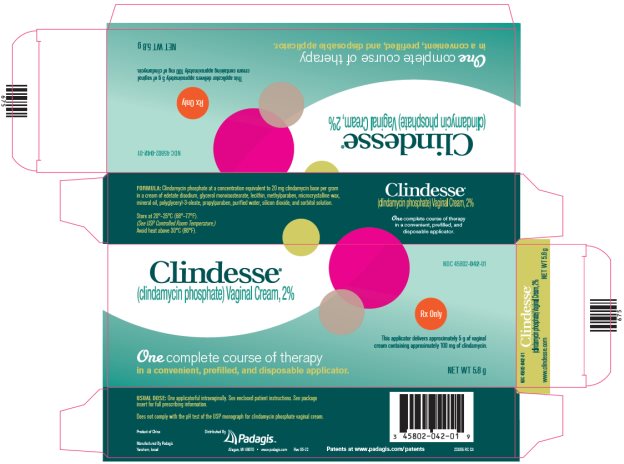
Clindesse clindamycin phosphate 100 mg/5g Cream — NDC 45802-042-01 (Billing 45802-0042-01) · Product 45802-042
NDC 45802-042-01 (billing 45802-0042-01) is a package of Clindesse clindamycin phosphate 100 mg/5g Cream from Padagis Israel Pharmaceuticals Ltd, marketed since Jul 2015 and currently FDA-listed; retail pharmacies pay about $26.62 per g (NADAC). It is the main listing for product NDC 45802-042, which comes in 2 package sizes.
Other active recalls for Clindamycin Phosphate (different manufacturers) — 6 · tap to view
Identity & classification
Regulatory identifiers FDA, NLM and CMS codes for this package
Drug-database identifiers Medi-Span GPI and First Databank GCN / HICL / AHFS classification
- GSN (GCN sequence number): 058439
- GCN: 23876
- GPI-14 (Medi-Span): 55100018113720
- HICL (First Databank): 004045
- AHFS class code: 08:12.28.20
- RxCUI (RxNorm): 309337
- 11-digit billing NDC: 45802004201
Where does this data come from?
- FDA openFDA NDC Directory · synced Oct 1, 2026
- FDA label on DailyMed · label index refreshed Oct 1, 2026
- RxNorm (NLM RxNav) · catalog refreshed Sep 24, 2026
- Medi-Span GPI (licensed)
- First Databank (licensed) · refreshed Oct 1, 2026
RxNorm drug class
This medicine belongs to the Lincosamide Antibacterial class.
Where does this data come from?
- RxClass (NLM) · catalog refreshed Sep 24, 2026
Clinical
- It treats bacterial vaginosis, a vaginal infection caused by an imbalance of bacteria. It can be used in non-pregnant women and in pregnant women in the second and third trimester....
- It's best not to. The cream contains mineral oil that can weaken latex condoms and diaphragms. Avoid them during treatment and for 5 days afterward, because they may not prevent pr...
- Some women get a vaginal yeast infection or vaginal irritation. These were the most common in trials. Let your prescriber know if symptoms bother you.
- Call if you get diarrhea, especially if it is bloody or doesn't go away. Antibiotics can allow a harmful bowel germ to overgrow, and this can happen even weeks after treatment. Als...
Patient education
Supplement & herbal interactions
Clindamycin may be associated with lower levels of 7 nutrients — worth a chat with your pharmacist, not a cause for alarm.
Where does this data come from?
- MedlinePlus (NLM) · refreshed Oct 1, 2026
- FDA label on DailyMed · label index refreshed Oct 1, 2026
Ask a licensed pharmacist directly — free, answered by our team.
Pricing
A drug doesn't have one price. Each row is a different public payment system, and none is what you'd pay at the counter — that depends on your insurance. The ⓘ on each row explains what it measures.
| Price system | Per g | Per package |
|---|---|---|
| Retail pharmacies payNADAC · weekly | $26.621 | $133.11 / 5 g |
| Medicaid paysCMS SDUD · 12 mo | $24.07 | $120.35 / 5 g |
| Medicare drug plans payPart D · Q2 2026 | $26.64 | $133.22 / 5 g |
Where does this data come from?
- CMS NADAC weekly file · file of Sep 30, 2026
- CMS ASP pricing files · refreshed Sep 20, 2026
- CMS Medicaid State Drug Utilization Data · through Q1 2026
- CMS Part D plan pricing files · refreshed Sep 24, 2026
- VA National Acquisition Center price file
Packaging — all sizes for this product
| Package NDC | Description | Per unit | Per pack | Marketing start | Marketing end | Status |
|---|---|---|---|---|---|---|
| 45802-0042-01 45802-042-01 You're viewing this Main listing | 1 APPLICATOR in 1 CARTON (45802-042-01) / 5 g in 1 APPLICATOR | $26.62 / g | $133.11 | 2015-07-03 | — | Active |
| 45802-0042-02 45802-042-02 | 1 APPLICATOR in 1 CARTON (45802-042-02) / 5 g in 1 APPLICATOR Sample | — | — | 2015-07-03 | — | Active |
In Medicaid, this is the most-dispensed pack of this product — about 100% of fills over the last four reported quarters. See all packs ↓
Pack size FAQ
What quantity is in NDC 45802-0042-01?
What NDC number is used to bill for this package of Clindesse clindamycin phosphate 100 mg/5g Cream?
Prices are the latest CMS NADAC pharmacy acquisition cost per NDC; per-pack figures are per-unit × pack quantity, shown only when the pack is denominated in the same measure NADAC prices.
Therapeutic equivalents
| Product | Labeler | Pack | NADAC/unit | TE | Status | Price vs. this |
|---|---|---|---|---|---|---|
| Cleocin 20 mg/g 00009-3448-01 | Pharmacia | 1 tube | $1.792 | AB | Availability likely | save 93% |
| Clindamycin Phosphate 20 mg/g 00168-0277-40 | E. | 40 g | $1.859 | AB | Availability likely | save 93% |
| clindamycin phosphate 20 mg/g 59762-5009-01 | Mylan | 1 tube | $1.859 | AB | Availability likely | save 93% |
| Xaciato 100 mg/5g 78206-0189-01 | Organon | 1 tube | $18.869 | — | Availability likely | save 29% |
| Clindesse 100 mg/5gthis 45802-0042-01 | Padagis | 1 applicator | $26.621 | — | Availability likely | — |
Where does this data come from?
- FDA openFDA NDC Directory · synced Oct 1, 2026
- FDA Orange Book · refreshed Sep 3, 2026
- CMS NADAC weekly file · file of Sep 30, 2026
Availability & generic status
FDA-approved generic versions are listed, and recent pricing/market data suggests they may be available — see Therapeutic equivalents.
Why the date isn’t exact: Generic timing can change because patents may be challenged, settled, licensed, added, removed, or worked around with a narrower label — and FDA approval does not always mean a pharmacy can get the generic today.
🛈 What do these terms mean?
- Patent
- Legal protection listed in the Orange Book that may delay generic approval or launch. Issued by the U.S. Patent & Trademark Office.
- Substance patent
- Covers the active drug molecule itself — the hardest to design around. A generic generally can’t launch until it expires.
- Formulation (product) patent
- Covers a specific formulation or dosage form. A generic can sometimes work around it with a different formulation.
- Method-of-use patent
- A patent covering one specific approved use of the drug — not necessarily the whole molecule. A generic can sometimes launch with a “skinny label” that carves out the protected use and keeps the others.
- Skinny label
- A generic label that omits a still-patented use when the FDA allows it — letting a generic reach the market for the unprotected uses.
- Exclusivity
- FDA-granted marketing protection, separate from patents — e.g. 5-yr new chemical entity, 7-yr orphan drug, or a +6-month pediatric extension.
- Paragraph IV
- A generic applicant’s formal challenge to a listed patent. It can potentially lead to earlier generic entry, but often involves litigation or a settlement.
- RLD / RS
- Reference Listed Drug — the brand product the FDA uses as the reference for generic applications. Reference Standard — the product the FDA expects generics to compare against in bioequivalence testing.
- TE / AB rating
- FDA therapeutic-equivalence rating. An AB rating generally means the FDA considers a generic therapeutically equivalent to — and substitutable for — the brand.
- LOE (loss of exclusivity)
- The latest patent or exclusivity currently listed — the loss-of-exclusivity / latest-listed-protection date shown on this page. Paragraph-IV challenges and settlements can move the real date earlier; FDA approval and a manufacturer’s decision to market can move it later.
Built from the FDA Orange Book. The bars above are scaled to each protection’s expiry; the red LOE marker is the last one to lapse.
| Patent | Type | Use code | Expires |
|---|---|---|---|
| US 9789057 ↗ | Method of use | U-137 | Dec 2, 2026 |
Is there a generic version of CLINDESSE 2% VAGINAL CREAM?
The FDA approved a generic — why can’t I get it at my pharmacy yet?
Why do different websites show different generic release dates?
What does “FDA listed” mean?
What does a patent or protection date mean here?
What does “current Orange Book estimate” mean?
Can a generic come out before the last patent expires?
Can a generic come out after the listed dates?
What is the difference between patents and exclusivity?
Why are there multiple patent dates?
Where does this data come from?
- FDA Orange Book · refreshed Sep 3, 2026
What it looks like
Where does this data come from?
- FDA label on DailyMed · label index refreshed Oct 1, 2026
Inactive Ingredients / Excipients
Inactive ingredients, also called excipients, are components of the drug product other than the active ingredient. They may include fillers, dyes, coatings, preservatives, flavors, or other formulation ingredients.
💡 Tap an ingredient (hover on desktop) to see what it is and why it’s used.
-
UNII 7FLD91C86K
Edetate disodium is a chemical compound that binds and removes certain metal ions. In medicines, it acts as a preservative and stabilizer by preventing metals like calcium from interfering with the product's shelf life and consistency.
-
UNII HYE7O27HAO
Glyceryl isostearate is a fatty substance derived from vegetable oils or animal fats. In medicines, it acts as an emulsifier to blend water and oil components together, and helps form a smooth texture in creams, ointments, and other topical products.
-
UNII 1DI56QDM62
A natural fatty substance from soybeans that helps mix oil and water-based ingredients together. It acts as an emulsifier and lubricant in medicines to improve texture and help the product break down properly in your body.
-
UNII A2I8C7HI9T
Methylparaben is a preservative derived from benzoic acid that prevents growth of bacteria, fungi, and mold in medicines. It extends the product's shelf life and maintains safety during storage.
-
UNII XOF597Q3KY
A refined form of wax made from petroleum, microcrystalline wax is used in medicines as a coating agent, binder, and hardening ingredient. It helps give tablets and capsules their shape and protective outer layer.
-
UNII T5L8T28FGP
Mineral oil is a clear, odorless liquid derived from crude oil. It acts as a lubricant and emollient in medications, helping pills slide smoothly during manufacturing and aiding moisture retention in topical products.
-
UNII XRQ165498B
A plant-derived emulsifier made from glycerin and oleic acid. It helps mix oil and water-based ingredients together in the formulation and improves product texture and stability.
-
UNII Z8IX2SC1OH
Propylparaben is a chemical preservative used to prevent bacterial and fungal growth in medicines and personal care products. It helps extend shelf life and maintain product safety during storage.
-
UNII ETJ7Z6XBU4
Silicon dioxide is a naturally occurring mineral used as a glidant and anti-caking agent. It helps powder ingredients flow smoothly and prevents clumping during manufacturing and storage.
-
UNII 506T60A25R
Sorbitol is a natural sugar alcohol derived from glucose. It serves as a sweetener, humectant, and bulking agent in medications to improve taste and help maintain moisture in the product.
-
UNII 059QF0KO0R
Water is a liquid solvent that dissolves and mixes ingredients together in liquid medicines, syrups, and injections. It helps distribute the active drug evenly throughout the product.
11 inactive ingredients listed in the exact product block matched to this NDC.
Where does this data come from?
ingredient classCode="IACT" elements from the exact product block matched by this NDC. Label-section narrative from DailyMed / the openFDA label index is shown separately when available.- FDA label on DailyMed · label index refreshed Oct 1, 2026
- FDA openFDA NDC Directory · synced Oct 1, 2026
Inactive ingredient FAQ
Are inactive ingredients the same for every manufacturer?
Why might an inactive ingredient be missing?
Can inactive ingredients matter?
Manufacturer & labeler
Where does this data come from?
- FDA openFDA NDC Directory · synced Oct 1, 2026
- Drugs@FDA
Full prescribing information FDA SPL
🎯 Indications and Usage ▾
1 INDICATIONS AND USAGE Clindesse is a lincosamide antibacterial indicated for the treatment of bacterial vaginosis in non-pregnant women ( 1.1 )
1.1Treatment of Bacterial Vaginosis Clindesse is indicated for the treatment of bacterial vaginosis (formerly referred to as Haemophilus vaginitis, Gardnerella vaginitis, nonspecific vaginitis, Corynebacterium vaginitis, or anaerobic vaginosis) in non-pregnant women.
⏱️ Dosage and Administration ▾
2 DOSAGE AND ADMINISTRATION The recommended dose is the complete contents of a single pre-filled applicator containing 5 g of Clindesse cream administered once intravaginally at any time of the day. Not for ophthalmic, dermal, or oral use. • For intravaginal use only • A single applicator of cream administered once intravaginally at any time of the day ( 2 ) • Not for ophthalmic, dermal, or oral use
💊 Dosage Forms and Strengths ▾
3 DOSAGE FORMS AND STRENGTHS Clindesse is an intravaginal cream containing clindamycin phosphate 2%. Each pre-filled, single-dose applicator delivers approximately 5 g of cream containing approximately 100 mg of clindamycin. Vaginal cream: 2% clindamycin phosphate in one single-dose, pre-filled disposable applicator that delivers approximately 5 g of cream containing approximately 100 mg of clindamycin ( 3 )
⛔ Contraindications ▾
4 CONTRAINDICATIONS • History of hypersensitivity to clindamycin or other lincosamides ( 4.1 ) • History of regional enteritis, ulcerative colitis, or a history of Clostridioides difficile- associated diarrhea ( 4.2 , 5.1 )
4.1Hypersensitivity Clindesse is contraindicated in individuals with a history of hypersensitivity to clindamycin or other lincosamides. Reported reactions to other formulations of clindamycin include rashes, urticaria, erythema multiforme, and anaphylactoid reactions [see Adverse Reactions ( 6.2 )] .
4.2History of Bowel Disease Clindesse is contraindicated in patients with regional enteritis, ulcerative colitis, or a history of Clostridioides difficile -associated diarrhea.
⚠️ Warnings and Cautions ▾
5 WARNINGS AND PRECAUTIONS • Clostridioides difficile -Associated Diarrhea: Discontinue and evaluate if diarrhea occurs ( 5.1 ) • Use with Condoms and Vaginal Contraceptive Diaphragms: The use of barrier contraceptives (condoms or vaginal contraceptive diaphragms) is not recommended concurrently or for 5 days following treatment. Condoms may not be reliable for preventing pregnancy or for protecting against transmission of HIV and other sexually transmitted diseases during this time period ( 5.2 , 8.3 )
5.1Clostridioides difficile -Associated Diarrhea (CDAD) Clostridioides difficile -associated diarrhea (CDAD) has been reported with use of nearly all antibacterial agents, including clindamycin, and may range in severity from mild diarrhea to fatal colitis. Treatment with antibacterial agents alters the normal flora of the colon leading to overgrowth of C. difficile . C. difficile produces toxins A and B which contribute to the development of CDAD.
Hypertoxin producing strains of C. difficile cause increased morbidity and mortality, as these infections can be refractory to antimicrobial therapy and may require colectomy. CDAD must be considered in all patients who present with diarrhea following antibiotic use. Careful medical history is necessary since CDAD has been reported to occur over two months after the administration of antibacterial agents.
If CDAD is suspected or confirmed, ongoing antibiotic use not directed against C. difficile may need to be discontinued. Appropriate fluid and electrolyte management, protein supplementation, antibiotic treatment of C. difficile , and surgical evaluation should be instituted as clinically indicated [see Adverse Reactions ( 6.2 )] .
5.2Use with Condoms and Vaginal Contraceptive Diaphragms This cream contains mineral oil that may weaken latex or rubber products such as condoms or vaginal contraceptive diaphragms. Therefore, the use of such barrier contraceptives is not recommended concurrently or for 5 days following treatment with Clindesse. During this time period, condoms may not be reliable for preventing pregnancy or for protecting against transmission of HIV and other sexually transmitted diseases [see Use in Specific Populations ( 8.3 )] .
🤒 Adverse Reactions ▾
6 ADVERSE REACTIONS Most common adverse reactions reported in ≥2% of patients and at a higher rate in the Clindesse group than in the placebo group are vaginosis fungal (14%), headache (7%), back pain (5%), constipation (2%), and urinary tract infection (2%) ( 6.1 ) To report SUSPECTED ADVERSE REACTIONS, contact Padagis ® at 1-866-634-9120 or FDA at 1-800-FDA-1088 or www.fda.gov/medwatch.
6.1Clinical Study Experience Because clinical trials are conducted under widely varying conditions, adverse reaction rates observed in the clinical trials of a drug cannot be directly compared to rates in the clinical trials of another drug and may not reflect the rates observed in practice. The data described below reflect exposure to Clindesse in 368 patients. Clindesse was studied in three clinical studies: placebo-controlled (n=85), active-controlled (n=263), and single-arm (n=20).
The population was female, aged 18 to 78, who were diagnosed with bacterial vaginosis. Patient demographics in the trials were 51% Caucasian, 36% Black, 10% Hispanic, and 3% Asian, other or unknown. All patients received 100 mg clindamycin phosphate cream intravaginally in a single dose.
Of the 368 women treated with a single dose of Clindesse, 1.6% of the patients discontinued therapy due to adverse reactions. Adverse reactions occurred in 126 of 368 patients (34%) treated with Clindesse and in 32 of 85 patients (38%) treated with placebo. Adverse reactions occurring in ≥2% of patients receiving Clindesse in the placebo-controlled clinical trial are shown in Table 1.
Table 1. Adverse Reactions Occurring in ≥2% of Clindesse-Treated Patients and at a Higher Rate than Placebo-Treated Patients Adverse Reactions Clindesse N=85 n (%) Placebo N=85 n (%) Vaginosis fungal NOS* 12 (14) 7 (8) Headache NOS 6 (7) 2 (2) Back Pain 4 (5) 1 (1) Constipation 2 (2) 0 (0) Urinary tract infection NOS 2 (2) 0 (0) N = number of patients in intent-to-treat population n (%) = number and percentage of patients with reported adverse reaction NOS = not otherwise specified *The use of clindamycin may result in the overgrowth of non-susceptible fungal organisms in the vagina and may require antifungal treatment Other reactions reported by <1% of those women treated with Clindesse include: Dermatologic: Pruritic rash Gastrointestinal: Diarrhea, vomiting General: Fatigue Immune System: Hypersensitivity Nervous System: Dizziness Reproductive System: Dysfunctional uterine bleeding, dysmennorrhea, intermenstrual bleeding, pelvic pain, vaginal burning, vaginal irritation, vulvar erythema, vulvitis, vulvovaginal discomfort, vulvovaginal dryness, vulvovaginitis
6.2Other Clindamycin Formulations Clindesse affords minimal peak serum levels and systemic exposure (AUCs) of clindamycin compared to an oral or intravenous dose of clindamycin [see Clinical Pharmacology ( 12.3 )] . Data from well-controlled trials directly comparing clindamycin administered orally to clindamycin administered vaginally are not available. The following additional adverse reactions and altered laboratory tests have been reported with the oral or parenteral use of clindamycin: Gastrointestinal: Abdominal pain, esophagitis, nausea, Clostridioides difficile -associated diarrhea [see Warnings and Precautions ( 5.1 )] .
Hematopoietic: Transient neutropenia (leukopenia), eosinophilia, agranulocytosis, and thrombocytopenia have been reported. No direct etiologic relationship to concurrent clindamycin therapy could be made in any of these reports. Hypersensitivity Reactions: Maculopapular rash, vesiculobullous rash, and urticaria have been observed during drug therapy.
Generalized mild to moderate morbilliform-like skin rashes are the most frequently reported of all adverse reactions. Cases of erythema multiforme, some resembling Stevens-Johnson syndrome, have been associated with clindamycin. A few cases of anaphylactoid reactions have been reported.
Liver: Jaundice and abnormalities in liver function tests have been observed duri… [Excerpted — this section continues on DailyMed.]
🔄 Drug Interactions ▾
7 DRUG INTERACTIONS No formal drug interaction studies have been conducted for Clindesse. Neuromuscular blocking agents: Enhanced action of neuromuscular blocking agents can occur; use with caution ( 7.1 )
7.1Neuromuscular Blocking Agents Orally or intravenously administered clindamycin has neuromuscular blocking properties that may enhance the action of other neuromuscular blocking agents. Therefore, it should be used with caution in patients receiving such agents.
👥 Use in Specific Populations ▾
8 USE IN SPECIFIC POPULATIONS
8.1Pregnancy Risk Summary Clindesse has not been studied in pregnant women. The systemic exposure (based on AUC and C max ) of Clindesse administered intravaginally is substantially lower than clindamycin administered intravenously [see Clinical Pharmacology ( 12.3 )] ; therefore, maternal use is not likely to result in significant fetal exposure to the drug. Available data from published observational studies and randomized controlled trials over decades of use with other clindamycin products during pregnancy have not identified an increased risk of major birth defects, miscarriage, or other adverse maternal and fetal outcomes.
In animal reproduction studies, no adverse developmental outcomes were observed in pregnant rats and mice administered oral doses of clindamycin at up to 600 mg/kg/day (58 and 29 times, respectively, the recommended human dose based on a body surface area comparison) ( see Data ). The background risk of major birth defects and miscarriage for the indicated population is unknown. All pregnancies have a background risk of birth defect, loss or other adverse outcomes.
In the U.S. general population, the estimated background risk of major birth defects and miscarriage in clinically recognized pregnancies is 2% to 4% and 15% to 20%, respectively. Data Animal Data Reproduction studies have been performed in rats and mice using oral doses of clindamycin up to 600 mg/kg/day (58 and 29 times, respectively, the recommended human dose based on body surface area comparisons) and have revealed no evidence of harm to the fetus due to clindamycin.
8.2Lactation Risk Summary The systemic exposure (based on AUC and C max ) of Clindesse is substantially lower than intravenous administration of clindamycin [see Clinical Pharmacology ( 12.3 )] ; therefore, adverse effects on the breastfed infant are not expected from transfer of clindamycin into breastmilk. There are no data on the effect of clindamycin on milk production. The developmental and health benefits of breastfeeding should be considered along with the mother's clinical need for Clindesse and any potential adverse effects on the breastfed infant from Clindesse or from the underlying maternal condition.
8.3Females and Males of Reproductive Potential Contraception Clindesse contains mineral oil that may weaken latex or rubber products such as condoms or vaginal contraceptive diaphragms. Therefore, the use of such barrier contraceptives is not recommended concurrently or for 5 days following treatment with Clindesse. During this time period, condoms may not be reliable for preventing pregnancy or for protecting against transmission of HIV and other sexually transmitted diseases [see Warnings and Precautions ( 5.2 )].
8.4Pediatric Use The safety and efficacy of Clindesse in the treatment of bacterial vaginosis in post-menarchal females have been established on the extrapolation of clinical trial data from adult women. The safety and efficacy of Clindesse in pre-menarchal females have not been established.
8.5Geriatric Use Clinical studies with Clindesse did not include sufficient numbers of subjects 65 years of age or older to determine whether they respond differently than younger subjects. Other reported clinical experience has not identified differences in responses between the elderly and younger patients.
🤰 Pregnancy ▾
8.1Pregnancy Risk Summary Clindesse has not been studied in pregnant women. The systemic exposure (based on AUC and C max ) of Clindesse administered intravaginally is substantially lower than clindamycin administered intravenously [see Clinical Pharmacology ( 12.3 )] ; therefore, maternal use is not likely to result in significant fetal exposure to the drug. Available data from published observational studies and randomized controlled trials over decades of use with other clindamycin products during pregnancy have not identified an increased risk of major birth defects, miscarriage, or other adverse maternal and fetal outcomes.
In animal reproduction studies, no adverse developmental outcomes were observed in pregnant rats and mice administered oral doses of clindamycin at up to 600 mg/kg/day (58 and 29 times, respectively, the recommended human dose based on a body surface area comparison) ( see Data ). The background risk of major birth defects and miscarriage for the indicated population is unknown. All pregnancies have a background risk of birth defect, loss or other adverse outcomes.
In the U.S. general population, the estimated background risk of major birth defects and miscarriage in clinically recognized pregnancies is 2% to 4% and 15% to 20%, respectively. Data Animal Data Reproduction studies have been performed in rats and mice using oral doses of clindamycin up to 600 mg/kg/day (58 and 29 times, respectively, the recommended human dose based on body surface area comparisons) and have revealed no evidence of harm to the fetus due to clindamycin.
🧒 Pediatric Use ▾
8.4Pediatric Use The safety and efficacy of Clindesse in the treatment of bacterial vaginosis in post-menarchal females have been established on the extrapolation of clinical trial data from adult women. The safety and efficacy of Clindesse in pre-menarchal females have not been established.
🧓 Geriatric Use ▾
8.5Geriatric Use Clinical studies with Clindesse did not include sufficient numbers of subjects 65 years of age or older to determine whether they respond differently than younger subjects. Other reported clinical experience has not identified differences in responses between the elderly and younger patients.
🆘 Overdosage ▾
10 OVERDOSAGE Vaginally applied clindamycin phosphate vaginal cream 2% could be absorbed in sufficient amounts to produce systemic effects [see Warnings and Precautions (5.1) and Adverse Reactions ( 6.2 )] .
🧬 Clinical Pharmacology ▾
12 CLINICAL PHARMACOLOGY
12.1Mechanism of Action Clindamycin is an antibacterial drug [see Clinical Pharmacology, Microbiology ( 12.4 )] .
12.3Pharmacokinetics Following a single intravaginal application of Clindesse cream to 20 healthy women, the mean (range) AUC 0-inf and C max estimates were 175 (38.6 to 541) ng/mL•hr and 6.6 (0.8 to 39) ng/mL, respectively. The mean C max of clindamycin for Clindesse was approximately 0.3%, 0.1%, and 7.6% of that observed after the administration of a 150 mg Cleocin oral capsule (2.5 mcg/mL), a 600 mg Cleocin intravenous injection (10.9 mcg/mL), and a single dose of 100 mg of Cleocin Vaginal Cream (86.5 ng/mL), respectively.
The peak serum concentration of clindamycin was attained approximately 20 hours post dosing for Clindesse.
12.4Microbiology Mechanism of Action Clindamycin inhibits bacterial protein synthesis at the level of the bacterial ribosome. The antibiotic binds preferentially to the 50S ribosomal subunit and affects the process of peptide chain initiation. Although clindamycin phosphate is inactive in vitro, in vivo hydrolysis converts this compound to the antibacterially active clindamycin.
Activity In Vitro Clindamycin is an antibacterial agent active in vitro against most strains of the following organisms that have been reported to be associated with bacterial vaginosis: Bacteroides spp. Gardnerella vaginalis Mobiluncus spp. Mycoplasma hominis Peptostreptococcus spp.
Standard methodology for the susceptibility testing of the potential bacterial vaginosis pathogens has not been defined. Culture and sensitivity testing of bacteria are not routinely performed to establish the diagnosis of bacterial vaginosis [see Clinical Studies ( 14 )] .
🧬 Mechanism of Action ▾
12.1Mechanism of Action Clindamycin is an antibacterial drug [see Clinical Pharmacology, Microbiology ( 12.4 )] .
📦 How Supplied / Storage and Handling ▾
16 HOW SUPPLIED/STORAGE AND HANDLING Clindesse (clindamycin phosphate) Vaginal Cream, 2%, is available in cartons containing one single-dose, pre-filled disposable applicator (NDC 45802-042-01). Each applicator delivers approximately 5 g of vaginal cream containing approximately 100 mg of clindamycin. Store at 20°-25°C (68°-77°F). [See USP Controlled Room Temperature.] Avoid heat above 30°C (86°F).
📋 Description ▾
11 DESCRIPTION Clindamycin phosphate, a lincosamide, is a water soluble ester of the semi-synthetic antibiotic produced by a 7(S)-chloro-substitution of the 7(R)-hydroxyl group of the parent antibiotic lincomycin. The chemical name for clindamycin phosphate is methyl 7-chloro- 6,7,8-trideoxy-6-(1-methyl- trans - 4-propyl-L-2-pyrrolidinecarboxamido)-1-thio-L- threo-(alpha)-D-galacto- octopyranoside 2-(dihydrogen phosphate). It has a molecular weight of 504.96, and the molecular formula is C 18 H 34 CIN 2 O 8 PS.
The structural formula is represented below: Clindesse is a semi-solid, white cream, which contains clindamycin phosphate, USP, at a concentration equivalent to 20 mg clindamycin base per gram. The cream also contains edetate disodium, glycerol monoisostearate, lecithin, methylparaben, microcrystalline wax, mineral oil, polyglyceryl-3-oleate, propylparaben, purified water, silicon dioxide and sorbitol solution. Clindesse does not comply with the pH test of the USP monograph for clindamycin phosphate vaginal cream.
Structural Formula
💬 Information for Patients ▾
17 PATIENT COUNSELING INFORMATION Vaginal Intercourse and Use with Vaginal Products Instruct the patient not to engage in vaginal intercourse, or use other vaginal products (such as tampons or douches) during treatment with this product. Use with Condoms and Vaginal Contraceptive Diaphragms Advise the patient that Clindesse contains mineral oil that may weaken latex or rubber products such as condoms or vaginal contraceptive diaphragms. Therefore, do not use barrier contraceptives concurrently or for 5 days following treatment with Clindesse.
During this time period, condoms may not be reliable for preventing pregnancy or for protecting against transmission of HIV and other sexually transmitted diseases [see Warnings and Precautions ( 5.2 ) and Use in Specific Populations ( 8.3 )] . Fungal Vaginal Infections Inform the patient that vaginal fungal infections can occur following use of Clindesse and may require treatment with an antifungal drug [see Adverse Reactions ( 6.1 )] . Accidental Exposure to the Eye Inform the patient that Clindesse contains ingredients which cause burning and irritation of the eye.
In the event of accidental contact with the eye, rinse the eye with copious amounts of cool tap water and consult a physician. Manufactured by Padagis ® Yeruham, Israel Patents at www.padagis.com/patents Cleocin is a registered trademark of Pharmacia & Upjohn Company. 2S000 RC PH7
🧬 Pharmacokinetics ▾
12.3Pharmacokinetics Following a single intravaginal application of Clindesse cream to 20 healthy women, the mean (range) AUC 0-inf and C max estimates were 175 (38.6 to 541) ng/mL•hr and 6.6 (0.8 to 39) ng/mL, respectively. The mean C max of clindamycin for Clindesse was approximately 0.3%, 0.1%, and 7.6% of that observed after the administration of a 150 mg Cleocin oral capsule (2.5 mcg/mL), a 600 mg Cleocin intravenous injection (10.9 mcg/mL), and a single dose of 100 mg of Cleocin Vaginal Cream (86.5 ng/mL), respectively.
The peak serum concentration of clindamycin was attained approximately 20 hours post dosing for Clindesse.
🔬 Clinical Studies ▾
14 CLINICAL STUDIES Two clinical studies were conducted to evaluate the efficacy of Clindesse for the treatment of bacterial vaginosis. A clinical diagnosis of bacterial vaginosis was defined by the presence of a homogeneous vaginal discharge that (a) has a pH of greater than 4.5, (b) emits a “fishy” amine odor when mixed with a 10% KOH solution, and (c) contains clue cells on microscopic examination. Gram’s stain results consistent with a diagnosis of bacterial vaginosis include (a) markedly reduced or absent Lactobacillus morphology, (b) predominance of Gardnerella morphotype, and (c) absent or few white blood cells.
In a randomized, double-blind, placebo-controlled, clinical study involving 144 non-pregnant female patients aged 18 to 64 with a baseline Nugent score ≥4, Clindesse demonstrated statistically significantly higher cure rates over placebo as measured by therapeutic cure, clinical cure, and Nugent score cure (Table 2) assessed at 21-30 days after administration of the drug. Therapeutic cure was a composite endpoint which required both clinical cure and Nugent score cure. Clinical cure required normal vaginal discharge, vaginal pH < 4.7, < 20% clue cells on wet mount preparation, and negative “whiff” test (detection of amine odor on addition of 10% KOH solution to sample of the vaginal discharge).
A Nugent score of 0-3 was considered a Nugent score cure. The Nugent scoring is based on microscopic examination of the Gram’s stained vaginal smears for quantification of specific bacterial morphotypes. Cure rates were consistently higher for Clindesse compared to placebo for the following demographic subsets: age, race, height, weight, sexual behavior, and recalcitrant infection status.
Table 2. Efficacy of Clindesse for Treatment of Bacterial Vaginosis in a Randomized, Double-Blind, Placebo-Controlled, Parallel Group Study Outcome Clindesse N=78 % Cure Placebo N=66 % Cure Treatment Difference † (%) [97.5% Confidence Interval] Therapeutic Cure 29.5 3.0 26.5 [14.0, 39.0] Clinical Cure 41.0 19.7 21.3 [4.7, 38.0] Nugent Score Cure 44.9 6.1 38.8 [24.6, 53.1] N = number of patients in treatment group (modified intent-to-treat population defined as all subjects randomized who received at least one dose of study medication, and who had a baseline Nugent score of at least 4) † Treatment difference = Clindesse minus placebo cure rates In a second controlled clinical study involving 432 patients aged 18 to 78 with a baseline Nugent score of ≥4, 221 women self-administered a single dose of Clindesse, and 211 women self-administered a single daily dose of a formulation of clindamycin vaginal cream for 7 days.
A single dose of Clindesse was shown to be similar to 7 daily doses of the clindamycin vaginal cream for treatment of bacterial vaginosis as measured by therapeutic cure, clinical cure or Nugent score cure assessed at 21-30 days after administration of the drug in the modified intent-to-treat population (Table 3) and for the per protocol population (Table 4). The study endpoints were identical to those described above for the placebo-controlled study. Statistical analyses did not reveal any significant differences when controlling for the following demographic variables: age, race, height, weight, sexual behavior, and recalcitrant infection status.
The cure rates reported in the clinical studies with Clindesse were based on resolution of 4 out of 4 Amsel criteria and a Nugent score of < 4, while the criteria for cure in previous clinical studies with the clindamycin vaginal cream were based solely on resolution of 2 out of 4 Amsel criteria, resulting in higher reported rates of cure for bacterial vaginosis. Table 3. Efficacy of Clindesse in Treatment of Bacterial Vaginosis in a Randomized, Investigator-Blind, Active-Controlled Comparative Study – Modified-Intent-to-Treat Outcome Clindesse Single Dose N=221 % Cure Clindamycin Vaginal Cream (7 doses) N=211 % Cure Treatment Difference † (%) [95% Confidence Interval] Therapeutic C… [Excerpted — this section continues on DailyMed.]
🧪 Nonclinical Toxicology ▾
13 NONCLINICAL TOXICOLOGY
13.1Carcinogenesis, Mutagenesis, Impairment of Fertility Long-term studies in animals have not been performed with clindamycin to evaluate carcinogenic potential. Genotoxicity tests performed included a rat micronucleus test and an Ames test. Both tests were negative.
Fertility studies in rats treated orally with up to 300 mg/kg/day (29 times the recommended human dose based on body surface area comparisons) revealed no effects on fertility or mating ability.
📄 Carcinogenesis, Mutagenesis, Impairment of Fertility ▾
13.1Carcinogenesis, Mutagenesis, Impairment of Fertility Long-term studies in animals have not been performed with clindamycin to evaluate carcinogenic potential. Genotoxicity tests performed included a rat micronucleus test and an Ames test. Both tests were negative.
Fertility studies in rats treated orally with up to 300 mg/kg/day (29 times the recommended human dose based on body surface area comparisons) revealed no effects on fertility or mating ability.
📄 Patient Package Insert ▾
Patient Information PATIENT INFORMATION Clindesse (clin-DESS) (clindamycin phosphate) Vaginal Cream, 2% Important Information: Clindesse is for intravaginal use only. Do not use in the eyes, mouth, or on your skin. What is Clindesse? • Clindesse vaginal cream is a prescription medicine used to treat bacterial vaginal infections in women who are not pregnant. • It is not known if Clindesse is safe and effective in females who have not yet reached puberty.
Do not use Clindesse if you: • are allergic to clindamycin or other lincosamide antibiotic medicines or are allergic to any of the ingredients in Clindesse. See the end of this leaflet for a complete list of ingredients in Clindesse. • have had bowel problems such as: ◦ inflammation of your intestines (enteritis) ◦ inflammation of your colon (colitis) ◦ diarrhea due to a Clostridioides difficile -associated diarrhea (CDAD) Before using Clindesse, tell your healthcare provider about all of your medical conditions, including if you: • are pregnant or plan to become pregnant.
It is not known if Clindesse will harm your unborn baby. Tell your healthcare provider if you become pregnant during treatment with Clindesse. • are breastfeeding or plan to breastfeed. The amount of Clindesse which passes into your breast milk is low and is not expected to harm your baby.
Talk with your healthcare provider about the best way to feed your baby while using Clindesse. Tell your healthcare provider about all the medicines you take , including prescription and over-the-counter medicines, vitamins, and herbal supplements. How should I use Clindesse? • Use Clindesse exactly as your healthcare provider tells you to use it. • Use 1 filled applicator of Clindesse in the vagina at any time of the day. • Do not use any medicine from the tube or applicator more than 1 time.
Clindesse is for 1 time (single-use) only. • Do not use Clindesse in the eyes, mouth, or on your skin. If you accidently get Clindesse in your eyes rinse your eyes with cool tap water right away and call your healthcare provider. • See the Instructions for Use at the end of this Patient Information leaflet for more information about how to fill the applicator and use Clindesse. What should I avoid while using Clindesse?
After you insert Clindesse: • Do not have vaginal sex or use vaginal products (such as tampons or douches) during your treatment. • Do not use barrier contraceptive products during your treatment or for 5 days after your treatment. ◦ Barrier contraceptives include condoms or contraceptive diaphragms used for birth control or to protect yourself against Human Immunodeficiency Virus (HIV) or other sexually transmitted diseases (STDs). ◦ Clindesse contains mineral oil that may weaken latex or rubber products in condoms or vaginal contraceptive diaphragms. ◦ Condoms or vaginal contraceptive diaphragms may not work as well for preventing pregnancy, or for protecting against HIV and other STDs.
What are the possible side effects of Clindesse? Clindesse may cause serious side effects, including diarrhea. One type of diarrhea is caused by an infection in your intestines called Clostridioides difficile -associated diarrhea (CDAD), which may range in severity from mild diarrhea to colitis that can lead to death.
If you have diarrhea after you use Clindesse, call your healthcare provider. The most common side effects of Clindesse include: • fungal infection in your vagina that may require treatment with an antifungal medicine. • headache • back pain • constipation • urinary tract infection Tell your healthcare provider if you have any side effect that bothers you or that does not go away. These are not all of the possible side effects of Clindesse.
For more information, ask your healthcare provider or pharmacist. Call your doctor for medical advice about side effects. You may report side effects to FDA at 1-800-FDA-1088.
How should I store Clindesse? • Store Clindesse between 68°F to 77°F (20°C to 25°C). Keep Clindesse and all m… [Excerpted — this section continues on DailyMed.]
📖 Instructions for Use ▾
Instructions for Use Clindesse (clin-DESS) (clindamycin phosphate) Vaginal Cream, 2% For vaginal use only. Do not put Clindesse in your eyes, mouth, or on your skin. It is important that you read and follow these directions on how to use Clindesse vaginal cream properly.
Clindesse comes in a single-dose, pre-filled, disposable applicator that gives you a certain amount of clindamycin cream to be inserted into your vagina. Step 1. Prepare the applicator.
Peel back the protective foil and remove the pre-filled applicator. Do not remove the tip. The applicator is made to be used with the tip in place.
Do not use the applicator if the tip has been removed (see Figure 1). Activate the plunger before you use it. To activate the plunger, pull the ring back to fully extend the plunger while you firmly hold the applicator (see Figure 2).
Step 2. Insert the applicator. Gently insert the applicator into your vagina as far as it will comfortably go (see Figure 3).
Step 3. Apply the cream. Push the plunger in until all of the cream goes into your vagina (see Figures 4 and 5).
Step 4. Remove the empty applicator from your vagina and throw it away in the trash. This Instructions for Use has been approved by the U.S.
Food and Drug Administration 01/2025 Figures 1 and 2 Figure 3 Figures 4 and 5
📄 Package Label / Principal Display Panel ▾
Package/Label Display Panel - Carton Clindesse® (clindamycin phosphate) Vaginal Cream, 2% NDC 45802-042-01 Rx Only This applicator delivers approximately 5 g of vaginal cream containing approximately 100 mg of clindamycin. One complete course of therapy in a convenient, prefilled, and disposable applicator. NET WT 5.8 g carton