
YUPELRI revefenacin 175 ug/3mL Solution — NDC 49502-806-87 (Billing 49502-0806-87)
This is a package of YUPELRI revefenacin 175 ug/3mL Solution from Viatris Specialty LLC, marketed since Dec 2018 and currently FDA-listed.
NDC database record
One package, one record: these facts belong to NDC 49502-806-87 alone.
- Record
- FDA NDC Directory package listing · Human prescription drug
- Code segments
- 49502 labeler · 806 product · 87 package
- Package marketed since
- Jan 1, 2019
- Sample package
- Yes — professional sample, not for sale
- Listing certified through
- Dec 31, 2026
- Barcode (UPC-A, from the NDC)
- 3 4950280687 2
- FDA record last changed
- Jul 24, 2026
Identity & classification
Regulatory identifiers FDA, NLM and CMS codes for this package
Drug-database identifiers Medi-Span GPI and First Databank GCN / HICL / AHFS classification
- GSN (GCN sequence number): 079272
- GCN: 45742
- GPI-14 (Medi-Span): 44100075002530
- HICL (First Databank): 045477
- AHFS class code: 12:08.08.00
- RxCUI (RxNorm): 2102779
Where does this data come from?
- FDA openFDA NDC Directory · synced Oct 1, 2026
- FDA label on DailyMed · label index refreshed Oct 5, 2026
- RxNorm (NLM RxNav) · catalog refreshed Oct 1, 2026
- Medi-Span GPI (licensed)
- First Databank (licensed) · refreshed Oct 1, 2026
RxNorm drug class
This medicine belongs to the Anticholinergic class.
Where does this data come from?
- RxClass (NLM) · catalog refreshed Oct 1, 2026
Clinical
Revefenacin oral inhalation is used to control wheezing, shortness of breath, coughing, and chest tightness in patients with chronic obstructive pulmonary disease (COPD; a group of diseases that affect the lungs and airways, that includes chronic bronchitis and emphysema). Revefenacin is in a class of medications called anticholinergics. It works by relaxing the muscles around the airways in your lungs which makes it easier to breathe.
Read the full MedlinePlus article ↗- It is a once-daily maintenance treatment for COPD. It helps keep your airways open over time. It is not meant to treat sudden breathing trouble.
- No. Yupelri is not a rescue medicine, and taking extra doses will not help. Use your short-acting rescue inhaler for sudden symptoms. If you need it more than usual, call your doct...
- Can I use it when I suddenly can't catch my breath?
- You breathe it in once a day through a nebulizer mouthpiece connected to an air compressor. Open the vial just before using it and throw away any leftover liquid. Do not swallow it...
Patient education
Supplement & herbal interactions
Some supplements/herbs that may interact with Revefenacin — tap one for details:
Where does this data come from?
- MedlinePlus (NLM) · refreshed Oct 1, 2026
- FDA label on DailyMed · label index refreshed Oct 5, 2026
Ask a licensed pharmacist directly — free, answered by our team.
Pricing
A drug doesn't have one price. Each row is a different public payment system, and none is what you'd pay at the counter — that depends on your insurance. The ⓘ on each row explains what it measures.
| Price system | Per mL | Per package |
|---|---|---|
| Retail pharmacies payNADAC · weekly | Not in the retail survey — common for institutional, discontinued, or low-volume packs. | |
| Medicaid paysCMS SDUD · 12 mo | No recent Medicaid claims on file for this NDC — rare and low-volume NDCs are suppressed in the public data. | |
| Medicare drug plans payPart D · Q2 2026 | $17.86 | $374.96 / 21 ml |
Where does this data come from?
- CMS NADAC weekly file
- CMS ASP pricing files · refreshed Sep 20, 2026
- CMS Medicaid State Drug Utilization Data · refreshed Oct 5, 2026
- CMS Part D plan pricing files · refreshed Sep 24, 2026
- VA National Acquisition Center price file
Packaging — all sizes for this product
| Package NDC | Description | Per unit | Per pack | Marketing start | Marketing end | Status |
|---|---|---|---|---|---|---|
| 49502-0806-87 You're viewing this | 7 POUCH in 1 CARTON / 1 VIAL, SINGLE-DOSE in 1 POUCH / 3 mL in 1 VIAL, SINGLE-DOSE Sample | — | — | 2019-01-01 | — | Active |
| 49502-0806-93 49502-806-93 Main listing | 30 POUCH in 1 CARTON / 1 VIAL, SINGLE-DOSE in 1 POUCH / 3 mL in 1 VIAL, SINGLE-DOSE | $17.43 / mL | $1,568.44 | 2018-12-03 | — | Active |
This pack shows little to no recent Medicaid volume — a different pack size carries most fills. See all packs ↓
Pack size FAQ
What quantity is in this package?
What NDC number is used to bill for this package of YUPELRI revefenacin 175 ug/3mL Solution?
Prices are the latest CMS NADAC pharmacy acquisition cost per NDC; per-pack figures are per-unit × pack quantity, shown only when the pack is denominated in the same measure NADAC prices.
Therapeutic equivalents
| Product | Labeler | Pack | NADAC/unit | TE | Status | Price vs. this |
|---|---|---|---|---|---|---|
| Yupelri 175 ug/3mLthis 49502-0806-87 | Viatris | 7 pouches | — | — | FDA listed | — |
Where does this data come from?
- FDA openFDA NDC Directory · synced Oct 1, 2026
- FDA Orange Book · refreshed Oct 3, 2026
- CMS NADAC weekly file
Availability & generic status
We did not find an FDA-approved generic match for this exact strength, form and route. Patent/protection dates below may affect future generic timing.
Why the date isn’t exact: Generic timing can change because patents may be challenged, settled, licensed, added, removed, or worked around with a narrower label — and FDA approval does not always mean a pharmacy can get the generic today.
🛈 What do these terms mean?
- Patent
- Legal protection listed in the Orange Book that may delay generic approval or launch. Issued by the U.S. Patent & Trademark Office.
- Substance patent
- Covers the active drug molecule itself — the hardest to design around. A generic generally can’t launch until it expires.
- Formulation (product) patent
- Covers a specific formulation or dosage form. A generic can sometimes work around it with a different formulation.
- Method-of-use patent
- A patent covering one specific approved use of the drug — not necessarily the whole molecule. A generic can sometimes launch with a “skinny label” that carves out the protected use and keeps the others.
- Skinny label
- A generic label that omits a still-patented use when the FDA allows it — letting a generic reach the market for the unprotected uses.
- Exclusivity
- FDA-granted marketing protection, separate from patents — e.g. 5-yr new chemical entity, 7-yr orphan drug, or a +6-month pediatric extension.
- Paragraph IV
- A generic applicant’s formal challenge to a listed patent. It can potentially lead to earlier generic entry, but often involves litigation or a settlement.
- RLD / RS
- Reference Listed Drug — the brand product the FDA uses as the reference for generic applications. Reference Standard — the product the FDA expects generics to compare against in bioequivalence testing.
- TE / AB rating
- FDA therapeutic-equivalence rating. An AB rating generally means the FDA considers a generic therapeutically equivalent to — and substitutable for — the brand.
- LOE (loss of exclusivity)
- The latest patent or exclusivity currently listed — the loss-of-exclusivity / latest-listed-protection date shown on this page. Paragraph-IV challenges and settlements can move the real date earlier; FDA approval and a manufacturer’s decision to market can move it later.
Built from the FDA Orange Book. The bars above are scaled to each protection’s expiry; the red LOE marker is the last one to lapse.
| Patent | Type | Use code | Expires |
|---|---|---|---|
| US 11484531 ↗ | Method of use | U-2440 | Oct 23, 2039 |
| US 12285417 ↗ | Method of use | U-2440 | Aug 29, 2039 |
| US 12048692 ↗ | Method of use | U-2440 | Aug 29, 2039 |
| US 11008289 ↗ | Method of use | U-2440 | Jul 14, 2030 |
| US 11858898 ↗ | Drug substance | U-2440 | Jul 14, 2030 |
| US 10550081 ↗ | Drug substance | — | Jul 14, 2030 |
| US 9765028 ↗ | Drug substance | — | Jul 14, 2030 |
| US 8541451 ↗ | Drug substance | — | Aug 25, 2031 |
| US 11691948 ↗ | Drug product | — | Jul 14, 2030 |
| US 7288657 ↗ | Drug substance | — | Oct 31, 2028 |
Is there a generic version of YUPELRI 175 MCG/3 ML SOLUTION?
The FDA approved a generic — why can’t I get it at my pharmacy yet?
Why do different websites show different generic release dates?
What does “FDA listed” mean?
What does a patent or protection date mean here?
What does “current Orange Book estimate” mean?
Can a generic come out before the last patent expires?
Can a generic come out after the listed dates?
What is the difference between patents and exclusivity?
Why are there multiple patent dates?
Where does this data come from?
- FDA Orange Book · refreshed Oct 3, 2026
Inactive Ingredients / Excipients
Inactive ingredients, also called excipients, are components of the drug product other than the active ingredient. They may include fillers, dyes, coatings, preservatives, flavors, or other formulation ingredients.
🧪 Avoiding an ingredient? See Revefenacin Oral Inhalation inactive ingredients by manufacturer: every current product's list side by side, so you can ask your pharmacy for the version that does not list it.
Where does this data come from?
IACT rows and label-wide narrative are kept separate; availability and product-level specificity depend on the submitted label.- FDA label on DailyMed · label index refreshed Oct 5, 2026
- FDA openFDA NDC Directory · synced Oct 1, 2026
Inactive ingredient FAQ
Are inactive ingredients the same for every manufacturer?
Why might an inactive ingredient be missing?
Can inactive ingredients matter?
Manufacturer & labeler
More NDCs from Viatris Specialty LLC labeler code 49502
- CIMDUO Lamivudine and Tenofovir Disoproxil Fumarate 300 mg; 300 mg Tablet, Film Coated NDC 49502-450-93
- SYMFI Efavirenz, Lamivudine and Tenofovir Disoproxil Fumarate 600 mg; 300 mg; 300 mg Tablet, Film Coated NDC 49502-475-93
- Pretomanid 200 mg Tablet NDC 49502-476-26
- EPIPEN epinephrine .3 mg/.3mL Injection NDC 49502-500-02
- EPIPEN JR epinephrine .15 mg/.3mL Injection NDC 49502-501-02
- Perforomist formoterol fumarate dihydrate 20 ug/2mL Solution NDC 49502-605-05
- Emsam selegiline 6 mg/24h Patch NDC 49502-900-05
- Emsam selegiline 9 mg/24h Patch NDC 49502-901-30
- Emsam selegiline 12 mg/24h Patch NDC 49502-902-30
Where does this data come from?
- FDA openFDA NDC Directory · synced Oct 1, 2026
- Drugs@FDA
Full prescribing information FDA SPL
🎯 Indications and Usage ▾
1 INDICATIONS AND USAGE YUPELRI is indicated for the maintenance treatment of patients with chronic obstructive pulmonary disease (COPD). YUPELRI is an anticholinergic indicated for the maintenance treatment of patients with chronic obstructive pulmonary disease (COPD) .
⏱️ Dosage and Administration ▾
2 DOSAGE AND ADMINISTRATION The recommended dosage is 175 mcg YUPELRI (one 175 mcg unit‑dose vial) administered by oral inhalation once daily by nebulizer using a mouthpiece. Administration Overview YUPELRI should be administered by the orally inhaled route via a standard jet nebulizer connected to an air compressor (See Instructions for Use) . The safety and efficacy of YUPELRI have been established in clinical trials when administered using the PARI LC ® Sprint nebulizer with a mouthpiece and the PARI Trek ® S compressor.
The safety and efficacy of YUPELRI delivered from non‑compressor based nebulizer systems have not been established. The YUPELRI unit-dose vial should only be removed from the foil pouch and opened IMMEDIATELY BEFORE USE. The vial and any residual content should be discarded after use.
No dosage adjustment is required for geriatric patients, or patients with renal impairment [see Use in Specific Populations (8.5 , 8.7) and Clinical Pharmacology (12.3) ] . The drug compatibility (physical and chemical), efficacy, and safety of YUPELRI when mixed with other drugs in a nebulizer have not been established. For oral inhalation use only.
Do not swallow YUPELRI. • One 175 mcg vial (3 mL) once daily. ( 2 ) • For use with a standard jet nebulizer with a mouthpiece connected to an air compressor. ( 2 )
💊 Dosage Forms and Strengths ▾
3 DOSAGE FORMS AND STRENGTHS Inhalation solution: 175 mcg of revefenacin in 3 mL of sterile, clear, colorless, aqueous solution in unit dose vials. Inhalation solution: 175 mcg of revefenacin per 3 mL solution in unit dose vials. ( 3 )
⛔ Contraindications ▾
4 CONTRAINDICATIONS YUPELRI is contraindicated in patients with hypersensitivity to revefenacin or any component of this product. YUPELRI is contraindicated in patients with hypersensitivity to revefenacin or any component of this product. ( 4 )
⚠️ Warnings and Cautions ▾
5 WARNINGS AND PRECAUTIONS • Do not initiate YUPELRI in acutely deteriorating COPD or to treat acute symptoms. ( 5.1 ) • If paradoxical bronchospasm occurs, discontinue YUPELRI and institute alternative therapy. ( 5.2 ) • Worsening of narrow-angle glaucoma may occur.
Use with caution in patients with narrow-angle glaucoma and instruct patients to contact a healthcare provider immediately if symptoms occur. ( 5.3 ) • Worsening of urinary retention may occur. Use with caution in patients with prostatic hyperplasia or bladder-neck obstruction and instruct patients to contact a healthcare provider immediately if symptoms occur.
( 5.4 ) • Immediate hypersensitivity reactions may occur. If such a reaction occurs, therapy with YUPELRI should be stopped at once and alternative treatments should be considered. ( 5.5 )
5.1Deterioration of Disease and Acute Episodes YUPELRI should not be initiated in patients during acutely deteriorating or potentially life-threatening episodes of COPD. YUPELRI has not been studied in subjects with acutely deteriorating COPD. The initiation of YUPELRI in this setting is not appropriate.
YUPELRI is intended as a once-daily maintenance treatment for COPD and should not be used for relief of acute symptoms, i.e. as rescue therapy for the treatment of acute episodes of bronchospasm, and extra doses should not be used for that purpose. Acute symptoms should be treated with an inhaled, short-acting beta 2 -agonist. COPD may deteriorate acutely over a period of hours or chronically over several days or longer.
If YUPELRI no longer controls symptoms of bronchoconstriction, the patient's inhaled, short-acting beta 2 -agonist becomes less effective, or the patient needs more inhalations of a short-acting beta 2 -agonist than usual, these may be markers of deterioration of disease. In this setting, a re-evaluation of the patient and the COPD treatment regimen should be undertaken at once. Increasing the daily dose of YUPELRI beyond the recommended dose is not appropriate in this situation.
5.2Paradoxical Bronchospasm As with other inhaled medicines, YUPELRI can produce paradoxical bronchospasm that may be life-threatening. If paradoxical bronchospasm occurs following dosing with YUPELRI, it should be treated immediately with an inhaled, short-acting bronchodilator; YUPELRI should be discontinued immediately and alternative therapy should be instituted.
5.3Worsening of Narrow-Angle Glaucoma YUPELRI should be used with caution in patients with narrow-angle glaucoma. Prescribers and patients should be alert for signs and symptoms of acute narrow-angle glaucoma (e.g. eye pain or discomfort, blurred vision, visual halos or colored images in association with red eyes from conjunctival congestion and corneal edema). Instruct patients to consult a physician immediately if any of these signs or symptoms develops.
5.4Worsening of Urinary Retention YUPELRI should be used with caution in patients with urinary retention. Prescribers and patients should be alert for signs and symptoms of urinary retention (e.g. difficulty passing urine, painful urination), especially in patients with prostatic hyperplasia or bladder-neck obstruction. Instruct patients to consult a healthcare provider immediately if any of these signs or symptoms develops.
5.5Immediate Hypersensitivity Reactions Immediate hypersensitivity reactions may occur after administration of YUPELRI. If such a reaction occurs, therapy with YUPELRI should be stopped at once and alternative treatments should be considered.
🤒 Adverse Reactions ▾
6 ADVERSE REACTIONS The following clinically significant adverse reactions are described elsewhere in labeling: • Paradoxical bronchospasm [see Warnings and Precautions (5.2) ] • Worsening of narrow-angle glaucoma [see Warnings and Precautions (5.3) ] • Worsening of urinary retention [see Warnings and Precautions (5.4) ] • Immediate hypersensitivity reactions [ see Warnings and Precautions (5.5) ] Most common adverse reactions (incidence greater than or equal to 2% and more common than placebo) include cough, nasopharyngitis, upper respiratory tract infection, headache, and back pain.
( 6.1 ) To report SUSPECTED ADVERSE REACTIONS, contact Mylan at 1-877-446-3679 (1-877-4-INFO-RX) or FDA at 1-800-FDA-1088 or www.fda.gov/medwatch.
6.1Clinical Trial Experience Because clinical trials are conducted under widely varying conditions, adverse reaction rates observed in the clinical trials of a drug cannot be directly compared to rates in the clinical trials of another drug and may not reflect the rates observed in practice. The YUPELRI safety database included 2,285 subjects with COPD in two 12-week efficacy studies and one 52-week long-term safety study. A total of 730 subjects received treatment with YUPELRI 175 mcg once daily.
The safety data described below are based on the two 12-week trials and the one 52-week trial. 12-Week Trials YUPELRI was studied in two 12-week replicate placebo-controlled trials in patients with moderate to very severe COPD (Trials 1 and 2). In these trials, 395 patients were treated with YUPELRI at the recommended dose of 175 mcg once daily.
The population had a mean age of 64 years (range from 41 to 88 years), with 50% males, 90% Caucasian, and had COPD with a mean post-bronchodilator forced expiratory volume in one second (FEV 1 ) percent predicted of 55%. Of subjects enrolled in the two 12-week trials, 37% were taking concurrent LABA or ICS/LABA therapy. Patients with unstable cardiac disease, narrow-angle glaucoma, or symptomatic prostatic hypertrophy or bladder outlet obstruction were excluded from these trials.
Table 1 shows the most common adverse reactions that occurred with a frequency of greater than or equal to 2% in the YUPELRI group and higher than placebo in the two 12‑week placebo-controlled trials. The proportion of subjects who discontinued treatment due to adverse reactions was 13% for the YUPELRI-treated subjects and 19% for placebo-treated subjects. Table 1: Adverse Reactions with YUPELRI ≥2% Incidence and Higher than Placebo Adverse Reaction Placebo (N = 418) YUPELRI 175 mcg (N = 395) Respiratory, Thoracic and Mediastinal Disorders Cough 17 (4%) 17 (4%) Infections and Infestations Nasopharyngitis 9 (2%) 15 (4%) Upper respiratory tract infection 9 (2%) 11 (3%) Nervous System Disorders Headache 11 (3%) 16 (4%) Musculoskeletal and Connective Tissue Disorders Back pain 3 (1%) 9 (2%) Other adverse reactions defined as events with an incidence of ≥1.0%, less than 2.0%, and more common than with placebo included the following: hypertension, dizziness, oropharyngeal pain, and bronchitis.
52-Week Trial YUPELRI was studied in one 52-week, open-label, active-control (tiotropium 18 mcg once daily) trial in 1,055 patients with COPD. In this trial, 335 patients were treated with YUPELRI 175 mcg once daily and 356 patients with tiotropium. The demographic and baseline characteristics of the long-term safety trial were similar to those of the placebo-controlled 12-week studies described, with the exception that concurrent LABA or LABA/ICS therapy was used in 50% of patients.
The adverse reactions reported in the long-term safety trial for YUPELRI were consistent with those observed in the placebo-controlled studies of 12-weeks.
6.2Postmarketing Experience The following adverse reaction has been reported during post-approval use of YUPELRI. Because this reaction was reported voluntarily from a population of uncertain size, it is not always possible to reliably estimate the frequency or establish a c… [Excerpted — this section continues on DailyMed.]
🔄 Drug Interactions ▾
7 DRUG INTERACTIONS • Anticholinergics: May interact additively with concomitantly used anticholinergic medications. Avoid administration of YUPELRI with other anticholinergic-containing drugs. ( 7.1 ) • Transporter-related drug interactions: Coadministration of YUPELRI with OATP1B1 and OATP1B3 inhibitors (e.g. rifampicin, cyclosporine, etc.) may lead to an increase in exposure of the active metabolite.
Therefore, coadministration with YUPELRI is not recommended. ( 7.2 , 12.3 )
7.1Anticholinergics There is potential for an additive interaction with concomitantly used anticholinergic medicines. Therefore, avoid coadministration of YUPELRI with other anticholinergic-containing drugs as this may lead to an increase in anticholinergic adverse effects [see Warnings and Precautions (5.3 , 5.4 )] .
7.2Transporter-Related Drug Interactions OATP1B1 and OATP1B3 inhibitors (e.g. rifampicin, cyclosporine, etc.) could lead to an increase in systemic exposure of the active metabolite. Therefore, coadministration with YUPELRI is not recommended [see Clinical Pharmacology (12.3) ] .
Drug Interaction Studies Revefenacin and Cytochrome P450 Neither revefenacin nor its active metabolite inhibits the following cytochrome P450 isoforms: CYP1A2, CYP2B6, CYP2C8, CYP2C9, CYP2C19, CYP2D6, and CYP3A4/5. Neither revefenacin nor its active metabolite induces CYP1A2, CYP2B6, and CYP3A4/5. Revefenacin and Efflux Transporters Revefenacin is a substrate of P-gp and BCRP.
Neither revefenacin nor its active metabolite is an inhibitor of these efflux transporters. Revefenacin and Uptake Transporters The active metabolite of revefenacin is a substrate of OATP1B1 and OATP1B3. Neither revefenacin nor its active metabolite is an inhibitor of the uptake transporters OATP1B1, OATP1B3, OAT1, OAT3, or OCT2.
👥 Use in Specific Populations ▾
8 USE IN SPECIFIC POPULATIONS Hepatic impairment: Avoid use of YUPELRI in patients with hepatic impairment. ( 8.6 , 12.3 )
8.1Pregnancy Risk Summary There are no adequate and well-controlled studies with YUPELRI in pregnant women. Women should be advised to contact their physician if they become pregnant while taking YUPELRI. In animal reproduction studies, subcutaneous administration of revefenacin to pregnant rats and rabbits during the period of organogenesis produced no evidence of fetal harm at respective exposures approximately 209 times the exposure at the maximum recommended human dose (MRHD) (on an area under the curve [AUC] basis) (see Data ) .
The estimated background risk of major birth defects and miscarriage for the indicated population is unknown. In the U.S. general population, the estimated background risk of major birth defects and miscarriage in clinically recognized pregnancies is 2-4% and 15-20%, respectively. Data Animal Data In an embryo‑fetal development study in pregnant rats dosed during the period of organogenesis from gestation days 6 to 17, revefenacin was not teratogenic and did not affect fetal survival at exposures up to 209 times the MRHD (based upon summed AUCs for revefenacin and its active metabolite at maternal subcutaneous doses up to 500 mcg/kg/day).
In an embryo‑fetal development study in pregnant rabbits dosed during the period of organogenesis from gestation days 7 to 19, revefenacin was not teratogenic and did not affect fetal survival at exposures up to 694 times the MRHD (based upon summed AUCs for revefenacin and its active metabolite at maternal subcutaneous doses up to 500 mcg/kg/day). Placental transfer of revefenacin and its active metabolite was observed in pregnant rabbits. In a pre- and postnatal development (PPND) study in pregnant rats dosed during the periods of organogenesis and lactation from gestation day 6 to lactation day 20, revefenacin had no adverse developmental effects on pups at exposures up to 196 times the MRHD (based upon summed AUCs for revefenacin and its active metabolite at maternal subcutaneous doses up to 500 mcg/kg/day).
8.2Lactation Risk Summary There is no information regarding the presence of revefenacin in human milk, the effects on the breastfed infant, or the effects on milk production. However, revefenacin was present in the milk of lactating rats following dosing during pregnancy and lactation (see Data ) . The developmental and health benefits of breastfeeding should be considered along with the mother’s clinical need for YUPELRI and any potential adverse effects on the breastfed infant from YUPELRI or from the underlying maternal condition.
Data Animal Data In a PPND study [see Pregnancy (8.1) ], revefenacin and its active metabolite were present in milk of lactating rats on lactation day 22. Milk-to-plasma concentration ratios were up to 10 for revefenacin and its active metabolite.
8.4Pediatric Use The safety and effectiveness of YUPELRI have not been established in pediatric patients. YUPELRI is not indicated for use in children.
8.5Geriatric Use Based on available data, no adjustment of the dosage of YUPELRI in geriatric patients is necessary. Clinical trials of YUPELRI included 441 subjects aged 65 years and older, and of those, 101 subjects were aged 75 years and older. No overall differences in safety or effectiveness were observed between these subjects and younger subjects, and other reported clinical experience has not identified differences in responses between the elderly and younger patients, but greater sensitivity of some older individuals cannot be ruled out.
8.6Hepatic Impairment The systemic exposure of revefenacin is unchanged while that of its active metabolite is increased in subjects with moderate hepatic impairment. The safety of YUPELRI has not been evaluated in COPD patients with mild-to-severe hepatic impairment. YUPELRI is not recommended in patients with any degree of hepatic impairment. [see Clinical Pharmac… [Excerpted — this section continues on DailyMed.]
🤰 Pregnancy ▾
8.1Pregnancy Risk Summary There are no adequate and well-controlled studies with YUPELRI in pregnant women. Women should be advised to contact their physician if they become pregnant while taking YUPELRI. In animal reproduction studies, subcutaneous administration of revefenacin to pregnant rats and rabbits during the period of organogenesis produced no evidence of fetal harm at respective exposures approximately 209 times the exposure at the maximum recommended human dose (MRHD) (on an area under the curve [AUC] basis) (see Data ) .
The estimated background risk of major birth defects and miscarriage for the indicated population is unknown. In the U.S. general population, the estimated background risk of major birth defects and miscarriage in clinically recognized pregnancies is 2-4% and 15-20%, respectively. Data Animal Data In an embryo‑fetal development study in pregnant rats dosed during the period of organogenesis from gestation days 6 to 17, revefenacin was not teratogenic and did not affect fetal survival at exposures up to 209 times the MRHD (based upon summed AUCs for revefenacin and its active metabolite at maternal subcutaneous doses up to 500 mcg/kg/day).
In an embryo‑fetal development study in pregnant rabbits dosed during the period of organogenesis from gestation days 7 to 19, revefenacin was not teratogenic and did not affect fetal survival at exposures up to 694 times the MRHD (based upon summed AUCs for revefenacin and its active metabolite at maternal subcutaneous doses up to 500 mcg/kg/day). Placental transfer of revefenacin and its active metabolite was observed in pregnant rabbits. In a pre- and postnatal development (PPND) study in pregnant rats dosed during the periods of organogenesis and lactation from gestation day 6 to lactation day 20, revefenacin had no adverse developmental effects on pups at exposures up to 196 times the MRHD (based upon summed AUCs for revefenacin and its active metabolite at maternal subcutaneous doses up to 500 mcg/kg/day).
🧒 Pediatric Use ▾
8.4Pediatric Use The safety and effectiveness of YUPELRI have not been established in pediatric patients. YUPELRI is not indicated for use in children.
🧓 Geriatric Use ▾
8.5Geriatric Use Based on available data, no adjustment of the dosage of YUPELRI in geriatric patients is necessary. Clinical trials of YUPELRI included 441 subjects aged 65 years and older, and of those, 101 subjects were aged 75 years and older. No overall differences in safety or effectiveness were observed between these subjects and younger subjects, and other reported clinical experience has not identified differences in responses between the elderly and younger patients, but greater sensitivity of some older individuals cannot be ruled out.
🆘 Overdosage ▾
10 OVERDOSAGE An overdosage of YUPELRI may lead to anticholinergic signs and symptoms such as nausea, vomiting, dizziness, lightheadedness, blurred vision, increased intraocular pressure (causing pain, vision disturbances, or reddening of the eye), obstipation or difficulties in voiding. Treatment of overdosage consists of discontinuation of YUPELRI along with institution of appropriate symptomatic and/or supportive therapy.
🧬 Clinical Pharmacology ▾
12 CLINICAL PHARMACOLOGY
12.1Mechanism of Action Revefenacin is a long-acting muscarinic antagonist, which is often referred to as an anticholinergic. It has similar affinity to the subtypes of muscarinic receptors M1 to M5. In the airways, it exhibits pharmacological effects through inhibition of M3 receptor at the smooth muscle leading to bronchodilation.
The competitive and reversible nature of antagonism was shown with human and animal origin receptors and isolated organ preparations. In preclinical in vitro as well as in vivo models, prevention of methacholine- and acetylcholine-induced bronchoconstrictive effects was dose-dependent and lasted longer than 24 hours. The clinical relevance of these findings is unknown.
The bronchodilation following inhalation of revefenacin is predominantly a site-specific effect.
12.2Pharmacodynamics Cardiac Electrophysiology QTc interval prolongation was studied in a randomized, double-blind, placebo- and positive‑controlled, single dose, crossover trial in 48 healthy subjects. Following a single dose of revefenacin 700 mcg (4 times the recommended dosage), no effects on prolongation of QTc interval were observed.
12.3Pharmacokinetics Revefenacin pharmacokinetic parameters are presented as the mean [standard deviation (SD)] unless otherwise specified. Following repeat dosing of inhaled YUPELRI, steady-state was achieved within 7 days with <1.6‑fold accumulation. Revefenacin exposure (C max and AUC) in COPD patients is approximately 60% lower as compared to healthy subjects.
Exposure (C max and AUC) of the active metabolite in COPD patients is approximately 2-fold higher as compared to healthy subjects. Revefenacin C max was 0.16 ng/mL (0.11) and AUC was 0.22 ng·hr/mL (0.20) at steady-state after inhaled YUPELRI 175 mcg dose in COPD patients. C max of the active metabolite was 0.20 ng/mL (0.13) and AUC was 0.69 ng·hr/mL (0.53) at steady-state after inhaled YUPELRI 175 mcg dose in COPD patients.
Revefenacin and its active metabolite exposure increased in a slightly greater than dose proportional manner with increasing revefenacin dose. After single or multiple once-daily dosing of YUPELRI, both AUC and C max of revefenacin and its active metabolite increased by approximately 11-fold over the 88 to 700 mcg (8‑fold) dose range. Absorption Following inhaled administration of YUPELRI in healthy subjects or COPD patients, C max of revefenacin and its active metabolite occurred at the first postdose sampling time which ranged from 14 to 41 minutes after start of nebulization.
The absolute bioavailability following an oral dose of revefenacin is low (<3%). Distribution Following intravenous administration to healthy subjects, the mean steady-state volume of distribution of revefenacin was 218 L suggesting extensive distribution to tissues. In vitro protein binding of revefenacin and its active metabolite in human plasma was on average 71% and 42%, respectively.
Elimination The terminal half-life of revefenacin and its active metabolite after once-daily dosing of YUPELRI in COPD patients is 22 to 70 hours. Metabolism In vitro and in vivo data showed that revefenacin is primarily metabolized via hydrolysis of the primary amide to a carboxylic acid forming its major active metabolite. Following inhaled administration of YUPELRI in COPD patients, conversion to its active metabolite occurred rapidly, and plasma exposures of the active metabolite exceeded those of revefenacin by approximately 4- to 6-fold (based on AUC).
The active metabolite is formed by hepatic metabolism and possesses activity at target muscarinic receptors that is lower (approximately one-third to one-tenth) than that of revefenacin. It could potentially contribute to systemic antimuscarinic effects at therapeutic doses. Excretion Following administration of a single intravenous dose of radiolabeled revefenacin to healthy male subjects, approximately 54% of total radioactivity was recovered in the feces and 27% was excreted in th… [Excerpted — this section continues on DailyMed.]
🧬 Mechanism of Action ▾
12.1Mechanism of Action Revefenacin is a long-acting muscarinic antagonist, which is often referred to as an anticholinergic. It has similar affinity to the subtypes of muscarinic receptors M1 to M5. In the airways, it exhibits pharmacological effects through inhibition of M3 receptor at the smooth muscle leading to bronchodilation.
The competitive and reversible nature of antagonism was shown with human and animal origin receptors and isolated organ preparations. In preclinical in vitro as well as in vivo models, prevention of methacholine- and acetylcholine-induced bronchoconstrictive effects was dose-dependent and lasted longer than 24 hours. The clinical relevance of these findings is unknown.
The bronchodilation following inhalation of revefenacin is predominantly a site-specific effect.
📦 How Supplied / Storage and Handling ▾
16 HOW SUPPLIED/STORAGE AND HANDLING Inhalation solution: YUPELRI is supplied as a 175 mcg/3 mL sterile, clear, colorless, aqueous solution in unit-dose low‑density polyethylene vials. Each vial is overwrapped in a foil pouch and supplied in cartons containing either 30 individually pouched unit‑dose vials (NDC 49502-806-93) or 7 individually pouched unit-dose vials (NDC 49502-806-77). Storage and Handling • Store YUPELRI in the protective foil pouch. • Store at room temperature from 68°F to 77°F (20°C to 25°C); excursions permitted from 59°F to 86°F (15°C to 30°C) [See USP Controlled Room Temperature].
Protect from direct sunlight and excessive heat. The YUPELRI solution unit-dose vial should only be removed from the foil pouch and opened IMMEDIATELY BEFORE USE. The vial and any residual content should be discarded after use. • Discard any solution that is not clear and colorless. • YUPELRI should only be administered via a standard jet nebulizer connected to an air compressor with an adequate airflow, and equipped with a mouthpiece. • Do not swallow or inject YUPELRI.
📋 Description ▾
11 DESCRIPTION YUPELRI is a sterile, clear, colorless, aqueous solution of revefenacin. Revefenacin, the active component of YUPELRI, is an anticholinergic. The chemical name for revefenacin is 1-(2-{4-[(4-carbamoylpiperidin-1-yl)methyl]- N -methylbenzamido}ethyl)piperidin-4-yl N -({1,1’-biphenyl}-2-yl)carbamate; its structural formula is: Revefenacin has a molecular weight of 597.76 and its empirical formula is C 35 H 43 N 5 O 4 .
Revefenacin is a white to off-white crystalline powder and is slightly soluble in water. YUPELRI is supplied as 3 mL of revefenacin solution packaged in a unit-dose low-density polyethylene vial overwrapped in a foil pouch. Each vial contains 175 mcg of revefenacin in 3 mL of an isotonic, sterile aqueous solution containing citric acid, sodium chloride, sodium citrate, and water for injection at pH 5.0.
Hydrochloric acid or sodium hydroxide may be used to adjust the pH. YUPELRI does not require dilution prior to administration by nebulization. Like all other nebulized treatments, the amount delivered to the lungs will depend on patient factors, the nebulization system used, and compressor performance.
Using the PARI LC ® Sprint nebulizer connected to a PARI Trek ® S compressor under in vitro conditions, the mean delivered dose from the mouthpiece was approximately 62 mcg (35% of label claim), at a mean flow rate of 4 LPM. The mean nebulization time was 8 minutes. YUPELRI should only be administered via a standard jet nebulizer connected to an air compressor with an adequate airflow, and equipped with a mouthpiece.
Revefenacin Structural Formula
💬 Information for Patients ▾
17 PATIENT COUNSELING INFORMATION Advise the patient to read the FDA-approved patient labeling (Patient Information and Instructions for Use). Not for Acute Symptoms Inform patients that YUPELRI is not meant to relieve acute symptoms of COPD and extra doses should not be used for that purpose. Advise patients to treat acute symptoms with an inhaled, short-acting beta 2 -agonist such as albuterol [see Warnings and Precautions (5.1) ] .
Provide patients with such medicine and instruct them in how it should be used. Instruct patients to seek medical attention immediately if they experience any of the following: • Decreasing effectiveness of inhaled, short-acting beta 2 -agonists • Need for more inhalations than usual of inhaled, short-acting beta 2 -agonists • Significant decrease in lung function as outlined by the physician Tell patients they should not stop therapy with YUPELRI without healthcare provider guidance since symptoms may recur after discontinuation.
Paradoxical Bronchospasm As with other inhaled medicines, YUPELRI can cause paradoxical bronchospasm. If paradoxical bronchospasm occurs, instruct patients to discontinue YUPELRI [see Warnings and Precautions (5.2) ] . Worsening of Narrow-Angle Glaucoma Instruct patients to be alert for signs and symptoms of acute narrow-angle glaucoma (e.g. eye pain or discomfort, blurred vision, visual halos, or colored images in association with red eyes from conjunctival congestion and corneal edema).
Instruct patients to consult a healthcare provider immediately if any of these signs or symptoms develops [see Warnings and Precautions (5.3) ] . Worsening of Urinary Retention Instruct patients to be alert for signs and symptoms of urinary retention (e.g. difficulty passing urine, painful urination). Instruct patients to consult a healthcare provider immediately if any of these signs or symptoms develops [see Warnings and Precautions (5.4) ] .
Instructions for Administering YUPELRI It is important for patients to understand how to correctly administer YUPELRI using a standard jet nebulizer [see Instructions for Use] . Instruct patients that YUPELRI should only be administered via a standard jet nebulizer. Patients should be instructed not to inject or swallow the YUPELRI solution.
Patients should be instructed not to mix other medications with YUPELRI. Patients should not inhale more than one dose at any one time. The daily dosage of YUPELRI should not exceed one unit-dose vial.
Inform patients to use the contents of one vial of YUPELRI orally inhaled daily at the same time every day. Patients should throw the plastic dispensing vials away immediately after use. Due to their small size, the vials pose a danger of choking to young children.
The brands listed are trademarks of their respective owners. Licensed from: Theravance Biopharma Ireland Limited Manufactured for: Mylan Specialty L.P. Morgantown, WV 26505 USA Made in USA © 2021 Viatris Inc.
YUPELRI ® is a registered trademark of Mylan Specialty L.P., a Viatris Company. Patented. See YUPELRI.com/ patents
🧬 Pharmacokinetics ▾
12.3Pharmacokinetics Revefenacin pharmacokinetic parameters are presented as the mean [standard deviation (SD)] unless otherwise specified. Following repeat dosing of inhaled YUPELRI, steady-state was achieved within 7 days with <1.6‑fold accumulation. Revefenacin exposure (C max and AUC) in COPD patients is approximately 60% lower as compared to healthy subjects.
Exposure (C max and AUC) of the active metabolite in COPD patients is approximately 2-fold higher as compared to healthy subjects. Revefenacin C max was 0.16 ng/mL (0.11) and AUC was 0.22 ng·hr/mL (0.20) at steady-state after inhaled YUPELRI 175 mcg dose in COPD patients. C max of the active metabolite was 0.20 ng/mL (0.13) and AUC was 0.69 ng·hr/mL (0.53) at steady-state after inhaled YUPELRI 175 mcg dose in COPD patients.
Revefenacin and its active metabolite exposure increased in a slightly greater than dose proportional manner with increasing revefenacin dose. After single or multiple once-daily dosing of YUPELRI, both AUC and C max of revefenacin and its active metabolite increased by approximately 11-fold over the 88 to 700 mcg (8‑fold) dose range. Absorption Following inhaled administration of YUPELRI in healthy subjects or COPD patients, C max of revefenacin and its active metabolite occurred at the first postdose sampling time which ranged from 14 to 41 minutes after start of nebulization.
The absolute bioavailability following an oral dose of revefenacin is low (<3%). Distribution Following intravenous administration to healthy subjects, the mean steady-state volume of distribution of revefenacin was 218 L suggesting extensive distribution to tissues. In vitro protein binding of revefenacin and its active metabolite in human plasma was on average 71% and 42%, respectively.
Elimination The terminal half-life of revefenacin and its active metabolite after once-daily dosing of YUPELRI in COPD patients is 22 to 70 hours. Metabolism In vitro and in vivo data showed that revefenacin is primarily metabolized via hydrolysis of the primary amide to a carboxylic acid forming its major active metabolite. Following inhaled administration of YUPELRI in COPD patients, conversion to its active metabolite occurred rapidly, and plasma exposures of the active metabolite exceeded those of revefenacin by approximately 4- to 6-fold (based on AUC).
The active metabolite is formed by hepatic metabolism and possesses activity at target muscarinic receptors that is lower (approximately one-third to one-tenth) than that of revefenacin. It could potentially contribute to systemic antimuscarinic effects at therapeutic doses. Excretion Following administration of a single intravenous dose of radiolabeled revefenacin to healthy male subjects, approximately 54% of total radioactivity was recovered in the feces and 27% was excreted in the urine.
Approximately 19% of the administered radioactive dose was recovered in the feces as the active metabolite. Following administration of a single radiolabeled oral dose of revefenacin, 88% of total radioactivity was recovered in the feces and <5% was present in urine, suggesting low oral absorption. There was minimal renal excretion (<1%) of revefenacin and its active metabolite following inhaled administration of YUPELRI in COPD patients.
Specific Populations Population pharmacokinetic analysis showed no evidence of a clinically significant effect of age (44 to 79 years), gender (59% male), smoking status (42% current smoker), or weight (46 to 155 kg) on systemic exposure of revefenacin and its active metabolite. Patients with Hepatic Impairment The pharmacokinetics of YUPELRI was evaluated in subjects with moderate hepatic impairment (Child-Pugh score of 7-9). There was no increase in C max of revefenacin and 1.5-fold increase in C max of the active metabolite.
There was 1.2-fold increase in AUC of revefenacin and up to 4.7-fold increase in AUC of the active metabolite. YUPELRI has not been evaluated in subjects with severe hepatic impairment. P… [Excerpted — this section continues on DailyMed.]
🧬 Pharmacodynamics ▾
12.2Pharmacodynamics Cardiac Electrophysiology QTc interval prolongation was studied in a randomized, double-blind, placebo- and positive‑controlled, single dose, crossover trial in 48 healthy subjects. Following a single dose of revefenacin 700 mcg (4 times the recommended dosage), no effects on prolongation of QTc interval were observed.
🔬 Clinical Studies ▾
14 CLINICAL STUDIES The safety and efficacy of YUPELRI 175 mcg once daily were evaluated in two dose‑ranging trials, two replicate 12-week, Phase 3 confirmatory clinical trials, and a 52-week safety trial. The efficacy of YUPELRI is primarily based on the two replicate 12-week, Phase 3 placebo-controlled trials in 1,229 subjects with COPD.
14.1Dose-Ranging Trials Dose selection for YUPELRI was supported by a 28-day, randomized, double-blind, placebo-controlled, parallel-group trial of 355 subjects diagnosed with moderate to severe COPD, which was conducted to evaluate four doses of YUPELRI. YUPELRI 44, 88, 175, and 350 mcg, or matching placebo were taken once daily in the morning via a standard jet nebulizer (PARI LC ® Sprint Reusable Nebulizer) and evaluated using the primary efficacy endpoint of change from baseline in trough (predose) FEV 1 measured on Day 29.
The LS mean differences in change from baseline in trough FEV 1 compared to placebo for the 44 mcg, 88 mcg, 175 mcg, and 350 mcg once-daily doses were 52 mL [95% CI: -17.3, 121.0], 187 mL [95% CI: 118.8, 256.1], 167 mL [95% CI: 97.3, 236.0], and 171 mL [95% CI: 101.9, 239.3], respectively. Evaluations of the dosing interval by comparing once- and twice-daily dosing of YUPELRI in a 7-day, randomized, double-blind, placebo-controlled, crossover trial in 64 patients supported selection of the once-daily dosing interval for further evaluation in the confirmatory COPD trials.
The dose-ranging results supported the evaluation of two doses of YUPELRI, 88 mcg and 175 mcg once daily, in the confirmatory COPD trials.
14.2Confirmatory Trials The clinical development program for YUPELRI included two 12-week, randomized, double-blind, placebo-controlled, multiple-dose, parallel-group, confirmatory trials in subjects with moderate to very severe COPD designed to evaluate the efficacy of once-daily YUPELRI’s effect on lung function (Trial 1: NCT02459080 and Trial 2: NCT02512510). To be enrolled, subjects needed to be 40 years of age or older, have a clinical diagnosis of COPD, a history of smoking greater than or equal to 10 pack-years, moderate to very severe COPD (post‑ipratropium FEV 1 less than or equal to 80% of predicted normal values but at least 700 mL), and an FEV 1 /FVC ratio of 0.7 or less.
Trials 1 and 2 included 1,229 subjects of which 395 received the 175 mcg dose administered via a standard jet nebulizer (PARI LC ® Sprint Reusable Nebulizer). The study population had a mean age of 64 years (range: 41 to 88) and mean smoking history of 53 pack-years, with 48% identified as current smokers. At screening, the mean post-bronchodilator percent predicted FEV 1 was 55% (range: 10% to 90%), and the post-bronchodilator FEV 1 /FVC ratio was 0.54 (range: 0.3 to 0.7).
In addition, of the subjects enrolled, 37% were taking LABA or ICS/LABA therapy at study entry and remained on this concomitant therapy throughout the study. Trials 1 and 2 evaluated YUPELRI 175 mcg once daily and placebo once daily. The primary endpoint was change from baseline in trough (predose) FEV 1 at Day 85.
In both trials, YUPELRI 175 mcg demonstrated significant improvement in lung function (mean change from baseline in trough (predose) FEV 1 ) compared to placebo. Table 2 presents the results from Trial 1 and Trial 2. The change from baseline in trough FEV 1 over time from Trial 1 is depicted in Figure 1.
Table 2: LS Mean Change from Baseline in Trough FEV 1 (mL) on Day 85 (ITT) Trial 1 Trial 2 LS – Least Square, SE – Standard Error Placebo (N = 209) YUPELRI 175 mcg QD (N = 198) Placebo (N = 208) YUPELRI 175 mcg QD (N = 197) n n=subjects in ITT population used in the statistical analyses. 191 189 187 181 LS Mean (SE) -19 (16.1) 127 (15.4) -45 (18.8) 102 (18.5) LS Mean Difference (SE) from Placebo -- 146 (21.6) -- 147 (25.5) 95% CI for LS Mean Difference from Placebo -- (103.7, 188.8) -- (97.0, 197.1) Figure 1: LS Mean Change from Baseline in Trough FEV1 (mL) over 12 Weeks (Trial 1) In Trial 1, serial spi… [Excerpted — this section continues on DailyMed.]
🧪 Nonclinical Toxicology ▾
13 NONCLINICAL TOXICOLOGY
13.1Carcinogenesis, Mutagenesis, Impairment of Fertility Two-year inhalation studies in Sprague-Dawley rats and CD1 mice were conducted to assess the carcinogenic potential of revefenacin. No evidence of tumorigenicity was observed in male and female rats at inhaled doses up to 338 mcg/kg/day (approximately 35 times the MRHD based upon summed AUCs for revefenacin and its active metabolite). No evidence of tumorigenicity was observed in male and female mice at inhaled doses up to 326 mcg/kg/day (approximately 40 times the MRHD based on summed AUCs for revefenacin and its active metabolite).
Revefenacin and its active metabolite were negative for mutagenicity in the Ames test for bacterial gene mutation. Revefenacin was negative for genotoxicity in the in vitro mouse lymphoma assay and in vivo rat bone marrow micronucleus assay. There were no effects on male or female fertility and reproductive performance in rats at subcutaneous revefenacin doses up to 500 mcg/kg/day (approximately 30 times the MRHD on an mg/m 2 basis for revefenacin).
📄 Carcinogenesis, Mutagenesis, Impairment of Fertility ▾
13.1Carcinogenesis, Mutagenesis, Impairment of Fertility Two-year inhalation studies in Sprague-Dawley rats and CD1 mice were conducted to assess the carcinogenic potential of revefenacin. No evidence of tumorigenicity was observed in male and female rats at inhaled doses up to 338 mcg/kg/day (approximately 35 times the MRHD based upon summed AUCs for revefenacin and its active metabolite). No evidence of tumorigenicity was observed in male and female mice at inhaled doses up to 326 mcg/kg/day (approximately 40 times the MRHD based on summed AUCs for revefenacin and its active metabolite).
Revefenacin and its active metabolite were negative for mutagenicity in the Ames test for bacterial gene mutation. Revefenacin was negative for genotoxicity in the in vitro mouse lymphoma assay and in vivo rat bone marrow micronucleus assay. There were no effects on male or female fertility and reproductive performance in rats at subcutaneous revefenacin doses up to 500 mcg/kg/day (approximately 30 times the MRHD on an mg/m 2 basis for revefenacin).
📄 Patient Package Insert ▾
PATIENT INFORMATION YUPELRI ® (you-PELL-ree) (revefenacin) inhalation solution, for oral inhalation Important: For oral inhalation only. Do not swallow or inject YUPELRI. What is YUPELRI? • YUPELRI is a prescription medicine used to treat chronic obstructive pulmonary disease (COPD).
COPD is a long-term (chronic) lung disease that includes chronic bronchitis, emphysema, or both. • YUPELRI is an anticholinergic medicine. Anticholinergic medicines help the muscles around the airways in your lungs stay relaxed to prevent symptoms such as wheezing, cough, chest tightness, and shortness of breath. • YUPELRI is used long-term as 1 vial of YUPELRI, 1 time each day inhaled through your nebulizer to improve symptoms of COPD for better breathing. • YUPELRI is not used to relieve sudden breathing problems and will not replace an inhaled rescue medicine. • YUPELRI should not be used in children.
It is not known if YUPELRI is safe and effective in children. Do not use YUPELRI if you have had an allergic reaction to revefenacin or any of the ingredients in YUPELRI. Ask your healthcare provider if you are not sure.
See the end of this Patient Information leaflet for a complete list of ingredients in YUPELRI. Before using YUPELRI, tell your healthcare provider about all your medical conditions, including if you : • have eye problems such as glaucoma. YUPELRI may make your glaucoma worse. • have prostate or bladder problems, or problems passing urine.
YUPELRI may make these problems worse. • have liver problems. • are allergic to any of the ingredients in YUPELRI or any other medicines. See “What are the ingredients in YUPELRI?” below for a complete list of ingredients. • are pregnant or plan to become pregnant. It is not known if YUPELRI may harm your unborn baby. • are breastfeeding.
It is not known if the medicine in YUPELRI passes into your breast milk and if it can harm your baby. Tell your healthcare provider about all the medicines you take, including prescription and over-the-counter medicines, vitamins, and herbal supplements. YUPELRI and certain other medicines may interact with each other.
This may cause serious side effects. Especially tell your healthcare provider if you take: • other anticholinergic medicines (including tiotropium, ipratropium, aclidinium, umeclidinium, glycopyrrolate) • atropine Know the medicines you take. Keep a list of them to show your healthcare provider and pharmacist each time you get a new medicine.
How should I use YUPELRI? Read the step-by-step instructions for using YUPELRI at the end of this Patient Information leaflet. • YUPELRI is only for use with a nebulizer. • Do not use YUPELRI unless your healthcare provider has taught you how to use it with your nebulizer and you understand how to use it correctly. • Use YUPELRI exactly as your healthcare provider tells you to use it. Do not use YUPELRI more often than prescribed. • YUPELRI is taken as a breathing treatment (by oral inhalation) and should be used with a standard jet nebulizer with a mouthpiece connected to an air compressor. • Do not mix YUPELRI with other medicines in your nebulizer. • Use 1 vial of YUPELRI, 1 time each day.
Do not use more than 1 vial of YUPELRI a day. • Use YUPELRI at the same time each day. • If you use too much YUPELRI, call your healthcare provider or go to the nearest hospital emergency room right away if you have any unusual symptoms, such as worsening shortness of breath, chest pain, or increased heart rate. • Do not use other medicines that contain an anticholinergic for any reason. Ask your healthcare provider or pharmacist if any of your other medicines are anticholinergic medicines. • YUPELRI does not relieve sudden symptoms of COPD and you should not use extra doses of YUPELRI to relieve these sudden symptoms .
Always have an inhaled rescue medicine with you to treat sudden symptoms. If you do not have an inhaled rescue medicine, call your healthcare provider to have one prescribed for you. • Do not stop using Y… [Excerpted — this section continues on DailyMed.]
📄 Package Label / Principal Display Panel ▾
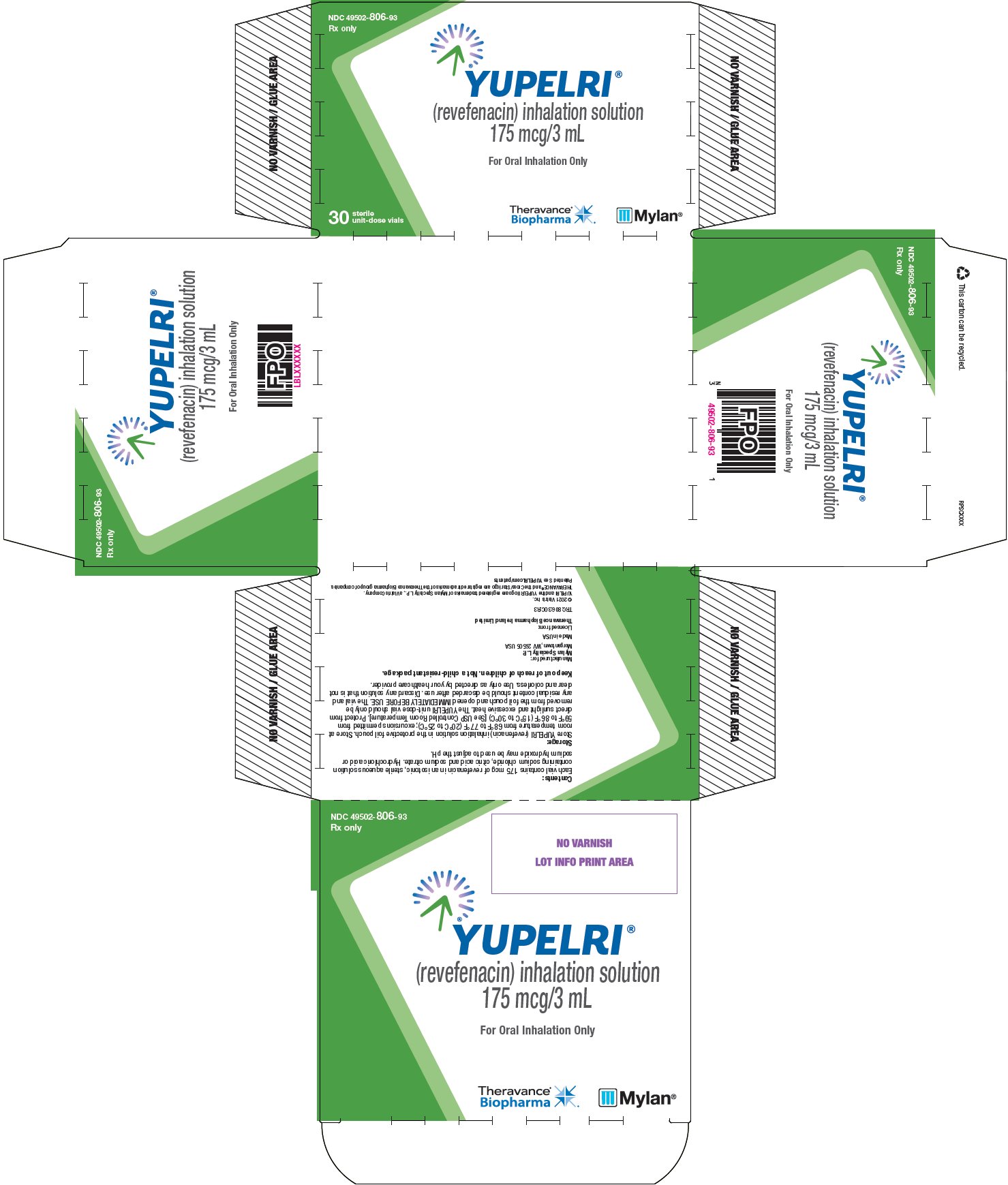
PRINCIPAL DISPLAY PANEL – 175mcg/3 mL NDC 49502-806-93 Rx only YUPELRI ® (revefenacin) inhalation solution 175 mcg/3 mL For Oral Inhalation Only 30 sterile unit-dose vials Contents: Each vial contains 175 mcg of revefenacin in an isotonic, sterile aqueous solution containing sodium chloride, citric acid and sodium citrate. Hydrochloric acid or sodium hydroxide may be used to adjust the pH. Storage: Store YUPELRI (revefenacin) inhalation solution in the protective foil pouch.
Store at room temperature from 68°F to 77°F (20°C to 25°C); excursions permitted from 59°F to 86°F (15°C to 30°C) [See USP Controlled Room Temperature]. Protect from direct sunlight and excessive heat. The YUPELRI unit-dose vial should only be removed from the foil pouch and opened IMMEDIATELY BEFORE USE.
The vial and any residual content should be discarded after use. Discard any solution that is not clear and colorless. Use only as directed by your healthcare provider.
Keep out of reach of children. Not a child-resistant package. Manufactured for: Mylan Specialty L.P.
Morgantown, WV 26505 USA Made in USA Licensed from: Theravance Biopharma Ireland Limited TRC:806:30C:R3 © 2021 Viatris Inc. YUPELRI and the YUPELRI logo are registered trademarks of Mylan Specialty L.P., a Viatris Company. THERAVANCE® and the Cross/Star logo are registered trademarks of the Theravance Biopharma group of companies.
Patented. See YUPELRI.com/patents Yupelri Inhalation Solution 175 mcg/3 mL Carton Label
Medicaid utilization by pack size
Medicare Part D spend CMS · PART D · 2026 (Q1)
Reported adverse events (FAERS)
Top reported reactions
Reporter sex
Serious outcomes
Where does this data come from?
About this NDC listing & data coverage
What data is (and isn’t) available for this NDC — tap to expand
| NDC identity (package / product / labeler codes) | ✓ Available |
| Labeler | ✓ Available |
| Product & package description | ✓ Available |
| Marketing category & status | ✓ Available |
| Active ingredient / dosage form / route | ✓ Available |
| FDA label (SPL via DailyMed) | ✓ Available |
| Package photos | ✓ Available |
| Inactive ingredients (structured) | — Not published for this NDC The labeler did not submit a structured excipient list, or no SPL is available. |
| NADAC pharmacy acquisition price (CMS) | — Not published for this NDC CMS publishes NADAC only for NDCs reported in its retail-pharmacy survey. |
| Orange Book / therapeutic-equivalence data | ✓ Available |
| HCPCS J-code billing crosswalk | — Not published for this NDC Most self-administered / retail products have no J-code — that is normal. |
| Medicaid utilization (CMS SDUD) | — Not published for this NDC CMS reports utilization only for NDCs with Medicaid claims above its privacy threshold. |