
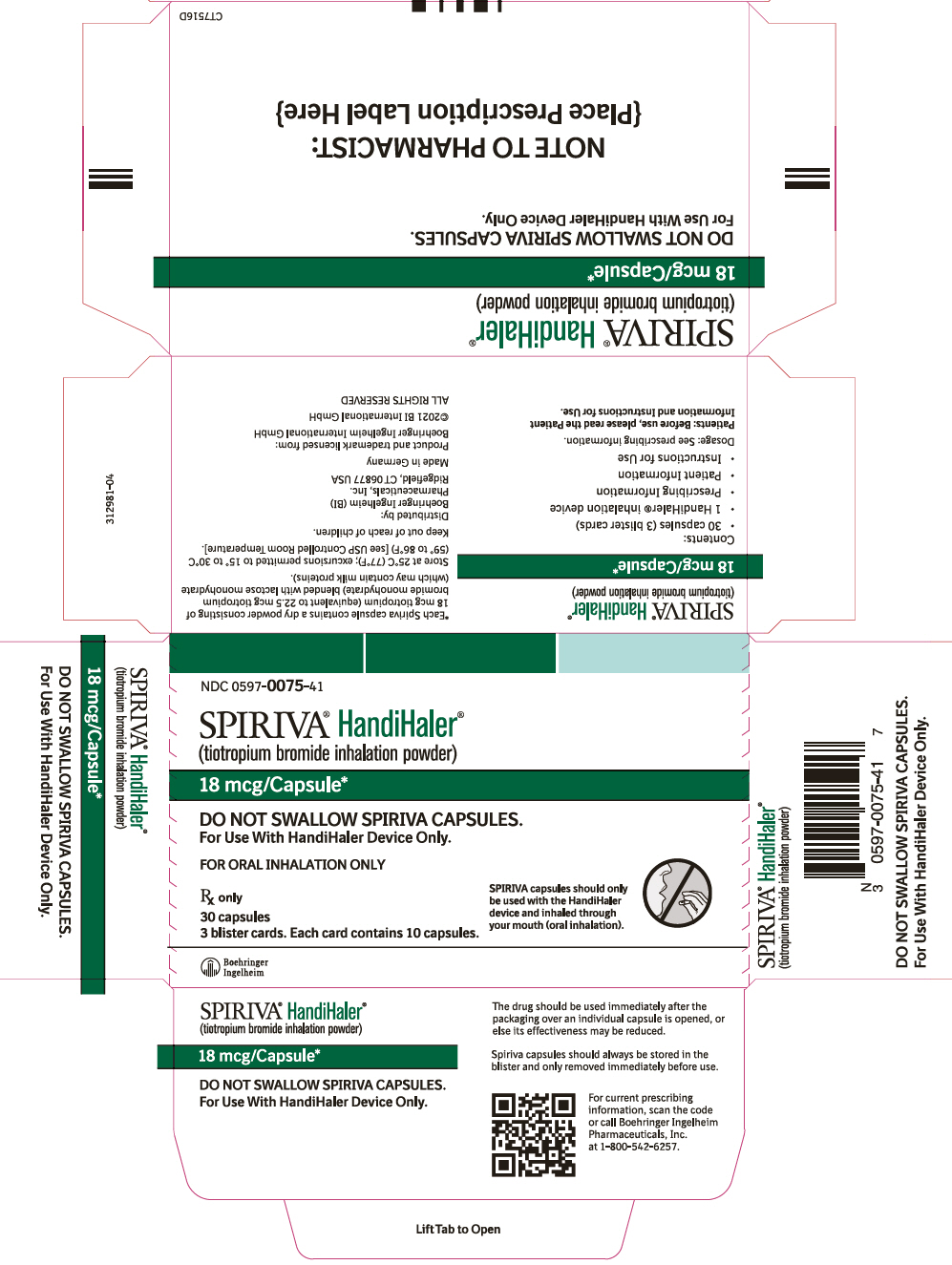
Spiriva HandiHaler TIOTROPIUM BROMIDE 18 ug Capsule, 30-count — NDC 0597-0075-41 (Billing 00597-0075-41)
This is a package of 30 capsules of Spiriva HandiHaler TIOTROPIUM BROMIDE 18 ug Capsule from Boehringer Ingelheim Pharmaceuticals, Inc., marketed since Oct 2005 and currently FDA-listed; retail pharmacies pay about $10.60 per capsule (NADAC). It is the main listing for this product, which comes in 3 package sizes.
NDC database record
One package, one record: these facts belong to NDC 0597-0075-41 alone.
- Record
- FDA NDC Directory package listing · Human prescription drug
- Code segments
- 0597 labeler · 0075 product · 41 package
- Package marketed since
- Oct 11, 2005
- Sample package
- No — commercial package
- Listing certified through
- Dec 31, 2026
- Billing quantity
- 30 EA per package
- Barcode (UPC-A, from the NDC)
- 3 0597007541 7
- Medicaid fills, this package
- 232,832 prescriptions in the last four reported quarters
- FDA record last changed
- Jul 24, 2026
Past resolved recalls for this product (1)
Identity & classification
Regulatory identifiers FDA, NLM and CMS codes for this package
Drug-database identifiers Medi-Span GPI and First Databank GCN / HICL / AHFS classification
- GSN (GCN sequence number): 050714
- GCN: 17853
- GPI-14 (Medi-Span): 44100080080130
- HICL (First Databank): 024024
- AHFS class code: 12:08.08.00
- RxCUI (RxNorm): 485032
Where does this data come from?
- FDA openFDA NDC Directory · synced Oct 1, 2026
- FDA label on DailyMed · label index refreshed Oct 6, 2026
- RxNorm (NLM RxNav) · catalog refreshed Oct 1, 2026
- Medi-Span GPI (licensed)
- First Databank (licensed) · refreshed Oct 1, 2026
RxNorm drug class
This medicine belongs to the Anticholinergic class.
Where does this data come from?
- RxClass (NLM) · catalog refreshed Oct 1, 2026
Clinical
Tiotropium is used to prevent wheezing, shortness of breath, coughing, and chest tightness in patients with chronic obstructive pulmonary disease (COPD, a group of diseases that affect the lungs and airways) such as chronic bronchitis (swelling of the air passages that lead to the lungs) and emphysema (damage to air sacs in the lungs). Tiotropium is in a class of medications called bronchodilators. It works by relaxing and opening the air passages to the lungs to make breathing easier.
Read the full MedlinePlus article ↗- Spiriva Respimat is a daily controller for COPD, including chronic bronchitis and emphysema, and it helps reduce flare-ups. It is also used for asthma in people 6 and older. It kee...
- No. It is not a rescue inhaler and will not relieve sudden symptoms. Keep your fast-acting inhaler as your doctor directed and get help if breathing gets worse.
- Can I use it when I suddenly can't breathe well?
- Take two inhalations by mouth once a day, and never more than one dose in 24 hours. The inhaler must be primed before first use. Food does not matter. In asthma, full benefit can t...
Patient education
Supplement & herbal interactions
Some supplements/herbs that may interact with Tiotropium Bromide — tap one for details:
Where does this data come from?
- MedlinePlus (NLM) · refreshed Oct 1, 2026
- FDA label on DailyMed · label index refreshed Oct 6, 2026
Ask a licensed pharmacist directly — free, answered by our team.
Pricing
A drug doesn't have one price. Each row is a different public payment system, and none is what you'd pay at the counter — that depends on your insurance. The ⓘ on each row explains what it measures.
| Price system | Per ea | Per package |
|---|---|---|
| Retail pharmacies payNADAC · weekly | $10.605 | $318.14 / 30 capsules |
| Medicaid paysCMS SDUD · 12 mo | $10.87 | $326.19 / 30 capsules |
| Medicare drug plans payPart D · Q2 2026 | $10.66 | $319.89 / 30 capsules |
Where does this data come from?
- CMS NADAC weekly file · file of Sep 30, 2026
- CMS ASP pricing files · refreshed Sep 20, 2026
- CMS Medicaid State Drug Utilization Data · through Q1 2026
- CMS Part D plan pricing files · refreshed Sep 24, 2026
- VA National Acquisition Center price file
Packaging — all sizes for this product
| Package NDC | Description | Per unit | Per pack | Marketing start | Marketing end | Status |
|---|---|---|---|---|---|---|
| 00597-0075-41 You're viewing this Main listing | 3 BLISTER PACK in 1 CARTON / 10 CAPSULE in 1 BLISTER PACK | $10.60 / ea | $318.14 | 2005-10-11 | — | Active |
| 00597-0075-47 0597-0075-47 | 9 BLISTER PACK in 1 CARTON / 10 CAPSULE in 1 BLISTER PACK | $10.62 / ea | $955.79 | 2005-10-11 | — | Active |
| 00597-0075-75 0597-0075-75 | 1 BLISTER PACK in 1 CARTON / 5 CAPSULE in 1 BLISTER PACK | $11.68 / ea | $58.40 | 2005-10-11 | — | Active |
This pack has the lowest per-ea cost of the 3 priced pack sizes ($10.60 NADAC).
In Medicaid, this is the most-dispensed pack of this product — about 98% of fills over the last four reported quarters. See all packs ↓
Pack size FAQ
What quantity is in this package?
How does this package differ from NDC 00597-0075-75?
What NDC number is used to bill for this package of Spiriva HandiHaler TIOTROPIUM BROMIDE 18 ug Capsule?
Prices are the latest CMS NADAC pharmacy acquisition cost per NDC; per-pack figures are per-unit × pack quantity, shown only when the pack is denominated in the same measure NADAC prices.
Therapeutic equivalents
| Product | Labeler | Pack | NADAC/unit | TE | Status | Price vs. this |
|---|---|---|---|---|---|---|
| Spiriva HandiHaler 18 ugthis 00597-0075-41 | Boehringer | 30 capsules | $10.605 | AB | Availability likely | — |
| Tiotropium Bromide 18 ug 68180-0964-12 | Lupin | 30 capsules | $11.811 | AB | Availability likely | +11% |
| Spiriva HandiHaler 18 ug 50090-4248-00 | A-S | 30 capsules | — | AB | FDA listed | — |
| Spiriva HandiHaler 18 ug 50090-7645-00 | A-S | 30 capsules | — | AB | FDA listed | — |
Where does this data come from?
- FDA openFDA NDC Directory · synced Oct 1, 2026
- FDA Orange Book · refreshed Oct 3, 2026
- CMS NADAC weekly file · file of Sep 30, 2026
Availability & generic status
FDA-approved generic versions are listed, and recent pricing/market data suggests they may be available — see Therapeutic equivalents.
Why the date isn’t exact: Generic timing can change because patents may be challenged, settled, licensed, added, removed, or worked around with a narrower label — and FDA approval does not always mean a pharmacy can get the generic today.
🛈 What do these terms mean?
- Patent
- Legal protection listed in the Orange Book that may delay generic approval or launch. Issued by the U.S. Patent & Trademark Office.
- Substance patent
- Covers the active drug molecule itself — the hardest to design around. A generic generally can’t launch until it expires.
- Formulation (product) patent
- Covers a specific formulation or dosage form. A generic can sometimes work around it with a different formulation.
- Method-of-use patent
- A patent covering one specific approved use of the drug — not necessarily the whole molecule. A generic can sometimes launch with a “skinny label” that carves out the protected use and keeps the others.
- Skinny label
- A generic label that omits a still-patented use when the FDA allows it — letting a generic reach the market for the unprotected uses.
- Exclusivity
- FDA-granted marketing protection, separate from patents — e.g. 5-yr new chemical entity, 7-yr orphan drug, or a +6-month pediatric extension.
- Paragraph IV
- A generic applicant’s formal challenge to a listed patent. It can potentially lead to earlier generic entry, but often involves litigation or a settlement.
- RLD / RS
- Reference Listed Drug — the brand product the FDA uses as the reference for generic applications. Reference Standard — the product the FDA expects generics to compare against in bioequivalence testing.
- TE / AB rating
- FDA therapeutic-equivalence rating. An AB rating generally means the FDA considers a generic therapeutically equivalent to — and substitutable for — the brand.
- LOE (loss of exclusivity)
- The latest patent or exclusivity currently listed — the loss-of-exclusivity / latest-listed-protection date shown on this page. Paragraph-IV challenges and settlements can move the real date earlier; FDA approval and a manufacturer’s decision to market can move it later.
Built from the FDA Orange Book. The bars above are scaled to each protection’s expiry; the red LOE marker is the last one to lapse.
| Patent | Type | Use code | Expires |
|---|---|---|---|
| US 8022082 ↗ | Method of use | U-1186 | Jan 19, 2026 |
| US 8022082*PED ↗ | Drug product | — | Jul 19, 2026 |
Is there a generic version of SPIRIVA HANDIHALER 18 MCG CAP?
The FDA approved a generic — why can’t I get it at my pharmacy yet?
Why do different websites show different generic release dates?
What does “FDA listed” mean?
What does a patent or protection date mean here?
What does “current Orange Book estimate” mean?
Can a generic come out before the last patent expires?
Can a generic come out after the listed dates?
What is the difference between patents and exclusivity?
Why are there multiple patent dates?
Where does this data come from?
- FDA Orange Book · refreshed Oct 3, 2026
What it looks like
Where does this data come from?
- FDA label on DailyMed · label index refreshed Oct 6, 2026
Inactive Ingredients / Excipients
Inactive ingredients, also called excipients, are components of the drug product other than the active ingredient. They may include fillers, dyes, coatings, preservatives, flavors, or other formulation ingredients.
🧪 Avoiding an ingredient? See Tiotropium Oral Inhalation inactive ingredients by manufacturer: every current product's list side by side, so you can ask your pharmacy for the version that does not list it.
Where does this data come from?
IACT rows and label-wide narrative are kept separate; availability and product-level specificity depend on the submitted label.- FDA label on DailyMed · label index refreshed Oct 6, 2026
- FDA openFDA NDC Directory · synced Oct 1, 2026
Inactive ingredient FAQ
Are inactive ingredients the same for every manufacturer?
Why might an inactive ingredient be missing?
Can inactive ingredients matter?
Manufacturer & labeler
More NDCs from Boehringer Ingelheim Pharmaceuticals, Inc. labeler code 00597
- SPEVIGO spesolimab-sbzo 60 mg/mL Injection NDC 0597-0035-10
- Micardis telmisartan 40 mg Tablet NDC 0597-0040-37
- Micardis telmisartan 80 mg Tablet NDC 0597-0041-37
- Micardis HCT telmisartan and hydrochlorothiazide 80 mg; 25 mg Tablet NDC 0597-0042-37
- Micardis HCT telmisartan and hydrochlorothiazide 40 mg; 12.5 mg Tablet NDC 0597-0043-37
- Micardis HCT telmisartan and hydrochlorothiazide 80 mg; 12.5 mg Tablet NDC 0597-0044-37
- Atrovent HFA ipratropium bromide 17 ug Aerosol, Metered NDC 0597-0087-17
- Spiriva Respimat tiotropium bromide inhalation spray 3.124 ug Spray, Metered NDC 0597-0100-28
- Pradaxa dabigatran etexilate mesylate 110 mg Capsule NDC 0597-0108-54
- Gilotrif afatinib 30 mg Tablet, Film Coated NDC 0597-0137-30
- Gilotrif afatinib 40 mg Tablet, Film Coated NDC 0597-0138-30
- Tradjenta linagliptin 5 mg Tablet, Film Coated NDC 0597-0140-30
Where does this data come from?
- FDA openFDA NDC Directory · synced Oct 1, 2026
- Drugs@FDA
Full prescribing information FDA SPL
🎯 Indications and Usage ▾
1 INDICATIONS AND USAGE SPIRIVA HANDIHALER (tiotropium bromide inhalation powder) is indicated for the long-term, once-daily, maintenance treatment of bronchospasm associated with chronic obstructive pulmonary disease (COPD), including chronic bronchitis and emphysema. SPIRIVA HANDIHALER is indicated to reduce exacerbations in COPD patients. SPIRIVA HANDIHALER is an anticholinergic indicated for the long-term, once-daily, maintenance treatment of bronchospasm associated with chronic obstructive pulmonary disease (COPD), and for reducing COPD exacerbations ( 1 )
⏱️ Dosage and Administration ▾
2 DOSAGE AND ADMINISTRATION For oral inhalation only. Do not swallow SPIRIVA capsules, as the intended effects on the lungs will not be obtained. The contents of the SPIRIVA capsules should only be used with the HANDIHALER device [see Overdosage (10) ] .
The recommended dosage of SPIRIVA HANDIHALER is two inhalations of the powder contents of one SPIRIVA capsule, once-daily, with the HANDIHALER device [see Patient Counseling Information (17) ] . Do not take more than one dose in 24 hours. For administration of SPIRIVA HANDIHALER, a SPIRIVA capsule is placed into the center chamber of the HANDIHALER device.
The SPIRIVA capsule is pierced by pressing and releasing the green piercing button on the side of the HANDIHALER device. The tiotropium formulation is dispersed into the air stream when the patient inhales through the mouthpiece [see Patient Counseling Information (17) ] . No dosage adjustment is required for geriatric, hepatically-impaired, or renally-impaired patients.
However, patients with moderate to severe renal impairment given SPIRIVA HANDIHALER should be monitored closely for anticholinergic effects [see Warnings and Precautions (5.6) , Use in Specific Populations (8.5 , 8.6 , 8.7) , and Clinical Pharmacology (12.3) ] . For oral inhalation only. DO NOT swallow SPIRIVA capsules.
Only use SPIRIVA capsules with the HANDIHALER device ( 2 ) Two inhalations of the powder contents of a single SPIRIVA capsule (18 mcg) once daily ( 2 )
💊 Dosage Forms and Strengths ▾
3 DOSAGE FORMS AND STRENGTHS Inhalation Powder: SPIRIVA HANDIHALER consists of SPIRIVA capsules containing tiotropium powder for oral inhalation and a HANDIHALER device. SPIRIVA capsules contain 18 mcg of tiotropium (equivalent to 22.5 mcg tiotropium bromide monohydrate) in a light green, hard gelatin capsule with "TI 01" printed on one side and Boehringer Ingelheim company symbol on the other side. The HANDIHALER device is only intended for use with the SPIRIVA capsules.
Inhalation powder: SPIRIVA capsules contain 18 mcg tiotropium powder (equivalent to 22.5 mcg tiotropium bromide monohydrate) for use with HANDIHALER device ( 3 )
⛔ Contraindications ▾
4 CONTRAINDICATIONS SPIRIVA HANDIHALER is contraindicated in patients with a hypersensitivity to tiotropium, ipratropium, or any components of this product [see Warnings and Precautions (5.2) ] . In clinical trials and postmarketing experience with SPIRIVA HANDIHALER, immediate hypersensitivity reactions, including angioedema (including swelling of the lips, tongue, or throat), itching, or rash have been reported [see Warnings and Precautions (5.2) ]. Hypersensitivity to tiotropium, ipratropium, or any components of SPIRIVA capsules ( 4 )
⚠️ Warnings and Cautions ▾
5 WARNINGS AND PRECAUTIONS Not for acute use: Not a rescue medication ( 5.1 ) Immediate hypersensitivity reactions: Discontinue SPIRIVA HANDIHALER at once and consider alternatives if immediate hypersensitivity reactions, including angioedema, urticaria, rash, bronchospasm, or anaphylaxis, occur. Use with caution in patients with severe hypersensitivity to milk proteins. ( 5.2 ) Paradoxical bronchospasm: Discontinue SPIRIVA HANDIHALER and consider other treatments if paradoxical bronchospasm occurs ( 5.3 ) Worsening of narrow-angle glaucoma may occur.
Use with caution in patients with narrow-angle glaucoma and instruct patients to consult a physician immediately if this occurs. ( 5.4 ) Worsening of urinary retention may occur. Use with caution in patients with prostatic hyperplasia or bladder-neck obstruction and instruct patients to consult a physician immediately if this occurs.
( 5.5 )
5.1Not for Acute Use SPIRIVA HANDIHALER is intended as a once-daily maintenance treatment for COPD and should not be used for relief of acute symptoms, i.e., as rescue therapy for the treatment of acute episodes of bronchospasm.
5.2Immediate Hypersensitivity Reactions Immediate hypersensitivity reactions, including urticaria, angioedema (including swelling of the lips, tongue, or throat), rash, bronchospasm, anaphylaxis, or itching, may occur after administration of SPIRIVA HANDIHALER. If such a reaction occurs, therapy with SPIRIVA HANDIHALER should be stopped at once and alternative treatments should be considered. Given the similar structural formula of atropine to tiotropium, patients with a history of hypersensitivity reactions to atropine or its derivatives should be closely monitored for similar hypersensitivity reactions to SPIRIVA HANDIHALER.
In addition, SPIRIVA HANDIHALER should be used with caution in patients with severe hypersensitivity to milk proteins.
5.3Paradoxical Bronchospasm Inhaled medicines, including SPIRIVA HANDIHALER, may cause paradoxical bronchospasm. If this occurs, it should be treated immediately with an inhaled short-acting beta 2 -agonist such as albuterol. Treatment with SPIRIVA HANDIHALER should be stopped and other treatments considered.
5.4Worsening of Narrow-Angle Glaucoma SPIRIVA HANDIHALER should be used with caution in patients with narrow-angle glaucoma. Prescribers and patients should be alert for signs and symptoms of acute narrow-angle glaucoma (e.g., eye pain or discomfort, blurred vision, visual halos or colored images in association with red eyes from conjunctival congestion and corneal edema). Instruct patients to consult a physician immediately should any of these signs or symptoms develop.
5.5Worsening of Urinary Retention SPIRIVA HANDIHALER should be used with caution in patients with urinary retention. Prescribers and patients should be alert for signs and symptoms of urinary retention (e.g., difficulty passing urine, painful urination), especially in patients with prostatic hyperplasia or bladder-neck obstruction. Instruct patients to consult a physician immediately should any of these signs or symptoms develop.
5.6Renal Impairment As a predominantly renally excreted drug, patients with moderate to severe renal impairment (creatinine clearance of <60 mL/min) treated with SPIRIVA HANDIHALER should be monitored closely for anticholinergic side effects [see Clinical Pharmacology (12.3) ] .
🤒 Adverse Reactions ▾
6 ADVERSE REACTIONS The following adverse reactions are described, or described in greater detail, in other sections: Immediate hypersensitivity reactions [see Warnings and Precautions (5.2) ] Paradoxical bronchospasm [see Warnings and Precautions (5.3) ] Worsening of narrow-angle glaucoma [see Warnings and Precautions (5.4) ] Worsening of urinary retention [see Warnings and Precautions (5.5) ] The most common adverse reactions (>5% incidence in the 1-year placebo-controlled trials) were upper respiratory tract infection, dry mouth, sinusitis, pharyngitis, non-specific chest pain, urinary tract infection, dyspepsia, and rhinitis ( 6.1 ) To report SUSPECTED ADVERSE REACTIONS, contact Boehringer Ingelheim Pharmaceuticals, Inc. at 1-800-542-6257 or FDA at 1-800-FDA-1088 or www.fda.gov/medwatch .
6.1Clinical Trials Experience Because clinical trials are conducted under widely varying conditions, the incidence of adverse reactions observed in the clinical trials of a drug cannot be directly compared to the incidences in the clinical trials of another drug and may not reflect the incidences observed in practice. 6-Month to 1-Year Trials The data described below reflect exposure to SPIRIVA HANDIHALER in 2,663 patients. SPIRIVA HANDIHALER was studied in two 1-year placebo-controlled trials, two 1-year active-controlled trials, and two 6-month placebo-controlled trials in patients with COPD.
In these trials, 1,308 patients were treated with SPIRIVA HANDIHALER at the recommended dosage of 18 mcg once a day. The population had an age ranging from 39 to 87 years with 65% to 85% males, 95% Caucasian, and had COPD with a mean pre-bronchodilator forced expiratory volume in one second (FEV 1 ) percent predicted of 39% to 43%. Patients with narrow-angle glaucoma, or symptomatic prostatic hypertrophy or bladder outlet obstruction were excluded from these trials.
An additional 6-month trial conducted in a Veteran's Affairs setting is not included in this safety database because only serious adverse events were collected. The most commonly reported adverse drug reaction was dry mouth. Dry mouth was usually mild and often resolved during continued treatment.
Other reactions reported in individual patients and consistent with possible anticholinergic effects included constipation, tachycardia, blurred vision, glaucoma (new onset or worsening), dysuria, and urinary retention. Four multicenter, 1-year, placebo-controlled and active-controlled trials evaluated SPIRIVA HANDIHALER in patients with COPD. Table 1 shows all adverse reactions that occurred with a frequency of ≥3% in the SPIRIVA HANDIHALER group in the 1-year placebo-controlled trials where the rates in the SPIRIVA HANDIHALER group exceeded placebo by ≥1%.
The frequency of corresponding reactions in the ipratropium-controlled trials is included for comparison. Table 1 Adverse Reactions (% Patients) in One-Year COPD Clinical Trials Body System (Event) Placebo-Controlled Trials Ipratropium-Controlled Trials SPIRIVA (n = 550) Placebo (n = 371) SPIRIVA (n = 356) Ipratropium (n = 179) Body as a Whole Chest Pain (non-specific) 7 5 5 2 Edema, Dependent 5 4 3 5 Gastrointestinal System Disorders Dry Mouth 16 3 12 6 Dyspepsia 6 5 1 1 Abdominal Pain 5 3 6 6 Constipation 4 2 1 1 Vomiting 4 2 1 2 Musculoskeletal System Myalgia 4 3 4 3 Resistance Mechanism Disorders Infection 4 3 1 3 Moniliasis 4 2 3 2 Respiratory System (Upper) Upper Respiratory Tract Infection 41 37 43 35 Sinusitis 11 9 3 2 Pharyngitis 9 7 7 3 Rhinitis 6 5 3 2 Epistaxis 4 2 1 1 Skin and Appendage Disorders Rash 4 2 2 2 Urinary System Urinary Tract Infection 7 5 4 2 Arthritis, coughing, and influenza-like symptoms occurred at a rate of ≥3% in the SPIRIVA HANDIHALER treatment group, but were <1% in excess of the placebo group.
Other reactions that occurred in the SPIRIVA HANDIHALER group at a frequency of 1% to 3% in the placebo-controlled trials where the rates exceeded that in the placebo group include: Body as a Whole: allergic reacti… [Excerpted — this section continues on DailyMed.]
🔄 Drug Interactions ▾
7 DRUG INTERACTIONS Anticholinergics: May interact additively with concomitantly used anticholinergic medications. Avoid administration of SPIRIVA HANDIHALER with other anticholinergic-containing drugs. ( 7.2 )
7.1Sympathomimetics, Methylxanthines, Steroids SPIRIVA HANDIHALER has been used concomitantly with short-acting and long-acting sympathomimetic (beta-agonists) bronchodilators, methylxanthines, and oral and inhaled steroids without increases in adverse reactions.
7.2Anticholinergics There is potential for an additive interaction with concomitantly used anticholinergic medications. Therefore, avoid coadministration of SPIRIVA HANDIHALER with other anticholinergic-containing drugs as this may lead to an increase in anticholinergic adverse effects [see Warnings and Precautions (5.4 , 5.5) and Adverse Reactions (6) ] .
👥 Use in Specific Populations ▾
8 USE IN SPECIFIC POPULATIONS Patients with moderate to severe renal impairment should be monitored closely for potential anticholinergic side effects ( 2 , 8.6 )
8.1Pregnancy Risk Summary The limited human data with SPIRIVA HANDIHALER use during pregnancy are insufficient to inform a drug-associated risk of adverse pregnancy-related outcomes. Based on animal reproduction studies, no structural abnormalities were observed when tiotropium was administered by inhalation to pregnant rats and rabbits during the period of organogenesis at doses 790 and 8 times, respectively, the maximum recommended human daily inhalation dose (MRHDID). Increased post-implantation loss was observed in rats and rabbits administered tiotropium at maternally toxic doses 430 times and 40 times the MRHDID, respectively [see Data ] .
The estimated background risk of major birth defects and miscarriage for the indicated population is unknown. All pregnancies have a background risk of birth defect, loss or other adverse outcomes. In the U.S. general population, the estimated background risk of major birth defects and miscarriage in clinically recognized pregnancies is 2% to 4% and 15% to 20%, respectively.
Data Animal Data In 2 separate embryo-fetal development studies, pregnant rats and rabbits received tiotropium during the period of organogenesis at doses up to approximately 790 and 8 times the MRHDID, respectively (on a mcg/m 2 basis at inhalation doses of 1,471 and 7 mcg/kg/day in rats and rabbits, respectively). No evidence of structural abnormalities was observed in rats or rabbits. However, in rats, tiotropium caused fetal resorption, litter loss, decreases in the number of live pups at birth and the mean pup weights, and a delay in pup sexual maturation at tiotropium doses of approximately 40 times the MRHDID (on a mcg/m 2 basis at a maternal inhalation dose of 78 mcg/kg/day).
In rabbits, tiotropium caused an increase in post-implantation loss at a tiotropium dose of approximately 430 times the MRHDID (on a mcg/m 2 basis at a maternal inhalation dose of 400 mcg/kg/day). Such effects were not observed at approximately 5 and 95 times the MRHDID, respectively (on a mcg/m 2 basis at inhalation doses of 9 and 88 mcg/kg/day in rats and rabbits, respectively).
8.2Lactation Risk Summary There are no data on the presence of tiotropium in human milk, the effects on the breastfed infant, or the effects on milk production. Tiotropium is present in milk of lactating rats; however, due to species-specific differences in lactation physiology, the clinical relevance of these data are not clear [see Data ] . The developmental and health benefits of breastfeeding should be considered along with the mother's clinical need for SPIRIVA HANDIHALER and any potential adverse effects on the breastfed child from SPIRIVA HANDIHALER or from the underlying maternal condition.
Data The distribution of tiotropium bromide into milk was investigated after a single intravenous administration of 10 mg/kg to lactating rats. Tiotropium and/or its metabolites are present in the milk of lactating rats at concentrations above those in plasma.
8.4Pediatric Use SPIRIVA HANDIHALER is not indicated for use in children. The safety and effectiveness of SPIRIVA HANDIHALER in pediatric patients have not been established.
8.5Geriatric Use Based on available data, no adjustment of SPIRIVA HANDIHALER dosage in geriatric patients is warranted [see Clinical Pharmacology (12.3) ] . Of the total number of patients who received SPIRIVA HANDIHALER in the 1-year clinical trials, 426 were <65 years, 375 were 65 to 74 years, and 105 were ≥75 years of age. Within each age subgroup, there were no differences between the proportion of patients with adverse events in the SPIRIVA HANDIHALER and the comparator groups for most events.
Dry mouth increased with age in the SPIRIVA HANDIHALER group (differences from placebo were 9.0%, 17.1%, and 16.2% in the aforementioned age subgroups). A higher frequency of con… [Excerpted — this section continues on DailyMed.]
🤰 Pregnancy ▾
8.1Pregnancy Risk Summary The limited human data with SPIRIVA HANDIHALER use during pregnancy are insufficient to inform a drug-associated risk of adverse pregnancy-related outcomes. Based on animal reproduction studies, no structural abnormalities were observed when tiotropium was administered by inhalation to pregnant rats and rabbits during the period of organogenesis at doses 790 and 8 times, respectively, the maximum recommended human daily inhalation dose (MRHDID). Increased post-implantation loss was observed in rats and rabbits administered tiotropium at maternally toxic doses 430 times and 40 times the MRHDID, respectively [see Data ] .
The estimated background risk of major birth defects and miscarriage for the indicated population is unknown. All pregnancies have a background risk of birth defect, loss or other adverse outcomes. In the U.S. general population, the estimated background risk of major birth defects and miscarriage in clinically recognized pregnancies is 2% to 4% and 15% to 20%, respectively.
Data Animal Data In 2 separate embryo-fetal development studies, pregnant rats and rabbits received tiotropium during the period of organogenesis at doses up to approximately 790 and 8 times the MRHDID, respectively (on a mcg/m 2 basis at inhalation doses of 1,471 and 7 mcg/kg/day in rats and rabbits, respectively). No evidence of structural abnormalities was observed in rats or rabbits. However, in rats, tiotropium caused fetal resorption, litter loss, decreases in the number of live pups at birth and the mean pup weights, and a delay in pup sexual maturation at tiotropium doses of approximately 40 times the MRHDID (on a mcg/m 2 basis at a maternal inhalation dose of 78 mcg/kg/day).
In rabbits, tiotropium caused an increase in post-implantation loss at a tiotropium dose of approximately 430 times the MRHDID (on a mcg/m 2 basis at a maternal inhalation dose of 400 mcg/kg/day). Such effects were not observed at approximately 5 and 95 times the MRHDID, respectively (on a mcg/m 2 basis at inhalation doses of 9 and 88 mcg/kg/day in rats and rabbits, respectively).
🧒 Pediatric Use ▾
8.4Pediatric Use SPIRIVA HANDIHALER is not indicated for use in children. The safety and effectiveness of SPIRIVA HANDIHALER in pediatric patients have not been established.
🧓 Geriatric Use ▾
8.5Geriatric Use Based on available data, no adjustment of SPIRIVA HANDIHALER dosage in geriatric patients is warranted [see Clinical Pharmacology (12.3) ] . Of the total number of patients who received SPIRIVA HANDIHALER in the 1-year clinical trials, 426 were <65 years, 375 were 65 to 74 years, and 105 were ≥75 years of age. Within each age subgroup, there were no differences between the proportion of patients with adverse events in the SPIRIVA HANDIHALER and the comparator groups for most events.
Dry mouth increased with age in the SPIRIVA HANDIHALER group (differences from placebo were 9.0%, 17.1%, and 16.2% in the aforementioned age subgroups). A higher frequency of constipation and urinary tract infections with increasing age was observed in the SPIRIVA HANDIHALER group in the placebo-controlled studies. The differences from placebo for constipation were 0%, 1.8%, and 7.8% for each of the age groups.
The differences from placebo for urinary tract infections were –0.6%, 4.6%, and 4.5%. No overall differences in effectiveness were observed among these groups.
🆘 Overdosage ▾
10 OVERDOSAGE High doses of tiotropium may lead to anticholinergic signs and symptoms. However, there were no systemic anticholinergic adverse effects following a single inhaled dose of up to 282 mcg tiotropium in 6 healthy volunteers. In a study of 12 healthy volunteers, bilateral conjunctivitis and dry mouth were seen following repeated once-daily inhalation of 141 mcg of tiotropium.
Treatment of overdosage consists of discontinuation of SPIRIVA HANDIHALER together with institution of appropriate symptomatic and/or supportive therapy. Accidental Ingestion Acute intoxication by inadvertent oral ingestion of SPIRIVA capsules is unlikely since it is not well-absorbed systemically. A case of overdose has been reported from postmarketing experience.
A female patient was reported to have inhaled 30 capsules over a 2.5 day period, and developed altered mental status, tremors, abdominal pain, and severe constipation. The patient was hospitalized, SPIRIVA HANDIHALER was discontinued, and the constipation was treated with an enema. The patient recovered and was discharged on the same day.
🧬 Clinical Pharmacology ▾
12 CLINICAL PHARMACOLOGY
12.1Mechanism of Action Tiotropium is a long-acting, antimuscarinic agent, which is often referred to as an anticholinergic. It has similar affinity to the subtypes of muscarinic receptors, M 1 to M 5 . In the airways, it exhibits pharmacological effects through inhibition of M 3 -receptors at the smooth muscle leading to bronchodilation.
The competitive and reversible nature of antagonism was shown with human and animal origin receptors and isolated organ preparations. In preclinical in vitro as well as in vivo studies, prevention of methacholine-induced bronchoconstriction effects was dose-dependent and lasted longer than 24 hours. The bronchodilation following inhalation of tiotropium is predominantly a site-specific effect.
12.2Pharmacodynamics Cardiac Electrophysiology In a multicenter, randomized, double-blind trial using tiotropium dry powder for inhalation that enrolled 198 patients with COPD, the number of subjects with changes from baseline-corrected QT interval of 30 to 60 msec was higher in the SPIRIVA HANDIHALER group as compared with placebo. This difference was apparent using both the Bazett (QTcB) [20 (20%) patients vs. 12 (12%) patients] and Fredericia (QTcF) [16 (16%) patients vs.
1 (1%) patient] corrections of QT for heart rate. No patients in either group had either QTcB or QTcF of >500 msec. Other clinical studies with SPIRIVA HANDIHALER did not detect an effect of the drug on QTc intervals.
The effect of tiotropium dry powder for inhalation on QT interval was also evaluated in a randomized, placebo- and positive-controlled crossover study in 53 healthy volunteers. Subjects received tiotropium dry powder for inhalation 18 mcg, 54 mcg (3 times the recommended dose), or placebo for 12 days. ECG assessments were performed at baseline and throughout the dosing interval following the first and last dose of study medication.
Relative to placebo, the maximum mean change from baseline in study-specific QTc interval was 3.2 msec and 0.8 msec for tiotropium dry powder for inhalation 18 mcg and 54 mcg, respectively. No subject showed a new onset of QTc >500 msec or QTc changes from baseline of ≥60 msec.
12.3Pharmacokinetics Tiotropium is administered by dry powder inhalation. Some of the pharmacokinetic data described below were obtained with higher doses than recommended for therapy. A dedicated pharmacokinetic study in patients with COPD evaluating once-daily tiotropium delivered from the RESPIMAT inhaler (5 mcg) and as inhalation powder (18 mcg) from the HANDIHALER device resulted in a similar systemic exposure between the two products.
Absorption Following dry powder inhalation by young healthy volunteers, the absolute bioavailability of 19.5% suggests that the fraction reaching the lung is highly bioavailable. Oral solutions of tiotropium have an absolute bioavailability of 2-3%. Food is not expected to influence the absorption of tiotropium.
Maximum tiotropium plasma concentrations were observed 7 minutes after inhalation. Distribution Tiotropium is 72% bound to plasma protein and had a volume of distribution of 32 L/kg after intravenous administration to young healthy volunteers. Local concentrations in the lung are not known, but the mode of administration suggests substantially higher concentrations in the lung.
Studies in rats have shown that tiotropium does not readily penetrate the blood-brain barrier. Elimination The terminal half-life of tiotropium in COPD patients following once daily inhalation of 5 mcg tiotropium was approximately 25 hours. Total clearance was 880 mL/min after intravenous administration in young healthy volunteers.
After chronic once-daily dry powder inhalation by COPD patients, pharmacokinetic steady state was reached by day 7 with no accumulation thereafter. Metabolism The extent of metabolism is small. This is evident from a urinary excretion of 74% of unchanged substance after an intravenous dose to young healthy volunteers.
Tiotropium, an ester, is no… [Excerpted — this section continues on DailyMed.]
🧬 Mechanism of Action ▾
12.1Mechanism of Action Tiotropium is a long-acting, antimuscarinic agent, which is often referred to as an anticholinergic. It has similar affinity to the subtypes of muscarinic receptors, M 1 to M 5 . In the airways, it exhibits pharmacological effects through inhibition of M 3 -receptors at the smooth muscle leading to bronchodilation.
The competitive and reversible nature of antagonism was shown with human and animal origin receptors and isolated organ preparations. In preclinical in vitro as well as in vivo studies, prevention of methacholine-induced bronchoconstriction effects was dose-dependent and lasted longer than 24 hours. The bronchodilation following inhalation of tiotropium is predominantly a site-specific effect.
📦 How Supplied / Storage and Handling ▾
16 HOW SUPPLIED/STORAGE AND HANDLING SPIRIVA HANDIHALER consists of SPIRIVA capsules and the HANDIHALER device. SPIRIVA capsules contain 18 mcg of tiotropium (equivalent to 22.5 mcg tiotropium bromide monohydrate) and are light green, with the Boehringer Ingelheim company symbol on the SPIRIVA capsule cap and "TI 01" on the SPIRIVA capsule body, or vice versa. The HANDIHALER device is gray colored with a green piercing button.
It is imprinted with SPIRIVA ® HANDIHALER ® (tiotropium bromide inhalation powder), and the Boehringer Ingelheim company symbol. It is also imprinted to indicate that SPIRIVA ® capsules should not be stored in the HANDIHALER ® device and that the HANDIHALER ® device is only to be used with SPIRIVA ® capsules. SPIRIVA capsules are packaged in an aluminum/aluminum blister card and joined along a perforated-cut line.
SPIRIVA capsules should always be stored in the blister and only removed immediately before use. The drug should be used immediately after the packaging over an individual SPIRIVA capsule is opened. The following packages are available: carton containing 5 SPIRIVA capsules (1 unit-dose blister card) and 1 HANDIHALER inhalation device (NDC 0597-0075-75) (institutional pack) carton containing 30 SPIRIVA capsules (3 unit-dose blister cards) and 1 HANDIHALER inhalation device (NDC 0597-0075-41) carton containing 90 SPIRIVA capsules (9 unit-dose blister cards) and 1 HANDIHALER inhalation device (NDC 0597-0075-47) Keep out of reach of children.
Do not get powder into eyes. Storage Store at 20°C to 25°C (68° to 77°F); excursions permitted to 15°C to 30°C (59°F to 86°F) [see USP Controlled Room Temperature]. The SPIRIVA capsules should not be exposed to extreme temperature or moisture.
Do not store SPIRIVA capsules in the HANDIHALER device.
📦 Storage and Handling ▾
Storage Store at 20°C to 25°C (68° to 77°F); excursions permitted to 15°C to 30°C (59°F to 86°F) [see USP Controlled Room Temperature]. The SPIRIVA capsules should not be exposed to extreme temperature or moisture. Do not store SPIRIVA capsules in the HANDIHALER device.
📋 Description ▾
11 DESCRIPTION SPIRIVA HANDIHALER consists of SPIRIVA capsules and a HANDIHALER device. Each light green, hard gelatin SPIRIVA capsule contains a dry powder consisting of 18 mcg tiotropium (equivalent to 22.5 mcg tiotropium bromide monohydrate) blended with lactose monohydrate (which may contain milk proteins). The contents of SPIRIVA capsules are intended for oral inhalation only, and are intended for administration only with the HANDIHALER device.
The active component of SPIRIVA HANDIHALER is tiotropium. The drug substance, tiotropium bromide monohydrate, is an anticholinergic with specificity for muscarinic receptors. It is chemically described as (1α, 2β, 4β, 5α, 7β)-7-[(Hydroxydi-2-thienylacetyl)oxy]-9,9-dimethyl-3-oxa-9-azoniatricyclo[3.3.1.0 2,4 ]nonane bromide monohydrate.
It is a synthetic, non-chiral, quaternary ammonium compound. Tiotropium bromide is a white or yellowish white powder. It is sparingly soluble in water and soluble in methanol.
The structural formula is: Tiotropium bromide (monohydrate) has a molecular mass of 490.4 and a molecular formula of C 19 H 22 NO 4 S 2 Br ∙ H 2 O. The HANDIHALER device is an inhalation device used to inhale the dry powder contained in the SPIRIVA capsule. The dry powder is delivered from the HANDIHALER device at flow rates as low as 20 L/min.
Under standardized in vitro testing, the HANDIHALER device delivers a mean of 10.4 mcg tiotropium when tested at a flow rate of 39 L/min for 3.1 seconds (2 L total). In a study of 26 adult patients with COPD and severely compromised lung function [mean FEV 1
1.02L (range 0.45 to
2.24L); 37.6% of predicted (range 16% to 65%)], the median peak inspiratory flow (PIF) through the HANDIHALER device was
30.0L/min (range 20.4 to
45.6L/min). The amount of drug delivered to the lungs will vary depending on patient factors such as inspiratory flow and peak inspiratory flow through the HANDIHALER device, which may vary from patient to patient, and may vary with the exposure time of the SPIRIVA capsule outside the blister pack. Chemical Structure
💬 Information for Patients ▾
17 PATIENT COUNSELING INFORMATION Advise the patient to read the FDA-approved patient labeling (Patient Information and Instructions for Use). Not for Acute Use: Instruct patients that SPIRIVA HANDIHALER is a once-daily maintenance bronchodilator and should not be used for immediate relief of breathing problems (i.e., as a rescue medication). Immediate Hypersensitivity Reactions: Inform patients that anaphylaxis, angioedema (including swelling of the lips, tongue, or throat), urticaria, rash, bronchospasm, or itching, may occur after administration of SPIRIVA HANDIHALER.
Advise patient to immediately discontinue treatment and consult a physician should any of these signs or symptoms develop. Paradoxical Bronchospasm: Inform patients that SPIRIVA HANDIHALER can produce paradoxical bronchospasm. Advise patients that if paradoxical bronchospasm occurs, patients should discontinue SPIRIVA HANDIHALER.
Worsening of Narrow-Angle Glaucoma: Instruct patients to be alert for signs and symptoms of narrow-angle glaucoma (e.g., eye pain or discomfort, blurred vision, visual halos or colored images in association with red eyes from conjunctival congestion and corneal edema). Instruct patients to consult a physician immediately should any of these signs and symptoms develop. Inform patients that care must be taken not to allow the powder to enter into the eyes as this may cause blurring of vision and pupil dilation.
Since dizziness and blurred vision may occur with the use of SPIRIVA HANDIHALER, caution patients about engaging in activities such as driving a vehicle or operating appliances or machinery. Worsening of Urinary Retention: Instruct patients to be alert for signs and symptoms of urinary retention (e.g., difficulty passing urine, painful urination). Instruct patients to consult a physician immediately should any of these signs or symptoms develop.
Instructions for Administering SPIRIVA HANDIHALER: Instruct patients on how to correctly administer SPIRIVA capsules using the HANDIHALER device [see Patient Counseling Information (17) ] . Instruct patients that SPIRIVA capsules should only be administered via the HANDIHALER device and the HANDIHALER device should not be used for administering other medications. Remind patients that the contents of SPIRIVA capsules are for oral inhalation only and must not be swallowed .
Instruct patients always to store SPIRIVA capsules in sealed blisters and to remove only one SPIRIVA capsule immediately before use or its effectiveness may be reduced. Instruct patients to discard unused additional SPIRIVA capsules that are exposed to air (i.e., not intended for immediate use).
🧬 Pharmacokinetics ▾
12.3Pharmacokinetics Tiotropium is administered by dry powder inhalation. Some of the pharmacokinetic data described below were obtained with higher doses than recommended for therapy. A dedicated pharmacokinetic study in patients with COPD evaluating once-daily tiotropium delivered from the RESPIMAT inhaler (5 mcg) and as inhalation powder (18 mcg) from the HANDIHALER device resulted in a similar systemic exposure between the two products.
Absorption Following dry powder inhalation by young healthy volunteers, the absolute bioavailability of 19.5% suggests that the fraction reaching the lung is highly bioavailable. Oral solutions of tiotropium have an absolute bioavailability of 2-3%. Food is not expected to influence the absorption of tiotropium.
Maximum tiotropium plasma concentrations were observed 7 minutes after inhalation. Distribution Tiotropium is 72% bound to plasma protein and had a volume of distribution of 32 L/kg after intravenous administration to young healthy volunteers. Local concentrations in the lung are not known, but the mode of administration suggests substantially higher concentrations in the lung.
Studies in rats have shown that tiotropium does not readily penetrate the blood-brain barrier. Elimination The terminal half-life of tiotropium in COPD patients following once daily inhalation of 5 mcg tiotropium was approximately 25 hours. Total clearance was 880 mL/min after intravenous administration in young healthy volunteers.
After chronic once-daily dry powder inhalation by COPD patients, pharmacokinetic steady state was reached by day 7 with no accumulation thereafter. Metabolism The extent of metabolism is small. This is evident from a urinary excretion of 74% of unchanged substance after an intravenous dose to young healthy volunteers.
Tiotropium, an ester, is nonenzymatically cleaved to the alcohol N-methylscopine and dithienylglycolic acid, neither of which binds to muscarinic receptors. In vitro experiments with human liver microsomes and human hepatocytes suggest that a fraction of the administered dose (74% of an intravenous dose is excreted unchanged in the urine, leaving 25% for metabolism) is metabolized by cytochrome P450-dependent oxidation and subsequent glutathione conjugation to a variety of Phase II metabolites. This enzymatic pathway can be inhibited by CYP450 2D6 and 3A4 inhibitors, such as quinidine, ketoconazole, and gestodene.
Thus, CYP450 2D6 and 3A4 are involved in the metabolic pathway that is responsible for the elimination of a small part of the administered dose. In vitro studies using human liver microsomes showed that tiotropium in supra-therapeutic concentrations did not inhibit CYP450 1A1, 1A2, 2B6, 2C9, 2C19, 2D6, 2E1, or 3A4. Excretion Intravenously administered tiotropium bromide is mainly excreted unchanged in urine (74%).
After dry powder inhalation to COPD patients at steady state, urinary excretion was 7% (1.3 mcg) of the unchanged dose over 24 hours. The renal clearance of tiotropium exceeds the creatinine clearance, indicating secretion into the urine. Specific Populations Geriatric Patients As expected for all predominantly renally excreted drugs, advancing age was associated with a decrease of tiotropium renal clearance (365 mL/min in COPD patients <65 years to 271 mL/min in COPD patients ≥65 years).
This did not result in a corresponding increase in AUC 0-6,ss and C max,ss values following administration via HANDIHALER device. Renal Impairment Following 4-week SPIRIVA HANDIHALER or SPIRIVA RESPIMAT once daily dosing in patients with COPD, mild renal impairment (creatinine clearance 60-<90 mL/min) resulted in 6-23% higher AUC 0-6,ss and 6-17% higher C max,ss values; moderate renal impairment (creatinine clearance 30-<60 mL/min) resulted in 54-57% higher AUC 0-6,ss and 15-31% higher C max,ss values compared to COPD patients with normal renal function (creatinine clearance ≥90 mL/min).
There is insufficient data for tiotropium exposure in patients with severe r… [Excerpted — this section continues on DailyMed.]
🧬 Pharmacodynamics ▾
12.2Pharmacodynamics Cardiac Electrophysiology In a multicenter, randomized, double-blind trial using tiotropium dry powder for inhalation that enrolled 198 patients with COPD, the number of subjects with changes from baseline-corrected QT interval of 30 to 60 msec was higher in the SPIRIVA HANDIHALER group as compared with placebo. This difference was apparent using both the Bazett (QTcB) [20 (20%) patients vs. 12 (12%) patients] and Fredericia (QTcF) [16 (16%) patients vs.
1 (1%) patient] corrections of QT for heart rate. No patients in either group had either QTcB or QTcF of >500 msec. Other clinical studies with SPIRIVA HANDIHALER did not detect an effect of the drug on QTc intervals.
The effect of tiotropium dry powder for inhalation on QT interval was also evaluated in a randomized, placebo- and positive-controlled crossover study in 53 healthy volunteers. Subjects received tiotropium dry powder for inhalation 18 mcg, 54 mcg (3 times the recommended dose), or placebo for 12 days. ECG assessments were performed at baseline and throughout the dosing interval following the first and last dose of study medication.
Relative to placebo, the maximum mean change from baseline in study-specific QTc interval was 3.2 msec and 0.8 msec for tiotropium dry powder for inhalation 18 mcg and 54 mcg, respectively. No subject showed a new onset of QTc >500 msec or QTc changes from baseline of ≥60 msec.
🔬 Clinical Studies ▾
14 CLINICAL STUDIES The SPIRIVA HANDIHALER (tiotropium bromide inhalation powder) clinical development program consisted of six Phase 3 studies in 2,663 patients with COPD (1,308 receiving SPIRIVA HANDIHALER): two 1-year, placebo-controlled studies, two 6-month, placebo-controlled studies and two 1-year, ipratropium-controlled studies. These studies enrolled patients who had a clinical diagnosis of COPD, were 40 years of age or older, had a history of smoking greater than 10 pack-years, had a forced expiratory volume in one second (FEV 1 ) less than or equal to 60% or 65% of predicted, and a ratio of FEV 1 /FVC of less than or equal to 0.7.
In these studies, SPIRIVA HANDIHALER, administered once-daily in the morning, provided improvement in lung function (FEV 1 ), with peak effect occurring within 3 hours following the first dose. Two additional trials evaluated exacerbations: a 6-month, randomized, double-blind, placebo-controlled, multicenter clinical trial of 1,829 COPD patients in a US Veterans Affairs setting and a 4-year, randomized, double-blind, placebo-controlled, multicenter, clinical trial of 5,992 COPD patients. Long-term effects on lung function and other outcomes, were also evaluated in the 4-year multicenter trial.
6-Month to 1-Year Effects on Lung Function In the 1-year, placebo-controlled trials, the mean improvement in FEV 1 at 30 minutes was 0.13 liters (13%) with a peak improvement of 0.24 liters (24%) relative to baseline after the first dose (Day 1). Further improvements in FEV 1 and forced vital capacity (FVC) were observed with pharmacodynamic steady state reached by Day 8 with once-daily treatment. The mean peak improvement in FEV 1 , relative to baseline, was 0.28 to 0.31 liters (28% to 31%), after 1 week (Day 8) of once-daily treatment.
Improvement of lung function was maintained for 24 hours after a single dose and consistently maintained over the 1-year treatment period with no evidence of tolerance. In the two 6-month, placebo-controlled trials, serial spirometric evaluations were performed throughout daytime hours in Trial A (12 hours) and limited to 3 hours in Trial B. The serial FEV 1 values over 12 hours (Trial A) are displayed in Figure 1.
These trials further support the improvement in pulmonary function (FEV 1 ) with SPIRIVA HANDIHALER, which persisted over the spirometric observational period. Effectiveness was maintained for 24 hours after administration over the 6-month treatment period. Figure 1 Mean FEV 1 Over Time (prior to and after administration of study drug) on Days 1 and 169 for Trial A (a Six-Month Placebo-Controlled Study) Means adjusted for center, treatment, and baseline effect.
On Day 169, a total of 183 and 149 patients in the SPIRIVA HANDIHALER and placebo groups, respectively, completed the trial. The data for the remaining patients were imputed using the last observation or least favorable observation carried forward. Day 1 Day 169 Results of each of the 1-year ipratropium-controlled trials were similar to the results of the 1-year placebo-controlled trials.
The results of one of these trials are shown in Figure 2. Figure 2 Mean FEV 1 Over Time (0 to 6 hours post-dose) on Days 1 and 92, Respectively for One of the Two Ipratropium-Controlled Studies Means adjusted for center, treatment, and baseline effect. On Day 92 (primary endpoint), a total of 151 and 69 patients in the SPIRIVA HANDIHALER and ipratropium groups, respectively, completed through 3 months of observation.
The data for the remaining patients were imputed using the last observation or least favorable observation carried forward. Day 1 Day 92 A randomized, placebo-controlled clinical study in 105 patients with COPD demonstrated that bronchodilation was maintained throughout the 24-hour dosing interval in comparison to placebo, regardless of whether SPIRIVA HANDIHALER was administered in the morning or in the evening. Throughout each week of the 1-year treatment period in the two placebo-controlled trials, p… [Excerpted — this section continues on DailyMed.]
🧪 Nonclinical Toxicology ▾
13 NONCLINICAL TOXICOLOGY
13.1Carcinogenesis, Mutagenesis, Impairment of Fertility No evidence of tumorigenicity was observed in a 104-week inhalation study in rats at tiotropium doses up to 59 mcg/kg/day, in an 83-week inhalation study in female mice at doses up to 145 mcg/kg/day, and in a 101-week inhalation study in male mice at doses up to 2 mcg/kg/day. These doses correspond to approximately 30, 40, and 0.5 times the recommended human daily inhalation dose (MRHDID) on a mcg/m 2 basis, respectively. Tiotropium bromide demonstrated no evidence of mutagenicity or clastogenicity in the following assays: the bacterial gene mutation assay, the V79 Chinese hamster cell mutagenesis assay, the chromosomal aberration assays in human lymphocytes in vitro and mouse micronucleus formation in vivo , and the unscheduled DNA synthesis in primary rat hepatocytes in vitro assay.
In rats, decreases in the number of corpora lutea and the percentage of implants were noted at inhalation tiotropium doses of 78 mcg/kg/day or greater (approximately 40 times the MRHDID on a mcg/m 2 basis). No such effects were observed at 9 mcg/kg/day (approximately 5 times the MRHDID on a mcg/m 2 basis). The fertility index, however, was not affected at inhalation doses up to 1,689 mcg/kg/day (approximately 910 times the MRHDID on a mcg/m 2 basis).
📄 Carcinogenesis, Mutagenesis, Impairment of Fertility ▾
13.1Carcinogenesis, Mutagenesis, Impairment of Fertility No evidence of tumorigenicity was observed in a 104-week inhalation study in rats at tiotropium doses up to 59 mcg/kg/day, in an 83-week inhalation study in female mice at doses up to 145 mcg/kg/day, and in a 101-week inhalation study in male mice at doses up to 2 mcg/kg/day. These doses correspond to approximately 30, 40, and 0.5 times the recommended human daily inhalation dose (MRHDID) on a mcg/m 2 basis, respectively. Tiotropium bromide demonstrated no evidence of mutagenicity or clastogenicity in the following assays: the bacterial gene mutation assay, the V79 Chinese hamster cell mutagenesis assay, the chromosomal aberration assays in human lymphocytes in vitro and mouse micronucleus formation in vivo , and the unscheduled DNA synthesis in primary rat hepatocytes in vitro assay.
In rats, decreases in the number of corpora lutea and the percentage of implants were noted at inhalation tiotropium doses of 78 mcg/kg/day or greater (approximately 40 times the MRHDID on a mcg/m 2 basis). No such effects were observed at 9 mcg/kg/day (approximately 5 times the MRHDID on a mcg/m 2 basis). The fertility index, however, was not affected at inhalation doses up to 1,689 mcg/kg/day (approximately 910 times the MRHDID on a mcg/m 2 basis).
📄 Patient Package Insert ▾
Patient Information SPIRIVA ® (speh REE vah) HANDIHALER ® (tiotropium bromide inhalation powder) Do NOT swallow SPIRIVA capsules. Important Information: Do not swallow SPIRIVA capsules. SPIRIVA capsules should only be used with the HANDIHALER device and inhaled through your mouth (oral inhalation).
Read the information that comes with your SPIRIVA HANDIHALER before you start using it and each time you refill your prescription. There may be new information. This leaflet does not take the place of talking with your doctor about your medical condition or your treatment.
What is SPIRIVA HANDIHALER? SPIRIVA HANDIHALER is a prescription medicine used each day (a maintenance medicine) to control symptoms of chronic obstructive pulmonary disease (COPD), including chronic bronchitis and emphysema. SPIRIVA HANDIHALER helps make your lungs work better for 24 hours.
SPIRIVA HANDIHALER relaxes your airways and helps keep them open. You may start to feel like it is easier to breathe on the first day, but it may take longer for you to feel the full effects of the medicine. SPIRIVA HANDIHALER works best and may help make it easier to breathe when you use it every day.
SPIRIVA HANDIHALER reduces the likelihood of flare-ups and worsening of COPD symptoms (COPD exacerbations). A COPD exacerbation is defined as an increase or new onset of more than one COPD symptom such as cough, mucus, shortness of breath, and wheezing that requires medicine beyond your rescue medicine. SPIRIVA HANDIHALER is not a rescue medicine and should not be used for treating sudden breathing problems.
Your doctor may give you other medicine to use for sudden breathing problems. It is not known if SPIRIVA HANDIHALER is safe and effective in children. Who should not take SPIRIVA HANDIHALER?
Do not use SPIRIVA HANDIHALER if you: are allergic to tiotropium, ipratropium (Atrovent ® ), or any of the ingredients in SPIRIVA HANDIHALER. See the end of this leaflet for a complete list of ingredients in SPIRIVA HANDIHALER. Symptoms of a serious allergic reaction to SPIRIVA HANDIHALER may include: raised red patches on your skin (hives) itching rash swelling of the face, lips, tongue, and throat that may cause difficulty in breathing or swallowing If you have these symptoms of an allergic reaction, stop taking SPIRIVA HANDIHALER and call your doctor right away or go to the nearest hospital emergency room.
What should I tell my doctor before using SPIRIVA HANDIHALER? Before taking SPIRIVA HANDIHALER, tell your doctor about all your medical conditions, including if you: have kidney problems. have glaucoma. SPIRIVA HANDIHALER may make your glaucoma worse. have an enlarged prostate, problems passing urine, or a blockage in your bladder.
SPIRIVA HANDIHALER may make these problems worse. are pregnant or plan to become pregnant. It is not known if SPIRIVA HANDIHALER could harm your unborn baby. are breast-feeding or plan to breast-feed. It is not known if SPIRIVA HANDIHALER passes into breast milk.
You and your doctor will decide if SPIRIVA HANDIHALER is right for you while you breast-feed. have a severe allergy to milk proteins. Ask your doctor if you are not sure. Tell your doctor about all the medicines you take, including prescription and non-prescription medicines and eye drops, vitamins, and herbal supplements.
Some of your other medicines or supplements may affect the way SPIRIVA HANDIHALER works. SPIRIVA HANDIHALER is an anticholinergic medicine. You should not take other anticholinergic medicines while using SPIRIVA HANDIHALER, including ipratropium.
Ask your doctor or pharmacist if you are not sure if one of your medicines is an anticholinergic. Know the medicines you take. Keep a list of your medicines with you to show your doctor and pharmacist when you get a new medicine.
How should I take SPIRIVA HANDIHALER? Use SPIRIVA HANDIHALER exactly as prescribed. Use SPIRIVA HANDIHALER one time every day.
Read the "Instructions for Use" at the end of this leaflet before you use SPIRIVA… [Excerpted — this section continues on DailyMed.]
📖 Instructions for Use ▾
Instructions for Use SPIRIVA® (speh REE vah) HANDIHALER® (tiotropium bromide inhalation powder) Do not swallow SPIRIVA capsules. Important Information about using your SPIRIVA HANDIHALER Do not swallow SPIRIVA capsules. SPIRIVA capsules should only be used with the HANDIHALER device and inhaled through your mouth (oral inhalation).
Do not use your HANDIHALER device to take any other medicine. First read the Patient Information, then read these Instructions for Use before you start to use SPIRIVA HANDIHALER and each time you refill your prescription. There may be new information.
Becoming familiar with your HANDIHALER device and SPIRIVA capsules: Your SPIRIVA HANDIHALER comes with SPIRIVA capsules in blister packaging and a HANDIHALER device. Use the new HANDIHALER device provided with your medicine. Figure A The parts of your HANDIHALER device include: (See Figure A ) dust cap (lid) mouthpiece mouthpiece ridge base green piercing button center chamber air intake vents Figure B Each SPIRIVA capsule is packaged in a blister.
(See Figure B ) Figure C Each SPIRIVA capsule contains only a small amount of powder. (See Figure C ) This is 1 full dose. Do not open the SPIRIVA capsule or it may not work.
Taking your full daily dose of medicine requires 4 main steps. Step 1. Opening your HANDIHALER device: Figure D After removing your HANDIHALER device from the pouch: Open the dust cap (lid) by pressing the green piercing button.
(See Figure D ) Figure E Pull the dust cap (lid) upwards away from the base to expose the mouthpiece. (See Figure E ) Figure F Open the mouthpiece by pulling the mouthpiece ridge up and away from the base so the center chamber is showing. (See Figure F ) Step 2.
Inserting the SPIRIVA capsule into your HANDIHALER device: Figure G Each day, separate only 1 of the blisters from the blister card by tearing along the perforated line. (See Figure G ) Figure H Remove the SPIRIVA capsule from the blister: Do not cut the foil or use sharp instruments to take out the SPIRIVA capsule from the blister. Bend 1 of the blister corners with an arrow and separate the aluminum foil layers.
Peel back the printed foil until you see the whole SPIRIVA capsule. (See Figure H ) If you have opened more than 1 blister to the air, the extra SPIRIVA capsule should not be used and should be thrown away. Figure I Place the SPIRIVA capsule in the center chamber of your HANDIHALER device.
(See Figure I ) Figure J Close the mouthpiece firmly against the gray base until you hear a click. Leave the dust cap (lid) open. (See Figure J ) Step 3.
Piercing the SPIRIVA capsule: Figure K Hold your HANDIHALER device with the mouthpiece pointed up. (See Figure K ) Press the green piercing button once until it is flat (flush) against the base, then release. This is how you make holes in the SPIRIVA capsule so that you get your medicine when you breathe in.
Do not press the green button more than one time. Do not shake your HANDIHALER device. The piercing of the SPIRIVA capsule may produce small gelatin pieces.
Some of these small pieces may pass through the screen of your HANDIHALER device into your mouth or throat when you breathe in your medicine. This is normal. The small pieces of gelatin should not harm you.
Step 4. Taking your full daily dose (2 inhalations from the same SPIRIVA capsule): Figure L Breathe out completely in 1 breath , emptying your lungs of any air. (See Figure L ) Important: Do not breathe into your HANDIHALER device.
Figure M With your next breath, take your medicine: Hold your head in an upright position while you are looking straight ahead. (See Figure M ) Raise your HANDIHALER device to your mouth in a horizontal position. Do not block the air intake vents.
Close your lips tightly around the mouthpiece. Breathe in deeply until your lungs are full. You should hear or feel the SPIRIVA capsule vibrate (rattle).
(See Figure M ) Hold your breath for a few seconds and, at the same time, take your HANDIHALER device out of your mouth. Br… [Excerpted — this section continues on DailyMed.]
📄 Package Label / Principal Display Panel ▾
PRINCIPAL DISPLAY PANEL - 30 Capsule Blister Pack Carton NDC 0597-0075-41 SPIRIVA ® HandiHaler ® (tiotropium bromide inhalation powder) 18 mcg/Capsule* DO NOT SWALLOW SPIRIVA CAPSULES. For Use With HandiHaler Device Only. FOR ORAL INHALATION ONLY Rx only 30 capsules 3 blister cards.
Each card contains 10 capsules. SPIRIVA capsules should only be used with the HandiHaler device and inhaled through your mouth (oral inhalation). Boehringer Ingelheim PRINCIPAL DISPLAY PANEL - 30 Capsule Blister Pack Carton