
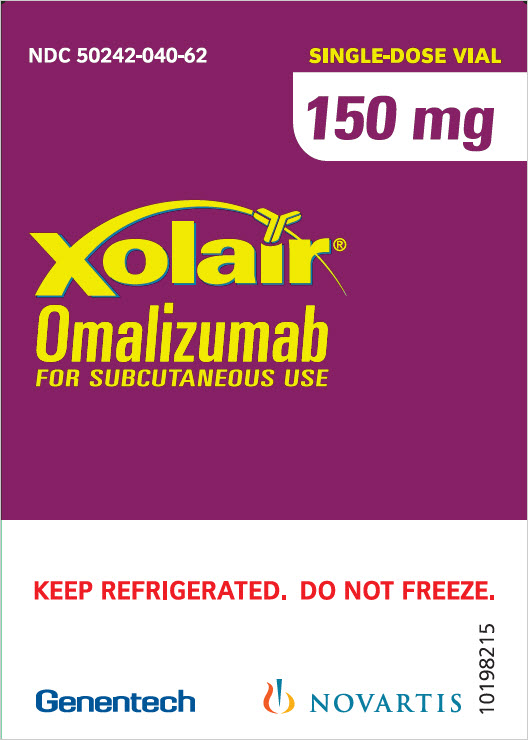
XOLAIR omalizumab 150 mg/1.2mL Injection, Solution, 1 vial — NDC 50242-040-62 (Billing 50242-0040-62)
This is a package of 1 vial of XOLAIR omalizumab 150 mg/1.2mL Injection, Solution from Genentech, Inc., marketed since Jun 2003 and currently FDA-listed. It is the main listing for this product, which comes in 2 package sizes.
NDC database record
One package, one record: these facts belong to NDC 50242-040-62 alone.
- Record
- FDA NDC Directory package listing · Human prescription drug
- Code segments
- 50242 labeler · 040 product · 62 package
- Package marketed since
- Jun 20, 2003
- Sample package
- No — commercial package
- Listing certified through
- Dec 31, 2027
- Billing quantity
- 1 EA per package
- Barcode (UPC-A, from the NDC)
- 3 5024204062 4
- Medicaid fills, this package
- 9,989 prescriptions in the last four reported quarters
- FDA record last changed
- Sep 3, 2026
Identity & classification
Regulatory identifiers FDA, NLM and CMS codes for this package
Drug-database identifiers Medi-Span GPI and First Databank GCN / HICL / AHFS classification
- GSN (GCN sequence number): 052758
- GCN: 19966
- HICL (First Databank): 025399
- AHFS class code: 90:28.16.92
- RxCUI (RxNorm): 1657209
Where does this data come from?
- FDA openFDA NDC Directory · synced Oct 8, 2026
- FDA label on DailyMed · label index refreshed Oct 8, 2026
- RxNorm (NLM RxNav) · catalog refreshed Oct 8, 2026
- Medi-Span GPI (licensed)
- First Databank (licensed) · refreshed Oct 8, 2026
RxNorm drug class
This medicine belongs to the Anti-IgE class.
Where does this data come from?
- RxClass (NLM) · catalog refreshed Oct 8, 2026
Clinical
Omalizumab injection is used to: treat asthma to treat chronic rhinosinusitis with nasal polyps (condition where inflammation of the nasal cavity and sinuses occur for 12 weeks or longer with soft, noncancerous growths) treat chronic spontaneous urticaria reduce allergic reaction after unplanned exposure to a food allergen Omalizumab injection is in a class of medications called monoclonal antibodies. It works by blocking the action of a certain natural substance in the body that causes the symptoms of allergic asthma, nasal polyps, hives, and food allergy reactions.
Read the full MedlinePlus article ↗- It treats allergic asthma, nasal polyps with chronic sinus disease, IgE-mediated food allergy, and chronic spontaneous urticaria. Each use has its own age range and conditions. You...
- No. Xolair is a maintenance medicine and does not work as a rescue treatment. It is not for sudden asthma symptoms or for treating anaphylaxis. Follow your emergency plan and get m...
- Can I use it if I'm having an asthma attack or allergic reaction?
- Xolair can cause anaphylaxis, a severe allergic reaction. It can happen after the first dose or even after a year or more. Being watched in a healthcare setting means help is right...
Patient education
Supplement & herbal interactions
Some supplements/herbs that may interact with Omalizumab — tap one for details:
Where does this data come from?
- MedlinePlus (NLM) · refreshed Oct 8, 2026
- FDA label on DailyMed · label index refreshed Oct 8, 2026
Ask a licensed pharmacist directly — free, answered by our team.
Pricing
A drug doesn't have one price. Each row is a different public payment system, and none is what you'd pay at the counter — that depends on your insurance. The ⓘ on each row explains what it measures.
| Price system | Per mL | Per package |
|---|---|---|
| Retail pharmacies payNADAC · weekly | Not in the retail survey — common for institutional, discontinued, or low-volume packs. | |
| Medicaid paysCMS SDUD · 12 mo | $1,133.58 | $1,360.29 / 1.2 ml |
| Medicare drug plans payPart D · Q2 2026 | $1,528.90 | $1,834.68 / 1.2 ml |
| Medicare Part B allowsASP · J2357 | $46.588 / J2357 unit | — |
Where does this data come from?
- CMS NADAC weekly file
- CMS ASP pricing files · refreshed Sep 20, 2026
- CMS Medicaid State Drug Utilization Data · through Q1 2026
- CMS Part D plan pricing files · refreshed Sep 24, 2026
- VA National Acquisition Center price file
Billing & reimbursement
Where does this data come from?
- CMS ASP NDC-HCPCS crosswalk · refreshed Sep 22, 2026
- DMEPDAC NDC-HCPCS crosswalk
- openFDA NSDE billing units · refreshed Oct 7, 2026
Packaging — all sizes for this product
| Package NDC | Description | Marketing start | Marketing end | Status |
|---|---|---|---|---|
| 50242-0040-62 You're viewing this Main listing | 1 VIAL, SINGLE-USE in 1 CARTON / 1.2 mL in 1 VIAL, SINGLE-USE | 2003-06-20 | — | Active |
| 50242-0040-86 50242-040-86 | 1 VIAL, SINGLE-USE in 1 CARTON / 1.2 mL in 1 VIAL, SINGLE-USE Sample | 2013-12-20 | — | Active |
In Medicaid, this is the most-dispensed pack of this product — about 100% of fills over the last four reported quarters. See all packs ↓
Pack size FAQ
What quantity is in this package?
How does this package differ from NDC 50242-0040-86?
What NDC number is used to bill for this package of XOLAIR omalizumab 150 mg/1.2mL Injection, Solution?
Therapeutic equivalents
| Product | Labeler | Pack | NADAC/unit | TE | Status | Price vs. this |
|---|---|---|---|---|---|---|
| Xolair 150 mg/1.2mLthis 50242-0040-62 | Genentech, | 1 vial | — | — | FDA listed | — |
Where does this data come from?
- FDA openFDA NDC Directory · synced Oct 8, 2026
- FDA Purple Book · refreshed Oct 5, 2026
- CMS NADAC weekly file
Availability & biosimilar status
1 interchangeable is FDA-licensed for this reference biologic — see the list below. (Biologics have no small-molecule generics.)
Why the date isn’t exact: Biosimilar timing can change because patents may be challenged, settled, licensed, added or removed, and litigation can move the real date earlier or later.
🛈 What do these terms mean?
- Biologic patent
- A patent the reference product’s maker has publicly listed. A biosimilar generally can’t launch until these expire — unless they’re invalidated or resolved in a settlement.
- Reference-product exclusivity
- A flat 12 years of FDA market protection from the biologic’s first licensure (the BPCIA). No biosimilar can be licensed before it ends, regardless of patents.
- Interchangeable exclusivity
- The first interchangeable biosimilar can earn a period as the only interchangeable version (pharmacists can substitute it without the prescriber).
- Earliest biosimilar (LOE)
- The latest of all the dates above — the soonest a biosimilar can realistically reach the market. Litigation and settlements can move it earlier.
Biologics have no small-molecule “generics” — competition comes from FDA-licensed biosimilars, tracked in the FDA Purple Book.
| Patent | Type | Use code | Expires |
|---|---|---|---|
| US 12,030,959 ↗ | Biologic patent | — | Jul 20, 2043 |
| US 11,987,637 ↗ | Biologic patent | — | Jul 8, 2028 |
| US 11,078,294 ↗ | Biologic patent | — | Jul 8, 2028 |
| US 10,829,732 ↗ | Biologic patent | — | Mar 14, 2034 |
| US 10,676,710 ↗ | Biologic patent | — | Mar 14, 2034 |
| US 10,034,940 ↗ | Biologic patent | — | Nov 4, 2025 |
| US 10,017,732 ↗ | Biologic patent | — | Mar 14, 2034 |
| US 8,574,869 ↗ | Biologic patent | — | Jul 8, 2028 |
Is there a biosimilar for XOLAIR 150 MG/1.2 ML POWDER VL?
Why do different websites show different biosimilar dates?
Can a biosimilar launch before the last patent expires?
What does “current Purple Book estimate” mean?
What does “FDA listed” mean?
What does a patent or protection date mean here?
Where does this data come from?
- FDA Purple Book · refreshed Oct 5, 2026
Inactive Ingredients / Excipients
Inactive ingredients, also called excipients, are components of the drug product other than the active ingredient. They may include fillers, dyes, coatings, preservatives, flavors, or other formulation ingredients.
🧪 Avoiding an ingredient? See Omalizumab Injection inactive ingredients by manufacturer: every current product's list side by side, so you can ask your pharmacy for the version that does not list it.
💡 Tap an ingredient (hover on desktop) to see what it is and why it’s used.
-
1.3 mg / 1.2 mL
UNII 4QD397987E
An amino acid used as a buffer and stabilizer in medications. It helps maintain the pH balance and protects the active drug from breaking down during storage and use.
-
2.1 mg / 1.2 mL
UNII X573657P6P
Histidine monohydrochloride monohydrate is an amino acid salt used as a buffer in medicines. It helps maintain the proper acidity level of liquid formulations to keep the drug stable and effective.
-
0.4 mg / 1.2 mL
UNII 7T1F30V5YH
A synthetic emulsifier derived from sorbitol and oleic acid. It helps mix oil and water-based ingredients together and keeps them from separating in liquid formulations.
-
108 mg / 1.2 mL
UNII C151H8M554
A natural sugar derived from sugar cane or sugar beets. It's used as a sweetener, filler, and binder to improve taste, add bulk, and help hold tablet or capsule ingredients together.
4 inactive ingredients listed in the exact product block matched to this NDC.
Where does this data come from?
ingredient classCode="IACT" elements from the exact product block matched by this NDC. Label-section narrative from DailyMed / the openFDA label index is shown separately when available.- FDA label on DailyMed · label index refreshed Oct 8, 2026
- FDA openFDA NDC Directory · synced Oct 8, 2026
Inactive ingredient FAQ
Are inactive ingredients the same for every manufacturer?
Why might an inactive ingredient be missing?
Can inactive ingredients matter?
Manufacturer & labeler
More NDCs from Genentech, Inc. labeler code 50242
- Enspryng Satralizumab 120 mg/mL Injection, Solution NDC 50242-007-01
- TNKase tenecteplase Kit NDC 50242-014-03
- Cathflo Activase Alteplase 2.2 mg/2mL Injection, Powder, Lyophilized, For Solution NDC 50242-041-10
- Activase Alteplase Kit NDC 50242-044-13
- Rituxan rituximab 10 mg/mL Injection, Solution NDC 50242-051-10
- rituximab 10 g/L Liquid NDC 50242-052-01
- Rituxan rituximab 10 mg/mL Injection, Solution NDC 50242-053-06
- bevacizumab 25 g/L Liquid NDC 50242-059-01
Where does this data come from?
- FDA openFDA NDC Directory · synced Oct 8, 2026
- Drugs@FDA
Full prescribing information FDA SPL
🚨 Boxed Warning ▾
WARNING: ANAPHYLAXIS Anaphylaxis presenting as bronchospasm, hypotension, syncope, urticaria, and/or angioedema of the throat or tongue, has been reported to occur after administration of XOLAIR. Anaphylaxis has occurred as early as after the first dose of XOLAIR, but also has occurred beyond 1 year after beginning regularly administered treatment. Because of the risk of anaphylaxis, initiate XOLAIR therapy in a healthcare setting and closely observe patients for an appropriate period of time after XOLAIR administration.
Health care providers administering XOLAIR should be prepared to manage anaphylaxis which can be life-threatening. Inform patients of the signs and symptoms of anaphylaxis and instruct them to seek immediate medical care should symptoms occur. Selection of patients for self-administration of XOLAIR should be based on criteria to mitigate risk from anaphylaxis [see Dosage and Administration (2.6) , Warnings and Precautions (5.1) and Adverse Reactions (6.1 , 6.2) ] .
WARNING: ANAPHYLAXIS See full prescribing information for complete boxed warning. Anaphylaxis, presenting as bronchospasm, hypotension, syncope, urticaria, and/or angioedema of the throat or tongue, has been reported to occur after administration of XOLAIR. Anaphylaxis has occurred after the first dose of XOLAIR but also has occurred beyond 1 year after beginning treatment.
Initiate XOLAIR therapy in a healthcare setting, closely observe patients for an appropriate period of time after XOLAIR administration and be prepared to manage anaphylaxis which can be life-threatening. Inform patients of the signs and symptoms of anaphylaxis and have them seek immediate medical care should symptoms occur. Selection of patients for self-administration of XOLAIR should be based on criteria to mitigate risk from anaphylaxis.
( 2.6 , 5.1 , 6.1 , 6.2 )
🎯 Indications and Usage ▾
1 INDICATIONS AND USAGE XOLAIR is an anti-IgE antibody indicated for: Moderate to severe persistent asthma in adults and pediatric patients 6 years of age and older with a positive skin test or in vitro reactivity to a perennial aeroallergen and symptoms that are inadequately controlled with inhaled corticosteroids ( 1.1 ) Chronic rhinosinusitis with nasal polyps (CRSwNP) in adult patients 18 years of age and older with inadequate response to nasal corticosteroids, as add-on maintenance treatment ( 1.2 ) IgE-mediated food allergy in adult and pediatric patients aged 1 year and older for the reduction of allergic reactions (Type I), including anaphylaxis, that may occur with accidental exposure to one or more foods.
To be used in conjunction with food allergen avoidance ( 1.3 ) Chronic spontaneous urticaria (CSU) in adults and adolescents 12 years of age and older who remain symptomatic despite H1 antihistamine treatment ( 1.4 ) Limitations of Use : Not indicated for acute bronchospasm or status asthmaticus. ( 1.1 , 5.3 ) Not indicated for the emergency treatment of allergic reactions, including anaphylaxis ( 1.3 ) Not indicated for other forms of urticaria. ( 1.4 )
1.1Asthma XOLAIR is indicated for adults and pediatric patients 6 years of age and older with moderate to severe persistent asthma who have a positive skin test or in vitro reactivity to a perennial aeroallergen and whose symptoms are inadequately controlled with inhaled corticosteroids. Limitations of Use: XOLAIR is not indicated for the relief of acute bronchospasm or status asthmaticus.
1.2Chronic Rhinosinusitis with Nasal Polyps XOLAIR is indicated for add-on maintenance treatment of chronic rhinosinusitis with nasal polyps (CRSwNP) in adult patients 18 years of age and older with inadequate response to nasal corticosteroids.
1.3IgE-Mediated Food Allergy XOLAIR is indicated for the reduction of allergic reactions (Type I), including anaphylaxis, that may occur with accidental exposure to one or more foods in adult and pediatric patients aged 1 year and older with IgE-mediated food allergy. XOLAIR is to be used in conjunction with food allergen avoidance. Limitations of Use: XOLAIR is not indicated for the emergency treatment of allergic reactions, including anaphylaxis.
1.4Chronic Spontaneous Urticaria XOLAIR is indicated for the treatment of adults and adolescents 12 years of age and older with chronic spontaneous urticaria (CSU) who remain symptomatic despite H1 antihistamine treatment. Limitations of Use: XOLAIR is not indicated for treatment of other forms of urticaria.
⏱️ Dosage and Administration ▾
2 DOSAGE AND ADMINISTRATION For subcutaneous (SC) administration only. ( 2.2 , 2.3 , 2.4 , 2.5 ) See full prescribing information for administration instructions ( 2.6 , 2.7 , 2.8 ). Asthma : XOLAIR 75 to 375 mg SC every 2 or 4 weeks.
Determine dose (mg) and dosing frequency by serum total IgE level (IU/mL), measured before the start of treatment, and body weight (kg). See the dose determination charts. ( 2.2 ) Chronic Rhinosinusitis with Nasal Polyps : XOLAIR 75 to 600 mg SC every 2 or 4 weeks.
Determine dose (mg) and dosing frequency by serum total IgE level (IU/mL), measured before the start of treatment, and body weight (kg). See the dose determination charts. ( 2.3 ) IgE-Mediated Food Allergy : XOLAIR 75 mg to 600 mg SC every 2 or 4 weeks.
Determine dose (mg) and dosing frequency by serum total IgE level (IU/mL), measured before the start of treatment, and body weight (kg). See the dose determination chart. ( 2.4 ) Chronic Spontaneous Urticaria : XOLAIR 150 or 300 mg SC every 4 weeks.
Dosing in CSU is not dependent on serum IgE level or body weight. ( 2.5 )
2.1Overview of Dosage Determination Asthma, and Chronic Rhinosinusitis with Nasal Polyps, and IgE-Mediated Food Allergy Determine dosage of XOLAIR by serum total IgE level (IU/mL) measured before the start of treatment, and by body weight (kg). For patients with asthma, chronic rhinosinusitis with nasal polyps (CRSwNP), and IgE-mediated food allergy, dosage determination should be based on the primary diagnosis for which XOLAIR is being prescribed. Adjust doses for significant changes in body weight during treatment.
Refer to Tables 1 and 2 for the recommended dosage for treatment of asthma, Table 3 for treatment of CRSwNP, and Table 4 for treatment of IgE-mediated food allergy. Total IgE levels are elevated during treatment and remain elevated for up to one year after the discontinuation of treatment. Therefore, re-testing of IgE levels during XOLAIR treatment cannot be used as a guide for dose determination.
Interruptions lasting less than one year: Dose based on serum IgE levels obtained at the initial dose determination. Interruptions lasting one year or more: Re-test total serum IgE levels for dose determination ( Table 1 or 2 for treatment of asthma, based on the patient's age, Table 3 for treatment of CRSwNP, and Table 4 for treatment of IgE-mediated food allergy). Chronic Spontaneous Urticaria Dosage of XOLAIR in patients with chronic spontaneous urticaria (CSU) is not dependent on serum IgE (free or total) level or body weight [see Dosage and Administration (2.5) ] .
2.2Recommended Dosage for Asthma The recommended dosage for asthma is XOLAIR 75 mg to 375 mg by subcutaneous injection every 2 or 4 weeks based on serum total IgE level (IU/mL) measured before the start of treatment and by body weight (kg) [see Dosage and Administration (2.1) ] . Adult and adolescent patients 12 years of age and older: Initiate dosing according to Table 1 . Pediatric patients 6 to <12 years of age: Initiate dosing according to Table 2 .
Table 1. Subcutaneous XOLAIR Doses Every 2 or 4 Weeks* for Patients 12 Years of Age and Older with Asthma Table 2. Subcutaneous XOLAIR Doses Every 2 or 4 Weeks* for Pediatric Patients with Asthma Who Begin XOLAIR Between the Ages of 6 to <12 Years Duration of Therapy Periodically reassess the need for continued therapy based upon the patient's disease severity and level of asthma control.
Table 1 Table 2
2.3Recommended Dosage for Chronic Rhinosinusitis with Nasal Polyps The recommended dosage for chronic rhinosinusitis with nasal polyps (CRSwNP) is XOLAIR 75 mg to 600 mg by subcutaneous injection every 2 or 4 weeks based on serum total IgE level (IU/mL) measured before the start of treatment and by body weight (kg) [see Dosage and Administration (2.1) ] . Refer to Table 3 for recommended dosage based on serum total IgE level and body weight for patients with CRSwNP. Table 3.
Subcutaneous XOLAIR Doses Every 2 or 4 Weeks* for Adult Patients with C… [Excerpted — this section continues on DailyMed.]
💊 Dosage Forms and Strengths ▾
3 DOSAGE FORMS AND STRENGTHS Injection: a clear to slightly opalescent and colorless to pale brownish-yellow solution available in the following: 75 mg/0.5 mL single-dose prefilled syringe with needle shield 75 mg/0.5 mL single-dose prefilled autoinjector 150 mg/mL single-dose prefilled syringe with needle shield 150 mg/mL single-dose prefilled autoinjector 300 mg/2 mL (150 mg/mL) single-dose prefilled syringe with needle shield 300 mg/2 mL single-dose prefilled autoinjector For injection: 150 mg white lyophilized powder in a single-dose vial for reconstitution Injection: 75 mg/0.5 mL, 150 mg/mL, and 300 mg/2 mL (150 mg/mL) solution in a single-dose prefilled syringe.
( 3 ) 75 mg/0.5 mL, 150 mg/mL and 300 mg/2 mL solution in a single-dose prefilled autoinjector. ( 3 ) For Injection: 150 mg lyophilized powder in a single-dose vial for reconstitution. ( 3 )
⛔ Contraindications ▾
4 CONTRAINDICATIONS XOLAIR is contraindicated in patients with severe hypersensitivity reaction to XOLAIR or any ingredient of XOLAIR [see Warnings and Precautions (5.1) ] . Severe hypersensitivity reaction to XOLAIR or any ingredient of XOLAIR ( 4 , 5.1 )
⚠️ Warnings and Cautions ▾
5 WARNINGS AND PRECAUTIONS Anaphylaxis: Initiate XOLAIR therapy in a healthcare setting prepared to manage anaphylaxis which can be life-threatening and observe patients for an appropriate period of time after administration. ( 5.1 ) Malignancy: Malignancies have been observed in clinical studies. ( 5.2 ) Acute Asthma Symptoms: Do not use for the treatment of acute bronchospasm or status asthmaticus.
( 5.3 ) Corticosteroid Reduction: Do not abruptly discontinue corticosteroids upon initiation of XOLAIR therapy. ( 5.4 ) Eosinophilic Conditions: Be alert to eosinophilia, vasculitic rash, worsening pulmonary symptoms, cardiac complications, and/or neuropathy, especially upon reduction of oral corticosteroids. ( 5.5 ) Fever, Arthralgia, and Rash: Stop XOLAIR if patients develop signs and symptoms similar to serum sickness.
( 5.6 ) Potential Medication Error Related to Emergency Treatment of Anaphylaxis: XOLAIR should not be used for emergency treatment of allergic reactions, including anaphylaxis. ( 5.9 )
5.1Anaphylaxis Anaphylaxis has been reported to occur after administration of XOLAIR in premarketing clinical trials and in postmarketing spontaneous reports [see Boxed Warning and Adverse Reactions (6.2) ] . Signs and symptoms in these reported cases have included bronchospasm, hypotension, syncope, urticaria, and/or angioedema of the throat or tongue. Some of these events have been life-threatening.
In premarketing clinical trials in patients with asthma, anaphylaxis was reported in 3 of 3507 (0.1%) patients. Anaphylaxis occurred with the first dose of XOLAIR in two patients and with the fourth dose in one patient. The time to onset of anaphylaxis was 90 minutes after administration in two patients and 2 hours after administration in one patient.
A case-control study in asthma patients showed that, among XOLAIR users, patients with a history of anaphylaxis to foods, medications, or other causes were at increased risk of anaphylaxis associated with XOLAIR, compared to those with no prior history of anaphylaxis [see Adverse Reactions (6.1) ] . In postmarketing spontaneous reports, the frequency of anaphylaxis attributed to XOLAIR use was estimated to be at least 0.2% of patients based on an estimated exposure of about 57,300 patients from June 2003 through December 2006.
Anaphylaxis has occurred as early as after the first dose of XOLAIR, but also has occurred beyond one year after beginning regularly scheduled treatment. Approximately 60% to 70% of anaphylaxis cases have been reported to occur within the first three doses of XOLAIR, with additional cases occurring sporadically beyond the third dose. Initiate XOLAIR only in a healthcare setting equipped to manage anaphylaxis, which can be life-threatening.
Observe patients closely for an appropriate period of time after administration of XOLAIR, taking into account the time to onset of anaphylaxis seen in premarketing clinical trials and postmarketing spontaneous reports [see Adverse Reactions (6.1 , 6.2) ] . Inform patients of the signs and symptoms of anaphylaxis, and instruct them to seek immediate medical care should signs or symptoms occur. Once XOLAIR therapy has been established, administration of XOLAIR prefilled syringe or autoinjector outside of a healthcare setting by a patient or a caregiver may be appropriate for selected patients.
Patient selection, determined by the healthcare provider in consultation with the patient, should take into account the pattern of anaphylaxis events seen in premarketing clinical trials and postmarketing spontaneous reports, as well as individual patient risk factors (e.g., prior history of anaphylaxis), ability to recognize signs and symptoms of anaphylaxis, and ability to perform subcutaneous injections with XOLAIR prefilled syringe or autoinjector with proper technique according to the prescribed dosing regimen and Instructions for Use [see Dosage and Administration (2.6) , Adverse Reactions (6.1 , 6.2) ].
Discontinue XOLAIR in patien… [Excerpted — this section continues on DailyMed.]
🤒 Adverse Reactions ▾
6 ADVERSE REACTIONS The following clinically significant adverse reactions are described elsewhere in the labeling: Anaphylaxis [see Boxed Warning and Warnings and Precautions (5.1) ] Malignancies [see Warnings and Precautions (5.2) ] Asthma : The most common adverse reactions (≥ 1% of patients) in clinical studies with adult and adolescent patients ≥12 years of age were arthralgia, pain (general), leg pain, fatigue, dizziness, fracture, arm pain, pruritus, dermatitis, and earache. In clinical studies with pediatric patients 6 to <12 years of age, the most common adverse reactions (≥3% of patients) were nasopharyngitis, headache, pyrexia, upper abdominal pain, pharyngitis streptococcal, otitis media, viral gastroenteritis, arthropod bites, and epistaxis.
( 6.1 ) Chronic Rhinosinusitis with Nasal Polyps : The most common adverse reactions (≥ 3% of patients) in clinical studies with adult patients included the following: headache, injection site reaction, arthralgia, upper abdominal pain, and dizziness. ( 6.1 ) IgE-Mediated Food Allergy : The most common adverse reactions (≥3% of patients) were injection site reactions and pyrexia. ( 6.1 ) Chronic Spontaneous Urticaria : The most common adverse reactions (≥2% of patients) included the following: nausea, nasopharyngitis, sinusitis, upper respiratory tract infection, viral upper respiratory tract infection, arthralgia, headache, and cough.
( 6.1 ) To report SUSPECTED ADVERSE REACTIONS, contact Genentech at 1-888-835-2555 or FDA at 1-800-FDA-1088 or www.fda.gov/medwatch.
6.1Clinical Trials Experience Because clinical trials are conducted under widely varying conditions, adverse reaction rates observed in the clinical trials of a drug cannot be directly compared to rates in the clinical trials of another drug and may not reflect the rates observed in clinical practice. Adverse Reactions from Clinical Studies in Adult and Adolescent Patients 12 Years of Age and Older with Asthma The data described below reflect XOLAIR exposure for 2076 adult and adolescent patients ages 12 and older, including 1687 patients exposed for six months and 555 exposed for one year or more, in either placebo-controlled or other controlled asthma studies.
The mean age of patients receiving XOLAIR was 42 years, with 134 patients 65 years of age or older; 60% were women, and 85% Caucasian. Patients received XOLAIR 150 mg to 375 mg every 2 or 4 weeks or, for patients assigned to control groups, standard therapy with or without a placebo. The adverse reactions most frequently resulting in clinical intervention (e.g., discontinuation of XOLAIR, or the need for concomitant medication to treat an adverse reaction) were injection site reaction (45%), viral infections (23%), upper respiratory tract infection (20%), sinusitis (16%), headache (15%), and pharyngitis (11%).
These reactions were observed at similar rates in XOLAIR-treated patients and control patients. Table 7 shows adverse reactions from four placebo-controlled asthma trials that occurred ≥1% and more frequently in adult and adolescent patients 12 years of age and older receiving XOLAIR than in those receiving placebo. Adverse reactions were classified using preferred terms from the International Medical Nomenclature (IMN) dictionary.
Injection site reactions were recorded separately from the reporting of other adverse reactions. Table 7. Adverse Reactions ≥1% More Frequent in XOLAIR-Treated Adult or Adolescent Patients 12 years of Age and Older in Four Placebo-controlled Asthma Trials Adverse reaction XOLAIR n=738 Placebo n=717 Body as a whole Pain 7% 5% Fatigue 3% 2% Musculoskeletal system Arthralgia 8% 6% Fracture 2% 1% Leg pain 4% 2% Arm pain 2% 1% Nervous system Dizziness 3% 2% Skin and appendages Pruritus 2% 1% Dermatitis 2% 1% Special senses Earache 2% 1% There were no differences in the incidence of adverse reactions based on age (among patients under 65), gender or race.
Anaphylaxis Case Control Study A retrospective case-control study investig… [Excerpted — this section continues on DailyMed.]
🔄 Drug Interactions ▾
7 DRUG INTERACTIONS No formal drug interaction studies have been performed with XOLAIR. In patients with asthma, CRSwNP, and IgE-mediated food allergy the concomitant use of XOLAIR and allergen immunotherapy has not been evaluated . In patients with CSU, the use of XOLAIR in combination with immunosuppressive therapies has not been studied. No formal drug interaction studies have been performed. ( 7 )
👥 Use in Specific Populations ▾
8 USE IN SPECIFIC POPULATIONS
8.1Pregnancy Risk Summary A registry study of XOLAIR exposure during pregnancy showed no increase in the rate of major birth defects or miscarriage. There was an increased rate of low birth weight among registry infants compared to infants in the other cohorts, despite average gestational age at birth; however, women taking XOLAIR during pregnancy also had more severe asthma, which makes it difficult to determine whether the low birth weight is due to the drug or the disease severity [see Data ] . There are risks associated with poorly or moderately controlled asthma in pregnancy [see Clinical Considerations ] .
Human IgG antibodies are known to cross the placental barrier; therefore, XOLAIR may be transmitted from the mother to the developing fetus. In animal reproduction studies, no evidence of fetal harm was observed in Cynomolgus monkeys with subcutaneous doses of omalizumab up to approximately 5 times the maximum recommended human dose (MRHD) [see Data ] . The estimated background risk of major birth defects and miscarriage for the indicated population(s) is unknown.
All pregnancies have a background risk of birth defect, loss, or other adverse outcomes. In the US general population, the estimated background risk of major birth defects and miscarriage in clinically recognized pregnancies is 2% to 4% and 15% to 20%, respectively. Clinical Considerations Disease-associated maternal and/or embryo/fetal risk In women with poorly or moderately controlled asthma, evidence demonstrates that there is an increased risk of preeclampsia in the mother and prematurity, low birth weight, and small for gestational age in the neonate.
The level of asthma control should be closely monitored in pregnant women and treatment adjusted as necessary to maintain optimal control. Data Human Data A prospective cohort pregnancy exposure registry study conducted in the US from 2006 to 2018, included 250 pregnant women with asthma treated with XOLAIR. Of these, 246 patients were exposed to XOLAIR in the first trimester of pregnancy, and the median exposure duration was 8.7 months.
The registry findings for applicable mother and infant subgroups were compared to age-adjusted frequencies in a disease-matched external cohort of 1,153 pregnant women with asthma (without exposure to XOLAIR) identified from healthcare databases of residents in the Canadian province of Quebec, and referred to as the Quebec External Comparator Cohort ("comparator cohort"). Among applicable registry infants, the prevalence of major congenital anomalies (8.1%) was similar to that for infants in the comparator cohort (8.9%).
Among applicable registry pregnancies, 99.1% led to live births, similar to 99.3% for the comparator cohort. There was an increased rate of low birth weight among registry infants (13.7%) as compared to the comparator cohort (9.8%); however, women taking XOLAIR during pregnancy also had more severe asthma, which makes it difficult to determine whether the low birth weight is due to the drug or the disease severity. The registry study cannot definitively establish the absence of any risk because of methodological limitations, including the observational nature of the registry, small sample size, and potential differences between the registry population and the comparator cohort.
Animal Data Reproductive studies have been performed in Cynomolgus monkeys. There was no evidence of maternal toxicity, embryotoxicity, or teratogenicity when omalizumab was administered throughout the period of organogenesis at doses that produced exposures approximately 5 times the MRHD (on a mg/kg basis with maternal subcutaneous doses up to 75 mg/kg/week). Omalizumab did not elicit adverse effects on fetal or neonatal growth when administered throughout late gestation, delivery, and nursing.
8.2Lactation Risk Summary There is no information regarding the presence of omalizumab in human milk, or the effects on milk production. However, omalizumab is… [Excerpted — this section continues on DailyMed.]
🤰 Pregnancy ▾
8.1Pregnancy Risk Summary A registry study of XOLAIR exposure during pregnancy showed no increase in the rate of major birth defects or miscarriage. There was an increased rate of low birth weight among registry infants compared to infants in the other cohorts, despite average gestational age at birth; however, women taking XOLAIR during pregnancy also had more severe asthma, which makes it difficult to determine whether the low birth weight is due to the drug or the disease severity [see Data ] . There are risks associated with poorly or moderately controlled asthma in pregnancy [see Clinical Considerations ] .
Human IgG antibodies are known to cross the placental barrier; therefore, XOLAIR may be transmitted from the mother to the developing fetus. In animal reproduction studies, no evidence of fetal harm was observed in Cynomolgus monkeys with subcutaneous doses of omalizumab up to approximately 5 times the maximum recommended human dose (MRHD) [see Data ] . The estimated background risk of major birth defects and miscarriage for the indicated population(s) is unknown.
All pregnancies have a background risk of birth defect, loss, or other adverse outcomes. In the US general population, the estimated background risk of major birth defects and miscarriage in clinically recognized pregnancies is 2% to 4% and 15% to 20%, respectively. Clinical Considerations Disease-associated maternal and/or embryo/fetal risk In women with poorly or moderately controlled asthma, evidence demonstrates that there is an increased risk of preeclampsia in the mother and prematurity, low birth weight, and small for gestational age in the neonate.
The level of asthma control should be closely monitored in pregnant women and treatment adjusted as necessary to maintain optimal control. Data Human Data A prospective cohort pregnancy exposure registry study conducted in the US from 2006 to 2018, included 250 pregnant women with asthma treated with XOLAIR. Of these, 246 patients were exposed to XOLAIR in the first trimester of pregnancy, and the median exposure duration was 8.7 months.
The registry findings for applicable mother and infant subgroups were compared to age-adjusted frequencies in a disease-matched external cohort of 1,153 pregnant women with asthma (without exposure to XOLAIR) identified from healthcare databases of residents in the Canadian province of Quebec, and referred to as the Quebec External Comparator Cohort ("comparator cohort"). Among applicable registry infants, the prevalence of major congenital anomalies (8.1%) was similar to that for infants in the comparator cohort (8.9%).
Among applicable registry pregnancies, 99.1% led to live births, similar to 99.3% for the comparator cohort. There was an increased rate of low birth weight among registry infants (13.7%) as compared to the comparator cohort (9.8%); however, women taking XOLAIR during pregnancy also had more severe asthma, which makes it difficult to determine whether the low birth weight is due to the drug or the disease severity. The registry study cannot definitively establish the absence of any risk because of methodological limitations, including the observational nature of the registry, small sample size, and potential differences between the registry population and the comparator cohort.
Animal Data Reproductive studies have been performed in Cynomolgus monkeys. There was no evidence of maternal toxicity, embryotoxicity, or teratogenicity when omalizumab was administered throughout the period of organogenesis at doses that produced exposures approximately 5 times the MRHD (on a mg/kg basis with maternal subcutaneous doses up to 75 mg/kg/week). Omalizumab did not elicit adverse effects on fetal or neonatal growth when administered throughout late gestation, delivery, and nursing.
🧒 Pediatric Use ▾
8.4Pediatric Use Asthma Safety and effectiveness of XOLAIR for moderate to severe persistent asthma who had a positive skin test or in vitro reactivity to a perennial aeroallergen and whose symptoms are inadequately controlled with inhaled corticosteroids, have been established in pediatric patients aged 6 years and older. Use of XOLAIR for this indication is supported by evidence from adequate and well-controlled studies. XOLAIR was evaluated in 2 trials in 926 (XOLAIR 624; placebo 302) pediatric patients 6 to <12 years of age with moderate to severe persistent asthma who had a positive skin test or in vitro reactivity to a perennial aeroallergen.
One trial was a pivotal trial of similar design and conduct to that of adult and adolescent Asthma Trials 1 and 2. The other trial was primarily a safety study and included evaluation of efficacy as a secondary outcome. In the pivotal trial, XOLAIR-treated patients had a statistically significant reduction in the rate of exacerbations (exacerbation was defined as worsening of asthma that required treatment with systemic corticosteroids or a doubling of the baseline ICS dose) [see Clinical Studies (14.1) ] .
Safety and efficacy in pediatric patients with asthma below 6 years of age have not been established. Chronic Rhinosinusitis with Nasal Polyps Safety and effectiveness in pediatric patients with chronic rhinosinusitis with nasal polyps (CRSwNP) below 18 years of age have not been established. IgE-Mediated Food Allergy The safety and effectiveness of XOLAIR for the reduction of allergic reactions (Type I), including anaphylaxis, that may occur with accidental exposure to one or more foods have been established in pediatric patients aged 1 year and older with IgE-mediated food allergy.
Use of XOLAIR for this indication is supported by evidence from an adequate and well-controlled study that included a total of 165 pediatric patients; 61 patients aged 1 year to less than 6 years of age and 104 patients aged 6 to less than 18 years of age. A significantly greater percentage of XOLAIR-treated patients compared to placebo-treated patients was able to consume a single dose of food (peanut, cashew, milk, egg) without dose-limiting symptoms [see Clinical Studies (14.3) ]. Safety and effectiveness in pediatric patients with IgE-mediated food allergy below 1 year of age have not been established.
Chronic Spontaneous Urticaria The safety and effectiveness of XOLAIR for chronic spontaneous urticaria (CSU) in patients who remain symptomatic despite H1 antihistamine treatment have been established in pediatric patients aged 12 years and older. Use of XOLAIR in this population is supported by evidence from adequate and well-controlled studies. Adolescent patients with CSU were evaluated in 39 patients 12 to 17 years of age (XOLAIR 29, placebo 10) included in three randomized, placebo-controlled CSU trials.
A numerical decrease in weekly itch score was observed, and adverse reactions were similar to those reported in patients 18 years and older. Safety and effectiveness in pediatric patients with CSU below 12 years of age have not been established.
🧓 Geriatric Use ▾
8.5Geriatric Use In clinical studies, 134 asthma patients, 20 CRSwNP patients, 37 CSU patients and no IgE-mediated food allergy patients 65 years of age or older were treated with XOLAIR. Although there were no apparent age-related differences observed in these studies, the number of patients aged 65 and over is not sufficient to determine whether they respond differently from younger patients.
🧬 Clinical Pharmacology ▾
12 CLINICAL PHARMACOLOGY
12.1Mechanism of Action Asthma, Chronic Rhinosinusitis with Nasal Polyps, and IgE-Mediated Food Allergy Omalizumab inhibits the binding of IgE to the high-affinity IgE receptor (FcεRI) on the surface of mast cells, basophils, and dendritic cells, resulting in FcεRI down-regulation on these cells. In allergic asthmatics, treatment with omalizumab inhibits IgE-mediated inflammation, as evidenced by reduced blood and tissue eosinophils and reduced inflammatory mediators, including IL-4, IL-5, and IL-13. Chronic Spontaneous Urticaria Omalizumab binds to IgE and lowers free IgE levels.
Subsequently, IgE receptors (FcεRI) on cells down-regulate. The mechanism by which these effects of omalizumab result in an improvement of chronic spontaneous urticaria (CSU) symptoms is unknown.
12.2Pharmacodynamics Asthma In clinical studies, serum free IgE levels were reduced in a dose-dependent manner within 1 hour following the first dose and maintained between doses. Mean serum free IgE decrease was greater than 96% using recommended doses. Serum total IgE levels (i.e., bound and unbound) increased after the first dose due to the formation of omalizumab:IgE complexes, which have a slower elimination rate compared with free IgE.
At 16 weeks after the first dose, average serum total IgE levels were five-fold higher compared with pre-treatment when using standard assays. After discontinuation of XOLAIR dosing, the XOLAIR-induced increase in total IgE and decrease in free IgE were reversible, with no observed rebound in IgE levels after drug washout. Total IgE levels did not return to pre-treatment levels for up to one year after discontinuation of XOLAIR.
Chronic Rhinosinusitis with Nasal Polyps In clinical studies in chronic rhinosinusitis with nasal polyps (CRSwNP) patients, omalizumab treatment led to a reduction in serum free IgE and an increase in serum total IgE levels, similar to the observations in asthma patients. The mean total IgE concentrations at baseline were 168 IU/mL and 218 IU/mL in CRSwNP Trial 1 and 2, respectively. After repeated dosing every 2 or 4 weeks, with dosage and frequency according to Table 3 , the mean predose free IgE concentrations at Week 16 were
10.0 IU/mL in CRSwNP Trial 1 and
11.7IU/mL in CRSwNP Trial 2 and remained stable at 24 weeks of treatment. Total IgE levels in serum increased due to the formation of omalizumab-IgE complexes, which have a slower elimination rate compared with free IgE. After repeated dosing every 2 or 4 weeks, with dosage and frequency according to Table 3 , mean and median predose serum total IgE levels at Week 16 were 3- to 4- fold higher compared with pre-treatment levels, and remained stable between 16 and 24 weeks of treatment.
IgE-Mediated Food Allergy In a clinical study in patients with IgE-mediated food allergy, omalizumab treatment led to a reduction in serum free IgE and an increase in serum total IgE levels, similar to the observations in asthma patients. The mean total IgE concentration at baseline was 810 IU/mL. After repeated dosing every 2 or 4 weeks, with dosage and frequency according to Table 4 , the mean pre-dose free IgE concentration at Week 16 was
10.0IU/mL. Mean total IgE levels in serum increased about 2.4-fold due to the formation of omalizumab-IgE complexes, which have a longer half-life compared with free IgE. Chronic Spontaneous Urticaria In clinical studies in chronic spontaneous urticaria (CSU) patients, XOLAIR treatment led to a dose-dependent reduction of serum free IgE and an increase of serum total IgE levels, similar to the observations in asthma patients.
Maximum suppression of free IgE was observed 3 days following the first subcutaneous dose. After repeat dosing once every 4 weeks, predose serum free IgE levels remained stable between 12 and 24 weeks of treatment. Total IgE levels in serum increased after the first dose due to the formation of omalizumab-IgE complexes which have a slower elimination rate compared with fr… [Excerpted — this section continues on DailyMed.]
🧬 Mechanism of Action ▾
12.1Mechanism of Action Asthma, Chronic Rhinosinusitis with Nasal Polyps, and IgE-Mediated Food Allergy Omalizumab inhibits the binding of IgE to the high-affinity IgE receptor (FcεRI) on the surface of mast cells, basophils, and dendritic cells, resulting in FcεRI down-regulation on these cells. In allergic asthmatics, treatment with omalizumab inhibits IgE-mediated inflammation, as evidenced by reduced blood and tissue eosinophils and reduced inflammatory mediators, including IL-4, IL-5, and IL-13. Chronic Spontaneous Urticaria Omalizumab binds to IgE and lowers free IgE levels.
Subsequently, IgE receptors (FcεRI) on cells down-regulate. The mechanism by which these effects of omalizumab result in an improvement of chronic spontaneous urticaria (CSU) symptoms is unknown.
📦 How Supplied / Storage and Handling ▾
16 HOW SUPPLIED/STORAGE AND HANDLING Injection (Prefilled Syringe or Autoinjector) XOLAIR (omalizumab) injection is a clear to slightly opalescent and colorless to pale brownish-yellow solution for subcutaneous use. XOLAIR injection is provided as either a single-dose prefilled syringe with staked needle, rigid needle cap, and needle shield or a single-dose prefilled autoinjector with staked needle, needle cap and needle guard. XOLAIR is available as prefilled syringe and autoinjector as described in Tables 18 and 19 .
Table 18. XOLAIR Prefilled Syringe Strengths and Package Configurations Package Configuration Strength NDC 1 prefilled syringe with a 27-gauge staked needle 75 mg/0.5 mL NDC 50242-214-03 1 prefilled syringe with a 27-gauge staked needle 150 mg/mL NDC 50242-215-03 1 prefilled syringe with a 27-gauge staked needle 300 mg/2 mL (150 mg/mL) NDC 50242-227-01 Table 19. XOLAIR Autoinjector Strengths and Package Configurations Package Configuration Strength NDC 1 autoinjector with a 27-gauge staked needle 75 mg/0.5 mL NDC 50242-214-55 1 autoinjector with a 27-gauge staked needle 150 mg/mL NDC 50242-215-55 1 autoinjector with a 27-gauge staked needle 300 mg/2 mL NDC-50242-227-55 Storage XOLAIR prefilled syringe and autoinjector should be shipped and stored under refrigerated conditions 2°C to 8°C (36°F to 46°F) in the original carton.
Protect from direct sunlight. XOLAIR prefilled syringe and autoinjector can be removed from and placed back in the refrigerator if needed. The total combined time out of the refrigerator may not be more than 2 days.
Do not use if prefilled syringe or autoinjector is left at temperatures above 25°C (77°F). Do not freeze. Do not use if the prefilled syringe or autoinjector has been frozen.
For Injection (Vial) XOLAIR is supplied as a lyophilized, white, sterile powder in a single-dose vial without preservatives. Each carton contains: one single-dose vial of XOLAIR ® (omalizumab) 150 mg for injection NDC 50242-040-62. Storage XOLAIR should be shipped at controlled ambient temperature (≤30°C [≤86°F]).
Store XOLAIR under refrigerated conditions 2°C to 8°C (36°F to 46°F) in the original carton. Do not use beyond the expiration date stamped on carton.
📦 Storage and Handling ▾
Storage XOLAIR prefilled syringe and autoinjector should be shipped and stored under refrigerated conditions 2°C to 8°C (36°F to 46°F) in the original carton. Protect from direct sunlight. XOLAIR prefilled syringe and autoinjector can be removed from and placed back in the refrigerator if needed.
The total combined time out of the refrigerator may not be more than 2 days. Do not use if prefilled syringe or autoinjector is left at temperatures above 25°C (77°F). Do not freeze.
Do not use if the prefilled syringe or autoinjector has been frozen.
Storage XOLAIR should be shipped at controlled ambient temperature (≤30°C [≤86°F]). Store XOLAIR under refrigerated conditions 2°C to 8°C (36°F to 46°F) in the original carton. Do not use beyond the expiration date stamped on carton.
📋 Description ▾
11 DESCRIPTION Omalizumab is a recombinant DNA-derived humanized IgG1κ monoclonal antibody that selectively binds to human immunoglobulin E (IgE). The antibody has a molecular weight of approximately 149 kiloDaltons. XOLAIR is produced by a Chinese hamster ovary cell suspension culture.
XOLAIR (omalizumab) is administered as a subcutaneous (SC) injection and is available in prefilled syringe, autoinjector and in vials. XOLAIR Injection (Prefilled Syringe or Autoinjector) XOLAIR (omalizumab) injection is supplied as a sterile, preservative-free, clear to slightly opalescent and colorless to pale brownish-yellow solution for subcutaneous injection. XOLAIR (omalizumab) injection is available as a single-dose prefilled syringe or a single-dose autoinjector.
Each 75 mg prefilled syringe or autoinjector delivers 75 mg omalizumab in 0.5 mL and contains arginine hydrochloride (21.05 mg), histidine (0.68 mg), L-histidine hydrochloride monohydrate (1.17 mg), and polysorbate 20 (0.2 mg) in Sterile Water for Injection (SWFI), USP. Each 150 mg prefilled syringe or autoinjector delivers 150 mg omalizumab in 1 mL and contains arginine hydrochloride (42.1 mg), histidine (1.37 mg), L-histidine hydrochloride monohydrate (2.34 mg), and polysorbate 20 (0.4 mg) in SWFI, USP. Each 300 mg prefilled syringe or autoinjector delivers 300 mg omalizumab in 2 mL and contains arginine hydrochloride (84.2 mg), histidine (2.74 mg), L-histidine hydrochloride monohydrate (4.68 mg), and polysorbate 20 (0.8 mg) in SWFI, USP.
XOLAIR for Injection (Vial) XOLAIR (omalizumab) for injection is a sterile, white, preservative free, lyophilized powder in a single-dose vial. After reconstitution with 1.4 mL of Sterile Water for Injection, USP, the vial contains 150 mg of omalizumab per 1.2 mL of reconstituted solution for subcutaneous injection. Each 1.2 mL of reconstituted solution also contains histidine (1.3 mg), L-histidine hydrochloride monohydrate (2.1 mg), polysorbate 20 (0.4 mg) and sucrose (108 mg).
💬 Information for Patients ▾
17 PATIENT COUNSELING INFORMATION Advise the patient to read the FDA-approved patient labeling ( Medication Guide and Instructions for Use ). Anaphylaxis Inform patients of the risk of life-threatening anaphylaxis with XOLAIR including the following points [see Boxed Warning and Warnings and Precautions (5.1) ] : There have been reports of anaphylaxis occurring up to 4 days after administration of XOLAIR Initiate XOLAIR only in a healthcare setting by healthcare providers Observe patients closely following administration Inform patients of the signs and symptoms of anaphylaxis Instruct patients to seek immediate medical care should such signs or symptoms occur Potential Medication Error Related to Emergency Treatment of Anaphylaxis Advise patients, parents, or caregivers that XOLAIR should not be used for the emergency treatment of allergic reactions, including anaphylaxis [see Warnings and Precautions (5.9) ] .
Continuation of Other Medications Instruct patients receiving XOLAIR not to decrease the dose of, or stop taking any other asthma, CRSwNP, CSU or IgE-mediated food allergy medications or allergen immunotherapy unless otherwise instructed by their physician. Inform patients that they may not see immediate improvement in their asthma, CRSwNP, CSU or IgE-mediated food allergy symptoms after beginning XOLAIR therapy. Instruction on Injection Technique If a patient or caregiver is to administer subcutaneous XOLAIR prefilled syringe or autoinjector, instruct on injection technique and assess ability to inject subcutaneously to ensure proper administration of XOLAIR.
For patients who require more than 1 injection to complete their prescribed dose, instruct patients to administer all injections consecutively and in one sitting [see Dosage and Administration (2.7) , Warnings and Precautions (5.1) , and Instructions for Use ] .
💬 Medication Guide ▾
This Medication Guide has been approved by the U.S. Food and Drug Administration Revised: 8/2026 MEDICATION GUIDE XOLAIR ® (ZOHL-air) (omalizumab) injection, for subcutaneous use XOLAIR ® (ZOHL-air) (omalizumab) for injection, for subcutaneous use What is the most important information I should know about XOLAIR? XOLAIR may cause serious side effects, including: Severe allergic reaction .
A severe allergic reaction called anaphylaxis can happen when you receive XOLAIR. The reaction can occur after the first dose, or after many doses. It may also occur right after a XOLAIR injection or days later.
Anaphylaxis is a life-threatening condition and can lead to death. Go to the nearest emergency room right away if you have any of these symptoms of an allergic reaction: wheezing, shortness of breath, cough, chest tightness, or trouble breathing low blood pressure, dizziness, fainting, rapid or weak heartbeat, anxiety, or feeling of "impending doom" flushing, itching, hives, or feeling warm swelling of the throat or tongue, throat tightness, hoarse voice, or trouble swallowing Your healthcare provider will monitor you closely for symptoms of an allergic reaction while you are receiving XOLAIR and for a period of time after treatment is initiated.
Your healthcare provider should talk to you about getting medical treatment if you have symptoms of an allergic reaction. What is XOLAIR? XOLAIR is an injectable prescription medicine used to treat: moderate to severe persistent asthma in people 6 years of age and older whose asthma symptoms are not well controlled with asthma medicines called inhaled corticosteroids.
A skin or blood test is performed to see if you have allergies to year-round allergens. It is not known if XOLAIR is safe and effective in people with asthma under 6 years of age. chronic rhinosinusitis with nasal polyps (CRSwNP) in people 18 years of age and older when medicines to treat CRSwNP called nasal corticosteroids have not worked well enough. It is not known if XOLAIR is safe and effective in people with CRSwNP under 18 years of age. food allergy in people 1 year of age and older to reduce allergic reactions that may occur after accidentally eating one or more foods to which you are allergic.
While taking XOLAIR you should continue to avoid all foods to which you are allergic. It is not known if XOLAIR is safe and effective in people with food allergy under 1 year of age. chronic spontaneous urticaria (CSU, previously referred to as chronic idiopathic urticaria (CIU), chronic hives without a known cause) in people 12 years of age and older who continue to have hives that are not controlled with H1 antihistamine treatment. It is not known if XOLAIR is safe and effective in people with CSU under 12 years of age.
XOLAIR should not be used for the emergency treatment of any allergic reactions, including anaphylaxis. XOLAIR should also not be used to treat other forms of hives, or sudden breathing problems. Who should not receive and use XOLAIR?
Do not receive and use XOLAIR if you: are allergic to omalizumab or any of the ingredients in XOLAIR. See the end of this Medication Guide for a complete list of ingredients in XOLAIR. What should I tell my healthcare provider before receiving XOLAIR?
Before receiving XOLAIR, tell your healthcare provider about all of your medical conditions, including if you: have any allergies (such as seasonal allergies). have sudden breathing problems (bronchospasm). have ever had a severe allergic reaction called anaphylaxis. have or have had a parasitic infection. have or have had cancer. are pregnant or plan to become pregnant. It is not known if XOLAIR may harm your unborn baby. are breastfeeding or plan to breastfeed. It is not known if XOLAIR passes into your breast milk.
Talk with your healthcare provider about the best way to feed your baby while you receive and use XOLAIR. Tell your healthcare provider about all the medicines you take , including prescription and over-the-counter medici… [Excerpted — this section continues on DailyMed.]
🧬 Pharmacokinetics ▾
12.3Pharmacokinetics After SC administration, omalizumab was absorbed with an average absolute bioavailability of 62%. Following a single SC dose in adult and adolescent patients with asthma, omalizumab was absorbed slowly, reaching peak serum concentrations after an average of 7–8 days. In patients with CSU, the peak serum concentration was reached at a similar time after a single SC dose.
The pharmacokinetics of omalizumab was linear at doses greater than 0.5 mg/kg. In patients with asthma, following multiple doses of XOLAIR, areas under the serum concentration-time curve from Day 0 to Day 14 at steady state were up to 6-fold of those after the first dose. In patients with CSU, omalizumab exhibited linear pharmacokinetics across the dose range of 75 mg to 600 mg given as single subcutaneous dose.
Following repeat dosing from 75 to 300 mg every 4 weeks, trough serum concentrations of omalizumab increased proportionally with the dose levels. In vitro, omalizumab formed complexes of limited size with IgE. Precipitating complexes and complexes larger than 1 million daltons in molecular weight were not observed in vitro or in vivo.
Tissue distribution studies in Cynomolgus monkeys showed no specific uptake of 125 I-omalizumab by any organ or tissue. The apparent volume of distribution of omalizumab in patients with asthma following SC administration was 78 ± 32 mL/kg. In patients with CSU, based on population pharmacokinetics, distribution of omalizumab was similar to that in patients with asthma.
Clearance of omalizumab involved IgG clearance processes as well as clearance via specific binding and complex formation with its target ligand, IgE. Liver elimination of IgG included degradation in the liver reticuloendothelial system (RES) and endothelial cells. Intact IgG was also excreted in bile.
In studies with mice and monkeys, omalizumab:IgE complexes were eliminated by interactions with Fcγ receptors within the RES at rates that were generally faster than IgG clearance. In asthma patients omalizumab serum elimination half-life averaged 26 days, with apparent clearance averaging 2.4 ± 1.1 mL/kg/day. Doubling body weight approximately doubled apparent clearance.
In CSU patients, at steady state, based on population pharmacokinetics, omalizumab serum elimination half-life averaged 24 days and apparent clearance averaged 240 mL/day (corresponding to 3.0 mL/kg/day for an 80 kg patient). Specific Populations Asthma The population pharmacokinetics of omalizumab was analyzed to evaluate the effects of demographic characteristics in patients with asthma. Analyses of these data suggested that no dose adjustments are necessary for age (6 to 76 years), race, ethnicity, or gender.
Chronic Rhinosinusitis with Nasal Polyps The population pharmacokinetics analyses of omalizumab suggested that the pharmacokinetics of omalizumab in chronic rhinosinusitis with nasal polyps (CRSwNP) were consistent with that in asthma. Graphical covariate analyses were performed to evaluate the effects of demographic characteristics and other factors on omalizumab exposure and clinical responses. These analyses demonstrate that no dose adjustments are necessary for age (18 to 75 years) or gender.
Race and ethnicity data are too limited in CRSwNP studies to inform dose adjustment. IgE-Mediated Food Allergy Population pharmacokinetic (PK) analyses of omalizumab suggested that the PK of omalizumab in patients with IgE-mediated food allergy were generally consistent with that in patients with asthma. Covariate analyses were performed to evaluate the effects of demographic characteristics and other factors on omalizumab exposure and clinical responses.
These analyses demonstrate that no dose adjustments are necessary for age (1 year and older), race, ethnicity, or gender. Chronic Spontaneous Urticaria The population pharmacokinetics of omalizumab was analyzed to evaluate the effects of demographic characteristics and other factors on omalizumab exposure in patients wi… [Excerpted — this section continues on DailyMed.]
🧬 Pharmacodynamics ▾
12.2Pharmacodynamics Asthma In clinical studies, serum free IgE levels were reduced in a dose-dependent manner within 1 hour following the first dose and maintained between doses. Mean serum free IgE decrease was greater than 96% using recommended doses. Serum total IgE levels (i.e., bound and unbound) increased after the first dose due to the formation of omalizumab:IgE complexes, which have a slower elimination rate compared with free IgE.
At 16 weeks after the first dose, average serum total IgE levels were five-fold higher compared with pre-treatment when using standard assays. After discontinuation of XOLAIR dosing, the XOLAIR-induced increase in total IgE and decrease in free IgE were reversible, with no observed rebound in IgE levels after drug washout. Total IgE levels did not return to pre-treatment levels for up to one year after discontinuation of XOLAIR.
Chronic Rhinosinusitis with Nasal Polyps In clinical studies in chronic rhinosinusitis with nasal polyps (CRSwNP) patients, omalizumab treatment led to a reduction in serum free IgE and an increase in serum total IgE levels, similar to the observations in asthma patients. The mean total IgE concentrations at baseline were 168 IU/mL and 218 IU/mL in CRSwNP Trial 1 and 2, respectively. After repeated dosing every 2 or 4 weeks, with dosage and frequency according to Table 3 , the mean predose free IgE concentrations at Week 16 were
10.0 IU/mL in CRSwNP Trial 1 and
11.7IU/mL in CRSwNP Trial 2 and remained stable at 24 weeks of treatment. Total IgE levels in serum increased due to the formation of omalizumab-IgE complexes, which have a slower elimination rate compared with free IgE. After repeated dosing every 2 or 4 weeks, with dosage and frequency according to Table 3 , mean and median predose serum total IgE levels at Week 16 were 3- to 4- fold higher compared with pre-treatment levels, and remained stable between 16 and 24 weeks of treatment.
IgE-Mediated Food Allergy In a clinical study in patients with IgE-mediated food allergy, omalizumab treatment led to a reduction in serum free IgE and an increase in serum total IgE levels, similar to the observations in asthma patients. The mean total IgE concentration at baseline was 810 IU/mL. After repeated dosing every 2 or 4 weeks, with dosage and frequency according to Table 4 , the mean pre-dose free IgE concentration at Week 16 was
10.0IU/mL. Mean total IgE levels in serum increased about 2.4-fold due to the formation of omalizumab-IgE complexes, which have a longer half-life compared with free IgE. Chronic Spontaneous Urticaria In clinical studies in chronic spontaneous urticaria (CSU) patients, XOLAIR treatment led to a dose-dependent reduction of serum free IgE and an increase of serum total IgE levels, similar to the observations in asthma patients.
Maximum suppression of free IgE was observed 3 days following the first subcutaneous dose. After repeat dosing once every 4 weeks, predose serum free IgE levels remained stable between 12 and 24 weeks of treatment. Total IgE levels in serum increased after the first dose due to the formation of omalizumab-IgE complexes which have a slower elimination rate compared with free IgE.
After repeat dosing once every 4 weeks at 75 mg up to 300 mg, average predose serum total IgE levels at Week 12 were two- to three-fold higher compared with pre-treatment levels, and remained stable between 12 and 24 weeks of treatment. After discontinuation of XOLAIR dosing, free IgE levels increased and total IgE levels decreased towards pre-treatment levels over a 16-week follow-up period.
🔬 Clinical Studies ▾
14 CLINICAL STUDIES
14.1Asthma Adult and Adolescent Patients 12 Years of Age and Older The safety and efficacy of XOLAIR were evaluated in three randomized, double-blind, placebo-controlled, multicenter trials. The trials enrolled patients 12 to 76 years old, with moderate to severe persistent (NHLBI criteria) asthma for at least one year, and a positive skin test reaction to a perennial aeroallergen. In all trials, XOLAIR dosing was based on body weight and baseline serum total IgE concentration.
All patients were required to have a baseline IgE between 30 and 700 IU/mL and body weight not more than 150 kg. Patients were treated according to a dosing table to administer at least 0.016 mg/kg/IU (IgE/mL) of XOLAIR or a matching volume of placebo over each 4-week period. The maximum XOLAIR dose per 4 weeks was 750 mg.
In all three trials an exacerbation was defined as a worsening of asthma that required treatment with systemic corticosteroids or a doubling of the baseline ICS dose. Most exacerbations were managed in the outpatient setting and the majority were treated with systemic steroids. Hospitalization rates were not significantly different between XOLAIR and placebo-treated patients; however, the overall hospitalization rate was small.
Among those patients who experienced an exacerbation, the distribution of exacerbation severity was similar between treatment groups. Asthma Trials 1 and 2 At screening, patients in Asthma Trials 1 and 2 had a forced expiratory volume in one second (FEV 1 ) between 40% and 80% predicted. All patients had a FEV 1 improvement of at least 12% following beta 2 -agonist administration.
All patients were symptomatic and were being treated with inhaled corticosteroids (ICS) and short-acting beta 2 -agonists. Patients receiving other concomitant controller medications were excluded, and initiation of additional controller medications while on study was prohibited. Patients currently smoking were excluded.
Each trial was comprised of a run-in period to achieve a stable conversion to a common ICS (beclomethasone dipropionate), followed by randomization to XOLAIR or placebo. Patients received XOLAIR for 16 weeks with an unchanged corticosteroid dose unless an acute exacerbation necessitated an increase. Patients then entered an ICS reduction phase of 12 weeks during which ICS dose reduction was attempted in a step-wise manner.
The distribution of the number of asthma exacerbations per patient in each group during a study was analyzed separately for the stable steroid and steroid-reduction periods. In both Asthma Trials 1 and 2 the number of exacerbations per patient was reduced in patients treated with XOLAIR compared with placebo ( Table 11 ). Measures of airflow (FEV 1 ) and asthma symptoms were also evaluated in these trials.
The clinical relevance of the treatment-associated differences is unknown. Results from the stable steroid phase Asthma Trial 1 are shown in Table 12 . Results from the stable steroid phase of Asthma Trial 2 and the steroid reduction phases of both Asthma Trials 1 and 2 were similar to those presented in Table 12 .
Table 11. Frequency of Asthma Exacerbations per Patient by Phase in Asthma Trials 1 and 2 Stable Steroid Phase (16 wks) Asthma Trial 1 Asthma Trial 2 Exacerbations per patient XOLAIR N=268 Placebo N=257 XOLAIR N=274 Placebo N=272 0 85.8% 76.7% 87.6% 69.9% 1 11.9% 16.7% 11.3% 25.0% ≥2 2.2% 6.6% 1.1% 5.1% p-Value 0.005 <0.001 Mean number exacerbations/patient 0.2 0.3 0.1
0.4Steroid Reduction Phase (12 wks) Exacerbations per patient XOLAIR N=268 Placebo N=257 XOLAIR N=274 Placebo N=272 0 78.7% 67.7% 83.9% 70.2% 1 19.0% 28.4% 14.2% 26.1% ≥2 2.2% 3.9% 1.8% 3.7% p-Value 0.004 <0.001 Mean number exacerbations/patient 0.2 0.4 0.2
0.3Table 12. Asthma Symptoms and Pulmonary Function During Stable Steroid Phase of Asthma Trial 1 XOLAIR N=268 Number of patients available for analysis ranges 255-258 in the XOLAIR group and 238-239 in the placebo group. Placebo N=257 Endpoint M… [Excerpted — this section continues on DailyMed.]
🧪 Nonclinical Toxicology ▾
13 NONCLINICAL TOXICOLOGY
13.1Carcinogenesis, Mutagenesis, Impairment of Fertility No long-term studies have been performed in animals to evaluate the carcinogenic potential of XOLAIR. There were no effects on fertility and reproductive performance in male and female Cynomolgus monkeys that received XOLAIR at subcutaneous doses up to 75 mg/kg/week (approximately 5 times the maximum recommended human dose on a mg/kg basis).
📄 Carcinogenesis, Mutagenesis, Impairment of Fertility ▾
13.1Carcinogenesis, Mutagenesis, Impairment of Fertility No long-term studies have been performed in animals to evaluate the carcinogenic potential of XOLAIR. There were no effects on fertility and reproductive performance in male and female Cynomolgus monkeys that received XOLAIR at subcutaneous doses up to 75 mg/kg/week (approximately 5 times the maximum recommended human dose on a mg/kg basis).
📖 Instructions for Use ▾
This Instructions for Use has been approved by the U.S. Food and Drug Administration. Revised: 2/2024 Instructions for Use Xolair ® (ZOHL-air) (omalizumab) injection, for subcutaneous use Prefilled Syringe Read this Instructions for Use before you start using Xolair prefilled syringe and each time you get a refill.
Before you use Xolair prefilled syringe for the first time, make sure your healthcare provider shows you the right way to use it. Contact your healthcare provider if you have any questions. Do not use Xolair for the emergency treatment of any allergic reactions, including anaphylaxis, hives, or sudden breathing problems.
Prefilled Syringe Parts Supplies needed to give your injection Xolair prefilled syringe . The following supplies are not included in the carton: Alcohol swab Sterile cotton ball or gauze Small bandage Sharps disposal container (see Step 14 ) Note: You may need more than 1 Xolair prefilled syringe for your prescribed dose. See the Dosing Table for more information.
Each Xolair carton contains 1 prefilled syringe. Choose the correct prefilled syringe or combination of prefilled syringes Xolair prefilled syringes are available in 3 dose strengths (1 prefilled syringe in each carton). These instructions are to be used for all 3 dose strengths.
Your prescribed dose may require more than 1 injection. The Dosing Table below shows the combination of prefilled syringes needed to give your full dose. Check the label on the Xolair carton to make sure you have received the correct prefilled syringe or combination of prefilled syringes for your prescribed dose.
If your dose requires more than 1 injection, complete all injections for your prescribed dose, immediately one after another. Contact your healthcare provider if you have any questions. Dosing Table Note: Your healthcare provider may prescribe a different combination of syringes for your complete dose.
How should I store Xolair? Keep your unused prefilled syringes in the original carton and store the carton in a refrigerator between 36°F to 46°F (2°C to 8°C). Do not remove the prefilled syringe from its original carton during storage.
Before giving an injection, the carton can be removed from and placed back in the refrigerator if needed. The total combined time out of the refrigerator may not be more than 2 days. If the prefilled syringe is left at temperatures above 77°F (25°C), do not use it and throw away in a sharps disposal container.
Keep your prefilled syringes out of direct light. Do not freeze. Do not use if the prefilled syringe has been frozen.
Keep the Xolair prefilled syringe, sharps disposal container and all medicines out of the reach of children . Important Information Do not use if the carton is damaged or appears to be tampered with. Do not open the carton until you are ready to inject.
Do not use if the prefilled syringe is damaged or appears to be tampered with. Do not take the needle cap off until you are ready to inject. Do not use if the prefilled syringe has been dropped on a hard surface or dropped after removing the needle cap.
Do not try to take apart the prefilled syringe at any time. Preparing for the Injection 1 Take the carton containing the prefilled syringe out of the refrigerator. If you need more than 1 prefilled syringe to deliver your full dose (see Dosing Table ), take all cartons out of the refrigerator at the same time (each carton contains 1 prefilled syringe).
The following steps must be followed for each prefilled syringe. 2 Check the expiration date on the Xolair carton. Do not use if the expiration date has passed.
If the expiration date has passed, safely throw away the prefilled syringe in a sharps disposal container (see Step 14 ) and contact your healthcare provider. 3 Allow the prefilled syringe to reach room temperature. Set aside the carton on a clean, flat surface for at least 30 to 45 minutes so the prefilled syringe can warm up on its own to room temperature.
Leave the prefilled syringe in the carton… [Excerpted — this section continues on DailyMed.]
📄 Recent Major Changes ▾
Dosage and Administration ( 2.5 , 2.7 ) 8/2026
📄 Package Label / Principal Display Panel ▾
PRINCIPAL DISPLAY PANEL - 150 mg Vial Carton NDC 50242-040-62 SINGLE-DOSE VIAL 150 mg Xolair ® Omalizumab FOR SUBCUTANEOUS USE KEEP REFRIGERATED. DO NOT FREEZE. Genentech NOVARTIS 10198215 PRINCIPAL DISPLAY PANEL - 150 mg Vial Carton
PRINCIPAL DISPLAY PANEL - 75 mg/0.5 mL Syringe Carton - 214-03 Xolair ® (omalizumab) Injection 75 mg/0.5 mL For Subcutaneous Use. 1 Single-Dose Prefilled Syringe Do not use for emergency treatment. Your dose may require more than 1 injection.
For questions, contact your healthcare provider. NDC 50242-214-03 Dispense the accompanying Medication Guide to each patient. Rx only Must be refrigerated Genentech NOVARTIS 11011485 PRINCIPAL DISPLAY PANEL - 75 mg/0.5 mL Syringe Carton - 214-03
PRINCIPAL DISPLAY PANEL - 75 mg/0.5 mL Autoinjector Carton Xolair ® (omalizumab) Injection 75 mg/0.5 mL For Subcutaneous Use. 1 Single-Dose Autoinjector Do not use for emergency treatment. Your dose may require more than 1 injection. For questions, contact your healthcare provider. NDC 50242-214-55 Dispense the accompanying Medication Guide to each patient. Genentech NOVARTIS 11011505 PRINCIPAL DISPLAY PANEL - 75 mg/0.5 mL Autoinjector Carton
PRINCIPAL DISPLAY PANEL - 150 mg/mL Syringe Carton - 215-03 Xolair ® (omalizumab) Injection 150 mg/mL For Subcutaneous Use. 1 Single-Dose Prefilled Syringe Do not use for emergency treatment. Your dose may require more than 1 injection.
For questions, contact your healthcare provider. NDC 50242-215-03 Dispense the accompanying Medication Guide to each patient. Rx only Must be refrigerated Genentech NOVARTIS 11011522 PRINCIPAL DISPLAY PANEL - 150 mg/mL Syringe Carton - 215-03
PRINCIPAL DISPLAY PANEL - 150 mg/mL Autoinjector Carton Xolair ® (omalizumab) Injection 150 mg/mL For Subcutaneous Use. 1 Single-Dose Autoinjector Do not use for emergency treatment. Your dose may require more than 1 injection. For questions, contact your healthcare provider. NDC 50242-215-55 Dispense the accompanying Medication Guide to each patient. Genentech NOVARTIS 11011532 PRINCIPAL DISPLAY PANEL - 150 mg/mL Autoinjector Carton
PRINCIPAL DISPLAY PANEL - 300 mg/2 mL Syringe Carton Xolair ® (omalizumab) Injection NDC 50242-227-01 Dispense the accompanying Medication Guide to each patient. 300 mg/2 mL (150 mg/mL) For Subcutaneous Use. Do not use for emergency treatment.
Your dose may require more than 1 injection. For questions, contact your healthcare provider. 1 Single-Dose Prefilled Syringe Rx only Must be refrigerated Genentech NOVARTIS PRINCIPAL DISPLAY PANEL - 300 mg/2 mL Syringe Carton
PRINCIPAL DISPLAY PANEL - 300 mg/2 mL Autoinjector Carton Xolair ® (omalizumab) Injection 300 mg/2 mL For Subcutaneous Use. 1 Single-Dose Autoinjector Do not use for emergency treatment. Your dose may require more than 1 injection. For questions, contact your healthcare provider. NDC 50242-227-55 Dispense the accompanying Medication Guide to each patient. Genentech NOVARTIS 11011548 PRINCIPAL DISPLAY PANEL - 300 mg/2 mL Autoinjector Carton
Medicaid utilization & spend
Medicaid utilization by pack size
Medicare Part D spend CMS · PART D · 2026 (Q1)
Reported adverse events (FAERS)
Top reported reactions
Age at onset
Reporter sex
Serious outcomes
Where does this data come from?
About this NDC listing & data coverage
What data is (and isn’t) available for this NDC — tap to expand
| NDC identity (package / product / labeler codes) | ✓ Available |
| Labeler | ✓ Available |
| Product & package description | ✓ Available |
| Marketing category & status | ✓ Available |
| Active ingredient / dosage form / route | ✓ Available |
| FDA label (SPL via DailyMed) | ✓ Available |
| Package photos | ✓ Available |
| Inactive ingredients (structured) | ✓ Available |
| NADAC pharmacy acquisition price (CMS) | — Not published for this NDC CMS publishes NADAC only for NDCs reported in its retail-pharmacy survey. |
| Orange Book / therapeutic-equivalence data | ✓ Available |
| HCPCS J-code billing crosswalk | ✓ Available |
| Medicaid utilization (CMS SDUD) | ✓ Available |