
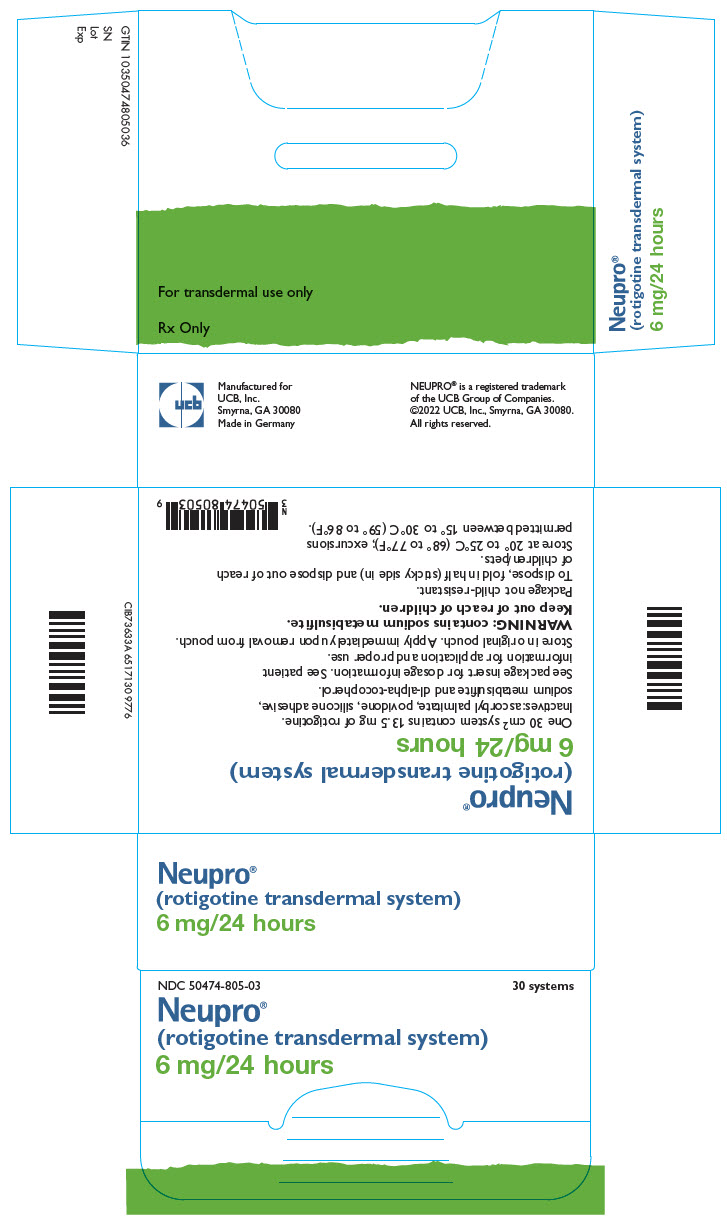
Neupro rotigotine 6 mg/24h Patch, Extended Release
🆔 Identity & classification
Where does this data come from?
🏭 Manufacturer & labeler
Where does this data come from?
🩺 Clinical
Rotigotine transdermal patches are used to treat the signs and symptoms of Parkinson's disease (PD; a disorder of the nervous system that causes difficulties with movement, muscle control, and balance) including shaking of parts of the body, stiffness, slowed movements, and problems with balance. Rotigotine transdermal patches are also used to treat restless legs syndrome (RLS or Ekbom syndrome; a condition that causes discomfort in the legs and a strong urge to move the legs, especially at night and when sitting or lying down). Rotigotine is in a class of medications called dopamine agonists....
Read the full MedlinePlus article ↗- Rotating the patch site daily helps protect your skin. Leaving the patch in the same spot repeatedly can cause irritation, redness, or more serious skin reactions. You should wait...
- Why do I have to move the patch to a different spot every day?
- The label instructs you to apply the patch to clean, dry, intact skin and press it firmly for 30 seconds to make sure it sticks well, especially around the edges. If the patch beco...
- Can I shower or swim while wearing the Neupro patch?
Patient education
Supplement & herbal interactions
Some supplements/herbs that may interact with Rotigotine — tap one for details:
Where does this data come from?
Ask a licensed pharmacist directly — free, answered by our team.
🧪 Inactive Ingredients / Excipients
Inactive ingredients, also called excipients, are components of the drug product other than the active ingredient. They may include fillers, dyes, coatings, preservatives, flavors, or other formulation ingredients.
💡 Tap an ingredient (hover on desktop) to see what it is and why it’s used.
-
UNII 7QWA1RIO01
A synthetic form of vitamin E used as an antioxidant in medicines. It prevents oils and fats in the formulation from breaking down, helping the drug remain stable and effective during storage.
-
UNII QN83US2B0N
Ascorbyl palmitate is a fat-soluble form of vitamin C used as an antioxidant in medicines. It prevents oils and fats in the product from breaking down and becoming less stable over time.
-
UNII FZ989GH94E
Povidone is a synthetic polymer made from a plastic-like material. It acts as a binder to hold tablet ingredients together and as a disintegrant to help the tablet break apart in your stomach so the medicine can be absorbed.
-
UNII 4VON5FNS3C
Sodium metabisulfite is a preservative derived from sulfur compounds. It prevents microbial growth and oxidation in medicines, helping extend shelf life and maintain product stability.
4 inactive ingredients listed in the exact product block matched to this NDC.
Where does this data come from?
ingredient classCode="IACT" elements from the exact product block matched by this NDC. Label-section narrative from DailyMed / the openFDA label index is shown separately when available.Inactive ingredient FAQ
Are inactive ingredients the same for every manufacturer?
Why might an inactive ingredient be missing?
Can inactive ingredients matter?
💲 Pricing
A drug doesn't have one price. Each row is a different public payment system, and none is what you'd pay at the counter — that depends on your insurance. The ⓘ on each row explains what it measures.
| Price system | Per ea | Per package |
|---|---|---|
| Retail pharmacies payNADAC · weekly | $28.181 | $845.44 / 30 patch |
| Medicaid paysCMS SDUD · 12 mo | $27.81 | $834.35 / 30 patch |
| Medicare drug plans payPart D · Q2 2026 | $29.90 | $896.87 / 30 patch |
Where does this data come from?
🔁 Therapeutic equivalents
| Product | Labeler | Pack | NADAC/unit | TE | Status | Price vs. this |
|---|---|---|---|---|---|---|
| Neupro 6 mg/24hthis 50474-0805-03 | UCB, | 30 patches | $28.181 | — | Availability likely | — |
Where does this data come from?
⏳ Availability & generic status
We did not find an FDA-approved generic match for this exact strength, form and route. Patent/protection dates below may affect future generic timing.
Why the date isn’t exact: Generic timing can change because patents may be challenged, settled, licensed, added, removed, or worked around with a narrower label — and FDA approval does not always mean a pharmacy can get the generic today.
🛈 What do these terms mean?
- Patent
- Legal protection listed in the Orange Book that may delay generic approval or launch. Issued by the U.S. Patent & Trademark Office.
- Substance patent
- Covers the active drug molecule itself — the hardest to design around. A generic generally can’t launch until it expires.
- Formulation (product) patent
- Covers a specific formulation or dosage form. A generic can sometimes work around it with a different formulation.
- Method-of-use patent
- A patent covering one specific approved use of the drug — not necessarily the whole molecule. A generic can sometimes launch with a “skinny label” that carves out the protected use and keeps the others.
- Skinny label
- A generic label that omits a still-patented use when the FDA allows it — letting a generic reach the market for the unprotected uses.
- Exclusivity
- FDA-granted marketing protection, separate from patents — e.g. 5-yr new chemical entity, 7-yr orphan drug, or a +6-month pediatric extension.
- Paragraph IV
- A generic applicant’s formal challenge to a listed patent. It can potentially lead to earlier generic entry, but often involves litigation or a settlement.
- RLD / RS
- Reference Listed Drug — the brand product the FDA uses as the reference for generic applications. Reference Standard — the product the FDA expects generics to compare against in bioequivalence testing.
- TE / AB rating
- FDA therapeutic-equivalence rating. An AB rating generally means the FDA considers a generic therapeutically equivalent to — and substitutable for — the brand.
- LOE (loss of exclusivity)
- The latest patent or exclusivity currently listed — the loss-of-exclusivity / latest-listed-protection date shown on this page. Paragraph-IV challenges and settlements can move the real date earlier; FDA approval and a manufacturer’s decision to market can move it later.
Built from the FDA Orange Book. The bars above are scaled to each protection’s expiry; the red LOE marker is the last one to lapse.
| Patent | Type | Use code | Expires |
|---|---|---|---|
| US 8246979 ↗ | Method of use | U-1272 | Sep 1, 2027 |
| US 8246979 ↗ | Method of use | U-1272 | Sep 1, 2027 |
| US 8246979 ↗ | Method of use | U-1273 | Sep 1, 2027 |
| US 8246979 ↗ | Method of use | U-1273 | Sep 1, 2027 |
| US 8246979 ↗ | Method of use | U-1272 | Sep 1, 2027 |
| US 8246979 ↗ | Method of use | U-1272 | Sep 1, 2027 |
| US 8246979 ↗ | Method of use | U-1273 | Sep 1, 2027 |
| US 8246979 ↗ | Method of use | U-1272 | Sep 1, 2027 |
| US 8246979 ↗ | Method of use | U-1272 | Sep 1, 2027 |
| US 8246979 ↗ | Method of use | U-1273 | Sep 1, 2027 |
| US 8246979 ↗ | Method of use | U-1273 | Sep 1, 2027 |
| US 8246979 ↗ | Method of use | U-1273 | Sep 1, 2027 |
| US 10350174 ↗ | Drug product | — | Dec 22, 2030 |
| US 9925150 ↗ | Drug product | — | Mar 1, 2032 |
| US 10130589 ↗ | Drug product | — | Dec 22, 2030 |
| US 9925150 ↗ | Drug product | — | Mar 1, 2032 |
| US 10130589 ↗ | Drug product | — | Dec 22, 2030 |
| US 10130589 ↗ | Drug product | — | Dec 22, 2030 |
| US 10130589 ↗ | Drug product | — | Dec 22, 2030 |
| US 9925150 ↗ | Drug product | — | Mar 1, 2032 |
| US 10350174 ↗ | Drug product | — | Dec 22, 2030 |
| US 9925150 ↗ | Drug product | — | Mar 1, 2032 |
| US 10350174 ↗ | Drug product | — | Dec 22, 2030 |
| US 10350174 ↗ | Drug product | — | Dec 22, 2030 |
| US 9925150 ↗ | Drug product | — | Mar 1, 2032 |
| US 10350174 ↗ | Drug product | — | Dec 22, 2030 |
| US 10130589 ↗ | Drug product | — | Dec 22, 2030 |
| US 10130589 ↗ | Drug product | — | Dec 22, 2030 |
| US 10350174 ↗ | Drug product | — | Dec 22, 2030 |
| US 9925150 ↗ | Drug product | — | Mar 1, 2032 |
Is there a generic version of NEUPRO 6 MG/24 HR PATCH?
The FDA approved a generic — why can’t I get it at my pharmacy yet?
Why do different websites show different generic release dates?
What does “FDA listed” mean?
What does a patent or protection date mean here?
What does “current Orange Book estimate” mean?
Can a generic come out before the last patent expires?
Can a generic come out after the listed dates?
What is the difference between patents and exclusivity?
Why are there multiple patent dates?
Where does this data come from?
🗺️ Medicaid utilization & spend
💊 Medicaid utilization by pack size
📊 Medicare Part D spend CMS · PART D · 2026 (Q1)
🔬 Reported adverse events (FAERS)
Top reported reactions
Age at onset
Reporter sex
Serious outcomes
Where does this data come from?
📦 Packaging — all sizes for this product
| Package NDC | Description | Per unit | Per pack | Marketing start | Status |
|---|---|---|---|---|---|
| 50474-0805-03 You're viewing this | 30 POUCH in 1 CARTON (50474-805-03) / 1 PATCH in 1 POUCH / 24 h in 1 PATCH | $28.18 / ea | $845.44 | 2012-04-02 | Active |
| 50474-0805-17 | 7 POUCH in 1 CARTON (50474-805-17) / 1 PATCH in 1 POUCH / 24 h in 1 PATCH | — | — | 2012-04-02 | Active |
In Medicaid, this is the most-dispensed pack of this product — about 100% of fills over the last four reported quarters. See all packs ↓
Pack size FAQ
What quantity is in NDC 50474-0805-03?
What NDC number is used to bill for this package of Neupro rotigotine 6 mg/24h Patch, Extended Release?
Prices are the latest CMS NADAC pharmacy acquisition cost per NDC; per-pack figures are per-unit × pack quantity, shown only when the pack is denominated in the same measure NADAC prices.
📄 Full prescribing information FDA SPL
🎯 Indications and Usage ▾
1 INDICATIONS AND USAGE NEUPRO is a dopamine agonist indicated for the treatment of: Parkinson's disease ( 1.1 ) Moderate-to-severe primary Restless Legs Syndrome ( 1.2 )
1.1Parkinson's Disease (PD) NEUPRO is indicated for the treatment of Parkinson's disease.
1.2Restless Legs Syndrome (RLS) NEUPRO is indicated for the treatment of moderate-to-severe primary Restless Legs Syndrome.
⏱️ Dosage and Administration ▾
2 DOSAGE AND ADMINISTRATION Parkinson's disease: Initially, 2 mg/24 hours for early-stage disease or 4 mg/24 hours for advanced-stage disease. The dose may be increased as needed by 2 mg/24 hours at weekly intervals, up to 6 mg/24 hours for early-stage disease and up to 8 mg/24 hours for advanced-stage disease. ( 2.1 ) Restless Legs Syndrome: Initially, 1 mg/24 hours, increased as needed by 1 mg/24 hours at weekly intervals, up to 3 mg/24 hours.
( 2.2 ) Apply once a day to the skin; press firmly in place for 30 seconds. Do not place NEUPRO on oily, irritated, or damaged skin, or where it will be rubbed by tight clothing. Do not use the same site more than once every 14 days.
The prescribed dose may be achieved using single or multiple patches. ( 2.3 ) To discontinue treatment, reduce the dose gradually until complete withdrawal of NEUPRO. ( 2.4 )
2.1Dosage in Parkinson's Disease Early-Stage Parkinson's Disease In patients with early-stage Parkinson's disease, the recommended starting dose for NEUPRO is 2 mg/24 hours. Based upon individual patient clinical response and tolerability, NEUPRO dosage may be increased weekly by 2 mg/24 hours if additional therapeutic effect is needed. The lowest effective dose is 4 mg/24 hours.
The maximum recommended dose for early-stage Parkinson's disease is 6 mg/24 hours. Advanced-Stage Parkinson's Disease In patients with advanced-stage Parkinson's disease, the recommended starting dose for NEUPRO is 4 mg/24 hours. Based upon individual patient clinical response and tolerability, NEUPRO dosage may be increased weekly by 2 mg/24 hours if additional therapeutic effect is needed.
The maximum recommended dose for advanced-stage Parkinson's disease is 8 mg/24 hours.
2.2Dosage in Restless Legs Syndrome In patients with Restless Legs Syndrome, the recommended starting dose for NEUPRO is 1 mg/24 hours. Based upon individual patient clinical response and tolerability, NEUPRO dosage may be increased weekly by 1 mg/24 hours if additional therapeutic effect is needed. The lowest effective dose is 1 mg/24 hours. The maximum recommended dose is 3 mg/24 hours.
2.3Administration Information NEUPRO is applied once a day. The adhesive side of the transdermal system should be applied to clean, dry, intact healthy skin on the front of the abdomen, thigh, hip, flank, shoulder, or upper arm. The transdermal system should be applied at approximately the same time every day, at a convenient time for the patient.
Because NEUPRO is administered transdermally, food is not expected to affect absorption and it can be applied irrespective of the timing of meals. The application site for NEUPRO should be moved on a daily basis (for example, from the right side to the left side and from the upper body to the lower body). NEUPRO should not be applied to the same application site more than once every 14 days and should not be placed on skin that is oily, irritated, or damaged, or where it will be rubbed by tight clothing.
If it is necessary to apply NEUPRO to a hairy area, the area should be shaved at least 3 days prior to NEUPRO application. The system should be applied immediately after opening the pouch and removing the protective liner. The system should be pressed firmly in place for 30 seconds, making sure there is good contact, especially around the edges.
If the patient forgets to replace NEUPRO, or if the transdermal system becomes dislodged, another transdermal system should be applied for the remainder of the day. The prescribed dose may be achieved using single or multiple patches [see Patient Counseling Information (17) ].
2.4Discontinuation of NEUPRO For discontinuation of NEUPRO in patients with Parkinson's disease, reduce the daily dose by a maximum of 2 mg every 24 hours preferably every other day, until complete withdrawal of NEUPRO is achieved. For discontinuation of NEUPRO in patients with Restless Legs Syndrome, reduce the daily dose by 1 mg every 24 hours preferably every other day, until complete with…
💊 Dosage Forms and Strengths ▾
3 DOSAGE FORMS AND STRENGTHS Transdermal System: 1 mg/24 hours, 2 mg/24 hours, 3 mg/24 hours, 4 mg/24 hours, 6 mg/24 hours, and 8 mg/24 hours of rotigotine. Transdermal System: 1 mg/24 hours, 2 mg/24 hours, 3 mg/24 hours, 4 mg/24 hours, 6 mg/24 hours, and 8 mg/24 hours of rotigotine. ( 3 )
⛔ Contraindications ▾
4 CONTRAINDICATIONS NEUPRO is contraindicated in patients who have demonstrated hypersensitivity to rotigotine or the components of the transdermal system. History of hypersensitivity to rotigotine or components of the transdermal patch. ( 4 )
⚠️ Warnings and Cautions ▾
5 WARNINGS AND PRECAUTIONS Contains sodium metabisulfite that may cause allergic-type reactions in those with sulfite sensitivity. ( 5.1 ) Falling asleep during activities of daily living, including the operation of motor vehicles, and somnolence may occur. ( 5.2 ) Hallucinations/psychosis and dyskinesia may occur.
( 5.3 , 5.9 ) Symptomatic postural hypotension and syncope may occur, especially during dose escalation. ( 5.4 , 5.5 ) Consider dose reduction or stopping NEUPRO if patient develops compulsive behaviors. ( 5.6 ) Elevation of blood pressure and heart rate may occur.
( 5.7 ) Application site reactions can occur and may be severe. ( 5.10 ) Hyperpyrexia and confusion may occur with sudden discontinuation or dose reduction. ( 5.14 )
5.1Sulfite Sensitivity NEUPRO contains sodium metabisulfite, a sulfite that may cause allergic-type reactions including anaphylactic symptoms and life-threatening or less severe asthmatic episodes in certain susceptible people. The overall prevalence of sulfite sensitivity in the general population is unknown. Sulfite sensitivity is seen more frequently in asthmatic than in nonasthmatic people.
5.2Falling Asleep During Activities of Daily Living and Somnolence Patients with early- and advanced-stage Parkinson's disease and with Restless Legs Syndrome treated with NEUPRO have reported falling asleep while engaged in activities of daily living, including the operation of motor vehicles, which sometimes resulted in accidents. Although many of these patients reported somnolence while on NEUPRO, some did not perceive warning signs, such as excessive drowsiness, and believed that they were alert immediately prior to the event.
Some of these events have been reported as late as one year after initiation of treatment. In clinical trials in patients with Restless Legs Syndrome, 2% of patients treated with the maximum recommended NEUPRO dose (3 mg/24 hours) reported sleep attacks compared to 0% of placebo-treated patients. It has been reported that falling asleep while engaged in activities of daily living always occurs in a setting of pre-existing somnolence, although patients may not give such a history.
For this reason, prescribers should reassess patients for drowsiness or sleepiness especially since some of the events occur well after the start of treatment. Somnolence is a common occurrence in patients receiving NEUPRO. In patients taking the maximum recommended NEUPRO dose, there was an increased risk of somnolence for early-stage Parkinson's disease (NEUPRO 19%, placebo 3%), for advanced-stage Parkinson's disease (NEUPRO 32%, placebo 28%), and for Restless Legs Syndrome (NEUPRO 10%, placebo 4%).
Prescribers should also be aware that patients may not acknowledge drowsiness or sleepiness until directly questioned about drowsiness or sleepiness during specific activities. Patients should be advised to exercise caution while driving, operating machines, or working at heights during treatment with NEUPRO. Patients who have already experienced somnolence and/or an episode of sudden sleep onset should not participate in these activities while taking NEUPRO.
Before initiating treatment with NEUPRO, patients should be advised of the potential to develop drowsiness and specifically asked about factors that may increase this risk with NEUPRO such as concomitant sedating medications and the presence of sleep disorders. If a patient develops daytime sleepiness or episodes of falling asleep during activities that require active participation (e.g., conversations, eating, etc.), NEUPRO should ordinarily be discontinued [see Dosage and Administration (2.4) ] . If a decision is made to continue NEUPRO, patients should be advised not to drive and to avoid other potentially dangerous activities.
There is insufficient information to establish whether dose reduction will eliminate episodes of falling asleep while engaged in activities of daily living.
5.3 Hallucinations/Psychosis There was an increased risk for h…
🤒 Adverse Reactions ▾
6 ADVERSE REACTIONS The following serious adverse reactions are discussed below and elsewhere in the labeling: Sulfite Sensitivity [see Warnings and Precautions (5.1) ] Falling Asleep During Activities of Daily Living and Somnolence [see Warnings and Precautions (5.2) ] Hallucinations/Psychosis [see Warnings and Precautions (5.3) ] Symptomatic Hypotension [see Warnings and Precautions (5.4) ] Syncope [see Warnings and Precautions (5.5) ] Impulse Control/Compulsive Behaviors [see Warnings and Precautions (5.6) ] Elevation of Blood Pressure and Heart Rate [see Warnings and Precautions (5.7) ] Weight Gain and Fluid Retention [see Warnings and Precautions (5.8) ] Dyskinesia [see Warnings and Precautions (5.9) ] Application Site Reactions [see Warnings and Precautions (5.10) ] Augmentation and Rebound in RLS [see Warnings and Precautions (5.11) ] Hyperpyrexia and Confusion [see Warnings and Precautions (5.14) ] Withdrawal Symptoms [see Warnings and Precautions (5.15) ] Fibrotic Complications [see Warnings and Precautions (5.16) ] Parkinson's disease: Most common adverse reactions (at least 5% greater than placebo) were nausea, vomiting, somnolence, application site reactions, dizziness, anorexia, disturbances in initiating and maintaining sleep, hyperhidrosis, visual disturbance, peripheral edema, and dyskinesia.
( 6.1 ) Restless Legs Syndrome: Most common adverse reactions (at least 5% greater than placebo) were application site reactions, nausea, disturbances in initiating and maintaining sleep, somnolence, and headache. ( 6.1 ) To report SUSPECTED ADVERSE REACTIONS, contact UCB, Inc. at 1-844-599-2273 or FDA at 1-800-FDA-1088 or www.fda.gov/medwatch.
6.1Clinical Trials Experience Because clinical trials are conducted under widely varying conditions, the incidence of adverse reactions (number of unique patients experiencing an adverse reaction associated with treatment/total number of patients treated) observed in the clinical trials of a drug cannot be directly compared to incidence of adverse reactions in the clinical trials of another drug and may not reflect the incidence of adverse reactions observed in practice. Adverse Reactions in Early-Stage Parkinson's Disease The safety of NEUPRO was evaluated in a total of 649 early-stage Parkinson's disease patients who participated in three double-blind, placebo-controlled studies with durations of 3 to 9 months.
Additional safety information was collected in short-term studies and two open-label extension studies in patients with early-stage Parkinson's disease. In the double-blind, placebo-controlled, dose-response study in patients with early-stage Parkinson's disease, the most common adverse reactions (at least 5% greater than placebo) for the maximum recommended dose of NEUPRO (6 mg/24 hours) were nausea, vomiting, somnolence, application site reactions, dizziness, anorexia, disturbances in initiating and maintaining sleep, hyperhidrosis, and visual disturbance.
In this trial, 12% of patients treated with the maximum recommended NEUPRO dose (6 mg/24 hours) discontinued treatment because of adverse reactions, compared with 6% of patients who received placebo. Table 1 summarizes the adverse reactions that occurred in greater than 2% of NEUPRO-treated patients and more frequent than in placebo-treated patients in a double-blind, placebo-controlled, fixed-dose trial in patients with early-stage Parkinson's disease. Incidences for the non-recommended 8 mg/24 hours dose are also shown.
Table 1 Adverse Reactions in a Placebo-Controlled, Fixed-Dose Trial in Patients with Early-Stage Parkinson's Disease Adverse Reaction Placebo N=64 % NEUPRO Dose 2 mg/24h N=67 % 4 mg/24h N=63 % 6 mg/24h N=65 % 8 mg/24h N=70 % Nausea 13 34 38 48 41 Vomiting 3 10 16 20 11 Somnolence 3 12 14 19 20 Application and instillation site reactions 19 21 19 32 43 Dizziness 11 21 14 22 20 Anorexia 0 2 2 9 4 Disturbances in initiating and maintaining sleep 6 6 11 14 11 Hyperhidrosis 3 3 3 11 3 Visual disturbance 0…
🔄 Drug Interactions ▾
7 DRUG INTERACTIONS
7.1Dopamine Antagonists Dopamine antagonists, such as antipsychotics or metoclopramide, may diminish the effectiveness of NEUPRO [see Clinical Pharmacology (12.3) ] .
👥 Use in Specific Populations ▾
8 USE IN SPECIFIC POPULATIONS Pregnancy: Based on animal data, may cause fetal harm. ( 8.1 )
8.1Pregnancy Risk Summary There are no adequate data on the developmental risk associated with the use of NEUPRO in pregnant women. In animal studies, rotigotine was shown to have adverse effects on embryofetal development when administered during pregnancy at doses similar to or lower than those used clinically [ see Data ]. In the U.S. general population, the estimated background risk of major birth defects and of miscarriage in clinically recognized pregnancies is 2% to 4% and 15% to 20%, respectively.
The background risk of major birth defects and miscarriage in the indicated population is unknown. Data Animal Data Rotigotine administered subcutaneously (0, 10, 30, or 90 mg/kg/day) to pregnant mice during organogenesis (gestation days 6 through 15) resulted in increased incidences of delayed skeletal ossification and decreased fetal body weights at the two highest doses and an increase in embryofetal death at the high dose. The no-effect dose for embryofetal developmental toxicity in mice is approximately 6 times the maximum recommended human dose (MRHD) for Parkinson's disease (8 mg/24 hours) on a body surface area (mg/m 2 ) basis.
Rotigotine administered subcutaneously (0, 0.5, 1.5, or 5 mg/kg/day) to pregnant rats during organogenesis (gestation days 6 through 17) resulted in increased embryofetal death at all doses. The lowest effect dose is less than the MRHD on a mg/m 2 basis. This effect in rats is thought to be due to the prolactin-lowering effect of rotigotine.
When rotigotine was administered subcutaneously (0, 5, 10, or 30 mg/kg/day) to pregnant rabbits during organogenesis (gestation days 7 through 19), an increase in embryofetal death occurred at the two highest doses tested. The no-effect dose is 12 times the MRHD on a mg/m 2 basis. In a study in which rotigotine was administered subcutaneously (0, 0.1, 0.3, or 1 mg/kg/day) to rats throughout pregnancy and lactation (gestation day 6 through postnatal day 21), impaired growth and development during lactation and long-term neurobehavioral abnormalities were observed in the offspring at the highest dose tested; when those offspring were mated, growth and survival of the next generation were adversely affected.
The no- effect dose for pre- and postnatal developmental toxicity (0.3 mg/kg/day) is less than the MRHD on a mg/m 2 basis.
8.2Lactation Risk Summary There are no data on the presence of rotigotine in human milk, the effects of rotigotine on the breastfed infant, or the effects of rotigotine on milk production. However, inhibition of lactation may occur because rotigotine decreases secretion of prolactin in humans. Studies have shown that rotigotine and/or its metabolite(s) are excreted in rat milk.
The developmental and health benefits of breastfeeding should be considered along with the mother's clinical need for NEUPRO and any potential adverse effects on the breastfed infant from NEUPRO or from the underlying maternal condition.
8.4Pediatric Use Safety and effectiveness in pediatric patients for any indication have not been established.
8.5Geriatric Use Of patients receiving NEUPRO in clinical studies for the treatment of Parkinson's disease, approximately 50% were age 65 and over, and approximately 11% were age 75 and over. Among patients receiving NEUPRO in clinical studies for the treatment of RLS, 26% were age 65 and over. No overall differences in safety or effectiveness were observed between these patients and younger patients, and other reported clinical experience has not identified differences in responses between the elderly and younger patients, but greater sensitivity of some older individuals cannot be ruled out.
No overall differences in plasma levels of rotigotine were observed between patients who were 65 to 80 years old compared with younger patients receiving the same rotigotine doses.
🤰 Pregnancy ▾
8.1Pregnancy Risk Summary There are no adequate data on the developmental risk associated with the use of NEUPRO in pregnant women. In animal studies, rotigotine was shown to have adverse effects on embryofetal development when administered during pregnancy at doses similar to or lower than those used clinically [ see Data ]. In the U.S. general population, the estimated background risk of major birth defects and of miscarriage in clinically recognized pregnancies is 2% to 4% and 15% to 20%, respectively.
The background risk of major birth defects and miscarriage in the indicated population is unknown. Data Animal Data Rotigotine administered subcutaneously (0, 10, 30, or 90 mg/kg/day) to pregnant mice during organogenesis (gestation days 6 through 15) resulted in increased incidences of delayed skeletal ossification and decreased fetal body weights at the two highest doses and an increase in embryofetal death at the high dose. The no-effect dose for embryofetal developmental toxicity in mice is approximately 6 times the maximum recommended human dose (MRHD) for Parkinson's disease (8 mg/24 hours) on a body surface area (mg/m 2 ) basis.
Rotigotine administered subcutaneously (0, 0.5, 1.5, or 5 mg/kg/day) to pregnant rats during organogenesis (gestation days 6 through 17) resulted in increased embryofetal death at all doses. The lowest effect dose is less than the MRHD on a mg/m 2 basis. This effect in rats is thought to be due to the prolactin-lowering effect of rotigotine.
When rotigotine was administered subcutaneously (0, 5, 10, or 30 mg/kg/day) to pregnant rabbits during organogenesis (gestation days 7 through 19), an increase in embryofetal death occurred at the two highest doses tested. The no-effect dose is 12 times the MRHD on a mg/m 2 basis. In a study in which rotigotine was administered subcutaneously (0, 0.1, 0.3, or 1 mg/kg/day) to rats throughout pregnancy and lactation (gestation day 6 through postnatal day 21), impaired growth and development during lactation and long-term neurobehavioral abnormalities were observed in the offspring at the highest dose tested; when those offspring were mated, growth and survival of the next generation were adversely affected.
The no- effect dose for pre- and postnatal developmental toxicity (0.3 mg/kg/day) is less than the MRHD on a mg/m 2 basis.
🧒 Pediatric Use ▾
8.4Pediatric Use Safety and effectiveness in pediatric patients for any indication have not been established.
🧓 Geriatric Use ▾
8.5Geriatric Use Of patients receiving NEUPRO in clinical studies for the treatment of Parkinson's disease, approximately 50% were age 65 and over, and approximately 11% were age 75 and over. Among patients receiving NEUPRO in clinical studies for the treatment of RLS, 26% were age 65 and over. No overall differences in safety or effectiveness were observed between these patients and younger patients, and other reported clinical experience has not identified differences in responses between the elderly and younger patients, but greater sensitivity of some older individuals cannot be ruled out.
No overall differences in plasma levels of rotigotine were observed between patients who were 65 to 80 years old compared with younger patients receiving the same rotigotine doses.
🆘 Overdosage ▾
10 OVERDOSAGE
10.1Overdose Symptoms The most likely symptoms of overdose would be those related to the pharmacodynamic profile of a dopamine agonist, including nausea, vomiting, hypotension, involuntary movements, hallucinations, confusion, convulsions, and other signs of excessive dopaminergic stimulation.
10.2Overdose Management There is no known antidote for overdosage of dopamine agonists. In case of suspected overdose, the excess transdermal system(s) should immediately be removed from the patient. Concentrations of rotigotine decrease after patch removal.
The terminal half-life of rotigotine is 5 to 7 hours. The pharmacokinetic profile showed a biphasic elimination with an initial half-life of 3 hours. The patient's heart rate, heart rhythm, and blood pressure should be monitored.
As shown in a study of renally impaired patients, dialysis is not expected to be beneficial. Treatment of overdose may require general supportive measures to maintain vital signs. If it is necessary to discontinue use of rotigotine after overdose, it should be discontinued gradually to prevent hyperpyrexia and confusion [see Dosage and Administration (2.4) and Warnings and Precautions (5.14) ].
🧬 Clinical Pharmacology ▾
12 CLINICAL PHARMACOLOGY
12.1Mechanism of Action Rotigotine is a non-ergoline dopamine agonist. The precise mechanism of action of rotigotine as a treatment for Parkinson's disease is unknown, although it is thought to be related to its ability to stimulate dopamine receptors within the caudate-putamen in the brain. The precise mechanism of action of rotigotine as a treatment for Restless Legs Syndrome is unknown but is thought to be related to its ability to stimulate dopamine receptors.
12.2Pharmacodynamics Cardiac Electrophysiology There is no indication of a QT/QTc prolonging effect of NEUPRO in doses up to 24 mg/24 hours. The effects of NEUPRO at doses up to 24 mg/24 hours (supratherapeutic doses) on the QT/QTc interval was evaluated in a double-blind, randomized, placebo- and positive-controlled (moxifloxacin 400 mg IV, single dose), parallel-group trial with an overall treatment period of 52 days in male and female patients with advanced-stage Parkinson's disease. Assay sensitivity was confirmed by significant QTc prolongation by moxifloxacin.
12.3Pharmacokinetics On average, approximately 45% of the rotigotine from the patch is released within 24 hours (0.2 mg/cm 2 ). Rotigotine is primarily eliminated in the urine as inactive conjugates. After removal of the patch, plasma levels decreased with a terminal half-life of 5 to 7 hours.
The pharmacokinetic profile showed a biphasic elimination with an initial half-life of 3 hours. Absorption and Bioavailability When single doses of 8 mg/24 hours are applied to the trunk, there is an average lag time of approximately 3 hours until drug is detected in plasma (range 1 to 8 hours). T max typically occurs between 15 to 18 hours post dose but can occur from 4 to 27 hours post dose.
However, there is no characteristic peak concentration observed. Rotigotine displays dose-proportionality over a daily dose range of 1 mg/24 hours to 24 mg/24 hours. In the clinical studies of rotigotine effectiveness, the transdermal system application site was rotated from day to day (abdomen, thigh, hip, flank, shoulder, or upper arm) and the mean measured plasma concentrations of rotigotine were stable over the 6 months of maintenance treatment.
Relative bioavailability for the different application sites at steady-state was evaluated in subjects with Parkinson's disease. In a single trial conducted in patients with early-stage Parkinson's disease, differences in bioavailability ranged from less than 1% (abdomen vs. hip) to 46% (shoulder vs. thigh) with shoulder application showing higher bioavailability. Because rotigotine is administered transdermally, food should not affect absorption.
In a 14-day clinical study with rotigotine administered to healthy subjects, steady-state plasma concentrations were achieved within 2 to 3 days of daily dosing. Average NEUPRO plasma concentrations (±95% CI) in patients with early-stage Parkinson's disease are shown in Figure 2 after application of a 8 mg/24 hours transdermal system to 1 of 6 application sites (shoulder, upper arm, flank, hip, abdomen, or thigh) on 2 different days during the maintenance phase. Figure 2 Average NEUPRO Plasma Concentrations in Patients with Early-Stage Parkinson's Disease Figure 2 Distribution The weight normalized apparent volume of distribution (Vd/F) in humans is approximately 84 L/kg after repeated dose administration.
The binding of rotigotine to human plasma proteins is approximately 92% in vitro and 89.5% in vivo . Metabolism and Elimination Rotigotine is extensively metabolized by conjugation and N-dealkylation. After intravenous dosing the predominant metabolites in human plasma are sulfate conjugates of rotigotine, glucuronide conjugates of rotigotine, sulfate conjugates of the N-despropyl-rotigotine and conjugates of N-desthienylethyl-rotigotine.
Multiple CYP isoenzymes, sulfotransferases and two UDP-glucuronosyltransferases catalyze the metabolism of rotigotine. After removal of the patch, plasma levels decreased wi…
🧬 Mechanism of Action ▾
12.1Mechanism of Action Rotigotine is a non-ergoline dopamine agonist. The precise mechanism of action of rotigotine as a treatment for Parkinson's disease is unknown, although it is thought to be related to its ability to stimulate dopamine receptors within the caudate-putamen in the brain. The precise mechanism of action of rotigotine as a treatment for Restless Legs Syndrome is unknown but is thought to be related to its ability to stimulate dopamine receptors.
📦 How Supplied / Storage and Handling ▾
16 HOW SUPPLIED/STORAGE AND HANDLING Each transdermal system is packaged in a separate pouch. Each strength is available in cartons of 30 transdermal systems. 1 mg/24 hours 30 transdermal systems NDC #50474-801-03 2 mg/24 hours 30 transdermal systems NDC #50474-802-03 3 mg/24 hours 30 transdermal systems NDC #50474-803-03 4 mg/24 hours 30 transdermal systems NDC #50474-804-03 6 mg/24 hours 30 transdermal systems NDC #50474-805-03 8 mg/24 hours 30 transdermal systems NDC #50474-806-03 Store at 20º - 25ºC (68º - 77ºF); excursions permitted between 15º - 30ºC (59º - 86ºF). [See USP Controlled Room Temperature] NEUPRO should be stored in the original pouch.
Do not store outside of pouch. Apply the transdermal system immediately upon removal from the pouch. Discard used systems in household trash in a manner that prevents accidental application or ingestion by children, pets, or others.
📦 Storage and Handling ▾
Store at 20º - 25ºC (68º - 77ºF); excursions permitted between 15º - 30ºC (59º - 86ºF). [See USP Controlled Room Temperature] NEUPRO should be stored in the original pouch. Do not store outside of pouch. Apply the transdermal system immediately upon removal from the pouch. Discard used systems in household trash in a manner that prevents accidental application or ingestion by children, pets, or others.
📋 Description ▾
11 DESCRIPTION NEUPRO is a transdermal system that provides continuous delivery of rotigotine, a non-ergoline dopamine agonist, for 24 hours following application to intact skin. NEUPRO is available in six strengths as shown in Table 4. Table 4 Nominal Dose, Drug Content, and Transdermal System Size NEUPRO Nominal Dose Rotigotine Content per System NEUPRO System Size 1 mg/24 hours 2.25 mg 5 cm 2 2 mg/24 hours 4.5 mg 10 cm 2 3 mg/24 hours 6.75 mg 15 cm 2 4 mg/24 hours 9 mg 20 cm 2 6 mg/24 hours 13.5 mg 30 cm 2 8 mg/24 hours 18 mg 40 cm 2 The chemical name of rotigotine is (6S)-6-{propyl[2-(2-thienyl)ethyl]amino}-5,6,7,8-tetrahydro-1-naphthalenol.
The empirical formula is C 19 H 25 NOS. The molecular weight is 315.48. The structural formula for rotigotine is: The asterisk designates the chiral center.
Chemical Structure System Components and Structure NEUPRO is a thin, matrix-type transdermal system composed of three layers as shown in Figure 1: Backing film Drug matrix Protective liner Figure 1: System Schematic A flexible, tan-colored backing film, consisting of an aluminized polyester film coated with a pigment-layer on the outer side. The backing provides structural support and protection of the drug-loaded adhesive layer from the environment. A self-adhesive drug matrix layer, consisting of the active component rotigotine and the following inactive components: ascorbyl palmitate, povidone, silicone adhesive, sodium metabisulfite, and dl-alpha-tocopherol.
A protective liner, consisting of a transparent fluoropolymer-coated polyester film. This liner protects the adhesive layer during storage and is removed just prior to application. Figure 1
💬 Information for Patients ▾
17 PATIENT COUNSELING INFORMATION Advise the patient to read the FDA-approved patient labeling (Patient Information). Sulfite Sensitivity Advise patients about potential for sulfite sensitivity. NEUPRO contains sodium metabisulfite, which may cause allergic-type reactions including anaphylactic symptoms and life-threatening or less severe asthmatic episodes in certain susceptible people.
An allergy to sulfites is not the same as an allergy to sulfa [see Warnings and Precautions (5.1) ] . Falling Asleep During Activities of Daily Living and Somnolence Advise and alert patients about the potential for sedating effects associated with NEUPRO, including somnolence and particularly to the possibility of falling asleep while engaged in activities of daily living. Because somnolence can be a frequent adverse reaction with potentially serious consequences, patients should neither drive a car nor engage in other potentially dangerous activities until they have gained sufficient experience with NEUPRO to gauge whether or not it affects their mental and/or motor performance adversely.
Advise patients that if increased somnolence or new episodes of falling asleep during activities of daily living (e.g., watching television, passenger in a car, etc.) are experienced at any time during treatment, they should not drive or participate in potentially dangerous activities until they have contacted their physician. Patients should not drive, operate machinery, or work at heights during treatment if they have previously experienced somnolence and/or have fallen asleep without warning prior to use of NEUPRO.
Because of the possible additive effects, caution should also be used when patients are taking alcohol, sedating medications, or other CNS depressants (e.g., benzodiazepines, antipsychotics, antidepressants, etc.) in combination with NEUPRO [see Warnings and Precautions (5.2) ] . Hallucinations/Psychosis Inform patients that hallucinations and other symptoms of psychosis can occur while taking NEUPRO. In patients with Parkinson's disease, the elderly are at a higher risk than younger patients [see Warnings and Precautions (5.3) ] .
Symptomatic Hypotension Advise patients that they may develop symptomatic (or asymptomatic) hypotension while taking NEUPRO. Hypotension may occur more frequently during initial therapy. Accordingly, caution patients against rising rapidly after sitting or lying down, especially if they have been doing so for prolonged periods and especially at the initiation of treatment with NEUPRO [see Warnings and Precautions (5.4) ] .
Syncope Advise patients about the potential for syncope in patients using dopamine agonists. For this reason, alert patients to the possibility of syncope while taking NEUPRO [see Warnings and Precautions (5.5) ] . Impulse Control/Compulsive Behaviors Advise patients that they may experience impulse control and/or compulsive behaviors and dopamine dysregulation syndrome while taking NEUPRO.
Ask patients and advise them to inform their physicians about the development of new or increased gambling urges, sexual urges, other urges, or repeated use of more NEUPRO than as prescribed to manage their symptoms [see Warnings and Precautions (5.6) ] . Elevation of Blood Pressure and Heart Rate Advise patients that NEUPRO can increase blood pressure and heart rate [see Warnings and Precautions (5.7) ] . Weight Gain and Fluid Retention Advise patients that NEUPRO can cause increased weight and fluid retention [see Warnings and Precautions (5.8) ] .
Dyskinesia Inform patients that NEUPRO may cause or exacerbate pre-existing dyskinesia [see Warnings and Precautions (5.9) ] . Application Site Reactions Inform patients that application site reactions can occur and that the NEUPRO transdermal system application site should be rotated on a daily basis. NEUPRO should not be applied to the same application site more than once every 14 days.
Advise patients to report persistent application site reaction (of more than…