
Bismuth subcitrate potassium, Metronidazole, Tetracycline hydrochloride 140 mg; 125 mg; 125 mg Capsule, 120-count — NDC 50742-283-13 (Billing 50742-0283-13)
This is a package of 120 capsules of Bismuth subcitrate potassium, Metronidazole, Tetracycline hydrochloride 140 mg; 125 mg; 125 mg Capsule from Ingenus Pharmaceuticals, LLC, marketed since Jul 2023 and currently FDA-listed; retail pharmacies pay about $2.40 per capsule (NADAC). It is this product's only package size.
NDC database record
One package, one record: these facts belong to NDC 50742-283-13 alone.
- Record
- FDA NDC Directory package listing · Human prescription drug
- Code segments
- 50742 labeler · 283 product · 13 package
- Package marketed since
- Jul 4, 2023
- Sample package
- No — commercial package
- Listing certified through
- Dec 31, 2026
- Billing quantity
- 120 EA per package
- Barcode (UPC-A, from the NDC)
- 3 5074228313 2
- Medicaid fills, this package
- 3,056 prescriptions in the last four reported quarters
- FDA record last changed
- Jul 24, 2026
Identity & classification
Regulatory identifiers FDA, NLM and CMS codes for this package
Drug-database identifiers Medi-Span GPI and First Databank GCN / HICL / AHFS classification
- GSN (GCN sequence number): 062462
- GCN: 98238
- GPI-14 (Medi-Span): 49992003150120
- HICL (First Databank): 020019
- AHFS class code: 08:12.24.00
- RxCUI (RxNorm): 1294619
Where does this data come from?
- FDA openFDA NDC Directory · synced Oct 8, 2026
- FDA label on DailyMed · label index refreshed Oct 8, 2026
- RxNorm (NLM RxNav) · catalog refreshed Oct 8, 2026
- Medi-Span GPI (licensed)
- First Databank (licensed) · refreshed Oct 8, 2026
RxNorm drug class
This medicine belongs to the Tetracycline-class Antimicrobial class.
Where does this data come from?
- RxClass (NLM) · catalog refreshed Oct 8, 2026
Clinical
Bismuth, metronidazole, and tetracycline is used to treat duodenal ulcers. It is in a class of medications called antibacterial agents. It works by preventing the growth and spread of Helicobacter pylori bacteria, which often occurs with ulcers. Treating this infection keeps ulcers from coming back.
Read the full MedlinePlus article ↗- It treats H. pylori infection in people who have a duodenal ulcer or have had one in the past 5 years. You take it together with omeprazole. Clearing the infection lowers the chanc...
- Take three capsules four times a day, after meals and at bedtime, for 10 days. You also take omeprazole twice a day after the morning and evening meals. Swallow the capsules whole...
- Don't double up. Just carry on with your normal schedule until the medicine is gone. If you miss more than 4 doses, call your prescriber.
- The bismuth can temporarily darken your stool and tongue. This is harmless and fades within several days after you stop. Still, tell your doctor if you're worried or feel unwell.
Patient education
Supplement & herbal interactions
Where does this data come from?
- MedlinePlus (NLM) · refreshed Oct 8, 2026
- FDA label on DailyMed · label index refreshed Oct 8, 2026
Ask a licensed pharmacist directly — free, answered by our team.
Pricing
A drug doesn't have one price. Each row is a different public payment system, and none is what you'd pay at the counter — that depends on your insurance. The ⓘ on each row explains what it measures.
| Price system | Per ea | Per package |
|---|---|---|
| Retail pharmacies payNADAC · weekly | $2.403 | $288.34 / 120 capsules |
| Medicaid paysCMS SDUD · 12 mo | $3.59 | $430.48 / 120 capsules |
| Medicare drug plans payPart D · Q2 2026 | $5.15 | $617.82 / 120 capsules |
Where does this data come from?
- CMS NADAC weekly file · file of Oct 7, 2026
- CMS ASP pricing files · refreshed Sep 20, 2026
- CMS Medicaid State Drug Utilization Data · through Q1 2026
- CMS Part D plan pricing files · refreshed Sep 24, 2026
- VA National Acquisition Center price file
Packaging — all sizes for this product
| Package NDC | Description | Marketing start | Marketing end | Status |
|---|---|---|---|---|
| 50742-0283-13 You're viewing this Main listing | 120 CAPSULE in 1 CARTON | 2023-07-04 | — | Active |
Therapeutic equivalents
| Product | Labeler | Pack | NADAC/unit | TE | Status | Price vs. this |
|---|---|---|---|---|---|---|
| Bismuth Subcitrate Potassium, Metronidazole and Tetracycline Hydrochloride 140 mg/1; 125 mg/1; 125 mg 49884-0151-54 | Par | 120 capsules | $2.403 | AB | Availability likely | — |
| Bismuth subcitrate potassium, Metronidazole, Tetracycline hydrochloride 140 mg/1; 125 mg/1; 125 mgthis 50742-0283-13 | Ingenus | 120 capsules | $2.403 | AB | Availability likely | — |
| Pylera 140 mg/1; 125 mg/1; 125 mg 61269-0380-12 | H2-Pharma, | 120 capsules | $2.429 | AB | Availability likely | +1% |
| Pylera 140 mg/1; 125 mg/1; 125 mg 61269-0381-12 | H2-Pharma, | 120 capsules | $2.429 | AB | Availability likely | +1% |
| Bismuth Subcitrate Potassium, Metronidazole and Tetracycline Hydrochloride 140 mg/1; 125 mg/1; 125 mg 61269-0386-12 | H2-Pharma, | 120 capsules | — | AB | FDA listed | — |
Where does this data come from?
- FDA openFDA NDC Directory · synced Oct 8, 2026
- FDA Orange Book · refreshed Oct 9, 2026
- CMS NADAC weekly file · file of Oct 7, 2026
Availability & generic status
This product is an FDA-approved generic. Other versions of the same drug are listed under Therapeutic equivalents, least expensive first.
Where does this data come from?
- FDA Orange Book · refreshed Oct 9, 2026
Inactive Ingredients / Excipients
Inactive ingredients, also called excipients, are components of the drug product other than the active ingredient. They may include fillers, dyes, coatings, preservatives, flavors, or other formulation ingredients.
🧪 Avoiding an ingredient? See Bismuth, Metronidazole, and Tetracycline inactive ingredients by manufacturer: every current product's list side by side, so you can ask your pharmacy for the version that does not list it.
💡 Tap an ingredient (hover on desktop) to see what it is and why it’s used.
-
UNII 5138Q19F1X
Ammonia is a colorless gas made from nitrogen and hydrogen. It's used in medicines as a pH buffer to maintain the correct acidity level and help keep the product stable.
-
UNII XM0M87F357
A dark iron oxide compound that gives medicines their black or dark color. It's used as a colorant in tablets and capsules to help identify the product and make it visually distinctive.
-
UNII 2G86QN327L
Gelatin is a protein derived from animal collagen, commonly used in medicines as a gelling agent and capsule material. It helps create soft or hard capsule shells that hold and release medication, and can also thicken liquid formulations.
-
UNII EWQ57Q8I5X
Lactose monohydrate is a natural sugar derived from milk. It serves as a filler and binder in tablets and capsules, helping create the proper size, texture, and consistency of the medicine.
-
UNII 70097M6I30
Magnesium stearate is a salt made from magnesium and stearic acid, a fatty substance. It's used in tablets and capsules as a lubricant and glidant to help ingredients flow smoothly during manufacturing and prevent sticking.
-
UNII 6DC9Q167V3
Propylene glycol is a clear liquid derived from petroleum or vegetable sources. It acts as a solvent, humectant, and preservative in medicines, helping dissolve active ingredients and maintain product stability.
-
UNII 46N107B71O
Shellac is a natural resin secreted by the lac beetle. It's used as a coating on tablets and capsules to control how quickly the medicine dissolves and to improve appearance and stability.
-
UNII 7SEV7J4R1U
A powder made from a naturally occurring mineral. In medicines, talc works as a glidant and anti-caking agent, helping tablets and capsules flow smoothly during manufacturing and preventing clumping.
-
UNII 15FIX9V2JP
Titanium dioxide is a bright white mineral powder commonly used as a colorant and opacifying agent. It makes pills and tablets white or lighter in color and helps make coatings non-transparent.
9 inactive ingredients listed in the exact product block matched to this NDC.
Where does this data come from?
ingredient classCode="IACT" elements from the exact product block matched by this NDC. Label-section narrative from DailyMed / the openFDA label index is shown separately when available.- FDA label on DailyMed · label index refreshed Oct 8, 2026
- FDA openFDA NDC Directory · synced Oct 8, 2026
Inactive ingredient FAQ
Are inactive ingredients the same for every manufacturer?
Why might an inactive ingredient be missing?
Can inactive ingredients matter?
Manufacturer & labeler
More NDCs from Ingenus Pharmaceuticals, LLC labeler code 50742
- Nifedipine 60 mg Tablet, Film Coated, Extended Release NDC 50742-261-01
- Nifedipine 90 mg Tablet, Film Coated, Extended Release NDC 50742-262-01
- Probenecid and Colchicine 500 mg; .5 mg Tablet NDC 50742-263-01
- Norethindrone acetate 5 mg Tablet NDC 50742-267-50
- Diclofenac sodium 100 mg Tablet, Film Coated NDC 50742-278-01
- Diclofenac Potassium 50 mg Tablet, Film Coated NDC 50742-279-01
- Colestipol Hydrochloride 1 g Tablet, Film Coated NDC 50742-284-12
- Hemiclor chlorthalidone 12.5 mg Tablet NDC 50742-285-30
- Timolol Maleate 3.4 mg/mL Solution/ Drops NDC 50742-287-60
- Timolol Maleate 6.8 mg/mL Solution/ Drops NDC 50742-288-60
- Frovatriptan 2.5 mg Tablet, Film Coated NDC 50742-299-09
- Flunisolide .25 mg/mL Solution NDC 50742-317-25
Where does this data come from?
- FDA openFDA NDC Directory · synced Oct 8, 2026
- Drugs@FDA
Full prescribing information FDA SPL
🚨 Boxed Warning ▾
WARNING: POTENTIAL FOR CARCINOGENICITY Metronidazole has been shown to be carcinogenic in mice and rats. It is unknown whether metronidazole is associated with carcinogenicity in humans [see Warning and Precautions ( 5.1 ) ] . WARNING: POTENTIAL FOR CARCINOGENICITY See full prescribing information for complete boxed warning.
Metronidazole has been shown to be carcinogenic in mice and rats. It is unknown whether metronidazole is associated with carcinogenicity in humans ( 5.1 ).
🎯 Indications and Usage ▾
1 INDICATIONS AND USAGE Bismuth subcitrate potassium, metronidazole and tetracycline hydrochloride capsule is a combination of metronidazole, a nitroimidazole antimicrobial, tetracycline, - a tetracycline class antimicrobial and bismuth subcitrate potassium, indicated for use, in combination with omeprazole, for the treatment of patients with Helicobacter pylori infection and duodenal ulcer disease (active or history of within the past 5 years) to eradicate H. pylori. ( 1.1 ) To reduce the development of drug-resistant bacteria and maintain the effectiveness of bismuth subcitrate potassium, metronidazole and tetracycline hydrochloride capsules and other antibacterial drugs, bismuth subcitrate potassium, metronidazole and tetracycline hydrochloride capsule should be used only to treat or prevent infections that are proven or strongly suspected to be caused by bacteria.
( 1.2 )
1.1Eradication of Helicobacter pylori in Patients with Active Duodenal Ulcer or History of Duodenal Ulcer Disease Bismuth subcitrate potassium, metronidazole and tetracycline hydrochloride capsules in combination with omeprazole are indicated for the treatment of patients with Helicobacter pylori infection and duodenal ulcer disease (active or history of within the past 5 years) to eradicate H. pylori . The eradication of Helicobacter pylori has been shown to reduce the risk of duodenal ulcer recurrence.
1.2Usage To reduce the development of drug-resistant bacteria and maintain the effectiveness of bismuth subcitrate potassium, metronidazole and tetracycline hydrochloride capsules and other antibacterial drugs, bismuth subcitrate potassium, metronidazole and tetracycline hydrochloride capsules should be used to treat only indicated infections that are proven or strongly suspected to be caused by susceptible bacteria. When culture and susceptibility information are available, they should be considered in selecting or modifying antibacterial therapy.
In the absence of such data, local epidemiology and susceptibility patterns may contribute to the empiric selection of therapy.
⏱️ Dosage and Administration ▾
2 DOSAGE AND ADMINISTRATION Administer three bismuth subcitrate potassium, metronidazole and tetracycline hydrochloride capsules 4 times a day (after meals and at bedtime) for 10 days. One omeprazole 20 mg capsule should be taken twice a day with bismuth subcitrate potassium, metronidazole and tetracycline hydrochloride capsules after the morning and evening meal for 10 days ( Table 1 ). Table 1: Daily Dosing Schedule for Bismuth Subcitrate Potassium, Metronidazole and Tetracycline Hydrochloride Capsules Time of dose Number of capsules of bismuth subcitrate potassium, metronidazole and tetracycline hydrochloride Number of capsules of omeprazole 20 mg After morning meal 3 1 After lunch 3 0 After evening meal 3 1 At bedtime 3 0 Instruct patients to swallow the bismuth subcitrate potassium, metronidazole and tetracycline hydrochloride capsules whole with a full glass of water (8 ounces).
Ingestion of adequate amounts of fluid, particularly with the bedtime dose, is recommended to reduce the risk of esophageal irritation and ulceration by tetracycline hydrochloride. If a dose is missed, patients should continue the normal dosing schedule until medication is gone. Patients should not take double doses.
If more than 4 doses are missed, the prescriber should be contacted. Administer three bismuth subcitrate potassium, metronidazole and tetracycline hydrochloride capsules 4 times a day (after meals and at bedtime) for 10 days. ( 2 ) Administer bismuth subcitrate potassium, metronidazole and tetracycline hydrochloride capsules with omeprazole 20 mg twice daily (after the morning and evening meals).
( 2 )
💊 Dosage Forms and Strengths ▾
3 DOSAGE FORMS AND STRENGTHS Each bismuth subcitrate potassium, metronidazole and tetracycline hydrochloride capsule contains 140 mg of bismuth subcitrate potassium, 125 mg of metronidazole, and a smaller capsule inside containing 125 mg of tetracycline hydrochloride. The capsules are hard gelatin capsules with a white opaque body and a white opaque cap, imprinted with “ING283” in black on both cap and body, filled with white to off-white powder and a smaller hard gelatin capsule. Each capsule of bismuth subcitrate potassium, metronidazole and tetracycline hydrochloride capsule contains: ( 3 ) 140 mg of bismuth subcitrate potassium 125 mg metronidazole 125 mg of tetracycline hydrochloride
⛔ Contraindications ▾
4 CONTRAINDICATIONS Disulfiram usage within the last two weeks. ( 4.1 , 7.1 ) Alcoholic beverage consumption for at least three days during or after therapy. ( 4.2 , 7.2 ) Patients with Cockayne syndrome. ( 4.3 , 6.3 ) Severe renal impairment. ( 4.4 ) Women who are pregnant. ( 4.5 , 8.1 ) Known hypersensitivity to product components. ( 4.6 )
4.1Disulfiram Bismuth subcitrate potassium, metronidazole and tetracycline hydrochloride capsules are contraindicated in patients who have taken disulfiram within the last two weeks. Psychotic reactions have been reported in alcoholic patients who are using metronidazole, a component of bismuth subcitrate potassium, metronidazole and tetracycline hydrochloride capsules, and disulfiram concurrently [see Drug Interactions ( 7.1 ) ].
4.2Alcohol Alcoholic beverages or other products containing propylene glycol should not be consumed during and for at least 3 days after therapy with bismuth subcitrate potassium, metronidazole and tetracycline hydrochloride capsules. A disulfiram-like reaction (abdominal cramps, nausea, vomiting, headaches, and flushing) may occur due to the interaction between alcohol or propylene glycol and metronidazole, a component of bismuth subcitrate potassium, metronidazole and tetracycline hydrochloride capsules [see Drug Interactions ( 7.2 ) ].
4.3Cockayne Syndrome Bismuth subcitrate potassium, metronidazole, tetracycline hydrochloride capsules are contraindicated in patients with Cockayne syndrome. Severe irreversible hepatotoxicity/acute liver failure with fatal outcomes have been reported after initiation of metronidazole in patients with Cockayne syndrome [see Adverse Reactions ( 6.3 )].
4.4Severe Renal Impairment Bismuth subcitrate potassium, metronidazole, tetracycline hydrochloride capsules are contraindicated in patients with severe renal impairment. The antianabolic action of the tetracyclines may cause an increase in blood urea nitrogen (BUN) [see Adverse Reactions ( 6.3 ) ]. In patients with significantly impaired renal function, higher serum concentrations of tetracyclines may lead to azotemia, hyperphosphatemia, and acidosis.
4.5Pregnancy Bismuth subcitrate potassium, metronidazole and tetracycline hydrochloride capsules are contraindicated during pregnancy [see Use in Specific Populations ( 8.1 ) ].
4.6Hypersensitivity Reactions Bismuth subcitrate potassium, metronidazole and tetracycline hydrochloride capsules are contraindicated in patients with known hypersensitivity (e.g. urticaria, erythematous rash, flushing, and fever) to bismuth subcitrate potassium, metronidazole or other nitroimidazole derivatives, or tetracycline [see Adverse Reactions ( 6.3 ) ].
⚠️ Warnings and Cautions ▾
5 WARNINGS AND PRECAUTIONS Fetal Toxicity: Advise pregnant women of the risk throughout pregnancy for retardation of skeletal development seen in animal studies and permanent discoloration of teeth with tetracycline if used during the second or third trimester. ( 5.2 , 8.1 ) Maternal Toxicity: Risk of hepatotoxicity in pregnant women with high doses of intravenous tetracycline also resulting in stillborn or premature birth. ( 5.3 , 8.1 ) Tooth Enamel discoloration and hypoplasia: permanent discoloration may develop with use during tooth development (last half of pregnancy, infancy, and childhood to the age of 8 years).
( 5.4 ) Severe Cutaneous Adverse Reactions: Severe cutaneous adverse reactions (SCARs) including toxic epidermal necrolysis (TEN), Stevens-Johnson syndrome (SJS), drug reaction with eosinophilia and systemic symptoms (DRESS), and acute generalized exanthematous pustulosis (AGEP) have been reported with metronidazole. If symptoms or signs of SCARs develop, discontinue bismuth subcitrate potassium, metronidazole and tetracycline hydrochloride capsules immediately and institute appropriate therapy. ( 5.5 ) Central and Peripheral Nervous System Effects: encephalopathy, convulsive seizures, aseptic meningitis and peripheral neuropathy with metronidazole, intracranial hypertension with tetracycline and neurotoxicity with bismuth-containing products.
Monitor patients with CNS conditions closely and discontinue promptly if abnormal neurologic signs develop. ( 5.6 ) Photosensitivity: avoid exposure to sun and sun lamps. ( 5.8 ) Blood Dyscrasias: Use with caution in patients with a history of blood dyscrasias.
( 5.10 ) Hepatic Impairment: Not recommended in patients with severe hepatic impairment. ( 5.11 )
5.1Potential for Carcinogenicity Metronidazole, a component of bismuth subcitrate potassium, metronidazole and tetracycline hydrochloride capsules, has been shown to be carcinogenic in mice and rats. Tumors affecting the liver, lungs, mammary and lymphatic tissues have been detected in several studies of metronidazole in rats and mice, but not hamsters [ see Nonclinical Toxicology ( 13 ) ] . It is unknown whether metronidazole is associated with carcinogenicity in humans.
5.2Fetal Toxicity Tetracycline can cause fetal harm when administered to a pregnant woman. Based on animal data, use of drugs of the tetracycline class during the second and third trimester of pregnancy can cause permanent discoloration of the teeth (yellow-gray brown) and possibly inhibit bone development [ see Warnings and Precautions ( 5.4 ) ] . Administration of oral tetracycline to pregnant rats at various doses resulted in yellow fluorescence in teeth and bones in the newborn animals.
If bismuth subcitrate potassium, metronidazole and tetracycline hydrochloride capsules are used during pregnancy, or if the patient becomes pregnant while taking bismuth subcitrate potassium, metronidazole and tetracycline hydrochloride capsules, advise the patient of the potential risk to the fetus [ see Contraindications ( 4.5 ) and Use in Specific Populations ( 8.1 ) ] .
5.3Maternal Toxicity Tetracycline, a component of bismuth subcitrate potassium, metronidazole and tetracycline hydrochloride capsules, administered during pregnancy at high doses (> 2 g IV) was associated with rare but serious cases of maternal hepatotoxicity. This syndrome may result in stillborn or premature birth due to maternal pathology [ see Contraindications ( 4.5 ) and Use in Specific Populations ( 8.1 ) ] .
5.4Tooth Enamel Discoloration and Hypoplasia The use of drugs of the tetracycline class during tooth development (last half of pregnancy, infancy, and childhood to the age of 8 years) may cause permanent discoloration of the teeth (yellow-gray-brown). This adverse reaction is more common during long-term use of the drug, but has been observed following repeated short-term courses. Enamel hypoplasia has also been reported.
Bismuth subcitrate potassium, metronidazole and tetracyclin… [Excerpted — this section continues on DailyMed.]
🤒 Adverse Reactions ▾
6 ADVERSE REACTIONS Most frequently reported adverse reactions (≥5%): abnormal feces, diarrhea, nausea, and headache. ( 6.1 ) To report SUSPECTED ADVERSE REACTIONS, contact Ingenus Pharmaceuticals, LLC at 1-877-748-1970 or FDA at 1-800-FDA-1088 or www.fda.gov/medwatch.
6.1Clinical Trials Experience Because clinical trials are conducted under widely varying conditions, adverse reaction rates observed in the clinical trials of a drug cannot be directly compared to rates in the clinical trials of another drug and may not reflect the rates observed in practice. The safety of bismuth subcitrate potassium, metronidazole and tetracycline hydrochloride capsules plus omeprazole (OBMT) to eradicate Helicobacter pylori was assessed in an open-label, randomized, active-controlled clinical trial conducted in North America.
The duration of treatment was 10 days with 147 patients exposed to bismuth subcitrate potassium, metronidazole and tetracycline hydrochloride capsules plus omeprazole (OBMT) and 152 exposed to control, consisting of omeprazole, amoxicillin, and clarithromycin (OAC). The age of the population in the study ranged from 18 to 75 years, with 59% male patients and 59% Caucasian patients. Adverse drug reactions were reported in 58% of patients in the OBMT group and 59% of patients in the OAC group.
There were no adverse reactions leading to discontinuation of the study during the clinical trial. Adverse reactions with an incidence of ≥ 5% in OBMT group include abnormal feces, diarrhea, nausea, and headache. Adverse drug reactions with an incidence of ≥ 5% in OAC group include diarrhea, dysgeusia, dyspepsia, nausea and headache.
Table 2 lists adverse reactions with an incidence of ≥ 1%, in either group (OBMT vs OAC) and in order of decreasing incidence for the OBMT group. Table 2: Adverse reactions with an incidence of ≥ 1% from North American trial, [n (%)] Preferred Term OBMT OBMT = Omeprazole + Bismuth Subcitrate Potassium, Metronidazole and Tetracycline Hydrochloride Capsules (n = 147) OAC OAC = Omeprazole + Amoxicillin + Clarithromycin; (n = 152) Gastrointestinal disorders Abnormal feces Dark stools [ see Warnings and Precautions ( 5.9 ) ] 23 (15.6%) 7 (4.6%) Nausea 12 (8.2%) 14 (9.2%) Diarrhea 10 (6.8%) 20 (13.2%) Abdominal Pain 7 (4.8%) 2 (1.3%) Dyspepsia 4 (2.7%) 10 (6.6%) Constipation 2 (1.4%) 5 (3.3%) Dry Mouth 2 (1.4%) 1 (0.7%) Flatulence 0 4 (2.6%) Glossitis 0 2 (1.3%) General disorders and administration site conditions Asthenia 5 (3.4%) 2 (1.3%) Infections and infestations Vaginal infection 4 (2.7%) 3 (2.0%) Nervous system disorders Headache 8 (5.4%) 8 (5.3%) Dysgeusia 6 (4.1%) 18 (11.8%) Dizziness 4 (2.7%) 4 (2.6%) Investigations Laboratory test abnormal 3 (2.0%) 4 (2.6%) Alanine aminotransferase increased 2 (1.4%) 0 Aspartate aminotransferase increased 2 (1.4%) 0 Renal and urinary disorders Urine abnormality 2 (1.4%) 0 Skin and subcutaneous tissue disorders Rash Maculo-Papular 2 (1.4%) 0 Rash 1 (0.7%) 3 (2.0%) Pruritus 0 4 (2.6%) Adverse reactions with an incidence of <1% for OBMT group are: back pain, vomiting, tongue darkening [ see Warnings and Precautions ( 5.9 ) ] , anxiety, gastritis, gastroenteritis, myalgia, chest pain, increased appetite, blood creatine phosphokinase increased, malaise, somnolence, tachycardia, duodenal ulcer, visual disturbance, weight increased.
6.2Postmarketing Experience Additionally, the following adverse reactions, presented by system organ class in alphabetical order, have been identified during post approval use of bismuth subcitrate potassium, metronidazole and tetracycline hydrochloride capsules. Because these reactions are reported voluntarily from a population of uncertain size, it is not always possible to reliably estimate their frequency or establish a causal relationship to drug exposure. Gastrointestinal disorders : abdominal distention, eructation, flatulence General disorders and administration site conditions : chest discomfort, fatigue Infections and infestations :… [Excerpted — this section continues on DailyMed.]
🔄 Drug Interactions ▾
7 DRUG INTERACTIONS Disulfiram: Psychotic reactions can occur; do not take concurrently or within the last 2 weeks of disulfiram. ( 4.1 , 7.1 ) Alcohol: Abdominal cramps, nausea, vomiting, headaches, and flushing can occur; do not consume during therapy and for at least 3 days afterwards. ( 4.2 , 7.2 ) Oral Contraceptives: Decreased efficacy possibly resulting in pregnancy; use a different or additional form of contraception.
( 5.14 , 7.3 ) Anticoagulants: Potentiation of the anticoagulant effect; Prothrombin time, International Normalized Ratio (INR), or other suitable anticoagulation tests should be closely monitored. ( 5.14 , 7.4 ) Lithium: Increased lithium serum concentrations; measure serum lithium and serum creatinine concentrations during therapy. ( 5.14 , 7.5 ) Antacids, Multivitamins or Dairy Products: Decreased absorption of bismuth subcitrate potassium, metronidazole and tetracycline hydrochloride capsules; do not take concomitantly.
( 7.6 ) Busulfan: Increased busulfan serum concentrations; avoid concomitant use, monitor for busulfan toxicity. ( 7.7 ) CYP inducers and CYP inhibitors: Prolonged or accelerated half-life of metronidazole or concomitant medications; use with caution. ( 7.8 , 7.9 )
7.1Disulfiram Psychotic reactions have been reported in alcoholic patients who are using metronidazole, a component of bismuth subcitrate potassium, metronidazole and tetracycline hydrochloride capsules and disulfiram concurrently. Bismuth subcitrate potassium, metronidazole and tetracycline hydrochloride capsules should not be given to patients who have taken disulfiram within the last two weeks [ see Contraindications ( 4.1 ) ] .
7.2Alcohol Consumption of alcoholic beverages or administration of other products containing propylene glycol during treatment with bismuth subcitrate potassium, metronidazole and tetracycline hydrochloride capsules and for at least 3 days afterwards may cause a disulfiram-like reaction (abdominal cramps, nausea, vomiting, headaches, and flushing) due to the interaction between alcohol or propylene glycol and metronidazole, a component of bismuth subcitrate potassium, metronidazole and tetracycline hydrochloride capsules.
Discontinue alcoholic beverage or other products containing propylene glycol during and for at least 3 days after therapy with bismuth subcitrate potassium, metronidazole and tetracycline hydrochloride capsules [ see Contraindications ( 4.2 ) ] .
7.3Oral Contraceptives Concurrent use of bismuth subcitrate potassium, metronidazole and tetracycline hydrochloride capsules with oral contraceptive may make oral contraceptives less effective due to an interaction with the tetracycline component of bismuth subcitrate potassium, metronidazole and tetracycline hydrochloride capsules. Breakthrough bleeding has been reported. Women of child-bearing potential should use a different or additional form of contraception while taking bismuth subcitrate potassium, metronidazole and tetracycline hydrochloride capsules [ see Warnings and Precautions ( 5.14 ) ] .
7.4Anticoagulants Bismuth subcitrate potassium, metronidazole and tetracycline hydrochloride capsules may alter the anticoagulant effects of warfarin and other oral coumarin anticoagulants. Metronidazole has been reported to potentiate the anticoagulant effect of warfarin, and other oral coumarin anticoagulants, resulting in a prolongation of prothrombin time. Tetracycline has been shown to depress plasma prothrombin activity.
Prothrombin time, International Normalized Ratio (INR), or other suitable anticoagulation tests should be closely monitored if bismuth subcitrate potassium, metronidazole and tetracycline hydrochloride capsules are administered concomitantly with warfarin. Patients should also be monitored for evidence of bleeding [ see Warnings and Precautions ( 5.14 ) ] .
7.5Lithium In patients stabilized on relatively high doses of lithium, short-term use of bismuth subcitrate potassium, metronidazole and tetracycline hydrochl… [Excerpted — this section continues on DailyMed.]
👥 Use in Specific Populations ▾
8 USE IN SPECIFIC POPULATIONS Lactation: A woman should pump and discard human milk for the duration of bismuth subcitrate potassium, metronidazole and tetracycline hydrochloride capsules therapy, and for 2 days after therapy ends. ( 8.2 ) Pediatric Use: Tetracycline may cause permanent discoloration of the teeth. Enamel hypoplasia has also been reported. Do not use in children less than 8 years of age. ( 5.4 , 8.4 )
8.1Pregnancy Risk Summary Bismuth subcitrate potassium, metronidazole and tetracycline hydrochloride capsules are contraindicated in women who are pregnant because treatment of Helicobacter pylori infection can be delayed in pregnant women, and the use of drugs of the tetracycline class during the second and third trimester pregnancy can also cause permanent discoloration of the teeth (yellow-gray brown) and possibly inhibit bone development [ see Warnings and Precautions ( 5.2 ) and Data ] . Administration of oral tetracycline to pregnant rats at various doses resulted in yellow fluorescence in teeth and bones in the newborn animals.
There are maternal risks with high intravenous doses of tetracycline [ see Clinical Considerations ] . Metronidazole usage in pregnancy has been associated with certain congenital anomalies [ see Data ] . In animals, no fetotoxicity was observed when metronidazole was orally administered to pregnant mice at approximately 5% of the indicated human dose.
There are no human or animal data on the use of bismuth subcitrate potassium during pregnancy. Although there are data on the separate components, there are no available data on the use of bismuth subcitrate potassium, metronidazole and tetracycline hydrochloride capsules in pregnant women. Clinical Considerations Maternal Adverse Reactions Tetracycline administered during pregnancy at high doses (> 2 g IV) was associated with rare but serious cases of maternal hepatotoxicity.
This syndrome may result in stillborn or premature birth due to maternal pathology [ see Warnings and Precautions ( 5.3 ) ] . Data Human Data Tetracycline Published case reports have described the yellowing of bones and teeth in human infants exposed to tetracycline during the second and third trimester of pregnancy. The yellowing is caused by the direct deposition of tetracycline during the mineralization process.
This discoloration is more common during long-term use of the drug but has also been observed following repeated short-term courses. All tetracyclines form a stable calcium complex in any bone forming tissue. A decrease in fibula growth rate was observed in premature infants given oral tetracycline in doses of 25 mg/kg every six hours.
The effect resolved when the drug was discontinued. One long-term follow-up study in children exposed to tetracycline in-utero showed no adverse effects on bone growth and development. Metronidazole There are published data from case-control studies, cohort studies, and 2 meta-analyses that include more than 5000 pregnant women who used metronidazole during pregnancy.
Many studies included first trimester exposures. One study showed an increased risk of cleft lip, with or without cleft palate, in infants exposed to metronidazole in-utero; however, these findings were not confirmed. In addition, more than ten randomized, placebo-controlled clinical trials enrolled more than 5000 pregnant women to assess the use of antibiotic treatment (including metronidazole) for bacterial vaginosis on the incidence of preterm delivery.
Most studies did not show an increased risk for congenital anomalies or other adverse fetal outcomes following metronidazole exposure during pregnancy. Three studies conducted to assess the risk of infant cancer following metronidazole exposure during pregnancy did not show an increased risk; however, the ability of these studies to detect such a signal was limited. Bismuth subcitrate potassium There are no human data on the use of bismuth subcitrate potassium during pregnancy.
Animal Data Tetracycline R… [Excerpted — this section continues on DailyMed.]
🆘 Overdosage ▾
10 OVERDOSAGE In case of an overdose, patients should contact a physician, poison control center, or emergency room. The available overdosage information for each of the individual components in Bismuth subcitrate potassium, metronidazole, tetracycline hydrochloride capsules are summarized below: Metronidazole: Single oral doses of metronidazole, up to 15 g, have been reported in suicide attempts and accidental overdoses. Symptoms reported include nausea, vomiting, and ataxia.
Metronidazole is dialyzable. Neurotoxic effects, including seizures and peripheral neuropathy, have been reported after 5 to 7 days of doses of 6 to 10.4 g every other day. Treatment of Overdosage There is no specific antidote for metronidazole overdose; therefore, management of the patient should consist of symptomatic and supportive therapy.
Tetracycline: In case of overdosage, discontinue medication, treat symptomatically and institute supportive measures. Dialysis does not alter serum half-life and thus would not be of benefit in treating cases of overdosage. Bismuth subcitrate potassium: Symptoms of a bismuth subcitrate potassium overdosage are not known.
🧬 Clinical Pharmacology ▾
12 CLINICAL PHARMACOLOGY
12.1Mechanism of Action Bismuth subcitrate potassium, metronidazole and tetracycline hydrochloride capsules are a combination of antibacterial agents (metronidazole and tetracycline hydrochloride) and bismuth subcitrate potassium [ see Microbiology ( 12.4 ) ] .
12.3Pharmacokinetics The pharmacokinetics of the individual components of bismuth subcitrate potassium, metronidazole and tetracycline hydrochloride capsules, bismuth subcitrate potassium, metronidazole and tetracycline hydrochloride are summarized below. In addition, two studies on bismuth subcitrate potassium, metronidazole and tetracycline hydrochloride capsules were conducted to determine the effect of co-administration on the pharmacokinetics of the components. Bismuth Subcitrate Potassium (Bismuth) Absorption and Distribution Orally absorbed bismuth is distributed throughout the entire body.
Bismuth is highly bound to plasma proteins (>90%). Metabolism and Excretion The elimination half-life of bismuth is approximately 5 days in both blood and urine. Elimination of bismuth is primarily through urinary and biliary routes.
The rate of renal elimination appears to reach steady state 2 weeks after treatment discontinuation with similar rates of elimination at 6 weeks after discontinuation. The average urinary elimination of bismuth is 2.6% per day in the first two weeks after discontinuation (urine drug concentrations 24 to 250 mcg/mL) suggesting tissue accumulation and slow elimination. Metronidazole Absorption and Distribution Following oral administration, metronidazole is well absorbed, with peak plasma concentrations occurring between 1 and 2 hours after administration.
Plasma concentrations of metronidazole are proportional to the administered dose, with oral administration of 500 mg producing a peak plasma concentration of 12 mcg/mL. Metronidazole appears in the plasma mainly as unchanged compound with lesser quantities of the 2-hydroxymethyl metabolite also present. Less than 20% of the circulating metronidazole is bound to plasma proteins.
Metronidazole also appears in cerebrospinal fluid, saliva, and breast milk in concentration similar to those found in plasma. Metabolism and Excretion The average elimination half-life of metronidazole in normal volunteers is 8 hours. The major route of elimination of metronidazole and its metabolites is via the urine (60% to 80% of the dose), with fecal excretion accounting for 6% to 15% of the dose.
The metabolites that appear in the urine result primarily from side-chain oxidation [1-(β-hydroxyethyl) 2-hydroxymethyl-5-nitroimidazole and 2-methyl-5-nitroimidazole-1-yl-acetic acid] and glucuronide conjugation, with unchanged metronidazole accounting for approximately 20% of the total. Renal clearance of metronidazole is approximately 10 mL/min/1.73m 2 . Decreased renal function does not alter the single dose pharmacokinetics of metronidazole.
In patients with decreased liver function, plasma clearance of metronidazole is decreased. Tetracycline Hydrochloride Absorption, Distribution, Metabolism and Excretion Tetracycline hydrochloride is absorbed (60%-90%) in the stomach and upper small intestine. The presence of food, milk or cations may significantly decrease the extent of absorption.
In the plasma, tetracycline is bound to plasma proteins in varying degrees. It is concentrated by the liver in the bile and excreted in the urine and feces at high concentrations in biologically active form. Tetracycline hydrochloride is distributed into most body tissues and fluids.
It is distributed into the bile and undergoes varying degrees of enterohepatic recirculation. Tetracycline hydrochloride tends to localize in tumors, necrotic or ischemic tissue, liver and spleen and form tetracycline-calcium orthophosphate complexes at sites of new bone formation or tooth development. Tetracycline readily crosses the placenta and is excreted in high amounts in breast milk.
Bismuth Subcitrate Potassium, Metronidazole… [Excerpted — this section continues on DailyMed.]
📦 How Supplied / Storage and Handling ▾
16 HOW SUPPLIED/STORAGE AND HANDLING Bismuth subcitrate potassium, metronidazole and tetracycline hydrochloride capsules are supplied as a hard gelatin capsule with a white opaque body and a white opaque cap, imprinted with “ING283” in black on both body and cap, filled with white to off-white powder and a smaller hard gelatin capsule. Bismuth subcitrate potassium, metronidazole and tetracycline hydrochloride capsules are supplied as bottles of 120 capsules and as the 10 day Therapy pack containing 10 blister cards, with each card containing 12 bismuth subcitrate potassium, metronidazole and tetracycline hydrochloride capsules for a total of 120 capsules.
NDC Number: 50742-283-12, Bottles of 120. NDC Number: 50742-283-13, Blister pack of 120. Storage Store at 20º to 25ºC (68º to 77ºF) [See USP Controlled Room Temperature].
📋 Description ▾
11 DESCRIPTION Bismuth subcitrate potassium, metronidazole and tetracycline hydrochloride capsules are a combination antimicrobial product containing bismuth subcitrate potassium, metronidazole, and tetracycline hydrochloride for oral administration. Each size 0 elongated capsule contains: bismuth subcitrate potassium, 140 mg metronidazole, 125 mg smaller capsule (size 3) containing tetracycline hydrochloride, 125 mg Tetracycline hydrochloride is encapsulated within a smaller capsule to create a barrier to avoid contact with bismuth subcitrate potassium.
Each bismuth subcitrate potassium, metronidazole and tetracycline hydrochloride capsule contains the following inactive ingredients: magnesium stearate NF, lactose monohydrate NF, talc USP, gelatin NF and titanium dioxide USP. The imprinting black ink contains ammonium hydroxide NF, ferrosoferric oxide NF, propylene glycol USP and shellac USP. Bismuth subcitrate potassium is a white to off-white powder.
It is soluble, and a double salt of bismuth citrate and potassium citrate, containing an additional part of potassium hydroxide. The schematized empirical molecular formula of bismuth subcitrate potassium is BiK 5 (OH) 2 (C 6 H 5 O 7 ) 2. H 2 O.
The equivalent theoretical molecular formula is BiC 12 H 14 K 5 O 1 7 . The molecular mass of the theoretical molecular formula of a single unit of bismuth subcitrate potassium is 834.7. Metronidazole is a white to pale yellow, odorless crystals or crystalline powder.
Metronidazole is 2-methyl-5-nitroimidazole-1-ethanol, with a molecular formula of C 6 H 9 N 3 O 3 and the following structural formula: Molecular weight: 171.15 Tetracycline hydrochloride is a yellow, odorless, crystalline powder. Tetracycline hydrochloride is (4S,4aS,5aS,6S,12aS)-4-(dimethylamino)-1,4,4a,5,5a,6,11,12a-octahydro-3,6,10,12,12a-penta-hydroxy-6-methyl-1, 11-dioxo-2-napthacenecarboxamide monohydrochloride with a molecular formula of C 22 H 24 N 2 O 8 •HCl and the following structural formula: Molecular weight: 480.90 structure metronidazole structure tetracycline
💬 Information for Patients ▾
17 PATIENT COUNSELING INFORMATION Lactation Advise the lactating women to pump and discard their milk during treatment with bismuth subcitrate potassium, metronidazole and tetracycline hydrochloride capsules and for 2 days after the therapy ends [ see Use in Specific Populations ( 8.2 ) ] . Hypersensitivity Inform patients that bismuth subcitrate potassium, metronidazole and tetracycline hydrochloride capsules may cause allergic reactions and to discontinue bismuth subcitrate potassium, metronidazole and tetracycline hydrochloride capsules at the first sign of urticaria, erythematous rash, flushing, and fever or other symptoms of an allergic reaction [ see Contraindications ( 4.6 ) ] .
Severe Cutaneous Adverse Reactions Advise patients that bismuth subcitrate potassium, metronidazole and tetracycline hydrochloride capsules may increase the risk of serious and sometimes fatal dermatologic reactions, including toxic epidermal necrolysis (TEN), Stevens- Johnson syndrome (SJS), and drug reaction with eosinophilia and systemic symptoms (DRESS). Instruct the patient to be alert for skin rash, blisters, fever or other signs and symptoms of these hypersensitivity reactions. Advise patients to stop bismuth subcitrate potassium, metronidazole and tetracycline hydrochloride capsules immediately if they develop any type of rash and seek medical attention [see Warnings and Precautions ( 5.5 )] .
Central Nervous System Effects Inform patients of the risk of central and peripheral nervous system effects with bismuth subcitrate potassium, metronidazole and tetracycline hydrochloride capsules and to discontinue bismuth subcitrate potassium, metronidazole and tetracycline hydrochloride capsules and report immediately to their health-care provider if any neurologic symptoms occur [ see Warnings and Precautions ( 5.6 ) ] . Photosensitivity Avoid exposure to sun or sun lamps while taking bismuth subcitrate potassium, metronidazole and tetracycline hydrochloride capsules [ see Warnings and Precautions ( 5.8 )].
Drug Interactions Advise patients to report to their health-care provider the use of any other medications while taking bismuth subcitrate potassium, metronidazole and tetracycline hydrochloride capsules. The administration of any of the following drugs with bismuth subcitrate potassium, metronidazole and tetracycline hydrochloride capsules may result in clinically significant adverse reactions or insufficient drug efficacies [ see Contraindications ( 4 ) and Drug Interactions ( 7 ) ]: Disulfiram Alcoholic Beverages, or Products Containing Propylene Glycol Oral Contraceptives Anticoagulants Lithium Antacids, Multivitamins, or Dairy Products Busulfan Cimetidine Phenytoin and Phenobarbital Darkening of the Tongue and/or Stool Inform patients that bismuth subcitrate potassium, metronidazole and tetracycline hydrochloride capsules may cause temporary and harmless darkening of the tongue and/or black stool generally reversible within several days after treatment is stopped.
Stool darkening should not be confused with melena (blood in the stool) [ see Warnings and Precautions ( 5.9 ) ] . Dosing Information Inform patients that each dose of bismuth subcitrate potassium, metronidazole and tetracycline hydrochloride capsules includes 3 capsules. All 3 capsules should be taken 4 times a day (after meals and at bedtime) for 10 days.
One omeprazole 20 mg capsule should be taken twice a day with bismuth subcitrate potassium, metronidazole and tetracycline hydrochloride capsules after the morning and evening meal for 10 days. If a dose is missed, advise patient not to make up the dose, but to continue the normal dosing schedule until medication is gone. Patients should not take double doses.
If more than 4 doses are missed, advise the patient to contact their health-care provider [ see Dosage and Administration ( 2 ) ] . Administration with Fluids Instruct patients to swallow the bismuth subcitrate potassium, metronidazole and tetracycline hydrochloride c… [Excerpted — this section continues on DailyMed.]
🔬 Clinical Studies ▾
14 CLINICAL STUDIES
14.1Eradication of Helicobacter pylori in Patients with Active Duodenal Ulcer or History of Duodenal Ulcer Disease An open-label, parallel group, active-controlled, multicenter study in Helicobacter pylori positive patients with current duodenal ulcer or a history of duodenal ulcer disease was conducted in the United States and Canada (the North American Study). Patients were randomized to one of the following 10-day treatment regimens: Three (3) bismuth subcitrate potassium, metronidazole and tetracycline hydrochloride capsules four times daily, after meals and at bedtime plus 20 mg omeprazole twice a day after the morning and evening meals (OBMT).
Clarithromycin 500 mg plus 1000 mg amoxicillin plus 20 mg omeprazole twice a day before the morning and evening meals (OAC). H. pylori eradication rates, defined as two negative 13 C-urea breath tests performed at 4 and 8 weeks post-therapy are shown in Table 6 for OBMT and OAC. The eradication rates for both groups were found to be similar using either the Per Protocol (PP) or Modified Intent-to-Treat (MITT) populations.
Table 6: Helicobacter pylori Eradication at 8 Weeks after 10 Day Treatment Regimen Percent (%) of Patients Cured [95% Confidence Interval] (Number of Patients) Treatment Group Difference OBMT OBMT : Omeprazole + Bismuth subcitrate potassium, metronidazole and tetracycline hydrochloride capsules OAC Results for OAC treatment represent all isolates regardless of clarithromycin susceptibility. Eradication rates for clarithromycin susceptible organisms, as defined by an MIC ≤ 0.25 mcg/mL, were 94.6% and 92.1% for the PP and MITT analysis, respectively.
Eradication rates for clarithromycin non-susceptible organisms, as defined by an MIC ≥ 0.5 mcg/mL, were 23.1% and 21.4% for the PP and MITT analysis, respectively. OAC : Omeprazole + amoxicillin + clarithromycin Per Protocol Patients were included in the PP analysis if they had H. pylori infection documented at baseline, defined as a positive 13 C-UBT plus histology or culture, had at least one endoscopically verified duodenal ulcer ≥ 0.3 cm at baseline or had a documented history of duodenal ulcer disease, and were not protocol violators.
Additionally, if patients dropped out of the study due to an adverse event related to the study drug, they were included in the evaluable analysis as failures of therapy. 92.5% [87.8, 97.2] (n=120) 85.7% [76.9, 91.8] (n=126) 6.8% [-0.9, 14.5] Modified Intent-to-Treat Patients were included in the MITT analysis if they had documented H. pylori infection at baseline as defined above, and had at least one documented duodenal ulcer at baseline or had a documented history of duodenal ulcer disease, and took at least one dose of study medication.
All dropouts were included as failures of therapy. 87.7% [82.2, 93.2] (n=138) 83.2% [77.0, 89.5] (n=137) 4.5% [-3.9, 12.8]
🧪 Nonclinical Toxicology ▾
13 NONCLINICAL TOXICOLOGY
13.1Carcinogenesis, Mutagenesis, Impairment of Fertility No long-term studies have been performed to evaluate the effect of bismuth subcitrate potassium, metronidazole and tetracycline hydrochloride capsules on carcinogenesis, mutagenesis, or impairment of fertility. Bismuth Subcitrate Potassium No carcinogenicity or reproductive toxicity studies have been conducted with bismuth subcitrate potassium. Bismuth subsalicylate did not show mutagenic potential in the NTP Salmonella plate assay.
Metronidazole Metronidazole has shown evidence of carcinogenic activity in a number of studies involving chronic, oral administration in mice and rats. Prominent among the effects in the mouse was an increased incidence of pulmonary tumorigenesis. This has been observed in all six reported studies in that species, including one study in which the animals were dosed on an intermittent schedule (administration during every fourth week only).
At the highest dose levels, (approximately 500 mg/kg/day, which is approximately 1.6 times the indicated human dose for a 60 kg adult based on body surface area) there was a statistically significant increase in the incidence of malignant liver tumors in male mice. Also, the published results of one of the mouse studies indicate an increase in the incidence of malignant lymphomas as well as pulmonary neoplasms associated with lifetime feeding of the drug. All these effects are statistically significant.
Long-term, oral-dosing studies in the rat showed statistically significant increases in the incidence of various neoplasms, particularly in mammary and hepatic tumors, among female rats administered metronidazole over those noted in the concurrent female control groups. Two lifetime tumorigenicity studies in hamsters have been performed and reported to be negative. Although metronidazole has shown mutagenic activity in a number of in vitro assay systems, studies in mammals ( in vivo ) have failed to demonstrate a potential for genetic damage.
Fertility studies have been conducted with male rats and mice with divergent results. Metronidazole, at doses up to 400 mg/kg/day (approximately 3 times the indicated human dose based on mg/m 2 ) for 28 days, failed to produce any adverse effects on fertility and testicular function in male rats. Rats treated with up to 400 mg/kg/day for 6 weeks or longer, showed severe degeneration of the seminiferous epithelium in the testes which was associated with a marked decrease in testicular spermatid counts and epididymal sperm counts and a marked decrease in fecundity.
These effects were partially reversible. Fertility studies have been performed in male mice at doses up to six times the maximum recommended human dose based upon mg/m 2 and have revealed no evidence of impaired fertility. Another fertility study was performed in male mice at oral doses of 500 mg/kg/day (approximately 2 times the indicated human dose based on mg/m²) for 14 days.
Metronidazole significantly decreased testes and epididymides weight, decreased sperm viability, and increased the incidence of abnormal sperm. The viability of sperm was normal by 2 months after the start of the treatment. Tumors affecting the liver, lungs, mammary, and lymphatic tissues have been detected in several studies of metronidazole in rats and mice, but not hamsters.
Pulmonary tumors have been observed in all six reported studies in the mouse, including one study in which the animals were dosed on an intermittent schedule (administration during every fourth week only). Malignant liver tumors were increased in male mice treated at approximately 1500 mg/m 2 (similar to the maximum recommended daily dose, based on body surface area comparisons). Malignant lymphomas and pulmonary neoplasms were also increased with lifetime feeding of the drug to mice.
Mammary and hepatic tumors were increased among female rats administered oral metronidazole compared to concurrent controls. Two lifetime tumorigenicity s… [Excerpted — this section continues on DailyMed.]
📄 Carcinogenesis, Mutagenesis, Impairment of Fertility ▾
13.1Carcinogenesis, Mutagenesis, Impairment of Fertility No long-term studies have been performed to evaluate the effect of bismuth subcitrate potassium, metronidazole and tetracycline hydrochloride capsules on carcinogenesis, mutagenesis, or impairment of fertility. Bismuth Subcitrate Potassium No carcinogenicity or reproductive toxicity studies have been conducted with bismuth subcitrate potassium. Bismuth subsalicylate did not show mutagenic potential in the NTP Salmonella plate assay.
Metronidazole Metronidazole has shown evidence of carcinogenic activity in a number of studies involving chronic, oral administration in mice and rats. Prominent among the effects in the mouse was an increased incidence of pulmonary tumorigenesis. This has been observed in all six reported studies in that species, including one study in which the animals were dosed on an intermittent schedule (administration during every fourth week only).
At the highest dose levels, (approximately 500 mg/kg/day, which is approximately 1.6 times the indicated human dose for a 60 kg adult based on body surface area) there was a statistically significant increase in the incidence of malignant liver tumors in male mice. Also, the published results of one of the mouse studies indicate an increase in the incidence of malignant lymphomas as well as pulmonary neoplasms associated with lifetime feeding of the drug. All these effects are statistically significant.
Long-term, oral-dosing studies in the rat showed statistically significant increases in the incidence of various neoplasms, particularly in mammary and hepatic tumors, among female rats administered metronidazole over those noted in the concurrent female control groups. Two lifetime tumorigenicity studies in hamsters have been performed and reported to be negative. Although metronidazole has shown mutagenic activity in a number of in vitro assay systems, studies in mammals ( in vivo ) have failed to demonstrate a potential for genetic damage.
Fertility studies have been conducted with male rats and mice with divergent results. Metronidazole, at doses up to 400 mg/kg/day (approximately 3 times the indicated human dose based on mg/m 2 ) for 28 days, failed to produce any adverse effects on fertility and testicular function in male rats. Rats treated with up to 400 mg/kg/day for 6 weeks or longer, showed severe degeneration of the seminiferous epithelium in the testes which was associated with a marked decrease in testicular spermatid counts and epididymal sperm counts and a marked decrease in fecundity.
These effects were partially reversible. Fertility studies have been performed in male mice at doses up to six times the maximum recommended human dose based upon mg/m 2 and have revealed no evidence of impaired fertility. Another fertility study was performed in male mice at oral doses of 500 mg/kg/day (approximately 2 times the indicated human dose based on mg/m²) for 14 days.
Metronidazole significantly decreased testes and epididymides weight, decreased sperm viability, and increased the incidence of abnormal sperm. The viability of sperm was normal by 2 months after the start of the treatment. Tumors affecting the liver, lungs, mammary, and lymphatic tissues have been detected in several studies of metronidazole in rats and mice, but not hamsters.
Pulmonary tumors have been observed in all six reported studies in the mouse, including one study in which the animals were dosed on an intermittent schedule (administration during every fourth week only). Malignant liver tumors were increased in male mice treated at approximately 1500 mg/m 2 (similar to the maximum recommended daily dose, based on body surface area comparisons). Malignant lymphomas and pulmonary neoplasms were also increased with lifetime feeding of the drug to mice.
Mammary and hepatic tumors were increased among female rats administered oral metronidazole compared to concurrent controls. Two lifetime tumorigenicity studies in hamsters have be… [Excerpted — this section continues on DailyMed.]
📄 Recent Major Changes ▾
Warnings and Precautions, Severe Cutaneous Adverse Reactions ( 5.5 ) 3/2025 Contraindications, Methoxyflurane ( 4.1 ) Removed 3/2025
📄 Package Label / Principal Display Panel ▾
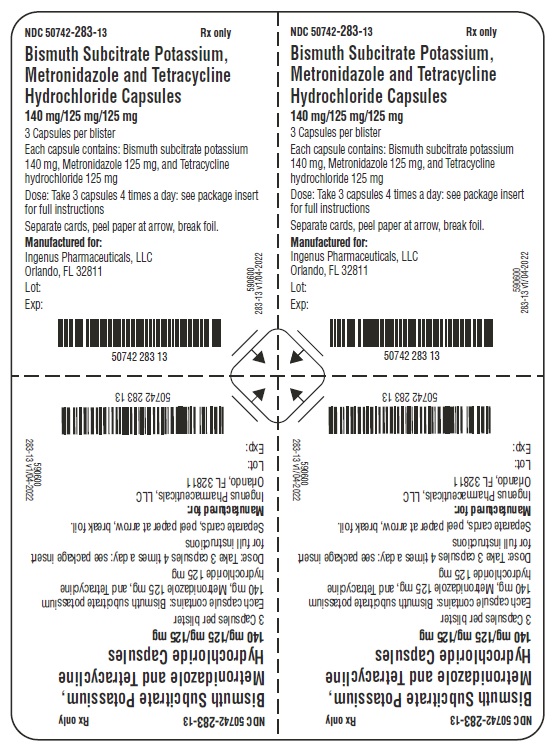
Principal Display Panel- Blister pack NDC 50742-283-13 Rx only Bismuth Subcitrate Potassium, Metronidazole and Tetracycline Hydrochloride Capsules 140 mg/125 mg/125 mg image of Blister pack
Principal Display Panel- Carton NDC 50742-283-13 Bismuth Subcitrate Potassium, Metronidazole and Tetracycline Hydrochloride Capsules 140 mg/125 mg/125 mg 10 Day Therapy PAK Combination therapy indicated for the eradication of Helicobacter pylori One blister card=1 day of therapy Rx only 120 Capsules in 10 blister cards Each card contains 4 blisters. Each blister contains 3 capsules. image of Carton