
Pravastatin Sodium 20 mg Tablet, 500-count — NDC 60505-0169-5 (Billing 60505-0169-05)
This is a package of 500 tablets of Pravastatin Sodium 20 mg Tablet from Apotex Corp., marketed since Jul 2011 and currently FDA-listed.
Other active recalls for Pravastatin Sodium (different manufacturers) — 5 · tap to view
Identity & classification
Regulatory identifiers FDA, NLM and CMS codes for this package
Drug-database identifiers Medi-Span GPI and First Databank GCN / HICL / AHFS classification
- GSN (GCN sequence number): 016367
- GCN: 48672
- HICL (First Databank): 006227
- AHFS class code: 24:06.08.00
- RxCUI (RxNorm): 904458
Where does this data come from?
- FDA openFDA NDC Directory · synced Oct 1, 2026
- FDA label on DailyMed · label index refreshed Oct 1, 2026
- RxNorm (NLM RxNav) · catalog refreshed Oct 1, 2026
- Medi-Span GPI (licensed)
- First Databank (licensed) · refreshed Oct 1, 2026
RxNorm drug class
This medicine belongs to the HMG-CoA Reductase Inhibitor class.
Where does this data come from?
- RxClass (NLM) · catalog refreshed Oct 1, 2026
Clinical
- It lowers cholesterol and triglycerides, and it helps reduce your risk of heart attack, stroke and other heart problems. It works best together with a cholesterol-lowering diet. So...
- Take it by mouth once a day at whatever time suits you, with or without food. Try to take it at the same time each day. If you use cholestyramine or colestipol, take pravastatin at...
- Most people tolerate it well. Some notice muscle or joint aches, nausea, diarrhea, headache or cold-like symptoms. These are usually mild and temporary.
- Call promptly if you have muscle pain, tenderness or weakness that is unexplained or doesn't go away. Rarely, statins cause serious muscle breakdown that can harm the kidneys. Your...
Patient education
Supplement & herbal interactions
Some supplements/herbs that may interact with Pravastatin Sodium — tap one for details:
Pravastatin Sodium may be associated with lower levels of 1 nutrient — worth a chat with your pharmacist, not a cause for alarm.
Where does this data come from?
- MedlinePlus (NLM) · refreshed Oct 1, 2026
- FDA label on DailyMed · label index refreshed Oct 1, 2026
Ask a licensed pharmacist directly — free, answered by our team.
Pricing
A drug doesn't have one price. Each row is a different public payment system, and none is what you'd pay at the counter — that depends on your insurance. The ⓘ on each row explains what it measures.
| Price system | Per each | Per package |
|---|---|---|
| Retail pharmacies payNADAC · weekly | Not in the retail survey — common for institutional, discontinued, or low-volume packs. | |
| Medicaid paysCMS SDUD · 12 mo | No recent Medicaid claims on file for this NDC — rare and low-volume NDCs are suppressed in the public data. | |
| Medicare drug plans payPart D · Q2 2026 | $0.1412 | $70.60 / 500 tablets |
Where does this data come from?
- CMS NADAC weekly file
- CMS ASP pricing files · refreshed Sep 20, 2026
- CMS Medicaid State Drug Utilization Data · refreshed Oct 3, 2026
- CMS Part D plan pricing files · refreshed Sep 24, 2026
- VA National Acquisition Center price file
Packaging — all sizes for this product
| Package NDC | Description | Per unit | Per pack | Marketing start | Marketing end | Status |
|---|---|---|---|---|---|---|
| 60505-0169-01 60505-0169-1 | 100 TABLET in 1 BOTTLE | — | — | 2011-07-18 | — | Active |
| 60505-0169-02 60505-0169-2 | 20000 TABLET in 1 BOTTLE | — | — | 2011-07-18 | — | Active |
| 60505-0169-05 You're viewing this | 500 TABLET in 1 BOTTLE | — | — | 2011-07-18 | — | Active |
| 60505-0169-07 60505-0169-7 Main listing | 1000 TABLET in 1 BOTTLE | $0.0580 / ea | $57.97 | 2011-07-18 | — | Active |
| 60505-0169-09 60505-0169-9 | 90 TABLET in 1 BOTTLE | $0.0580 / ea | $5.22 | 2011-07-18 | — | Active |
You're viewing one of 5 pack sizes for this product.
This pack shows little to no recent Medicaid volume — the 1000 tablets pack carries most fills. See all packs ↓
Pack size FAQ
What quantity is in this package?
How does this package differ from NDC 60505-0169-09?
What NDC number is used to bill for this package of Pravastatin Sodium 20 mg Tablet?
Prices are the latest CMS NADAC pharmacy acquisition cost per NDC; per-pack figures are per-unit × pack quantity, shown only when the pack is denominated in the same measure NADAC prices.
Therapeutic equivalents
| Product | Labeler | Pack | NADAC/unit | TE | Status | Price vs. this |
|---|---|---|---|---|---|---|
| Pravastatin Sodium 20 mg 68180-0486-02 | Lupin | 500 tablets | $0.058 | AB | Discontinued | — |
| Pravastatin Sodium 20 mg 00093-7201-10 | Teva | 1000 tablets | $0.058 | AB | Availability likely | — |
| Pravastatin Sodium 20 mg 00904-5892-61 | Major | 100 tablets | $0.058 | AB | Availability likely | — |
| Pravastatin Sodium 20 mg 16714-0559-01 | NorthStar | 90 tablets | $0.058 | AB | Availability likely | — |
| Pravastatin Sodium 20 mg 50268-0666-15 | AvPAK | 50 tablets | $0.058 | AB | Availability likely | — |
| Pravastatin Sodium 20 mg 60687-0897-01 | American | 100 tablets | $0.058 | AB | Availability likely | — |
| Pravastatin Sodium 20 mg 68462-0196-05 | Glenmark | 500 tablets | $0.058 | AB | Availability likely | — |
| Pravastatin Sodium 20 mg 69097-0789-05 | CIPLA | 90 tablets | $0.058 | AB | Availability likely | — |
| Pravastatin Sodium 20 mg 82009-0006-10 | Quallent | 1000 tablets | $0.058 | AB | Availability likely | — |
| Pravastatin sodium 20 mg 84386-0032-90 | Aurobindo | 90 tablets | $0.058 | AB | Availability likely | — |
| Pravastatin Sodium 20 mg 16729-0009-15 | Accord | 90 tablets | $0.059 | AB | FDA listed | — |
| Pravastatin Sodium 20 mg 51079-0458-20 | Mylan | 100 tablets | $0.062 | AB | Discontinued | — |
| Pravastatin Sodium 20 mg 60687-0178-01 | American | 100 tablets | $0.062 | AB | Discontinued | — |
| Pravastatin Sodium 20 mg 00615-8540-05 | NCS | 15 tablets | — | AB | FDA listed | — |
| Pravastatin Sodium 20 mg 00615-8619-05 | NCS | 15 tablets | — | AB | FDA listed | — |
| Pravastatin Sodium 20 mg 35356-0919-30 | Lake | 30 tablets | — | AB | FDA listed | — |
| Pravastatin Sodium 20 mg 43063-0807-30 | PD-Rx | 30 tablets | — | AB | FDA listed | — |
| Pravastatin sodium 20 mg 48433-0148-20 | Safecor | 100 tablets | — | AB | FDA listed | — |
| Pravastatin Sodium 20 mg 50090-0973-00 | A-S | 30 tablets | — | AB | FDA listed | — |
| Pravastatin Sodium 20 mg 50090-0975-00 | A-S | 30 tablets | — | AB | FDA listed | — |
| Pravastatin Sodium 20 mg 50090-2025-00 | A-S | 30 tablets | — | AB | FDA listed | — |
| Pravastatin Sodium 20 mg 50090-6898-00 | A-S | 90 tablets | — | AB | FDA listed | — |
| Pravastatin Sodium 20 mg 50090-7551-00 | A-S | 30 tablets | — | AB | FDA listed | — |
| Pravastatin Sodium 20 mg 50090-7552-00 | A-S | 90 tablets | — | AB | FDA listed | — |
| Pravastatin Sodium 20 mg 50090-7709-00 | A-S | 30 tablets | — | AB | FDA listed | — |
| Pravastatin Sodium 20 mg 50090-7710-00 | A-S | 90 tablets | — | AB | FDA listed | — |
| Pravastatin Sodium 20 mg 50090-7813-00 | A-S | 90 tablets | — | AB | FDA listed | — |
| Pravastatin sodium 20 mg 50090-7892-00 | A-S | 30 tablets | — | AB | FDA listed | — |
| Pravastatin sodium 20 mg 50090-7893-00 | A-S | 90 tablets | — | AB | FDA listed | — |
| Pravastatin sodium 20 mg 50090-7947-00 | A-S | 30 tablets | — | AB | FDA listed | — |
| Pravastatin sodium 20 mg 50090-7948-00 | A-S | 90 tablets | — | AB | FDA listed | — |
| Pravastatin sodium 20 mg 51407-0888-10 | Golden | 1000 tablets | — | AB | FDA listed | — |
| Pravastatin Sodium 20 mg 51655-0343-52 | Northwind | 30 tablets | — | AB | Discontinued | — |
| Pravastatin sodium 20 mg 55111-0230-01 | Dr.Reddy's | 100 tablets | — | AB | FDA listed | — |
| Pravastatin Sodium 20 mg 55154-7275-00 | Cardinal | 10 tablets | — | AB | FDA listed | — |
| Pravastatin Sodium 20 mgthis 60505-0169-05 | Apotex | 500 tablets | — | AB | FDA listed | — |
| Pravastatin Sodium 20 mg 62135-0848-90 | Chartwell | 90 tablets | — | AB | FDA listed | — |
| Pravastatin Sodium 20 mg 63629-8906-01 | Bryant | 90 tablets | — | AB | FDA listed | — |
| Pravastatin Sodium 20 mg 63629-8909-01 | Bryant | 1000 tablets | — | AB | FDA listed | — |
| Pravastatin Sodium 20 mg 63629-9163-01 | Bryant | 30 tablets | — | AB | FDA listed | — |
| Pravastatin sodium 20 mg 65862-0633-05 | Aurobindo | 500 tablets | — | — | FDA listed | — |
| Pravastatin Sodium 20 mg 67046-1519-03 | Coupler | 30 tablets | — | AB | FDA listed | — |
| Pravastatin Sodium 20 mg 68071-3361-03 | NuCare | 30 tablets | — | AB | FDA listed | — |
| Pravastatin Sodium 20 mg 68071-3788-09 | NuCare | 90 tablets | — | AB | FDA listed | — |
| Pravastatin sodium 20 mg 68071-3895-09 | NuCare | 90 tablets | — | AB | FDA listed | — |
| Pravastatin sodium 20 mg 68788-4049-03 | Preferred | 30 tablets | — | AB | FDA listed | — |
| Pravastatin Sodium 20 mg 68788-7779-03 | Preferred | 90 tablets | — | AB | FDA listed | — |
| Pravastatin Sodium 20 mg 68788-8421-03 | Preferred | 30 tablets | — | AB | FDA listed | — |
| Pravastatin Sodium 20 mg 68788-8871-03 | Preferred | 30 tablets | — | AB | FDA listed | — |
| Pravastatin Sodium 20 mg 69292-0102-10 | Amici | 1000 tablets | — | AB | FDA listed | — |
| Pravastatin sodium 20 mg 70377-0046-11 | Biocon | 30 tablets | — | AB | FDA listed | — |
| Pravastatin Sodium 20 mg 70518-1938-00 | REMEDYREPACK | 30 tablets | — | AB | FDA listed | — |
| Pravastatin Sodium 20 mg 70518-2887-01 | REMEDYREPACK | 90 tablets | — | AB | Discontinued | — |
| Pravastatin sodium 20 mg 70518-4408-00 | REMEDYREPACK | 30 tablets | — | AB | FDA listed | — |
| Pravastatin Sodium 20 mg 71205-0149-30 | Proficient | 30 tablets | — | AB | FDA listed | — |
| Pravastatin Sodium 20 mg 71335-0296-01 | Bryant | 30 tablets | — | AB | Discontinued | — |
| Pravastatin Sodium 20 mg 71335-0947-01 | Bryant | 30 tablets | — | AB | FDA listed | — |
| Pravastatin Sodium 20 mg 71335-1022-01 | Bryant | 30 tablets | — | AB | Discontinued | — |
| Pravastatin Sodium 20 mg 71335-2908-01 | Bryant | 1000 tablets | — | AB | FDA listed | — |
| Pravastatin Sodium 20 mg 71335-9692-01 | Bryant | 30 tablets | — | AB | FDA listed | — |
| Pravastatin Sodium 20 mg 72189-0060-90 | DIRECT | 90 tablets | — | AB | FDA listed | — |
| Pravastatin Sodium 20 mg 72789-0143-30 | PD-Rx | 30 tablets | — | AB | FDA listed | — |
| Pravastatin sodium 20 mg 82868-0091-30 | Northwind | 30 tablets | — | AB | FDA listed | — |
Where does this data come from?
- FDA openFDA NDC Directory · synced Oct 1, 2026
- FDA Orange Book · refreshed Sep 3, 2026
- CMS NADAC weekly file
Availability & generic status
This product is an FDA-approved generic. Other versions of the same drug are listed under Therapeutic equivalents, least expensive first.
Where does this data come from?
- FDA Orange Book · refreshed Sep 3, 2026
What it looks like
Where does this data come from?
- FDA label on DailyMed · label index refreshed Oct 1, 2026
Inactive Ingredients / Excipients
Inactive ingredients, also called excipients, are components of the drug product other than the active ingredient. They may include fillers, dyes, coatings, preservatives, flavors, or other formulation ingredients.
Where does this data come from?
IACT rows and label-wide narrative are kept separate; availability and product-level specificity depend on the submitted label.- FDA label on DailyMed · label index refreshed Oct 1, 2026
- FDA openFDA NDC Directory · synced Oct 1, 2026
Inactive ingredient FAQ
Are inactive ingredients the same for every manufacturer?
Why might an inactive ingredient be missing?
Can inactive ingredients matter?
Manufacturer & labeler
Where does this data come from?
- FDA openFDA NDC Directory · synced Oct 1, 2026
- Drugs@FDA
Full prescribing information FDA SPL
🎯 Indications and Usage ▾
1 INDICATIONS AND USAGE Pravastatin sodium tablets are indicated: To reduce the risk of myocardial infarction, myocardial revascularization procedures, and cardiovascular mortality in adults with elevated low-density lipoprotein cholesterol (LDL-C) without clinically evident coronary heart disease (CHD). To reduce the risk of coronary death, myocardial infarction, myocardial revascularization procedures, stroke or transient ischemic attack, and slow the progression of coronary atherosclerosis in adults with clinically evident CHD.
As an adjunct to diet to reduce LDL-C in adults with primary hyperlipidemia. As an adjunct to diet to reduce LDL-C in pediatric patients ages 8 years and older with heterozygous familial hypercholesterolemia (HeFH). As an adjunct to diet for the treatment of adults with: Primary dysbetalipoproteinemia.
Hypertriglyceridemia. Pravastatin sodium tablets are an HMG-CoA reductase inhibitor (statin) indicated ( 1 ): To reduce the risk of myocardial infarction, myocardial revascularization procedures, and cardiovascular mortality in adults with elevated low-density lipoprotein cholesterol (LDL-C) without clinically evident coronary heart disease (CHD). To reduce the risk of coronary death, myocardial infarction, myocardial revascularization procedures, stroke or transient ischemic attack, and slow the progression of coronary atherosclerosis in adults with clinically evident CHD.
As an adjunct to diet to reduce LDL-C in adults with primary hyperlipidemia. As an adjunct to diet to reduce LDL-C in pediatric patients ages 8 years and older with heterozygous familial hypercholesterolemia (HeFH). As an adjunct to diet for the treatment of adults with: Primary dysbetalipoproteinemia.
Hypertriglyceridemia.
⏱️ Dosage and Administration ▾
2 DOSAGE AND ADMINISTRATION Take orally once daily at any time of the day, with or without food ( 2.1 ). For patients that require a high-intensity statin or are unable to achieve their LDL-C goal receiving pravastatin sodium tablets 80 mg daily, prescribe alternative LDL-C-lowering treatment ( 2.1 ). Assess LDL-C when clinically appropriate, as early as 4 weeks after initiating pravastatin sodium tablets, and adjust the dosage if necessary ( 2.1 ).
Adults: recommended starting dosage is pravastatin sodium tablets 40 mg to 80 mg once daily. ( 2.2 ) Pediatric Patients ( 2.3 ): aged 8 to 13 years, the recommended dosage is 20 mg once daily. aged 14 to 18 years, the recommended starting dosage is 40 mg once daily. Severe renal impairment: recommended starting dosage is pravastatin sodium 10 mg once daily.
Use another pravastatin sodium product to initiate dosing. Recommended maximum pravastatin sodium tablets dosage is 40 mg once daily. ( 2.4 ) See full prescribing information for dosage modifications due to drug interactions ( 2.5 , 7 ).
2.1Important Dosage and Administration Information Take pravastatin sodium tablets orally once daily as a single dose at any time of the day, with or without food. For patients that require a high-intensity statin or are unable to achieve their LDL-C goal receiving pravastatin sodium tablets 80 mg daily, prescribe alternative LDL-C-lowering treatment. Assess LDL-C when clinically appropriate, as early as 4 weeks after initiating pravastatin sodium tablets, and adjust the dosage if necessary.
2.2Recommended Dosage in Adult Patients The recommended starting dosage is pravastatin sodium tablets 40 mg to 80 mg once daily.
2.3Recommended Dosage in Pediatric Patients 8 Years of Age and Older with HeFH In pediatric patients aged 8 to 13 years, the recommended dosage is pravastatin sodium tablets 20 mg once daily. In pediatric patients aged 14 to 18 years, the recommended starting dosage is pravastatin sodium tablets 40 mg once daily.
2.4Recommended Dosage in Patients with Renal Impairment In patients with severe renal impairment, the recommended starting dosage is pravastatin sodium 10 mg once daily. The maximum recommended dosage of pravastatin sodium tablets in patients with severe renal impairment is 40 mg once daily [see Clinical Pharmacology ( 12.3 )]. The recommended dosage of pravastatin sodium tablets for patients with mild or moderate renal impairment is the same as patients with normal renal function.
2.5Dosage and Administration Modifications Due to Drug Interactions In patients taking a bile acid sequestrant, administer pravastatin sodium tablets at least 1 hour before or 4 hours after the bile acid sequestrant [see Drug Interactions ( 7.2 )]. Concomitant use of pravastatin sodium tablets with the following drugs requires dosage modifications of pravastatin sodium tablet s [see Warnings and Precautions ( 5.1 ) and Drug Interactions (7.1)]: Cyclosporine In patients taking cyclosporine, the recommended starting dosage is pravastatin sodium 10 mg once daily.
The maximum recommended dosage of pravastatin sodium tablets in patients taking cyclosporine is 20 mg once daily. Clarithromycin and Erythromycin The maximum recommended dosage is pravastatin sodium tablets 40 mg once daily .
💊 Dosage Forms and Strengths ▾
3 DOSAGE FORMS AND STRENGTHS Pravastatin Sodium Tablets, USP are supplied as: 10 mg tablets: Light pink, round, unscored tablets, imprinted “APO” on one side and “PRA” over “10” on the other side. 20 mg tablets: Off-white to light yellow, round, unscored tablets, imprinted “APO” on one side and “PRA” over “20” on the other side. 40 mg tablets: Light green, round, unscored tablets, imprinted “APO” on one side and “PRA” over “40” on the other side.
80 mg tablets: Off-white to light yellow, round, unscored tablets, imprinted “APO” on one side and “PRA” over “80” on the other side. Tablets: 10 mg, 20 mg, 40 mg, 80 mg. ( 3 )
⛔ Contraindications ▾
4 CONTRAINDICATIONS Acute liver failure or decompensated cirrhosis [see Warnings and Precautions ( 5.3 )]. Hypersensitivity to any pravastatin or any excipients in pravastatin sodium tablets. Hypersensitivity to pravastatin or any excipient in pravastatin sodium tablets ( 4 ) Acute liver failure or decompensated cirrhosis ( 4 , 5.3 )
⚠️ Warnings and Cautions ▾
5 WARNINGS AND PRECAUTIONS Myopathy and Rhabdomyolysis : Risk factors include age 65 years or greater, uncontrolled hypothyroidism, renal impairment, concomitant use with certain other drugs, and higher pravastatin dosage. Discontinue pravastatin if markedly elevated CK levels occur or myopathy is diagnosed or suspected. Temporarily discontinue pravastatin in patients experiencing an acute or serious condition at high risk of developing renal failure secondary to rhabdomyolysis.
Inform patients of the risk of myopathy and rhabdomyolysis when starting or increasing pravastatin dosage. Instruct patients to promptly report unexplained muscle pain, tenderness, or weakness, particularly if accompanied by malaise or fever. ( 5.1 , 7.1 , 8.5 , 8.6 ) Immune-Mediated Necrotizing Myopathy (IMNM): Rare reports of IMNM, an autoimmune myopathy, have been reported.
Discontinue pravastatin if IMNM is suspected ( 5.2 ). Hepatic Dysfunction: Increases in serum transaminases have occurred, some persistent. Rare reports of fatal and non-fatal hepatic failure have occurred.
Consider testing liver enzymes before initiating therapy and as clinically indicated thereafter. If serious hepatic injury with clinical symptoms and/or hyperbilirubinemia or jaundice occurs, promptly discontinue ( 5.3 ).
5.1Myopathy and Rhabdomyolysis Pravastatin may cause myopathy and rhabdomyolysis. Acute kidney injury secondary to myoglobinuria and rare fatalities have occurred as a result of rhabdomyolysis in patients treated with statins, including pravastatin. Myopathy, defined as muscle aching or muscle weakness in conjunction with increases in creatine phosphokinase (CK) to greater than 10 times the upper limit of normal (ULN), occurred <0.1% in pravastatin-treated patients in clinical trials.
Risk Factors for Myopathy Risk factors for myopathy include age 65 years or greater, uncontrolled hypothyroidism, renal impairment, concomitant use with certain other drugs (including other lipid-lowering therapies), and higher pravastatin dosage [see Drug Interactions ( 7.1 )] . Steps to Prevent or Reduce the Risk of Myopathy and Rhabdomyolysis Pravastatin is not recommended in patients taking gemfibrozil [see Drug Interactions ( 7 )]. There are pravastatin dosage restrictions for patients taking cyclosporin and select macrolide antibiotics [see Dosage and Administration ( 2.5 )] .
The following drugs when used concomitantly with pravastatin may also increase the risk of myopathy and rhabdomyolysis: niacin, fibrates, and colchicine [see Drug Interactions ( 7 )]. Discontinue pravastatin if markedly elevated CK levels occur or myopathy is diagnosed or suspected. Muscle symptoms and CK increases may resolve if pravastatin is discontinued.
Temporarily discontinue pravastatin in patients experiencing an acute or serious condition at high risk of developing renal failure secondary to rhabdomyolysis, e.g., sepsis; shock; severe hypovolemia; major surgery; trauma; severe metabolic, endocrine, or electrolyte disorders; or uncontrolled epilepsy. Inform patients of the risk of myopathy and rhabdomyolysis when starting or increasing the pravastatin dosage. Instruct patients to promptly report any unexplained muscle pain, tenderness or weakness, particularly if accompanied by malaise or fever.
5.2Immune-Mediated Necrotizing Myopathy There have been rare reports of immune-mediated necrotizing myopathy (IMNM), an autoimmune myopathy, associated with statin use, including reports of recurrence when the same or a different statin was administered. IMNM is characterized by proximal muscle weakness and elevated serum creatine kinase that persist despite discontinuation of statin treatment; positive anti-HMG CoA reductase antibody; muscle biopsy showing necrotizing myopathy; and improvement with immunosuppressive agents.
Additional neuromuscular and serologic testing may be necessary. Treatment with immunosuppressive agents may be required. Discontinue pravastatin if IMNM is suspected.
5.3Hepat… [Excerpted — this section continues on DailyMed.]
🤒 Adverse Reactions ▾
6 ADVERSE REACTIONS The following important adverse reactions are described below and elsewhere in the labeling: Myopathy and Rhabdomyolysis [see Warnings and Precautions ( 5.1 )] Immune-Mediated Necrotizing Myopathy [see Warnings and Precautions ( 5.2 )] Hepatic Dysfunction [see Warnings and Precautions ( 5.3 )] Increases in HbA1c and Fasting Serum Glucose Levels [see Warnings and Precautions ( 5.4 )] In short-term clinical trials, the most commonly reported adverse reactions (≥2% and greater than placebo) were: musculoskeletal pain, nausea/vomiting, upper respiratory infection, diarrhea, and headache.
( 6.1 ) To report SUSPECTED ADVERSE REACTIONS, contact Apotex at 1-800-706-5575 or FDA at 1-800-FDA-1088 or www.fda.gov/medwatch.
6.1Clinical Trials Experience Because clinical studies are conducted under widely varying conditions, adverse reaction rates observed in the clinical studies of a drug cannot be directly compared to rates in the clinical studies of another drug and may not reflect the rates observed in practice. In pravastatin placebo-controlled clinical trials, 1,313 patients (age range 20 to 76 years, 32% women, 93.5% White, 5% Black, 0.9% Hispanic, 0.4% Asian, 0.2% Other) with a median treatment duration of 14 weeks, 3.3% of patients on pravastatin and 1.2% patients on placebo discontinued due to adverse reactions (regardless of causality).
The most common adverse reactions that led to treatment discontinuation and occurred at an incidence greater than placebo were: hepatic transaminase elevations, nausea, anxiety/depression, and dizziness. Adverse reactions (regardless of causality) reported in ≥2% of pravastatin-treated patients in placebo-controlled trials of up to 8 months duration are identified in Table 1: Table 1: Adverse Reactions in ≥ 2% of Patients Treated with Pravastatin (Any Dose) and at an Incidence Greater Than Placebo in Short-Term Placebo-Controlled Trials % Placebo N=411 % Any Dose N=902 Nausea/Vomiting 7.1
7.4Diarrhea 5.6
6.7Headache 4.6
6.3Upper Respiratory Infection 5.8
5.9Angina Pectoris 3.4
4.5Rash 1.4
4.5CPK Increased 3.6
4.1Dizziness 3.4
3.5ALT Increased 1.2
2.9Chest Pain 1.9
2.7Cough 1.7
2.5Myalgia 1.2
2.3Influenza 0.7 2.0 g-GT Increased 1.2
2.0Adverse Reactions (regardless of causality) The safety and tolerability of pravastatin at a dose of 80 mg in 2 controlled trials with a mean exposure of 8.6 months was similar to that of pravastatin at lower doses except that 4 out of 464 patients taking 80 mg of pravastatin had a single elevation of CK >10 times ULN compared to 0 out of 115 patients taking 40 mg of pravastatin. In pravastatin placebo-controlled clinical trials, 21,483 patients (age range 24 to 75 years, 10.3% women, 52.3% White, 0.8% Black, 0.5% Hispanic, 0.1% Asian, 0.1% Other, 46.1% not recorded) had a median treatment duration of 261 weeks.
Adverse reactions (regardless of causality) were pooled from 7 double-blind, placebo-controlled trials (West of Scotland Coronary Prevention Study [WOS]; Cholesterol and Recurrent Events study [CARE]; Long-term Intervention with Pravastatin in Ischemic Disease study [LIPID]; Pravastatin Limitation of Atherosclerosis in the Coronary Arteries study [PLAC I]; Pravastatin, Lipids and Atherosclerosis in the Carotids study [PLAC II]; Regression Growth Evaluation Statin Study [REGRESS]; and Kuopio Atherosclerosis Prevention Study [KAPS]) involving a total of 10,764 patients treated with pravastatin 40 mg and 10,719 patients treated with placebo.
Patients were exposed to pravastatin for a mean of 4 to 5.1 years in WOS, CARE, and LIPID and 1.9 to 2.9 years in PLAC I, PLAC II, KAPS, and REGRESS. Adverse reactions (regardless of causality) occurring in ≥5% of patients treated with pravastatin in these studies are identified in Table 2: Table 2: Adverse Reaction s in ≥ 5% of Patients Treated with Pravastatin 40 mg and at an Incidence Greater than Placebo in Long-Term Placebo-Controlled Trials Placebo (N=10,719) % of patients Pravastatin (N… [Excerpted — this section continues on DailyMed.]
🔄 Drug Interactions ▾
7 DRUG INTERACTIONS See full prescribing information for details regarding concomitant use of pravastatin sodium tablets with other drugs that increase the risk of myopathy and rhabdomyolysis. ( 2.5 , 7.1 ) Bile Acid Sequestrants: in patients taking a bile acid sequestrant, administer pravastatin sodium tablets at least 1 hour before or at least 4 hours after the bile acid sequestrant ( 7.2 )
7.1Drug Interactions that Increase the Risk of Myopathy and Rhabdomyolysis with Pravastatin Pravastatin is a substrate of the transport protein OATP1B1. Pravastatin plasma levels can be significantly increased with concomitant administration of inhibitors of OATP1B1. Table 3 includes a list of drugs that increase the risk of myopathy and rhabdomyolysis when used concomitantly with pravastatin and instructions for preventing or managing them [see Warnings and Precautions (5.1) and Clinical Pharmacology ( 12.3 ) ] .
Table 3: Drug Interactions that Increase the Risk of Myopathy and Rhabdomyolysis with Pravastatin Gemfibrozil Clinical Impact: There is an increased risk of myopathy/rhabdomyolysis when pravastatin is administered with gemfibrozil Intervention: Avoid concomitant use of gemfibrozil with pravastatin . Cyclosporine Clinical Impact: The risk of myopathy and rhabdomyolysis is increased with concomitant use of cyclosporine with pravastatin. Intervention: Initiate with a dosage of pravastatin sodium 10 mg once daily.
Do not exceed pravastatin 20 mg once daily [see Dosage and Administration ( 2.5 )]. Select Macrolide Antibiotics Clinical Impact: The risk of myopathy and rhabdomyolysis is increased by concomitant use of clarithromycin or erythromycin with pravastatin. Other macrolides (e.g., azithromycin) have the potential to increase pravastatin exposures and increase the risk of myopathy and rhabdomyolysis when used concomintantly.
Intervention: For patients taking erythromycin or clarithromycin, do not exceed 40 mg pravastatin once daily [see Dosage and Administration ( 2.5 )]. Niacin Clinical Impact: Cases of myopathy and rhabdomyolysis have been observed with concomitant use of niacin with pravastatin. Intervention: Consider if the benefit of using niacin concomitantly with pravastatin outweighs the increased risk of myopathy and rhabdomyolysis.
If concomitant use is decided, monitor patients for signs and symptoms of myopathy, particularly during initiation of therapy and during upward dose titration of either drug. Fibrates (other than Gemfibrozil) Clinical Impact: Fibrates may cause myopathy when given alone. The risk of myopathy and rhabdomyolysis is increased with concomitant use of fibrates with pravastatin.
Intervention: Consider if the benefit of using fibrates concomitantly with pravastatin outweighs the increased risk of myopathy and rhabdomyolysis. If concomitant use is decided, monitor patients for signs and symptoms of myopathy, particularly during initiation of therapy and during upward dose titration of either drug. Colchicine Clinical Impact: Cases of myopathy and rhabdomyolysis have been reported with concomitant use of colchicine with pravastatin.
Intervention: Consider if the benefit of using colchicine concomitantly with pravastatin outweighs the increased risk of myopathy and rhabdomyolysis. If concomitant use is decided, monitor patients for signs and symptoms of myopathy, particularly during initiation of therapy and during upward dose titration of either drug.
7.2Drug Interactions that Decrease the Efficacy of Pravastatin Table 4 presents drug interactions that may decrease the efficacy of pravastatin and instructions for preventing or managing them. Table 4: Drug Interactions that Decrease the Efficacy of Pravastatin Bile Acid Sequestrants Clinical Impact: Concomitant cholestyramine or colestipol administration decreased the mean exposure of pravastatin approximately 51% and 47%, respectively [see Clinical Pharmacology ( 12.3 )] . Intervention: In patients taking a bile acid sequestrant, administer pravas… [Excerpted — this section continues on DailyMed.]
👥 Use in Specific Populations ▾
8 USE IN SPECIFIC POPULATIONS Pregnancy: May cause fetal harm ( 8.1 ) Lactation: Breastfeeding not recommended during treatment with pravastatin sodium tablets ( 8.2 )
8.1Pregnancy Risk Summary Discontinue pravastatin when pregnancy is recognized. Alternatively, consider the ongoing therapeutic needs of the individual patient. Pravastatin decreases synthesis of cholesterol and possibly other biologically active substances derived from cholesterol; therefore, pravastatin may cause fetal harm when administered to pregnant patients based on the mechanism of action [see Clinical Pharmacology ( 12.1 )].
In addition, treatment of hyperlipidemia is not generally necessary during pregnancy. Atherosclerosis is a chronic process and the discontinuation of lipid-lowering drugs during pregnancy should have little impact on the outcome of long-term therapy of primary hyperlipidemia for most patients. Available data from case series and prospective and retrospective observational cohort studies over decades of use with statins in pregnant women have not identified a drug-associated risk of major congenital malformations.
Published data from prospective and retrospective observational cohort studies with pravastatin use in pregnant women are insufficient to determine if there is a drug-associated risk of miscarriage (see Data) . In animal reproduction studies, no evidence of fetal malformations was seen in pregnant rats or rabbits orally administered pravastatin during the period of organogenesis at doses that resulted in 10 times and 120 times, respectively, the human exposure at the maximum recommended human dose (MRHD) of 80 mg/day, based on body surface area (mg/m 2 ).
An imbalance in some fetal skeletal variations, increased offspring mortality, and developmental delays occurred when pregnant rats were exposed to 10 times to 12 times the MRHD during organogenesis to parturition (see Data) . The estimated background risk of major birth defects and miscarriage for the indicated population is unknown. In the U.S. general population, the estimated background risk of major birth defects and miscarriage in clinically recognized pregnancies is 2% to 4% and 15% to 20%, respectively.
Data Human Data A Medicaid cohort linkage study of 1,152 statin-exposed pregnant women compared to 886,996 controls did not find a significant teratogenic effect from maternal use of statins in the first trimester of pregnancy, after adjusting for potential cofounders – including maternal age, diabetes mellitus, hypertension, obesity, and alcohol and tobacco use – using propensity score-based methods. The relative risk of congenital malformations between the group with statin use and the group with no statin use in the first trimester was 1.07 (95% confidence interval 0.85 to 1.37) after controlling for confounders, particularly pre-existing diabetes mellitus.
There were also no statistically significant increases in any of the organ-specific malformations assessed after accounting for cofounders. In the majority of pregnancies, statin treatment was initiated prior to pregnancy and was discontinued at some point in the first trimester when pregnancy was identified. Study limitations include reliance on physician coding to define the presence of a malformation, lack of control for certain confounders such as body mass index, use of prescription dispensing as verification for the use of a statin, and lack of information on non-live births.
Animal Data Embryofetal and neonatal mortality was observed in rats given pravastatin during the period of organogenesis or during organogenesis continuing through weaning. In pregnant rats given oral gavage doses of 4 mg/kg/day, 20 mg/kg/day, 100 mg/kg/day, 500 mg/kg/day, and 1,000 mg/kg/day from gestation days 7 through 17 (organogenesis) increased mortality of offspring and increased cervical rib skeletal anomalies were observed at ≥100 mg/kg/day systemic exposure, 10 times the human exposure at 80 mg/day MRHD based on body surf… [Excerpted — this section continues on DailyMed.]
🤰 Pregnancy ▾
8.1Pregnancy Risk Summary Discontinue pravastatin when pregnancy is recognized. Alternatively, consider the ongoing therapeutic needs of the individual patient. Pravastatin decreases synthesis of cholesterol and possibly other biologically active substances derived from cholesterol; therefore, pravastatin may cause fetal harm when administered to pregnant patients based on the mechanism of action [see Clinical Pharmacology ( 12.1 )].
In addition, treatment of hyperlipidemia is not generally necessary during pregnancy. Atherosclerosis is a chronic process and the discontinuation of lipid-lowering drugs during pregnancy should have little impact on the outcome of long-term therapy of primary hyperlipidemia for most patients. Available data from case series and prospective and retrospective observational cohort studies over decades of use with statins in pregnant women have not identified a drug-associated risk of major congenital malformations.
Published data from prospective and retrospective observational cohort studies with pravastatin use in pregnant women are insufficient to determine if there is a drug-associated risk of miscarriage (see Data) . In animal reproduction studies, no evidence of fetal malformations was seen in pregnant rats or rabbits orally administered pravastatin during the period of organogenesis at doses that resulted in 10 times and 120 times, respectively, the human exposure at the maximum recommended human dose (MRHD) of 80 mg/day, based on body surface area (mg/m 2 ).
An imbalance in some fetal skeletal variations, increased offspring mortality, and developmental delays occurred when pregnant rats were exposed to 10 times to 12 times the MRHD during organogenesis to parturition (see Data) . The estimated background risk of major birth defects and miscarriage for the indicated population is unknown. In the U.S. general population, the estimated background risk of major birth defects and miscarriage in clinically recognized pregnancies is 2% to 4% and 15% to 20%, respectively.
Data Human Data A Medicaid cohort linkage study of 1,152 statin-exposed pregnant women compared to 886,996 controls did not find a significant teratogenic effect from maternal use of statins in the first trimester of pregnancy, after adjusting for potential cofounders – including maternal age, diabetes mellitus, hypertension, obesity, and alcohol and tobacco use – using propensity score-based methods. The relative risk of congenital malformations between the group with statin use and the group with no statin use in the first trimester was 1.07 (95% confidence interval 0.85 to 1.37) after controlling for confounders, particularly pre-existing diabetes mellitus.
There were also no statistically significant increases in any of the organ-specific malformations assessed after accounting for cofounders. In the majority of pregnancies, statin treatment was initiated prior to pregnancy and was discontinued at some point in the first trimester when pregnancy was identified. Study limitations include reliance on physician coding to define the presence of a malformation, lack of control for certain confounders such as body mass index, use of prescription dispensing as verification for the use of a statin, and lack of information on non-live births.
Animal Data Embryofetal and neonatal mortality was observed in rats given pravastatin during the period of organogenesis or during organogenesis continuing through weaning. In pregnant rats given oral gavage doses of 4 mg/kg/day, 20 mg/kg/day, 100 mg/kg/day, 500 mg/kg/day, and 1,000 mg/kg/day from gestation days 7 through 17 (organogenesis) increased mortality of offspring and increased cervical rib skeletal anomalies were observed at ≥100 mg/kg/day systemic exposure, 10 times the human exposure at 80 mg/day MRHD based on body surface area (mg/m 2 ).
In other studies, no teratogenic effects were observed when pravastatin was dosed orally during organogenesis in rabbits (gestation days 6 through 1… [Excerpted — this section continues on DailyMed.]
🧒 Pediatric Use ▾
8.4Pediatric Use The safety and effectiveness of pravastatin as an adjunct to diet to reduce LDL-C have been established in pediatric patients 8 years of age and older with HeFH. Use of pravastatin for this indication is based on a double-blind, placebo-controlled clinical study in 214 pediatric patients (100 males and 114 females) 8 years of age and older with HeFH. Doses greater than 40 mg daily have not been studied in this population.
The safety and effectiveness of pravastatin have not been established in pediatric patients younger than 10 years of age with HeFH or in pediatric patients with other types of hyperlipidemia (other than HeFH).
🧓 Geriatric Use ▾
8.5Geriatric Use In clinical studies, 4,797 (36.4%) pravastatin-treated patients were aged 65 and older and 110 (0.8%) were aged 75 and older. No significant differences in efficacy or safety were observed between geriatric patients and younger patients. Mean pravastatin AUCs are 25% to 50% higher in elderly subjects than in healthy young subjects, but mean maximum plasma concentration (C max ), time to maximum plasma concentration (T max ), and half-life (t ½ ) values are similar in both age groups and substantial accumulation of pravastatin would not be expected in the elderly [see Clinical Pharmacology ( 12.3 )].
Advanced age (≥65 years) is a risk factor for pravastatin-associated myopathy and rhabdomyolysis. Dose selection for an elderly patient should be cautious, recognizing the greater frequency of decreased hepatic, renal, or cardiac function, and of concomitant disease or other drug therapy and the higher risk of myopathy. Monitor geriatric patients receiving pravastatin for the increased risk of myopathy [see Warnings and Precautions ( 5.1 )].
🆘 Overdosage ▾
10 OVERDOSAGE No specific antidotes for pravastatin are known. Contact Poison Control (1-800-222-1222) for latest recommendations.
🧬 Clinical Pharmacology ▾
12 CLINICAL PHARMACOLOGY
12.1Mechanism of Action Pravastatin is a reversible inhibitor of HMG-CoA reductase, the rate-limiting enzyme that converts HMG-CoA to mevalonate, a precursor of cholesterol.
12.2Pharmacodynamics Inhibition of HMG-CoA reductase by pravastatin accelerates the expression of LDL-receptors, followed by the uptake of LDL-C from blood to the liver, leading to a decrease in plasma LDL-C and total cholesterol. Sustained inhibition of cholesterol synthesis in the liver also decreases levels of very-low-density lipoproteins. The maximum LDL-C reduction of pravastatin is usually achieved by 4 weeks and is maintained after that.
12.3Pharmacokinetics Absorption Pravastatin is administered orally in the active form. Peak plasma pravastatin concentrations occurred 1 to 1.5 hours upon oral administration. Based on urinary recovery of total radiolabeled drug, the average oral absorption of pravastatin is 34% and absolute bioavailability is 17%.
While the presence of food in the gastrointestinal tract reduces area under the concentration-time curve (AUC) and C max by 31% and 49%, respectively, the lipid-lowering effects of the drug are similar whether taken with or 1 hour prior to meals. Pravastatin plasma concentrations, including AUC, C max , and steady-state minimum (C min ), are directly proportional to administered dose. Systemic bioavailability of pravastatin administered following a bedtime dose was decreased 60% compared to that following an AM dose.
Despite this decrease in systemic bioavailability, the efficacy of pravastatin administered once daily in the evening, although not statistically significant, was marginally more effective than that after a morning dose. The coefficient of variation (CV), based on between-subject variability, was 50% to 60% for AUC. The geometric means of pravastatin C max and AUC following a 20 mg dose in the fasted state were 26.5 ng/mL and 59.8 ng*hr/mL, respectively.
Steady-state AUCs, C max , and C min plasma concentrations showed no evidence of pravastatin accumulation following once or twice daily administration of pravastatin tablets. Distribution Approximately 50% of the circulating drug is bound to plasma proteins. Elimination Metabolism The major biotransformation pathways for pravastatin are: (a) isomerization to 6-epi pravastatin and the 3α-hydroxy isomer of pravastatin (SQ 31,906) and (b) enzymatic ring hydroxylation to SQ 31,945.
The 3α-hydroxy isomeric metabolite (SQ 31,906) has 1/10 to 1/40 the HMG-CoA reductase inhibitory activity of the parent compound. Pravastatin undergoes extensive first-pass extraction in the liver (extraction ratio 0.66). Excretion Approximately 20% of a radiolabeled oral dose is excreted in urine and 70% in the feces.
After intravenous administration of radiolabeled pravastatin to normal volunteers, approximately 47% of total body clearance was via renal excretion and 53% by non-renal routes (i.e., biliary excretion and biotransformation). Following single dose oral administration of 14 C-pravastatin, the radioactive elimination t ½ for pravastatin is 1.8 hours in humans and the elimination half-life (t ½ ) for total radioactivity (pravastatin plus metabolites) is 77 hours. Specific Populations Renal Impairment A single 20 mg oral dose of pravastatin was administered to 24 patients with varying degrees of renal impairment (as determined by creatinine clearance).
No effect was observed on the pharmacokinetics of pravastatin or its 3α-hydroxy isomeric metabolite (SQ 31,906). Compared to healthy subjects with normal renal function, patients with severe renal impairment had 69% and 37% higher mean AUC and C max values, respectively, and a 0.61 hour shorter t ½ for the inactive enzymatic ring hydroxylation metabolite (SQ 31,945) [see Use in Specific Populations ( 8.6 )] . Hepatic Impairment In a study comparing the kinetics of pravastatin in patients with biopsy confirmed cirrhosis (N=7) and normal subjects (N=7), the mean AUC varied 18-fold i… [Excerpted — this section continues on DailyMed.]
🧬 Mechanism of Action ▾
12.1Mechanism of Action Pravastatin is a reversible inhibitor of HMG-CoA reductase, the rate-limiting enzyme that converts HMG-CoA to mevalonate, a precursor of cholesterol.
📦 How Supplied / Storage and Handling ▾
16 HOW SUPPLIED/STORAGE AND HANDLING
16.1How Supplied Pravastatin Sodium Tablets, USP 10 mg are available for oral administration as light pink, round, unscored tablets, imprinted “APO” on one side and “PRA” over “10” on the other side. They are supplied as follows: Bottles of 90 (NDC 60505-0168-9) Bottles of 100 (NDC 60505-0168-1) Bottles of 500 (NDC 60505-0168-5) Bottles of 1,000 (NDC 60505-0168-7) Pravastatin Sodium Tablets, USP 20 mg are available for oral administration as off-white to light yellow, round, unscored tablets, imprinted “APO” on one side and “PRA” over “20” on the other side.
They are supplied as follows: Bottles of 90 (NDC 60505-0169-9) Bottles of 100 (NDC 60505-0169-1) Bottles of 500 (NDC 60505-0169-5) Bottles of 1,000 (NDC 60505-0169-7) Pravastatin Sodium Tablets, USP 40 mg are available for oral administration as light green, round, unscored tablets, imprinted “APO” on one side and “PRA” over “40” on the other side. They are supplied as follows: Bottles of 90 (NDC 60505-0170-9) Bottles of 100 (NDC 60505-0170-1) Bottles of 500 (NDC 60505-0170-5) Bottles of 1,000 (NDC 60505-0170-7) Pravastatin Sodium Tablets, USP 80 mg are available for oral administration as off-white to light yellow, round, unscored tablets, imprinted "APO" on one side and "PRA" over "80" on the other side.
They are supplied as follows: Bottles of 90 (NDC 60505-1323-9) Bottles of 100 (NDC 60505-1323-1) Bottles of 500 (NDC 60505-1323-5) Bottles of 1,000 (NDC 60505-1323-7) Store at 20°C to 25°C (68°F to 77°F); excursions permitted to 15°C to 30°C (59°F to 86°F). [See USP Controlled Room Temperature]. Dispense in a tight, light-resistant container [see USP]. Protect from light and moisture.
16.1How Supplied Pravastatin Sodium Tablets, USP 10 mg are available for oral administration as light pink, round, unscored tablets, imprinted “APO” on one side and “PRA” over “10” on the other side. They are supplied as follows: Bottles of 90 (NDC 60505-0168-9) Bottles of 100 (NDC 60505-0168-1) Bottles of 500 (NDC 60505-0168-5) Bottles of 1,000 (NDC 60505-0168-7) Pravastatin Sodium Tablets, USP 20 mg are available for oral administration as off-white to light yellow, round, unscored tablets, imprinted “APO” on one side and “PRA” over “20” on the other side.
They are supplied as follows: Bottles of 90 (NDC 60505-0169-9) Bottles of 100 (NDC 60505-0169-1) Bottles of 500 (NDC 60505-0169-5) Bottles of 1,000 (NDC 60505-0169-7) Pravastatin Sodium Tablets, USP 40 mg are available for oral administration as light green, round, unscored tablets, imprinted “APO” on one side and “PRA” over “40” on the other side. They are supplied as follows: Bottles of 90 (NDC 60505-0170-9) Bottles of 100 (NDC 60505-0170-1) Bottles of 500 (NDC 60505-0170-5) Bottles of 1,000 (NDC 60505-0170-7) Pravastatin Sodium Tablets, USP 80 mg are available for oral administration as off-white to light yellow, round, unscored tablets, imprinted "APO" on one side and "PRA" over "80" on the other side.
They are supplied as follows: Bottles of 90 (NDC 60505-1323-9) Bottles of 100 (NDC 60505-1323-1) Bottles of 500 (NDC 60505-1323-5) Bottles of 1,000 (NDC 60505-1323-7) Store at 20°C to 25°C (68°F to 77°F); excursions permitted to 15°C to 30°C (59°F to 86°F). [See USP Controlled Room Temperature]. Dispense in a tight, light-resistant container [see USP]. Protect from light and moisture.
📋 Description ▾
11 DESCRIPTION Pravastatin sodium is a statin, an inhibitor of 3-hydroxy-3-methylglutaryl-coenzyme A (HMG-CoA) reductase. Pravastatin sodium is designated chemically as Sodium (3R,5R)-3,5-dihydroxy-7-[(1S,2S,6S,8S,8aR)-6-hydroxy-2-methyl-8-[[(2S)-methylbutanoyl]oxy]-1,2,6,7,8,8a-hexahydronaphthalen-1-yl]heptanoate. Structural Formula: Pravastatin sodium is an odorless, white to off-white, fine or crystalline powder.
It is a relatively polar hydrophilic compound with a partition coefficient (octanol/ water) of 0.59 at a pH of 7. It is soluble in methanol and water (>300 mg/mL), slightly soluble in isopropanol, and practically insoluble in acetone, acetonitrile, chloroform, and ether. Pravastatin sodium tablets for oral use contains 10 mg, 20 mg, 40 mg and 80mg pravastatin sodium.
Inactive ingredients include: croscarmellose sodium, lactose monohydrate, magnesium stearate and microcrystalline cellulose. The 10 mg tablet also contains Red Ferric Oxide, the 20 mg tablet also contains Yellow Ferric Oxide, the 40 mg tablet also contains a blend of Yellow Ferric Oxide and FD&C Blue #1 Aluminum Lake, and the 80 mg tablet also contains Yellow Ferric Oxide. pravastatin-structure
💬 Information for Patients ▾
17 PATIENT COUNSELING INFORMATION Myopathy and Rhabdomyolysis Advise patients that pravastatin sodium tablets may cause myopathy and rhabdomyolysis. Inform patients that the risk is increased when taking certain types of medication and they should discuss all medication, both prescription and over the counter, with their healthcare provider. Instruct patients to promptly report any unexplained muscle pain, tenderness or weakness particularly if accompanied by malaise or fever [see Warnings and Precautions ( 5.1 ), Drug Interactions ( 7.1 )] .
Hepatic Dysfunction Inform patients that pravastatin sodium tablets may cause liver enzyme elevations and possibly liver failure. Advise patients to promptly report fatigue, anorexia, right upper abdominal discomfort, dark urine or jaundice [see Warnings and Precautions ( 5.3 )]. Increases in HbA1c and Fasting Serum Glucose Levels Inform patients that increases in HbA1c and fasting serum glucose levels may occur with pravastatin sodium tablets.
Encourage patients to optimize lifestyle measures, including regular exercise, maintaining a healthy body weight, and making healthy food choices [see Warnings and Precautions ( 5.4 )]. Pregnancy Advise pregnant patients and patients who may become pregnant of the potential risk to a fetus. Advise patients to inform their healthcare provider of a known or suspected pregnancy to discuss if pravastatin sodium tablets should be discontinued [see Use in Specific Populations ( 8.1 )] .
Lactation Advise patients that breastfeeding is not recommended during treatment with pravastatin sodium tablets [see Use in Specific Populations ( 8.2 )] . APOTEX INC. PRAVASTATIN SODIUM TABLETS, USP 10 mg, 20 mg, 40 mg and 80 mg Manufactured by Manufactured for Apotex Inc.
Apotex Corp. Toronto, Ontario Weston, Florida Canada M9L 1T9 USA, 33326 Rev. 14
🍼 Nursing Mothers ▾
8.2Lactation Risk Summary Based on one lactation study in published literature, pravastatin is present in human milk. There is no available information on the effects of the drug on the breastfed infant or the effects of the drug on milk production. Statins, including pravastatin, decrease cholesterol synthesis and possibly the synthesis of other biologically active substances derived from cholesterol and may cause harm to the breastfed infant.
Because of the potential for serious adverse reactions in a breastfed infant, based on the mechanism of action, advise patients that breastfeeding is not recommended during treatment with pravastatin [see Use in Specific Populations ( 8.1 ), Clinical Pharmacology ( 12.1 )] .
🧬 Pharmacokinetics ▾
12.3Pharmacokinetics Absorption Pravastatin is administered orally in the active form. Peak plasma pravastatin concentrations occurred 1 to 1.5 hours upon oral administration. Based on urinary recovery of total radiolabeled drug, the average oral absorption of pravastatin is 34% and absolute bioavailability is 17%.
While the presence of food in the gastrointestinal tract reduces area under the concentration-time curve (AUC) and C max by 31% and 49%, respectively, the lipid-lowering effects of the drug are similar whether taken with or 1 hour prior to meals. Pravastatin plasma concentrations, including AUC, C max , and steady-state minimum (C min ), are directly proportional to administered dose. Systemic bioavailability of pravastatin administered following a bedtime dose was decreased 60% compared to that following an AM dose.
Despite this decrease in systemic bioavailability, the efficacy of pravastatin administered once daily in the evening, although not statistically significant, was marginally more effective than that after a morning dose. The coefficient of variation (CV), based on between-subject variability, was 50% to 60% for AUC. The geometric means of pravastatin C max and AUC following a 20 mg dose in the fasted state were 26.5 ng/mL and 59.8 ng*hr/mL, respectively.
Steady-state AUCs, C max , and C min plasma concentrations showed no evidence of pravastatin accumulation following once or twice daily administration of pravastatin tablets. Distribution Approximately 50% of the circulating drug is bound to plasma proteins. Elimination Metabolism The major biotransformation pathways for pravastatin are: (a) isomerization to 6-epi pravastatin and the 3α-hydroxy isomer of pravastatin (SQ 31,906) and (b) enzymatic ring hydroxylation to SQ 31,945.
The 3α-hydroxy isomeric metabolite (SQ 31,906) has 1/10 to 1/40 the HMG-CoA reductase inhibitory activity of the parent compound. Pravastatin undergoes extensive first-pass extraction in the liver (extraction ratio 0.66). Excretion Approximately 20% of a radiolabeled oral dose is excreted in urine and 70% in the feces.
After intravenous administration of radiolabeled pravastatin to normal volunteers, approximately 47% of total body clearance was via renal excretion and 53% by non-renal routes (i.e., biliary excretion and biotransformation). Following single dose oral administration of 14 C-pravastatin, the radioactive elimination t ½ for pravastatin is 1.8 hours in humans and the elimination half-life (t ½ ) for total radioactivity (pravastatin plus metabolites) is 77 hours. Specific Populations Renal Impairment A single 20 mg oral dose of pravastatin was administered to 24 patients with varying degrees of renal impairment (as determined by creatinine clearance).
No effect was observed on the pharmacokinetics of pravastatin or its 3α-hydroxy isomeric metabolite (SQ 31,906). Compared to healthy subjects with normal renal function, patients with severe renal impairment had 69% and 37% higher mean AUC and C max values, respectively, and a 0.61 hour shorter t ½ for the inactive enzymatic ring hydroxylation metabolite (SQ 31,945) [see Use in Specific Populations ( 8.6 )] . Hepatic Impairment In a study comparing the kinetics of pravastatin in patients with biopsy confirmed cirrhosis (N=7) and normal subjects (N=7), the mean AUC varied 18-fold in cirrhotic patients and 5-fold in healthy subjects.
Similarly, the peak pravastatin values varied 47-fold for cirrhotic patients compared to 6-fold for healthy subjects [see Use in Specific Populations ( 8.6 )]. Geriatric In a single oral dose study using pravastatin 20 mg, the mean AUC for pravastatin was approximately 27% greater and the mean cumulative urinary excretion (CUE) approximately 19% lower in elderly men (65 to 75 years old) compared with younger men (19 to 31 years old). In a similar study conducted in women, the mean AUC for pravastatin was approximately 46% higher and the mean CUE approximately 18% lower in elderly women (65 t… [Excerpted — this section continues on DailyMed.]
🔬 Clinical Studies ▾
14 CLINICAL STUDIES Prevention of Coronary Heart Disease In the Pravastatin Primary Prevention Study (WOS), the effect of pravastatin on fatal and nonfatal CHD was assessed in 6,595 male patients 45 to 64 years of age, without a previous MI, and with LDL-C levels between 156 to 254 mg/dL. In this randomized, double-blind, placebo-controlled study, patients were treated with standard care, including dietary advice, and either pravastatin 40 mg daily (N=3,302) or placebo (N=3,293) and followed for a median duration of 4.8 years.
Median (25 th , 75 th percentile) percent changes from baseline after 6 months of pravastatin treatment in Total-C, LDL-C, TG, and HDL-C were −20.3 (−26.9, −11.7), −27.7 (−36, −16.9), −9.1 (−27.6, 12.5), and 6.7 (−2.1, 15.6), respectively. Pravastatin significantly reduced the rate of first coronary events (either CHD death or nonfatal MI) by 31% (248 events in the placebo group [CHD death=44, nonfatal MI=204] versus 174 events in the pravastatin group [CHD death=31, nonfatal MI=143], p=0.0001 [see figure below]). The risk reduction with pravastatin was similar across the age range studied and throughout the range of baseline LDL cholesterol levels.
Pravastatin also decreased the risk for undergoing myocardial revascularization procedures (coronary artery bypass graft [CABG] surgery or percutaneous transluminal coronary angioplasty [PTCA]) by 37% (80 vs 51 patients). Cardiovascular deaths were decreased by 32% (73 vs 50) and there was no increase in death from non-cardiovascular causes. Secondary Prevention of Cardiovascular Events In the LIPID study, the effect of pravastatin, 40 mg daily, was assessed in 9,014 patients (7,498 men; 1,516 women; 3,514 patients ≥65 years; 782 patients with diabetes) who had experienced either an MI (5,754 patients) or had been hospitalized for unstable angina pectoris (3,260 patients) in the preceding 3 to 36 months.
Patients in this multicenter, double-blind, placebo-controlled study participated for an average of 5.6 years (median of 5.9 years) and at randomization had Total-C between 114 and 563 mg/dL (mean 219 mg/dL), LDL-C between 46 and 274 mg/dL (mean 150 mg/dL), TG between 35 and 2,710 mg/dL (mean 160 mg/dL), and HDL-C between 1 and 103 mg/dL (mean 37 mg/dL). At baseline, 82% of patients were receiving aspirin and 76% were receiving antihypertensive medication. Treatment with pravastatin significantly reduced the risk for total mortality by reducing coronary death (see Table 7 ).
The risk reduction due to treatment with pravastatin on CHD mortality was consistent regardless of age. Pravastatin significantly reduced the risk for total mortality (by reducing CHD death) and CHD events (CHD mortality or nonfatal MI) in patients who qualified with a history of either MI or hospitalization for unstable angina pectoris. Table 7: LIPID - Primary and Secondary Endpoints Number (%) of Subjects Event Pravastatin 40 mg (N=4,512) Placebo (N=4,502) Risk Reduction p -value Primary Endpoint CHD mortality 287 (6.4) 373 (8.3) 24% 0.0004 Secondary Endpoints Total mortality 498 (11.0) 633 (14.1) 23% <0.0001 CHD mortality or nonfatal MI 557 (12.3) 715 (15.9) 24% <0.0001 Myocardial revascularization procedures (CABG or PTCA) 584 (12.9) 706 (15.7) 20% <0.0001 Stroke All-cause 169 (3.7) 204 (4.5) 19% 0.0477 Non-hemorrhagic 154 (3.4) 196 (4.4) 23% 0.0154 Cardiovascular mortality 331 (7.3) 433 (9.6) 25% <0.0001 In the CARE study, the effect of pravastatin, 40 mg daily, on CHD death and nonfatal MI was assessed in 4,159 patients (3,583 men and 576 women) who had experienced a MI in the preceding 3 to 20 months and who had normal (below the 75 th percentile of the general population) plasma total cholesterol levels.
Patients in this double-blind, placebo-controlled study participated for an average of 4.9 years and had a mean baseline Total-C of 209 mg/dL. LDL-C levels in this patient population ranged from 101 to 180 mg/dL (mean 139 mg/dL). At baseline, 84% of patients were receiving aspiri… [Excerpted — this section continues on DailyMed.]
🧪 Nonclinical Toxicology ▾
13 NONCLINICAL TOXICOLOGY
13.1Carcinogenesis, Mutagenesis, Impairment of Fertility In a 2-year study in rats fed pravastatin at doses of 10, 30, or 100 mg/kg body weight, there was an increased incidence of hepatocellular carcinomas in males at the highest dose (p<0.01). These effects in rats were observed at approximately 12 times the human dose (HD) of 80 mg based on body surface area (mg/m 2 ) and at approximately 4 times the HD, based on AUC. In a 2-year study in mice fed pravastatin at doses of 250 and 500 mg/kg/day, there was an increased incidence of hepatocellular carcinomas in males and females at both 250 and 500 mg/kg/day (p<0.0001).
At these doses, lung adenomas in females were increased (p=0.013). These effects in mice were observed at approximately 15 times (250 mg/kg/day) and 23 times (500 mg/kg/day) the HD of 80 mg, based on AUC. In another 2-year study in mice with doses up to 100 mg/kg/day (producing drug exposures approximately 2 times the HD of 80 mg, based on AUC), there were no drug-induced tumors.
No evidence of mutagenicity was observed in vitro , with or without rat-liver metabolic activation, in the following studies: microbial mutagen tests, using mutant strains of Salmonella typhimurium or Escherichia coli ; a forward mutation assay in L5178Y TK +/− mouse lymphoma cells; a chromosomal aberration test in hamster cells; and a gene conversion assay using Saccharomyces cerevisiae . In addition, there was no evidence of mutagenicity in either a dominant lethal test in mice or a micronucleus test in mice. In a fertility study in adult rats with daily doses up to 500 mg/kg, pravastatin did not produce any adverse effects on fertility or general reproductive performance.
No adverse effects were seen in juvenile rats dosed with 5 mg/kg/day pravastatin (5 times plasma exposure at the maximum recommended human dose [MRHD] of 80 mg based on AUC) in a study of pravastatin administered from postnatal days (PND) 4 through 80 at 5, 15 and 45 mg/kg/day. A PND 4 rat is generally comparable to a 3rd trimester human fetus with regards to neurologic development/myelination. At ≥ 15 mg/kg/day (≥ 20 times the MRHD), decreased body-weight gain was observed during the pre-weaning period and slight thinning of the corpus callosum was observed at the end of the drug-free recovery period (PND 132).
Thinning of the corpus callosum was not associated with any inflammatory or degenerative changes in the brain. Impacts on neurobehavioral and learning endpoints were detected only at very high exposures (43 times the MRHD). No thinning of the corpus callosum was observed in rats dosed with pravastatin for 3 months beginning on PND 35 at ≥ 250 mg/kg/day.
PND 35 in a rat is approximately equivalent to an 8 to 12-year-old human child.
📄 Carcinogenesis, Mutagenesis, Impairment of Fertility ▾
13.1Carcinogenesis, Mutagenesis, Impairment of Fertility In a 2-year study in rats fed pravastatin at doses of 10, 30, or 100 mg/kg body weight, there was an increased incidence of hepatocellular carcinomas in males at the highest dose (p<0.01). These effects in rats were observed at approximately 12 times the human dose (HD) of 80 mg based on body surface area (mg/m 2 ) and at approximately 4 times the HD, based on AUC. In a 2-year study in mice fed pravastatin at doses of 250 and 500 mg/kg/day, there was an increased incidence of hepatocellular carcinomas in males and females at both 250 and 500 mg/kg/day (p<0.0001).
At these doses, lung adenomas in females were increased (p=0.013). These effects in mice were observed at approximately 15 times (250 mg/kg/day) and 23 times (500 mg/kg/day) the HD of 80 mg, based on AUC. In another 2-year study in mice with doses up to 100 mg/kg/day (producing drug exposures approximately 2 times the HD of 80 mg, based on AUC), there were no drug-induced tumors.
No evidence of mutagenicity was observed in vitro , with or without rat-liver metabolic activation, in the following studies: microbial mutagen tests, using mutant strains of Salmonella typhimurium or Escherichia coli ; a forward mutation assay in L5178Y TK +/− mouse lymphoma cells; a chromosomal aberration test in hamster cells; and a gene conversion assay using Saccharomyces cerevisiae . In addition, there was no evidence of mutagenicity in either a dominant lethal test in mice or a micronucleus test in mice. In a fertility study in adult rats with daily doses up to 500 mg/kg, pravastatin did not produce any adverse effects on fertility or general reproductive performance.
No adverse effects were seen in juvenile rats dosed with 5 mg/kg/day pravastatin (5 times plasma exposure at the maximum recommended human dose [MRHD] of 80 mg based on AUC) in a study of pravastatin administered from postnatal days (PND) 4 through 80 at 5, 15 and 45 mg/kg/day. A PND 4 rat is generally comparable to a 3rd trimester human fetus with regards to neurologic development/myelination. At ≥ 15 mg/kg/day (≥ 20 times the MRHD), decreased body-weight gain was observed during the pre-weaning period and slight thinning of the corpus callosum was observed at the end of the drug-free recovery period (PND 132).
Thinning of the corpus callosum was not associated with any inflammatory or degenerative changes in the brain. Impacts on neurobehavioral and learning endpoints were detected only at very high exposures (43 times the MRHD). No thinning of the corpus callosum was observed in rats dosed with pravastatin for 3 months beginning on PND 35 at ≥ 250 mg/kg/day.
PND 35 in a rat is approximately equivalent to an 8 to 12-year-old human child.
📄 Package Label / Principal Display Panel ▾
Representative sample of labeling (see HOW SUPPLIED section for complete listing): PRINCIPAL DISPLAY PANEL - 10 mg BOTTLE APOTEX CORP. NDC 60505-0168-9 Pravastatin Sodium Tablets, USP 10 mg Rx 90 bottle count
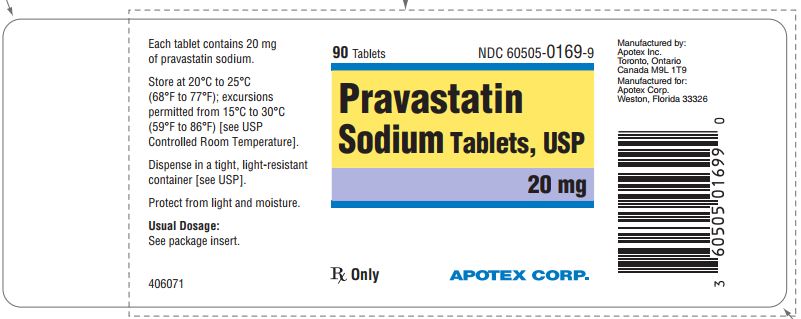
Representative sample of labeling (see HOW SUPPLIED section for complete listing): PRINCIPAL DISPLAY PANEL - 20 mg BOTTLE APOTEX CORP. NDC 60505-0169-9 Pravastatin Sodium Tablets, USP 20 mg Rx 90 bottle count
Representative sample of labeling (see HOW SUPPLIED section for complete listing): PRINCIPAL DISPLAY PANEL - 40 mg BOTTLE APOTEX CORP . NDC 60505-0170-9 Pravastatin Sodium Tablets, USP 40 mg Rx 90 bottle count
PRINCIPAL DISPLAY PANEL- 80 mg BOTTLE Representative sample of labeling (see HOW SUPPLIED section for complete listing): APOTEX C ORP. NDC 60505-1323-9 Pravastatin Sodium Tablets, USP 80 mg Rx 90 bottle count
Medicaid utilization by pack size
Medicare Part D spend CMS · PART D · 2026 (Q1)
About this NDC listing & data coverage
What data is (and isn’t) available for this NDC — tap to expand
| NDC identity (package / product / labeler codes) | ✓ Available |
| Labeler | ✓ Available |
| Product & package description | ✓ Available |
| Marketing category & status | ✓ Available |
| Active ingredient / dosage form / route | ✓ Available |
| FDA label (SPL via DailyMed) | ✓ Available |
| Package photos | ✓ Available |
| Inactive ingredients (structured) | — Not published for this NDC The labeler did not submit a structured excipient list, or no SPL is available. |
| NADAC pharmacy acquisition price (CMS) | — Not published for this NDC CMS publishes NADAC only for NDCs reported in its retail-pharmacy survey. |
| Orange Book / therapeutic-equivalence data | ✓ Available |
| HCPCS J-code billing crosswalk | — Not published for this NDC Most self-administered / retail products have no J-code — that is normal. |
| Medicaid utilization (CMS SDUD) | — Not published for this NDC CMS reports utilization only for NDCs with Medicaid claims above its privacy threshold. |