
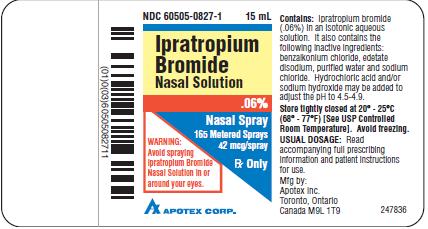
Ipratropium Bromide 42 ug Spray, Metered — NDC 60505-0827-1 (Billing 60505-0827-01)
This is a package of Ipratropium Bromide 42 ug Spray, Metered from Apotex Corp., marketed since May 2020 and currently FDA-listed; retail pharmacies pay about $0.7775 per mL (NADAC). It is this product's only package size.
NDC database record
One package, one record: these facts belong to NDC 60505-0827-1 alone.
- Record
- FDA NDC Directory package listing · Human prescription drug
- Code segments
- 60505 labeler · 0827 product · 1 package
- Package marketed since
- May 26, 2020
- Sample package
- No — commercial package
- Listing certified through
- Dec 31, 2027
- Barcode (UPC-A, from the NDC)
- 3 6050508271 1
- Medicaid fills, this package
- 12,242 prescriptions in the last four reported quarters
- FDA record last changed
- Oct 8, 2026
Identity & classification
Regulatory identifiers FDA, NLM and CMS codes for this package
Drug-database identifiers Medi-Span GPI and First Databank GCN / HICL / AHFS classification
- GSN (GCN sequence number): 024456
- GCN: 42238
- HICL (First Databank): 000057
- AHFS class code: 52:92.00.00
Where does this data come from?
- FDA openFDA NDC Directory · synced Oct 8, 2026
- FDA label on DailyMed · label index refreshed Oct 6, 2026
- RxNorm (NLM RxNav) · catalog refreshed Oct 1, 2026
- Medi-Span GPI (licensed)
- First Databank (licensed) · refreshed Oct 8, 2026
Clinical
Ipratropium nasal spray is available in two strengths that are used to treat different conditions. Ipratropium nasal spray 0.06% is used to relieve a runny nose caused by the common cold or seasonal allergies (hay fever) in adults and children age 5 and older. Ipratropium nasal spray 0.03% is used to relieve a runny nose caused by year-round allergic and nonallergic rhinitis (runny nose and stuffiness) in adults and children age 6 and older. Ipratropium nasal spray does not relieve nasal congestion, sneezing, or postnasal drip caused by these conditions. Ipratropium nasal spray is in a class o...
Read the full MedlinePlus article ↗- No, the ipratropium inhaler (like Atrovent HFA) is a maintenance medicine — it's meant to be used regularly every day to keep your airways open, not as a rescue inhaler during a su...
- My doctor gave me an ipratropium inhaler — can I use it when I have a sudden asthma attack?
- It depends on why you're using it. For a common cold, safety and effectiveness have only been established for up to 4 days. For seasonal allergies (hay fever), it's been studied fo...
- The nasal spray helps my runny nose, but can I keep using it past a week?
Patient education
Supplement & herbal interactions
Where does this data come from?
- MedlinePlus (NLM) · refreshed Oct 1, 2026
- FDA label on DailyMed · label index refreshed Oct 6, 2026
Ask a licensed pharmacist directly — free, answered by our team.
Pricing
A drug doesn't have one price. Each row is a different public payment system, and none is what you'd pay at the counter — that depends on your insurance. The ⓘ on each row explains what it measures.
| Price system | Per mL | Per package |
|---|---|---|
| Retail pharmacies payNADAC · weekly | $0.778 | — |
| Medicaid paysCMS SDUD · 12 mo | $1.54 | — |
| Medicare drug plans payPart D · Q2 2026 | $1.17 | — |
Where does this data come from?
- CMS NADAC weekly file · file of Oct 7, 2026
- CMS ASP pricing files · refreshed Sep 20, 2026
- CMS Medicaid State Drug Utilization Data · through Q1 2026
- CMS Part D plan pricing files · refreshed Sep 24, 2026
- VA National Acquisition Center price file
Packaging — all sizes for this product
| Package NDC | Description | Marketing start | Marketing end | Status |
|---|---|---|---|---|
| 60505-0827-01 You're viewing this Main listing | 1 BOTTLE, PUMP in 1 CARTON / 165 SPRAY, METERED in 1 BOTTLE, PUMP | 2020-05-26 | — | Active |
Therapeutic equivalents
| Product | Labeler | Pack | NADAC/unit | TE | Status | Price vs. this |
|---|---|---|---|---|---|---|
| Ipratropium Bromide 42 ug 00054-0046-41 | Hikma | 1 bottle | $0.778 | AB | Availability likely | — |
| Ipratropium Bromide 42 ug 16714-0527-01 | NORTHSTAR | 1 bottle | $0.778 | AB | Availability likely | — |
| Ipratropium Bromide 42 ugthis 60505-0827-01 | Apotex | 1 bottle | $0.778 | AB | Availability likely | — |
| Ipratropium Bromide 42 ug 69238-2017-02 | Amneal | 1 bottle | $0.778 | AB | Availability likely | — |
| Ipratropium Bromide 42 ug 70748-0337-01 | Lupin | 1 bottle | $0.778 | AB | Availability likely | — |
| Ipratropium Bromide 42 ug 72888-0148-37 | Advagen | 1 bottle | $0.778 | AB | Availability likely | — |
| Ipratropium Bromide 42 ug 24208-0399-15 | Bausch | 1 bottle | $0.871 | AB | FDA listed | +12% |
| Ipratropium Bromide 42 ug 50090-5968-00 | A-S | 1 bottle | — | AB | FDA listed | — |
| Ipratropium Bromide 42 ug 68682-0399-15 | Oceanside | 1 bottle | — | AB | FDA listed | — |
| Ipratropium Bromide 42 ug 72162-2144-02 | Bryant | 1 bottle | — | AB | FDA listed | — |
| Ipratropium Bromide 42 ug 85766-0242-15 | Sportpharm | 1 bottle | — | AB | FDA listed | — |
Where does this data come from?
- FDA openFDA NDC Directory · synced Oct 8, 2026
- FDA Orange Book · refreshed Oct 3, 2026
- CMS NADAC weekly file · file of Oct 7, 2026
Availability & generic status
This product is an FDA-approved generic. Other versions of the same drug are listed under Therapeutic equivalents, least expensive first.
Where does this data come from?
- FDA Orange Book · refreshed Oct 3, 2026
Inactive Ingredients / Excipients
Inactive ingredients, also called excipients, are components of the drug product other than the active ingredient. They may include fillers, dyes, coatings, preservatives, flavors, or other formulation ingredients.
🧪 Avoiding an ingredient? See Ipratropium inactive ingredients by manufacturer: every current product's list side by side, so you can ask your pharmacy for the version that does not list it.
💡 Tap an ingredient (hover on desktop) to see what it is and why it’s used.
-
UNII F5UM2KM3W7
Benzalkonium chloride is a chemical compound that works as a preservative and antimicrobial agent in medications. It prevents bacterial and fungal growth in liquid formulations to keep the product safe during storage and use.
-
UNII 7FLD91C86K
Edetate disodium is a chemical compound that binds and removes certain metal ions. In medicines, it acts as a preservative and stabilizer by preventing metals like calcium from interfering with the product's shelf life and consistency.
-
UNII QTT17582CB
A strong acid used to adjust and maintain the proper pH level in liquid medicines, ensuring stability and preventing breakdown of active ingredients.
-
UNII 451W47IQ8X
Sodium chloride is common table salt. It's used in medicines as a buffer to maintain proper pH, as a filler to add bulk, or to adjust the osmotic balance in liquid formulations.
-
UNII 55X04QC32I
A strong alkaline chemical used to adjust and maintain the pH balance of liquid medicines. It helps keep the medicine stable and ensures it stays effective during storage.
-
UNII 059QF0KO0R
Water is a liquid solvent that dissolves and mixes ingredients together in liquid medicines, syrups, and injections. It helps distribute the active drug evenly throughout the product.
6 inactive ingredients listed in the exact product block matched to this NDC.
Where does this data come from?
ingredient classCode="IACT" elements from the exact product block matched by this NDC. Label-section narrative from DailyMed / the openFDA label index is shown separately when available.- FDA label on DailyMed · label index refreshed Oct 6, 2026
- FDA openFDA NDC Directory · synced Oct 8, 2026
Inactive ingredient FAQ
Are inactive ingredients the same for every manufacturer?
Why might an inactive ingredient be missing?
Can inactive ingredients matter?
Manufacturer & labeler
More NDCs from Apotex Corp. labeler code 60505
- Brimonidine Tartrate/Timolol Maleate Ophthalmic Solution 2 mg/mL; 5 mg/mL Solution NDC 60505-0589-1
- Travoprost .04 mg/mL Solution NDC 60505-0593-1
- Butorphanol Tartrate 10 mg/mL Spray NDC 60505-0813-1
- Desmopressin Acetate 10 ug Spray NDC 60505-0815-0
- Calcitonin Salmon 200 [iU]/1 Spray, Metered NDC 60505-0823-0
- Ipratropium Bromide 21 ug Spray, Metered NDC 60505-0826-1
- Fluticasone Propionate 50 ug Spray, Metered NDC 60505-0829-1
- Mometasone Furoate 50 ug Spray, Metered NDC 60505-0830-1
- Azelastine Hydrochloride 137 ug Spray, Metered NDC 60505-0833-5
- Olopatadine Hydrochloride 665 ug Spray, Metered NDC 60505-0845-5
- Azelastine hydrochloride and Fluticasone propionate 137 ug; 50 ug Spray, Metered NDC 60505-0953-3
- Fluticasone Propionate 50 ug Spray, Metered NDC 60505-0955-1
Where does this data come from?
- FDA openFDA NDC Directory · synced Oct 8, 2026
- Drugs@FDA
Full prescribing information FDA SPL
🎯 Indications and Usage ▾
INDICATIONS AND USAGE Ipratropium bromide nasal solution, 0.06% is indicated for the symptomatic relief of rhinorrhea associated with the common cold or seasonal allergic rhinitis for adults and children age 5 years and older. Ipratropium bromide nasal solution, 0.06% does not relieve nasal congestion or sneezing associated with the common cold or seasonal allergic rhinitis. The safety and effectiveness of the use of ipratropium bromide nasal solution, 0.06% beyond four days in patients with the common cold or beyond three weeks in patients with seasonal allergic rhinitis has not been established.
⏱️ Dosage and Administration ▾
DOSAGE AND ADMINISTRATION For Symptomatic Relief of Rhinorrhea Associated with the Common Cold The recommended dose of ipratropium bromide nasal solution, 0.06% is two sprays (84 mcg) per nostril three or four times daily (total dose 504 to 672 mcg/day) in adults and children age 12 years and older. Optimum dosage varies with response of the individual patient. The recommended dose of ipratropium bromide nasal solution, 0.06% for children age 5 to11 years is two sprays (84 mcg) per nostril three times daily (total dose of 504 mcg/day).
The safety and effectiveness of the use of ipratropium bromide nasal solution, 0.06% beyond four days in patients with the common cold have not been established. For Symptomatic Relief of Rhinorrhea Associated with Seasonal Allergic Rhinitis The recommended dose of ipratropium bromide nasal solution, 0.06% is two sprays (84 mcg) per nostril four times daily (total dose 672 mcg/day) in adults and children age 5 years and older. The safety and effectiveness of the use of ipratropium bromide nasal solution, 0.06% beyond three weeks in patients with seasonal allergic rhinitis have not been established.
Initial pump priming requires seven sprays of the pump. If used regularly as recommended, no further priming is required. If not used for more than 24 hours, the pump will require two sprays, or if not used for more than seven days, the pump will require seven sprays to reprime.
Avoid spraying into eyes.
⛔ Contraindications ▾
CONTRAINDICATIONS Ipratropium bromide nasal solution, 0.06% is contraindicated in patients with a history of hypersensitivity to atropine or its derivatives, or to any of the other ingredients.
⚠️ Warnings ▾
WARNINGS Immediate hypersensitivity reactions may occur after administration of ipratropium bromide, as demonstrated by urticaria, angioedema, rash, bronchospasm, anaphylaxis, and oropharyngeal edema. If such a reaction occurs, therapy with ipratropium bromide nasal solution 0.06% should be stopped at once and alternative treatment should be considered.
🤒 Adverse Reactions ▾
ADVERSE REACTIONS Adverse reaction information on ipratropium bromide nasal solution, 0.06% in patients with the common cold was derived from two multicenter, vehicle-controlled clinical trials involving 1,276 patients (195 patients on ipratropium bromide nasal solution, 0.03%, 352 patients on ipratropium bromide nasal solution, 0.06%, 189 patients on ipratropium bromide nasal spray, 0.12%, 351 patients on vehicle and 189 patients receiving no treatment). Table 1 shows adverse events reported for patients who received ipratropium bromide nasal solution, 0.06% at the recommended dose of 84 mcg per nostril, or vehicle, administered three or four times daily, where the incidence is 1% or greater in the ipratropium bromide group and higher in the ipratropium bromide group than in the vehicle group.
Table 1 % of Patients with Common Cold Reporting Events 1 Ipratropium Bromide) Nasal Solution 0.06% Vehicle Control 1 This table includes adverse events for which the incidence was 1% or greater in the ipratropium bromide group and higher in the ipratropium bromide group than in the vehicle group. 2 Epistaxis reported by 5.4% of ipratropium bromide patients and 1.4% of vehicle patients, blood-tinged nasal mucus by 2.8% of ipratropium bromide patients and 0.9% of vehicle patients. No. of Patients 352 351 Epistaxis 2 8.2% 2.3% Nasal Dryness 4.8% 2.8% Dry Mouth/Throat 1.4% 0.3% Nasal Congestion 1.1% 0.0% Ipratropium bromide nasal solution, 0.06% was well tolerated by most patients.
The most frequently reported adverse events were transient episodes of nasal dryness or epistaxis. The majority of these adverse events (96%) were mild or moderate in nature, none was considered serious, and none resulted in hospitalization. No patient required treatment for nasal dryness, and only three patients (<1%) required treatment for epistaxis, which consisted of local application of pressure or a moisturizing agent (e.g., petroleum jelly).
No patient receiving ipratropium bromide nasal solution, 0.06% was discontinued from the trial due to either nasal dryness or bleeding. Adverse events reported by less than 1% of the patients receiving ipratropium bromide nasal solution, 0.06% during the controlled clinical trials that are potentially related to ipratropium bromide's local effects or systemic anticholinergic effects include: taste perversion, nasal burning, conjunctivitis, coughing, dizziness, hoarseness, palpitation, pharyngitis, tachycardia, thirst, tinnitus, and blurred vision.
No controlled trial was conducted to address the relative incidence of adverse events for three times daily versus four times daily therapy. Nasal adverse events seen in the clinical trial with seasonal allergic rhinitis (SAR) patients (see Table 2 ) were similar to those seen in the common cold trials. Additional events were reported at a higher rate in the SAR trial due in part to the longer duration of the trial and the inclusion of Upper Respiratory Tract Infection (URI) as an adverse event.
In common cold trials, URI was the disease under study and not an adverse event. Table 2 % of Patients with SAR Reporting Events 1 Ipratropium Bromide) Nasal Solution 0.06% Vehicle Control 1 This table includes adverse events for which the incidence was 1% or greater in the ipratropium bromide group and higher in the ipratropium bromide group than in the vehicle group. 2 Epistaxis reported by 3.7% of ipratropium bromide patients and 2.4% of vehicle patients, blood-tinged nasal mucus by 2.3% of ipratropium bromide patients and 1.9% of vehicle patients.
No. of Patients 218 211 Epistaxis 2 6.0% 3.3% Pharyngitis 5.0% 3.8% URI 5.0% 3.3% Nasal Dryness 4.6% 0.9% Headache 4.1% 0.5% Dry Mouth/Throat 4.1% 0.0% Taste Perversion 3.7% 1.4% Sinusitis 2.8% 2.8% Pain 1.8% 0.9% Diarrhea 1.8% 0.5% There were no reports of allergic-type reactions in the controlled clinical common cold and SAR trials. Post-Marketing Experience Allergic-type reactions such as skin rash, angioedema, including that of the… [Excerpted — this section continues on DailyMed.]
🔄 Drug Interactions ▾
Drug Interactions No controlled clinical trials were conducted to investigate potential drug-drug interactions. There is potential for an additive interaction with other concomitantly administered medications with anticholinergic properties, including ipratropium bromide for oral inhalation.
🤰 Pregnancy ▾
Pregnancy Teratogenic Effects Pregnancy Category B. There are no adequate and well-controlled studies for ipratropium bromide nasal solution, 0.06% in pregnant women. Because animal reproduction studies are not always predictive of human response, ipratropium bromide nasal solution, 0.06% should be used during pregnancy only if clearly needed.
Oral reproduction studies were performed at doses of 10 mg/kg in mice, 1,000 mg/kg in rats and 125 mg/kg in rabbits. These doses correspond, in each species, respectively, to approximately 60, 12,000, and 3,000 times the maximum recommended daily intranasal dose (MRDID) in adults on a mg/m 2 basis. Inhalation reproduction studies were conducted in rats and rabbits at doses of 1.5 and 1.8 mg/kg, respectively, (approximately 20 and 45 times, respectively, the MRDID in adults on a mg/m 2 basis).
These studies demonstrated no evidence of teratogenic effects as a result of ipratropium bromide. At oral doses 90 mg/kg and above in rats (approximately 1,100 times the MRDID in adults on a mg/m 2 basis) embryotoxicity was observed as increased resorption. This effect is not considered relevant to human use due to the large doses at which it was observed and the difference in route of administration.
🧒 Pediatric Use ▾
Pediatric Use The safety of ipratropium bromide nasal solution, 0.06% at a dose of two sprays (84 mcg) per nostril three times a day (total dose 504 mcg/day) for two to four days has been demonstrated in two clinical trials involving 362 pediatric patients 5 to 11 years of age with naturally acquired common colds. In this pediatric population ipratropium bromide nasal solution, 0.06% had an adverse event profile similar to that observed in adolescent and adult patients. When ipratropium bromide nasal solution, 0.06% was concomitantly administered with an oral decongestant (pseudoephedrine HCI) in 122 children ages 5 to 12 years, and concomitantly administered with an oral decongestant/antihistamine combination (pseudoephedrine HCI/chlorpheniramine maleate) in 123 children ages 5 to 12 years, adverse event profiles were similar to ipratropium bromide nasal solution, 0.06% alone.
The safety of ipratropium bromide nasal solution, 0.06% at a dose of two sprays (84 mcg) per nostril four times a day (total dose 672 mcg/day) for three weeks in pediatric seasonal allergic rhinitis patients down to 5 years is based upon the safety demonstrated in the pediatric common cold trials and the trial in adult and adolescent patients 12 to 75 years of age with seasonal allergic rhinitis. The effectiveness of ipratropium bromide nasal solution, 0.06% for the treatment of rhinorrhea associated with the common cold and seasonal allergic rhinitis in this pediatric age group is based on extrapolation of the demonstrated efficacy of ipratropium bromide nasal solution, 0.06% in adolescents and adults with the conditions and the likelihood that the disease course, pathophysiology, and the drug’s effects are substantially similar to that of adults.
The recommended dose for common cold for the pediatric population is based on cross-study comparisons of the efficacy of ipratropium bromide nasal solution, 0.06% in adult and pediatric patients and on its safety profile in both adults and pediatric common cold patients. The recommended dose for seasonal allergic rhinitis for the pediatric population down to 5 years is based upon the efficacy and safety of ipratropium bromide nasal solution, 0.06% in adults and adolescents 12 years of age and above with seasonal allergic rhinitis and the safety profile of this dose in both adult and pediatric common cold patients.
The safety and effectiveness of ipratropium bromide nasal solution, 0.06% in pediatric patients under 5 years of age have not been established.
🆘 Overdosage ▾
OVERDOSAGE Acute overdosage by intranasal administration is unlikely since ipratropium bromide is not well absorbed systemically after intranasal or oral administration. Following administration of a 20 mg oral dose (equivalent to ingesting more than two bottles of ipratropium bromide nasal solution, 0.06%) to 10 male volunteers, no change in heart rate or blood pressure was noted. Following a 2 mg intravenous infusion over 15 minutes to the same 10 male volunteers, plasma ipratropium concentrations of 22 to 45 ng/mL were observed (>100 times the concentrations observed following intranasal administration).
Following intravenous infusion these 10 volunteers had a mean increase of heart rate of 50 bpm and less than 20 mmHg change in systolic or diastolic blood pressure at the time of peak ipratropium levels.
🧬 Clinical Pharmacology ▾
CLINICAL PHARMACOLOGY Mechanism of Action Ipratropium bromide is an anticholinergic (parasympatholytic) agent which, based on animal studies, appears to inhibit vagally-mediated reflexes by antagonizing the action of acetylcholine, the transmitter agent released at the neuromuscular junctions in the lung. In humans, ipratropium bromide has anti-secretory properties and, when applied locally, inhibits secretions from the serous and seromucous glands lining the nasal mucosa. Ipratropium bromide is a quaternary amine that minimally crosses the nasal and gastrointestinal membranes and the blood-brain barrier, resulting in a reduction of the systemic anticholinergic effects (e.g., neurologic, ophthalmic, cardiovascular, and gastrointestinal effects) that are seen with tertiary anticholinergic amines.
Pharmacokinetics Absorption Ipratropium bromide is poorly absorbed into the systemic circulation following oral administration (2 to 3%). Less than 20% of an 84 mcg per nostril dose was absorbed from the nasal mucosa of normal volunteers, induced-cold adult volunteers, naturally acquired common cold pediatric patients, or perennial rhinitis adult patients. Distribution Ipratropium bromide is minimally bound (0 to 9% in vitro ) to plasma albumin and α 1 -acid glycoprotein.
Its blood/plasma concentration ratio was estimated to be about 0.89. Studies in rats have shown that ipratropium bromide does not penetrate the blood-brain barrier. Metabolism Ipratropium bromide is partially metabolized to ester hydrolysis products, tropic acid and tropane.
These metabolites appear to be inactive based on in vitro receptor affinity studies using rat brain tissue homogenates. Elimination After intravenous administration of 2 mg ipratropium bromide to 10 healthy volunteers, the terminal half-life of ipratropium bromide was approximately 1.6 hours. The total body clearance and renal clearance were estimated to be 2,505 and 1,019 mL/min, respectively.
The amount of the total dose excreted unchanged in the urine (Ae) within 24 hours was approximately one-half of the administered dose. Pediatrics Following administration of 84 mcg of ipratropium bromide per nostril three times a day in patients 5 to 18 years old (n=42) with a naturally acquired common cold, the mean amount of the total dose excreted unchanged in the urine of 7.8% was comparable to 84 mcg per nostril four times a day in an adult induced common cold population (n=22) of 7.3 to 8.1%. Plasma ipratropium concentrations were relatively low (ranging from undetectable up to 0.62 ng/mL).
No correlation of the amount of the total dose excreted unchanged in the urine (Ae) with age or gender was observed in the pediatric population. Special Populations Gender does not appear to influence the absorption or excretion of nasally administered ipratropium bromide. The pharmacokinetics of ipratropium bromide have not been studied in patients with hepatic or renal insufficiency or in the elderly.
Drug-Drug Interactions No specific pharmacokinetic studies were conducted to evaluate potential drug-drug interactions. Pharmacodynamics In two single-dose trials (n=17), doses up to 336 mcg of ipratropium bromide did not significantly affect pupillary diameter, heart rate, or systolic/diastolic blood pressure. Similarly, ipratropium bromide nasal solution, 0.06% in adult patients (n=22) with induced-colds (84 mcg/nostril four times a day) and in pediatric patients (n=45) with naturally acquired common cold (84 mcg/nostril three times a day) had no significant effects on pupillary diameter, heart rate, or systolic/diastolic blood pressure.
Controlled clinical trials demonstrated that intranasal fluorocarbon-propelled ipratropium bromide does not alter physiologic nasal functions (e.g., sense of smell, ciliary beat frequency, mucociliary clearance, or the air conditioning capacity of the nose). Clinical Trials The clinical trials for ipratropium bromide nasal solution, 0.06% were conducted in patients with rhinorrhea… [Excerpted — this section continues on DailyMed.]
📦 How Supplied / Storage and Handling ▾
HOW SUPPLIED Ipratropium Bromide Nasal Solution, 0.06% is supplied in a white high density polyethylene (HDPE) bottle fitted with a metered nasal spray pump, a green safety clip to prevent accidental discharge of the spray, and a clear plastic dust cap (NDC 60505-0827-1). It contains 16.6 g of product formulation, 165 sprays, each delivering 42 mcg of ipratropium bromide per spray (70 mcL), or 10 days of therapy at the maximum recommended dose (two sprays per nostril four times a day). Store tightly closed at 20° to 25°C (68° to 77°F) [See USP Controlled Room Temperature].
Avoid freezing. Keep out of reach of children. Do not spray in the eyes.
Address medical inquiries to Apotex Corp: (800) 706-5575. Patients should be reminded to read and follow the accompanying Patient's Instructions for Use, which should be dispensed with the product. Manufactured by: Manufactured for: Apotex Inc.
Apotex Corp. Toronto, Ontario Weston, FL Canada M9L 1T9 33326 May 2014
📦 Storage and Handling ▾
Store tightly closed at 20° to 25°C (68° to 77°F) [See USP Controlled Room Temperature]. Avoid freezing. Keep out of reach of children.
Do not spray in the eyes. Address medical inquiries to Apotex Corp: (800) 706-5575. Patients should be reminded to read and follow the accompanying Patient's Instructions for Use, which should be dispensed with the product.
Manufactured by: Manufactured for: Apotex Inc. Apotex Corp. Toronto, Ontario Weston, FL Canada M9L 1T9 33326 May 2014
📋 Description ▾
DESCRIPTION The active ingredient in ipratropium bromide nasal solution is ipratropium bromide monohydrate. It is an anticholinergic agent chemically described as 8-azoniabicyclo (3.2.1) octane, 3-(3-hydroxy-1-oxo-2-phenylpropoxy)-8-methyl-8-(1-methylethyl)-, bromide monohydrate (endo, syn)-, ( + )-: a synthetic quaternary ammonium compound, chemically related to atropine. Its structural formula is: Ipratropium bromide is a white to off-white crystalline substance.
It is freely soluble in lower alcohols and water, existing in an ionized state in aqueous solutions, and relatively insoluble in non-polar media. Ipratropium bromide nasal solution, 0.06% is a metered-dose, manual pump spray unit which delivers 42 mcg ipratropium bromide (on an anhydrous basis) per spray (70 mcL) in an isotonic, aqueous solution. It also contains the following inactive ingredients: benzalkonium chloride, edetate disodium, purified water and sodium chloride.
Hydrochloric acid and/or sodium hydroxide may be added to adjust the pH to 4.5 to 4.9. Each bottle contains 165 sprays.
💬 Information for Patients ▾
Information for Patients Patients should be advised that temporary blurring of vision, precipitation or worsening of narrow-angle glaucoma, mydriasis, increased intraocular pressure, acute eye pain or discomfort, visual halos or colored images in association with red eyes from conjunctival and corneal congestion may result if ipratropium bromide nasal solution, 0.06% comes into direct contact with the eyes. Patients should be instructed to avoid spraying ipratropium bromide nasal solution, 0.06% in or around their eyes.
Patients who experience eye pain, blurred vision, excessive nasal dryness or episodes of nasal bleeding should be instructed to contact their doctor. To ensure proper dosing, patients should be advised not to alter the size of the nasal spray opening. Patients should be reminded to carefully read and follow the accompanying Patient's Instructions for Use .
Since dizziness, accommodation disorder, mydriasis, and blurred vision may occur with use of ipratropium bromide nasal solution, 0.06%, patients should be cautioned about engaging in activities requiring balance and visual acuity such as driving a car or operating appliances, machinery, etc.
⚠️ Precautions ▾
PRECAUTIONS General Effects Seen with Anticholinergic Drugs: Ipratropium bromide nasal solution, 0.06% should be used with caution in patients with narrow-angle glaucoma, prostatic hyperplasia, or bladder neck obstruction, particularly if they are receiving an anticholinergic by another route. Use in Hepatic or Renal Disease: Ipratropium bromide nasal solution, 0.06% has not been studied in patients with hepatic or renal insufficiency. It should be used with caution in those patient populations.
Information for Patients Patients should be advised that temporary blurring of vision, precipitation or worsening of narrow-angle glaucoma, mydriasis, increased intraocular pressure, acute eye pain or discomfort, visual halos or colored images in association with red eyes from conjunctival and corneal congestion may result if ipratropium bromide nasal solution, 0.06% comes into direct contact with the eyes. Patients should be instructed to avoid spraying ipratropium bromide nasal solution, 0.06% in or around their eyes.
Patients who experience eye pain, blurred vision, excessive nasal dryness or episodes of nasal bleeding should be instructed to contact their doctor. To ensure proper dosing, patients should be advised not to alter the size of the nasal spray opening. Patients should be reminded to carefully read and follow the accompanying Patient's Instructions for Use .
Since dizziness, accommodation disorder, mydriasis, and blurred vision may occur with use of ipratropium bromide nasal solution, 0.06%, patients should be cautioned about engaging in activities requiring balance and visual acuity such as driving a car or operating appliances, machinery, etc. Drug Interactions No controlled clinical trials were conducted to investigate potential drug-drug interactions. There is potential for an additive interaction with other concomitantly administered medications with anticholinergic properties, including ipratropium bromide for oral inhalation.
Carcinogenesis, Mutagenesis, Impairment of Fertility Two-year oral carcinogenicity studies in rats and mice have revealed no carcinogenic activity at doses up to 6 mg/kg. This dose corresponds in rats and mice to approximately 70 and 35 times the maximum recommended daily intranasal dose in adults, respectively, and approximately 35 and 15 times the maximum recommended daily intranasal dose in children, respectively, on a mg/m 2 basis. Results of various mutagenicity studies (Ames test, mouse dominant lethal test, mouse micronucleus test, and chromosome aberration of bone marrow in Chinese hamsters) were negative.
Fertility of male or female rats at oral doses up to 50 mg/kg (approximately 600 times the maximum recommended daily intranasal dose in adults on a mg/m 2 basis) was unaffected by ipratropium bromide administration. At an oral dose of 500 mg/kg (approximately 6,000 times the maximum recommended daily intranasal dose in adults on a mg/m 2 basis), ipratropium bromide produced a decrease in the conception rate. Pregnancy Teratogenic Effects Pregnancy Category B.
There are no adequate and well-controlled studies for ipratropium bromide nasal solution, 0.06% in pregnant women. Because animal reproduction studies are not always predictive of human response, ipratropium bromide nasal solution, 0.06% should be used during pregnancy only if clearly needed. Oral reproduction studies were performed at doses of 10 mg/kg in mice, 1,000 mg/kg in rats and 125 mg/kg in rabbits.
These doses correspond, in each species, respectively, to approximately 60, 12,000, and 3,000 times the maximum recommended daily intranasal dose (MRDID) in adults on a mg/m 2 basis. Inhalation reproduction studies were conducted in rats and rabbits at doses of 1.5 and 1.8 mg/kg, respectively, (approximately 20 and 45 times, respectively, the MRDID in adults on a mg/m 2 basis). These studies demonstrated no evidence of teratogenic effects as a result of ipratropium bromide.
At oral doses 90 mg/kg and above in rats (approximat… [Excerpted — this section continues on DailyMed.]
🍼 Nursing Mothers ▾
Nursing Mothers It is known that some ipratropium bromide is systemically absorbed following nasal administration; however the portion which may be excreted in human milk is unknown. Because lipid-insoluble quaternary cations pass into breast milk, caution should be exercised when ipratropium bromide nasal solution, 0.06% is administered to a nursing mother.
🧬 Pharmacodynamics ▾
Pharmacodynamics In two single-dose trials (n=17), doses up to 336 mcg of ipratropium bromide did not significantly affect pupillary diameter, heart rate, or systolic/diastolic blood pressure. Similarly, ipratropium bromide nasal solution, 0.06% in adult patients (n=22) with induced-colds (84 mcg/nostril four times a day) and in pediatric patients (n=45) with naturally acquired common cold (84 mcg/nostril three times a day) had no significant effects on pupillary diameter, heart rate, or systolic/diastolic blood pressure.
Controlled clinical trials demonstrated that intranasal fluorocarbon-propelled ipratropium bromide does not alter physiologic nasal functions (e.g., sense of smell, ciliary beat frequency, mucociliary clearance, or the air conditioning capacity of the nose).
🔬 Clinical Studies ▾
Clinical Trials The clinical trials for ipratropium bromide nasal solution, 0.06% were conducted in patients with rhinorrhea associated with naturally occurring common colds. In two controlled four day comparisons of ipratropium bromide nasal solution, 0.06% (84 mcg per nostril, administered three or four times daily; n=352) with its vehicle (n=351), there was a statistically significant reduction of rhinorrhea, as measured by both nasal discharge weight and the patients’ subjective assessment of severity of rhinorrhea using a visual analog scale.
These significant differences were evident within one hour following dosing. There was no effect of ipratropium bromide nasal solution, 0.06% on degree of nasal congestion or sneezing. The response to ipratropium bromide nasal solution, 0.06% did not appear to be affected by age or gender.
No controlled clinical trials directly compared the efficacy of three times daily versus four times daily treatment. One clinical trial was conducted with ipratropium bromide nasal solution, 0.06% administered four times daily for three weeks, in 218 patients with rhinorrhea associated with Seasonal Allergic Rhinitis (SAR), compared to its vehicle in 211 patients. Patients in this trial were adults and adolescents 12 years of age and above.
Ipratropium bromide nasal solution, 0.06% was significantly more effective in reducing the severity and duration of rhinorrhea over the three weeks of the study, as measured by daily patient symptom scores. There was no difference between treatment groups in the effect on nasal congestion, sneezing or itching eyes.
📄 Carcinogenesis, Mutagenesis, Impairment of Fertility ▾
Carcinogenesis, Mutagenesis, Impairment of Fertility Two-year oral carcinogenicity studies in rats and mice have revealed no carcinogenic activity at doses up to 6 mg/kg. This dose corresponds in rats and mice to approximately 70 and 35 times the maximum recommended daily intranasal dose in adults, respectively, and approximately 35 and 15 times the maximum recommended daily intranasal dose in children, respectively, on a mg/m 2 basis. Results of various mutagenicity studies (Ames test, mouse dominant lethal test, mouse micronucleus test, and chromosome aberration of bone marrow in Chinese hamsters) were negative.
Fertility of male or female rats at oral doses up to 50 mg/kg (approximately 600 times the maximum recommended daily intranasal dose in adults on a mg/m 2 basis) was unaffected by ipratropium bromide administration. At an oral dose of 500 mg/kg (approximately 6,000 times the maximum recommended daily intranasal dose in adults on a mg/m 2 basis), ipratropium bromide produced a decrease in the conception rate.
📄 Patient Package Insert ▾
Patients Instructions for Use Ipratropium Bromide Nasal Solution, 0.06% Nasal spray (ip" ra troe' pee um broe' mide) Rx Only Read complete instructions carefully before using. In order to ensure proper dosing, do not attempt to change the size of the spray opening. Ipratropium Bromide Nasal Solution, 0.06% is indicated for the symptomatic relief of rhinorrhea (runny nose) associated with the common cold or seasonal allergic rhinitis for adults and children age 5 years and older.
Ipratropium Bromide Nasal Solution, 0.06% does not relieve nasal congestion or sneezing associated with the common cold or seasonal allergic rhinitis. Do not use Ipratropium Bromide Nasal Solution, 0.06% for longer than four days for a common cold or three weeks for seasonal allergic rhinitis unless instructed by your physician. Read complete instructions carefully and use only as directed.
To Use Remove the clear plastic dust cap and the green safety clip from the nasal spray pump (Figure 1). The safety clip prevents the accidental discharge of the spray in your pocket or purse. Figure 1 The nasal spray pump must be primed before Ipratropium Bromide Nasal Solution, 0.06% is used for the first time.
To prime the pump, hold the bottle with your thumb at the base and your index and middle fingers on the white shoulder area. Make sure the bottle points upright and away from your eyes. Press your thumb firmly and quickly against the bottle seven times (Figure 2).
The pump is now primed and can be used. Your pump should not have to be reprimed unless you have not used the medication for more than 24 hours; repriming the pump will only require two sprays. If you have not used your nasal spray for more than seven days, repriming the pump will require seven sprays.
Figure 2 Before using Ipratropium Bromide Nasal Solution, 0.06%, blow your nose gently to clear your nostrils if necessary. Close one nostril by gently placing your finger against the side of your nose, tilt your head slightly forward and, keeping the bottle upright, insert the nasal tip into the other nostril (Figure 3). Point the tip toward the back and outer side of the nose.
Figure 3 Press firmly and quickly upwards with the thumb at the base while holding the white shoulder portion of the pump between your index and middle fingers. Following each spray, sniff deeply and breathe out through your mouth. After spraying the nostril and removing the unit, tilt your head backwards for a few seconds to let the spray spread over the back of the nose.
Repeat steps 4 through 6 in the same nostril. Repeat steps 4 through 7 in the other nostril (i.e., two sprays per nostril). Replace the clear plastic dust cap and safety clip.
At some time before the medication is completely used up, you should consult your physician or pharmacist to determine whether a refill is needed. You should not take extra doses or stop using Ipratropium Bromide Nasal Solution, 0.06% without consulting your physician. To Clean If the nasal tip becomes clogged, remove the clear plastic dust cap and safety clip.
Hold the nasal tip under running, warm tap water (Figure 4) for about a minute. Dry the nasal tip, reprime the nasal spray pump (step 2 above), and replace the plastic dust cap and safety clip. Figure 4 Caution Ipratropium Bromide Nasal Solution, 0.06% is intended to relieve your rhinorrhea (runny nose) with regular use.
It is therefore important that you use Ipratropium Bromide Nasal Solution, 0.06% as prescribed by your physician. For most patients, some improvement in runny nose is apparent following the first dose of treatment with Ipratropium Bromide Nasal Solution, 0.06%. Do not use Ipratropium Bromide Nasal Solution, 0.06% for longer than four days for your cold or three weeks for seasonal allergic rhinitis unless instructed by your physician.
Do not spray Ipratropium Bromide Nasal Solution, 0.06% in your eyes. Should this occur, immediately flush your eye with cool tap water for several minutes. If you accidentally spr… [Excerpted — this section continues on DailyMed.]
📄 Package Label / Principal Display Panel ▾
PRINCIPAL DISPLAY PANEL- 0.06% Bottle Label APOTEX CORP. NDC 660505-0827-1 Ipratropium Bromide Nasal Solution 0.06% Nasal Spray 165 Metered Sprays 42 mcg/spray Rx Only 15 mL
PRINCIPAL DISPLAY PANEL- 0.06% Carton Label APOTEX CORP. NDC 660505-0827-1 Ipratropium Bromide Nasal Solution 0.06% Nasal Spray 165 Metered Sprays 42 mcg/spray Rx Only 15 mL