
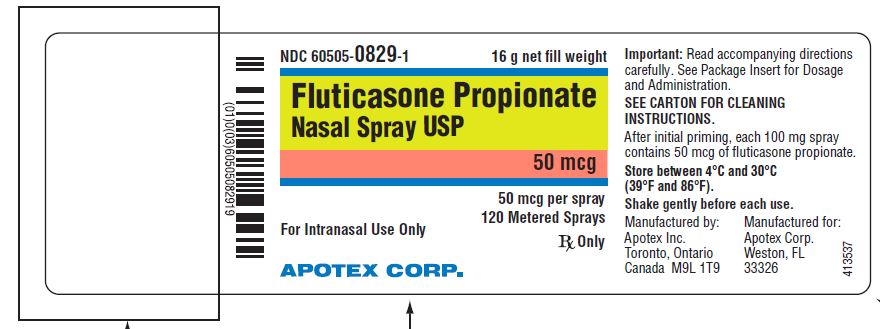
Fluticasone Propionate 50 ug Spray, Metered — NDC 60505-0829-1 (Billing 60505-0829-01)
This is a package of Fluticasone Propionate 50 ug Spray, Metered from Apotex Corp., marketed since Sep 2007 and currently FDA-listed; retail pharmacies pay about $0.4451 per g (NADAC). It is this product's only package size.
NDC database record
One package, one record: these facts belong to NDC 60505-0829-1 alone.
- Record
- FDA NDC Directory package listing · Human prescription drug
- Code segments
- 60505 labeler · 0829 product · 1 package
- Package marketed since
- Sep 19, 2007
- Sample package
- No — commercial package
- Listing certified through
- Dec 31, 2027
- Barcode (UPC-A, from the NDC)
- 3 6050508291 9
- Medicaid fills, this package
- 4,700,385 prescriptions in the last four reported quarters
- FDA record last changed
- Oct 8, 2026
Other active recalls for Fluticasone Propionate (different manufacturers) — 1 · tap to view
Past resolved recalls for this product (1)
Identity & classification
Regulatory identifiers FDA, NLM and CMS codes for this package
Drug-database identifiers Medi-Span GPI and First Databank GCN / HICL / AHFS classification
- GSN (GCN sequence number): 018368
- GCN: 62263
- HICL (First Databank): 007873
- AHFS class code: 48:10.08.00
Where does this data come from?
- FDA openFDA NDC Directory · synced Oct 8, 2026
- FDA label on DailyMed · label index refreshed Oct 8, 2026
- RxNorm (NLM RxNav) · catalog refreshed Oct 1, 2026
- Medi-Span GPI (licensed)
- First Databank (licensed) · refreshed Oct 8, 2026
Clinical
Nonprescription (over the counter) fluticasone nasal spray is used to relieve symptoms of rhinitis such as sneezing and a runny, stuffy, or itchy nose and itchy, watery eyes caused by hay fever or other allergies (caused by an allergy to pollen, mold, dust, or pets). Prescription fluticasone nasal spray is used to relieve symptoms of nonallergic rhinitis such as sneezing and runny or stuffy nose which are not caused by allergies. Prescription fluticasone nasal spray (Xhance) is used to treat chronic rhinosinusitis with or without nasal polyps (ongoing runny nose, sinus swelling and/or nasal co...
Read the full MedlinePlus article ↗- It depends on the product. Inhalers and powders are for long-term asthma control, nasal sprays are for allergy or nasal symptoms, and skin products calm inflamed, itchy skin. Check...
- No. It does not relieve sudden breathing trouble. Use your rescue medicine as directed and call your doctor if episodes do not respond to it.
- Can I use my fluticasone inhaler for an asthma attack?
- Inhaled steroids can cause thrush, a yeast infection in the mouth and throat. Rinsing with water and spitting it out after each dose helps lower that risk.
Patient education
Supplement & herbal interactions
Some supplements/herbs that may interact with Fluticasone Propionate — tap one for details:
Fluticasone may be associated with lower levels of 8 nutrients — worth a chat with your pharmacist, not a cause for alarm.
Where does this data come from?
- MedlinePlus (NLM) · refreshed Oct 8, 2026
- FDA label on DailyMed · label index refreshed Oct 8, 2026
Ask a licensed pharmacist directly — free, answered by our team.
Pricing
A drug doesn't have one price. Each row is a different public payment system, and none is what you'd pay at the counter — that depends on your insurance. The ⓘ on each row explains what it measures.
| Price system | Per g | Per package |
|---|---|---|
| Retail pharmacies payNADAC · weekly | $0.445 | — |
| Medicaid paysCMS SDUD · 12 mo | $0.9436 | — |
| Medicare drug plans payPart D · Q2 2026 | $0.7375 | — |
Where does this data come from?
- CMS NADAC weekly file · file of Oct 7, 2026
- CMS ASP pricing files · refreshed Sep 20, 2026
- CMS Medicaid State Drug Utilization Data · through Q1 2026
- CMS Part D plan pricing files · refreshed Sep 24, 2026
- VA National Acquisition Center price file
Packaging — all sizes for this product
| Package NDC | Description | Marketing start | Marketing end | Status |
|---|---|---|---|---|
| 60505-0829-01 You're viewing this Main listing | 1 BOTTLE, SPRAY in 1 CARTON / 120 SPRAY, METERED in 1 BOTTLE, SPRAY | 2007-09-19 | — | Active |
Therapeutic equivalents
| Product | Labeler | Pack | NADAC/unit | TE | Status | Price vs. this |
|---|---|---|---|---|---|---|
| Fluticasone Propionate 50 ug 00054-3270-99 | Hikma | 1 bottle | $0.445 | AB | Availability likely | — |
| Fluticasone Propionate 50 ugthis 60505-0829-01 | Apotex | 1 bottle | $0.445 | AB | Availability likely | — |
| Fluticasone Propionate spray, metered 50 ug 62135-0810-61 | Chartwell | 1 bottle | $0.445 | AB | Availability likely | — |
| Fluticasone Propionate 50 ug 71085-0090-16 | IPG | 1 bottle | $0.445 | AB | Availability likely | — |
| Fluticasone Propionate 50 ug 72888-0141-35 | Advagen | 1 bottle | $0.445 | AB | Availability likely | — |
| good neighbor pharmacy fluticasone propionate 50 ug 46122-0684-29 | Amerisource | 1 bottle | $0.676 | — | Availability likely | +52% |
| Fluticasone Propionate 50 ug 83324-0294-01 | Chain | 1 bottle | $0.676 | — | Availability likely | +52% |
| leader fluticasone propionate 50 ug 70000-0703-01 | Cardinal | 1 bottle | $0.807 | — | Availability likely | +81% |
| Foster and Thrive Allergy Relief 50 ug 70677-1021-01 | Strategic | 1 bottle | $0.807 | — | Availability likely | +81% |
| Good Sense 24 hour allergy nasal 50 ug 00113-0028-01 | L. | 1 bottle | $0.845 | — | Discontinued | +90% |
| Rugby Fluticasone Propionate Nasal 50 ug 00536-1183-65 | Rugby | 1 bottle | $0.896 | — | Availability likely | +101% |
| Fluticasone Propionate 50 ug 60505-6205-03 | Apotex | 1 bottle | $0.896 | — | Availability likely | +101% |
| Good Sense 24 hour allergy nasal 50 ug 00113-0285-08 | L. | 1 bottle | — | — | FDA listed | — |
| Flonase Allergy Relief 50 ug 00135-0576-01 | Haleon | 1 bottle | — | — | FDA listed | — |
| Childrens Flonase Allergy Relief 50 ug 00135-0582-04 | Haleon | 1 bottle | — | — | FDA listed | — |
| 24 Hour Allergy Nasal 50 ug 00363-0024-01 | Walgreen | 1 bottle | — | — | Discontinued | — |
| Fluticasone Propionate 50 ug 00363-0652-01 | Walgreens | 1 bottle | — | — | FDA listed | — |
| Childrens Allergy Relief 50 ug 00363-4023-08 | Walgreen | 1 bottle | — | — | FDA listed | — |
| Up and Up Allergy Relief Nasal 50 ug 11673-0103-04 | Target | 3 bottles | — | — | Discontinued | — |
| Fluticasone Propionate 50 ug 11673-0262-01 | Target | 1 bottle | — | — | Discontinued | — |
| allergy nasal 50 ug 11822-0901-03 | Rite | 1 bottle | — | — | FDA listed | — |
| Signature Care Allergy Relief 50 ug 21130-0089-08 | Safeway | 1 bottle | — | — | Discontinued | — |
| signature care childrens allergy relief 50 ug 21130-0122-08 | Safeway | 1 bottle | — | — | Discontinued | — |
| childrens allergy relief 50 ug 21130-0607-08 | Safeway | 1 bottle | — | — | FDA listed | — |
| allergy relief 50 ug 21130-0863-08 | Safeway | 1 bottle | — | — | FDA listed | — |
| Fluticasone Propionate 50 ug 30142-0258-01 | The | 1 bottle | — | — | FDA listed | — |
| TopCare Childrens Allergy Relief Nasal 24 Hour 50 ug 36800-0128-02 | Topco | 1 bottle | — | — | Discontinued | — |
| topcare fluticasone propionate nasal 50 ug 36800-0222-01 | Topco | 1 bottle | — | — | FDA listed | — |
| Nasopro 24 50 ug 37808-0205-02 | H | 1 bottle | — | — | Discontinued | — |
| Childrens Nasopro 50 ug 37808-0340-08 | H | 1 bottle | — | — | FDA listed | — |
| Fluticasone Propionate 50 ug 37835-0997-31 | Bi-Mart | 1 bottle | — | — | FDA listed | — |
| Equaline Fluticasone Propionate 50 ug 41163-0023-01 | United | 1 bottle | — | — | Discontinued | — |
| Allergy Relief 50 ug 41250-0634-08 | Meijer | 1 bottle | — | — | FDA listed | — |
| careone childrens allergy relief 50 ug 41520-0553-02 | American | 1 bottle | — | — | FDA listed | — |
| CareOne Allergy Relief 50 ug 41520-0703-01 | American | 1 bottle | — | — | FDA listed | — |
| allergy relief nasal 50 ug 42507-0710-08 | HyVee | 1 bottle | — | — | FDA listed | — |
| 365 Whole Foods Market Fluticasone Propionate 50 ug 42681-0058-01 | Whole | 1 bottle | — | — | FDA listed | — |
| equate allergy relief 50 ug 49035-0200-01 | Wal-Mart | 1 bottle | — | — | FDA listed | — |
| Fluticasone Propionate 50 ug 49035-0362-01 | Walmart | 1 bottle | — | — | Discontinued | — |
| Fluticasone Propionate 50 ug 50090-0968-00 | A-S | 1 bottle | — | AB | FDA listed | — |
| Fluticasone Propionate 50 ug 50090-2880-00 | A-S | 1 bottle | — | AB | FDA listed | — |
| Rugby Fluticasone Propionate Nasal 50 ug 50090-6823-00 | A-S | 1 bottle | — | — | FDA listed | — |
| allergy nasal 50 ug 51316-0181-08 | CVS | 1 bottle | — | — | FDA listed | — |
| Childrens Allergy 50 ug 51316-0197-08 | CVS | 1 bottle | — | — | FDA listed | — |
| Allergy Relief 50 ug 51316-0497-08 | CVS | 1 bottle | — | — | FDA listed | — |
| childrens allergy relief 50 ug 51316-0818-08 | CVS | 1 bottle | — | — | FDA listed | — |
| Fluticasone Propionate 50 ug 51407-0871-12 | Golden | 1 bottle | — | AB | FDA listed | — |
| Allergy Relief 50 ug 53943-0006-01 | Discount | 1 bottle | — | — | FDA listed | — |
| exchange select allergy relief 50 ug 55301-0506-01 | Army | 1 bottle | — | — | FDA listed | — |
| Fluticasone Propionate 50 ug 55319-0058-01 | Family | 1 bottle | — | — | FDA listed | — |
| Fluticasone Propionate 50 ug 55681-0389-14 | TWIN | 1 bottle | — | — | FDA listed | — |
| Fluticasone Propionate 50 ug 55700-0714-16 | Quality | 1 bottle | — | AB | FDA listed | — |
| DG Health childrens allergy relief nasal 50 ug 55910-0607-02 | Dolgencorp | 1 bottle | — | — | FDA listed | — |
| DG Health Allergy Relief Nasal 50 ug 55910-0773-01 | Dolgencorp | 1 bottle | — | — | FDA listed | — |
| allergy relief nasal 50 ug 56062-0107-08 | Publix | 1 bottle | — | — | FDA listed | — |
| Fluticare 50 ug 57483-0180-11 | INNOVUS | 1 bottle | — | — | FDA listed | — |
| Fluticasone Propionate 50 ug 58602-0017-42 | Aurohealth | 1 bottle | — | — | FDA listed | — |
| Childrens Fluticasone Propionate 50 ug 58602-0018-04 | Aurohealth | 3 bottles | — | — | FDA listed | — |
| Allergy Relief 50 ug 59726-0203-38 | P | 1 bottle | — | — | FDA listed | — |
| Fluticasone Propionate 50 ug 60429-0195-15 | Golden | 1 bottle | — | AB | FDA listed | — |
| Fluticasone Propionate 50 ug 60505-0955-01 | Apotex | 1 bottle | — | — | FDA listed | — |
| Fluticasone Propionate 50 ug 63187-0638-16 | Proficient | 1 bottle | — | AB | FDA listed | — |
| Fluticasone Propionate 50 ug 63187-0806-16 | Proficient | 1 bottle | — | AB | FDA listed | — |
| Fluticasone Propionate 50 ug 63654-0380-01 | Selder, | 1 bottle | — | — | FDA listed | — |
| Kirkland Signature Aller Flo 50 ug 63981-0001-01 | Costco | 120 sprays | — | — | FDA listed | — |
| Welby Fluticasone 50 ug 64024-0007-02 | Aldi | 1 bottle | — | — | Discontinued | — |
| Allergy Relief 50 ug 64525-6560-02 | Quality | 1 bottle | — | — | FDA listed | — |
| Good Sense 24 hour allergy nasal 50 ug 67296-1463-01 | RedPharm | 11 sprays | — | — | FDA listed | — |
| Fluticasone 50 ug 68071-1638-05 | NuCare | 16 sprays | — | AB | FDA listed | — |
| Fluticasone Propionate 50 ug 68071-3949-05 | NuCare | 1 bottle | — | AB | FDA listed | — |
| Fluticasone Propionate 50 ug 68071-4868-05 | NuCare | 1 bottle | — | AB | FDA listed | — |
| Fluticasone Propionate 50 ug 68196-0210-01 | Sam's | 6 bottles | — | — | Discontinued | — |
| Fluticasone Propionate 50 ug 68196-0503-01 | Sam's | 1 bottle | — | — | FDA listed | — |
| Fluticasone Propionate 50 ug 68788-4120-01 | Preferred | 1 bottle | — | AB | FDA listed | — |
| Fluticasone Propionate 50 ug 68788-8446-01 | Preferred | 1 bottle | — | AB | FDA listed | — |
| Fluticasone Propionate 50 ug 68788-9678-01 | Preferred | 1 bottle | — | AB | FDA listed | — |
| Allergy Relief Nasal 50 ug 68998-0452-01 | Marc | 1 bottle | — | — | FDA listed | — |
| Fluticasone Propionate 50 ug 68998-0600-01 | Marc | 1 bottle | — | — | Discontinued | — |
| Fluticasone Propionate 50 ug 69168-0014-01 | Allegiant | 1 bottle | — | — | FDA listed | — |
| Fluticasone Propionate 50 ug 69168-0380-01 | Allegiant | 1 bottle | — | — | FDA listed | — |
| Fluticasone Propionate 50 ug 69168-0448-01 | Allegiant | 1 bottle | — | — | FDA listed | — |
| Fluticasone Propionate 50 ug 69168-0452-01 | Allegiant | 1 bottle | — | — | FDA listed | — |
| Fluticasone Propionate Nasal 50 ug 69842-0900-01 | CVS | 1 bottle | — | — | Discontinued | — |
| Fluticasone Propionate 50 ug 70518-0880-00 | REMEDYREPACK | 1 spray | — | AB | FDA listed | — |
| Fluticasone Propionate 50 ug 70518-1655-00 | REMEDYREPACK | 1 bottle | — | AB | FDA listed | — |
| Fluticasone Propionate 50 ug 72189-0004-01 | Direct_RX | 1 spray | — | AB | FDA listed | — |
| basic care allergy relief nasal 50 ug 72288-0119-04 | Amazon.com | 3 bottles | — | — | Discontinued | — |
| basic care childrens allergy relief nasal 50 ug 72288-0333-08 | Amazon.com | 1 bottle | — | — | FDA listed | — |
| Fluticasone Propionate ALLERGY RELIEF 50 ug 72657-0159-12 | GLENMARK | 1 bottle | — | — | FDA listed | — |
| Mucinex Nasal Congestion and Allergy Relief 50 ug 72854-0227-60 | Reckitt | 1 bottle | — | — | FDA listed | — |
| Fluticasone Propionate 50 ug 72888-0248-01 | Advagen | 1 bottle | — | — | FDA listed | — |
| Topcare Allergy Relief Nasal 50 ug 76162-0121-08 | Topco | 1 bottle | — | — | FDA listed | — |
| Fluticasone Propionate 50 ug/.1g 76420-0106-16 | Asclemed | 16 g | — | — | FDA listed | — |
| Fluticasone Propionate 50 ug 76420-0329-50 | Asclemed | 1 bottle | — | AB | FDA listed | — |
| Fluticasone Propionate 50 ug 76420-0903-01 | Asclemed | 1 bottle | — | AB | FDA listed | — |
| Equate Allergy Relief 50 ug 79903-0071-10 | WALMART | 2 bottles | — | — | FDA listed | — |
| Equate Childrens Allergy Relief 50 ug 79903-0295-72 | WALMART | 1 bottle | — | — | FDA listed | — |
| Rugby Fluticasone Propionate Nasal 50 ug 85766-0161-12 | Sportpharm | 1 bottle | — | — | FDA listed | — |
| Fluticasone Propionate 50 ug 85828-0448-01 | Grocery | 1 bottle | — | — | FDA listed | — |
| Rugby Fluticasone Propionate Nasal 50 ug 87063-0114-12 | ASCLEMED | 1 bottle | — | — | FDA listed | — |
| Childrens Fluticasone Propionate ALLERGY RELIEF 50 ug 72657-0166-72 | GLENMARK | 1 bottle | — | — | FDA listed | — |
| Allergy Relief Nasal 50 ug 72288-0349-09 | Amazon.com | 1 bottle | — | — | FDA listed | — |
| Fluticasone Propionate 50 ug 59726-0350-38 | P | 1 bottle | — | — | FDA listed | — |
| Fluticasone Propionate 50 ug 68462-0918-20 | Glenmark | 1 bottle | — | AB | FDA listed | — |
| Fluticasone 50 ug 73581-0535-01 | YYBA | 1 bottle | — | — | FDA listed | — |
| Fluticasone Propionate 50 ug 73581-0510-01 | YYBA | 1 bottle | — | — | FDA listed | — |
| Fluticasone Propionate ALLERGY RELIEF 50 ug 73581-0530-01 | YYBA | 1 bottle | — | — | FDA listed | — |
Where does this data come from?
- FDA openFDA NDC Directory · synced Oct 8, 2026
- FDA Orange Book · refreshed Oct 3, 2026
- CMS NADAC weekly file · file of Oct 7, 2026
Availability & generic status
This product is an FDA-approved generic. Other versions of the same drug are listed under Therapeutic equivalents, least expensive first.
Where does this data come from?
- FDA Orange Book · refreshed Oct 3, 2026
Inactive Ingredients / Excipients
Inactive ingredients, also called excipients, are components of the drug product other than the active ingredient. They may include fillers, dyes, coatings, preservatives, flavors, or other formulation ingredients.
🧪 Avoiding an ingredient? See Fluticasone inactive ingredients by manufacturer: every current product's list side by side, so you can ask your pharmacy for the version that does not list it.
💡 Tap an ingredient (hover on desktop) to see what it is and why it’s used.
-
UNII F5UM2KM3W7
Benzalkonium chloride is a chemical compound that works as a preservative and antimicrobial agent in medications. It prevents bacterial and fungal growth in liquid formulations to keep the product safe during storage and use.
-
UNII K679OBS311
Carboxymethylcellulose sodium is a plant-derived thickening agent made from cellulose. In medicines, it acts as a binder to hold ingredients together, a disintegrant to help the tablet break apart, or a thickener in liquids.
-
UNII IY9XDZ35W2
Dextrose is a simple sugar derived from corn or other sources. It serves as a filler and sweetener in medicines to add bulk, improve taste, and help stabilize the medication's form.
-
UNII OP1R32D61U
Microcrystalline cellulose is a purified form of cellulose, a natural fiber from plant sources. It acts as a binder and filler in tablets and capsules, helping hold ingredients together and give the medicine its shape and size.
-
UNII ML9LGA7468
A naturally-derived alcohol used as a preservative and fragrance in medicines. It helps prevent bacterial and fungal growth, extending the product's shelf life.
-
UNII 6OZP39ZG8H
Polysorbate 80 is a synthetic emulsifier derived from sorbitol and oleic acid. It helps mix oil and water-based ingredients together in medications and improves how the product disperses in the body.
-
UNII 059QF0KO0R
Water is a liquid solvent that dissolves and mixes ingredients together in liquid medicines, syrups, and injections. It helps distribute the active drug evenly throughout the product.
7 inactive ingredients listed in the exact product block matched to this NDC.
Where does this data come from?
ingredient classCode="IACT" elements from the exact product block matched by this NDC. Label-section narrative from DailyMed / the openFDA label index is shown separately when available.- FDA label on DailyMed · label index refreshed Oct 8, 2026
- FDA openFDA NDC Directory · synced Oct 8, 2026
Inactive ingredient FAQ
Are inactive ingredients the same for every manufacturer?
Why might an inactive ingredient be missing?
Can inactive ingredients matter?
Manufacturer & labeler
More NDCs from Apotex Corp. labeler code 60505
- Travoprost .04 mg/mL Solution NDC 60505-0593-1
- Butorphanol Tartrate 10 mg/mL Spray NDC 60505-0813-1
- Desmopressin Acetate 10 ug Spray NDC 60505-0815-0
- Calcitonin Salmon 200 [iU]/1 Spray, Metered NDC 60505-0823-0
- Ipratropium Bromide 21 ug Spray, Metered NDC 60505-0826-1
- Ipratropium Bromide 42 ug Spray, Metered NDC 60505-0827-1
- Mometasone Furoate 50 ug Spray, Metered NDC 60505-0830-1
- Azelastine Hydrochloride 137 ug Spray, Metered NDC 60505-0833-5
- Olopatadine Hydrochloride 665 ug Spray, Metered NDC 60505-0845-5
- Azelastine hydrochloride and Fluticasone propionate 137 ug; 50 ug Spray, Metered NDC 60505-0953-3
- Fluticasone Propionate 50 ug Spray, Metered NDC 60505-0955-1
- Ketorolac Tromethamine 5 mg/mL Solution/ Drops NDC 60505-1003-1
Where does this data come from?
- FDA openFDA NDC Directory · synced Oct 8, 2026
- Drugs@FDA
Full prescribing information FDA SPL
🎯 Indications and Usage ▾
1 INDICATIONS AND USAGE Fluticasone propionate nasal spray is indicated for the management of the nasal symptoms of perennial nonallergic rhinitis in adult and pediatric patients aged 4 years and older. Fluticasone propionate nasal spray is a corticosteroid indicated for the management of the nasal symptoms of perennial nonallergic rhinitis in adult and pediatric patients aged 4 years and older. ( 1 )
⏱️ Dosage and Administration ▾
2 DOSAGE AND ADMINISTRATION Administer Fluticasone propionate nasal spray by the intranasal route only. Prime fluticasone propionate nasal spray before using for the first time or after a period of non-use (1 week or more) by shaking the contents well and releasing 6 sprays into the air away from the face. Shake fluticasone propionate nasal spray gently before each use.
Patients should use fluticasone propionate nasal spray at regular intervals since its effectiveness depends on its regular use. Maximum effect may take several days and individual patients will experience a variable time to onset and different degree of symptom relief. For intranasal use only.
Recommended starting dosages: Adults: 2 sprays per nostril once daily (200 mcg per day). ( 2.1 ) Adolescents and children aged 4 years and older: 1 spray per nostril once daily (100 mcg per day). ( 2.2 )
2.1Adults The recommended starting dosage in adults is 2 sprays (50 mcg of fluticasone propionate each) in each nostril once daily (total daily dose, 200 mcg). The same total daily dose, 1 spray in each nostril administered twice daily (e.g., 8 a.m. and 8 p.m.) is also effective. After the first few days, patients may be able to reduce their dose to 1 spray in each nostril once daily for maintenance therapy.
Maximum total daily doses should not exceed 2 sprays in each nostril (total dose, 200 mcg/day). There is no evidence that exceeding the recommended dose is more effective.
2.2Adolescents and Children (Aged 4 Years and Older) The recommended starting dosage in adolescents and children, aged 4 years and older is 1 spray in each nostril once daily (total daily dose, 100 mcg). Patients not adequately responding to 1 spray in each nostril may use 2 sprays in each nostril once daily (total daily dose, 200 mcg). Once adequate control is achieved, the dosage should be decreased to 1 spray in each nostril once daily.
The maximum total daily dosage should not exceed 2 sprays in each nostril (200 mcg/day). There is no evidence that exceeding the recommended dose is more effective.
💊 Dosage Forms and Strengths ▾
3 DOSAGE FORMS AND STRENGTHS Fluticasone propionate nasal spray, USP is an aqueous suspension. Each 100-mg spray delivers 50 mcg of fluticasone propionate. Nasal spray: 50 mcg of fluticasone propionate in each 100-mg spray. ( 3 )
⛔ Contraindications ▾
4 CONTRAINDICATIONS Fluticasone propionate nasal spray is contraindicated in patients with hypersensitivity to any of its ingredients [see Warnings and Precautions ( 5.3 ), Description ( 11 )] . Hypersensitivity to any ingredient. ( 4 )
⚠️ Warnings and Cautions ▾
5 WARNINGS AND PRECAUTIONS Epistaxis, nasal ulceration, Candida albicans infection, nasal septal perforation, and impaired wound healing. Monitor patients periodically for signs of adverse effects on the nasal mucosa. Avoid use in patients with recent nasal ulcers, nasal surgery, or nasal trauma.
( 5.1 ) Glaucoma and cataracts: Consider referral to an ophthalmologist in patients who develop ocular symptoms or use fluticasone long-term. ( 5.2 ) Hypersensitivity reactions (e.g., anaphylaxis, angioedema, urticaria, contact dermatitis, and rash) have been reported after administration of fluticasone propionate nasal spray. Discontinue fluticasone propionate nasal spray if such reactions occur.
( 5.3 ) Potential worsening of infections (e.g., existing tuberculosis; fungal, bacterial, viral, or parasitic infection; ocular herpes simplex). Use with caution in patients with these infections. More serious or even fatal course of chickenpox or measles can occur in susceptible patients.
( 5.4 ) Hypercorticism and adrenal suppression may occur with very high dosages or at the regular dosage in susceptible individuals. If such changes occur, discontinue fluticasone propionate nasal spray slowly. ( 5.5 ) Monitor growth of pediatric patients.
( 5.7 )
5.1Local Nasal Effects Epistaxis In clinical trials of 2 to 26 weeks’ duration, epistaxis was observed more frequently in subjects treated with fluticasone propionate nasal spray than those who received placebo [see Adverse Reactions ( 6.1 )] . Nasal Ulceration Postmarketing cases of nasal ulceration have been reported in patients treated with fluticasone propionate nasal spray [see Adverse Reactions ( 6.2 )] . Candida Infection In clinical trials with fluticasone propionate administered intranasally, the development of localized infections of the nose and pharynx with Candida albicans has occurred.
When such an infection develops, it may require treatment with appropriate local therapy and discontinuation of fluticasone propionate nasal spray. Patients using fluticasone propionate nasal spray over several months or longer should be examined periodically for evidence of Candida infection or other signs of adverse effects on the nasal mucosa. Nasal Septal Perforation Postmarketing cases of nasal septal perforation have been reported in patients treated with fluticasone propionate nasal spray [see Adverse Reactions ( 6.2 )] .
Impaired Wound Healing Because of the inhibitory effect of corticosteroids on wound healing, patients who have experienced recent nasal ulcers, nasal surgery, or nasal trauma should avoid using fluticasone propionate nasal spray until healing has occurred.
5.2Glaucoma and Cataracts Use of intranasal and inhaled corticosteroids may result in the development of glaucoma and/or cataracts. Therefore, close monitoring is warranted in patients with a change in vision or with a history of increased intraocular pressure, glaucoma, and/or cataracts. Consider referral to an ophthalmologist in patients who develop ocular symptoms or use fluticasone long-term.
5.3Hypersensitivity Reactions including Anaphylaxis Hypersensitivity reactions (e.g., anaphylaxis, angioedema, urticaria, contact dermatitis, and rash) have been reported after administration of fluticasone propionate nasal spray. Discontinue fluticasone propionate nasal spray if such reactions occur [see Contraindications ( 4 )] . Rarely, immediate hypersensitivity reactions may occur after the administration of fluticasone propionate nasal spray.
5.4Immunosuppression Persons who are using drugs that suppress the immune system are more susceptible to infections than healthy individuals. Chickenpox and measles, for example, can have a more serious or even fatal course in susceptible children or adults using corticosteroids. In such children or adults who have not had these diseases or been properly immunized, particular care should be taken to avoid exposure.
How the dose, route, and duration of corticosteroid administration af… [Excerpted — this section continues on DailyMed.]
🤒 Adverse Reactions ▾
6 ADVERSE REACTIONS Systemic and local corticosteroid use may result in the following: Epistaxis, nasal ulceration, Candida albicans infection, nasal septal perforation, and impaired wound healing [see Warnings and Precautions ( 5.1 )] Glaucoma and cataracts [see Warnings and Precautions ( 5.2 )] Immunosuppression [see Warnings and Precautions ( 5.4 )] Hypercorticism and adrenal suppression [see Warnings and Precautions ( 5.5 )] Effect on growth [see Warnings and Precautions ( 5.7 )] The most common adverse reactions (>3%) are headache, pharyngitis, epistaxis, nasal burning/nasal irritation, nausea/vomiting, asthma symptoms, and cough.
( 6.1 ) To report SUSPECTED ADVERSE REACTIONS, contact Apotex Corp. at 1-800-706-5575 or FDA at 1-800-FDA-1088 or www.fda.gov/medwatch.
6.1Clinical Trials Experience Because clinical trials are conducted under widely varying conditions, adverse reaction rates observed in the clinical trials of a drug cannot be directly compared with rates in the clinical trials of another drug and may not reflect the rates observed in practice. In controlled US clinical trials, more than 3,300 subjects with allergic and nonallergic rhinitis received treatment with intranasal fluticasone propionate. In general, adverse reactions in clinical trials have been primarily associated with irritation of the nasal mucous membranes, and the adverse reactions were reported with approximately the same frequency by subjects treated with placebo.
Less than 2% of subjects in clinical trials discontinued because of adverse reactions; this rate was similar for vehicle placebo and active comparators. The safety data described below are based on 7 placebo-controlled clinical trials in subjects with allergic rhinitis. The 7 trials included 536 subjects (57 girls and 108 boys aged 4 to 11 years, 137 female and 234 male adolescents and adults) treated with fluticasone propionate 200 mcg once daily over 2 to 4 weeks and 2 placebo-controlled clinical trials which included 246 subjects (119 female and 127 male adolescents and adults) treated with fluticasone propionate 200 mcg once daily over 6 months (Table 1).
Also included in Table 1 are adverse reactions from 2 trials in which 167 children (45 girls and 122 boys aged 4 to 11 years) were treated with fluticasone propionate 100 mcg once daily for 2 to 4 weeks. Table 1. Adverse Reactions with Fluticasone Propionate Nasal Spray with >3% Incidence and More Common than Placebo in Subjects ≥ 4 Years with Allergic Rhinitis Adverse Reaction Fluticasone propionate 100 mcg Once Daily (n = 167) % Fluticasone propionate 200 mcg Once Daily (n = 782) % Placebo (n=758) % Headache 6.6 16.1
14.6Pharyngitis 6.0 7.8
7.2Epistaxis 6.0 6.9
5.4Nasal burning/nasal irritation 2.4 3.2
2.6Nausea/vomiting 4.8 2.6
2.0Asthma symptoms 7.2 3.3
2.9Cough 3.6 3.8
2.8Other adverse reactions with fluticasone propionate nasal spray observed with an incidence less than or equal to 3% but greater than or equal to 1% and more common than with placebo included: blood in nasal mucus, runny nose, abdominal pain, diarrhea, fever, flu-like symptoms, aches and pains, dizziness, and bronchitis.
6.2Postmarketing Experience In addition to adverse events reported from clinical trials, the following adverse events have been identified during postapproval use of intranasal fluticasone propionate. Because these reactions are reported voluntarily from a population of uncertain size, it is not always possible to reliably estimate their frequency or establish a causal relationship to drug exposure. These events have been chosen for inclusion due to either their seriousness, frequency of reporting, or causal connection to fluticasone propionate or a combination of these factors.
General Disorders and Administration Site Conditions Hypersensitivity reactions, including angioedema, skin rash, edema of the face and tongue, pruritus, urticaria, bronchospasm, wheezing, dyspnea, and anaphylaxis/anaphylactoid reactions, which in rare inst… [Excerpted — this section continues on DailyMed.]
🔄 Drug Interactions ▾
7 DRUG INTERACTIONS Strong cytochrome P450 3A4 inhibitors (e.g., ritonavir, ketoconazole): Use not recommended. May increase risk of systemic corticosteroid effects. ( 7.1 )
7.1Inhibitors of Cytochrome P450 3A4 Fluticasone propionate is a substrate of CYP3A4. The use of strong CYP3A4 inhibitors (e.g., ritonavir, atazanavir, clarithromycin, indinavir, itraconazole, nefazodone, nelfinavir, saquinavir, ketoconazole, telithromycin, conivaptan, lopinavir, nefazodone, voriconazole) with fluticasone propionate nasal spray is not recommended because increased systemic corticosteroid adverse effects may occur. Ritonavir A drug interaction trial with fluticasone propionate aqueous nasal spray in healthy subjects has shown that ritonavir (a strong CYP3A4 inhibitor) can significantly increase plasma fluticasone propionate exposure, resulting in significantly reduced serum cortisol concentrations [see Clinical Pharmacology ( 12.3 )].
During postmarketing use, there have been reports of clinically significant drug interactions in patients receiving fluticasone propionate products, including fluticasone propionate, with ritonavir, resulting in systemic corticosteroid effects including Cushing’s syndrome and adrenal suppression. Ketoconazole Coadministration of orally inhaled fluticasone propionate (1,000 mcg) and ketoconazole (200 mg once daily) resulted in a 1.9-fold increase in plasma fluticasone propionate exposure and a 45% decrease in plasma cortisol area under the curve (AUC), but had no effect on urinary excretion of cortisol.
Drug Interactions Inhibitors of Cytochrome P450 3A4 Ritonavir : Fluticasone propionate is a substrate of CYP3A4. Coadministration of fluticasone propionate and the strong CYP3A4 inhibitor, ritonavir, is not recommended based upon a multiple-dose, crossover drug interaction trial in 18 healthy subjects. Fluticasone propionate aqueous nasal spray (200 mcg once daily) was coadministered for 7 days with ritonavir (100 mg twice daily).
Plasma fluticasone propionate concentrations following fluticasone propionate aqueous nasal spray alone were undetectable (<10 pg/mL) in most subjects, and when concentrations were detectable, peak levels (C max ) averaged 11.9 pg/mL (range: 10.8 to 14.1 pg/mL) and AUC (0-τ) averaged 8.43 pg•h/mL (range: 4.2 to 18.8 pg•h/mL). Fluticasone propionate C max and AUC (0-τ) increased to 318 pg/mL (range: 110 to 648 pg/mL) and 3,102.6 pg•h/mL (range: 1,207.1 to 5,662.0 pg•h/mL), respectively, after coadministration of ritonavir with fluticasone propionate aqueous nasal spray.
This significant increase in plasma fluticasone propionate exposure resulted in a significant decrease (86%) in serum cortisol AUC. Ketoconazole Coadministration of orally inhaled fluticasone propionate (1,000 mcg) and ketoconazole (200 mg once daily) resulted in a 1.9-fold increase in plasma fluticasone propionate exposure and a 45% decrease in plasma cortisol AUC but had no effect on urinary excretion of cortisol. Erythromycin In a multiple-dose drug interaction study, coadministration of orally inhaled fluticasone propionate (500 mcg twice daily) and erythromycin (333 mg 3 times daily) did not affect fluticasone propionate pharmacokinetics.
👥 Use in Specific Populations ▾
8 USE IN SPECIFIC POPULATIONS Hepatic impairment: Monitor patients for signs of increased drug exposure. ( 8.6 )
8.1Pregnancy Risk Summary There are insufficient data on the use of fluticasone propionate nasal spray in pregnant women to inform a drug-associated risk. In animals, teratogenicity characteristic of corticosteroids, decreased fetal body weight and/or skeletal variations, were observed in rats, mice, and rabbits with subcutaneously administered maternal toxic doses of fluticasone propionate 5 times, equivalent to, and less than the maximum recommended human daily intranasal dose (MRHDID) on a mcg/m2 basis, respectively.
(See Animal Data.) However, fluticasone propionate administered via nose-only inhalation to rats decreased fetal body weight, but did not induce teratogenicity at a maternal toxic dose equivalent to the MRHDID on a mcg/m2 basis. (See Animal Data.) Experience with oral corticosteroids suggests that rodents are more prone to teratogenic effects from corticosteroids than humans. The estimated risk of major birth defects and miscarriage for the indicated population is unknown.
All pregnancies have a background risk of birth defect, loss, or other adverse outcomes. In the U.S. general population, the estimated risk of major birth defects and miscarriage in clinically recognized pregnancies is 2% to 4% and 15% to 20%, respectively. Data Human Data: Following inhaled administration, fluticasone propionate was detected in the neonatal cord blood after delivery.
Animal Data: In embryofetal development studies with pregnant rats and mice dosed by the subcutaneous route throughout the period of organogenesis, fluticasone propionate was teratogenic in both species. Omphalocele, decreased body weight, and skeletal variations were observed in rat fetuses, in the presence of maternal toxicity, at a dose approximately 5 times the MRHDID of 200 mcg/day (on a mcg/m2 basis with a maternal subcutaneous dose of 100 mcg/kg/day). The rat no observed adverse effect level (NOAEL) was observed at approximately equivalent to the MRHDID (on a mcg/m2 basis with a maternal subcutaneous dose of 30 mcg/kg/day).
Cleft palate and fetal skeletal variations were observed in mouse fetuses at a dose approximately equivalent to the MRHDID (on a mcg/m2 basis with a maternal subcutaneous dose of 45 mcg/kg/day). The mouse NOAEL was observed with a dose approximately 0.3 times the MRHDID (on a mcg/m2 basis with a maternal subcutaneous dose of 15 mcg/kg/day). In an embryofetal development study with pregnant rats dosed by the nose-only inhalation route throughout the period of organogenesis, fluticasone propionate produced decreased fetal body weights and skeletal variations, in the presence of maternal toxicity, at a dose approximately equivalent to the MRHDID (on a mcg/m2 basis with a maternal nose-only inhalation dose of 25.7 mcg/kg/day); however, there was no evidence of teratogenicity.
The NOAEL was observed with a dose approximately 0.25 times the MRHDID (on a mcg/m2 basis with a maternal nose only inhalation dose of 5.5 mcg/kg/day). In an embryofetal development study in pregnant rabbits that were dosed by the subcutaneous route throughout organogenesis, fluticasone propionate produced reductions of fetal body weights, in the presence of maternal toxicity, at doses approximately 0.06 times the MRHDID and higher (on a mcg/m2 basis with a maternal subcutaneous dose of 0.57 mcg/kg/day). Teratogenicity was evident based upon a finding of cleft palate for 1 fetus at a dose 0.39 times the MRHDID (on a mcg/m2 basis with a maternal subcutaneous dose of 4 mcg/kg/day).
The NOAEL was observed in rabbit fetuses with a dose approximately 0.01 times the MRHDID (on a mcg/m2 basis with a maternal subcutaneous dose of 0.08 mcg/kg/day). Fluticasone propionate crossed the placenta following subcutaneous administration to mice and rats and oral administration to rabbits. In a pre- and post-natal development study in pregnant rats dosed from late gestation… [Excerpted — this section continues on DailyMed.]
🆘 Overdosage ▾
10 OVERDOSAGE Chronic overdosage may result in signs/symptoms of hypercorticism [see Warnings and Precautions ( 5.5 )] . Intranasal administration of 2 mg (10 times the recommended dose) of fluticasone propionate twice daily for 7 days was administered to healthy human volunteers. Adverse events reported with fluticasone propionate were similar to placebo, and no clinically significant abnormalities in laboratory safety tests were observed.
Single oral doses up to 16 mg have been studied in human volunteers with no acute toxic effects reported. Repeat oral doses up to 80 mg daily for 10 days in volunteers and repeat oral doses up to 10 mg daily for 14 days in patients were well tolerated. Adverse reactions were of mild or moderate severity, and incidences were similar in active and placebo treatment groups.
Acute overdosage with this dosage form is unlikely since 1 bottle of fluticasone propionate nasal spray contains approximately 8 mg of fluticasone propionate.
🧬 Clinical Pharmacology ▾
12 CLINICAL PHARMACOLOGY
12.1Mechanism of Action Fluticasone propionate is a synthetic trifluorinated corticosteroid with anti-inflammatory activity. Fluticasone propionate has been shown in vitro to exhibit a binding affinity for the human glucocorticoid receptor that is 18 times that of dexamethasone, almost twice that of beclomethasone-17-monopropionate (BMP), the active metabolite of beclomethasone dipropionate, and over 3 times that of budesonide. Data from the McKenzie vasoconstrictor assay in man are consistent with these results.
The clinical significance of these findings is unknown. The precise mechanism through which fluticasone propionate affects rhinitis symptoms is not known. Corticosteroids have been shown to have a wide range of effects on multiple cell types (e.g., mast cells, eosinophils, neutrophils, macrophages, lymphocytes) and mediators (e.g., histamine, eicosanoids, leukotrienes, cytokines) involved in inflammation.
In 7 trials in adults, fluticasone propionate nasal spray has decreased nasal mucosal eosinophils in 66% of patients (35% for placebo) and basophils in 39% of patients (28% for placebo). The direct relationship of these findings to long-term symptom relief is not known.
12.2Pharmacodynamics HPA Axis Effect The potential systemic effects of fluticasone propionate nasal spray on the HPA axis were evaluated. Fluticasone propionate nasal spray given as 200 mcg once daily or 400 mcg twice daily was compared with placebo or oral prednisone 7.5 or 15 mg given in the morning. Fluticasone propionate nasal spray at either dosage for 4 weeks did not affect the adrenal response to 6-hour cosyntropin stimulation, while both dosages of oral prednisone significantly reduced the response to cosyntropin.
Cardiac Electrophysiology A study specifically designed to evaluate the effect of fluticasone propionate on the QT interval has not been conducted.
12.3Pharmacokinetics The activity of fluticasone propionate nasal spray is due to the parent drug, fluticasone propionate. Due to the low bioavailability by the intranasal route, the majority of the pharmacokinetic data was obtained via other routes of administration. Absorption Indirect calculations indicate that fluticasone propionate delivered by the intranasal route has an absolute bioavailability averaging less than 2%.
Trials using oral dosing of labeled and unlabeled drug have demonstrated that the oral systemic bioavailability of fluticasone propionate is negligible (<1%), primarily due to incomplete absorption and presystemic metabolism in the gut and liver. After intranasal treatment of patients with rhinitis for 3 weeks, fluticasone propionate plasma concentrations were above the level of detection (50 pg/mL) only when recommended doses were exceeded and then only in occasional samples at low plasma levels. Distribution Following intravenous administration, the initial disposition phase for fluticasone propionate was rapid and consistent with its high lipid solubility and tissue binding.
The volume of distribution averaged
4.2L/kg. The percentage of fluticasone propionate bound to human plasma proteins averaged 99%. Fluticasone propionate is weakly and reversibly bound to erythrocytes and is not significantly bound to human transcortin.
Elimination Following intravenous dosing, fluticasone propionate showed polyexponential kinetics and had a terminal elimination half-life of approximately 7.8 hours. The total blood clearance of fluticasone propionate is high (average: 1,093 mL/min), with renal clearance accounting for less than 0.02% of the total. Metabolism The only circulating metabolite detected in man is the 17β-carboxylic acid derivative of fluticasone propionate, which is formed through the CYP3A4 pathway.
This metabolite had less affinity (approximately 1/2,000) than the parent drug for the glucocorticoid receptor of human lung cytosol in vitro and negligible pharmacological activity in animal studies. Other metabolites detected in vitro usin… [Excerpted — this section continues on DailyMed.]
🧬 Mechanism of Action ▾
12.1Mechanism of Action Fluticasone propionate is a synthetic trifluorinated corticosteroid with anti-inflammatory activity. Fluticasone propionate has been shown in vitro to exhibit a binding affinity for the human glucocorticoid receptor that is 18 times that of dexamethasone, almost twice that of beclomethasone-17-monopropionate (BMP), the active metabolite of beclomethasone dipropionate, and over 3 times that of budesonide. Data from the McKenzie vasoconstrictor assay in man are consistent with these results.
The clinical significance of these findings is unknown. The precise mechanism through which fluticasone propionate affects rhinitis symptoms is not known. Corticosteroids have been shown to have a wide range of effects on multiple cell types (e.g., mast cells, eosinophils, neutrophils, macrophages, lymphocytes) and mediators (e.g., histamine, eicosanoids, leukotrienes, cytokines) involved in inflammation.
In 7 trials in adults, fluticasone propionate nasal spray has decreased nasal mucosal eosinophils in 66% of patients (35% for placebo) and basophils in 39% of patients (28% for placebo). The direct relationship of these findings to long-term symptom relief is not known.
📦 How Supplied / Storage and Handling ▾
16 HOW SUPPLIED/STORAGE AND HANDLING Fluticasone Propionate Nasal Spray USP, 50 mcg, is supplied in an amber glass bottle fitted with a silver metering nasal pump, white plastic actuator, and translucent cap in a box of 1 (NDC 60505-0829-1) with a package insert (prescribing information and patient leaflet). Each bottle contains a net fill weight of 16 g and will provide 120 actuations. Each actuation delivers 50 mcg of fluticasone propionate in 100 mg of formulation through the nasal adapter.
The correct amount of medication in each spray cannot be assured after 120 sprays even though the bottle is not completely empty. The bottle should be discarded when the labeled number of actuations has been used. Store between 4°C to 30°C (39°F to 86°F).
Shake gently before each use.
📋 Description ▾
11 DESCRIPTION Fluticasone propionate, the active component of Fluticasone Propionate Nasal Spray USP, is a synthetic corticosteroid having the chemical name S-(fluoromethyl)6α,9-difluoro-11β-17-dihydroxy-16α-methyl-3-oxoandrosta-1,4-diene-17β-carbothioate, 17-propionate and the following chemical structure: Fluticasone propionate is a white or almost white, crystalline powder with a molecular weight of 500.6, and the molecular formula is C 25 H 31 F 3 O 5 S. It is practically insoluble in water, freely soluble in dimethylformamide, sparingly soluble in acetone and in dichloromethane and slightly soluble in ethanol (95%).
Fluticasone Propionate Nasal Spray USP, 50 mcg is an aqueous suspension of microfine fluticasone propionate for topical administration to the nasal mucosa by means of a metering, atomizing spray pump. Fluticasone Propionate Nasal Spray USP also contains 0.02% w/w benzalkonium chloride, dextrose, microcrystalline cellulose and carboxymethylcellulose sodium, 0.25% w/w phenylethyl alcohol, polysorbate 80, purified water, and has a pH between 5 and 7. It is necessary to prime the pump before first use or after a period of non-use (1 week or more).
After initial priming (6 actuations), each actuation delivers 50 mcg of fluticasone propionate in 100 mg of formulation through the nasal adapter. Each 16 g bottle of Fluticasone Propionate Nasal Spray USP provides 120 metered sprays. After 120 metered sprays, the amount of fluticasone propionate delivered per actuation may not be consistent and the unit should be discarded.
💬 Information for Patients ▾
17 PATIENT COUNSELING INFORMATION Advise the patient to read the FDA-approved patient labeling (Patient Information and Instructions for Use). Local Nasal Effects Inform patients that treatment with fluticasone propionate nasal spray may lead to adverse reactions, which include epistaxis and nasal ulceration. Candida infection may also occur with treatment with fluticasone propionate nasal spray.
In addition, fluticasone propionate nasal spray has been associated with nasal septal perforation and impaired wound healing. Patients who have experienced recent nasal ulcers, nasal surgery, or nasal trauma should not use fluticasone propionate nasal spray until healing has occurred [see Warnings and Precautions ( 5.1 )]. Glaucoma and Cataracts Inform patients that glaucoma and cataracts are associated with nasal and inhaled corticosteroid use.
Advise patients to notify their healthcare providers if a change in vision is noted while using fluticasone propionate nasal spray [see Warnings and Precautions ( 5.2 )]. Hypersensitivity Reactions, including Anaphylaxis Inform patients that hypersensitivity reactions, including anaphylaxis, angioedema, urticaria, contact dermatitis, and rash, may occur after administration of fluticasone propionate nasal spray. If such reactions occur, patients should discontinue use of fluticasone propionate nasal spray [see Warnings and Precautions ( 5.3 )].
Immunosuppression Warn patients who are on immunosuppressant doses of corticosteroids to avoid exposure to chickenpox or measles and if they are exposed to consult their healthcare provider without delay. Inform patients of potential worsening of existing tuberculosis; fungal, bacterial, viral, or parasitic infections; or ocular herpes simplex [see Warnings and Precautions ( 5.4 )]. Reduced Growth Velocity Advise parents that fluticasone propionate nasal spray may cause a reduction in growth velocity when administered to pediatric patients.
Physicians should closely follow the growth of children and adolescents taking corticosteroids by any route [see Warnings and Precautions ( 5.7 ), Pediatric Use ( 8.4 )]. Use Daily for Best Effect Inform patients that they should use fluticasone propionate nasal spray on a regular basis. Fluticasone propionate nasal spray, like other corticosteroids, does not have an immediate effect on rhinitis symptoms.
Maximum benefit may not be reached for several days. Patients should not increase the prescribed dosage but should contact their healthcare providers if symptoms do not improve or if the condition worsens. Keep Spray Out of Eyes and Mouth Inform patients to avoid spraying fluticasone propionate nasal spray in their eyes and mouth.
APOTEX INC. FLUTICASONE PROPIONATE NASAL SPRAY USP 50 mcg Manufactured by Manufactured for Apotex Inc. Apotex Corp.
Toronto, Ontario Weston, FL Canada M9L 1T9 33326 January 2021
🧬 Pharmacokinetics ▾
12.3Pharmacokinetics The activity of fluticasone propionate nasal spray is due to the parent drug, fluticasone propionate. Due to the low bioavailability by the intranasal route, the majority of the pharmacokinetic data was obtained via other routes of administration. Absorption Indirect calculations indicate that fluticasone propionate delivered by the intranasal route has an absolute bioavailability averaging less than 2%.
Trials using oral dosing of labeled and unlabeled drug have demonstrated that the oral systemic bioavailability of fluticasone propionate is negligible (<1%), primarily due to incomplete absorption and presystemic metabolism in the gut and liver. After intranasal treatment of patients with rhinitis for 3 weeks, fluticasone propionate plasma concentrations were above the level of detection (50 pg/mL) only when recommended doses were exceeded and then only in occasional samples at low plasma levels. Distribution Following intravenous administration, the initial disposition phase for fluticasone propionate was rapid and consistent with its high lipid solubility and tissue binding.
The volume of distribution averaged
4.2L/kg. The percentage of fluticasone propionate bound to human plasma proteins averaged 99%. Fluticasone propionate is weakly and reversibly bound to erythrocytes and is not significantly bound to human transcortin.
Elimination Following intravenous dosing, fluticasone propionate showed polyexponential kinetics and had a terminal elimination half-life of approximately 7.8 hours. The total blood clearance of fluticasone propionate is high (average: 1,093 mL/min), with renal clearance accounting for less than 0.02% of the total. Metabolism The only circulating metabolite detected in man is the 17β-carboxylic acid derivative of fluticasone propionate, which is formed through the CYP3A4 pathway.
This metabolite had less affinity (approximately 1/2,000) than the parent drug for the glucocorticoid receptor of human lung cytosol in vitro and negligible pharmacological activity in animal studies. Other metabolites detected in vitro using cultured human hepatoma cells have not been detected in man. Excretion Less than 5% of a radiolabeled oral dose was excreted in the urine as metabolites, with the remainder excreted in the feces as parent drug and metabolites.
🧬 Pharmacodynamics ▾
12.2Pharmacodynamics HPA Axis Effect The potential systemic effects of fluticasone propionate nasal spray on the HPA axis were evaluated. Fluticasone propionate nasal spray given as 200 mcg once daily or 400 mcg twice daily was compared with placebo or oral prednisone 7.5 or 15 mg given in the morning. Fluticasone propionate nasal spray at either dosage for 4 weeks did not affect the adrenal response to 6-hour cosyntropin stimulation, while both dosages of oral prednisone significantly reduced the response to cosyntropin.
Cardiac Electrophysiology A study specifically designed to evaluate the effect of fluticasone propionate on the QT interval has not been conducted.
🔬 Clinical Studies ▾
14 CLINICAL STUDIES Perennial Nonallergic Rhinitis Three randomized, double-blind, parallel-group, vehicle placebo-controlled trials were conducted in 1,191 subjects to investigate regular use of fluticasone propionate nasal spray in subjects with perennial nonallergic rhinitis. These trials evaluated subject-rated total nasal symptom scores (TNSS) that included nasal obstruction, postnasal drip, rhinorrhea in subjects treated for 28 days of double-blind therapy and in 1 of the 3 trials for 6 months of open-label treatment.
Two of these trials demonstrated that subjects treated with fluticasone propionate nasal spray (100 mcg twice daily) exhibited statistically significant decreases in TNSS compared with subjects treated with vehicle.
🧪 Nonclinical Toxicology ▾
13 NONCLINICAL TOXICOLOGY
13.1Carcinogenesis, Mutagenesis, Impairment of Fertility Fluticasone propionate demonstrated no tumorigenic potential in mice at oral doses up to 1,000 mcg/kg (approximately 25 and 20 times the MRHDID in adults and children, respectively, on a mcg/m 2 basis) for 78 weeks or in rats at inhalation doses up to 57 mcg/kg (approximately 3 and 2 times the MRHDID in adults and children, respectively, on a mcg/m 2 basis) for 104 weeks. Fluticasone propionate did not induce gene mutation in prokaryotic or eukaryotic cells in vitro.
No significant clastogenic effect was seen in cultured human peripheral lymphocytes in vitro or in the mouse micronucleus test. Fertility and reproductive performance were unaffected in male and female rats at subcutaneous doses up to 50 mcg/kg (approximately 2 times the MRHDID in adults on a mcg/m 2 basis).
📄 Patient Package Insert ▾
Patient Information Fluticasone Propionate Nasal Spray, USP What is fluticasone propionate nasal spray? Fluticasone propionate nasal spray is a prescription medicine used to treat non-allergy nasal symptoms such as runny nose, stuffy nose, sneezing, and nasal itching in adults and children aged 4 years and older. It is not known if fluticasone propionate nasal spray is safe and effective in children younger than 4 years of age.
Do not use fluticasone propionate nasal spray if you are allergic to fluticasone propionate or any of the ingredients in fluticasone propionate nasal spray. See "What are the ingredients in fluticasone propionate nasal spray?" below for a complete list of ingredients. Before using fluticasone propionate nasal spray, tell your healthcare provider about all of your medical conditions, including if you: have or have had nasal sores, nasal surgery, or nasal injury. have or have had eye problems, such as glaucoma or cataracts. have an immune system problem. have any type of viral, bacterial, or fungal infection. are exposed to chickenpox or measles. are pregnant or planning to become pregnant.
It is not known if fluticasone propionate Nasal Spray may harm your unborn baby. are breastfeeding or plan to breastfeed. It is not known if fluticasone propionate Nasal Spray passes into your breast milk and if it can harm your baby. Tell your healthcare provider about all the medicines you take, including prescription and over-the-counter medicines, vitamins, and herbal supplements.
Fluticasone propionate nasal spray and certain other medicines may interact with each other. This may cause serious side effects. Especially, tell your healthcare provider if you take antifungal or anti-HIV medicines.
Know the medicines you take. Keep a list of them to show your healthcare provider and pharmacist when you get a new medicine. How should I use fluticasone propionate nasal spray?
Read the step-by-step instructions for using fluticasone propionate nasal spray at the end of this Patient Information. Fluticasone propionate nasal spray is for use in your nose only. Do not spray it in your eyes or mouth.
Children should use fluticasone propionate nasal spray with an adult’s help, as instructed by the child’s healthcare provider. Use fluticasone propionate nasal spray exactly as your healthcare provider tells you. Do not use fluticasone propionate nasal spray more often than prescribed. fluticasone propionate nasal spray may take several days of regular use for your rhinitis symptoms to get better.
If your symptoms do not improve or get worse, call your healthcare provider. You will get the best results if you keep using fluticasone propionate nasal spray regularly each day without missing a dose. After you begin to feel better, your healthcare provider may decrease your dose.
Do not stop using fluticasone propionate nasal spray unless your healthcare provider tells you to do so. What are the possible side effects of fluticasone propionate nasal spray? Fluticasone propionate nasal spray may cause serious side effects, including: nose problems.
Nose problems may include: nose bleeds. sores (ulcers) in your nose. a certain fungal infection in your nose, mouth, or throat (thrush). hole in the cartilage of your nose (nasal septal perforation). Symptoms of nasal septal perforation may include: crusting in the nose nose bleeds runny nose whistling sound when you breathe slow wound healing. You should not use fluticasone propionate nasal spray until your nose has healed if you have a sore in your nose, have had surgery on your nose, or if your nose has been injured. glaucoma and cataracts.
Using nasal and inhaled corticosteroid medicines may result in you developing glaucoma and/or cataracts. Your healthcare provider may have you see an eye doctor (ophthalmologist) if you develop eye symptoms or use fluticasone propionate nasal spray for long periods of time. Tell your healthcare provider if you have any changes in your eye-sight while u… [Excerpted — this section continues on DailyMed.]
📄 Recent Major Changes ▾
Warnings and Precautions, Glaucoma and Cataracts ( 5.2 ) 1/2019
📄 Package Label / Principal Display Panel ▾
PRINCIPAL DISPLAY PANEL - 50 mcg Bottle Label APOTEX CORP. NDC 60505-0829-1 Fluticasone Propionate Nasal Spray, USP 50 mcg Rx 120 Metered Sprays
PRINCIPAL DISPLAY PANEL - 50 mcg Carton Label APOTEX CORP. NDC 60505-0829-1 Fluticasone Propionate Nasal Spray, USP 50 mcg Rx 120 Metered Sprays