
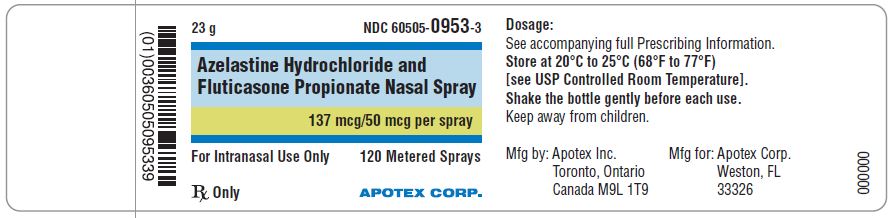
Azelastine hydrochloride and Fluticasone propionate 137 ug; 50 ug Spray, Metered — NDC 60505-0953-3 (Billing 60505-0953-03)
This is a package of Azelastine hydrochloride and Fluticasone propionate 137 ug; 50 ug Spray, Metered from Apotex Corp., marketed since Mar 2020 and currently FDA-listed; retail pharmacies pay about $2.02 per g (NADAC). It is this product's only package size.
NDC database record
One package, one record: these facts belong to NDC 60505-0953-3 alone.
- Record
- FDA NDC Directory package listing · Human prescription drug
- Code segments
- 60505 labeler · 0953 product · 3 package
- Package marketed since
- Mar 2, 2020
- Sample package
- No — commercial package
- Listing certified through
- Dec 31, 2027
- Barcode (UPC-A, from the NDC)
- 3 6050509533 9
- Medicaid fills, this package
- 18,986 prescriptions in the last four reported quarters
- FDA record last changed
- Sep 24, 2026
Identity & classification
Regulatory identifiers FDA, NLM and CMS codes for this package
Drug-database identifiers Medi-Span GPI and First Databank GCN / HICL / AHFS classification
- GSN (GCN sequence number): 069144
- GCN: 32099
- HICL (First Databank): 038953
- AHFS class code: 48:04.08.00
- RxCUI (RxNorm): 1797847
Where does this data come from?
- FDA openFDA NDC Directory · synced Oct 8, 2026
- FDA label on DailyMed · label index refreshed Oct 8, 2026
- RxNorm (NLM RxNav) · catalog refreshed Oct 8, 2026
- Medi-Span GPI (licensed)
- First Databank (licensed) · refreshed Oct 8, 2026
RxNorm drug class
This medicine belongs to the Histamine-1 Receptor Antagonist class.
Where does this data come from?
- RxClass (NLM) · catalog refreshed Oct 8, 2026
Clinical
Azelastine nasal spray is used to treat allergy symptoms: sneezing runny or itchy nose congestion Azelastine is in a class of medications called antihistamines. It works by blocking the action of histamine, a substance in the body that causes allergic symptoms.
Read the full MedlinePlus article ↗Patient education
Supplement & herbal interactions
Where does this data come from?
- MedlinePlus (NLM) · refreshed Oct 8, 2026
- FDA label on DailyMed · label index refreshed Oct 8, 2026
Ask a licensed pharmacist directly — free, answered by our team.
Pricing
A drug doesn't have one price. Each row is a different public payment system, and none is what you'd pay at the counter — that depends on your insurance. The ⓘ on each row explains what it measures.
| Price system | Per g | Per package |
|---|---|---|
| Retail pharmacies payNADAC · weekly | $2.021 | — |
| Medicaid paysCMS SDUD · 12 mo | $3.51 | — |
| Medicare drug plans payPart D · Q2 2026 | $4.29 | — |
Where does this data come from?
- CMS NADAC weekly file · file of Oct 7, 2026
- CMS ASP pricing files · refreshed Sep 20, 2026
- CMS Medicaid State Drug Utilization Data · through Q1 2026
- CMS Part D plan pricing files · refreshed Sep 24, 2026
- VA National Acquisition Center price file
Packaging — all sizes for this product
| Package NDC | Description | Marketing start | Marketing end | Status |
|---|---|---|---|---|
| 60505-0953-03 You're viewing this Main listing | 1 BOTTLE, SPRAY in 1 CARTON / 120 SPRAY, METERED in 1 BOTTLE, SPRAY | 2020-03-02 | — | Active |
Therapeutic equivalents
| Product | Labeler | Pack | NADAC/unit | TE | Status | Price vs. this |
|---|---|---|---|---|---|---|
| Azelastine Hydrochloride and Fluticasone Propionate 137 ug/1; 50 ug 00378-3458-23 | Mylan | 1 bottle | $2.021 | AB | Availability likely | — |
| Azelastine Hydrochloride and Fluticasone Propionate 137 ug/1; 50 ug 00480-2157-57 | Teva | 1 bottle | $2.021 | AB | Availability likely | — |
| Azelastine Hydrochloride And Fluticasone Propionate 137 ug/1; 50 ug 45802-0066-01 | Padagis | 1 bottle | $2.021 | AB | Availability likely | — |
| Azelastine hydrochloride and Fluticasone propionate 137 ug/1; 50 ugthis 60505-0953-03 | Apotex | 1 bottle | $2.021 | AB | Availability likely | — |
| Dymista 137 ug/1; 50 ug 00037-0245-23 | Viatris | 1 bottle | $9.140 | AB | Availability likely | +352% |
| Azelastine Hydrochloride And Fluticasone Propionate 137 ug/1; 50 ug 63629-8612-01 | Bryant | 1 bottle | — | AB | FDA listed | — |
| Azelastine Hydrochloride And Fluticasone Propionate 137 ug/1; 50 ug 72162-1388-02 | Bryant | 1 bottle | — | AB | FDA listed | — |
Where does this data come from?
- FDA openFDA NDC Directory · synced Oct 8, 2026
- FDA Orange Book · refreshed Oct 9, 2026
- CMS NADAC weekly file · file of Oct 7, 2026
Availability & generic status
This product is an FDA-approved generic. Other versions of the same drug are listed under Therapeutic equivalents, least expensive first.
Where does this data come from?
- FDA Orange Book · refreshed Oct 9, 2026
Inactive Ingredients / Excipients
Inactive ingredients, also called excipients, are components of the drug product other than the active ingredient. They may include fillers, dyes, coatings, preservatives, flavors, or other formulation ingredients.
Where does this data come from?
IACT rows and label-wide narrative are kept separate; availability and product-level specificity depend on the submitted label.- FDA label on DailyMed · label index refreshed Oct 8, 2026
- FDA openFDA NDC Directory · synced Oct 8, 2026
Inactive ingredient FAQ
Are inactive ingredients the same for every manufacturer?
Why might an inactive ingredient be missing?
Can inactive ingredients matter?
Manufacturer & labeler
More NDCs from Apotex Corp. labeler code 60505
- Ipratropium Bromide 21 ug Spray, Metered NDC 60505-0826-1
- Ipratropium Bromide 42 ug Spray, Metered NDC 60505-0827-1
- Fluticasone Propionate 50 ug Spray, Metered NDC 60505-0829-1
- Mometasone Furoate 50 ug Spray, Metered NDC 60505-0830-1
- Azelastine Hydrochloride 137 ug Spray, Metered NDC 60505-0833-5
- Olopatadine Hydrochloride 665 ug Spray, Metered NDC 60505-0845-5
- Fluticasone Propionate 50 ug Spray, Metered NDC 60505-0955-1
- Ketorolac Tromethamine 5 mg/mL Solution/ Drops NDC 60505-1003-1
- Bromfenac Ophthalmic Solution, 0.07% Bromfenac Sodium .7 mg/mL Solution/ Drops NDC 60505-1006-1
- Paroxetine Hydrochloride 12.5 mg Tablet, Film Coated, Extended Release NDC 60505-1316-3
- Paroxetine Hydrochloride 25 mg Tablet, Film Coated, Extended Release NDC 60505-1317-3
- Paroxetine Hydrochloride 37.5 mg Tablet, Film Coated, Extended Release NDC 60505-1318-3
Where does this data come from?
- FDA openFDA NDC Directory · synced Oct 8, 2026
- Drugs@FDA
Full prescribing information FDA SPL
🎯 Indications and Usage ▾
1 INDICATIONS AND USAGE Azelastine hydrochloride and fluticasone propionate nasal spray is indicated for the relief of symptoms of seasonal allergic rhinitis in adult and pediatric patients 6 years of age and older. Azelastine hydrochloride and fluticasone propionate nasal spray contains an H 1 -receptor antagonist and a corticosteroid, and is indicated for the relief of symptoms of seasonal allergic rhinitis in adult and pediatric patients 6 years of age and older. ( 1 )
⏱️ Dosage and Administration ▾
2 DOSAGE AND ADMINISTRATION Recommended dosage: 1 spray per nostril twice daily ( 2.1 ) For nasal use only. ( 2.2 ) Prime before initial use and when it has not been used for 14 or more days. ( 2.2 )
2.1Recommended Dosage The recommended dosage of azelastine hydrochloride and fluticasone propionate nasal spray is 1 spray (137 mcg of azelastine hydrochloride and 50 mcg of fluticasone propionate) in each nostril twice daily.
2.2Important Administration Instructions Administer azelastine hydrochloride and fluticasone propionate nasal spray by the nasal route only. Shake the bottle gently before each use. Avoid spraying azelastine hydrochloride and fluticasone propionate nasal spray into the eyes.
If sprayed in the eyes, flush eyes with water for at least 10 minutes. Priming Prime azelastine hydrochloride and fluticasone propionate nasal spray before initial use by releasing 6 sprays or until a fine mist appears. Repriming (as needed) When azelastine hydrochloride and fluticasone propionate nasal spray has not been used for 14 or more days, reprime with 1 spray or until a fine mist appears.
💊 Dosage Forms and Strengths ▾
3 DOSAGE FORMS AND STRENGTHS Nasal spray: 137 mcg of azelastine hydrochloride and 50 mcg of fluticasone propionate per spray. Nasal spray: 137 mcg of azelastine hydrochloride and 50 mcg of fluticasone propionate in each spray. ( 3 )
⛔ Contraindications ▾
4 CONTRAINDICATIONS Azelastine hydrochloride and fluticasone propionate nasal spray is contraindicated in patients with hypersensitivity to azelastine hydrochloride, fluticasone propionate, or to any other ingredients of azelastine hydrochloride and fluticasone propionate nasal spray. Reactions have included anaphylaxis [see Adverse Reactions ( 6.2 )]. Hypersensitivity to azelastine hydrochloride, fluticasone propionate, or to any ingredients of azelastine hydrochloride and fluticasone propionate nasal spray.
Reactions have included anaphylaxis. ( 4 )
⚠️ Warnings and Cautions ▾
5 WARNINGS AND PRECAUTIONS Somnolence: Avoid engaging in hazardous occupations requiring complete mental alertness such as driving or operating machinery when taking azelastine hydrochloride and fluticasone propionate nasal spray. ( 5.1 ) Avoid concurrent use of alcohol or other central nervous system (CNS) depressants with azelastine hydrochloride and fluticasone propionate nasal spray because further decreased alertness and impairment of CNS performance may occur. ( 5.1 ) Epistaxis, nasal ulcerations, nasal septal perforation, impaired wound healing, Candida albicans infection: Monitor patients periodically for signs of adverse effects on the nasal mucosa.
Avoid use in patients with recent nasal ulcers, nasal surgery, or nasal trauma. ( 5.2 ) Glaucoma or posterior subcapsular cataracts: Monitor patients closely with a change in vision or with a history of increased intraocular pressure, glaucoma, and/or cataracts. ( 5.3 ) Potential worsening of existing tuberculosis; fungal, bacterial, viral, or parasitic infections; or ocular herpes simplex.
More serious or even fatal course of chickenpox or measles in susceptible patients. Use caution in patients with the above because of the potential for worsening of these infections. ( 5.4 ) Hypercorticism and adrenal suppression with very high dosages or at the regular dosage in susceptible individuals.
If such changes occur, discontinue azelastine hydrochloride and fluticasone propionate nasal spray slowly. ( 5.5 ) Potential reduction in growth velocity in children. Monitor growth routinely in pediatric patients receiving azelastine hydrochloride and fluticasone propionate nasal spray.
( 5.7 , 8.4 )
5.1Somnolence In clinical trials, the occurrence of somnolence has been reported in some patients (6 of 853 adult and adolescent patients and 2 of 416 children) taking azelastine hydrochloride and fluticasone propionate nasal spray in placebo-controlled trials [ see Adverse Reactions ( 6.1 ) ]. Patients should be cautioned against engaging in hazardous occupations requiring complete mental alertness and motor coordination such as operating machinery or driving a motor vehicle after administration of azelastine hydrochloride and fluticasone propionate nasal spray.
Concurrent use of azelastine hydrochloride and fluticasone propionate nasal spray with alcohol or other central nervous system depressants should be avoided because additional reductions in alertness and additional impairment of central nervous system performance may occur [ see Drug Interactions ( 7.1 ) ].
5.2Local Nasal Effects In clinical trials of 2 to 52 weeks' duration, epistaxis was observed more frequently in patients treated with azelastine hydrochloride and fluticasone propionate nasal spray than those who received placebo [ see Adverse Reactions ( 6 ) ]. Instances of nasal ulceration and nasal septal perforation have been reported in patients following the nasal application of corticosteroids. There were no instances of nasal ulceration or nasal septal perforation observed in clinical trials with azelastine hydrochloride and fluticasone propionate nasal spray.
Because of the inhibitory effect of corticosteroids on wound healing, patients who have experienced recent nasal ulcers, nasal surgery, or nasal trauma should avoid use of azelastine hydrochloride and fluticasone propionate nasal spray until healing has occurred. In clinical trials with fluticasone propionate administered nasally, the development of localized infections of the nose and pharynx with Candida albicans has occurred. When such an infection develops, it may require treatment with appropriate local therapy and discontinuation of treatment with azelastine hydrochloride and fluticasone propionate nasal spray.
Patients using azelastine hydrochloride and fluticasone propionate nasal spray over several months or longer should be examined periodically for evidence of Candida infection or other signs of adverse effects on the nasal mucosa.
5.3Glaucoma and Ca… [Excerpted — this section continues on DailyMed.]
🤒 Adverse Reactions ▾
6 ADVERSE REACTIONS The following clinically significant adverse reactions are described elsewhere in the labeling: Somnolence [see Warnings and Precautions ( 5.1 )] Local nasal effects, including epistaxis, nasal ulceration, nasal septal perforation, impaired wound healing, and Candida albicans infection [see Warnings and Precautions ( 5.2 )] Glaucoma and Cataracts [see Warnings and Precautions ( 5.3 )] Immunosuppression and Risk of Infections [see Warnings and Precautions ( 5.4 )] Hypercorticism and Adrenal Suppression, including growth reduction [see Warnings and Precautions ( 5.5 and 5.7 ), Use in Specific Populations ( 8.4 )] The most common adverse reactions (≥2% incidence) are: dysgeusia, epistaxis, and headache.
( 6.1 ) To report SUSPECTED ADVERSE REACTIONS, contact Apotex Corp. at 1-800-667-4708 or FDA at 1-800-FDA-1088 or www.fda.gov/medwatch .
6.1Clinical Trials Experience Because clinical trials are conducted under widely varying conditions, adverse reaction rates observed in clinical trials of a drug cannot be directly compared to rates in the clinical trials of another drug and may not reflect rates observed in practice. Adults and Adolescents 12 Years of Age and Older The safety data described below in adults and adolescents 12 years of age and older reflect exposure to azelastine hydrochloride and fluticasone propionate nasal spray in 853 patients (12 years of age and older; 36% male and 64% female) with seasonal allergic rhinitis in 3 double-blind, placebo-controlled clinical trials of 2-week duration.
The racial distribution for the 3 clinical trials was 80% white, 16% black, 2% Asian, and 1% other. In the 3 placebo-controlled clinical trials of 2-week duration, 3,411 patients with seasonal allergic rhinitis were treated with 1 spray per nostril of azelastine hydrochloride and fluticasone propionate nasal spray, azelastine hydrochloride nasal spray, fluticasone propionate nasal spray, or placebo, twice daily. The azelastine hydrochloride and fluticasone propionate comparators use the same vehicle and device as azelastine hydrochloride and fluticasone propionate nasal spray and are not commercially marketed.
Overall, adverse reactions were 16% in the azelastine hydrochloride and fluticasone propionate nasal spray treatment groups, 15% in the azelastine hydrochloride nasal spray groups, 13% in the fluticasone propionate nasal spray groups, and 12% in the placebo groups. Overall, 1% of patients in both the azelastine hydrochloride and fluticasone propionate nasal spray and placebo groups discontinued due to adverse reactions. Table 1 contains adverse reactions reported with frequencies greater than or equal to 2% and more frequently than placebo in patients treated with azelastine hydrochloride and fluticasone propionate nasal spray in the seasonal allergic rhinitis controlled clinical trials.
Table 1. Adverse Reactions with ≥ 2% Incidence and More Frequently than Placebo in Placebo-Controlled Trials of 2 Weeks Duration with Azelastine Hydrochloride and Fluticasone Propionate Nasal Spray in Adult and Adolescent Patients with Seasonal Allergic Rhinitis *Safety population N=853, intent-to-treat population N=848 † Not commercially marketed 1 spray per nostril twice daily Azelastine Hydrochloride and Fluticasone Propionate Nasal Spray (N=853)* Azelastine Hydrochloride Nasal Spray † (N=851) Fluticasone Propionate Nasal Spray † (N=846) Vehicle Placebo (N=861) Dysgeusia 30 (4%) 44 (5%) 4 (1%) 2 (<1%) Headache 18 (2%) 20 (2%) 20 (2%) 10 (1%) Epistaxis 16 (2%) 14 (2%) 14 (2%) 15 (2%) In the above trials, somnolence was reported in < 1% of patients treated with azelastine hydrochloride and fluticasone propionate nasal spray (6 of 853) or vehicle placebo (1 of 861) [ see Warnings and Precautions ( 5.1 ) ].
Pediatric Patients 6 to 11 Years of Age The safety data described below in children 6 to 11 years of age reflect exposure to azelastine hydrochloride and fluticasone propionate nasal spray in 152 patients (6 to 11 years… [Excerpted — this section continues on DailyMed.]
🔄 Drug Interactions ▾
7 DRUG INTERACTIONS No formal drug interaction studies have been performed with azelastine hydrochloride and fluticasone propionate nasal spray. The drug interactions of the combination are expected to reflect those of the individual components. Potent inhibitors of cytochrome P450 (CYP) 3A4: May increase blood levels of fluticasone propionate.
Ritonavir: Coadministration is not recommended. ( 5.6 , 7.2 ) Other potent CYP3A4 inhibitors, such as ketoconazole: use caution with coadministration. ( 5.6 , 7.2 )
7.1Central Nervous System Depressants Concurrent use of azelastine hydrochloride and fluticasone propionate nasal spray with alcohol or other central nervous system depressants should be avoided because somnolence and impairment of central nervous system performance may occur [ see Warnings and Precautions ( 5.1 ) ].
7.2Cytochrome P450 3A4 Ritonavir (a strong CYP3A4 inhibitor) significantly increased plasma fluticasone propionate exposure following administration of fluticasone propionate aqueous nasal spray, resulting in significantly reduced serum cortisol concentrations [ see Clinical Pharmacology ( 12.3 ) ]. During postmarketing use, there have been reports of clinically significant drug interactions in patients receiving fluticasone propionate and ritonavir, resulting in systemic corticosteroid effects including Cushing syndrome and adrenal suppression.
Therefore, coadministration of fluticasone propionate and ritonavir is not recommended unless the potential benefit to the patient outweighs the risk of systemic corticosteroid side effects. Ketoconazole (also a strong CYP3A4 inhibitor), administered in multiple 200 mg doses to steady-state, increased plasma exposure of fluticasone propionate, reduced plasma cortisol AUC, but had no effect on urinary excretion of cortisol, following administration of a single 1,000 mcg dose of fluticasone propionate by oral inhalation route.
Caution should be exercised when azelastine hydrochloride and fluticasone propionate nasal spray is coadministered with ketoconazole and other known strong CYP3A4 inhibitors.
👥 Use in Specific Populations ▾
8 USE IN SPECIFIC POPULATIONS
8.1Pregnancy Risk Summary Limited data from postmarketing experience with azelastine hydrochloride and fluticasone propionate nasal spray in pregnant women have not identified any drug associated risks of miscarriage, birth defects, or other adverse maternal or fetal outcomes. The individual components of azelastine hydrochloride and fluticasone propionate nasal spray have been marketed for decades. While the data regarding the use of nasal preparations of fluticasone propionate in pregnancy are limited, data from clinical studies of inhaled fluticasone propionate do not indicate an increased risk of adverse maternal or fetal outcomes.
Animal reproduction studies with azelastine hydrochloride and fluticasone propionate nasal spray are not available; however, studies are available with its individual components, azelastine hydrochloride and fluticasone propionate. In animal reproduction studies, there was no evidence of fetal harm in animals at oral doses of azelastine hydrochloride approximately 10 times the clinical daily dose. Oral administration of azelastine hydrochloride to pregnant mice, rats, and rabbits, during the period of organogenesis, produced developmental toxicity that included structural abnormalities, decreased embryo-fetal survival, and decreased fetal body weights at doses 530 times and higher than the maximum recommended human daily nasal dose (MRHDID) of 0.548 mg.
However, the relevance of these findings in animals to pregnant women was considered questionable based upon the high animal to human dose multiple. In animal reproduction studies, fluticasone propionate administered via nose-only inhalation to rats decreased fetal body weight, but did not induce teratogenicity at a maternal toxic dose less than the MRHDID on a mcg/m 2 basis. Teratogenicity, characteristic of corticosteroids, decreased fetal body weight and/or skeletal variations, in rats, mice, and rabbits were observed with subcutaneously administered maternal toxic doses of fluticasone propionate less than the MRHDID of 200 mcg on a mcg/m 2 basis (see Data).
Experience with corticosteroids suggests that rodents are more prone to teratogenic effects from corticosteroids than humans. The estimated background risk of major birth defects and miscarriage for the indicated populations is unknown. All pregnancies have a background risk of birth defect, loss, or other adverse outcomes.
In the U.S. general population, the estimated background risk of major birth defects and miscarriage in clinically recognized pregnancies is 2 to 4% and 15 to 20%, respectively. Data Animal Data : Azelastine Hydrochloride: In an embryo-fetal development study in mice dosed during the period of organogenesis, azelastine hydrochloride caused embryo-fetal death, structural abnormalities (cleft palate; short or absent tail; fused, absent or branched ribs), delayed ossification, and decreased fetal weight at approximately 610 times the MRHDID in adults (on a mg/m 2 basis at a maternal oral dose of 68.6 mg/kg/day), which also caused maternal toxicity as evidenced by decreased maternal body weight.
Neither fetal nor maternal effects occurred in mice at approximately 25 times the MRHDID in adults (on a mg/m 2 basis at a maternal oral dose of 3 mg/kg/day). In an embryo-fetal development study in pregnant rats dosed during the period of organogenesis from gestation days 7 to 17, azelastine hydrochloride caused structural abnormalities (oligo-and brachydactylia), delayed ossification, and skeletal variations, in the absence of maternal toxicity, at approximately 530 times the MRHDID in adults (on a mg/m 2 basis at a maternal oral dose of 30 mg/kg/day).
Azelastine hydrochloride caused embryo-fetal death and decreased fetal weight and severe maternal toxicity at approximately 1,200 times the MRHDID (on a mg/m 2 basis at a maternal oral dose of 68.6 mg/kg/day). Neither fetal nor maternal effects occurred at approximately 55 times the MRHDID (on a mg/m 2… [Excerpted — this section continues on DailyMed.]
🤰 Pregnancy ▾
8.1Pregnancy Risk Summary Limited data from postmarketing experience with azelastine hydrochloride and fluticasone propionate nasal spray in pregnant women have not identified any drug associated risks of miscarriage, birth defects, or other adverse maternal or fetal outcomes. The individual components of azelastine hydrochloride and fluticasone propionate nasal spray have been marketed for decades. While the data regarding the use of nasal preparations of fluticasone propionate in pregnancy are limited, data from clinical studies of inhaled fluticasone propionate do not indicate an increased risk of adverse maternal or fetal outcomes.
Animal reproduction studies with azelastine hydrochloride and fluticasone propionate nasal spray are not available; however, studies are available with its individual components, azelastine hydrochloride and fluticasone propionate. In animal reproduction studies, there was no evidence of fetal harm in animals at oral doses of azelastine hydrochloride approximately 10 times the clinical daily dose. Oral administration of azelastine hydrochloride to pregnant mice, rats, and rabbits, during the period of organogenesis, produced developmental toxicity that included structural abnormalities, decreased embryo-fetal survival, and decreased fetal body weights at doses 530 times and higher than the maximum recommended human daily nasal dose (MRHDID) of 0.548 mg.
However, the relevance of these findings in animals to pregnant women was considered questionable based upon the high animal to human dose multiple. In animal reproduction studies, fluticasone propionate administered via nose-only inhalation to rats decreased fetal body weight, but did not induce teratogenicity at a maternal toxic dose less than the MRHDID on a mcg/m 2 basis. Teratogenicity, characteristic of corticosteroids, decreased fetal body weight and/or skeletal variations, in rats, mice, and rabbits were observed with subcutaneously administered maternal toxic doses of fluticasone propionate less than the MRHDID of 200 mcg on a mcg/m 2 basis (see Data).
Experience with corticosteroids suggests that rodents are more prone to teratogenic effects from corticosteroids than humans. The estimated background risk of major birth defects and miscarriage for the indicated populations is unknown. All pregnancies have a background risk of birth defect, loss, or other adverse outcomes.
In the U.S. general population, the estimated background risk of major birth defects and miscarriage in clinically recognized pregnancies is 2 to 4% and 15 to 20%, respectively. Data Animal Data : Azelastine Hydrochloride: In an embryo-fetal development study in mice dosed during the period of organogenesis, azelastine hydrochloride caused embryo-fetal death, structural abnormalities (cleft palate; short or absent tail; fused, absent or branched ribs), delayed ossification, and decreased fetal weight at approximately 610 times the MRHDID in adults (on a mg/m 2 basis at a maternal oral dose of 68.6 mg/kg/day), which also caused maternal toxicity as evidenced by decreased maternal body weight.
Neither fetal nor maternal effects occurred in mice at approximately 25 times the MRHDID in adults (on a mg/m 2 basis at a maternal oral dose of 3 mg/kg/day). In an embryo-fetal development study in pregnant rats dosed during the period of organogenesis from gestation days 7 to 17, azelastine hydrochloride caused structural abnormalities (oligo-and brachydactylia), delayed ossification, and skeletal variations, in the absence of maternal toxicity, at approximately 530 times the MRHDID in adults (on a mg/m 2 basis at a maternal oral dose of 30 mg/kg/day).
Azelastine hydrochloride caused embryo-fetal death and decreased fetal weight and severe maternal toxicity at approximately 1,200 times the MRHDID (on a mg/m 2 basis at a maternal oral dose of 68.6 mg/kg/day). Neither fetal nor maternal effects occurred at approximately 55 times the MRHDID (on a mg/m 2 basis at a maternal oral dose… [Excerpted — this section continues on DailyMed.]
🧒 Pediatric Use ▾
8.4Pediatric Use The safety and effectiveness of azelastine hydrochloride and fluticasone propionate nasal spray for seasonal allergic rhinitis have been established in pediatric patients aged 6 years and older. Use of azelastine hydrochloride and fluticasone propionate nasal spray for this indication in pediatric patients 6 to 11 years of age is supported by evidence from controlled clinical trials (416 patients 6 to 11 years of age with allergic rhinitis were treated with azelastine hydrochloride and fluticasone propionate nasal spray) [see Adverse Reactions ( 6.1 ) and Clinical Studies (14)] .
Sixty-one patients ages 4 to 5 years of age were treated with azelastine hydrochloride and fluticasone propionate in the pediatric studies described above. Safety findings in children 4 to 5 years of age were similar to those in children 6 to 11 years of age, but effectiveness has not been established. Safety and effectiveness of azelastine hydrochloride and fluticasone propionate nasal spray have not been established in pediatric patients below the age of 4 years.
Controlled clinical studies have shown that nasal corticosteroids may cause a reduction in growth velocity in pediatric patients. This effect has been observed in the absence of laboratory evidence of HPA axis suppression, suggesting that growth velocity is a more sensitive indicator of systemic corticosteroid exposure in pediatric patients than some commonly used tests of HPA axis function. The long-term effects of this reduction in growth velocity associated with nasal corticosteroids, including the impact on final adult height, are unknown.
The potential for “catch-up” growth following discontinuation of treatment with nasal corticosteroids has not been adequately studied. The growth of pediatric patients receiving nasal corticosteroids, including azelastine hydrochloride and fluticasone propionate nasal spray, should be monitored routinely (e.g., via stadiometry). The potential growth effects of prolonged treatment should be weighed against the clinical benefits obtained and the risks/benefits of treatment alternatives.
🧓 Geriatric Use ▾
8.5Geriatric Use Clinical trials of azelastine hydrochloride and fluticasone propionate nasal spray did not include sufficient numbers of patients 65 years of age and older to determine whether they respond differently from younger patients. Other reported clinical experience has not identified differences in responses between the elderly and younger patients. In general, dose selection for an elderly patient should be cautious, usually starting at the low end of the dosing range, reflecting the greater frequency of decreased hepatic, renal, or cardiac function, and of concomitant disease or other drug therapy.
🆘 Overdosage ▾
10 OVERDOSAGE Azelastine Hydrochloride and fluticasone propionate nasal spray: Azelastine hydrochloride and fluticasone propionate nasal spray contains both azelastine hydrochloride and fluticasone propionate; therefore, the risks associated with overdosage for the individual components described below apply to azelastine hydrochloride and fluticasone propionate nasal spray. Azelastine Hydrochloride: There have been no reported overdosages with azelastine hydrochloride. Acute azelastine hydrochloride overdosage by adults with this dosage form is unlikely to result in clinically significant adverse reactions, other than increased somnolence, since one (1) 23 g bottle of azelastine hydrochloride and fluticasone propionate nasal spray contains approximately 23 mg of azelastine hydrochloride.
General supportive measures should be employed if overdosage occurs. There is no known antidote to azelastine hydrochloride and fluticasone propionate nasal spray. Oral ingestion of antihistamines has the potential to cause serious adverse effects in children.
Accordingly, azelastine hydrochloride and fluticasone propionate nasal spray should be kept out of the reach of children. Fluticasone Propionate: Chronic fluticasone propionate overdosage may result in signs/symptoms of hypercorticism [see Warnings and Precautions ( 5.5 )] .
🧬 Clinical Pharmacology ▾
12 CLINICAL PHARMACOLOGY
12.1Mechanism of Action Azelastine hydrochloride and fluticasone propionate nasal spray: Azelastine hydrochloride and fluticasone propionate nasal spray contains both azelastine hydrochloride and fluticasone propionate; therefore, the mechanisms of actions described below for the individual components apply to azelastine hydrochloride and fluticasone propionate nasal spray. These drugs represent two different classes of medications (histamine H 1 -receptor antagonist and synthetic corticosteroid). Azelastine Hydrochloride: Azelastine hydrochloride, a phthalazinone derivative, exhibits histamine H 1 -receptor antagonist activity in isolated tissues, animal models, and humans.
Azelastine hydrochloride in azelastine hydrochloride and fluticasone propionate nasal spray is administered as a racemic mixture with no difference in pharmacologic activity noted between the enantiomers in in vitro studies. The major metabolite, desmethylazelastine, also possesses H 1 -receptor antagonist activity. Fluticasone Propionate: Fluticasone propionate is a synthetic trifluorinated corticosteroid with anti-inflammatory activity.
In vitro dose response studies on a cloned human glucocorticoid receptor system involving binding and gene expression afforded 50% responses at 1.25 and 0.17 nM concentrations, respectively. Fluticasone propionate was 3-fold to 5-fold more potent than dexamethasone in these assays. Data from the McKenzie vasoconstrictor assay in man also support its potent glucocorticoid activity.
The clinical relevance of these findings is unknown. The precise mechanism through which fluticasone propionate affects allergic rhinitis symptoms is not known. Corticosteroids have been shown to have a wide range of effects on multiple cell types (e.g., mast cells, eosinophils, neutrophils, macrophages, and lymphocytes) and mediators (e.g., histamine, eicosanoids, leukotrienes, and cytokines) involved in inflammation.
12.2Pharmacodynamics Cardiac Electrophysiology: In a placebo-controlled trial (95 patients with allergic rhinitis), there was no evidence of an effect of azelastine hydrochloride nasal spray (2 sprays per nostril twice daily for 56 days) on cardiac repolarization as represented by the corrected QT interval (QTc) of the electrocardiogram. Following multiple dose oral administration of azelastine 4 mg or 8 mg twice daily, the mean change in QTc was 7.2 msec and 3.6 msec, respectively. Interaction studies investigating the cardiac repolarization effects of concomitantly administered oral azelastine hydrochloride and erythromycin or ketoconazole were conducted.
These drugs had no effect on QTc based on analysis of serial electrocardiograms.
12.3Pharmacokinetics Absorption: After nasal administration of two sprays per nostril (548 mcg of azelastine hydrochloride and 200 mcg of fluticasone) of azelastine hydrochloride and fluticasone propionate nasal spray, the mean (± standard deviation) peak plasma exposure (C max ) was 194.5 ± 74.4 pg/mL for azelastine and 10.3 ± 3.9 pg/mL for fluticasone propionate and the mean total exposure (AUC) was 4,217 ± 2,618 pg/mL*hr for azelastine and 97.7 ± 43.1 pg/mL*hr for fluticasone. The median time to peak exposure (t max ) from a single dose was 0.5 hours for azelastine and 1 hours for fluticasone.
Systemic bioavailability of azelastine from azelastine hydrochloride and fluticasone propionate nasal spray following nasal administration was comparable with monotherapy azelastine hydrochloride nasal spray (i.e., approximately 40%). Systemic bioavailability of fluticasone from azelastine hydrochloride and fluticasone propionate nasal spray following nasal administration was 44 to 61% higher than monotherapy fluticasone propionate (bioavailability for monotherapy fluticasone nasal spray was less than 2%). Due to the low nasal bioavailability, pharmacokinetic data for fluticasone propionate were obtained via other routes of administration.
Studies using oral dosing of radiolabel… [Excerpted — this section continues on DailyMed.]
🧬 Mechanism of Action ▾
12.1Mechanism of Action Azelastine hydrochloride and fluticasone propionate nasal spray: Azelastine hydrochloride and fluticasone propionate nasal spray contains both azelastine hydrochloride and fluticasone propionate; therefore, the mechanisms of actions described below for the individual components apply to azelastine hydrochloride and fluticasone propionate nasal spray. These drugs represent two different classes of medications (histamine H 1 -receptor antagonist and synthetic corticosteroid). Azelastine Hydrochloride: Azelastine hydrochloride, a phthalazinone derivative, exhibits histamine H 1 -receptor antagonist activity in isolated tissues, animal models, and humans.
Azelastine hydrochloride in azelastine hydrochloride and fluticasone propionate nasal spray is administered as a racemic mixture with no difference in pharmacologic activity noted between the enantiomers in in vitro studies. The major metabolite, desmethylazelastine, also possesses H 1 -receptor antagonist activity. Fluticasone Propionate: Fluticasone propionate is a synthetic trifluorinated corticosteroid with anti-inflammatory activity.
In vitro dose response studies on a cloned human glucocorticoid receptor system involving binding and gene expression afforded 50% responses at 1.25 and 0.17 nM concentrations, respectively. Fluticasone propionate was 3-fold to 5-fold more potent than dexamethasone in these assays. Data from the McKenzie vasoconstrictor assay in man also support its potent glucocorticoid activity.
The clinical relevance of these findings is unknown. The precise mechanism through which fluticasone propionate affects allergic rhinitis symptoms is not known. Corticosteroids have been shown to have a wide range of effects on multiple cell types (e.g., mast cells, eosinophils, neutrophils, macrophages, and lymphocytes) and mediators (e.g., histamine, eicosanoids, leukotrienes, and cytokines) involved in inflammation.
📦 How Supplied / Storage and Handling ▾
16 HOW SUPPLIED/STORAGE AND HANDLING Azelastine hydrochloride and fluticasone propionate nasal spray (NDC 60505-0953-3) is supplied as an amber glass bottle fitted with a metered-dose spray pump unit. The spray pump unit consists of a nasal spray pump with a white plastic actuator and translucent plastic cap. Each bottle contains a net fill weight of 23 g and will deliver 120 metered sprays after priming [ see Dosage and Administration ( 2.2 ) ].
After priming [ see Dosage and Administration ( 2.2 ) ], each spray delivers a suspension volume of 0.137 mL as a fine mist, containing 137 mcg of azelastine hydrochloride and 50 mcg of fluticasone propionate (137 mcg/50 mcg). The correct amount of medication in each spray cannot be assured before the initial priming and after 120 sprays have been used, even though the bottle is not completely empty. The bottle should be discarded after 120 sprays have been used.
Azelastine hydrochloride and fluticasone propionate nasal spray should not be used after the expiration date “EXP” printed on the bottle label and carton. Storage Store upright with the cap in place at 20°C to 25°C (68°F to 77°F) [see USP Controlled Room Temperature]. Protect from light.
Do not store in the freezer or refrigerator.
📦 Storage and Handling ▾
Storage Store upright with the cap in place at 20°C to 25°C (68°F to 77°F) [see USP Controlled Room Temperature]. Protect from light. Do not store in the freezer or refrigerator.
📋 Description ▾
11 DESCRIPTION Azelastine hydrochloride and fluticasone propionate nasal spray is formulated as a white, uniform metered-spray suspension for nasal administration. It is a fixed dose combination product containing an antihistamine (H 1 receptor antagonist) and a corticosteroid as active ingredients. Azelastine hydrochloride active ingredient occurs as a white or almost white, crystalline powder with a bitter taste.
It has a molecular weight of 418.36 g/mol. It is sparingly soluble in water, methanol, and propylene glycol and slightly soluble in ethanol, octanol, and glycerin. It has a melting point of 225°C and the pH of 5.2.
Its chemical name is (±)-1-(2H)-phthalazinone,4-[(4-chlorophenyl) methyl]-2-(hexahydro-1-methyl-1H-azepin-4-yl)-, monohydrochloride. Its molecular formula is C 22 H 24 ClN 3 O•HCl with the following chemical structure: Fluticasone propionate active ingredient is a white powder with a melting point of 273°C, a molecular weight of 500.6, and the empirical formula is C 25 H 31 F 3 O 5 S. It is practically insoluble in water, freely soluble in dimethyl sulfoxide and dimethylformamide, and slightly soluble in methanol and 95% ethanol.
Fluticasone propionate is a synthetic corticosteroid having the chemical name S-(fluoromethyl)-6α,9-difluoro-11β,-17-dihydroxy-16α-methyl-3-oxoandrosta-1,4-diene-17β-carbothioate, 17-propionate, and the following chemical structure: Azelastine hydrochloride and fluticasone propionate nasal spray, 137 mcg/50 mcg contains 0.1% solution of azelastine hydrochloride and 0.037% suspension of micronized fluticasone propionate in an isotonic aqueous suspension containing benzalkonium chloride (0.1 mg/g), edetate disodium dihydrate, glycerin, microcrystalline cellulose and carboxymethylcellulose sodium, phenylethyl alcohol (2.5 mg/g), polysorbate 80, and purified water.
It has a pH of approximately 6. After priming [ see Dosage and Administration ( 2.2 ) ], each metered spray delivers a 0.137 mL mean volume of suspension containing 137 mcg of azelastine hydrochloride (equivalent to 125 mcg of azelastine base) and 50 mcg of fluticasone propionate. The 23 g bottle provides 120 metered sprays, after priming.
AzelastineHydrochloride FluticasonePropionate
💬 Information for Patients ▾
17 PATIENT COUNSELING INFORMATION See FDA-approved patient labeling (Patient Information and Instructions for Use) Somnolence : Somnolence has been reported in some patients (8 of 1,269 patients) taking azelastine hydrochloride and fluticasone propionate nasal spray in controlled clinical trials. Caution patients against engaging in hazardous occupations requiring complete mental alertness and motor coordination such as driving or operating machinery after administration of azelastine hydrochloride and fluticasone propionate nasal spray [ see Warnings and Precautions ( 5.1 ) ].
Concurrent Use of Alcohol and other Central Nervous System Depressants : Advise patients to avoid concurrent use of azelastine hydrochloride and fluticasone propionate nasal spray with alcohol or other central nervous system depressants because additional reductions in alertness and additional impairment of central nervous system performance may occur [ see Warnings and Precautions ( 5.1 ) ]. Local Nasal Effects : Nasal corticosteroids are associated with epistaxis, nasal ulceration, nasal septal perforation, Candida albicans infection and impaired wound healing.
Patients who have experienced recent nasal ulcers, nasal surgery, or nasal trauma should not use azelastine hydrochloride and fluticasone propionate nasal spray until healing has occurred [ see Warnings and Precautions ( 5.2 ) ]. Glaucoma and Cataracts : Inform patients that glaucoma and cataracts are associated with nasal and inhaled corticosteroid use. Advise patients to inform his/her health care provider if a change in vision is noted while using azelastine hydrochloride and fluticasone propionate nasal spray [ see Warnings and Precautions ( 5.3 ) ].
Immunosuppression and Risk of Infections : Warn patients who are on immunosuppressant doses of corticosteroids to avoid exposure to chickenpox or measles and, if exposed, to consult their physician without delay. Inform patients of potential worsening of existing tuberculosis, fungal, bacterial, viral or parasitic infections, or ocular herpes simplex [ see Warnings and Precautions ( 5.4 ) ]. Effect on Growth : Corticosteroids may cause a reduction in growth velocity when administered to pediatric patients.
Monitor the growth routinely of pediatric patients receiving azelastine hydrochloride and fluticasone propionate nasal spray [ see Use in Specific Populations ( 8.4 ) ]. Priming : I nstruct patients to shake the bottle gently before each use and prime the pump before initial use and when azelastine hydrochloride and fluticasone propionate nasal spray has not been used for 14 or more days [ see Dosage and Administration ( 2.2 ) ]. Keep Spray Out of Eyes : Instruct patients to avoid spraying azelastine hydrochloride and fluticasone propionate nasal spray into their eyes.
Potential Drug Interactions : Advise patients that coadministration of azelastine hydrochloride and fluticasone propionate nasal spray and ritonavir is not recommended and to be cautious if azelastine hydrochloride and fluticasone propionate nasal spray is coadministered with ketoconazole [ see Drug Interactions ( 7.2 ) ]. Manufactured by: Manufactured for: Apotex Inc. Apotex Corp.
Toronto, Ontario Weston, Florida Canada M9L 1T9 USA, 33326 Rev.1
🧬 Pharmacokinetics ▾
12.3Pharmacokinetics Absorption: After nasal administration of two sprays per nostril (548 mcg of azelastine hydrochloride and 200 mcg of fluticasone) of azelastine hydrochloride and fluticasone propionate nasal spray, the mean (± standard deviation) peak plasma exposure (C max ) was 194.5 ± 74.4 pg/mL for azelastine and 10.3 ± 3.9 pg/mL for fluticasone propionate and the mean total exposure (AUC) was 4,217 ± 2,618 pg/mL*hr for azelastine and 97.7 ± 43.1 pg/mL*hr for fluticasone. The median time to peak exposure (t max ) from a single dose was 0.5 hours for azelastine and 1 hours for fluticasone.
Systemic bioavailability of azelastine from azelastine hydrochloride and fluticasone propionate nasal spray following nasal administration was comparable with monotherapy azelastine hydrochloride nasal spray (i.e., approximately 40%). Systemic bioavailability of fluticasone from azelastine hydrochloride and fluticasone propionate nasal spray following nasal administration was 44 to 61% higher than monotherapy fluticasone propionate (bioavailability for monotherapy fluticasone nasal spray was less than 2%). Due to the low nasal bioavailability, pharmacokinetic data for fluticasone propionate were obtained via other routes of administration.
Studies using oral dosing of radiolabeled fluticasone propionate showed negligible oral bioavailability and high extraction from plasma. The majority of the circulating radioactivity was due to an inactive metabolite. Distribution: Based on intravenous and oral administration, the steady-state volume of distribution of azelastine hydrochloride is
14.5L/kg. In vitro studies with human plasma indicate that the plasma protein binding of azelastine hydrochloride and its metabolite, desmethylazelastine, are approximately 88% and 97%, respectively. Following intravenous administration, the initial disposition phase for fluticasone propionate was rapid and consistent with its high lipid solubility and tissue binding. The volume of distribution averaged
4.2L/kg. The percentage of fluticasone propionate bound to human plasma proteins averaged 91% with no obvious concentration relationship. Fluticasone propionate is weakly and reversibly bound to erythrocytes and freely equilibrates between erythrocytes and plasma.
Fluticasone propionate is not significantly bound to human transcortin. Elimination: Following nasal administration of azelastine hydrochloride and fluticasone propionate nasal spray, the elimination half-life of azelastine hydrochloride is approximately 25 hours. Approximately 75% of an oral dose of radiolabeled azelastine hydrochloride was excreted in the feces with less than 10% as unchanged azelastine.
Following intravenous dosing, fluticasone propionate showed polyexponential kinetics and had a terminal elimination half-life of approximately 7.8 hours. Less than 5% of a radiolabeled oral dose was excreted in the urine as metabolites, with the remainder excreted in the feces as parent drug and metabolites. Metabolism: Azelastine hydrochloride is oxidatively metabolized to the principal active metabolite, desmethylazelastine, by the cytochrome P450 enzyme system.
The specific P450 isoforms responsible for the biotransformation of azelastine have not been identified. The total clearance of azelastine is approximately
0.50L/kg/hr. For fluticasone propionate, the only circulating metabolite detected in man is the 17β-carboxylic acid derivative, which is formed through the CYP3A4 pathway. This inactive metabolite had less affinity (approximately 1/2,000) than the parent drug for the glucocorticoid receptor of human lung cytosol in vitro and negligible pharmacological activity in animal studies.
Other metabolites detected in vitro using cultured human hepatoma cells have not been detected in man. The average total clearance of fluticasone propionate is relatively high (approximately 66 L/hr). Specific Populations: Azelastine hydrochloride and fluticasone propionate nasal spray was not studied in… [Excerpted — this section continues on DailyMed.]
🧬 Pharmacodynamics ▾
12.2Pharmacodynamics Cardiac Electrophysiology: In a placebo-controlled trial (95 patients with allergic rhinitis), there was no evidence of an effect of azelastine hydrochloride nasal spray (2 sprays per nostril twice daily for 56 days) on cardiac repolarization as represented by the corrected QT interval (QTc) of the electrocardiogram. Following multiple dose oral administration of azelastine 4 mg or 8 mg twice daily, the mean change in QTc was 7.2 msec and 3.6 msec, respectively. Interaction studies investigating the cardiac repolarization effects of concomitantly administered oral azelastine hydrochloride and erythromycin or ketoconazole were conducted.
These drugs had no effect on QTc based on analysis of serial electrocardiograms.
🔬 Clinical Studies ▾
14 CLINICAL STUDIES Adults and Adolescents 12 Years of Age and Older: The efficacy and safety of azelastine hydrochloride and fluticasone propionate nasal spray in adults and adolescents 12 years of age and older with seasonal allergic rhinitis was evaluated in 3 randomized, multicenter, double-blind, placebo-controlled clinical trials in 853 patients. The population of the trials was 12 to 78 years of age (64% female, 36% male; 80% white, 16% black, 2% Asian, 1% other). Patients were randomized to one of four treatment groups: one spray per nostril twice daily of azelastine hydrochloride and fluticasone propionate nasal spray, azelastine hydrochloride nasal spray, fluticasone propionate nasal spray, and vehicle placebo.
The azelastine hydrochloride and fluticasone propionate comparators use the same device and vehicle as azelastine hydrochloride and fluticasone propionate nasal spray and are not commercially marketed. Assessment of efficacy was based on the reflective total nasal symptom score (rTNSS), in addition to the instantaneous total nasal symptom score (iTNSS) and other supportive secondary efficacy variables. TNSS is calculated as the sum of the patients' scoring of the 4 individual nasal symptoms (rhinorrhea, nasal congestion, sneezing, and nasal itching) on a 0 to 3 categorical severity scale (0 = absent, 1 = mild, 2 = moderate, 3 = severe).
Patients were required to record symptom severity daily reflecting over the previous 12 hours (morning, AM, and evening, PM). For the primary efficacy endpoint, the combined AM+PM rTNSS (maximum score of 24) was assessed as a change from baseline for each day and then averaged over a 2-week treatment period. The primary efficacy endpoint was the mean change from baseline in combined AM+PM rTNSS over 2 weeks.
The iTNSS was recorded immediately prior to the next dose. In these trials, azelastine hydrochloride and fluticasone propionate nasal spray demonstrated statistically significant greater decreases in rTNSS as compared to azelastine hydrochloride and to fluticasone propionate, as well as to placebo. The differences between the monotherapies and placebo also were statistically significant.
Representative results from one of the trials are shown below ( Table 3 ). Table 3. Mean Change from Baseline in Reflective Total Nasal Symptom Scores Over 2 Weeks* in Adults and Children ≥ 12 Years with Seasonal Allergic Rhinitis * Sum of AM and PM rTNSS for each day (Maximum Score = 24) and averaged over the 14 day treatment period † Not commercially marketed LS Mean, 95% CI, and p-value are obtained from the repeated-measures analysis of covariance model using observed data.
Baseline Change from Baseline Difference From Azelastine Hydrochloride and Fluticasone Propionate Nasal Spray Treatment (one spray/nostril twice daily) N LS Mean LS Mean LS Mean 95% CI P-value Azelastine Hydrochloride and Fluticasone Propionate Nasal Spray 207 18.3 -5.6 -- -- -- Azelastine HCl Nasal Spray † 208 18.3 -4.3 -1.4 (-2.2, -0.5) 0.002 Fluticasone Propionate Nasal Spray † 207 18.2 -4.7 -1.0 (-1.8, -0.2) 0.022 Placebo 209 18.6 -2.9 -2.7 (-3.5, -1.9) < 0.001 In these trials, azelastine hydrochloride and fluticasone propionate nasal spray also demonstrated statistically significant, greater decreases in iTNSS as compared to placebo, as did the azelastine hydrochloride and fluticasone propionate comparators.
Representative results from one of the trials are shown below ( Table 4 ). Table 4. Mean Change from Baseline in Instantaneous Total Nasal Symptom Scores Over 2 Weeks* in Adults and Children ≥ 12 Years with Seasonal Allergic Rhinitis * Sum of AM and PM rTNSS for each day (Maximum Score = 24) and averaged over the 14 day treatment period † Not commercially marketed LS Mean, 95% CI, and p-value are obtained from the repeated-measures analysis of covariance model using observed data.
Baseline Change from Baseline Difference from Placebo Treatment (one spray/nostril twice daily) N LS Mean LS Mean LS Mean 95% CI… [Excerpted — this section continues on DailyMed.]
🧪 Nonclinical Toxicology ▾
13 NONCLINICAL TOXICOLOGY
13.1Carcinogenesis, Mutagenesis, Impairment of Fertility Azelastine hydrochloride and fluticasone propionate nasal spray: No studies of carcinogenicity, mutagenicity, or impairment of fertility were conducted with azelastine hydrochloride and fluticasone propionate nasal spray; however, studies are available for the individual active components, azelastine hydrochloride and fluticasone propionate, as described below. Azelastine Hydrochloride: Two-year carcinogenicity studies in Crl:CD(SD) BR rats and NMRI mice were conducted to assess the carcinogenic potential of azelastine hydrochloride.
No evidence of tumorigenicity was observed in rats at doses up to 30 mg/kg/day (approximately 530 and 240 times the MRHDID for adults and children, respectively, on a mg/m 2 basis). No evidence for tumorigenicity was observed in mice at doses up to 25 mg/kg (approximately 220 and 100 times the MRHDID for adults and children, respectively, on a mg/m 2 basis). Azelastine hydrochloride showed no genotoxic effects in the Ames test, DNA repair test, mouse lymphoma forward mutation assay, mouse micronucleus test, or chromosomal aberration test in rat bone marrow.
There were no effects on male or female fertility and reproductive performance in male and female rats at oral doses up to 30 mg/kg (approximately 530 times the MRHDID in adults on a mg/m 2 basis). At 68.6 mg/kg (approximately 1,200 times the MRHDID on a mg/m 2 basis), the duration of estrous cycles was prolonged and copulatory activity and the number of pregnancies were decreased. The numbers of corpora lutea and implantations were decreased; however, pre-implantation loss was not increased.
Fluticasone Propionate: Fluticasone propionate demonstrated no tumorigenic potential in mice at oral doses up to 1,000 mcg/kg (approximately 25 and 10 times the MRHDID in adults and children, respectively, on a mcg/m 2 basis) for 78 weeks or in rats at inhalation doses up to 57 mcg/kg (approximately 3 and 1 times the MRHDID in adults and children, respectively, on a mcg/m 2 basis) for 104 weeks. Fluticasone propionate did not induce gene mutation in prokaryotic or eukaryotic cells in vitro . No significant clastogenic effect was seen in cultured human peripheral lymphocytes in vitro or in the mouse micronucleus test.
Fertility and reproductive performance were unaffected in male and female rats at subcutaneous doses up to 50 mcg/kg (approximately 2 times the MRHDID for adults on a mcg/m 2 basis).
📄 Carcinogenesis, Mutagenesis, Impairment of Fertility ▾
13.1Carcinogenesis, Mutagenesis, Impairment of Fertility Azelastine hydrochloride and fluticasone propionate nasal spray: No studies of carcinogenicity, mutagenicity, or impairment of fertility were conducted with azelastine hydrochloride and fluticasone propionate nasal spray; however, studies are available for the individual active components, azelastine hydrochloride and fluticasone propionate, as described below. Azelastine Hydrochloride: Two-year carcinogenicity studies in Crl:CD(SD) BR rats and NMRI mice were conducted to assess the carcinogenic potential of azelastine hydrochloride.
No evidence of tumorigenicity was observed in rats at doses up to 30 mg/kg/day (approximately 530 and 240 times the MRHDID for adults and children, respectively, on a mg/m 2 basis). No evidence for tumorigenicity was observed in mice at doses up to 25 mg/kg (approximately 220 and 100 times the MRHDID for adults and children, respectively, on a mg/m 2 basis). Azelastine hydrochloride showed no genotoxic effects in the Ames test, DNA repair test, mouse lymphoma forward mutation assay, mouse micronucleus test, or chromosomal aberration test in rat bone marrow.
There were no effects on male or female fertility and reproductive performance in male and female rats at oral doses up to 30 mg/kg (approximately 530 times the MRHDID in adults on a mg/m 2 basis). At 68.6 mg/kg (approximately 1,200 times the MRHDID on a mg/m 2 basis), the duration of estrous cycles was prolonged and copulatory activity and the number of pregnancies were decreased. The numbers of corpora lutea and implantations were decreased; however, pre-implantation loss was not increased.
Fluticasone Propionate: Fluticasone propionate demonstrated no tumorigenic potential in mice at oral doses up to 1,000 mcg/kg (approximately 25 and 10 times the MRHDID in adults and children, respectively, on a mcg/m 2 basis) for 78 weeks or in rats at inhalation doses up to 57 mcg/kg (approximately 3 and 1 times the MRHDID in adults and children, respectively, on a mcg/m 2 basis) for 104 weeks. Fluticasone propionate did not induce gene mutation in prokaryotic or eukaryotic cells in vitro . No significant clastogenic effect was seen in cultured human peripheral lymphocytes in vitro or in the mouse micronucleus test.
Fertility and reproductive performance were unaffected in male and female rats at subcutaneous doses up to 50 mcg/kg (approximately 2 times the MRHDID for adults on a mcg/m 2 basis).
📄 Patient Package Insert ▾
PATIENT INFORMATION Azelastine Hydrochloride and Fluticasone Propionate (ay″ ze las′ teen hye″ droe klor′ ide floo tik′ a sone proe′ pee oh nate) Nasal Spray Important: For use in your nose only What is azelastine hydrochloride and fluticasone propionate nasal spray? Azelastine hydrochloride and fluticasone propionate nasal spray is a prescription medicine used to treat symptoms of seasonal allergic rhinitis in people 6 years of age and older. Azelastine hydrochloride and fluticasone propionate nasal spray may help to reduce your nasal symptoms including stuffy nose, runny nose, itching, and sneezing.
It is not known if azelastine hydrochloride and fluticasone propionate nasal spray is safe or effective in children under 4 years of age. Do not use azelastine hydrochloride and fluticasone propionate nasal spray if you: are allergic to azelastine hydrochloride, or fluticasone propionate, or any of the ingredients in azelastine hydrochloride and fluticasone propionate nasal spray. Stop using azelastine hydrochloride and fluticasone propionate nasal spray and get medical help right away if you have symptoms of a serious allergic reaction.
See the end of the leaflet for a complete list of ingredients in azelastine hydrochloride and fluticasone propionate nasal spray. Before using azelastine hydrochloride and fluticasone propionate nasal spray tell your healthcare provider about all of your medical conditions, including if you: have had recent nasal sores, nasal surgery, or nasal injury. have eye or vision problems, such as cataracts or glaucoma (increased pressure in your eye). have tuberculosis or any untreated fungal, bacterial, viral infections or eye infections caused by herpes. have been near someone who has chickenpox or measles. are not feeling well or have any other symptoms that you do not understand. are pregnant or plan to become pregnant. are breastfeeding or plan to breastfeed.
It is not known if azelastine hydrochloride and fluticasone propionate nasal spray passes into your breast milk. Talk to your healthcare provider about the best way to feed your baby while using azelastine hydrochloride and fluticasone propionate nasal spray. Tell your healthcare provider about all the medicines you take , including prescription and over-the-counter medicines, vitamins, and herbal supplements.
Azelastine hydrochloride and fluticasone propionate nasal spray and other medicines may affect each other, causing side effects. Especially tell your healthcare provider if you take: antifungal or anti-HIV medicines Ask your healthcare provider or pharmacist for a list of these medicines, if you are not sure. Know the medicines you take.
Keep a list of your medicines and show it to your healthcare provider and pharmacist when you get a new medicine. How should I use azelastine hydrochloride and fluticasone propionate nasal spray ? Read the Instructions for Use at the end of this leaflet for information about the right way to use azelastine hydrochloride and fluticasone propionate nasal spray.
An adult should help a young child use azelastine hydrochloride and fluticasone propionate nasal spray. Azelastine hydrochloride and fluticasone propionate nasal spray is for use in your nose only. Do not spray it into your eyes or mouth.
If you spray azelastine hydrochloride and fluticasone propionate nasal spray into your eyes, flush your eyes with large amounts of water for 10 minutes and then call your healthcare provider. Use azelastine hydrochloride and fluticasone propionate nasal spray exactly as your healthcare provider tells you to use it. Your healthcare provider will tell you how much azelastine hydrochloride and fluticasone propionate nasal spray to use and when to use it.
If a child accidentally swallows azelastine hydrochloride and fluticasone propionate nasal spray or you use too much azelastine hydrochloride and fluticasone propionate nasal spray, call your healthcare provider or go to the nearest hospital emergency room right away. W… [Excerpted — this section continues on DailyMed.]
📄 Recent Major Changes ▾
RECENT MAJOR CHANGES SECTION Contraindications ( 4 ) 12/2024
📄 Package Label / Principal Display Panel ▾
Principal Display Label – 23 g NDC 60505-0953-3 Azelastine Hydrochloride and Fluticasone Propionate Nasal Spray 137 mcg / 50 mcg per spray 120 Metered Sprays Rx Only Apotex Corp. Bottle
Principal Display Carton – 23 g NDC 60505-0953-3 Azelastine Hydrochloride/Fluticasone Propionate Nasal Spray 137 mcg / 50 mcg per spray 120 Metered Sprays Rx Only Apotex Corp.