
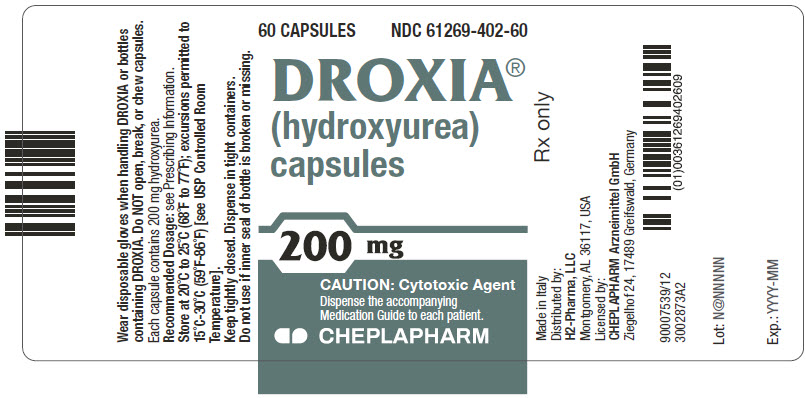
Droxia Hydroxyurea 200 mg Capsule, 60-count — NDC 61269-402-60 (Billing 61269-0402-60)
This is a package of 60 capsules of Droxia Hydroxyurea 200 mg Capsule from H2-Pharma LLC, marketed since Jun 2009 and currently FDA-listed; retail pharmacies pay about $0.7291 per capsule (NADAC). It is this product's only package size.
NDC database record
One package, one record: these facts belong to NDC 61269-402-60 alone.
- Record
- FDA NDC Directory package listing · Human prescription drug
- Code segments
- 61269 labeler · 402 product · 60 package
- Package marketed since
- Jul 16, 2015
- Sample package
- No — commercial package
- Listing certified through
- Dec 31, 2027
- Billing quantity
- 60 EA per package
- Barcode (UPC-A, from the NDC)
- 3 6126940260 9
- Medicaid fills, this package
- 402 prescriptions in the last four reported quarters
- FDA record last changed
- Jul 24, 2026
Identity & classification
Regulatory identifiers FDA, NLM and CMS codes for this package
Drug-database identifiers Medi-Span GPI and First Databank GCN / HICL / AHFS classification
- GSN (GCN sequence number): 040162
- GCN: 38402
- HICL (First Databank): 003897
- AHFS class code: 10:00.00.00
- RxCUI (RxNorm): 200342
Where does this data come from?
- FDA openFDA NDC Directory · synced Oct 8, 2026
- FDA label on DailyMed · label index refreshed Oct 8, 2026
- RxNorm (NLM RxNav) · catalog refreshed Oct 8, 2026
- Medi-Span GPI (licensed)
- First Databank (licensed) · refreshed Oct 8, 2026
RxNorm drug class
This medicine belongs to the Antimetabolite class.
Where does this data come from?
- RxClass (NLM) · catalog refreshed Oct 8, 2026
Clinical
- It depends on the product. Droxia, Siklos and Xromi help reduce painful crises and the need for transfusions in sickle cell anemia. Hydrea and hydroxyurea capsules treat resistant...
- Hydroxyurea can lower your blood cell counts, sometimes severely. Regular tests let your prescriber adjust the dose or pause treatment. Counts usually recover quickly once it is pa...
- Common ones include infections, headache, dry skin, hair thinning, nausea, dizziness and tiredness. Call your doctor for fever, breathing problems, leg ulcers, jaundice or severe s...
- Hydroxyurea can harm a developing baby. Use effective birth control during treatment and for at least 6 months after if you can become pregnant, or 1 year after if you are a male w...
Patient education
Supplement & herbal interactions
Some supplements/herbs that may interact with Hydroxyurea — tap one for details:
Where does this data come from?
- MedlinePlus (NLM) · refreshed Oct 8, 2026
- FDA label on DailyMed · label index refreshed Oct 8, 2026
Ask a licensed pharmacist directly — free, answered by our team.
Pricing
A drug doesn't have one price. Each row is a different public payment system, and none is what you'd pay at the counter — that depends on your insurance. The ⓘ on each row explains what it measures.
| Price system | Per ea | Per package |
|---|---|---|
| Retail pharmacies payNADAC · weekly | $0.729 | $43.75 / 60 capsules |
| Medicaid paysCMS SDUD · 12 mo | $0.8319 | $49.91 / 60 capsules |
| Medicare drug plans payPart D · Q2 2026 | $12.09 | $725.24 / 60 capsules |
| Medicare Part B allowsASP · J8999 | No ASP payment limit on file for J8999 this quarter. | |
Where does this data come from?
- CMS NADAC weekly file · file of Sep 16, 2026
- CMS ASP pricing files · refreshed Sep 20, 2026
- CMS Medicaid State Drug Utilization Data · through Q1 2026
- CMS Part D plan pricing files · refreshed Sep 24, 2026
- VA National Acquisition Center price file
Billing & reimbursement
Where does this data come from?
- CMS ASP NDC-HCPCS crosswalk · refreshed Sep 22, 2026
- DMEPDAC NDC-HCPCS crosswalk
- openFDA NSDE billing units · refreshed Oct 7, 2026
Packaging — all sizes for this product
| Package NDC | Description | Marketing start | Marketing end | Status |
|---|---|---|---|---|
| 61269-0402-60 You're viewing this Main listing | 60 CAPSULE in 1 BOTTLE | 2015-07-16 | — | Active |
Therapeutic equivalents
| Product | Labeler | Pack | NADAC/unit | TE | Status | Price vs. this |
|---|---|---|---|---|---|---|
| Droxia 200 mgthis 61269-0402-60 | H2-Pharma | 60 capsules | $0.729 | — | Availability likely | — |
| Droxia 200 mg 80725-0820-60 | Waylis | 60 capsules | — | — | FDA listed | — |
Where does this data come from?
- FDA openFDA NDC Directory · synced Oct 8, 2026
- FDA Orange Book · refreshed Oct 9, 2026
- CMS NADAC weekly file · file of Sep 16, 2026
Availability & generic status
FDA-approved generic versions are listed, and recent pricing/market data suggests they may be available — see Therapeutic equivalents.
Where does this data come from?
- FDA Orange Book · refreshed Oct 9, 2026
What it looks like
Where does this data come from?
- FDA label on DailyMed · label index refreshed Oct 8, 2026
Inactive Ingredients / Excipients
Inactive ingredients, also called excipients, are components of the drug product other than the active ingredient. They may include fillers, dyes, coatings, preservatives, flavors, or other formulation ingredients.
🧪 Avoiding an ingredient? See Hydroxyurea inactive ingredients by manufacturer: every current product's list side by side, so you can ask your pharmacy for the version that does not list it.
💡 Tap an ingredient (hover on desktop) to see what it is and why it’s used.
-
UNII 2968PHW8QP
A weak organic acid derived from citrus fruits or made through fermentation. It works as a buffer to control pH, a preservative to extend shelf life, and a flavoring agent in medications.
-
UNII H3R47K3TBD
FD&C Blue No. 1 is a synthetic blue dye approved for use in foods and medicines. It serves as a colorant to give the medication its distinctive appearance and help with product identification.
-
UNII 3P3ONR6O1S
A synthetic green dye approved by the FDA for use in medicines and foods. It serves as a colorant to make the pill or liquid visually distinctive and help with product identification.
-
UNII 2G86QN327L
Gelatin is a protein derived from animal collagen, commonly used in medicines as a gelling agent and capsule material. It helps create soft or hard capsule shells that hold and release medication, and can also thicken liquid formulations.
-
UNII J2B2A4N98G
Lactose is a natural sugar derived from milk. In medications, it serves as a filler and binder to add bulk and help hold tablet or capsule ingredients together during manufacturing.
-
UNII 70097M6I30
Magnesium stearate is a salt made from magnesium and stearic acid, a fatty substance. It's used in tablets and capsules as a lubricant and glidant to help ingredients flow smoothly during manufacturing and prevent sticking.
-
UNII SE337SVY37
A mineral salt used as a buffer to help maintain the medicine's pH level and prevent breakdown of active ingredients. It also acts as a thickening agent in liquid formulations.
-
UNII 15FIX9V2JP
Titanium dioxide is a bright white mineral powder commonly used as a colorant and opacifying agent. It makes pills and tablets white or lighter in color and helps make coatings non-transparent.
8 inactive ingredients listed in the exact product block matched to this NDC.
Where does this data come from?
ingredient classCode="IACT" elements from the exact product block matched by this NDC. Label-section narrative from DailyMed / the openFDA label index is shown separately when available.- FDA label on DailyMed · label index refreshed Oct 8, 2026
- FDA openFDA NDC Directory · synced Oct 8, 2026
Inactive ingredient FAQ
Are inactive ingredients the same for every manufacturer?
Why might an inactive ingredient be missing?
Can inactive ingredients matter?
Manufacturer & labeler
More NDCs from H2-Pharma LLC labeler code 61269
- Seroquel XR quetiapine 200 mg Tablet, Extended Release NDC 61269-272-60
- Seroquel XR quetiapine 300 mg Tablet, Extended Release NDC 61269-273-60
- Seroquel XR quetiapine 400 mg Tablet, Extended Release NDC 61269-274-60
- Pylera Bismuth Subcitrate Potassium, Metronidazole, and Tetracycline Hydrochloride 140 mg; 125 mg; 125 mg Capsule NDC 61269-380-12
- Pylera Bismuth Subcitrate Potassium, Metronidazole, and Tetracycline Hydrochloride 140 mg; 125 mg; 125 mg Capsule NDC 61269-381-12
- Bismuth Subcitrate Potassium, Metronidazole and Tetracycline Hydrochloride 140 mg; 125 mg; 125 mg Capsule NDC 61269-386-12
- Droxia Hydroxyurea 300 mg Capsule NDC 61269-403-60
- Droxia Hydroxyurea 400 mg Capsule NDC 61269-404-60
- Etopophos etoposide phosphate 100 mg Injection, Powder, Lyophilized, For Solution NDC 61269-410-20
- Xenical orlistat 120 mg Capsule NDC 61269-460-90
- Xeloda capecitabine 500 mg Tablet, Film Coated NDC 61269-475-12
- Valcyte valganciclovir 450 mg Tablet, Film Coated NDC 61269-480-60
Where does this data come from?
- FDA openFDA NDC Directory · synced Oct 8, 2026
- Drugs@FDA
Full prescribing information FDA SPL
🚨 Boxed Warning ▾
WARNING: MYELOSUPPRESSION AND MALIGNANCIES Myelosuppression: DROXIA may cause severe myelosuppression. Do not give if bone marrow function is markedly depressed. Monitor blood counts at baseline and throughout treatment.
Interrupt treatment and reduce dose as necessary [see Warnings and Precautions (5.1) ] . Malignancies: DROXIA is carcinogenic. Advise sun protection and monitor patients for malignancies [see Warnings and Precautions (5.3) ] .
WARNING: MYELOSUPPRESSION AND MALIGNANCIES See full prescribing information for complete boxed warning. Myelosuppression : DROXIA may cause severe myelosuppression. Do not give if bone marrow function is markedly depressed.
Monitor blood counts at baseline and throughout treatment. Interrupt treatment and reduce dose as necessary. (5.1) Malignancies : DROXIA is carcinogenic.
Advise sun protection and monitor patients for malignancies. (5.3 )
🎯 Indications and Usage ▾
1 INDICATIONS AND USAGE DROXIA is indicated to reduce the frequency of painful crises and to reduce the need for blood transfusions in patients with sickle cell anemia with recurrent moderate to severe painful crises. DROXIA is an antimetabolite indicated to reduce the frequency of painful crises and to reduce the need for blood transfusions in patients with sickle cell anemia with recurrent moderate to severe painful crises. (1)
⏱️ Dosage and Administration ▾
2 DOSAGE AND ADMINISTRATION Initial dose: 15 mg/kg once daily. Monitor the patient's blood count every two weeks. (2.1) The dose may be increased by 5 mg/kg/day every 12 weeks until a maximum tolerated dose or 35 mg/kg/day is reached if blood counts are in an acceptable range.
(2.1) The dose is not increased if blood counts are between the acceptable range and toxic. Discontinue DROXIA until hematologic recovery if blood counts are considered toxic. Treatment may then be resumed after reducing the dose by 2.5 mg/kg/day from the dose associated with hematological toxicity.
(2.1) Renal impairment: Reduce the dose of DROXIA by 50% in patients with creatinine clearance less than 60 mL/min. (2.2 , 8.6 , 12.3)
2.1Dosing Information Table 1: Dosing Recommendation Based on Blood Count Dosing Regimen Dose Dose Modification Criteria Monitoring Parameters Initial Recommended Dosing 15 mg/kg/day as a single dose once daily based on the patient's actual or ideal weight, whichever is less. Monitor the patient's blood count every 2 weeks [see Warnings and Precautions ( 5.1 )]. Dosing Based on Blood Counts In an acceptable range Increase dose 5 mg/kg/day every 12 weeks Maximal dose: 35 mg/kg/day* *Maximal dose is the highest dose that does not produce toxic blood counts over 24 consecutive weeks.
Increase dosing only if blood counts are in an acceptable range. Do not increase if myelosuppression occurs. Blood Counts Acceptable Range neutrophils ≥2500 cells/mm 3 platelets ≥95,000/mm 3 hemoglobin >5.3 g/dL reticulocytes ≥95,000/mm 3 if the hemoglobin concentration <9 g/dL Between acceptable and toxic range Do not increase dose.
If blood counts are considered toxic , discontinue DROXIA until hematologic recovery. Blood Counts Toxic Range neutrophils <2000 cells/mm 3 platelets <80,000/mm 3 hemoglobin <4.5 g/dL reticulocytes <80,000/mm 3 if the hemoglobin concentration <9 g/dL Dosing After Hematologic Recovery Reduce dose by 2.5 mg/kg/day. Reduce the dose from the dose associated with hematologic toxicity.
May titrate up or down every 12 weeks in 2.5 mg/kg/day increments. The patient should be at a stable dose with no hematologic toxicity for 24 weeks. Discontinue the treatment permanently if a patient develops hematologic toxicity twice.
Swallow DROXIA capsules whole. Do NOT open, break, or chew capsules because DROXIA is a cytotoxic drug. Patients must be able to follow directions regarding drug administration and their monitoring and care.
Fetal hemoglobin (HbF) levels may be used to evaluate the efficacy of DROXIA in clinical use. Obtain HbF levels every three to four months. Monitor for an increase in HbF of at least two-fold over the baseline value.
DROXIA causes macrocytosis, which may mask the incidental development of folic acid deficiency. Prophylactic administration of folic acid is recommended. DROXIA is a cytotoxic drug.
Follow applicable special handling and disposal procedures [see References (15) ].
2.2Dose Modifications for Renal Impairment Reduce the dose of DROXIA by 50% in patients with creatinine clearance of less than 60 mL/min or with end-stage renal disease (ESRD) [see Use in Specific Populations (8.6) and Clinical Pharmacology (12.3) ] . Creatinine clearance values were obtained using 24-hour urine collections. * On dialysis days, administer DROXIA to patients with ESRD following hemodialysis. Creatinine Clearance (mL/min) Recommended DROXIA Initial Dose (mg/kg once daily) ≥60 15 <60 or ESRD*
7.5Monitor the hematologic parameters closely in these patients.
💊 Dosage Forms and Strengths ▾
3 DOSAGE FORMS AND STRENGTHS Capsules: 200 mg opaque blue-green capsules, imprinted with black ink "DROXIA" and "200". 300 mg opaque purple capsules, imprinted with black ink "DROXIA" and "300". 400 mg opaque reddish-orange capsules, imprinted with black ink "DROXIA" and "400". •Capsules: 200 mg, 300 mg, and 400 mg (3)
⛔ Contraindications ▾
4 CONTRAINDICATIONS DROXIA is contraindicated in patients who have demonstrated a previous hypersensitivity to hydroxyurea or any other component of its formulation. • In patients who have demonstrated a previous hypersensitivity to hydroxyurea or any other component of its formulation. (4)
⚠️ Warnings and Cautions ▾
5 WARNINGS AND PRECAUTIONS Hemolytic anemia: Monitor blood counts throughout treatment. If hemolysis persists, discontinue DROXIA. ( 5.2 ) Embryo-Fetal toxicity: Can cause fetal harm.
Advise of potential risk to a fetus and use of effective contraception. ( 5.4 , 8.1 , 8.3) Vasculitic toxicities: Institute treatment and discontinue DROXIA if this occurs. (5.5) Live Vaccinations: Avoid live vaccine use in a patient taking DROXIA.
(5.6) Risks with concomitant use of antiretroviral drugs: Pancreatitis, hepatotoxicity, and neuropathy have occurred. Monitor for signs and symptoms in patients with HIV infection using antiretroviral drugs; discontinue DROXIA and implement treatment. (5.7)
5.1Myelosuppression Hydroxyurea causes severe myelosuppression. Treatment with DROXIA should not be initiated if bone marrow function is markedly depressed. Bone marrow suppression may occur, and leukopenia is generally its first and most common manifestation.
Thrombocytopenia and anemia occur less often, and are seldom seen without a preceding leukopenia. Some patients, treated at the recommended initial dose of 15 mg/kg/day, have experienced severe or life-threatening myelosuppression. Evaluate hematologic status prior to and during treatment with DROXIA.
Provide supportive care and modify dose or discontinue DROXIA as needed. Recovery from myelosuppression is usually rapid when therapy is interrupted.
5.2Hemolytic Anemia Cases of hemolytic anemia in patients treated with hydroxyurea for myeloproliferative diseases have been reported [ see Adverse Reactions (6.1) ]. Patients who develop acute jaundice or hematuria in the presence of persistent or worsening of anemia should have laboratory tests evaluated for hemolysis (e.g., measurement of serum lactate dehydrogenase, haptoglobin, reticulocyte, unconjugated bilirubin levels, urinalysis, and direct and indirect antiglobulin [Coombs] tests). In the setting of confirmed diagnosis of hemolytic anemia and in the absence of other causes, discontinue DROXIA.
5.3Malignancies Hydroxyurea is a human carcinogen. In patients receiving long-term hydroxyurea for myeloproliferative disorders, secondary leukemia has been reported. Secondary leukemia has also been reported in patients treated with long-term hydroxyurea for sickle cell disease.
Leukemia has also been reported in patients with sickle cell disease and no prior history of treatment with hydroxyurea. All patients using DROXIA should be followed up on a long-term basis with regular blood counts to detect development of leukemia. Skin cancer has also been reported in patients receiving long-term hydroxyurea.
Advise protection from sun exposure and monitor for the development of secondary malignancies.
5.4Embryo-Fetal Toxicity Based on the mechanism of action and findings in animals, DROXIA can cause fetal harm when administered to a pregnant woman. Hydroxyurea was embryotoxic and teratogenic in rats and rabbits at doses 0.8 times and 0.3 times, respectively, the maximum recommended human daily dose on a mg/m 2 basis. Advise pregnant women of the potential risk to a fetus [see Use in Specific Populations ( 8.1 )].
Advise females of reproductive potential to use effective contraception during and after treatment with DROXIA for at least 6 months after therapy. Advise males of reproductive potential to use effective contraception during and after treatment with DROXIA for at least 1 year after therapy [see Use in Specific Populations ( 8.1 , 8.3 )].
5.5Vasculitic Toxicities Cutaneous vasculitic toxicities, including vasculitic ulcerations and gangrene, have occurred in patients with myeloproliferative disorders during therapy with hydroxyurea. These vasculitic toxicities were reported most often in patients with a history of, or currently receiving, interferon therapy. If cutaneous vasculitic ulcers occur, institute treatment and discontinue DROXIA.
5.6Live Vaccinations Avoid use of live vaccine in patients taking DROXIA. Concomitant use of DROXIA wit… [Excerpted — this section continues on DailyMed.]
🤒 Adverse Reactions ▾
6 ADVERSE REACTIONS The following clinically significant adverse reactions are described in detail in other labeling sections: Myelosuppression [see Warnings and Precautions (5.1) ] Hemolytic anemia [see Warnings and Precautions (5.2) ] Malignancies [see Warnings and Precautions (5.3) ] Vasculitic toxicities [see Warnings and Precautions (5.5) ] Risks with concomitant use of antiretroviral drugs [ see Warnings and Precautions (5.7) ] Macrocytosis [ see Warnings and Precautions (5.8) ] Pulmonary Toxicity [see Warnings and Precautions (5.9) ] Because clinical trials are conducted under widely varying conditions, adverse reaction rates observed in the clinical trials of a drug cannot be directly compared to rates in the clinical trials of another drug and may not reflect the rates observed in practice.
Most common adverse reactions (≥30%) are hematological, gastrointestinal symptoms, and anorexia. (6) To report SUSPECTED ADVERSE REACTIONS, contact CHEPLAPHARM Arzneimittel GmbH at 1-888-877-5884 or FDA at 1-800-FDA-1088 or www.fda.gov/medwatch.
6.1Clinical Trial Experience In 299 patients treated for sickle cell anemia in the Multicenter Study of Hydroxyurea in Sickle Cell Anemia, the most common adverse reactions were hematologic, with neutropenia, and low reticulocyte and platelet levels necessitating temporary cessation in almost all patients. Hematologic recovery usually occurred in two weeks. Other adverse reactions include hair loss, macrocytosis, bleeding, and melanonychia.
6.2Postmarketing Experience The following adverse reactions have been identified during post-approval use of hydroxyurea in the treatment of neoplastic diseases. Because these reactions are reported voluntarily from a population of uncertain size, it is not always possible to reliably estimate their frequency. Reproductive System and Breast disorders: azoospermia, and oligospermia Gastrointestinal disorders: stomatitis, nausea, vomiting, diarrhea, and constipation Metabolism and Nutrition disorders: anorexia Skin and subcutaneous tissue disorders: maculopapular rash, skin ulceration, cutaneous lupus erythematosus, dermatomyositis-like skin changes, peripheral and facial erythema, hyperpigmentation, nail hyperpigmentation, atrophy of skin and nails, scaling, violet papules, and alopecia Renal and urinary disorders: dysuria, elevations in serum uric acid, blood urea nitrogen (BUN), and creatinine levels Nervous system disorders: headache, dizziness, drowsiness, disorientation, hallucinations, and convulsions General disorders: fever, chills, malaise, edema, and asthenia Hepatobiliary disorders: elevation of hepatic enzymes, cholestasis, and hepatitis Respiratory disorders: diffuse pulmonary infiltrates, dyspnea, and pulmonary fibrosis, interstitial lung disease, pneumonitis, alveolitis, allergic alveolitis and cough Immune disorders: systemic lupus erythematosus Hypersensitivity: Drug-induced fever (pyrexia) (>39°C, >102°F) requiring hospitalization has been reported concurrently with gastrointestinal, pulmonary, musculoskeletal, hepatobiliary, dermatological or cardiovascular manifestations.
Onset typically occurred within 6 weeks of initiation and resolved upon discontinuation of hydroxyurea. Upon re-administration fever re-occurred typically within 24 hours. Blood and lymphatic system disorders : hemolytic anemia
🔄 Drug Interactions ▾
7 DRUG INTERACTIONS Antiretroviral drugs. (7.1) Laboratory Test Interference. ( 7.2 )
7.1Increased Toxicity with Concomitant Use of Antiretroviral Drugs Pancreatitis In patients with HIV infection during therapy with hydroxyurea and didanosine, with or without stavudine , fatal and nonfatal pancreatitis have occurred. Hydroxyurea is not indicated for the treatment of HIV infection; however, if patients with HIV infection are treated with hydroxyurea, and in particular, in combination with didanosine and/or stavudine, close monitoring for signs and symptoms of pancreatitis is recommended. Permanently discontinue therapy with DROXIA in patients who develop signs and symptoms of pancreatitis.
Hepatotoxicity Hepatotoxicity and hepatic failure resulting in death have been reported during postmarketing surveillance in patients with HIV infection treated with hydroxyurea and other antiretroviral drugs. Fatal hepatic events were reported most often in patients treated with the combination of hydroxyurea, didanosine, and stavudine. Avoid this combination.
Peripheral Neuropathy Peripheral neuropathy, which was severe in some cases, has been reported in patients with HIV infection receiving hydroxyurea in combination with antiretroviral drugs, including didanosine, with or without stavudine.
7.2Laboratory Test Interference Interference with Uric Acid, Urea, or Lactic Acid Assays Studies have shown that there is an analytical interference of hydroxyurea with the enzymes (urease, uricase, and lactate dehydrogenase) used in the determination of urea, uric acid, and lactic acid, rendering falsely elevated results of these in patients treated with hydroxyurea. Interference with Continuous Glucose Monitoring Systems Hydroxyurea may falsely elevate sensor glucose results from certain continuous glucose monitoring (CGM) systems and may lead to hypoglycemia if sensor glucose results are relied upon to dose insulin.
If a patient using a CGM is to be prescribed hydroxyurea, consult with the CGM prescriber about alternative glucose monitoring methods.
👥 Use in Specific Populations ▾
8 USE IN SPECIFIC POPULATIONS Lactation: Advise women not to breastfeed. (8.2)
8.1Pregnancy Risk Summary DROXIA can cause fetal harm based on findings from animal studies and the drug's mechanism of action [see Clinical Pharmacology (12.1) ] . There are no data with DROXIA use in pregnant women to inform a drug-associated risk. In animal reproduction studies, administration of hydroxyurea to pregnant rats and rabbits during organogenesis produced embryotoxic and teratogenic effects at doses 0.8 times and 0.3 times, respectively, the maximum recommended human daily dose on a mg/m 2 basis (see Data ) .
Advise women of the potential risk to a fetus and to avoid becoming pregnant while being treated with DROXIA. In the U.S. general population, the estimated background risk of major birth defects and miscarriage in clinically recognized pregnancies is 2%–4% and 15%–20%, respectively. Data Animal Data Hydroxyurea has been demonstrated to be a potent teratogen in a wide variety of animal models, including mice, hamsters, cats, miniature swine, dogs, and monkeys at doses within 1-fold of the human dose given on a mg/m 2 basis.
Hydroxyurea is embryotoxic and causes fetal malformations (partially ossified cranial bones, absence of eye sockets, hydrocephaly, bipartite sternebrae, missing lumbar vertebrae) at 180 mg/kg/day (about 0.8 times the maximum recommended human daily dose on a mg/m 2 basis) in rats and at 30 mg/kg/day (about 0.3 times the maximum recommended human daily dose on a mg/m 2 basis) in rabbits. Embryotoxicity was characterized by decreased fetal viability, reduced live litter sizes, and developmental delays. Hydroxyurea crosses the placenta.
Single doses of ≥375 mg/kg (about 1.7 times the maximum recommended human daily dose on a mg/m 2 basis) to rats caused growth retardation and impaired learning ability.
8.2Lactation Risk Summary Hydroxyurea is excreted in human milk. Because of the potential for serious adverse reactions in a breastfed infant from hydroxyurea, including carcinogenicity, discontinue breastfeeding during treatment with DROXIA.
8.3Females and Males of Reproductive Potential Pregnancy Testing Verify the pregnancy status of females of reproductive potential prior to initiating DROXIA therapy. Contraception Females DROXIA can cause fetal harm when administered to a pregnant woman [see Use in Specific Populations (8.1) ] . Advise females of reproductive potential to use effective contraception during and after treatment with DROXIA for at least 6 months after therapy.
Advise females to immediately report pregnancy. Males DROXIA may damage spermatozoa and testicular tissue, resulting in possible genetic abnormalities. Males with female sexual partners of reproductive potential should use effective contraception during and after treatment with DROXIA for at least 1 year after therapy [see Nonclinical Toxicology (13.1) ] .
Infertility Males Based on findings in animals and humans, male fertility may be compromised by treatment with DROXIA. Azoospermia or oligospermia, sometimes reversible, has been observed in men. Inform male patients about the possibility of sperm conservation before the start of therapy [see Adverse Reactions (6) and Nonclinical Toxicology (13.1) ] .
8.4Pediatric Use Safety and effectiveness in pediatric patients have not been established.
8.5Geriatric Use Clinical studies of DROXIA did not include sufficient numbers of subjects aged 65 and over to determine whether they respond differently from younger subjects. Elderly patients may be more sensitive to the effects of hydroxyurea and may require a lower dose regimen. Hydroxyurea is excreted by the kidney, and the risk of adverse reactions to this drug may be greater in patients with impaired renal function.
Because elderly patients are more likely to have decreased renal function, care should be taken in dose selection, and it may be useful to monitor renal function [see Dosage and Administration (2.2) ] .
8.6Renal Impairment The ex… [Excerpted — this section continues on DailyMed.]
🤰 Pregnancy ▾
8.1Pregnancy Risk Summary DROXIA can cause fetal harm based on findings from animal studies and the drug's mechanism of action [see Clinical Pharmacology (12.1) ] . There are no data with DROXIA use in pregnant women to inform a drug-associated risk. In animal reproduction studies, administration of hydroxyurea to pregnant rats and rabbits during organogenesis produced embryotoxic and teratogenic effects at doses 0.8 times and 0.3 times, respectively, the maximum recommended human daily dose on a mg/m 2 basis (see Data ) .
Advise women of the potential risk to a fetus and to avoid becoming pregnant while being treated with DROXIA. In the U.S. general population, the estimated background risk of major birth defects and miscarriage in clinically recognized pregnancies is 2%–4% and 15%–20%, respectively. Data Animal Data Hydroxyurea has been demonstrated to be a potent teratogen in a wide variety of animal models, including mice, hamsters, cats, miniature swine, dogs, and monkeys at doses within 1-fold of the human dose given on a mg/m 2 basis.
Hydroxyurea is embryotoxic and causes fetal malformations (partially ossified cranial bones, absence of eye sockets, hydrocephaly, bipartite sternebrae, missing lumbar vertebrae) at 180 mg/kg/day (about 0.8 times the maximum recommended human daily dose on a mg/m 2 basis) in rats and at 30 mg/kg/day (about 0.3 times the maximum recommended human daily dose on a mg/m 2 basis) in rabbits. Embryotoxicity was characterized by decreased fetal viability, reduced live litter sizes, and developmental delays. Hydroxyurea crosses the placenta.
Single doses of ≥375 mg/kg (about 1.7 times the maximum recommended human daily dose on a mg/m 2 basis) to rats caused growth retardation and impaired learning ability.
🧒 Pediatric Use ▾
8.4Pediatric Use Safety and effectiveness in pediatric patients have not been established.
🆘 Overdosage ▾
10 OVERDOSAGE Acute mucocutaneous toxicity has been reported in patients receiving hydroxyurea at dosages several times the therapeutic dose. Soreness, violet erythema, edema on palms and soles followed by scaling of hands and feet, severe generalized hyperpigmentation of the skin, and stomatitis have been observed.
🧬 Clinical Pharmacology ▾
12 CLINICAL PHARMACOLOGY
12.1Mechanism of Action The precise mechanism by which hydroxyurea produces its cytotoxic and cytoreductive effects is not known. However, various studies support the hypothesis that hydroxyurea causes an immediate inhibition of DNA synthesis by acting as a ribonucleotide reductase inhibitor, without interfering with the synthesis of ribonucleic acid or of protein. The mechanisms by which DROXIA produces its beneficial effects in patients with sickle cell anemia (SCA) are uncertain.
Known pharmacologic effects of DROXIA that may contribute to its beneficial effects include increasing hemoglobin F levels in red blood cells (RBCs), decreasing neutrophils, increasing the water content of RBCs, increasing deformability of sickled cells, and altering the adhesion of RBCs to endothelium.
12.3Pharmacokinetics Absorption Following oral administration of DROXIA, hydroxyurea reaches peak plasma concentrations in 1 to 4 hours. Mean peak plasma concentrations and AUCs increase more than proportionally with increase of dose. There are no data on the effect of food on the absorption of hydroxyurea.
Distribution Hydroxyurea distributes throughout the body with a volume of distribution approximating total body water. Hydroxyurea concentrates in leukocytes and erythrocytes. Metabolism Up to 60% of an oral dose undergoes conversion through saturable hepatic metabolism and a minor pathway of degradation by urease found in intestinal bacteria.
Excretion In patients with sickle cell anemia, the mean cumulative urinary recovery of hydroxyurea was about 40% of the administered dose. Specific Populations Renal Impairment The effect of renal impairment on the pharmacokinetics of hydroxyurea was assessed in adult patients with sickle cell disease and renal impairment. Patients with normal renal function (creatinine clearance [CrCl] >80 mL/min), mild (CrCl 50-80 mL/min), moderate (CrCl =30-<50 mL/min), or severe (<30 mL/min) renal impairment received a single oral dose of 15 mg/kg hydroxyurea.
Creatinine clearance values were obtained using 24-hour urine collections. Patients with ESRD received two doses of 15 mg/kg separated by 7 days; the first was given following a 4-hour hemodialysis session, the second prior to hemodialysis. The exposure to hydroxyurea (mean AUC) in patients with CrCl <60 mL/min and those with ESRD was 64% higher than in patients with normal renal function (CrCl >60 mL/min).
Reduce the dose of DROXIA when it is administered to patients with creatinine clearance of <60 mL/min or with ESRD following hemodialysis [see Dosage and Administration (2.2) and Use in Specific Populations (8.6) ] .
🧬 Mechanism of Action ▾
12.1Mechanism of Action The precise mechanism by which hydroxyurea produces its cytotoxic and cytoreductive effects is not known. However, various studies support the hypothesis that hydroxyurea causes an immediate inhibition of DNA synthesis by acting as a ribonucleotide reductase inhibitor, without interfering with the synthesis of ribonucleic acid or of protein. The mechanisms by which DROXIA produces its beneficial effects in patients with sickle cell anemia (SCA) are uncertain.
Known pharmacologic effects of DROXIA that may contribute to its beneficial effects include increasing hemoglobin F levels in red blood cells (RBCs), decreasing neutrophils, increasing the water content of RBCs, increasing deformability of sickled cells, and altering the adhesion of RBCs to endothelium.
📦 How Supplied / Storage and Handling ▾
16 HOW SUPPLIED/STORAGE AND HANDLING
16.1How Supplied DROXIA ® (hydroxyurea capsules, USP) is supplied in HDPE bottles with a plastic safety screw cap. Each bottle contains 60 capsules. DROXIA is supplied in the following strengths: 200 mg opaque blue-green capsules, marked in black ink with " DROXIA " and " 200 " (NDC 61269-402-60).
300 mg opaque purple capsules, marked in black ink with " DROXIA " and " 300 " (NDC 61269-403-60). 400 mg opaque reddish-orange capsules, marked in black ink with " DROXIA " and " 400 " (NDC 61269-404-60).
16.2Storage Store at 20°C to 25°C (68°F to 77°F); excursions permitted to 15°C to 30°C (59°F to 86°F) [see USP Controlled Room Temperature]. Keep tightly closed.
16.3Handling and Disposal DROXIA is a cytotoxic drug. Follow applicable special handling and disposal procedures [see References (15) ] . To decrease the risk of contact, advise caregivers to wear disposable gloves when handling DROXIA or bottles containing DROXIA.
Wash hands with soap and water before and after contact with the bottle or capsules when handling DROXIA. Do not open DROXIA capsules. Avoid exposure to crushed or opened capsules.
If contact with crushed or opened capsules occurs on the skin, wash affected area immediately and thoroughly with soap and water. If contact with crushed or opened capsules occurs on the eye(s), the affected area should be flushed thoroughly with water or isotonic eyewash designated for that purpose for at least 15 minutes. If the powder from the capsule is spilled, immediately wipe it up with a damp disposable towel and discard in a closed container, such as a plastic bag; as should the empty capsules.
The spill areas should then be cleaned three times using a detergent solution followed by clean water. Keep the medication away from children and pets. Contact your doctor for instructions on how to dispose of outdated capsules.
📦 Storage and Handling ▾
16.2Storage Store at 20°C to 25°C (68°F to 77°F); excursions permitted to 15°C to 30°C (59°F to 86°F) [see USP Controlled Room Temperature]. Keep tightly closed.
📋 Description ▾
11 DESCRIPTION DROXIA ® (hydroxyurea capsules, USP) is available for oral use as capsules containing 200 mg, 300 mg, and 400 mg hydroxyurea. Inactive ingredients include citric acid, gelatin, lactose, magnesium stearate, sodium phosphate, titanium dioxide, and capsule colorants: FD&C Blue No. 1 and FD&C Green No.
3 (200 mg capsules); D&C Red No. 28, D&C Red No. 33, and FD&C Blue No.
1 (300 mg capsules); D&C Red No. 28, D&C Red No. 33, and D&C Yellow No.
10 (400 mg capsules). Hydroxyurea is a white to off-white crystalline powder. It is hygroscopic and freely soluble in water, but practically insoluble in alcohol.
The empirical formula is CH 4 N 2 O 2 and it has a molecular weight of 76.05. Its structural formula is: Hydroxyurea Chemical Structure
💬 Information for Patients ▾
17 PATIENT COUNSELING INFORMATION Advise the patient to read the FDA-approved patient labeling (Medication Guide). There is a risk of myelosuppression. Monitoring blood counts every two weeks throughout the duration of therapy should be emphasized to patients taking DROXIA.
Advise patients to report signs and symptoms of infection or bleeding immediately [ see Warnings and Precautions (5.1) ]. Advise patients of the risk of hemolytic anemia. Advise patients that they will have blood tests to evaluate for this if they develop persistent anemia. [ see Warnings and Precautions (5.2) ].
Advise patients that there is a risk of cutaneous vasculitic toxicities and secondary malignancies including leukemia and skin cancers. Advise use of sun protection [see Warnings and Precautions (5.3 , 5.5) ] . Advise patients to inform their healthcare provider if they have received or are planning to receive vaccinations while taking DROXIA as this may result in a severe infection [see Warnings and Precautions (5.6) ] .
Advise patients to notify their healthcare provider if they are using a continuous glucose monitoring system while taking DROXIA [ see Warnings and Precautions (5.10) ]. Advise females of reproductive potential of the potential risk to a fetus and to inform their healthcare provider of a known or suspected pregnancy. Advise females and males of reproductive potential to use contraception during and after treatment with DROXIA [see Warnings and Precautions (5.4) and Use in Specific Populations (8.1 , 8.3) ] .
Advise females to discontinue breastfeeding during treatment with DROXIA [see Use in Specific Populations (8.2) ] . Patients with HIV infection should contact their physician for signs and symptoms of pancreatitis, hepatic events, and peripheral neuropathy [see Warnings and Precautions (5.7) ] . Advise patients of the symptoms of potential pulmonary toxicity and instruct them to seek prompt medical attention in the event of pyrexia, cough, dyspnea, or other respiratory symptoms [see Warnings and Precautions (5.9) ] .
💬 Medication Guide ▾
Medication Guide DROXIA ® (drock-SEE-yuh) (hydroxyurea) capsules What is the most important information I should know about DROXIA? DROXIA can cause serious side effects including: Low blood counts are common with DROXIA, including low red blood cells, white blood cells, and platelets, and can be severe and life-threatening. If your white blood cell count becomes very low, you are at increased risk for infection.
Your healthcare provider will check your blood cell counts before and during treatment with DROXIA. Your healthcare provider may change your dose or tell you to stop taking DROXIA if you have low blood cell counts. Tell your healthcare provider right away if you get any of the following symptoms: Fever feeling very tired chills shortness of breath body aches bleeding or unexplained bruising Cancer.
Some people have developed cancer, such as leukemia and skin cancer, after taking DROXIA for a long time. Your healthcare provider will check you for cancer. You should protect your skin from the sun using sunblock, hats, and sun-protective clothing.
DROXIA can harm your unborn baby. For females taking DROXIA who can become pregnant: You should talk with your healthcare provider about the risks of DROXIA to your unborn baby. You should use effective birth control during treatment with DROXIA and for at least 6 months after treatment.
Your healthcare provider will perform a pregnancy test before you start treatment with DROXIA. You should avoid becoming pregnant during treatment with DROXIA. Tell your healthcare provider right away if you become pregnant or think you may be pregnant.
For males taking DROXIA: DROXIA can affect your sperm. If you have a female sexual partner who can become pregnant, you should use a condom during treatment with DROXIA and for at least 1 year after treatment. DROXIA may cause fertility problems in males.
Talk to your healthcare provider if this is a concern for you. See "What are the possible side effects of DROXIA?" for more information about side effects. What is DROXIA?
DROXIA is a prescription medicine that is used to reduce the frequency of painful crises and reduce the need for blood transfusions in people with sickle cell anemia with recurrent moderate to severe painful crises. It is not known if DROXIA is safe and effective in children. Do not take DROXIA if you are allergic to hydroxyurea or any of the ingredients in DROXIA.
See the end of this leaflet for a list of the ingredients in DROXIA. Before taking DROXIA, tell your healthcare provider about all of your medical conditions, including if you: are using a continuous glucose monitor (CGM) to test your blood glucose. Hydroxyurea may affect your sensor glucose results and may lead to low blood sugar (hypoglycemia).
Talk to the healthcare provider that prescribed your CGM about whether it is safe to use while you are taking DROXIA. have kidney problems or are receiving hemodialysis. have human immunodeficiency virus (HIV). Taking DROXIA with certain HIV medicines can cause serious reactions and may lead to death. Tell your healthcare provider if you take an HIV medicine. have increased level of uric acid in your blood (hyperuricemia). have a history of receiving interferon therapy or are currently receiving interferon therapy. have leg wounds or ulcers plan to receive any vaccinations.
You should not receive "live vaccines" during treatment with DROXIA. are pregnant or plan to become pregnant. See "What is the most important information I should know about DROXIA?" are breastfeeding or plan to breastfeed. DROXIA can pass into your breast milk.
Do not breastfeed during treatment with DROXIA. Tell your healthcare provider about all the medicines you take , including prescription and over-the-counter medicines, vitamins, and herbal supplements. How should I take DROXIA?
Take DROXIA exactly as your healthcare provider tells you. DROXIA is taken 1 time a day. If you take too much DROXIA, call your healthcare provider or go to the nearest h… [Excerpted — this section continues on DailyMed.]
🧬 Pharmacokinetics ▾
12.3Pharmacokinetics Absorption Following oral administration of DROXIA, hydroxyurea reaches peak plasma concentrations in 1 to 4 hours. Mean peak plasma concentrations and AUCs increase more than proportionally with increase of dose. There are no data on the effect of food on the absorption of hydroxyurea.
Distribution Hydroxyurea distributes throughout the body with a volume of distribution approximating total body water. Hydroxyurea concentrates in leukocytes and erythrocytes. Metabolism Up to 60% of an oral dose undergoes conversion through saturable hepatic metabolism and a minor pathway of degradation by urease found in intestinal bacteria.
Excretion In patients with sickle cell anemia, the mean cumulative urinary recovery of hydroxyurea was about 40% of the administered dose. Specific Populations Renal Impairment The effect of renal impairment on the pharmacokinetics of hydroxyurea was assessed in adult patients with sickle cell disease and renal impairment. Patients with normal renal function (creatinine clearance [CrCl] >80 mL/min), mild (CrCl 50-80 mL/min), moderate (CrCl =30-<50 mL/min), or severe (<30 mL/min) renal impairment received a single oral dose of 15 mg/kg hydroxyurea.
Creatinine clearance values were obtained using 24-hour urine collections. Patients with ESRD received two doses of 15 mg/kg separated by 7 days; the first was given following a 4-hour hemodialysis session, the second prior to hemodialysis. The exposure to hydroxyurea (mean AUC) in patients with CrCl <60 mL/min and those with ESRD was 64% higher than in patients with normal renal function (CrCl >60 mL/min).
Reduce the dose of DROXIA when it is administered to patients with creatinine clearance of <60 mL/min or with ESRD following hemodialysis [see Dosage and Administration (2.2) and Use in Specific Populations (8.6) ] .
🔬 Clinical Studies ▾
14 CLINICAL STUDIES The efficacy of DROXIA in sickle cell anemia was assessed in a large clinical study (Multicenter Study of Hydroxyurea in Sickle Cell Anemia) (see Table 2). The study was a randomized, double-blind, placebo-controlled trial that evaluated 299 adult patients (≥18 years) with moderate to severe disease (≥3 painful crises yearly). The trial was stopped by the Data Safety Monitoring Committee, after accrual was completed but before the scheduled 24 months of follow-up was completed in all patients, based on observations of fewer painful crises among patients receiving hydroxyurea.
Compared to placebo treatment, treatment with hydroxyurea resulted in a significant decrease in the yearly rate of painful crises, the yearly rate of painful crises requiring hospitalization, the incidence of chest syndrome, the number of patients transfused, and units of blood transfused. Hydroxyurea treatment significantly increased the median time to both first and second painful crises. Although patients with 3 or more painful crises during the preceding 12 months were eligible for the study, most of the benefit in crisis reduction was seen in the patients with 6 or more painful crises during the preceding 12 months.
Table 2: Results from the Multicenter Study of Hydroxyurea in Sickle Cell Anemia Event Hydroxyurea (N=152) Placebo (N=147) Percent Change Versus Placebo P-value * A painful crisis was defined in the study as acute sickling-related pain that resulted in a visit to a medical facility, that lasted more than 4 hours, and that required treatment with a parenteral narcotic or NSAID. Chest syndrome, priapism, and hepatic sequestration were also included in this definition. Median yearly rate of painful crises* 2.5 4.6 −46 =0.001 Median yearly rate of painful crises requiring hospitalization 1.0 2.5 −60 =0.0027 Median time to first painful crisis (months) 2.76 1.35 +104 =0.014 Median time to second painful crisis (months) 6.58 4.13 +59 =0.0024 Incidence of chest syndrome (# episodes) 56 101 −45 =0.003 Number of patients transfused 55 79 −30 =0.002 Number of units of blood transfused 423 670 −37 =0.003 In patients with SCA treated with hydroxyurea, fetal hemoglobin (HbF) increases 4 to 12 weeks after initiation of treatment.
In general, average HbF levels correlate with dose and plasma level with possible plateauing at higher dosages. A clear relation between reduction in crisis frequency and increased HbF or F-cell levels has not been demonstrated. The dose-related cytoreductive effects of hydroxyurea, particularly on neutrophils, was the factor most strongly correlated with reduced crisis frequency.
🧪 Nonclinical Toxicology ▾
13 NONCLINICAL TOXICOLOGY
13.1Carcinogenesis, Mutagenesis, Impairment of Fertility Conventional long-term studies to evaluate the carcinogenic potential of DROXIA have not been performed. However, intraperitoneal administration of 125 to 250 mg/kg hydroxyurea (about 0.6-1.2 times the maximum recommended human oral daily dose on a mg/m 2 basis) thrice weekly for 6 months to female rats increased the incidence of mammary tumors in rats surviving to 18 months compared to control. Hydroxyurea is mutagenic in vitro to bacteria, fungi, protozoa, and mammalian cells.
Hydroxyurea is clastogenic in vitro (hamster cells, human lymphoblasts) and in vivo (SCE assay in rodents, mouse micronucleus assay). Hydroxyurea causes the transformation of rodent embryo cells to a tumorigenic phenotype. Hydroxyurea administered to male rats at 60 mg/kg/day (about 0.3 times the maximum recommended human daily dose on a mg/m 2 basis) produced testicular atrophy, decreased spermatogenesis, and significantly reduced their ability to impregnate females.
📚 References ▾
15 REFERENCES OSHA. http://www.osha.gov/SLTC/hazardousdrugs/index.html.
📄 Recent Major Changes ▾
Warnings and Precautions, Laboratory Test Interference (5.10) 11/2023 Drug Interactions, Laboratory Test Interference (7.2) 11/2023
📄 Package Label / Principal Display Panel ▾
PRINCIPAL DISPLAY PANEL - 300 mg Capsule Bottle Label 60 CAPSULES NDC 61269-403-60 DROXIA ® (hydroxyurea) capsules 300 mg CAUTION: Cytotoxic Agent Dispense the accompanying Medication Guide to each patient. CHEPLAPHARM PRINCIPAL DISPLAY PANEL - 300 mg Capsule Bottle Label
PRINCIPAL DISPLAY PANEL - 300 mg Capsule Bottle Carton 60 CAPSULES NDC 61269-403-60 DROXIA ® (hydroxyurea) capsules 300 mg CAUTION: Cytotoxic Agent Dispense the accompanying Medication Guide to each patient. CHEPLAPHARM PRINCIPAL DISPLAY PANEL - 300 mg Capsule Bottle Carton
PRINCIPAL DISPLAY PANEL - 200 mg Capsule Bottle Label 60 CAPSULES NDC 61269-402-60 DROXIA ® (hydroxyurea) capsules 200 mg CAUTION: Cytotoxic Agent Dispense the accompanying Medication Guide to each patient. CHEPLAPHARM PRINCIPAL DISPLAY PANEL - 200 mg Capsule Bottle Label
PRINCIPAL DISPLAY PANEL - 200 mg Capsule Bottle Carton 60 CAPSULES NDC 61269-402-60 DROXIA ® (hydroxyurea) capsules 200 mg CAUTION: Cytotoxic Agent Dispense the accompanying Medication Guide to each patient. CHEPLAPHARM PRINCIPAL DISPLAY PANEL - 200 mg Capsule Bottle Carton
PRINCIPAL DISPLAY PANEL - 400 mg Capsule Bottle Label 60 CAPSULES NDC 61269-404-60 DROXIA ® (hydroxyurea) capsules 400 mg CAUTION: Cytotoxic Agent Dispense the accompanying Medication Guide to each patient. CHEPLAPHARM PRINCIPAL DISPLAY PANEL - 400 mg Capsule Bottle Label
PRINCIPAL DISPLAY PANEL - 400 mg Capsule Bottle Carton 60 CAPSULES NDC 61269-404-60 DROXIA ® (hydroxyurea) capsules 400 mg CAUTION: Cytotoxic Agent Dispense the accompanying Medication Guide to each patient. CHEPLAPHARM PRINCIPAL DISPLAY PANEL - 400 mg Capsule Bottle Carton