
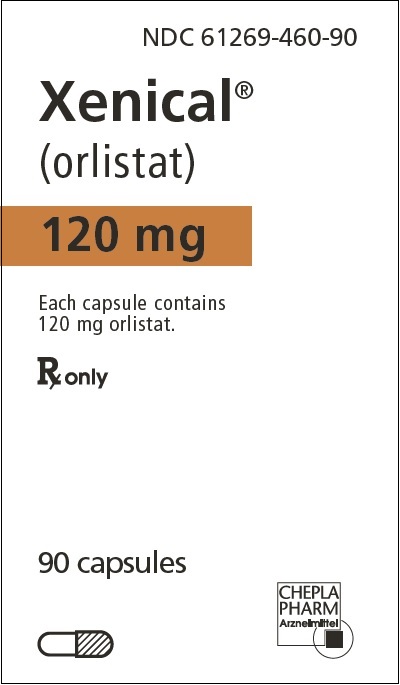
Xenical orlistat 120 mg Capsule, 90-count — NDC 61269-460-90 (Billing 61269-0460-90)
This is a package of 90 capsules of Xenical orlistat 120 mg Capsule from H2-Pharma LLC, marketed since Dec 2010 and currently FDA-listed; retail pharmacies pay about $4.60 per capsule (NADAC). It is this product's only package size.
NDC database record
One package, one record: these facts belong to NDC 61269-460-90 alone.
- Record
- FDA NDC Directory package listing · Human prescription drug
- Code segments
- 61269 labeler · 460 product · 90 package
- Package marketed since
- Dec 17, 2010
- Sample package
- No — commercial package
- Listing certified through
- Dec 31, 2027
- Billing quantity
- 90 EA per package
- Barcode (UPC-A, from the NDC)
- 3 6126946090 6
- Medicaid fills, this package
- 870 prescriptions in the last four reported quarters
- FDA record last changed
- Jul 24, 2026
Identity & classification
Regulatory identifiers FDA, NLM and CMS codes for this package
Drug-database identifiers Medi-Span GPI and First Databank GCN / HICL / AHFS classification
- GSN (GCN sequence number): 040663
- GCN: 95213
- GPI-14 (Medi-Span): 61253560000120
- HICL (First Databank): 018751
- AHFS class code: 56:92.00.00
- RxCUI (RxNorm): 226917
Where does this data come from?
- FDA openFDA NDC Directory · synced Oct 1, 2026
- FDA label on DailyMed · label index refreshed Oct 5, 2026
- RxNorm (NLM RxNav) · catalog refreshed Oct 1, 2026
- Medi-Span GPI (licensed)
- First Databank (licensed) · refreshed Oct 1, 2026
RxNorm drug class
This medicine belongs to the Intestinal Lipase Inhibitor class.
Where does this data come from?
- RxClass (NLM) · catalog refreshed Oct 1, 2026
Clinical
Orlistat (prescription and nonprescription) is used to help people lose and maintain weight. Orlistat is in a class of medications called lipase inhibitors. It works by preventing some of the fat in foods eaten from being absorbed in the intestines. This unabsorbed fat is then removed from the body in the stool.
Read the full MedlinePlus article ↗- It helps with weight loss and keeping weight off when you also follow a reduced-calorie diet. Prescription Xenical and Orlistat can also help reduce weight regain. Alli is the over...
- Take it by mouth with meals that contain fat. Prescription versions are taken during or up to 1 hour after each of three main meals. If you skip a meal or it has no fat, you can sk...
- Mostly bowel changes, like oily spotting, gas with oily discharge, urgent stools and loose or oily stools. They usually start in the first 3 months. Eating a lower-fat diet and not...
- Yes, a daily multivitamin with fat-soluble vitamins. Orlistat can lower absorption of vitamins A, D, E, K and beta-carotene. Take it at bedtime or at least 2 hours away from orlist...
Patient education
Supplement & herbal interactions
Some supplements/herbs that may interact with Orlistat — tap one for details:
Orlistat may be associated with lower levels of 5 nutrients — worth a chat with your pharmacist, not a cause for alarm.
Where does this data come from?
- MedlinePlus (NLM) · refreshed Oct 1, 2026
- FDA label on DailyMed · label index refreshed Oct 5, 2026
Ask a licensed pharmacist directly — free, answered by our team.
Pricing
A drug doesn't have one price. Each row is a different public payment system, and none is what you'd pay at the counter — that depends on your insurance. The ⓘ on each row explains what it measures.
| Price system | Per ea | Per package |
|---|---|---|
| Retail pharmacies payNADAC · weekly | $4.598 | $413.81 / 90 capsules |
| Medicaid paysCMS SDUD · 12 mo | $4.67 | $420.19 / 90 capsules |
| Medicare drug plans payPart D · quarterly | No Part D plan price is available for this NDC in our data. | |
Where does this data come from?
- CMS NADAC weekly file · file of Sep 30, 2026
- CMS ASP pricing files · refreshed Sep 20, 2026
- CMS Medicaid State Drug Utilization Data · through Q1 2026
- CMS Part D plan pricing files · refreshed Sep 24, 2026
- VA National Acquisition Center price file
Packaging — all sizes for this product
| Package NDC | Description | Marketing start | Marketing end | Status |
|---|---|---|---|---|
| 61269-0460-90 You're viewing this Main listing | 90 CAPSULE in 1 BOTTLE, PLASTIC | 2010-12-17 | — | Active |
Therapeutic equivalents
| Product | Labeler | Pack | NADAC/unit | TE | Status | Price vs. this |
|---|---|---|---|---|---|---|
| Xenical 120 mgthis 61269-0460-90 | H2-Pharma | 90 capsules | $4.598 | — | Availability likely | — |
| Orlistat 120 mg 61269-0565-90 | H2-Pharma | 90 capsules | $6.999 | — | Availability likely | +52% |
Where does this data come from?
- FDA openFDA NDC Directory · synced Oct 1, 2026
- FDA Orange Book · refreshed Oct 3, 2026
- CMS NADAC weekly file · file of Sep 30, 2026
Availability & generic status
We did not find an FDA-approved generic match for this exact strength, form and route.
Where does this data come from?
- FDA Orange Book · refreshed Oct 3, 2026
What it looks like
Where does this data come from?
- FDA label on DailyMed · label index refreshed Oct 5, 2026
Inactive Ingredients / Excipients
Inactive ingredients, also called excipients, are components of the drug product other than the active ingredient. They may include fillers, dyes, coatings, preservatives, flavors, or other formulation ingredients.
🧪 Avoiding an ingredient? See Orlistat inactive ingredients by manufacturer: every current product's list side by side, so you can ask your pharmacy for the version that does not list it.
💡 Tap an ingredient (hover on desktop) to see what it is and why it’s used.
-
UNII 5138Q19F1X
Ammonia is a colorless gas made from nitrogen and hydrogen. It's used in medicines as a pH buffer to maintain the correct acidity level and help keep the product stable.
-
UNII L06K8R7DQK
A synthetic blue dye approved by the FDA for use in medications and foods. It serves as a colorant to make pills and liquids visually distinct and easier to identify.
-
UNII XM0M87F357
A dark iron oxide compound that gives medicines their black or dark color. It's used as a colorant in tablets and capsules to help identify the product and make it visually distinctive.
-
UNII 2G86QN327L
Gelatin is a protein derived from animal collagen, commonly used in medicines as a gelling agent and capsule material. It helps create soft or hard capsule shells that hold and release medication, and can also thicken liquid formulations.
-
UNII OP1R32D61U
Microcrystalline cellulose is a purified form of cellulose, a natural fiber from plant sources. It acts as a binder and filler in tablets and capsules, helping hold ingredients together and give the medicine its shape and size.
-
UNII WZH3C48M4T
Potassium hydroxide is a strong alkaline chemical used in medicines to adjust and maintain the pH level of liquid formulations, helping keep the product stable and the active ingredients effective.
-
UNII FZ989GH94E
Povidone is a synthetic polymer made from a plastic-like material. It acts as a binder to hold tablet ingredients together and as a disintegrant to help the tablet break apart in your stomach so the medicine can be absorbed.
-
UNII 6DC9Q167V3
Propylene glycol is a clear liquid derived from petroleum or vegetable sources. It acts as a solvent, humectant, and preservative in medicines, helping dissolve active ingredients and maintain product stability.
-
UNII 46N107B71O
Shellac is a natural resin secreted by the lac beetle. It's used as a coating on tablets and capsules to control how quickly the medicine dissolves and to improve appearance and stability.
-
UNII 368GB5141J
A detergent and foaming agent derived from coconut or palm oil. In medications, it helps break down and mix oil and water-based ingredients, aids in tablet disintegration, and improves how the drug dissolves and spreads in the mouth or digestive system.
-
UNII 5856J3G2A2
A starch-based powder made from potatoes and processed with sodium. It acts as a disintegrant, helping the tablet or capsule break apart quickly in the stomach so the medicine can be absorbed.
-
UNII 7SEV7J4R1U
A powder made from a naturally occurring mineral. In medicines, talc works as a glidant and anti-caking agent, helping tablets and capsules flow smoothly during manufacturing and preventing clumping.
-
UNII 15FIX9V2JP
Titanium dioxide is a bright white mineral powder commonly used as a colorant and opacifying agent. It makes pills and tablets white or lighter in color and helps make coatings non-transparent.
13 inactive ingredients listed in the exact product block matched to this NDC.
Where does this data come from?
ingredient classCode="IACT" elements from the exact product block matched by this NDC. Label-section narrative from DailyMed / the openFDA label index is shown separately when available.- FDA label on DailyMed · label index refreshed Oct 5, 2026
- FDA openFDA NDC Directory · synced Oct 1, 2026
Inactive ingredient FAQ
Are inactive ingredients the same for every manufacturer?
Why might an inactive ingredient be missing?
Can inactive ingredients matter?
Manufacturer & labeler
More NDCs from H2-Pharma LLC labeler code 61269
- Pylera Bismuth Subcitrate Potassium, Metronidazole, and Tetracycline Hydrochloride 140 mg; 125 mg; 125 mg Capsule NDC 61269-381-12
- Bismuth Subcitrate Potassium, Metronidazole and Tetracycline Hydrochloride 140 mg; 125 mg; 125 mg Capsule NDC 61269-386-12
- Droxia Hydroxyurea 200 mg Capsule NDC 61269-402-60
- Droxia Hydroxyurea 300 mg Capsule NDC 61269-403-60
- Droxia Hydroxyurea 400 mg Capsule NDC 61269-404-60
- Etopophos etoposide phosphate 100 mg Injection, Powder, Lyophilized, For Solution NDC 61269-410-20
- Xeloda capecitabine 500 mg Tablet, Film Coated NDC 61269-475-12
- Valcyte valganciclovir 450 mg Tablet, Film Coated NDC 61269-480-60
- Valcyte valganciclovir hydrochloride 50 mg/mL Powder, For Solution NDC 61269-485-10
- PULMICORT FLEXHALER Budesonide 90 ug Aerosol, Powder NDC 61269-509-06
- PULMICORT FLEXHALER Budesonide 180 ug Aerosol, Powder NDC 61269-518-12
- Childrens Allergy fexofenadine hydrochloride 30 mg/5mL Suspension NDC 61269-527-94
Where does this data come from?
- FDA openFDA NDC Directory · synced Oct 1, 2026
- Drugs@FDA
Full prescribing information FDA SPL
🎯 Indications and Usage ▾
1 INDICATIONS AND USAGE XENICAL is indicated for obesity management including weight loss and weight maintenance when used in conjunction with a reduced-calorie diet. XENICAL is also indicated to reduce the risk for weight regain after prior weight loss. XENICAL is indicated for obese patients with an initial body mass index (BMI) ≥30 kg/m 2 or ≥27 kg/m 2 in the presence of other risk factors (e.g., hypertension, diabetes, dyslipidemia).
Table 1 illustrates body mass index (BMI) according to a variety of weights and heights. The BMI is calculated by dividing weight in kilograms by height in meters squared. For example, a person who weighs 180 lbs and is 5 ' 5 " would have a BMI of 30.
Table 1 Body Mass Index (BMI), kg/m 2 Conversion Factors: Weight in lbs ÷ 2.2 = weight in kilograms (kg) Height in inches × 0.0254 = height in meters (m) 1 foot = 12 inches XENICAL is a reversible inhibitor of gastrointestinal lipases indicated for obesity management including weight loss and weight maintenance when used in conjunction with a reduced-calorie diet. ( 1 ) XENICAL is also indicated to reduce the risk for weight regain after prior weight loss. ( 1 ) Table 1
⏱️ Dosage and Administration ▾
2 DOSAGE AND ADMINISTRATION One 120-mg capsule three times a day with each main meal containing fat (during or up to 1 hour after the meal). ( 2 ) Advise patients to take a nutritionally balanced, reduced-calorie diet that contains approximately 30% of calories from fat. ( 2 ) Distribute the daily intake of fat, carbohydrate, and protein over three main meals.
( 2 ) Advise patients to take a multivitamin containing fat-soluble vitamins to ensure adequate nutrition. ( 2 ) Take the vitamin supplement at least 2 hours before or after the administration of XENICAL, such as at bedtime. ( 2 ) For patients receiving both XENICAL and cyclosporine therapy, administer cyclosporine 3 hours after XENICAL.
( 2 ) For patients receiving both XENICAL and levothyroxine therapy, administer levothyroxine and XENICAL at least 4 hours apart. ( 2 )
2.1Recommended Dosing The recommended dose of XENICAL is one 120-mg capsule three times a day with each main meal containing fat (during or up to 1 hour after the meal). The patient should be on a nutritionally balanced, reduced-calorie diet that contains approximately 30% of calories from fat. The daily intake of fat, carbohydrate, and protein should be distributed over three main meals.
If a meal is occasionally missed or contains no fat, the dose of XENICAL can be omitted. Because XENICAL has been shown to reduce the absorption of some fat-soluble vitamins and beta-carotene, patients should be counseled to take a multivitamin containing fat-soluble vitamins to ensure adequate nutrition [see Warnings and Precautions (5.1) ] . The vitamin supplement should be taken at least 2 hours before or after the administration of XENICAL, such as at bedtime.
For patients receiving both XENICAL and cyclosporine therapy, administer cyclosporine 3 hours after XENICAL. For patients receiving both XENICAL and levothyroxine therapy, administer levothyroxine and XENICAL at least 4 hours apart. Patients treated concomitantly with XENICAL and levothyroxine should be monitored for changes in thyroid function.
Doses above 120 mg three times a day have not been shown to provide additional benefit. Based on fecal fat measurements, the effect of XENICAL is seen as soon as 24 to 48 hours after dosing. Upon discontinuation of therapy, fecal fat content usually returns to pretreatment levels within 48 to 72 hours.
💊 Dosage Forms and Strengths ▾
3 DOSAGE FORMS AND STRENGTHS XENICAL 120 mg turquoise capsules imprinted with XENICAL 120 in black ink. Capsules: 120 mg. ( 3 )
⛔ Contraindications ▾
4 CONTRAINDICATIONS XENICAL is contraindicated in: Pregnancy [see Use in Specific Populations (8.1) ] Patients with chronic malabsorption syndrome Patients with cholestasis Patients with known hypersensitivity to XENICAL or to any component of this product Pregnancy ( 4 , 8.1 ) Chronic malabsorption syndrome ( 4 ) Cholestasis ( 4 ) Known hypersensitivity to XENICAL or to any component of this product ( 4 )
⚠️ Warnings and Cautions ▾
5 WARNINGS AND PRECAUTIONS XENICAL has drug interactions and can decrease vitamin absorption. ( 5.1 , 7 ) Take a multivitamin supplement that contains fat-soluble vitamins to ensure adequate nutrition. ( 5.1 ) Rare cases of severe liver injury with hepatocellular necrosis or acute hepatic failure have been reported.
( 5.2 ) Patients may develop oxalate nephrolithiasis and oxalate nephropathy following treatment with XENICAL. Monitor renal function in patients at risk for renal insufficiency. Discontinue XENICAL if oxalate nephropathy develops.
( 5.3 ) Substantial weight loss can increase the risk of cholelithiasis. ( 5.4 ) Exclude organic causes of obesity (eg, hypothyroidism) before prescribing XENICAL. ( 5.5 ) Gastrointestinal events may increase when XENICAL is taken with a diet high in fat (>30% total daily calories from fat).
( 5.5 )
5.1Drug Interactions and Decreased Vitamin Absorption XENICAL may interact with concomitant drugs including cyclosporine, levothyroxine, warfarin, amiodarone, antiepileptic drugs, and antiretroviral drugs [see Drug Interactions (7) ]. Data from a XENICAL and cyclosporine drug interaction study indicate a reduction in cyclosporine plasma levels when XENICAL was coadministered with cyclosporine. Therefore, XENICAL and cyclosporine should not be simultaneously coadministered.
To reduce the chance of a drug-drug interaction, cyclosporine should be taken at least 3 hours before or after XENICAL in patients taking both drugs. In addition, in those patients whose cyclosporine levels are being measured, more frequent monitoring should be considered. Patients should be strongly encouraged to take a multivitamin supplement that contains fat-soluble vitamins to ensure adequate nutrition because XENICAL has been shown to reduce the absorption of some fat-soluble vitamins and beta-carotene [see Dosage and Administration (2) , and Adverse Reactions (6.1) ] .
In addition, the levels of vitamin D and beta-carotene may be low in obese patients compared with non-obese subjects. The supplement should be taken once a day at least 2 hours before or after the administration of XENICAL, such as at bedtime. Weight-loss may affect glycemic control in patients with diabetes mellitus.
A reduction in dose of oral hypoglycemic medication (e.g., sulfonylureas) or insulin may be required in some patients [see Clinical Studies (14) ] .
5.2Liver Injury There have been rare postmarketing reports of severe liver injury with hepatocellular necrosis or acute hepatic failure in patients treated with XENICAL, with some of these cases resulting in liver transplant or death. Patients should be instructed to report any symptoms of hepatic dysfunction (anorexia, pruritus, jaundice, dark urine, light-colored stools, or right upper quadrant pain) while taking XENICAL. When these symptoms occur, XENICAL and other suspect medications should be discontinued immediately and liver function tests and ALT and AST levels obtained.
5.3Oxalate Nephrolithiasis and Oxalate Nephropathy with Renal Failure Some patients may develop increased levels of urinary oxalate following treatment with XENICAL. Cases of oxalate nephrolithiasis and oxalate nephropathy with renal failure have been reported. Monitor renal function when prescribing XENICAL to patients at increased risk for oxalate nephropathy, including patients with renal impairment and in those with a history of hyperoxaluria or calcium oxalate nephrolithiasis.
Discontinue XENICAL in patients who develop oxalate nephropathy.
5.4Cholelithiasis Substantial weight loss can increase the risk of cholelithiasis. In a clinical trial of XENICAL for the prevention of type 2 diabetes, the rates of cholelithiasis as an adverse event were 2.9% (47/1649) for patients randomized to XENICAL and 1.8% (30/1655) for patients randomized to placebo.
5.5Miscellaneous Organic causes of obesity (e.g., hypothyroidism) should be excluded before prescribing XENICAL. Patients should be advised to adhere to dietary guid… [Excerpted — this section continues on DailyMed.]
🤒 Adverse Reactions ▾
6 ADVERSE REACTIONS Most common treatment emergent adverse reactions (≥5% and at least twice that of placebo) include oily spotting, flatus with discharge, fecal urgency, fatty/oily stool, oily evacuation, increased defecation and fecal incontinence. ( 6.1 ) To report SUSPECTED ADVERSE REACTIONS, contact the Safety Call Center at 1-888-236-5445 or FDA at 1‑800‑FDA‑1088 (1-800-332-1088) or www.fda.gov/medwatch.
6.1Clinical Trials Because clinical trials are conducted under widely varying conditions, adverse reaction rates observed in the clinical trials of a drug cannot be directly compared to rates in the clinical trials of another drug and may not reflect the rates observed in patients. Commonly Observed (based on first year and second year data) Gastrointestinal (GI) symptoms were the most commonly observed treatment-emergent adverse events associated with the use of XENICAL in the seven double-blind, placebo-controlled clinical trials and are primarily a manifestation of the mechanism of action.
(Commonly observed is defined as an incidence of ≥5% and an incidence in the XENICAL 120 mg group that is at least twice that of placebo.) Table 2 Commonly Observed Adverse Events Adverse Event Year 1 Year 2 XENICAL Treatment designates XENICAL three times a day plus diet or placebo plus diet % Patients (N=1913) Placebo % Patients (N=1466) XENICAL % Patients (N=613) Placebo % Patients (N=524) Oily Spotting Oily discharge may be clear or have a coloration such as orange or brown. 26.6 1.3 4.4
0.2Flatus with Discharge 23.9 1.4 2.1
0.2Fecal Urgency 22.1 6.7 2.8
1.7Fatty/Oily Stool 20.0 2.9 5.5
0.6Oily Evacuation 11.9 0.8 2.3
0.2Increased Defecation 10.8 4.1 2.6
0.8Fecal Incontinence 7.7 0.9 1.8
0.2In general, the first occurrence of these events was within 3 months of starting therapy. Overall, approximately 50% of all episodes of GI adverse events associated with XENICAL treatment lasted for less than 1 week, and a majority lasted for no more than 4 weeks. However, GI adverse events may occur in some individuals over a period of 6 months or longer.
Discontinuation of Treatment In controlled clinical trials, 8.8% of patients treated with XENICAL discontinued treatment due to adverse events, compared with 5.0% of placebo-treated patients. For XENICAL, the most common adverse events resulting in discontinuation of treatment were gastrointestinal. Other Adverse Clinical Events The following table lists other treatment-emergent adverse events from seven multicenter, double-blind, placebo-controlled clinical trials that occurred at a frequency of ≥2% among patients treated with XENICAL 120 mg three times a day and with an incidence that was greater than placebo during year 1 and year 2, regardless of relationship to study medication.
Table 3 Other Treatment-Emergent Adverse Events From Seven Placebo-Controlled Clinical Trials Body System/Adverse Event Year 1 Year 2 XENICAL Treatment designates XENICAL 120 mg three times a day plus diet or placebo plus diet % Patients (N=1913) Placebo % Patients (N=1466) XENICAL % Patients (N=613) Placebo % Patients (N=524) – None reported at a frequency ≥2% and greater than placebo Gastrointestinal System Abdominal Pain/Discomfort 25.5 21.4 – – Nausea 8.1 7.3 3.6
2.7Infectious Diarrhea 5.3 4.4 – – Rectal Pain/Discomfort 5.2 4.0 3.3
1.9Tooth Disorder 4.3 3.1 2.9
2.3Gingival Disorder 4.1 2.9 2.0
1.5Vomiting 3.8 3.5 – – Respiratory System Influenza 39.7 36.2 – – Upper Respiratory Infection 38.1 32.8 26.1
25.8Lower Respiratory Infection 7.8 6.6 – – Ear, Nose & Throat Symptoms 2.0 1.6 – – Musculoskeletal System Back Pain 13.9 12.1 – – Pain Lower Extremities – – 10.8
10.3Arthritis 5.4 4.8 – – Myalgia 4.2 3.3 – – Joint Disorder 2.3 2.2 – – Tendonitis – – 2.0
1.9Central Nervous System Headache 30.6 27.6 – – Dizziness 5.2 5.0 – – Body as a Whole Fatigue 7.2 6.4 3.1
1.7Sleep Disorder 3.9 3.3 – – Skin & Appendages Rash 4.3 4.0 – – Dry Skin 2.1 1.4 – – Reproductive, Female Menstrual Irregularity 9.8 7.5… [Excerpted — this section continues on DailyMed.]
🔄 Drug Interactions ▾
7 DRUG INTERACTIONS Cyclosporine: Reduction in cyclosporine plasma levels was observed when XENICAL was coadministered with cyclosporine. ( 7.1 ) Fat-soluble Vitamin Supplements and Analogues: All patients should take a daily multivitamin that contains vitamins A, D, E, K, and beta-carotene. ( 7.2 ) Levothyroxine: Patients treated concomitantly with XENICAL and levothyroxine should be monitored for changes in thyroid function.
( 7.3 ) Warfarin: Patients on chronic stable doses of warfarin who are prescribed XENICAL should be monitored closely for changes in coagulation parameters. ( 7.4 ) Amiodarone: A reduction in exposure to amiodarone was observed when XENICAL was co-administered. ( 7.5 ) Antiepileptic Drugs: Convulsions have been reported in patients taking XENICAL with antiepileptic drugs.
Patients should be monitored for possible changes in frequency or severity of convulsions. ( 7.6 ) Antiretroviral Drugs: Loss of virological control has been reported in HIV-infected patients. Patients should be monitored frequently for changes in HIV RNA levels.
( 7.7 )
7.1Cyclosporine Data from a XENICAL and cyclosporine drug interaction study indicate a reduction in cyclosporine plasma levels when XENICAL was coadministered with cyclosporine. XENICAL and cyclosporine should not be simultaneously coadministered. Cyclosporine should be administered 3 hours after the administration of XENICAL [see Dosage and Administration (2) , and Warnings and Precautions (5.1) ] .
7.2Fat-soluble Vitamin Supplements and Analogues Data from a pharmacokinetic interaction study showed that the absorption of beta-carotene supplement is reduced when concomitantly administered with XENICAL. XENICAL inhibited absorption of a vitamin E acetate supplement. The effect of XENICAL on the absorption of supplemental vitamin D, vitamin A, and nutritionally-derived vitamin K is not known at this time [see Clinical Pharmacology (12.3) , and Warnings and Precautions (5.1) ] .
7.3Levothyroxine Hypothyroidism has been reported in patients treated concomitantly with XENICAL and levothyroxine postmarketing. Patients treated concomitantly with XENICAL and levothyroxine should be monitored for changes in thyroid function. Administer levothyroxine and XENICAL at least 4 hours apart [see Dosage and Administration (2) ] .
7.4Anticoagulants including Warfarin Vitamin K absorption may be decreased with XENICAL. Reports of decreased prothrombin, increased INR and unbalanced anticoagulant treatment resulting in change of hemostatic parameters have been reported in patients treated concomitantly with XENICAL and anticoagulants. Patients on chronic stable doses of warfarin or other anticoagulants who are prescribed XENICAL should be monitored closely for changes in coagulation parameters [see Clinical Pharmacology (12.3) ] .
7.5Amiodarone A pharmacokinetic study, where amiodarone was orally administered during orlistat treatment, demonstrated a reduction in exposure to amiodarone and its metabolite, desethylamiodarone [see Clinical Pharmocology (12.3) ] . A reduced therapeutic effect of amiodarone is possible. The effect of commencing orlistat treatment in patients on stable amiodarone therapy has not been studied.
7.6Antiepileptic Drugs Convulsions have been reported in patients treated concomitantly with orlistat and antiepileptic drugs. Patients should be monitored for possible changes in the frequency and/or severity of convulsions.
7.7Antiretroviral Drugs Loss of virological control has been reported in HIV-infected patients taking orlistat concomitantly with antiretroviral drugs such as atazanavir, ritonavir, tenofovir disoproxil fumarate, emtricitabine, and with the combinations lopinavir/ritonavir and emtricitabine/efavirenz/tenofovir disoproxil fumarate. The exact mechanism for this is unclear, but may include a drug-drug interaction that inhibits systemic absorption of the antiretroviral drug. HIV RNA levels should be frequently monitored in patients who take XENICAL… [Excerpted — this section continues on DailyMed.]
👥 Use in Specific Populations ▾
8 USE IN SPECIFIC POPULATIONS Nursing Mothers: Caution should be exercised when administered to a nursing woman. ( 8.3 )
8.1Pregnancy Pregnancy Category X XENICAL is contraindicated during pregnancy, because weight loss offers no potential benefit to a pregnant woman and may result in fetal harm. A minimum weight gain, and no weight loss, is currently recommended for all pregnant women, including those who are already overweight or obese, due to the obligatory weight gain that occurs in maternal tissues during pregnancy. No embryotoxicity or teratogenicity was seen in animals that received orlistat at doses much higher than the recommended human dose.
If this drug is used during pregnancy, or if the patient becomes pregnant while taking this drug, the patient should be apprised of the potential hazard of maternal weight loss to the fetus. Animal Data Reproduction studies were conducted in rats and rabbits at doses up to 800 mg/kg/day. Neither study showed embryotoxicity or teratogenicity.
This dose is 23 and 47 times the daily human dose calculated on a body surface area (mg/m 2 ) basis for rats and rabbits, respectively.
8.3Nursing Mothers It is not known if XENICAL is present in human milk. Caution should be exercised when XENICAL is administered to a nursing woman.
8.4Pediatric Use Safety and effectiveness in pediatric patients below the age of 12 have not been established. The safety and efficacy of XENICAL have been evaluated in obese adolescent patients aged 12 to 16 years. Use of XENICAL in this age group is supported by evidence from adequate and well-controlled studies of XENICAL in adults with additional data from a 54-week efficacy and safety study and a 21-day mineral balance study in obese adolescent patients aged 12 to 16 years.
Patients treated with XENICAL in the 54-week efficacy and safety study (64.8% female, 75% Caucasians, 18.8% Blacks, and 6.3% Other) had a mean reduction in BMI of 0.55 kg/m 2 compared with an average increase of 0.31 kg/m 2 in placebo-treated patients (p=0.001). In both adolescent studies, adverse effects were generally similar to those described in adults and included fatty/oily stool, oily spotting, and oily evacuation. In a subgroup of 152 XENICAL and 77 placebo patients from the 54-week study, changes in body composition measured by DEXA were similar in both treatment groups with the exception of fat mass, which was significantly reduced in patients treated with XENICAL compared to patients treated with placebo (-2.5 kg vs -0.6 kg, p=0.033).
Because XENICAL can interfere with the absorption of fat-soluble vitamins, all patients should take a daily multivitamin that contains vitamins A, D, E, K, and beta-carotene. The vitamin supplement should be taken at least 2 hours before or after XENICAL [see Dosage and Administration (2) , Warnings and Precautions (5.1) , and Clinical Pharmacology (12.3) ] . Plasma concentrations of orlistat and its metabolites M1 and M3 were similar to those found in adults at the same dose level.
Daily fecal fat excretions were 27% and 7% of dietary intake in XENICAL and placebo treatment groups, respectively.
8.5Geriatric Use Clinical studies of XENICAL did not include sufficient numbers of patients aged 65 years and older to determine whether they respond differently from younger patients [see Clinical Studies (14) ] .
🤰 Pregnancy ▾
8.1Pregnancy Pregnancy Category X XENICAL is contraindicated during pregnancy, because weight loss offers no potential benefit to a pregnant woman and may result in fetal harm. A minimum weight gain, and no weight loss, is currently recommended for all pregnant women, including those who are already overweight or obese, due to the obligatory weight gain that occurs in maternal tissues during pregnancy. No embryotoxicity or teratogenicity was seen in animals that received orlistat at doses much higher than the recommended human dose.
If this drug is used during pregnancy, or if the patient becomes pregnant while taking this drug, the patient should be apprised of the potential hazard of maternal weight loss to the fetus. Animal Data Reproduction studies were conducted in rats and rabbits at doses up to 800 mg/kg/day. Neither study showed embryotoxicity or teratogenicity.
This dose is 23 and 47 times the daily human dose calculated on a body surface area (mg/m 2 ) basis for rats and rabbits, respectively.
🧒 Pediatric Use ▾
8.4Pediatric Use Safety and effectiveness in pediatric patients below the age of 12 have not been established. The safety and efficacy of XENICAL have been evaluated in obese adolescent patients aged 12 to 16 years. Use of XENICAL in this age group is supported by evidence from adequate and well-controlled studies of XENICAL in adults with additional data from a 54-week efficacy and safety study and a 21-day mineral balance study in obese adolescent patients aged 12 to 16 years.
Patients treated with XENICAL in the 54-week efficacy and safety study (64.8% female, 75% Caucasians, 18.8% Blacks, and 6.3% Other) had a mean reduction in BMI of 0.55 kg/m 2 compared with an average increase of 0.31 kg/m 2 in placebo-treated patients (p=0.001). In both adolescent studies, adverse effects were generally similar to those described in adults and included fatty/oily stool, oily spotting, and oily evacuation. In a subgroup of 152 XENICAL and 77 placebo patients from the 54-week study, changes in body composition measured by DEXA were similar in both treatment groups with the exception of fat mass, which was significantly reduced in patients treated with XENICAL compared to patients treated with placebo (-2.5 kg vs -0.6 kg, p=0.033).
Because XENICAL can interfere with the absorption of fat-soluble vitamins, all patients should take a daily multivitamin that contains vitamins A, D, E, K, and beta-carotene. The vitamin supplement should be taken at least 2 hours before or after XENICAL [see Dosage and Administration (2) , Warnings and Precautions (5.1) , and Clinical Pharmacology (12.3) ] . Plasma concentrations of orlistat and its metabolites M1 and M3 were similar to those found in adults at the same dose level.
Daily fecal fat excretions were 27% and 7% of dietary intake in XENICAL and placebo treatment groups, respectively.
🧓 Geriatric Use ▾
8.5Geriatric Use Clinical studies of XENICAL did not include sufficient numbers of patients aged 65 years and older to determine whether they respond differently from younger patients [see Clinical Studies (14) ] .
🆘 Overdosage ▾
10 OVERDOSAGE Single doses of 800 mg XENICAL and multiple doses of up to 400 mg three times a day for 15 days have been studied in normal weight and obese subjects without significant adverse findings. Should a significant overdose of XENICAL occur, it is recommended that the patient be observed for 24 hours. Based on human and animal studies, systemic effects attributable to the lipase-inhibiting properties of XENICAL should be rapidly reversible.
🧬 Clinical Pharmacology ▾
12 CLINICAL PHARMACOLOGY
12.1Mechanism of Action Orlistat is a reversible inhibitor of gastrointestinal lipases. It exerts its therapeutic activity in the lumen of the stomach and small intestine by forming a covalent bond with the active serine residue site of gastric and pancreatic lipases. The inactivated enzymes are thus unavailable to hydrolyze dietary fat in the form of triglycerides into absorbable free fatty acids and monoglycerides.
As undigested triglycerides are not absorbed, the resulting caloric deficit may have a positive effect on weight control.
12.2Pharmacodynamics Dose-response Relationship The dose-response relationship for orlistat in human volunteers is shown in Figure 1 . The effect is the percentage of ingested fat excreted, referred to as fecal fat excretion percentage. Both individual data (open circles) and the curve predicted for the population with the maximum-effect model (continuous line) are shown in Figure 1.
Figure 1 Dose-Response Relationship for Orlistat in Human Volunteers At the recommended therapeutic dose of 120 mg three times a day, orlistat inhibits dietary fat absorption by approximately 30%. Ethanol does not affect orlistat’s effect on preventing the absorption of fat. Figure 1 Other Short-term Studies Adults In several studies of up to 6-weeks duration, the effects of therapeutic doses of XENICAL on gastrointestinal and systemic physiological processes were assessed in normal weight and obese subjects.
Postprandial cholecystokinin plasma concentrations were lowered after multiple doses of XENICAL in two studies but not significantly different from placebo in two other experiments. There were no clinically significant changes observed in gallbladder motility, bile composition or lithogenicity, or colonic cell proliferation rate, and no clinically significant reduction of gastric emptying time or gastric acidity. In addition, no effects on plasma triglyceride levels or systemic lipases were observed with the administration of XENICAL in these studies.
In a 3-week study of 28 healthy male volunteers, XENICAL (120 mg three times a day) did not significantly affect the balance of calcium, magnesium, phosphorus, zinc, copper, and iron. Pediatrics In a 3-week study of 32 obese adolescents aged 12 to 16 years, XENICAL (120 mg three times a day) did not significantly affect the balance of calcium, magnesium, phosphorus, zinc, or copper. The iron balance was decreased by 64.7 µmole/24 hours and 40.4 µmole/24 hours in XENICAL and placebo treatment groups, respectively.
12.3Pharmacokinetics Absorption Systemic exposure to orlistat is minimal. Following oral dosing with 360 mg 14 C-orlistat, plasma radioactivity peaked at approximately 8 hours; plasma concentrations of intact orlistat were near the limits of detection (<5 ng/mL). In therapeutic studies involving monitoring of plasma samples, detection of intact orlistat in plasma was sporadic and concentrations were low (<10 ng/mL or 0.02 µM), without evidence of accumulation, and consistent with minimal absorption.
Distribution In vitro orlistat was >99% bound to plasma proteins (lipoproteins and albumin were major binding proteins). Orlistat minimally partitioned into erythrocytes. Metabolism Based on an oral 14 C-orlistat mass balance study in obese patients, two metabolites, M1 ((the hydrolyzed β-lactone ring product of orlistat) and M3 (sequential metabolite after M1's cleavage of the N-formyl leucine side-chain), accounted for approximately 42% of total radioactivity in plasma.
M1 and M3 have an open β-lactone ring and extremely weak lipase inhibitory activity (1000- and 2500-fold less than orlistat, respectively). In view of this low inhibitory activity and the low plasma levels at the therapeutic dose (average of 26 ng/mL and 108 ng/mL for M1 and M3, respectively, 2 to 4 hours after a dose), these metabolites are considered pharmacologically inconsequential. The primary metabolite M1 had a short half-life (approximately 3 hours) wherea… [Excerpted — this section continues on DailyMed.]
🧬 Mechanism of Action ▾
12.1Mechanism of Action Orlistat is a reversible inhibitor of gastrointestinal lipases. It exerts its therapeutic activity in the lumen of the stomach and small intestine by forming a covalent bond with the active serine residue site of gastric and pancreatic lipases. The inactivated enzymes are thus unavailable to hydrolyze dietary fat in the form of triglycerides into absorbable free fatty acids and monoglycerides.
As undigested triglycerides are not absorbed, the resulting caloric deficit may have a positive effect on weight control.
📦 How Supplied / Storage and Handling ▾
16 HOW SUPPLIED/STORAGE AND HANDLING XENICAL is a turquoise, hard-gelatin capsule containing pellets of powder. XENICAL 120 mg Capsules: Turquoise, two-piece, No. 1 opaque hard-gelatin capsule imprinted with XENICAL 120 in black ink — bottle of 90 (NDC 61269-460-90).
Storage and Handling Store at 25°C (77°F); excursions permitted to 15° to 30°C (59° to 86°F) [see USP Controlled Room Temperature]. Keep bottle tightly closed. XENICAL should not be used after the given expiration date.
📦 Storage and Handling ▾
Storage and Handling Store at 25°C (77°F); excursions permitted to 15° to 30°C (59° to 86°F) [see USP Controlled Room Temperature]. Keep bottle tightly closed. XENICAL should not be used after the given expiration date.
📋 Description ▾
11 DESCRIPTION XENICAL (orlistat) is a gastrointestinal lipase inhibitor for obesity management that acts by inhibiting the absorption of dietary fats. Orlistat is (S)-2-formylamino-4-methyl-pentanoic acid (S)-1-[[(2S, 3S)-3-hexyl-4-oxo-2-oxetanyl] methyl]-dodecyl ester. Its empirical formula is C 29 H 53 NO 5 , and its molecular weight is 495.7.
It is a single diastereomeric molecule that contains four chiral centers, with a negative optical rotation in ethanol at 529 nm. The structure is: Orlistat is a white to off-white crystalline powder. Orlistat is practically insoluble in water, freely soluble in chloroform, and very soluble in methanol and ethanol.
Orlistat has no p K a within the physiological pH range. XENICAL is available for oral administration as a turquoise hard-gelatin capsule. The capsule is imprinted with black.
Each capsule contains a pellet formulation consisting of 120 mg of the active ingredient, orlistat, as well as the inactive ingredients microcrystalline cellulose, sodium starch glycolate, sodium lauryl sulfate, povidone, and talc. The capsule shell contains gelatin, titanium dioxide, and FD&C Blue No. 2 with black printing ink containing pharmaceutical grade shellac, propylene glycol, strong ammonium solution, potassium hydroxide and black iron oxide. chemical structure
💬 Information for Patients ▾
17 PATIENT COUNSELING INFORMATION See FDA-approved patient labeling (Patient Information) . Information for Patients Patients should not take XENICAL if they are pregnant, have chronic malabsorption syndrome, cholestasis or hypersensitivity to XENICAL or to any component of this product [see Contraindications (4) ] . Concomitant Medications Patients should be asked if they are taking cyclosporine, beta carotene or vitamin E supplements, levothyroxine, warfarin, antiepileptic drugs, amiodarone, or antiretroviral drugs due to potential interactions [see Drug Interactions (7) ] .
Commonly Observed Adverse Events Patients should be informed of the commonly-observed adverse events associated with the use of XENICAL which include oily spotting, flatus with discharge, fecal urgency, fatty/oily stool, oily evacuation, increased defecation, fecal incontinence [see Adverse Reactions (6.1) ] . Potential Risks and Benefits Patients should be informed of potential risks which include lowered absorption of fat-soluble vitamins and potential liver injury, increases in urinary oxalate, and cholelithiasis [see Warnings and Precautions (5) ] .
Treatment with XENICAL may result in weight loss and improvement in obesity-related risk factors due to weight loss [see Clinical Studies (14) ] . Dosing Instructions Patients should be counseled to take XENICAL as directed with meals or up to one hour after a meal. Patients should also be advised to take multivitamin supplementation at least two hours before or after the administration of XENICAL, or at bedtime [see Dosage and Administration (2) ] .
🍼 Nursing Mothers ▾
8.3Nursing Mothers It is not known if XENICAL is present in human milk. Caution should be exercised when XENICAL is administered to a nursing woman.
🧬 Pharmacokinetics ▾
12.3Pharmacokinetics Absorption Systemic exposure to orlistat is minimal. Following oral dosing with 360 mg 14 C-orlistat, plasma radioactivity peaked at approximately 8 hours; plasma concentrations of intact orlistat were near the limits of detection (<5 ng/mL). In therapeutic studies involving monitoring of plasma samples, detection of intact orlistat in plasma was sporadic and concentrations were low (<10 ng/mL or 0.02 µM), without evidence of accumulation, and consistent with minimal absorption.
Distribution In vitro orlistat was >99% bound to plasma proteins (lipoproteins and albumin were major binding proteins). Orlistat minimally partitioned into erythrocytes. Metabolism Based on an oral 14 C-orlistat mass balance study in obese patients, two metabolites, M1 ((the hydrolyzed β-lactone ring product of orlistat) and M3 (sequential metabolite after M1's cleavage of the N-formyl leucine side-chain), accounted for approximately 42% of total radioactivity in plasma.
M1 and M3 have an open β-lactone ring and extremely weak lipase inhibitory activity (1000- and 2500-fold less than orlistat, respectively). In view of this low inhibitory activity and the low plasma levels at the therapeutic dose (average of 26 ng/mL and 108 ng/mL for M1 and M3, respectively, 2 to 4 hours after a dose), these metabolites are considered pharmacologically inconsequential. The primary metabolite M1 had a short half-life (approximately 3 hours) whereas the secondary metabolite M3 eliminated at a slower rate (half-life approximately 13.5 hours).
Elimination Following a single oral dose of 360 mg 14 C-orlistat in both normal weight and obese subjects, fecal excretion of the unabsorbed drug was found to be the major route of elimination. Orlistat and its M1 and M3 metabolites were also subject to biliary excretion. Approximately 97% of the administered radioactivity was excreted in feces; 83% of that was found to be unchanged orlistat.
The cumulative renal excretion of total radioactivity was <2% of the given dose of 360 mg 14 C-orlistat. The time to reach complete excretion (fecal plus urinary) was 3 to 5 days. The disposition of orlistat appeared to be similar between normal weight and obese subjects.
Based on limited data, the half-life of the absorbed orlistat is in the range of 1 to 2 hours. Specific Populations No pharmacokinetic study was conducted for specific populations such as geriatric, different races, and patients with renal and hepatic impairment. Drug Interactions Alcohol In a multiple-dose study in 30 normal-weight subjects, coadministration of XENICAL and 40 grams of alcohol (e.g., approximately 3 glasses of wine) did not result in alteration of alcohol pharmacokinetics, orlistat pharmacodynamics (fecal fat excretion), or systemic exposure to orlistat.
Amiodarone In a pharmacokinetic study conducted in healthy volunteers who received 120 mg orlistat three times daily for 13 days and a single dose of 120 mg orlistat on the morning of Day 14 co-administered with a single dose of 1200 mg amiodarone on Day 4, a 23 – 27% reduction in the systemic exposure to amiodarone and desethylamiodarone was observed [see Drug Interactions (7.5) ] . The effect of commencing orlistat treatment in patients on stable amiodarone therapy has not been studied. Cyclosporine In a multiple-dose study, coadministration of 50 mg cyclosporine twice daily with 120 mg XENICAL three times daily decreased cyclosporine AUC and C max by 31% and 25%, respectively.
In the same study, administration of 50 mg cyclosporine twice daily three hours after the administration of 120 mg XENICAL three times daily decreased cyclosporine AUC and C max by 17% and 4%, respectively. Digoxin In 12 normal-weight subjects receiving XENICAL 120 mg three times a day for 6 days, XENICAL did not alter the pharmacokinetics of a single dose of digoxin. Fat-soluble Vitamin Supplements and Analogues A pharmacokinetic interaction study showed a 30% reduction in beta-carotene supplement absorption wh… [Excerpted — this section continues on DailyMed.]
🧬 Pharmacodynamics ▾
12.2Pharmacodynamics Dose-response Relationship The dose-response relationship for orlistat in human volunteers is shown in Figure 1 . The effect is the percentage of ingested fat excreted, referred to as fecal fat excretion percentage. Both individual data (open circles) and the curve predicted for the population with the maximum-effect model (continuous line) are shown in Figure 1.
Figure 1 Dose-Response Relationship for Orlistat in Human Volunteers At the recommended therapeutic dose of 120 mg three times a day, orlistat inhibits dietary fat absorption by approximately 30%. Ethanol does not affect orlistat’s effect on preventing the absorption of fat. Figure 1 Other Short-term Studies Adults In several studies of up to 6-weeks duration, the effects of therapeutic doses of XENICAL on gastrointestinal and systemic physiological processes were assessed in normal weight and obese subjects.
Postprandial cholecystokinin plasma concentrations were lowered after multiple doses of XENICAL in two studies but not significantly different from placebo in two other experiments. There were no clinically significant changes observed in gallbladder motility, bile composition or lithogenicity, or colonic cell proliferation rate, and no clinically significant reduction of gastric emptying time or gastric acidity. In addition, no effects on plasma triglyceride levels or systemic lipases were observed with the administration of XENICAL in these studies.
In a 3-week study of 28 healthy male volunteers, XENICAL (120 mg three times a day) did not significantly affect the balance of calcium, magnesium, phosphorus, zinc, copper, and iron. Pediatrics In a 3-week study of 32 obese adolescents aged 12 to 16 years, XENICAL (120 mg three times a day) did not significantly affect the balance of calcium, magnesium, phosphorus, zinc, or copper. The iron balance was decreased by 64.7 µmole/24 hours and 40.4 µmole/24 hours in XENICAL and placebo treatment groups, respectively.
🔬 Clinical Studies ▾
14 CLINICAL STUDIES The long-term effects of XENICAL on morbidity and mortality associated with obesity have not been established. The effects of XENICAL on weight loss, weight maintenance, and weight regain and on a number of comorbidities (e.g., type 2 diabetes, lipids, blood pressure) were assessed in the 4-year XENDOS study and in seven long-term (1- to 2-years duration) multicenter, double-blind, placebo-controlled clinical trials. During the first year of therapy, the studies of 2-year duration assessed weight loss and weight maintenance.
During the second year of therapy, some studies assessed continued weight loss and weight maintenance and others assessed the effect of XENICAL on weight regain. These studies included over 2800 patients treated with XENICAL and 1400 patients treated with placebo (age range 17-78 years, 80.2% women, 91.0% Caucasians, 5.7% Blacks, 2.3% Hispanics, 0.9% Other). The majority of these patients had obesity-related risk factors and comorbidities.
In the XENDOS study, which included 3304 patients (age range 30-58 years, 55% women, 99% Caucasians, 1% other), the time to onset of type 2 diabetes was assessed in addition to weight management. In all these studies, treatment with XENICAL and placebo designates treatment with XENICAL plus diet and placebo plus diet, respectively. During the weight loss and weight maintenance period, a well-balanced, reduced-calorie diet that was intended to result in an approximate 20% decrease in caloric intake and provide 30% of calories from fat was recommended to all patients.
In addition, all patients were offered nutritional counseling.
14.1One-year Results: Weight Loss, Weight Maintenance, and Risk Factors Pooled data from five clinical trials indicated that the overall mean weight loss from randomization to the end of 1 year of treatment in the intent-to-treat population was 13.4 lbs in the patients treated with XENICAL and 5.8 lbs in the placebo-treated patients. After 1 year of treatment, the mean percent weight loss difference between XENICAL-treated patients and placebo-treated patients was 3%. One thousand seventy two (69%) patients treated with XENICAL and 701 (63%) patients treated with placebo completed 1 year of treatment.
Of the patients who completed 1 year of treatment, 57% of the patients treated with XENICAL (120 mg three times a day) and 31% of the placebo-treated patients lost at least 5% of their baseline body weight. The percentages of patients achieving ≥5% and ≥10% weight loss after 1 year in five large multicenter studies for the intent-to-treat populations are presented in Table 6 . Table 6 Percentage of Patients Losing ≥5% and ≥10% of Body Weight From Randomization After 1-Year Treatment Treatment designates XENICAL 120 mg three times a day plus diet or placebo plus diet Study No.
Intent-to-Treat Population Last observation carried forward ≥5% Weight Loss ≥10% Weight Loss XENICAL n Placebo n p-value XENICAL n Placebo n p-value The diet utilized during year 1 was a reduced-calorie diet. 14119B 35.5% 110 21.3% 108 0.021 16.4% 110 6.5% 108 0.022 14119C 54.8% 343 27.4% 340 <0.001 24.8% 343 8.2% 340 <0.001 14149 50.6% 241 26.3% 236 <0.001 22.8% 241 11.9% 236 0.02 14161 All studies, with the exception of 14161, were conducted at centers specialized in treating obesity and complications of obesity. Study 14161 was conducted with primary care physicians.
37.1% 210 16.0% 212 <0.001 19.5% 210 3.8% 212 <0.001 14185 42.6% 657 22.4% 223 <0.001 17.7% 657 9.9% 223 0.006 The relative changes in risk factors associated with obesity following 1 year of therapy with XENICAL and placebo are presented for the population as a whole and for the population with abnormal values at randomization. Population as a Whole The changes in metabolic, cardiovascular and anthropometric risk factors associated with obesity based on pooled data for five clinical studies, regardless of the patient's risk factor status at randomization, are presented in Table 7 .
One year… [Excerpted — this section continues on DailyMed.]
🔒 Drug Abuse and Dependence ▾
9 DRUG ABUSE AND DEPENDENCE
9.2Abuse As with any weight-loss agent, the potential exists for abuse of XENICAL in inappropriate patient populations (e.g., patients with anorexia nervosa or bulimia). See Indications and Usage (1) for recommended prescribing guidelines.
🧪 Nonclinical Toxicology ▾
13 NONCLINICAL TOXICOLOGY
13.1Carcinogenesis, Mutagenesis, Impairment of Fertility Carcinogenicity studies in rats and mice did not show a carcinogenic potential for orlistat at doses up to 1000 mg/kg/day and 1500 mg/kg/day, respectively. For mice and rats, these doses are 38 and 46 times the daily human dose calculated on an area under concentration vs time curve basis of total drug-related material. Orlistat had no detectable mutagenic or genotoxic activity as determined by the Ames test, a mammalian forward mutation assay (V79/HPRT), an in vitro clastogenesis assay in peripheral human lymphocytes, an unscheduled DNA synthesis assay (UDS) in rat hepatocytes in culture, and an in vivo mouse micronucleus test.
When given to rats at a dose of 400 mg/kg/day in a fertility and reproduction study, orlistat had no observable adverse effects. This dose is 12 times the daily human dose calculated on a body surface area (mg/m 2 ) basis.
📄 Carcinogenesis, Mutagenesis, Impairment of Fertility ▾
13.1Carcinogenesis, Mutagenesis, Impairment of Fertility Carcinogenicity studies in rats and mice did not show a carcinogenic potential for orlistat at doses up to 1000 mg/kg/day and 1500 mg/kg/day, respectively. For mice and rats, these doses are 38 and 46 times the daily human dose calculated on an area under concentration vs time curve basis of total drug-related material. Orlistat had no detectable mutagenic or genotoxic activity as determined by the Ames test, a mammalian forward mutation assay (V79/HPRT), an in vitro clastogenesis assay in peripheral human lymphocytes, an unscheduled DNA synthesis assay (UDS) in rat hepatocytes in culture, and an in vivo mouse micronucleus test.
When given to rats at a dose of 400 mg/kg/day in a fertility and reproduction study, orlistat had no observable adverse effects. This dose is 12 times the daily human dose calculated on a body surface area (mg/m 2 ) basis.
📄 Patient Package Insert ▾
Patient Information XENICAL ® (zen´i-cal) (orlistat) Capsules Read this Patient Information before you start taking XENICAL and each time you get a refill. There may be new information. This information does not take the place of talking to your doctor about your medical condition or your treatment.
What is XENICAL? XENICAL is a prescription medicine used with a low calorie diet to increase weight loss in people with obesity. XENICAL may help obese people lose weight and keep the weight off.
It is not known if XENICAL is safe and effective in children under 12 years old. Who should not take XENICAL? Do not take XENICAL if you: are pregnant.
A minimum weight gain, and no weight loss, is currently recommended for all pregnant women, including those who are already overweight or obese. always have problems absorbing food (chronic malabsorption) have gallbladder problems (cholestasis) are allergic to orlistat or any of the ingredients in XENICAL. See the end of this leaflet for a complete list of ingredients in XENICAL Before you take XENICAL, tell your doctor about all of your medical conditions, including if you have liver problems have kidney problems have problems with your thyroid have eating problems such as anorexia or bulimia have diabetes have a seizure disorder (epilepsy) have an abnormal heart rhythm (arrhythmia) have the human immunodeficiency virus (HIV) are breastfeeding or plan to breastfeed.
It is not known if XENICAL passes into your breast milk. Talk to your doctor before you breastfeed and take XENICAL. are pregnant or plan to become pregnant. Do not take XENICAL if you are pregnant or plan to become pregnant.
Tell your doctor about all the medicines you take, including prescription and over-the-counter medicines, vitamins, and herbal supplements. XENICAL and other medicines may affect each other causing side effects. XENICAL may affect the way other medicines work, and other medicines may affect the way XENICAL works.
Especially tell your doctor if you are taking: cyclosporine (Gengraf, Neoral, Sandimmune, Restasis, Sangcya) beta-carotene or vitamin E supplements levothyroxine (Levo-T, Levolet, Levothyroid, Levothyroxine Sodium, Levoxyl, Novothyrox, Synthroid, Tirosint, Unithroid). warfarin (Athrombin, Athrombin-K, Coumadin, Jantoven, Panwarfin, Warfarin Sodium) amiodarone (Cordarone, Pacerone) medicines used to treat seizures. They may not work as well while you take XENICAL. Talk to your doctor right away if your seizures happen more often or get worse while you take XENICAL. antiretroviral medicines used to treat HIV.
They may not work as well while you take XENICAL. Know the medicines you take. Keep a list of your medicines and show it to your doctor and pharmacist when you get a new medicine.
How should I take XENICAL? Take XENICAL exactly as your doctor tells you to take it. Your doctor will tell you how much XENICAL to take and when to take it.
Take XENICAL with your meals or up to one hour after your meal. If you miss a meal or have a meal without fat, you can skip your dose of XENICAL. If you take a cyclosporine medicine, take XENICAL and cyclosporine at least 3 hours apart.
See " What should I tell my doctor before taking XENICAL ?" for a complete list of cyclosporine medicines. If you take a multivitamin, take it at least 2 hours before or after you take XENICAL. Bedtime is a good time to take your multivitamin.
If you take a levothyroxine medicine, take XENICAL and levothyroxine at least 4 hours apart. See " What should I tell my doctor before taking XENICAL ?" for a complete list of levothyroxine medicines. Take XENICAL with a nutritionally balanced, low calorie diet that has no more than about 30% of calories from fat.
Taking XENICAL with any meal high in fat (more than 30% fat) may make the common side effects worse. See Table 1 . Table 1 IF YOUR DAILY CALORIE LEVEL IS: THE RECOMMENDED DAILY GRAMS OF FAT (in a 30% fat diet) ARE: 1500 50 1600 53 1800 60 2000 67 If you take too much XENICAL call yo… [Excerpted — this section continues on DailyMed.]
📄 Recent Major Changes ▾
Warnings and Precautions, Oxalate Nephrolithiasis and Oxalate Nephropathy with Renal Failure ( 5.3 ) 11/2022
📄 Package Label / Principal Display Panel ▾
PRINCIPAL DISPLAY PANEL - 120 mg Capsule Bottle Label NDC 61269-460-90 Xenical ® (orlistat) 120 mg Each capsule contains 120 mg orlistat. Rx only 90 capsules CHEPLAPHARM Arzneimittel carton detail