
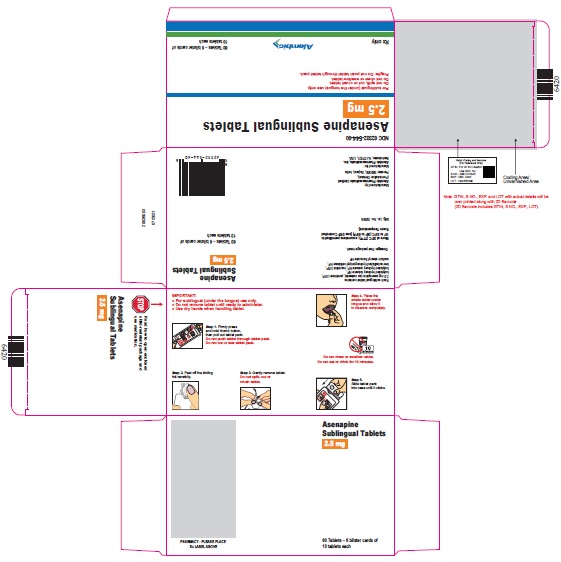
Asenapine 2.5 mg Tablet, 600-count — NDC 62332-544-60 (Billing 62332-0544-60)
This is a package of 600 tablets of Asenapine 2.5 mg Tablet from Alembic Pharmaceuticals Inc., marketed since Jul 2021 and currently FDA-listed; retail pharmacies pay about $3.09 per tablet (NADAC). It is the main listing for this product, which comes in 2 package sizes.
NDC database record
One package, one record: these facts belong to NDC 62332-544-60 alone.
- Record
- FDA NDC Directory package listing · Human prescription drug
- Code segments
- 62332 labeler · 544 product · 60 package
- Package marketed since
- Jul 20, 2021
- Sample package
- No — commercial package
- Listing certified through
- Dec 31, 2026
- Billing quantity
- 600 EA per package
- Barcode (UPC-A, from the NDC)
- 3 6233254460 8
- Medicaid fills, this package
- 1,293 prescriptions in the last four reported quarters
- FDA record last changed
- Jul 24, 2026
Identity & classification
Regulatory identifiers FDA, NLM and CMS codes for this package
Drug-database identifiers Medi-Span GPI and First Databank GCN / HICL / AHFS classification
- GSN (GCN sequence number): 073981
- GCN: 38479
- GPI-14 (Medi-Span): 59155015100710
- HICL (First Databank): 036576
- AHFS class code: 28:16.08.04
- RxCUI (RxNorm): 859975
Where does this data come from?
- FDA openFDA NDC Directory · synced Oct 8, 2026
- FDA label on DailyMed · label index refreshed Oct 8, 2026
- RxNorm (NLM RxNav) · catalog refreshed Oct 1, 2026
- Medi-Span GPI (licensed)
- First Databank (licensed) · refreshed Oct 8, 2026
RxNorm drug class
This medicine belongs to the Atypical Antipsychotic class.
Where does this data come from?
- RxClass (NLM) · catalog refreshed Oct 1, 2026
Clinical
- Great question — this is actually really important. When you swallow asenapine, your body absorbs very little of it. Letting it dissolve under your tongue gets it into your bloodst...
- Why do I have to let the tablet dissolve under my tongue instead of just swallowing it?
- Yes, numbness or tingling in the mouth is one of the most commonly reported side effects with the sublingual tablets, and it's generally harmless. It typically fades on its own. If...
- My mouth feels numb after taking it — is that normal?
Patient education
Supplement & herbal interactions
Some supplements/herbs that may interact with Asenapine — tap one for details:
Where does this data come from?
- MedlinePlus (NLM) · refreshed Oct 8, 2026
- FDA label on DailyMed · label index refreshed Oct 8, 2026
Ask a licensed pharmacist directly — free, answered by our team.
Pricing
A drug doesn't have one price. Each row is a different public payment system, and none is what you'd pay at the counter — that depends on your insurance. The ⓘ on each row explains what it measures.
| Price system | Per ea | Per package |
|---|---|---|
| Retail pharmacies payNADAC · weekly | $3.088 | $1,852.86 / 600 tablets |
| Medicaid paysCMS SDUD · 12 mo | $3.25 | $1,947.78 / 600 tablets |
| Medicare drug plans payPart D · Q2 2026 | $5.16 | $3,098.28 / 600 tablets |
Where does this data come from?
- CMS NADAC weekly file · file of Oct 7, 2026
- CMS ASP pricing files · refreshed Sep 20, 2026
- CMS Medicaid State Drug Utilization Data · through Q4 2025
- CMS Part D plan pricing files · refreshed Sep 24, 2026
- VA National Acquisition Center price file
Packaging — all sizes for this product
| Package NDC | Description | Per unit | Per pack | Marketing start | Marketing end | Status |
|---|---|---|---|---|---|---|
| 62332-0544-31 62332-544-31 | 100 BLISTER PACK in 1 CARTON / 10 TABLET in 1 BLISTER PACK | — | — | 2021-07-20 | — | Active |
| 62332-0544-60 You're viewing this Main listing | 60 BLISTER PACK in 1 CARTON / 10 TABLET in 1 BLISTER PACK | $3.09 / ea | $1,852.84 | 2021-07-20 | — | Active |
In Medicaid, this is the most-dispensed pack of this product — about 100% of fills over the last four reported quarters. See all packs ↓
Pack size FAQ
What quantity is in this package?
How does this package differ from NDC 62332-0544-31?
What NDC number is used to bill for this package of Asenapine 2.5 mg Tablet?
Prices are the latest CMS NADAC pharmacy acquisition cost per NDC; per-pack figures are per-unit × pack quantity, shown only when the pack is denominated in the same measure NADAC prices.
Therapeutic equivalents
| Product | Labeler | Pack | NADAC/unit | TE | Status | Price vs. this |
|---|---|---|---|---|---|---|
| Asenapine 2.5 mgthis 62332-0544-60 | Alembic | 600 tablets | $3.088 | AB | Availability likely | — |
| Saphris 2.5 mg 00456-2402-10 | Allergan, | 10 tablets | — | AB | FDA listed | — |
| Asenapine 2.5 mg 46708-0544-31 | Alembic | 1000 tablets | — | AB | FDA listed | — |
| Asenapine 2.5 mg 51991-0928-11 | Breckenridge | 100 tablets | — | AB | FDA listed | — |
| Asenapine 2.5 mg 69539-0245-34 | MSN | 60 tablets | — | AB | FDA listed | — |
Where does this data come from?
- FDA openFDA NDC Directory · synced Oct 8, 2026
- FDA Orange Book · refreshed Oct 3, 2026
- CMS NADAC weekly file · file of Oct 7, 2026
Availability & generic status
This product is an FDA-approved generic. Other versions of the same drug are listed under Therapeutic equivalents, least expensive first.
Where does this data come from?
- FDA Orange Book · refreshed Oct 3, 2026
What it looks like
Where does this data come from?
- FDA label on DailyMed · label index refreshed Oct 8, 2026
Inactive Ingredients / Excipients
Inactive ingredients, also called excipients, are components of the drug product other than the active ingredient. They may include fillers, dyes, coatings, preservatives, flavors, or other formulation ingredients.
🧪 Avoiding an ingredient? See Asenapine inactive ingredients by manufacturer: every current product's list side by side, so you can ask your pharmacy for the version that does not list it.
💡 Tap an ingredient (hover on desktop) to see what it is and why it’s used.
-
UNII REK4960K2U
Butylated hydroxyanisole is a synthetic preservative that prevents oils and fats in medicines from spoiling or becoming rancid. It keeps the medicine stable and extends its shelf life.
-
UNII 1P9D0Z171K
BHT is a synthetic antioxidant that prevents fats and oils in medicines from breaking down and becoming rancid. It helps keep the product stable and effective during storage.
-
UNII 2165RE0K14
A plant-based thickener made from cellulose that helps control how quickly the medicine dissolves and releases its active ingredient. It also binds ingredients together and improves the tablet's texture and handling during manufacturing.
-
UNII 3OWL53L36A
A natural sugar alcohol derived from seaweed or synthesized in the lab. It's used as a filler to add bulk, a sweetener in sugar-free formulas, and a disintegrant to help tablets break apart in the stomach.
-
UNII U725QWY32X
Povidone K30 is a synthetic polymer made from petroleum. It acts as a binder to hold tablet ingredients together and as a disintegrant to help the tablet break apart in the stomach so the medicine can be absorbed.
-
UNII 7CV7WJK4UI
Sodium stearyl fumarate is a synthetic compound made from stearyl alcohol and fumaric acid. It acts as a lubricant and glidant in tablets and capsules, helping ingredients flow smoothly during manufacturing and preventing sticking.
6 inactive ingredients listed in the exact product block matched to this NDC.
Where does this data come from?
ingredient classCode="IACT" elements from the exact product block matched by this NDC. Label-section narrative from DailyMed / the openFDA label index is shown separately when available.- FDA label on DailyMed · label index refreshed Oct 8, 2026
- FDA openFDA NDC Directory · synced Oct 8, 2026
Inactive ingredient FAQ
Are inactive ingredients the same for every manufacturer?
Why might an inactive ingredient be missing?
Can inactive ingredients matter?
Manufacturer & labeler
More NDCs from Alembic Pharmaceuticals Inc. labeler code 62332
- doxorubicin hydrochloride 2 mg/mL Injection, Suspension, Liposomal NDC 62332-525-25
- Metolazone 2.5 mg Tablet NDC 62332-532-31
- Metolazone 5 mg Tablet NDC 62332-533-31
- Metolazone 10 mg Tablet NDC 62332-534-31
- Fenofibrate 54 mg Tablet, Film Coated NDC 62332-538-90
- Fenofibrate 160 mg Tablet, Film Coated NDC 62332-539-90
- Timolol Maleate Ophthalmic Gel Forming Solution, 0.25% 2.5 mg/mL Solution/ Drops NDC 62332-545-05
- Timolol Maleate Ophthalmic Gel Forming Solution, 0.5% 5 mg/mL Solution/ Drops NDC 62332-546-05
- Clobetasol Propionate .5 mg/g Cream NDC 62332-547-15
- CLOBETASOL PROPIONATE .05 g/100mL Shampoo NDC 62332-548-04
- ADAPALENE 3 mg/g Gel NDC 62332-549-15
- Desonide .5 mg/mL Lotion NDC 62332-550-18
Where does this data come from?
- FDA openFDA NDC Directory · synced Oct 8, 2026
- Drugs@FDA
Full prescribing information FDA SPL
🚨 Boxed Warning ▾
WARNING: INCREASED MORTALITY IN ELDERLY PATIENTS WITH DEMENTIA-RELATED PSYCHOSIS Elderly patients with dementia-related psychosis treated with antipsychotic drugs are at an increased risk of death. Asenapine is not approved for the treatment of patients with dementia-related psychosis [see Warnings and Precautions (5.1, 5.2)]. WARNING: INCREASED MORTALITY IN ELDERLY PATIENTS WITH DEMENTIA-RELATED PSYCHOSIS See full prescribing information for complete boxed warning.
Elderly patients with dementia-related psychosis treated with antipsychotic drugs are at an increased risk of death. Asenapine is not approved for the treatment of patients with dementia-related psychosis. ( 5.1 , 5.2 )
🎯 Indications and Usage ▾
1 INDICATIONS AND USAGE Asenapine is indicated for: • Bipolar I disorder [see Clinical Studies (14.2)] • Acute monotherapy of manic or mixed episodes, in pediatric patients 10 to 17 years of age • Adjunctive treatment to lithium or valproate in adults Asenapine is an atypical antipsychotic indicated for ( 1 ): Bipolar I disorder o Acute monotherapy treatment of manic or mixed episodes, in pediatric patients 10 to 17 years of age o Adjunctive treatment to lithium or valproate in adults
⏱️ Dosage and Administration ▾
2 DOSAGE AND ADMINISTRATION Starting Dose Recommended Dose Maximum Dose Bipolar mania – pediatric patients (10 to 17 years): monotherapy ( 2.3 ) 2.5 mg sublingually twice daily 2.5 to 10 mg sublingually twice daily 10 mg sublingually twice daily Bipolar mania – adults: as an adjunct to lithium or valproate ( 2.3 ) 5 mg sublingually twice daily 5 to 10 mg sublingually twice daily 10 mg sublingually twice daily • Do not swallow tablet. Asenapine sublingual tablets should be placed under the tongue and left to dissolve completely.
The tablet will dissolve in saliva within seconds. Eating and drinking should be avoided for 10 minutes after administration. ( 2.1 , 17 )
2.1Administration Instructions Asenapine is a sublingual tablet. To ensure optimal absorption, patients should be instructed to place the tablet under the tongue and allow it to dissolve completely. The tablet will dissolve in saliva within seconds.
Asenapine sublingual tablets should not be split, crushed, chewed, or swallowed [see Clinical Pharmacology (12.3)]. Patients should be instructed to not eat or drink for 10 minutes after administration [see Clinical Pharmacology (12.3)].
2.3Bipolar I Disorder Acute Treatment of Manic or Mixed Episodes: Monotherapy in Pediatric Patients: The recommended dose of asenapine is 2.5 mg to 10 mg twice daily in pediatric patients 10 to 17 years of age, and dose may be adjusted for individual response and tolerability. The starting dose of asenapine is 2.5 mg twice daily. After 3 days, the dose can be increased to 5 mg twice daily, and from 5 mg to 10 mg twice daily after 3 additional days.
Pediatric patients aged 10 to 17 years appear to be more sensitive to dystonia with initial dosing with asenapine when the recommended escalation schedule is not followed [see Use in Specific Populations (8.4)] . The safety of doses greater than 10 mg twice daily has not been evaluated in clinical trials [see Use in Specific Populations (8.4) and Clinical Pharmacology (12.3)] . Adjunctive Therapy in Adults: The recommended starting dose of asenapine is 5 mg twice daily when administered as adjunctive therapy with either lithium or valproate.
Depending on the clinical response and tolerability in the individual patient, the dose can be increased to 10 mg twice daily. The safety of doses above 10 mg twice daily as adjunctive therapy with lithium or valproate has not been evaluated in clinical trials. For patients on asenapine, used as adjunctive therapy with lithium or valproate, it is generally recommended that responding patients continue treatment beyond the acute episode.
💊 Dosage Forms and Strengths ▾
3 DOSAGE FORMS AND STRENGTHS 2.5 mg: White to off white, round tablets debossed with ‘L’ on one side and ‘70’ on the other side. 5 mg: White to off white, round tablets debossed with “464” on one side and plain on other side. 10 mg: White to off white round tablets debossed with “465” on one side and plain on other side. Sublingual tablets: 2.5 mg, 5 mg and 10 mg ( 3 )
⛔ Contraindications ▾
4 CONTRAINDICATIONS Asenapine is contraindicated in patients with: Severe hepatic impairment (Child-Pugh C) [see Specific Populations (8.7), Clinical Pharmacology (12.3)] . A history of hypersensitivity reactions to asenapine. Reactions have included anaphylaxis, angioedema, hypotension, tachycardia, swollen tongue, dyspnea, wheezing and rash [see Warnings and Precautions (5.6), Adverse Reactions (6)] . • Severe hepatic impairment (Child-Pugh C).
( 8.7 , 12.3 ) • Known hypersensitivity to asenapine, or to any components in the formulation. ( 4 , 5.6 , 17 )
⚠️ Warnings and Cautions ▾
5 WARNINGS AND PRECAUTIONS • Cerebrovascular Adverse Reactions in Elderly Patients with Dementia-Related Psychosis: Increased incidence of cerebrovascular adverse reactions (e.g., stroke, transient ischemic attack). ( 5.2 ) • Neuroleptic Malignant Syndrome: Manage with immediate discontinuation and close monitoring. ( 5.3 ) • Tardive Dyskinesia: Discontinue if clinically appropriate.
( 5.4 ) • Metabolic Changes: Monitor for hyperglycemia/diabetes mellitus, dyslipidemia, and weight gain. ( 5.5 ) • Orthostatic Hypotension: Monitor heart rate and blood pressure and warn patients with known cardiovascular or cerebrovascular disease, and risk of dehydration or syncope. ( 5.7 ) • Leukopenia, Neutropenia, and Agranulocytosis: Perform complete blood counts (CBC) in patients with pre-existing low white blood cell count (WBC) or history of leukopenia or neutropenia.
Consider discontinuing asenapine if a clinically significant decline in WBC occurs in absence of other causative factors. ( 5.9 ) • QT Prolongation: Increases in QT interval; avoid use with drugs that also increase the QT interval and in patients with risk factors for prolonged QT interval. ( 5.10 ) • Seizures: Use cautiously in patients with a history of seizures or with conditions that lower the seizure threshold.
( 5.12 ) • Potential for Cognitive and Motor Impairment: Use caution when operating machinery. ( 5.13 )
5.1Increased Mortality in Elderly Patients with Dementia-Related Psychosis Elderly patients with dementia-related psychosis treated with antipsychotic drugs are at an increased risk of death. Analyses of 17 placebo-controlled trials (modal duration of 10 weeks), largely in patients taking atypical antipsychotic drugs, revealed a risk of death in drug-treated patients of between 1.6 to 1.7 times the risk of death in placebo-treated patients. Over the course of a typical 10-week controlled trial, the rate of death in drug-treated patients was about 4.5%, compared to a rate of about 2.6% in the placebo group.
Although the causes of death were varied, most of the deaths appeared to be either cardiovascular (e.g., heart failure, sudden death) or infectious (e.g., pneumonia) in nature. Asenapine is not approved for the treatment of patients with dementia-related psychosis [see Boxed Warning and Warnings and Precautions (5.2)].
5.2Cerebrovascular Adverse Events, Including Stroke, In Elderly Patients with Dementia-Related Psychosis In placebo-controlled trials in elderly subjects with dementia, patients randomized to risperidone, aripiprazole, and olanzapine had a higher incidence of stroke and transient ischemic attack, including fatal stroke. Asenapine is not approved for the treatment of patients with dementia-related psychosis [see Boxed Warning and Warnings and Precautions (5.1)].
5.3Neuroleptic Malignant Syndrome A potentially fatal symptom complex sometimes referred to as Neuroleptic Malignant Syndrome (NMS) has been reported in association with administration of antipsychotic drugs. Clinical manifestations of NMS are hyperpyrexia, muscle rigidity, delirium, and autonomic instability. Additional signs may include elevated creatine phosphokinase, myoglobinuria (rhabdomyolysis), and acute renal failure.
If NMS is suspected, immediately discontinue asenapine and provide intensive symptomatic treatment and monitoring.
5.4Tardive Dyskinesia Tardive dyskinesia, a syndrome consisting of potentially irreversible, involuntary, dyskinetic movements, may develop in patients treated with antipsychotic drugs, including asenapine. The risk appears to be highest among the elderly, especially elderly women, but it is not possible to predict which patients are likely to develop the syndrome. Whether antipsychotic drug products differ in their potential to cause tardive dyskinesia is unknown.
The risk of tardive dyskinesia and the likelihood that it will become irreversible increase with the duration of treatment and the cumulative dose. The syndrome can develop after a relat… [Excerpted — this section continues on DailyMed.]
🤒 Adverse Reactions ▾
6 ADVERSE REACTIONS The following adverse reactions are discussed in more detail in other sections of the labeling: Use in Elderly Patients with Dementia-Related Psychosis [see Boxed Warning and Warnings and Precautions (5.1 and 5.2)] Neuroleptic Malignant Syndrome [see Warnings and Precautions (5.3)] Tardive Dyskinesia [see Warnings and Precautions (5.4)] Metabolic Changes [see Warnings and Precautions (5.5)] Hypersensitivity Reactions [see Contraindications, Warnings and Precautions (5.6)] Orthostatic Hypotension, Syncope, and other Hemodynamic Effects [see Warnings and Precautions (5.7)] Falls [see Warnings and Precautions (5.8)] Leukopenia, Neutropenia, and Agranulocytosis [see Warnings and Precautions (5.9)] QT Interval Prolongation [see Warnings and Precautions (5.10)] Hyperprolactinemia [see Warnings and Precautions (5.11)] Seizures [see Warnings and Precautions (5.12)] Potential for Cognitive and Motor Impairment [see Warnings and Precautions (5.13)] Body Temperature Regulation [see Warnings and Precautions (5.14)] Dysphagia [see Warnings and Precautions (5.15)] The most common adverse reactions (≥5% and at least twice the rate of placebo) reported during the adjunctive therapy trial in bipolar I disorder in adults were somnolence and oral hypoesthesia.
The rates were lower at the 5 mg twice daily dose than the 10 mg twice daily dose for all of these most common adverse reactions. The adult information below is derived from a clinical trial database for asenapine consisting of over 5355 patients and/or healthy subjects exposed to one or more sublingual doses of asenapine. A total of 1427 asenapine-treated patients were treated for at least 24 weeks and 785 asenapine-treated patients had at least 52 weeks of exposure at therapeutic doses.
In a 3-week monotherapy trial, the most common adverse reactions (≥5% and at least twice the rate of placebo) reported in pediatric patients with bipolar I disorder treated with asenapine were somnolence, dizziness, dysgeusia, oral hypoesthesia, nausea, increased appetite, fatigue, and increased weight. No new major safety findings were reported from a 50-week, open-label, uncontrolled safety trial. A total of 651 pediatric patients were treated with asenapine.
Of these patients, 352 pediatric patients were treated with asenapine for at least 180 days and 58 pediatric patients treated with asenapine had at least 1 year of exposure. The safety of asenapine was evaluated in 403 pediatric patients with bipolar I disorder who participated in a 3-week, placebo-controlled, double-blind trial, of whom 302 patients received asenapine at fixed doses ranging from 2.5 mg to 10 mg twice daily. The stated frequencies of adverse reactions represent the proportion of individuals who experienced a treatment-emergent adverse event of the type listed.
A reaction was considered treatment emergent if it occurred for the first time or worsened while receiving therapy following baseline evaluation. The most commonly observed adverse reactions (incidence ≥5% and at least twice that for placebo) were ( 6.1 ): Bipolar I Disorder Pediatric Patients (Monotherapy): somnolence, dizziness, dysgeusia, oral paresthesia, nausea, increased appetite, fatigue, increased weight. • Bipolar I Disorder Adults (Adjunctive): somnolence, oral hypoesthesia. To report SUSPECTED ADVERSE REACTIONS, contact Alembic Pharmaceuticals Limited at 1-866-210-9797 or FDA at 1-800-FDA-1088 or www.fda.gov/medwatch .
6.1Clinical Trials Experience Because clinical trials are conducted under widely varying conditions, adverse reaction rates observed in the clinical trials of a drug cannot be directly compared to rates in the clinical trials of another drug and may not reflect the rates observed in practice. Monotherapy in Pediatric Patients with Bipolar Mania: The following findings are based on a 3-week , placebo-controlled trial for bipolar mania in which asenapine was administered at doses of 2.5 mg, 5 mg, or 10 mg twice daily.
Adverse React… [Excerpted — this section continues on DailyMed.]
🔄 Drug Interactions ▾
7 DRUG INTERACTIONS • Antihypertensive Drugs: Asenapine may cause hypotension. ( 5.7 , 7.1 , 12.3 ) • Paroxetine (CYP2D6 substrate and inhibitor): Reduce paroxetine by half when used in combination with asenapine. ( 7.1 , 12.3 )
7.1Drugs Having Clinically Important Drug Interactions with Asenapine Table 12: Clinically Important Drug Interactions with Asenapine Concomitant Drug Name or Drug Class Clinical Rationale Clinical Recommendation Antihypertensive Drugs Because of its α 1 -adrenergic antagonism with potential for inducing hypotension, asenapine may enhance the effects of certain antihypertensive agents [see Warnings and Precautions (5.7)] . Monitor blood pressure and adjust dosage of antihypertensive drug accordingly. Strong CYP1A2 Inhibitors (e.g., Fluvoxamine) Asenapine is metabolized by CYP1A2.
Marginal increase of asenapine exposure was observed when asenapine is used with fluvoxamine at 25 mg administered twice daily [see Clinical Pharmacology (12.3)] . However, the tested fluvoxamine dose was suboptimal. Full therapeutic dose of fluvoxamine is expected to cause a greater increase in asenapine exposure.
Dosage reduction for asenapine based on clinical response may be necessary. CYP2D6 substrates and inhibitors (e.g., paroxetine) Asenapine may enhance the inhibitory effects of paroxetine on its own metabolism. Concomitant use of paroxetine with asenapine increased the paroxetine exposure by 2-fold as compared to use paroxetine alone [see Clinical Pharmacology (12.3)].
Reduce paroxetine dose by half when paroxetine is used in combination with asenapine.
7.2Drugs Having No Clinically Important Interactions with Asenapine No dosage adjustment of asenapine is necessary when administered concomitantly with paroxetine (see Table 12 in Drug Interactions (7.1) for paroxetine dosage adjustment), imipramine, cimetidine, valporate, lithium, or a CYP3A4 inducer (e.g., carbamazepine, phenytoin, rifampin). In addition, valproic acid and lithium pre-dose serum concentrations collected from an adjunctive therapy study were comparable between asenapine-treated patients and placebo-treated patients indicating a lack of effect of asenapine on valproic and lithium plasma levels.
👥 Use in Specific Populations ▾
8 USE IN SPECIFIC POPULATIONS Pregnancy: May cause extrapyramidal and/or withdrawal symptoms in neonates with third trimester exposure. ( 8.1 ) Pediatric Use: Safety and efficacy in the treatment of bipolar I disorder in patients less than 10 years of age have not been evaluated. ( 8.4 )
8.1Pregnancy Pregnancy Exposure Registry There is a pregnancy exposure registry that monitors pregnancy outcomes in women exposed to asenapine during pregnancy. For more information contact the National Pregnancy Registry for Atypical Antipsychotics at 1-866-961-2388 or visit http://womensmentalhealth.org/clinical-and-research-programs/pregnancyregistry/. Risk Summary Neonates exposed to antipsychotic drugs during the third trimester of pregnancy are at risk for extrapyramidal and/or withdrawal symptoms.
Studies have not been conducted with asenapine in pregnant women. There are no available human data informing the drug-associated risk. The background risk of major birth defects and miscarriage for the indicated populations are unknown.
However, the background risk in the U.S. general population of major birth defects is 2 to 4% and of miscarriage is 15 to 20% of clinically recognized pregnancies. No teratogenicity was observed in animal reproduction studies with intravenous administration of asenapine to rats and rabbits during organogenesis at doses 0.7 and 0.4 times, respectively, the maximum recommended human dose (MRHD) of 10 mg sublingually twice daily. In a pre-and post-natal study in rats, intravenous administration of asenapine at doses up to 0.7 times the MRHD produced increases in post-implantation loss and early pup deaths, and decreases in subsequent pup survival and weight gain [see Data].
Advise pregnant women of the potential risk to a fetus. Clinical Considerations Fetal/Neonatal Adverse Reactions Extrapyramidal and/or withdrawal symptoms, including agitation, hypertonia, hypotonia, tremor, somnolence, respiratory distress and feeding disorder have been reported in neonates who were exposed to antipsychotic drugs during the third trimester of pregnancy. These symptoms have varied in severity.
Some neonates recovered within hours or days without specific treatment; others required prolonged hospitalization. Monitor neonates for extrapyramidal and/or withdrawal symptoms and manage symptoms appropriately. Data Animal Data In animal studies, asenapine increased post-implantation loss and decreased pup weight and survival at doses similar to or less than recommended clinical doses.
In these studies there was no increase in the incidence of structural abnormalities caused by asenapine. Asenapine was not teratogenic in reproduction studies in rats and rabbits at intravenous doses up to 1.5 mg/kg in rats and 0.44 mg/kg in rabbits administered during organogenesis. These doses are 0.7 and 0.4 times, respectively, the maximum recommended human dose (MRHD) of 10 mg twice daily given sublingually on a mg/m 2 basis.
Plasma levels of asenapine were measured in the rabbit study, and the area under the curve (AUC) at the highest dose tested was 2 times that in humans receiving the MRHD. In a study in which rats were treated from day 6 of gestation through day 21 postpartum with intravenous doses of asenapine of 0.3, 0.9, and 1.5 mg/kg/day (0.15, 0.4, and 0.7 times the MRHD of 10 mg twice daily given sublingually on a mg/m 2 basis), increases in post-implantation loss and early pup deaths were seen at all doses, and decreases in subsequent pup survival and weight gain were seen at the two higher doses.
A cross-fostering study indicated that the decreases in pup survival were largely due to prenatal drug effects. Increases in post-implantation loss and decreases in pup weight and survival were also seen when pregnant rats were dosed orally with asenapine.
8.2Lactation Risk Summary Lactation studies have not been conducted to assess the presence of asenapine in human milk, the effects of asenapine on the breastfed infant, or the effects of as… [Excerpted — this section continues on DailyMed.]
🤰 Pregnancy ▾
8.1Pregnancy Pregnancy Exposure Registry There is a pregnancy exposure registry that monitors pregnancy outcomes in women exposed to asenapine during pregnancy. For more information contact the National Pregnancy Registry for Atypical Antipsychotics at 1-866-961-2388 or visit http://womensmentalhealth.org/clinical-and-research-programs/pregnancyregistry/. Risk Summary Neonates exposed to antipsychotic drugs during the third trimester of pregnancy are at risk for extrapyramidal and/or withdrawal symptoms.
Studies have not been conducted with asenapine in pregnant women. There are no available human data informing the drug-associated risk. The background risk of major birth defects and miscarriage for the indicated populations are unknown.
However, the background risk in the U.S. general population of major birth defects is 2 to 4% and of miscarriage is 15 to 20% of clinically recognized pregnancies. No teratogenicity was observed in animal reproduction studies with intravenous administration of asenapine to rats and rabbits during organogenesis at doses 0.7 and 0.4 times, respectively, the maximum recommended human dose (MRHD) of 10 mg sublingually twice daily. In a pre-and post-natal study in rats, intravenous administration of asenapine at doses up to 0.7 times the MRHD produced increases in post-implantation loss and early pup deaths, and decreases in subsequent pup survival and weight gain [see Data].
Advise pregnant women of the potential risk to a fetus. Clinical Considerations Fetal/Neonatal Adverse Reactions Extrapyramidal and/or withdrawal symptoms, including agitation, hypertonia, hypotonia, tremor, somnolence, respiratory distress and feeding disorder have been reported in neonates who were exposed to antipsychotic drugs during the third trimester of pregnancy. These symptoms have varied in severity.
Some neonates recovered within hours or days without specific treatment; others required prolonged hospitalization. Monitor neonates for extrapyramidal and/or withdrawal symptoms and manage symptoms appropriately. Data Animal Data In animal studies, asenapine increased post-implantation loss and decreased pup weight and survival at doses similar to or less than recommended clinical doses.
In these studies there was no increase in the incidence of structural abnormalities caused by asenapine. Asenapine was not teratogenic in reproduction studies in rats and rabbits at intravenous doses up to 1.5 mg/kg in rats and 0.44 mg/kg in rabbits administered during organogenesis. These doses are 0.7 and 0.4 times, respectively, the maximum recommended human dose (MRHD) of 10 mg twice daily given sublingually on a mg/m 2 basis.
Plasma levels of asenapine were measured in the rabbit study, and the area under the curve (AUC) at the highest dose tested was 2 times that in humans receiving the MRHD. In a study in which rats were treated from day 6 of gestation through day 21 postpartum with intravenous doses of asenapine of 0.3, 0.9, and 1.5 mg/kg/day (0.15, 0.4, and 0.7 times the MRHD of 10 mg twice daily given sublingually on a mg/m 2 basis), increases in post-implantation loss and early pup deaths were seen at all doses, and decreases in subsequent pup survival and weight gain were seen at the two higher doses.
A cross-fostering study indicated that the decreases in pup survival were largely due to prenatal drug effects. Increases in post-implantation loss and decreases in pup weight and survival were also seen when pregnant rats were dosed orally with asenapine.
🧒 Pediatric Use ▾
8.4Pediatric Use Safety and efficacy of asenapine in pediatric patients below the age of 10 years of age have not been evaluated. Bipolar I Disorder The safety and efficacy of asenapine as monotherapy in the treatment of bipolar I disorder were established in a 3week, placebo-controlled, double-blind trial of 403 pediatric patients 10 to 17 years of age, of whom 302 patients received asenapine at fixed doses ranging from 2.5 mg to 10 mg twice daily [see Dosage and Administration (2.3), Adverse Reactions (6.1), Clinical Pharmacology (12.3), and Clinical Studies (14.2)] .
In a Phase 1 study, pediatric patients aged 10 to 17 years appeared to be more sensitive to dystonia with initial dosing with asenapine when the recommended dose escalation schedule was not followed. Similar safety findings were reported from a 50-week, open-label, uncontrolled safety trial in pediatric patients with bipolar I disorder treated with asenapine monotherapy. The safety and efficacy of asenapine as adjunctive therapy in the treatment of bipolar I disorder have not been established in the pediatric population.
In general, the pharmacokinetics of asenapine in pediatric patients (10 to 17 years) and adults are similar [see Clinical Pharmacology (12.3)] . Juvenile Animal Data Subcutaneous administration of asenapine to juvenile rats for 56 days from day 14 of age to day 69 of age at 0.4, 1.2, and 3.2 mg/kg/day (0.2, 0.6 and 1.5 times the maximum recommended human dose of 10 mg twice daily given sublingually on a mg/m 2 basis) resulted in significant reduction in body weight gain in animals of both sexes at all dose levels from the start of dosing until weaning.
Body weight gain remained reduced in males to the end of treatment, however, recovery was observed once treatment ended. Neurobehavioral assessment indicated increased motor activity in animals at all dose levels following the completion of treatment, with the evidence of recovery in males. There was no recovery after the end of treatment in female activity pattern as late as day 30 following the completion of treatment (last retesting).
Therefore, a No Observed Adverse Effect Level (NOAEL) for the juvenile animal toxicity of asenapine could not be determined. There were no treatment-related effects on the startle response, learning/memory, organ weights, microscopic evaluations of the brain and, reproductive performance (except for minimally reduced conception rate and fertility index in males and females administered 1.2 and 3.2 mg/kg/day).
🧓 Geriatric Use ▾
8.5Geriatric Use Clinical studies of asenapine in the treatment of bipolar mania and another indication did not include sufficient numbers of patients aged 65 and over to determine whether or not they respond differently than younger patients. Of the approximately 2250 patients in pre-marketing clinical studies of asenapine, 1.1% (25) were 65 years of age or over. Multiple factors that might increase the pharmacodynamic response to asenapine, causing poorer tolerance or orthostasis, could be present in elderly patients, and these patients should be monitored carefully.
Based on a pharmacokinetic study in elderly patients, dosage adjustments are not recommended based on age alone [see Clinical Pharmacology (12.3)] . Elderly patients with dementia-related psychosis treated with asenapine are at an increased risk of death compared to placebo. Asenapine is not approved for the treatment of patients with dementia-related psychosis [see Boxed Warning] .
🆘 Overdosage ▾
10 OVERDOSAGE Human Experience: In adult pre-marketing clinical studies involving more than 3350 patients and/or healthy subjects, accidental or intentional acute over dosage of asenapine was identified in 3 patients. Among these few reported cases of overdose, the highest estimated ingestion of asenapine was 400 mg. Reported adverse reactions at the highest dosage included agitation and confusion.
Management of Overdosage: There is no specific antidote to asenapine. The possibility of multiple drug involvement should be considered. An electrocardiogram should be obtained and management of overdose should concentrate on supportive therapy, maintaining an adequate airway, oxygenation and ventilation, and management of symptoms.
Consult with a Certified Poison Control Center for up-to-date guidance and advice on the management of overdosage (1-800-222-1222.) Hypotension and circulatory collapse should be treated with appropriate measures, such as intravenous fluids and/or sympathomimetic agents (epinephrine and dopamine should not be used, since beta stimulation may worsen hypotension in the setting of asenapine-induced alpha blockade). In case of severe extrapyramidal symptoms, anticholinergic medication should be administered. Close medical supervision and monitoring should continue until the patient recovers.
🧬 Clinical Pharmacology ▾
12 CLINICAL PHARMACOLOGY
12.1Mechanism of Action The mechanism of action of asenapine in bipolar I disorder is unknown.
12.2Pharmacodynamics Asenapine exhibits high affinity for serotonin 5-HT 1A , 5-HT 1B , 5-HT 2A , 5-HT 2B , 5-HT 2C , 5-HT 5A , 5-HT 6 , and 5-HT 7 receptors (Ki values of 2.5, 2.7, 0.07, 0.18, 0.03, 1.6, 0.25, and 0.11 nM, respectively), dopamine D 2A , D 2B , D 3 , D 4 , and D 1 receptors (Ki values of 1.3, 1.4, 0.42, 1.1, and 1.4 nM, respectively), α 1A , α 2A , α 2B , and α 2C -adrenergic receptors (Ki values of 1.2, 1.2, 0.33 and 1.2 nM, respectively), and histamine H 1 receptors (Ki value 1 nM), and moderate affinity for H 2 receptors (Ki value of 6.2 nM).
In in vitro assays asenapine acts as an antagonist at these receptors. Asenapine has no appreciable affinity for muscarinic cholinergic receptors (e.g., Ki value of 8128 nM for M 1 ).
12.3Pharmacokinetics Following a single 5 mg dose of asenapine, the mean C max was approximately 4 ng/mL and was observed at a mean t max of 1 hour. Elimination of asenapine is primarily through direct glucuronidation by UGT1A4 and oxidative metabolism by cytochrome P450 isoenzymes (predominantly CYP1A2). Following an initial more rapid distribution phase, the mean terminal half-life is approximately 24 hrs.
With multiple-dose twice-daily dosing, steady-state is attained within 3 days. Overall, steady-state asenapine pharmacokinetics are similar to single-dose pharmacokinetics. Absorption: Following sublingual administration, asenapine is rapidly absorbed with peak plasma concentrations occurring within 0.5 to 1.5 hours.
The absolute bioavailability of sublingual asenapine at 5 mg is 35%. Increasing the dose from 5 mg to 10 mg twice daily (a two-fold increase) results in less than linear (1.7 times) increases in both the extent of exposure and maximum concentration. The absolute bioavailability of asenapine when swallowed is low (<2% with an oral tablet formulation).
The intake of water several (2 or 5) minutes after asenapine administration resulted in decreased asenapine exposure. Therefore, eating and drinking should be avoided for 10 minutes after administration [see Dosage and Administration (2.1)] . Distribution: Asenapine is rapidly distributed and has a large volume of distribution (approximately 20 to 25 L/kg), indicating extensive extravascular distribution.
Asenapine is highly bound (95%) to plasma proteins, including albumin and α 1 -acid glycoprotein. Metabolism and Elimination: Direct glucuronidation by UGT1A4 and oxidative metabolism by cytochrome P450 isoenzymes (predominantly CYP1A2) are the primary metabolic pathways for asenapine. Asenapine is a high clearance drug with a clearance after intravenous administration of 52 L/h.
In this circumstance, hepatic clearance is influenced primarily by changes in liver blood flow rather than by changes in the intrinsic clearance, i.e., the metabolizing enzymatic activity. Following an initial more rapid distribution phase, the terminal half-life of asenapine is approximately 24 hours. Steady-state concentrations of asenapine are reached within 3 days of twice daily dosing.
After administration of a single dose of [ 14 C]-labeled asenapine, about 90% of the dose was recovered; approximately 50% was recovered in urine, and 40% recovered in feces. About 50% of the circulating species in plasma have been identified. The predominant species was asenapine N + -glucuronide; others included N-desmethylasenapine, N-desmethylasenapine N-carbamoyl glucuronide, and unchanged asenapine in smaller amounts.
Asenapine activity is primarily due to the parent drug. In vitro studies indicate that asenapine is a substrate for UGT1A4, CYP1A2 and to a lesser extent CYP3A4 and CYP2D6. Asenapine is a weak inhibitor of CYP2D6.
Asenapine does not cause induction of CYP1A2 or CYP3A4 activities in cultured human hepatocytes. Coadministration of asenapine with known inhibitors, inducers or substrates of these metabolic pathways has been st… [Excerpted — this section continues on DailyMed.]
🧬 Mechanism of Action ▾
12.1Mechanism of Action The mechanism of action of asenapine in bipolar I disorder is unknown.
📦 How Supplied / Storage and Handling ▾
16 HOW SUPPLIED/STORAGE AND HANDLING Asenapine sublingual tablets are supplied as: 2.5-mg Tablets: White to off white, round tablets debossed with ‘L’ on one side and ‘70’ on the other side. Cartons of 60 - 6 blister cards of 10 tablets each NDC 62332-544-60 Cartons of 100 - 10 blister cards of 10 tablets each NDC 62332-544-31 5-mg Tablets: White to off white, round tablets debossed with “464” on one side and plain on other side. Cartons of 60 - 6 blister cards of 10 tablets each NDC 62332-198-60 Cartons of 100 - 10 blister cards of 10 tablets each NDC 62332-198-31 10-mg Tablets: White to off white, round tablets debossed with “465” on one side and plain on other side.
Cartons of 60 - 6 blister cards of 10 tablets each NDC 62332-199-60 Cartons of 100 - 10 blister cards of 10 tablets each NDC 62332-199-31 Storage Store at 25°C (77°F); excursions permitted to 15° to 30°C (59° to 86°F) [see USP Controlled Room Temperature].
📋 Description ▾
11 DESCRIPTION Asenapine sublingual tablet contains asenapine maleate which is an atypical antipsychotic that is available for sublingual administration. Asenapine belongs to the class dibenzo-oxepino pyrroles. The chemical designation is (3a RS ,12b RS )-5-Chloro-2-methyl-2,3,3a,12b-tetrahydro-1 H dibenzo[2,3:6,7]oxepino[4,5- c ]pyrrole (2 Z )-2 butenedioate (1:1).
Its molecular formula is C 17 H 16 ClNO⋅C 4 H 4 O 4 and its molecular weight is 401.84 (free base: 285.8). The chemical structure is: Asenapine maleate is off-white to white powder. Asenapine is supplied for sublingual administration in tablets containing 2.5-mg, 5-mg or 10-mg asenapine; inactive ingredients include butylated hydroxy anisole, butylated hydroxy toluene, low-substituted hydroxypropyl cellulose, mannitol, povidone, sodium stearyl fumarate. asenapine-structure
💬 Information for Patients ▾
17 PATIENT COUNSELING INFORMATION Advise the patient to read the FDA-approved patient labeling (Instructions for Use). Dosage and Administration Counsel patients on proper sublingual administration of asenapine and advise them to read the FDA-approved patient labeling (Instructions for Use). When initiating treatment with asenapine, provide dosage escalation instructions [see Dosage and Administration (2)].
Hypersensitivity Reactions Counsel patients on the signs and symptoms of a serious allergic reaction (e.g., difficulty breathing, itching, swelling of the face, tongue or throat, feeling lightheaded etc.) and to seek immediate emergency assistance if they develop any of these signs and symptoms [see Contraindications (4), Warnings and Precautions (5.6) and Adverse Reactions (6)] . Application Site Reactions Inform patients that application site reactions, primarily in the sublingual area, including oral ulcers, blisters, peeling/sloughing and inflammation have been reported.
Instruct patients to monitor for these reactions [see Adverse Reactions (6.2)]. Inform patients that numbness or tingling of the mouth or throat may occur directly after administration of asenapine and usually resolves within 1 hour [see Adverse Reactions (6.1)] . Neuroleptic Malignant Syndrome Counsel patients about a potentially fatal symptom complex sometimes referred to as Neuroleptic Malignant Syndrome (NMS) that has been reported in association with administration of antipsychotic drugs.
Patients should contact their health care provider or report to the emergency room if they experience the following signs and symptoms of NMS, including hyperpyrexia, muscle rigidity, altered mental status, and evidence of autonomic instability (irregular pulse or blood pressure, tachycardia, diaphoresis, and cardiac dysrhythmia) [see Warnings and Precautions (5.3)] . Tardive Dyskinesia Counsel patients on the signs and symptoms of tardive dyskinesia and to contact their health care provider if these abnormal movements occur [see Warnings and Precautions (5.4)].
Metabolic Changes ( Hyperglycemia and Diabetes Mellitus, Dyslipidemia, and Weight Gain) Educate patients about the risk of metabolic changes, how to recognize symptoms of hyperglycemia (high blood sugar) and diabetes mellitus, and the need for specific monitoring, including blood glucose, lipids, and weight [see Warnings and Precautions (5.5)]. Orthostatic Hypotension Educate patients about the risk of orthostatic hypotension (symptoms include feeling dizzy or lightheaded upon standing) especially early in treatment, and also at times of re-initiating treatment or increases in dose [see Warnings and Precautions (5.7)] .
Leukopenia/Neutropenia Advise patients with a pre-existing low WBC or a history of drug induced leukopenia/neutropenia they should have their CBC monitored while taking asenapine [see Warnings and Precautions (5.9)] . Hyperprolactinemia Counsel patients on the signs and symptoms of hyperprolactinemia and to contact their health care provider if these abnormalities occur [see Warnings and Precautions (5.11)]. Interference with Cognitive and Motor Performance Caution patients about performing activities requiring mental alertness, such as operating hazardous machinery or operating a motor vehicle, until they are reasonably certain that asenapine therapy does not affect them adversely [see Warnings and Precautions (5.13)] .
Heat Exposure and Dehydration Counsel patients regarding appropriate care in avoiding overheating and dehydration [see Warnings and Precautions (5.14)] . Concomitant Medications Advise patients to inform their health care provider if they are taking, or plan to take, any prescription or over-the-counter medications since there is a potential for interactions [see Drug Interactions (7.1)] . Pregnancy Advise patients that asenapine may cause fetal harm as well as extrapyramidal and/or withdrawal symptoms in a neonate.
Advise patients to notify their healthcare provider with a… [Excerpted — this section continues on DailyMed.]
🧬 Pharmacokinetics ▾
12.3Pharmacokinetics Following a single 5 mg dose of asenapine, the mean C max was approximately 4 ng/mL and was observed at a mean t max of 1 hour. Elimination of asenapine is primarily through direct glucuronidation by UGT1A4 and oxidative metabolism by cytochrome P450 isoenzymes (predominantly CYP1A2). Following an initial more rapid distribution phase, the mean terminal half-life is approximately 24 hrs.
With multiple-dose twice-daily dosing, steady-state is attained within 3 days. Overall, steady-state asenapine pharmacokinetics are similar to single-dose pharmacokinetics. Absorption: Following sublingual administration, asenapine is rapidly absorbed with peak plasma concentrations occurring within 0.5 to 1.5 hours.
The absolute bioavailability of sublingual asenapine at 5 mg is 35%. Increasing the dose from 5 mg to 10 mg twice daily (a two-fold increase) results in less than linear (1.7 times) increases in both the extent of exposure and maximum concentration. The absolute bioavailability of asenapine when swallowed is low (<2% with an oral tablet formulation).
The intake of water several (2 or 5) minutes after asenapine administration resulted in decreased asenapine exposure. Therefore, eating and drinking should be avoided for 10 minutes after administration [see Dosage and Administration (2.1)] . Distribution: Asenapine is rapidly distributed and has a large volume of distribution (approximately 20 to 25 L/kg), indicating extensive extravascular distribution.
Asenapine is highly bound (95%) to plasma proteins, including albumin and α 1 -acid glycoprotein. Metabolism and Elimination: Direct glucuronidation by UGT1A4 and oxidative metabolism by cytochrome P450 isoenzymes (predominantly CYP1A2) are the primary metabolic pathways for asenapine. Asenapine is a high clearance drug with a clearance after intravenous administration of 52 L/h.
In this circumstance, hepatic clearance is influenced primarily by changes in liver blood flow rather than by changes in the intrinsic clearance, i.e., the metabolizing enzymatic activity. Following an initial more rapid distribution phase, the terminal half-life of asenapine is approximately 24 hours. Steady-state concentrations of asenapine are reached within 3 days of twice daily dosing.
After administration of a single dose of [ 14 C]-labeled asenapine, about 90% of the dose was recovered; approximately 50% was recovered in urine, and 40% recovered in feces. About 50% of the circulating species in plasma have been identified. The predominant species was asenapine N + -glucuronide; others included N-desmethylasenapine, N-desmethylasenapine N-carbamoyl glucuronide, and unchanged asenapine in smaller amounts.
Asenapine activity is primarily due to the parent drug. In vitro studies indicate that asenapine is a substrate for UGT1A4, CYP1A2 and to a lesser extent CYP3A4 and CYP2D6. Asenapine is a weak inhibitor of CYP2D6.
Asenapine does not cause induction of CYP1A2 or CYP3A4 activities in cultured human hepatocytes. Coadministration of asenapine with known inhibitors, inducers or substrates of these metabolic pathways has been studied in a number of drug-drug interaction studies [see Drug Interactions (7.1)] . Food: A crossover study in 26 healthy adult male subjects was performed to evaluate the effect of food on the pharmacokinetics of a single 5 mg dose of asenapine.
Consumption of food immediately prior to sublingual administration decreased asenapine exposure by 20%; consumption of food 4 hours after sublingual administration decreased asenapine exposure by about 10%. These effects are probably due to increased hepatic blood flow. In clinical trials establishing the efficacy and safety of asenapine, patients were instructed to avoid eating for 10 minutes following sublingual dosing.
There were no other restrictions with regard to the timing of meals in these trials [see Dosage and Administration (2.1)] . Water: In clinical trials establishing the efficacy and safety of asenapine, pa… [Excerpted — this section continues on DailyMed.]
🧬 Pharmacodynamics ▾
12.2Pharmacodynamics Asenapine exhibits high affinity for serotonin 5-HT 1A , 5-HT 1B , 5-HT 2A , 5-HT 2B , 5-HT 2C , 5-HT 5A , 5-HT 6 , and 5-HT 7 receptors (Ki values of 2.5, 2.7, 0.07, 0.18, 0.03, 1.6, 0.25, and 0.11 nM, respectively), dopamine D 2A , D 2B , D 3 , D 4 , and D 1 receptors (Ki values of 1.3, 1.4, 0.42, 1.1, and 1.4 nM, respectively), α 1A , α 2A , α 2B , and α 2C -adrenergic receptors (Ki values of 1.2, 1.2, 0.33 and 1.2 nM, respectively), and histamine H 1 receptors (Ki value 1 nM), and moderate affinity for H 2 receptors (Ki value of 6.2 nM).
In in vitro assays asenapine acts as an antagonist at these receptors. Asenapine has no appreciable affinity for muscarinic cholinergic receptors (e.g., Ki value of 8128 nM for M 1 ).
🔬 Clinical Studies ▾
14 CLINICAL STUDIES Efficacy of asenapine was established in the following trials: One fixed-dose, short term trial of monotherapy in children (10 to 17 years) with manic or mixed episodes associated with bipolar I disorder [see Clinical Studies (14.2)] One flexible-dose, short-term trial in adult patients with manic or mixed episode associated with bipolar I disorder as adjunctive treatment to lithium or valproate [see Clinical Studies (14.2)]
14.2Bipolar I Disorder Monotherapy Pediatric patients: The efficacy of asenapine in the treatment of acute mania was established in a single, 3-week, placebo-controlled, double-blind trial of 403 pediatric patients 10 to 17 years of age, of whom 302 patients received asenapine at fixed doses of 2.5 mg, 5 mg and 10 mg twice daily. All patients were started on 2.5 mg twice daily. For those assigned to 5 mg twice daily, the dose was increased to 5 mg twice daily after 3 days.
For those assigned to 10 mg twice daily, the dose was increased from 2.5 to 5 mg twice daily after 3 days, and then to 10 mg twice daily after 3 additional days. Asenapine was statistically superior to placebo in improving YMRS total score and the CGI-BP Severity of Illness overall score as measured by the change from baseline to week 3 (Trial 3 Pediatric in Table 14). An examination of subgroups did not reveal any clear evidence of differential responsiveness on the basis of age, sex, and race.
Adjunctive Therapy: The efficacy of asenapine as an adjunctive therapy in acute mania was established in a 12-week, placebo-controlled trial with a 3-week primary efficacy endpoint involving 326 adult patients with a manic or mixed episode of Bipolar I Disorder, with or without psychotic features, who were partially responsive to lithium or valproate monotherapy after at least 2 weeks of treatment. All patients randomized to asenapine were initially administered 5 mg twice daily, and the dose could be adjusted within the dose range of 5 to 10 mg twice daily from Day 2 onward based on efficacy and tolerability.
Asenapine was statistically superior to placebo in the reduction of manic symptoms (measured by the YMRS total score) as an adjunctive therapy to lithium or valproate monotherapy at week 3 (Trial 5 Adjunctive in Table 14). Table 14: Acute Bipolar I Trials Establishing Efficacy in Adults and Pediatric Patients 10 to 17 Years Study Number Treatment Group Primary Efficacy Measure: YMRS Total Score Mean Baseline Score (SD) LS Mean Change from Baseline (SE) Placebo-subtracted Difference a (95% CI) Trial 4 (Pediatric 10 to 17 years) Asenapine 2.5 mg* twice daily 29.5 (5.7) -12.8 (0.8) -3.2 (-5.6, -0.8) Asenapine 5 mg* twice daily 30.4 (5.9) -14.9 (0.8) -5.3 (-7.7, -2.9) Asenapine 10 mg* twice daily 30.1 (5.7) 15.8 (0.9) -6.2 (-8.6, -3.8) Placebo 30.1 (5.7) -9.6 (0.9) -- Trial 5 (Adjunctive) Asenapine 5 to 10 mg * twice daily + Lithium/Valproate 28 (5.6) -10.3 (0.8) -2.4 (-4.4, -0.3) Lithium/Valproate 28.2 (5.8) -7.9 (0.8) -- SD: standard deviation; SE: standard error; LS Mean: least-squares mean; CI: confidence interval, not adjusted for multiple comparisons. a Difference (drug minus placebo) in least-squares mean change from baseline. * Doses that are demonstrated to be effective.
🔒 Drug Abuse and Dependence ▾
9 DRUG ABUSE AND DEPENDENCE
9.1Controlled Substance Asenapine is not a controlled substance.
9.2Abuse Asenapine has not been systematically studied in animals or humans for its abuse potential or its ability to induce tolerance or physical dependence. Thus, it is not possible to predict the extent to which a CNS-active drug will be misused, diverted and/or abused once it is marketed. Patients should be evaluated carefully for a history of drug abuse, and such patients should be observed carefully for signs that they are misusing or abusing asenapine (e.g., drug-seeking behavior, increases in dose).
🔒 Controlled Substance ▾
9.1Controlled Substance Asenapine is not a controlled substance.
🧪 Nonclinical Toxicology ▾
13 NONCLINICAL TOXICOLOGY
13.1Carcinogenesis, Mutagenesis, Impairment of Fertility Carcinogenesis: In a lifetime carcinogenicity study in CD-1 mice asenapine was administered subcutaneously at doses up to those resulting in plasma levels (AUC) estimated to be 5 times those in humans receiving the MRHD of 10 mg twice daily. The incidence of malignant lymphomas was increased in female mice, with a no-effect dose resulting in plasma levels estimated to be 1.5 times those in humans receiving the MRHD. The mouse strain used has a high and variable incidence of malignant lymphomas, and the significance of these results to humans is unknown.
There were no increases in other tumor types in female mice. In male mice, there were no increases in any tumor type. In a lifetime carcinogenicity study in Sprague-Dawley rats, asenapine did not cause any increases in tumors when administered subcutaneously at doses up to those resulting in plasma levels (AUC) estimated to be 5 times those in humans receiving the MRHD.
Mutagenesis: No evidence for genotoxic potential of asenapine was found in the in vitro bacterial reverse mutation assay, the in vitro forward gene mutation assay in mouse lymphoma cells, the in vitro chromosomal aberration assays in human lymphocytes, the in vitro sister chromatid exchange assay in rabbit lymphocytes, or the in vivo micronucleus assay in rats. Impairment of Fertility: Asenapine did not impair fertility in rats when tested at doses up to 11 mg/kg twice daily given orally. This dose is 10 times the maximum recommended human dose of 10 mg twice daily given sublingually on a mg/m 2 basis.
📄 Carcinogenesis, Mutagenesis, Impairment of Fertility ▾
13.1Carcinogenesis, Mutagenesis, Impairment of Fertility Carcinogenesis: In a lifetime carcinogenicity study in CD-1 mice asenapine was administered subcutaneously at doses up to those resulting in plasma levels (AUC) estimated to be 5 times those in humans receiving the MRHD of 10 mg twice daily. The incidence of malignant lymphomas was increased in female mice, with a no-effect dose resulting in plasma levels estimated to be 1.5 times those in humans receiving the MRHD. The mouse strain used has a high and variable incidence of malignant lymphomas, and the significance of these results to humans is unknown.
There were no increases in other tumor types in female mice. In male mice, there were no increases in any tumor type. In a lifetime carcinogenicity study in Sprague-Dawley rats, asenapine did not cause any increases in tumors when administered subcutaneously at doses up to those resulting in plasma levels (AUC) estimated to be 5 times those in humans receiving the MRHD.
Mutagenesis: No evidence for genotoxic potential of asenapine was found in the in vitro bacterial reverse mutation assay, the in vitro forward gene mutation assay in mouse lymphoma cells, the in vitro chromosomal aberration assays in human lymphocytes, the in vitro sister chromatid exchange assay in rabbit lymphocytes, or the in vivo micronucleus assay in rats. Impairment of Fertility: Asenapine did not impair fertility in rats when tested at doses up to 11 mg/kg twice daily given orally. This dose is 10 times the maximum recommended human dose of 10 mg twice daily given sublingually on a mg/m 2 basis.
📄 Recent Major Changes ▾
Warnings and Precautions ( 5.11 ) 01/2025
📄 Package Label / Principal Display Panel ▾
PACKAGE LABEL.PRINCIPAL DISPLAY PANEL 2.5 mg NDC 62332-544-60 Asenapine Sublingual Tablets 2.5 mg For sublingual (under the tongue) use only. Do not split, cut or crush tablet. Do not chew or swallow tablet. Fragile: Do not push tablet through tablet pack. Rx only Alembic 60 Tablets - 6 blister cards of 10 tablets each asenapine-25-mg
PACKAGE LABEL.PRINCIPAL DISPLAY PANEL - 5 mg NDC 62332-198-60 Asenapine Sublingual Tablets 5 mg For sublingual (under the tongue) use only. Do not split, cut or crush tablet. Do not chew or swallow tablet. Fragile: Do not push tablet through tablet pack Rx only Alembic 60 Tablets - 6 blister cards of 10 tablets each asenapine-5-mg
PACKAGE LABEL.PRINCIPAL DISPLAY PANEL 10 mg NDC 62332-199-60 Asenapine Sublingual Tablets 10 mg For sublingual (under the tongue) use only. Do not split, cut or crush tablet. Do not chew or swallow tablet. Fragile: Do not push tablet through tablet pack Rx only Alembic 60 Tablet s - 6 blister cards of 10 tablets each asenapine-10-mg