
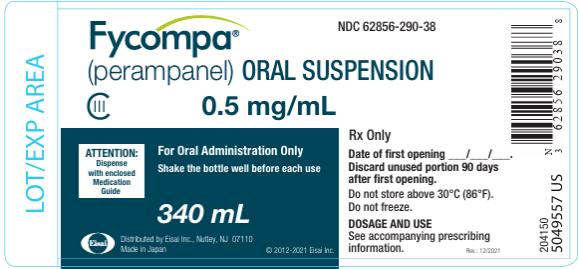
Fycompa perampanel .5 mg/mL Suspension, 340 mL — NDC 62856-290-38 (Billing 62856-0290-38)
This is a package of 340 mL of Fycompa perampanel .5 mg/mL Suspension from Eisai Inc., marketed since Apr 2016 and currently FDA-listed; retail pharmacies pay about $4.46 per mL (NADAC). It is this product's only package size.
NDC database record
One package, one record: these facts belong to NDC 62856-290-38 alone.
- Record
- FDA NDC Directory package listing · Human prescription drug
- Code segments
- 62856 labeler · 290 product · 38 package
- Package marketed since
- Apr 30, 2016
- Sample package
- No — commercial package
- Listing certified through
- Dec 31, 2027
- Billing quantity
- 340 mL per package
- Barcode (UPC)
- 0362856278300, 0362856243902, 0362856274302, 0362856272308 +3 more
- FDA record last changed
- Jul 24, 2026
Other active recalls for Perampanel (different manufacturers) — 1 · tap to view
Identity & classification
Regulatory identifiers FDA, NLM and CMS codes for this package
Drug-database identifiers Medi-Span GPI and First Databank GCN / HICL / AHFS classification
- GSN (GCN sequence number): 076056
- GCN: 41309
- GPI-14 (Medi-Span): 72550060001820
- HICL (First Databank): 039628
- AHFS class code: 28:12.92.00
- RxCUI (RxNorm): 1356557
Where does this data come from?
- FDA openFDA NDC Directory · synced Oct 8, 2026
- FDA label on DailyMed · label index refreshed Oct 8, 2026
- RxNorm (NLM RxNav) · catalog refreshed Oct 1, 2026
- Medi-Span GPI (licensed)
- First Databank (licensed) · refreshed Oct 8, 2026
RxNorm drug class
This medicine belongs to the Noncompetitive AMPA Glutamate Receptor Antagonist class.
Where does this data come from?
- RxClass (NLM) · catalog refreshed Oct 1, 2026
Clinical
- It treats partial-onset seizures in people with epilepsy age 4 and older. It is also used as an add-on medicine for primary generalized tonic-clonic seizures in people 12 and older...
- Take it by mouth once a day at bedtime, as tablets or liquid suspension. If you use the liquid, measure it with the syringe and adaptor that come with it. Your dose is usually rais...
- Dizziness, sleepiness, tiredness, irritability, nausea, headache, and weight gain are common. Falls and balance trouble can also happen, especially in older adults. Many of these s...
- This medicine has a boxed warning for aggression, hostility, anger, irritability, and even threats to harm others. These can happen even if you have never had such problems. Call y...
Patient education
Supplement & herbal interactions
Some supplements/herbs that may interact with Perampanel — tap one for details:
Where does this data come from?
- MedlinePlus (NLM) · refreshed Oct 8, 2026
- FDA label on DailyMed · label index refreshed Oct 8, 2026
Ask a licensed pharmacist directly — free, answered by our team.
Pricing
A drug doesn't have one price. Each row is a different public payment system, and none is what you'd pay at the counter — that depends on your insurance. The ⓘ on each row explains what it measures.
| Price system | Per mL | Per package |
|---|---|---|
| Retail pharmacies payNADAC · weekly | $4.464 | $1,517.83 / 340 ml |
| Medicaid paysCMS SDUD · 12 mo | No recent Medicaid claims on file for this NDC — rare and low-volume NDCs are suppressed in the public data. | |
| Medicare drug plans payPart D · Q2 2026 | $4.59 | $1,559.65 / 340 ml |
Where does this data come from?
- CMS NADAC weekly file · file of Apr 1, 2026
- CMS ASP pricing files · refreshed Sep 20, 2026
- CMS Medicaid State Drug Utilization Data · refreshed Oct 8, 2026
- CMS Part D plan pricing files · refreshed Sep 24, 2026
- VA National Acquisition Center price file
Packaging — all sizes for this product
| Package NDC | Description | Marketing start | Marketing end | Status |
|---|---|---|---|---|
| 62856-0290-38 You're viewing this Main listing | 340 mL in 1 BOTTLE | 2016-04-30 | — | Active |
Therapeutic equivalents
| Product | Labeler | Pack | NADAC/unit | TE | Status | Price vs. this |
|---|---|---|---|---|---|---|
| Perampanel .5 mg/mL 51672-4256-09 | Sun | 1 bottle | $3.945 | AB | Availability likely | save 12% |
| Perampanel .5 mg/mL 72205-0071-79 | Novadoz | 340 ml | $3.945 | AB | Availability likely | save 12% |
| Fycompa .5 mg/mL 69616-0290-38 | Catalyst | 340 ml | $4.457 | AB | Availability likely | +0% |
| Fycompa .5 mg/mLthis 62856-0290-38 | Eisai | 340 ml | $4.464 | AB | FDA listed | — |
Where does this data come from?
- FDA openFDA NDC Directory · synced Oct 8, 2026
- FDA Orange Book · refreshed Oct 3, 2026
- CMS NADAC weekly file · file of Apr 1, 2026
Availability & generic status
FDA-approved generic versions are listed, and recent pricing/market data suggests they may be available — see Therapeutic equivalents.
Why the date isn’t exact: Generic timing can change because patents may be challenged, settled, licensed, added, removed, or worked around with a narrower label — and FDA approval does not always mean a pharmacy can get the generic today.
🛈 What do these terms mean?
- Patent
- Legal protection listed in the Orange Book that may delay generic approval or launch. Issued by the U.S. Patent & Trademark Office.
- Substance patent
- Covers the active drug molecule itself — the hardest to design around. A generic generally can’t launch until it expires.
- Formulation (product) patent
- Covers a specific formulation or dosage form. A generic can sometimes work around it with a different formulation.
- Method-of-use patent
- A patent covering one specific approved use of the drug — not necessarily the whole molecule. A generic can sometimes launch with a “skinny label” that carves out the protected use and keeps the others.
- Skinny label
- A generic label that omits a still-patented use when the FDA allows it — letting a generic reach the market for the unprotected uses.
- Exclusivity
- FDA-granted marketing protection, separate from patents — e.g. 5-yr new chemical entity, 7-yr orphan drug, or a +6-month pediatric extension.
- Paragraph IV
- A generic applicant’s formal challenge to a listed patent. It can potentially lead to earlier generic entry, but often involves litigation or a settlement.
- RLD / RS
- Reference Listed Drug — the brand product the FDA uses as the reference for generic applications. Reference Standard — the product the FDA expects generics to compare against in bioequivalence testing.
- TE / AB rating
- FDA therapeutic-equivalence rating. An AB rating generally means the FDA considers a generic therapeutically equivalent to — and substitutable for — the brand.
- LOE (loss of exclusivity)
- The latest patent or exclusivity currently listed — the loss-of-exclusivity / latest-listed-protection date shown on this page. Paragraph-IV challenges and settlements can move the real date earlier; FDA approval and a manufacturer’s decision to market can move it later.
Built from the FDA Orange Book. The bars above are scaled to each protection’s expiry; the red LOE marker is the last one to lapse.
| Patent | Type | Use code | Expires |
|---|---|---|---|
| US 8772497 ↗ | Drug substance | — | Jul 1, 2026 |
Is there a generic version of FYCOMPA 0.5 MG/ML ORAL SUSP?
The FDA approved a generic — why can’t I get it at my pharmacy yet?
Why do different websites show different generic release dates?
What does “FDA listed” mean?
What does a patent or protection date mean here?
What does “current Orange Book estimate” mean?
Can a generic come out before the last patent expires?
Can a generic come out after the listed dates?
What is the difference between patents and exclusivity?
Why are there multiple patent dates?
Where does this data come from?
- FDA Orange Book · refreshed Oct 3, 2026
What it looks like
Where does this data come from?
- FDA label on DailyMed · label index refreshed Oct 8, 2026
Inactive Ingredients / Excipients
Inactive ingredients, also called excipients, are components of the drug product other than the active ingredient. They may include fillers, dyes, coatings, preservatives, flavors, or other formulation ingredients.
🧪 Avoiding an ingredient? See Perampanel inactive ingredients by manufacturer: every current product's list side by side, so you can ask your pharmacy for the version that does not list it.
💡 Tap an ingredient (hover on desktop) to see what it is and why it’s used.
-
UNII XF417D3PSL
Anhydrous citric acid is a sour, crystalline powder derived from citric acid with water removed. In medicines, it acts as a buffer to control pH, adds tartness to improve taste, and helps tablets disintegrate.
-
UNII K679OBS311
Carboxymethylcellulose sodium is a plant-derived thickening agent made from cellulose. In medicines, it acts as a binder to hold ingredients together, a disintegrant to help the tablet break apart, or a thickener in liquids.
-
UNII OP1R32D61U
Microcrystalline cellulose is a purified form of cellulose, a natural fiber from plant sources. It acts as a binder and filler in tablets and capsules, helping hold ingredients together and give the medicine its shape and size.
-
UNII 92RU3N3Y1O
Dimethicone is a silicone-based oil that acts as an anti-foaming agent and lubricant in medicines. It reduces gas bubbles in liquid formulations and helps coat and protect the stomach lining when ingested.
-
UNII LQA7B6G8JG
A synthetic polymer made by combining water-soluble compounds. It acts as a surfactant and solubilizer to help mix oil and water-based ingredients, improving the medicine's texture and how active ingredients dissolve.
-
UNII ETJ7Z6XBU4
Silicon dioxide is a naturally occurring mineral used as a glidant and anti-caking agent. It helps powder ingredients flow smoothly and prevents clumping during manufacturing and storage.
-
UNII OJ245FE5EU
Sodium benzoate is a salt derived from benzoic acid, a preservative. It's added to medicines to prevent growth of bacteria, fungi, and other microorganisms that could spoil the product.
-
UNII 506T60A25R
Sorbitol is a natural sugar alcohol derived from glucose. It serves as a sweetener, humectant, and bulking agent in medications to improve taste and help maintain moisture in the product.
-
UNII 059QF0KO0R
Water is a liquid solvent that dissolves and mixes ingredients together in liquid medicines, syrups, and injections. It helps distribute the active drug evenly throughout the product.
9 inactive ingredients listed in the exact product block matched to this NDC.
Where does this data come from?
ingredient classCode="IACT" elements from the exact product block matched by this NDC. Label-section narrative from DailyMed / the openFDA label index is shown separately when available.- FDA label on DailyMed · label index refreshed Oct 8, 2026
- FDA openFDA NDC Directory · synced Oct 8, 2026
Inactive ingredient FAQ
Are inactive ingredients the same for every manufacturer?
Why might an inactive ingredient be missing?
Can inactive ingredients matter?
Manufacturer & labeler
More NDCs from Eisai Inc. labeler code 62856
- Fycompa perampanel 2 mg Tablet NDC 62856-272-14
- Fycompa perampanel 4 mg Tablet NDC 62856-274-14
- Fycompa perampanel 6 mg Tablet NDC 62856-276-30
- Fycompa perampanel 8 mg Tablet NDC 62856-278-30
- Fycompa perampanel 10 mg Tablet NDC 62856-280-30
- Fycompa perampanel 12 mg Tablet NDC 62856-282-30
- Halaven eribulin mesylate .5 mg/mL Injection NDC 62856-389-01
- Dayvigo lemborexant 5 mg Tablet, Film Coated NDC 62856-405-10
- Dayvigo lemborexant 10 mg Tablet, Film Coated NDC 62856-410-30
- Banzel rufinamide 200 mg Tablet, Film Coated NDC 62856-582-04
- Banzel rufinamide 400 mg Tablet, Film Coated NDC 62856-583-14
- Banzel rufinamide 40 mg/mL Suspension NDC 62856-584-46
Where does this data come from?
- FDA openFDA NDC Directory · synced Oct 8, 2026
- Drugs@FDA
Full prescribing information FDA SPL
🚨 Boxed Warning ▾
WARNING: SERIOUS PSYCHIATRIC AND BEHAVIORAL REACTIONS Serious or life-threatening psychiatric and behavioral adverse reactions including aggression, hostility, irritability, anger, and homicidal ideation and threats have been reported in patients taking FYCOMPA ( 5.1 ) . These reactions occurred in patients with and without prior psychiatric history, prior aggressive behavior, or concomitant use of medications associated with hostility and aggression ( 5.1 ) . Advise patients and caregivers to contact a healthcare provider immediately if any of these reactions or changes in mood, behavior, or personality that are not typical for the patient are observed while taking FYCOMPA or after discontinuing FYCOMPA ( 5.1 ) .
Closely monitor patients particularly during the titration period and at higher doses ( 5.1 ) . FYCOMPA should be reduced if these symptoms occur and should be discontinued immediately if symptoms are severe or are worsening ( 5.1 ) . WARNING: SERIOUS PSYCHIATRIC AND BEHAVIORAL REACTIONS See full prescribing information for complete boxed warning.
Serious or life-threatening psychiatric and behavioral adverse reactions including aggression, hostility, irritability, anger, and homicidal ideation and threats have been reported in patients taking FYCOMPA ( 5.1 ) Monitor patients for these reactions as well as for changes in mood, behavior, or personality that are not typical for the patient, particularly during the titration period and at higher doses ( 5.1 ) FYCOMPA should be reduced if these symptoms occur and should be discontinued immediately if symptoms are severe or are worsening ( 5.1 )
🎯 Indications and Usage ▾
1 INDICATIONS AND USAGE FYCOMPA, a non-competitive AMPA glutamate receptor antagonist, is indicated for: Treatment of partial-onset seizures with or without secondarily generalized seizures in patients with epilepsy 4 years of age and older ( 1.1 ) Adjunctive therapy in the treatment of primary generalized tonic-clonic seizures in patients with epilepsy 12 years of age and older ( 1.2 )
1.1Partial - Onset Seizures FYCOMPA is indicated for the treatment of partial-onset seizures with or without secondarily generalized seizures in patients with epilepsy 4 years of age and older.
1.2Primary Generalized Tonic-Clonic Seizures FYCOMPA is indicated as adjunctive therapy for the treatment of primary generalized tonic-clonic seizures in patients with epilepsy 12 years of age and older.
⏱️ Dosage and Administration ▾
2 DOSAGE AND ADMINISTRATION Dosing in the absence of moderate or strong CYP3A4 inducers Starting dose: 2 mg once daily orally at bedtime ( 2.1 , 2.2 ) May increase dose based on clinical response and tolerability by increments of 2 mg once daily no more frequently than at weekly intervals ( 2.1 , 2.2 ) Recommended maintenance dose in monotherapy or adjunctive therapy for partial-onset seizures: 8 mg to 12 mg once daily at bedtime ( 2.1 ) Recommended maintenance dose in adjunctive therapy for primary generalized tonic-clonic seizures: 8 mg once daily at bedtime ( 2.2 ) Measure oral suspension using provided adaptor and dosing syringe ( 2.7 ) D osing in the p resence of c oncomitant moderate or strong CY P3A4 inducers : see section
2.3Specific Populations Mild and Moderate Hepatic Impairment: Maximum recommended daily dose is 6 mg (mild) and 4 mg (moderate) once daily at bedtime ( 2.4 ) Severe Hepatic Impairment: Not recommended ( 2.4 ) Severe Renal Impairment or on Hemodialysis: Not recommended ( 2.5 ) Elderly: Increase dose no more frequently than every 2 weeks ( 2.6 )
2.1Dosage for Partial-Onset Seizures Monotherapy or Adjunctive Therapy The recommended starting dosage of FYCOMPA in adults and pediatric patients 4 years of age and older is 2 mg once daily taken orally at bedtime. Increase dosage no more frequently than at weekly intervals by increments of 2 mg once daily based on individual clinical response and tolerability. The recommended maintenance dose range is 8 mg to 12 mg once daily, although some patients may respond to a dose of 4 mg daily.
A dose of 12 mg once daily resulted in somewhat greater reductions in seizure rates than the dose of 8 mg once daily, but with a substantial increase in adverse reactions. Dosage adjustment is recommended with concomitant use of moderate or strong CYP3A4 enzyme inducing drugs, which include certain antiepileptic drugs (AEDs) [see Dosage and Administration (2.3) ].
2.2Dosage for Primary Generalized Tonic-Clonic Seizures Adjunctive Therapy The recommended starting dosage of FYCOMPA in adults and pediatric patients 12 years of age and older is 2 mg once daily taken orally at bedtime. Increase dosage no more frequently than at weekly intervals by increments of 2 mg once daily based on individual clinical response and tolerability. The recommended maintenance dose is 8 mg once daily taken at bedtime.
Patients who are tolerating FYCOMPA at 8 mg once daily and require further reduction of seizures may benefit from a dose increase up to 12 mg once daily if tolerated. Dosage adjustment is recommended with concomitant use of moderate or strong CYP3A4 enzyme inducing drugs, which include certain AEDs [see Dosage and Administration (2.3) ].
2.3Dosage Modifications with Concomitant Use of Moderate or Strong CYP3A4 Enzyme Inducer s Moderate and strong CYP3A4 inducers, including enzyme-inducing AEDs such as phenytoin, carbamazepine, and oxcarbazepine, cause a reduction in FYCOMPA plasma levels [ see Drug Interactions (7.2) , Clinical Pharmacology (12.3) ] . Therefore, in adults and pediatric patients 4 years of age and older receiving these concomitant enzyme-inducing drugs, the recommended starting dosage of FYCOMPA is 4 mg once daily taken orally at bedtime.
Increase dosage by increments of 2 mg once daily based on individual clinical response and tolerability, no more frequently than at weekly intervals. A maintenance dose has not been established in clinical trials. The highest dose studied in patients on concomitant enzyme-inducing AEDs was 12 mg once daily.
When moderate or strong CYP3A4 inducers are introduced or withdrawn from a patient’s treatment regimen, the patient should be closely monitored for clinical response and tolerability. Dose adjustment of FYCOMPA may be necessary. 2.
4 Dosage Adjustment in Patients with Hepatic Impairment In patients with mild and moderate hepatic impairment, the starting dose of FYCOMPA is 2 mg once daily. Increase dosage by increments of 2 mg once… [Excerpted — this section continues on DailyMed.]
💊 Dosage Forms and Strengths ▾
3 DOSAGE FORMS AND STRENGTHS Tablets 2 mg tablets: orange, round, debossed with “2” on one side and “Є 275” on the other. 4 mg tablets: red, round, debossed with “4” on one side and “Є 277” on the other. 6 mg tablets: pink, round, debossed with “6” on one side and “Є 294” on the other.
8 mg tablets: purple, round, debossed with “8” on one side and “Є 295” on the other. 10 mg tablets: green, round, debossed with “10” on one side and “Є 296” on the other. 12 mg tablets: blue, round, debossed with “12” on one side and “Є 297” on the other.
Oral Suspension 0.5 mg/mL white to off-white opaque liquid suspension for oral administration. Tablets: 2 mg, 4 mg, 6 mg, 8 mg, 10 mg, and 12 mg ( 3 ) Oral Suspension: 0.5 mg/mL ( 3 )
⛔ Contraindications ▾
4 CONTRAINDICATIONS None. None ( 4 )
⚠️ Warnings and Cautions ▾
5 WARNINGS AND PRECAUTIONS Suicidal Behavior and Ideation: Monitor for suicidal thoughts or behavior ( 5.2 ) Neurologic Effects: Monitor for dizziness, gait disturbance, somnolence, and fatigue ( 5.3 ) Patients should use caution when driving or operating machinery ( 5.3 ) Falls: Monitor for falls and injuries ( 5.4 ) Drug Reaction with Eosinophilia and Systemic Symptoms (DRESS)/ Multi-Organ Hypersensitivity: Discontinue if no alternate etiology ( 5.5 ) Withdrawal of Antiepileptic Drugs: In patients with epilepsy, there may be an increase in seizure frequency ( 5.6 )
5.1Serious P sychiatric and Behavioral Reactions In the controlled partial-onset seizure clinical trials, hostility- and aggression-related adverse reactions occurred in 12% and 20% of patients randomized to receive FYCOMPA at doses of 8 mg and 12 mg per day, respectively, compared to 6% of patients in the placebo group. These effects were dose-related and generally appeared within the first 6 weeks of treatment, although new events continued to be observed through more than 37 weeks. FYCOMPA-treated patients experienced more hostility- and aggression-related adverse reactions that were serious, severe, and led to dose reduction, interruption, and discontinuation more frequently than placebo-treated patients.
In general, in placebo-controlled partial-onset seizure clinical trials, neuropsychiatric events were reported more frequently in patients being treated with FYCOMPA than in patients taking placebo. These events included irritability, aggression, anger, and anxiety, which occurred in 2% or greater of FYCOMPA-treated patients and twice as frequently as in placebo-treated patients. Other symptoms that occurred with FYCOMPA and were more common than with placebo included belligerence, affect lability, agitation, and physical assault.
Some of these events were reported as serious and life-threatening. Homicidal ideation and/or threat were exhibited in 0.1% of 4,368 FYCOMPA-treated patients in controlled and open label trials, including non-epilepsy trials . Homicidal ideation and/or threat have also been reported postmarketing in patients treated with FYCOMPA.
In the partial-onset seizure clinical trials, these events occurred in patients with and without prior psychiatric history, prior aggressive behavior, or concomitant use of medications associated with hostility and aggression. Some patients experienced worsening of their pre-existing psychiatric conditions. Patients with active psychotic disorders and unstable recurrent affective disorders were excluded from the clinical trials.
The combination of alcohol and FYCOMPA significantly worsened mood and increased anger. Patients taking FYCOMPA should avoid the use of alcohol [ see Drug Interactions (7.3) ] . Similar serious psychiatric and behavioral events were observed in the primary generalized tonic-clonic seizure clinical trial.
In healthy volunteers taking FYCOMPA, observed psychiatric events included paranoia, euphoric mood, agitation, anger, mental status changes, and disorientation/confusional state. In the non-epilepsy trials, psychiatric events that occurred in perampanel-treated patients more often than placebo-treated patients included disorientation, delusion, and paranoia. In the postmarketing setting, there have been reports of psychosis (acute psychosis, hallucinations, delusions, paranoia) and delirium (delirium, confusional state, disorientation, memory impairment) in patients treated with FYCOMPA [see Adverse Reactions (6.2) ] .
Patients, their caregivers, and families should be informed that FYCOMPA may increase the risk of psychiatric events. Patients should be monitored during treatment and for at least 1 month after the last dose of FYCOMPA, and especially when taking higher doses and during the initial few weeks of drug therapy (titration period) or at other times of dose increases. Dose of FYCOMPA should be reduced if these symptoms occur.
Permanently discontinue FYCOMPA for persistent… [Excerpted — this section continues on DailyMed.]
🤒 Adverse Reactions ▾
6 ADVERSE REACTIONS The following serious adverse reactions are described below and elsewhere in the labeling: Serious Psychiatric and Behavioral Reactions [see Warnings and Precautions (5.1) ] Suicidal Behavior and Ideation [see Warnings and Precautions (5.2) ] Neurologic Effects [see Warnings and Precautions (5.3) ] Falls [see Warnings and Precautions (5.4) ] Drug Reaction with Eosinophilia and Systemic Symptoms (DRESS)/Multiorgan Hypersensitivity [see Warnings and Precautions (5.5) ] Most common adverse reactions (≥5% and ≥1% higher than placebo) include dizziness, somnolence, fatigue, irritability, falls, nausea, weight gain, vertigo, ataxia, headache, vomiting, contusion, abdominal pain, and anxiety ( 6.1 ) To report SUSPECTED ADVERSE REACTIONS, contact Eisai at 1-888-274-2378 or FDA at 1-800-FDA-1088 or www.fda.gov/medwatch
6.1Clinical Trial s Experience Because clinical trials are conducted under widely varying conditions, adverse reaction rates observed in the clinical trials of a drug cannot be directly compared to rates in the clinical trials of another drug and may not reflect the rates observed in clinical practice. Partial - Onset Seizures Adult and Adolescent Patients (12 years of age and older) A total of 1,038 patients receiving FYCOMPA (2, 4, 8, or 12 mg once daily) constituted the safety population in the pooled analysis of the placebo-controlled trials (Studies 1, 2, and 3) in patients with partial-onset seizures.
Approximately 51% of patients were female, and the mean age was 35 years. Adverse Reactions Leading to Discontinuation In controlled clinical trials (Studies 1, 2, and 3), the rate of discontinuation as a result of an adverse reaction was 3%, 8%, and 19% in patients randomized to receive FYCOMPA at the recommended doses of 4 mg, 8 mg, and 12 mg per day, respectively, and 5% in patients randomized to receive placebo [see Clinical Studies (14) ] . The adverse reactions most commonly leading to discontinuation (≥1% in the 8 mg or 12 mg FYCOMPA group and greater than placebo) were dizziness, somnolence, vertigo, aggression, anger, ataxia, blurred vision, irritability, and dysarthria [ see Warnings and Precautions ( 5.1 , 5.3 ) ] .
Most Common Adverse Reactions Table 2 gives the incidence in the controlled clinical trials (Studies 1, 2, and 3) of the adverse reactions that occurred in ≥2% of patients with partial-onset seizures in the FYCOMPA 12 mg dose group and more frequent than placebo (in order of decreasing frequency for the 12 mg dose group). The most common dose-related adverse reactions in patients receiving FYCOMPA at doses of 8 mg or 12 mg (≥4% and occurring at least 1% higher than the placebo group) included dizziness (36%), somnolence (16%), fatigue (10%), irritability (9%), falls (7%), nausea (7%), ataxia (5%), balance disorder (4%), gait disturbance (4%), vertigo (4%), and weight gain (4%).
For almost every adverse reaction, rates were higher on 12 mg and more often led to dose reduction or discontinuation. Table 2. Adverse Reactions in Pooled Placebo-Controlled Trials in Adult and Adolescent Patients with Partial-Onset Seizures (Studies 1, 2, and 3) (Reactions ≥ 2% of Patients in Highest FYCOMPA Dose (12 mg) Group and More Frequent than Placebo) Placebo n=442 % FYCOMPA 4 mg n=172 % 8 mg n=431 % 12 mg n=255 % Dizziness 9 16 32 43 Somnolence 7 9 16 18 Headache 11 11 11 13 Irritability 3 4 7 12 Fatigue 5 8 8 12 Falls 3 2 5 10 Ataxia 0 1 3 8 Nausea 5 3 6 8 Vertigo 1 4 3 5 Back pain 2 2 2 5 Dysarthria 0 1 3 4 Anxiety 1 2 3 4 Blurred vision 1 1 3 4 Gait disturbance 1 1 4 4 Weight gain 1 4 4 4 Cough 3 1 1 4 Upper respiratory tract infection 3 3 3 4 Vomiting 3 2 3 4 Hypersomnia 0 1 2 3 Anger <1 0 1 3 Aggression 1 1 2 3 Balance disorder 1 0 5 3 Diplopia 1 1 1 3 Head injury 1 1 1 3 Hypoaesthesia 1 0 0 3 Pain in extremity 1 0 2 3 Constipation 2 2 2 3 Myalgia 2 1 1 3 Coordination abnormal 0 1 <1 2 Euphoric mood 0 0 <1 2 Confusional state <1 1 1 2 Hyponatremia <1 0 0 2 Limb injury <1 1 1 2 Mood alte… [Excerpted — this section continues on DailyMed.]
🔄 Drug Interactions ▾
7 DRUG INTERACTIONS Contraceptives: 12 mg once daily may decrease the effectiveness of hormonal contraceptives containing levonorgestrel ( 7.1 ) Moderate and Strong CYP3A4 Inducers (including carbamazepine, oxcarbazepine, and phenytoin): increase clearance of perampanel and decrease perampanel plasma concentrations. When moderate or strong CYP3A4 inducers are introduced or withdrawn, monitor patients closely. Dose adjustment of FYCOMPA may be necessary ( 2.3 , 7.2 )
7.1Contraceptives With concomitant use, FYCOMPA at a dose of 12 mg per day reduced levonorgestrel exposure by approximately 40% [ see Clinical Pharmacology (12.3) ] . Use of FYCOMPA with contraceptives containing levonorgestrel may render them less effective. Additional non-hormonal forms of contraception are recommended [ see Use in Specific Populations (8.3) ] .
7.2Moderate and Strong CYP3A4 Inducers The concomitant use of known moderate and strong CYP3A4 inducers including carbamazepine, phenytoin, or oxcarbazepine with FYCOMPA decreased the plasma levels of perampanel by approximately 50-67% [ see Clinical Pharmacology (12.3) ] . The starting doses for FYCOMPA should be increased in the presence of moderate or strong CYP3A4 inducers [ s e e Dosage and Administration (2.3) ] . When these moderate or strong CYP3A4 inducers are introduced or withdrawn from a patient’s treatment regimen, the patient should be closely monitored for clinical response and tolerability.
Dose adjustment of FYCOMPA may be necessary [ see Dosage and Administration (2.3) ] .
7.3Alcohol and Other CNS Depressants The concomitant use of FYCOMPA and CNS depressants including alcohol may increase CNS depression. A pharmacodynamic interaction study in healthy subjects found that the effects of FYCOMPA on complex tasks such as driving ability were additive or supra-additive to the impairment effects of alcohol [see Clinical Pharmacology (12.3) ] . Multiple dosing of FYCOMPA 12 mg per day also enhanced the effects of alcohol to interfere with vigilance and alertness, and increased levels of anger, confusion, and depression.
These effects may also be seen when FYCOMPA is used in combination with other CNS depressants. Care should be taken when administering FYCOMPA with these agents. Patients should limit activity until they have experience with concomitant use of CNS depressants (e.g., benzodiazepines, narcotics, barbiturates, sedating antihistamines).
Advise patients not to drive or operate machinery until they have gained sufficient experience on FYCOMPA to gauge whether it adversely affects these activities.
👥 Use in Specific Populations ▾
8 USE IN SPECIFIC POPULATIONS Pregnancy: Based on animal data, may cause fetal harm ( 8.1 )
8.1Pregnancy Pregnancy Exposure Registry There is a pregnancy exposure registry that monitors pregnancy outcomes in women exposed to antiepileptic drugs (AEDs), such as FYCOMPA, during pregnancy. Encourage women who are taking FYCOMPA during pregnancy to enroll in the North American Antiepileptic Drug (NAAED) Pregnancy Registry by calling 1-888-233-2334 or visiting http://www.aedpregnancyregistry.org. Risk Summary There are no adequate data on the developmental risk associated with use in pregnant women.
In animal studies, perampanel induced developmental toxicity in pregnant rat and rabbit at clinically relevant doses [ see Data ] . In the U.S. general population the estimated background risk of major birth defects and miscarriage in clinically recognized pregnancies is 2-4% and 15-20%, respectively. The background risk of major birth defects and miscarriage for the indicated population is unknown.
Data Animal Data Oral administration of perampanel (1, 3, or 10 mg/kg/day) to pregnant rats throughout organogenesis resulted in an increase in visceral abnormalities (diverticulum of the intestine) at all doses tested; maternal toxicity was observed at the mid and high doses. In a dose-ranging study at higher oral doses (10, 30, or 60 mg/kg/day), embryo lethality and reduced fetal body weight were observed at the mid and high doses tested. The lowest dose tested (1 mg/kg/day) is similar to a human dose of 8 mg/day based on body surface area (mg/m 2 ).
Upon oral administration of perampanel (1, 3, or 10 mg/kg/day) to pregnant rabbits throughout organogenesis, embryo lethality and maternal toxicity were observed at the mid and high doses tested; the no-effect dose for embryo-fetal developmental toxicity in rabbit (1 mg/kg/day) is approximately 2 times a human dose of 8 mg/day based on body surface area (mg/m 2 ). Oral administration of perampanel (1, 3, or 10 mg/kg/day) to rats throughout gestation and lactation resulted in fetal and pup deaths at the mid and high doses (associated with maternal toxicity) and delayed sexual maturation in males and females at the highest dose tested.
No effects were observed on measures of neurobehavioral or reproductive function in the offspring. The no-effect dose for pre- and postnatal developmental toxicity in rat (1 mg/kg/day) is similar to a human dose of 8 mg/day based on body surface area (mg/m 2 ). 8.
2 Lactation Risk Summary There are no data on the presence of perampanel in human milk, the effects on the breastfed child, or the effects of the drug on milk production. Perampanel and/or its metabolites are present in rat milk, and are detected at concentrations higher than that in maternal plasma. The developmental and health benefits of breastfeeding should be considered along with the mother’s clinical need for FYCOMPA and any potential adverse effects on the breastfed child from FYCOMPA or from the underlying maternal condition.
8.3Females and Males of Reproductive Potential Contraception Use of FYCOMPA may reduce the efficacy of hormonal contraceptives containing levonorgestrel. Advise women taking FYCOMPA who are using a levonorgestrel-containing contraceptive to use an additional non-hormonal form of contraception while using FYCOMPA and for a month after discontinuation [ see Drug Interactions (7.1) , Clinical Pharmacology (12.3) ].
8.4Pediatric Use Safety and effectiveness of FYCOMPA for the treatment of partial-onset seizures have been established in pediatric patients 4 years of age and older. The safety and effectiveness of FYCOMPA in patients 12 years of age and older was established by three randomized double-blind, placebo-controlled, multicenter studies, which included 72 pediatric patients between 12 and 16 years of age exposed to FYCOMPA [see Clinical Pharmacology (12.3) and Clinical Studies (14.1) ] . Use of FYCOMPA for the treatment of partial-onset seizures in pediatric patients… [Excerpted — this section continues on DailyMed.]
🤰 Pregnancy ▾
8.1Pregnancy Pregnancy Exposure Registry There is a pregnancy exposure registry that monitors pregnancy outcomes in women exposed to antiepileptic drugs (AEDs), such as FYCOMPA, during pregnancy. Encourage women who are taking FYCOMPA during pregnancy to enroll in the North American Antiepileptic Drug (NAAED) Pregnancy Registry by calling 1-888-233-2334 or visiting http://www.aedpregnancyregistry.org. Risk Summary There are no adequate data on the developmental risk associated with use in pregnant women.
In animal studies, perampanel induced developmental toxicity in pregnant rat and rabbit at clinically relevant doses [ see Data ] . In the U.S. general population the estimated background risk of major birth defects and miscarriage in clinically recognized pregnancies is 2-4% and 15-20%, respectively. The background risk of major birth defects and miscarriage for the indicated population is unknown.
Data Animal Data Oral administration of perampanel (1, 3, or 10 mg/kg/day) to pregnant rats throughout organogenesis resulted in an increase in visceral abnormalities (diverticulum of the intestine) at all doses tested; maternal toxicity was observed at the mid and high doses. In a dose-ranging study at higher oral doses (10, 30, or 60 mg/kg/day), embryo lethality and reduced fetal body weight were observed at the mid and high doses tested. The lowest dose tested (1 mg/kg/day) is similar to a human dose of 8 mg/day based on body surface area (mg/m 2 ).
Upon oral administration of perampanel (1, 3, or 10 mg/kg/day) to pregnant rabbits throughout organogenesis, embryo lethality and maternal toxicity were observed at the mid and high doses tested; the no-effect dose for embryo-fetal developmental toxicity in rabbit (1 mg/kg/day) is approximately 2 times a human dose of 8 mg/day based on body surface area (mg/m 2 ). Oral administration of perampanel (1, 3, or 10 mg/kg/day) to rats throughout gestation and lactation resulted in fetal and pup deaths at the mid and high doses (associated with maternal toxicity) and delayed sexual maturation in males and females at the highest dose tested.
No effects were observed on measures of neurobehavioral or reproductive function in the offspring. The no-effect dose for pre- and postnatal developmental toxicity in rat (1 mg/kg/day) is similar to a human dose of 8 mg/day based on body surface area (mg/m 2 ).
🧒 Pediatric Use ▾
8.4Pediatric Use Safety and effectiveness of FYCOMPA for the treatment of partial-onset seizures have been established in pediatric patients 4 years of age and older. The safety and effectiveness of FYCOMPA in patients 12 years of age and older was established by three randomized double-blind, placebo-controlled, multicenter studies, which included 72 pediatric patients between 12 and 16 years of age exposed to FYCOMPA [see Clinical Pharmacology (12.3) and Clinical Studies (14.1) ] . Use of FYCOMPA for the treatment of partial-onset seizures in pediatric patients 4 years to less than 12 years of age is supported by evidence from adequate and well-controlled studies of FYCOMPA in patients 12 years of age and older with partial onset seizures, pharmacokinetic data from adult and pediatric patients, and safety data in 225 pediatric patients 4 years to less than 12 years of age treated with FYCOMPA [see Adverse Reactions (6.1) and Clinical Pharmacology (12.3) ] .
The safety and efficacy of FYCOMPA for the adjunctive therapy of primary generalized tonic-clonic seizures in pediatric patients 12 years of age and older was established in a single randomized double-blind, placebo-controlled, multicenter trial (n=164), which included 11 pediatric patients 12 to 16 years of age exposed to FYCOMPA; an additional 6 patients were treated with FYCOMPA in the open-label extension of the study [see Clinical Studies (14.2) ] . The safety and effectiveness of FYCOMPA for the treatment of partial-onset seizures in pediatric patients less than 4 years of age or for the treatment of primary generalized tonic-clonic seizures in pediatric patients less than 12 years of age have not been established.
Juvenile Animal Data Oral administration of perampanel (1, 3, 3/10/30 mg/kg/day; high dose increased on postnatal days [PND] 28 and 56) to young rats for 12 weeks starting on PND 7 resulted in reduced body weight, reduced growth, neurobehavioral impairment (water maze performance and auditory startle habituation) at the mid and high doses, and delayed sexual maturation at the high doses. CNS signs (reduced activity, incoordination, excessive grooming/scratching), pup death, decreased hindlimb splay, and decreased hindlimb grip strength were observed at all doses.
Effects on pup body weight, pup growth, hindlimb splay, impairment in the water maze performance, and auditory startle persisted after dosing was stopped. A no-effect dose for postnatal developmental toxicity was not identified in this study. Oral administration of perampanel (1, 5, 5/10 mg/kg/day; high dose increased on PND 56) to juvenile dogs for 33 weeks, starting on PND 42, resulted in CNS signs (incoordination, excessive grooming/licking/scratching, spatial disorientation, and/or ataxic gait) at all doses tested.
🧓 Geriatric Use ▾
8.5Geriatric Use Clinical studies of FYCOMPA did not include sufficient numbers of patients aged 65 and over to determine the safety and efficacy of FYCOMPA in the elderly population. Because of increased likelihood for adverse reactions in the elderly, dosing titration should proceed slowly in patients aged 65 years and older [see Dosage and Administration (2.5) ] .
🆘 Overdosage ▾
10 OVERDOSAGE The highest reported overdose of FYCOMPA was 300 mg. Events reported after FYCOMPA overdose include somnolence, stupor, coma, psychiatric or behavioral reactions, altered mental status, and dizziness or gait disturbances. There is no available specific antidote to the overdose reactions of FYCOMPA.
In the event of overdose, standard medical practice for the management of any overdose should be used. An adequate airway, oxygenation, and ventilation should be ensured; monitoring of cardiac rhythm and vital sign measurement is recommended. A certified poison control center should be contacted for updated information on the management of overdose with FYCOMPA.
Due to its long half-life, the reactions caused by FYCOMPA could be prolonged.
🧬 Clinical Pharmacology ▾
12 CLINICAL PHARMACOLOGY
12.1Mechanism of Action Perampanel is a non-competitive antagonist of the ionotropic α-amino-3-hydroxy-5-methyl-4-isoxazolepropionic acid (AMPA) glutamate receptor on post-synaptic neurons. Glutamate is the primary excitatory neurotransmitter in the central nervous system and is implicated in a number of neurological disorders caused by neuronal over excitation. The precise mechanism by which FYCOMPA exerts its antiepileptic effects in humans is unknown.
12.2Pharmacodynamics Psychomotor P erformance In a healthy volunteer study to assess the effects of FYCOMPA tablets on psychomotor performance using a standard battery of assessments including simulated driving, single and multiple daily doses of FYCOMPA 4 mg did not impair simple psychomotor tasks, driving performance, or sensorimotor coordination. Single and multiple doses of 8 mg and 12 mg impaired psychomotor performance in a dose-related manner. Car handling ability was impaired after dosing of FYCOMPA 12 mg, but postural stability was not significantly impaired.
Performance testing returned to baseline within 2 weeks of cessation of FYCOMPA dosing. Interactions with Alcohol In the above study ( s ee Psychomotor Performance ), when administered to healthy subjects receiving alcohol to achieve a blood concentration of 80-100 mg/100 mL, FYCOMPA consistently impaired simple psychomotor performance after single doses of 4 to 12 mg, and after 21 days of multiple 12 mg/day doses. The effects of FYCOMPA on complex tasks such as driving ability were additive or supra-additive to the impairment effects of alcohol.
FYCOMPA enhanced the effects of alcohol on vigilance and alertness, and increased levels of anger, confusion, and depression. Potential to Prolong QT Interval In a placebo-controlled thorough QT study of perampanel in healthy subjects, there was no evidence that perampanel caused QT interval prolongation of clinical significance at doses of 6 or 12 mg (i.e., the upper bound of the 95% confidence interval for the largest placebo-adjusted baseline-corrected QTc was below 10 msec). The exposures observed with the 12 mg dose in this study will not cover the exposures expected in patients with hepatic impairment taking doses over 6 mg/day.
At the highest recommended dose (12 mg), perampanel did not prolong the QTc interval to any clinically relevant extent.
12.3Pharmacokinetics Pharmacokinetics of perampanel are similar in healthy subjects, patients with partial-onset seizures, and patients with primary generalized tonic-clonic seizures. The half-life of perampanel is about 105 hours, so that steady state is reached in about 2-3 weeks. AUC of perampanel increased in a dose-proportional manner after single-dose administration of 0.2-12 mg tablets and after multiple-dose administration of 1-12 mg tablets once daily.
FYCOMPA oral suspension has comparable bioavailability to FYCOMPA tablets under steady state. Both formulations may be used interchangeably. The pharmacokinetics of perampanel are similar when used as monotherapy or as adjunctive therapy for the treatment of partial-onset seizures (in the absence of concomitant moderate or strong CYP3A4 inducers).
Absorption Perampanel is rapidly and completely absorbed after oral administration with negligible first-pass metabolism. Median time to reach peak concentration (t max ) ranged from 0.5 to 2.5 hours under fasted condition. Co-administration of FYCOMPA tablet with a high fat meal had no impact on the total exposure (AUC 0-inf ) of perampanel and reduced the peak plasma concentration (C max ) of perampanel by 11%-40%.
The t max was delayed by approximately 1-3 hours in fed state compared to that under fasted conditions. Distribution Data from in vitro studies indicate that, in the concentration range of 20 to 2000 ng/mL, perampanel is approximately 95-96% bound to plasma proteins, mainly bound to albumin and α1-acid glycoprotein. Blood to plasma ratio of perampanel is 0.55-0.59.
Metabolism Peramp… [Excerpted — this section continues on DailyMed.]
🧬 Mechanism of Action ▾
12.1Mechanism of Action Perampanel is a non-competitive antagonist of the ionotropic α-amino-3-hydroxy-5-methyl-4-isoxazolepropionic acid (AMPA) glutamate receptor on post-synaptic neurons. Glutamate is the primary excitatory neurotransmitter in the central nervous system and is implicated in a number of neurological disorders caused by neuronal over excitation. The precise mechanism by which FYCOMPA exerts its antiepileptic effects in humans is unknown.
📦 How Supplied / Storage and Handling ▾
16 HOW SUPPLIED/STORAGE AND HANDLING
16.1How Supplied FYCOMPA Tablets 2 mg are orange, round, biconvex, film-coated tablets debossed with “2” on one side and “Є 275” on the other. They are supplied as follows: Bottles of 30 NDC 62856-272-30 Bottles of 90 NDC 62856-272-90 4 mg are red, round, biconvex, film-coated tablets debossed with “4” on one side and “Є 277” on the other. They are supplied as follows: Bottles of 30 NDC 62856-274-30 Bottles of 90 NDC 62856-274-90 6 mg are pink, round, biconvex, film-coated tablets debossed with “6” on one side and “Є 294” on the other.
They are supplied as follows: Bottles of 30 NDC 62856-276-30 Bottles of 90 NDC 62856-276-90 8 mg are purple, round, biconvex, film-coated tablets debossed with “8” on one side and “Є 295” on the other. They are supplied as follows: Bottles of 30 NDC 62856-278-30 Bottles of 90 NDC 62856-278-90 10 mg are green, round, biconvex, film-coated tablets debossed with “10” on one side and “Є 296” on the other. They are supplied as follows: Bottles of 30 NDC 62856-280-30 Bottles of 90 NDC 62856-280-90 12 mg are blue, round, biconvex, film-coated tablets debossed with “12” on one side and “Є 297” on the other.
They are supplied as follows: Bottles of 30 NDC 62856-282-30 Bottles of 90 NDC 62856-282-90 FYCOMPA Oral Suspension 0.5 mg/mL is a white to off-white opaque liquid. It is supplied in a round amber PET bottle with a child-resistant closure. It is packaged with a dispenser set that provides two 20-mL graduated oral dosing syringes and a push-in bottle adapter.
Bottle containing 340 mL NDC 62856-290-38
16.2Storage Tablets: store at 20°C to 25°C (68°F to 77°F); excursions permitted to 15°C to 30°C (59°F to 86°F). [See USP Controlled Room Temperature] Oral Suspension: Do not store above 30°C (86°F). Do not freeze. Use within 90 days after the first opening of the bottle.
16.1How Supplied FYCOMPA Tablets 2 mg are orange, round, biconvex, film-coated tablets debossed with “2” on one side and “Є 275” on the other. They are supplied as follows: Bottles of 30 NDC 62856-272-30 Bottles of 90 NDC 62856-272-90 4 mg are red, round, biconvex, film-coated tablets debossed with “4” on one side and “Є 277” on the other. They are supplied as follows: Bottles of 30 NDC 62856-274-30 Bottles of 90 NDC 62856-274-90 6 mg are pink, round, biconvex, film-coated tablets debossed with “6” on one side and “Є 294” on the other.
They are supplied as follows: Bottles of 30 NDC 62856-276-30 Bottles of 90 NDC 62856-276-90 8 mg are purple, round, biconvex, film-coated tablets debossed with “8” on one side and “Є 295” on the other. They are supplied as follows: Bottles of 30 NDC 62856-278-30 Bottles of 90 NDC 62856-278-90 10 mg are green, round, biconvex, film-coated tablets debossed with “10” on one side and “Є 296” on the other. They are supplied as follows: Bottles of 30 NDC 62856-280-30 Bottles of 90 NDC 62856-280-90 12 mg are blue, round, biconvex, film-coated tablets debossed with “12” on one side and “Є 297” on the other.
They are supplied as follows: Bottles of 30 NDC 62856-282-30 Bottles of 90 NDC 62856-282-90 FYCOMPA Oral Suspension 0.5 mg/mL is a white to off-white opaque liquid. It is supplied in a round amber PET bottle with a child-resistant closure. It is packaged with a dispenser set that provides two 20-mL graduated oral dosing syringes and a push-in bottle adapter.
Bottle containing 340 mL NDC 62856-290-38
📦 Storage and Handling ▾
16.2Storage Tablets: store at 20°C to 25°C (68°F to 77°F); excursions permitted to 15°C to 30°C (59°F to 86°F). [See USP Controlled Room Temperature] Oral Suspension: Do not store above 30°C (86°F). Do not freeze. Use within 90 days after the first opening of the bottle.
📋 Description ▾
11 DESCRIPTION FYCOMPA tablets and oral suspension contain perampanel, a non-competitive AMPA receptor antagonist, as a 4:3 hydrate. The chemical name of the active ingredient is 2-(1′,6′-dihydro-6′-oxo-1′-phenyl[2,3′-bipyridin]-5′-yl)-benzonitrile, hydrate (4:3). The molecular formula is C 23 H 15 N 3 O • ¾H 2 O and the molecular weight is 362.90 (349.39 for anhydrous perampanel).
It is a white to yellowish white powder. It is freely soluble in 1-methyl-2-pyrrolidinone, sparingly soluble in acetonitrile and acetone, slightly soluble in methanol, ethanol and ethyl acetate, very slightly soluble in 1-octanol and diethyl ether, and practically insoluble in heptane and water. The chemical structure is: Tablets FYCOMPA tablets are round, bi-convex, film-coated tablets containing 2 mg, 4 mg, 6 mg, 8 mg, 10 mg, or 12 mg of perampanel.
Tablets contain the following inactive ingredients: lactose monohydrate, low substituted hydroxypropyl cellulose, povidone, microcrystalline cellulose, magnesium stearate, hypromellose, polyethylene glycol, talc, and titanium dioxide. Tablets of different strengths may contain yellow ferric oxide (10 mg and 2 mg), red ferric oxide (2 mg, 4 mg, 6 mg, 8 mg), black ferric oxide (8 mg), and FD&C Blue No. 2 (indigo carmine) aluminum lake (10 mg and 12 mg).
Oral Suspension FYCOMPA oral suspension is a white to off-white opaque liquid providing perampanel in a concentration of 0.5 mg/mL. The oral suspension contains the following inactive ingredients: sorbitol, microcrystalline cellulose, carboxymethyl-cellulose sodium, poloxamer, simethicone, citric acid, sodium benzoate and purified water. chemical structure
💬 Information for Patients ▾
17 PATIENT COUNSELING INFORMATION Advise the patient to read the FDA-approved patient labeling ( Medication Guide and Instructions for Use ). Administration of Oral Suspension Advise patients who are prescribed the oral suspension to shake the bottle well before every administration and to use the adaptor and oral dosing syringe provided. Advise patients that a household teaspoon or tablespoon is not an adequate measuring device.
Instruct patients to discard any unused FYCOMPA oral suspension remaining 90 days after first opening the bottle [see Dosage and Administration (2.7) ] . Serious Psychiatric and Behavioral Reactions Counsel patients, families, and caregivers of patients of the need to monitor for the emergence of anger, aggression, hostility, hallucinations, delusions, confusion, unusual changes in mood, personality, or behavior, and other behavioral symptoms. Advise them to report any such symptoms immediately to their healthcare providers [ see Warnings and Precautions (5.1) ] .
Suicidal Thinking and Behavior Counsel patients, their caregivers, and families that AEDs, including FYCOMPA, may increase the risk of suicidal thinking and behavior and advise them of the need to be alert for the emergence or worsening of symptoms of depression, any unusual changes in mood or behavior, or the emergence of suicidal thoughts, behavior, or thoughts about self-harm. Instruct patients, caregivers, and families to report behaviors of concern immediately to healthcare providers [ see Warnings and Precautions (5.2) ] .
Neurologic Effects: Dizziness , Gait Disturbance, Somnolence, and Fatigue Counsel patients that FYCOMPA may cause dizziness, gait disturbance, somnolence, and fatigue. Advise patients taking FYCOMPA not to drive, operate complex machinery, or engage in other hazardous activities until they have become accustomed to any such effects associated with FYCOMPA [ see Warnings and Precautions (5.3) ] . Falls Counsel patients that FYCOMPA may cause falls and injuries [ see Warnings and Precautions (5.4) ] .
DRESS/Multi-organ Hypersensitivity Instruct patients that a fever associated with signs of other organ system involvement (e.g., rash, lymphadenopathy, hepatic dysfunction) may be drug-related and should be reported to their healthcare provider immediately [see Warnings and Precautions (5.5) ]. Withdrawal of Antiepileptic Drugs Counsel patients that abrupt discontinuation of FYCOMPA may increase seizure frequency [ see Warnings and Precautions (5.6) ] . Contraceptives Counsel females of reproductive potential that FYCOMPA may decrease efficacy of contraceptives containing levonorgestrel, and advise them to use an additional non-hormonal form of contraception while using FYCOMPA and for a month after discontinuation [ s ee Drug Interactions (7.1) , Use in Specific Populations (8.3) ] .
Alcohol and Other CNS Depressants Counsel patients that FYCOMPA may enhance the impairment effects of alcohol. These effects may also be seen if FYCOMPA is taken with other CNS depressants [ s ee Drug Interactions (7.3) ] . Missed Doses Counsel patients that if they miss a dose, they should resume dosing the following day at their prescribed daily dose.
Instruct patients to contact their physician if more than one day of dosing is missed. Controlled Substance Counsel patients that FYCOMPA is a controlled substance that can be misused and abused [ s ee Drug Abuse and Dependence (9.1) ] . Pregnancy Registry Advise women who are exposed to FYCOMPA during pregnancy that there is a pregnancy exposure registry that monitors pregnancy outcomes.
Encourage these patients to enroll in the NAAED Pregnancy Registry [ s ee Use in Specific Populations (8.1) ] . FYCOMPA ® is a registered trademark owned by Eisai R&D Management Co., Ltd. Marketed by Eisai Inc., Nutley, NJ 07110 © 2012-2022 Eisai Inc.
💬 Medication Guide ▾
MEDICATION GUIDE FYCOMPA ® (fī-COM-puh) (perampanel) t ablets , for oral use, CIII FYCOMPA ® (fī-COM-puh) (perampanel) oral suspension, CIII What is the most important information I should know about FYCOMPA? 1. FYCOMPA may cause mental (psychiatric) problems, including: new or worse aggressive behavior (including homicidal behavior), hostility, anger, anxiety, or irritability being suspicious or distrustful (believing things that are not true) seeing objects or hearing things that are not there confusion difficulty with memory other unusual or extreme changes in behavior or mood Tell your healthcare provider right away if you have any new or worsening mental problems while taking FYCOMPA.
2. Like other antiepileptic drugs, FYCOMPA may cause suicidal thoughts or actions in a very small number of people, about 1 in 500. Call a healthcare provider right away if you have any of these symptoms, especially if they are new, worse, or worry you: thoughts about suicide or dying new or worse depression feeling agitated or restless trouble sleeping (insomnia) acting aggressive, being angry, or violent an extreme increase in activity and talking (mania) attempt to commit suicide new or worse anxiety panic attacks new or worse irritability acting on dangerous impulses other unusual changes in behavior or mood Suicidal thoughts or actions can be caused by things other than medicines.
If you have suicidal thoughts or actions, your healthcare provider may check for other causes. How can I watch for early symptoms of suicidal thoughts and actions? Pay attention to any changes, especially sudden changes, in mood, behaviors, thoughts, or feelings.
Keep all follow-up visits with your healthcare provider as scheduled. Call your healthcare provider between visits as needed, especially if you are worried about symptoms. Do not stop FYCOMPA without first talking with a healthcare provider.
Stopping FYCOMPA suddenly can cause serious problems. Stopping FYCOMPA suddenly can cause you to have seizures more often. What is FYCOMPA?
FYCOMPA is a prescription medicine used: to treat partial-onset seizures with or without secondarily generalized seizures in people with epilepsy who are 4 years of age and older with other medicines to treat primary generalized tonic-clonic seizures in people with epilepsy who are 12 years of age and older FYCOMPA is a controlled substance (CIII) because it can be abused or lead to drug dependence. Keep your FYCOMPA in a safe place to protect it from theft. Never give your FYCOMPA to anyone else because it may harm them.
Selling or giving away this medicine is against the law. It is not known if FYCOMPA is safe and effective for partial onset seizures in children under 4 years of age or for primary generalized tonic clonic seizures in patients under 12 years of age. Before taking FYCOMPA, tell your healthcare provider about all of your medical conditions, including if you: have or have had depression, mood problems, aggressive or hostile behavior (for example, homicidal behavior), suicidal thoughts or behavior, or other psychiatric problems. have liver or kidney problems drink alcohol have abused prescription medicines, street drugs, or alcohol in the past are pregnant or plan to become pregnant.
It is not known if FYCOMPA will harm your unborn baby. ○ If you become pregnant while taking FYCOMPA, talk to your healthcare provider about registering with the North American Antiepileptic Drug Pregnancy Registry. You can enroll in this registry by calling 1-888-233-2334 or go to http://www.aedpregnancyregistry.org. The purpose of this registry is to collect information about the safety of FYCOMPA and other antiepileptic medicine during pregnancy. are breastfeeding or plan to breastfeed.
It is not known if FYCOMPA passes into your breast milk. Talk to your healthcare provider about the best way to feed your baby if you take FYCOMPA. You and your healthcare provider should decide if you will take FYCOMPA or breastfeed.
You should no… [Excerpted — this section continues on DailyMed.]
🧬 Pharmacokinetics ▾
12.3Pharmacokinetics Pharmacokinetics of perampanel are similar in healthy subjects, patients with partial-onset seizures, and patients with primary generalized tonic-clonic seizures. The half-life of perampanel is about 105 hours, so that steady state is reached in about 2-3 weeks. AUC of perampanel increased in a dose-proportional manner after single-dose administration of 0.2-12 mg tablets and after multiple-dose administration of 1-12 mg tablets once daily.
FYCOMPA oral suspension has comparable bioavailability to FYCOMPA tablets under steady state. Both formulations may be used interchangeably. The pharmacokinetics of perampanel are similar when used as monotherapy or as adjunctive therapy for the treatment of partial-onset seizures (in the absence of concomitant moderate or strong CYP3A4 inducers).
Absorption Perampanel is rapidly and completely absorbed after oral administration with negligible first-pass metabolism. Median time to reach peak concentration (t max ) ranged from 0.5 to 2.5 hours under fasted condition. Co-administration of FYCOMPA tablet with a high fat meal had no impact on the total exposure (AUC 0-inf ) of perampanel and reduced the peak plasma concentration (C max ) of perampanel by 11%-40%.
The t max was delayed by approximately 1-3 hours in fed state compared to that under fasted conditions. Distribution Data from in vitro studies indicate that, in the concentration range of 20 to 2000 ng/mL, perampanel is approximately 95-96% bound to plasma proteins, mainly bound to albumin and α1-acid glycoprotein. Blood to plasma ratio of perampanel is 0.55-0.59.
Metabolism Perampanel is extensively metabolized via primary oxidation and sequential glucuronidation. Oxidative metabolism is primarily mediated by CYP3A4/5 and to a lesser extent by CYP1A2 and CYP2B6, based on results of in vitro studies using recombinant human CYPs and human liver microsomes. Other CYP enzymes may also be involved.
Following administration of radiolabeled perampanel, unchanged perampanel accounted for 74-80% of total radioactivity in systemic circulation, whereas only trace amounts of individual perampanel metabolites were detected in plasma. Elimination Following administration of a radiolabeled perampanel tablet dose to 8 healthy elderly subjects, 22% of administered radioactivity was recovered in the urine and 48% in the feces. In urine and feces, recovered radioactivity was primarily composed of a mixture of oxidative and conjugated metabolites.
Population pharmacokinetic analysis of pooled data from 19 Phase 1 studies reported that t 1/2 of perampanel was 105 hours on average. Apparent clearance of perampanel in healthy subjects and patients was approximately 12 mL/min. Speci fic Populations Hepatic Impairment The pharmacokinetics of perampanel following a single 1 mg tablet dose were evaluated in 12 subjects with mild and moderate hepatic impairment (Child-Pugh A and B, respectively) compared with 12 demographically matched healthy subjects.
The total (free and protein bound) exposure (AUC 0-inf ) of perampanel was 50% greater in subjects with mild hepatic impairment and more than doubled (2.55-fold) in subjects with moderate hepatic impairment compared to their healthy controls. The AUC 0-inf of free perampanel in subjects with mild and moderate hepatic impairment was 1.8-fold and 3.3-fold, respectively, of those in matched healthy controls. The t 1/2 was prolonged in subjects with mild impairment (306 vs.
125 hours) and moderate impairment (295 vs. 139 hours). Perampanel has not been studied in subjects with severe hepatic impairment [ see Dosage and Administration (2.4) , Use in Specific Populations (8.6) ] .
Renal Impairment A dedicated study has not been conducted to evaluate the pharmacokinetics of perampanel in patients with renal impairment. Population pharmacokinetic analysis was performed on pooled data from patients with partial-onset seizures and receiving FYCOMPA tablets up to 12 mg/day in placebo-controlled clini… [Excerpted — this section continues on DailyMed.]
🧬 Pharmacodynamics ▾
12.2Pharmacodynamics Psychomotor P erformance In a healthy volunteer study to assess the effects of FYCOMPA tablets on psychomotor performance using a standard battery of assessments including simulated driving, single and multiple daily doses of FYCOMPA 4 mg did not impair simple psychomotor tasks, driving performance, or sensorimotor coordination. Single and multiple doses of 8 mg and 12 mg impaired psychomotor performance in a dose-related manner. Car handling ability was impaired after dosing of FYCOMPA 12 mg, but postural stability was not significantly impaired.
Performance testing returned to baseline within 2 weeks of cessation of FYCOMPA dosing. Interactions with Alcohol In the above study ( s ee Psychomotor Performance ), when administered to healthy subjects receiving alcohol to achieve a blood concentration of 80-100 mg/100 mL, FYCOMPA consistently impaired simple psychomotor performance after single doses of 4 to 12 mg, and after 21 days of multiple 12 mg/day doses. The effects of FYCOMPA on complex tasks such as driving ability were additive or supra-additive to the impairment effects of alcohol.
FYCOMPA enhanced the effects of alcohol on vigilance and alertness, and increased levels of anger, confusion, and depression. Potential to Prolong QT Interval In a placebo-controlled thorough QT study of perampanel in healthy subjects, there was no evidence that perampanel caused QT interval prolongation of clinical significance at doses of 6 or 12 mg (i.e., the upper bound of the 95% confidence interval for the largest placebo-adjusted baseline-corrected QTc was below 10 msec). The exposures observed with the 12 mg dose in this study will not cover the exposures expected in patients with hepatic impairment taking doses over 6 mg/day.
At the highest recommended dose (12 mg), perampanel did not prolong the QTc interval to any clinically relevant extent.
🔬 Clinical Studies ▾
14 CLINICAL STUDIES Figure 1. Median Percent Reduction in Seizure Frequency per 28 Days from Baseline to Treatment Period Figure 2. Proportion of Patients Exhibiting Different Percent Reductions During the Maintenance Phase Over Baseline Across All Three Trials. Figure 3. Proportion of Patients Exhibiting Different Percent Reductions During the Maintenance Phase Over Baseline in Primary Generalized Tonic-Clonic Seizure Frequency.
14.1Partial - Onset Seizures The efficacy of FYCOMPA in partial-onset seizures, with or without secondary generalization, was studied in patients who were not adequately controlled with 1 to 3 concomitant AEDs in 3 randomized, double-blind, placebo-controlled, multicenter trials (Studies 1, 2, and 3) in adult and pediatric patients (12 years of age and older). All trials had an initial 6-week Baseline Period, during which patients were required to have more than five seizures in order to be randomized. The Baseline Period was followed by a 19-week Treatment Period consisting of a 6-week Titration Phase and a 13-week Maintenance Phase.
Patients in these 3 trials had a mean duration of epilepsy of approximately 21 years and a median baseline seizure frequency ranging from 9 to 14 seizures per 28 days. During the trials, more than 85% of patients were taking 2 to 3 concomitant AEDs with or without concurrent vagal nerve stimulation, and approximately 50% were on at least one AED known to induce CYP3A4, an enzyme critical to the metabolism of FYCOMPA (i.e., carbamazepine, oxcarbazepine, or phenytoin), resulting in a significant reduction in FYCOMPA’s serum concentration [ see Drug Interactions (7.2) , Clinical Pharmacology (12.3) ] .
Each study evaluated placebo and multiple FYCOMPA dosages (see Figure 1). During the Titration period in all 3 trials, patients on FYCOMPA received an initial 2 mg once daily dose, which was subsequently increased in weekly increments of 2 mg per day to the final dose. Patients experiencing intolerable adverse reactions were permitted to have their dose reduced to the previously tolerated dose.
The primary endpoint in Studies 1, 2, and 3 was the percent change in seizure frequency per 28 days during the Treatment Period as compared to the Baseline Period. The criterion for statistical significance was p<0.05. A statistically significant decrease in seizure rate was observed at doses of 4 to 12 mg per day.
Dose response was apparent at 4 to 8 mg with little additional reduction in frequency at 12 mg per day. Figure 1. Median Percent Reduction in Seizure Frequency per 28 Days from Baseline to Treatment Period Tables 4 and 5 present an analysis combining data from all 3 studies, grouping patients based upon whether or not concomitant enzyme-inducing AEDs (carbamazepine, oxcarbazepine, or phenytoin) were used.
The analysis revealed a substantially reduced effect in the presence of inducers. Table 4. Median Percent Reduction for Combined Studies (Study 1, 2 and 3) Based on the Presence or Absence of Concomitant Enzyme-Inducing AEDs (carbamazepine, oxcarbazepine, phenytoin) a Without Enzyme - Inducing AEDs With Enzyme - Inducing AEDs Placebo % FYCOMPA % Placebo % FYCOMPA % 2 mg/day 16 23 14 16 4 mg/day 16 22 14 33 8 mg/day 19 45 12 24 12 mg/day 19 54 9 22 a Patients from Latin American region are excluded because of a significant treatment-by-region interaction due to high placebo response Table 5.
Responder Rate for Combined Studies (Study 1, 2 and 3) Based on the Presence or Absence of Concomitant Enzyme-Inducing AEDs (carbamazepine, oxcarbazepine, phenytoin) a,b Without Enzyme - Inducing AEDs With Enzyme - Inducing AEDs Placebo % FYCOMPA % Placebo % FYCOMPA % 2 mg/day 19 26 18 20 4 mg/day 19 35 18 26 8 mg/day 17 45 19 32 12 mg/day 15 54 21 33 a Patients from Latin American region are excluded because of a significant treatment-by-region interaction due to high placebo response b The proportion of patients with at least a 50% decrease in seizure frequency Figure 2 shows the prop… [Excerpted — this section continues on DailyMed.]
🔒 Drug Abuse and Dependence ▾
9 DRUG ABUSE AND DEPENDENCE
9.1Controlled Substance FYCOMPA contains perampanel and is listed as a Schedule III controlled substance.
9.2Abuse Prescription drug abuse is the intentional non-therapeutic use of a drug, even once, for its rewarding psychological or physiological effects. Drug addiction, which develops after repeated drug abuse, is characterized by a strong desire to take a drug despite harmful consequences, difficulty in controlling its use, giving a higher priority to drug use than to obligations, increased tolerance, and sometimes physical withdrawal. Drug abuse and drug addiction are separate and distinct from physical dependence (for example, abuse may not be accompanied by physical dependence) [see Drug Abuse and Dependence (9.3) ] .
Studies of human abuse potential were performed to evaluate the abuse potential of FYCOMPA (8 mg, 24 mg, and 36 mg) as compared to alprazolam C-IV (1.5 mg and 3 mg), and oral ketamine C-III (100 mg) in recreational polydrug users. Supra-therapeutic doses of FYCOMPA 24 and 36 mg produced responses for “Euphoria” that were similar to ketamine 100 mg and alprazolam 3 mg. For “High,” FYCOMPA 24 mg and 36 mg produced responses comparable to ketamine 100 mg and significantly higher than both doses of alprazolam on a visual analog scale (VAS). “Drug Liking,” “Overall Drug Liking,” and “Take Drug Again” for FYCOMPA were each statistically lower than ketamine 100 mg.
In addition, for “Bad Drug Effects,” FYCOMPA 24 mg and 36 mg produced responses significantly higher than ketamine 100 mg. For “Sedation,” FYCOMPA 24 and 36 mg produced responses similar to alprazolam 3 mg and higher than ketamine 100 mg. Additionally, on VAS measures related to dissociative phenomena such as “Floating,” “Spaced Out,” and “Detached,” FYCOMPA at supratherapeutic doses produced responses similar to ketamine 100 mg and greater than both doses of alprazolam tested.
Of note, due to somnolence a number of subjects had missing data around T max of FYCOMPA. The above described data might represent an underestimate of FYCOMPA’s effects. The duration of effects of higher doses of FYCOMPA on the majority of measures was much greater than alprazolam 3 mg and ketamine 100 mg.
In this study, the incidence of euphoria following FYCOMPA administration 8 mg, 24 mg, and 36 mg was 37%, 46%, 46%, respectively, which was higher than alprazolam 3 mg (13%) but lower than ketamine 100 mg (89%). 9. 3 Dependence Physical dependence is characterized by withdrawal symptoms after abrupt discontinuation or a significant dose reduction of a drug.
A nonclinical dependence study in rats demonstrated withdrawal symptoms, including hyperreactivity to handling, muscle rigidity, and decreases in food consumption and body weights. FYCOMPA may cause dependence and withdrawal symptoms that may include anxiety, nervousness, irritability, fatigue, lethargy, asthenia, mood swings, and insomnia.
🔒 Controlled Substance ▾
9.1Controlled Substance FYCOMPA contains perampanel and is listed as a Schedule III controlled substance.
🧪 Nonclinical Toxicology ▾
13 NONCLINICAL TOXICOLOGY
13.1Carcinogenesis, Mutagenesis, and Impairment of Fertility Carcinogenesis Perampanel was administered orally to mice (1, 3, 10, or 30 mg/kg/day) and rats (10, 30, or 100 mg/kg/day in males; 3, 10, or 30 mg/kg/day in females) for up to 104 weeks. There was no evidence of drug-related tumors in either species. Plasma perampanel exposures (AUC) at the highest doses tested were less than that in humans dosed at 8 mg/day.
Mutagenesis Perampanel was negative in the in vitro Ames and mouse lymphoma tk assays, and in the in vivo rat micronucleus assay. Impairment of Fertility In male and female rats administered perampanel (oral doses of 1, 10, or 30 mg/kg/day) prior to and throughout mating and continuing in females to gestation day 6, there were no clear effects on fertility. Prolonged and/or irregular estrus cycles were observed at all doses but particularly at the highest dose tested.
Plasma perampanel exposures (AUC) at all doses were lower than that in humans dosed at 8 mg/day.
📄 Carcinogenesis, Mutagenesis, Impairment of Fertility ▾
13.1Carcinogenesis, Mutagenesis, and Impairment of Fertility Carcinogenesis Perampanel was administered orally to mice (1, 3, 10, or 30 mg/kg/day) and rats (10, 30, or 100 mg/kg/day in males; 3, 10, or 30 mg/kg/day in females) for up to 104 weeks. There was no evidence of drug-related tumors in either species. Plasma perampanel exposures (AUC) at the highest doses tested were less than that in humans dosed at 8 mg/day.
Mutagenesis Perampanel was negative in the in vitro Ames and mouse lymphoma tk assays, and in the in vivo rat micronucleus assay. Impairment of Fertility In male and female rats administered perampanel (oral doses of 1, 10, or 30 mg/kg/day) prior to and throughout mating and continuing in females to gestation day 6, there were no clear effects on fertility. Prolonged and/or irregular estrus cycles were observed at all doses but particularly at the highest dose tested.
Plasma perampanel exposures (AUC) at all doses were lower than that in humans dosed at 8 mg/day.
📖 Instructions for Use ▾
Instructions for Use FYCOMPA ® (fī-COM-puh) (perampanel) Oral Suspension Read this Instructions for Use before you start using FYCOMPA Oral Suspension and each time you get a refill. There may be new information. This leaflet does not take the place of talking to your healthcare provider about your medical condition or treatment.
Prepare the FYCOMPA Oral Suspension dose You will need the following supplies: See Figure A FYCOMPA Oral Suspension bottle Bottle adapter Dosing syringe (2 dosing syringes are included in the FYCOMPA Oral Suspension box) Figure A Step 1. Remove the FYCOMPA Oral Suspension bottle, bottle adapter, and 2 syringes from the box. See Figure A Step 2.
Shake the bottle well before each use. See Figure B Figure B Step 3. Uncap the bottle and insert the bottle adapter into the bottle by pressing downward.
See Figure C and Figure D Figure C Figure D After the bottle adapter is in place, it cannot be removed. Step 4. Check the dose in milliliters (mL) as prescribed by your healthcare provider.
Find this number on the syringe. See Figure E Figure E Step 5. Push the plunger of the syringe all the way down then insert the syringe into the upright bottle through the opening in the bottle adapter.
See Figure F Figure F Step 6. With the syringe in place, turn the bottle upside down. Pull the plunger to withdraw the dose prescribed by your healthcare provider (the amount of liquid medicine in Step 4).
If you see air bubbles in the oral syringe, fully push in the plunger so that the oral solution flows back into the bottle. Then, withdraw the prescribed dose of oral suspension. See Figure G Figure G Measure the mLs of medicine from the end of the plunger.
Step 7 . If the dose is more than 20 mL, you can use: • 2 syringes or • 1 syringe, taking 2 steps to draw up the medicine in that same syringe For example: If the dose is 24 mL, draw up 20 mL in the first syringe and the remaining 4 mL in the second syringe. or If the dose is 24 mL, draw up 20 mL in the single syringe and squirt the medicine into the mouth, then draw up the remaining 4 mL in that same syringe. If the dose is more than 20 mL, repeat Steps 4 through 6 when drawing up the remaining dose of medicine.
Step 8. Turn the bottle right-side up and remove the syringe from the bottle adapter . See Figure H Figure H Step 9 .
Slowly squirt the FYCOMPA oral suspension directly into the corner of the mouth until all of the liquid medicine is given. If you need 2 syringes for the dose, slowly squirt the medicine from the first syringe into the mouth, then slowly squirt the medicine from the second syringe into the mouth. See Figure I Figure I Step 10.
Rinse the syringe (or syringes) with tap water after each use. See Figure J Fill a cup with water Pull back on the plunger and draw the water from the cup into the syringe Push down on the plunger to release the water into the sink Figure J Step 11. Cap the bottle tightly.
The cap will fit over the bottle adapter. See Figure K Figure K How should I store FYCOMPA Oral Suspension? Store FYCOMPA oral suspension below 86°F (30°C).
Do not freeze. Replace the cap tightly after opening. Use FYCOMPA oral suspension within 90 days after the bottle is first opened.
After 90 days safely throw away any FYCOMPA Oral Suspension that has not been used. This Instructions for Use has been approved by the U.S. Food and Drug Administration.
FYCOMPA ® is a registered trademark owned by Eisai R&D Management Co., Ltd. Marketed by Eisai Inc., Nutley, NJ 07110 © 2012-2022 Eisai Inc. Revised: 12/2022 Figure A Figure B Figure C Figure D Figure E Figure F Figure G Figure H Figure I Figure J Figure K
📄 Package Label / Principal Display Panel ▾
PRINCIPAL DISPLAY PANEL - 2 mg Tablet NDC 62856-272-30 30 tablets Rx only Fycompa™ (perampanel) tablets CIII 2 mg ATTENTION PHARMACIST: Dispense the accompanying Medication Guide to each patient. PRINCIPAL DISPLAY PANEL - 2 mg Tablet NDC 62856-272-30 30 tablets Rx only Fycompa™ (perampanel) tablets CIII 2 mg ATTENTION PHARMACIST: Dispense the accompanying Medication Guide to each patient. PRINCIPAL DISPLAY PANEL - 2 mg Tablet NDC 62856-272-30 30 tablets Rx only Fycompa™ (perampanel) tablets CIII 2 mg ATTENTION PHARMACIST: Dispense the accompanying Medication Guide to each patient.
PRINCIPAL DISPLAY PANEL - 2 mg Tablet NDC 62856-272-90 90 tablets Rx only Fycompa™ (perampanel) tablets CIII 2 mg ATTENTION PHARMACIST: Dispense the accompanying Medication Guide to each patient. NDC 62856-272-90 90 tablets Rx only Fycompa™ (perampanel) tablets CIII 2 mg ATTENTION PHARMACIST: Dispense the accompanying Medication Guide to each patient.
PRINCIPAL DISPLAY PANEL - 2 mg Tablet NDC 62856-272-14 14 tablets Rx only Fycompa (perampanel) tablets CIII 2 mg 2 week sample Kit PRINCIPAL DISPLAY PANEL - 2 mg Tablet NDC 62856-272-14 14 tablets Rx only Fycompa (perampanel) tablets CIII 2 mg 2 week sample Kit PRINCIPAL DISPLAY PANEL - 2 mg Tablet NDC 62856-272-14 14 tablets Rx only Fycompa (perampanel) tablets CIII 2 mg 2 week sample Kit PRINCIPAL DISPLAY PANEL - 2 mg Tablet NDC 62856-272-14 14 tablets Rx only Fycompa (perampanel) tablets CIII 2 mg 2 week sample Kit PRINCIPAL DISPLAY PANEL - 2 mg Tablet NDC 62856-272-14 14 tablets Rx only Fycompa (perampanel) tablets CIII 2 mg 2 week sample Kit
PRINCIPAL DISPLAY PANEL - 4 mg Tablet NDC 62856-274-30 30 tablets Rx only Fycompa™ (perampanel) tablets CIII 4 mg ATTENTION PHARMACIST: Dispense the accompanying Medication Guide to each patient. PRINCIPAL DISPLAY PANEL - 4 mg Tablet NDC 62856-274-30 30 tablets Rx only Fycompa™ (perampanel) tablets CIII 4 mg ATTENTION PHARMACIST: Dispense the accompanying Medication Guide to each patient. PRINCIPAL DISPLAY PANEL - 4 mg Tablet NDC 62856-274-30 30 tablets Rx only Fycompa™ (perampanel) tablets CIII 4 mg ATTENTION PHARMACIST: Dispense the accompanying Medication Guide to each patient.
PRINCIPAL DISPLAY PANEL - 4 mg Tablet NDC 62856-274-90 90 tablets Rx only Fycompa™ (perampanel) tablets CIII 4 mg ATTENTION PHARMACIST: Dispense the accompanying Medication Guide to each patient. NDC 62856-274-90 90 tablets Rx only Fycompa™ (perampanel) tablets CIII 4 mg ATTENTION PHARMACIST: Dispense the accompanying Medication Guide to each patient.
PRINCIPAL DISPLAY PANEL - 4 mg Tablet NDC 62856-274-14 14 tablets Rx only Fycompa (perampanel) tablets CIII 4 mg 2 week sample Kit PRINCIPAL DISPLAY PANEL - 4 mg Tablet NDC 62856-274-14 14 tablets Rx only Fycompa (perampanel) tablets CIII 4 mg 2 week sample Kit PRINCIPAL DISPLAY PANEL - 4 mg Tablet NDC 62856-274-14 14 tablets Rx only Fycompa (perampanel) tablets CIII 4 mg 2 week sample Kit
PRINCIPAL DISPLAY PANEL - 6 mg Tablet NDC 62856-276-30 30 tablets Rx only Fycompa™ (perampanel) tablets CIII 6 mg ATTENTION PHARMACIST: Dispense the accompanying Medication Guide to each patient. PRINCIPAL DISPLAY PANEL - 6 mg Tablet NDC 62856-276-30 30 tablets Rx only Fycompa™ (perampanel) tablets CIII 6 mg ATTENTION PHARMACIST: Dispense the accompanying Medication Guide to each patient. PRINCIPAL DISPLAY PANEL - 6 mg Tablet NDC 62856-276-30 30 tablets Rx only Fycompa™ (perampanel) tablets CIII 6 mg ATTENTION PHARMACIST: Dispense the accompanying Medication Guide to each patient.
PRINCIPAL DISPLAY PANEL - 6 mg Tablet NDC 62856-276-90 90 tablets Rx only Fycompa™ (perampanel) tablets CIII 6 mg ATTENTION PHARMACIST: Dispense the accompanying Medication Guide to each patient. NDC 62856-276-90 90 tablets Rx only Fycompa™ (perampanel) tablets CIII 6 mg ATTENTION PHARMACIST: Dispense the accompanying Medication Guide to each patient.
PRINCIPAL DISPLAY PANEL - 8 mg Tablet NDC 62856-278-30 30 tablets Rx only Fycompa™ (perampanel) tablets CIII 8 mg ATTE… [Excerpted — this section continues on DailyMed.]