
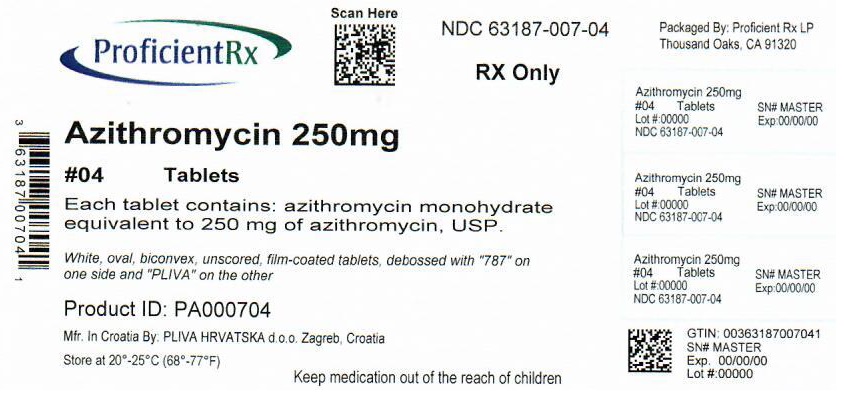
Azithromycin 250 mg Tablet, Film Coated, 4-count — NDC 63187-007-04 (Billing 63187-0007-04)
This is a package of 4 tablets of Azithromycin 250 mg Tablet, Film Coated from Proficient Rx LP, marketed since Jan 2006 and currently FDA-listed. It is the main listing for this product, which comes in 2 package sizes.
NDC database record
One package, one record: these facts belong to NDC 63187-007-04 alone.
- Record
- FDA NDC Directory package listing · Human prescription drug
- Code segments
- 63187 labeler · 007 product · 04 package
- Package marketed since
- Mar 17, 2022
- Sample package
- No — commercial package
- Listing certified through
- Dec 31, 2027
- Billing quantity
- 4 EA per package
- Barcode (UPC)
- 0363187189037, 0363187007041
- FDA record last changed
- Oct 8, 2026
Identity & classification
Regulatory identifiers FDA, NLM and CMS codes for this package
Drug-database identifiers Medi-Span GPI and First Databank GCN / HICL / AHFS classification
- GSN (GCN sequence number): 026721
- GCN: 48793
- GPI-14 (Medi-Span): 03400010000320
- HICL (First Databank): 006334
- AHFS class code: 08:12.12.08
- RxCUI (RxNorm): 248656
Where does this data come from?
- FDA openFDA NDC Directory · synced Oct 8, 2026
- FDA label on DailyMed · label index refreshed Oct 8, 2026
- RxNorm (NLM RxNav) · catalog refreshed Oct 8, 2026
- Medi-Span GPI (licensed)
- First Databank (licensed) · refreshed Oct 8, 2026
RxNorm drug class
This medicine belongs to the Macrolide Antimicrobial class.
Where does this data come from?
- RxClass (NLM) · catalog refreshed Oct 8, 2026
Clinical
- It treats certain bacterial infections, such as sinus infections, pneumonia, bronchitis flare-ups, strep-type throat infections, ear infections in children, skin infections and som...
- The tablets can be taken with or without food. If it upsets your stomach, taking it with a meal may help. Follow the directions on your label.
- The most common are diarrhea, nausea, stomach pain and vomiting, and they are usually mild. Call your doctor if you have a rash, swelling, yellow skin or eyes, a racing or irregula...
- Tell me about everything you take. Azithromycin may increase the effect of warfarin, so your clotting tests should be monitored. Medicines that affect heart rhythm, such as amiodar...
Patient education
Supplement & herbal interactions
Some supplements/herbs that may interact with Azithromycin — tap one for details:
Azithromycin may be associated with lower levels of 7 nutrients — worth a chat with your pharmacist, not a cause for alarm.
Where does this data come from?
- MedlinePlus (NLM) · refreshed Oct 8, 2026
- FDA label on DailyMed · label index refreshed Oct 8, 2026
Ask a licensed pharmacist directly — free, answered by our team.
Pricing
A drug doesn't have one price. Each row is a different public payment system, and none is what you'd pay at the counter — that depends on your insurance. The ⓘ on each row explains what it measures.
| Price system | Per each | Per package |
|---|---|---|
| Retail pharmacies payNADAC · weekly | Not in the retail survey — common for institutional, discontinued, or low-volume packs. | |
| Medicaid paysCMS SDUD · 12 mo | No recent Medicaid claims on file for this NDC — rare and low-volume NDCs are suppressed in the public data. | |
| Medicare drug plans payPart D · Q2 2026 | $0.5357 | $2.14 / 4 tablets |
Where does this data come from?
- CMS NADAC weekly file
- CMS ASP pricing files · refreshed Sep 20, 2026
- CMS Medicaid State Drug Utilization Data · refreshed Oct 9, 2026
- CMS Part D plan pricing files · refreshed Sep 24, 2026
- VA National Acquisition Center price file
Packaging — all sizes for this product
| Package NDC | Description | Marketing start | Marketing end | Status |
|---|---|---|---|---|
| 63187-0007-04 You're viewing this Main listing | 4 TABLET, FILM COATED in 1 BOTTLE | 2022-03-17 | — | Active |
| 63187-0007-06 63187-007-06 | 1 BLISTER PACK in 1 BOX / 6 TABLET, FILM COATED in 1 BLISTER PACK | 2014-10-01 | — | Active |
Pack size FAQ
What quantity is in this package?
How does this package differ from NDC 63187-0007-06?
What NDC number is used to bill for this package of Azithromycin 250 mg Tablet, Film Coated?
Therapeutic equivalents
| Product | Labeler | Pack | NADAC/unit | TE | Status | Price vs. this |
|---|---|---|---|---|---|---|
| Azithromycin 250 mg 50111-0787-10 | Teva | 30 tablets | $0.266 | AB | Availability likely | — |
| Azithromycin 250 mgthis 63187-0007-04 | Proficient | 4 tablets | — | AB | FDA listed | — |
| Azithromycin 250 mg 76420-0006-06 | Asclemed | 6 tablets | — | AB | FDA listed | — |
| Azithromycin 250 mg 80425-0219-01 | Advanced | 6 tablets | — | AB | FDA listed | — |
| Azithromycin 250 mg 70518-0784-01 | REMEDYREPACK | 4 tablets | — | AB | FDA listed | — |
| Azithromycin 250 mg 85766-0007-06 | Sportpharm | 6 tablets | — | AB | FDA listed | — |
Where does this data come from?
- FDA openFDA NDC Directory · synced Oct 8, 2026
- FDA Orange Book · refreshed Oct 3, 2026
- CMS NADAC weekly file
Availability & generic status
This product is an FDA-approved generic. Other versions of the same drug are listed under Therapeutic equivalents, least expensive first.
Where does this data come from?
- FDA Orange Book · refreshed Oct 3, 2026
What it looks like
Where does this data come from?
- FDA label on DailyMed · label index refreshed Oct 8, 2026
Inactive Ingredients / Excipients
Inactive ingredients, also called excipients, are components of the drug product other than the active ingredient. They may include fillers, dyes, coatings, preservatives, flavors, or other formulation ingredients.
🧪 Avoiding an ingredient? See Azithromycin inactive ingredients by manufacturer: every current product's list side by side, so you can ask your pharmacy for the version that does not list it.
💡 Tap an ingredient (hover on desktop) to see what it is and why it’s used.
-
UNII L11K75P92J
A mineral salt made from calcium and phosphate. It acts as a filler and binder in tablets to add bulk and help hold the medicine together in solid form.
-
UNII M28OL1HH48
Croscarmellose sodium is a plant-based substance derived from cellulose. It acts as a disintegrant, helping tablets and capsules break down quickly in the digestive system so the medicine can be absorbed.
-
UNII 36SFW2JZ0W
Hypromellose 2910 is a plant-based thickening agent derived from cellulose. In medicines, it forms a protective coating on tablets or capsules and controls how quickly the drug dissolves and releases into your body.
-
UNII EWQ57Q8I5X
Lactose monohydrate is a natural sugar derived from milk. It serves as a filler and binder in tablets and capsules, helping create the proper size, texture, and consistency of the medicine.
-
UNII 70097M6I30
Magnesium stearate is a salt made from magnesium and stearic acid, a fatty substance. It's used in tablets and capsules as a lubricant and glidant to help ingredients flow smoothly during manufacturing and prevent sticking.
-
UNII OP1R32D61U
Microcrystalline cellulose is a purified form of cellulose, a natural fiber from plant sources. It acts as a binder and filler in tablets and capsules, helping hold ingredients together and give the medicine its shape and size.
-
UNII 4R4HFI6D95
Polyethylene glycol 4000 is a synthetic polymer derived from petroleum. It serves as a binder, filler, and lubricant in solid dosage forms, and helps control how quickly the medicine dissolves.
-
UNII 368GB5141J
A detergent and foaming agent derived from coconut or palm oil. In medications, it helps break down and mix oil and water-based ingredients, aids in tablet disintegration, and improves how the drug dissolves and spreads in the mouth or digestive system.
-
UNII O8232NY3SJ
A plant-based carbohydrate derived from corn kernels. It acts as a filler to add bulk, a binder to hold ingredients together, and a disintegrant to help the tablet break apart in your stomach for absorption.
-
UNII 15FIX9V2JP
Titanium dioxide is a bright white mineral powder commonly used as a colorant and opacifying agent. It makes pills and tablets white or lighter in color and helps make coatings non-transparent.
-
UNII B22547B95K
A salt derived from citric acid that helps maintain the proper acid-base balance in the medicine. It's used as a buffer to keep the product stable and at the right pH level.
11 inactive ingredients listed in the exact product block matched to this NDC.
Where does this data come from?
ingredient classCode="IACT" elements from the exact product block matched by this NDC. Label-section narrative from DailyMed / the openFDA label index is shown separately when available.- FDA label on DailyMed · label index refreshed Oct 8, 2026
- FDA openFDA NDC Directory · synced Oct 8, 2026
Inactive ingredient FAQ
Are inactive ingredients the same for every manufacturer?
Why might an inactive ingredient be missing?
Can inactive ingredients matter?
Manufacturer & labeler
More NDCs from Proficient Rx LP labeler code 63187
- Sulfamethoxazole and Trimethoprim 800 mg; 160 mg Tablet NDC 63187-008-06
- Tizanidine 4 mg Tablet NDC 63187-009-30
- Gabapentin 800 mg Tablet NDC 63187-010-30
- Diclofenac Sodium 75 mg Tablet, Delayed Release NDC 63187-012-06
- Amoxicillin and Clavulanate Potassium 875 mg; 125 mg Tablet, Film Coated NDC 63187-014-14
- Mupirocin 20 mg/g Ointment NDC 63187-015-22
Where does this data come from?
- FDA openFDA NDC Directory · synced Oct 8, 2026
- Drugs@FDA
Full prescribing information FDA SPL
🎯 Indications and Usage ▾
INDICATIONS AND USAGE Azithromycin tablets USP are indicated for the treatment of patients with mild to moderate infections (pneumonia: see WARNINGS) caused by susceptible strains of the designated microorganisms in the specific conditions listed below. As recommended dosages, durations of therapy and applicable patient populations vary among these infections, please see DOSAGE AND ADMINISTRATION for specific dosing recommendations. Adults Acute bacterial exacerbations of chronic obstructive pulmonary disease due to Haemophilus influenzae, Moraxella catarrhalis or Streptococcus pneumoniae.
Acute bacterial sinusitis due to Haemophilus influenzae, Moraxella catarrhalis or Streptococcus pneumoniae . Community-acquired pneumonia due to Chlamydophila pneumoniae, Haemophilus influenzae, Mycoplasma pneumoniae or Streptococcus pneumoniae in patients appropriate for oral therapy. NOTE: Azithromycin should not be used in patients with pneumonia who are judged to be inappropriate for oral therapy because of moderate to severe illness or risk factors such as any of the following: patients with cystic fibrosis, patients with nosocomially acquired infections, patients with known or suspected bacteremia, patients requiring hospitalization, elderly or debilitated patients, or patients with significant underlying health problems that may compromise their ability to respond to their illness (including immunodeficiency or functional asplenia).
Pharyngitis/tonsillitis caused by Streptococcus pyogenes as an alternative to first-line therapy in individuals who cannot use first-line therapy. NOTE: Penicillin by the intramuscular route is the usual drug of choice in the treatment of Streptococcus pyogenes infection and the prophylaxis of rheumatic fever. Azithromycin tablets USP are often effective in the eradication of susceptible strains of Streptococcus pyogenes from the nasopharynx.
Because some strains are resistant to azithromycin tablets USP, susceptibility tests should be performed when patients are treated with azithromycin tablets USP. Data establishing efficacy of azithromycin in subsequent prevention of rheumatic fever are not available. Uncomplicated skin and skin structure infections due to Staphylococcus aureus, Streptococcus pyogenes, or Streptococcus agalactiae.
Abscesses usually require surgical drainage. Urethritis and cervicitis due to Chlamydia trachomatis or Neisseria gonorrhoeae . Genital ulcer disease in men due to Haemophilus ducreyi (chancroid).
Due to the small number of women included in clinical trials, the efficacy of azithromycin in the treatment of chancroid in women has not been established. Azithromycin tablets USP, at the recommended dose, should not be relied upon to treat syphilis. Antimicrobial agents used in high doses for short periods of time to treat non-gonococcal urethritis may mask or delay the symptoms of incubating syphilis.
All patients with sexually-transmitted urethritis or cervicitis should have a serologic test for syphilis and appropriate cultures for gonorrhea performed at the time of diagnosis. Appropriate antimicrobial therapy and follow-up tests for these diseases should be initiated if infection is confirmed. Appropriate culture and susceptibility tests should be performed before treatment to determine the causative organism and its susceptibility to azithromycin, USP.
Therapy with azithromycin tablets USP may be initiated before results of these tests are known; once the results become available, antimicrobial therapy should be adjusted accordingly. To reduce the development of drug-resistant bacteria and maintain the effectiveness of azithromycin tablets USP and other antibacterial drugs, azithromycin tablets USP should be used only to treat or prevent infections that are proven or strongly suspected to be caused by susceptible bacteria. When culture and susceptibility information are available, they should be considered in selecting or modifying antibacterial therapy.
In the absence of such… [Excerpted — this section continues on DailyMed.]
⏱️ Dosage and Administration ▾
DOSAGE AND ADMINISTRATION (See INDICATIONS AND USAGE and CLINICAL PHARMACOLOGY .) Adults *DUE TO THE INDICATED ORGANISMS (see INDICATIONS AND USAGE ). Infection* Recommended Dose/Duration of Therapy Community-acquired pneumonia (mild severity) Pharyngitis/tonsillitis (second line therapy) Skin/skin structure (uncomplicated) 500 mg as a single dose on Day 1, followed by 250 mg once daily on Days 2 through 5. Acute bacterial exacerbations of chronic obstructive pulmonary disease (mild to moderate) 500 mg QD x 3 days OR 500 mg as a single dose on Day 1, followed by 250 mg once daily on Days 2 through 5.
Acute bacterial sinusitis 500 mg QD x 3 days Genital ulcer disease (chancroid) One single 1 gram dose Non-gonococcal urethritis and cervicitis One single 1 gram dose Gonococcal urethritis and cervicitis One single 2 gram dose Azithromycin tablets USP can be taken with or without food. Renal Insufficiency No dosage adjustment is recommended for subjects with renal impairment (GFR ≤ 80 mL/min). The mean AUC 0-120 was similar in subjects with GFR 10 to 80 mL/min compared to subjects with normal renal function, whereas it increased 35% in subjects with GFR < 10 mL/min compared to subjects with normal renal function.
Caution should be exercised when azithromycin is administered to subjects with severe renal impairment (see CLINICAL PHARMACOLOGY, Special Populations, Renal insufficiency ). Hepatic Insufficiency The pharmacokinetics of azithromycin in subjects with hepatic impairment have not been established. No dose adjustment recommendations can be made in patients with impaired hepatic function (see CLINICAL PHARMACOLOGY , Special Populations , Hepatic insufficiency ).
No dosage adjustment is recommended based on age or gender (see CLINICAL PHARMACOLOGY , Special Populations ). Pediatric Patients Azithromycin for oral suspension can be taken with or without food. Acute Otitis Media The recommended dose of azithromycin for oral suspension for the treatment of pediatric patients with acute otitis media is 30 mg/kg given as a single dose or 10 mg/kg once daily for 3 days or 10 mg/kg as a single dose on the first day followed by 5 mg/kg/day on Days 2 through 5 (see chart below).
Acute Bacterial Sinusitis The recommended dose of azithromycin for oral suspension for the treatment of pediatric patients with acute bacterial sinusitis is 10 mg/kg once daily for 3 days (see chart below). Community-Acquired Pneumonia The recommended dose of azithromycin for oral suspension for the treatment of pediatric patients with community-acquired pneumonia is 10 mg/kg as a single dose on the first day followed by 5 mg/kg on Days 2 through 5 (see chart below). PEDIATRIC DOSAGE GUIDELINES FOR OTITIS MEDIA, ACUTE BACTERIAL SINUSITIS AND COMMUNITY-ACQUIRED PNEUMONIA (Age 6 Months and Above, see PRECAUTIONS, Pediatric Use.) Based on Body Weight OTITIS MEDIA AND COMMUNITY-ACQUIRED PNEUMONIA: (5 Day Regimen)* Dosing Calculated on 10 mg/kg/day Day 1and 5 mg/kg/day Days 2 to 5.
Weight 100 mg/5 mL 200 mg/5 mL Total mL perTreatmentCourse Total mg perTreatmentCourse Kg Lbs. Day 1 Days 2 to 5 Day 1 Days 2 to 5 5 11 2.5 mL (½ tsp) 1.25 mL (¼ tsp) 7.5 mL 150 mg 10 22 5 mL (1 tsp) 2.5 mL (½ tsp) 15 mL 300 mg 20 44 5 mL (1 tsp) 2.5 mL (½ tsp) 15 mL 600 mg 30 66 7.5 mL (1½ tsp) 3.75 mL (¾ tsp) 22.5 mL 900 mg 40 88 10 mL (2 tsp) 5 mL (1 tsp) 30 mL 1200 mg 50 and above 110 and above 12.5 mL (2½ tsp) 6.25 mL (1¼ tsp) 37.5 mL 1500 mg * Effectiveness of the 3 day or 1 day regimen in pediatric patients with community-acquired pneumonia has not been established.
OTITIS MEDIA AND ACUTE BACTERIAL SINUSITIS: (3 Day Regimen)* Dosing Calculated on 10 mg/kg/day Weight 100 mg/5 mL 200 mg/5 mL Total mL perTreatmentCourse Total mg perTreatmentCourse Kg Lbs. Day 1 to 3 Day 1 to 3 5 11 2.5 mL (½ tsp) 7.5 mL 150 mg 10 22 5 mL (1 tsp) 15 mL 300 mg 20 44 5 mL (1 tsp) 15 mL 600 mg 30 66 7.5 mL (1 ½ tsp) 22.5 mL 900 mg 40 88 10 mL (2 tsp) 30 mL 1200 mg 50 and above 110 and above 12.5 mL (2 ½ tsp… [Excerpted — this section continues on DailyMed.]
⛔ Contraindications ▾
CONTRAINDICATIONS Azithromycin is contraindicated in patients with known hypersensitivity to azithromycin, erythromycin, any macrolide or ketolide antibiotic. Azithromycin is contraindicated in patients with a history of cholestatic jaundice/hepatic dysfunction associated with prior use of azithromycin.
⚠️ Warnings ▾
WARNINGS Hypersensitivity Serious allergic reactions, including angioedema, anaphylaxis, and dermatologic reactions including Stevens-Johnson syndrome and toxic epidermal necrolysis have been reported rarely in patients on azithromycin therapy. Although rare, fatalities have been reported (see CONTRAINDICATIONS ). Despite initially successful symptomatic treatment of the allergic symptoms, when symptomatic therapy was discontinued, the allergic symptoms recurred soon thereafter in some patients without further azithromycin exposure.
These patients required prolonged periods of observation and symptomatic treatment. The relationship of these episodes to the long tissue half-life of azithromycin and subsequent prolonged exposure to antigen is unknown at present. If an allergic reaction occurs, the drug should be discontinued and appropriate therapy should be instituted.
Physicians should be aware that reappearance of the allergic symptoms may occur when symptomatic therapy is discontinued. Hepatotoxicity Abnormal liver function, hepatitis, cholestatic jaundice, hepatic necrosis, and hepatic failure have been reported, some of which have resulted in death. Discontinue azithromycin immediately if signs and symptoms of hepatitis occur.
Treatment of Pneumonia In the treatment of pneumonia, azithromycin has only been shown to be safe and effective in the treatment of community-acquired pneumonia due to Chlamydia pneumoniae, Haemophilusinfluenzae, Mycoplasma pneumoniae or Streptococcus pneumoniae in patients appropriate for oral therapy. Azithromycin should not be used in patients with pneumonia who are judged to be inappropriate for oral therapy because of moderate to severe illness or risk factors such as any of thefollowing: patients with cystic fibrosis, patients with nosocomially acquired infections, patients with known or suspected bacteremia, patients requiring hospitalization, elderly or debilitated patients, or patients with significant underlying health problems that may compromise their ability to respond totheir illness (including immunodeficiency or functional asplenia).
Clostridium Difficile -Associated Diarrhea Clostridium difficile associated diarrhea (CDAD) has been reported with use of nearly all antibacterial agents, including azithromycin, and may range in severity from mild diarrhea to fatal colitis. Treatment with antibacterial agents alters the normal flora of the colon leading to overgrowth of C. difficile . C. difficile produces toxins A and B which contribute to the development of CDAD.
Hypertoxin producing strains of C. difficile cause increased morbidity and mortality, as these infections can be refractory to antimicrobial therapy and may require colectomy. CDAD must be considered in all patients who present with diarrhea following antibiotic use. Careful medical history is necessary since CDAD has been reported to occur over two months after the administration of antibacterial agents.
If CDAD is suspected or confirmed, ongoing antibiotic use not directed against C. difficile may need to be discontinued. Appropriate fluid and electrolyte management, protein supplementation, antibiotic treatment of C. difficile , and surgical evaluation should be instituted as clinically indicated. QT Prolongation Prolonged cardiac repolarization and QT interval, imparting a risk of developing cardiac arrhythmia and torsade de pointes, have been seen in treatment with macrolides, including azithromycin.
Cases of torsade de pointes have been spontaneously reported during postmarketing surveillance in patients receiving azithromycin. Providers should consider the risk of QT prolongation which can be fatal when weighing the risks and benefits of azithromycin for at-risk groups including: • patients with known prolongation of the QT interval, a history of torsade de pointes, congenital long QT syndrome, bradyarrhythmias or uncompensated heart failure • patients on drugs known to prolong the QT interval • patients with ongoing pr… [Excerpted — this section continues on DailyMed.]
🤒 Adverse Reactions ▾
ADVERSE REACTIONS In clinical trials, most of the reported side effects were mild to moderate in severity and were reversible upon discontinuation of the drug. Potentially serious side effects of angioedema and cholestatic jaundice were reported rarely. Approximately 0.7% of the patients (adults and pediatric patients) from the 5 day multiple-dose clinical trials discontinued azithromycin therapy because of treatment-related side effects.
In adults given 500 mg/day for 3 days, the discontinuation rate due to treatment-related side effects was 0.6%. In clinical trials in pediatric patients given 30 mg/kg, either as a single dose or over 3 days, discontinuation from the trials due to treatment-related side effects was approximately 1% (see DOSAGE AND ADMINISTRATION ). Most of the side effects leading to discontinuation were related to the gastrointestinal tract, e.g., nausea, vomiting, diarrhea, or abdominal pain (see CLINICAL STUDIES, Pediatric Patients ).
Clinical Adults Multiple-dose regimen s Overall, the most common treatment-related side effects in adult patients receiving multiple-dose regimens of azithromycin were related to the gastrointestinal system with diarrhea/loose stools (4 to 5%), nausea (3%) and abdominal pain (2 to 3%) being the most frequently reported. No other treatment-related side effects occurred in patients on the multiple-dose regimens of azithromycin with a frequency greater than 1%. Side effects that occurred with a frequency of 1% or less included the following: Cardiovascular: Palpitations, chest pain.
Gastrointestinal: Dyspepsia, flatulence, vomiting, melena and cholestatic jaundice. Genitourinary: Monilia, vaginitis and nephritis. Nervous System: Dizziness, headache, vertigo and somnolence.
General: Fatigue. Allergic: Rash, pruritus, photosensitivity and angioedema. Single 1 gram dose regimen Overall, the most common side effects in patients receiving a single-dose regimen of 1 gram of azithromycin were related to the gastrointestinal system and were more frequently reported than in patients receiving the multiple-dose regimen.
Side effects that occurred in patients on the single one-gram dosing regimen of azithromycin with a frequency of 1% or greater included diarrhea/loose stools (7%), nausea (5%), abdominal pain (5%), vomiting (2%), dyspepsia (1%) and vaginitis (1%). Single 2 gram dose regime n Overall, the most common side effects in patients receiving a single 2 gram dose of azithromycin were related to the gastrointestinal system. Side effects that occurred in patients in this study with a frequency of 1% or greater included nausea (18%), diarrhea/loose stools (14%), vomiting (7%), abdominal pain (7%), vaginitis (2%), dyspepsia (1%) and dizziness (1%).
The majority of these complaints were mild in nature. Pediatric Patients Single and multiple-dose regimen s The types of side effects in pediatric patients were comparable to those seen in adults, with different incidence rates for the dosage regimens recommended in pediatric patients. Acute otitis media For the recommended total dosage regimen of 30 mg/kg, the most frequent side effects (≥ 1%) attributed to treatment were diarrhea, abdominal pain, vomiting, nausea and rash (see DOSAGE AND ADMINISTRATION and CLINICAL STUDIES, Pediatric Patients ).
The incidence, based on dosing regimen, is described in the table below: Dosage Regimen Diarrhea, % Abdominal Pain, % Vomiting, % Nausea, % Rash, % 1 day 4.3% 1.4% 4.9% 1% 1% 3 day 2.6% 1.7% 2.3% 0.4% 0.6% 5 day 1.8% 1.2% 1.1% 0.5% 0.4% Community-acquired pneumonia For the recommended dosage regimen of 10 mg/kg on Day 1 followed by 5 mg/kg on Days 2 to 5, the most frequent side effects attributed to treatment were diarrhea/loose stools, abdominal pain, vomiting, nausea and rash. The incidence is described in the table below: Dosage Regimen Diarrhea/Loose stools, % Abdominal Pain, % Vomiting, % Nausea, % Rash, % 5 day 5.8% 1.9% 1.9% 1.9% 1.6% Pharyngitis/tonsillitis For the recommended dosage regime… [Excerpted — this section continues on DailyMed.]
🔄 Drug Interactions ▾
Drug Interactions Coadministration of nelfinavir at steady-state with a single oral dose of azithromycin resulted in increased azithromycin serum concentrations. Although a dose adjustment of azithromycin is not recommended when administered in combination with nelfinavir, close monitoring for known side effects of azithromycin, such as liver enzyme abnormalities and hearing impairment, is warranted (see ADVERSE REACTIONS ). Although, in a study of 22 healthy men, a 5 day course of azithromycin did not affect the prothrombin time from a subsequently administered dose of warfarin, spontaneous postmarketing reports suggest that concomitant administration of azithromycin may potentiate the effects of oral anticoagulants.
Prothrombin times should be carefully monitored while patients are receiving azithromycin and oral anticoagulants concomitantly. Drug interaction studies were performed with azithromycin and other drugs likely to be coadministered (see CLINICAL PHARMACOLOGY, Drug-Drug Interactions ). When used in therapeutic doses, azithromycin had a modest effect on the pharmacokinetics of atorvastatin, carbamazepine, cetirizine, didanosine, efavirenz, fluconazole, indinavir, midazolam, rifabutin, sildenafil, theophylline (intravenous and oral), triazolam, trimethoprim/sulfamethoxazole or zidovudine.
Coadministration with efavirenz or fluconazole had a modest effect on the pharmacokinetics of azithromycin. No dosage adjustment of either drug is recommended when azithromycin is coadministered with any of the above agents. Interactions with the drugs listed below have not been reported in clinical trials with azithromycin; however, no specific drug interaction studies have been performed to evaluate potential drug-drug interaction.
Nonetheless, they have been observed with macrolide products. Until further data are developed regarding drug interactions when azithromycin and these drugs are used concomitantly, careful monitoring of patients is advised: Digoxin–elevated digoxin concentrations. Ergotamine or dihydroergotamine–acute ergot toxicity characterized by severe peripheral vasospasm and dysesthesia.
Terfenadine, cyclosporine, hexobarbital and phenytoin concentrations.
🔄 Drug / Laboratory Test Interactions ▾
Laboratory Test Interactions There are no reported laboratory test interactions.
🤰 Pregnancy ▾
Pregnancy Teratogenic Effects Pregnancy Category B Reproduction studies have been performed in rats and mice at doses up to moderately maternally toxic dose concentrations (i.e., 200 mg/kg/day). These doses, based on a mg/m 2 basis, are estimated to be 4 and 2 times, respectively, the human daily dose of 500 mg. In the animal studies, no evidence of harm to the fetus due to azithromycin was found.
There are, however, no adequate and well-controlled studies in pregnant women. Because animal reproduction studies are not always predictive of human response, azithromycin should be used during pregnancy only if clearly needed.
🧒 Pediatric Use ▾
Pediatric Use (See CLINICAL PHARMACOLOGY , INDICATIONS AND USAGE , and DOSAGE AND ADMINISTRATION .) Acute Otitis Media (total dosage regimen: 30 mg/kg, see DOSAGE AND ADMINISTRATION ): Safety and effectiveness in the treatment of pediatric patients with otitis media under 6 months of age have not been established. Acute Bacterial Sinusitis (dosage regimen: 10 mg/kg on Days 1 to 3): Safety and effectiveness in the treatment of pediatric patients with acute bacterial sinusitis under 6 months of age have not been established.
Use of azithromycin for the treatment of acute bacterial sinusitis in pediatric patients (6 months of age or greater) is supported by adequate and well-controlled studies in adults, similar pathophysiology of acute sinusitis in adults and pediatric patients, and studies of acute otitis media in pediatric patients. Community-Acquired Pneumonia (dosage regimen: 10 mg/kg on Day 1 followed by 5 mg/kg on Days 2 to 5): Safety and effectiveness in the treatment of pediatric patients with community-acquired pneumonia under 6 months of age have not been established.
Safety and effectiveness for pneumonia due to Chlamydophila pneumoniae and Mycoplasma pneumoniae were documented in pediatric clinical trials. Safety and effectiveness for pneumonia due to Haemophilus influenzae and Streptococcus pneumoniae were not documented bacteriologically in the pediatric clinical trial due to difficulty in obtaining specimens. Use of azithromycin for these two microorganisms is supported, however, by evidence from adequate and well-controlled studies in adults.
Pharyngitis/Tonsillitis (dosage regimen: 12 mg/kg on Days 1 to 5): Safety and effectiveness in the treatment of pediatric patients with pharyngitis/tonsillitis under 2 years of age have not been established. Studies evaluating the use of repeated courses of therapy have not been conducted (see CLINICAL PHARMACOLOGY and ANIMAL TOXICOLOGY ).
🧓 Geriatric Use ▾
Geriatric Use Pharmacokinetic parameters in older volunteers (65 to 85 years old) were similar to those in younger volunteers (18 to 40 years old) for the 5 day therapeutic regimen. Dosage adjustment does not appear to be necessary for older patients with normal renal and hepatic function receiving treatment with this dosage regimen (see CLINICAL PHARMACOLOGY ). In multiple-dose clinical trials of oral azithromycin, 9% of patients were at least 65 years of age (458/4949) and 3% of patients (144/4949) were at least 75 years of age.
No overall differences in safety or effectiveness were observed between these subjects and younger subjects, and other reported clinical experience has not identified differences in response between the elderly and younger patients, but greater sensitivity of some older individuals cannot be ruled out. Elderly patients may be more susceptible to development of torsade de pointes arrhythmia than younger patients (see WARNINGS ). Azithromycin tablets USP, 250 mg contain 0.36 mg of sodium per tablet.
Azithromycin tablets USP, 500 mg contain 0.73 mg of sodium per tablet.
🧬 Clinical Pharmacology ▾
CLINICAL PHARMACOLOGY Pharmacokinetics Following oral administration of a single 500 mg dose (two 250 mg tablets) to 36 fasted healthy male volunteers, the mean (SD) pharmacokinetic parameters were AUC 0-72 = 4.3 (1.2) mcg·h/mL; C max = 0.5 (0.2) mcg/mL; T max = 2.2 (0.9) hours. With a regimen of 500 mg (two 250 mg capsules*) on day 1, followed by 250 mg daily (one 250 mg capsule) on days 2 through 5, the pharmacokinetic parameters of azithromycin in plasma in healthy young adults (18 to 40 years of age) are portrayed in the chart below.
C min and C max remained essentially unchanged from day 2 through day 5 of therapy. *Azithromycin 250 mg tablets are bioequivalent to 250 mg capsules in the fasted state. Azithromycin 250 mg capsules are no longer commercially available. Pharmacokinetic Parameters (Mean) Total n = 12 Day 1 Day 5 C max (mcg/mL) 0.41
0.24T max (h) 2.5
3.2AUC 0-24 (mcg·h/mL) 2.6
2.1C min (mcg/mL) 0.05
0.05Urinary Excret. (% dose) 4.5
6.5In a two-way crossover study, 12 adult healthy volunteers (6 males, 6 females) received 1,500 mg of azithromycin administered in single daily doses over either 5 days (two 250 mg tablets on day 1, followed by one 250 mg tablet on days 2 to 5) or 3 days (500 mg per day for days 1 to 3). Due to limited serum samples on day 2 (3 day regimen) and days 2 to 4 (5 day regimen), the serum concentration-time profile of each subject was fit to a 3 compartment model and the AUC 0-∞ for the fitted concentration profile was comparable between the 5 day and 3 day regimens.
3 Day Regimen 5 Day Regimen Pharmacokinetic Parameter [mean (SD)] Day 1 Day 3 Day 1 Day 5 C max (serum, mcg/mL) 0.44 (0.22) 0.54 (0.25) 0.43 (0.20) 0.24 (0.06) Serum AUC 0-∞ (mcg·hr/mL) 17.4 (6.2) Total AUC for the entire 3 day and 5 day regimens 14.9 (3.1) Serum T 1/2 71.8 hr 68.9 hr Median azithromycin exposure (AUC 0-288 ) in mononuclear (MN) and polymorphonuclear (PMN) leukocytes following either the 5 day or 3 day regimen was more than a 1000 fold and 800 fold greater than in serum, respectively. Administration of the same total dose with either the 5 day or 3 day regimen may be expected to provide comparable concentrations of azithromycin within MN and PMN leukocytes.
Two azithromycin 250 mg tablets are bioequivalent to a single 500 mg tablet. Absorption The absolute bioavailability of azithromycin 250 mg capsules is 38%. In a two-way crossover study in which 12 healthy subjects received a single 500 mg dose of azithromycin (two 250 mg tablets) with or without a high fat meal, food was shown to increase C max by 23% but had no effect on AUC.
When azithromycin suspension was administered with food to 28 adult healthy male subjects, C max increased by 56% and AUC was unchanged. The AUC of azithromycin was unaffected by coadministration of an antacid containing aluminum and magnesium hydroxide with azithromycin capsules; however, the C max was reduced by 24%. Administration of cimetidine (800 mg) two hours prior to azithromycin had no effect on azithromycin absorption.
Distribution The serum protein binding of azithromycin is variable in the concentration range approximating human exposure, decreasing from 51% at 0.02 mcg/mL to 7% at 2 mcg/mL. Following oral administration, azithromycin is widely distributed throughout the body with an apparent steady-state volume of distribution of
31.1L/kg. Greater azithromycin concentrations in tissues than in plasma or serum were observed. High tissue concentrations should not be interpreted to be quantitatively related to clinical efficacy.
The antimicrobial activity of azithromycin is pH related and appears to be reduced with decreasing pH. However, the extensive distribution of drug to tissues may be relevant to clinical activity. Selected tissue (or fluid) concentration and tissue (or fluid) to plasma/serum concentration ratios are shown in the following table: AZITHROMYCIN CONCENTRATIONS FOLLOWING A 500 mg DOSE (TWO 250 mg CAPSULES) IN ADULTS Azithromycin tissue concentratio… [Excerpted — this section continues on DailyMed.]
📦 How Supplied / Storage and Handling ▾
HOW SUPPLIED Azithromycin tablets USP, 250 mg are supplied as white, oval, biconvex, unscored, film-coated tablets, debossed with “787” on one side and “PLIVA” on the other, containing azithromycin monohydrate equivalent to 250 mg of azithromycin, USP, available in bottles of 4 tablets (NDC 63187-007-04) and boxes of 1 card x 6 tablets (NDC 63187-007-06). Azithromycin tablets USP, 500 mg are supplied as blue, capsule shaped, biconvex, unscored, film-coated tablets, debossed with “788” on one side and “PLIVA” on the other, containing azithromycin monohydrate equivalent to 500 mg of azithromycin, USP, available in boxes of 1 card x 3 tablets (NDC 63187-189-03) and bottles of 4 tablets (NDC 63187-189-04).
Store at 20º to 25°C (68° to 77°F) [See USP Controlled Room Temperature]. KEEP THIS AND ALL MEDICATIONS OUT OF THE REACH OF CHILDREN.
📋 Description ▾
DESCRIPTION Azithromycin tablets USP contain the active ingredient azithromycin, USP, an azalide, a subclass of macrolide antibiotics, for oral administration. Azithromycin, USP has the chemical name (2R,3S,4R,5R,8R,10R,11R,12S,13S,14R) -13-[(2,6-dideoxy-3- C -methyl-3- O -methyl-α- L-ribo- hexopyranosyl) oxy]-2-ethyl-3,4,10-trihydroxy-3,5,6,8,10,12,14-heptamethyl-11-[[3,4,6-trideoxy-3- (dimethylamino)-β- D-xylo -hexopyranosyl]oxy]-1-oxa-6-azacyclopentadecan-15-one. Azithromycin, USP is derived from erythromycin; however, it differs chemically from erythromycin in that a methyl-substituted nitrogen atom is incorporated into the lactone ring.
Azithromycin, USP has the following structural formula: C 38 H 72 N 2 O 12 M.W. 749 Azithromycin, USP, as the monohydrate, is a white crystalline powder with a molecular formula of C 38 H 72 N 2 O 12 •H 2 O and a molecular weight of 767. Azithromycin tablets USP are supplied for oral administration as tablets containing azithromycin monohydrate equivalent to either 250 mg or 500 mg azithromycin, USP and the following inactive ingredients: corn starch, dibasic calcium phosphate anhydrous, croscarmellose sodium, hypromellose, lactose monohydrate, magnesium stearate, microcrystalline cellulose, polyethylene glycol, sodium citrate, sodium lauryl sulfate, and titanium dioxide.
The 500 mg tablets also contain FD&C blue #2. structural formula
💬 Information for Patients ▾
Information for Patients Azithromycin tablets can be taken with or without food. Patients should also be cautioned not to take aluminum- and magnesium-containing antacids and azithromycin simultaneously. The patient should be directed to discontinue azithromycin immediately and contact a physician if any signs of an allergic reaction occur.
Patients should be counseled that antibacterial drugs including azithromycin tablets should only be used to treat bacterial infections. They do not treat viral infections (e.g., the common cold). When azithromycin tablets are prescribed to treat a bacterial infection, patients should be told that although it is common to feel better early in the course of the therapy, the medication should be taken exactly as directed.
Skipping doses or not completing the full course of therapy may (1) decrease the effectiveness of the immediate treatment and (2) increase the likelihood that bacteria will develop resistance and will not be treatable by azithromycin tablets or other antibacterial drugs in the future. Diarrhea is a common problem caused by antibiotics which usually ends when the antibiotic is discontinued. Sometimes after starting treatment with antibiotics, patients can develop watery and bloody stools (with or without stomach cramps and fever) even as late as two or more months after having taken the last dose of the antibiotic.
If this occurs, patients should contact their physician as soon as possible.
⚠️ Precautions ▾
PRECAUTIONS General Because azithromycin is principally eliminated via the liver, caution should be exercised when azithromycin is administered to patients with impaired hepatic function. Due to the limited data in subjects with GFR < 10 mL/min, caution should be exercised when prescribing azithromycin in these patients (see CLINICAL PHARMACOLOGY, Special Populations, Renal insufficiency ). Exacerbation of symptoms of myasthenia gravis and new onset of myasthenic syndrome have been reported in patients receiving azithromycin therapy.
Prescribing azithromycin in the absence of a proven or strongly suspected bacterial infection or a prophylactic indication is unlikely to provide benefit to the patient and increases the risk of the development of drug-resistant bacteria. Information for Patients Azithromycin tablets can be taken with or without food. Patients should also be cautioned not to take aluminum- and magnesium-containing antacids and azithromycin simultaneously.
The patient should be directed to discontinue azithromycin immediately and contact a physician if any signs of an allergic reaction occur. Patients should be counseled that antibacterial drugs including azithromycin tablets should only be used to treat bacterial infections. They do not treat viral infections (e.g., the common cold).
When azithromycin tablets are prescribed to treat a bacterial infection, patients should be told that although it is common to feel better early in the course of the therapy, the medication should be taken exactly as directed. Skipping doses or not completing the full course of therapy may (1) decrease the effectiveness of the immediate treatment and (2) increase the likelihood that bacteria will develop resistance and will not be treatable by azithromycin tablets or other antibacterial drugs in the future. Diarrhea is a common problem caused by antibiotics which usually ends when the antibiotic is discontinued.
Sometimes after starting treatment with antibiotics, patients can develop watery and bloody stools (with or without stomach cramps and fever) even as late as two or more months after having taken the last dose of the antibiotic. If this occurs, patients should contact their physician as soon as possible. Drug Interactions Coadministration of nelfinavir at steady-state with a single oral dose of azithromycin resulted in increased azithromycin serum concentrations.
Although a dose adjustment of azithromycin is not recommended when administered in combination with nelfinavir, close monitoring for known side effects of azithromycin, such as liver enzyme abnormalities and hearing impairment, is warranted (see ADVERSE REACTIONS ). Although, in a study of 22 healthy men, a 5 day course of azithromycin did not affect the prothrombin time from a subsequently administered dose of warfarin, spontaneous postmarketing reports suggest that concomitant administration of azithromycin may potentiate the effects of oral anticoagulants.
Prothrombin times should be carefully monitored while patients are receiving azithromycin and oral anticoagulants concomitantly. Drug interaction studies were performed with azithromycin and other drugs likely to be coadministered (see CLINICAL PHARMACOLOGY, Drug-Drug Interactions ). When used in therapeutic doses, azithromycin had a modest effect on the pharmacokinetics of atorvastatin, carbamazepine, cetirizine, didanosine, efavirenz, fluconazole, indinavir, midazolam, rifabutin, sildenafil, theophylline (intravenous and oral), triazolam, trimethoprim/sulfamethoxazole or zidovudine.
Coadministration with efavirenz or fluconazole had a modest effect on the pharmacokinetics of azithromycin. No dosage adjustment of either drug is recommended when azithromycin is coadministered with any of the above agents. Interactions with the drugs listed below have not been reported in clinical trials with azithromycin; however, no specific drug interaction studies have been performed to evaluate potential drug-drug interaction… [Excerpted — this section continues on DailyMed.]
🍼 Nursing Mothers ▾
Nursing Mothers It is not known whether azithromycin is excreted in human milk. Because many drugs are excreted in human milk, caution should be exercised when azithromycin is administered to a nursing woman.
🔬 Clinical Studies ▾
CLINICAL STUDIES (See INDICATIONS AND USAGE and Pediatric Use .) Pediatric Patients From the perspective of evaluating pediatric clinical trials, Days 11 to 14 were considered on-therapy evaluations because of the extended half-life of azithromycin. Day 11 to 14 data are provided for clinical guidance. Day 24 to 32 evaluations were considered the primary test of cure endpoint.
Acute Otitis Media Safety and efficacy using azithromycin 30 mg/kg given over 5 days Protocol 1 In a double-blind, controlled clinical study of acute otitis media performed in the United States, azithromycin (10 mg/kg on Day 1 followed by 5 mg/kg on Days 2 to 5) was compared to amoxicillin/clavulanate potassium (4:1). For the 553 patients who were evaluated for clinical efficacy, the clinical success rate (i.e., cure plus improvement) at the Day 11 visit was 88% for azithromycin and 88% for the control agent. For the 521 patients who were evaluated at the Day 30 visit, the clinical success rate was 73% for azithromycin and 71% for the control agent.
In the safety analysis of the above study, the incidence of treatment-related adverse events, primarily gastrointestinal, in all patients treated was 9% with azithromycin and 31% with the control agent. The most common side effects were diarrhea/loose stools (4% azithromycin vs. 20% control), vomiting (2% azithromycin vs.
7% control), and abdominal pain (2% azithromycin vs. 5% control). Protocol 2 In a non-comparative clinical and microbiologic trial performed in the United States, where significant rates of beta-lactamase producing organisms (35%) were found, 131 patients were evaluable for clinical efficacy.
The combined clinical success rate (i.e., cure and improvement) at the Day 11 visit was 84% for azithromycin. For the 122 patients who were evaluated at the Day 30 visit, the clinical success rate was 70% for azithromycin. Microbiologic determinations were made at the pre-treatment visit.
Microbiology was not reassessed at later visits. The following presumptive bacterial/clinical cure outcomes (i.e., clinical success) were obtained from the evaluable group: Presumed Bacteriologic Eradication Day 11 Azithromycin Day 30 Azithromycin S. pneumoniae 61/74 (82%) 40/56 (71%) H. influenzae 43/54 (80%) 30/47 (64%) M. catarrhalis 28/35 (80%) 19/26 (73%) S. pyogenes 11/11 (100%) 7/7 Overall 177/217 (82%) 97/137 (73%) In the safety analysis of this study, the incidence of treatment-related adverse events, primarily gastrointestinal, in all patients treated was 9%.
The most common side effect was diarrhea (4%). Protocol 3 In another controlled comparative clinical and microbiologic study of otitis media performed in the United States, azithromycin was compared to amoxicillin/clavulanate potassium (4:1). This study utilized two of the same investigators as Protocol 2 (above), and these two investigators enrolled 90% of the patients in Protocol 3.
For this reason, Protocol 3 was not considered to be an independent study. Significant rates of beta-lactamase producing organisms (20%) were found. Ninety-two (92) patients were evaluable for clinical and microbiologic efficacy.
The combined clinical success rate (i.e., cure and improvement) of those patients with a baseline pathogen at the Day 11 visit was 88% for azithromycin vs. 100% for control; at the Day 30 visit, the clinical success rate was 82% for azithromycin vs. 80% for control.
Microbiologic determinations were made at the pre-treatment visit. Microbiology was not reassessed at later visits. At the Day 11 and Day 30 visits, the following presumptive bacterial/clinical cure outcomes (i.e., clinical success) were obtained from the evaluable group: Presumed Bacteriologic Eradication Day 11 Day 30 Azithromycin Control Azithromycin Control S. pneumoniae 25/29 (86%) 26/26 (100%) 22/28 (79%) 18/22 (82%) H. influenzae 9/11 (82%) 9/9 8/10 (80%) 6/8 M. catarrhalis 7/7 5/5 5/5 2/3 S. pyogenes 2/2 5/5 2/2 4/4 Overall 43/49 (88%) 45/45 (100%) 37/45 (82%) 30/37 (81%) In the… [Excerpted — this section continues on DailyMed.]
📄 Carcinogenesis, Mutagenesis, Impairment of Fertility ▾
Carcinogenesis, Mutagenesis, Impairment of Fertility Long-term studies in animals have not been performed to evaluate carcinogenic potential. Azithromycin has shown no mutagenic potential in standard laboratory tests: mouse lymphoma assay, human lymphocyte clastogenic assay, and mouse bone marrow clastogenic assay. No evidence of impaired fertility due to azithromycin was found.
📚 References ▾
REFERENCES • Clinical and Laboratory Standards Institute (CLSI). Methods for Dilution Antimicrobial Susceptibility Tests for Bacteria that Grow Aerobically; Approved Standard - Ninth Edition . CLSI document M07-A9.
CLSI 950 West Valley Rd, Suite 250, Wayne, PA 19087, 2012. • CLSI, Performance Standards for Antimicrobial Susceptibility Testing; Twenty-Second Informational Supplement. CLSI document M100-S22 . CLSI, Wayne, PA 19087, 2012. • CLSI.
Performance Standards for Antimicrobial Disk Susceptibility Tests; Approved Standard - Eleventh Edition. CLSI document M02-A11. CLSI, Wayne, PA 19087, 2012.
Manufactured In Croatia By: PLIVA HRVATSKA d.o.o. Zagreb, Croatia Manufactured For: TEVA PHARMACEUTICALS USA Sellersville, PA 18960 Rev. F 2/2013 Repackaged and Relabeled by: Proficient Rx LP Thousand Oaks, CA 91320
📄 Package Label / Principal Display Panel ▾
PRINCIPAL DISPLAY PANEL, Part 1 of 2 63187-007-04
PACKAGE/LABEL PRINCIPAL DISPLAY PANEL 63187-189-03
Medicare Part D spend CMS · PART D · 2026 (Q1)
About this NDC listing & data coverage
What data is (and isn’t) available for this NDC — tap to expand
| NDC identity (package / product / labeler codes) | ✓ Available |
| Labeler | ✓ Available |
| Product & package description | ✓ Available |
| Marketing category & status | ✓ Available |
| Active ingredient / dosage form / route | ✓ Available |
| FDA label (SPL via DailyMed) | ✓ Available |
| Package photos | ✓ Available |
| Inactive ingredients (structured) | ✓ Available |
| NADAC pharmacy acquisition price (CMS) | — Not published for this NDC CMS publishes NADAC only for NDCs reported in its retail-pharmacy survey. |
| Orange Book / therapeutic-equivalence data | ✓ Available |
| HCPCS J-code billing crosswalk | — Not published for this NDC Most self-administered / retail products have no J-code — that is normal. |
| Medicaid utilization (CMS SDUD) | — Not published for this NDC CMS reports utilization only for NDCs with Medicaid claims above its privacy threshold. |