
Spironolactone 25 mg Tablet, Film Coated, 3-count — NDC 63187-841-03 (Billing 63187-0841-03)
This is a package of 3 tablets of Spironolactone 25 mg Tablet, Film Coated from Proficient Rx LP, marketed since Feb 2013 and currently FDA-listed. It is the main listing for this product, which comes in 4 package sizes.
NDC database record
One package, one record: these facts belong to NDC 63187-841-03 alone.
- Record
- FDA NDC Directory package listing · Human prescription drug
- Code segments
- 63187 labeler · 841 product · 03 package
- Package marketed since
- May 1, 2017
- Sample package
- No — commercial package
- Listing certified through
- Dec 31, 2027
- Billing quantity
- 3 EA per package
- Barcode (UPC)
- 0363187841300
- FDA record last changed
- Oct 8, 2026
Other active recalls for Spironolactone (different manufacturers) — 1 · tap to view
Identity & classification
Regulatory identifiers FDA, NLM and CMS codes for this package
Drug-database identifiers Medi-Span GPI and First Databank GCN / HICL / AHFS classification
- GSN (GCN sequence number): 006817
- GCN: 27691
- GPI-14 (Medi-Span): 37500020000305
- HICL (First Databank): 002901
- AHFS class code: 24:32.20.08
- RxCUI (RxNorm): 313096
Where does this data come from?
- FDA openFDA NDC Directory · synced Oct 8, 2026
- FDA label on DailyMed · label index refreshed Oct 8, 2026
- RxNorm (NLM RxNav) · catalog refreshed Oct 1, 2026
- Medi-Span GPI (licensed)
- First Databank (licensed) · refreshed Oct 8, 2026
RxNorm drug class
This medicine belongs to the Aldosterone Antagonist class.
Where does this data come from?
- RxClass (NLM) · catalog refreshed Oct 1, 2026
Clinical
Spironolactone is used to treat certain patients with hyperaldosteronism (the body produces too much aldosterone, a naturally occurring hormone); low potassium levels; heart failure; and in patients with edema (fluid retention) caused by various conditions, including liver, or kidney disease. It is also used alone or with other medications to treat high blood pressure. Spironolactone is in a class of medications called aldosterone receptor antagonists. It causes the kidneys to eliminate unneeded water and sodium from the body into the urine but reduces the loss of potassium from the body. High...
Read the full MedlinePlus article ↗- Spironolactone is used for a few different conditions depending on the form you're prescribed. Most commonly, it treats heart failure, high blood pressure, and fluid buildup (swell...
- What is spironolactone actually used for?
- Either is fine — but pick one and stick with it. Food can nearly double how much spironolactone your body absorbs, so if you take it with food some days and without food others, yo...
- Should I take spironolactone with food or on an empty stomach?
Patient education
Supplement & herbal interactions
Some supplements/herbs that may interact with Spironolactone — tap one for details:
Spironolactone may be associated with lower levels of 1 nutrient — worth a chat with your pharmacist, not a cause for alarm.
Where does this data come from?
- MedlinePlus (NLM) · refreshed Oct 8, 2026
- FDA label on DailyMed · label index refreshed Oct 8, 2026
Ask a licensed pharmacist directly — free, answered by our team.
Pricing
A drug doesn't have one price. Each row is a different public payment system, and none is what you'd pay at the counter — that depends on your insurance. The ⓘ on each row explains what it measures.
| Price system | Per each | Per package |
|---|---|---|
| Retail pharmacies payNADAC · weekly | Not in the retail survey — common for institutional, discontinued, or low-volume packs. | |
| Medicaid paysCMS SDUD · 12 mo | No recent Medicaid claims on file for this NDC — rare and low-volume NDCs are suppressed in the public data. | |
| Medicare drug plans payPart D · Q2 2026 | $0.1319 | $0.40 / 3 tablets |
Where does this data come from?
- CMS NADAC weekly file
- CMS ASP pricing files · refreshed Sep 20, 2026
- CMS Medicaid State Drug Utilization Data · refreshed Oct 8, 2026
- CMS Part D plan pricing files · refreshed Sep 24, 2026
- VA National Acquisition Center price file
Packaging — all sizes for this product
| Package NDC | Description | Marketing start | Marketing end | Status |
|---|---|---|---|---|
| 63187-0841-03 You're viewing this Main listing | 3 TABLET, FILM COATED in 1 BOTTLE | 2017-05-01 | — | Active |
| 63187-0841-30 63187-841-30 | 30 TABLET, FILM COATED in 1 BOTTLE | 2017-05-01 | — | Active |
| 63187-0841-60 63187-841-60 | 60 TABLET, FILM COATED in 1 BOTTLE | 2017-05-01 | — | Active |
| 63187-0841-90 63187-841-90 | 90 TABLET, FILM COATED in 1 BOTTLE | 2017-05-01 | — | Active |
You're viewing the smallest of 4 pack sizes for this product.
Pack size FAQ
What quantity is in this package?
How does this package differ from NDC 63187-0841-30?
What NDC number is used to bill for this package of Spironolactone 25 mg Tablet, Film Coated?
Therapeutic equivalents
| Product | Labeler | Pack | NADAC/unit | TE | Status | Price vs. this |
|---|---|---|---|---|---|---|
| Spironolactone 25 mg 00378-2146-01 | Mylan | 100 tablets | $0.043 | AB | Availability likely | — |
| spironolactone 25 mg 00904-6927-61 | Major | 100 tablets | $0.043 | AB | Availability likely | — |
| spironolactone 25 mg 31722-0094-01 | Camber | 100 tablets | $0.043 | AB | Availability likely | — |
| Spironolactone 25 mg 51079-0103-20 | Mylan | 1 tablet | $0.043 | AB | Availability likely | — |
| Spironolactone 25 mg 53489-0143-01 | Sun | 100 tablets | $0.043 | AB | Availability likely | — |
| Spironolactone 25 mg 53746-0511-01 | Amneal | 100 tablets | $0.043 | AB | Availability likely | — |
| Spironolactone 25 mg 59651-0426-01 | Aurobindo | 100 tablets | $0.043 | AB | Availability likely | — |
| Spironolactone 25 mg 60687-0465-01 | American | 100 tablets | $0.043 | AB | Availability likely | — |
| Spironolactone 25 mg 64980-0706-01 | Rising | 100 tablets | $0.043 | AB | Availability likely | — |
| spironolactone 25 mg 68382-0660-01 | Zydus | 100 tablets | $0.043 | AB | Availability likely | — |
| Spironolactone 25 mg 69584-0852-10 | Oxford | 100 tablets | $0.043 | AB | Availability likely | — |
| Spironolactone 25 mg 72603-0134-01 | NorthStar | 100 tablets | $0.043 | AB | Availability likely | — |
| Spironolactone 25 mg 16729-0225-01 | Accord | 100 tablets | $0.045 | AB | Availability likely | — |
| Spironolactone 25 mg 59746-0216-01 | Jubilant | 100 tablets | $0.052 | AB | FDA listed | — |
| Aldactone 25 mg 00025-1001-31 | Pfizer | 100 tablets | — | AB | FDA listed | — |
| Spironolactone 25 mg 00615-8451-05 | NCS | 15 tablets | — | AB | FDA listed | — |
| Spironolactone 25 mg 42708-0101-30 | QPharma, | 30 tablets | — | AB | FDA listed | — |
| Spironolactone 25 mg 42708-0126-30 | QPharma, | 30 tablets | — | AB | FDA listed | — |
| Spironolactone 25 mg 43063-0832-01 | PD-Rx | 100 tablets | — | AB | FDA listed | — |
| Spironolactone 25 mg 48433-0087-20 | Safecor | 1 tablet | — | AB | FDA listed | — |
| Spironolactone 25 mg 50090-0136-00 | A-S | 100 tablets | — | AB | FDA listed | — |
| Spironolactone 25 mg 50090-3747-00 | A-S | 100 tablets | — | AB | FDA listed | — |
| Spironolactone 25 mg 50090-6369-00 | A-S | 100 tablets | — | AB | FDA listed | — |
| Spironolactone 25 mg 50090-6908-00 | A-S | 100 tablets | — | AB | FDA listed | — |
| Spironolactone 25 mg 50090-6909-00 | A-S | 90 tablets | — | AB | FDA listed | — |
| Spironolactone 25 mg 50090-7797-00 | A-S | 90 tablets | — | AB | FDA listed | — |
| spironolactone 25 mg 55154-3556-00 | Cardinal | 10 tablets | — | AB | FDA listed | — |
| Spironolactone 25 mg 55154-5517-00 | Cardinal | 1 tablet | — | AB | FDA listed | — |
| Spironolactone 25 mgthis 63187-0841-03 | Proficient | 3 tablets | — | AB | FDA listed | — |
| Spironolactone 25 mg 63629-1061-01 | Bryant | 100 tablets | — | AB | FDA listed | — |
| Spironolactone 25 mg 63629-1062-01 | Bryant | 500 tablets | — | AB | FDA listed | — |
| Spironolactone 25 mg 63629-1064-01 | Bryant | 30 tablets | — | AB | FDA listed | — |
| Spironolactone 25 mg 63629-1830-01 | Bryant | 30 tablets | — | AB | FDA listed | — |
| Spironolactone 25 mg 63629-2437-01 | Bryant | 500 tablets | — | AB | FDA listed | — |
| Spironolactone 25 mg 63629-8539-01 | Bryant | 1000 tablets | — | AB | FDA listed | — |
| Spironolactone 25 mg 65162-0511-03 | Amneal | 30 tablets | — | AB | FDA listed | — |
| Spironolactone 25 mg 67046-0744-03 | Coupler | 30 tablets | — | AB | FDA listed | — |
| Spironolactone 25 mg 67544-0310-30 | Aphena | 30 tablets | — | AB | FDA listed | — |
| Spironolactone 25 mg 68071-2989-03 | NuCare | 30 tablets | — | AB | FDA listed | — |
| Spironolactone 25 mg 68071-3375-01 | NuCare | 120 tablets | — | AB | FDA listed | — |
| Spironolactone 25 mg 68071-3967-03 | NuCare | 30 tablets | — | AB | FDA listed | — |
| Spironolactone 25 mg 68071-3969-01 | NuCare | 100 tablets | — | AB | FDA listed | — |
| Spironolactone 25 mg 68788-8545-03 | Preferred | 30 tablets | — | AB | FDA listed | — |
| Spironolactone 25 mg 70518-3625-00 | REMEDYREPACK | 30 tablets | — | AB | FDA listed | — |
| Spironolactone 25 mg 70518-4350-00 | REMEDYREPACK | 100 tablets | — | AB | FDA listed | — |
| spironolactone 25 mg 70518-4470-00 | REMEDYREPACK | 1 tablet | — | AB | FDA listed | — |
| spironolactone 25 mg 70771-1027-00 | Zydus | 1000 tablets | — | AB | FDA listed | — |
| Spironolactone 25 mg 71205-0146-30 | Proficient | 30 tablets | — | AB | FDA listed | — |
| Spironolactone 25 mg 71205-0772-30 | Proficient | 30 tablets | — | AB | FDA listed | — |
| Spironolactone 25 mg 71335-0053-01 | Bryant | 30 tablets | — | AB | FDA listed | — |
| Spironolactone 25 mg 71335-2205-01 | Bryant | 500 tablets | — | AB | FDA listed | — |
| Spironolactone 25 mg 71335-2217-01 | Bryant | 1000 tablets | — | AB | FDA listed | — |
| Spironolactone 25 mg 71335-2301-01 | Bryant | 1000 tablets | — | AB | FDA listed | — |
| Spironolactone 25 mg 71335-2366-01 | Bryant | 30 tablets | — | AB | FDA listed | — |
| Spironolactone 25 mg 71335-2846-01 | Bryant | 100 tablets | — | AB | FDA listed | — |
| Spironolactone 25 mg 71610-0102-60 | Aphena | 90 tablets | — | AB | FDA listed | — |
| Spironolactone 25 mg 71610-0742-30 | Aphena | 30 tablets | — | AB | FDA listed | — |
| Spironolactone 25 mg 71610-0970-30 | Aphena | 30 tablets | — | AB | FDA listed | — |
| Spironolactone 25 mg 72162-1624-01 | Bryant | 100 tablets | — | AB | FDA listed | — |
| Spironolactone 25 mg 72162-1693-05 | Bryant | 500 tablets | — | AB | FDA listed | — |
| Spironolactone 25 mg 72162-2150-05 | Bryant | 500 tablets | — | AB | FDA listed | — |
| Spironolactone 25 mg 72189-0497-90 | Direct_Rx | 90 tablets | — | AB | FDA listed | — |
| Spironolactone 25 mg 72789-0290-30 | PD-Rx | 30 tablets | — | AB | FDA listed | — |
| Spironolactone 25 mg 76420-0062-30 | Asclemed | 30 tablets | — | AB | FDA listed | — |
| Spironolactone 25 mg 76420-0556-01 | Asclemed | 100 tablets | — | AB | FDA listed | — |
| Spironolactone 25 mg 76420-0925-00 | Asclemed | 1000 tablets | — | AB | FDA listed | — |
| Spironolactone 25 mg 82804-0255-30 | Proficient | 30 tablets | — | AB | FDA listed | — |
| Spironolactone 25 mg 82804-0975-00 | Proficient | 100 tablets | — | AB | FDA listed | — |
| spironolactone 25 mg 51655-0636-26 | Northwind | 90 tablets | — | AB | FDA listed | — |
| Spironolactone 25 mg 67296-2319-09 | Redpharm | 90 tablets | — | AB | FDA listed | — |
| Spironolactone 25 mg 72162-2682-00 | Bryant | 1000 tablets | — | AB | FDA listed | — |
Where does this data come from?
- FDA openFDA NDC Directory · synced Oct 8, 2026
- FDA Orange Book · refreshed Oct 3, 2026
- CMS NADAC weekly file
Availability & generic status
This product is an FDA-approved generic. Other versions of the same drug are listed under Therapeutic equivalents, least expensive first.
Where does this data come from?
- FDA Orange Book · refreshed Oct 3, 2026
Inactive Ingredients / Excipients
Inactive ingredients, also called excipients, are components of the drug product other than the active ingredient. They may include fillers, dyes, coatings, preservatives, flavors, or other formulation ingredients.
🧪 Avoiding an ingredient? See Spironolactone inactive ingredients by manufacturer: every current product's list side by side, so you can ask your pharmacy for the version that does not list it.
💡 Tap an ingredient (hover on desktop) to see what it is and why it’s used.
-
UNII 4846Q921YM
Calcium sulfate dihydrate is a white, crystalline mineral salt. It works as a filler and binder in tablets and capsules, helping give them structure and hold ingredients together.
-
UNII 2S7830E561
Crospovidone is a synthetic polymer derived from povidone. It acts as a disintegrant, helping the tablet or capsule break apart quickly in the stomach so the active ingredient can be absorbed.
-
UNII 1K09F3G675
Ferric oxide red is an inorganic iron compound used as a colorant in medicines. It gives tablets, capsules, or other dosage forms a red or reddish tint for identification and appearance.
-
UNII EX438O2MRT
Ferric oxide yellow is a naturally occurring iron compound used as a colorant in medications. It gives tablets, capsules, and other forms a yellow or golden hue for identification and appearance.
-
UNII XM0M87F357
A dark iron oxide compound that gives medicines their black or dark color. It's used as a colorant in tablets and capsules to help identify the product and make it visually distinctive.
-
UNII 3NXW29V3WO
Hypromellose is a plant-based thickener made from cellulose. It's used in medicines as a binder to hold ingredients together, a coating for tablets, and a thickener for liquids.
-
UNII 70097M6I30
Magnesium stearate is a salt made from magnesium and stearic acid, a fatty substance. It's used in tablets and capsules as a lubricant and glidant to help ingredients flow smoothly during manufacturing and prevent sticking.
-
UNII V95R5KMY2B
Peppermint is a flavoring agent derived from the peppermint plant. It's added to medicines to improve taste and mask bitter or unpleasant flavors, making them easier to take.
-
UNII 3WJQ0SDW1A
Polyethylene glycol is a synthetic liquid or solid polymer used in medicines as a solvent, lubricant, and humectant. It helps dissolve active ingredients, reduces friction during manufacturing, and retains moisture in the final product.
-
UNII O8232NY3SJ
A plant-based carbohydrate derived from corn kernels. It acts as a filler to add bulk, a binder to hold ingredients together, and a disintegrant to help the tablet break apart in your stomach for absorption.
-
UNII 15FIX9V2JP
Titanium dioxide is a bright white mineral powder commonly used as a colorant and opacifying agent. It makes pills and tablets white or lighter in color and helps make coatings non-transparent.
11 inactive ingredients listed in the exact product block matched to this NDC.
Where does this data come from?
ingredient classCode="IACT" elements from the exact product block matched by this NDC. Label-section narrative from DailyMed / the openFDA label index is shown separately when available.- FDA label on DailyMed · label index refreshed Oct 8, 2026
- FDA openFDA NDC Directory · synced Oct 8, 2026
Inactive ingredient FAQ
Are inactive ingredients the same for every manufacturer?
Why might an inactive ingredient be missing?
Can inactive ingredients matter?
Manufacturer & labeler
More NDCs from Proficient Rx LP labeler code 63187
- Valacyclovir Hydrochloride 500 mg Tablet, Film Coated NDC 63187-832-04
- Levofloxacin 750 mg Tablet, Film Coated NDC 63187-833-05
- Polymyxin B Sulfate and Trimethoprim 10000 [USP'U]/mL; 1 mg/mL Solution NDC 63187-834-10
- Cefdinir 125 mg/5mL Powder, For Suspension NDC 63187-835-00
- Pantoprazole Sodium 20 mg Tablet, Delayed Release NDC 63187-837-10
- Benztropine Mesylate 1 mg Tablet NDC 63187-840-03
- Eszopiclone 3 mg Tablet, Film Coated NDC 63187-843-30
- Olanzapine 5 mg Tablet, Film Coated NDC 63187-844-03
- Nystatin 100000 [USP'U]/g Cream NDC 63187-847-15
- Glyburide 2.5 mg Tablet NDC 63187-848-30
- verapamil hydrochloride 120 mg Tablet, Film Coated, Extended Release NDC 63187-849-30
- Minocycline Hydrochloride 100 mg Capsule NDC 63187-850-20
Where does this data come from?
- FDA openFDA NDC Directory · synced Oct 8, 2026
- Drugs@FDA
Full prescribing information FDA SPL
🚨 Boxed Warning ▾
WARNING Spironolactone has been shown to be a tumorigen in chronic toxicity studies in rats (see Precautions ). Spironolactone should be used only in those conditions described under Indications and Usage . Unnecessary use of this drug should be avoided.
🎯 Indications and Usage ▾
INDICATIONS AND USAGE Spironolactone tablets are indicated in the management of: Primary hyperaldosteronism for: Establishing the diagnosis of primary hyperaldosteronism by therapeutic trial. Short-term preoperative treatment of patients with primary hyperaldosteronism. Long-term maintenance therapy for patients with discrete aldosterone-producing adrenal adenomas who are judged to be poor operative risks or who decline surgery.
Long-term maintenance therapy for patients with bilateral micro or macronodular adrenal hyperplasia (idiopathic hyperaldosteronism). Edematous conditions for patients with: Congestive heart failure : For the management of edema and sodium retention when the patient is only partially responsive to, or is intolerant of, other therapeutic measures. Spironolactone tablets are also indicated for patients with congestive heart failure taking digitalis when other therapies are considered inappropriate.
Cirrhosis of the liver accompanied by edema and/or ascites : Aldosterone levels may be exceptionally high in this condition. Spironolactone tablets are indicated for maintenance therapy together with bed rest and the restriction of fluid and sodium. Nephrotic syndrome : For nephrotic patients when treatment of the underlying disease, restriction of fluid and sodium intake, and the use of other diuretics do not provide an adequate response.
Essential hypertension Spironolactone tablets are indicated for the treatment of hypertension, to lower blood pressure. Lowering blood pressure reduces the risk of fatal and nonfatal cardiovascular events, primarily strokes and myocardial infarctions. These benefits have been seen in controlled trials of antihypertensive drugs from a wide variety of pharmacologic classes.
Control of high blood pressure should be part of comprehensive cardiovascular risk management, including, as appropriate, lipid control, diabetes management, antithrombotic therapy, smoking cessation, exercise, and limited sodium intake. Many patients will require more than one drug to achieve blood pressure goals. For specific advice on goals and management, see published guidelines, such as those of the National High Blood Pressure Education Program's Joint National Committee on Prevention, Detection, Evaluation, and Treatment of High Blood Pressure (JNC).
Numerous antihypertensive drugs, from a variety of pharmacologic classes and with different mechanisms of action, have been shown in randomized controlled trials to reduce cardiovascular morbidity and mortality, and it can be concluded that it is blood pressure reduction, and not some other pharmacologic property of the drugs, that is largely responsible for those benefits. The largest and most consistent cardiovascular outcome benefit has been a reduction in the risk of stroke, but reductions in myocardial infarction and cardiovascular mortality also have been seen regularly.
Elevated systolic or diastolic pressure causes increased cardiovascular risk, and the absolute risk increase per mmHg is greater at higher blood pressures, so that even modest reductions of severe hypertension can provide substantial benefit. Relative risk reduction from blood pressure reduction is similar across populations with varying absolute risk, so the absolute benefit is greater in patients who are at higher risk independent of their hypertension (for example, patients with diabetes or hyperlipidemia), and such patients would be expected to benefit from more aggressive treatment to a lower blood pressure goal.
Some antihypertensive drugs have smaller blood pressure effects (as monotherapy) in black patients, and many antihypertensive drugs have additional approved indications and effects (e.g., on angina, heart failure, or diabetic kidney disease). These considerations may guide selection of therapy. Usually in combination with other drugs, spironolactone tablets are indicated for patients who cannot be treated adequately with other agents or for whom other agents are consi… [Excerpted — this section continues on DailyMed.]
⏱️ Dosage and Administration ▾
DOSAGE AND ADMINISTRATION Primary hyperaldosteronism. Spironolactone tablets may be employed as an initial diagnostic measure to provide presumptive evidence of primary hyperaldosteronism while patients are on normal diets. Long test: Spironolactone tablets are administered at a daily dosage of 400 mg for three to four weeks.
Correction of hypokalemia and of hypertension provides presumptive evidence for the diagnosis of primary hyperaldosteronism. Short test: Spironolactone tablets are administered at a daily dosage of 400 mg for four days. If serum potassium increases during spironolactone tablets administration but drops when spironolactone tablets are discontinued, a presumptive diagnosis of primary hyperaldosteronism should be considered.
After the diagnosis of hyperaldosteronism has been established by more definitive testing procedures, spironolactone tablets may be administered in doses of 100 to 400 mg daily in preparation for surgery. For patients who are considered unsuitable for surgery, spironolactone tablets may be employed for long-term maintenance therapy at the lowest effective dosage determined for the individual patient. Edema in adults (congestive heart failure, hepatic cirrhosis, or nephrotic syndrome).
An initial daily dosage of 100 mg of spironolactone tablets administered in either single or divided doses is recommended, but may range from 25 to 200 mg daily. When given as the sole agent for diuresis, spironolactone tablets should be continued for at least five days at the initial dosage level, after which it may be adjusted to the optimal therapeutic or maintenance level administered in either single or divided daily doses. If, after five days, an adequate diuretic response to spironolactone tablets have not occurred, a second diuretic that acts more proximally in the renal tubule may be added to the regimen.
Because of the additive effect of spironolactone tablets when administered concurrently with such diuretics, an enhanced diuresis usually begins on the first day of combined treatment; combined therapy is indicated when more rapid diuresis is desired. The dosage of spironolactone tablets should remain unchanged when other diuretic therapy is added. Essential hypertension.
For adults, an initial daily dosage of 50 to 100 mg of spironolactone tablets administered in either single or divided doses is recommended. Spironolactone tablets may also be given with diuretics that act more proximally in the renal tubule or with other antihypertensive agents. Treatment with spironolactone tablets should be continued for at least two weeks since the maximum response may not occur before this time.
Subsequently, dosage should be adjusted according to the response of the patient. Hypokalemia. Spironolactone tablets in a dosage ranging from 25 mg to 100 mg daily are useful in treating a diuretic-induced hypokalemia, when oral potassium supplements or other potassium-sparing regimens are considered inappropriate.
Severe heart failure in conjunction with standard therapy (NYHA class III - IV). Treatment should be initiated with spironolactone 25 mg once daily if the patient’s serum potassium is ≤5.0 mEq/L and the patient’s serum creatinine is ≤ 2.5 mg/dL. Patients who tolerate 25 mg once daily may have their dosage increased to 50 mg once daily as clinically indicated.
Patients who do not tolerate 25 mg once daily may have their dosage reduced to 25 mg every other day. See Warnings: Hyperkalemia in patients with severe heart failure for advice on monitoring serum potassium and serum creatinine.
⛔ Contraindications ▾
CONTRAINDICATIONS Spironolactone tablets are contraindicated for patients with anuria, acute renal insufficiency, significant impairment of renal excretory function, hyperkalemia, Addison’s disease, and with concomitant use of eplerenone.
⚠️ Warnings ▾
WARNINGS Potassium supplementation. Potassium supplementation, either in the form of medication or as a diet rich in potassium, should not ordinarily be given in association with spironolactone therapy. Excessive potassium intake may cause hyperkalemia in patients receiving spironolactone ( see Precautions: General ).
Concomitant administration of spironolactone with the following drugs or potassium sources may lead to severe hyperkalemia: • other potassium-sparing diuretics • ACE inhibitors • angiotensin II antagonists • aldosterone blockers • non-steroidal anti-inflammatory drugs (NSAIDs), e.g., indomethacin • heparin and low molecular weight heparin • other drugs or conditions known to cause hyperkalemia • potassium supplements • diet rich in potassium • salt substitutes containing potassium Spironolactone should not be administered concurrently with other potassium-sparing diuretics.
Spironolactone tablets, when used with ACE inhibitors or indomethacin, even in the presence of a diuretic, has been associated with severe hyperkalemia. Extreme caution should be exercised when spironolactone is given concomitantly with these drugs. Hyperkalemia in patients with severe heart failure.
Hyperkalemia may be fatal. It is critical to monitor and manage serum potassium in patients with severe heart failure receiving spironolactone. Avoid using other potassium-sparing diuretics.
Avoid using oral potassium supplements in patients with serum potassium > 3.5 mEq/L. The Randomized Spironolactone Evaluation Study excluded patients with a serum creatinine > 2.5 mg/dL or a recent increase in serum creatinine >25%. The recommended monitoring for potassium and creatinine is one week after initiation or increase in dose of spironolactone, monthly for the first 3 months, then quarterly for a year, and then every 6 months.
Discontinue or interrupt treatment for serum potassium > 5 mEq/L or for serum creatinine > 4 mg/dL. ( Error! Hyperlink reference not valid.
Error! Hyperlink reference not valid. , and Error! Hyperlink reference not valid. .) Spironolactone should be used with caution in patients with impaired hepatic function because minor alterations of fluid and electrolyte balance may precipitate hepatic coma.
Lithium generally should not be given with diuretics (see Error! Hyperlink reference not valid. ).
🤒 Adverse Reactions ▾
ADVERSE REACTIONS The following adverse reactions have been reported and, within each category (body system), are listed in order of decreasing severity. Digestive: Gastric bleeding, ulceration, gastritis, diarrhea and cramping, nausea, vomiting. Reproductive: Gynecomastia (see Precautions ), inability to achieve or maintain erection, irregular menses or amenorrhea, postmenopausal bleeding, breast pain.
Carcinoma of the breast has been reported in patients taking spironolactone but a cause and effect relationship has not been established. Hematologic: Leukopenia (including agranulocytosis), thrombocytopenia. Hypersensitivity: Fever, urticaria, maculopapular or erythematous cutaneous eruptions, anaphylactic reactions, vasculitis.
Metabolism: Hyperkalemia, electrolyte disturbances (see Warning s and Precautions ). Musculoskeletal: Leg cramps. Nervous system /psychiatric: Lethargy, mental confusion, ataxia, dizziness, headache, drowsiness.
Liver / biliary: A very few cases of mixed cholestatic/hepatocellular toxicity, with one reported fatality, have been reported with spironolactone administration. Renal: Renal dysfunction (including renal failure). Skin: Stevens-Johnson Syndrome (SJS), toxic epidermal necrolysis (TEN), drug rash with eosinophilia and systemic symptoms (DRESS), alopecia, pruritis.
🔄 Drug / Laboratory Test Interactions ▾
Drug interactions: ACE inhibitors: Concomitant administration of ACE inhibitors with potassium-sparing diuretics has been associated with severe hyperkalemia. Angiotensin II antagonists, aldosterone blockers, heparin, low molecular weight heparin, and other drugs known to cause hyperkalemia: Concomitant administration may lead to severe hyperkalemia. Alcohol, barbiturates, or narcotics: Potentiation of orthostatic hypotension may occur.
Corticosteroids, ACTH: Intensified electrolyte depletion, particularly hypokalemia, may occur. Pressor amines (e.g., norepinephrine): Spironolactone reduces the vascular responsiveness to norepinephrine. Therefore, caution should be exercised in the management of patients subjected to regional or general anesthesia while they are being treated with spironolactone.
Skeletal muscle relaxants, nondepolarizing (e.g., tubocurarine): Possible increased responsiveness to the muscle relaxant may result. Lithium: Lithium generally should not be given with diuretics. Diuretic agents reduce the renal clearance of lithium and add a high risk of lithium toxicity.
Nonsteroidal anti-inflammatory drugs (NSAIDs): In some patients, the administration of an NSAID can reduce the diuretic, natriuretic, and antihypertensive effect of loop, potassium-sparing, and thiazide diuretics. Combination of NSAIDs, e.g., indomethacin, with potassium-sparing diuretics has been associated with severe hyperkalemia. Therefore, when spironolactone and NSAIDs are used concomitantly, the patient should be observed closely to determine if the desired effect of the diuretic is obtained.
Digoxin: Spironolactone has been shown to increase the half-life of digoxin. This may result in increased serum digoxin levels and subsequent digitalis toxicity. It may be necessary to reduce the maintenance and digitalization doses when spironolactone is administered, and the patient should be carefully monitored to avoid over- or under-digitalization.
Cholestyramine: Hyperkalemic metabolic acidosis has been reported in patients given spironolactone concurrently with cholestyramine. Drug/Laboratory test interactions: Several reports of possible interference with digoxin radioimmunoassay by spironolactone, or its metabolites, have appeared in the literature. Neither the extent nor the potential clinical significance of its interference (which may be assay-specific) has been fully established.
Carcinogenesis, mutagenesis, impairment of fertility : Orally administered spironolactone has been shown to be a tumorigen in dietary administration studies performed in rats, with its proliferative effects manifested on endocrine organs and the liver. In an 18-month study using doses of about 50, 150, and 500 mg/kg/day, there were statistically significant increases in benign adenomas of the thyroid and testes and, in male rats, a dose-related increase in proliferative changes in the liver (including hepatocytomegaly and hyperplastic nodules).
In a 24-month study in which the same strain of rat was administered doses of about 10, 30, 100, and 150 mg spironolactone/kg/day, the range of proliferative effects included significant increases in hepatocellular adenomas and testicular interstitial cell tumors in males, and significant increases in thyroid follicular cell adenomas and carcinomas in both sexes. There was also a statistically significant, but not dose-related, increase in benign uterine endometrial stromal polyps in females. A dose-related (above 20 mg/kg/day) incidence of myelocytic leukemia was observed in rats fed daily doses of potassium canrenoate (a compound chemically similar to spironolactone and whose primary metabolite, canrenone, is also a major product of spironolactone in man) for a period of one year.
In two-year studies in the rat, oral administration of potassium canrenoate was associated with myelocytic leukemia and hepatic, thyroid, testicular, and mammary tumors. Neither spironolactone nor potassium canrenoate produced mutagenic effects i… [Excerpted — this section continues on DailyMed.]
🆘 Overdosage ▾
OVERDOSAGE The oral LD 50 of spironolactone is greater than 1000 mg/kg in mice, rats, and rabbits. Acute overdosage of spironolactone may be manifested by drowsiness, mental confusion, maculopapular or erythematous rash, nausea, vomiting, dizziness, or diarrhea. Rarely, instances of hyponatremia, hyperkalemia, or hepatic coma may occur in patients with severe liver disease, but these are unlikely due to acute overdosage.
Hyperkalemia may occur, especially in patients with impaired renal function. Treatment: Induce vomiting or evacuate the stomach by lavage. There is no specific antidote.
Treatment is supportive to maintain hydration, electrolyte balance, and vital functions. Patients who have renal impairment may develop spironolactone-induced hyperkalemia. In such cases, spironolactone should be discontinued immediately.
With severe hyperkalemia, the clinical situation dictates the procedures to be employed. These may include the intravenous administration of calcium chloride solution, sodium bicarbonate solution and/or the oral or parenteral administration of glucose with a rapid-acting insulin preparation. These are temporary measures to be repeated as required.
Cationic exchange resins such as sodium polystyrene sulfonate may be orally or rectally administered. Persistent hyperkalemia may require dialysis.
🧬 Clinical Pharmacology ▾
CLINICAL PHARMACOLOGY Mechanism of action: Spironolactone is a specific pharmacologic antagonist of aldosterone, acting primarily through competitive binding of receptors at the aldosterone-dependent sodium-potassium exchange site in the distal convoluted renal tubule. Spironolactone causes increased amounts of sodium and water to be excreted, while potassium is retained. Spironolactone acts both as a diuretic and as an antihypertensive drug by this mechanism.
It may be given alone or with other diuretic agents that act more proximally in the renal tubule. Aldosterone antagonist activity: Increased levels of the mineralocorticoid, aldosterone, are present in primary and secondary hyperaldosteronism. Edematous states in which secondary aldosteronism is usually involved include congestive heart failure, hepatic cirrhosis, and nephrotic syndrome.
By competing with aldosterone for receptor sites, spironolactone provides effective therapy for the edema and ascites in those conditions. Spironolactone counteracts secondary aldosteronism induced by the volume depletion and associated sodium loss caused by active diuretic therapy. Spironolactone is effective in lowering the systolic and diastolic blood pressure in patients with primary hyperaldosteronism.
It is also effective in most cases of essential hypertension, despite the fact that aldosterone secretion may be within normal limits in benign essential hypertension. Through its action in antagonizing the effect of aldosterone, spironolactone inhibits the exchange of sodium for potassium in the distal renal tubule and helps to prevent potassium loss. Spironolactone has not been demonstrated to elevate serum uric acid, to precipitate gout, or to alter carbohydrate metabolism.
Pharmacokinetics: Spironolactone is rapidly and extensively metabolized. Sulfur-containing products are the predominant metabolites and are thought to be primarily responsible, together with spironolactone, for the therapeutic effects of the drug. The following pharmacokinetic data were obtained from 12 healthy volunteers following the administration of 100 mg of spironolactone film-coated tablets daily for 15 days.
On the 15th day, spironolactone was given immediately after a low-fat breakfast and blood was drawn thereafter. Accumulation Factor: AUC (0–24 hr, day 15)/ AUC (0–24 hr, day 1) Mean Peak Serum Concentration Mean (SD) Post Steady- State Half-Life 7-α-(thiomethyl) spirolactone (TMS) 1.25 391 ng/mL at 3.2 hr 13.8 hr (6.4) (terminal) 6-β-hydroxy-7-α-(thiomethyl) spirolactone (HTMS) 1.50 125 ng/mL at 5.1 hr 15.0 hr (4.0) (terminal) Canrenone (C) 1.41 181 ng/mL at 4.3 hr 16.5 hr (6.3) (terminal) Spironolactone 1.30 80 ng/mL at 2.6 hr Approximately 1.4 hr (0.5) (β half-life) The pharmacological activity of spironolactone metabolites in man is not known.
However, in the adrenalectomized rat the antimineralocorticoid activities of the metabolites C, TMS, and HTMS, relative to spironolactone, were 1.10, 1.28, and 0.32, respectively. Relative to spironolactone, their binding affinities to the aldosterone receptors in rat kidney slices were 0.19, 0.86, and 0.06, respectively. In humans, the potencies of TMS and 7-α-thiospirolactone in reversing the effects of the synthetic mineralocorticoid, fludrocortisone, on urinary electrolyte composition were 0.33 and 0.26, respectively, relative to spironolactone.
However, since the serum concentrations of these steroids were not determined, their incomplete absorption and/or first-pass metabolism could not be ruled out as a reason for their reduced in vivo activities. Spironolactone and its metabolites are more than 90% bound to plasma proteins. The metabolites are excreted primarily in the urine and secondarily in bile.
The effect of food on spironolactone absorption (two 100 mg spironolactone tablets) was assessed in a single-dose study of 9 healthy, drug-free volunteers. Food increased the bioavailability of unmetabolized spironolactone by almost 100%. The clinical imp… [Excerpted — this section continues on DailyMed.]
📦 How Supplied / Storage and Handling ▾
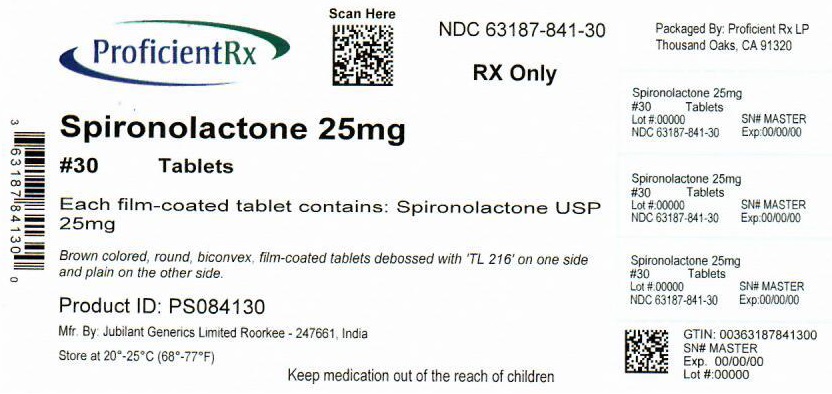
HOW SUPPLIED Spironolactone Tablets, USP 25 mg are brown colored, round, biconvex, film-coated tablets debossed with 'TL 216' on one side and plain on the other side. Bottle of 3 Tablets NDC 63187-841-03 Bottle of 30 Tablets NDC 63187-841-30 Bottle of 60 Tablets NDC 63187-841-60 Bottle of 90 Tablets NDC 63187-841-90 For more information, call 1-800-313-4623. Protect from light.
Dispense in tight, light-resistant, child resistant container as defined in the USP. Store at 20°C-25°C (68°F-77°F); excursions permitted to 15°C-30°C (59°F-86°F) [See USP Controlled Room Temperature]. Rx Only Manufactured by: Jubilant Generics Limited Roorkee - 247661, India Marketed by: Jubilant Cadista Pharmaceuticals Inc.
Salisbury, MD 21801, USA Repackaged by: Proficient Rx LP Thousand Oaks, CA 91320 Revised: February/2015
📋 Description ▾
DESCRIPTION Spironolactone oral tablets contain 25 mg, 50 mg, or 100 mg of the aldosterone antagonist spironolactone, 17-hydroxy-7α-mercapto-3-oxo-17α-pregn-4-ene-21-carboxylic acid γ-lactone acetate, which has the following structural formula: Spironolactone USP is freely soluble in benzene and chloroform; soluble in ethyl acetate and in alcohol, slightly soluble in ether, in methanol and in fixed oils and practically insoluble in water. Inactive ingredients include calcium sulfate dihydrate, corn starch, peppermint, hypromellose, magnesium stearate, polyethylene glycol, povidone, titanium dioxide, iron oxide red, iron oxide yellow and iron oxide black.
Spironolactone Structure
⚠️ Precautions ▾
PRECAUTIONS General: All patients receiving diuretic therapy should be observed for evidence of fluid or electrolyte imbalance, e.g., hypomagnesemia, hyponatremia, hypochloremic alkalosis, and hyperkalemia. Serum and urine electrolyte determinations are particularly important when the patient is vomiting excessively or receiving parenteral fluids. Warning signs or symptoms of fluid and electrolyte imbalance, irrespective of cause, include dryness of the mouth, thirst, weakness, lethargy, drowsiness, restlessness, muscle pains or cramps, muscular fatigue, hypotension, oliguria, tachycardia, and gastrointestinal disturbances such as nausea and vomiting.
Hyperkalemia may occur in patients with impaired renal function or excessive potassium intake and can cause cardiac irregularities, which may be fatal. Consequently, no potassium supplement should ordinarily be given with spironolactone. If hyperkalemia is suspected (warning signs include paresthesia, muscle weakness, fatigue, flaccid paralysis of the extremities, bradycardia, and shock), an electrocardiogram (ECG) should be obtained.
However, it is important to monitor serum potassium levels because mild hyperkalemia may not be associated with ECG changes. If hyperkalemia is present, spironolactone should be discontinued immediately. With severe hyperkalemia, the clinical situation dictates the procedures to be employed.
These may include the intravenous administration of calcium chloride solution, sodium bicarbonate solution and/or the oral or parenteral administration of glucose with a rapid-acting insulin preparation. These are temporary measures to be repeated as required. Cationic exchange resins such as sodium polystyrene sulfonate may be orally or rectally administered.
Persistent hyperkalemia may require dialysis. Reversible hyperchloremic metabolic acidosis, usually in association with hyperkalemia, has been reported to occur in some patients with decompensated hepatic cirrhosis, even in the presence of normal renal function. Dilutional hyponatremia, manifested by dryness of the mouth, thirst, lethargy, and drowsiness, and confirmed by a low serum sodium level, may be caused or aggravated, especially when spironolactone is administered in combination with other diuretics, and dilutional hyponatremia may occur in edematous patients in hot weather; appropriate therapy is water restriction rather than administration of sodium, except in rare instances when the hyponatremia is life-threatening.
Spironolactone therapy may cause a transient elevation of BUN, especially in patients with pre-existing renal impairment. Spironolactone may cause mild acidosis. Gynecomastia may develop in association with the use of spironolactone; physicians should be alert to its possible onset.
The development of gynecomastia appears to be related to both dosage level and duration of therapy and is normally reversible when spironolactone is discontinued. In rare instances, some breast enlargement may persist when spironolactone is discontinued. Somnolence and dizziness have been reported to occur in some patients.
Caution is advised when driving or operating machinery until the response to initial treatment has been determined. Information for patients : Patients who receive spironolactone should be advised to avoid potassium supplements and foods containing high levels of potassium, including salt substitutes. Laboratory tests : Periodic determination of serum electrolytes to detect possible electrolyte imbalance should be done at appropriate intervals, particularly in the elderly and those with significant renal or hepatic impairments.
Drug interactions: ACE inhibitors: Concomitant administration of ACE inhibitors with potassium-sparing diuretics has been associated with severe hyperkalemia. Angiotensin II antagonists, aldosterone blockers, heparin, low molecular weight heparin, and other drugs known to cause hyperkalemia: Concomitant administration may lead to severe hyperkalemia. Alcohol, ba… [Excerpted — this section continues on DailyMed.]
🔬 Clinical Studies ▾
CLINICAL STUDIES Severe heart failure: The Randomized Spironolactone Evaluation Study was a multinational, double-blind study in patients with an ejection fraction of ≤ 35%, a history of New York Heart Association (NYHA) class IV heart failure within 6 months, and class III – IV heart failure at the time of randomization. All patients were required to be taking a loop diuretic and, if tolerated, an ACE inhibitor. Patients with a baseline serum creatinine of >2.5 mg/dL or a recent increase of 25% or with a baseline serum potassium of >5.0 mEq/L were excluded.
Patients were randomized 1:1 to spironolactone 25 mg orally once daily or matching placebo. Follow-up visits and laboratory measurements (including serum potassium and creatinine) were performed every four weeks for the first 12 weeks, then every 3 months for the first year, and then every 6 months thereafter. Dosing could be withheld for serious hyperkalemia or if the serum creatinine increased to >4.0 mg/dL.
Patients who were intolerant of the initial dosage regimen had their dose decreased to one tablet every other day at one to four weeks. Patients who were tolerant of one tablet daily at 8 weeks may have had their dose increased to two tablets daily at the discretion of the investigator. The Randomized Spironolactone Evaluation Study enrolled 1663 patients (3% U.S.) at 195 centers in 15 countries between March 24, 1995 and December 31, 1996.
The study population was primarily white (87%, with 7% black, 2% Asian, and 4% other), male (73%), and elderly (median age 67). The median ejection fraction was 0.26. Seventy percent were NYHA class III and 29% class IV.
The presumed etiology of heart failure was ischemic in 55%, and non-ischemic in 45%. There was a history of myocardial infarction in 28%, of hypertension in 24%, and of diabetes in 22%. The median baseline serum creatinine was 1.2 mg/dL and the median baseline creatinine clearance was 57 mL/min.
The mean daily dose at study end for the patients randomized to spironolactone was 26 mg. Concomitant medications included a loop diuretic in 100% of patients and an ACE inhibitor in 97%. Other medications used at any time during the study included digoxin (78%), anticoagulants (58%), aspirin (43%), and beta-blockers (15%).
The primary endpoint for the Randomized Spironolactone Evaluation Study was time to all-cause mortality. The Randomized Spironolactone Evaluation Study was terminated early, after a mean follow-up of 24 months, because of significant mortality benefit detected on a planned interim analysis. The survival curves by treatment group are shown in Figure 1.
Figure 1. Survival by Treatment Group in the Randomized Spironolactone Evaluation Study Spironolactone reduced the risk of death by 30% compared to placebo (p<0.001; 95% confidence interval 18% to 40%). Spironolactone reduced the risk of cardiac death, primarily sudden death, and death from progressive heart failure by 31% compared to placebo (p <0.001; 95% confidence interval 18% to 42%).
Spironolactone also reduced the risk of hospitalization for cardiac causes (defined as worsening heart failure, angina, ventricular arrhythmias, or myocardial infarction) by 30% (p <0.001 95% confidence interval 18% to 41%). Changes in NYHA class were more favorable with spironolactone: In the spironolactone group, NYHA class at the end of the study improved in 41% of patients and worsened in 38% compared to improved in 33% and worsened in 48% in the placebo group (P <0.001). Mortality hazard ratios for some subgroups are shown in Figure 2.
The favorable effect of spironolactone on mortality appeared similar for both genders and all age groups except patients younger than 55; there were too few non-whites in the Randomized Spironolactone Evaluation Study to draw any conclusions about differential effects by race. Spironolactone’s benefit appeared greater in patients with low baseline serum potassium levels and less in patients with ejection fractions <0.2. These subgroup… [Excerpted — this section continues on DailyMed.]
📄 Package Label / Principal Display Panel ▾
PACKAGE LABEL.PRINCIPAL DISPLAY PANEL NDC 63187-841-30 Spironolactone Tablets, USP 25 mg Rx Only 30 Tablets 63187-841-30
Medicare Part D spend CMS · PART D · 2026 (Q1)
About this NDC listing & data coverage
What data is (and isn’t) available for this NDC — tap to expand
| NDC identity (package / product / labeler codes) | ✓ Available |
| Labeler | ✓ Available |
| Product & package description | ✓ Available |
| Marketing category & status | ✓ Available |
| Active ingredient / dosage form / route | ✓ Available |
| FDA label (SPL via DailyMed) | ✓ Available |
| Package photos | ✓ Available |
| Inactive ingredients (structured) | ✓ Available |
| NADAC pharmacy acquisition price (CMS) | — Not published for this NDC CMS publishes NADAC only for NDCs reported in its retail-pharmacy survey. |
| Orange Book / therapeutic-equivalence data | ✓ Available |
| HCPCS J-code billing crosswalk | — Not published for this NDC Most self-administered / retail products have no J-code — that is normal. |
| Medicaid utilization (CMS SDUD) | — Not published for this NDC CMS reports utilization only for NDCs with Medicaid claims above its privacy threshold. |