
GRANIX tbo-filgrastim 300 ug/.5mL Injection, Solution — NDC 63459-910-15 (Billing 63459-0910-15)
This is a package of GRANIX tbo-filgrastim 300 ug/.5mL Injection, Solution from Cephalon, LLC, marketed since Nov 2013 and currently FDA-listed.
NDC database record
One package, one record: these facts belong to NDC 63459-910-15 alone.
- Record
- FDA NDC Directory package listing · Human prescription drug
- Code segments
- 63459 labeler · 910 product · 15 package
- Package marketed since
- Nov 11, 2013
- Sample package
- No — commercial package
- Listing certified through
- Dec 31, 2027
- Barcode (UPC-A, from the NDC)
- 3 6345991015 4
- Medicaid fills, this package
- 202 prescriptions in the last four reported quarters
- FDA record last changed
- Oct 8, 2026
Identity & classification
Regulatory identifiers FDA, NLM and CMS codes for this package
Drug-database identifiers Medi-Span GPI and First Databank GCN / HICL / AHFS classification
- GSN (GCN sequence number): 071653
- GCN: 35575
- HICL (First Databank): 040426
- AHFS class code: 20:16.00.00
Where does this data come from?
- FDA openFDA NDC Directory · synced Oct 8, 2026
- FDA label on DailyMed · label index refreshed Oct 8, 2026
- RxNorm (NLM RxNav) · catalog refreshed Oct 1, 2026
- Medi-Span GPI (licensed)
- First Databank (licensed) · refreshed Oct 8, 2026
Clinical
- It raises your neutrophils, the white blood cells that fight infection. It is used for people on chemotherapy, those with AML, bone marrow transplant patients, stem cell collection...
- It is injected under the skin or given into a vein, depending on your condition. Some people or caregivers are trained to give injections at home. If you miss a dose, call your hea...
- Common ones include bone pain, fever, rash, cough, headache and nosebleeds. Tell your care team about any that bother you.
- Call for left upper belly or shoulder pain, trouble breathing, signs of allergic reaction, blood in your urine, swelling, or unexplained fever with belly or back pain. These can be...
Patient education
Supplement & herbal interactions
Where does this data come from?
- MedlinePlus (NLM) · refreshed Oct 8, 2026
- FDA label on DailyMed · label index refreshed Oct 8, 2026
Ask a licensed pharmacist directly — free, answered by our team.
Pricing
A drug doesn't have one price. Each row is a different public payment system, and none is what you'd pay at the counter — that depends on your insurance. The ⓘ on each row explains what it measures.
| Price system | Per mL | Per package |
|---|---|---|
| Retail pharmacies payNADAC · weekly | Not in the retail survey — common for institutional, discontinued, or low-volume packs. | |
| Medicaid paysCMS SDUD · 12 mo | $464.07 | $2,320.35 / 5 ml |
| Medicare drug plans payPart D · Q2 2026 | $248.15 | $1,240.77 / 5 ml |
| Medicare Part B allowsASP · J1447 | $0.236 / J1447 unit | — |
Where does this data come from?
- CMS NADAC weekly file
- CMS ASP pricing files · refreshed Sep 20, 2026
- CMS Medicaid State Drug Utilization Data · through Q1 2026
- CMS Part D plan pricing files · refreshed Sep 24, 2026
- VA National Acquisition Center price file
Billing & reimbursement
Where does this data come from?
- CMS ASP NDC-HCPCS crosswalk · refreshed Sep 22, 2026
- DMEPDAC NDC-HCPCS crosswalk
- openFDA NSDE billing units · refreshed Oct 7, 2026
Packaging — all sizes for this product
| Package NDC | Description | Marketing start | Marketing end | Status |
|---|---|---|---|---|
| 63459-0910-11 63459-910-11 | 1 BLISTER PACK in 1 CARTON / 1 SYRINGE, GLASS in 1 BLISTER PACK / .5 mL in 1 SYRINGE, GLASS | 2013-11-11 | — | Active |
| 63459-0910-15 You're viewing this | 10 BLISTER PACK in 1 CARTON / 1 SYRINGE, GLASS in 1 BLISTER PACK / .5 mL in 1 SYRINGE, GLASS | 2013-11-11 | — | Active |
| 63459-0910-17 63459-910-17 Main listing | 1 SYRINGE, GLASS in 1 CARTON / .5 mL in 1 SYRINGE, GLASS | 2015-03-02 | — | Active |
| 63459-0910-36 63459-910-36 | 5 SYRINGE, GLASS in 1 CARTON / .5 mL in 1 SYRINGE, GLASS | 2015-03-02 | — | Active |
This pack accounts for about 8.8% of this product's recent Medicaid fills; the largest share goes to a different pack size. See all packs ↓
Pack size FAQ
What quantity is in this package?
What NDC number is used to bill for this package of GRANIX tbo-filgrastim 300 ug/.5mL Injection, Solution?
Therapeutic equivalents
| Product | Labeler | Pack | NADAC/unit | TE | Status | Price vs. this |
|---|---|---|---|---|---|---|
| Granix 300 ug/.5mLthis 63459-0910-15 | Cephalon, | 1 syringe | — | — | FDA listed | — |
Where does this data come from?
- FDA openFDA NDC Directory · synced Oct 8, 2026
- FDA Purple Book · refreshed Oct 5, 2026
- CMS NADAC weekly file
Availability & biosimilar status
Biologics have no small-molecule generics; biosimilar competition is tracked in the FDA Purple Book.
Why the date isn’t exact: Biosimilar timing can change because patents may be challenged, settled, licensed, added or removed, and litigation can move the real date earlier or later.
🛈 What do these terms mean?
- Biologic patent
- A patent the reference product’s maker has publicly listed. A biosimilar generally can’t launch until these expire — unless they’re invalidated or resolved in a settlement.
- Reference-product exclusivity
- A flat 12 years of FDA market protection from the biologic’s first licensure (the BPCIA). No biosimilar can be licensed before it ends, regardless of patents.
- Interchangeable exclusivity
- The first interchangeable biosimilar can earn a period as the only interchangeable version (pharmacists can substitute it without the prescriber).
- Earliest biosimilar (LOE)
- The latest of all the dates above — the soonest a biosimilar can realistically reach the market. Litigation and settlements can move it earlier.
Biologics have no small-molecule “generics” — competition comes from FDA-licensed biosimilars, tracked in the FDA Purple Book.
| Code | What it grants | Expires |
|---|---|---|
| RefProduct | Reference-product exclusivity (12-year, BPCIA) — no biosimilar can be licensed before this date | Aug 29, 2024 |
Is there a biosimilar for GRANIX 300 MCG/0.5 ML SAFE SYR?
Why do different websites show different biosimilar dates?
Can a biosimilar launch before the last patent expires?
What does “current Purple Book estimate” mean?
What does “FDA listed” mean?
What does a patent or protection date mean here?
Where does this data come from?
- FDA Purple Book · refreshed Oct 5, 2026
Inactive Ingredients / Excipients
Inactive ingredients, also called excipients, are components of the drug product other than the active ingredient. They may include fillers, dyes, coatings, preservatives, flavors, or other formulation ingredients.
🧪 Avoiding an ingredient? See Filgrastim Injection inactive ingredients by manufacturer: every current product's list side by side, so you can ask your pharmacy for the version that does not list it.
💡 Tap an ingredient (hover on desktop) to see what it is and why it’s used.
-
UNII Q40Q9N063P
Acetic acid is a weak organic acid commonly used in medicines as a buffer and pH adjuster. It helps maintain the proper acidity level to ensure the drug remains stable and effective in its formulation.
-
UNII 6OZP39ZG8H
Polysorbate 80 is a synthetic emulsifier derived from sorbitol and oleic acid. It helps mix oil and water-based ingredients together in medications and improves how the product disperses in the body.
-
UNII 55X04QC32I
A strong alkaline chemical used to adjust and maintain the pH balance of liquid medicines. It helps keep the medicine stable and ensures it stays effective during storage.
-
UNII 506T60A25R
Sorbitol is a natural sugar alcohol derived from glucose. It serves as a sweetener, humectant, and bulking agent in medications to improve taste and help maintain moisture in the product.
-
UNII 059QF0KO0R
Water is a liquid solvent that dissolves and mixes ingredients together in liquid medicines, syrups, and injections. It helps distribute the active drug evenly throughout the product.
5 inactive ingredients listed in the exact product block matched to this NDC.
Where does this data come from?
ingredient classCode="IACT" elements from the exact product block matched by this NDC. Label-section narrative from DailyMed / the openFDA label index is shown separately when available.- FDA label on DailyMed · label index refreshed Oct 8, 2026
- FDA openFDA NDC Directory · synced Oct 8, 2026
Inactive ingredient FAQ
Are inactive ingredients the same for every manufacturer?
Why might an inactive ingredient be missing?
Can inactive ingredients matter?
Manufacturer & labeler
More NDCs from Cephalon, LLC labeler code 63459
- Tiagabine Hydrochloride 4 mg Tablet, Film Coated NDC 63459-404-30
- Tiagabine Hydrochloride 12 mg Tablet, Film Coated NDC 63459-412-30
- Tiagabine hydrochloride 16 mg Tablet, Film Coated NDC 63459-416-30
- Trisenox Arsenic Trioxide 2 mg/mL Injection, Solution NDC 63459-601-06
- AMRIX Cyclobenzaprine Hydrochloride 15 mg Capsule, Extended Release NDC 63459-700-60
- AMRIX Cyclobenzaprine Hydrochloride 30 mg Capsule, Extended Release NDC 63459-701-60
- GRANIX tbo-filgrastim 480 ug/.8mL Injection, Solution NDC 63459-912-11
- GRANIX tbo-filgrastim 300 ug/mL Injection, Solution NDC 63459-918-59
- GRANIX tbo-filgrastim 480 ug/1.6mL Injection, Solution NDC 63459-920-59
Where does this data come from?
- FDA openFDA NDC Directory · synced Oct 8, 2026
- Drugs@FDA
Full prescribing information FDA SPL
🎯 Indications and Usage ▾
1 INDICATIONS AND USAGE GRANIX is indicated to reduce the duration of severe neutropenia in adult and pediatric patients 1 month and older with non-myeloid malignancies receiving myelosuppressive anticancer drugs associated with a clinically significant incidence of febrile neutropenia. GRANIX (tbo-filgrastim) is a leukocyte growth factor indicated in adult and pediatric patients 1 month and older for reduction in the duration of severe neutropenia in patients with non-myeloid malignancies receiving myelosuppressive anticancer drugs associated with a clinically significant incidence of febrile neutropenia.
( 1 )
⏱️ Dosage and Administration ▾
2 DOSAGE AND ADMINISTRATION Recommended dose: 5 mcg/kg per day administered as a subcutaneous injection Administer the first dose no earlier than 24 hours following myelosuppressive chemotherapy. Do not administer within 24 hours prior to chemotherapy ( 2.1 )
2.1Recommended Dosage The recommended dose of GRANIX is 5 mcg/kg per day administered as a subcutaneous injection. Administer the first dose of GRANIX no earlier than 24 hours following myelosuppressive chemotherapy. Do not administer GRANIX within 24 hours prior to chemotherapy.
Daily dosing with GRANIX should continue until the expected neutrophil nadir is passed and the neutrophil count has recovered to the normal range. Monitor complete blood count (CBC) prior to chemotherapy and twice per week until recovery.
2.2General Considerations for Administration GRANIX may be administered by either a healthcare professional, a patient or caregiver. Before a decision is made to allow GRANIX to be administered by a patient or caregiver, ensure that the patient is an appropriate candidate for self-administration or administration by a caregiver. Proper training on storage, preparation, and administration technique should be provided.
If a patient or caregiver is not an appropriate candidate for any reason, then in such patients, GRANIX should be administered by a healthcare professional. Dispense only the prefilled syringe without a safety needle guard device to patient or caregiver. Instruct patients and caregivers to follow the Instructions for Use provided with the GRANIX prefilled syringe to properly administer an injection after training by a healthcare professional.
Visually inspect parenteral drug products for particulate matter and discoloration prior to administration. Do not administer GRANIX if discoloration or particulates are observed. The prefilled syringe and vial are for single-dose only.
Discard unused portions. GRANIX and all its components are not made with natural rubber latex. Recommended sites for subcutaneous GRANIX injections include the abdomen (except for the two-inch area around the navel), the front of the middle thighs, the upper outer areas of the buttocks, or the upper back portion of the upper arms.
The injection site should be varied daily. GRANIX should not be injected into an area that is tender, red, bruised, or hard, or that has scars or stretch marks.
2.3Important Administration Instructions for Healthcare Professionals Hold the syringe assembly by the open sides of the device and remove the needle shield. Expel any extra volume depending on dose needed. Inject GRANIX subcutaneously as recommended [ see Dosage and Administration (2.2) ].
Push the plunger as far as it will go to inject all the medication. Injection of the entire prefilled syringe contents is necessary to activate the needle guard. With the plunger still pressed all the way down, remove the needle from the skin.
Slowly let go of the plunger and allow the empty syringe to move up inside the device until the entire needle is guarded. Discard the syringe assembly in approved containers. needle image 1 needle image 2 needle image 3 needle image 4 needle image 5 needleimage 6
💊 Dosage Forms and Strengths ▾
3 DOSAGE FORMS AND STRENGTHS GRANIX is a clear, colorless, preservative-free solution available as: Prefilled Syringe: Injection: 300 mcg/0.5 mL solution in single-dose prefilled syringe Injection: 480 mcg/0.8 mL solution in single-dose prefilled syringe Vial: Injection: 300 mcg/mL solution in single-dose vial Injection: 480 mcg/1.6 mL (300 mcg/mL) solution in single-dose vial Prefilled Syringe Injection: 300 mcg/0.5 mL solution in single-dose prefilled syringe ( 3 ) Injection: 480 mcg/0.8 mL solution in single-dose prefilled syringe ( 3 ) Vial Injection: 300 mcg/mL solution in single-dose vials ( 3 ) Injection: 480 mcg/1.6 mL (300 mcg/mL) solution in single-dose vials ( 3 )
⛔ Contraindications ▾
4 CONTRAINDICATIONS GRANIX is contraindicated in patients with a history of serious allergic reactions to filgrastim products or pegfilgrastim products [ see Warnings and Precautions (5.3) ]. Patients with a history of serious allergic reactions to filgrastim products or pegfilgrastim products. ( 4 )
⚠️ Warnings and Cautions ▾
5 WARNINGS AND PRECAUTIONS Splenic Rupture: Evaluate patients who report left upper abdominal or shoulder pain for an enlarged spleen or splenic rupture ( 5.1 ) Acute Respiratory Distress Syndrome (ARDS): Monitor for and manage immediately. Discontinue GRANIX if suspected ( 5.2 ) Serious Allergic Reactions Including Anaphylaxis: Permanently discontinue GRANIX in patients with serious allergic reactions ( 5.3 ) Sickle Cell Disorders: Severe and sometimes fatal crisis can occur. Discontinue GRANIX if suspected ( 5.4 ) Glomerulonephritis: Evaluate and consider dose reduction or interruption of GRANIX if causality is likely ( 5.5 ) Capillary Leak Syndrome: Monitor if symptoms develop and administer standard symptomatic treatment ( 5.6 ) Myelodysplastic Syndrome (MDS) and Acute Myeloid Leukemia (AML): Monitor patients with breast and lung cancer using GRANIX in conjunction with chemotherapy and/or radiotherapy for signs and symptoms of MDS/AML.
( 5.8 )
5.1Splenic Rupture Splenic rupture, including fatal cases, can occur following administration of filgrastim products. Evaluate patients who report upper abdominal or shoulder pain for an enlarged spleen or splenic rupture. Discontinue GRANIX if splenic rupture is suspected or confirmed.
5.2Acute Respiratory Distress Syndrome Acute respiratory distress syndrome (ARDS) can occur in patients receiving filgrastim products. Evaluate patients who develop fever and lung infiltrates or respiratory distress after receiving GRANIX, for ARDS. Discontinue GRANIX in patients with ARDS.
5.3Serious Allergic Reactions Serious allergic reactions, including anaphylaxis, can occur in patients receiving GRANIX. Reactions can occur on initial exposure. The administration of antihistamines‚ steroids‚ bronchodilators‚ and/or epinephrine may reduce the severity of the reactions.
Permanently discontinue GRANIX in patients with serious allergic reactions. Do not administer GRANIX to patients with a history of serious allergic reactions to filgrastim or pegfilgrastim.
5.4Sickle Cell Disorders Severe and sometimes fatal sickle cell crises can occur in patients with sickle cell disorders receiving filgrastim products. Discontinue GRANIX if sickle cell crisis occurs.
5.5Glomerulonephritis Glomerulonephritis can occur in patients receiving filgrastim products. The diagnoses were based on azotemia, hematuria (microscopic and macroscopic), proteinuria, and renal biopsy. Generally, events of glomerulonephritis resolved after dose reduction or discontinuation of the filgrastim product. If glomerulonephritis is suspected, evaluate for cause. If causality is likely, consider dose reduction or interruption of GRANIX.
5.6Capillary Leak Syndrome Capillary leak syndrome (CLS) can occur in patients receiving filgrastim products and is characterized by hypotension, hypoalbuminemia, edema and hemoconcentration. Episodes vary in frequency, severity and may be life-threatening if treatment is delayed. Patients who develop symptoms of capillary leak syndrome should be closely monitored and receive standard symptomatic treatment, which may include a need for intensive care.
5.7Potential for Tumor Growth Stimulatory Effects on Malignant Cells The granulocyte colony-stimulating factor (G‑CSF) receptor through which GRANIX acts has been found on tumor cell lines. The possibility that GRANIX acts as a growth factor for any tumor type, including myeloid malignancies and myelodysplasia, diseases for which GRANIX is not approved, cannot be excluded.
5.8Myelodysplastic Syndrome and Acute Myeloid Leukemia in Patients with Breast and Lung Cancer Patients with Severe Chronic Neutropenia Confirm the diagnosis of SCN before initiating GRANIX therapy. MDS and AML have been reported to occur in the natural history of congenital neutropenia without cytokine therapy. Cytogenetic abnormalities, transformation to MDS, and AML have also been observed in patients treated with GRANIX for SCN.
Based on available data including a postmarketing su… [Excerpted — this section continues on DailyMed.]
🤒 Adverse Reactions ▾
6 ADVERSE REACTIONS The following potential serious adverse reactions are discussed in greater detail in other sections of the labeling: Splenic Rupture [see Warnings and Precautions (5.1) ] Acute Respiratory Distress Syndrome [see Warnings and Precautions (5.2) ] Serious Allergic Reactions [see Warnings and Precautions (5.3) ] Sickle Cell Disorders [see Warnings and Precautions (5.4) ] Glomerulonephritis [see Warnings and Precautions (5.5) ] Capillary Leak Syndrome [see Warnings and Precautions (5.6) ] Potential for Tumor Growth Stimulatory Effects on Malignant Cells [see Warnings and Precautions (5.7) ] Myelodysplastic Syndrome and Acute Myeloid Leukemia [see Warnings and Precautions (5.8) ] Leukocytosis [ see Warnings and Precautions ( 5.9 ) ] Simultaneous Use with Chemotherapy and Radiation Therapy Not Recommended [see Warnings and Precautions ( 5.10 ) ] Aortitis [see Warnings and Precautions ( 5.12 ) ] Alveolar Hemorrhage [see Warnings and Precautions (5.13) ] Most common adverse reaction (≥1%) to GRANIX is bone pain ( 6.1 ) To report SUSPECTED ADVERSE REACTIONS, contact Teva Pharmaceuticals at 1 ‑ 866-832-8537 or FDA at 1-800-FDA-1088 or www.fda.gov/medwatch.
6.1Clinical Trials Experience Because clinical trials are conducted under widely varying conditions, adverse reaction rates observed in the clinical trials of a drug cannot be directly compared to rates in the clinical trials of another drug and may not reflect the rates observed in clinical practice. Adverse Reactions in Adult Patients GRANIX clinical trials safety data are based upon the results of three randomized clinical trials in patients receiving myeloablative chemotherapy for breast cancer (N=348), lung cancer (N=240) and non-Hodgkin’s lymphoma (N=92).
In the breast cancer study, 99% of patients were female, the median age was 50 years, and 86% of patients were Caucasian. In the lung cancer study, 80% of patients were male, the median age was 58 years, and 95% of patients were Caucasian. In the non-Hodgkin’s lymphoma study, 52% of patients were male, the median age was 55 years, and 88% of patients were Caucasian.
In all three studies a placebo (Cycle 1 of the breast cancer study only) or a non-U.S.-approved filgrastim product were used as controls. Both GRANIX and the non-U.S.-approved filgrastim product were administered at 5 mcg/kg subcutaneously once daily beginning one day after chemotherapy for at least five days and continued to a maximum of 14 days or until an ANC of ≥10,000 x 10 6 /L after nadir was reached. Bone pain was the most frequent treatment-emergent adverse reaction that occurred in at least 1% or greater in patients treated with GRANIX at the recommended dose and was numerically two times more frequent than in the placebo group.
The overall incidence of bone pain in Cycle 1 of treatment was 3.4% (3.4% GRANIX, 1.4% placebo, 7.5% non-U.S.-approved filgrastim product). Leukocytosis In clinical studies, leukocytosis (WBC counts > 100,000 x 10 6 /L) was observed in less than 1% patients with non-myeloid malignancies receiving GRANIX. No complications attributable to leukocytosis were reported in clinical studies.
Additional Adverse Reactions Other adverse reactions known to occur following administration of filgrastim products include myalgia, headache, vomiting, cutaneous vasculitis and thrombocytopenia. Adverse Reactions in Pediatric Patients GRANIX clinical trials safety data in pediatric patients are based upon the results of one single-arm clinical trial in 50 pediatric patients who received myelosuppressive chemotherapy for treatment of solid tumors without marrow involvement [see Use in Special Populations ( 8.4 )] . In this study, GRANIX was administered at 5 mcg/kg subcutaneously once daily beginning one day after chemotherapy.
The most common (>5%) adverse reactions included thrombocytopenia (34%), pyrexia (8%), pain in extremity (6%), headache (6%) and diarrhea (6%).
6.2Postmarketing Experience The following adverse reactions have… [Excerpted — this section continues on DailyMed.]
👥 Use in Specific Populations ▾
8 USE IN SPECIFIC POPULATIONS GRANIX should be used during pregnancy only if the potential benefit justifies the potential risk to the fetus. ( 8.1 )
8.1Pregnancy Risk Summary The limited published data on filgrastim product use during pregnancy are insufficient to inform a drug-associated risk. In animal reproduction studies, administration of tbo-filgrastim to pregnant rabbits during organogenesis resulted in increased spontaneous abortion and fetal malformations at systemic exposures 50 to 90 times the human exposure expected at the recommended human dose (see Data) . GRANIX should be used during pregnancy only if the potential benefit justifies the potential risk to the fetus.
The estimated background risk of major birth defects and miscarriage for the indicated population(s) are unknown. All pregnancies have a background risk of birth defect, loss, or other adverse outcomes. In the U.S. general population, the estimated background risk of major birth defects and miscarriage in clinically recognized pregnancies is 2% to 4% and 15% to 20%, respectively.
Data Animal Data In an embryofetal developmental study, pregnant rabbits were administered subcutaneous doses of tbo-filgrastim during the period of organogenesis at 1, 10 and 100 mcg/kg/day. Increased abortions were evident in rabbits treated with tbo-filgrastim at 100 mcg/kg/day. This dose was maternally toxic as demonstrated by reduced body weight.
Other embryofetal findings at this dose level consisted of post-implantation loss‚ decrease in mean live litter size and fetal weight, and fetal malformations such as malformed hind limbs and cleft palate. The dose of 100 mcg/kg/day corresponds to a systemic exposure (AUC) of approximately 50 to 90 times the exposures observed in patients treated with the clinical tbo-filgrastim dose of 5 mcg/kg/day.
8.2Lactation No data are available regarding the presence of tbo-filgrastim in human milk, the effects of the drug on the breastfed child, or the effects of the drug on milk production. Another filgrastim product was detected in human milk for up to 3 days after filgrastim administration. Because of the potential for serious adverse reactions in the breastfed child, including splenic rupture, acute respiratory distress syndrome and serious allergic reactions, advise patients not to breastfeed during treatment with GRANIX and for 2 weeks after the last dose.
8.4Pediatric Use The safety and effectiveness of GRANIX have been established for pediatric patients 1 month to < 17 years old (no data for the age group < 1 month old). Use of GRANIX in these age groups is supported by evidence from adequate and well-controlled studies of GRANIX in adults [see Clinical Studies (14)] with additional safety and pharmacokinetics data from a single-arm trial of 50 pediatric patients with solid tumors treated with GRANIX for chemotherapy-induced neutropenia. The 50 pediatric patients had a median age of 9.2 years (range, 1.4 to 15.9 years); 2 were infants (1 month to < 2 years old), 30 were children (2 to < 12 years old), and 18 were adolescents (12 to < 17 years old).
The pharmacokinetics and safety profile of GRANIX in the pediatric population were similar to those seen in adults [see Adverse Reactions ( 6.1 ), Clinical Pharmacology ( 12.3 )] .
8.5Geriatric Use Among 677 cancer patients enrolled in clinical trials of GRANIX, a total of 111 patients were 65 years of age and older, and 14 patients were 75 years and older. No overall differences in safety or effectiveness were observed between patients age 65 and older and younger patients.
🤰 Pregnancy ▾
8.1Pregnancy Risk Summary The limited published data on filgrastim product use during pregnancy are insufficient to inform a drug-associated risk. In animal reproduction studies, administration of tbo-filgrastim to pregnant rabbits during organogenesis resulted in increased spontaneous abortion and fetal malformations at systemic exposures 50 to 90 times the human exposure expected at the recommended human dose (see Data) . GRANIX should be used during pregnancy only if the potential benefit justifies the potential risk to the fetus.
The estimated background risk of major birth defects and miscarriage for the indicated population(s) are unknown. All pregnancies have a background risk of birth defect, loss, or other adverse outcomes. In the U.S. general population, the estimated background risk of major birth defects and miscarriage in clinically recognized pregnancies is 2% to 4% and 15% to 20%, respectively.
Data Animal Data In an embryofetal developmental study, pregnant rabbits were administered subcutaneous doses of tbo-filgrastim during the period of organogenesis at 1, 10 and 100 mcg/kg/day. Increased abortions were evident in rabbits treated with tbo-filgrastim at 100 mcg/kg/day. This dose was maternally toxic as demonstrated by reduced body weight.
Other embryofetal findings at this dose level consisted of post-implantation loss‚ decrease in mean live litter size and fetal weight, and fetal malformations such as malformed hind limbs and cleft palate. The dose of 100 mcg/kg/day corresponds to a systemic exposure (AUC) of approximately 50 to 90 times the exposures observed in patients treated with the clinical tbo-filgrastim dose of 5 mcg/kg/day.
🧒 Pediatric Use ▾
8.4Pediatric Use The safety and effectiveness of GRANIX have been established for pediatric patients 1 month to < 17 years old (no data for the age group < 1 month old). Use of GRANIX in these age groups is supported by evidence from adequate and well-controlled studies of GRANIX in adults [see Clinical Studies (14)] with additional safety and pharmacokinetics data from a single-arm trial of 50 pediatric patients with solid tumors treated with GRANIX for chemotherapy-induced neutropenia. The 50 pediatric patients had a median age of 9.2 years (range, 1.4 to 15.9 years); 2 were infants (1 month to < 2 years old), 30 were children (2 to < 12 years old), and 18 were adolescents (12 to < 17 years old).
The pharmacokinetics and safety profile of GRANIX in the pediatric population were similar to those seen in adults [see Adverse Reactions ( 6.1 ), Clinical Pharmacology ( 12.3 )] .
🧓 Geriatric Use ▾
8.5Geriatric Use Among 677 cancer patients enrolled in clinical trials of GRANIX, a total of 111 patients were 65 years of age and older, and 14 patients were 75 years and older. No overall differences in safety or effectiveness were observed between patients age 65 and older and younger patients.
🧬 Clinical Pharmacology ▾
12 CLINICAL PHARMACOLOGY
12.1Mechanism of Action Tbo-filgrastim is a human granulocyte colony-stimulating factor (G-CSF) produced by recombinant DNA technology. Tbo-filgrastim binds to G-CSF receptors and stimulates proliferation of neutrophils. G-CSF is known to stimulate differentiation commitment and some end-cell functional activation, which increases neutrophil counts and activity.
12.2Pharmacodynamics The time to the maximum ANC level was between 3 to 5 days and returned to baseline by 21 days following completion of chemotherapy. Doubling the tbo-filgrastim subcutaneous dose from 5 mcg/kg to 10 mcg/kg resulted in a 16% to 19% increase in the maximum ANC level and a 33% to 36% increase in the area under the effect curve for ANC. Cardiac Electrophysiology At an intravenous dose of 5 mcg/kg, tbo-filgrastim did not prolong the QT interval to any clinically relevant extent.
12.3Pharmacokinetics Tbo-filgrastim exhibits nonlinear pharmacokinetics. Increasing the dose of subcutaneous GRANIX from 5 to 10 mcg/kg resulted in an approximate 2.5-fold increase in the maximum serum concentration (C max ) and 3.0-fold increase in the area under the curve (AUC). In adult patients enrolled across three studies, subcutaneous GRANIX 5 mcg/kg resulted in median time to maximal serum tbo-filgrastim concentrations (T max ) within 4 to 6 hours.
Geometric mean [coefficient of variation (CV%)] serum C max was 20 to 31 ng/mL [24% to 65%] within 4 to 6 hours. Geometric mean serum tbo-filgrastim area under the curve (AUC 0-12h ) ranged from 151 to 227 ng/mL*h [24% to 60%]. No accumulation in serum tbo-filgrastim concentrations was observed after multiple dosing.
Absorption The absolute bioavailability of 5 mcg/kg subcutaneous tbo-filgrastim was 33%. Metabolism/Elimination Tbo-filgrastim clearance is primarily dependent on G-CSF receptor-mediated clearance which can be saturated by high serum concentrations of tbo-filgrastim and diminished in neutropenia. The median serum elimination half-life of tbo-filgrastim (5 mcg/kg sc) was 3.0 to 3.5 hours.
Specific Populations No sex-related differences were observed. Pediatric Patients: The geometric mean [coefficient of variation (CV%)] of C max was 18 ng/mL (56%) and AUC 0-12h was 130 ng*hr/mL (52%) following subcutaneous administration of GRANIX 5 mcg/kg in 49 pediatric patients (1.4 to 15.9 years) after chemotherapy. No clinically relevant differences in the pharmacokinetics of GRANIX were observed between infants, children and adolescents.
Patients with Renal or Hepatic Impairment: Mild renal impairment (creatinine clearance 60 to 89 mL/min by Cockcroft-Gault) had no effect on tbo-filgrastim pharmacokinetics. The pharmacokinetics in patients with moderate and severe renal impairment has not been studied. The pharmacokinetics in patients with hepatic impairment has not been studied.
12.6Immunogenicity The observed incidence of anti-drug antibodies is highly dependent on the sensitivity and specificity of the assay. Differences in assay methods preclude meaningful comparisons of the incidence of anti-drug antibodies in the studies described below with the incidence of anti-drug antibodies in other studies, including those of GRANIX or of other filgrastim products. While available data suggest that 1.4% of patients developed binding antibodies to filgrastim, the nature and specificity of these antibodies has not been adequately studied.
Because of the low occurrence of anti- drug antibodies, the effect of these antibodies on the pharmacokinetics, pharmacodynamics, safety, and/or effectiveness of GRANIX is unknown. Cytopenias resulting from an antibody response to exogenous growth factors have been reported on rare occasions in patients treated with other recombinant growth factors.
🧬 Mechanism of Action ▾
12.1Mechanism of Action Tbo-filgrastim is a human granulocyte colony-stimulating factor (G-CSF) produced by recombinant DNA technology. Tbo-filgrastim binds to G-CSF receptors and stimulates proliferation of neutrophils. G-CSF is known to stimulate differentiation commitment and some end-cell functional activation, which increases neutrophil counts and activity.
📦 How Supplied / Storage and Handling ▾
16 HOW SUPPLIED/STORAGE AND HANDLING GRANIX solution for injection is supplied as a single-dose, preservative-free clear solution, in either a vial or, a prefilled syringe made from Type I glass which has a permanently attached stainless steel needle. The active substance is tbo-filgrastim. Prefilled Syringes (UltraSafe Passive ® Needle Guard) GRANIX 300 mcg/0.5 mL: Each prefilled syringe contains 300 mcg of tbo-filgrastim in 0.5 mL solution with a blue plunger in: Pack of 1 with a safety needle guard in blister: NDC 63459-910-11 Packs of 10 with a safety needle guard in blisters: NDC 63459-910-15 GRANIX 480 mcg/0.8 mL: Each prefilled syringe contains 480 mcg of tbo-filgrastim in 0.8 mL solution with a clear plunger in: Pack of 1 with a safety needle guard in blister: NDC 63459-912-11 Packs of 10 with a safety needle guard in blisters: NDC 63459-912-15 Prefilled Syringes GRANIX 300 mcg/0.5 mL: Each prefilled syringe contains 300 mcg of tbo-filgrastim in 0.5 mL solution with a blue plunger in: Pack of 1 without a safety needle guard (for patients and caregivers): NDC 63459-910-17 Packs of 5 without a safety needle guard (for patients and caregivers): NDC 63459-910-36 GRANIX 480 mcg/0.8 mL: Each prefilled syringe contains 480 mcg of tbo-filgrastim in 0.8 mL solution with a clear plunger in: Pack of 1 without a safety needle guard (for patients and caregivers): NDC 63459-912-17 Packs of 5 without a safety needle guard (for patients and caregivers): NDC 63459-912-36 Vials GRANIX 300 mcg/mL: Each vial contains 300 mcg of tbo-filgrastim in 1 mL solution.
Packs of 10 single-dose vials: (NDC 63459-918-59) GRANIX 480 mcg/1.6 mL (300 mcg/mL): Each vial contains 480 mcg of tbo-filgrastim in 1.6 mL solution. Packs of 10 single-dose vials: (NDC 63459-920-59) GRANIX and all its components are not made with natural rubber latex [see Dosage and Administration (2.2)] . Store GRANIX in a refrigerator at 36°F to 46°F (2°C to 8°C).
Protect from light. Within its shelf life, the product may be removed from 36°F to 46°F (2°C to 8°C) storage for a single period of up to 5 days between 73°F to 81°F (23°C to 27°C). If not used within 5 days, the product may be returned to 36°F to 46°F (2°C to 8°C) up to the expiration date.
Dispose of syringes if stored at room temperature for more than 5 days. Avoid shaking. The solution should be visually inspected prior to use.
Only clear solutions without particles should be used. Exposure to 23°F to 30°F (-1°C to -5°C) for up to 72 hours and temperatures as low as 5°F to -13°F (-15°C to -25°C) for up to 24 hours do not adversely affect the stability of GRANIX. Single-dose syringe and single-dose vial – discard unused portion.
Any unused product or waste material should be disposed of in accordance with local requirements. If GRANIX gets on the skin, wash the area with soap and water. If GRANIX gets in the eyes, thoroughly flush the exposed eye/eyes with water.
📋 Description ▾
11 DESCRIPTION GRANIX (tbo-filgrastim) is a non-glycosylated recombinant methionyl human granulocyte colony-stimulating growth factor (r-metHuG-CSF) manufactured by recombinant DNA technology using the bacterium strain E coli K802. It has a molecular weight of approximately 18.8 kDa and is composed of 175 amino acids. The endogenous human G-CSF is glycosylated and does not have the additional methionine amino acid residue in its NH 2 terminal end.
The product is a sterile, clear, colorless, preservative-free solution containing tbo-filgrastim, glacial acetic acid, sorbitol, polysorbate 80, sodium hydroxide, and Water for Injection. The product is available in single-dose prefilled syringes that contain either 300 mcg or 480 mcg of tbo-filgrastim at a fill volume of 0.5 mL or 0.8 mL, respectively and single-dose vials that contain either 300 mcg or 480 mcg of tbo-filgrastim at a fill volume of 1 mL or 1.6 mL, respectively. See table below for product composition of each presentation.
Product Composition 300 mcg/0.5 mL Syringe 480 mcg/0.8 mL Syringe 300 mcg/1 mL Vial 480 mcg/1.6 mL Vial Tbo-filgrastim 300 mcg 480 mcg 300 mcg 480 mcg Glacial Acetic Acid 0.3 mg 0.48 mg 0.6 mg 0.96 mg Polysorbate 80 0.0275 mg 0.044 mg 0.055 mg 0.088 mg Sorbitol 25 mg 40 mg 50 mg 80 mg Sodium Hydroxide q.s. to pH 4.2 q.s. to pH 4.2 q.s. to pH 4.2 q.s. to pH
4.2Water for Injection q.s. to 0.5 mL q.s. to 0.8 mL q.s. to 1 mL q.s. to 1.6 mL q.s. = quantity sufficient to make
💬 Information for Patients ▾
17 PATIENT COUNSELING INFORMATION Availability of Patient Information and Instructions for Use Advise all patients and/or caregivers to read the FDA-approved Patient Information. For patients that are candidates for self-administration, assist patients and caregivers in understanding the contents of the Patient Information as well as the GRANIX Instructions for Use that are included with the product, and give them the opportunity to ask questions prior to initiating therapy. Patient Training Once it is determined that a patient is an appropriate candidate for self-administration or administration by a caregiver, instruct the patient or caregivers on the proper storage, preparation, and administration technique for GRANIX.
Patients should be advised not to skip or change their dose or stop taking GRANIX without talking to their healthcare provider first. Advise the patients to read the FDA-approved Patient Information and Instructions for Use for further information. Bone Pain Bone pain is common.
Analgesics such as acetaminophen or NSAIDS may be necessary [see Adverse Reactions (6.1) ] . Rupture or Enlargement of Spleen Rupture or enlargement of the spleen may occur, which may be signaled by abdominal pain, left upper quadrant pain, or left shoulder pain. Advise patients to report onset of pain in these areas to their doctor immediately [see Warnings and Precautions (5.1) ] .
Dyspnea Dyspnea with or without fever, progressing to Acute Respiratory Distress Syndrome, may occur. Advise patients to report dyspnea immediately to their doctor [see Warnings and Precautions (5.2) ] . Allergic Reactions Serious allergic reactions, including anaphylaxis, rash, and urticaria: Patients should report such reactions immediately to their doctor [see Warnings and Precautions (5.3) ] .
Sickle Cell Disorders In patients with sickle cell disorders, sickle cell crisis and death has occurred. Discuss the potential risks and benefits for patients with sickle cell disorders prior to the administration of GRANIX [see Warnings and Precautions (5.4) ] . Glomerulonephritis Symptoms may include swelling of the face or ankles, dark colored urine or blood in the urine, or a decrease in urine production.
Advise patients to report signs or symptoms of glomerulonephritis to their physician immediately [see Warnings and Precautions (5.5) ] . Myelodysplastic Syndrome and Acute Myeloid Leukemia There may be an increased risk of Myelodysplastic Syndrome and/or Acute Myeloid Leukemia in patients with congenital neutropenia who receive GRANIX and in patients with breast and lung cancer who receive GRANIX in conjunction with chemotherapy and/or radiation therapy. Symptoms of MDS and AML may include tiredness, fever, and easy bruising or bleeding.
Advise patients to report to their physician signs and symptoms of MDS/AML [see Warnings and Precautions (5.8)] . Pregnancy Inform patients not to become pregnant while receiving GRANIX. If pregnancy occurs, advise patients of the possibility of fetal harm [see Use in Specific Populations (8.1) ] .
Lactation Advise women to avoid breastfeeding during treatment with GRANIX and for 2 weeks after the final dose. [see Use in Specific Populations (8.2) ] . See FDA-approved Patient Labeling (Patient Information) and Instructions for Use. TBO-010 ©2023 Cephalon, Inc., a wholly owned subsidiary of Teva Pharmaceutical Industries Ltd.
All rights reserved. Manufactured by: UAB Teva Baltics Vilnius, Lithuania U.S. License No.
1803 Distributed by: Teva Pharmaceuticals USA, Inc. North Wales, PA 19454 Product of Israel Teva logo
🧬 Pharmacokinetics ▾
12.3Pharmacokinetics Tbo-filgrastim exhibits nonlinear pharmacokinetics. Increasing the dose of subcutaneous GRANIX from 5 to 10 mcg/kg resulted in an approximate 2.5-fold increase in the maximum serum concentration (C max ) and 3.0-fold increase in the area under the curve (AUC). In adult patients enrolled across three studies, subcutaneous GRANIX 5 mcg/kg resulted in median time to maximal serum tbo-filgrastim concentrations (T max ) within 4 to 6 hours.
Geometric mean [coefficient of variation (CV%)] serum C max was 20 to 31 ng/mL [24% to 65%] within 4 to 6 hours. Geometric mean serum tbo-filgrastim area under the curve (AUC 0-12h ) ranged from 151 to 227 ng/mL*h [24% to 60%]. No accumulation in serum tbo-filgrastim concentrations was observed after multiple dosing.
Absorption The absolute bioavailability of 5 mcg/kg subcutaneous tbo-filgrastim was 33%. Metabolism/Elimination Tbo-filgrastim clearance is primarily dependent on G-CSF receptor-mediated clearance which can be saturated by high serum concentrations of tbo-filgrastim and diminished in neutropenia. The median serum elimination half-life of tbo-filgrastim (5 mcg/kg sc) was 3.0 to 3.5 hours.
Specific Populations No sex-related differences were observed. Pediatric Patients: The geometric mean [coefficient of variation (CV%)] of C max was 18 ng/mL (56%) and AUC 0-12h was 130 ng*hr/mL (52%) following subcutaneous administration of GRANIX 5 mcg/kg in 49 pediatric patients (1.4 to 15.9 years) after chemotherapy. No clinically relevant differences in the pharmacokinetics of GRANIX were observed between infants, children and adolescents.
Patients with Renal or Hepatic Impairment: Mild renal impairment (creatinine clearance 60 to 89 mL/min by Cockcroft-Gault) had no effect on tbo-filgrastim pharmacokinetics. The pharmacokinetics in patients with moderate and severe renal impairment has not been studied. The pharmacokinetics in patients with hepatic impairment has not been studied.
🧬 Pharmacodynamics ▾
12.2Pharmacodynamics The time to the maximum ANC level was between 3 to 5 days and returned to baseline by 21 days following completion of chemotherapy. Doubling the tbo-filgrastim subcutaneous dose from 5 mcg/kg to 10 mcg/kg resulted in a 16% to 19% increase in the maximum ANC level and a 33% to 36% increase in the area under the effect curve for ANC. Cardiac Electrophysiology At an intravenous dose of 5 mcg/kg, tbo-filgrastim did not prolong the QT interval to any clinically relevant extent.
🔬 Clinical Studies ▾
14 CLINICAL STUDIES The efficacy of GRANIX was evaluated in a multinational, multicenter, randomized and controlled Phase 3 study in 348 chemotherapy-naive patients with high-risk stage II, stage III, or stage IV breast cancer receiving doxorubicin (60 mg/m 2 ) and docetaxel (75 mg/m 2 ) comparing GRANIX to placebo and a non-U.S.-approved filgrastim product as controls. The median age of the patients was 50 years (range 25 to 75 years) with 99% female and 86% Caucasian. GRANIX, placebo, and the non-U.S.-approved filgrastim product were administered at 5 mcg/kg subcutaneously once daily beginning one day after chemotherapy for at least five days and continued to a maximum of 14 days or until an ANC of ≥10,000 x 10 6 /L after nadir was reached.
GRANIX was superior to placebo in duration of severe neutropenia (DSN) with a statistically significant reduction in DSN (1.1 days vs. 3.8 days, p < 0.0001).
🧪 Nonclinical Toxicology ▾
13 NONCLINICAL TOXICOLOGY
13.1Carcinogenesis, Mutagenesis, Impairment of Fertility Carcinogenicity and genetic toxicology studies have not been conducted with tbo-filgrastim. A fertility study was not conducted with tbo-filgrastim. Toxicology studies of up to 26 weeks in rats or monkeys did not reveal findings in male or female reproductive organs that would suggest impairment of fertility.
📄 Carcinogenesis, Mutagenesis, Impairment of Fertility ▾
13.1Carcinogenesis, Mutagenesis, Impairment of Fertility Carcinogenicity and genetic toxicology studies have not been conducted with tbo-filgrastim. A fertility study was not conducted with tbo-filgrastim. Toxicology studies of up to 26 weeks in rats or monkeys did not reveal findings in male or female reproductive organs that would suggest impairment of fertility.
📄 Patient Package Insert ▾
PATIENT INFORMATION GRANIX (GRAN-icks) (tbo-filgrastim) injection, for subcutaneous use What is GRANIX? GRANIX is a prescription medicine: used in adults and children 1 month of age and older with certain types of cancer (non-myeloid malignancies), who are receiving chemotherapy that affects the bone marrow given to help decrease the length of time that the number of certain white blood cells (neutrophils) are very low (severe neutropenia). Neutrophils are white blood cells that are important in fighting bacterial infections.
It is not known if GRANIX is safe and effective in children younger than 1 month of age. Do not take GRANIX if you have had a serious allergic reaction to filgrastim products or pegfilgrastim products. Before you receive GRANIX, tell your healthcare provider about all of your medical conditions, including if you: have a sickle cell disorder have kidney problems plan to have bone scans or tests are pregnant or plan to become pregnant.
It is not known if GRANIX will harm your unborn baby. You should not become pregnant during treatment with GRANIX. are breastfeeding or plan to breastfeed. It is not known if GRANIX passes into your breast milk.
Do not breastfeed during treatment with GRANIX and for 2 weeks after the final dose. Tell your healthcare provider about all the medicines you take, including prescription and over-the-counter medicines, vitamins, and herbal supplements. How will I receive GRANIX?
GRANIX is given by an injection under your skin (subcutaneous) by a healthcare provider. Your healthcare provider may decide injections can be given at home by you or your caregiver. If GRANIX is given at home, see the detailed “Instructions for Use” that comes with your GRANIX for information on how to prepare and inject a dose of GRANIX.
Your healthcare provider will show you and your caregiver how to prepare and inject GRANIX before you use it. Your healthcare provider will tell you how much GRANIX to inject and when to inject it. Do not stop using GRANIX or change your dose unless your healthcare provider tells you to.
GRANIX injections are usually given 1 time each day until your white blood cell count returns to normal. Your first dose of GRANIX is given at least 24 hours after you receive your chemotherapy. Do not inject GRANIX within 24 hours before your next dose of chemotherapy.
Your healthcare provider will test your blood before your chemotherapy and during treatment with GRANIX. If GRANIX gets on your skin or your caregiver’s skin, wash the area with soap and water. If GRANIX gets in your eyes or your caregiver’s eyes, flush the eyes well with water.
What are the possible side effects of GRANIX? GRANIX can cause serious side effects, including: Spleen rupture. Your spleen may become enlarged and can rupture.
A ruptured spleen can cause death. Call your healthcare provider right away if you have pain in your left upper stomach (abdomen)-area or your left shoulder during treatment with GRANIX. A serious lung problem called acute respiratory distress syndrome (ARDS).
Call your healthcare provider or get emergency medical help right away if you have shortness of breath with or without fever, trouble breathing, or a fast rate of breathing. Serious allergic reactions. GRANIX can cause serious allergic reactions.
These reactions can cause a rash over your whole body, shortness of breath, wheezing, dizziness, swelling around your mouth or eyes, fast heart rate, and sweating. If you have any of these symptoms, stop using GRANIX and call your healthcare provider or get emergency help right away. Sickle cell crisis.
You may have a serious sickle cell crisis, which could lead to death, if you have a sickle cell disorder and use GRANIX. Call your healthcare provider right away if you have symptoms of sickle cell crisis such as pain or difficulty breathing. Kidney injury (glomerulonephritis).
GRANIX can cause kidney injury. Call your healthcare provider right away if you develop any of the following symptoms:… [Excerpted — this section continues on DailyMed.]
📖 Instructions for Use ▾
INSTRUCTIONS FOR USE - Prefilled Syringe GRANIX (GRAN-icks) (tbo-filgrastim) for subcutaneous injection Single-Dose Prefilled Syringe Important: Read the Prescribing information and Patient Package insert for important information about GRANIX. About the GRANIX syringe Depending on the prescription that your healthcare provider gave you, you will receive a syringe that provides a dose of either 0.1 mL to 0.5 mL or 0.1 mL to 0.8 mL. If you are prescribed a dose over 0.8 mL, two syringes will be required to reach your prescribed dose.
Your healthcare provider will determine how many syringes and the correct dose in milliliters (mL) you will need to give based on your body weight. You should continue to give GRANIX daily until your healthcare provider informs you that your white blood cell count has returned to normal. Make sure you understand the following: How to store your syringes.
How to read the syringe markings. How to adjust the amount of GRANIX in the syringe for your prescribed dose. How to prepare and give the injection.
Do not shake syringes. Do not remove the needle cap until you are ready to inject. Do not re-use a syringe.
The syringe is for single-use only. Your first dose of GRANIX is given at least 24 hours after you receive your chemotherapy. Do not inject GRANIX within 24 hours before your next dose of chemotherapy.
Dosing schedule Inject your total daily dose 1 time each day as prescribed by your healthcare provider, starting at least 24 hours (1 day) after the end of your chemotherapy cycle. You should continue to give GRANIX daily until your white blood cell count returns to normal. How to store your GRANIX syringes Store GRANIX in the refrigerator between 36°F to 46°F (2°C to 8°C).
Store GRANIX in the original carton to protect it from light. Do not shake. Take GRANIX out of the refrigerator 30 minutes before use and allow it to reach room temperature before preparing an injection.
GRANIX syringes can be left at room temperature for a single period of up to 5 days, and if not used can be returned to the refrigerator. Throw away (dispose of) any GRANIX syringes that have been left at room temperature for more than 5 days. After you inject your dose, throw away (dispose of) any unused GRANIX left in the syringe.
Do not save unused GRANIX in the syringe for later use. Keep GRANIX and all medicines out of the reach of children. Determining how many syringes you need for your daily dose If your prescribed daily dose is 0.5 mL or less, use 1 syringe.
If your prescribed daily dose is 0.8 mL or less, use 1 syringe. If your prescribed daily dose is more than 0.8 mL you will need to prepare 2 syringes in order to match your prescribed dose: Adjust your first syringe to 0.8 mL. Adjust your second syringe to the additional amount required to make up your total prescribed dose.
Make sure the amounts in both syringes add up to your prescribed dose (See the table to the right to determine how much medicine should be in each syringe). For example: If your prescribed dose is 1 mL you would prepare 1 syringe with 0.8 mL and a second syringe with 0.2 mL. Important : When using 2 syringes always adjust the first syringe to 0.8 mL.
How to read the syringe markings What the markings on the syringe mean: The syringe is labeled in 0.1 mL unit increments from 0.1 mL to 0.8 mL. There is a line next to each 0.1 mL unit increment. To read the dose scale always hold the syringe with the needle-end facing up so that 0.1 mL is at the top and 0.8 mL is at the bottom.
How to adjust the medicine level for your prescribed dose When setting your dose, ( See 2C ) you will line up the top edge of the grey rubber stopper with the line on the syringe scale that matches your prescribed dose. Note : The top edge of the grey rubber stopper is the edge directly below the dome at the top of the stopper. Do not use the top of the cone or the middle or lower edges of the grey stopper to measure your dose.
Injection steps (follow the steps below for eac… [Excerpted — this section continues on DailyMed.]
📄 Recent Major Changes ▾
Warnings and Precautions, Myelodysplastic Syndrome and Acute Myeloid Leukemia in Patients with Breast and Lung Cancer (5.8) 11 / 2023
📄 Package Label / Principal Display Panel ▾
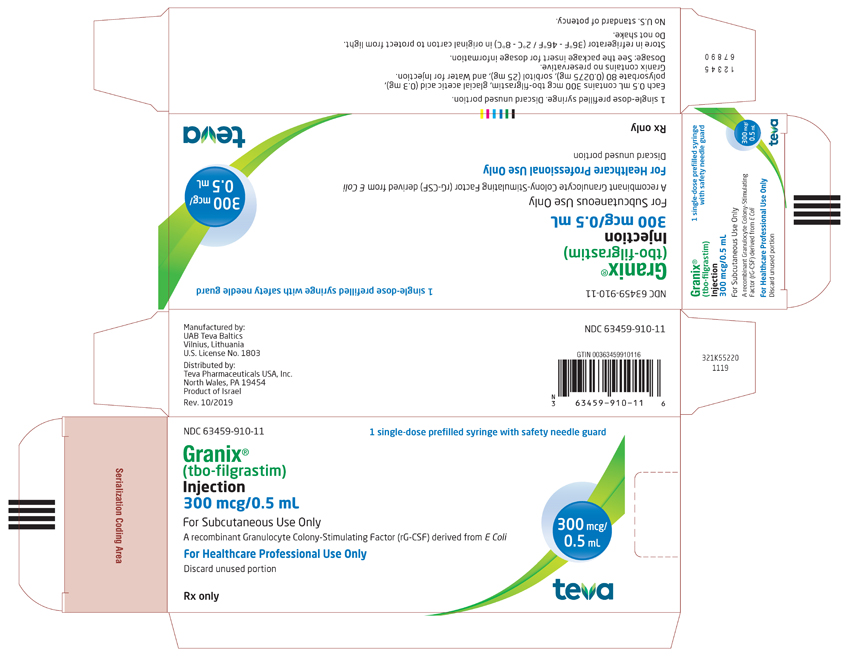
Package/Label Display Panel 63459-910-11 NDC 63459-910-11 Rx only Granix® (tbo-filgrastim) Injection 300 mcg/0.5 mL For Subcutaneous Use Only A recombinant Granulocyte Colony-Stimulating Factor (rG-CSF) derived from E Coli 300 mcg/0.5 mL For Healthcare Professional Use Only 1 Single-dose prefilled syringe with a safety needle guard Discard unused portion 300mcg/0.5mL 1 HCP
Package/Label Display Panel, 63459-910-17 NDC 63459-910-17 Granix® (tbo-filgrastim) Injection 300 mcg/0.5 mL For Subcutaneous Use Only A recombinant Granulocyte Colony-Stimulating Factor (rG-CSF) derived from E Coli 1 Single-dose prefilled syringe WITHOUT a safety needle guard Rx only Discard unused portion 300 mcg/0.5 mL 300mcg/0.5mL 1 Carton
Package/Label Display Panel 63459-912-11 NDC 63459-912-11 Rx only Granix® (tbo-filgrastim) Injection 480 mcg/0.8 mL For Subcutaneous Use Only A recombinant Granulocyte Colony-Stimulating Factor (rG-CSF) derived from E Coli 480 mcg/0.8 mL For Healthcare Professional Use Only 1 Single-dose prefilled syringe with a safety needle guard Discard unused portion 480mcg/0.8mL 1 HCP
Package/Label Display Panel, 63459-912-17 NDC 63459-912-17 Rx only Granix® (tbo-filgrastim) Injection 480 mcg/0.8 mL For Subcutaneous Use Only A recombinant Granulocyte Colony-Stimulating Factor (rG-CSF) derived from E Coli 480 mcg/0.8 mL For Healthcare Professional Use Only 1 Single-dose prefilled syringe WITHOUT a safety needle guard Discard unused portion 480mcg/0.8mL 1 Home
Package/Label Display Panel, 63459-918-59 NDC 63459-918-59 10 x 300 mcg/mL Single-Dose Vials (containing 1 mL) Granix (tbo-filgrastim) Injection 300 mcg/mL For Subcutaneous Use Only. A recombinant Granulocyte Colony-Stimulating Factor (rG-CSF) derived from E. coli . Discard unused portion. Rx Only 300mcg/ml 10 Vial carton
Package/Label Display Panel, 63459-920-59 NDC 63459-920-59 10 x 480 mcg/1.6 mL Single-Dose Vials Granix (tbo-filgrastim) Injection 480 mcg/1.6 mL (300 mg/mL) For Subcutaneous Use Only. A recombinant Granulocyte Colony-Stimulating Factor (rG-CSF) derived from E. coli . Discard unused portion. Rx Only 1
Medicaid utilization & spend
Medicaid utilization by pack size
Medicare Part D spend CMS · PART D · 2026 (Q1)
About this NDC listing & data coverage
What data is (and isn’t) available for this NDC — tap to expand
| NDC identity (package / product / labeler codes) | ✓ Available |
| Labeler | ✓ Available |
| Product & package description | ✓ Available |
| Marketing category & status | ✓ Available |
| Active ingredient / dosage form / route | ✓ Available |
| FDA label (SPL via DailyMed) | ✓ Available |
| Package photos | ✓ Available |
| Inactive ingredients (structured) | ✓ Available |
| NADAC pharmacy acquisition price (CMS) | — Not published for this NDC CMS publishes NADAC only for NDCs reported in its retail-pharmacy survey. |
| Orange Book / therapeutic-equivalence data | ✓ Available |
| HCPCS J-code billing crosswalk | ✓ Available |
| Medicaid utilization (CMS SDUD) | ✓ Available |