
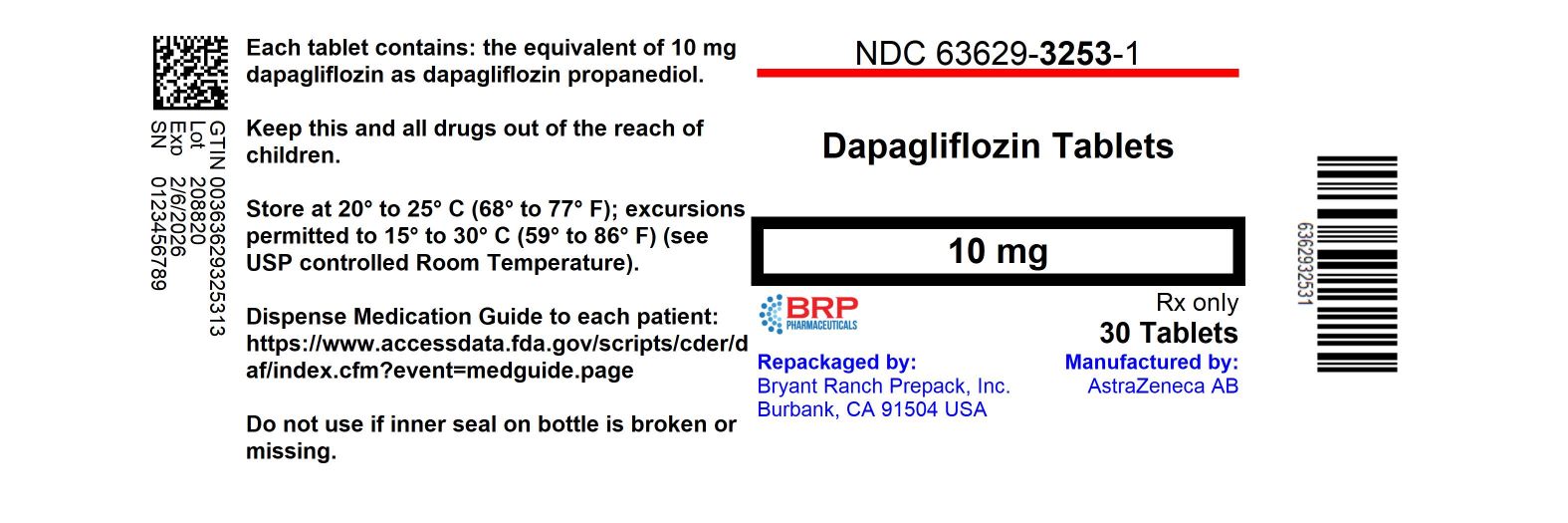
Dapagliflozin 10 mg Tablet, Film Coated, 30-count — NDC 63629-3253-1 (Billing 63629-3253-01)
This is a package of 30 tablets of Dapagliflozin 10 mg Tablet, Film Coated from Bryant Ranch Prepack, marketed since Jan 2024 and currently FDA-listed. It is this product's only package size.
NDC database record
One package, one record: these facts belong to NDC 63629-3253-1 alone.
- Record
- FDA NDC Directory package listing · Human prescription drug
- Code segments
- 63629 labeler · 3253 product · 1 package
- Package marketed since
- Jan 24, 2024
- Sample package
- No — commercial package
- Listing certified through
- Dec 31, 2026
- Billing quantity
- 30 EA per package
- Barcode (UPC-A, from the NDC)
- 3 6362932531 3
- FDA record last changed
- Jul 24, 2026
Identity & classification
Regulatory identifiers FDA, NLM and CMS codes for this package
Drug-database identifiers Medi-Span GPI and First Databank GCN / HICL / AHFS classification
- GSN (GCN sequence number): 070755
- GCN: 34394
- HICL (First Databank): 040137
- AHFS class code: 68:20.18.00
- RxCUI (RxNorm): 1488569
Where does this data come from?
- FDA openFDA NDC Directory · synced Oct 1, 2026
- FDA label on DailyMed · label index refreshed Oct 6, 2026
- RxNorm (NLM RxNav) · catalog refreshed Oct 1, 2026
- Medi-Span GPI (licensed)
- First Databank (licensed) · refreshed Oct 1, 2026
RxNorm drug class
This medicine belongs to the Sodium-Glucose Cotransporter 2 Inhibitor class.
Where does this data come from?
- RxClass (NLM) · catalog refreshed Oct 1, 2026
Clinical
- No, it's used for more than just blood sugar control. Dapagliflozin is approved to help manage type 2 diabetes, but it's also used to reduce the risk of serious heart failure compl...
- What is dapagliflozin actually used for — is it just for diabetes?
- You can take it either way — with or without food. A high-fat meal may slow how quickly it absorbs slightly, but it doesn't change the overall amount that gets into your system. Ju...
- Can I take this tablet with food, or does it have to be on an empty stomach?
Patient education
Supplement & herbal interactions
Some supplements/herbs that may interact with Dapagliflozin — tap one for details:
Dapagliflozin may be associated with lower levels of 1 nutrient — worth a chat with your pharmacist, not a cause for alarm.
Where does this data come from?
- MedlinePlus (NLM) · refreshed Oct 1, 2026
- FDA label on DailyMed · label index refreshed Oct 6, 2026
Ask a licensed pharmacist directly — free, answered by our team.
Pricing
A drug doesn't have one price. Each row is a different public payment system, and none is what you'd pay at the counter — that depends on your insurance. The ⓘ on each row explains what it measures.
| Price system | Per each | Per package |
|---|---|---|
| Retail pharmacies payNADAC · weekly | Not in the retail survey — common for institutional, discontinued, or low-volume packs. | |
| Medicaid paysCMS SDUD · 12 mo | No recent Medicaid claims on file for this NDC — rare and low-volume NDCs are suppressed in the public data. | |
| Medicare drug plans payPart D · Q2 2026 | $6.05 | $181.59 / 30 tablets |
Where does this data come from?
- CMS NADAC weekly file
- CMS ASP pricing files · refreshed Sep 20, 2026
- CMS Medicaid State Drug Utilization Data · refreshed Oct 7, 2026
- CMS Part D plan pricing files · refreshed Sep 24, 2026
- VA National Acquisition Center price file
Packaging — all sizes for this product
| Package NDC | Description | Marketing start | Marketing end | Status |
|---|---|---|---|---|
| 63629-3253-01 You're viewing this Main listing | 30 TABLET, FILM COATED in 1 BOTTLE | 2024-01-24 | — | Active |
Therapeutic equivalents
| Product | Labeler | Pack | NADAC/unit | TE | Status | Price vs. this |
|---|---|---|---|---|---|---|
| Dapagliflozin 10 mg 00480-3528-05 | Teva | 500 tablets | $0.184 | AB | Availability likely | — |
| Dapagliflozin 10 mg 27241-0152-01 | Ajanta | 30 tablets | $0.184 | AB | Availability likely | — |
| dapagliflozin 10 mg 33342-0586-07 | Macleods | 30 tablets | $0.184 | AB | Availability likely | — |
| Dapagliflozin 10 mg 59651-0160-30 | Aurobindo | 30 tablets | $0.184 | AB | Availability likely | — |
| Dapagliflozin 10 mg 60505-4912-03 | Apotex | 30 tablets | $0.184 | AB | Availability likely | — |
| Dapagliflozin 10 mg 62332-0393-30 | Alembic | 30 tablets | $0.184 | AB | Availability likely | — |
| Dapagliflozin 10 mg 66993-0457-30 | Prasco | 30 tablets | $0.184 | AB | Availability likely | — |
| Dapagliflozin 10 mg 69097-0389-02 | Cipla | 30 tablets | $0.184 | AB | Availability likely | — |
| Dapagliflozin 10 mg 70710-1381-03 | Zydus | 30 tablets | $0.184 | AB | Availability likely | — |
| Dapagliflozin 10 mg 70748-0106-06 | Lupin | 30 tablets | $0.184 | AB | Availability likely | — |
| Dapagliflozin 10 mg 70954-0857-10 | ANI | 30 tablets | $0.184 | AB | Availability likely | — |
| Dapagliflozin 10 mg 72205-0433-01 | Novadoz | 30 tablets | $0.184 | AB | Availability likely | — |
| Farxiga 10 mg 00310-6210-30 | AstraZeneca | 30 tablets | $12.077 | AB | Availability likely | — |
| Dapagliflozin 10 mg 00781-5990-01 | Sandoz | 100 tablets | — | AB | FDA listed | — |
| Dapagliflozin 10 mg 46708-0393-30 | Alembic | 30 tablets | — | AB | FDA listed | — |
| Farxiga 10 mg 50090-3481-00 | A-S | 30 tablets | — | AB | FDA listed | — |
| Dapagliflozin 10 mg 50090-7057-00 | A-S | 30 tablets | — | AB | FDA listed | — |
| Dapagliflozin 10 mg 50090-7972-00 | A-S | 30 tablets | — | AB | FDA listed | — |
| Farxiga 10 mg 55154-6933-08 | Cardinal | 840 tablets | — | AB | Discontinued | — |
| Dapagliflozin 10 mgthis 63629-3253-01 | Bryant | 30 tablets | — | AB | FDA listed | — |
| Dapagliflozin 10 mg 67877-0609-05 | Ascend | 500 tablets | — | AB | FDA listed | — |
| Dapagliflozin 2,3-BUTANEDIOL MONOHYDRATE 10 mg 70377-0024-11 | Biocon | 30 tablets | — | AB | FDA listed | — |
| Dapagliflozin 10 mg 70771-1715-03 | Zydus | 30 tablets | — | AB | FDA listed | — |
| Dapagliflozin 10 mg 71921-0421-09 | Florida | 90 tablets | — | AB | FDA listed | — |
| Dapagliflozin 10 mg 73190-0073-30 | AvKARE | 30 tablets | — | AB | FDA listed | — |
Where does this data come from?
- FDA openFDA NDC Directory · synced Oct 1, 2026
- FDA Orange Book · refreshed Oct 3, 2026
- CMS NADAC weekly file
Availability & generic status
FDA-approved generic versions are listed, and recent pricing/market data suggests they may be available — see Therapeutic equivalents.
Why the date isn’t exact: Generic timing can change because patents may be challenged, settled, licensed, added, removed, or worked around with a narrower label — and FDA approval does not always mean a pharmacy can get the generic today.
🛈 What do these terms mean?
- Patent
- Legal protection listed in the Orange Book that may delay generic approval or launch. Issued by the U.S. Patent & Trademark Office.
- Substance patent
- Covers the active drug molecule itself — the hardest to design around. A generic generally can’t launch until it expires.
- Formulation (product) patent
- Covers a specific formulation or dosage form. A generic can sometimes work around it with a different formulation.
- Method-of-use patent
- A patent covering one specific approved use of the drug — not necessarily the whole molecule. A generic can sometimes launch with a “skinny label” that carves out the protected use and keeps the others.
- Skinny label
- A generic label that omits a still-patented use when the FDA allows it — letting a generic reach the market for the unprotected uses.
- Exclusivity
- FDA-granted marketing protection, separate from patents — e.g. 5-yr new chemical entity, 7-yr orphan drug, or a +6-month pediatric extension.
- Paragraph IV
- A generic applicant’s formal challenge to a listed patent. It can potentially lead to earlier generic entry, but often involves litigation or a settlement.
- RLD / RS
- Reference Listed Drug — the brand product the FDA uses as the reference for generic applications. Reference Standard — the product the FDA expects generics to compare against in bioequivalence testing.
- TE / AB rating
- FDA therapeutic-equivalence rating. An AB rating generally means the FDA considers a generic therapeutically equivalent to — and substitutable for — the brand.
- LOE (loss of exclusivity)
- The latest patent or exclusivity currently listed — the loss-of-exclusivity / latest-listed-protection date shown on this page. Paragraph-IV challenges and settlements can move the real date earlier; FDA approval and a manufacturer’s decision to market can move it later.
Built from the FDA Orange Book. The bars above are scaled to each protection’s expiry; the red LOE marker is the last one to lapse.
| Patent | Type | Use code | Expires |
|---|---|---|---|
| US 8685934 ↗ | Method of use | U-1522 | May 26, 2030 |
| US 8906851 ↗ | Method of use | U-2139 | Aug 18, 2026 |
| US 8329648 ↗ | Method of use | U-2213 | Aug 18, 2026 |
| US 8329648 ↗ | Method of use | U-2139 | Aug 18, 2026 |
| US 8329648 ↗ | Method of use | U-2139 | Aug 18, 2026 |
| US 6515117 ↗ | Drug substance | U-493 | Oct 4, 2025 |
| US 8361972 ↗ | Method of use | U-2139 | Mar 21, 2028 |
| US 8361972 ↗ | Method of use | U-2139 | Mar 21, 2028 |
| US 6515117 ↗ | Drug substance | U-2139 | Oct 4, 2025 |
| US 8501698 ↗ | Method of use | U-493 | Jun 20, 2027 |
| US 8501698 ↗ | Method of use | U-493 | Jun 20, 2027 |
| US 8685934 ↗ | Method of use | U-1522 | May 26, 2030 |
| US 8361972 ↗ | Method of use | U-493 | Mar 21, 2028 |
| US 8329648 ↗ | Method of use | U-2212 | Aug 18, 2026 |
| US 8361972 ↗ | Method of use | U-493 | Mar 21, 2028 |
| US 8329648 ↗ | Method of use | U-2212 | Aug 18, 2026 |
| US 8906851 ↗ | Method of use | U-2139 | Aug 18, 2026 |
| US 10973836 ↗ | Method of use | U-3127 | Mar 9, 2040 |
| US 12213988 ↗ | Method of use | U-4140 | Apr 1, 2041 |
| US 12409186 ↗ | Method of use | U-4140 | Apr 1, 2041 |
| US 12472194 ↗ | Method of use | U-4346 | Jul 18, 2039 |
| US 8329648 ↗ | Method of use | U-2213 | Aug 18, 2026 |
| US 11826376 ↗ | Method of use | U-3766 | Jul 18, 2039 |
| US 11903955 ↗ | Method of use | U-3825 | Mar 9, 2040 |
| US 6515117 ↗ | Drug substance | U-2139 | Oct 4, 2025 |
| US 6515117 ↗ | Drug substance | U-493 | Oct 4, 2025 |
| US 7851502 ↗ | Drug product | — | Aug 19, 2028 |
| US 8721615 ↗ delist req. | Drug product | — | Jan 18, 2030 |
| US 8221786 ↗ | Drug product | — | Mar 21, 2028 |
| US 7919598 ↗ | Drug substance | — | Dec 16, 2029 |
| US 8221786 ↗ | Drug product | — | Mar 21, 2028 |
| US 8716251 ↗ | Drug product | — | Mar 21, 2028 |
| US 7851502 ↗ | Drug product | — | Aug 19, 2028 |
| US 8721615 ↗ delist req. | Drug product | — | Jan 18, 2030 |
| US 7919598 ↗ | Drug substance | — | Dec 16, 2029 |
| US 8716251 ↗ | Drug product | — | Mar 21, 2028 |
| US 8221786*PED ↗ | Drug product | — | Sep 21, 2028 |
| US 6515117*PED ↗ | Drug product | — | Apr 4, 2026 |
| US 8501698*PED ↗ | Drug product | — | Dec 20, 2027 |
| US 8361972*PED ↗ | Drug product | — | Sep 21, 2028 |
| US 7851502*PED ↗ | Drug product | — | Feb 19, 2029 |
| US 7919598*PED ↗ | Drug product | — | Jun 16, 2030 |
| US 8361972*PED ↗ | Drug product | — | Sep 21, 2028 |
| US 8501698*PED ↗ | Drug product | — | Dec 20, 2027 |
| US 7851502*PED ↗ | Drug product | — | Feb 19, 2029 |
| US 6515117*PED ↗ | Drug product | — | Apr 4, 2026 |
| US 7919598*PED ↗ | Drug product | — | Jun 16, 2030 |
| US 8221786*PED ↗ | Drug product | — | Sep 21, 2028 |
| US 8716251*PED ↗ | Drug product | — | Sep 21, 2028 |
| US 8716251*PED ↗ | Drug product | — | Sep 21, 2028 |
| US 8685934*PED ↗ | Drug product | — | Nov 26, 2030 |
| US 8685934*PED ↗ | Drug product | — | Nov 26, 2030 |
| US 8329648*PED ↗ | Drug product | — | Feb 18, 2027 |
| US 8329648*PED ↗ | Drug product | — | Feb 18, 2027 |
| US 8721615*PED ↗ | Drug product | — | Jul 18, 2030 |
| US 8721615*PED ↗ | Drug product | — | Jul 18, 2030 |
| US 8906851*PED ↗ | Drug product | — | Feb 18, 2027 |
| US 8906851*PED ↗ | Drug product | — | Feb 18, 2027 |
| US 12472194*PED ↗ | Drug product | — | Jan 18, 2040 |
| US 11826376*PED ↗ | Drug product | — | Jan 18, 2040 |
| US 11903955*PED ↗ | Drug product | — | Sep 9, 2040 |
| US 10973836*PED ↗ | Drug product | — | Sep 9, 2040 |
| US 12409186*PED ↗ | Drug product | — | Oct 1, 2041 |
| US 12213988*PED ↗ | Drug product | — | Oct 1, 2041 |
| Code | What it grants | Expires |
|---|---|---|
| M-298 | New indication / labeling change (3-year) | May 8, 2026 |
| NPP | New Patient Population | Jun 12, 2027 |
| M-298 | New indication / labeling change (3-year) | May 8, 2026 |
| NPP | New Patient Population | Jun 12, 2027 |
| PED | Pediatric Exclusivity (+6 months) | Nov 8, 2026 |
| PED | Pediatric Exclusivity (+6 months) | Nov 8, 2026 |
| PED | Pediatric Exclusivity (+6 months) | Dec 12, 2027 |
| PED | Pediatric Exclusivity (+6 months) | Dec 12, 2027 |
Is there a generic version of DAPAGLIFLOZIN 10 MG TABLET?
The FDA approved a generic — why can’t I get it at my pharmacy yet?
Why do different websites show different generic release dates?
What does “FDA listed” mean?
What does a patent or protection date mean here?
What does “current Orange Book estimate” mean?
Can a generic come out before the last patent expires?
Can a generic come out after the listed dates?
What is the difference between patents and exclusivity?
Why are there multiple patent dates?
Where does this data come from?
- FDA Orange Book · refreshed Oct 3, 2026
Inactive Ingredients / Excipients
Inactive ingredients, also called excipients, are components of the drug product other than the active ingredient. They may include fillers, dyes, coatings, preservatives, flavors, or other formulation ingredients.
🧪 Avoiding an ingredient? See Dapagliflozin inactive ingredients by manufacturer: every current product's list side by side, so you can ask your pharmacy for the version that does not list it.
💡 Tap an ingredient (hover on desktop) to see what it is and why it’s used.
-
UNII 3SY5LH9PMK
Anhydrous lactose is a milk sugar with no water content. It acts as a filler and binder in tablets and capsules, adding bulk and helping ingredients stick together.
-
UNII 2S7830E561
Crospovidone is a synthetic polymer derived from povidone. It acts as a disintegrant, helping the tablet or capsule break apart quickly in the stomach so the active ingredient can be absorbed.
-
UNII 70097M6I30
Magnesium stearate is a salt made from magnesium and stearic acid, a fatty substance. It's used in tablets and capsules as a lubricant and glidant to help ingredients flow smoothly during manufacturing and prevent sticking.
-
UNII OP1R32D61U
Microcrystalline cellulose is a purified form of cellulose, a natural fiber from plant sources. It acts as a binder and filler in tablets and capsules, helping hold ingredients together and give the medicine its shape and size.
-
UNII ETJ7Z6XBU4
Silicon dioxide is a naturally occurring mineral used as a glidant and anti-caking agent. It helps powder ingredients flow smoothly and prevents clumping during manufacturing and storage.
5 inactive ingredients listed in the exact product block matched to this NDC.
Where does this data come from?
ingredient classCode="IACT" elements from the exact product block matched by this NDC. Label-section narrative from DailyMed / the openFDA label index is shown separately when available.- FDA label on DailyMed · label index refreshed Oct 6, 2026
- FDA openFDA NDC Directory · synced Oct 1, 2026
Inactive ingredient FAQ
Are inactive ingredients the same for every manufacturer?
Why might an inactive ingredient be missing?
Can inactive ingredients matter?
Manufacturer & labeler
More NDCs from Bryant Ranch Prepack labeler code 63629
- Acetaminophen and Codeine Phosphate 300 mg; 60 mg Tablet NDC 63629-3031-0
- Glimepiride 2 mg Tablet NDC 63629-3043-1
- Gabapentin 600 mg Tablet NDC 63629-3063-0
- Nortriptyline Hydrochloride 10 mg Capsule NDC 63629-3204-1
- Tizanidine 2 mg Tablet NDC 63629-3209-0
- Meloxicam 7.5 mg Tablet NDC 63629-3248-0
- Desmopressin Acetate .2 mg Tablet NDC 63629-3257-1
- metoprolol succinate 200 mg Tablet, Extended Release NDC 63629-3286-1
- Zonisamide 100 mg Capsule NDC 63629-3293-1
- Venlafaxine 75 mg Tablet NDC 63629-3324-1
- meloxicam 15 mg Tablet NDC 63629-3328-0
- Ziprasidone Hydrochloride 40 mg Capsule NDC 63629-3331-1
Where does this data come from?
- FDA openFDA NDC Directory · synced Oct 1, 2026
- Drugs@FDA
Full prescribing information FDA SPL
🎯 Indications and Usage ▾
1 INDICATIONS AND USAGE DAPAGLIFLOZIN TABLETS are indicated: • To reduce the risk of sustained eGFR decline, end-stage kidney disease, cardiovascular death, and hospitalization for heart failure in adults with chronic kidney disease at risk of progression. • To reduce the risk of cardiovascular death, hospitalization for heart failure, and urgent heart failure visit in adults with heart failure. • To reduce the risk of hospitalization for heart failure in adults with type 2 diabetes mellitus and either established cardiovascular disease or multiple cardiovascular risk factors. • As an adjunct to diet and exercise to improve glycemic control in adults and pediatric patients aged 10 years and older with type 2 diabetes mellitus.
Limitations of Use • DAPAGLIFLOZIN TABLETS are not recommended for use to improve glycemic control in patients with type 1 diabetes mellitus [see Warnings and Precautions (5.1) ] . • DAPAGLIFLOZIN TABLETS are not recommended for use to improve glycemic control in adults with type 2 diabetes mellitus with an eGFR less than 45 mL/min/1.73 m 2 . DAPAGLIFLOZIN TABLETS are likely to be ineffective in this setting based upon its mechanism of action. • DAPAGLIFLOZIN TABLETS are not recommended for the treatment of chronic kidney disease in patients with polycystic kidney disease or patients requiring or with a recent history of immunosuppressive therapy for kidney disease.
DAPAGLIFLOZIN TABLETS are not expected to be effective in these DAPAGLIFLOZIN TABLETS a sodium-glucose cotransporter 2 (SGLT2) inhibitor, are indicated: • To reduce the risk of sustained eGFR decline, end stage kidney disease, cardiovascular death, and hospitalization for heart failure in adults with chronic kidney disease at risk of progression. (1) • To reduce the risk of cardiovascular death, hospitalization for heart failure, and urgent heart failure visit in adults with heart failure. (1) • To reduce the risk of hospitalization for heart failure in adults with type 2 diabetes mellitus and either established cardiovascular disease or multiple cardiovascular risk factors.
(1) • As an adjunct to diet and exercise to improve glycemic control in adults and pediatric patients aged 10 years and older with type 2 diabetes mellitus. (1) Limitations of use: • Not recommended for use to improve glycemic control in patients with type 1 diabetes mellitus. (1) • Not recommended for use to improve glycemic control in patients with type 2 diabetes mellitus with an eGFR less than 45 mL/min/1.73 m 2 .
DAPAGLIFLOZIN TABLETS are likely to be ineffective in this setting based upon its mechanism of action. (1) • Not recommended for the treatment of chronic kidney disease in patients with polycystic kidney disease or patients requiring or with a recent history of immunosuppressive therapy for the treatment of kidney disease. DAPAGLIFLOZIN TABLETS are not expected to be effective in these populations.
(1)
⏱️ Dosage and Administration ▾
2 DOSAGE AND ADMINISTRATION • Assess renal function prior to initiation and then as clinically indicated. Assess volume status and correct volume depletion before initiating. (2.1) • To improve glycemic control, the recommended starting dosage is 5 mg orally once daily.
Dosage can be increased to 10 mg orally once daily for additional glycemic control. (2.2) • For all other indications, the recommended dosage is 10 mg orally once daily. (2.3) • See full prescribing information for dosage recommendations in patients with renal impairment.
( 2.2 , 2.3 ) • Withhold DAPAGLIFLOZIN TABLETS for at least 3 days, if possible, prior to major surgery or procedures associated with prolonged fasting. (2.4)
2.1Testing Prior to Initiation of DAPAGLIFLOZIN TABLETS • Assess renal function prior to initiation of DAPAGLIFLOZIN TABLETS and then as clinically indicated [see Warnings and Precautions (5.2) ]. • Assess volume status. In patients with volume depletion, correct this condition before initiating DAPAGLIFLOZIN TABLETS [see Warnings and Precautions (5.2) and Use in Specific Populations (8.5 , 8.6) ] . 2.
2 Recommended Dosage for Glycemic Control in Adults and Pediatric Patients Aged 10 Years and Older with Type 2 Diabetes Mellitus In adults and pediatric patients aged 10 years and older with type 2 diabetes mellitus, the recommended starting dosage of DAPAGLIFLOZIN TABLETS is 5 mg orally once daily to improve glycemic control. For additional glycemic control, the dosage can be increased to 10 mg orally once daily. For Adult and Pediatric Patients with Type 2 Diabetes Mellitus and Renal Impairment: • The recommended dosage for DAPAGLIFLOZIN TABLETS in patients with an eGFR greater than or equal to 45 mL/min/1.73 m 2 is the same as the recommended dosage in patients with normal renal function. • DAPAGLIFLOZIN TABLETS is not recommended for use to improve glycemic control in patients with type 2 diabetes mellitus with an eGFR less than 45 mL/min/1.73 m 2 .
DAPAGLIFLOZIN TABLETS is likely to be ineffective to improve glycemic control in this setting based upon its mechanism of action.
2.3Recommended Dosage for Other Indications in Adults The recommended dosage of DAPAGLIFLOZIN TABLETS is 10 mg orally once daily in adults for the following indications: • To reduce the risk of sustained eGFR decline, end stage kidney disease (ESKD), cardiovascular (CV) death, and hospitalization for heart failure (hHF) in patients with chronic kidney disease at risk of progression. • To reduce the risk of CV death, hHF, and urgent heart failure visit in patients with heart failure. • To reduce the risk of hHF in patients with type 2 diabetes mellitus and either established CV disease or multiple CV risk factors.
For Adults with Renal Impairment Receiving DAPAGLIFLOZIN TABLETS for Indications Other than Glycemic Control: • The recommended dosage of DAPAGLIFLOZIN TABLETS in patients with an eGFR greater than or equal to 25 mL/min/1.73 m 2 is the same as the recommended dosage in patients with normal renal function. • Initiation with DAPAGLIFLOZIN TABLETS is not recommended in patients with an eGFR less than 25 mL/min/1.73 m 2 . • If the eGFR falls below 25 mL/min/1.73 m 2 while receiving treatment with DAPAGLIFLOZIN TABLETS, patients may continue DAPAGLIFLOZIN TABLETS 10 mg orally once daily to reduce the risk of eGFR decline, ESKD, CV death and hHF.
2. 4 Temporary Interruption for Surgery Withhold DAPAGLIFLOZIN TABLETS for at least 3 days, if possible, prior to major surgery or procedures associated with prolonged fasting. Resume DAPAGLIFLOZIN TABLETS when the patient is clinically stable and has resumed oral intake [see Warnings and Precautions (5.1) and Clinical Pharmacology (12.2) ].
💊 Dosage Forms and Strengths ▾
3 DOSAGE FORMS AND STRENGTHS Tablets: • 5 mg, yellow, biconvex, round, film-coated tablets with “5” engraved on one side and “1427” engraved on the other side. • 10 mg, yellow, biconvex, diamond-shaped, film-coated tablets with “10” engraved on one side and “1428” engraved on the other side. • Tablets: 5 mg and 10 mg (3)
⛔ Contraindications ▾
4 CONTRAINDICATIONS • DAPAGLIFLOZIN TABLETS are contraindicated in patients with a history of a serious hypersensitivity reaction to dapagliflozin or any of the excipients in DAPAGLIFLOZIN TABLETS. Serious hypersensitivity reactions, including anaphylaxis and angioedema have been reported with dapagliflozin [see Adverse Reactions (6.1) ] . • History of serious hypersensitivity reaction to dapagliflozin or any of the excipients in DAPAGLIFLOZIN TABLETS. (4)
⚠️ Warnings and Cautions ▾
5 WARNINGS AND PRECAUTIONS • Diabetic Ketoacidosis in Patients with Type 1 Diabetes Mellitus and Other Ketoacidosis: Consider ketone monitoring in patients with type 1 diabetes mellitus and consider ketone monitoring in others at risk for ketoacidosis, as indicated. Assess for ketoacidosis regardless of presenting blood glucose levels and discontinue DAPAGLIFLOZIN TABLETS if ketoacidosis is suspected. Monitor patients for resolution of ketoacidosis before restarting.
(5.1) • Volume depletion: Before initiating DAPAGLIFLOZIN TABLETS, assess volume status and renal function in the elderly, patients with renal impairment or low systolic blood pressure, and in patients on diuretics. Monitor for signs and symptoms during therapy. (5.2) • Urosepsis and Pyelonephritis: Evaluate for signs and symptoms of urinary tract infections and treat promptly, if indicated.
(5.3) • Hypoglycemia: Consider a lower dose of insulin or the insulin secretagogue to reduce the risk of hypoglycemia when used in combination with DAPAGLIFLOZIN TABLETS. (5.4) • Necrotizing Fasciitis of the Perineum (Fournier’s Gangrene): Serious, life-threatening cases have occurred in patients with diabetes, both females and males. Assess patients presenting with pain or tenderness, erythema, or swelling in the genital or perineal area, along with fever or malaise.
If suspected, institute prompt treatment. (5.5) • Genital Mycotic Infections: Monitor and treat if indicated. (5.6)
5.1Diabetic Ketoacidosis in Patients with Type 1 Diabetes Mellitus and Other Ketoacidosis In patients with type 1 diabetes mellitus, dapagliflozin significantly increases the risk of diabetic ketoacidosis, a life-threatening event, beyond the background rate. In placebo-controlled trials of patients with type 1 diabetes mellitus, the risk of ketoacidosis was markedly increased in patients who received sodium-glucose cotransporter 2 (SGLT2) inhibitors compared to patients who received placebo. DAPAGLIFLOZIN TABLETS are not indicated for glycemic control in patients with type 1 diabetes mellitus.
Type 2 diabetes mellitus and pancreatic disorders (e.g., history of pancreatitis or pancreatic surgery) are also risk factors for ketoacidosis. There have been postmarketing reports of fatal events of ketoacidosis in patients with type 2 diabetes mellitus using SGLT2 inhibitors, including dapagliflozin. Precipitating conditions for diabetic ketoacidosis or other ketoacidosis include under-insulinization due to insulin dose reduction or missed insulin doses, acute febrile illness, reduced caloric intake, ketogenic diet, surgery, volume depletion, and alcohol abuse.
Signs and symptoms are consistent with dehydration and severe metabolic acidosis and include nausea, vomiting, abdominal pain, generalized malaise, and shortness of breath. Blood glucose levels at presentation may be below those typically expected for diabetic ketoacidosis (e.g., less than 250 mg/dL). Ketoacidosis and glucosuria may persist longer than typically expected.
Urinary glucose excretion persists for 3 days after discontinuing DAPAGLIFLOZIN TABLETS [see Clinical Pharmacology (12.2) ] ; however, there have been postmarketing reports of ketoacidosis and/or glucosuria lasting greater than 6 days and some up to 2 weeks after discontinuation of SGLT2 inhibitors. Consider ketone monitoring in patients with type 1 diabetes mellitus and consider ketone monitoring in others at risk for ketoacidosis if indicated by the clinical situation. Assess for ketoacidosis regardless of presenting blood glucose levels in patients who present with signs and symptoms consistent with severe metabolic acidosis.
If ketoacidosis is suspected, discontinue DAPAGLIFLOZIN TABLETS, promptly evaluate, and treat ketoacidosis, if confirmed. Monitor patients for resolution of ketoacidosis before restarting DAPAGLIFLOZIN TABLETS. Withhold DAPAGLIFLOZIN TABLETS, if possible, in temporary clinical situations that could predispose patients to ketoacidosis.
Resume DAPAGLIFLOZIN… [Excerpted — this section continues on DailyMed.]
🤒 Adverse Reactions ▾
6 ADVERSE REACTIONS The following important adverse reactions are described below and elsewhere in the labeling: • Diabetic Ketoacidosis in Patients with Type 1 Diabetes Mellitus and Other Ketoacidosis [see Warnings and Precautions (5.1) ] • Volume Depletion [see Warnings and Precautions (5.2) ] • Urosepsis and Pyelonephritis [see Warnings and Precautions (5.3) ] • Hypoglycemia with Concomitant Use with Insulin and Insulin Secretagogues [see Warnings and Precautions (5.4) ] • Necrotizing Fasciitis of the Perineum (Fournier’s Gangrene) [see Warnings and Precautions (5.5) ] • Genital Mycotic Infections [see Warnings and Precautions (5.6) ] • Most common adverse reactions (5% or greater incidence) were female genital mycotic infections, nasopharyngitis, and urinary tract infections.
(6.1) To report SUSPECTED ADVERSE REACTIONS, contact Prasco Laboratories at 1-866-525-0688 or FDA at 1-800-FDA-1088 or www.fda.gov/medwatch.
6.1Clinical Trials Experience Because clinical trials are conducted under widely varying conditions, adverse reaction rates observed in the clinical trials of a drug cannot be directly compared to rates in the clinical trials of another drug and may not reflect the rates observed in clinical practice. Dapagliflozin has been evaluated in clinical trials in adult and pediatric patients aged 10 years and older with type 2 diabetes mellitus, in adult patients with heart failure, and in adult patients with chronic kidney disease.
The overall safety profile of dapagliflozin was consistent across the studied indications. No new adverse reactions were identified in the DAPA-HF and DELIVER heart failure trials, or in the DAPA-CKD trial in patients with chronic kidney disease. Severe hypoglycemia and diabetic ketoacidosis (DKA) were observed only in patients with diabetes mellitus.
Clinical Trials for Glycemic Control in Adult Patients with Type 2 Diabetes Mellitus Pool of 12 Placebo-Controlled Adult Trials for Dapagliflozin 5 and 10 mg for Glycemic Control The data in Table 1 is derived from 12 glycemic control placebo-controlled trials in adult patients with type 2 diabetes mellitus ranging from 12 to 24 weeks. In 4 trials dapagliflozin was used as monotherapy, and in 8 trials dapagliflozin was used as add-on to background antidiabetic therapy or as combination therapy with metformin [see Clinical Studies (14.1) ].
These data reflect exposure of 2338 adult patients to dapagliflozin with a mean exposure duration of 21 weeks. Patients received placebo (N=1393), dapagliflozin 5 mg (N=1145), or dapagliflozin 10 mg (N=1193) once daily. The mean age of the population was 55 years and 2% were older than 75 years of age.
Fifty percent (50%) of the population were male; 81% were White, 14% were Asian, and 3% were Black or African American. At baseline, the population had diabetes for an average of 6 years, had a mean hemoglobin A1c (HbA1c) of 8.3%, and 21% had established microvascular complications of diabetes. Baseline renal function was normal or mildly impaired in 92% of patients and moderately impaired in 8% of patients (mean eGFR 86 mL/min/1.73 m 2 ).
Table 1 shows common adverse reactions in adults associated with the use of dapagliflozin. These adverse reactions were not present at baseline, occurred more commonly on dapagliflozin than on placebo, and occurred in at least 2% of patients treated with either dapagliflozin 5 mg or dapagliflozin 10 mg. Table 1: Adverse Reactions in Placebo-Controlled Trials of Glycemic Control Reported in ≥2% of Adults Treated with Dapagliflozin Adverse Reaction % of Patients Pool of 12 Placebo-Controlled Trials Placebo N=1393 Dapagliflozin 5 mg N=1145 Dapagliflozin 10 mg N=1193 Female genital mycotic infections Genital mycotic infections include the following adverse reactions, listed in order of frequency reported for females: vulvovaginal mycotic infection, vaginal infection, vulvovaginal candidiasis, vulvovaginitis, genital infection, genital candidiasis, fungal genital infection, vulvit… [Excerpted — this section continues on DailyMed.]
🔄 Drug Interactions ▾
7 DRUG INTERACTIONS Table 4: Clinically Relevant Interactions with DAPAGLIFLOZIN TABLETS Insulin or Insulin Secretagogues Clinical Impact The risk of hypoglycemia may be increased when DAPAGLIFLOZIN TABLETS are used concomitantly with insulin or insulin secretagogues (e.g., sulfonylurea) [see Warnings and Precautions (5.4) ] . Intervention Concomitant use may require lower doses of insulin or the insulin secretagogue to reduce the risk of hypoglycemia. Lithium Clinical Impact Concomitant use of an SGLT2 inhibitor with lithium may decrease serum lithium concentrations.
Intervention Monitor serum lithium concentration more frequently during DAPAGLIFLOZIN TABLETS initiation and dosage changes. Positive Urine Glucose Test Clinical Impact SGLT2 inhibitors increase urinary glucose excretion and will lead to positive urine glucose tests. Intervention Monitoring glycemic control with urine glucose tests is not recommended in patients taking SGLT2 inhibitors.
Use alternative methods to monitor glycemic control. Interference with 1,5-anhydroglucitol (1,5-AG) Assay Clinical Impact Measurements of 1,5-AG are unreliable in assessing glycemic control in patients taking SGLT2 inhibitors. Intervention Monitoring glycemic control with 1,5-AG assay is not recommended.
Use alternative methods to monitor glycemic control. • See full prescribing information for information on drug interactions and interference of DAPAGLIFLOZIN TABLETS with laboratory tests. (7)
Drug Interactions In Vitro Assessment of Drug Interactions In in vitro studies, dapagliflozin and dapagliflozin 3-O-glucuronide neither inhibited CYP 1A2, 2C9, 2C19, 2D6, or 3A4, nor induced CYP 1A2, 2B6, or 3A4. Dapagliflozin is a weak substrate of the P-glycoprotein (P-gp) active transporter, and dapagliflozin 3-O-glucuronide is a substrate for the OAT3 active transporter. Dapagliflozin or dapagliflozin 3-O-glucuronide did not meaningfully inhibit P-gp, OCT2, OAT1, or OAT3 active transporters.
Overall, dapagliflozin is unlikely to affect the pharmacokinetics of concurrently administered medications that are P-gp, OCT2, OAT1, or OAT3 substrates. Effects of Other Drugs on Dapagliflozin Table 5 shows the effect of coadministered drugs on the pharmacokinetics of dapagliflozin in adults. No dose adjustments are recommended for dapagliflozin.
Table 5: Effects of Coadministered Drugs on Dapagliflozin Systemic Exposure Coadministered Drug (Dose Regimen) Single dose unless otherwise noted. Dapagliflozin (Dose Regimen) Effect on Dapagliflozin Exposure [% Change (90% CI)] C max AUC AUC = AUC(INF) for drugs given as single dose and AUC = AUC(TAU) for drugs given in multiple doses. No dosing adjustments required for the following: Oral Antidiabetic Agents Metformin (1000 mg) 20 mg ↔ ↔ Pioglitazone (45 mg) 50 mg ↔ ↔ Sitagliptin (100 mg) 20 mg ↔ ↔ Glimepiride (4 mg) 20 mg ↔ ↔ Voglibose (0.2 mg three times daily) 10 mg ↔ ↔ Other Medications Hydrochlorothiazide (25 mg) 50 mg ↔ ↔ Bumetanide (1 mg) 10 mg once daily for 7 days ↔ ↔ Valsartan (320 mg) 20 mg ↓12% [↓3%, ↓20%] ↔ Simvastatin (40 mg) 20 mg ↔ ↔ Anti-infective Agent Rifampin (600 mg once daily for 6 days) 10 mg ↓7% [↓22%, ↑11%] ↓22% [↓27%, ↓17%] Nonsteroidal Anti-inflammatory Agent Mefenamic Acid (loading dose of 500 mg followed by 14 doses of 250 mg every 6 hours) 10 mg ↑13% [↑3%, ↑24%] ↑51% [↑44%, ↑58%] ↔ = no change (geometric mean ratio of test: reference within 0.80 to 1.25); ↓ or ↑ = parameter was lower or higher, respectively, with coadministration compared to dapagliflozin administered alone (geometric mean ratio of test: reference was lower than 0.80 or higher than 1.25).
Effects of Dapagliflozin on Other Drugs Table 6 shows the effect of dapagliflozin on other coadministered drugs in adults. Dapagliflozin did not meaningfully affect the pharmacokinetics of the coadministered drugs. Table 6: Effects of Dapagliflozin on the Systemic Exposures of Coadministered Drugs Coadministered Drug (Dose Regimen) Single dose unless otherwise noted.
Dapag… [Excerpted — this section continues on DailyMed.]
👥 Use in Specific Populations ▾
8 USE IN SPECIFIC POPULATIONS • Pregnancy: Advise females of the potential risk to a fetus especially during the second and third trimesters. (8.1) • Lactation: Not recommended when breastfeeding. (8.2) • Geriatrics: Higher incidence of adverse reactions related to hypotension. ( 8.5 ) • Renal Impairment: Higher incidence of adverse reactions related to volume depletion. ( 8.6 )
8.1Pregnancy Risk Summary Based on animal data showing adverse renal effects, DAPAGLIFLOZIN TABLETS are not recommended during the second and third trimesters of pregnancy. Limited data with dapagliflozin in pregnant women are not sufficient to determine drug-associated risk for major birth defects or miscarriage. There are risks to the mother and fetus associated with poorly controlled diabetes and untreated heart failure in pregnancy (see Clinical Considerations ) .
In animal studies, adverse renal pelvic and tubule dilatations, that were not fully reversible, were observed in rats when dapagliflozin was administered during a period of renal development corresponding to the late second and third trimesters of human pregnancy, at all doses tested; the lowest of which provided an exposure 15-times the 10 mg clinical dose ( see Data ). The estimated background risk of major birth defects is 6 to 10% in women with pre-gestational diabetes with a HbA1c greater than 7% and has been reported to be as high as 20 to 25% in women with HbA1c greater than 10%.
The estimated background risk of miscarriage for the indicated population is unknown. In the U.S. general population, the estimated background risk of major birth defects and miscarriage in clinically recognized pregnancies is 2 to 4% and 15 to 20%, respectively. Clinical Considerations Disease-associated maternal and/or embryofetal risk Poorly controlled diabetes in pregnancy increases the maternal risk for diabetic ketoacidosis, preeclampsia, spontaneous abortions, preterm delivery and delivery complications.
Poorly controlled diabetes increases the fetal risk for major birth defects, stillbirth, and macrosomia related morbidity. Data Animal Data Dapagliflozin dosed directly to juvenile rats from postnatal day (PND) 21 until PND 90 at doses of 1, 15, or 75 mg/kg/day, increased kidney weights and increased the incidence of renal pelvic and tubular dilatations at all dose levels. Exposure at the lowest dose tested was 15-times the 10 mg clinical dose (based on AUC).
The renal pelvic and tubular dilatations observed in juvenile animals did not fully reverse within a 1-month recovery period. In a prenatal and postnatal development study, dapagliflozin was administered to maternal rats from gestation day 6 through lactation day 21 at doses of 1, 15, or 75 mg/kg/day, and pups were indirectly exposed in utero and throughout lactation. Increased incidence or severity of renal pelvic dilatation was observed in 21-day-old pups offspring of treated dams at 75 mg/kg/day (maternal and pup dapagliflozin exposures were 1415-times and 137-times, respectively, the human values at the 10 mg clinical dose, based on AUC).
Dose-related reductions in pup body weights were observed at greater or equal to 29-times the 10 mg clinical dose (based on AUC). No adverse effects on developmental endpoints were noted at 1 mg/kg/day (19-times the 10 mg clinical dose, based on AUC). These outcomes occurred with drug exposure during periods of renal development in rats that corresponds to the late second and third trimester of human development.
In embryofetal development studies in rats and rabbits, dapagliflozin was administered throughout organogenesis, corresponding to the first trimester of human pregnancy. In rats, dapagliflozin was neither embryolethal nor teratogenic at doses up to 75 mg/kg/day (1441-times the 10 mg clinical dose, based on AUC). Dose-related effects on the rat fetus (structural abnormalities and reduced body weight) occurred only at higher dosages, equal to or greater than 150 mg/kg (more than 2344-times the 10 m… [Excerpted — this section continues on DailyMed.]
🤰 Pregnancy ▾
8.1Pregnancy Risk Summary Based on animal data showing adverse renal effects, DAPAGLIFLOZIN TABLETS are not recommended during the second and third trimesters of pregnancy. Limited data with dapagliflozin in pregnant women are not sufficient to determine drug-associated risk for major birth defects or miscarriage. There are risks to the mother and fetus associated with poorly controlled diabetes and untreated heart failure in pregnancy (see Clinical Considerations ) .
In animal studies, adverse renal pelvic and tubule dilatations, that were not fully reversible, were observed in rats when dapagliflozin was administered during a period of renal development corresponding to the late second and third trimesters of human pregnancy, at all doses tested; the lowest of which provided an exposure 15-times the 10 mg clinical dose ( see Data ). The estimated background risk of major birth defects is 6 to 10% in women with pre-gestational diabetes with a HbA1c greater than 7% and has been reported to be as high as 20 to 25% in women with HbA1c greater than 10%.
The estimated background risk of miscarriage for the indicated population is unknown. In the U.S. general population, the estimated background risk of major birth defects and miscarriage in clinically recognized pregnancies is 2 to 4% and 15 to 20%, respectively. Clinical Considerations Disease-associated maternal and/or embryofetal risk Poorly controlled diabetes in pregnancy increases the maternal risk for diabetic ketoacidosis, preeclampsia, spontaneous abortions, preterm delivery and delivery complications.
Poorly controlled diabetes increases the fetal risk for major birth defects, stillbirth, and macrosomia related morbidity. Data Animal Data Dapagliflozin dosed directly to juvenile rats from postnatal day (PND) 21 until PND 90 at doses of 1, 15, or 75 mg/kg/day, increased kidney weights and increased the incidence of renal pelvic and tubular dilatations at all dose levels. Exposure at the lowest dose tested was 15-times the 10 mg clinical dose (based on AUC).
The renal pelvic and tubular dilatations observed in juvenile animals did not fully reverse within a 1-month recovery period. In a prenatal and postnatal development study, dapagliflozin was administered to maternal rats from gestation day 6 through lactation day 21 at doses of 1, 15, or 75 mg/kg/day, and pups were indirectly exposed in utero and throughout lactation. Increased incidence or severity of renal pelvic dilatation was observed in 21-day-old pups offspring of treated dams at 75 mg/kg/day (maternal and pup dapagliflozin exposures were 1415-times and 137-times, respectively, the human values at the 10 mg clinical dose, based on AUC).
Dose-related reductions in pup body weights were observed at greater or equal to 29-times the 10 mg clinical dose (based on AUC). No adverse effects on developmental endpoints were noted at 1 mg/kg/day (19-times the 10 mg clinical dose, based on AUC). These outcomes occurred with drug exposure during periods of renal development in rats that corresponds to the late second and third trimester of human development.
In embryofetal development studies in rats and rabbits, dapagliflozin was administered throughout organogenesis, corresponding to the first trimester of human pregnancy. In rats, dapagliflozin was neither embryolethal nor teratogenic at doses up to 75 mg/kg/day (1441-times the 10 mg clinical dose, based on AUC). Dose-related effects on the rat fetus (structural abnormalities and reduced body weight) occurred only at higher dosages, equal to or greater than 150 mg/kg (more than 2344-times the 10 mg clinical dose, based on AUC), which were associated with maternal toxicity.
No developmental toxicities were observed in rabbits at doses up to 180 mg/kg/day (1191-times the 10 mg clinical dose, based on AUC).
🧒 Pediatric Use ▾
8.4Pediatric Use The safety and effectiveness of DAPAGLIFLOZIN TABLETS as an adjunct to diet and exercise to improve glycemic control in type 2 diabetes mellitus have been established in pediatric patients aged 10 years and older. Use of DAPAGLIFLOZIN TABLETS for this indication is supported by a 26-week placebo-controlled trial with a 26-week extension in 157 pediatric patients aged 10 to 17 years with type 2 diabetes mellitus, pediatric pharmacokinetic data, and trials in adults with type 2 diabetes mellitus [see Clinical Pharmacology (12.3) and Clinical Studies (14.1 , 14.2) ] .
The safety profile observed in the placebo-controlled trial in pediatric patients with type 2 diabetes mellitus was similar to that observed in adults [see Adverse Reactions (6.1) ]. The safety and effectiveness of DAPAGLIFLOZIN TABLETS for glycemic control in type 2 diabetes mellitus have not been established in pediatric patients less than 10 years of age. The safety and effectiveness of DAPAGLIFLOZIN TABLETS have not been established in pediatric patients to reduce the risk of [see Indications and Usage (1) ] : • sustained eGFR decline, end stage kidney disease, cardiovascular death, and hospitalization for heart failure in patients with chronic kidney disease at risk of progression. • cardiovascular death, hospitalization for heart failure, and urgent heart failure visit in patients with heart failure. • hospitalization for heart failure in patients with type 2 diabetes mellitus and either established cardiovascular disease or multiple cardiovascular risk factors.
🧓 Geriatric Use ▾
8.5Geriatric Use No DAPAGLIFLOZIN TABLETS dosage change is recommended based on age. A total of 1424 (24%) of the 5936 dapagliflozin-treated patients were 65 years and older and 207 (3.5%) patients were 75 years and older in a pool of 21 double-blind, controlled, clinical trials assessing the efficacy of dapagliflozin in improving glycemic control in type 2 diabetes mellitus. After controlling for level of renal function (eGFR), efficacy was similar for patients under age 65 years and those 65 years and older.
In patients ≥65 years of age, a higher proportion of patients treated with dapagliflozin for glycemic control had adverse reactions of hypotension [see Warnings and Precautions (5.2) and Adverse Reactions (6.1) ] . In the DAPA-CKD, DAPA-HF and DELIVER trials, safety and efficacy were similar for patients aged 65 years and younger and those older than 65. In the DAPA-HF study, 2714 (57%) out of 4744 patients with HFrEF were older than 65 years.
In the DELIVER study, 4759 (76%) out of 6263 patients with heart failure (LVEF >40%) were older than 65 years. In the DAPA-CKD study, 1818 (42%) out of 4304 patients with CKD were older than 65 years.
🆘 Overdosage ▾
10 OVERDOSAGE There were no reports of overdose during the clinical development program for dapagliflozin. In the event of an overdose, consider contacting the Poison Help line (1-800-222-1222) or a medical toxicologist for additional overdosage management recommendations. It is also reasonable to employ supportive measures as dictated by the patient’s clinical status. The removal of dapagliflozin by hemodialysis has not been studied.
🧬 Clinical Pharmacology ▾
12 CLINICAL PHARMACOLOGY
12.1Mechanism of Action Sodium-glucose cotransporter 2 (SGLT2), expressed in the proximal renal tubules, is responsible for the majority of the reabsorption of filtered glucose from the tubular lumen. Dapagliflozin is an inhibitor of SGLT2. By inhibiting SGLT2, dapagliflozin reduces reabsorption of filtered glucose and thereby promotes urinary glucose excretion.
Dapagliflozin also reduces sodium reabsorption and increases the delivery of sodium to the distal tubule. This may influence several physiological functions including, but not restricted to, lowering both pre- and afterload of the heart and downregulation of sympathetic activity, and decreased intraglomerular pressure which is believed to be mediated by increased tubuloglomerular feedback.
12.2Pharmacodynamics General Increases in the amount of glucose excreted in the urine were observed in healthy subjects and in patients with type 2 diabetes mellitus following the administration of dapagliflozin (see Figure 1). Dapagliflozin doses of 5 or 10 mg per day in patients with type 2 diabetes mellitus for 12 weeks resulted in excretion of approximately 70 grams of glucose in the urine per day at Week 12. A near maximum glucose excretion was observed at the dapagliflozin daily dosage of 20 mg.
This urinary glucose excretion with dapagliflozin also results in increases in urinary volume [see Adverse Reactions (6.1) ] . After discontinuation of dapagliflozin, on average, the elevation in urinary glucose excretion approaches baseline by about 3 days for the 10 mg dosage. Figure 1: Scatter Plot and Fitted Line of Change from Baseline in 24-Hour Urinary Glucose Amount versus Dapagliflozin Dose in Healthy Subjects and Subjects with Type 2 Diabetes Mellitus (T2DM) (Semi-Log Plot) Cardiac Electrophysiology Dapagliflozin was not associated with clinically meaningful prolongation of QTc interval at daily doses up to 150 mg (15 times the recommended maximum dose) in a study of healthy subjects.
In addition, no clinically meaningful effect on QTc interval was observed following single doses of up to 500 mg (50 times the recommended maximum dose) of dapagliflozin in healthy subjects.
12.3Pharmacokinetics Absorption Following oral administration of dapagliflozin, the maximum plasma concentration (C max ) is usually attained within 2 hours under fasting state. The C max and AUC values increase dose proportionally with increase in dapagliflozin dose in the therapeutic dose range. The absolute oral bioavailability of dapagliflozin following the administration of a 10 mg dose is 78%.
Administration of dapagliflozin with a high-fat meal decreases its C max by up to 50% and prolongs T max by approximately 1 hour but does not alter AUC as compared with the fasted state. These changes are not considered to be clinically meaningful and dapagliflozin can be administered with or without food. Distribution Dapagliflozin is approximately 91% protein bound.
Protein binding is not altered in patients with renal or hepatic impairment. Metabolism The metabolism of dapagliflozin is primarily mediated by UGT1A9; CYP-mediated metabolism is a minor clearance pathway in humans. Dapagliflozin is extensively metabolized, primarily to yield dapagliflozin 3-O-glucuronide, which is an inactive metabolite.
Dapagliflozin 3-O-glucuronide accounted for 61% of a 50 mg [ 14 C]-dapagliflozin dose and is the predominant drug-related component in human plasma. Elimination Dapagliflozin and related metabolites are primarily eliminated via the renal pathway. Following a single 50 mg dose of [ 14 C]-dapagliflozin, 75% and 21% total radioactivity is excreted in urine and feces, respectively.
In urine, less than 2% of the dose is excreted as parent drug. In feces, approximately 15% of the dose is excreted as parent drug. The mean plasma terminal half-life (t ½ ) for dapagliflozin is approximately 12.9 hours following a single oral dose of dapagliflozin 10 mg.
Specific Populations Pediatric Patients The… [Excerpted — this section continues on DailyMed.]
🧬 Mechanism of Action ▾
12.1Mechanism of Action Sodium-glucose cotransporter 2 (SGLT2), expressed in the proximal renal tubules, is responsible for the majority of the reabsorption of filtered glucose from the tubular lumen. Dapagliflozin is an inhibitor of SGLT2. By inhibiting SGLT2, dapagliflozin reduces reabsorption of filtered glucose and thereby promotes urinary glucose excretion.
Dapagliflozin also reduces sodium reabsorption and increases the delivery of sodium to the distal tubule. This may influence several physiological functions including, but not restricted to, lowering both pre- and afterload of the heart and downregulation of sympathetic activity, and decreased intraglomerular pressure which is believed to be mediated by increased tubuloglomerular feedback.
📦 How Supplied / Storage and Handling ▾
16 HOW SUPPLIED/STORAGE AND HANDLING DAPAGLIFLOZIN TABLETS have markings on both sides: yellow, biconvex, diamond-shaped and “10” engraved on one side and “1428” engraved on the other side. NDC: 63629-3253-1: 30 Tablets in a BOTTLE Store at 20°C to 25°C (68°F to 77°F); excursions permitted between 15°C and 30°C (59°F and 86°F) [see USP Controlled Room Temperature]. Repackaged/Relabeled by: Bryant Ranch Prepack, Inc. Burbank, CA 91504
📋 Description ▾
11 DESCRIPTION Dapagliflozin, an inhibitor of SGLT2, is described chemically as D-glucitol, 1,5-anhydro-1- C -[4-chloro-3-[(4-ethoxyphenyl)methyl]phenyl]-, (1 S )-, compounded with (2 S )-1,2-propanediol, hydrate (1:1:1). The empirical formula is C 21 H 25 ClO 6 •C 3 H 8 O 2 •H 2 O and the molecular weight is 502.98. The structural formula is: DAPAGLIFLOZIN TABLETS are available as film-coated tablets for oral administration containing the equivalent of 5 mg dapagliflozin as dapagliflozin propanediol or the equivalent of 10 mg dapagliflozin as dapagliflozin propanediol, and the following inactive ingredients: anhydrous lactose, crospovidone, magnesium stearate, microcrystalline cellulose, and silicon dioxide.
In addition, the film coating contains the following inactive ingredients: polyethylene glycol, polyvinyl alcohol, talc, titanium dioxide, and yellow iron oxide.
💬 Information for Patients ▾
17 PATIENT COUNSELING INFORMATION Advise the patient to read the FDA-approved patient labeling (Medication Guide). Diabetic Ketoacidosis in Patients with Type 1 Diabetes Mellitus and Other Ketoacidosis In patients with type 1 diabetes mellitus, inform them that using DAPAGLIFLOZIN TABLETS can increase their risk of life-threatening diabetic ketoacidosis. For all other patients, inform them that DAPAGLIFLOZIN TABLETS can cause potentially fatal ketoacidosis and that type 2 diabetes mellitus and pancreatic disorders (e.g., history of pancreatitis or pancreatic surgery) are risk factors.
Educate all patients on precipitating factors (such as insulin dose reduction or missed insulin doses, infection, reduced caloric intake, ketogenic diet, surgery, dehydration, and alcohol abuse) and symptoms of ketoacidosis (including nausea, vomiting, abdominal pain, tiredness, and labored breathing). Inform patients that blood glucose may be normal even in the presence of ketoacidosis. Advise patients that they may be asked to monitor ketones.
If symptoms of ketoacidosis occur, instruct patients to discontinue DAPAGLIFLOZIN TABLETS and seek medical attention immediately [see Warnings and Precautions (5.1) ] . Volume Depletion Inform patients that symptomatic hypotension may occur with DAPAGLIFLOZIN TABLETS and advise them to contact their healthcare provider if they experience such symptoms [see Warnings and Precautions (5.2) ] . Inform patients that dehydration may increase the risk for hypotension, and to have adequate fluid intake.
Serious Urinary Tract Infections Inform patients of the potential for urinary tract infections, which may be serious. Provide them with information on the symptoms of urinary tract infections. Advise them to seek medical advice promptly if such symptoms occur [see Warnings and Precautions (5.3) ] .
Hypoglycemia with Concomitant Use with Insulin and Insulin Secretagogues Inform patients that the incidence of hypoglycemia may increase when DAPAGLIFLOZIN TABLETS are added to an insulin secretagogue (e.g., sulfonylurea) and/or insulin. Educate patients on the signs and symptoms of hypoglycemia [see Warnings and Precautions (5.4) ] . Necrotizing Fasciitis of the Perineum (Fournier’s Gangrene) Inform patients that necrotizing infections of the perineum (Fournier’s Gangrene) have occurred with dapagliflozin in patients with diabetes mellitus.
Counsel patients to promptly seek medical attention if they develop pain or tenderness, redness, or swelling of the genitals or the area from the genitals back to the rectum, along with a fever above 100.4°F or malaise [see Warnings and Precautions (5.5) ] . Genital Mycotic Infections in Females (e.g., Vulvovaginitis) Inform female patients that vaginal yeast infections may occur and provide them with information on the signs and symptoms of vaginal yeast infections. Advise them of treatment options and when to seek medical advice [see Warnings and Precautions (5.6) ] .
Genital Mycotic Infections in Males (e.g., Balanitis) Inform male patients that yeast infections of the penis (e.g., balanitis or balanoposthitis) may occur, especially in patients with prior history. Provide them with information on the signs and symptoms of balanitis and balanoposthitis (rash or redness of the glans or foreskin of the penis). Advise them of treatment options and when to seek medical advice [see Warnings and Precautions (5.6) ] .
Hypersensitivity Reactions Inform patients that serious hypersensitivity reactions (e.g., urticaria, anaphylactic reactions, and angioedema) have been reported with dapagliflozin. Advise patients to immediately report any signs or symptoms suggesting allergic reaction or angioedema, and to take no more of the drug until they have consulted prescribing physicians. Pregnancy Advise pregnant patients of the potential risk to a fetus with treatment with DAPAGLIFLOZIN TABLETS.
Instruct patients to immediately inform their healthcare provider if pregnant or planning to become pre… [Excerpted — this section continues on DailyMed.]
💬 Medication Guide ▾
MEDICATION GUIDE MEDICATION GUIDE DAPAGLIFLOZIN [dap-a-gli-FLO-zin] TABLETS for oral use What is the most important information I should know about DAPAGLIFLOZIN TABLETS? DAPAGLIFLOZIN TABLETS can cause serious side effects, including: • Diabetic ketoacidosis (increased ketones in your blood or urine) in people with type 1 diabetes and other ketoacidosis . DAPAGLIFLOZIN TABLETS can cause ketoacidosis that can be life-threatening and may lead to death.
Ketoacidosis is a serious condition which needs to be treated in a hospital. People with type 1 diabetes have a high risk of getting ketoacidosis. People with type 2 diabetes or pancreas problems also have an increased risk of getting ketoacidosis.
Ketoacidosis can also happen in people who: are sick, cannot eat or drink as usual, skip meals, are on a diet high in fat and low in carbohydrates (ketogenic diet), take less than the usual amount of insulin or miss insulin doses, drink too much alcohol, have a loss of too much fluid from the body (volume depletion), or who have surgery. Ketoacidosis can happen even if your blood sugar is less than 250 mg/dL. Your healthcare provider may ask you to periodically check ketones in your urine or blood.
Stop taking DAPAGLIFLOZIN TABLETS and call your healthcare provider or get medical help right away if you get any of the following. If possible, check for ketones in your urine or blood, even if your blood sugar is less than 250 mg/dL. o nausea o vomiting o stomach area (abdominal) pain o tiredness o trouble breathing o ketones in your urine or blood • Dehydration. DAPAGLIFLOZIN TABLETS can cause some people to become dehydrated (the loss of body water and salt).
Dehydration may cause you to feel dizzy, faint, lightheaded, or weak, especially when you stand up (orthostatic hypotension). There have been reports of sudden kidney injury in people with Type 2 diabetes who are taking DAPAGLIFLOZIN TABLETS. You may be at a higher risk of dehydration if you: ∘ take medicines to lower your blood pressure, including water pills (diuretics) ∘ are on a low salt diet ∘ have kidney problems ∘ are 65 years of age or older Talk to your healthcare provider about what you can do to prevent dehydration including how much fluid you should drink on a daily basis.
Call your healthcare provider right away if you reduce the amount of food or liquid you drink, for example if you cannot eat or you start to lose liquids from your body, for example from vomiting, diarrhea, or being in the sun too long. • Vaginal yeast infection. Women who take DAPAGLIFLOZIN TABLETS may get vaginal yeast infections. Symptoms of a vaginal yeast infection include: ∘ vaginal odor ∘ white or yellowish vaginal discharge (discharge may be lumpy or look like cottage cheese) ∘ vaginal itching • Yeast infection of the penis (balanitis).
Swelling of an uncircumcised penis may develop that makes it difficult to pull back the skin around the tip of the penis. Other symptoms of yeast infection of the penis include: ∘ redness, itching, or swelling of the penis ∘ foul smelling discharge from the penis ∘ rash of the penis ∘ pain in the skin around the penis Talk to your healthcare provider about what to do if you get symptoms of a yeast infection of the vagina or penis. Your healthcare provider may suggest you use an over-the-counter antifungal medicine.
Talk to your healthcare provider right away if you use an over-the-counter antifungal medication and your symptoms do not go away. What are DAPAGLIFLOZIN TABLETS? • DAPAGLIFLOZIN TABLETS are a prescription medicine used: ∘ to reduce the risk of further worsening of your kidney disease, end-stage kidney disease (ESKD), death due to cardiovascular disease, and hospitalization for heart failure in adults with chronic kidney disease ∘ to reduce the risk of cardiovascular death, hospitalization for heart failure and urgent heart failure visit in adults with heart failure, when the heart cannot pump enough blood to the rest of your body ∘ to reduce the risk… [Excerpted — this section continues on DailyMed.]
🧬 Pharmacokinetics ▾
12.3Pharmacokinetics Absorption Following oral administration of dapagliflozin, the maximum plasma concentration (C max ) is usually attained within 2 hours under fasting state. The C max and AUC values increase dose proportionally with increase in dapagliflozin dose in the therapeutic dose range. The absolute oral bioavailability of dapagliflozin following the administration of a 10 mg dose is 78%.
Administration of dapagliflozin with a high-fat meal decreases its C max by up to 50% and prolongs T max by approximately 1 hour but does not alter AUC as compared with the fasted state. These changes are not considered to be clinically meaningful and dapagliflozin can be administered with or without food. Distribution Dapagliflozin is approximately 91% protein bound.
Protein binding is not altered in patients with renal or hepatic impairment. Metabolism The metabolism of dapagliflozin is primarily mediated by UGT1A9; CYP-mediated metabolism is a minor clearance pathway in humans. Dapagliflozin is extensively metabolized, primarily to yield dapagliflozin 3-O-glucuronide, which is an inactive metabolite.
Dapagliflozin 3-O-glucuronide accounted for 61% of a 50 mg [ 14 C]-dapagliflozin dose and is the predominant drug-related component in human plasma. Elimination Dapagliflozin and related metabolites are primarily eliminated via the renal pathway. Following a single 50 mg dose of [ 14 C]-dapagliflozin, 75% and 21% total radioactivity is excreted in urine and feces, respectively.
In urine, less than 2% of the dose is excreted as parent drug. In feces, approximately 15% of the dose is excreted as parent drug. The mean plasma terminal half-life (t ½ ) for dapagliflozin is approximately 12.9 hours following a single oral dose of dapagliflozin 10 mg.
Specific Populations Pediatric Patients The pharmacokinetics and pharmacodynamics (glucosuria) of dapagliflozin in pediatric patients aged 10 to 17 years with type 2 diabetes mellitus were similar to those observed in adult patients with same renal function. Effects of Age, Gender, Race, and Body Weight on Pharmacokinetics Based on a population pharmacokinetic analysis, age, gender, race, and body weight do not have a clinically meaningful effect on the pharmacokinetics of dapagliflozin and thus, no dose adjustment is recommended.
Patients with Renal Impairment At steady-state (20 mg once daily dapagliflozin for 7 days), adult patients with type 2 diabetes with mild, moderate, or severe renal impairment (as determined by eGFR) had geometric mean systemic exposures of dapagliflozin that were 45%, 100%, and 200% higher, respectively, as compared to patients with type 2 diabetes mellitus with normal renal function. There was no meaningful difference in exposure between patients with chronic kidney disease with and without type 2 diabetes. Higher systemic exposure of dapagliflozin in patients with type 2 diabetes mellitus with renal impairment did not result in a correspondingly higher 24-hour urinary glucose excretion.
The steady-state 24-hour urinary glucose excretion in patients with type 2 diabetes mellitus and mild, moderate, and severe renal impairment was 42%, 80%, and 90% lower, respectively, than in patients with type 2 diabetes mellitus with normal renal function. The impact of hemodialysis on dapagliflozin exposure is not known [see Warnings and Precautions (5.2) , Use in Specific Populations (8.6) , and Clinical Studies (14) ] . Patients with Hepatic Impairment In adult subjects with mild and moderate hepatic impairment (Child-Pugh classes A and B), mean C max and AUC of dapagliflozin were up to 12% and 36% higher, respectively, as compared to healthy matched control subjects following single-dose administration of 10 mg dapagliflozin.
These differences were not considered to be clinically meaningful. In adult patients with severe hepatic impairment (Child-Pugh class C), mean C max and AUC of dapagliflozin were up to 40% and 67% higher, respectively, as compared to healthy matched co… [Excerpted — this section continues on DailyMed.]
🧬 Pharmacodynamics ▾
12.2Pharmacodynamics General Increases in the amount of glucose excreted in the urine were observed in healthy subjects and in patients with type 2 diabetes mellitus following the administration of dapagliflozin (see Figure 1). Dapagliflozin doses of 5 or 10 mg per day in patients with type 2 diabetes mellitus for 12 weeks resulted in excretion of approximately 70 grams of glucose in the urine per day at Week 12. A near maximum glucose excretion was observed at the dapagliflozin daily dosage of 20 mg.
This urinary glucose excretion with dapagliflozin also results in increases in urinary volume [see Adverse Reactions (6.1) ] . After discontinuation of dapagliflozin, on average, the elevation in urinary glucose excretion approaches baseline by about 3 days for the 10 mg dosage. Figure 1: Scatter Plot and Fitted Line of Change from Baseline in 24-Hour Urinary Glucose Amount versus Dapagliflozin Dose in Healthy Subjects and Subjects with Type 2 Diabetes Mellitus (T2DM) (Semi-Log Plot) Cardiac Electrophysiology Dapagliflozin was not associated with clinically meaningful prolongation of QTc interval at daily doses up to 150 mg (15 times the recommended maximum dose) in a study of healthy subjects.
In addition, no clinically meaningful effect on QTc interval was observed following single doses of up to 500 mg (50 times the recommended maximum dose) of dapagliflozin in healthy subjects.
🔬 Clinical Studies ▾
14 CLINICAL STUDIES
14.1Glycemic Control in Adults with Type 2 Diabetes Mellitus Overview of Clinical Studies of dapagliflozin for Type 2 Diabetes Mellitus Dapagliflozin has been studied in adult patients as monotherapy, in combination with metformin, pioglitazone, sulfonylurea (glimepiride), sitagliptin (with or without metformin), metformin plus a sulfonylurea, or insulin (with or without other oral antidiabetic therapy), compared to a sulfonylurea (glipizide), and in combination with a GLP-1 receptor agonist (exenatide extended release) added on to metformin.
Dapagliflozin has also been studied in adult patients with type 2 diabetes mellitus and moderate renal impairment. Treatment with dapagliflozin as monotherapy and in combination with metformin, glimepiride, pioglitazone, sitagliptin, or insulin produced statistically significant improvements in mean change from baseline at Week 24 in HbA1c compared to control. Reductions in HbA1c were seen across subgroups including gender, age, race, duration of disease, and baseline body mass index (BMI).
Monotherapy A total of 840 treatment-naive adult patients with inadequately controlled type 2 diabetes mellitus participated in 2 placebo-controlled trials to evaluate the safety and efficacy of monotherapy with dapagliflozin. In one monotherapy trial, a total of 558 treatment-naive patients with inadequately controlled diabetes participated in a 24-week trial (NCT00528372). Following a 2-week diet and exercise placebo lead-in period, 485 patients with HbA1c ≥7% and ≤10% were randomized to dapagliflozin 5 mg or dapagliflozin 10 mg once daily in either the morning (QAM, main cohort) or evening (QPM), or placebo.
At Week 24, treatment with dapagliflozin 10 mg QAM provided significant improvements in HbA1c and the fasting plasma glucose (FPG) compared with placebo (see Table 7). Table 7: Results at Week 24 (LOCF LOCF: last observation (prior to rescue for rescued patients) carried forward. ) in a Placebo-Controlled Trial of Dapagliflozin Monotherapy in Adults with Type 2 Diabetes Mellitus (Main Cohort AM Doses) Efficacy Parameter Dapagliflozin 10 mg N=70 All randomized patients who took at least one dose of double-blind study medication during the short-term double-blind period.
Dapagliflozin 5 mg N=64 Placebo N=75 HbA1c (%) Baseline (mean) 8.0 7.8
7.8Change from baseline (adjusted mean Least squares mean adjusted for baseline value. ) −0.9 −0.8 −0.2 Difference from placebo (adjusted mean ) (95% CI) −0.7 p-value <0.0001 versus placebo. Sensitivity analyses yielded smaller estimates of treatment difference with placebo. (−1.0, −0.4) −0.5 (−0.8, −0.2) Percent of patients achieving HbA1c <7% adjusted for baseline 50.8% Not evaluated for statistical significance as a result of the sequential testing procedure for the secondary endpoints.
44.2% 31.6% FPG (mg/dL) Baseline (mean) 166.6 157.2 159.9 Change from baseline (adjusted mean ) −28.8 −24.1 −4.1 Difference from placebo (adjusted mean ) (95% CI) −24.7 (−35.7, −13.6) −19.9 (−31.3, −8.5) Initial Combination Therapy with Metformin XR A total of 1236 treatment-naive adult patients with inadequately controlled type 2 diabetes mellitus (HbA1c ≥7.5% and ≤12%) participated in 2 active-controlled trials of 24-week duration to evaluate initial therapy with dapagliflozin 5 mg or 10 mg in combination with metformin extended-release (XR) formulation.
In one trial (NCT00859898), 638 patients randomized to 1 of 3 treatment arms following a 1-week lead-in period received: dapagliflozin 10 mg plus metformin XR (up to 2,000 mg per day), dapagliflozin 10 mg plus placebo, or metformin XR (up to 2,000 mg per day) plus placebo. Metformin XR dose was up-titrated weekly in 500 mg increments, as tolerated, with a median dose achieved of 2,000 mg. The combination treatment of dapagliflozin 10 mg plus metformin XR provided statistically significant improvements in HbA1c and FPG compared with either of the monotherapy treatments and statistically significant redu… [Excerpted — this section continues on DailyMed.]
🧪 Nonclinical Toxicology ▾
13 NONCLINICAL TOXICOLOGY
13.1Carcinogenesis, Mutagenesis, Impairment of Fertility Dapagliflozin did not induce tumors in either mice or rats at any of the doses evaluated in 2-year carcinogenicity studies. Oral doses in mice consisted of 5, 15, and 40 mg/kg/day in males and 2, 10, and 20 mg/kg/day in females, and oral doses in rats were 0.5, 2, and 10 mg/kg/day for both males and females. The highest doses evaluated in mice were approximately 72-times (males) and 105-times (females) the clinical dose of 10 mg per day, based on AUC exposure.
In rats, the highest dose was approximately 131-times (males) and 186-times (females) the clinical dose of 10 mg per day, based on AUC exposure. Dapagliflozin was negative in the Ames mutagenicity assay and was positive in a series of in vitro clastogenicity assays in the presence of S9 activation and at concentrations greater than or equal to 100 μg/mL. Dapagliflozin was negative for clastogenicity in a series of in vivo studies evaluating micronuclei or DNA repair in rats at exposure multiples greater than 2100-times the clinical dose.
There was no carcinogenicity or mutagenicity signal in animal studies, suggesting that dapagliflozin does not represent a genotoxic risk to humans. Dapagliflozin had no effects on mating, fertility, or early embryonic development in treated male or female rats at exposure multiples less than or equal to 1708-times and 998-times the maximum recommended human dose in males and females, respectively.
📄 Carcinogenesis, Mutagenesis, Impairment of Fertility ▾
13.1Carcinogenesis, Mutagenesis, Impairment of Fertility Dapagliflozin did not induce tumors in either mice or rats at any of the doses evaluated in 2-year carcinogenicity studies. Oral doses in mice consisted of 5, 15, and 40 mg/kg/day in males and 2, 10, and 20 mg/kg/day in females, and oral doses in rats were 0.5, 2, and 10 mg/kg/day for both males and females. The highest doses evaluated in mice were approximately 72-times (males) and 105-times (females) the clinical dose of 10 mg per day, based on AUC exposure.
In rats, the highest dose was approximately 131-times (males) and 186-times (females) the clinical dose of 10 mg per day, based on AUC exposure. Dapagliflozin was negative in the Ames mutagenicity assay and was positive in a series of in vitro clastogenicity assays in the presence of S9 activation and at concentrations greater than or equal to 100 μg/mL. Dapagliflozin was negative for clastogenicity in a series of in vivo studies evaluating micronuclei or DNA repair in rats at exposure multiples greater than 2100-times the clinical dose.
There was no carcinogenicity or mutagenicity signal in animal studies, suggesting that dapagliflozin does not represent a genotoxic risk to humans. Dapagliflozin had no effects on mating, fertility, or early embryonic development in treated male or female rats at exposure multiples less than or equal to 1708-times and 998-times the maximum recommended human dose in males and females, respectively.
📄 Recent Major Changes ▾
Indications and Usage (1) 06/2024 Dosage and Administration ( 2.2 ) 06/2024 Dosage and Administration ( 2.4 ) 09/2023 Warnings and Precautions (5.1) 09/2023
📄 Package Label / Principal Display Panel ▾
Dapagliflozin Propanediol 10 mg Tablets Label
Medicare Part D spend CMS · PART D · 2026 (Q1)
About this NDC listing & data coverage
What data is (and isn’t) available for this NDC — tap to expand
| NDC identity (package / product / labeler codes) | ✓ Available |
| Labeler | ✓ Available |
| Product & package description | ✓ Available |
| Marketing category & status | ✓ Available |
| Active ingredient / dosage form / route | ✓ Available |
| FDA label (SPL via DailyMed) | ✓ Available |
| Package photos | ✓ Available |
| Inactive ingredients (structured) | ✓ Available |
| NADAC pharmacy acquisition price (CMS) | — Not published for this NDC CMS publishes NADAC only for NDCs reported in its retail-pharmacy survey. |
| Orange Book / therapeutic-equivalence data | ✓ Available |
| HCPCS J-code billing crosswalk | — Not published for this NDC Most self-administered / retail products have no J-code — that is normal. |
| Medicaid utilization (CMS SDUD) | — Not published for this NDC CMS reports utilization only for NDCs with Medicaid claims above its privacy threshold. |