
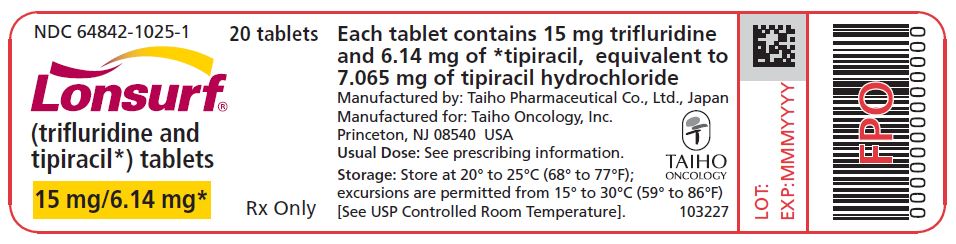
NDC 64842-1025-01: Lonsurf trifluridine and tipiracil 15 mg; 6.14 mg Tablet, Film Coated, Bottle of 20
This is a package of 20 tablets of Lonsurf trifluridine and tipiracil 15 mg; 6.14 mg Tablet, Film Coated from Taiho Pharmaceutical Co., Ltd., first listed with the FDA Sep 2015 and currently FDA-listed. It is the main listing for this product, which comes in 3 package sizes.
NDC database record
One package, one record: these facts belong to NDC 64842-1025-1 alone.
- Record
- FDA NDC Directory package listing · Human prescription drug
- Code segments
- 64842 labeler · 1025 product · 1 package
- Package marketed since
- Oct 7, 2015
- Sample package
- No — commercial package
- Listing certified through
- Dec 31, 2026
- Billing quantity
- 20 EA per package
- Barcode (UPC-A, from the NDC)
- 3 6484210251 4
- Medicaid fills, this package
- 755 prescriptions in the last four reported quarters
- FDA record last changed
- Nov 5, 2026
Identity & classification
Regulatory identifiers FDA, NLM and CMS codes for this package
Drug-database identifiers Medi-Span GPI and First Databank GCN / HICL / AHFS classification
- GSN (GCN sequence number): 074821
- GCN: 39596
- GPI-14 (Medi-Span): 21990002750320
- HICL (First Databank): 042544
- AHFS class code: 10:00.00.00
- RxCUI (RxNorm): 1670311
Where does this data come from?
- FDA openFDA NDC Directory · synced Nov 19, 2026
- FDA label on DailyMed · label index refreshed Nov 21, 2026
- RxNorm (NLM RxNav) · catalog refreshed Nov 19, 2026
- Medi-Span GPI (licensed)
- First Databank (licensed) · refreshed Nov 19, 2026
RxNorm drug class
This medicine belongs to the Nucleoside Analog Antiviral class.
Where does this data come from?
- RxClass (NLM) · catalog refreshed Nov 19, 2026
Clinical
The combination of trifluridine and tipiracil is used alone or in combination with bevacizumab (Avastin) to treat colon (large intestine) or rectal cancer that has spread to other parts of the body in people who have already been treated with other chemotherapy medications or cannot receive these chemotherapy medications. The combination of trifluridine and tipiracil is also used to treat certain types of stomach cancer or cancer located in the area where the stomach meets the esophagus (the tube between the throat and stomach) that has spread to other parts of the body in people who have alre...
Read the full MedlinePlus article ↗- Lonsurf is used in adults with metastatic colorectal cancer, alone or with bevacizumab, after other treatments have been tried. It is also used for metastatic gastric or gastroesop...
- You take it by mouth twice a day with food, on Days 1 to 5 and Days 8 to 12 of a 28-day cycle. Swallow the tablets whole. Your prescriber sets your exact dose, so follow the pharma...
- Do not take a make-up dose. The same applies if you vomit after a dose. Just continue with your next scheduled dose and let your care team know.
- What happens if I miss a dose of Lonsurf?
Patient education
Supplement & herbal interactions
Where does this data come from?
- MedlinePlus (NLM) · refreshed Nov 19, 2026
- FDA label on DailyMed · label index refreshed Nov 21, 2026
Ask a licensed pharmacist directly — free, answered by our team.
Pricing
A drug doesn't have one price. Each row is a different public payment system, and none is what you'd pay at the counter — that depends on your insurance. The ⓘ on each row explains what it measures.
| Price system | Per each | Per package |
|---|---|---|
| Retail pharmacies payNADAC · weekly | Not in the retail survey — common for institutional, discontinued, or low-volume packs. | |
| Medicaid paysCMS SDUD · 12 mo | $214.97 | $4,299.33 / 20 tablets |
| Medicare drug plans payPart D · Q2 2026 | $215.75 | $4,315.08 / 20 tablets |
Where does this data come from?
- CMS NADAC weekly file
- CMS ASP pricing files · refreshed Nov 20, 2026
- CMS Medicaid State Drug Utilization Data · through Q1 2026
- CMS Part D plan pricing files · refreshed Oct 24, 2026
- VA National Acquisition Center price file
Packaging — all sizes for this product
| Package NDC | Description | Marketing start | Marketing end | Status |
|---|---|---|---|---|
| 64842-1025-01 You're viewing this Main listing | 20 TABLET, FILM COATED in 1 BOTTLE | 2015-10-07 | — | Active |
| 64842-1025-02 64842-1025-2 | 40 TABLET, FILM COATED in 1 BOTTLE | 2015-11-11 | — | Active |
| 64842-1025-03 64842-1025-3 | 60 TABLET, FILM COATED in 1 BOTTLE | 2015-10-21 | — | Active |
You're viewing the smallest of 3 pack sizes for this product.
In Medicaid, this is the most-dispensed pack of this product — about 49% of fills over the last four reported quarters. See all packs ↓
Pack size FAQ
What quantity is in this package?
How does this package differ from NDC 64842-1025-02?
What NDC number is used to bill for this package of Lonsurf trifluridine and tipiracil 15 mg; 6.14 mg Tablet, Film Coated?
Therapeutic equivalents
| Product | Labeler | Pack | NADAC/unit | TE | Status | Price vs. this |
|---|---|---|---|---|---|---|
| Lonsurf 15 mg/1; 6.14 mgthis 64842-1025-01 | Taiho | 20 tablets | — | AB | FDA listed | — |
Where does this data come from?
- FDA openFDA NDC Directory · synced Nov 19, 2026
- FDA Orange Book · refreshed Nov 6, 2026
- CMS NADAC weekly file
Availability & generic status
The FDA lists approved generic versions of this medicine, but that does not always mean a pharmacy can get one today. Patent rules, launch agreements, supply and pricing can affect when generics actually arrive.
Why the date isn’t exact: Generic timing can change because patents may be challenged, settled, licensed, added, removed, or worked around with a narrower label — and FDA approval does not always mean a pharmacy can get the generic today.
Our estimate: 2032 to 2033 a wide window
How sure: Toss-up. Still unsettled, because the settlement behind this month is not in a public record we could find.
Why then: A settlement between the brand’s company and generic makers is the reason on record for this month. Settlement terms are usually kept confidential, and we could not find this date in a public filing or announcement, so we rate it a toss-up at most.
That is before the February 2037 date above, which is common: a court ruling or a deal with the brand’s maker often lets a generic in before the last patent runs out.
See the full forecast for generic Lonsurf →🛈 What do these terms mean?
- Patent
- Legal protection listed in the Orange Book that may delay generic approval or launch. Issued by the U.S. Patent & Trademark Office.
- Substance patent
- Covers the active drug molecule itself — the hardest to design around. A generic generally can’t launch until it expires.
- Formulation (product) patent
- Covers a specific formulation or dosage form. A generic can sometimes work around it with a different formulation.
- Method-of-use patent
- A patent covering one specific approved use of the drug — not necessarily the whole molecule. A generic can sometimes launch with a “skinny label” that carves out the protected use and keeps the others.
- Skinny label
- A generic label that omits a still-patented use when the FDA allows it — letting a generic reach the market for the unprotected uses.
- Exclusivity
- FDA-granted marketing protection, separate from patents — e.g. 5-yr new chemical entity, 7-yr orphan drug, or a +6-month pediatric extension.
- Paragraph IV
- A generic applicant’s formal challenge to a listed patent. It can potentially lead to earlier generic entry, but often involves litigation or a settlement.
- RLD / RS
- Reference Listed Drug — the brand product the FDA uses as the reference for generic applications. Reference Standard — the product the FDA expects generics to compare against in bioequivalence testing.
- TE / AB rating
- FDA therapeutic-equivalence rating. An AB rating generally means the FDA considers a generic therapeutically equivalent to — and substitutable for — the brand.
- LOE (loss of exclusivity)
- The latest patent or exclusivity currently listed — the loss-of-exclusivity / latest-listed-protection date shown on this page. Paragraph-IV challenges and settlements can move the real date earlier; FDA approval and a manufacturer’s decision to market can move it later.
Built from the FDA Orange Book. The bars above are scaled to each protection’s expiry; the red LOE marker is the last one to lapse.
| Patent | Type | Use code | Expires |
|---|---|---|---|
| US RE46284 ↗ | Method of use | U-2503 | Sep 22, 2029 |
| US RE46284 ↗ | Method of use | U-1751 | Sep 22, 2029 |
| US RE46284 ↗ | Method of use | U-1751 | Sep 22, 2029 |
| US RE46284 ↗ | Method of use | U-2503 | Sep 22, 2029 |
| US RE46284 ↗ | Method of use | U-3656 | Sep 22, 2029 |
| US RE46284 ↗ | Method of use | U-3656 | Sep 22, 2029 |
| US 10456399 ↗ | Method of use | U-3657 | Feb 3, 2037 |
| US 10456399 ↗ | Method of use | U-3658 | Feb 3, 2037 |
| US 10456399 ↗ | Method of use | U-3658 | Feb 3, 2037 |
| US 10456399 ↗ | Method of use | U-3657 | Feb 3, 2037 |
| US 10960004 ↗ | Method of use | U-3657 | Feb 3, 2037 |
| US 10960004 ↗ | Method of use | U-3657 | Feb 3, 2037 |
| US 10960004 ↗ | Method of use | U-3658 | Feb 3, 2037 |
| US 10960004 ↗ | Method of use | U-3658 | Feb 3, 2037 |
| US 9943537 ↗ | Method of use | U-3659 | Sep 5, 2034 |
| US 9943537 ↗ | Method of use | U-3659 | Sep 5, 2034 |
| US 12728130 ↗ | Method of use | U-3657 | Feb 3, 2037 |
| US 12728130 ↗ | Method of use | U-3658 | Feb 3, 2037 |
| US 12728130 ↗ | Method of use | U-3657 | Feb 3, 2037 |
| US 12728130 ↗ | Method of use | U-3658 | Feb 3, 2037 |
| US 10457666 ↗ | Drug substance | — | Jun 17, 2034 |
| US 9527833 ↗ | Drug substance | — | Jun 17, 2034 |
| US 10457666 ↗ | Drug substance | — | Jun 17, 2034 |
| US 9527833 ↗ | Drug substance | — | Jun 17, 2034 |
| Code | What it grants | Expires |
|---|---|---|
| ODE-229 | Orphan Drug Exclusivity (7-year) | Feb 22, 2026 |
| ODE-229 | Orphan Drug Exclusivity (7-year) | Feb 22, 2026 |
Is there a generic version of LONSURF 15 MG-6.14 MG TABLET?
The FDA approved a generic — why can’t I get it at my pharmacy yet?
Why do different websites show different generic release dates?
What does “FDA listed” mean?
What does a patent or protection date mean here?
What does “current Orange Book estimate” mean?
Can a generic come out before the last patent expires?
Can a generic come out after the listed dates?
What is the difference between patents and exclusivity?
Why are there multiple patent dates?
Where does this data come from?
- FDA Orange Book · refreshed Nov 6, 2026
What it looks like
Where does this data come from?
- FDA label on DailyMed · label index refreshed Nov 21, 2026
Inactive Ingredients / Excipients
Inactive ingredients, also called excipients, are components of the drug product other than the active ingredient. They may include fillers, dyes, coatings, preservatives, flavors, or other formulation ingredients.
🧪 Avoiding an ingredient? See Trifluridine and Tipiracil inactive ingredients by manufacturer: every current product's list side by side, so you can ask your pharmacy for the version that does not list it.
💡 Tap an ingredient (hover on desktop) to see what it is and why it’s used.
-
UNII 3K9958V90M
A liquid solvent derived from fermentation or chemical synthesis. In medicines, alcohol dissolves active ingredients, helps preserve the product, and improves how the body absorbs certain drugs.
-
UNII 8PJ61P6TS3
Butyl alcohol is a clear liquid organic solvent derived from petroleum or natural sources. In medicines, it helps dissolve active ingredients and serves as a solvent in liquid formulations and some topical products.
-
2.100 mg
UNII 3NXW29V3WO
Hypromellose is a plant-based thickener made from cellulose. It's used in medicines as a binder to hold ingredients together, a coating for tablets, and a thickener for liquids.
-
90.735 mg
UNII EWQ57Q8I5X
Lactose monohydrate is a natural sugar derived from milk. It serves as a filler and binder in tablets and capsules, helping create the proper size, texture, and consistency of the medicine.
-
0.003 mg
UNII 70097M6I30
Magnesium stearate is a salt made from magnesium and stearic acid, a fatty substance. It's used in tablets and capsules as a lubricant and glidant to help ingredients flow smoothly during manufacturing and prevent sticking.
-
0.300 mg
UNII 3WJQ0SDW1A
Polyethylene glycol is a synthetic liquid or solid polymer used in medicines as a solvent, lubricant, and humectant. It helps dissolve active ingredients, reduces friction during manufacturing, and retains moisture in the final product.
-
6.000 mg
UNII O8232NY3SJ
A plant-based carbohydrate derived from corn kernels. It acts as a filler to add bulk, a binder to hold ingredients together, and a disintegrant to help the tablet break apart in your stomach for absorption.
-
1.200 mg
UNII 4ELV7Z65AP
Stearic acid is a fatty acid derived from plant or animal sources. It acts as a binder and lubricant in tablets and capsules, helping them hold together and flow smoothly during manufacturing.
-
0.300 mg
UNII 15FIX9V2JP
Titanium dioxide is a bright white mineral powder commonly used as a colorant and opacifying agent. It makes pills and tablets white or lighter in color and helps make coatings non-transparent.
9 inactive ingredients listed in the exact product block matched to this NDC.
Where does this data come from?
ingredient classCode="IACT" elements from the exact product block matched by this NDC. Label-section narrative from DailyMed / the openFDA label index is shown separately when available.- FDA label on DailyMed · label index refreshed Nov 21, 2026
- FDA openFDA NDC Directory · synced Nov 19, 2026
Inactive ingredient FAQ
Are inactive ingredients the same for every manufacturer?
Why might an inactive ingredient be missing?
Can inactive ingredients matter?
Manufacturer & labeler
More NDCs from Taiho Pharmaceutical Co., Ltd. labeler code 64842
- Lytgobi Futibatinib 4 mg Tablet NDC 64842-0120-4
- Lytgobi Futibatinib 16 mg Tablet NDC 64842-0127-7
- LYTGOBI Kit NDC 64842-0128-8
- Inqovi Cedazuridine and Decitabine 100 mg; 35 mg Tablet, Film Coated NDC 64842-0727-9
- Lonsurf trifluridine and tipiracil 20 mg; 8.19 mg Tablet, Film Coated NDC 64842-1020-1
Where does this data come from?
- FDA openFDA NDC Directory · synced Nov 19, 2026
- Drugs@FDA
Full prescribing information FDA SPL
🎯 Indications and Usage ▾
1 INDICATIONS AND USAGE LONSURF is a combination of trifluridine, a nucleoside metabolic inhibitor, and tipiracil, a thymidine phosphorylase inhibitor, indicated for the treatment of adult patients with: metastatic colorectal cancer as a single agent or in combination with bevacizumab who have been previously treated with fluoropyrimidine-, oxaliplatin- and irinotecan-based chemotherapy, an anti-VEGF biological therapy, and if RAS wild-type, an anti-EGFR therapy. ( 1.1 ) metastatic gastric or gastroesophageal junction adenocarcinoma previously treated with at least two prior lines of chemotherapy that included a fluoropyrimidine, a platinum, either a taxane or irinotecan, and if appropriate, HER2/neu-targeted therapy.
( 1.2 )
1.1Metastatic Colorectal Cancer LONSURF, as a single agent or in combination with bevacizumab, is indicated for the treatment of adult patients with metastatic colorectal cancer previously treated with fluoropyrimidine-, oxaliplatin- and irinotecan-based chemotherapy, an anti-VEGF biological therapy, and if RAS wild-type, an anti-EGFR therapy.
1.2Metastatic Gastric Cancer LONSURF is indicated for the treatment of adult patients with metastatic gastric or gastroesophageal junction adenocarcinoma previously treated with at least two prior lines of chemotherapy that included a fluoropyrimidine, a platinum, either a taxane or irinotecan, and if appropriate, HER2/neu-targeted therapy.
⏱️ Dosage and Administration ▾
2 DOSAGE AND ADMINISTRATION Recommended Dosage : 35 mg/m 2 /dose orally twice daily with food on Days 1 through 5 and Days 8 through 12 of each 28-day cycle. ( 2.1 )
2.1Recommended Dosage The recommended dosage of LONSURF as a single agent or in combination with bevacizumab is 35 mg/m 2 up to a maximum of 80 mg per dose (based on the trifluridine component) orally twice daily with food on Days 1 through 5 and Days 8 through 12 of each 28-day cycle until disease progression or unacceptable toxicity. Round dose to the nearest 5 mg increment. Refer to the Prescribing Information for bevacizumab dosing information.
Instruct patients to swallow LONSURF tablets whole. Instruct patients not to retake doses of LONSURF that are vomited or missed and to continue with the next scheduled dose. LONSURF is a cytotoxic drug.
Follow applicable special handling and disposal procedures. 1 Table 1 shows the calculated initial daily dose based on body surface area (BSA). Table 1: Recommended Dosage According to Body Surface Area (BSA) BSA (m2) Total daily dose (mg) Dose (mg) administered twice daily Tablets per dose 15 mg 20 mg < 1.07 70 35 1 1 1.07 – 1.22 80 40 0 2 1.23 – 1.37 90 45 3 0 1.38 – 1.52 100 50 2 1 1.53 – 1.68 110 55 1 2 1.69 – 1.83 120 60 0 3 1.84 – 1.98 130 65 3 1 1.99 – 2.14 140 70 2 2 2.15 – 2.29 150 75 1 3 ≥2.30 160 80 0 4
2.2Dosage Modifications for Adverse Reactions Obtain complete blood cell counts prior to and on Day 15 of each cycle [see Warnings and Precautions (5.1) ] . Do not initiate the cycle of LONSURF until: Absolute neutrophil count (ANC) greater than or equal to 1,500/mm 3 or febrile neutropenia is resolved Platelets greater than or equal to 75,000/mm 3 Grade 3 or 4 non-hematological adverse reactions are resolved to Grade 0 or 1 Within a treatment cycle, withhold LONSURF for any of the following: Absolute neutrophil count (ANC) less than 500/mm 3 or febrile neutropenia Platelets less than 50,000/mm 3 Grade 3 or 4 non-hematologic adverse reaction After recovery, resume LONSURF after reducing the dose by 5 mg/m 2 /dose from the previous dose, if the following occur: Febrile neutropenia Uncomplicated Grade 4 neutropenia (which has recovered to greater than or equal to 1,500/mm 3 ) or thrombocytopenia (which has recovered to greater than or equal to 75,000/mm 3 ) that results in more than 1 week delay in start of next cycle Non-hematologic Grade 3 or Grade 4 adverse reaction except for Grade 3 nausea and/or vomiting controlled by antiemetic therapy or Grade 3 diarrhea responsive to antidiarrheal medication A maximum of 3 dose reductions are permitted.
Permanently discontinue LONSURF in patients who are unable to tolerate a dose of 20 mg/m 2 orally twice daily. Do not escalate LONSURF dosage after it has been reduced. Refer to the bevacizumab prescribing information for dose modifications for adverse reactions associated with bevacizumab.
2.3Recommended Dosage for Renal Impairment Severe Renal Impairment In patients with severe renal impairment [creatinine clearance (CLcr) of 15 to 29 mL/min as determined by the Cockcroft-Gault formula], the recommended dosage is 20 mg/m 2 (based on the trifluridine component) orally twice daily with food on Days 1 through 5 and Days 8 through 12 of each 28-day cycle (Table 2) [see Use in Specific Populations (8.6) and Clinical Pharmacology (12.3) ] . Reduce dose to 15 mg/m 2 twice daily in patients with severe renal impairment who are unable to tolerate a dose of 20 mg/m 2 twice daily (Table 2).
Permanently discontinue LONSURF in patients who are unable to tolerate a dose of 15 mg/m 2 twice daily. Table 2: Recommended Dosage for Severe Renal Impairment According to BSA BSA (m 2 ) Total daily dose (mg) Dose (mg) administered twice daily Tablets per dose 15 mg 20 mg For a dose of 20 mg/m 2 twice daily: < 1.14 40 20 0 1 1.14 – 1.34 50 25 For a total daily dose of 50 mg, instruct patients to take 1 x 20-mg tablet in the morning and 2 x 15-mg tablets in the evening. 2 in the evening 1 in… [Excerpted — this section continues on DailyMed.]
💊 Dosage Forms and Strengths ▾
3 DOSAGE FORMS AND STRENGTHS Tablets: 15 mg trifluridine/6.14 mg tipiracil: white, biconvex, round, film-coated, imprinted with ‘15’ on one side, and ‘102’ and ‘15 mg’ on the other side, in gray ink. 20 mg trifluridine/8.19 mg tipiracil: pale red, biconvex, round, film-coated, imprinted with ‘20’ on one side, and ‘102’ and ‘20 mg’ on the other side, in gray ink. Tablets: 15 mg trifluridine/6.14 mg tipiracil ( 3 ) 20 mg trifluridine/8.19 mg tipiracil ( 3 )
⛔ Contraindications ▾
4 CONTRAINDICATIONS None. None. ( 4 )
⚠️ Warnings and Cautions ▾
5 WARNINGS AND PRECAUTIONS Severe Myelosuppression: Obtain complete blood counts prior to and on Day 15 of each cycle. Withhold and resume at next lower LONSURF dosage as recommended. ( 2.1 , 5.1 ) Embryo-Fetal Toxicity: Can cause fetal harm. Advise females of reproductive potential of the potential risk to a fetus and to use effective contraception. ( 5.2 , 8.1 , 8.3 )
5.1Severe Myelosuppression In the 1114 patients who received LONSURF as a single agent, LONSURF caused severe or life-threatening myelosuppression (Grade 3-4) consisting of neutropenia (38%), anemia (17%), thrombocytopenia (4%) and febrile neutropenia (3%). Three patients (0.3%) died due to neutropenic infection/sepsis; four other patients (0.5%) died due to septic shock. A total of 14% of patients received granulocyte-colony stimulating factors.
In the 246 patients who received LONSURF in combination with bevacizumab, LONSURF caused severe or life-threatening myelosuppression (Grade 3-4) consisting of neutropenia (52%), anemia (5%), thrombocytopenia (4%) and febrile neutropenia (0.4%). One patient (0.4%) died due to abdominal sepsis and two other patients (0.8%) died due to septic shock. A total of 29% of patients received granulocyte-colony stimulating factors.
Obtain complete blood counts prior to and on Day 15 of each cycle of LONSURF and more frequently as clinically indicated. Withhold LONSURF for severe myelosuppression and resume at the next lower dosage [see Dosage and Administration (2.2) ] .
5.2Embryo-Fetal Toxicity Based on animal studies and its mechanism of action, LONSURF can cause fetal harm when administered to a pregnant woman. Trifluridine/tipiracil caused embryo-fetal lethality and embryo-fetal toxicity in pregnant rats when orally administered during gestation at dosage levels resulting in exposures lower than those achieved at the recommended dosage of 35 mg/m 2 twice daily. Advise pregnant women of the potential risk to the fetus.
Advise females of reproductive potential to use an effective method of contraception during treatment with LONSURF and for at least 6 months after the final dose [see Use in Specific Populations (8.1 , 8.3) ] .
🤒 Adverse Reactions ▾
6 ADVERSE REACTIONS The following clinically significant adverse reactions are described elsewhere in the labeling: Severe Myelosuppression [see Warnings and Precautions (5.1) ] The most common adverse reactions or laboratory abnormalities for single agent LONSURF (≥10%) are neutropenia, anemia, thrombocytopenia, fatigue, nausea, decreased appetite, diarrhea, vomiting, abdominal pain, and pyrexia. ( 6.1 ) The most common adverse reactions or laboratory abnormalities for LONSURF in combination with bevacizumab (≥20%) are neutropenia, anemia, thrombocytopenia, fatigue, nausea, increased AST, increased ALT, increased alkaline phosphatase, decreased sodium, diarrhea, abdominal pain, and decreased appetite.
( 6.1 ) To report SUSPECTED ADVERSE REACTIONS, contact Taiho Oncology, Inc. at 1-844-878-2446 or FDA at 1-800-FDA-1088 or www.fda.gov/medwatch .
6.1Clinical Trials Experience Because clinical trials are conducted under widely varying conditions, adverse reaction rates observed in the clinical trials of a drug cannot be directly compared to rates in the clinical trials of another drug and may not reflect the rates observed in practice. The data described in the WARNINGS AND PRECAUTIONS section and below reflect exposure to LONSURF at the recommended dose in 533 patients with metastatic colorectal cancer in RECOURSE, 246 patients with metastatic colorectal cancer treated with LONSURF as monotherapy in SUNLIGHT and 335 patients with metastatic gastric cancer in TAGS.
Among the 1114 patients who received LONSURF as a single agent, 12% were exposed for 6 months or longer and 1% were exposed for 12 months or longer. The most common adverse reactions or laboratory abnormalities (≥10%) were neutropenia, anemia, thrombocytopenia, fatigue, nausea, decreased appetite, diarrhea, vomiting, abdominal pain, and pyrexia. Among the 246 patients with metastatic colorectal cancer treated with LONSURF in combination with bevacizumab in SUNLIGHT, 39% were exposed for 6 months or longer, and 14% were exposed for 12 months or longer.
The most common adverse reactions or laboratory abnormalities (≥20%) were neutropenia, anemia, thrombocytopenia, fatigue, nausea, increased AST, increased ALT, increased alkaline phosphatase, decreased sodium, diarrhea, abdominal pain, and decreased appetite. Metastatic Colorectal Cancer LONSURF as a single agent The safety of LONSURF was evaluated in RECOURSE, a randomized (2:1), double-blind, placebo-controlled trial in patients with previously treated metastatic colorectal cancer [see Clinical Studies (14.1) ] . Patients received LONSURF 35 mg/m 2 /dose (n=533) or placebo (n=265) twice daily on Days 1 through 5 and Days 8 through 12 of each 28-day cycle.
In RECOURSE, 12% of patients received LONSURF for more than 6 months and 1% of patients received LONSURF for more than 1 year. The study population characteristics were: median age 63 years; 61% male; 57% White, 35% Asian, and 1% Black. The most common adverse reactions or laboratory abnormalities (≥10% in incidence) in patients treated with LONSURF at a rate that exceeds the rate in patients receiving placebo were anemia, neutropenia, asthenia/fatigue, nausea, thrombocytopenia, decreased appetite, diarrhea, vomiting, abdominal pain, and pyrexia.
In RECOURSE, 3.6% of patients discontinued LONSURF for an adverse reaction and 14% of patients required a dose reduction. The most common adverse reactions or laboratory abnormalities leading to dose reduction were neutropenia, anemia, febrile neutropenia, fatigue, and diarrhea. Table 3 and Table 4 list the adverse reactions and laboratory abnormalities (graded using CTCAE v4.03), respectively, observed in RECOURSE.
Table 3: Adverse Reactions (≥5%) in Patients Receiving LONSURF and at a Higher Incidence (>2%) than in Patients Receiving Placebo in RECOURSE Adverse Reactions LONSURF (N=533) Placebo (N=265) All Grades (%) Grades 3-4 No Grade 4 definition for nausea, abdominal pain, or fatigue in National Cancer Institute Common… [Excerpted — this section continues on DailyMed.]
👥 Use in Specific Populations ▾
8 USE IN SPECIFIC POPULATIONS Lactation : Advise not to breastfeed. ( 8.2 ) Geriatric Use : For LONSURF as a single agent, Grade 3 or 4 neutropenia, Grade 3 anemia and Grade 3 or 4 thrombocytopenia occurred more commonly in patients 65 years or older. ( 8.5 ) For LONSURF in combination with bevacizumab Grade 3 or 4 neutropenia and Grade 3 or 4 thrombocytopenia occurred more commonly in patients 65 years or older.
( 8.5 ) Hepatic Impairment : Do not initiate LONSURF in patients with baseline moderate or severe hepatic impairment. ( 8.7 ) Renal Impairment : Reduce LONSURF dose in patients with severe renal impairment. ( 8.6 )
8.1Pregnancy Risk Summary Based on animal data and its mechanism of action [see Clinical Pharmacology (12.2) ] , LONSURF can cause fetal harm. LONSURF caused embryo-fetal lethality and embryo-fetal toxicity in pregnant rats when given during gestation at doses resulting in exposures lower than or similar to human exposures at the recommended clinical dose (see Data ) . There are no available data on LONSURF use in pregnant women.
Advise pregnant women of the potential risk to a fetus. In the U.S. general population, the estimated background risk of major birth defects and miscarriage in clinically recognized pregnancies is 2-4% and 15-20%, respectively. Data Animal Data Trifluridine/tipiracil was administered orally once daily to female rats during organogenesis at dose levels of 15, 50, and 150 mg/kg [trifluridine (FTD) equivalent].
Decreased fetal weight was observed at FTD doses ≥50 mg/kg (approximately 0.33 times the FTD exposure at the clinical dose of 35 mg/m 2 twice daily). At the FTD dose of 150 mg/kg (approximately 0.92 times the FTD exposure at the clinical dose of 35 mg/m 2 twice daily) embryolethality and structural anomalies (kinked tail, cleft palate, ectrodactyly, anasarca, alterations in great vessels, and skeletal anomalies) were observed.
8.2Lactation Risk Summary There are no data on the presence of trifluridine, tipiracil or its metabolites in human milk or its effects on the breastfed child or on milk production. In nursing rats, trifluridine and tipiracil or their metabolites were present in breast milk (see Data ) . Because of the potential for serious adverse reactions in breastfed children, advise women not to breastfeed during treatment with LONSURF and for 1 day following the final dose.
Data Radioactivity was excreted in the milk of nursing rats dosed with trifluridine/tipiracil containing 14 C-FTD or 14 C-tipiracil (TPI). Levels of FTD-derived radioactivity were as high as approximately 50% of the exposure in maternal plasma an hour after dosing with trifluridine/tipiracil and were approximately the same as those in maternal plasma for up to 12 hours following dosing. Exposure to TPI-derived radioactivity was higher in milk than in maternal plasma beginning 2 hours after dosing and continuing for at least 12 hours following administration of trifluridine/tipiracil.
8.3Females and Males of Reproductive Potential Pregnancy Testing Verify pregnancy status in females of reproductive potential prior to initiating LONSURF [see Use in Specific Populations (8.1) ] . Contraception LONSURF can cause fetal harm when administered to a pregnant woman [see Use in Specific Populations (8.1) ] . Females Advise females of reproductive potential to use effective contraception during treatment with LONSURF and for at least 6 months after the final dose.
Males Because of the potential for genotoxicity, advise males with female partners of reproductive potential to use condoms during treatment with LONSURF and for at least 3 months after the final dose [see Nonclinical Toxicology (13.1) ] .
8.4Pediatric Use Safety and effectiveness of LONSURF in pediatric patients have not been established. Juvenile Animal Toxicity Data Dental toxicity including whitening, breakage, and malocclusion (degeneration and disarrangement in the ameloblasts, papillary layer cells and odontoblasts) were observed in rats… [Excerpted — this section continues on DailyMed.]
🤰 Pregnancy ▾
8.1Pregnancy Risk Summary Based on animal data and its mechanism of action [see Clinical Pharmacology (12.2) ] , LONSURF can cause fetal harm. LONSURF caused embryo-fetal lethality and embryo-fetal toxicity in pregnant rats when given during gestation at doses resulting in exposures lower than or similar to human exposures at the recommended clinical dose (see Data ) . There are no available data on LONSURF use in pregnant women.
Advise pregnant women of the potential risk to a fetus. In the U.S. general population, the estimated background risk of major birth defects and miscarriage in clinically recognized pregnancies is 2-4% and 15-20%, respectively. Data Animal Data Trifluridine/tipiracil was administered orally once daily to female rats during organogenesis at dose levels of 15, 50, and 150 mg/kg [trifluridine (FTD) equivalent].
Decreased fetal weight was observed at FTD doses ≥50 mg/kg (approximately 0.33 times the FTD exposure at the clinical dose of 35 mg/m 2 twice daily). At the FTD dose of 150 mg/kg (approximately 0.92 times the FTD exposure at the clinical dose of 35 mg/m 2 twice daily) embryolethality and structural anomalies (kinked tail, cleft palate, ectrodactyly, anasarca, alterations in great vessels, and skeletal anomalies) were observed.
🧒 Pediatric Use ▾
8.4Pediatric Use Safety and effectiveness of LONSURF in pediatric patients have not been established. Juvenile Animal Toxicity Data Dental toxicity including whitening, breakage, and malocclusion (degeneration and disarrangement in the ameloblasts, papillary layer cells and odontoblasts) were observed in rats treated with trifluridine/tipiracil at doses ≥ 50 mg/kg (approximately 0.33 times the exposure at the clinical dose of 35 mg/m 2 twice daily).
🧓 Geriatric Use ▾
8.5Geriatric Use Of the 1114 patients with metastatic colorectal cancer or gastric cancer who received single agent LONSURF in clinical studies, 45% were 65 years of age or over, and 11% were 75 and over. In the 246 patients who received LONSURF in combination with bevacizumab; 41% were 65 years of age or over, and 10% were 75 and over. While these studies were not designed to detect a difference in efficacy, no overall differences were observed in patients 65 or older versus younger patients with either LONSURF as a single agent or LONSURF in combination with bevacizumab.
Patients 65 years of age or older who received LONSURF as a single agent had a higher incidence of the following hematologic laboratory abnormalities compared to patients younger than 65 years: Grade 3 or 4 neutropenia (46% vs 32%), Grade 3 anemia (20% vs 14%), and Grade 3 or 4 thrombocytopenia (6% vs 3%). Patients 65 years of age or older who received LONSURF in combination with bevacizumab had a higher incidence of the following hematologic laboratory abnormalities compared to patients younger than 65 years: Grade 3 or 4 neutropenia (60% vs 46%) and Grade 3 or 4 thrombocytopenia (5% vs 4%).
🧬 Clinical Pharmacology ▾
12 CLINICAL PHARMACOLOGY
12.1Mechanism of Action LONSURF consists of a thymidine-based nucleoside analog, trifluridine, and the thymidine phosphorylase inhibitor, tipiracil, at a molar ratio 1:0.5 (weight ratio, 1:0.471). Inclusion of tipiracil increases trifluridine exposure by inhibiting its metabolism by thymidine phosphorylase. Following uptake into cancer cells, trifluridine is incorporated into DNA, interferes with DNA synthesis and inhibits cell proliferation.
Trifluridine/tipiracil demonstrated anti-tumor activity against KRAS wild-type and mutant human colorectal cancer xenografts in mice.
12.2Pharmacodynamics Cardiac Electrophysiology LONSURF administered to 42 patients with advanced solid tumors at the recommended dosage had no large effect (i.e. >20 ms) in the mean QTc interval when compared to placebo and no exposure-QT relationship was identified. Two of 42 patients (4.8%) had QTc >500 msec and 2.4% had a QTc increase from baseline >60 msec.
12.3Pharmacokinetics After twice daily dosing of LONSURF, systemic exposure (AUC) of trifluridine increased more than dose-proportionally over the dose range of 15 mg/m 2 (0.43 times the recommended dose) to 35 mg/m 2 . The accumulation of trifluridine was 3-fold for AUC 0-12hr and 2-fold for C max at steady state while no accumulation was observed for tipiracil. Administration of a single dose of LONSURF 35 mg/m 2 increased the mean AUC 0-last of trifluridine by 37-fold and C max by 22-fold with reduced variability compared to administration of a single dose of trifluridine 35 mg/m 2 alone.
Absorption Following a single oral administration of LONSURF at 35 mg/m 2 in patients with cancer, the mean time to peak plasma concentration (T max ) of trifluridine was around 2 hours. Food Effect A standardized high-fat, high-calorie meal decreased trifluridine C max , tipiracil C max and AUC by approximately 40%, but did not change trifluridine AUC compared to those in a fasting state in patients with cancer following administration of a single dose of LONSURF 35 mg/m 2 . Distribution Trifluridine mainly binds to human serum albumin.
The in vitro protein binding of trifluridine in human plasma is >96%, independent of drug concentration and presence of tipiracil. Plasma protein binding of tipiracil is below 8%. Elimination After administration of LONSURF 35 mg/m 2 , the mean elimination half-life (t 1/2 ) of trifluridine was 1.4 hours and of tipiracil was 2.1 hours after a single dose.
The mean elimination half-life at steady state of trifluridine was 2.1 hours and of tipiracil was 2.4 hours. Metabolism Trifluridine and tipiracil are not metabolized by cytochrome P450 (CYP) enzymes. Trifluridine is mainly eliminated by metabolism via thymidine phosphorylase to form an inactive metabolite, 5-(trifluoromethyl) uracil (FTY).
No other major metabolites were detected in plasma or urine. Excretion After single oral administration of LONSURF (60 mg) with [ 14 C]-trifluridine, the total cumulative excretion of radioactivity was 60% of the administered dose. The majority of recovered radioactivity was eliminated into urine (55% of the dose) as FTY and trifluridine glucuronide isomers within 24 hours and the excretion into feces and expired air was <3% for both.
The unchanged trifluridine was <3% of administered dose recovered in the urine and feces. After single oral administration of LONSURF (60 mg) with [ 14 C]-tipiracil hydrochloride, recovered radioactivity was 77% of the dose, which consisted of 27% urinary excretion and 50% fecal excretion. Tipiracil was the major component and 6-HMU was the major metabolite in urine, and feces.
Specific Populations Based on the population pharmacokinetic analysis, there is no clinically relevant effect of age, sex, or race (White or Asian) on the pharmacokinetics of trifluridine or tipiracil. Patients with Renal Impairment In a dedicated renal impairment study, all patients received LONSURF 35 mg/m 2 twice daily except for patients with severe renal i… [Excerpted — this section continues on DailyMed.]
🧬 Mechanism of Action ▾
12.1Mechanism of Action LONSURF consists of a thymidine-based nucleoside analog, trifluridine, and the thymidine phosphorylase inhibitor, tipiracil, at a molar ratio 1:0.5 (weight ratio, 1:0.471). Inclusion of tipiracil increases trifluridine exposure by inhibiting its metabolism by thymidine phosphorylase. Following uptake into cancer cells, trifluridine is incorporated into DNA, interferes with DNA synthesis and inhibits cell proliferation.
Trifluridine/tipiracil demonstrated anti-tumor activity against KRAS wild-type and mutant human colorectal cancer xenografts in mice.
📦 How Supplied / Storage and Handling ▾
16 HOW SUPPLIED/STORAGE AND HANDLING LONSURF 15 mg/6.14 mg tablets are supplied as white, biconvex, round, film-coated tablet, imprinted with ‘15’ on one side, and ‘102’ and ’15 mg’ on the other side, in gray ink. The tablets are packaged in HDPE bottles with child resistant closures in the following presentations: 20 count: NDC 64842-1025-1 40 count: NDC 64842-1025-2 60 count: NDC 64842-1025-3 LONSURF 20 mg/8.19 mg tablets are supplied as pale red, biconvex, round, film-coated tablet, imprinted with ‘20’ on one side, and ‘102’ and ‘20 mg’ on the other side, in gray ink.
The tablets are packaged in HDPE bottles with child resistant closures in the following presentations: 20 count: NDC 64842-1020-1 40 count: NDC 64842-1020-2 60 count: NDC 64842-1020-3 Store at 20°C to 25°C (68°F to 77°F); excursions are permitted from 15°C to 30°C (59°F to 86°F) [See USP Controlled Room Temperature]. LONSURF is a cytotoxic drug. Follow applicable special handling and disposal procedures.
1 If stored outside of original bottle, discard after 30 days.
📋 Description ▾
11 DESCRIPTION LONSURF contains trifluridine and tipiracil hydrochloride at a molar ratio of 1:0.5. Trifluridine Trifluridine, a nucleoside metabolic inhibitor, is described chemically as 2’-deoxy-5-(trifluoromethyl) uridine and has the following structural formula: Trifluridine has a molecular formula C 10 H 11 F 3 N 2 O 5 and a molecular weight of 296.20. Trifluridine is a white crystalline powder, soluble in water, ethanol, 0.01 mol/L hydrochloric acid, 0.01 mol/L sodium hydroxide solution; freely soluble in methanol, acetone; sparingly soluble in 2-propanol, acetonitrile; slightly soluble in diethyl ether; and very slightly soluble in isopropyl ether.
Tipiracil hydrochloride Tipiracil hydrochloride, a thymidine phosphorylase inhibitor, is described chemically as 5-chloro-6-[(2-iminopyrrolidin-1-yl)methyl]pyrimidine-2,4-(1 H ,3 H )-dione monohydrochloride or 2,4(1 H ,3 H )-Pyrimidinedione, 5-chloro-6-[(2-imino-1-pyrrolidinyl)methyl]-, hydrochloride (1:1) and has the following structural formula: Tipiracil hydrochloride has a molecular formula C 9 H 11 ClN 4 O 2 •HCl and a molecular weight of 279.12. Tipiracil hydrochloride is a white crystalline powder, soluble in water, 0.01 mol/L hydrochloric acid, and 0.01 mol/L sodium hydroxide; slightly soluble in methanol; very slightly soluble in ethanol; and practically insoluble in acetonitrile, 2-propanol, acetone, diisopropyl ether, and diethyl ether.
LONSURF (trifluridine and tipiracil) tablets for oral use contain 15 mg of trifluridine and 6.14 mg of tipiracil equivalent to 7.065 mg of tipiracil hydrochloride or 20 mg of trifluridine and 8.19 mg of tipiracil equivalent to 9.420 mg of tipiracil hydrochloride. LONSURF tablets contain the following inactive ingredients: lactose monohydrate, pregelatinized starch, stearic acid, hypromellose, polyethylene glycol, titanium dioxide, ferric oxide, and magnesium stearate. The tablets are imprinted with ink containing shellac, ferric oxide red, ferric oxide yellow, titanium dioxide, FD&C Blue No.
2 Aluminum Lake, carnauba wax, and talc. Trifluridine Tipiracil hydrochloride
💬 Information for Patients ▾
17 PATIENT COUNSELING INFORMATION Advise the patient to read the FDA-approved patient labeling ( Patient Information ). Severe Myelosuppression Advise patients to immediately contact their healthcare provider if they experience signs or symptoms of infection and advise patients to keep all appointments for blood tests [see Warnings and Precautions (5.1) ]. Gastrointestinal Toxicity Advise patients to contact their healthcare provider for severe or persistent nausea, vomiting, diarrhea, or abdominal pain [see Adverse Reactions (6.1) ].
Administration Instructions Advise patients that LONSURF is available in two strengths and they may receive both strength tablets to provide the prescribed dosage. Advise patients to take LONSURF with food [see Dosage and Administration (2.1) ]. Advise patients not to retake doses of LONSURF that are vomited or missed and to continue with the next scheduled dose.
Advise patients that anyone else who handles their medication should wear gloves [see References (15) ]. Embryo-Fetal Toxicity Advise pregnant women and females of reproductive potential of the potential risk to the fetus. Advise females to inform their healthcare provider of a known or suspected pregnancy [see Warnings and Precautions (5.2) , Use in Specific Populations (8.3) ].
Advise female patients of reproductive potential to use effective contraception during treatment with LONSURF and for at least 6 months after the final dose [see Warnings and Precautions (5.2) , Use in Specific Populations (8.3) ]. Advise males with female partners of reproductive potential to use condoms during treatment with LONSURF and for at least 3 months after the final dose [see Use in Specific Populations (8.3) , Nonclinical Toxicology (13.1) ]. Lactation Advise women not to breastfeed during treatment with LONSURF and for 1 day following the final dose [see Use in Specific Populations (8.2) ].
Manufactured by: Taiho Pharmaceutical Co., Ltd., Japan Manufactured for: Taiho Oncology, Inc., Princeton, NJ 08540 USA LONSURF is a registered trademark of Taiho Pharmaceutical Co., Ltd. used under license by Taiho Oncology, Inc.
🧬 Pharmacokinetics ▾
12.3Pharmacokinetics After twice daily dosing of LONSURF, systemic exposure (AUC) of trifluridine increased more than dose-proportionally over the dose range of 15 mg/m 2 (0.43 times the recommended dose) to 35 mg/m 2 . The accumulation of trifluridine was 3-fold for AUC 0-12hr and 2-fold for C max at steady state while no accumulation was observed for tipiracil. Administration of a single dose of LONSURF 35 mg/m 2 increased the mean AUC 0-last of trifluridine by 37-fold and C max by 22-fold with reduced variability compared to administration of a single dose of trifluridine 35 mg/m 2 alone.
Absorption Following a single oral administration of LONSURF at 35 mg/m 2 in patients with cancer, the mean time to peak plasma concentration (T max ) of trifluridine was around 2 hours. Food Effect A standardized high-fat, high-calorie meal decreased trifluridine C max , tipiracil C max and AUC by approximately 40%, but did not change trifluridine AUC compared to those in a fasting state in patients with cancer following administration of a single dose of LONSURF 35 mg/m 2 . Distribution Trifluridine mainly binds to human serum albumin.
The in vitro protein binding of trifluridine in human plasma is >96%, independent of drug concentration and presence of tipiracil. Plasma protein binding of tipiracil is below 8%. Elimination After administration of LONSURF 35 mg/m 2 , the mean elimination half-life (t 1/2 ) of trifluridine was 1.4 hours and of tipiracil was 2.1 hours after a single dose.
The mean elimination half-life at steady state of trifluridine was 2.1 hours and of tipiracil was 2.4 hours. Metabolism Trifluridine and tipiracil are not metabolized by cytochrome P450 (CYP) enzymes. Trifluridine is mainly eliminated by metabolism via thymidine phosphorylase to form an inactive metabolite, 5-(trifluoromethyl) uracil (FTY).
No other major metabolites were detected in plasma or urine. Excretion After single oral administration of LONSURF (60 mg) with [ 14 C]-trifluridine, the total cumulative excretion of radioactivity was 60% of the administered dose. The majority of recovered radioactivity was eliminated into urine (55% of the dose) as FTY and trifluridine glucuronide isomers within 24 hours and the excretion into feces and expired air was <3% for both.
The unchanged trifluridine was <3% of administered dose recovered in the urine and feces. After single oral administration of LONSURF (60 mg) with [ 14 C]-tipiracil hydrochloride, recovered radioactivity was 77% of the dose, which consisted of 27% urinary excretion and 50% fecal excretion. Tipiracil was the major component and 6-HMU was the major metabolite in urine, and feces.
Specific Populations Based on the population pharmacokinetic analysis, there is no clinically relevant effect of age, sex, or race (White or Asian) on the pharmacokinetics of trifluridine or tipiracil. Patients with Renal Impairment In a dedicated renal impairment study, all patients received LONSURF 35 mg/m 2 twice daily except for patients with severe renal impairment who received 20 mg/m 2 twice daily. Mild renal impairment (CLcr of 60 to 89 mL/min as determined by the Cockcroft-Gault formula) had no clinically important effect on steady-state AUC 0-last of trifluridine and tipiracil.
Moderate renal impairment (CLcr of 30 to 59 mL/min) increased steady-state AUC 0-last of trifluridine by 56% and tipiracil by 139% compared to normal renal function (CLcr ≥ 90 mL/min). Severe renal impairment (CLcr of 15 to 29 mL/min) increased the dose-normalized steady-state AUC 0-last of trifluridine by 140% and tipiracil by 614% compared to normal renal function. The pharmacokinetics of trifluridine and tipiracil have not been studied in patients with end stage renal disease.
Patients with Hepatic Impairment No clinically important differences in the mean exposures of trifluridine and tipiracil were observed between patients with mild hepatic impairment (total bilirubin ≤ ULN and AST > ULN or total bilirubin <1 to 1.5 times UL… [Excerpted — this section continues on DailyMed.]
🧬 Pharmacodynamics ▾
12.2Pharmacodynamics Cardiac Electrophysiology LONSURF administered to 42 patients with advanced solid tumors at the recommended dosage had no large effect (i.e. >20 ms) in the mean QTc interval when compared to placebo and no exposure-QT relationship was identified. Two of 42 patients (4.8%) had QTc >500 msec and 2.4% had a QTc increase from baseline >60 msec.
🔬 Clinical Studies ▾
14 CLINICAL STUDIES
14.1Metastatic Colorectal Cancer Previously treated metastatic colorectal cancer (single agent LONSURF) RECOURSE The efficacy of LONSURF was evaluated in RECOURSE (NCT01607957), an international, randomized, double-blind, placebo-controlled study conducted in patients with previously treated metastatic colorectal cancer (mCRC). Key eligibility criteria included prior treatment with at least 2 lines of standard chemotherapy for metastatic CRC, ECOG performance status (PS) 0-1, absence of brain metastasis, and absence of ascites requiring drainage in the past four weeks.
Patients were randomized 2:1 to receive LONSURF 35 mg/m 2 or matching placebo orally twice daily after meals on Days 1-5 and 8-12 of each 28-day cycle until disease progression or unacceptable toxicity. Randomization was stratified by KRAS status (wild-type vs. mutant), time since diagnosis of first metastasis (<18 months vs. ≥ 18 months), and region (Japan vs. US, Europe and Australia).
The major efficacy outcome measure was overall survival (OS) and an additional efficacy outcome measure was progression-free survival (PFS). A total of 800 patients were randomized to LONSURF (N=534) with best supportive care (BSC) or matching placebo (N=266) plus BSC. The median age was 63 years, 61% were male, 58% and 35% were White and Asian respectively, and all patients had baseline ECOG PS of 0 or 1.
The primary site of disease was colon (62%) or rectum (38%). KRAS status was wild-type (49%) or mutant (51%) at study entry. All patients received prior treatment with fluoropyrimidine-, oxaliplatin-, and irinotecan-based chemotherapy.
All but one patient received bevacizumab and all but two patients with KRAS wild-type tumors received panitumumab or cetuximab. Efficacy results are summarized in Table 9 and Figure 1 . Table 9: Efficacy Results from RECOURSE LONSURF (N=534) Placebo (N=266) Overall Survival Number of deaths, N (%) 364 (68) 210 (79) Median OS (months) Kaplan-Meier estimates (95% CI) Methodology of Brookmeyer and Crowley 7.1 (6.5, 7.8) 5.3 (4.6, 6.0) Hazard ratio (95% CI) 0.68 (0.58, 0.81) p-value Stratified log-rank test (strata: KRAS status, time since diagnosis of first metastasis, region), 2-sided <0.001 Progression-Free Survival Number of events, N (%) 472 (88) 251 (94) Hazard ratio (95% CI) 0.47 (0.40, 0.55) p-value <0.001 Figure 1: Kaplan-Meier Curves of Overall Survival in RECOURSE Previously treated metastatic colorectal cancer (LONSURF in combination with bevacizumab) SUNLIGHT The efficacy of LONSURF in combination with bevacizumab was evaluated in SUNLIGHT (NCT 04737187), an international, randomized (1:1), open label study in patients with previously treated metastatic colorectal cancer.
Patients were required to have received no more than 2 prior treatments for advanced disease, including a fluoropyrimidine, irinotecan, oxaliplatin, an anti-VEGF monoclonal antibody (optional) and an anti-EGFR monoclonal antibody for patients with RAS wild-type. Other key eligibility criteria included ECOG performance status (PS) 0-1, absence of symptomatic brain metastases, absence of ascites requiring drainage in the past 4 weeks, absence of uncontrolled hypertension, absence of non-healing wound, and absence of deep venous thromboembolic event in the past 4 weeks.
Patients were randomized to receive LONSURF 35 mg/m 2 administered orally twice daily on Days 1 to 5 and 8 to 12 of each 28-day cycle with or without bevacizumab 5 mg/kg administered intravenously every 2 weeks (on Day 1 and Day 15) of each 4-week cycle until disease progression or unacceptable toxicity. Randomization was stratified by geographic region (North America, European Union, Rest of the World), time since diagnosis of metastatic disease (<18 months, ≥18 months) and RAS status (wild-type, mutant). The major efficacy outcome was overall survival (OS), and an additional efficacy outcome measure was progression-free survival (PFS).
A total of 492 patients were randomized to recei… [Excerpted — this section continues on DailyMed.]
🧪 Nonclinical Toxicology ▾
13 NONCLINICAL TOXICOLOGY
13.1Carcinogenesis, Mutagenesis, Impairment of Fertility No long-term studies evaluating the carcinogenic potential of trifluridine/tipiracil in animals have been performed. Trifluridine/tipiracil was genotoxic in a reverse mutation test in bacteria, a chromosomal aberration test in mammalian-cultured cells, and a micronucleus test in mice. Animal studies did not indicate an effect of trifluridine/tipiracil on male fertility in rats.
Dose-related increases in the corpus luteum count and implanted embryo count were observed, but female fertility was not affected.
📄 Carcinogenesis, Mutagenesis, Impairment of Fertility ▾
13.1Carcinogenesis, Mutagenesis, Impairment of Fertility No long-term studies evaluating the carcinogenic potential of trifluridine/tipiracil in animals have been performed. Trifluridine/tipiracil was genotoxic in a reverse mutation test in bacteria, a chromosomal aberration test in mammalian-cultured cells, and a micronucleus test in mice. Animal studies did not indicate an effect of trifluridine/tipiracil on male fertility in rats.
Dose-related increases in the corpus luteum count and implanted embryo count were observed, but female fertility was not affected.
📚 References ▾
15 REFERENCES 1. “OSHA Hazardous Drugs”. OSHA. http://www.osha.gov/SLTC/hazardousdrugs/index.html
📄 Patient Package Insert ▾
This Patient Information has been approved by the U.S. Food and Drug Administration. Revised: 8/2023 PATIENT INFORMATION LONSURF ® (LON-serf) (trifluridine and tipiracil) tablets What is the most important information I should know about LONSURF?
Your healthcare provider should do blood tests before you receive LONSURF, at day 15 during treatment with LONSURF, and as needed to check your blood cell counts. LONSURF may cause serious side effects, including : Low blood cell counts. Low blood counts are common with LONSURF and can sometimes be severe and life-threatening.
LONSURF can cause a decrease in your white blood cells, red blood cells, and platelets. Low white blood cells can make you more likely to get serious infections that could lead to death. Your healthcare provider may: lower your dose of LONSURF or stop LONSURF if you have low white blood cell or low platelet counts.
Tell your healthcare provider right away if you get any of the following signs and symptoms of infection during treatment with LONSURF: fever chills body aches See “ What are the possible side effects of LONSURF? ” for more information about side effects. What is LONSURF? LONSURF is a prescription medicine used: alone or in combination with the medicine bevacizumab to treat adults with colorectal cancer: that has spread to other parts of the body, and who have been previously treated with certain chemotherapy medicines. alone to treat adults with a kind of stomach cancer called gastric cancer including adenocarcinoma of the gastroesophageal junction: that has spread to other parts of the body, and who have been previously treated with at least 2 types of treatment which included certain medicines.
It is not known if LONSURF is safe and effective in children. Before you take LONSURF, tell your healthcare provider about all of your medical conditions, including if you: have kidney or liver problems are pregnant or plan to become pregnant. LONSURF can harm your unborn baby.
For females who can become pregnant: Your healthcare provider will do a pregnancy test before you start treatment with LONSURF. You should use effective birth control during treatment with LONSURF and for at least 6 months after your last dose of LONSURF. (Talk to healthcare provider about methods of birth control that can be used during this time) Tell your healthcare provider right away if you become pregnant.
For males: You should use a condom during sex with female partners who are able to become pregnant during your treatment with LONSURF and for 3 months after your last dose of LONSURF. Tell your healthcare provider right away if your partner becomes pregnant while you are taking LONSURF. are breastfeeding or plan to breastfeed. It is not known if LONSURF passes into breast milk.
Do not breastfeed during treatment with LONSURF and for 1 day after your last dose of LONSURF. Tell your healthcare provider about all the medicines you take, including prescription and over-the-counter medicines, vitamins, and herbal supplements. How should I take LONSURF?
Take LONSURF exactly as your healthcare provider tells you. LONSURF comes in two strengths. Your healthcare provider may prescribe both strengths for your prescribed dose.
Take LONSURF 2 times a day with food. Swallow LONSURF tablets whole. Your caregiver should wear gloves when handling LONSURF tablets.
If you vomit right after taking a dose, or miss a dose of LONSURF, do not take additional doses to make up for the vomited or missed dose. Call your healthcare provider for instructions about what to do for a missed dose. Wash your hands after handling the LONSURF tablets.
What are the possible side effects of LONSURF? LONSURF may cause serious side effects, including: See “ What is the most important information I should know about LONSURF? ” The most common side effects of LONSURF when used alone include: low blood counts tiredness and weakness nausea decreased appetite diarrhea vomiting stomach-area (abdominal) pain fever The most… [Excerpted — this section continues on DailyMed.]
📄 Recent Major Changes ▾
Indications and Usage ( 1.1 ) 8/2023 Dosage and Administration ( 2 ) 8/2023 Warnings and Precaution ( 5.1 ) 8/2023
📄 Package Label / Principal Display Panel ▾
PRINCIPAL DISPLAY PANEL NDC 64842-1025-1 Lonsurf ® (trifluridine and tipiracil * ) tablets 15 mg/6.14 mg * 20 tablets Rx only NDC 64842-1025-1 Lonsurf ® (trifluridine and tipiracil * ) tablets 15 mg/6.14 mg * For oral administraion 20 tablets Rx only NDC 64842-1025-2 Lonsurf ® (trifluridine and tipiracil * ) tablets 15 mg/6.14 mg * 40 tablets Rx only NDC 64842-1025-2 Lonsurf ® (trifluridine and tipiracil * ) tablets 15 mg/6.14 mg * For oral administraion 40 tablets Rx only NDC 64842-1025-3 Lonsurf ® (trifluridine and tipiracil * ) tablets 15 mg/6.14 mg * 60 tablets Rx only NDC 64842-1025-3 Lonsurf ® (trifluridine and tipiracil * ) tablets 15 mg/6.14 mg * For oral administraion 60 tablets Rx only NDC 64842-1020-1 Lonsurf ® (trifluridine and tipiracil * ) tablets 20 mg/8.19 mg * 20 tablets Rx only NDC 64842-1020-1 Lonsurf ® (trifluridine and tipiracil * ) tablets 20 mg/8.19 mg * For oral administraion 20 tablets Rx only NDC 64842-1020-2 Lonsurf ® (trifluridine and tipiracil * ) tablets 20 mg/8.19 mg * 40 tablets Rx only NDC 64842-1020-2 Lonsurf ® (trifluridine and tipiracil * ) tablets 20 mg/8.19 mg * For oral administraion 40 tablets Rx only NDC 64842-1020-3 Lonsurf ® (trifluridine and tipiracil * ) tablets 20 mg/8.19 mg * 60 tablets Rx only NDC 64842-1020-3 Lonsurf ® (trifluridine and tipiracil * ) tablets 20 mg/8.19 mg * For oral administraion 60 tablets Rx only 15 mg Tablet 20-count Bottle 15mg Tablet-20 count Carton 15 mg Tablet 40-count Bottle 15mg Tablet-40 count Carton 15 mg Tablet 60-count Bottle 15 mg Tablet-60 count Carton 20 mg Tablet 20-count Bottle 20 mg Tablet-20 count Carton 20 mg Tablet 40-count Bottle 20 mg Tablet-40 count Carton 20 mg Tablet 60-count Bottle 20 mg Tablet-60 count Carton
Medicaid utilization & spend
Medicaid utilization by pack size
Medicare Part D spend CMS · PART D · 2026 (Q1)
Reported adverse events (FAERS)
Top reported reactions
Age at onset
Reporter sex
Serious outcomes
Where does this data come from?
About this NDC listing & data coverage
What data is (and isn’t) available for this NDC — tap to expand
| NDC identity (package / product / labeler codes) | ✓ Available |
| Labeler | ✓ Available |
| Product & package description | ✓ Available |
| Marketing category & status | ✓ Available |
| Active ingredient / dosage form / route | ✓ Available |
| FDA label (SPL via DailyMed) | ✓ Available |
| Package photos | ✓ Available |
| Inactive ingredients (structured) | ✓ Available |
| NADAC pharmacy acquisition price (CMS) | — Not published for this NDC CMS publishes NADAC only for NDCs reported in its retail-pharmacy survey. |
| Orange Book / therapeutic-equivalence data | ✓ Available |
| HCPCS J-code billing crosswalk | — Not published for this NDC Most self-administered / retail products have no J-code — that is normal. |
| Medicaid utilization (CMS SDUD) | ✓ Available |