
Chloroquine Phosphate 500 mg Tablet, 100-count — NDC 64980-178-01 (Billing 64980-0178-01)
This is a package of 100 tablets of Chloroquine Phosphate 500 mg Tablet from Rising Pharma Holdings, Inc., marketed since Jul 2011 and currently FDA-listed.
NDC database record
One package, one record: these facts belong to NDC 64980-178-01 alone.
- Record
- FDA NDC Directory package listing · Human prescription drug
- Code segments
- 64980 labeler · 178 product · 01 package
- Package marketed since
- Jul 1, 2011
- Sample package
- No — commercial package
- Listing certified through
- Dec 31, 2027
- Barcode (UPC)
- 0364980178020
- FDA record last changed
- Jul 24, 2026
Identity & classification
Regulatory identifiers FDA, NLM and CMS codes for this package
Drug-database identifiers Medi-Span GPI and First Databank GCN / HICL / AHFS classification
- GSN (GCN sequence number): 009576
- GCN: 42891
- GPI-14 (Medi-Span): 13000010200310
- HICL (First Databank): 004147
- AHFS class code: 08:30.08.00
- RxCUI (RxNorm): 1116758
Where does this data come from?
- FDA openFDA NDC Directory · synced Oct 8, 2026
- FDA label on DailyMed · label index refreshed Oct 8, 2026
- RxNorm (NLM RxNav) · catalog refreshed Oct 1, 2026
- Medi-Span GPI (licensed)
- First Databank (licensed) · refreshed Oct 8, 2026
RxNorm drug class
This medicine belongs to the Antimalarial class.
Where does this data come from?
- RxClass (NLM) · catalog refreshed Oct 1, 2026
Clinical
- It treats uncomplicated malaria and helps prevent malaria in areas where the parasite is still sensitive to it. It is also used for amebiasis outside the intestine. It will not wor...
- You take it by mouth once a week on exactly the same day each week. It is usually started before travel and continued for eight weeks after you leave the area. Follow your prescrib...
- How do I take it for malaria prevention?
- The most common ones are an upset stomach, nausea, vomiting, diarrhea, cramps, a mild headache and itching. These are often manageable. Call your doctor right away for vision chang...
Patient education
Supplement & herbal interactions
Where does this data come from?
- MedlinePlus (NLM) · refreshed Oct 8, 2026
- FDA label on DailyMed · label index refreshed Oct 8, 2026
Ask a licensed pharmacist directly — free, answered by our team.
Pricing
A drug doesn't have one price. Each row is a different public payment system, and none is what you'd pay at the counter — that depends on your insurance. The ⓘ on each row explains what it measures.
| Price system | Per each | Per package |
|---|---|---|
| Retail pharmacies payNADAC · weekly | Not in the retail survey — common for institutional, discontinued, or low-volume packs. | |
| Medicaid paysCMS SDUD · 12 mo | No recent Medicaid claims on file for this NDC — rare and low-volume NDCs are suppressed in the public data. | |
| Medicare drug plans payPart D · quarterly | No Part D plan price is available for this NDC in our data. | |
Where does this data come from?
- CMS NADAC weekly file
- CMS ASP pricing files · refreshed Sep 20, 2026
- CMS Medicaid State Drug Utilization Data · refreshed Oct 8, 2026
- CMS Part D plan pricing files · refreshed Sep 24, 2026
- VA National Acquisition Center price file
Packaging — all sizes for this product
| Package NDC | Description | Per unit | Per pack | Marketing start | Marketing end | Status |
|---|---|---|---|---|---|---|
| 64980-0178-01 You're viewing this | 100 TABLET in 1 BOTTLE, PLASTIC | — | — | 2011-07-01 | — | Active |
| 64980-0178-02 64980-178-02 Main listing | 25 TABLET in 1 BOTTLE, PLASTIC | $6.65 / ea | $166.35 | 2011-07-01 | — | Active |
| 64980-0178-05 64980-178-05 | 500 TABLET in 1 BOTTLE, PLASTIC | — | — | 2011-07-01 | — | Active |
| 64980-0178-10 64980-178-10 | 1000 TABLET in 1 BOTTLE, PLASTIC | — | — | 2011-07-01 | — | Active |
You're viewing one of 4 pack sizes for this product.
Pack size FAQ
What quantity is in this package?
How does this package differ from NDC 64980-0178-02?
What NDC number is used to bill for this package of Chloroquine Phosphate 500 mg Tablet?
Prices are the latest CMS NADAC pharmacy acquisition cost per NDC; per-pack figures are per-unit × pack quantity, shown only when the pack is denominated in the same measure NADAC prices.
Therapeutic equivalents
| Product | Labeler | Pack | NADAC/unit | TE | Status | Price vs. this |
|---|---|---|---|---|---|---|
| Chloroquine Phosphate 500 mg 23155-0850-74 | Avet | 25 tablets | $6.654 | AA | Discontinued | — |
| Chloroquine Phosphate 500 mg 62135-0717-26 | Chartwell | 25 tablets | $6.654 | AA | Availability likely | — |
| Chloroquine Phosphate 500 mg 00115-7010-01 | Amneal | 100 tablets | — | AA | FDA listed | — |
| Chloroquine Phosphate 500 mg 42291-0047-25 | AvKARE | 25 tablets | — | AA | FDA listed | — |
| Chloroquine Phosphate 500 mgthis 64980-0178-01 | Rising | 100 tablets | — | AA | FDA listed | — |
Where does this data come from?
- FDA openFDA NDC Directory · synced Oct 8, 2026
- FDA Orange Book · refreshed Oct 3, 2026
- CMS NADAC weekly file
Availability & generic status
This product is an FDA-approved generic. Other versions of the same drug are listed under Therapeutic equivalents, least expensive first.
Where does this data come from?
- FDA Orange Book · refreshed Oct 3, 2026
What it looks like
Where does this data come from?
- FDA label on DailyMed · label index refreshed Oct 8, 2026
Inactive Ingredients / Excipients
Inactive ingredients, also called excipients, are components of the drug product other than the active ingredient. They may include fillers, dyes, coatings, preservatives, flavors, or other formulation ingredients.
🧪 Avoiding an ingredient? See Chloroquine inactive ingredients by manufacturer: every current product's list side by side, so you can ask your pharmacy for the version that does not list it.
💡 Tap an ingredient (hover on desktop) to see what it is and why it’s used.
-
UNII L11K75P92J
A mineral salt made from calcium and phosphate. It acts as a filler and binder in tablets to add bulk and help hold the medicine together in solid form.
-
UNII OP1R32D61U
Microcrystalline cellulose is a purified form of cellulose, a natural fiber from plant sources. It acts as a binder and filler in tablets and capsules, helping hold ingredients together and give the medicine its shape and size.
-
UNII 3NXW29V3WO
Hypromellose is a plant-based thickener made from cellulose. It's used in medicines as a binder to hold ingredients together, a coating for tablets, and a thickener for liquids.
-
UNII 70097M6I30
Magnesium stearate is a salt made from magnesium and stearic acid, a fatty substance. It's used in tablets and capsules as a lubricant and glidant to help ingredients flow smoothly during manufacturing and prevent sticking.
-
UNII 3WJQ0SDW1A
Polyethylene glycol is a synthetic liquid or solid polymer used in medicines as a solvent, lubricant, and humectant. It helps dissolve active ingredients, reduces friction during manufacturing, and retains moisture in the final product.
-
UNII 6OZP39ZG8H
Polysorbate 80 is a synthetic emulsifier derived from sorbitol and oleic acid. It helps mix oil and water-based ingredients together in medications and improves how the product disperses in the body.
-
UNII ETJ7Z6XBU4
Silicon dioxide is a naturally occurring mineral used as a glidant and anti-caking agent. It helps powder ingredients flow smoothly and prevents clumping during manufacturing and storage.
-
UNII 5856J3G2A2
A starch-based powder made from potatoes and processed with sodium. It acts as a disintegrant, helping the tablet or capsule break apart quickly in the stomach so the medicine can be absorbed.
-
UNII O8232NY3SJ
A plant-based carbohydrate derived from corn kernels. It acts as a filler to add bulk, a binder to hold ingredients together, and a disintegrant to help the tablet break apart in your stomach for absorption.
-
UNII 15FIX9V2JP
Titanium dioxide is a bright white mineral powder commonly used as a colorant and opacifying agent. It makes pills and tablets white or lighter in color and helps make coatings non-transparent.
10 inactive ingredients listed in the exact product block matched to this NDC.
Where does this data come from?
ingredient classCode="IACT" elements from the exact product block matched by this NDC. Label-section narrative from DailyMed / the openFDA label index is shown separately when available.- FDA label on DailyMed · label index refreshed Oct 8, 2026
- FDA openFDA NDC Directory · synced Oct 8, 2026
Inactive ingredient FAQ
Are inactive ingredients the same for every manufacturer?
Why might an inactive ingredient be missing?
Can inactive ingredients matter?
Manufacturer & labeler
More NDCs from Rising Pharma Holdings, Inc. labeler code 64980
- Dibasic Sodium Phosphate, Monobasic Potassium Phosphate and 852 mg; 155 mg; 130 mg Tablet NDC 64980-104-01
- Diflorasone Diacetate .5 mg/g Ointment NDC 64980-124-03
- Chloroquine Phosphate 250 mg Tablet NDC 64980-177-01
- Lithium Carbonate 300 mg Tablet, Extended Release NDC 64980-205-01
- Zileuton 600 mg Tablet, Extended Release NDC 64980-206-12
- Oxybutynin Chloride Extended Release 5 mg Tablet, Extended Release NDC 64980-209-01
- Oxybutynin Chloride Extended Release 10 mg Tablet, Extended Release NDC 64980-210-01
- Oxybutynin Chloride Extended Release 15 mg Tablet, Extended Release NDC 64980-211-01
- Pyridostigmine Bromide 180 mg Tablet NDC 64980-220-03
Where does this data come from?
- FDA openFDA NDC Directory · synced Oct 8, 2026
- Drugs@FDA
Full prescribing information FDA SPL
🎯 Indications and Usage ▾
INDICATIONS AND USAGE Chloroquine phosphate tablets are indicated for the: Treatment of uncomplicated malaria due to susceptible strains of P. falciparum, P.malariae, P. ovale, and P.vivax . Prophylaxis of malaria in geographic areas where resistance to chloroquine is not present. Treatment of extraintestinal amebiasis.
Chloroquine phosphate tablets do not prevent relapses in patients with vivax or ovale malaria because it is not effective against exoerythrocytic forms of the parasites. Limitations of Use in Malaria: Do not use chloroquine phosphate tablets for the treatment of complicated malaria (high-grade parasitemia and/or complications e.g., cerebral malaria or acute renal failure). Do not use chloroquine phosphate tablets for malaria prophylaxis in areas where chloroquine resistance occurs, Resistance to chloroquine phosphate tablets is widespread in P. falciparum, and is reported in P.vivax (see WARNINGS ).
Concomitant therapy with an 8-aminoquinoline drug is necessary for treatment of the hypnozoite liver stage forms of P.vivax and P.ovale (see DOSAGE AND ADMINISTRATION ).
⏱️ Dosage and Administration ▾
DOSAGE AND ADMINISTRATION The dosage of chloroquine phosphate is often expressed in terms of equivalent chloroquine base. Each 500 mg tablet of Chloroquine phosphate contains the equivalent of 300 mg chloroquine base. In infants and children the dosage is preferably calculated by body weight.
Prophylaxis against chloroquine-sensitive Plasmodium species Adult Dose: The dosage for prophylaxis is 500 mg (= 300 mg base) administered once per week on exactly the same day of each week. Pediatric Dose : The dosage for prophylaxis is 5 mg calculated as base, per kg of body weight, administered once per week on exactly the same day of each week. The pediatric dose should never exceed the adult dose regardless of weight.
If circumstances permit, suppressive therapy should begin two weeks prior to exposure. However, failing this in adults, an initial double (loading) dose of 1 g (= 600 mg base), or in children 10 mg base/kg may be taken in two divided doses, six hours apart. The suppressive therapy should be continued for eight weeks after leaving the endemic area.
Treatment of uncomplicated malaria due to chloroquine-sensitive Plasmodium species Adults : An initial dose of 1 g salt (= 600 mg base) followed by an additional 500 mg (= 300 mg base) after six to eight hours and a single dose of 500 mg (= 300 mg base) on each of two consecutive days. This represents a total dose of 2.5 g chloroquine phosphate or 1.5 g base in three days. Infants and Children: In infants and children, the recommended dose is 10 mg base/kg followed by 5 mg based/kg at 6, 24 and 36 hours (total dose 25 mg based/kg).
The pediatric dose should never exceed the adult dose regardless of weight. The dosage for adults of low body weight and for infants and children should be determined as follows: First dose: 10 mg base per kg (but not exceeding a single dose of 600 mg base). Second dose: (6 hours after first dose) 5 mg base per kg (but not exceeding a single dose of 300 mg base).
Third dose: (24 hours after first dose) 5 mg base per kg. Fourth dose: (36 hours after first dose) 5 mg base per kg. P. vivax and P. ovale : Concomitant therapy with an 8-aminoquinoline compound is necessary for treatment of the hypnozoite liver stage forms of the parasites.
Extraintestinal Amebiasis: Adults Dosage: 1 g salt (600 mg base) daily for two days, followed by 500 mg (300 mg base) daily for at least two to three weeks. Treatment is usually combined with an effective intestinal amebicide. Geriatric Use See PRECAUTION S, Geriatric Use.
⛔ Contraindications ▾
CONTRAINDICATIONS Use of chloroquine phosphate tablets for indications other than acute malaria is contraindicated in the presence of retinal or visual field changes of any etiology. Use of chloroquine phosphate tablets is contraindicated in patients with known hypersensitivity to 4-aminoquinoline compounds.
⚠️ Warnings ▾
WARNINGS Chloroquine-Resistant Malaria Chloroquine phosphate tablets are not effective against chloroquine-or hydroxychloroquine-resistant strains of Plasmodium species (see CLINICAL PHARMACOLOGY , Microbiology ). Chloroquine resistance is widespread in P. falciparum and is reported in P. vivax . Before using chloroquine for prophylaxis, it should be ascertained whether chloroquine is appropriate for use in the region to be visited by the traveler.
Information regarding the geographic areas where resistance to chloroquine occurs, is available at the Centers for Disease Control and Prevention (www.cdc.gov\malaria). Patients infected with a resistant strain of plasmodia as shown by the fact that normally adequate doses have failed to prevent or cure clinical malaria or parasitemia should be treated with another form of antimalarial therapy. Treatment of Exo-Erythocytic Forms of Malaria Chloroquine does not treat the hypnozoite liver stage forms of Plasmodium and will therefore not prevent relapses of malaria due to P. vivax or P. ovale .
Additional treatment with an anti-malarial agent active against these forms, such as an 8-aminoquinoline, is required for the treatment of infections with P. vivax and P. ovale . Cardiac Effects including Cardiomyopathy and QT prolongation Fatal and life-threatening cardiotoxicity, including cardiomyopathy and arrhythmias, have been reported with the use of chloroquine (see ADVERSE REACTIONS and OVERDOSAGE ). In multiple cases, endomyocardial biopsy showed association of the cardiomyopathy with phospholipidosis in the absence of inflammation, infiltration or necrosis.
Patients may present with ventricular hypertrophy and conduction disorders. ECG findings include atrioventircular, right or left bundle branch block. Chronic toxicity should be considered when conduction disorders (bundle branch block/ atrio-ventricular heart block) are diagnosed.
QT interval proongation, torsades de pointes, and ventricular arrhythmias have been reported with the use of chloroquine. The risk is greater if chloroquine is administered at high doses. Chloroquine should be used with caution in patients with cardiac disease,a history of ventricular arrhythmias, uncorrected hypokalemia and/or hypomagnesemia, or bradycardia (< 50bpm), and during concomitant administration with QT interval prolonging agents due to potential for QT interval prolongation (see WARNINGS , PRECAUTIONS , Drug Interactions, ADVERSE REACTIONS and OVERDOSAGE ) Monitor for signs and symptoms of cardiotoxicity is suspected or demonstrated by tissue biopsy.
Skeletal Muscle Myopathy and Neuropathy Skeletal muscle myopathy and neuropathy leading to progressive weakness and atrophy of proximal muscle groups, and abnormal nerve conduction, have been reported. Muscle and nerve biopsies have shown associated phospholipidosis. Assess muscle strength and deep tendon reflexes periodically in patients on long-term therapy with chloroquine.
Discontinue chloroquine if muscle or nerve toxicity is suspected or demonstrated by tissue biopsy. Hypoglycemia Chloroquine has been shown to cause severe hypoglycemia including loss of consciousness that could be life-threatening in patients treated with or without antidiabetic medications (see PRECAUTIONS , Drug Interactions). Patients treated with chloroquine phosphate tablets should be warned about the risk of hypoglycemia and the associated clinical signs and symptoms.
Patients presenting with clinical symptoms suggestive of hypoglycemia during treatment with chloroquine should have their blood glucose level checked and treatment reviewed as necessary. Retinopathy 1 Irreversible retinal damage has been observed in some patients who had received chloroquine. Significant risk factors for retinal damage include daily doses of chloroquine phosphate greater than 2.3 mg/kg of actual body weight, durations of use greater than five years, subnormal glomerular filtration, use of some concomitant drug products such as tamoxifen c… [Excerpted — this section continues on DailyMed.]
🤒 Adverse Reactions ▾
ADVERSE REACTIONS The following adverse reactions have been identified during post-approval use of chloroquine or other 4-aminoqunoline compounds. Because these reactions are reported voluntarily from a population of uncertain size, it is not always possible to reliably estimate their frequency or establish a causal relationship to drug exposure. Ocular disorders: Maculopathy and macular degeneration have been reported and may be irreversible.
Irreversible retinopathy with retinal pigmentation changes (bull’s eye appearance) and visual field defects (paracentral scotomas) in patients receiving long-term or high-dosage 4-aminoquinoline therapy have been reported (see WARNINGS ). Visual disturbances (blurring of vision and difficulty of focusing or accommodation); nyctalopia; scotomatous vision with field defects of paracentral, pericentral ring types, and typically temporal scotomas (e.g., difficulty in reading with words tending to disappear, seeing half an object, misty vision, and fog before the eyes) have been reported.
Reversible corneal opacities have also been reported. Immune system disorders: Urticaria, anaphylactic reaction including angioedema. Ear and labyrinth disorders: Nerve type deafness; tinnitus, reduced hearing in patients with preexisting auditory damage.
Musculoskeletal and connective tissue-disorders : Sensorimotor disorders, skeletal muscle myopathy or neuromyopathy leading to progressive weakness and atrophy of proximal muscle groups, depression of tendon reflexes and abnormal nerve conduction. Gastrointestinal disorders: Hepatitis, increased liver enzymes, anorexia, nausea, vomiting, diarrhea, abdominal cramps. Skin and subcutaneous tissue disorders: Erythema multiforme, Stevens-Johnson syndrome, toxic epidermal necrolysis, exfoliative dermatitis.
Pleomorphic skin eruptions, skin and mucosal pigmentary changes; lichen planus-like eruptions, pruritus,; drug rash with eosinophilia and systemic symptoms (DRESS syndrome); photosensitivity and hair loss and bleaching of hair pigment. Blood and lymphatic system disorders: Pancytopenia, aplastic anemia, reversible agranulocytosis, thrombocytopenia and neutropenia. Hemolytic anemia in G6PD deficient patients (see PRECAUTIONS ).
Nervous system disorders: Convulsions, mild and transient headache, polyneuropathy, acute extrapyramidal disorders (such as dystonia, dyskinesia, tongue protrusion, torticollis) (see WARNINGS and OVERDOSAGE ). Neuropsychiatric disorders: Neuropsychiatric changes including psychosis, delirium, anxiety, agitation, insomnia, confusion, hallucinations, personality changes, depression, and suicidal behavior. Cardiac disorders: Hypotension, electrocardiographic changes (particularly, inversion or depression of the T-wave with widening of the QRS complex), and cardiomyopathy (which may result in cardiac failure and in some cases a fatal outcome).
Cardiac arrhythmias, conduction disorders such as bundle branch block / atrio-ventricular block, QT interval prolongation, torsade de pointes, ventricular tachycardia and ventricular fibrillation have been reported with therapeutic doses of chloroquine as well as with overdose. The risk is greater if chloroquine is administered at high doses. Fatal cases have been reported (see WARNINGS , Cardiac Effects and OVERDOSAGE ).
Metabolic and Nutritional disorders: Hypoglycemia (see WARNINGS ).
🆘 Overdosage ▾
OVERDOSAGE Signs and Symptoms: Chloroquine is very rapidly and completely absorbed after ingestion. Toxic doses of chloroquine can be fatal. As little as 1 g may be fatal in children.
Toxic symptoms can occur within minutes. The symptoms of overdosage may include nausea, vomiting, headache, drowsiness, visual disturbances, cardiovascular collapse, convulsions, hypokalemia, rhythm and conduction disorders including QT prolongation, torsades de pointes, ventricular tachycardia and ventricular fibrillation, followed by sudden potentially fatal respiratory and cardiac arrest. Immediate medical attention is required, as these effects may appear shortly after the overdose.
Cases of extrapyramidal disorders have also been reported in the context of chloroquine overdose (see WARNINGS and ADVERSE REACTIONS ). Treatment: Treatment is symptomatic and must be prompt with immediate evacuation of the stomach by emesis or gastric lavage followed by treatment with activated charcoal. Chloroquine overdose is a life-threatening emergency and should be managed with cardio-respiratory and hemodynamic support, monitoring of potassium along with management of arrhythmias and convulsions, as necessary.
A patient who survives the acute phase and is asymptomatic should be closely observed until all clinical features of toxicity resolve.
🧬 Clinical Pharmacology ▾
CLINICAL PHARMACOLOGY Chloroquine is rapidly and almost completely absorbed from the gastrointestinal tract, and only a small proportion of the administered dose is found in the stools. Approximately 55% of the drug in the plasma is bound to nondiffusible plasma constituents. Excretion of chloroquine is quite slow,but is increased by acidification of the urine.
Chloroquine is deposited in the tissues in considerable amounts. In animals, from 200 to 700 times the plasma concentration may be found in the liver,spleen, kidney, and lung; leukocytes also concentrate the drug. The brain and spinal cord, in contrast, contain only 10 to 30 times the amount present in plasma.
Chloroquine undergoes appreciable degradation in the body. The main metabolite is desethylchloroquine, which accounts for one fourth of the total material appearing in the urine;bisdesethylchloroquine, a carboxylic acid derivative, and other metabolic products as yet uncharacterized are found in small amounts. Slightly more than half of the urinary drug products can be accounted for as unchanged chloroquine.
Cardiac Electrophysiology QTc interval prolongation was studied in a randomized, placebo-controlled parallel trial in 116 healthy subjects who received either chloroquine (1000 mg) alone or in combination with oral azithromycin (500 mg, 1000 mg, and 1500 mg once daily). Co-administration of azithromycin increased the QTc interval in a dose- and concentration- dependent manner. In comparison to chloroquine alone, the maximum mean (95% upper confidence bound) increases in QTcF were 5 ms, 7 (12) ms and 9 (14) ms with the co-administration of 500 mg, 1000 mg and 1500 mg azithromycin, respectively.
Microbiology Mechanism of Action: Chloroquine, a 4-aminoquinoline, is an anti-protozoal agent. The precise mechanism by which chloroquine exhibits activity is not known. Chloroquine, may exert its effect against Plasmodium species by concentrating in the acid vesicles of the parasite and by inhibiting polymerization of heme.
It can also inhibit certain enzymes by its interaction with DNA. Activity in Vitro and in Clinical Infections: Chloroquine is active against the erythrocytic forms of susceptible strains of Plasmodium falciparum, Plasmodium malariae, Plasmodium ovale , and Plasmodium vivax . Chloroquine is not active against the gametocytes and the exoerythrocytic forms including the hypnozoite stage ( P. vivax and P. ovale ) of the Plasmodium parasites.
In vitro studies with Chloroquine demonstrated that it is active against the trophozoites of Entamoeba histolytica. Drug Resistance: Resistance of Plasmodium parasites to chloroquine is widespread (see INDICATIONS AND USAGE , Limitations of Use in Malaria and WARNINGS ). Plasmodium parasites exhibiting reduced susceptibility to hydroxychloroquine also show reduced susceptibility to chloroquine.
Patients in whom chloroquine or hydroxychloroquine have failed to prevent or cure clinical malaria or parasitemia, or patients who acquired malaria in a geographic area where chloroquine resistance is known to occur should be treated with another form of antimalarial therapy (see WARNINGS and INDICATIONS AND USAGE , Limitations of Use).
🧬 Mechanism of Action ▾
Mechanism of Action: Chloroquine, a 4-aminoquinoline, is an anti-protozoal agent. The precise mechanism by which chloroquine exhibits activity is not known. Chloroquine, may exert its effect against Plasmodium species by concentrating in the acid vesicles of the parasite and by inhibiting polymerization of heme.
It can also inhibit certain enzymes by its interaction with DNA. Activity in Vitro and in Clinical Infections: Chloroquine is active against the erythrocytic forms of susceptible strains of Plasmodium falciparum, Plasmodium malariae, Plasmodium ovale , and Plasmodium vivax . Chloroquine is not active against the gametocytes and the exoerythrocytic forms including the hypnozoite stage ( P. vivax and P. ovale ) of the Plasmodium parasites.
In vitro studies with Chloroquine demonstrated that it is active against the trophozoites of Entamoeba histolytica. Drug Resistance: Resistance of Plasmodium parasites to chloroquine is widespread (see INDICATIONS AND USAGE , Limitations of Use in Malaria and WARNINGS ). Plasmodium parasites exhibiting reduced susceptibility to hydroxychloroquine also show reduced susceptibility to chloroquine.
Patients in whom chloroquine or hydroxychloroquine have failed to prevent or cure clinical malaria or parasitemia, or patients who acquired malaria in a geographic area where chloroquine resistance is known to occur should be treated with another form of antimalarial therapy (see WARNINGS and INDICATIONS AND USAGE , Limitations of Use).
📦 How Supplied / Storage and Handling ▾
HOW SUPPLIED Tablets containing 500 mg chloroquine phosphate USP, equivalent to 300 mg of chloroquine base Bottle of 25 (NDC 64980-178-02) Bottle of 100 (NDC 64980-178-01) Bottle of 500 (NDC 64980-178-05) Bottle of 1000 (NDC 64980-178-10) White, round, biconvex film-coated tablets, with debossing of ‘CN 500’ on one side and plain surface on the other side. Dispense in tight, light-resistant container as defined in the USP/NF. Store at 20-25° C (68-77° F); excursions permitted to 15° – 30° C (59° – 86° F) [See USP Controlled Room Temperature]
📋 Description ▾
DESCRIPTION Chloroquine phosphate tablets, USP, is a 4-aminoquinoline compound for oral administration. It is a white, odorless, bitter tasting, crystalline substance, freely soluble in water. Chloroquine phosphate tablets are an antimalarial and amebicidal drug.
Chemically, it is 7-chloro-4-[[4-(diethylamino)-1-methylbutyl]amino]quinoline phosphate (1:2) andhas the following structural formula: Each tablet contains 500 mg of chloroquine phosphate USP, equivalent to 300 mg chloroquine base. Inactive Ingredients: Colloidal silicon dioxide, dibasic calcium phosphate, magnesium stearate, microcrystalline cellulose, pregelatinized starch and sodium starch glycolate. The coating material contains hypromellose, polyethylene glycol, polysorbate 80 and titanium dioxide.
Structural Formula
⚠️ Precautions ▾
PRECAUTIONS Hematological Effects/Laboratory Tests Complete blood cell counts should be checked periodically if patients are given prolonged therapy (see ADVERSE REACTIONS ). Chloroquine may cause hemolysis in glucose-6 phosphate dehydrogenase (G-6-PD) deficiency. Blood monitoring may be needed as hemolytic anemia may occur, in particular in association with other drugs that cause hemolysis (see ADVERSE REACTIONS ).
Auditory Effects In patients with preexisting auditory damage, chloroquine should be administered with caution. In case of any defects in hearing, chloroquine should be immediately discontinued, and the patient closely observed (see ADVERSE REACTIONS ). Use in Patients with Hepatic Impairment Since chloroquine phosphate tablets are known to concentrate in the liver, it should be used with caution in patients with hepatic disease or alcoholism or in conjunction with known hepatotoxic drugs.
Central Nervous System Effects Chloroquine may increase the risk of convulsions in patients with a history of epilepsy. Drug Interactions Antacids and kaolin: Antacids and kaolin can reduce absorption of chloroquine; an interval of at least 4 hours between intake of these agents and chloroquine should be observed. Cimetidine: Cimetidine can inhibit the metabolism of chloroquine, increasing its plasma level.
Concomitant use of cimetidine should be avoided. Insulin and other antidiabetic drugs: As chloroquine may enhance the effects of a hypoglycemic treatment, a decrease in doses of insulin or other antidiabetic drugs may be required. Arrhythmogenic drugs: There may be an increased risk of inducing ventricular arrhythmias if chloroquine is used concomitantly with other arrhythmogenic drugs, such as amiodarone or moxifloxacin.
Ampicillin: In a study of healthy volunteers, chloroquine significantly reduced the bioavailability of ampicillin. An interval of at least two hours between intake of ampicillin and chloroquine should be observed. Cyclosporine: After introduction of chloroquine (oral form), a sudden increase in serum cyclosporine level has been reported.
Therefore, close monitoring of serum cyclosporine level is recommended and, if necessary, chloroquine should be discontinued. Mefloquine: Co-administration of chloroquine and mefloquine may increase the risk of convulsions. The blood concentrations of chloroquine and desethylchloroquine (the major metabolite of chloroquine, which also has antimalarial properties) were negatively associated with log antibody titers.
Chloroquine taken in the dose recommended for malaria prophylaxis can reduce the antibody response to primary immunization with intradermal human diploid-cell rabies vaccine. Praziquantel: In a single-dose interaction study, chloroquine has been reported to reduce the bioavailability of praziquantel. Tamoxifen: Concomitant use of chloroquine with drugs known to induce retinal toxicity such as tamoxifen is not recommended (see WARNINGS ).
Carcinogenesis, Mutagenesis, Impairment of Fertility Carcinogenesis There is insufficient evidence regarding the carcinogenicity of chloroquine in experimental animals. Mutagenesis Chloroquine is reported in the literature to be a weak genotoxic agent which may elicit both gene mutations and chromosomal/DNA breaks. Mechanisms may involve DNA intercalation or induction of oxidative stress.
The publications reported both positive and negative results in the in vitro reverse gene mutation assays using bacteria (Ames test) and in the in vivo studies using rodents (mouse bone marrow cell sister chromatid exchange, mouse bone marrow cell chromosome abnormality, and rat DNA strand breaks in multiple organs when animals were dosed by intraperitoneal route). Those chromosomal effects were not observed when chloroquine was administered in animals orally (i.e. the therapeutic route of administration). Altogether those cellular and rodent data show evidence of genotoxic potential but discrepancies have been noted between published data.
Fertil… [Excerpted — this section continues on DailyMed.]
📚 References ▾
REFERENCES Marmor MF, Kellner U, and Lai TY, et al. Recommendations on Screening for Chloroquine and Hydroxychloroquine Retinopathy (2016 Revision). Ophthalmology 2016. Doi10.1016./jophtha.2016.01.058 Rx Only Manufactured by: Natco Pharma Limited Parawada-531019, India Distributed by: Rising Pharma Holdings, Inc. East Brunswick, NJ 08816 Made in India 40500850 Revised: 06/2026
📄 Package Label / Principal Display Panel ▾
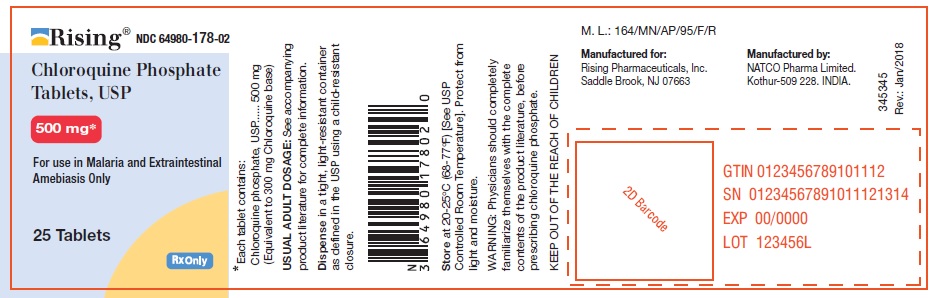
———PRINCIPAL DISPLAY PANEL——— Rising ® NDC 64980-178-02 Chloroquine Phosphate Tablets, USP 500 mg * For use in Malaria and Extraintestinal Amebiasis Only 25 Tablets Rx Only Chloroquine-Phosphate-Tablets-USP-500-mg-25-ct
Medicaid utilization by pack size
Medicare Part D spend CMS · PART D · 2026 (Q1)
About this NDC listing & data coverage
What data is (and isn’t) available for this NDC — tap to expand
| NDC identity (package / product / labeler codes) | ✓ Available |
| Labeler | ✓ Available |
| Product & package description | ✓ Available |
| Marketing category & status | ✓ Available |
| Active ingredient / dosage form / route | ✓ Available |
| FDA label (SPL via DailyMed) | ✓ Available |
| Package photos | ✓ Available |
| Inactive ingredients (structured) | ✓ Available |
| NADAC pharmacy acquisition price (CMS) | — Not published for this NDC CMS publishes NADAC only for NDCs reported in its retail-pharmacy survey. |
| Orange Book / therapeutic-equivalence data | ✓ Available |
| HCPCS J-code billing crosswalk | — Not published for this NDC Most self-administered / retail products have no J-code — that is normal. |
| Medicaid utilization (CMS SDUD) | — Not published for this NDC CMS reports utilization only for NDCs with Medicaid claims above its privacy threshold. |