
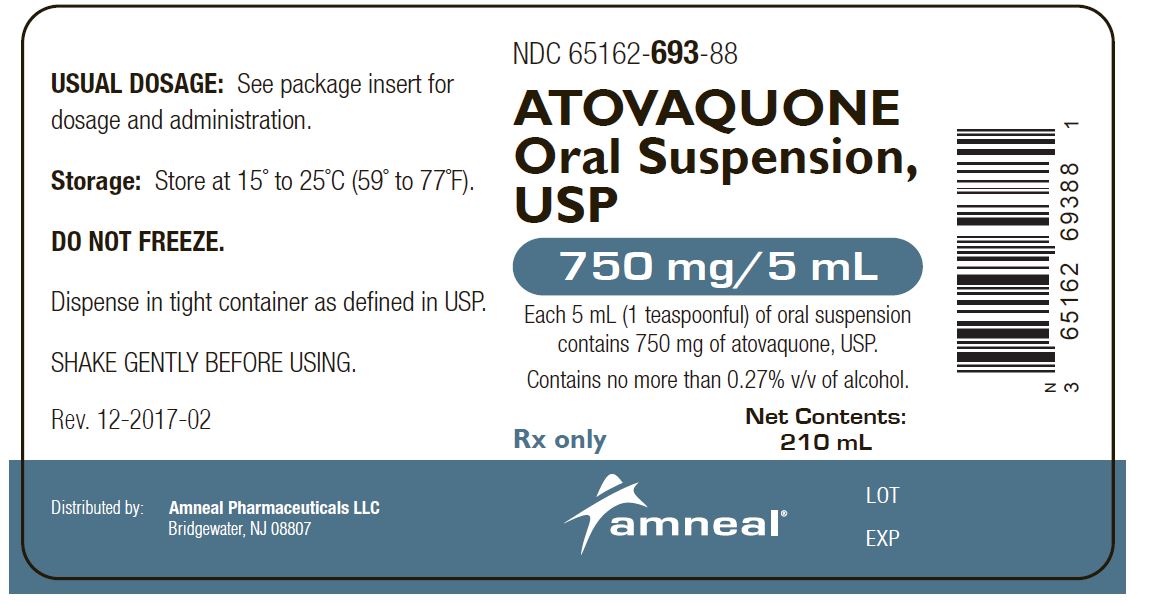
ATOVAQUONE 750 mg/5mL Suspension — NDC 65162-693-88 (Billing 65162-0693-88)
This is a package of ATOVAQUONE 750 mg/5mL Suspension from Amneal Pharmaceuticals LLC, marketed since Feb 2011 and currently FDA-listed; retail pharmacies pay about $0.7668 per mL (NADAC). It is this product's only package size.
NDC database record
One package, one record: these facts belong to NDC 65162-693-88 alone.
- Record
- FDA NDC Directory package listing · Human prescription drug
- Code segments
- 65162 labeler · 693 product · 88 package
- Package marketed since
- Feb 9, 2011
- Sample package
- No — commercial package
- Listing certified through
- Dec 31, 2027
- Barcode (UPC)
- 0365162693881
- Medicaid fills, this package
- 4,254 prescriptions in the last four reported quarters
- FDA record last changed
- Jul 24, 2026
Other active recalls for Atovaquone (different manufacturers) — 1 · tap to view
Identity & classification
Regulatory identifiers FDA, NLM and CMS codes for this package
Drug-database identifiers Medi-Span GPI and First Databank GCN / HICL / AHFS classification
- GSN (GCN sequence number): 023399
- GCN: 34490
- GPI-14 (Medi-Span): 16400020001820
- HICL (First Databank): 006619
- AHFS class code: 08:30.12.00
- RxCUI (RxNorm): 308429
Where does this data come from?
- FDA openFDA NDC Directory · synced Oct 1, 2026
- FDA label on DailyMed · label index refreshed Oct 6, 2026
- RxNorm (NLM RxNav) · catalog refreshed Oct 1, 2026
- Medi-Span GPI (licensed)
- First Databank (licensed) · refreshed Oct 1, 2026
RxNorm drug class
This medicine belongs to the Antimalarial class.
Where does this data come from?
- RxClass (NLM) · catalog refreshed Oct 1, 2026
Clinical
- Yes, it really matters — this is one of the most important things to know about atovaquone. Without food, your body absorbs roughly half as much of the medicine, which can mean blo...
- Why do I have to take this medicine with food? Is it really that important?
- PCP (Pneumocystis jirovecii pneumonia) is a serious lung infection caused by a fungal organism. It mainly affects people with weakened immune systems, such as those with HIV/AIDS....
- What is PCP, and why am I being prescribed this instead of a more common antibiotic?
Patient education
Supplement & herbal interactions
Some supplements/herbs that may interact with Atovaquone — tap one for details:
Where does this data come from?
- MedlinePlus (NLM) · refreshed Oct 1, 2026
- FDA label on DailyMed · label index refreshed Oct 6, 2026
Ask a licensed pharmacist directly — free, answered by our team.
Pricing
A drug doesn't have one price. Each row is a different public payment system, and none is what you'd pay at the counter — that depends on your insurance. The ⓘ on each row explains what it measures.
| Price system | Per mL | Per package |
|---|---|---|
| Retail pharmacies payNADAC · weekly | $0.767 | $161.03 / 210 ml |
| Medicaid paysCMS SDUD · 12 mo | $1.02 | $214.37 / 210 ml |
| Medicare drug plans payPart D · Q2 2026 | $1.30 | $273.53 / 210 ml |
Where does this data come from?
- CMS NADAC weekly file · file of Sep 30, 2026
- CMS ASP pricing files · refreshed Sep 20, 2026
- CMS Medicaid State Drug Utilization Data · through Q1 2026
- CMS Part D plan pricing files · refreshed Sep 24, 2026
- VA National Acquisition Center price file
Packaging — all sizes for this product
| Package NDC | Description | Marketing start | Marketing end | Status |
|---|---|---|---|---|
| 65162-0693-88 You're viewing this Main listing | 1 BOTTLE in 1 CARTON / 210 mL in 1 BOTTLE | 2011-02-09 | — | Active |
Therapeutic equivalents
| Product | Labeler | Pack | NADAC/unit | TE | Status | Price vs. this |
|---|---|---|---|---|---|---|
| Atovaquone 750 mg/5mL 70748-0299-01 | Lupin | 1 bottle | $0.719 | AB | FDA listed | save 6% |
| Atovaquone 750 mg/5mL 00121-0956-08 | PAI | 1 bottle | $0.767 | AB | Availability likely | — |
| Atovaquone Oral Suspension 750 mg/5mL 10702-0223-21 | KVK-Tech, | 1 bottle | $0.767 | AB | Availability likely | — |
| Atovaquone 750 mg/5mL 31722-0629-21 | Camber | 1 bottle | $0.767 | AB | Availability likely | — |
| Atovaquone 750 mg/5mL 60687-0534-78 | American | 6 cups | $0.767 | AB | Availability likely | — |
| Atovaquone 750 mg/5mL 62135-0528-09 | Chartwell | 210 ml | $0.767 | AB | Availability likely | — |
| Atovaquone 750 mg/5mLthis 65162-0693-88 | Amneal | 1 bottle | $0.767 | AB | Availability likely | — |
| atovaquone 750 mg/5mL 68462-0421-21 | Glenmark | 210 ml | $0.767 | AB | Availability likely | — |
| Atovaquone 750 mg/5mL 69452-0252-87 | Bionpharma | 1 bottle | $0.767 | AB | Availability likely | — |
| Atovaquone 750 mg/5mL 72603-0248-01 | NorthStar | 1 bottle | $0.767 | AB | Availability likely | — |
| Atovaquone 750 mg/5mL 00121-1016-18 | PAI | 6 cups | — | AB | FDA listed | — |
| Mepron 750 mg/5mL 00173-0547-00 | GlaxoSmithKline | 42 pouches | — | AB | FDA listed | — |
| Mepron 750 mg/5mL 00173-0665-18 | GlaxoSmithKline | 210 ml | — | AB | FDA listed | — |
| Atovaquone 750 mg/5mL 00904-7459-25 | Major | 6 cups | — | AB | FDA listed | — |
| Atovaquone 750 mg/5mL 17856-0631-01 | ATLANTIC | 72 cups | — | AB | FDA listed | — |
| Atovaquone 750 mg/5mL 17856-8631-01 | ATLANTIC | 50 cups | — | AB | FDA listed | — |
| Atovaquone 750 mg/5mL 42239-0001-08 | Abon | 1 bottle | — | AB | FDA listed | — |
| Atovaquone 750 mg/5mL 50268-0119-12 | AvPAK | 20 cups | — | AB | FDA listed | — |
| Atovaquone 750 mg/5mL 51407-0642-87 | Golden | 1 bottle | — | AB | FDA listed | — |
| Atovaquone 750 mg/5mL 68999-0528-24 | Chartwell | 10 cups | — | AB | FDA listed | — |
| Atovaquone 750 mg/5mL 73141-0104-42 | A2A | 42 cups | — | AB | FDA listed | — |
| Atovaquone 750 mg/5mL 73190-0098-21 | AvKARE | 1 bottle | — | AB | FDA listed | — |
| Atovaquone 750 mg/5mL 81033-0104-22 | Kesin | 20 cups | — | AB | FDA listed | — |
| Atovaquone Oral Suspension 750 mg/5mL 81033-0105-22 | Kesin | 20 cups | — | AB | FDA listed | — |
Where does this data come from?
- FDA openFDA NDC Directory · synced Oct 1, 2026
- FDA Orange Book · refreshed Oct 3, 2026
- CMS NADAC weekly file · file of Sep 30, 2026
Availability & generic status
This product is an FDA-approved generic. Other versions of the same drug are listed under Therapeutic equivalents, least expensive first.
Where does this data come from?
- FDA Orange Book · refreshed Oct 3, 2026
Inactive Ingredients / Excipients
Inactive ingredients, also called excipients, are components of the drug product other than the active ingredient. They may include fillers, dyes, coatings, preservatives, flavors, or other formulation ingredients.
🧪 Avoiding an ingredient? See Atovaquone inactive ingredients by manufacturer: every current product's list side by side, so you can ask your pharmacy for the version that does not list it.
Where does this data come from?
IACT rows and label-wide narrative are kept separate; availability and product-level specificity depend on the submitted label.- FDA label on DailyMed · label index refreshed Oct 6, 2026
- FDA openFDA NDC Directory · synced Oct 1, 2026
Inactive ingredient FAQ
Are inactive ingredients the same for every manufacturer?
Why might an inactive ingredient be missing?
Can inactive ingredients matter?
Manufacturer & labeler
More NDCs from Amneal Pharmaceuticals LLC labeler code 65162
- Cetirizine Hydrochloride 5 mg/5mL Solution NDC 65162-684-86
- Levetiracetam 100 mg/mL Solution NDC 65162-685-86
- Felbamate 600 mg/5mL Suspension NDC 65162-686-88
- Lorazepam 2 mg/mL Concentrate NDC 65162-687-84
- Nitrofurantoin 25 mg/5mL Suspension NDC 65162-689-88
- Ondansetron 4 mg/5mL Solution NDC 65162-691-19
- Promethazine and Phenylephrine HCl, and Codeine Phosphate 6.25 mg/5mL; 5 mg/5mL; 10 mg/5mL Syrup NDC 65162-694-86
- Gabapentin 250 mg/5mL Solution NDC 65162-698-54
- Dextromethorphan Polistirex Extended-Release 30 mg/5mL Suspension NDC 65162-700-76
- Fluocinolone Acetonide .11 mg/118.28mL Oil NDC 65162-703-86
- Escitalopram Oxalate 5 mg/5mL Solution NDC 65162-705-88
- Colchicine .6 mg Tablet NDC 65162-710-03
Where does this data come from?
- FDA openFDA NDC Directory · synced Oct 1, 2026
- Drugs@FDA
Full prescribing information FDA SPL
🎯 Indications and Usage ▾
1 INDICATIONS AND USAGE Atovaquone oral suspension is a quinone antimicrobial drug indicated for: Prevention of Pneumocystis jirovecii pneumonia (PCP) in adults and adolescents aged 13 years and older who cannot tolerate trimethoprim-sulfamethoxazole (TMP-SMX). (1.1) Treatment of mild-to-moderate PCP in adults and adolescents aged 13 years and older who cannot tolerate TMP-SMX. (1.2) Limitations of Use (1.3) : Treatment of severe PCP (alveolar arterial oxygen diffusion gradient [(A-a)DO 2 ] >45 mm Hg) with atovaquone oral suspension has not been studied.
The efficacy of atovaquone oral suspension in subjects who are failing therapy with TMP-SMX has also not been studied.
1.1Prevention of Pneumocystis jirovecii Pneumonia Atovaquone oral suspension is indicated for the prevention of Pneumocystis jirovecii pneumonia (PCP) in adults and adolescents (aged 13 years and older) who cannot tolerate trimethoprim-sulfamethoxazole (TMP-SMX).
1.2Treatment of Mild-to-Moderate Pneumocystis jirovecii Pneumonia Atovaquone oral suspension is indicated for the acute oral treatment of mild-to-moderate PCP in adults and adolescents (aged 13 years and older) who cannot tolerate TMP-SMX.
1.3Limitations of Use Clinical experience with atovaquone oral suspension for the treatment of PCP has been limited to subjects with mild-to-moderate PCP (alveolar-arterial oxygen diffusion gradient [(A-a)DO 2 ] ≤45 mm Hg). Treatment of more severe episodes of PCP with atovaquone oral suspension has not been studied. The efficacy of atovaquone in subjects who are failing therapy with TMP-SMX has also not been studied.
⏱️ Dosage and Administration ▾
2 DOSAGE AND ADMINISTRATION Prevention of PCP: 1,500 mg (10 mL) once daily with food. (2.1) Treatment of PCP: 750 mg (5 mL) twice daily with food for 21 days. (2.2) Supplied in Bottles: Shake bottle gently before use. (2.3)
2.1Dosage for the Prevention of P. jirovecii Pneumonia The recommended oral dosage is 1,500 mg (10 mL) once daily administered with food.
2.2Dosage for the Treatment of Mild-to-Moderate P. jirovecii Pneumonia The recommended oral dosage is 750 mg (5 mL) twice daily (total daily dose = 1,500 mg) administered with food for 21 days.
2.3Important Administration Instructions Administer atovaquone oral suspension with food to avoid low plasma atovaquone concentrations that may limit response to therapy [see Warnings and Precautions (5.1) , Clinical Pharmacology (12.3) ]. Atovaquone Oral Suspension Bottle Shake bottle gently before administering the recommended dosage.
💊 Dosage Forms and Strengths ▾
3 DOSAGE FORMS AND STRENGTHS Atovaquone oral suspension, USP is a bright yellow, citrus-flavored, oral suspension containing 750 mg of atovaquone, USP in 5 mL. Atovaquone oral suspension, USP is supplied in 210-mL bottles. Oral suspension: 750 mg per 5 mL. (3)
⛔ Contraindications ▾
4 CONTRAINDICATIONS Atovaquone oral suspension is contraindicated in patients who develop or have a history of hypersensitivity reactions to atovaquone or any of the components of atovaquone oral suspension [see Warnings and Precautions (5.3) , Adverse Reactions (6.2) ] . Known serious allergic/hypersensitivity reaction to atovaquone or any of the components of atovaquone oral suspension. (4)
⚠️ Warnings and Cautions ▾
5 WARNINGS AND PRECAUTIONS Failure to administer atovaquone oral suspension with food may result in lower plasma atovaquone concentrations and may limit response to therapy. Patients with gastrointestinal disorders may have limited absorption resulting in suboptimal atovaquone concentrations. (5.1) Hepatotoxicity: Elevated liver chemistry tests and cases of hepatitis and fatal liver failure have been reported.
(5.2) Severe Cutaneous Adverse Reactions (SCARs): Cases of SCARs such as Stevens-Johnson Syndrome (SJS) have been reported. SCARs can be life-threatening or fatal. If symptoms or signs of SCARs develop, discontinue atovaquone immediately and institute appropriate therapy.
(5.3)
5.1Risk of Limited Oral Absorption Absorption of orally administered atovaquone oral suspension is limited but can be significantly increased when the drug is taken with food. Failure to administer atovaquone oral suspension with food may result in lower plasma atovaquone concentrations and may limit response to therapy. Consider therapy with other agents in patients who have difficulty taking atovaquone oral suspension with food or in patients who have gastrointestinal disorders that may limit absorption of oral medications [see Clinical Pharmacology (12.3) ].
5.2Hepatotoxicity Cases of cholestatic hepatitis, elevated liver enzymes, and fatal liver failure have been reported in patients treated with atovaquone [see Adverse Reactions (6.2) ]. If treating patients with severe hepatic impairment, closely monitor patients following administration of atovaquone.
5.3Severe Cutaneous Adverse Reactions Cases of severe cutaneous adverse reactions (SCARs), including Stevens-Johnson Syndrome (SJS), drug reaction with eosinophilia and systemic symptoms (DRESS), and erythema multiforme (EM) have been reported in patients treated with atovaquone [see Adverse Reactions (6.2) ] . SCARs can be life-threatening or fatal. If symptoms or signs of SCARs develop, discontinue atovaquone immediately and institute appropriate therapy.
Patients who have developed SCARs with the use of atovaquone must not receive atovaquone [see Contraindications (4) ] .
🤒 Adverse Reactions ▾
6 ADVERSE REACTIONS The following adverse reactions are discussed in another section of the labeling: Hepatotoxicity [see Warnings and Precautions (5.2) ]. Severe Cutaneous Adverse Reactions [see Warnings and Precautions (5.3) ] . PCP Prevention: The most frequent adverse reactions (≥25% that required discontinuation) were diarrhea, rash, headache, nausea, and fever.
(6.1) PCP Treatment: The most frequent adverse reactions (≥14% that required discontinuation) were rash (including maculopapular), nausea, diarrhea, headache, vomiting, and fever. (6.1) To report SUSPECTED ADVERSE REACTIONS, contact Amneal Pharmaceuticals LLC at 1-877-835-5472 or FDA at 1-800-FDA-1088 or www.fda.gov/medwatch.
6.1Clinical Trials Experience Because clinical trials are conducted under widely varying conditions, adverse reaction rates observed in the clinical trials of a drug cannot be directly compared with rates in the clinical trials of another drug and may not reflect the rates observed in practice. Additionally, because many subjects who participated in clinical trials with atovaquone had complications of advanced human immunodeficiency virus (HIV) disease, it was often difficult to distinguish adverse reactions caused by atovaquone from those caused by underlying medical conditions.
PCP Prevention Trials In 2 clinical trials, atovaquone oral suspension was compared with dapsone or aerosolized pentamidine in HIV-1-infected adolescent (13 to 18 years) and adult subjects at risk of PCP (CD4 count <200 cells/mm 3 or a prior episode of PCP) and unable to tolerate TMP-SMX. Dapsone Comparative Trial: In the dapsone comparative trial (n = 1,057), the majority of subjects were white (64%), male (88%), and receiving prophylaxis for PCP at randomization (73%); the mean age was 38 years. Subjects received atovaquone oral suspension 1,500 mg once daily (n = 536) or dapsone 100 mg once daily (n = 521); median durations of exposure were 6.7 and 6.5 months, respectively.
Adverse reaction data were collected only for adverse reactions requiring discontinuation of treatment, which occurred at similar frequencies in subjects treated with atovaquone oral suspension or dapsone (Table 1). Among subjects taking neither dapsone nor atovaquone at enrollment (n = 487), adverse reactions requiring discontinuation of treatment occurred in 43% of subjects treated with dapsone and 20% of subjects treated with atovaquone oral suspension. Gastrointestinal adverse reactions (nausea, diarrhea, and vomiting) were more frequently reported in subjects treated with atovaquone oral suspension (Table 1).
Table 1. Percentage (>2%) of Subjects with Selected Adverse Reactions Requiring Discontinuation of Treatment in the Dapsone Comparative PCP Prevention Trial Adverse Reaction All Subjects Atovaquone Oral Suspension 1,500 mg/day (n = 536) % Dapsone 100 mg/day (n = 521) % Rash 6.3
8.8Nausea 4.1
0.6Diarrhea 3.2
0.2Vomiting 2.2
0.6Aerosolized Pentamidine Comparative Trial: In the aerosolized pentamidine comparative trial (n = 549), the majority of subjects were white (79%), male (92%), and were primary prophylaxis patients at enrollment (58%); the mean age was 38 years. Subjects received atovaquone oral suspension once daily at a dose of 750 mg (n = 188) or 1,500 mg (n = 175) or received aerosolized pentamidine 300 mg every 4 weeks (n = 186); the median durations of exposure were 6.2, 6.0, and 7.8 months, respectively. Table 2 summarizes the clinical adverse reactions reported by ≥20% of the subjects receiving either the 1,500-mg dose of atovaquone oral suspension or aerosolized pentamidine.
Rash occurred more often in subjects treated with atovaquone oral suspension (46%) than in subjects treated with aerosolized pentamidine (28%). Treatment-limiting adverse reactions occurred in 25% of subjects treated with atovaquone oral suspension 1,500 mg once daily and in 7% of subjects treated with aerosolized pentamidine. The most frequent adverse reactions requiring discontinuation of dosing… [Excerpted — this section continues on DailyMed.]
🔄 Drug Interactions ▾
7 DRUG INTERACTIONS Concomitant administration of rifampin or rifabutin reduces atovaquone concentrations; concomitant use with atovaquone oral suspension is not recommended. (7.1) Concomitant administration of tetracycline reduces atovaquone concentrations; use caution when co-administering. Monitor patients for potential loss of efficacy of atovaquone if co-administration of tetracycline is necessary.
(7.2) Concomitant administration with metoclopramide reduces atovaquone concentrations; administer concomitantly only if other antiemetics are not available. (7.3) Concomitant administration of indinavir reduces indinavir trough concentrations; use caution when co-administering. Monitor patients for potential loss of efficacy of indinavir if co-administration is necessary.
(7.4)
7.1Rifampin/Rifabutin Concomitant administration of rifampin or rifabutin and atovaquone oral suspension is known to reduce atovaquone concentrations [see Clinical Pharmacology (12.3) ]. Concomitant administration of atovaquone oral suspension and rifampin or rifabutin is not recommended.
7.2Tetracycline Concomitant administration of tetracycline and atovaquone oral suspension has been associated with a reduction in plasma concentrations of atovaquone [see Clinical Pharmacology (12.3) ]. Caution should be used when prescribing tetracycline concomitantly with atovaquone oral suspension. Monitor patients for potential loss of efficacy of atovaquone if co-administration is necessary.
7.3Metoclopramide Metoclopramide may reduce the bioavailability of atovaquone and should be used only if other antiemetics are not available [see Clinical Pharmacology (12.3) ].
7.4Indinavir Concomitant administration of atovaquone and indinavir did not result in any change in the steady-state AUC and C max of indinavir but resulted in a decrease in the C trough of indinavir [see Clinical Pharmacology (12.3) ]. Caution should be exercised when prescribing atovaquone oral suspension with indinavir due to the decrease in trough concentrations of indinavir. Monitor patients for potential loss of efficacy of indinavir if co-administration with atovaquone oral suspension is necessary.
👥 Use in Specific Populations ▾
8 USE IN SPECIFIC POPULATIONS
8.1Pregnancy Risk Summary Available data from postmarketing experience with use of atovaquone in pregnant women are insufficient to identify a drug-associated risk for major birth defects, miscarriage, or adverse maternal or fetal outcomes. Pregnant women with HIV who are infected with PCP are at increased risk of adverse pregnancy outcomes (see Clinical Considerations ) . Atovaquone given orally by gavage to pregnant rats and rabbits during organogenesis did not cause fetal malformations at plasma concentrations up to 3 times and 0.5 times, respectively, the estimated human exposure based on steady-state plasma concentrations (see Data ) .
The estimated background risk of major birth defects and miscarriage for the indicated population is unknown. All pregnancies have a background risk of birth defect, loss, or other adverse outcomes. In the U.S. general population, the background risk of major birth defects and miscarriage in clinically recognized pregnancies is 2% to 4% and 15% to 20%, respectively.
Clinical Considerations Disease-Associated Maternal and/or Embryo/Fetal Risk: Pregnant women with HIV who are infected with PCP are at increased risk of severe illness and maternal death associated with PCP compared with non-pregnant women. Data Animal Data: Atovaquone administered in oral doses of 250 mg/kg/day, 500 mg/kg/day, and 1,000 mg/kg/day to pregnant rats during organogenesis (Gestation Day [GD] 6 to GD15) did not cause maternal or embryo-fetal toxicity at doses up to 1,000 mg/kg/day corresponding to maternal plasma concentrations approximately 3 times the estimated human exposure during the treatment of PCP based on steady-state plasma concentrations.
In pregnant rabbits, atovaquone administered in oral doses of 300 mg/kg/day, 600 mg/kg/day, and 1,200 mg/kg/day during organogenesis (GD6 to GD18) caused decreased fetal body length at a maternally toxic dose of 1,200 mg/kg/day corresponding to a plasma concentration that is approximately 0.5 times the estimated human exposure based on steady-state plasma concentrations. In a pre- and post-natal study in rats, atovaquone administered in oral doses of 250, 500, and 1,000 mg/kg/day from GD15 until Lactation Day (LD) 20 did not impair the growth or developmental effects in first generation offspring at doses up to 1,000 mg/kg/day corresponding to approximately 3 times the estimated human exposure based on steady-state plasma concentrations during the treatment of PCP.
Atovaquone crossed the placenta and was present in fetal rat and rabbit tissue.
8.2Lactation Risk Summary There are no data on the presence of atovaquone in human milk, the effects on the breastfed child, or the effects on milk production. Atovaquone was detected in rat milk when lactating rats were administered oral atovaquone (see Data ) . When a drug is present in animal milk, it is likely the drug will be present in human milk.
For women with HIV-1, potential risks of breastfeeding include HIV-1 transmission (in infants without HIV-1). The developmental and health benefits of breastfeeding should be considered along with the mother’s clinical need for atovaquone and any potential adverse effects on the breastfed child from atovaquone or from the underlying maternal condition. Data In a rat study with doses of 10 mg/kg and 250 mg/kg given orally by gavage on postpartum Day 11, atovaquone concentrations in the milk were 30% of the concurrent atovaquone concentrations in the maternal plasma at both doses.
The concentration of drug in animal milk does not necessarily predict the concentration of drug in human milk.
8.4Pediatric Use Evidence of safety and effectiveness in pediatric patients (aged 12 years and younger) has not been established. In a trial of atovaquone oral suspension administered once daily with food for 12 days to 27 HIV-1-infected, asymptomatic infants and children aged between 1 month and 13 years, the pharmacokinetics of atovaquone were age-dependent. The ave… [Excerpted — this section continues on DailyMed.]
🤰 Pregnancy ▾
8.1Pregnancy Risk Summary Available data from postmarketing experience with use of atovaquone in pregnant women are insufficient to identify a drug-associated risk for major birth defects, miscarriage, or adverse maternal or fetal outcomes. Pregnant women with HIV who are infected with PCP are at increased risk of adverse pregnancy outcomes (see Clinical Considerations ) . Atovaquone given orally by gavage to pregnant rats and rabbits during organogenesis did not cause fetal malformations at plasma concentrations up to 3 times and 0.5 times, respectively, the estimated human exposure based on steady-state plasma concentrations (see Data ) .
The estimated background risk of major birth defects and miscarriage for the indicated population is unknown. All pregnancies have a background risk of birth defect, loss, or other adverse outcomes. In the U.S. general population, the background risk of major birth defects and miscarriage in clinically recognized pregnancies is 2% to 4% and 15% to 20%, respectively.
Clinical Considerations Disease-Associated Maternal and/or Embryo/Fetal Risk: Pregnant women with HIV who are infected with PCP are at increased risk of severe illness and maternal death associated with PCP compared with non-pregnant women. Data Animal Data: Atovaquone administered in oral doses of 250 mg/kg/day, 500 mg/kg/day, and 1,000 mg/kg/day to pregnant rats during organogenesis (Gestation Day [GD] 6 to GD15) did not cause maternal or embryo-fetal toxicity at doses up to 1,000 mg/kg/day corresponding to maternal plasma concentrations approximately 3 times the estimated human exposure during the treatment of PCP based on steady-state plasma concentrations.
In pregnant rabbits, atovaquone administered in oral doses of 300 mg/kg/day, 600 mg/kg/day, and 1,200 mg/kg/day during organogenesis (GD6 to GD18) caused decreased fetal body length at a maternally toxic dose of 1,200 mg/kg/day corresponding to a plasma concentration that is approximately 0.5 times the estimated human exposure based on steady-state plasma concentrations. In a pre- and post-natal study in rats, atovaquone administered in oral doses of 250, 500, and 1,000 mg/kg/day from GD15 until Lactation Day (LD) 20 did not impair the growth or developmental effects in first generation offspring at doses up to 1,000 mg/kg/day corresponding to approximately 3 times the estimated human exposure based on steady-state plasma concentrations during the treatment of PCP.
Atovaquone crossed the placenta and was present in fetal rat and rabbit tissue.
🧒 Pediatric Use ▾
8.4Pediatric Use Evidence of safety and effectiveness in pediatric patients (aged 12 years and younger) has not been established. In a trial of atovaquone oral suspension administered once daily with food for 12 days to 27 HIV-1-infected, asymptomatic infants and children aged between 1 month and 13 years, the pharmacokinetics of atovaquone were age-dependent. The average steady-state plasma atovaquone concentrations in the 24 subjects with available concentration data are shown in Table 5.
Table 5. Average Steady-State Plasma Atovaquone Concentrations in Pediatric Subjects Age Dose of Atovaquone Oral Suspension 10 mg/kg 30 mg/kg 45 mg/kg Average C ss in mcg/mL (mean ± SD) 1 to 3 months 5.9 (n = 1) 27.8 ± 5.8 (n = 4) _ >3 to 24 months 5.7 ± 5.1 (n = 4) 9.8 ± 3.2 (n = 4) 15.4 ± 6.6 (n = 4) >2 to 13 years 16.8 ± 6.4 (n = 4) 37.1 ± 10.9 (n = 3) _ C ss = Concentration at steady-state.
🧓 Geriatric Use ▾
8.5Geriatric Use Clinical trials of atovaquone did not include sufficient numbers of subjects aged 65 years and older to determine whether they respond differently from younger subjects.
🆘 Overdosage ▾
10 OVERDOSAGE Overdoses up to 31,500 mg of atovaquone have been reported. In one such patient who also took an unspecified dose of dapsone, methemoglobinemia occurred. Rash has also been reported after overdose. There is no known antidote for atovaquone, and it is currently unknown if atovaquone is dialyzable.
🧬 Clinical Pharmacology ▾
12 CLINICAL PHARMACOLOGY
12.1Mechanism of Action Atovaquone is a quinone antimicrobial drug [see Microbiology (12.4) ].
12.2Pharmacodynamics Relationship between Plasma Atovaquone Concentrations and Clinical Outcome In a comparative clinical trial, HIV/AIDS subjects received atovaquone tablets 750 mg 3 times daily or TMP-SMX for treatment of mild-to-moderate PCP for 21 days [see Clinical Studies (14.2) ] ; the relationship between atovaquone plasma concentrations and successful treatment outcome from 113 of these subjects for whom both steady-state drug concentrations and outcome data were available is shown in Table 6. Table 6. Relationship between Plasma Atovaquone Concentrations and Successful Treatment Outcome Steady-State Plasma Atovaquone Concentrations (mcg/mL) Successful Treatment a No. of Successes/No. in Group (%) 0 to <5 0/6 (0%) 5 to <10 18/26 (69%) 10 to <15 30/38 (79%) 15 to <20 18/19 (95%) ≥20 24/24 (100%) a Successful treatment outcome was defined as improvement in clinical and respiratory measures persisting at least 4 weeks after cessation of therapy.
Improvement in clinical and respiratory measures was assessed using a composite of parameters that included oral body temperature, respiratory rate, and severity scores for cough, dyspnea, and chest pain/tightness. Cardiac Effects The effect of atovaquone oral suspension on the QT interval is unknown in humans.
12.3Pharmacokinetics Plasma atovaquone concentrations do not increase proportionally with dose following ascending repeat-dose administration of atovaquone oral suspension in healthy subjects. When atovaquone oral suspension was administered with food at dosage regimens of 500 mg once daily, 750 mg once daily, and 1,000 mg once daily, mean (±SD) steady-state plasma atovaquone concentrations were 11.7 ± 4.8, 12.5 ± 5.8, and 13.5 ± 5.1 mcg/mL, respectively. The corresponding mean (±SD) Cmax concentrations were 15.1 ± 6.1, 15.3 ± 7.6, and 16.8 ± 6.4 mcg/mL.
Absorption Atovaquone is a highly lipophilic compound with low aqueous solubility. The mean (±SD) absolute bioavailability of atovaquone from a 750-mg dose of atovaquone oral suspension administered under fed conditions in 9 HIV-1-infected (CD4 >100 cells/mm 3 ) volunteers was 47% ± 15%. Effect of Food: Administering atovaquone oral suspension with food enhances atovaquone bioavailability.
Sixteen healthy subjects received a single 750-mg dose of atovaquone oral suspension after an overnight fast and following a meal (23 g fat: 610 kCal). The mean (±SD) atovaquone AUC under fasting and fed conditions were 324 ± 115 and 801 ± 320 h●mcg/mL, respectively, representing a 2.6 ± 1.0-fold increase. Distribution Following IV administration of atovaquone, the mean (±SD) volume of distribution at steady-state (Vd ss ) was 0.60 ±
0.17L/kg (n = 9). Atovaquone is extensively bound to plasma proteins (99.9%) over the concentration range of 1 to 90 mcg/mL. In 3 HIV-1-infected children who received 750 mg atovaquone as the tablet formulation 4 times daily for 2 weeks, the cerebrospinal fluid concentrations of atovaquone were 0.04, 0.14, and 0.26 mcg/mL, representing less than 1% of the plasma concentration.
Elimination The mean (±SD) half-life of atovaquone was 62.5 ± 35.3 hours after IV administration and ranged from 67.0 ± 33.4 to 77.6 ± 23.1 hours following administration of atovaquone oral suspension. Metabolism: The metabolism of atovaquone is unknown. Excretion: Following oral administration of 14 C-labelled atovaquone to healthy subjects, greater than 94% of the dose was recovered as unchanged atovaquone in the feces over 21 days.
Specific Populations Patients with Hepatic or Renal Impairment: The pharmacokinetics of atovaquone have not been studied in patients with hepatic or renal impairment. HIV-Infected Subjects: When atovaquone oral suspension was administered to 5 HIV-1–infected subjects at a dose of 750 mg twice daily, the mean (±SD) steady-state plasma atovaquone concentration was 21.0 ± 4.9 mcg/mL and… [Excerpted — this section continues on DailyMed.]
🧬 Mechanism of Action ▾
12.1Mechanism of Action Atovaquone is a quinone antimicrobial drug [see Microbiology (12.4) ].
📦 How Supplied / Storage and Handling ▾
16 HOW SUPPLIED/STORAGE AND HANDLING Atovaquone oral suspension, USP (bright yellow, citrus-flavored) containing 750 mg atovaquone, USP in each teaspoonful (5 mL). Bottle of 210 mL with child-resistant cap (NDC 65162-693-88). Store at 15° to 25°C (59° to 77°F). Do not freeze . Dispense in tight container as defined in USP.
📋 Description ▾
11 DESCRIPTION Atovaquone is a quinone antimicrobial drug for oral administration. The chemical name of atovaquone is trans -2-[4-(4-chlorophenyl)cyclohexyl]-3-hydroxy-1,4-naphthalenedione. Atovaquone, USP is a yellow crystalline solid that is practically insoluble in water.
It has a molecular weight of 366.84 and the molecular formula C 22 H 19 ClO 3 . The compound has the following structural formula: Atovaquone oral suspension, USP is a formulation of micro-fine particles of atovaquone, USP. The atovaquone particles, reduced in size to facilitate absorption, are significantly smaller than those in the previously marketed tablet formulation.
Atovaquone oral suspension, USP is for oral administration and is bright yellow with a citrus flavor. Each teaspoonful (5 mL) contains 750 mg of atovaquone, USP and the inactive ingredients benzyl alcohol, flavor (ethanol, propylene glycol, triacetin), poloxamer 188, purified water, saccharin sodium and xanthan gum. structure
💬 Information for Patients ▾
17 PATIENT COUNSELING INFORMATION Important Administration Instructions Advise patients to take the prescribed dose of atovaquone oral suspension as directed. Advise patients to take their daily doses of atovaquone oral suspension with food, as food will significantly improve the absorption of the drug [see Dosage and Administration (2.3) ] . Advise patients to shake atovaquone oral suspension gently before use each time [see Dosage and Administration (2.3) ] .
Severe Cutaneous Adverse Reactions (SCARs) Advise patients about the signs and symptoms of serious skin manifestations. Instruct patients to stop taking atovaquone oral suspension immediately and promptly report the first signs or symptoms of skin rash, mucosal lesions, or any other sign of hypersensitivity [see Warnings and Precautions (5.3) ] . Lactation Inform women with HIV-1 that the potential risks of breastfeeding include HIV-1 transmission (in infants without HIV-1) [see Use in Specific Populations (8.2) ] .
Distributed by: Amneal Pharmaceuticals LLC Bridgewater, NJ 08807 Rev. 04-2026-05
🧬 Pharmacokinetics ▾
12.3Pharmacokinetics Plasma atovaquone concentrations do not increase proportionally with dose following ascending repeat-dose administration of atovaquone oral suspension in healthy subjects. When atovaquone oral suspension was administered with food at dosage regimens of 500 mg once daily, 750 mg once daily, and 1,000 mg once daily, mean (±SD) steady-state plasma atovaquone concentrations were 11.7 ± 4.8, 12.5 ± 5.8, and 13.5 ± 5.1 mcg/mL, respectively. The corresponding mean (±SD) Cmax concentrations were 15.1 ± 6.1, 15.3 ± 7.6, and 16.8 ± 6.4 mcg/mL.
Absorption Atovaquone is a highly lipophilic compound with low aqueous solubility. The mean (±SD) absolute bioavailability of atovaquone from a 750-mg dose of atovaquone oral suspension administered under fed conditions in 9 HIV-1-infected (CD4 >100 cells/mm 3 ) volunteers was 47% ± 15%. Effect of Food: Administering atovaquone oral suspension with food enhances atovaquone bioavailability.
Sixteen healthy subjects received a single 750-mg dose of atovaquone oral suspension after an overnight fast and following a meal (23 g fat: 610 kCal). The mean (±SD) atovaquone AUC under fasting and fed conditions were 324 ± 115 and 801 ± 320 h●mcg/mL, respectively, representing a 2.6 ± 1.0-fold increase. Distribution Following IV administration of atovaquone, the mean (±SD) volume of distribution at steady-state (Vd ss ) was 0.60 ±
0.17L/kg (n = 9). Atovaquone is extensively bound to plasma proteins (99.9%) over the concentration range of 1 to 90 mcg/mL. In 3 HIV-1-infected children who received 750 mg atovaquone as the tablet formulation 4 times daily for 2 weeks, the cerebrospinal fluid concentrations of atovaquone were 0.04, 0.14, and 0.26 mcg/mL, representing less than 1% of the plasma concentration.
Elimination The mean (±SD) half-life of atovaquone was 62.5 ± 35.3 hours after IV administration and ranged from 67.0 ± 33.4 to 77.6 ± 23.1 hours following administration of atovaquone oral suspension. Metabolism: The metabolism of atovaquone is unknown. Excretion: Following oral administration of 14 C-labelled atovaquone to healthy subjects, greater than 94% of the dose was recovered as unchanged atovaquone in the feces over 21 days.
Specific Populations Patients with Hepatic or Renal Impairment: The pharmacokinetics of atovaquone have not been studied in patients with hepatic or renal impairment. HIV-Infected Subjects: When atovaquone oral suspension was administered to 5 HIV-1–infected subjects at a dose of 750 mg twice daily, the mean (±SD) steady-state plasma atovaquone concentration was 21.0 ± 4.9 mcg/mL and mean (±SD) C max was 24.0 ± 5.7 mcg/mL. The mean (±SD) minimum plasma atovaquone concentration (C min ) associated with the 750-mg twice-daily regimen was 16.7 ± 4.6 mcg/mL.
In an open-label PCP trial in 18 HIV-1–infected subjects, administration of atovaquone oral suspension 750 mg twice daily with meals resulted in a mean (±SD) steady-state plasma atovaquone concentration of 22.0 ± 10.1 mcg/mL. The mean (±SD) plasma clearance of atovaquone following IV administration in 9 HIV-1–infected subjects was 10.4 ± 5.5 mL/min (0.15 ± 0.09 mL/min/kg). Drug Interaction Studies Rifampin/Rifabutin: In a trial with 13 HIV-1-infected volunteers, the oral administration of rifampin 600 mg every 24 hours with atovaquone oral suspension 750 mg every 12 hours resulted in a 52% ± 13% decrease in the mean (±SD) steady-state plasma atovaquone concentration and a 37% ± 42% increase in the mean (±SD) steady-state plasma rifampin concentration.
The half-life of atovaquone decreased from 82 ± 36 hours when administered without rifampin to 50 ± 16 hours with rifampin. In a trial of 24 healthy volunteers, the oral administration of rifabutin 300 mg once daily with atovaquone oral suspension 750 mg twice daily resulted in a 34% decrease in the mean steady-state plasma atovaquone concentration and a 19% decrease in the mean steady-state plasma rifabutin concentration. Tetracycline: Concomitant treatment w… [Excerpted — this section continues on DailyMed.]
🔬 Clinical Studies ▾
14 CLINICAL STUDIES
14.1Prevention of PCP The indication for prevention of PCP is based on the results of 2 clinical trials comparing atovaquone oral suspension with dapsone or aerosolized pentamidine in HIV-1-infected adolescent (aged 13 to 18 years) and adult subjects at risk of PCP (CD4 count <200 cells/mm 3 or a prior episode of PCP) and unable to tolerate TMP-SMX. Dapsone Comparative Trial This open-label trial enrolled 1,057 subjects, randomized to receive atovaquone oral suspension 1,500 mg once daily (n = 536) or dapsone 100 mg once daily (n = 521).
The majority of subjects were white (64%), male (88%), and receiving prophylaxis for PCP at randomization (73%); the mean age was 38 years. Median follow-up was 24 months. Subjects randomized to the dapsone arm who were seropositive for Toxoplasma gondii and had a CD4 count <100 cells/mm 3 also received pyrimethamine and folinic acid.
PCP event rates are shown in Table 7. Mortality rates were similar. Aerosolized Pentamidine Comparative Trial This open-label trial enrolled 549 subjects, randomized to receive atovaquone oral suspension 1,500 mg once daily (n = 175), atovaquone oral suspension 750 mg once daily (n = 188), or aerosolized pentamidine 300 mg once monthly (n = 186).
The majority of subjects were white (79%), male (92%), and were primary prophylaxis patients at enrollment (58%); the mean age was 38 years. Median follow-up was 11.3 months. The results of the PCP event rates appear in Table 7.
Mortality rates were similar among the groups. Table 7. Confirmed or Presumed/Probable PCP Events (As-Treated Analysis) a Assessment Trial 1 Trial 2 Atovaquone Oral Suspension 1,500 mg/day (n = 527) Dapsone 100 mg/day (n = 510) Atovaquone Oral Suspension 750 mg/day (n = 188) Atovaquone Oral Suspension 1,500 mg/day (n = 172) Aerosolized Pentamidine 300 mg/month (n = 169) % 15 19 23 18 17 Relative Risk b (CI) c 0.77 (0.57, 1.04) 1.47 (0.86, 2.50) 1.14 (0.63, 2.06) a Those events occurring during or within 30 days of stopping assigned treatment. b Relative risk <1 favors atovaquone and values >1 favor comparator.
Trial results did not show superiority of atovaquone to the comparator. c The confidence level of the interval for the dapsone comparative trial was 95% and for the pentamidine comparative trial was 97.5%. An analysis of all PCP events (intent-to-treat analysis) for both trials showed results similar to those shown in Table 7.
14.2Treatment of PCP The indication for treatment of mild-to-moderate PCP is based on the results of 2 efficacy trials: a randomized, double-blind trial comparing atovaquone tablets with TMP-SMX in subjects with HIV/AIDS and mild-to-moderate PCP (defined in the protocol as [(A-a)DO 2 ] ≤45 mm Hg and PaO 2 ≥60 mm Hg on room air) and a randomized open-label trial comparing atovaquone tablets with IV pentamidine isethionate in subjects with mild-to-moderate PCP who could not tolerate trimethoprim or sulfa antimicrobials.
Both trials were conducted with the tablet formulation using 750 mg 3 times daily. Results from these efficacy trials established a relationship between plasma atovaquone concentrations and successful outcome. Successful outcome was defined as improvement in clinical and respiratory measures persisting at least 4 weeks after cessation of therapy [see Clinical Pharmacology (12.2) ].
TMP-SMX Comparative Trial This double-blind, randomized trial compared the safety and efficacy of atovaquone tablets with that of TMP-SMX for the treatment of subjects with HIV/AIDS and histologically confirmed PCP. Only subjects with mild-to-moderate PCP were eligible for enrollment. A total of 408 subjects were enrolled into the trial.
The majority of subjects were white (66%) and male (95%); the mean age was 36 years. Eighty-six subjects without histologic confirmation of PCP were excluded from the efficacy analyses. Of the 322 subjects with histologically confirmed PCP, 160 were randomized to receive 750 mg atovaquone (three 250-mg tablets) 3 times da… [Excerpted — this section continues on DailyMed.]
🧪 Nonclinical Toxicology ▾
13 NONCLINICAL TOXICOLOGY
13.1Carcinogenesis, Mutagenesis, Impairment of Fertility Carcinogenicity studies in rats were negative; 24-month studies in mice (dosed with 50 mg/kg/day, 100 mg/kg/day, or 200 mg/kg/day), showed treatment-related increases in incidence of hepatocellular adenoma and hepatocellular carcinoma at all doses tested, which correlated with 1.4 to 3.6 times the average steady-state plasma concentrations in humans during acute treatment of PCP. Atovaquone was negative with or without metabolic activation in the Ames Salmonella mutagenicity assay, the mouse lymphoma mutagenesis assay, and the cultured human lymphocyte cytogenetic assay.
No evidence of genotoxicity was observed in the in vivo mouse micronucleus assay. Impairment of Fertility Atovaquone administered by oral gavage in doses of 100 mg/kg/day, 300 mg/kg/day, or 1,000 mg/kg/day to adult male rats from 73 days prior to mating until 20 days after mating and to adult female rats from 14 days prior to mating until LD20 did not impair male or female fertility or early embryonic development at doses up to 1,000 mg/kg/day corresponding to plasma exposures of approximately 3 times the estimated human exposure based on steady-state plasma concentrations.
📄 Recent Major Changes ▾
RECENT MAJOR CHANGES Warnings and Precautions, Severe Cutaneous Adverse Reactions (5.3) 3/2026
📄 Package Label / Principal Display Panel ▾
PRINCIPAL DISPLAY PANEL NDC 65162-693-88 Atovaquone Oral Suspension USP, 750 mg/ 5 mL 210 mL Rx only Amneal Pharmaceuticals 10 10