
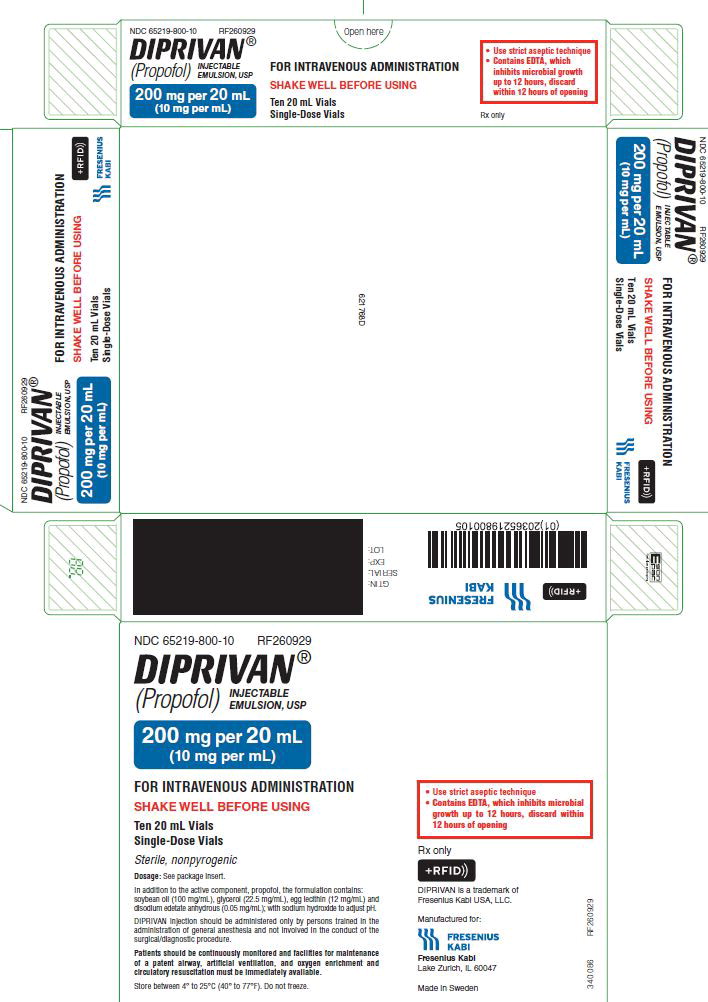
Diprivan PROPOFOL 10 mg/mL Injection, Emulsion — NDC 65219-800-10 (Billing 65219-0800-10)
This is a package of Diprivan PROPOFOL 10 mg/mL Injection, Emulsion from Fresenius Kabi USA, LLC, marketed since Jan 2020 and currently FDA-listed. It is this product's only package size.
NDC database record
One package, one record: these facts belong to NDC 65219-800-10 alone.
- Record
- FDA NDC Directory package listing · Human prescription drug
- Code segments
- 65219 labeler · 800 product · 10 package
- Package marketed since
- Jan 13, 2020
- Sample package
- No — commercial package
- Listing certified through
- Dec 31, 2026
- Barcode (UPC)
- 0365219800019
- Medicaid fills, this package
- 4,545 prescriptions in the last four reported quarters
- FDA record last changed
- Jul 24, 2026
Identity & classification
Regulatory identifiers FDA, NLM and CMS codes for this package
Drug-database identifiers Medi-Span GPI and First Databank GCN / HICL / AHFS classification
- GSN (GCN sequence number): 016796
- GCN: 14021
- GPI-14 (Medi-Span): 70400050001652
- HICL (First Databank): 004842
- AHFS class code: 28:04.08.00
- RxCUI (RxNorm): 1808224
Where does this data come from?
- FDA openFDA NDC Directory · synced Oct 1, 2026
- FDA label on DailyMed · label index refreshed Oct 3, 2026
- RxNorm (NLM RxNav) · catalog refreshed Oct 1, 2026
- Medi-Span GPI (licensed)
- First Databank (licensed) · refreshed Oct 1, 2026
RxNorm drug class
This medicine belongs to the General Anesthetic class.
Where does this data come from?
- RxClass (NLM) · catalog refreshed Oct 1, 2026
Clinical
Propofol is used to begin and maintain general anesthesia (you are unconscious and unaware of what is happening) during surgery in adults and children. It is also used to provide sedation (you are relaxed, sleepy or in some cases asleep) in adults during surgical or other medical procedures. Propofol is also used to provide sedation for adults in intensive care units that are receiving mechanical ventilation (a machine that takes over the work of breathing). Propofol is in a class of medications called anesthetic agents. It works by changing the activity of certain substances in the brain.
Read the full MedlinePlus article ↗- Propofol is given through a vein to put you under general anesthesia or to provide sedation during procedures. It is also used to sedate adults in the ICU who are on a breathing ma...
- Some people feel burning, stinging, or pain at the IV site, and this is one of the more common effects. Your team can reduce it by using a larger vein or giving lidocaine first. An...
- Low blood pressure, a slower heart rate, and a short pause in breathing are the most common. Your team watches for these and treats them. You may also get a rash, itching, or invol...
- Yes. Tell them if you have ever had a severe allergic reaction to eggs, egg products, soybeans, or soy products, because propofol should not be used in that case. Also mention epil...
Patient education
Supplement & herbal interactions
Some supplements/herbs that may interact with Propofol — tap one for details:
Propofol may be associated with lower levels of 1 nutrient — worth a chat with your pharmacist, not a cause for alarm.
Where does this data come from?
- MedlinePlus (NLM) · refreshed Oct 1, 2026
- FDA label on DailyMed · label index refreshed Oct 3, 2026
Ask a licensed pharmacist directly — free, answered by our team.
Pricing
A drug doesn't have one price. Each row is a different public payment system, and none is what you'd pay at the counter — that depends on your insurance. The ⓘ on each row explains what it measures.
| Price system | Per mL | Per package |
|---|---|---|
| Retail pharmacies payNADAC · weekly | Not in the retail survey — common for institutional, discontinued, or low-volume packs. | |
| Medicaid paysCMS SDUD · 12 mo | $5.09 | $1,017.72 / 200 ml |
| Medicare drug plans payPart D · quarterly | No Part D plan price is available for this NDC in our data. | |
| Medicare Part B allowsASP · J2704 | $0.089 / J2704 unit | — |
Where does this data come from?
- CMS NADAC weekly file
- CMS ASP pricing files · refreshed Sep 20, 2026
- CMS Medicaid State Drug Utilization Data · through Q1 2026
- CMS Part D plan pricing files · refreshed Sep 24, 2026
- VA National Acquisition Center price file
Billing & reimbursement
Where does this data come from?
- CMS ASP NDC-HCPCS crosswalk · refreshed Sep 22, 2026
- DMEPDAC NDC-HCPCS crosswalk
- openFDA NSDE billing units · refreshed Sep 7, 2026
Packaging — all sizes for this product
| Package NDC | Description | Marketing start | Marketing end | Status |
|---|---|---|---|---|
| 65219-0800-10 You're viewing this Main listing | 10 VIAL in 1 CARTON / 20 mL in 1 VIAL | 2020-01-13 | — | Active |
Therapeutic equivalents
| Product | Labeler | Pack | NADAC/unit | TE | Status | Price vs. this |
|---|---|---|---|---|---|---|
| Propofol 10 mg/mL 00409-6010-25 | Hospira, | 25 vials | $0.171 | AB | Availability likely | — |
| propofol 10 mg/mL 25021-0608-20 | Sagent | 25 vials | $0.171 | AB | Availability likely | — |
| Propofol Injectable Emulsion 10 mg/mL 43598-0265-25 | Dr. | 25 vials | $0.171 | AB | Availability likely | — |
| propofol 10 mg/mL 71288-0730-51 | Meitheal | 10 vials | $0.171 | AB | Availability likely | — |
| Propofol 10 mg/mL 00409-1511-98 | Hospira, | 25 vials | $0.171 | AB | Availability likely | — |
| Propofol 10 mg/mL 00069-0209-10 | Pfizer | 10 vials | — | AB | FDA listed | — |
| Propofol 10 mg/mL 00641-6194-10 | Hikma | 10 vials | — | AB | FDA listed | — |
| propofol 10 mg/mL 16714-0528-10 | NorthStar | 10 vials | — | AB | FDA listed | — |
| propofol 10 mg/mL 23155-0345-41 | Heritage | 10 vials | — | AB | FDA listed | — |
| Propofol 10 mg/mL 51662-1293-01 | HF | 20 ml | — | AB | FDA listed | — |
| Diprivan 10 mg/mL 63323-0269-59 | Fresenius | 20 vials | — | AB | FDA listed | — |
| Diprivan 10 mg/mLthis 65219-0800-10 | Fresenius | 10 vials | — | AB | FDA listed | — |
| propofol 10 mg/mL 71288-0729-21 | Meitheal | 10 vials | — | AB | FDA listed | — |
| Propofol 10 mg/mL 72572-0590-10 | Civica, | 10 vials | — | AB | FDA listed | — |
| Propofol 10 mg/mL 80830-1188-07 | Amneal | 10 vials | — | AB | FDA listed | — |
| Propofol 10 mg/mL 83634-0603-20 | Avenacy, | 20 vials | — | AB | FDA listed | — |
| Propofol 10 mg/mL 00641-6195-20 | Hikma | 20 vials | — | AB | FDA listed | — |
| Propofol 10 mg/mL 00641-6196-10 | Hikma | 10 vials | — | AB | FDA listed | — |
| Propofol 10 mg/mL 00069-0234-20 | Pfizer | 20 vials | — | AB | FDA listed | — |
| propofol 10 mg/mL 16714-0690-10 | NorthStar | 10 vials | — | AB | FDA listed | — |
| Propofol 10 mg/mL 51662-1471-01 | HF | 50 ml | — | AB | FDA listed | — |
| Propofol 10 mg/mL 51662-1470-01 | HF | 100 ml | — | AB | FDA listed | — |
| Propofol 10 mg/mL 00409-4699-24 | Hospira, | 10 vials | — | AB | FDA listed | — |
| Propofol 10 mg/mL 80830-2364-08 | Amneal | 20 vials | — | AB | FDA listed | — |
| Propofol 10 mg/mL 80830-2365-07 | Amneal | 10 vials | — | AB | FDA listed | — |
| Propofol 10 mg/mL 72572-0612-10 | Civica, | 10 vials | — | AB | FDA listed | — |
| Propofol 10 mg/mL 00069-0248-10 | Pfizer | 10 vials | — | AB | FDA listed | — |
| propofol 10 mg/mL 16714-0977-20 | NorthStar | 20 vials | — | AB | FDA listed | — |
| Propofol 10 mg/mL 72572-0601-20 | Civica, | 20 vials | — | AB | FDA listed | — |
| propofol 10 mg/mL 71288-0731-53 | Meitheal | 10 vials | — | AB | FDA listed | — |
| Propofol 10 mg/mL 83854-0018-10 | Anthea | 10 vials | — | AB | FDA listed | — |
| Propofol 10 mg/mL 00409-0501-98 | Hospira, | 20 vials | — | AB | FDA listed | — |
| Propofol 10 mg/mL 00409-0010-98 | Hospira, | 10 vials | — | AB | FDA listed | — |
Where does this data come from?
- FDA openFDA NDC Directory · synced Oct 1, 2026
- FDA Orange Book · refreshed Oct 3, 2026
- CMS NADAC weekly file
Availability & generic status
FDA-approved generic versions are listed, and recent pricing/market data suggests they may be available — see Therapeutic equivalents.
Where does this data come from?
- FDA Orange Book · refreshed Oct 3, 2026
Inactive Ingredients / Excipients
Inactive ingredients, also called excipients, are components of the drug product other than the active ingredient. They may include fillers, dyes, coatings, preservatives, flavors, or other formulation ingredients.
💡 Tap an ingredient (hover on desktop) to see what it is and why it’s used.
-
UNII 8NLQ36F6MM
Edetate disodium anhydrous is a chemical compound that binds to metal ions in a medicine. It's used as a stabilizer to prevent unwanted chemical reactions and help keep the drug product effective during storage.
-
12 mg / 1 mL
UNII 1Z74184RGV
Egg phospholipids are naturally derived fats from eggs that help mix oil and water-based ingredients together. They work as emulsifiers in medicines, keeping the formula stable and uniform.
-
22.5 mg / 1 mL
UNII PDC6A3C0OX
Glycerin is a clear, thick liquid derived from plant oils or fats. It acts as a humectant to retain moisture, a sweetener, and a solvent in medications.
-
UNII 55X04QC32I
A strong alkaline chemical used to adjust and maintain the pH balance of liquid medicines. It helps keep the medicine stable and ensures it stays effective during storage.
-
100 mg / 1 mL
UNII 241ATL177A
Soybean oil is a natural plant oil derived from soybean seeds. It's used in medicines as a solvent and carrier to help dissolve or suspend active ingredients and improve how the body absorbs them.
5 inactive ingredients listed in the exact product block matched to this NDC.
Where does this data come from?
ingredient classCode="IACT" elements from the exact product block matched by this NDC. Label-section narrative from DailyMed / the openFDA label index is shown separately when available.- FDA label on DailyMed · label index refreshed Oct 3, 2026
- FDA openFDA NDC Directory · synced Oct 1, 2026
Inactive ingredient FAQ
Are inactive ingredients the same for every manufacturer?
Why might an inactive ingredient be missing?
Can inactive ingredients matter?
Manufacturer & labeler
More NDCs from Fresenius Kabi USA, LLC labeler code 65219
- Metoprolol 5 mg/5mL Injection, Solution NDC 65219-665-05
- CONEXXENCE Denosumab 60 mg/mL Injection NDC 65219-668-01
- BOMYNTRA Denosumab 70 mg/mL Injection NDC 65219-670-01
- BOMYNTRA Denosumab 70 mg/mL Injection NDC 65219-672-01
- Rocuronium 10 mg/mL Injection, Solution NDC 65219-695-05
- Rocuronium 10 mg/mL Injection, Solution NDC 65219-697-10
- Glycopyrrolate .2 mg/mL Injection, Solution NDC 65219-801-01
- Xylocaine MPF LIDOCAINE HYDROCHLORIDE 10 mg/mL Injection, Solution NDC 65219-810-02
- Neostigmine Methylsulfate 1 mg/mL Injection, Solution NDC 65219-811-10
- Xylocaine MPF LIDOCAINE HYDROCHLORIDE 20 mg/mL Injection, Solution NDC 65219-812-02
- Xylocaine MPF LIDOCAINE HYDROCHLORIDE 20 mg/mL Injection, Solution NDC 65219-814-05
- NICARDIPINE HYDROCHLORIDE 25 mg/10mL Injection NDC 65219-818-10
Where does this data come from?
- FDA openFDA NDC Directory · synced Oct 1, 2026
- Drugs@FDA
Full prescribing information FDA SPL
🎯 Indications and Usage ▾
INDICATIONS AND USAGE: DIPRIVAN is an IV general anesthetic and sedation drug that can be used as described in the table below. Table 3. Indications for DIPRIVAN Indication Approved Patient Population Initiation and maintenance of Monitored Anesthesia Care (MAC) sedation Adults only Combined sedation and regional anesthesia Adults only (see PRECAUTIONS ) Induction of General Anesthesia Patients greater than or equal to 3 years of age Maintenance of General Anesthesia Patients greater than or equal to 2 months of age Intensive Care Unit (ICU) sedation of intubated, mechanically ventilated patients Adults only Safety, effectiveness and dosing guidelines for DIPRIVAN have not been established for MAC Sedation in the pediatric population; therefore, it is not recommended for this use (see PRECAUTIONS , Pediatric Use ).
DIPRIVAN is not recommended for induction of anesthesia below the age of 3 years or for maintenance of anesthesia below the age of 2 months because its safety and effectiveness have not been established in those populations. In the Intensive Care Unit (ICU), DIPRIVAN can be administered to intubated, mechanically ventilated adult patients to provide continuous sedation and control of stress responses only by persons skilled in the medical management of critically ill patients and trained in cardiovascular resuscitation and airway management.
DIPRIVAN is not indicated for use in Pediatric ICU sedation since the safety of this regimen has not been established (see PRECAUTIONS , Pediatric Use ). DIPRIVAN is not recommended for obstetrics, including Cesarean section deliveries. DIPRIVAN crosses the placenta, and as with other general anesthetic agents, the administration of DIPRIVAN may be associated with neonatal depression (see PRECAUTIONS ).
DIPRIVAN is not recommended for use in nursing mothers because propofol has been reported to be excreted in human milk, and the effects of oral absorption of small amounts of propofol are not known (see PRECAUTIONS ).
⏱️ Dosage and Administration ▾
DOSAGE AND ADMINISTRATION: Propofol blood concentrations at steady-state are generally proportional to infusion rates, especially in individual patients. Undesirable effects such as cardiorespiratory depression are likely to occur at higher blood concentrations which result from bolus dosing or rapid increases in the infusion rate. An adequate interval (3 minutes to 5 minutes) must be allowed between dose adjustments to allow for and assess the clinical effects.
Shake well before use. Do not use if there is evidence of excessive creaming or aggregation, if large droplets are visible, or if there are other forms of phase separation indicating that the stability of the product has been compromised. Slight creaming, which should disappear after shaking, may be visible upon prolonged standing.
When administering DIPRIVAN by infusion, syringe or volumetric pumps are recommended to provide controlled infusion rates. When infusing DIPRIVAN to patients undergoing magnetic resonance imaging, metered control devices may be utilized if mechanical pumps are impractical. Changes in vital signs indicating a stress response to surgical stimulation or the emergence from anesthesia may be controlled by the administration of 25 mg (2.5 mL) to 50 mg (5 mL) incremental boluses and/or by increasing the infusion rate of DIPRIVAN.
For minor surgical procedures (e.g., body surface) nitrous oxide (60% to 70%) can be combined with a variable rate DIPRIVAN infusion to provide satisfactory anesthesia. With more stimulating surgical procedures (e.g., intra-abdominal), or if supplementation with nitrous oxide is not provided, administration rate(s) of DIPRIVAN and/or opioids should be increased in order to provide adequate anesthesia. Infusion rates should always be titrated downward in the absence of clinical signs of light anesthesia until a mild response to surgical stimulation is obtained in order to avoid administration of DIPRIVAN at rates higher than are clinically necessary.
Generally, rates of 50 mcg/kg/min to 100 mcg/kg/min in adults should be achieved during maintenance in order to optimize recovery times. Other drugs that cause CNS depression (e.g., sedatives, anesthetics, and opioids) can increase CNS depression induced by propofol. Morphine premedication (0.15 mg/kg) with nitrous oxide 67% in oxygen has been shown to decrease the necessary propofol injection maintenance infusion rate and therapeutic blood concentrations when compared to non-narcotic (lorazepam) premedication.
Induction of General Anesthesia Adult Patients Most adult patients under 55 years of age and classified as ASA-PS I or II require 2 mg/kg to 2.5 mg/kg of DIPRIVAN for induction when unpremedicated or when premedicated with oral benzodiazepines or intramuscular opioids. For induction, DIPRIVAN should be titrated (approximately 40 mg every 10 seconds) against the response of the patient until the clinical signs show the onset of anesthesia. As with other general anesthetics, the amount of intravenous opioid and/or benzodiazepine premedication will influence the response of the patient to an induction dose of DIPRIVAN.
Elderly, Debilitated, or ASA-PS III or IV Patients It is important to be familiar and experienced with the intravenous use of DIPRIVAN before treating elderly, debilitated, or ASA-PS III or IV patients. Due to the reduced clearance and higher blood concentrations, most of these patients require approximately 1 mg/kg to 1.5 mg/kg (approximately 20 mg every 10 seconds) of DIPRIVAN for induction of anesthesia according to their condition and responses. A rapid bolus should not be used, as this will increase the likelihood of undesirable cardiorespiratory depression including hypotension, apnea, airway obstruction, and/or oxygen desaturation (see DOSAGE AND ADMINISTRATION ).
Pediatric Patients Most patients aged 3 years through 16 years and classified ASA-PS I or II require 2.5 mg/kg to 3.5 mg/kg of DIPRIVAN for induction when unpremedicated or when lightly preme… [Excerpted — this section continues on DailyMed.]
⛔ Contraindications ▾
CONTRAINDICATIONS: DIPRIVAN is contraindicated in patients with a known hypersensitivity to propofol or any of DIPRIVAN components. DIPRIVAN is contraindicated in patients with allergies to eggs, egg products, soybeans or soy products.
⚠️ Warnings ▾
WARNINGS: Use of DIPRIVAN has been associated with both fatal and life-threatening anaphylactic and anaphylactoid reactions. For general anesthesia or monitored anesthesia care (MAC) sedation, DIPRIVAN should be administered only by persons trained in the administration of general anesthesia and not involved in the conduct of the surgical/diagnostic procedure. Sedated patients should be continuously monitored, and facilities for maintenance of a patent airway, providing artificial ventilation, administering supplemental oxygen, and instituting cardiovascular resuscitation must be immediately available.
Patients should be continuously monitored for early signs of hypotension, apnea, airway obstruction, and/or oxygen desaturation. These cardiorespiratory effects are more likely to occur following rapid bolus administration, especially in the elderly, debilitated, or ASA-PS III or IV patients. For sedation of intubated, mechanically ventilated patients in the Intensive Care Unit (ICU), DIPRIVAN should be administered only by persons skilled in the management of critically ill patients and trained in cardiovascular resuscitation and airway management.
Use of DIPRIVAN infusions for both adult and pediatric ICU sedation has been associated with a constellation of metabolic derangements and organ system failures, referred to as Propofol Infusion Syndrome, that have resulted in death. The syndrome is characterized by severe metabolic acidosis, hyperkalemia, lipemia, rhabdomyolysis, hepatomegaly, renal failure, ECG changes* and/or cardiac failure. The following appear to be major risk factors for the development of these events: decreased oxygen delivery to tissues; serious neurological injury and/or sepsis; high dosages of one or more of the following pharmacological agents: vasoconstrictors, steroids, inotropes and/or prolonged, high-dose infusions of propofol (greater than 5 mg/kg/h for greater than 48h).
The syndrome has also been reported following large-dose, short-term infusions during surgical anesthesia. In the setting of prolonged need for sedation, increasing propofol dose requirements to maintain a constant level of sedation, or onset of metabolic acidosis during administration of a propofol infusion, consideration should be given to using alternative means of sedation. *Coved ST segment elevation (similar to ECG changes of the Brugada syndrome). Abrupt discontinuation of DIPRIVAN prior to weaning or for daily evaluation of sedation levels should be avoided.
This may result in rapid awakening with associated anxiety, agitation, and resistance to mechanical ventilation. Infusions of DIPRIVAN should be adjusted to maintain a light level of sedation through the weaning process or evaluation of sedation level (see PRECAUTIONS ). DIPRIVAN should not be coadministered through the same IV catheter with blood or plasma because compatibility has not been established.
In vitro tests have shown that aggregates of the globular component of the emulsion vehicle have occurred with blood/plasma/serum from humans and animals. The clinical significance of these findings is not known. There have been reports in which failure to use aseptic technique when handling DIPRIVAN was associated with microbial contamination of the product and with fever, infection, sepsis, other life-threatening illness, and death.
Do not use if contamination is suspected. Discard unused drug product as directed within the required time limits (see DOSAGE AND ADMINISTRATION , Handling Procedures ). There have been reports, in the literature and other public sources, of the transmission of bloodborne pathogens (such as Hepatitis B, Hepatitis C, and HIV) from unsafe injection practices, and use of propofol vials intended for single use on multiple persons.
DIPRIVAN vial is never to be accessed more than once or used on more than one person. Pediatric Neurotoxicity Published animal studies demonstrate that the administration of anesthetic and sedation drugs that block N… [Excerpted — this section continues on DailyMed.]
🤒 Adverse Reactions ▾
ADVERSE REACTIONS: To report SUSPECTED ADVERSE REACTIONS, contact Fresenius Kabi USA, LLC at 1-800-551-7176 or FDA at 1-800-FDA-1088 or www.fda.gov/medwatch. General Adverse event information is derived from controlled clinical trials and worldwide marketing experience. In the description below, rates of the more common events represent US/Canadian clinical study results.
Less frequent events are also derived from publications and marketing experience in over 8 million patients; there are insufficient data to support an accurate estimate of their incidence rates. These studies were conducted using a variety of premedicants, varying lengths of surgical/diagnostic procedures, and various other anesthetic/sedative agents. Most adverse events were mild and transient.
Anesthesia and MAC Sedation in Adults The following estimates of adverse events for DIPRIVAN include data from clinical trials in general anesthesia/MAC sedation (N=2,889 adult patients). The adverse events listed below as probably causally related are those events in which the actual incidence rate in patients treated with DIPRIVAN was greater than the comparator incidence rate in these trials. Therefore, incidence rates for anesthesia and MAC sedation in adults generally represent estimates of the percentage of clinical trial patients which appeared to have probable causal relationship.
The adverse experience profile from reports of 150 patients in the MAC sedation clinical trials is similar to the profile established with DIPRIVAN during anesthesia (see below). During MAC sedation clinical trials, significant respiratory events included cough, upper airway obstruction, apnea, hypoventilation, and dyspnea. Anesthesia in Pediatric Patients Generally the adverse experience profile from reports of 506 DIPRIVAN pediatric patients from 6 days through 16 years of age in the US/Canadian anesthesia clinical trials is similar to the profile established with DIPRIVAN during anesthesia in adults (see Pediatric percentages [Peds %] below).
Although not reported as an adverse event in clinical trials, apnea is frequently observed in pediatric patients. ICU Sedation in Adults The following estimates of adverse events include data from clinical trials in ICU sedation (N=159 adult patients). Probably related incidence rates for ICU sedation were determined by individual case report form review.
Probable causality was based upon an apparent dose response relationship and/or positive responses to rechallenge. In many instances the presence of concomitant disease and concomitant therapy made the causal relationship unknown. Therefore, incidence rates for ICU sedation generally represent estimates of the percentage of clinical trial patients which appeared to have a probable causal relationship.
Incidence greater than 1% - Probably Causally Related Anesthesia/MAC Sedation ICU Sedation Cardiovascular: Bradycardia Bradycardia Decreased Cardiac Output Hypotension 26% Arrhythmia [Peds: 1.2%] Tachycardia Nodal [Peds: 1.6%] Hypotension* [Peds: 17%](see also CLINICAL PHARMACOLOGY ) Hypertension [Peds: 8%] Central Nervous System: Movement* [Peds: 17%] Injection Site: Burning/Stinging or Pain, 17.6% [Peds:10%] Metabolic/Nutritional: Hyperlipemia* Respiratory: Apnea (see also CLINICAL PHARMACOLOGY ) Respiratory Acidosis During Weaning* Skin and Appendages: Rash [Peds: 5%] Pruritus [Peds: 2%] Events without an * or % had an incidence of 1% to 3% *Incidence of events 3% to 10% Incidence less than 1% - Probably Causally Related Anesthesia MAC Sedation ICU Sedation Body as a Whole: Anaphylaxis/Anaphylactoid Reaction Perinatal Disorder Tachycardia Bigeminy Bradycardia Premature Ventricular Contractions Hemorrhage ECG Abnormal Arrhythmia Atrial Fever Extremities Pain Anticholinergic Syndrome Cardiovascular: Premature Atrial Contractions Syncope Central Nervous System: Hypertonia/Dystonia, Paresthesia Agitation Digestive: Hypersalivation Nausea Hemic/Lymphatic: Leukocytosis Injection Site: Phlebitis Pr… [Excerpted — this section continues on DailyMed.]
🆘 Overdosage ▾
OVERDOSAGE: If overdosage occurs, DIPRIVAN administration should be discontinued immediately. Overdosage is likely to cause cardiorespiratory depression. Respiratory depression should be treated by artificial ventilation with oxygen. Cardiovascular depression may require repositioning of the patient by raising the patient's legs, increasing the flow rate of intravenous fluids, and administering pressor agents and/or anticholinergic agents.
🧬 Clinical Pharmacology ▾
CLINICAL PHARMACOLOGY: General DIPRIVAN is an intravenous general anesthetic and sedation drug for use in the induction and maintenance of anesthesia or sedation. Intravenous injection of a therapeutic dose of propofol induces anesthesia, with minimal excitation, usually within 40 seconds from the start of injection (the time for one arm-brain circulation). As with other rapidly acting intravenous anesthetic agents, the half-time of the blood-brain equilibration is approximately 1 minute to 3 minutes, accounting for the rate of induction of anesthesia.
The mechanism of action, like all general anesthetics, is poorly understood. However, propofol is thought to produce its sedative/anesthetic effects by the positive modulation of the inhibitory function of the neurotransmitter GABA through the ligand-gated GABA A receptors. Pharmacodynamics Pharmacodynamic properties of propofol are dependent upon the therapeutic blood propofol concentrations.
Steady-state propofol blood concentrations are generally proportional to infusion rates. Undesirable side effects, such as cardiorespiratory depression, are likely to occur at higher blood concentrations which result from bolus dosing or rapid increases in infusion rates. An adequate interval (3 minutes to 5 minutes) must be allowed between dose adjustments in order to assess clinical effects.
The hemodynamic effects of DIPRIVAN during induction of anesthesia vary. If spontaneous ventilation is maintained, the major cardiovascular effect is arterial hypotension (sometimes greater than a 30% decrease) with little or no change in heart rate and no appreciable decrease in cardiac output. If ventilation is assisted or controlled (positive pressure ventilation), there is an increase in the incidence and the degree of depression of cardiac output.
Addition of an opioid, used as a premedicant, further decreases cardiac output and respiratory drive. If anesthesia is continued by infusion of DIPRIVAN, the stimulation of endotracheal intubation and surgery may return arterial pressure towards normal. However, cardiac output may remain depressed.
Comparative clinical studies have shown that the hemodynamic effects of DIPRIVAN during induction of anesthesia are generally more pronounced than with other intravenous (IV) induction agents. Induction of anesthesia with DIPRIVAN is frequently associated with apnea in both adults and pediatric patients. In adult patients who received DIPRIVAN (2 mg/kg to 2.5 mg/kg), apnea lasted less than 30 seconds in 7% of patients, 30 seconds to 60 seconds in 24% of patients, and more than 60 seconds in 12% of patients.
In pediatric patients from birth through 16 years of age assessable for apnea who received bolus doses of DIPRIVAN (1 mg/kg to 3.6 mg/kg), apnea lasted less than 30 seconds in 12% of patients, 30 seconds to 60 seconds in 10% of patients, and more than 60 seconds in 5% of patients. During maintenance of general anesthesia, DIPRIVAN causes a decrease in spontaneous minute ventilation usually associated with an increase in carbon dioxide tension which may be marked depending upon the rate of administration and concurrent use of other medications (e.g., opioids, sedatives, etc.).
During monitored anesthesia care (MAC) sedation, attention must be given to the cardiorespiratory effects of DIPRIVAN. Hypotension, oxyhemoglobin desaturation, apnea, and airway obstruction can occur, especially following a rapid bolus of DIPRIVAN. During initiation of MAC sedation, slow infusion or slow injection techniques are preferable over rapid bolus administration.
During maintenance of MAC sedation, a variable rate infusion is preferable over intermittent bolus administration in order to minimize undesirable cardiorespiratory effects. In the elderly, debilitated, or American Society of Anesthesiologists Physical Status (ASA-PS) III or IV patients, rapid (single or repeated) bolus dose administration should not be used for MAC sedation (see WARNINGS ). Clinical and preclinical… [Excerpted — this section continues on DailyMed.]
📦 How Supplied / Storage and Handling ▾
HOW SUPPLIED: DIPRIVAN (propofol) Injectable Emulsion, USP Vials Product Code Each Unit of Sale Strength RF260929 NDC 65219-800-01 20 mL ready-to-use single-dose vial for single patient use only. NDC 65219-800-10 Packages of ten. This product contains an RFID.
200 mg per 20 mL (10 mg per mL) 260929 NDC 63323-269-22 20 mL ready-to-use single-dose vial for single patient use only. NDC 63323-269-29 Packages of ten. 200 mg per 20 mL (10 mg per mL) 260950 NDC 63323-269-30 50 mL ready-to-use single-dose vial for single patient use only.
NDC 63323-269-50 Packages of twenty. 500 mg per 50 mL (10 mg per mL) 260965 NDC 63323-269-35 100 mL ready-to-use single-dose vial for single patient use only. NDC 63323-269-65 Packages of ten.
1,000 mg per 100 mL (10 mg per mL) Propofol undergoes oxidative degradation, in the presence of oxygen, and is therefore packaged under nitrogen to eliminate this degradation path. Store between 4° to 25°C (40° to 77°F). Do not freeze.
Shake well before use. All trademarks are the property of Fresenius Kabi USA, LLC.
📋 Description ▾
DESCRIPTION: DIPRIVAN ® (propofol) injectable emulsion, USP is a sterile, nonpyrogenic emulsion containing 10 mg/mL of propofol suitable for intravenous administration. Propofol is chemically described as 2,6‑diisopropylphenol. The structural formula is: Propofol is slightly soluble in water and, thus, is formulated in a white, oil-in-water emulsion.
The pKa is 11. The octanol/water partition coefficient for propofol is 6761:1 at a pH of 6 to 8.5. In addition to the active component, propofol, the formulation also contains soybean oil (100 mg/mL), glycerol (22.5 mg/mL), egg lecithin (12 mg/mL); and disodium edetate anhydrous (0.05 mg/mL); with sodium hydroxide to adjust pH.
DIPRIVAN is isotonic and has a pH of 7 to 8.5. dipr struct
⚠️ Precautions ▾
PRECAUTIONS: General Adult and Pediatric Patients A lower induction dose and a slower maintenance rate of administration should be used in elderly, debilitated, or ASA-PS III or IV patients (see DOSAGE AND ADMINISTRATION ). Patients should be continuously monitored for early signs of hypotension and/or bradycardia. Apnea requiring ventilatory support often occurs during induction and may persist for more than 60 seconds.
DIPRIVAN use requires caution when administered to patients with disorders of lipid metabolism such as primary hyperlipoproteinemia, diabetic hyperlipemia, and pancreatitis. Very rarely the use of DIPRIVAN may be associated with the development of a period of postoperative unconsciousness which may be accompanied by an increase in muscle tone. This may or may not be preceded by a brief period of wakefulness.
Recovery is spontaneous. When DIPRIVAN is administered to an epileptic patient, there is a risk of seizure during the recovery phase. Attention should be paid to minimize pain on administration of DIPRIVAN.
Transient local pain can be minimized if the larger veins of the forearm or antecubital fossa are used. Pain during intravenous injection may also be reduced by prior injection of IV lidocaine (1 mL of a 1% solution). Pain on injection occurred frequently in pediatric patients (45%) when a small vein of the hand was utilized without lidocaine pretreatment.
With lidocaine pretreatment or when antecubital veins were utilized, pain was minimal (incidence less than 10%) and well-tolerated. There have been reports in the literature indicating that the addition of lidocaine to DIPRIVAN in quantities greater than 20 mg lidocaine/200 mg DIPRIVAN results in instability of the emulsion which is associated with increases in globule sizes over time and (in rat studies) a reduction in anesthetic potency. Therefore, it is recommended that lidocaine be administered prior to DIPRIVAN administration or that it be added to DIPRIVAN immediately before administration and in quantities not exceeding 20 mg lidocaine/200 mg DIPRIVAN.
Venous sequelae, i.e., phlebitis or thrombosis, have been reported rarely (less than 1%). In two clinical studies using dedicated intravenous catheters, no instances of venous sequelae were observed up to 14 days following induction. Intra-arterial injection in animals did not induce local tissue effects.
Accidental intra-arterial injection has been reported in patients, and, other than pain, there were no major sequelae. Intentional injection into subcutaneous or perivascular tissues of animals caused minimal tissue reaction. During the post-marketing period, there have been rare reports of local pain, swelling, blisters, and/or tissue necrosis following accidental extravasation of DIPRIVAN.
Perioperative myoclonia, rarely including convulsions and opisthotonos, has occurred in association with DIPRIVAN administration. Clinical features of anaphylaxis, including angioedema, bronchospasm, erythema, and hypotension, occur rarely following DIPRIVAN administration. There have been rare reports of pulmonary edema in temporal relationship to the administration of DIPRIVAN, although a causal relationship is unknown.
Rarely, cases of unexplained postoperative pancreatitis (requiring hospital admission) have been reported after anesthesia in which DIPRIVAN was one of the induction agents used. Due to a variety of confounding factors in these cases, including concomitant medications, a causal relationship to DIPRIVAN is unclear. DIPRIVAN has no vagolytic activity.
Reports of bradycardia, asystole, and rarely, cardiac arrest have been associated with DIPRIVAN. Pediatric patients are susceptible to this effect, particularly when fentanyl is given concomitantly. The intravenous administration of anticholinergic agents (e.g., atropine or glycopyrrolate) should be considered to modify potential increases in vagal tone due to concomitant agents (e.g., succinylcholine) or surgical stimuli.
Intensive Care Unit Se… [Excerpted — this section continues on DailyMed.]
🔒 Drug Abuse and Dependence ▾
DRUG ABUSE AND DEPENDENCE: There are reports of the abuse of propofol for recreational and other improper purposes, which have resulted in fatalities and other injuries. Instances of self-administration of DIPRIVAN by health care professionals have also been reported, which have resulted in fatalities and other injuries. Inventories of DIPRIVAN should be stored and managed to prevent the risk of diversion, including restriction of access and accounting procedures as appropriate to the clinical setting.
📄 Package Label / Principal Display Panel ▾
PACKAGE LABEL - PRINCIPAL DISPLAY - Diprivan ® 20 mL Vial Label DIPRIVAN ® (Propofol) INJECTABLE EMULSION, USP 200 mg per 20 mL (10 mg per mL) FOR INTRAVENOUS ADMINISTRATION 20 mL Single-Dose Vial SHAKE WELL BEFORE USING vialrfid
PACKAGE LABEL - PRINCIPAL DISPLAY - Diprivan ® 20 mL Vial Carton Panel NDC 65219-800-10 RF 260929 DIPRIVAN ® (Propofol) INJECTABLE EMULSION, USP 200 mg per 20 mL (10 mg per mL) FOR INTRAVENOUS ADMINISTRATION SHAKE WELL BEFORE USING Ten 20 mL vials Single-Dose Vials carton
Medicaid utilization & spend
About this NDC listing & data coverage
What data is (and isn’t) available for this NDC — tap to expand
| NDC identity (package / product / labeler codes) | ✓ Available |
| Labeler | ✓ Available |
| Product & package description | ✓ Available |
| Marketing category & status | ✓ Available |
| Active ingredient / dosage form / route | ✓ Available |
| FDA label (SPL via DailyMed) | ✓ Available |
| Package photos | ✓ Available |
| Inactive ingredients (structured) | ✓ Available |
| NADAC pharmacy acquisition price (CMS) | — Not published for this NDC CMS publishes NADAC only for NDCs reported in its retail-pharmacy survey. |
| Orange Book / therapeutic-equivalence data | ✓ Available |
| HCPCS J-code billing crosswalk | ✓ Available |
| Medicaid utilization (CMS SDUD) | ✓ Available |