
Simvastatin 5 mg Tablet, Film Coated, 1,000-count — NDC 65862-050-99 (Billing 65862-0050-99)
This is a package of 1,000 tablets of Simvastatin 5 mg Tablet, Film Coated from Aurobindo Pharma Limited, marketed since Dec 2006 and currently FDA-listed.
NDC database record
One package, one record: these facts belong to NDC 65862-050-99 alone.
- Record
- FDA NDC Directory package listing · Human prescription drug
- Code segments
- 65862 labeler · 050 product · 99 package
- Listing certified through
- Dec 31, 2026
- Billing quantity
- 1,000 EA per package
- Barcode (UPC-A, from the NDC)
- 3 6586205099 1
- FDA record last changed
- Jul 24, 2026
Identity & classification
Regulatory identifiers FDA, NLM and CMS codes for this package
Drug-database identifiers Medi-Span GPI and First Databank GCN / HICL / AHFS classification
- GSN (GCN sequence number): 016576
- GCN: 26531
- GPI-14 (Medi-Span): 39400075000310
- HICL (First Databank): 006312
- AHFS class code: 24:06.08.00
- RxCUI (RxNorm): 198211
Where does this data come from?
- FDA openFDA NDC Directory · synced Oct 8, 2026
- FDA label on DailyMed · label index refreshed Oct 8, 2026
- RxNorm (NLM RxNav) · catalog refreshed Oct 1, 2026
- Medi-Span GPI (licensed)
- First Databank (licensed) · refreshed Oct 8, 2026
RxNorm drug class
This medicine belongs to the HMG-CoA Reductase Inhibitor class.
Where does this data come from?
- RxClass (NLM) · catalog refreshed Oct 1, 2026
Clinical
Simvastatin is used to reduce the risk of heart attack and stroke in patients at high risk of these developing decrease the amount of cholesterol (a fat-like substance) Simvastatin is in a class of medications called HMG-CoA reductase inhibitors (statins). It works by slowing how much cholesterol your body makes. This lowers the amount of cholesterol that can build up on the walls of the arteries and block blood flow to the heart, brain, and other parts of the body.
Read the full MedlinePlus article ↗- It’s a statin that lowers cholesterol and triglycerides when diet alone isn’t enough. It also lowers the risk of heart attack, stroke and heart-related death in people at high risk...
- Take it once a day in the evening, as your prescriber directs. If you use FloLipid liquid, take it on an empty stomach and shake the bottle well. Use a proper measuring device, not...
- The most common are cold-like symptoms, headache, stomach pain, constipation and nausea. Call your doctor if you notice muscle pain, tenderness or weakness you can’t explain, espec...
- Avoid it. Grapefruit juice can raise simvastatin levels in your blood and increase the risk of muscle damage.
Patient education
Supplement & herbal interactions
Some supplements/herbs that may interact with Simvastatin — tap one for details:
Simvastatin may be associated with lower levels of 2 nutrients — worth a chat with your pharmacist, not a cause for alarm.
Where does this data come from?
- MedlinePlus (NLM) · refreshed Oct 8, 2026
- FDA label on DailyMed · label index refreshed Oct 8, 2026
Ask a licensed pharmacist directly — free, answered by our team.
Pricing
A drug doesn't have one price. Each row is a different public payment system, and none is what you'd pay at the counter — that depends on your insurance. The ⓘ on each row explains what it measures.
| Price system | Per each | Per package |
|---|---|---|
| Retail pharmacies payNADAC · weekly | Not in the retail survey — common for institutional, discontinued, or low-volume packs. | |
| Medicaid paysCMS SDUD · 12 mo | No recent Medicaid claims on file for this NDC — rare and low-volume NDCs are suppressed in the public data. | |
| Medicare drug plans payPart D · Q2 2026 | $0.0936 | $93.60 / 1000 tablets |
Where does this data come from?
- CMS NADAC weekly file
- CMS ASP pricing files · refreshed Sep 20, 2026
- CMS Medicaid State Drug Utilization Data · refreshed Oct 8, 2026
- CMS Part D plan pricing files · refreshed Sep 24, 2026
- VA National Acquisition Center price file
Packaging — all sizes for this product
| Package NDC | Description | Per unit | Per pack | Marketing start | Marketing end | Status |
|---|---|---|---|---|---|---|
| 65862-0050-00 65862-050-00 | 100 TABLET, FILM COATED in 1 BOTTLE | — | — | 2006-12-20 | — | Active |
| 65862-0050-01 65862-050-01 | 100 TABLET, FILM COATED in 1 BOTTLE | — | — | 2006-12-20 | — | Active |
| 65862-0050-26 65862-050-26 | 2500 TABLET, FILM COATED in 1 BOTTLE | — | — | 2006-12-20 | — | Active |
| 65862-0050-30 65862-050-30 | 30 TABLET, FILM COATED in 1 BOTTLE | — | — | 2006-12-20 | — | Active |
| 65862-0050-45 65862-050-45 | 45 TABLET, FILM COATED in 1 BOTTLE | — | — | 2006-12-20 | — | Active |
| 65862-0050-90 65862-050-90 Main listing | 90 TABLET, FILM COATED in 1 BOTTLE | $0.0314 / ea | $2.82 | 2006-12-20 | — | Active |
| 65862-0050-99 You're viewing this | 1000 TABLET, FILM COATED in 1 BOTTLE | — | — | 2006-12-20 | — | Active |
| 65862-0050-11 65862-050-11 | 11000 TABLET, FILM COATED in 1 BAG | — | — | — | — | Active |
This pack shows little to no recent Medicaid volume — the 90 tablets pack carries most fills. See all packs ↓
Pack size FAQ
What quantity is in this package?
How does this package differ from NDC 65862-0050-30?
What NDC number is used to bill for this package of Simvastatin 5 mg Tablet, Film Coated?
Prices are the latest CMS NADAC pharmacy acquisition cost per NDC; per-pack figures are per-unit × pack quantity, shown only when the pack is denominated in the same measure NADAC prices.
Therapeutic equivalents
| Product | Labeler | Pack | NADAC/unit | TE | Status | Price vs. this |
|---|---|---|---|---|---|---|
| Simvastatin 5 mg 16714-0681-01 | NorthStar | 30 tablets | $0.031 | AB | Availability likely | — |
| Simvastatin 5 mg 70377-0001-12 | Biocon | 30 tablets | $0.031 | AB | Availability likely | — |
| Simvastatin 5 mg 82009-0012-10 | Quallent | 1000 tablets | $0.031 | AB | Availability likely | — |
| simvastatin 5 mg 16729-0156-10 | Accord | 30 tablets | — | AB | FDA listed | — |
| Simvastatin 5 mg 31722-0510-01 | Camber | 100 tablets | — | AB | FDA listed | — |
| Simvastatin 5 mg 42571-0005-05 | Micro | 500 tablets | — | — | Discontinued | — |
| Simvastatin 5 mg 50090-6459-00 | A-S | 30 tablets | — | AB | FDA listed | — |
| Simvastatin 5 mg 50090-7776-00 | A-S | 30 tablets | — | AB | FDA listed | — |
| Simvastatin 5 mg 50090-7777-00 | A-S | 90 tablets | — | AB | FDA listed | — |
| simvastatin 5 mg 63629-7421-01 | Bryant | 30 tablets | — | AB | Discontinued | — |
| Simvastatin 5 mgthis 65862-0050-99 | Aurobindo | 1000 tablets | — | AB | FDA listed | — |
| Simvastatin 5 mg 70518-4102-00 | REMEDYREPACK | 30 tablets | — | AB | FDA listed | — |
| Simvastatin 5 mg 71335-2262-01 | Bryant | 30 tablets | — | AB | FDA listed | — |
| Simvastatin 5 mg 72865-0305-01 | XLCare | 100 tablets | — | AB | FDA listed | — |
| Simvastatin 5 mg 84677-0014-10 | Golden | 1000 tablets | — | AB | FDA listed | — |
| Simvastatin 5 mg 68180-0482-03 | Lupin | 1000 tablets | — | AB | FDA listed | — |
Where does this data come from?
- FDA openFDA NDC Directory · synced Oct 8, 2026
- FDA Orange Book · refreshed Oct 3, 2026
- CMS NADAC weekly file
Availability & generic status
This product is an FDA-approved generic. Other versions of the same drug are listed under Therapeutic equivalents, least expensive first.
Where does this data come from?
- FDA Orange Book · refreshed Oct 3, 2026
What it looks like
Where does this data come from?
- FDA label on DailyMed · label index refreshed Oct 8, 2026
Inactive Ingredients / Excipients
Inactive ingredients, also called excipients, are components of the drug product other than the active ingredient. They may include fillers, dyes, coatings, preservatives, flavors, or other formulation ingredients.
🧪 Avoiding an ingredient? See Simvastatin inactive ingredients by manufacturer: every current product's list side by side, so you can ask your pharmacy for the version that does not list it.
💡 Tap an ingredient (hover on desktop) to see what it is and why it’s used.
-
UNII PQ6CK8PD0R
Ascorbic acid, also known as vitamin C, is a white crystalline powder. It serves as an antioxidant to prevent degradation of other ingredients and may also function as a preservative in the formulation.
-
UNII REK4960K2U
Butylated hydroxyanisole is a synthetic preservative that prevents oils and fats in medicines from spoiling or becoming rancid. It keeps the medicine stable and extends its shelf life.
-
UNII 2968PHW8QP
A weak organic acid derived from citrus fruits or made through fermentation. It works as a buffer to control pH, a preservative to extend shelf life, and a flavoring agent in medications.
-
UNII EX438O2MRT
Ferric oxide yellow is a naturally occurring iron compound used as a colorant in medications. It gives tablets, capsules, and other forms a yellow or golden hue for identification and appearance.
-
UNII RFW2ET671P
Hydroxypropyl cellulose is a plant-derived thickening agent made from cellulose. It acts as a binder to hold tablet ingredients together and as a film-former to coat tablets or control how fast the medicine releases.
-
UNII 0WZ8WG20P6
Hypromellose 2910 is a plant-based cellulose derivative that acts as a thickener, binder, and film-coating agent. It helps control how quickly the medicine dissolves and protects the tablet or capsule from moisture and light.
-
UNII ND2M416302
Isopropyl alcohol is a clear liquid solvent derived from petroleum. In medicines, it dissolves active ingredients and other components, helps the product flow smoothly, and aids in sterilization during manufacturing.
-
UNII EWQ57Q8I5X
Lactose monohydrate is a natural sugar derived from milk. It serves as a filler and binder in tablets and capsules, helping create the proper size, texture, and consistency of the medicine.
-
UNII 70097M6I30
Magnesium stearate is a salt made from magnesium and stearic acid, a fatty substance. It's used in tablets and capsules as a lubricant and glidant to help ingredients flow smoothly during manufacturing and prevent sticking.
-
UNII OP1R32D61U
Microcrystalline cellulose is a purified form of cellulose, a natural fiber from plant sources. It acts as a binder and filler in tablets and capsules, helping hold ingredients together and give the medicine its shape and size.
-
UNII O8232NY3SJ
A plant-based carbohydrate derived from corn kernels. It acts as a filler to add bulk, a binder to hold ingredients together, and a disintegrant to help the tablet break apart in your stomach for absorption.
-
UNII 7SEV7J4R1U
A powder made from a naturally occurring mineral. In medicines, talc works as a glidant and anti-caking agent, helping tablets and capsules flow smoothly during manufacturing and preventing clumping.
-
UNII 15FIX9V2JP
Titanium dioxide is a bright white mineral powder commonly used as a colorant and opacifying agent. It makes pills and tablets white or lighter in color and helps make coatings non-transparent.
13 inactive ingredients listed in the exact product block matched to this NDC.
Where does this data come from?
ingredient classCode="IACT" elements from the exact product block matched by this NDC. Label-section narrative from DailyMed / the openFDA label index is shown separately when available.- FDA label on DailyMed · label index refreshed Oct 8, 2026
- FDA openFDA NDC Directory · synced Oct 8, 2026
Inactive ingredient FAQ
Are inactive ingredients the same for every manufacturer?
Why might an inactive ingredient be missing?
Can inactive ingredients matter?
Manufacturer & labeler
More NDCs from Aurobindo Pharma Limited labeler code 65862
- Lisinopril 40 mg Tablet NDC 65862-042-00
- Lisinopril and Hydrochlorothiazide 10 mg; 12.5 mg Tablet NDC 65862-043-00
- Lisinopril and Hydrochlorothiazide 20 mg; 12.5 mg Tablet NDC 65862-044-00
- Lisinopril and Hydrochlorothiazide 20 mg; 25 mg Tablet NDC 65862-045-00
- Zidovudine 10 mg/mL Syrup NDC 65862-048-24
- Efavirenz 600 mg Tablet, Film Coated NDC 65862-049-10
- Simvastatin 10 mg Tablet, Film Coated NDC 65862-051-00
- Simvastatin 20 mg Tablet, Film Coated NDC 65862-052-00
- Simvastatin 40 mg Tablet, Film Coated NDC 65862-053-00
- Simvastatin 80 mg Tablet, Film Coated NDC 65862-054-00
- Lamivudine 10 mg/mL Solution NDC 65862-055-24
- Nevirapine 50 mg/5mL Suspension NDC 65862-057-11
Where does this data come from?
- FDA openFDA NDC Directory · synced Oct 8, 2026
- Drugs@FDA
Full prescribing information FDA SPL
🎯 Indications and Usage ▾
1 INDICATIONS AND USAGE Simvastatin tablets are indicated: To reduce the risk of total mortality by reducing risk of coronary heart disease death, non-fatal myocardial infarction and stroke, and the need for coronary and non-coronary revascularization procedures in adults with established coronary heart disease, cerebrovascular disease, peripheral vascular disease, and/or diabetes, who are at high risk of coronary heart disease events. As an adjunct to diet to reduce low-density lipoprotein cholesterol (LDL-C): In adults with primary hyperlipidemia.
In adults and pediatric patients aged 10 years and older with heterozygous familial hypercholesterolemia (HeFH). As an adjunct to other LDL-C-lowering therapies to reduce LDL-C in adults with homozygous familial hypercholesterolemia (HoFH). As an adjunct to diet for the treatment of adults with: Primary dysbetalipoproteinemia.
Hypertriglyceridemia. Simvastatin tablets are an HMG-CoA reductase inhibitor indicated: ( 1 ) To reduce the risk of total mortality by reducing risk of coronary heart disease death, non-fatal myocardial infarction and stroke, and the need for coronary and non-coronary revascularization procedures in adults with established coronary heart disease, cerebrovascular disease, peripheral vascular disease, and/or diabetes, who are at high risk of coronary heart disease events. As an adjunct to diet to reduce low-density lipoprotein cholesterol (LDL-C): In adults with primary hyperlipidemia.
In adults and pediatric patients aged 10 years and older with heterozygous familial hypercholesterolemia (HeFH). As an adjunct to other LDL-C-lowering therapies to reduce LDL-C in adults with homozygous familial hypercholesterolemia (HoFH). As an adjunct to diet for the treatment of adults with: Primary dysbetalipoproteinemia.
Hypertriglyceridemia.
⏱️ Dosage and Administration ▾
2 DOSAGE AND ADMINISTRATION Important Dosage and Administration Information: ( 2.1 ) Take simvastatin tablets orally once daily in the evening. Maximum recommended dosage is simvastatin tablets 40 mg once daily. An 80 mg daily dosage of simvastatin tablets are restricted to patients who have been taking simvastatin tablets 80 mg daily chronically (e.g., for 12 months or more) without evidence of muscle toxicity.
For patients that require a high-intensity statin or are unable to achieve their LDL-C goal receiving simvastatin tablets 40 mg daily, prescribe alternative LDL-C lowering treatment. Assess LDL-C when clinically appropriate, as early as 4 weeks after initiating, and adjust the dosage if necessary. Adults : Recommended dosage is 20 mg to 40 mg once daily.
( 2.2 ) Pediatric Patients Aged 10 Years and Older with HeFH : Recommended dosage is 10 mg to 40 mg once daily. ( 2.3 ) Patients with Severe Renal Impairment : Recommended starting dosage is simvastatin 5 mg once daily. ( 2.4 , 8.6 ) See full prescribing information for simvastatin tablets dosage modifications due to drug interactions.
( 2.5 )
2.1Important Dosage and Administration Information Take simvastatin tablets orally once daily in the evening. The maximum recommended dosage is simvastatin tablets 40 mg once daily [see Dosage and Administration (2.2 , 2.3) ] . An 80 mg daily dosage of simvastatin tablets are restricted to patients who have been taking simvastatin 80 mg daily chronically (e.g., for 12 months or more) without evidence of muscle toxicity [see Warnings and Precautions (5.1) ] .
If as dose is missed, take the missed dose as soon as possible. Do not double the next dose. For patients that require a high-intensity statin or are unable to achieve their LDL-C goal receiving simvastatin tablets 40 mg daily, prescribe alternative LDL-C-lowering treatment.
Assess LDL-C when clinically appropriate, as early as 4 weeks after initiating simvastatin tablets, and adjust the dosage if necessary.
2.2Recommended Dosage in Adult Patients The recommended dosage range of simvastatin tablets are 20 mg to 40 mg once daily.
2.3Recommended Dosage in Pediatric Patients 10 Years of Age and Older with HeFH The recommended dosage range of simvastatin tablets are 10 mg to 40 mg daily.
2.4Recommended Dosage in Patients with Renal Impairment For patients with severe renal impairment [creatinine clearance (CLcr) 15 to 29 mL/min], the recommended starting dosage of simvastatin is 5 mg once daily [see Warnings and Precautions (5.1) and Use in Specific Populations (8.6) ]. There are no dosage adjustment recommendations for patients with mild or moderate renal impairment.
2.5Dosage Modifications Due to Drug Interactions Concomitant use of simvastatin tablets with the following drugs requires dosage modification of simvastatin tablets [see Warnings and Precautions (5.1) and Drug Interactions (7.1) ] . Patients taking Lomitapide Reduce the dosage of simvastatin tablets by 50%. Do not exceed simvastatin tablets 20 mg once daily (or 40 mg once daily for patients who have previously taken an 80 mg daily dosage of simvastatin tablets chronically while taking lomitapide) [see Dosage and Administration (2.1) ].
Patients taking Verapamil, Diltiazem, or Dronedarone Do not exceed simvastatin tablets 10 mg once daily. Patients taking Amiodarone, Amlodipine, or Ranolazine Do not exceed simvastatin tablets 20 mg once daily.
💊 Dosage Forms and Strengths ▾
3 DOSAGE FORMS AND STRENGTHS Simvastatin tablets: 5 mg: yellow colored, round shaped, biconvex, film coated tablets, debossed with ‘A’ on one side and ‘15’ on the other side. 10 mg: light pink colored, round shaped, biconvex, film coated tablets, debossed with ‘A’ on one side and ‘01’ on the other side. 20 mg: light pink colored, round shaped, biconvex, film coated tablets, debossed with ‘A’ on one side and ‘02’ on the other side.
40 mg: pink colored, round shaped, biconvex, film coated tablets, debossed with ‘A’ on one side and ‘03’ on the other side. 80 mg: pink colored, capsule shaped, biconvex, film coated tablets, debossed with ‘A’ on one side and ‘04’ on the other side. Tablets : 5 mg; 10 mg; 20 mg; 40 mg; 80 mg (3)
⛔ Contraindications ▾
4 CONTRAINDICATIONS Simvastatin tablets are contraindicated in the following conditions: Concomitant use of strong CYP3A4 inhibitors (select azole anti-fungals, macrolide antibiotics, anti-viral medications, and nefazodone) [see Drug Interactions (7.1) ]. Concomitant use of cyclosporine, danazol or gemfibrozil [see Drug Interactions (7.1) ]. Acute liver failure or decompensated cirrhosis [see Warnings and Precautions (5.3) ] .
Hypersensitivity to simvastatin or any excipients in simvastatin tablets. Hypersensitivity reactions, including anaphylaxis, angioedema and Stevens-Johnson syndrome, have been reported [see Adverse Reactions (6.2) ]. Concomitant use of strong CYP3A4 inhibitors (select azole anti-fungals, macrolide antibiotics, anti-viral medications, and nefazodone) ( 4 , 7.1 ) Concomitant use of cyclosporine, danazol or gemfibrozil ( 4 , 7.1 ) Acute liver failure or decompensated cirrhosis ( 4 , 5.3 ) Hypersensitivity to simvastatin or any excipient in simvastatin tablets ( 4 , 6.2 )
⚠️ Warnings and Cautions ▾
5 WARNINGS AND PRECAUTIONS Myopathy and Rhabdomyolysis: Risk factors include age 65 years or greater, uncontrolled hypothyroidism, renal impairment, concomitant use with certain other drugs, and higher simvastatin dosage. Chinese patients may be at higher risk for myopathy. Discontinue simvastatin if markedly elevated CK levels occur or myopathy is diagnosed or suspected.
Temporarily discontinue simvastatin in patients experiencing an acute or serious condition at high risk of developing renal failure secondary to rhabdomyolysis. Inform patients of the risk of myopathy and rhabdomyolysis when starting or increasing simvastatin dosage. Instruct patients to promptly report unexplained muscle pain, tenderness, or weakness, particularly if accompanied by malaise or fever.
( 5.1 , 7.1 , 8.5 , 8.6 , 8.8 ) Immune-Mediated Necrotizing Myopathy (IMNM): Rare reports of IMNM, an autoimmune myopathy, have been reported. Discontinue simvastatin if IMNM is suspected. ( 5.2 ) Hepatic Dysfunction: Increases in serum transaminases have occurred, some persistent.
Rare reports of fatal and non-fatal hepatic failure have occurred. Consider testing liver enzyme before initiating therapy and as clinically indicated thereafter. If serious hepatic injury with clinical symptoms and/or hyperbilirubinemia or jaundice occurs, promptly discontinue simvastatin.
( 4 , 5.3 , 8.7 )
5.1Myopathy and Rhabdomyolysis Simvastatin may cause myopathy and rhabdomyolysis. Acute kidney injury secondary to myoglobinuria and rare fatalities have occurred as a result of rhabdomyolysis in patients treated with statins, including simvastatin. In clinical studies of 24,747 simvastatin-treated patients with a median follow-up of 4 years, the incidence of myopathy, defined as unexplained muscle weakness, pain, or tenderness accompanied by creatinine kinase (CK) increases greater than ten times the upper limit of normal (10xULN), were approximately 0.03%, 0.08%, and 0.61% in patients treated with simvastatin 20 mg, 40 mg, and 80 mg daily, respectively.
In another clinical study of 12,064 simvastatin-treated patients (with a history of myocardial infarction) with a mean follow-up of 6.7 years, the incidences of myopathy in patients taking simvastatin 20 mg and 80 mg daily were approximately 0.02% and 0.9%, respectively. The incidences of rhabdomyolysis (defined as myopathy with a CK >40xULN) in patients taking simvastatin 20 mg and 80 mg daily were approximately 0% and 0.4%, respectively [see Adverse Reactions (6.1) ]. Risk Factors for Myopathy Risk factors for myopathy include age 65 years or greater, uncontrolled hypothyroidism, renal impairment, concomitant use with certain other drugs (including other lipid-lowering therapies), and higher simvastatin dosage; Chinese patients on simvastatin may be at higher risk for myopathy [see Contraindications (4) , Drug Interactions (7.1) , and Use in Specific Populations (8.8) ] .
The risk of myopathy is increased by elevated plasma levels of simvastatin and simvastatin acid. The risk is also greater in patients taking an 80 mg daily dosage of simvastatin compared with patients taking lower simvastatin dosages and compared with patients using other statins with similar or greater LDL-C-lowering efficacy [see Adverse Reactions (6.1) ]. Steps to Prevent or Reduce the Risk of Myopathy and Rhabdomyolysis The concomitant use of strong CYP3A4 inhibitors with simvastatin is contraindicated.
If short-term treatment with strong CYP3A4 inhibitors is required, temporarily suspend simvastatin during the duration of strong CYP3A4 inhibitor treatment. The concomitant use of simvastatin with gemfibrozil, cyclosporine, or danazol is also contraindicated [see Contraindications (4) and Drug Interactions (7.1) ]. Simvastatin dosage modifications are recommended for patients taking lomitapide, verapamil, diltiazem, dronedarone, amiodarone, amlodipine or ranolazine [see Dosage and Administration (2.5) ].
Simvastatin use should be temporarily suspended in pa… [Excerpted — this section continues on DailyMed.]
🤒 Adverse Reactions ▾
6 ADVERSE REACTIONS The following important adverse reactions are described below and elsewhere in the labeling: Myopathy and Rhabdomyolysis [see Warnings and Precautions (5.1) ] Immune-Mediated Necrotizing Myopathy [see Warnings and Precautions (5.2) ] Hepatic Dysfunction [see Warnings and Precautions (5.3) ] Increases in HbA1c and Fasting Serum Glucose Levels [see Warnings and Precautions (5.4) ] Most common adverse reactions (incidence ≥5%) are upper respiratory infection, headache, abdominal pain, constipation, and nausea.
(6.1) To report SUSPECTED ADVERSE REACTIONS, contact Aurobindo Pharma USA, Inc. at 1-866-850-2876 or FDA at 1-800-FDA-1088 or www.fda.gov/medwatch.
6.1Clinical Trials Experience Because clinical studies are conducted under widely varying conditions, adverse reaction rates observed in the clinical studies of a drug cannot be directly compared to rates in the clinical studies of another drug and may not reflect the rates observed in practice. In clinical studies, 2,423 adult patients were exposed to simvastatin with a median duration of follow-up of approximately 18 months. The most commonly reported adverse reactions (incidence ≥5%) in these simvastatin clinical studies were: upper respiratory infections (9%), headache (7%), abdominal pain (7%), constipation (7%), and nausea (5%).
Overall, 1.4% of patients discontinued simvastatin due to adverse reactions. The most common adverse reactions that led to discontinuation were: gastrointestinal disorders (0.5%), myalgia (0.1%), and arthralgia (0.1%). In a Cardiovascular Outcomes Study (the Scandinavian Simvastatin Survival Study [Study 4S]), adult patients (age range 35 to 71 years, 19% women, 100% Caucasians) were treated with 20 to 40 mg per day of simvastatin or placebo over a median of 5.4 years [see Clinical Studies (14) ] ; adverse reactions reported in ≥2% of patients and at a rate greater than placebo are shown in Table 1.
Table 1: Adverse Reactions Reported ≥2% of Patients Treated with Simvastatin and Greater than Placebo in Study 4S % Placebo (N = 2,223) % Simvastatin (N = 2,221) Bronchitis 6.3
6.6Abdominal pain 5.8
5.9Atrial fibrillation 5.1
5.7Gastritis 3.9
4.9Eczema 3.0
4.5Vertigo 4.2
4.5Diabetes mellitus 3.6
4.2Insomnia 3.8
4.0Myalgia 3.2
3.7Urinary tract infection 3.1
3.2Edema/swelling 2.3
2.7Headache 2.1
2.5Sinusitis 1.8
2.3Constipation 1.6
2.2Myopathy/Rhabdomyolysis In clinical studies with a median follow-up of at least 4 years, in which 24,747 patients received simvastatin, the incidence of myopathy (defined as unexplained muscle weakness, pain, or tenderness accompanied by CK increases greater than 10xULN) was approximately 0.03%, 0.08%, and 0.61% for the simvastatin 20 mg, 40 mg, and 80 mg daily groups, respectively. In a clinical outcomes study in which 12,064 adult patients with a history of myocardial infarction were treated with simvastatin (mean follow-up 6.7 years), the incidence of myopathy (defined as unexplained muscle weakness or pain with a serum CK >10x [1200 U/L] ULN) in patients taking simvastatin 20 mg and 80 mg daily was approximately 0.02% and 0.9%, respectively.
The incidence of rhabdomyolysis (defined as myopathy with a CK >40xULN) in patients on simvastatin 20 mg and 80 mg daily was approximately 0% and 0.4%, respectively. The incidence of myopathy and rhabdomyolysis were highest during the first year and then decreased during the subsequent years of treatment. In another clinical outcomes study in which 10,269 adult patients were treated with simvastatin 40 mg per day (mean follow-up of 5 years), the incidence of myopathy/rhabdomyolysis was <0.1% in patients treated with simvastatin.
Elevations in Liver Enzyme Tests Moderate (less than 3xULN) elevations of serum transaminases have been reported with use of simvastatin. Persistent increases to more than 3xULN in serum transaminases have occurred in approximately 1% of patients receiving simvastatin in clinical studies. Marked persistent increases of hepat… [Excerpted — this section continues on DailyMed.]
🔄 Drug Interactions ▾
7 DRUG INTERACTIONS See full prescribing information for details regarding concomitant use of simvastatin with other drugs or grapefruit juice that increase the risk of myopathy and rhabdomyolysis. ( 2.5 , 7.1 ) Coumarin Anticoagulants : Obtain INR before simvastatin initiation and monitor INR during simvastatin dosage initiation or adjustment. ( 7.2 ) Digoxin : During simvastatin initiation, monitor digoxin levels. ( 7.2 )
7.1Drug Interactions that Increase the Risk of Myopathy and Rhabdomyolysis with Simvastatin Simvastatin is a substrate of CYP3A4 and of the transport protein OATP1B1. Simvastatin exposure can be significantly increased with concomitant administration of inhibitors of CYP3A4 and OATP1B1. Table 2 includes a list of drugs that increase the risk of myopathy and rhabdomyolysis when used concomitantly with simvastatin and instructions for preventing or managing them [see Warnings and Precautions (5.1) and Clinical Pharmacology (12.3) ].
Table 2: Drug Interactions that Increase the Risk of Myopathy and Rhabdomyolysis with Simvastatin Strong CYP3A4 inhibitors Clinical Impact: Simvastatin is a substrate of CYP3A4. Concomitant use of strong CYP3A4 inhibitors with simvastatin increases simvastatin exposure and increases the risk of myopathy and rhabdomyolysis, particularly with higher simvastatin dosages. Intervention: Concomitant use of strong CYP3A4 inhibitors with simvastatin is contraindicated [see Contraindications (4) ].
If treatment with a CYP3A4 inhibitor is unavoidable, suspend simvastatin during the course of strong CYP3A4 inhibitor treatment. Examples: Select azole anti-fungals (e.g., itraconazole, ketoconazole, posaconazole, and voriconazole), select macrolide antibiotics (e.g., erythromycin and clarithromycin), select HIV protease inhibitors (e.g., nelfinavir, ritonavir, and darunavir/ritonavir), select HCV protease inhibitors (e.g., boceprevir and telaprevir), cobicistat-containing products, and nefazodone. Cyclosporine, Danazol, or Gemfibrozil Clinical Impact: The risk of myopathy and rhabdomyolysis is increased with concomitant use of cyclosporine, danazol, or gemfibrozil with simvastatin.
Gemfibrozil may cause myopathy when given alone. Intervention: Concomitant use of cyclosporine, danazol, or gemfibrozil with simvastatin is contraindicated [see Contraindications (4) ]. Amiodarone, Dronedarone, Ranolazine, or Calcium Channel Blockers Clinical Impact: The risk of myopathy and rhabdomyolysis is increased by concomitant use of amiodarone, dronedarone, ranolazine, or calcium channel blockers with simvastatin.
Intervention: For patients taking verapamil, diltiazem, or dronedarone, do not exceed simvastatin 10 mg daily. For patients taking amiodarone, amlodipine, or ranolazine, do not exceed simvastatin 20 mg daily [see Dosage and Administration (2.5) ]. Lomitapide Clinical Impact: Simvastatin exposure is approximately doubled with concomitant use of lomitapide and the risk of myopathy and rhabdomyolysis is increased.
Intervention: Reduce the dose of simvastatin by 50% if initiating lomitapide. Do not exceed simvastatin 20 mg daily (or simvastatin 40 mg daily for patients who have previously taken an 80 mg daily dosage of simvastatin chronically) while taking lomitapide [see Dosage and Administration (2.1 , 2.5) ]. Daptomycin Clinical Impact: Cases of rhabdomyolysis have been reported with simvastatin administered with daptomycin.
Both simvastatin and daptomycin can cause myopathy and rhabdomyolysis when given alone and the risk of myopathy and rhabdomyolysis may be increased by coadministration. Intervention: If treatment with daptomycin is required, consider temporarily suspending simvastatin during the course of daptomycin treatment. Niacin Clinical Impact: Cases of myopathy and rhabdomyolysis have been observed with concomitant use of lipid modifying dosages of niacin-containing products (≥1 gram/day niacin) with simvastatin.
The risk of myopathy is greater in Chinese patients. In a clinical study (me… [Excerpted — this section continues on DailyMed.]
👥 Use in Specific Populations ▾
8 USE IN SPECIFIC POPULATIONS Pregnancy: May cause fetal harm. ( 8.1 ) Lactation: Breastfeeding not recommended during treatment with simvastatin. ( 8.2 )
8.1Pregnancy Risk Summary Discontinue simvastatin when pregnancy is recognized. Alternatively, consider the ongoing therapeutic needs of the individual patient. Simvastatin decreases synthesis of cholesterol and possibly other biologically active substances derived from cholesterol; therefore, simvastatin may cause fetal harm when administered to pregnant patients based on the mechanism of action [see Clinical Pharmacology (12.1) ].
In addition, treatment of hyperlipidemia is not generally necessary during pregnancy. Atherosclerosis is a chronic process and the discontinuation of lipid-lowering drugs during pregnancy should have little impact on the outcome of long-term therapy of primary hyperlipidemia for most patients. Available data from case series and prospective and retrospective observational cohort studies over decades of use with statins in pregnant women have not identified a drug-associated risk of major congenital malformations.
Published data from prospective and retrospective observational cohort studies with simvastatin use in pregnant women are insufficient to determine if there is a drug-associated risk of miscarriage (see Data ) . In animal reproduction studies, no adverse developmental effects were observed in pregnant rats or rabbits orally administered simvastatin during the period of organogenesis at doses that resulted in 2.5 and 2 times, respectively, the human exposure at the maximum recommended human dosage of 80 mg/day, based on body surface area (mg/m 2 ) (see Data ) .
The estimated background risk of major birth defects and miscarriage for the indicated population is unknown. In the U.S. general population, the estimated background risk of major birth defects and miscarriage in clinically recognized pregnancies is 2 to 4% and 15 to 20%, respectively. Data Human Data A Medicaid cohort linkage study of 1152 statin-exposed pregnant women compared to 886,996 controls did not find a significant teratogenic effect from maternal use of statins in the first trimester of pregnancy, after adjusting for potential confounders – including maternal age, diabetes mellitus, hypertension, obesity, and alcohol and tobacco use – using propensity score-based methods.
The relative risk of congenital malformations between the group with statin use and the group with no statin use in the first trimester was 1.07 (95% confidence interval 0.85 to 1.37) after controlling for confounders, particularly pre-existing diabetes mellitus. There were also no statistically significant increases in any of the organ-specific malformations assessed after accounting for confounders. In the majority of pregnancies, statin treatment was initiated prior to pregnancy and was discontinued at some point in the first trimester when pregnancy was identified.
Study limitations include reliance on physician coding to define the presence of a malformation, lack of control for certain confounders such as body mass index, use of prescription dispensing as verification for the use of a statin, and lack of information on non-live births. Animal Data Simvastatin was given to pregnant rats at doses of 6.25, 12.5 and 25 mg/kg/day (0.6 times, 1.3 times, and 2.5 times, respectively, the maximum recommended dosage of 80 mg/day when normalized to body surface area) from gestation days 6 to 17 and to pregnant rabbits from gestation days 6 to 18 at doses of 2.5, 5, and 10 mg/kg/day (0.5 times, 1 times, and 2 times, respectively, the maximum recommended dosage of 80 mg/day when normalized to body surface area).
For both species, there was no evidence of maternal toxicity or embryolethality. In rats, mean fetal body weights in the 25 mg/kg/day group were decreased 5.4%. Similar fetal body weight effects were not observed in rabbits.
Simvastatin doses of 6.25, 12.5 and 25 mg/kg/day (0.6 times, 1.3 times, and… [Excerpted — this section continues on DailyMed.]
🤰 Pregnancy ▾
8.1Pregnancy Risk Summary Discontinue simvastatin when pregnancy is recognized. Alternatively, consider the ongoing therapeutic needs of the individual patient. Simvastatin decreases synthesis of cholesterol and possibly other biologically active substances derived from cholesterol; therefore, simvastatin may cause fetal harm when administered to pregnant patients based on the mechanism of action [see Clinical Pharmacology (12.1) ].
In addition, treatment of hyperlipidemia is not generally necessary during pregnancy. Atherosclerosis is a chronic process and the discontinuation of lipid-lowering drugs during pregnancy should have little impact on the outcome of long-term therapy of primary hyperlipidemia for most patients. Available data from case series and prospective and retrospective observational cohort studies over decades of use with statins in pregnant women have not identified a drug-associated risk of major congenital malformations.
Published data from prospective and retrospective observational cohort studies with simvastatin use in pregnant women are insufficient to determine if there is a drug-associated risk of miscarriage (see Data ) . In animal reproduction studies, no adverse developmental effects were observed in pregnant rats or rabbits orally administered simvastatin during the period of organogenesis at doses that resulted in 2.5 and 2 times, respectively, the human exposure at the maximum recommended human dosage of 80 mg/day, based on body surface area (mg/m 2 ) (see Data ) .
The estimated background risk of major birth defects and miscarriage for the indicated population is unknown. In the U.S. general population, the estimated background risk of major birth defects and miscarriage in clinically recognized pregnancies is 2 to 4% and 15 to 20%, respectively. Data Human Data A Medicaid cohort linkage study of 1152 statin-exposed pregnant women compared to 886,996 controls did not find a significant teratogenic effect from maternal use of statins in the first trimester of pregnancy, after adjusting for potential confounders – including maternal age, diabetes mellitus, hypertension, obesity, and alcohol and tobacco use – using propensity score-based methods.
The relative risk of congenital malformations between the group with statin use and the group with no statin use in the first trimester was 1.07 (95% confidence interval 0.85 to 1.37) after controlling for confounders, particularly pre-existing diabetes mellitus. There were also no statistically significant increases in any of the organ-specific malformations assessed after accounting for confounders. In the majority of pregnancies, statin treatment was initiated prior to pregnancy and was discontinued at some point in the first trimester when pregnancy was identified.
Study limitations include reliance on physician coding to define the presence of a malformation, lack of control for certain confounders such as body mass index, use of prescription dispensing as verification for the use of a statin, and lack of information on non-live births. Animal Data Simvastatin was given to pregnant rats at doses of 6.25, 12.5 and 25 mg/kg/day (0.6 times, 1.3 times, and 2.5 times, respectively, the maximum recommended dosage of 80 mg/day when normalized to body surface area) from gestation days 6 to 17 and to pregnant rabbits from gestation days 6 to 18 at doses of 2.5, 5, and 10 mg/kg/day (0.5 times, 1 times, and 2 times, respectively, the maximum recommended dosage of 80 mg/day when normalized to body surface area).
For both species, there was no evidence of maternal toxicity or embryolethality. In rats, mean fetal body weights in the 25 mg/kg/day group were decreased 5.4%. Similar fetal body weight effects were not observed in rabbits.
Simvastatin doses of 6.25, 12.5 and 25 mg/kg/day (0.6 times, 1.3 times, and 2.5 times, respectively, the maximum recommended dosage of 80 mg/day when normalized to body surface area) were given to pregnant rats from gestation day 1… [Excerpted — this section continues on DailyMed.]
🧒 Pediatric Use ▾
8.4Pediatric Use The safety and effectiveness of simvastatin as an adjunct to diet to reduce LDL-C have been established in pediatric patients 10 years of age and older with HeFH. Use of simvastatin for this indication is based on a double-blind, placebo-controlled clinical study in 175 pediatric patients (99 boys and 76 girls at least 1 year post-menarche) 10 years of age and older with HeFH. In this limited controlled study, there was no significant effect on growth or sexual maturation in the boys or girls, or on menstrual cycle length in girls.
The safety and effectiveness of simvastatin have not been established in pediatric patients younger than 10 years of age with HeFH or in pediatric patients with other types of hyperlipidemia (other than HeFH).
🧓 Geriatric Use ▾
8.5Geriatric Use Of the total number of simvastatin-treated patients in clinical studies 1,021 (23%) patients, 5,366 (52%) patients, and 363 (15%) patients were ≥65 years old, respectively. In Study HPS, 615 (6%) patients were ≥75 years old [see Clinical Studies (14) ]. In a clinical study of patients treated with simvastatin 80 mg daily, patients ≥65 years of age had an increased risk of myopathy, including rhabdomyolysis, compared to patients <65 years of age.
A pharmacokinetic study with simvastatin use showed the mean plasma level of total inhibitors to be approximately 45% higher in geriatric patients between 70 to 78 years of age compared with patients between 18 to 30 years of age [see Clinical Pharmacology (12.3) ] . Advanced age (≥65 years) is a risk factor for simvastatin-associated myopathy and rhabdomyolysis. Dose selection for an elderly patient should be cautious, recognizing the greater frequency of decreased hepatic, renal, or cardiac function, and of concomitant disease or other drug therapy and the higher risk of myopathy.
Monitor geriatric patients receiving simvastatin for the increased risk of myopathy [see Warnings and Precautions (5.1) ].
🆘 Overdosage ▾
10 OVERDOSAGE No specific antidotes for simvastatin are known. Contact Poison Control (1-800-222-1222) for latest recommendations.
🧬 Clinical Pharmacology ▾
12 CLINICAL PHARMACOLOGY
12.1Mechanism of Action Simvastatin is a prodrug and is hydrolyzed to its active β-hydroxyacid form, simvastatin acid, after administration. Simvastatin acid and its metabolites are inhibitors of HMG-CoA reductase, the rate-limiting enzyme that converts HMG-CoA to mevalonate, a precursor of cholesterol.
12.2Pharmacodynamics Inhibition of HMG-CoA reductase by simvastatin acid accelerates the expression of LDL-receptors, followed by the uptake of LDL-C from blood to the liver, leading to a decrease in plasma LDL-C and total cholesterol. Sustained inhibition of cholesterol synthesis in the liver also decreases levels of very-low-density lipoproteins. The maximum LDL-C reduction of simvastatin is usually achieved by 4 weeks and is maintained after that.
12.3Pharmacokinetics Simvastatin is a lactone that is readily hydrolyzed in vivo to the corresponding β-hydroxyacid. Pharmacokinetics (PK) of simvastatin and its metabolites was originally characterized using inhibition of HMG-CoA reductase activity following base hydrolysis of plasma samples, as specific bioanalytical methods were not available. Inhibition of the enzyme activity (equivalent to the level of total inhibitors) represented the combination of activities in plasma following administration of simvastatin from both active (simvastatin acid and its metabolites) and latent forms (simvastatin and its metabolites) after conversion to the active forms in the presence of base.
Absorption Following an oral dose of 14 C-labeled simvastatin, plasma concentrations of total radioactivity (simvastatin plus 14 C-metabolites) peaked at 4 hours and declined rapidly to about 10% of peak by 12 hours postdose. Since simvastatin undergoes extensive first-pass extraction in the liver, the availability of simvastatin to the general circulation is low (<5%). PK, assessed as area under the concentrations of total inhibitors – time curve, was apparently linear with doses up to 120 mg.
Effect of Food The plasma profile of total inhibitors concentration was not affected when simvastatin was administered with low fat meal. Distribution Both simvastatin and its β-hydroxyacid metabolite are highly bound (approximately 95%) to human plasma proteins. Elimination Metabolism Simvastatin is metabolized by CYP3A4.
The major active metabolites of simvastatin present in human plasma are simvastatin acid and its 6′-hydroxy, 6′-hydroxymethyl, and 6′-exomethylene derivatives. Peak plasma concentrations of both active and total inhibitors were attained within 1.3 to 2.4 hours postdose. Excretion Following an oral dose of 14 C-labeled simvastatin, 13% of the dose was excreted in urine and 60% in feces.
Specific Populations Geriatric Patients In a study including 16 geriatric patients between 70 and 78 years of age who received simvastatin 40 mg/day, the mean plasma level of total inhibitors was increased approximately 45% compared with 18 patients between 18 to 30 years of age [see Use in Specific Populations (8.5) ] . Drug Interaction Studies Simvastatin acid is a substrate of the transport protein OATP1B1. Concomitant administration of inhibitors of the transport protein OATP1B1 and/or CYP3A4 may lead to increased exposure of simvastatin acid.
Cyclosporine has been shown to increase the AUC of statins; although the mechanism is not fully understood, the increase in AUC for simvastatin acid is presumably due, in part, to inhibition of CYP3A4 and/or OATP1B1 [see Drug Interactions (7) ] . Table 4 displays the effect of coadministered drugs or grapefruit juice on simvastatin systemic exposure [see Drug Interactions (7) ]. Table 4: Effect of Coadministered Drugs or Grapefruit Juice on Simvastatin Systemic Exposure Coadministered Drug or Grapefruit Juice Dosing of Coadministered Drug or Grapefruit Juice Dosing of Simvastatin Geometric Mean Ratio (Ratio* with / without coadministered drug) No Effect = 1 AUC C max * Results based on a chemical assay except results with propranolol as indicat… [Excerpted — this section continues on DailyMed.]
🧬 Mechanism of Action ▾
12.1Mechanism of Action Simvastatin is a prodrug and is hydrolyzed to its active β-hydroxyacid form, simvastatin acid, after administration. Simvastatin acid and its metabolites are inhibitors of HMG-CoA reductase, the rate-limiting enzyme that converts HMG-CoA to mevalonate, a precursor of cholesterol.
📦 How Supplied / Storage and Handling ▾
16 HOW SUPPLIED/STORAGE AND HANDLING Simvastatin Tablets USP, 5 mg are yellow colored, round shaped, biconvex, film coated tablets, debossed with ‘A’ on one side and ‘15’ on the other side. They are supplied as follows: Bottles of 30 NDC 65862-050-30 (Child Resistant Closure) Bottles of 45 NDC 65862-050-45 (Child Resistant Closure) Bottles of 90 NDC 65862-050-90 (Child Resistant Closure) Bottles of 100 NDC 65862-050-01 (Child Resistant Closure) Bottles of 100 NDC 65862-050-00 (Non-Child Resistant Closure) Bottles of 1,000 NDC 65862-050-99 (Non-Child Resistant Closure) Bottles of 2,500 NDC 65862-050-26 (Non-Child Resistant Closure) Simvastatin Tablets USP, 10 mg are light pink colored, round shaped, biconvex, film coated tablets, debossed with ‘A’ on one side and ‘01’ on the other side.
They are supplied as follows: Bottles of 30 NDC 65862-051-30 (Child Resistant Closure) Bottles of 45 NDC 65862-051-45 (Child Resistant Closure) Bottles of 90 NDC 65862-051-90 (Child Resistant Closure) Bottles of 100 NDC 65862-051-01 (Child Resistant Closure) Bottles of 100 NDC 65862-051-00 (Non-Child Resistant Closure) Bottles of 1,000 NDC 65862-051-99 (Non-Child Resistant Closure) Bottles of 2,500 NDC 65862-051-26 (Non-Child Resistant Closure) Simvastatin Tablets USP, 20 mg are light pink colored, round shaped, biconvex, film coated tablets, debossed with ‘A’ on one side and ‘02’ on the other side.
They are supplied as follows: Bottles of 30 NDC 65862-052-30 (Child Resistant Closure) Bottles of 45 NDC 65862-052-45 (Child Resistant Closure) Bottles of 90 NDC 65862-052-90 (Child Resistant Closure) Bottles of 100 NDC 65862-052-01 (Child Resistant Closure) Bottles of 100 NDC 65862-052-00 (Non-Child Resistant Closure) Bottles of 1,000 NDC 65862-052-99 (Non-Child Resistant Closure) Bottles of 2,500 NDC 65862-052-26 (Non-Child Resistant Closure) Simvastatin Tablets USP, 40 mg are pink colored, round shaped, biconvex, film coated tablets, debossed with ‘A’ on one side and ‘03’ on the other side.
They are supplied as follows: Bottles of 30 NDC 65862-053-30 (Child Resistant Closure) Bottles of 45 NDC 65862-053-45 (Child Resistant Closure) Bottles of 90 NDC 65862-053-90 (Child Resistant Closure) Bottles of 100 NDC 65862-053-01 (Child Resistant Closure) Bottles of 100 NDC 65862-053-00 (Non-Child Resistant Closure) Bottles of 1,000 NDC 65862-053-99 (Non-Child Resistant Closure) Bottles of 2,000 NDC 65862-053-22 (Non-Child Resistant Closure) Simvastatin Tablets USP, 80 mg are pink colored, capsule shaped, biconvex, film coated tablets, debossed with ‘A’ on one side and ‘04’ on the other side.
They are supplied as follows: Bottles of 30 NDC 65862-054-30 (Child Resistant Closure) Bottles of 45 NDC 65862-054-45 (Child Resistant Closure) Bottles of 90 NDC 65862-054-90 (Child Resistant Closure) Bottles of 100 NDC 65862-054-00 (Non-Child Resistant Closure) Bottles of 1,000 NDC 65862-054-99 (Non-Child Resistant Closure) Bottles of 3,000 NDC 65862-054-39 (Non-Child Resistant Closure) Store at 20° to 25°C (68° to 77°F); excursions permitted to 15° to 30°C (59° to 86°F) [see USP Controlled Room Temperature].
📋 Description ▾
11 DESCRIPTION Simvastatin is a prodrug of 3-hydoroxy-3-methylglutaryl coenzyme A (HMG-CoA) reductase inhibitor that is derived synthetically from a fermentation product of Aspergillus terreus . Simvastatin is butanoic acid, 2,2-dimethyl-,1,2,3,7,8,8a-hexahydro-3,7-dimethyl-8-[2-(tetrahydro-4-hydroxy-6-oxo-2 H -pyran-2-yl)-ethyl]-1-naphthalenyl ester, [1 S -[1α,3α,7β,8β (2 S *,4 S *),-8aβ]]. The molecular formula of simvastatin is C 25 H 38 O 5 and its molecular weight is 418.57.
Its structural formula is: Simvastatin USP is a white to off-white, nonhygroscopic, crystalline powder that is practically insoluble in water, and freely soluble in chloroform, methanol and ethanol. Simvastatin tablets USP are available for oral administration in strength of 5 mg, 10 mg, 20 mg, 40 mg or 80 mg. Each tablet contains following inactive ingredients: ascorbic acid, lactose monohydrate, microcrystalline cellulose, pregelatinized starch (maize), hydroxypropyl cellulose, hypromellose, titanium dioxide, talc, citric acid monohydrate, isopropyl alcohol, magnesium stearate and butylated hydroxyanisole.
Simvastatin 5 mg also contains ferric oxide yellow, simvastatin 10 mg and simvastatin 20 mg also contains ferric oxide red and ferric oxide yellow, simvastatin 40 mg and simvastatin 80 mg also contains ferric oxide red. Chemical Structure
💬 Information for Patients ▾
17 PATIENT COUNSELING INFORMATION Advise the patient to read the FDA-approved patient labeling ( Patient Information ). Myopathy and Rhabdomyolysis Advise patients that simvastatin may cause myopathy and rhabdomyolysis. Inform patients taking an 80 mg daily dose of simvastatin that they are at an increased risk.
Inform patients that the risk is also increased when taking certain types of medication or consuming grapefruit juice and they should discuss all medication, both prescription and over the counter, with their healthcare provider. Instruct patients to inform other healthcare providers prescribing a new medication or increasing the dose of an existing medication that they are taking simvastatin. Instruct patients to promptly report any unexplained muscle pain, tenderness or weakness particularly if accompanied by malaise or fever [see Contraindications (4) , Warnings and Precautions (5.1) , and Drug Interactions (7.1) ] .
Hepatic Dysfunction Inform patients that simvastatin may cause liver enzyme elevations and possibly liver failure. Advise patients to promptly report fatigue, anorexia, right upper abdominal discomfort, dark urine or jaundice [see Warnings and Precautions (5.3) ]. Increases in HbA1c and Fasting Serum Glucose Levels Inform patients that increases in HbA1c and fasting serum glucose levels may occur with simvastatin.
Encourage patients to optimize lifestyle measures, including regular exercise, maintaining a healthy body weight, and making healthy food choices [see Warnings and Precautions (5.4) ]. Pregnancy Advise pregnant patients and patients who can become pregnant of the potential risk to a fetus. Advise patients to inform their healthcare provider of a known or suspected pregnancy to discuss if simvastatin should be discontinued [see Use in Specific Populations (8.1) ].
Lactation Advise patients that breastfeeding is not recommended during treatment with simvastatin [see Use in Specific Populations (8.2) ] . Missed Dose Instruct patients to take simvastatin only as prescribed. If a dose is missed, it should be taken as soon as possible.
Advise patients not to double their next dose. Distributed by: Aurobindo Pharma USA, Inc. 279 Princeton-Hightstown Road East Windsor, NJ 08520 Manufactured by: Aurobindo Pharma Limited Hyderabad-500 032, India Revised: 09/2023
🧬 Pharmacokinetics ▾
12.3Pharmacokinetics Simvastatin is a lactone that is readily hydrolyzed in vivo to the corresponding β-hydroxyacid. Pharmacokinetics (PK) of simvastatin and its metabolites was originally characterized using inhibition of HMG-CoA reductase activity following base hydrolysis of plasma samples, as specific bioanalytical methods were not available. Inhibition of the enzyme activity (equivalent to the level of total inhibitors) represented the combination of activities in plasma following administration of simvastatin from both active (simvastatin acid and its metabolites) and latent forms (simvastatin and its metabolites) after conversion to the active forms in the presence of base.
Absorption Following an oral dose of 14 C-labeled simvastatin, plasma concentrations of total radioactivity (simvastatin plus 14 C-metabolites) peaked at 4 hours and declined rapidly to about 10% of peak by 12 hours postdose. Since simvastatin undergoes extensive first-pass extraction in the liver, the availability of simvastatin to the general circulation is low (<5%). PK, assessed as area under the concentrations of total inhibitors – time curve, was apparently linear with doses up to 120 mg.
Effect of Food The plasma profile of total inhibitors concentration was not affected when simvastatin was administered with low fat meal. Distribution Both simvastatin and its β-hydroxyacid metabolite are highly bound (approximately 95%) to human plasma proteins. Elimination Metabolism Simvastatin is metabolized by CYP3A4.
The major active metabolites of simvastatin present in human plasma are simvastatin acid and its 6′-hydroxy, 6′-hydroxymethyl, and 6′-exomethylene derivatives. Peak plasma concentrations of both active and total inhibitors were attained within 1.3 to 2.4 hours postdose. Excretion Following an oral dose of 14 C-labeled simvastatin, 13% of the dose was excreted in urine and 60% in feces.
Specific Populations Geriatric Patients In a study including 16 geriatric patients between 70 and 78 years of age who received simvastatin 40 mg/day, the mean plasma level of total inhibitors was increased approximately 45% compared with 18 patients between 18 to 30 years of age [see Use in Specific Populations (8.5) ] . Drug Interaction Studies Simvastatin acid is a substrate of the transport protein OATP1B1. Concomitant administration of inhibitors of the transport protein OATP1B1 and/or CYP3A4 may lead to increased exposure of simvastatin acid.
Cyclosporine has been shown to increase the AUC of statins; although the mechanism is not fully understood, the increase in AUC for simvastatin acid is presumably due, in part, to inhibition of CYP3A4 and/or OATP1B1 [see Drug Interactions (7) ] . Table 4 displays the effect of coadministered drugs or grapefruit juice on simvastatin systemic exposure [see Drug Interactions (7) ]. Table 4: Effect of Coadministered Drugs or Grapefruit Juice on Simvastatin Systemic Exposure Coadministered Drug or Grapefruit Juice Dosing of Coadministered Drug or Grapefruit Juice Dosing of Simvastatin Geometric Mean Ratio (Ratio* with / without coadministered drug) No Effect = 1 AUC C max * Results based on a chemical assay except results with propranolol as indicated. † Results could be representative of the following CYP3A4 inhibitors: ketoconazole, erythromycin, clarithromycin, HIV protease inhibitors, and nefazodone. ‡ Simvastatin acid refers to the β-hydroxyacid of simvastatin. § The effect of amounts of grapefruit juice between those used in these two studies on simvastatin pharmacokinetics has not been studied. ¶ Double-strength: one can of frozen concentrate diluted with one can of water.
Grapefruit juice was administered TID for 2 days, and 200 mL together with single dose simvastatin and 30 and 90 minutes following single dose simvastatin on Day 3. # Single-strength: one can of frozen concentrate diluted with 3 cans of water. Grapefruit juice was administered with breakfast for 3 days, and simvastatin was administered in the ev… [Excerpted — this section continues on DailyMed.]
🧬 Pharmacodynamics ▾
12.2Pharmacodynamics Inhibition of HMG-CoA reductase by simvastatin acid accelerates the expression of LDL-receptors, followed by the uptake of LDL-C from blood to the liver, leading to a decrease in plasma LDL-C and total cholesterol. Sustained inhibition of cholesterol synthesis in the liver also decreases levels of very-low-density lipoproteins. The maximum LDL-C reduction of simvastatin is usually achieved by 4 weeks and is maintained after that.
🔬 Clinical Studies ▾
14 CLINICAL STUDIES Adults at High Risk of Coronary Heart Disease Events In a randomized, double-blind, placebo-controlled, multi-centered study [the Scandinavian Simvastatin Survival Study (Study 4S)], the effect of therapy with simvastatin on total mortality was assessed in 4,444 adult patients with CHD (history of angina and/or a previous myocardial infarction) and baseline total cholesterol (total-C) between 212 and 309 mg/dL who were on a lipid-lowering diet. In Study 4S, patients were treated with standard care, including lipid-lowering diet, and randomized to either simvastatin 20 to 40 mg/day (n=2,221) or placebo (n=2,223) for a median duration of 5.4 years.
Simvastatin significantly reduced the risk of mortality by 30% (p=0.0003, 182 deaths in the simvastatin group vs 256 deaths in the placebo group). The risk of CHD mortality was significantly reduced by 42% (p=0.00001, 111 deaths in the simvastatin group vs 189 deaths in the placebo group). There was no statistically significant difference between groups in non-cardiovascular mortality.
Simvastatin significantly reduced the risk for the secondary composite endpoint (time to first occurrence of CHD death, definite or probable hospital verified non-fatal MI, silent MI verified by ECG, or resuscitated cardiac arrest) by 34% (p<0.00001, 431 vs 622 patients with one or more events). Simvastatin reduced the risk of major coronary events to a similar extent across the range of baseline total and LDL cholesterol levels. The risk of having a hospital-verified non-fatal MI was reduced by 37%.
Simvastatin significantly reduced the risk for undergoing myocardial revascularization procedures (coronary artery bypass grafting or percutaneous transluminal coronary angioplasty) by 37% (p<0.00001, 252 vs 383 patients). Simvastatin significantly reduced the risk of fatal plus non-fatal cerebrovascular events (combined stroke and transient ischemic attacks) by 28% (p=0.033, 75 vs 102 patients). Over the course of the study, treatment with simvastatin led to mean reductions in total-C, LDL-C and triglycerides (TG) of 25%, 35%, and 10%, respectively, and a mean increase in high-density lipoprotein cholesterol (HDL-C) of 8%.
In contrast, treatment with placebo led to increases in total-C, LDL-C and TG of 1%, 1%, and 7%, respectively. Because there were only 53 female deaths (approximately 18% of the study population was female), the effect of simvastatin on mortality in women could not be adequately assessed. However, simvastatin significantly reduced the risk of having major coronary events in women by 34% (60 vs 91 women with one or more event).
Simvastatin resulted in similar decreases in relative risk for total mortality, CHD mortality, and major coronary events in geriatric patients (≥65 years) compared with younger adults. The Heart Protection Study (Study HPS) was a randomized, placebo-controlled, double-blind, multi-centered study with a mean duration of 5 years conducted in 10,269 patients on simvastatin 40 mg and 10,267 on placebo. Patients had a mean age of 64 years (range 40 to 80 years old), 97% were white, and were at high risk of developing a major coronary event because of existing CHD (65%), diabetes (Type 2, 26%; Type 1, 3%), history of stroke or other cerebrovascular disease (16%), peripheral vascular disease (33%), or they were males ≥65 years with hypertension in (6%).
At baseline: 3,421 patients (17%) had LDL-C levels below 100 mg/dL, including 953 (5%) below 80 mg/dL; and 10,047 patients (49%) had levels greater than 130 mg/dL. Patients were randomized to simvastatin or placebo using a covariate adaptive method which considered the distribution of 10 important baseline characteristics of patients already enrolled. The Study HPS results showed that simvastatin 40 mg/day significantly reduced: total and CHD mortality; and non-fatal MI, stroke, and revascularization procedures (coronary and non-coronary) (see Table 5).
Table 5: CHD Mortality and Cardiovascular Events i… [Excerpted — this section continues on DailyMed.]
🧪 Nonclinical Toxicology ▾
13 NONCLINICAL TOXICOLOGY
13.1Carcinogenesis, Mutagenesis, Impairment of Fertility In a 72-week carcinogenicity study, mice were administered daily doses of simvastatin of 25, 100, and 400 mg/kg body weight, which resulted in mean plasma drug levels approximately 1, 4, and 8 times higher than the mean human plasma drug level, respectively (as total inhibitory activity based on AUC) after an 80 mg oral dose. Liver carcinomas were significantly increased in high-dose females and mid- and high-dose males with a maximum incidence of 90% in males.
The incidence of adenomas of the liver was significantly increased in mid- and high-dose females. Drug treatment also significantly increased the incidence of lung adenomas in mid- and high-dose males and females. Adenomas of the Harderian gland (a gland of the eye of rodents) were significantly higher in high-dose mice than in controls.
No evidence of a tumorigenic effect was observed at 25 mg/kg/day. In a separate 92-week carcinogenicity study in mice at doses up to 25 mg/kg/day, no evidence of a tumorigenic effect was observed (mean plasma drug levels were 1 times higher than humans given 80 mg simvastatin as measured by AUC). In a two-year study in rats at 25 mg/kg/day, there was a statistically significant increase in the incidence of thyroid follicular adenomas in female rats exposed to approximately 11 times higher levels of simvastatin than in humans given 80 mg simvastatin (as measured by AUC).
A second two-year rat carcinogenicity study with doses of 50 and 100 mg/kg/day produced hepatocellular adenomas and carcinomas (in female rats at both doses and in males at 100 mg/kg/day). Thyroid follicular cell adenomas were increased in males and females at both doses; thyroid follicular cell carcinomas were increased in females at 100 mg/kg/day. The increased incidence of thyroid neoplasms appears to be consistent with findings from other statins.
These treatment levels represented plasma drug levels (AUC) of approximately 7 and 15 times (males) and 22 and 25 times (females) the mean human plasma drug exposure after an 80 milligram daily dose. No evidence of mutagenicity was observed in a microbial mutagenicity (Ames) test with or without rat or mouse liver metabolic activation. In addition, no evidence of damage to genetic material was noted in an in vitro alkaline elution assay using rat hepatocytes, a V-79 mammalian cell forward mutation study, an in vitro chromosome aberration study in CHO cells, or an in vivo chromosomal aberration assay in mouse bone marrow.
There was decreased fertility in male rats treated with simvastatin for 34 weeks at 25 mg/kg body weight (4 times the maximum human exposure level, based on AUC, in patients receiving 80 mg/day); however, this effect was not observed during a subsequent fertility study in which simvastatin was administered at this same dose level to male rats for 11 weeks (the entire cycle of spermatogenesis including epididymal maturation). No microscopic changes were observed in the testes of rats from either study. At 180 mg/kg/day, (which produces exposure levels 22 times higher than those in humans taking 80 mg/day based on surface area, mg/m 2 ), seminiferous tubule degeneration (necrosis and loss of spermatogenic epithelium) was observed.
In dogs, there was drug-related testicular atrophy, decreased spermatogenesis, spermatocytic degeneration and giant cell formation at 10 mg/kg/day, (approximately 2 times the human exposure, based on AUC, at 80 mg/day). The clinical significance of these findings is unclear.
📄 Carcinogenesis, Mutagenesis, Impairment of Fertility ▾
13.1Carcinogenesis, Mutagenesis, Impairment of Fertility In a 72-week carcinogenicity study, mice were administered daily doses of simvastatin of 25, 100, and 400 mg/kg body weight, which resulted in mean plasma drug levels approximately 1, 4, and 8 times higher than the mean human plasma drug level, respectively (as total inhibitory activity based on AUC) after an 80 mg oral dose. Liver carcinomas were significantly increased in high-dose females and mid- and high-dose males with a maximum incidence of 90% in males.
The incidence of adenomas of the liver was significantly increased in mid- and high-dose females. Drug treatment also significantly increased the incidence of lung adenomas in mid- and high-dose males and females. Adenomas of the Harderian gland (a gland of the eye of rodents) were significantly higher in high-dose mice than in controls.
No evidence of a tumorigenic effect was observed at 25 mg/kg/day. In a separate 92-week carcinogenicity study in mice at doses up to 25 mg/kg/day, no evidence of a tumorigenic effect was observed (mean plasma drug levels were 1 times higher than humans given 80 mg simvastatin as measured by AUC). In a two-year study in rats at 25 mg/kg/day, there was a statistically significant increase in the incidence of thyroid follicular adenomas in female rats exposed to approximately 11 times higher levels of simvastatin than in humans given 80 mg simvastatin (as measured by AUC).
A second two-year rat carcinogenicity study with doses of 50 and 100 mg/kg/day produced hepatocellular adenomas and carcinomas (in female rats at both doses and in males at 100 mg/kg/day). Thyroid follicular cell adenomas were increased in males and females at both doses; thyroid follicular cell carcinomas were increased in females at 100 mg/kg/day. The increased incidence of thyroid neoplasms appears to be consistent with findings from other statins.
These treatment levels represented plasma drug levels (AUC) of approximately 7 and 15 times (males) and 22 and 25 times (females) the mean human plasma drug exposure after an 80 milligram daily dose. No evidence of mutagenicity was observed in a microbial mutagenicity (Ames) test with or without rat or mouse liver metabolic activation. In addition, no evidence of damage to genetic material was noted in an in vitro alkaline elution assay using rat hepatocytes, a V-79 mammalian cell forward mutation study, an in vitro chromosome aberration study in CHO cells, or an in vivo chromosomal aberration assay in mouse bone marrow.
There was decreased fertility in male rats treated with simvastatin for 34 weeks at 25 mg/kg body weight (4 times the maximum human exposure level, based on AUC, in patients receiving 80 mg/day); however, this effect was not observed during a subsequent fertility study in which simvastatin was administered at this same dose level to male rats for 11 weeks (the entire cycle of spermatogenesis including epididymal maturation). No microscopic changes were observed in the testes of rats from either study. At 180 mg/kg/day, (which produces exposure levels 22 times higher than those in humans taking 80 mg/day based on surface area, mg/m 2 ), seminiferous tubule degeneration (necrosis and loss of spermatogenic epithelium) was observed.
In dogs, there was drug-related testicular atrophy, decreased spermatogenesis, spermatocytic degeneration and giant cell formation at 10 mg/kg/day, (approximately 2 times the human exposure, based on AUC, at 80 mg/day). The clinical significance of these findings is unclear.
📄 Patient Package Insert ▾
PATIENT INFORMATION Simvastatin Tablets, USP for oral use ("sim″ va stat′ in") Read this Patient Information before you start taking simvastatin tablets and each time you get a refill. There may be new information. This information does not take the place of talking with your healthcare provider about your medical condition or your treatment.
What are simvastatin tablets? Simvastatin tablets are a prescription medicine that contains the cholesterol lowering medicine, simvastatin. Simvastatin tablets are used to lower: the risk of death by lowering the risk of heart disease death. the risk of heart attacks and strokes. the need for certain types of heart and blood vessel procedures to improve blood flow called arterial revascularization in people with known heart, cerebrovascular disease (conditions that affect blood flow and the blood vessels in the brain), peripheral vascular disease (a blood circulation disorder that causes the blood vessels outside of your heart and brain to narrow, block, or spasm), and diabetes, who are at high risk for heart disease problems.
Simvastatin tablets are used along with diet to: lower the level of low-density lipoprotein (LDL) cholesterol or “bad” cholesterol in adults with hyperlipidemia (high levels of fat in the blood), and in adults and children 10 years of age and older with heterozygous familial hypercholesterolemia (an inherited condition that causes high levels of LDL). treat adults with a type of high cholesterol called primary dysbetalipoproteinemia. lower the level of triglycerides (type of fat in the blood) in adults. Simvastatin tablets are used along with other cholesterol lowering treatments to lower the level of low-density lipoprotein (LDL) in adults with a type of high cholesterol called homozygous familial hypercholesterolemia (an inherited condition that causes high levels of LDL).
The safety and effectiveness of simvastatin tablets have not been established in children younger than 10 years of age with heterozygous familial hypercholesterolemia (HeFH) or other types of hyperlipidemia (high levels of fat in the blood). Do not take simvastatin tablets if you: take certain medicines called CYP3A4 inhibitors such as: certain antifungal medicines (such as itraconazole, ketoconazole, posaconazole, voriconazole). certain antibiotics (including erythromycin, clarithromycin). HIV protease inhibitors (such as indinavir, nelfinavir, ritonavir, and darunavir/ritonavir) and cobicistat-containing products such as (elvitegravir/cobicistat/emtricitabine/tenofovir disoproxil fumarate). certain hepatitis C virus protease inhibitors (such as boceprevir or telaprevir). the antidepressant nefazodone. take medicines called cyclosporine, danazol, or gemfibrozil. have liver problems. are allergic to simvastatin or any of the ingredients in simvastatin tablets.
See the end of this Patient Information leaflet for a complete list of ingredients in simvastatin tablets. Ask your healthcare provider or pharmacist if you are not sure if your medicine is listed above. Before you take simvastatin tablets, tell your healthcare provider about all of your medical conditions, including if you: have unexplained muscle aches or weakness. have or have had myasthenia gravis (a disease causing general muscle weakness including in some cases muscles used for breathing), ocular myasthenia (a disease causing eye muscle weakness). have kidney problems. have liver problems or drink more than 2 glasses of alcohol daily. have thyroid problems. are 65 years of age or older. are of Chinese descent. are pregnant or plan to become pregnant.
If you become pregnant while taking simvastatin tablets, call your healthcare provider right away to discuss stopping simvastatin tablets. are breastfeeding or plan to breastfeed. It is not known if simvastatin passes into your breast milk. Do not breastfeed while taking simvastatin tablets.
Tell your healthcare provider about all the medicines you take , including prescription and over-… [Excerpted — this section continues on DailyMed.]
📄 Recent Major Changes ▾
Dosage and Administration ( 2.1 ) 3/2023
📄 Package Label / Principal Display Panel ▾
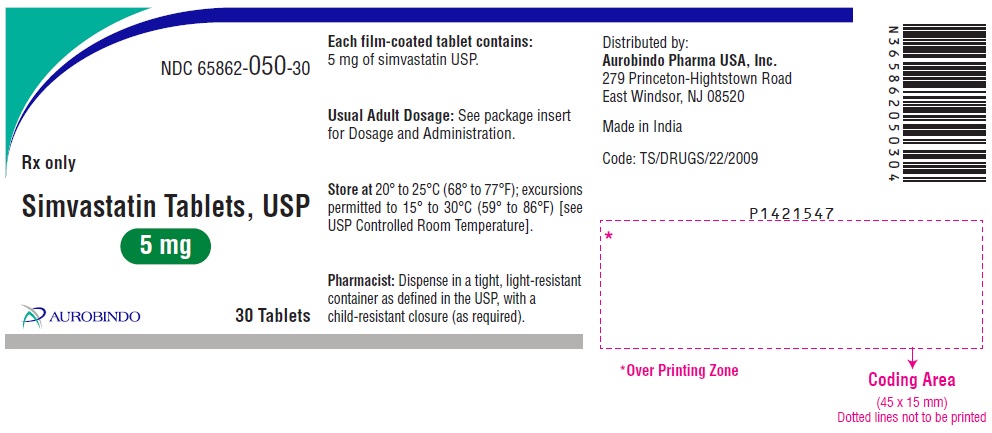
PACKAGE LABEL-PRINCIPAL DISPLAY PANEL - 5 mg (30 Tablets Bottle) NDC 65862-050-30 Rx only Simvastatin Tablets, USP 5 mg AUROBINDO 30 Tablets PACKAGE LABEL-PRINCIPAL DISPLAY PANEL - 5 mg (30 Tablets Bottle)
PACKAGE LABEL-PRINCIPAL DISPLAY PANEL - 10 mg (30 Tablets Bottle) NDC 65862-051-30 Rx only Simvastatin Tablets, USP 10 mg AUROBINDO 30 Tablets PACKAGE LABEL-PRINCIPAL DISPLAY PANEL - 10 mg (30 Tablets Bottle)
PACKAGE LABEL-PRINCIPAL DISPLAY PANEL - 20 mg (30 Tablets Bottle) NDC 65862-052-30 Rx only Simvastatin Tablets, USP 20 mg AUROBINDO 30 Tablets PACKAGE LABEL-PRINCIPAL DISPLAY PANEL - 20 mg (30 Tablets Bottle)
PACKAGE LABEL-PRINCIPAL DISPLAY PANEL - 40 mg (30 Tablets Bottle) NDC 65862-053-30 Rx only Simvastatin Tablets, USP 40 mg AUROBINDO 30 Tablets PACKAGE LABEL-PRINCIPAL DISPLAY PANEL - 40 mg (30 Tablets Bottle)
PACKAGE LABEL-PRINCIPAL DISPLAY PANEL - 80 mg (30 Tablets Bottle) NDC 65862-054-30 Rx only Simvastatin Tablets, USP 80 mg AUROBINDO 30 Tablets PACKAGE LABEL-PRINCIPAL DISPLAY PANEL - 80 mg (30 Tablets Bottle)
Medicaid utilization by pack size
Medicare Part D spend CMS · PART D · 2026 (Q1)
About this NDC listing & data coverage
What data is (and isn’t) available for this NDC — tap to expand
| NDC identity (package / product / labeler codes) | ✓ Available |
| Labeler | ✓ Available |
| Product & package description | ✓ Available |
| Marketing category & status | ✓ Available |
| Active ingredient / dosage form / route | ✓ Available |
| FDA label (SPL via DailyMed) | ✓ Available |
| Package photos | ✓ Available |
| Inactive ingredients (structured) | ✓ Available |
| NADAC pharmacy acquisition price (CMS) | — Not published for this NDC CMS publishes NADAC only for NDCs reported in its retail-pharmacy survey. |
| Orange Book / therapeutic-equivalence data | ✓ Available |
| HCPCS J-code billing crosswalk | — Not published for this NDC Most self-administered / retail products have no J-code — that is normal. |
| Medicaid utilization (CMS SDUD) | — Not published for this NDC CMS reports utilization only for NDCs with Medicaid claims above its privacy threshold. |