
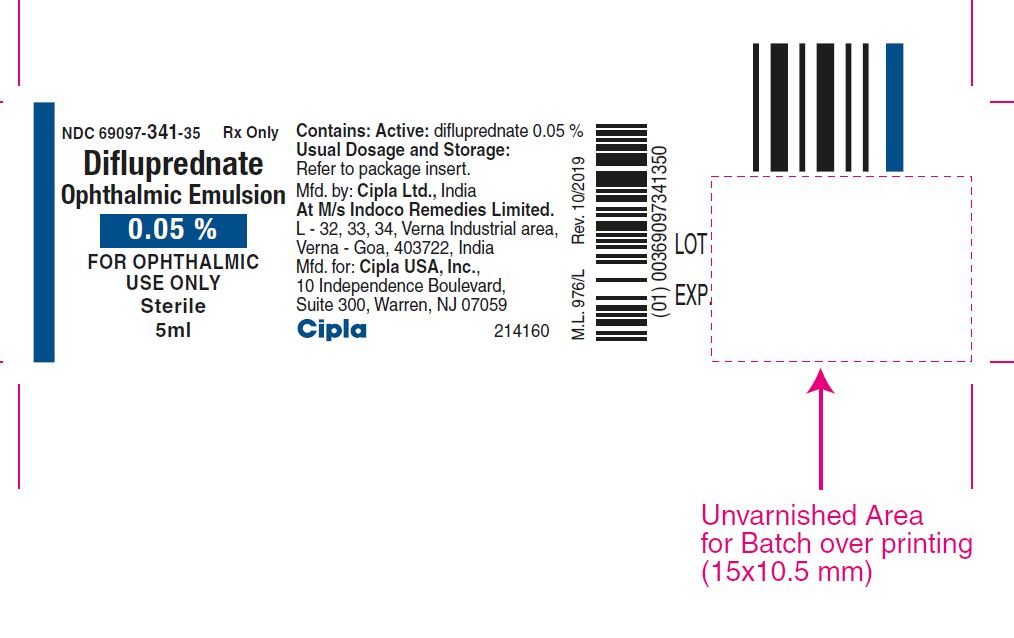
DIFLUPREDNATE .5 mg/mL Emulsion — NDC 69097-341-35 (Billing 69097-0341-35)
This is a package of DIFLUPREDNATE .5 mg/mL Emulsion from Cipla USA Inc., marketed since Aug 2021 and currently FDA-listed; retail pharmacies pay about $9.79 per mL (NADAC). It is this product's only package size.
NDC database record
One package, one record: these facts belong to NDC 69097-341-35 alone.
- Record
- FDA NDC Directory package listing · Human prescription drug
- Code segments
- 69097 labeler · 341 product · 35 package
- Package marketed since
- Aug 9, 2021
- Sample package
- No — commercial package
- Listing certified through
- Dec 31, 2026
- Barcode (UPC-A, from the NDC)
- 3 6909734135 0
- Medicaid fills, this package
- 42 prescriptions in the last four reported quarters
- FDA record last changed
- Jul 24, 2026
Past resolved recalls for this product (3)
Identity & classification
Regulatory identifiers FDA, NLM and CMS codes for this package
Drug-database identifiers Medi-Span GPI and First Databank GCN / HICL / AHFS classification
- GSN (GCN sequence number): 064354
- GCN: 13635
- GPI-14 (Medi-Span): 86300012001620
- HICL (First Databank): 011782
- AHFS class code: 52:08.08.00
- RxCUI (RxNorm): 804544
Where does this data come from?
- FDA openFDA NDC Directory · synced Oct 8, 2026
- FDA label on DailyMed · label index refreshed Oct 6, 2026
- RxNorm (NLM RxNav) · catalog refreshed Oct 1, 2026
- Medi-Span GPI (licensed)
- First Databank (licensed) · refreshed Oct 8, 2026
RxNorm drug class
This medicine belongs to the Corticosteroids, potent (group III) class.
Where does this data come from?
- RxClass (NLM) · catalog refreshed Oct 1, 2026
Clinical
Difluprednate ophthalmic is used to treat eye swelling and pain after eye surgery. Difluprednate ophthalmic is in a class of medications called corticosteroids. It works by stopping the release of certain natural substances that cause swelling and pain.
Read the full MedlinePlus article ↗- It treats inflammation and pain after eye surgery. It is also used for endogenous anterior uveitis, which is inflammation in the front of the eye.
- Put one drop in the affected eye as prescribed. Usually that's several times a day at first, then tapering down. Keep the dropper tip from touching your eye or anything else so the...
- Take them out before using the drops. The preservative can be absorbed by soft lenses. You can put them back in after 10 minutes, if your eye doctor says it's okay.
- Eye pain, redness, light sensitivity, swelling, blurred vision and irritation are the most common. Some may be from the surgery itself. Call your doctor if things get worse or don'...
Patient education
Supplement & herbal interactions
Where does this data come from?
- MedlinePlus (NLM) · refreshed Oct 1, 2026
- FDA label on DailyMed · label index refreshed Oct 6, 2026
Ask a licensed pharmacist directly — free, answered by our team.
Pricing
A drug doesn't have one price. Each row is a different public payment system, and none is what you'd pay at the counter — that depends on your insurance. The ⓘ on each row explains what it measures.
| Price system | Per mL | Per package |
|---|---|---|
| Retail pharmacies payNADAC · weekly | $9.786 | $48.93 / 5 ml |
| Medicaid paysCMS SDUD · 12 mo | $13.85 | $69.23 / 5 ml |
| Medicare drug plans payPart D · quarterly | No Part D plan price is available for this NDC in our data. | |
Where does this data come from?
- CMS NADAC weekly file · file of Feb 18, 2026
- CMS ASP pricing files · refreshed Sep 20, 2026
- CMS Medicaid State Drug Utilization Data · through Q1 2026
- CMS Part D plan pricing files · refreshed Sep 24, 2026
- VA National Acquisition Center price file
Packaging — all sizes for this product
| Package NDC | Description | Marketing start | Marketing end | Status |
|---|---|---|---|---|
| 69097-0341-35 You're viewing this Main listing | 1 BOTTLE in 1 CARTON / 5 mL in 1 BOTTLE | 2021-08-09 | — | Active |
Therapeutic equivalents
| Product | Labeler | Pack | NADAC/unit | TE | Status | Price vs. this |
|---|---|---|---|---|---|---|
| Difluprednate .5 mg/mL 00378-7518-35 | Mylan | 1 bottle | $9.687 | AB | Availability likely | save 1% |
| Difluprednate Ophthalmic .5 mg/mL 00781-6000-78 | Sandoz | 1 bottle | $9.687 | AB | Availability likely | save 1% |
| Difluprednate .5 mg/mL 00832-6054-05 | Upsher-Smith | 1 bottle | $9.687 | AB | Availability likely | save 1% |
| Difluprednate Ophthalmic Emulsion .5 mg/mL 43598-0588-11 | Dr. | 1 bottle | $9.687 | AB | Availability likely | save 1% |
| Difluprednate .5 mg/mL 65145-0161-01 | Caplin | 1 bottle | $9.687 | AB | Availability likely | save 1% |
| Difluprednate .5 mg/mL 69238-1380-03 | Amneal | 1 bottle | $9.687 | AB | Availability likely | save 1% |
| Difluprednate .5 mg/mL 69315-0329-05 | Leading | 1 bottle | $9.687 | AB | Availability likely | save 1% |
| Difluprednate .5 mg/mLthis 69097-0341-35 | Cipla | 1 bottle | $9.786 | — | FDA listed | — |
| Durezol .5 mg/mL 66758-0086-75 | Sandoz | 1 bottle | $42.249 | AB | Availability likely | +332% |
| Difluprednate .5 mg/mL 46708-0750-05 | Alembic | 1 bottle | — | AB | FDA listed | — |
| Difluprednate .5 mg/mL 62332-0750-05 | Alembic | 1 bottle | — | AB | FDA listed | — |
Where does this data come from?
- FDA openFDA NDC Directory · synced Oct 8, 2026
- FDA Orange Book · refreshed Oct 3, 2026
- CMS NADAC weekly file · file of Feb 18, 2026
Availability & generic status
This product is an FDA-approved generic. Other versions of the same drug are listed under Therapeutic equivalents, least expensive first.
Where does this data come from?
- FDA Orange Book · refreshed Oct 3, 2026
Inactive Ingredients / Excipients
Inactive ingredients, also called excipients, are components of the drug product other than the active ingredient. They may include fillers, dyes, coatings, preservatives, flavors, or other formulation ingredients.
🧪 Avoiding an ingredient? See Difluprednate Ophthalmic inactive ingredients by manufacturer: every current product's list side by side, so you can ask your pharmacy for the version that does not list it.
💡 Tap an ingredient (hover on desktop) to see what it is and why it’s used.
-
UNII R57ZHV85D4
Boric acid is a weak acid derived from boron. In medicines, it typically serves as a buffer to help maintain the product's pH level and may act as a preservative in certain formulations.
-
UNII D5340Y2I9G
Castor oil is a natural plant-based oil used in medicines as a lubricant, laxative agent, and solvent. It helps medicine ingredients dissolve or flow smoothly and can aid bowel movement in formulations designed for that purpose.
-
UNII 7FLD91C86K
Edetate disodium is a chemical compound that binds and removes certain metal ions. In medicines, it acts as a preservative and stabilizer by preventing metals like calcium from interfering with the product's shelf life and consistency.
-
UNII PDC6A3C0OX
Glycerin is a clear, thick liquid derived from plant oils or fats. It acts as a humectant to retain moisture, a sweetener, and a solvent in medications.
-
UNII 6OZP39ZG8H
Polysorbate 80 is a synthetic emulsifier derived from sorbitol and oleic acid. It helps mix oil and water-based ingredients together in medications and improves how the product disperses in the body.
-
UNII 4550K0SC9B
Sodium acetate is a salt derived from acetic acid. It acts as a buffer to help maintain the medicine's pH stability and may serve as a preservative or solubilizer in liquid formulations.
-
UNII 55X04QC32I
A strong alkaline chemical used to adjust and maintain the pH balance of liquid medicines. It helps keep the medicine stable and ensures it stays effective during storage.
-
UNII X045WJ989B
Sorbic acid is a preservative derived from berries that prevents mold, yeast, and bacterial growth in medicines. It keeps the product stable and safe during storage.
-
UNII 059QF0KO0R
Water is a liquid solvent that dissolves and mixes ingredients together in liquid medicines, syrups, and injections. It helps distribute the active drug evenly throughout the product.
9 inactive ingredients listed in the exact product block matched to this NDC.
Where does this data come from?
ingredient classCode="IACT" elements from the exact product block matched by this NDC. Label-section narrative from DailyMed / the openFDA label index is shown separately when available.- FDA label on DailyMed · label index refreshed Oct 6, 2026
- FDA openFDA NDC Directory · synced Oct 8, 2026
Inactive ingredient FAQ
Are inactive ingredients the same for every manufacturer?
Why might an inactive ingredient be missing?
Can inactive ingredients matter?
Manufacturer & labeler
More NDCs from Cipla USA Inc. labeler code 69097
- Exemestane 25 mg Tablet NDC 69097-316-02
- Budesonide Inhalation Suspension .25 mg/2mL Inhalant NDC 69097-318-53
- Budesonide Inhalation Suspension .5 mg/2mL Inhalant NDC 69097-319-53
- Budesonide Inhalation Suspension 1 mg/2mL Inhalant NDC 69097-321-53
- Dimethyl Fumarate 120 mg Capsule, Delayed Release NDC 69097-322-89
- Dimethyl Fumarate 240 mg Capsule, Delayed Release NDC 69097-323-03
- grisofulvin 125 mg/5mL Suspension NDC 69097-361-08
- Abacavir and Lamivudine 600 mg; 300 mg Tablet, Film Coated NDC 69097-362-02
- Testosterone 30 mg/1.5mL Solution NDC 69097-363-44
- lenalidomide 5 mg Capsule NDC 69097-381-73
- lenalidomide 10 mg Capsule NDC 69097-382-73
- lenalidomide 15 mg Capsule NDC 69097-383-81
Where does this data come from?
- FDA openFDA NDC Directory · synced Oct 8, 2026
- Drugs@FDA
Full prescribing information FDA SPL
🎯 Indications and Usage ▾
1 INDICATIONS AND USAGE Difluprednate ophthalmic emulsion is a topical corticosteroid that is indicated for: The treatment of inflammation and pain associated with ocular surgery ( 1.1 ) The treatment of endogenous anterior uveitis ( 1.2 )
1.1Ocular Surgery Difluprednate ophthalmic emulsion 0.05%, a topical corticosteroid, is indicated for the treatment of inflammation and pain associated with ocular surgery.
1.2Endogenous Anterior Uveitis Difluprednate ophthalmic emulsion is also indicated for the treatment of endogenous anterior uveitis.
⏱️ Dosage and Administration ▾
2 DOSAGE AND ADMINISTRATION For the treatment of inflammation and pain associated with ocular surgery instill one drop into the conjunctival sac of the affected eye 4 times daily beginning 24 hours after surgery and continuing throughout the first 2 weeks of the postoperative period, followed by 2 times daily for a week and then a taper based on the response. ( 2.1 ) For the treatment of endogenous anterior uveitis instill one drop into the conjunctival sac of the affected eye 4 times daily for 14 days followed by tapering as clinically indicated.
( 2.2 )
2.1Ocular Surgery Instill one drop into the conjunctival sac of the affected eye 4 times daily beginning 24 hours after surgery and continuing throughout the first 2 weeks of the postoperative period, followed by 2 times daily for a week and then a taper based on the response.
2.2Endogenous Anterior Uveitis Instill one drop into the conjunctival sac of the affected eye 4 times daily for 14 days followed by tapering as clinically indicated.
💊 Dosage Forms and Strengths ▾
3 DOSAGE FORMS AND STRENGTHS Difluprednate ophthalmic emulsion contains 0.05% difluprednate as a sterile preserved emulsion for topical ophthalmic administration. Difluprednate ophthalmic emulsion contains 0.05% difluprednate, as a sterile preserved ophthalmic emulsion for topical ophthalmic use only. ( 3 )
⛔ Contraindications ▾
4 CONTRAINDICATIONS The use of difluprednate ophthalmic emulsion, as with other ophthalmic corticosteroids, is contraindicated in most active viral diseases of the cornea and conjunctiva including epithelial herpes simplex keratitis (dendritic keratitis), vaccinia, and varicella, and also in mycobacterial infection of the eye and fungal disease of ocular structures. Difluprednate ophthalmic emulsion, as with other ophthalmic corticosteroids, is contraindicated in most active viral diseases of the cornea and conjunctiva including epithelial herpes simplex keratitis (dendritic keratitis), vaccinia, and varicella, and also in mycobacterial infection of the eye and fungal diseases of ocular structures.
( 4 )
⚠️ Warnings and Cautions ▾
5 WARNINGS AND PRECAUTIONS Intraocular pressure (IOP) increase-Prolonged use of corticosteroids may result in glaucoma with damage to the optic nerve, defects in visual acuity and fields of vision. If this product is used for 10 days or longer, IOP should be monitored. ( 5.1 ) Cataracts-Use of corticosteroids may result in posterior subcapsular cataract formation.
( 5.2 ) Delayed healing-The use of steroids after cataract surgery may delay healing and increase the incidence of bleb formation. In those diseases causing thinning of the cornea or sclera, perforations have been known to occur with the use of topical steroids. The initial prescription and renewal of the medication order beyond 28 days should be made by a physician only after examination of the patient with the aid of magnification such as slit lamp biomicroscopy and, where appropriate, fluorescein staining.
( 5.3 ) Bacterial infections-Prolonged use of corticosteroids may suppress the host response and thus increase the hazard of secondary ocular infections. In acute purulent conditions, steroids may mask infection or enhance existing infection. If signs and symptoms fail to improve after 2 days, the patient should be re-evaluated.
( 5.4 ) Viral infections-Employment of a corticosteroid medication in the treatment of patients with a history of herpes simplex requires great caution. Use of ocular steroids may prolong the course and may exacerbate the severity of many viral infections of the eye (including herpes simplex). ( 5.5 ) Fungal infections-Fungal infections of the cornea are particularly prone to develop coincidentally with long-term local steroid application.
Fungus invasion must be considered in any persistent corneal ulceration where a steroid has been used or is in use. ( 5.6 ) To report SUSPECTED ADVERSE REACTIONS, contact Cipla Ltd. at 1-866-604-3268 or FDA at 1-800-FDA-1088 or www.fda.gov/medwatch.
5.1IOP Increase Prolonged use of corticosteroids may result in glaucoma with damage to the optic nerve, defects in visual acuity and fields of vision. Steroids should be used with caution in the presence of glaucoma. If this product is used for 10 days or longer, intraocular pressure should be monitored.
5.2Cataracts Use of corticosteroids may result in posterior subcapsular cataract formation.
5.3Delayed Healing The use of steroids after cataract surgery may delay healing and increase the incidence of bleb formation. In those diseases causing thinning of the cornea or sclera, perforations have been known to occur with the use of topical steroids. The initial prescription and renewal of the medication order beyond 28 days should be made by a physician only after examination of the patient with the aid of magnification such as slit lamp biomicroscopy and, where appropriate, fluorescein staining.
5.4Bacterial Infections Prolonged use of corticosteroids may suppress the host response and thus increase the hazard of secondary ocular infections. In acute purulent conditions, steroids may mask infection or enhance existing infection. If signs and symptoms fail to improve after 2 days, the patient should be re-evaluated.
5.5Viral Infections Employment of a corticosteroid medication in the treatment of patients with a history of herpes simplex requires great caution. Use of ocular steroids may prolong the course and may exacerbate the severity of many viral infections of the eye (including herpes simplex).
5.6Fungal Infections Fungal infections of the cornea are particularly prone to develop coincidentally with long-term local steroid application. Fungus invasion must be considered in any persistent corneal ulceration where a steroid has been used or is in use. Fungal culture should be taken when appropriate.
5.7Topical Ophthalmic Use Only Difluprednate ophthalmic emulsion is not indicated for intraocular administration.
5.8Contact Lens Wear Difluprednate ophthalmic emulsion should not be instilled while wearing contact lenses. Remove contact lenses prior t… [Excerpted — this section continues on DailyMed.]
🤒 Adverse Reactions ▾
6 ADVERSE REACTIONS The following serious reactions are found elsewhere in the labeling: Elevated intraocular pressure [see Warnings and Precautions ( 5.1 )] Posterior subcapsular cataract formation [see Warnings and Precautions ( 5.2 )] Secondary ocular infection [see Warnings and Precautions ( 5.4 )] Perforation of the globe [see Warnings and Precautions ( 5.3 )]
6.1Ocular Surgery Ocular adverse reactions occurring in 5-15% of subjects in clinical studies with difluprednate included corneal edema, ciliary and conjunctival hyperemia, eye pain, photophobia, posterior capsule opacification, anterior chamber cells, anterior chamber flare, conjunctival edema, and blepharitis. Other ocular adverse reactions occurring in 1-5% of subjects included reduced visual acuity, punctate keratitis, eye inflammation, and iritis. Ocular adverse reactions occurring in < 1% of subjects included application site discomfort or irritation, corneal pigmentation and striae, episcleritis, eye pruritis, eyelid irritation and crusting, foreign body sensation, increased lacrimation, macular edema, sclera hyperemia, and uveitis.
Most of these reactions may have been the consequence of the surgical procedure.
6.2Endogenous Anterior Uveitis A total of 200 subjects participated in the clinical trials for endogenous anterior uveitis, of which 106 were exposed to difluprednate. The most common adverse reactions of those exposed to difluprednate occurring in 5-10% of subjects included blurred vision, eye irritation, eye pain, headache, increased IOP, iritis, limbal and conjunctival hyperemia, punctate keratitis, and uveitis. Adverse reactions occurring in 2-5% of subjects included anterior chamber flare, corneal edema, dry eye, iridocyclitis, photophobia, and reduced visual acuity.
👥 Use in Specific Populations ▾
8 USE IN SPECIFIC POPULATIONS
8.1Pregnancy Teratogenic Effects Pregnancy Category C. Difluprednate has been shown to be embryotoxic (decrease in embryonic body weight and a delay in embryonic ossification) and teratogenic (cleft palate and skeletal anomalies) when administered subcutaneously to rabbits during organogenesis at a dose of 1-10 mcg/kg/day. The no-observed-effect-level (NOEL) for these effects was 1 mcg/kg/day, and 10 mcg/kg/day was considered to be a teratogenic dose that was concurrently found in the toxic dose range for fetuses and pregnant females.
Treatment of rats with 10 mcg/kg/day subcutaneously during organogenesis did not result in any reproductive toxicity, nor was it maternally toxic. At 100 mcg/kg/day after subcutaneous administration in rats, there was a decrease in fetal weights and delay in ossification, and effects on weight gain in the pregnant females. It is difficult to extrapolate these doses of difluprednate to maximum daily human doses of difluprednate, since difluprednate is administered topically with minimal systemic absorption, and difluprednate blood levels were not measured in the reproductive animal studies.
However, since use of difluprednate during human pregnancy has not been evaluated and cannot rule out the possibility of harm, difluprednate ophthalmic emulsion should be used during pregnancy only if the potential benefit justifies the potential risk to the embryo or fetus.
8.3Nursing Mothers It is not known whether topical ophthalmic administration of corticosteroids could result in sufficient systemic absorption to produce detectable quantities in breast milk. Systemically administered corticosteroids appear in human milk and could suppress growth, interfere with endogenous corticosteroid production, or cause other untoward effects. Caution should be exercised when difluprednate ophthalmic emulsion is administered to a nursing woman.
8.4Pediatric Use Difluprednate was evaluated in a 3-month, multicenter, double-masked trial in 79 pediatric patients (39 difluprednate; 40 prednisolone acetate) 0 to 3 years of age for the treatment of inflammation following cataract surgery. A similar safety profile was observed in pediatric patients comparing difluprednate to prednisolone acetate ophthalmic suspension, 1%.
8.5Geriatric Use No overall differences in safety or effectiveness have been observed between elderly and younger patients.
🤰 Pregnancy ▾
8.1Pregnancy Teratogenic Effects Pregnancy Category C. Difluprednate has been shown to be embryotoxic (decrease in embryonic body weight and a delay in embryonic ossification) and teratogenic (cleft palate and skeletal anomalies) when administered subcutaneously to rabbits during organogenesis at a dose of 1-10 mcg/kg/day. The no-observed-effect-level (NOEL) for these effects was 1 mcg/kg/day, and 10 mcg/kg/day was considered to be a teratogenic dose that was concurrently found in the toxic dose range for fetuses and pregnant females.
Treatment of rats with 10 mcg/kg/day subcutaneously during organogenesis did not result in any reproductive toxicity, nor was it maternally toxic. At 100 mcg/kg/day after subcutaneous administration in rats, there was a decrease in fetal weights and delay in ossification, and effects on weight gain in the pregnant females. It is difficult to extrapolate these doses of difluprednate to maximum daily human doses of difluprednate, since difluprednate is administered topically with minimal systemic absorption, and difluprednate blood levels were not measured in the reproductive animal studies.
However, since use of difluprednate during human pregnancy has not been evaluated and cannot rule out the possibility of harm, difluprednate ophthalmic emulsion should be used during pregnancy only if the potential benefit justifies the potential risk to the embryo or fetus.
🧒 Pediatric Use ▾
8.4Pediatric Use Difluprednate was evaluated in a 3-month, multicenter, double-masked trial in 79 pediatric patients (39 difluprednate; 40 prednisolone acetate) 0 to 3 years of age for the treatment of inflammation following cataract surgery. A similar safety profile was observed in pediatric patients comparing difluprednate to prednisolone acetate ophthalmic suspension, 1%.
🧓 Geriatric Use ▾
8.5Geriatric Use No overall differences in safety or effectiveness have been observed between elderly and younger patients.
🧬 Clinical Pharmacology ▾
12 CLINICAL PHARMACOLOGY
12.1Mechanism of Action Corticosteroids inhibit the inflammatory response to a variety of inciting agents and may delay or slow healing. They inhibit edema, fibrin deposition, capillary dilation, leukocyte migration, capillary proliferation, fibroblast proliferation, deposition of collagen, and scar formation associated with inflammation. There is no generally accepted explanation for the mechanism of action of ocular corticosteroids.
However, corticosteroids are thought to act by the induction of phospholipase A2 inhibitory proteins, collectively called lipocortins. It is postulated that these proteins control the biosynthesis of potent mediators of inflammation such as prostaglandins and leukotreines by inhibiting the release of their common precursor arachidonic acid. Arachidonic acid is released from membrane phospholipids by phospholipase A2.
Difluprednate is structurally similar to other corticosteroids.
12.3Pharmacokinetics Difluprednate undergoes deacetylation in vivo to 6α, 9-difluoroprednisolone 17-butyrate (DFB), an active metabolite of difluprednate. Clinical pharmacokinetic studies of difluprednate after repeat ocular instillation of 2 drops of difluprednate (0.01% or 0.05%) four times per day for 7 days showed that DFB levels in blood were below the quantification limit (50 ng/mL) at all time points for all subjects, indicating the systemic absorption of difluprednate after ocular instillation of difluprednate is limited.
🧬 Mechanism of Action ▾
12.1Mechanism of Action Corticosteroids inhibit the inflammatory response to a variety of inciting agents and may delay or slow healing. They inhibit edema, fibrin deposition, capillary dilation, leukocyte migration, capillary proliferation, fibroblast proliferation, deposition of collagen, and scar formation associated with inflammation. There is no generally accepted explanation for the mechanism of action of ocular corticosteroids.
However, corticosteroids are thought to act by the induction of phospholipase A2 inhibitory proteins, collectively called lipocortins. It is postulated that these proteins control the biosynthesis of potent mediators of inflammation such as prostaglandins and leukotreines by inhibiting the release of their common precursor arachidonic acid. Arachidonic acid is released from membrane phospholipids by phospholipase A2.
Difluprednate is structurally similar to other corticosteroids.
📦 How Supplied / Storage and Handling ▾
16 HOW SUPPLIED/STORAGE AND HANDLING Difluprednate ophthalmic emulsion 0.05% is a sterile, white colour homogenous topical ophthalmic emulsion supplied in a white opaque LDPE bottle with a controlled drop tip and a pink cap in the following size: 5 mL in a 5 mL bottle (NDC 69097-341-35) Storage and Handling Store at 15-25°C (59-77°F). Do not freeze. Protect from light. When not in use, keep the bottles in the protective carton.
📋 Description ▾
11 DESCRIPTION Difluprednate ophthalmic emulsion 0.05% is a sterile, topical anti-inflammatory corticosteroid for ophthalmic use. The chemical name is 6α,9difluoro-11β,17,21- trihydroxypregna-1,4-diene-3,20-dione 21-acetate 17-butyrate (CAS number 23674-86-4). Difluprednate is represented by the following structural formula: Difluprednate has a molecular weight of 508.55, and the empirical formula is C 27 H 34 F 2 O 7 .
Each mL contains: ACTIVE: difluprednate 0.5 mg (0.05%); INACTIVE: boric acid, castor oil, glycerin, polysorbate 80, water for injection, sodium acetate, edetate disodium, sodium hydroxide (to adjust the pH to 5.2 to 5.8). The emulsion is essentially isotonic with a tonicity of 304 to 411 mOsm/kg. PRESERVATIVE: sorbic acid 0.1%.
Image
💬 Information for Patients ▾
17 PATIENT COUNSELING INFORMATION
17.1Risk of Contamination This product is sterile when packaged. Advise patients not to allow the dropper tip to touch any surface, as this may contaminate the emulsion. Use of the same bottle for both eyes is not recommended with topical eye drops that are used in association with surgery.
17.2Risk of Secondary Infection If pain develops, or if redness, itching, or inflammation becomes aggravated, advise patients to consult a physician.
17.3Contact Lens Wear Difluprednate ophthalmic emulsion should not be instilled while wearing contact lenses. Advise patients to remove contact lenses prior to instillation of difluprednate ophthalmic emulsion. The preservative in difluprednate ophthalmic emulsion may be absorbed by soft contact lenses.
Lenses may be reinserted after 10 minutes following administration of difluprednate ophthalmic emulsion. Manufactured by: Indoco Remedies Ltd., L- 32, 33, 34, Verna Industrial Area, Verna- Goa, 403722, India Manufactured for: Cipla USA, Inc. 10 Independence Boulevard, Suite 300 Warren, NJ 07059 Revised: 04/2020
🍼 Nursing Mothers ▾
8.3Nursing Mothers It is not known whether topical ophthalmic administration of corticosteroids could result in sufficient systemic absorption to produce detectable quantities in breast milk. Systemically administered corticosteroids appear in human milk and could suppress growth, interfere with endogenous corticosteroid production, or cause other untoward effects. Caution should be exercised when difluprednate ophthalmic emulsion is administered to a nursing woman.
🧬 Pharmacokinetics ▾
12.3Pharmacokinetics Difluprednate undergoes deacetylation in vivo to 6α, 9-difluoroprednisolone 17-butyrate (DFB), an active metabolite of difluprednate. Clinical pharmacokinetic studies of difluprednate after repeat ocular instillation of 2 drops of difluprednate (0.01% or 0.05%) four times per day for 7 days showed that DFB levels in blood were below the quantification limit (50 ng/mL) at all time points for all subjects, indicating the systemic absorption of difluprednate after ocular instillation of difluprednate is limited.
🔬 Clinical Studies ▾
14 CLINICAL STUDIES
14.1Ocular Surgery Clinical efficacy was evaluated in 2 randomized, double-masked, placebo-controlled trials in which subjects with an anterior chamber cell grade ≥ "2" (a cell count of 11 or higher) after cataract surgery were assigned to difluprednate or placebo (vehicle) following surgery. One drop of difluprednate or vehicle was self instilled either 2 times per day or 4 times per day for 14 days, beginning the day after surgery. The presence of complete clearing (a cell count of 0) was assessed 3, 8 and 15 days post-surgery using a slit lamp binocular microscope.
In the intent-to-treat analyses of both studies, a significant benefit was seen in the 4 times per day (QID) difluprednate-treated group in ocular inflammation, at days 8 and 15, and reduction of pain, at days 3, 8 and 15, when compared with placebo. The consolidated clinical trial results are provided below.
14.2Endogenous Anterior Uveitis Clinical efficacy was evaluated in two randomized, double masked active controlled trials in which patients who presented with endogenous anterior uveitis were treated with either difluprednate 4 times daily or prednisolone acetate ophthalmic suspension, 1%, 8 times daily for 14 days. Both studies demonstrated that difluprednate was equally effective as prednisolone acetate ophthalmic suspension, 1% in treating subjects with endogenous anterior uveitis. Mean Change from Baseline in Anterior Chamber Cell Grade* Study 1 time point Difluprednate N=57 Prednisolone Acetate N=53 Difference † (95% CI) Baseline 2.6 2.5 0.0 (-0.22, 0.28) Day 3 -1.0 -1.0 -0.1 (-0.35, 0.25) Day 7 -1.6 -1.5 -0.0 (-0.31, 0.25) Day 14 -2.0 -1.8 -0.2 (-0.46, 0.10) Day 21 -2.2 -1.9 -0.3 (-0.53, 0.01) Day 28 -2.2 -2.1 -0.1 (-0.37, 0.18) Day 35 -2.1 -2.0 -0.1 (-0.39, 0.20) Day 42 -2.1 -2.1 0.0 (-0.27, 0.34) Study 2 time point Difluprednate N=50 Prednisolone Acetate N=40 Difference † (95% Cl) Baseline 2.4 2.4 0.0 (-0.21, 0.29) Day 3 -0.9 -0.9 -0.0 (-0.34, 0.25) Day 7 -1.7 -1.6 -0.1 (-0.35, 0.21) Day 14 -1.9 -1.8 -0.1 (-0.34, 0.20) Day 21 -2.0 -2.0 0.0 (-0.25, 0.28) Day 28 -2.0 -2.0 0.0 (-0.21, 0.26) Day 35 -2.1 -2.0 -0.1 (-0.32, 0.16) Day 42 -2.0 -1.9 -0.1 (-0.36, 0.24) * with 5 grades: 0 = 0 cells; 1 = 1 to 10 cells; 2 = 11 to 20 cells; 3 = 21 to 50 cells; and 4 = >50 cells † adjusted for baseline AC cell grade and study center and based on ITT dataset with LOCF for missing data Image Image
🧪 Nonclinical Toxicology ▾
13 NONCLINICAL TOXICOLOGY
13.1Carcinogenesis, Mutagenesis, and Impairment of Fertility Difluprednate was not genotoxic in vitro in the Ames test, and in cultured mammalian cells CHL/IU (a fibroblastic cell line derived from the lungs of newborn female Chinese hamsters). An in vivo micronucleus test of difluprednate in mice was also negative. Treatment of male and female rats with subcutaneous difluprednate up to 10 mcg/kg/day prior to and during mating did not impair fertility in either gender.
Long term studies have not been conducted to evaluate the carcinogenic potential of difluprednate.
13.2Animal Toxicology and/or Pharmacology In multiple studies performed in rodents and non-rodents, subchronic and chronic toxicity tests of difluprednate showed systemic effects such as suppression of body weight gain; a decrease in lymphocyte count; atrophy of the lymphatic glands and adrenal gland; and for local effects, thinning of the skin; all of which were due to the pharmacologic action of the molecule and are well known glucocorticosteroid effects. Most, if not all of these effects were reversible after drug withdrawal.
The NOEL for the subchronic and chronic toxicity tests were consistent between species and ranged from 1-1.25 mcg/kg/day.
📄 Package Label / Principal Display Panel ▾
PACKAGE LABEL.PRINCIPAL DISPLAY PANEL NDC 69097-341-35 Rx Only Difluprednate Ophthalmic Emulsion 0.05 % FOR OPHTHALMIC USE ONLY Sterile 5ml Cipla image NDC 69097-341-35 Rx Only Difluprednate Ophthalmic Emulsion 0.05 % FOR OPHTHALMIC USE ONLY Sterile 5ml Cipla image container label carton label