
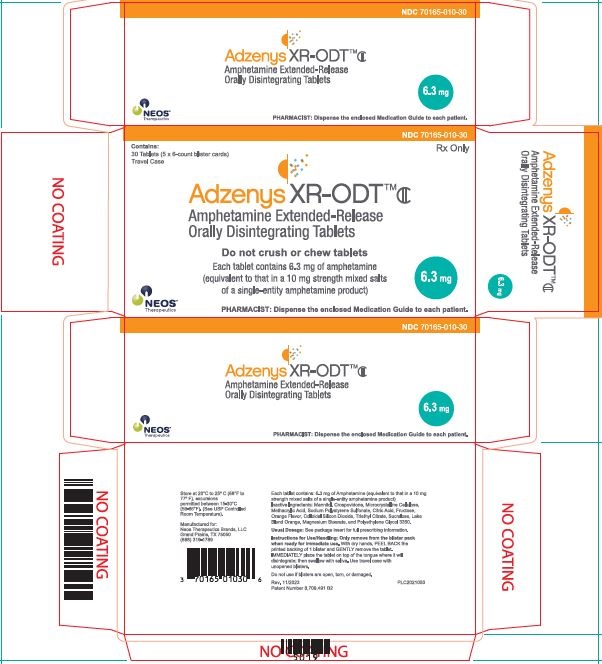
Adzenys XR-ODT Amphetamine 6.3 mg Tablet, Orally Disintegrating
🆔 Identity & classification
Where does this data come from?
🏷️ RxNorm drug class
This medicine belongs to the Central Nervous System Stimulant class.
Where does this data come from?
🏭 Manufacturer & labeler
Where does this data come from?
🩺 Clinical
Amphetamine (Adzenys® ER, Adzenys® XR, Dyanavel® XR, Evekeo®, Evekeo® ODT, others) is used as part of a treatment program to control symptoms of attention deficit hyperactivity disorder (ADHD; more difficulty focusing, controlling actions, and remaining still or quiet than other people who are the same age) in adults and children. Amphetamine (Evekeo®, others) is also used to treat narcolepsy (a sleep disorder that causes excessive daytime sleepiness and sudden attacks of sleep). Amphetamine (Evekeo®, others) is also used for a limited period of time (a few weeks) along with a reduced calorie...
Read the full MedlinePlus article ↗- It depends on the specific product. Most amphetamine products — including Adzenys XR-ODT, Dyanavel XR, and the extended-release orally disintegrating tablets — are approved to trea...
- What conditions is amphetamine actually approved to treat?
- You can take most amphetamine products with or without food — it won't meaningfully change how much you absorb. That said, eating (especially a high-fat meal) can delay when it kic...
- Is it okay to take this with food, or does it have to be on an empty stomach?
Patient education
Supplement & herbal interactions
Some supplements/herbs that may interact with Amphetamine — tap one for details:
Where does this data come from?
Ask a licensed pharmacist directly — free, answered by our team.
💊 What it looks like
Where does this data come from?
🧪 Inactive Ingredients / Excipients
Inactive ingredients, also called excipients, are components of the drug product other than the active ingredient. They may include fillers, dyes, coatings, preservatives, flavors, or other formulation ingredients.
💡 Tap an ingredient (hover on desktop) to see what it is and why it’s used.
-
UNII 2968PHW8QP
A weak organic acid derived from citrus fruits or made through fermentation. It works as a buffer to control pH, a preservative to extend shelf life, and a flavoring agent in medications.
-
UNII 68401960MK
Crospovidone is a synthetic polymer made from polyvinylpyrrolidone. It acts as a disintegrant, helping tablets break apart quickly in the stomach so the medicine dissolves and absorbs into the body.
-
UNII 6YSS42VSEV
Fructose is a natural sugar derived from fruits and plants. It's used in medicines as a sweetener and filler to improve taste and add bulk to tablets or syrups.
-
UNII 70097M6I30
Magnesium stearate is a salt made from magnesium and stearic acid, a fatty substance. It's used in tablets and capsules as a lubricant and glidant to help ingredients flow smoothly during manufacturing and prevent sticking.
-
UNII 3OWL53L36A
A natural sugar alcohol derived from seaweed or synthesized in the lab. It's used as a filler to add bulk, a sweetener in sugar-free formulas, and a disintegrant to help tablets break apart in the stomach.
-
UNII 1CS02G8656
Methacrylic acid is a synthetic polymer used as a coating material and binder in tablets and capsules. It helps control how and where the medication releases in the digestive system.
-
UNII OP1R32D61U
Microcrystalline cellulose is a purified form of cellulose, a natural fiber from plant sources. It acts as a binder and filler in tablets and capsules, helping hold ingredients together and give the medicine its shape and size.
-
UNII 3WJQ0SDW1A
Polyethylene glycol is a synthetic liquid or solid polymer used in medicines as a solvent, lubricant, and humectant. It helps dissolve active ingredients, reduces friction during manufacturing, and retains moisture in the final product.
-
UNII ETJ7Z6XBU4
Silicon dioxide is a naturally occurring mineral used as a glidant and anti-caking agent. It helps powder ingredients flow smoothly and prevents clumping during manufacturing and storage.
-
UNII 1699G8679Z
A synthetic polymer that acts as a binder and helps hold tablet or capsule ingredients together. It may also be used to improve how the medicine dissolves or is absorbed in the digestive system.
-
UNII 96K6UQ3ZD4
Sucralose is a synthetic sweetener made from sugar. It's added to medicines to improve taste without adding calories, helping make bitter or unpleasant-tasting drugs easier to take.
-
UNII 8Z96QXD6UM
Triethyl citrate is a clear liquid derived from citric acid. It acts as a plasticizer and solvent in tablet coatings and film formulations, helping the coating remain flexible and adhere properly to the medicine.
12 inactive ingredients listed in the exact product block matched to this NDC.
Where does this data come from?
ingredient classCode="IACT" elements from the exact product block matched by this NDC. Label-section narrative from DailyMed / the openFDA label index is shown separately when available.Inactive ingredient FAQ
Are inactive ingredients the same for every manufacturer?
Why might an inactive ingredient be missing?
Can inactive ingredients matter?
💲 Pricing
A drug doesn't have one price. Each row is a different public payment system, and none is what you'd pay at the counter — that depends on your insurance. The ⓘ on each row explains what it measures.
| Price system | Per ea | Per package |
|---|---|---|
| Retail pharmacies payNADAC · weekly | $19.209 | $3,457.60 / 180 tablets |
| Medicaid paysCMS SDUD · 12 mo | $18.12 | $3,262.34 / 180 tablets |
| Medicare drug plans payPart D · quarterly | No Part D plan price is available for this NDC in our data. | |
Where does this data come from?
🔁 Therapeutic equivalents
| Product | Labeler | Pack | NADAC/unit | TE | Status | Price vs. this |
|---|---|---|---|---|---|---|
| Amphetamine 6.3 mg 00480-3316-65 | Teva | 6 tablets | $16.073 | AB | Availability likely | save 16% |
| Amphetamine Extended-Release 6.3 mg 62542-0010-30 | Neos | 6 tablets | $16.073 | AB | Availability likely | save 16% |
| Adzenys XR-ODT 6.3 mgthis 70165-0010-30 | Neos | 6 tablets | $19.209 | AB | Availability likely | — |
Where does this data come from?
⏳ Availability & generic status
FDA-approved generic versions are listed, and recent pricing/market data suggests they may be available — see Therapeutic equivalents.
Why the date isn’t exact: Generic timing can change because patents may be challenged, settled, licensed, added, removed, or worked around with a narrower label — and FDA approval does not always mean a pharmacy can get the generic today.
🛈 What do these terms mean?
- Patent
- Legal protection listed in the Orange Book that may delay generic approval or launch. Issued by the U.S. Patent & Trademark Office.
- Substance patent
- Covers the active drug molecule itself — the hardest to design around. A generic generally can’t launch until it expires.
- Formulation (product) patent
- Covers a specific formulation or dosage form. A generic can sometimes work around it with a different formulation.
- Method-of-use patent
- A patent covering one specific approved use of the drug — not necessarily the whole molecule. A generic can sometimes launch with a “skinny label” that carves out the protected use and keeps the others.
- Skinny label
- A generic label that omits a still-patented use when the FDA allows it — letting a generic reach the market for the unprotected uses.
- Exclusivity
- FDA-granted marketing protection, separate from patents — e.g. 5-yr new chemical entity, 7-yr orphan drug, or a +6-month pediatric extension.
- Paragraph IV
- A generic applicant’s formal challenge to a listed patent. It can potentially lead to earlier generic entry, but often involves litigation or a settlement.
- RLD / RS
- Reference Listed Drug — the brand product the FDA uses as the reference for generic applications. Reference Standard — the product the FDA expects generics to compare against in bioequivalence testing.
- TE / AB rating
- FDA therapeutic-equivalence rating. An AB rating generally means the FDA considers a generic therapeutically equivalent to — and substitutable for — the brand.
- LOE (loss of exclusivity)
- The latest patent or exclusivity currently listed — the loss-of-exclusivity / latest-listed-protection date shown on this page. Paragraph-IV challenges and settlements can move the real date earlier; FDA approval and a manufacturer’s decision to market can move it later.
Built from the FDA Orange Book. The bars above are scaled to each protection’s expiry; the red LOE marker is the last one to lapse.
| Patent | Type | Use code | Expires |
|---|---|---|---|
| US 8709491 ↗ | Drug product | — | Jun 28, 2032 |
| US 8709491 ↗ | Drug product | — | Jun 28, 2032 |
| US 9017731 ↗ | Drug product | — | Jun 28, 2032 |
| US 8840924 ↗ | Drug product | — | Apr 9, 2026 |
| US 8840924 ↗ | Drug product | — | Apr 9, 2026 |
| US 9017731 ↗ | Drug product | — | Jun 28, 2032 |
| US 8709491 ↗ | Drug product | — | Jun 28, 2032 |
| US 8709491 ↗ | Drug product | — | Jun 28, 2032 |
| US 9839619 ↗ | Drug product | — | Jun 28, 2032 |
| US 9265737 ↗ | Drug product | — | Jun 28, 2032 |
| US 9839619 ↗ | Drug product | — | Jun 28, 2032 |
| US 9265737 ↗ | Drug product | — | Jun 28, 2032 |
| US 8840924 ↗ | Drug product | — | Apr 9, 2026 |
| US 9017731 ↗ | Drug product | — | Jun 28, 2032 |
| US 8840924 ↗ | Drug product | — | Apr 9, 2026 |
| US 8840924 ↗ | Drug product | — | Apr 9, 2026 |
| US 9017731 ↗ | Drug product | — | Jun 28, 2032 |
| US 9265737 ↗ | Drug product | — | Jun 28, 2032 |
| US 9839619 ↗ | Drug product | — | Jun 28, 2032 |
| US 9265737 ↗ | Drug product | — | Jun 28, 2032 |
| US 9017731 ↗ | Drug product | — | Jun 28, 2032 |
| US 9839619 ↗ | Drug product | — | Jun 28, 2032 |
| US 9839619 ↗ | Drug product | — | Jun 28, 2032 |
| US 9265737 ↗ | Drug product | — | Jun 28, 2032 |
| US 8840924 ↗ | Drug product | — | Apr 9, 2026 |
| US 9017731 ↗ | Drug product | — | Jun 28, 2032 |
| US 9265737 ↗ | Drug product | — | Jun 28, 2032 |
| US 9839619 ↗ | Drug product | — | Jun 28, 2032 |
| US 8709491 ↗ | Drug product | — | Jun 28, 2032 |
| US 8709491 ↗ | Drug product | — | Jun 28, 2032 |
Is there a generic version of ADZENYS XR-ODT 6.3 MG TABLET?
The FDA approved a generic — why can’t I get it at my pharmacy yet?
Why do different websites show different generic release dates?
What does “FDA listed” mean?
What does a patent or protection date mean here?
What does “current Orange Book estimate” mean?
Can a generic come out before the last patent expires?
Can a generic come out after the listed dates?
What is the difference between patents and exclusivity?
Why are there multiple patent dates?
Where does this data come from?
🗺️ Medicaid utilization & spend
📊 Medicare Part D spend CMS · PART D · 2026 (Q1)
📦 Packaging — all sizes for this product
| Package NDC | Description | Marketing start | Status |
|---|---|---|---|
| 70165-0010-30 You're viewing this | 30 BLISTER PACK in 1 CARTON (70165-010-30) / 6 TABLET, ORALLY DISINTEGRATING in 1 BLISTER PACK | 2016-02-16 | Active |
📄 Full prescribing information FDA SPL
🚨 Boxed Warning ▾
WARNING: ABUSE, MISUSE AND ADDICTION ADZENYS XR-ODT has a high potential for abuse and misuse, which can lead to the development of a substance use disorder, including addiction. Misuse and abuse of CNS stimulants, including ADZENYS XR-ODT, can result in overdose and death [see Overdosage (10)] , and this risk is increased with higher doses or unapproved methods of administration, such as snorting or injection. Before prescribing ADZENYS XR-ODT, assess each patient’s risk for abuse, misuse, and addiction.
Educate patients and their families about these risks, proper storage of the drug, and proper disposal of any unused drug. Throughout ADZENYS XR-ODT treatment, reassess each patient’s risk of abuse, misuse, and addiction and frequently monitor for signs and symptoms of abuse, misuse, and addiction [see Warnings and Precautions (5.1), Drug Abuse and Dependence (9.2)] . See full prescribing information for complete boxed warning.
ADZENYS XR-ODT has a high potential for abuse and misuse, which can lead to the development of a substance use disorder, including addiction. Misuse and abuse of CNS stimulants, including ADZENYS XR-ODT, can result in overdose and death (5.1, 9.2, 10): Before prescribing ADZENYS XR-ODT, assess each patient's risk for abuse, misuse, and addiction. Educate patients and their families about these risks, proper storage of the drug, and proper disposal of any unused drug.
Throughout treatment, reassess each patient's risk and frequently monitor for signs and symptoms of abuse, misuse, and addiction.
🎯 Indications and Usage ▾
1. INDICATIONS AND USAGE ADZENYS XR-ODT is a central nervous system (CNS) stimulant indicated for the treatment of Attention Deficit Hyperactivity Disorder (ADHD) in patients 6 years and older [see Clinical Studies (14) ]. Limitations of Use The use of ADZENYS XR-ODT is not recommended in pediatric patients younger than 6 years of age because they had higher plasma exposure and a higher incidence of adverse reactions (e.g. weight loss) than patients 6 years and older at the same dosage [see Warnings and Precautions (5.5).
Use in Specific Populations (8.4)] . ADZENYS XR-ODT is a central nervous system (CNS) stimulant indicated for the treatment of Attention Deficit Hyperactivity Disorder (ADHD) in patients 6 years and older. ( 1 ) Limitations of Use The use of ADZENYS XR-ODT is not recommended in pediatric patients younger than 6 years of age because they had higher plasma exposure and a higher incidence of adverse reactions (e.g., weight loss) than patients 6 years and older at the same dosage.
(5.5, 8.4)
⏱️ Dosage and Administration ▾
2. DOSAGE AND ADMINISTRATION May be taken with or without food. Allow tablet to disintegrate in saliva then swallow.
( 2.2 ) Pediatric patients (ages 6 to 17 years): Starting dose is 6.3 mg once daily in the morning. Maximum dose is 18.8 mg once daily for patients 6 to 12 years, and 12.5 mg once daily for patients 13 to 17 years. ( 2.3 ) Adults: 12.5 mg once daily in the morning.
( 2.4 ) To avoid substitution errors and overdosage, do not substitute for other amphetamine products on a milligram-per-milligram basis because of different amphetamine base compositions and differing pharmacokinetic profiles. ( 2.5 , 5.7 )
2.1Pre-treatment Screening Prior to treating patients with ADZENYS XR-ODT, assess: for the presence of cardiac disease (i.e., perform a careful history, family history of sudden death or ventricular arrhythmia, and physical exam) [see Warnings and Precautions (5.2) ]. the family history and clinically evaluate patients for motor or verbal tics or Tourette’s syndrome before initiating ADZENYS XR-ODT [see Warnings and Precautions (5.9) ].
2.2General Administration Information ADZENYS XR-ODT may be taken orally with or without food. Individualize the dosage according to the therapeutic needs and response of the patient. ADZENYS XR-ODT should be taken as follows: The tablet should remain in the blister pack until the patient is ready to take it.
The patient or caregiver should use dry hands to open the blister. Tear along the perforation, bend the blister where indicated and peel back the blister's labeled backing to take out the tablet. The tablet should not be pushed through the foil.
As soon as the blister is opened, the tablet should be removed and placed on the patient's tongue. The whole tablet should be placed on the tongue and allowed to disintegrate without chewing or crushing. The tablet will disintegrate in saliva so that it can be swallowed.
2.3Dosage Recommendations in Pediatric Patients The recommended starting dosage is 6.3 mg once daily in the morning. Increase in increments of 3.1 mg or 6.3 mg at weekly intervals. The maximum recommended dose is 18.8 mg daily for patients 6 to 12 years, and 12.5 mg daily for patients 13 to 17 years [see Use in Specific Populations (8.3) , Clinical Studies (14) ].
2.4Dosage Recommendations in Adults The recommended dose is ADZENYS XR-ODT 12.5 mg daily.
2.5Switching from Other Amphetamine Products Patients taking ADDERALL XR may be switched to ADZENYS XR-ODT at the equivalent dose taken once daily [see Clinical Pharmacology (12.3) ]. Refer to Table 1 for equivalent doses of ADZENYS XR-ODT and ADDERALL XR. ADDERALL XR (dextroamphetamine sulfate, dextroamphetamine saccharate, amphetamine aspartate monohydrate, and amphetamine sulfate extended-release capsules) is also referred to as mixed salts of a single-entity amphetamine product extended-release capsules (MAS ER).
Table 1: Equivalent Doses of ADZENYS XR-ODT and ADDERALL XR (Mixed Salts of a Single-Entity Amphetamine Product) Extended-Release Capsules ADZENYS XR-ODT Amphetamine extended-release orally disintegrating tablets 3.1 mg 6.3 mg 9.4 mg 12.5 mg 15.7 mg 18.8 mg ADDERALL XR Mixed salts of a single-entity amphetamine product extended-release capsules (MAS ER) 5 mg 10 mg 15 mg 20 mg 25 mg 30 mg If switching from any other amphetamine products, discontinue that treatment, and titrate with ADZENYS XR-ODT using the titration schedule [ see Dosage and Administration (2.3) , (2.4) ].
Do not substitute for other amphetamine products on a milligram-per-milligram basis because of different amphetamine base compositions and differing pharmacokinetic profiles [see Warnings and Precautions ( 5.9 ) ].
2.6Dosage Modifications Due to Drug Interactions Agents that alter urinary pH can impact urinary excretion and alter blood levels of amphetamine. Acidifying agents (e.g., ascorbic acid) decrease blood levels, while alkalinizing agents (e.g., sodium bicarbonate) increase blood levels. Adjust ADZENYS XR-ODT dosage accordingly…
💊 Dosage Forms and Strengths ▾
3. DOSAGE FORMS AND STRENGTHS ADZENYS XR-ODT 3.1 mg Amphetamine extended release orally disintegrating tablet: round, orange to light orange mottled (debossed A1 on one side) ADZENYS XR-ODT 6.3 mg Amphetamine extended release orally disintegrating tablet: round, orange to light orange mottled (debossed A2 on one side) ADZENYS XR-ODT 9.4 mg Amphetamine extended release orally disintegrating tablet: round, orange to light orange mottled (debossed A3 on one side) ADZENYS XR-ODT 12.5 mg Amphetamine extended release orally disintegrating tablet: round, orange to light orange mottled (debossed A4 on one side) ADZENYS XR-ODT 15.7 mg Amphetamine extended release orally disintegrating tablet: round, orange to light orange mottled (debossed A5 on one side) ADZENYS XR-ODT 18.8 mg Amphetamine extended release orally disintegrating tablet: round, orange to light orange mottled (debossed A6 on one side) Extended-release orally disintegrating tablets: 3.1 mg, 6.3 mg, 9.4 mg, 12.5 mg, 15.7 mg, 18.8 mg ( 3 )
⛔ Contraindications ▾
4. CONTRAINDICATIONS ADZENYS XR-ODT is contraindicated: In patients known to be hypersensitive to amphetamine, or other components of ADZENYS XR-ODT. Hypersensitivity reactions such as angioedema and anaphylactic reactions have been reported in patients treated with other amphetamine products [see Adverse Reactions (6.2) ].
Patients taking monoamine oxidase inhibitors (MAOIs), or within 14 days of stopping MAOIs (including MAOIs such a linezolid or intravenous methylene blue), because of an increased risk of hypertensive crisis [see Warnings and Precautions (5.7) , Drug Interactions 7.1 ]. Known hypersensitivity to amphetamine products or other ingredients in ADZENYS XR-ODT. ( 4 ) Use of monoamine oxidase inhibitor (MAOI) or within 14 days of the last MAOI dose.
( 4 )
⚠️ Warnings and Cautions ▾
5. WARNINGS AND PRECAUTIONS Risks to Patients with Serious Cardiac Disease: Avoid use in patients with known structural cardiac abnormalities, cardiomyopathy, serious heart arrhythmia, coronary artery disease, or other serious cardiac disease. ( 5.2 ) Increased Blood Pressure and Heart Rate: Monitor blood pressure and pulse.
( 5.3 ) Psychiatric Adverse Reactions: Prior to initiating ADZENYS XR-ODT, screen patients for risk factors for developing a manic episode. If new psychotic or manic symptoms occur, consider discontinuing ADZENYS XR-ODT. ( 5.4 ) Long-Term Suppression of Growth in Pediactric Patients: Closely monitor growth (height and weight) in pediatric patients.
Pediatric patients not growing or gaining height or weight as expected may need to have their treatment interrupted. ( 5.5 ) Peripheral Vasculopathy, including Raynaud's phenomenon: Careful observation for digital changes is necessary during ADZENYS XR-ODT treatment. Further clinical evaluation (e.g. rheumatology referral) may be appropriate for patients who develop signs or symptoms of peripheral vasculopathy.
( 5.6 ) Serotonin Syndrome: Increased risk when co-administered with serotonergic agents (e.g., SSRIs, SNRIs, triptans), but also during overdosage situations. If it occurs, discontinue ADZENYS XR-ODT and initiate supportive treatment. ( 5.7 , 17 ) Motor and Verbal Tics, and Worsening of Tourette’s Syndrome: Before initiating ADZENYS XR-ODT, assess the family history and clinically evaluate patients for tics or Tourette’s syndrome.
Regularly monitor patients for the emergence or worsening of tics or Tourette’s syndrome. Discontinue treatment if clinically appropriate. ( 5.8 )
5.1Abuse, Misuse, and Addiction ADZENYS XR-ODT has a high potential for abuse and misuse. The use of ADZENYS XR-ODT exposes individuals to the risks of abuse and misuse, which can lead to the development of a substance use disorder, including addiction. ADZENYS XR-ODT can be diverted for nonmedical use into illicit channels or distribution [see Drug Abuse and Dependence (9.2)].
Misuse and abuse of CNS stimulants, including ADZENYS XR-ODT, can result in overdose and death [see Overdosage (10)], and this risk is increased with higher doses or unapproved methods of administration, such as snorting or injection. Before prescribing ADZENYS XR-ODT, assess each patient’s risk for abuse, misuse, and addiction. Educate patients and their families about these risks and proper disposal of any unused drug.
Advise patients to store ADZENYS XR-ODT in a safe place, preferably locked, and instruct patients to not give ADZENYS XR-ODT to anyone else. Throughout ADZENYS XR-ODT treatment, reassess each patient’s risk of abuse, misuse, and addiction and frequently monitor for signs and symptoms of abuse, misuse, and addiction.
5.2Risks to Patients with Serious Cardiac Disease Sudden death has been reported in patients with structural cardiac abnormalities or other serious cardiac disease who were treated with CNS stimulants at the recommended ADHD dosage. Avoid ADZENYS XR-ODT use in patients with known structural cardiac abnormalities, cardiomyopathy, serious cardiac arrhythmia, coronary artery disease, or other serious cardiac disease.
5.3Increased Blood Pressure and Heart Rate CNS stimulants cause an increase in blood pressure (mean increase about 2 to 4 mm Hg) and heart rate (mean increase about 3 to 6 bpm). Some patients may have larger increases. Monitor all ADZENYS XR-ODT-treated patients for potential tachycardia and hypertension.
5.4Psychiatric Adverse Reactions Exacerbation Pre-existing Psychosis CNS stimulants may exacerbate symptoms of behavior disturbance and thought disorder in patients with a pre-existing psychotic disorder. Induction of a Manic Episode in Patients with Bipolar Disorder CNS stimulants may induce a manic or mixed episode in patients. Prior to initiating ADZENYS XR-ODT treatment, screen patients for risk factors for developing a manic episode (e.g., comorbid or has a hist…
🤒 Adverse Reactions ▾
6. ADVERSE REACTIONS The following adverse reactions are discussed in greater detail in other sections of the labeling: Abuse, Misuse, and Addiction [see Boxed Warning , Warnings and Precautions (5.1) , and Drug Abuse and Dependence (9.2 , 9.3) ] Hypersensitivity to amphetamine, or other components of ADZENYS XR-ODT [see Contraindications (4) ] Hypertensive Crisis When Used Concomitantly with Monoamine Oxidase Inhibitors [see Contraindications (4) and Drug Interactions (7.1) ] Risks to Patients with Serious Cardiac Disease [see Warnings and Precautions (5.2) ] Increased Blood Pressure and Heart Rate [see Warnings and Precautions (5.3) ] Psychiatric Adverse Reactions [see Warnings and Precautions (5.4) ] Long-Term Suppression of Growth in Pediatric Patients [see Warnings and Precautions (5.5) ] Peripheral Vasculopathy, including Raynaud's phenomenon [see Warnings and Precautions (5.6) ] Serotonin Syndrome [ see Warnings and Precautions (5.7) ] Motor and Verbal Tics, and Worsening of Tourette's Syndrome [ see Warnings and Precautions ( 5.8 ) ] Pediatric patients ages 6 to 12 years: Most common adverse reactions (≥5% and with a higher incidence than on placebo) were loss of appetite, insomnia, abdominal pain, emotional lability, vomiting, nervousness, nausea, and fever.
( 6.1 ) Pediatric patients ages 13 to 17 years: Most common adverse reactions (≥5% and with a higher incidence than on placebo) were loss of appetite, insomnia, abdominal pain, weight loss, and nervousness. ( 6.1 ) Adults: Most common adverse reactions ≥5% and with a higher incidence than on placebo were dry mouth, loss of appetite, insomnia, headache, weight loss, nausea, anxiety, agitation, dizziness, tachycardia, diarrhea, asthenia, and urinary tract infections. ( 6.1 ) To report SUSPECTED ADVERSE REACTIONS, contact Neos Therapeutics, Inc. at 1-888-319-1789 or http://www.adzenysxrodt.com or FDA at 1-800-FDA-1088 or www.fda.gov/medwatch .
6.1Clinical Trials Experience Because clinical trials are conducted under widely varying conditions, adverse reaction rates observed in the clinical trials of a drug cannot be directly compared to rates in the clinical trials of another drug and may not reflect the rates observed in clinical practice. The safety of ADZENYS XR-ODT has been established from adequate and well-controlled studies of single-entity amphetamine product extended-release (MAS ER) capsules [see Clinical Studies (14) ]. The adverse reactions of MAS ER capsules in these adequate and well-controlled studies are described below.
The premarketing development program for MAS ER included exposures in a total of 1315 participants in clinical trials (635 pediatric patients, 350 adolescent patients, 248 adult patients, and 82 healthy adult subjects). Of these, 635 patients (ages 6 to 12 years) were evaluated in two controlled clinical studies, one open-label clinical study, and two single-dose clinical pharmacology studies (N= 40). Adverse Reactions Leading to Discontinuation of Treatment The most frequent adverse reactions leading to discontinuation of MAS ER in controlled and uncontrolled, multiple-dose clinical trials of pediatric patients ages 6 to 12 years (N=595) were anorexia (loss of appetite) (2.9%), insomnia (1.5%), weight loss (1.2%), emotional lability (1%), and depression (0.7%).
In a separate placebo-controlled 4-week study in pediatric patients ages 13 to 17 years with ADHD, five patients (2.1%) discontinued treatment due to adverse events among MAS ER-treated patients (N=233) compared to 0% who received placebo (N=54). The most frequent adverse event leading to discontinuation and considered to be drug-related (i.e., leading to discontinuation in at least 1% of MAS ER-treated patients and at a rate at least twice that of placebo) was insomnia (1.3%, n=3). In one placebo-controlled 4-week study among adults with ADHD with doses 20 mg to 60 mg, 23 patients (12.0% ) discontinued treatment due to adverse events among MAS ER-treated patients (N=191) com…
🔄 Drug Interactions ▾
7. DRUG INTERACTIONS Acidifying and Alkalinizing Agents: Agents that alter urinary pH can alter blood levels of amphetamine. Acidifying agents can decrease amphetamine blood levels, while alkalinizing agents can increase amphetamine blood levels. Adjust ADZENYS XR-ODT dosage accordingly. ( 7.1 )
7.1Drugs Having Clinically Important Interactions with Amphetamines Table 5: Drugs having clinically important interactions with amphetamines. MAO Inhibitors (MAOI) Clinical Impact MAOI antidepressants slow amphetamine metabolism, increasing amphetamines effect on the release of norepinephrine and other monoamines from adrenergic nerve endings causing headaches and other signs of hypertensive crisis. Toxic neurological effects and malignant hyperpyrexia can occur, sometimes with fatal results.
Intervention Do not administer ADZENYS XR-ODT during or within 14 days following the administration of MAOI [see Contraindications (4) ]. Serotonergic Drugs Clinical Impact The concomitant use of ADZENYS XR-ODT and serotonergic drugs increases the risk of serotonin syndrome. Intervention Initiate with lower doses and monitor patients for signs and symptoms of serotonin syndrome, particularly during ADZENYS XR-ODT initiation or dosage increase.
If serotonin syndrome occurs, discontinue ADZENYS XR-ODT and the concomitant serotonergic drug(s) [see Warnings and Precautions (5.7) ] . Alkalinizing Agents Clinical Impact Increase blood levels and potentiate the action of amphetamine. Intervention Co-administration of ADZENYS XR-ODT and gastrointestinal alkalinizing agents should be avoided.
Acidifying Agents Clinical Impact Lower blood levels and efficacy of amphetamines. Intervention Increase dose based on clinical response. Tricyclic Antidepressants Clinical Impact May enhance the activity of tricyclic or sympathomimetic agents causing striking and sustained increases in the concentration of d-amphetamine in the brain; cardiovascular effects can be potentiated.
Intervention Monitor frequently and adjust or use alternative therapy based on clinical response.
7.2Drug/Laboratory Test Interactions Amphetamines can cause a significant elevation in plasma corticosteroid levels. This increase is greatest in the evening. Amphetamines may interfere with urinary steroid determinations.
👥 Use in Specific Populations ▾
8. USE IN SPECIFIC POPULATIONS Pregnancy: May cause fetal harm. ( 8.1 ) Lactation: Breastfeeding not recommended. ( 8.2 )
8.1Pregnancy Pregnancy Exposure Registry There is a pregnancy exposure registry that monitors outcomes in women exposed to ADHD medications, including ADZENYS XR-ODT, during pregnancy. Healthcare providers are encouraged to advise patients to register by contacting the National Pregnancy Registry for ADHD Medication at 1-866-961-2388 or online at www.womensmentalhealth.org/pregnancyregistry. Risk Summary Available data from epidemiologic studies and postmarketing reports on the use of amphetamine in pregnant women over decades of use have not identified a drug-associated risk of major birth defects or miscarriage.
Neonates exposed to amphetamine in utero are at risk for withdrawal symptoms following delivery. Adverse pregnancy outcomes including premature delivery and low birth weight have been seen in infants born to mothers taking amphetamines during pregnancy (see Clinical Considerations). No apparent effects on morphological development were observed in embryo-fetal development studies, with oral administration of amphetamine to rats and rabbits during organogenesis.
However, in a pre- and post-natal development study, amphetamine (d- to l- ratio of 3:1) administered orally to pregnant rats during gestation and lactation caused a decrease in pup survival and a decrease in pup body weight that correlated with a delay in developmental landmarks at clinically relevant doses of amphetamine. In addition, adverse effects on reproductive performance were observed in pups whose mothers were treated with amphetamine. Long-term neurochemical and behavioral effects have also been reported in animal developmental studies using clinically relevant doses of amphetamine (see Data).
The background risk of major birth defects and miscarriage for the indicated population is unknown. All pregnancies have a background risk of birth defect, loss, or other adverse outcomes. In the U.S. general population, the estimated background risk of major birth defects and miscarriage in clinically recognized pregnancies is 2 to 4% and 15 to 20%, respectively.
Clinical Considerations Fetal/Neonatal Adverse Reactions Amphetamines, such as ADZENYS XR-ODT, cause vasoconstriction and thereby may decrease placental perfusion. In addition, amphetamines can stimulate uterine contractions, increasing the risk of premature delivery. Infants born to mothers taking amphetamines during pregnancy have an increased risk of premature delivery and low birth weight.
Monitor infants born to mothers taking amphetamines for symptoms of withdrawal such as feeding difficulties, irritability, agitation, and excessive drowsiness. Data Animal Data Amphetamine, in the enantiomer ratio present in ADZENYS XR-ODT, (d- to l- ratio of 3:1), had no apparent effects on embryofetal morphological development or survival when orally administered to pregnant rats and rabbits throughout the period of organogenesis at doses of up to 6 and 16 mg/kg/day, respectively. These doses are approximately 2 and 12 times, respectively, the maximum recommended human dose (MRHD) for adolescents of 12.5 mg/day (as base), on a mg/m2 body surface area basis.
Fetal malformations and death have been reported in mice following parenteral administration of d-amphetamine doses of 50 mg/kg/day (approximately 10 times the MRHD for adolescents on a mg/m2 basis) or greater to pregnant animals. Administration of these doses was also associated with severe maternal toxicity. A study was conducted in which pregnant rats received daily oral doses of amphetamine (d- to l- enantiomer ratio of 3:1, the same as in ADZENYS XR-ODT) of 2, 6, and 10 mg/kg from gestation day 6 to lactation day 20.
These doses are approximately 0.8, 2, and 4 times the MRHD for adolescents of 12.5 mg/day (as base), on a mg/m2 basis. All doses caused hyperactivity and decreased weight gain in the dams. A decrease in pup survival w…
🤰 Pregnancy ▾
8.1Pregnancy Pregnancy Exposure Registry There is a pregnancy exposure registry that monitors outcomes in women exposed to ADHD medications, including ADZENYS XR-ODT, during pregnancy. Healthcare providers are encouraged to advise patients to register by contacting the National Pregnancy Registry for ADHD Medication at 1-866-961-2388 or online at www.womensmentalhealth.org/pregnancyregistry. Risk Summary Available data from epidemiologic studies and postmarketing reports on the use of amphetamine in pregnant women over decades of use have not identified a drug-associated risk of major birth defects or miscarriage.
Neonates exposed to amphetamine in utero are at risk for withdrawal symptoms following delivery. Adverse pregnancy outcomes including premature delivery and low birth weight have been seen in infants born to mothers taking amphetamines during pregnancy (see Clinical Considerations). No apparent effects on morphological development were observed in embryo-fetal development studies, with oral administration of amphetamine to rats and rabbits during organogenesis.
However, in a pre- and post-natal development study, amphetamine (d- to l- ratio of 3:1) administered orally to pregnant rats during gestation and lactation caused a decrease in pup survival and a decrease in pup body weight that correlated with a delay in developmental landmarks at clinically relevant doses of amphetamine. In addition, adverse effects on reproductive performance were observed in pups whose mothers were treated with amphetamine. Long-term neurochemical and behavioral effects have also been reported in animal developmental studies using clinically relevant doses of amphetamine (see Data).
The background risk of major birth defects and miscarriage for the indicated population is unknown. All pregnancies have a background risk of birth defect, loss, or other adverse outcomes. In the U.S. general population, the estimated background risk of major birth defects and miscarriage in clinically recognized pregnancies is 2 to 4% and 15 to 20%, respectively.
Clinical Considerations Fetal/Neonatal Adverse Reactions Amphetamines, such as ADZENYS XR-ODT, cause vasoconstriction and thereby may decrease placental perfusion. In addition, amphetamines can stimulate uterine contractions, increasing the risk of premature delivery. Infants born to mothers taking amphetamines during pregnancy have an increased risk of premature delivery and low birth weight.
Monitor infants born to mothers taking amphetamines for symptoms of withdrawal such as feeding difficulties, irritability, agitation, and excessive drowsiness. Data Animal Data Amphetamine, in the enantiomer ratio present in ADZENYS XR-ODT, (d- to l- ratio of 3:1), had no apparent effects on embryofetal morphological development or survival when orally administered to pregnant rats and rabbits throughout the period of organogenesis at doses of up to 6 and 16 mg/kg/day, respectively. These doses are approximately 2 and 12 times, respectively, the maximum recommended human dose (MRHD) for adolescents of 12.5 mg/day (as base), on a mg/m2 body surface area basis.
Fetal malformations and death have been reported in mice following parenteral administration of d-amphetamine doses of 50 mg/kg/day (approximately 10 times the MRHD for adolescents on a mg/m2 basis) or greater to pregnant animals. Administration of these doses was also associated with severe maternal toxicity. A study was conducted in which pregnant rats received daily oral doses of amphetamine (d- to l- enantiomer ratio of 3:1, the same as in ADZENYS XR-ODT) of 2, 6, and 10 mg/kg from gestation day 6 to lactation day 20.
These doses are approximately 0.8, 2, and 4 times the MRHD for adolescents of 12.5 mg/day (as base), on a mg/m2 basis. All doses caused hyperactivity and decreased weight gain in the dams. A decrease in pup survival was seen at all doses.
A decrease in pup bodyweight was seen at 6 and 10 mg/kg which correlated with delays in developmenta…
🧒 Pediatric Use ▾
8.4Pediatric Use The safety and effectiveness have been established in pediatric patients with ADHD ages 6 to 17 years of age in three adequate and well-controlled clinical trials of up to 4 weeks in duration [see Adverse Reactions (6.1) , Clinical Pharmacology (12) , Clinical Studies (14) ]. The safety and efficacy of ADZENYS XR-ODT in pediatric patients less than 6 years have not been established. In studies evaluating extended-release amphetamine products, patients 4 to <6 years of age had higher systemic amphetamine exposures than those observed in older pediatric patients at the same dosage.
Pediatric patients 4 to <6 years of age also had a higher incidence of adverse reactions, including weight loss. Long-Term Growth Suppression Growth should be monitored during treatment with stimulants, including ADZENYS XR-ODT, in pediatric patients aged 6 to 17 years who are not growing or gaining weight as expected may need to have their treatment interrupted [see Warnings and Precautions (5.5) ]. Juvenile Animal Data In a juvenile developmental study, rats received daily oral doses of amphetamine (d to l enantiomer ratio of 3:1, the same as in ADZENYS XR-ODT) of 2, 6, or 20 mg/kg on days 7 to 13 of age; from day 14 to approximately day 60 of age these doses were given twice daily for total daily doses of 4, 12, or 40 mg/kg.
The latter doses are approximately 0.6, 2, and 6 times the maximum recommended human dose for children of 18.8 mg/day (as base), on a mg/m 2 basis. Post dosing hyperactivity was seen at all doses; motor activity measured prior to the daily dose was decreased during the dosing period but the decreased motor activity was largely absent after an 18 day drug-free recovery period. Performance in the Morris water maze test for learning and memory was impaired at the 40 mg/kg dose, and sporadically at the lower doses, when measured prior to the daily dose during the treatment period; no recovery was seen after a 19 day drug-free period.
A delay in the developmental milestones of vaginal opening and preputial separation was seen at 40 mg/kg but there was no effect on fertility.
🧓 Geriatric Use ▾
8.5Geriatric Use ADZENYS XR-ODT has not been studied in the geriatric population.
🆘 Overdosage ▾
10. OVERDOSAGE Clinical Effects of Overdose Overdose of CNS stimulants is characterized by the following sympathomimetic effects: • Cardiovascular effects including tachyarrhythmias, and hypertension or hypotension. Vasospasm, myocardial infarction, or aortic dissection may precipitate sudden cardiac death.
Takotsubo cardiomyopathy may develop. • CNS effects including psychomotor agitation, confusion, and hallucination. Serotonin syndrome, seizures, cerebral vascular accidents, and coma may occur. • Life-threatening hyperthermia (temperatures greater than 104ºF) and rhabdomyolysis may develop. Overdose Management Consider the possibility of multiple drug ingestion.
The pharmacokinetic profile of ADZENYS XR-ODT should be considered when treating patients with overdose. Damphetamine is not dialyzable. Consider contacting the Poison Help line (1-800-222-1222) or a medical toxicologist for additional overdose management recommendations.
🧬 Clinical Pharmacology ▾
12. CLINICAL PHARMACOLOGY
12.1Mechanism of Action Amphetamines are non-catecholamine sympathomimetic amines with CNS stimulant activity. The mode of therapeutic action in ADHD is not known. Amphetamines are thought to block the reuptake of norepinephrine and dopamine into the presynaptic neuron and increase the release of these monoamines into the extraneuronal space.
12.3Pharmacokinetics Absorption Following a single, 18.8 mg oral dose of ADZENYS XR-ODT in 40 healthy adult subjects in a crossover study under fasting conditions, d-amphetamine mean (±SD) peak plasma concentrations of 44.9 (±8.9) ng/mL occurred at a median time of 5.0 hours after dosing, and l-amphetamine mean (±SD) peak plasma concentrations of 14.5 (+ 3.0 ng/mL occurred at a median time of 5.25 hours after dosing (Figure 1). Figure 1: Mean Concentration of D-Amphetamine and L-Amphetamine vs Time for ADZENYS XR-ODT (18.8 mg) and Mixed Salts of a Single-Entity Amphetamine Product Extended-Release Capsules (MAS ER 30 mg) in the Fasted State The single dose pharmacokinetics of d-amphetamine under fed conditions are summarized (Table 6) from studies in healthy adults following an oral dose of 18.8 mg ADZENYS XR-ODT.
Table 6: d-Amphetamine PK Parameters (mean + SD) after ADZENYS XR-ODT 18.8 mg PK parameter Adults Fasted Adults Fed A high-fat meal was consumed 30 minutes prior to drug administration T max (hr) Data presented as median (range) 5.00 (3.00-12.00) 7.00 (3.00-16.00) T 1/2 (hr) 11.25±2.0 11.33±2.0 C max (ng/ml) 44.9±8.9 36.3±6.9 AUC inf (hr*ng/mL) 876.9±182.4 856.3±166.1 A single dose of ADZENYS XR-ODT 18.8 mg provided comparable plasma concentration profiles of both d-amphetamine and l-amphetamine to mixed salts of a single-entity amphetamine product extended-release capsules (MAS ER) 30 mg.
The mean elimination half-life for d-amphetamine is 11 hours in adults and 9-10 hours in pediatric patients aged 6 to 12 years. For l-amphetamine, the mean elimination half-life in adults is 14 hours and 10-11 hours in pediatric patients aged 6 to 12 years. Mean weight-normalized clearance values for d-amphetamine and l-amphetamine decreased slightly with an increase in age.
Figure 1 Food Effect Food does not affect the extent of absorption of d-amphetamine and l-amphetamine but caused a 19% reduction in C max . Food also prolonged the median t max by approximately 2.0 hours for d-amphetamine and by 2.5 hours for l-amphetamine after administration of ADZENYS XR-ODT. These changes are not considered clinically significant.
Alcohol Effect In an in vitro alcohol-induced dose dumping study, a substantial increase in amphetamine release occurred in the presence of 40% alcohol but not with 5%, 10% and 20% alcohol. Elimination Metabolism and Excretion Amphetamine is reported to be oxidized at the 4 position of the benzene ring to form 4-hydroxyamphetamine, or on the side chain α or β carbons to form alpha-hydroxy-amphetamine or norephedrine, respectively. Norephedrine and 4-hydroxy-amphetamine are both active and each is subsequently oxidized to form 4-hydroxy-norephedrine.
Alpha-hydroxy-amphetamine undergoes deamination to form phenylacetone, which ultimately forms benzoic acid and its glucuronide and the glycine conjugate hippuric acid. Although the enzymes involved in amphetamine metabolism have not been clearly defined, CYP2D6 is known to be involved with formation of 4-hydroxy-amphetamine. Since CYP2D6 is genetically polymorphic, population variations in amphetamine metabolism are a possibility.
Amphetamine is known to inhibit monoamine oxidase, whereas the ability of amphetamine and its metabolites to inhibit various P450 isozymes and other enzymes has not been adequately elucidated. In vitro experiments with human microsomes indicate minor inhibition of CYP2D6 by amphetamine and minor inhibition of CYP1A2, 2D6, and 3A4 by one or more metabolites. However, due to the probability of auto-inhibition and the lack of information on the concentration of these metabolites…
🧬 Mechanism of Action ▾
12.1Mechanism of Action Amphetamines are non-catecholamine sympathomimetic amines with CNS stimulant activity. The mode of therapeutic action in ADHD is not known. Amphetamines are thought to block the reuptake of norepinephrine and dopamine into the presynaptic neuron and increase the release of these monoamines into the extraneuronal space.
📦 How Supplied / Storage and Handling ▾
16. HOW SUPPLIED/STORAGE AND HANDLING How Supplied ADZENYS XR-ODT 3.1 mg extended release orally disintegrating tablet: round, orange to light orange mottled (debossed A1 on one side), carton containing 5 blister cards of 6 tablets each, for a total of 30 tablets, NDC 70165-005-30 ADZENYS XR-ODT 6.3 mg extended release orally disintegrating tablet: round, orange to light orange mottled (debossed A2 on one side), carton containing 5 blister cards of 6 tablets each, for a total of 30 tablets, NDC 70165-010-30 ADZENYS XR-ODT 9.4 mg extended release orally disintegrating tablet: round, orange to light orange mottled (debossed A3 on one side), carton containing 5 blister cards of 6 tablets each, for a total of 30 tablets, NDC 70165-015-30 ADZENYS XR-ODT 12.5 mg extended release orally disintegrating tablet: round, orange to light orange mottled (debossed A4 on one side), carton containing 5 blister cards of 6 tablets each, for a total of 30 tablets, NDC 70165-020-30 ADZENYS XR-ODT 15.7 mg extended release orally disintegrating tablet: round, orange to light orange mottled (debossed A5 on one side), carton containing 5 blister cards of 6 tablets each, for a total of 30 tablets, NDC 70165-025-30 ADZENYS XR-ODT 18.8 mg extended release orally disintegrating tablet: round, orange to light orange mottled (debossed A6 on one side), carton containing 5 blister cards of 6 tablets each, for a total of 30 tablets, NDC 70165-030-30 Storage Store at 20°C to 25º C (68°F to 77º F).
Excursions permitted to 15-30º C (59-86º F) [see USP Controlled Room Temperature] Store ADZENYS XR-ODT blister packages in the rigid, plastic travel case provided after removal from the carton. To obtain additional travel cases, patients and health care professionals can call Neos Therapeutics, Inc., at 1-888-236-6816.
📦 Storage and Handling ▾
Storage Store at 20°C to 25º C (68°F to 77º F). Excursions permitted to 15-30º C (59-86º F) [see USP Controlled Room Temperature] Store ADZENYS XR-ODT blister packages in the rigid, plastic travel case provided after removal from the carton. To obtain additional travel cases, patients and health care professionals can call Neos Therapeutics, Inc., at 1-888-236-6816.
📋 Description ▾
11. DESCRIPTION ADZENYS XR-ODT (amphetamine extended-release orally disintegrating tablet) contains a 3 to 1 ratio of d- to l-amphetamine, a central nervous system stimulant. The labeled strengths reflect the amount of amphetamine base in ADZENYS XR-ODT whereas the strengths of the (mixed salts of a single-entity amphetamine) products are in terms of the amount of amphetamine salts.
Table 1 in Section 2.5 details the equivalent amounts of active ingredient in these products. Structural Formula: C 9 H 13 N MW 135.21 ADZENYS XR-ODT is an extended-release orally disintegrating tablet containing 50% immediate-release and 50% delayed-release amphetamine for once daily dosing. ADZENYS XR-ODT also contains the following inactive ingredients: Mannitol, Crospovidone, Microcrystalline Cellulose, Methacrylic Acid, Sodium Polystyrene Sulfonate, Citric Acid, Fructose, Orange Flavor, Colloidal Silicon Dioxide, Triethyl Citrate, Sucralose, Lake Blend Orange, Magnesium Stearate, and Polyethylene Glycol 3350.
Structural Formula
💬 Information for Patients ▾
17. PATIENT COUNSELING INFORMATION Advise the patient to read the FDA-approved patient labeling (Medication Guide). Abuse, Misuse, and Addiction Educate patients and their families about the risks of abuse, misuse, and addiction of ADZENYS XR-ODT, which can lead to overdose and death, and proper disposal of any unused drug [see Warnings and Precautions (5.1), Drug Abuse and Dependence (9.2), Overdosage (10)] .
Advise patients to store ADZENYS XR-ODT in a safe place, preferably locked, and instruct patients to not give ADZENYS XR-ODT to anyone else. Dosage and Administration Instructions Provide the following instructions on administration to the patient: The tablet should remain in the blister pack until the patient is ready to take it. The patient or caregiver should use dry hands to open the blister.
Tear along the perforation, bend the blister where indicated and peel back the blister's labeled backing to take out the tablet. The tablet should not be pushed through the foil. As soon as the blister is opened, the tablet should be removed and placed on the patient's tongue.
The whole tablet should be placed on the tongue and allowed to disintegrate without chewing or crushing. The tablet will disintegrate in saliva so that it can be swallowed. Risks to Patients with Serious Cardiac Disease Advise patients that there are potential risks to patients with serious cardiac disease, including sudden death, with ADZENYS XR-ODT use.
Instruct patients to contact a healthcare provider immediately if they develop symptoms such as exertional chest pain, unexplained syncope, or other symptoms suggestive of cardiac disease [see Warnings and Precautions (5.2) ]. Increased Blood Pressure and Heart Rate Instruct patients that ADZENYS XR-ODT can cause elevations of their blood pressure and pulse rate [see Warnings and Precautions (5.3) ]. Psychiatric Adverse Reactions Advise patients that ADZENYS XR-ODT, at recommended doses, may cause psychotic symptoms or mania [see Warnings and Precautions (5.4) ].
Long-Term Suppression of Growth Advise patients that ADZENYS XR-ODT may cause slowing of growth and weight loss [see Warnings and Precautions (5.5) ]. Circulation problems in Fingers and Toes [Peripheral vasculopathy, including Raynaud's phenomenon] Instruct patients beginning treatment with ADZENYS XR-ODT about the risk of peripheral vasculopathy, including Raynaud's phenomenon, and associated signs and symptoms: fingers or toes may feel numb, cool, painful, and/or may change color from pale, to blue, to red. Instruct patients to report to their physician any new numbness, pain, skin color change, or sensitivity to temperature in fingers or toes.
Instruct patients to call their physician immediately with any signs of unexplained wounds appearing on fingers or toes while taking ADZENYS XR-ODT. Further clinical evaluation (e.g., rheumatology referral) may be appropriate for certain patients [see Warnings and Precautions (5.6) ]. Serotonin Syndrome Caution patients about the risk of serotonin syndrome with concomitant use of ADZENYS XR-ODT and other serotonergic drugs including SSRIs, SNRIs, triptans, tricyclic antidepressants, fentanyl, lithium, tramadol, tryptophan, buspirone, St.
John's Wort, and with drugs that impair metabolism of serotonin (in particular MAOIs, both those intended to treat psychiatric disorders and also others such as linezolid [see Contraindications (4) , Warnings and Precautions (5.7) and Drug Interactions (7.1) ] . Advise patients to contact their healthcare provider or report to the emergency room if they experience signs or symptoms of serotonin syndrome. Motor and Verbal Tics, and Worsening of Tourette’s Syndrome Advise patients that motor and verbal tics and worsening of Tourette’s syndrome may occur during treatment with ADZENYS XR-ODT.
Instruct patients to notify their healthcare provider if emergence of new tics or worsening of tics or Tourette’s syndrome occurs [see Warnings and Precautions (5.8)] . Concomitant Med…
💬 Medication Guide ▾
MEDICATION GUIDE ADZENYS XR-ODT (add-ZEN-iss) amphetamine extended-release orally disintegrating tablets, CII This Medication Guide has been approved by the U.S. Food and Drug Administration. 09/2025 What is the most important information I should know about ADZENYS XR-ODT?
ADZENYS XR-ODT may cause serious side effects, including: Abuse, misuse, and addiction . ADZENYS XR-ODT has a high chance for abuse and misuse and may lead to substance use problems, including addiction. Misuse and abuse of ADZENYS XR-ODT, other amphetamine containing medicines, and methylphenidate containing medicines, can lead to overdose and death.
The risk of overdose and death is increased with higher doses of ADZENYS XR-ODT or when it is used in ways that are not approved, such as snorting or injection. Your healthcare provider should check you or your child’s risk for abuse, misuse, and addiction before starting treatment with ADZENYS XR-ODT and will monitor you or your child during treatment. ADZENYS XR-ODT may lead to physical dependence after prolonged use, even if taken as directed by your healthcare provider.
Do not give ADZENYS XR-ODT to anyone else. See “ What is ADZENYS XR-ODT? ” for more information. Keep ADZENYS XR-ODT in a safe place and properly dispose of any unused medicine.
See “ How should I store ADZENYS XR-ODT? ” for more information. Tell your healthcare provider if you or your child have ever abused or been dependent on alcohol, prescription medicines, or street drugs. Risks for people with serious heart disease .
Sudden death has happened in people who have heart defects or other serious heart disease. Your healthcare provider should check you or your child carefully for heart problems before starting ADZENYS XR-ODT. Tell your healthcare provider if you or your child has any heart problems, heart disease, or heart defects.
Call your healthcare provider or go to the nearest hospital emergency room right away if you or your child has any signs of heart problems such as chest pain, shortness of breath, or fainting while taking ADZENYS XR-ODT . Increased blood pressure and heart rate . Your healthcare provider should check you or your child’s blood pressure and heart rate regularly during treatment with ADZENYS XR-ODT.
Mental (Psychiatric) problems : All Patients new or worse behavior and thought problems new or worse bipolar illness new psychotic symptoms (such as hearing voices, believing things that are not true, are suspicious) or new manic symptoms. Tell your healthcare provider about any mental problems you or your child have, or about a family history of suicide, bipolar illness, or depression. Call your healthcare provider right away if you or your child have any new or worsening mental symptoms or problems while taking ADZENYS XR-ODT, especially seeing or hearing things that are not real, believing things that are not real, or are suspicious.
What is ADZENYS XR-ODT? ADZENYS XR-ODT is a central nervous system (CNS) stimulant prescription medicine. It is used for the treatment of Attention-Deficit Hyperactivity Disorder (ADHD) .
ADZENYS XR-ODT may help increase attention and decrease impulsiveness and hyperactivity in patients with ADHD. ADZENYS XR-ODT is not recommended for use in children under 6 years of age with ADHD. ADZENYS XR-ODT is a federally controlled substance (CII) because it contains amphetamine that can be a target for people who abuse prescription medicines or street drugs.
Keep ADZENYS XR-ODT in a safe place to prevent it from theft. Never give your ADZENYS XR-ODT to anyone else, because it may harm them. Selling or giving away ADZENYS XR-ODT may harm others and is against the law.
Who should not take ADZENYS XR-ODT? ADZENYS XR-ODT should not be taken if you or your child: are allergic to amphetamine, or any of the ingredients in ADZENYS XR-ODT. See the end of this Medication Guide for a complete list of ingredients in ADZENYS XR-ODT. are taking or have taken within the past 14 days an anti-depression medicine…