
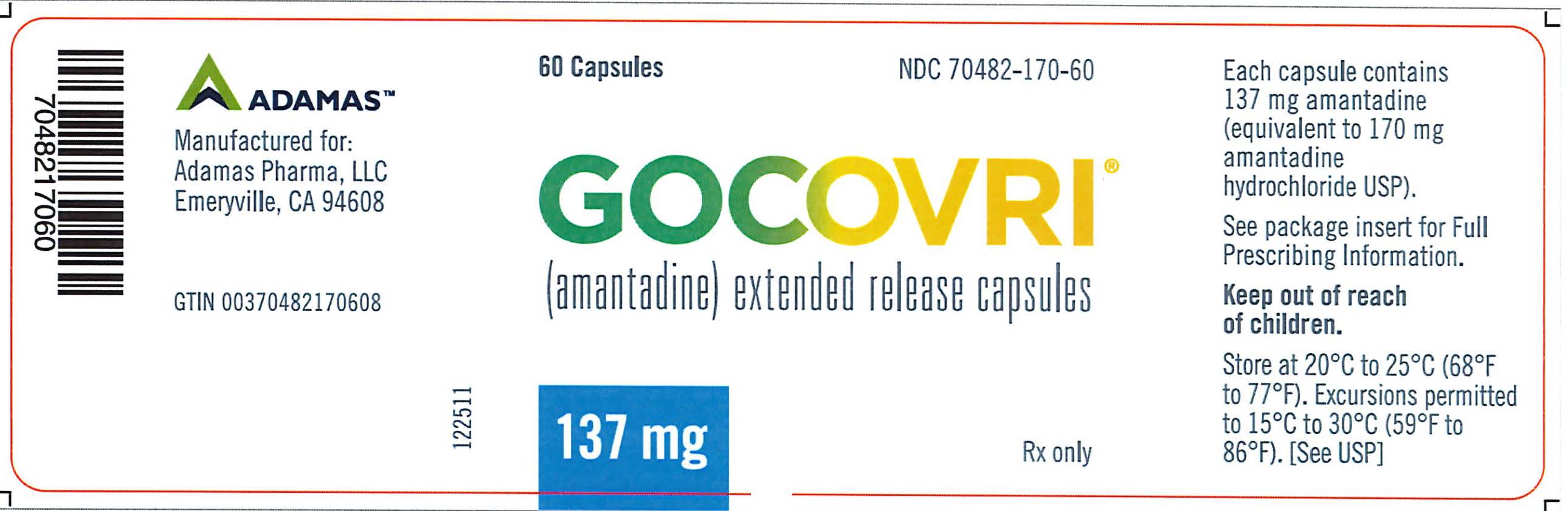
Gocovri Amantadine 137 mg Capsule, Coated Pellets, 60-count — NDC 70482-170-60 (Billing 70482-0170-60)
This is a package of 60 capsules of Gocovri Amantadine 137 mg Capsule, Coated Pellets from Adamas Pharma, LLC, marketed since Aug 2017 and currently FDA-listed. It is the main listing for this product, which comes in 3 package sizes.
Identity & classification
Regulatory identifiers FDA, NLM and CMS codes for this package
Drug-database identifiers Medi-Span GPI and First Databank GCN / HICL / AHFS classification
- GSN (GCN sequence number): 077686
- GCN: 43788
- HICL (First Databank): 001898
- AHFS class code: 08:18.04.00
- RxCUI (RxNorm): 1944370
Where does this data come from?
- FDA openFDA NDC Directory · synced Oct 1, 2026
- FDA label on DailyMed · label index refreshed Oct 1, 2026
- RxNorm (NLM RxNav) · catalog refreshed Oct 1, 2026
- Medi-Span GPI (licensed)
- First Databank (licensed) · refreshed Oct 1, 2026
RxNorm drug class
This medicine belongs to the Influenza A M2 Protein Inhibitor class.
Where does this data come from?
- RxClass (NLM) · catalog refreshed Oct 1, 2026
Clinical
- It depends on the product. Standard amantadine capsules, tablets and oral solution prevent and treat influenza A and treat parkinsonism and drug-induced movement problems. Gocovri...
- Take it by mouth exactly as your prescriber directs. Standard forms can be taken once a day or split into two doses. Gocovri is taken at bedtime and swallowed whole, with or withou...
- Common ones include dizziness, dry mouth, constipation, leg swelling, and sometimes hallucinations. Stand up slowly to avoid lightheadedness. Call me or your doctor if you see thin...
- Call for thoughts of suicide, new depression, hallucinations, fainting, falling asleep during daily activities, or sudden blurry vision or eye pain. Also call about uncontrollable...
Patient education
Supplement & herbal interactions
Some supplements/herbs that may interact with Amantadine — tap one for details:
Where does this data come from?
- MedlinePlus (NLM) · refreshed Oct 1, 2026
- FDA label on DailyMed · label index refreshed Oct 1, 2026
Ask a licensed pharmacist directly — free, answered by our team.
Pricing
A drug doesn't have one price. Each row is a different public payment system, and none is what you'd pay at the counter — that depends on your insurance. The ⓘ on each row explains what it measures.
| Price system | Per each | Per package |
|---|---|---|
| Retail pharmacies payNADAC · weekly | Not in the retail survey — common for institutional, discontinued, or low-volume packs. | |
| Medicaid paysCMS SDUD · 12 mo | $57.37 | $3,442.17 / 60 capsules |
| Medicare drug plans payPart D · Q2 2026 | $55.99 | $3,359.63 / 60 capsules |
Where does this data come from?
- CMS NADAC weekly file
- CMS ASP pricing files · refreshed Sep 20, 2026
- CMS Medicaid State Drug Utilization Data · through Q1 2026
- CMS Part D plan pricing files · refreshed Sep 24, 2026
- VA National Acquisition Center price file
Packaging — all sizes for this product
| Package NDC | Description | Marketing start | Marketing end | Status |
|---|---|---|---|---|
| 70482-0170-21 70482-170-21 | 21 CAPSULE, COATED PELLETS in 1 BOTTLE Sample | 2017-08-24 | — | Active |
| 70482-0170-60 You're viewing this Main listing | 60 CAPSULE, COATED PELLETS in 1 BOTTLE | 2017-08-24 | — | Active |
| 70482-0170-61 70482-170-61 | 60 CAPSULE, COATED PELLETS in 1 BOTTLE Sample | 2017-08-24 | — | Active |
In Medicaid, this is the most-dispensed pack of this product — about 100% of fills over the last four reported quarters. See all packs ↓
Pack size FAQ
What quantity is in this package?
How does this package differ from NDC 70482-0170-21?
What NDC number is used to bill for this package of Gocovri Amantadine 137 mg Capsule, Coated Pellets?
Therapeutic equivalents
| Product | Labeler | Pack | NADAC/unit | TE | Status | Price vs. this |
|---|---|---|---|---|---|---|
| Gocovri 137 mg 17772-0170-21 | Supernus | 21 capsules | — | — | FDA listed | — |
| Gocovri 137 mgthis 70482-0170-60 | Adamas | 60 capsules | — | — | FDA listed | — |
Where does this data come from?
- FDA openFDA NDC Directory · synced Oct 1, 2026
- FDA Orange Book · refreshed Oct 3, 2026
- CMS NADAC weekly file
Availability & generic status
FDA-approved generic versions are listed, and recent pricing/market data suggests they may be available — see Therapeutic equivalents.
Why the date isn’t exact: Generic timing can change because patents may be challenged, settled, licensed, added, removed, or worked around with a narrower label — and FDA approval does not always mean a pharmacy can get the generic today.
🛈 What do these terms mean?
- Patent
- Legal protection listed in the Orange Book that may delay generic approval or launch. Issued by the U.S. Patent & Trademark Office.
- Substance patent
- Covers the active drug molecule itself — the hardest to design around. A generic generally can’t launch until it expires.
- Formulation (product) patent
- Covers a specific formulation or dosage form. A generic can sometimes work around it with a different formulation.
- Method-of-use patent
- A patent covering one specific approved use of the drug — not necessarily the whole molecule. A generic can sometimes launch with a “skinny label” that carves out the protected use and keeps the others.
- Skinny label
- A generic label that omits a still-patented use when the FDA allows it — letting a generic reach the market for the unprotected uses.
- Exclusivity
- FDA-granted marketing protection, separate from patents — e.g. 5-yr new chemical entity, 7-yr orphan drug, or a +6-month pediatric extension.
- Paragraph IV
- A generic applicant’s formal challenge to a listed patent. It can potentially lead to earlier generic entry, but often involves litigation or a settlement.
- RLD / RS
- Reference Listed Drug — the brand product the FDA uses as the reference for generic applications. Reference Standard — the product the FDA expects generics to compare against in bioequivalence testing.
- TE / AB rating
- FDA therapeutic-equivalence rating. An AB rating generally means the FDA considers a generic therapeutically equivalent to — and substitutable for — the brand.
- LOE (loss of exclusivity)
- The latest patent or exclusivity currently listed — the loss-of-exclusivity / latest-listed-protection date shown on this page. Paragraph-IV challenges and settlements can move the real date earlier; FDA approval and a manufacturer’s decision to market can move it later.
Built from the FDA Orange Book. The bars above are scaled to each protection’s expiry; the red LOE marker is the last one to lapse.
| Patent | Type | Use code | Expires |
|---|---|---|---|
| US 8389578 ↗ | Method of use | U-2105 | Jan 22, 2028 |
| US 8741343 ↗ | Method of use | U-2106 | Dec 2, 2030 |
| US 9867792 ↗ | Method of use | U-2106 | Dec 2, 2030 |
| US 9867791 ↗ | Method of use | U-2106 | Dec 2, 2030 |
| US 9867791 ↗ | Method of use | U-2106 | Dec 2, 2030 |
| US 9877933 ↗ | Method of use | U-2224 | Dec 2, 2030 |
| US 10154971 ↗ | Method of use | U-2459 | Dec 4, 2034 |
| US 10154971 ↗ | Method of use | U-2459 | Dec 4, 2034 |
| US 8741343 ↗ | Method of use | U-2106 | Dec 2, 2030 |
| US 8389578 ↗ | Method of use | U-2105 | Jan 22, 2028 |
| US 9877933 ↗ | Method of use | U-2224 | Dec 2, 2030 |
| US 9867793 ↗ | Method of use | U-2106 | Dec 2, 2030 |
| US 9867793 ↗ | Method of use | U-2106 | Dec 2, 2030 |
| US 11197835 ↗ | Method of use | U-2106 | Dec 2, 2030 |
| US 11197835 ↗ | Method of use | U-2106 | Dec 2, 2030 |
| US 12233033 ↗ | Method of use | U-2106 | Aug 23, 2038 |
| US 12233033 ↗ | Method of use | U-3180 | Aug 23, 2038 |
| US 12233033 ↗ | Method of use | U-2224 | Aug 23, 2038 |
| US 12233033 ↗ | Method of use | U-2224 | Aug 23, 2038 |
| US 12233033 ↗ | Method of use | U-2106 | Aug 23, 2038 |
| US 12233033 ↗ | Method of use | U-3180 | Aug 23, 2038 |
| US 9867792 ↗ | Method of use | U-2106 | Dec 2, 2030 |
| US 10646456 ↗ | Method of use | U-2808 | Jun 17, 2034 |
| US 10646456 ↗ | Method of use | U-2808 | Jun 17, 2034 |
| US 11077073 ↗ | Method of use | U-2106 | Aug 23, 2038 |
| US 11077073 ↗ | Method of use | U-2224 | Aug 23, 2038 |
| US 11077073 ↗ | Method of use | U-3180 | Aug 23, 2038 |
| US 11077073 ↗ | Method of use | U-2224 | Aug 23, 2038 |
| US 11077073 ↗ | Method of use | U-3180 | Aug 23, 2038 |
| US 11077073 ↗ | Method of use | U-2106 | Aug 23, 2038 |
| US 11903908 ↗ | Method of use | U-3822 | Jun 17, 2034 |
| US 11903908 ↗ | Method of use | U-3822 | Jun 17, 2034 |
| US 11065213 ↗ | Drug product | — | Aug 23, 2038 |
| US 11065213 ↗ | Drug product | — | Aug 23, 2038 |
Is there a generic version of GOCOVRI ER 137 MG CAPSULE?
The FDA approved a generic — why can’t I get it at my pharmacy yet?
Why do different websites show different generic release dates?
What does “FDA listed” mean?
What does a patent or protection date mean here?
What does “current Orange Book estimate” mean?
Can a generic come out before the last patent expires?
Can a generic come out after the listed dates?
What is the difference between patents and exclusivity?
Why are there multiple patent dates?
Where does this data come from?
- FDA Orange Book · refreshed Oct 3, 2026
What it looks like
Where does this data come from?
- FDA label on DailyMed · label index refreshed Oct 1, 2026
Inactive Ingredients / Excipients
Inactive ingredients, also called excipients, are components of the drug product other than the active ingredient. They may include fillers, dyes, coatings, preservatives, flavors, or other formulation ingredients.
💡 Tap an ingredient (hover on desktop) to see what it is and why it’s used.
-
11.32 mg
UNII D9C330MD8B
Copovidone is a synthetic polymer made by combining two types of plastic-like molecules. It acts as a binder and film-former to help hold tablet ingredients together and improve how the medicine dissolves in your body.
-
62.13 mg
UNII H3UP11403C
Ethylcellulose is a plant-derived polymer that thickens and forms protective coatings on tablets and capsules. It slows medicine release into the body and protects the contents from moisture and air.
-
31.06 mg
UNII 0VUT3PMY82
Hypromellose 2910 is a plant-derived thickening agent made from cellulose. In medicines, it forms protective coatings on tablets or capsules, controls how fast the drug releases, and thickens liquid formulations.
-
0.39 mg
UNII 70097M6I30
Magnesium stearate is a salt made from magnesium and stearic acid, a fatty substance. It's used in tablets and capsules as a lubricant and glidant to help ingredients flow smoothly during manufacturing and prevent sticking.
-
7.5 mg
UNII C9H2L21V7U
A fat derived from coconut or palm oil containing shorter fatty acid chains. It serves as a solvent and carrier to help dissolve or suspend active ingredients, improving absorption and stability in liquid formulations.
-
48.57 mg
UNII OP1R32D61U
Microcrystalline cellulose is a purified form of cellulose, a natural fiber from plant sources. It acts as a binder and filler in tablets and capsules, helping hold ingredients together and give the medicine its shape and size.
-
8.4 mg
UNII RDH86HJV5Z
Povidone K90 is a synthetic polymer made from a chemical called vinyl pyrrolidone. It acts as a binder to hold pill ingredients together and as a dispersant to help the medicine break down and dissolve properly in your body.
-
11.07 mg
UNII 7SEV7J4R1U
A powder made from a naturally occurring mineral. In medicines, talc works as a glidant and anti-caking agent, helping tablets and capsules flow smoothly during manufacturing and preventing clumping.
8 inactive ingredients listed in the exact product block matched to this NDC.
Where does this data come from?
ingredient classCode="IACT" elements from the exact product block matched by this NDC. Label-section narrative from DailyMed / the openFDA label index is shown separately when available.- FDA label on DailyMed · label index refreshed Oct 1, 2026
- FDA openFDA NDC Directory · synced Oct 1, 2026
Inactive ingredient FAQ
Are inactive ingredients the same for every manufacturer?
Why might an inactive ingredient be missing?
Can inactive ingredients matter?
Manufacturer & labeler
Where does this data come from?
- FDA openFDA NDC Directory · synced Oct 1, 2026
- Drugs@FDA
Full prescribing information FDA SPL
🎯 Indications and Usage ▾
1 INDICATIONS AND USAGE GOCOVRI ® is indicated: For the treatment of dyskinesia in patients with Parkinson's disease receiving levodopa-based therapy, with or without concomitant dopaminergic medications As adjunctive treatment to levodopa/carbidopa in patients with Parkinson's disease experiencing "off" episodes GOCOVRI ® is indicated: For the treatment of dyskinesia in patients with Parkinson's disease receiving levodopa-based therapy, with or without concomitant dopaminergic medications ( 1 ) As adjunctive treatment to levodopa/carbidopa in patients with Parkinson's disease experiencing "off" episodes ( 1 )
⏱️ Dosage and Administration ▾
2 DOSAGE AND ADMINISTRATION Administer orally once daily at bedtime ( 2.1 , 2.3 ) The initial daily dosage is 137 mg; after 1 week, increase to the recommended daily dosage of 274 mg ( 2.1 ) Swallow whole; may sprinkle contents on soft food ( 2.2 ) May be taken with or without food; avoid use with alcohol ( 2.2 ) A lower dosage is recommended for patients with moderate or severe renal impairment ( 2.3 )
2.1Dosing Information The initial daily dosage of GOCOVRI is 137 mg, administered orally once daily at bedtime. After one week, increase to the recommended dosage of 274 mg (two 137 mg capsules) once daily at bedtime. GOCOVRI is not substitutable with other amantadine immediate- or extended-release products.
2.2Administration Information GOCOVRI should be swallowed whole. Do not crush, chew or divide capsules. If needed, GOCOVRI may be administered by carefully opening and sprinkling the entire contents on a small amount (teaspoonful) of soft food, such as applesauce.
The drug/food mixture should be swallowed immediately without chewing. Do not store mixture for future use. GOCOVRI can be taken with or without food [see Clinical Pharmacology ( 12.3 )].
Concomitant use of GOCOVRI with alcohol is not recommended [see Drug Interactions ( 7.4 )]. It is recommended to avoid sudden discontinuation of GOCOVRI [see Dosage and Administration ( 2.4 )].
2.3Dosing in Patients with Renal Impairment The initial and maximum recommended daily dosage of GOCOVRI for patients with renal impairment (creatinine clearance estimated by Modification of Diet in Renal Disease (MDRD) method) is provided below. 1 Increase, if needed, after one week of the initial dosage Creatinine Clearance Dosage Mild renal impairment (60 to 89 mL/min/1.73 m 2 ) Initial dosage: 137 mg once daily at bedtime. After one week, increase to recommended dosage of 274 mg once daily at bedtime.
Moderate renal impairment (30 to 59 mL/min/1.73 m 2 ) Initial dosage: 68.5 mg once daily at bedtime Maximum recommended dosage: 137 mg once daily at bedtime 1 Severe renal impairment (15 to 29 mL/min/1.73 m 2 ) 68.5 mg once daily at bedtime End Stage Renal Disease (below 15 mL/min/1.73 m 2 ) Contraindicated
2.4Discontinuation and Missed Dose Rapid dose reduction or withdrawal of GOCOVRI may cause adverse reactions [see Warnings and Precautions ( 5.5 )]. Therefore, to discontinue GOCOVRI in patients who have been on the drug for more than 4 weeks, GOCOVRI dosage should, if possible, be reduced by half for the final week of dosing. If a dose of GOCOVRI is missed, the next dose should be taken as scheduled.
💊 Dosage Forms and Strengths ▾
3 DOSAGE FORMS AND STRENGTHS GOCOVRI is available as extended-release capsules for oral administration. Each capsule contains 68.5 mg or 137 mg of amantadine. The 68.5 mg capsule is a white opaque size #2 capsule, with black printing of 'ADAMAS' on front and '85' on back of the cap and three black bands printed on body of capsule.
The 137 mg capsule is a light blue opaque size #0 capsule, with black printing of 'ADAMAS' on front and '170' on back of the cap and three black bands printed on body of capsule. Extended-release capsules: 68.5 mg and 137 mg ( 3 )
⛔ Contraindications ▾
4 CONTRAINDICATIONS GOCOVRI is contraindicated in patients with end-stage renal disease (i.e., creatinine clearance below 15 mL/min/1.73 m 2 ) [see Clinical Pharmacology ( 12.3 )]. GOCOVRI is contraindicated in patients with end-stage renal disease ( 4 )
⚠️ Warnings and Cautions ▾
5 WARNINGS AND PRECAUTIONS Falling Asleep During Activities of Daily Living : Advise patients prior to treatment; ordinarily discontinue if occurs ( 5.1 ) Suicidality and Depression : Monitor patients for depressed mood, depression, or suicidal ideation or behavior ( 5.2 ) Hallucinations/Psychotic Behavior: Patients with major psychotic disorder should ordinarily not be treated with GOCOVRI; observe patients for the occurrence of hallucinations throughout treatment, especially at initiation and after dose increases ( 5.3 ) Dizziness and Orthostatic Hypotension : Monitor patients for dizziness and orthostatic hypotension, especially after starting GOCOVRI or increasing the dose ( 5.4 ) Withdrawal-Emergent Hyperpyrexia and Confusion : Avoid sudden discontinuation ( 5.5 ) Corneal Edema : Monitor patients for new changes in vision, including blurred vision, with or without eye pain, or vision loss.
Taper and discontinue if corneal edema occurs ( 5.6 ) Impulse Control/Compulsive Behaviors : Ask patients about increased gambling urges, sexual urges, uncontrolled spending or other urges; consider dose reduction or discontinuation if occurs ( 5.7 )
5.1Falling Asleep During Activities of Daily Living and Somnolence Patients treated for Parkinson's disease have reported falling asleep while engaged in activities of daily living, including the operation of motor vehicles, which sometimes has resulted in accidents. Patients may not perceive warning signs, such as excessive drowsiness, or they may report feeling alert immediately prior to the event. In controlled clinical trials, somnolence and fatigue were reported as adverse reactions in 4% of patients treated with GOCOVRI 274 mg and 1% for placebo.
Before initiating treatment with GOCOVRI, advise patients of the potential to develop drowsiness and specifically ask about factors that may increase the risk for somnolence with GOCOVRI, such as concomitant sedating medications or the presence of a sleep disorder. If a patient develops daytime sleepiness or episodes of falling asleep during activities that require full attention (e.g., driving a motor vehicle, conversations, eating), GOCOVRI should ordinarily be discontinued. If a decision is made to continue GOCOVRI, patients should be advised not to drive and to avoid other potentially dangerous activities.
There is insufficient information to establish that dose reduction will eliminate episodes of falling asleep while engaged in activities of daily living or daytime somnolence.
5.2Suicidality and Depression In controlled clinical trials, suicidal ideation or suicide attempt was reported in 2% of GOCOVRI-treated patients and 0% of placebo-treated patients. Depression or depressed mood was reported in 6% of GOCOVRI-treated patients and 1% of placebo-treated patients. Confusional state was reported in 3% of GOCOVRI-treated patients and 2% of placebo-treated patients.
Apathy was reported in 2% of GOCOVRI-treated patients and 0% of placebo-treated patients. Monitor patients for depression, including suicidal ideation or behavior. Prescribers should consider whether the benefits outweigh the risks of treatment with GOCOVRI in patients with a history of suicidality or depression.
5.3Hallucinations/Psychotic Behavior Patients with a major psychotic disorder should ordinarily not be treated with GOCOVRI because of the risk of exacerbating psychosis. In controlled trials, the incidence of patients who experienced visual hallucinations, auditory hallucinations, delusions, illusions, or paranoia was 25% in patients treated with GOCOVRI 274 mg, and 3% in placebo-treated patients. Hallucinations caused discontinuation of treatment in 8% of GOCOVRI-treated patients, and in 0% of placebo-treated patients.
Observe patients for the occurrence of hallucinations throughout treatment, especially at initiation, and after dose increases.
5.4Dizziness and Orthostatic Hypotension In controlled clinical trials, 29% of GOCOVRI-treated patients and 2% of placeb… [Excerpted — this section continues on DailyMed.]
🤒 Adverse Reactions ▾
6 ADVERSE REACTIONS The following serious adverse reactions are described in more detail elsewhere in the labeling: Falling Asleep During Activities of Daily Living and Somnolence [see Warnings and Precautions ( 5.1 )] Suicidality and Depression [see Warnings and Precautions ( 5.2 )] Hallucinations/Psychotic Behavior [see Warnings and Precautions ( 5.3 ) ] Dizziness and Orthostatic Hypotension [see Warnings and Precautions ( 5.4 )] Withdrawal-Emergent Hyperpyrexia and Confusion [see Warnings and Precautions ( 5.5 )] Corneal Edema [see Warnings and Precautions (5.6) ] Impulse Control/Compulsive Behaviors [see Warnings and Precautions ( 5.7 )] The most commonly observed adverse reactions occurring at a frequency of >10% and greater than placebo were hallucination, dizziness, dry mouth, peripheral edema, constipation, fall, and orthostatic hypotension ( 6.1 ) To report SUSPECTED ADVERSE REACTIONS, contact Adamas Pharma, LLC at 1-833-223-2627 or FDA at 1-800-FDA-1088 or http://www.fda.gov/medwatch.
6.1. Clinical Trial Experience Because clinical trials are conducted under widely varying conditions, adverse reaction rates observed in the clinical trials of a drug cannot be directly compared to rates in the clinical trials of another drug and may not reflect the rates observed in practice. Placebo-Controlled Trials GOCOVRI was evaluated in two double-blind, placebo-controlled efficacy trials of similar design and population: Study 1 (123 patients) and Study 2 (75 patients) [see Clinical Studies ( 14 )] .
The study population was approximately 56% male and 94% white, with a mean age of 65 years (age range from 34 years to 82 years). The mean duration of levodopa-induced dyskinesia was 4 years (range 0.1 to 14 years). Active treatment started at 137 mg once daily for one week, followed by a dose increase to 274 mg once daily.
The treatment duration was 25 weeks for Study 1 and 13 weeks for Study 2. Of the 100 patients in the safety population described below, 39 patients were treated with GOCOVRI for 24 weeks. The safety data for these trials were pooled.
The most common adverse reactions reported in >10% of GOCOVRI-treated patients and more frequently than on placebo were: hallucinations, dizziness, dry mouth, peripheral edema, constipation, falls, and orthostatic hypotension. The overall rate of discontinuation because of adverse reactions for GOCOVRI-treated patients was 20%, compared to 8% for placebo-treated patients. Adverse reactions that led to treatment discontinuation in at least 2% of patients were hallucinations (8% GOCOVRI vs.
0% placebo), dry mouth (3% GOCOVRI vs. 0% placebo), peripheral edema (3% GOCOVRI vs. 0% placebo), blurred vision (GOCOVRI 3% vs.
0% placebo), postural dizziness and syncope (GOCOVRI 2% vs. 0% placebo), abnormal dreams (GOCOVRI 2% vs. 1% placebo), dysphagia (GOCOVRI 2% vs.
0% placebo), and gait disturbance (GOCOVRI 2% vs. 0% placebo). Table 1: Adverse Reactions Reported for ≥ 3% of Patients Treated with 274 mg GOCOVRI in Study 1 and Study 2 (Pooled Analysis) a=Includes visual hallucinations and auditory hallucinations b=Includes anxiety and generalized anxiety c=Includes orthostatic hypotension, postural dizziness, syncope, presyncope, and hypotension d=The denominator is all male patients in the safety population randomized to GOCOVRI (n=54) or placebo (n=57) Adverse Reactions GOCOVRI 274 mg N=100 % Placebo N=98 % Psychiatric disorders Hallucinations a 21 3 Anxiety b 7 3 Insomnia 7 2 Depression/Depressed mood 6 1 Abnormal dreams 4 2 Confusional state 3 2 Nervous system disorders Dizziness 16 1 Headache 6 4 Dystonia 3 1 Gastrointestinal disorders Dry mouth 16 1 Constipation 13 3 Nausea 8 3 Vomiting 3 0 General disorders and administration site conditions Peripheral edema 16 1 Gait disturbance 3 0 Injury, poisoning and procedural complications Fall 13 7 Contusion 6 1 Infections and infestations Urinary tract infection 10 5 Skin and subcutaneous tissue disorders Livedo reticularis 6 0 Pigmentation diso… [Excerpted — this section continues on DailyMed.]
🔄 Drug Interactions ▾
7 DRUG INTERACTIONS Other Anticholinergic Drugs: Doses should be reduced if atropine-like effects occur ( 7.1 ) Drugs Affecting Urinary pH: Excretion increases with acidic urine; possible accumulation with urine change towards alkaline ( 7.2 ) Live Attenuated Influenza Vaccines: Not recommended during use ( 7.3 ) Alcohol: Concomitant use not recommended ( 7.4 )
7.1Other Anticholinergic Drugs Products with anticholinergic properties may potentiate the anticholinergic-like side effects of amantadine. The dose of anticholinergic drugs or of GOCOVRI should be reduced if atropine-like effects appear when these drugs are used concurrently.
7.2Drugs Affecting Urinary pH The pH of the urine has been reported to influence the excretion rate of amantadine. Urine pH is altered by diet, drugs (e.g., carbonic anhydrase inhibitors, sodium bicarbonate), and clinical state of the patient (e.g., renal tubular acidosis or severe infections of the urinary tract). Since the excretion rate of amantadine increases rapidly when the urine is acidic, the administration of urine acidifying drugs may increase the elimination of the drug from the body.
Alterations of urine pH towards the alkaline condition may lead to an accumulation of the drug with a possible increase in adverse reactions. Monitor for efficacy or adverse reactions under conditions that alter the urine pH to more acidic or alkaline, respectively.
7.3Live Attenuated Influenza Vaccines Because of its antiviral properties, amantadine may interfere with the efficacy of live attenuated influenza vaccines. Therefore, live vaccines are not recommended during treatment with GOCOVRI. Inactivated influenza vaccines may be used, as appropriate.
7.4Alcohol Concomitant use with alcohol is not recommended, as it may increase the potential for CNS effects such as dizziness, confusion, lightheadedness, and orthostatic hypotension [see Warnings and Precautions ( 5.4 )] , and may result in dose-dumping [see Clinical Pharmacology ( 12.3 )] .
👥 Use in Specific Populations ▾
8 USE IN SPECIFIC POPULATIONS Pregnancy: Based on animal data, may cause fetal harm ( 8.1 )
8.1Pregnancy Risk Summary There are no adequate data on the developmental risk associated with use of amantadine in pregnant women. Animal studies suggest a potential risk for fetal harm with amantadine. In mice and rats, adverse developmental effects (embryolethality, increased incidence of malformations, and reduced fetal body weight) were observed when amantadine was administered to pregnant animals at clinically relevant doses [ see Data].
In the U.S. general population, the estimated background risk of major birth defects and miscarriage in clinically recognized pregnancies is 2-4% and 15-20%, respectively. The background risk for major birth defects and miscarriage in patients with Parkinson's disease is unknown. Data Animal Data The effects of amantadine on development have not been tested in studies conducted in animals using currently recommended methodology; however, developmental toxicity studies of amantadine have been reported in the published literature.
In mice, oral administration of amantadine (0, 10, or 40 mg/kg/day) to pregnant animals during organogenesis (gestation days 7-12) resulted in embryolethality and reduced fetal body weight at the highest dose tested, which was associated with maternal toxicity. The no-effect dose for developmental toxicity in mice (10 mg/kg/day) is less than the recommended human dose (RHD) of 274 mg/day, based on body surface area (mg/m 2 ). In rats, oral administration of amantadine (0, 40 or 120 mg/kg/day) to pregnant animals during organogenesis (gestation days 7-12) resulted in embryolethality and reduced fetal body weight at the highest dose.
The no-effect dose for developmental toxicity in this study (40 mg/kg/day) is approximately equal to the RHD on a mg/m 2 basis. In another study in pregnant rats, oral administration of amantadine during organogenesis (gestation days 7-14) resulted in an increase in visceral and skeletal malformations at oral doses of 50 and 100 mg/kg/day. The no-effect dose for teratogenicity in this study (37 mg/kg/day) is approximately equal to the RHD on a mg/m 2 basis.
Evaluation of parturition, lactation, and post-natal development in a limited number of litters from the mouse and rat studies described above revealed reductions in live litter size and pup weights at birth at 40 mg/kg/day in mice and 120 mg/kg/day in rats.
8.2Lactation Risk Summary Amantadine is excreted into human milk, but amounts have not been quantified. There is no information on the risk to a breastfed infant. Amantadine may alter breast milk production or excretion [see Data] .
The developmental and health benefits of breastfeeding should be considered along with the mother's clinical need for GOCOVRI and any potential adverse effects on the breastfed infant from GOCOVRI or from the underlying maternal condition. Data In published studies, amantadine reduced serum prolactin levels and the symptoms of galactorrhea in patients taking neuroleptic drugs. The effect of amantadine on milk supply has not been evaluated in nursing mothers.
8.4Pediatric Use The safety and effectiveness of GOCOVRI in pediatric patients have not been established.
8.5Geriatric Use The majority of people with Parkinson's disease are 65 years and older. In Phase 3 clinical trials, the mean age of patients at study entry was 65 years. Of the total number of patients in clinical studies of GOCOVRI, 46% were less than 65 years of age, 39% were 65-74 years of age, and 15% were 75 years of age or older.
Hallucinations and falls occurred more frequently in patients 65 years of age or older, compared to those less than 65 years of age [see Adverse Reactions ( 6.1 )]. No dose adjustment is recommended on the basis of age. GOCOVRI is known to be substantially excreted by the kidney, and the risk of adverse reactions may be greater in patients with impaired renal function.
Because elderly patients are more likely to hav… [Excerpted — this section continues on DailyMed.]
🤰 Pregnancy ▾
8.1Pregnancy Risk Summary There are no adequate data on the developmental risk associated with use of amantadine in pregnant women. Animal studies suggest a potential risk for fetal harm with amantadine. In mice and rats, adverse developmental effects (embryolethality, increased incidence of malformations, and reduced fetal body weight) were observed when amantadine was administered to pregnant animals at clinically relevant doses [ see Data].
In the U.S. general population, the estimated background risk of major birth defects and miscarriage in clinically recognized pregnancies is 2-4% and 15-20%, respectively. The background risk for major birth defects and miscarriage in patients with Parkinson's disease is unknown. Data Animal Data The effects of amantadine on development have not been tested in studies conducted in animals using currently recommended methodology; however, developmental toxicity studies of amantadine have been reported in the published literature.
In mice, oral administration of amantadine (0, 10, or 40 mg/kg/day) to pregnant animals during organogenesis (gestation days 7-12) resulted in embryolethality and reduced fetal body weight at the highest dose tested, which was associated with maternal toxicity. The no-effect dose for developmental toxicity in mice (10 mg/kg/day) is less than the recommended human dose (RHD) of 274 mg/day, based on body surface area (mg/m 2 ). In rats, oral administration of amantadine (0, 40 or 120 mg/kg/day) to pregnant animals during organogenesis (gestation days 7-12) resulted in embryolethality and reduced fetal body weight at the highest dose.
The no-effect dose for developmental toxicity in this study (40 mg/kg/day) is approximately equal to the RHD on a mg/m 2 basis. In another study in pregnant rats, oral administration of amantadine during organogenesis (gestation days 7-14) resulted in an increase in visceral and skeletal malformations at oral doses of 50 and 100 mg/kg/day. The no-effect dose for teratogenicity in this study (37 mg/kg/day) is approximately equal to the RHD on a mg/m 2 basis.
Evaluation of parturition, lactation, and post-natal development in a limited number of litters from the mouse and rat studies described above revealed reductions in live litter size and pup weights at birth at 40 mg/kg/day in mice and 120 mg/kg/day in rats.
🧒 Pediatric Use ▾
8.4Pediatric Use The safety and effectiveness of GOCOVRI in pediatric patients have not been established.
🧓 Geriatric Use ▾
8.5Geriatric Use The majority of people with Parkinson's disease are 65 years and older. In Phase 3 clinical trials, the mean age of patients at study entry was 65 years. Of the total number of patients in clinical studies of GOCOVRI, 46% were less than 65 years of age, 39% were 65-74 years of age, and 15% were 75 years of age or older.
Hallucinations and falls occurred more frequently in patients 65 years of age or older, compared to those less than 65 years of age [see Adverse Reactions ( 6.1 )]. No dose adjustment is recommended on the basis of age. GOCOVRI is known to be substantially excreted by the kidney, and the risk of adverse reactions may be greater in patients with impaired renal function.
Because elderly patients are more likely to have decreased renal function, care should be taken in dose selection, and it may be useful to monitor renal function [see Dosage and Administration ( 2.3 )].
🆘 Overdosage ▾
10 OVERDOSAGE Deaths have been reported from overdose with amantadine. The lowest reported acute lethal dose was 1 gram of amantadine hydrochloride (equivalent to 0.8 g amantadine). Acute toxicity may be attributable to the anticholinergic effects of amantadine.
Drug overdose has resulted in cardiac, respiratory, renal, or central nervous system toxicity. Pulmonary edema and respiratory distress (including adult respiratory distress syndrome, ARDS) have been reported with amantadine; renal dysfunction, including increased BUN and decreased creatinine clearance, can occur. Central nervous system effects that have been reported with overdose include agitation, aggressive behavior, hypertonia, hyperkinesia, ataxia, tremor, disorientation, depersonalization, fear, delirium, psychotic reactions, lethargy, and coma.
Seizures may be exacerbated in patients with prior history of seizure disorders. Hyperthermia has occurred with amantadine overdose. For acute overdosing, general supportive measures should be employed along with immediate gastric decontamination if appropriate.
Give intravenous fluids if necessary. The excretion rate of amantadine increases with acidification of urine, which may increase the elimination of the drug. Monitor patients for arrhythmias and hypotension.
Electrocardiographic monitoring may be needed after ingestion because arrhythmias have been reported after overdose, including arrhythmias with fatal outcomes. Adrenergic agents, such as isoproterenol, in patients with an amantadine overdose has been reported to induce arrhythmias. Monitor blood electrolytes, urine pH, and urinary output.
Although amantadine is not efficiently removed by hemodialysis, this procedure may be useful in the treatment of amantadine toxicity in patients with renal failure.
🧬 Clinical Pharmacology ▾
12 CLINICAL PHARMACOLOGY
12.1Mechanism of Action The mechanism by which amantadine exerts efficacy in the treatment of dyskinesia in patients with Parkinson's disease or as adjunctive treatment to levodopa/carbidopa in patients with Parkinson's disease experiencing "off" episodes is unknown. Amantadine is a weak uncompetitive antagonist of the NMDA receptor. Amantadine has not been shown to possess direct anticholinergic activity in animal studies; however, it exhibits anticholinergic-like side effects such as dry mouth, urinary retention, and constipation in humans.
Amantadine may have direct and indirect effects on dopamine neurons; it exerts dopaminergic-like side effects such as hallucinations and dizziness in humans.
12.2Pharmacodynamics The effect of amantadine on QT prolongation was not studied in a dedicated thorough QT study. Alcohol consumption may increase the potential for CNS effects such as dizziness, confusion, lightheadedness, and orthostatic hypotension [see Drug Interactions ( 7.4 )] .
12.3Pharmacokinetics GOCOVRI is an extended-release formulation. The pharmacokinetics of amantadine from 68.5 mg, 137 mg, and 274 mg of GOCOVRI are dose proportional in healthy subjects. Absorption After a single dose bedtime administration of GOCOVRI, the median T max for plasma amantadine was around 12 hours (range 6-20 hours).
The steady-state concentrations of GOCOVRI were achieved 4 days after the dose initiation. The steady-state total exposures (AUC 0-tau ) were 20-30% higher than after single dose, suggesting an accumulation ratio of 1.2-1.3. Effect of Food A single dose crossover study of GOCOVRI established the lack of effect of high-fat, high-calorie meal on plasma amantadine pharmacokinetics; additionally, administration of entire capsule contents sprinkled on applesauce also did not affect plasma amantadine pharmacokinetics.
Distribution The volume of distribution determined after the intravenous administration of amantadine to 15 healthy subjects was 3 to 8 L/kg, suggesting potential extravascular distribution. Amantadine is approximately 67% bound to plasma proteins over a concentration range of 0.1 to 2.0 µg/mL. Elimination In a study with healthy volunteers after oral administration, the apparent plasma clearance of amantadine was estimated to be 0.27 ± 0.094 L/hr/kg (range 0.13 to
0.57L/hr/kg). Amantadine is primarily excreted unchanged in the urine, and in a study of six healthy volunteers, the ratio of amantadine renal clearance to apparent plasma clearance was 0.79 ± 0.17 (mean ± SD). The mean plasma amantadine half-life at steady-state was approximately 16 hours.
Metabolism Eight metabolites of amantadine have been identified in human urine. One metabolite, an N-acetylated compound, was quantified in human urine and accounted for 0-15% of the administered dose in multiple studies. The contribution of this metabolite to efficacy or toxicity is not known.
Excretion Amantadine is primarily excreted unchanged in the urine by both glomerular filtration and tubular secretion. Specific Population Male/Female Patients In an integrated analysis of five studies in healthy volunteers (n=147), the mean total amantadine clearance following administration of GOCOVRI, adjusted for body weight in kilograms, was 1.2 fold higher in males compared to females (95% CI: 1.1, 1.3, P=0.007). No dose adjustment by gender is warranted.
Renal Impairment The renal clearance of amantadine is significantly lower in adult patients with moderate or severe renal impairment, compared to healthy adults. Since the renal pathway is a major elimination pathway, impairment in renal function can result in significant accumulation in the plasma, warranting dose adjustment. The impact of renal impairment on dose adjustment was not investigated in a dedicated study.
Based on PK simulations, the range of the total exposures (AUC 0-tau ) in subjects with normal renal function (creatinine clearance >90 mL/min/1.73 m 2 ) or mild renal impairment (c… [Excerpted — this section continues on DailyMed.]
🧬 Mechanism of Action ▾
12.1Mechanism of Action The mechanism by which amantadine exerts efficacy in the treatment of dyskinesia in patients with Parkinson's disease or as adjunctive treatment to levodopa/carbidopa in patients with Parkinson's disease experiencing "off" episodes is unknown. Amantadine is a weak uncompetitive antagonist of the NMDA receptor. Amantadine has not been shown to possess direct anticholinergic activity in animal studies; however, it exhibits anticholinergic-like side effects such as dry mouth, urinary retention, and constipation in humans.
Amantadine may have direct and indirect effects on dopamine neurons; it exerts dopaminergic-like side effects such as hallucinations and dizziness in humans.
📦 How Supplied / Storage and Handling ▾
16 HOW SUPPLIED/STORAGE AND HANDLING
16.1How Supplied GOCOVRI is supplied as extended release capsules in the following configurations: The 68.5 mg capsule is a white opaque size #2 capsule, with black printing of 'ADAMAS' on front and '85' on back of the cap and three black bands printed on body of capsule. 60 count bottles NDC# 70482-085-60 The 137 mg capsule is a light blue opaque size #0 capsule, with black printing of 'ADAMAS' on front and '170' on back of the cap and three black bands printed on body of capsule. 60 count bottles NDC# 70482-170-60
16.2Storage and Handling Store at 20°C to 25°C (68°F to 77°F); excursions permitted to 15°C to 30°C (59°F to 86°F) [see USP Controlled Room Temperature].
16.1How Supplied GOCOVRI is supplied as extended release capsules in the following configurations: The 68.5 mg capsule is a white opaque size #2 capsule, with black printing of 'ADAMAS' on front and '85' on back of the cap and three black bands printed on body of capsule. 60 count bottles NDC# 70482-085-60 The 137 mg capsule is a light blue opaque size #0 capsule, with black printing of 'ADAMAS' on front and '170' on back of the cap and three black bands printed on body of capsule. 60 count bottles NDC# 70482-170-60
📦 Storage and Handling ▾
16.2Storage and Handling Store at 20°C to 25°C (68°F to 77°F); excursions permitted to 15°C to 30°C (59°F to 86°F) [see USP Controlled Room Temperature].
📋 Description ▾
11 DESCRIPTION GOCOVRI contains amantadine in an extended-release formulation. The active ingredient in GOCOVRI is amantadine hydrochloride. The chemical name for amantadine hydrochloride is tricyclo [3.3.1.1 3,7 ] decan-1-amine, hydrochloride or 1-adamantanamine hydrochloride with the following structural formula: The molecular formula is C 10 H 17 N•HCl and the molecular weight is 187.71 (g/mol).
Amantadine hydrochloride is a white crystalline powder and is non-hygroscopic, practically insoluble in ether, sparingly soluble in methylene chloride, soluble in chloroform, and freely soluble in water, ethanol, and methanol. GOCOVRI capsules are for oral use. Each capsule contains 68.5 mg or 137 mg amantadine (as 85 mg or 170 mg amantadine hydrochloride, respectively).
Capsules also contain the following inactive ingredients: copovidone, ethylcellulose, hypromellose, magnesium stearate, medium-chain triglycerides, microcrystalline cellulose, povidone, and talc in a hard gelatin capsule. chemical structure
💬 Information for Patients ▾
17 PATIENT COUNSELING INFORMATION Advise the patient to read the FDA-approved patient labeling (Patient Information). Administration Instruct patients and caregivers that GOCOVRI capsules should be swallowed whole and can be administered with or without food. Alternatively, GOCOVRI capsules may be opened and the contents sprinkled on applesauce; the entire contents should be consumed immediately without chewing [see Dosage and Administration ( 2.2 )] .
Advise patients to speak to their healthcare provider before discontinuation of GOCOVRI. Falling Asleep During Activities of Daily Living Advise patients that sleepiness and fatigue that have been reported with GOCOVRI and patients treated with Parkinson's disease medications have reported falling asleep while engaged in activities of daily living. These adverse reactions may affect some patients' ability to drive and operate machinery safely [see Warnings and Precautions ( 5.1 )] .
Suicidality and Depression Instruct patients, family members, and caregivers to notify their healthcare provider if depressed mood, depression, changes in behavior or thinking, and suicidal ideation or behavior develop during treatment [see Warnings and Precautions ( 5.2 )] . Hallucinations/Psychotic Behavior Inform patients and caregivers that hallucinations and paranoia can occur while taking GOCOVRI. Tell patients to report unreal visions, sounds, or sensations or other psychotic behavior to their healthcare provider promptly should they develop [see Warnings and Precautions ( 5.3 )] .
Dizziness and Orthostatic Hypotension An increased incidence of dizziness, orthostatic hypotension, and syncope was observed with administration of GOCOVRI. Caution patients against standing rapidly after sitting or lying down, especially if they have been doing so for prolonged periods and especially at the initiation of treatment with GOCOVRI [see Warnings and Precautions ( 5.4 )]. Withdrawal-Emergent Hyperpyrexia and Confusion Advise patients to contact their healthcare provider before stopping GOCOVRI.
Tell patients to inform their healthcare provider if they develop withdrawal symptoms such as fever, confusion, or severe muscle stiffness [see Warnings and Precautions ( 5.5 )]. Corneal Edema Inform patients about the potential for visual changes including vision loss with administration of GOCOVRI. Advise patients to inform their healthcare provider if they develop visual symptoms such as blurred vision, with or without eye pain, or vision loss [see Warnings and Precautions (5.6) ].
Impulse Control/Compulsive Disorders Inform patients of the potential for experiencing intense urges to gamble, increased sexual urges, intense urges to spend money, binge eating, and other intense urges and the inability to control these urges while taking one or more of the medications that increase central dopaminergic tone, that are generally used for the treatment of Parkinson's disease [see Warnings and Precautions ( 5.7 )]. Drug Interactions Certain medications can cause an interaction with GOCOVRI. Advise patients and/or caregivers to inform their healthcare provider of all the medicines the patient is taking, including over-the-counter medicines, dietary supplements, and herbal products.
Inform patients that live influenza vaccines and consumption of alcohol are not recommended during treatment with GOCOVRI [see Drug Interactions ( 7.1 , 7.2 , 7.3 , 7.4 )]. Manufactured for: Adamas Pharma, LLC Emeryville, CA 94608
🧬 Pharmacokinetics ▾
12.3Pharmacokinetics GOCOVRI is an extended-release formulation. The pharmacokinetics of amantadine from 68.5 mg, 137 mg, and 274 mg of GOCOVRI are dose proportional in healthy subjects. Absorption After a single dose bedtime administration of GOCOVRI, the median T max for plasma amantadine was around 12 hours (range 6-20 hours).
The steady-state concentrations of GOCOVRI were achieved 4 days after the dose initiation. The steady-state total exposures (AUC 0-tau ) were 20-30% higher than after single dose, suggesting an accumulation ratio of 1.2-1.3. Effect of Food A single dose crossover study of GOCOVRI established the lack of effect of high-fat, high-calorie meal on plasma amantadine pharmacokinetics; additionally, administration of entire capsule contents sprinkled on applesauce also did not affect plasma amantadine pharmacokinetics.
Distribution The volume of distribution determined after the intravenous administration of amantadine to 15 healthy subjects was 3 to 8 L/kg, suggesting potential extravascular distribution. Amantadine is approximately 67% bound to plasma proteins over a concentration range of 0.1 to 2.0 µg/mL. Elimination In a study with healthy volunteers after oral administration, the apparent plasma clearance of amantadine was estimated to be 0.27 ± 0.094 L/hr/kg (range 0.13 to
0.57L/hr/kg). Amantadine is primarily excreted unchanged in the urine, and in a study of six healthy volunteers, the ratio of amantadine renal clearance to apparent plasma clearance was 0.79 ± 0.17 (mean ± SD). The mean plasma amantadine half-life at steady-state was approximately 16 hours.
Metabolism Eight metabolites of amantadine have been identified in human urine. One metabolite, an N-acetylated compound, was quantified in human urine and accounted for 0-15% of the administered dose in multiple studies. The contribution of this metabolite to efficacy or toxicity is not known.
Excretion Amantadine is primarily excreted unchanged in the urine by both glomerular filtration and tubular secretion. Specific Population Male/Female Patients In an integrated analysis of five studies in healthy volunteers (n=147), the mean total amantadine clearance following administration of GOCOVRI, adjusted for body weight in kilograms, was 1.2 fold higher in males compared to females (95% CI: 1.1, 1.3, P=0.007). No dose adjustment by gender is warranted.
Renal Impairment The renal clearance of amantadine is significantly lower in adult patients with moderate or severe renal impairment, compared to healthy adults. Since the renal pathway is a major elimination pathway, impairment in renal function can result in significant accumulation in the plasma, warranting dose adjustment. The impact of renal impairment on dose adjustment was not investigated in a dedicated study.
Based on PK simulations, the range of the total exposures (AUC 0-tau ) in subjects with normal renal function (creatinine clearance >90 mL/min/1.73 m 2 ) or mild renal impairment (creatinine clearance between 60 and 89 mL/min/1.73 m 2 ) were comparable for the same dosing regimen. However, patients with moderate renal impairment (creatinine clearance between 30 and 59 mL/min/1.73 m 2 ) had higher exposures relative to patients with normal renal function or mild renal impairment. Severe renal impairment (creatinine clearance between 15 and 29 mL/min/1.73 m 2 ) resulted in even higher total exposures.
Dosage adjustment is recommended in patients with moderate and severe renal impairment [see Use in Special Populations ( 8.6 ) and Dosage and Administration ( 2.3 )]. GOCOVRI is contraindicated in patients with end stage renal disease (creatinine clearance less than 15 mL/min/1.73 m 2 ). Amantadine is inefficiently removed by hemodialysis.
Drug Interaction Studies The in-vitro dissolution-release profiles showed 52% drug release after 45 minutes, and up to 95% after 2 hours, at concentrations of 40% alcohol/0.1N HCl. In vitro studies indicate that amantadine has negligible or no inhibitor… [Excerpted — this section continues on DailyMed.]
🧬 Pharmacodynamics ▾
12.2Pharmacodynamics The effect of amantadine on QT prolongation was not studied in a dedicated thorough QT study. Alcohol consumption may increase the potential for CNS effects such as dizziness, confusion, lightheadedness, and orthostatic hypotension [see Drug Interactions ( 7.4 )] .
🔬 Clinical Studies ▾
14 CLINICAL STUDIES Overview of Studies The efficacy of GOCOVRI for the treatment of dyskinesia in patients with Parkinson's disease and for the adjunctive treatment to levodopa/carbidopa in patients with Parkinsons's disease experiencing "off" episodes was assessed in two randomized, double-blind, placebo-controlled efficacy trials: Study 1 and Study 2. Key inclusion criteria in both studies included at least 1 hour of troublesome dyskinesia time during the day and at least mild functional impact because of dyskinesia.
Study 1 was conducted in 121 (modified Intention to Treat (mITT) population) Parkinson's disease patients with dyskinesia in the United States (US) and Canada. The duration of treatment in Study 1 was up to 25 weeks. Study 2 was conducted in 75 (mITT population) patients with dyskinesia in the US, Germany, France, Spain, and Austria.
The duration of treatment was 13 weeks. In both studies, the primary efficacy endpoint was the change in total score of the Unified Dyskinesia Rating Scale (UDysRS) between baseline and Week 12. Key secondary endpoints derived from a Parkinson's disease home diary included changes from baseline to Week 12 in ON time without troublesome dyskinesia and OFF time.
Study Population In Study 1 and Study 2, the mean age of patients at the time of Parkinson's disease diagnosis was 55 years (range: 29-75 years). At baseline, patients had a mean UDysRS total score of 40.1 (range: 8-76), a mean duration of ON time without troublesome dyskinesia (Parkinson's disease home diary) of 8.4 hours (range: 0-15.3), and a mean duration of OFF time of 2.8 hours (range: 0-9.5). Patients in Study 1 and Study 2 were treated with a stable dose of levodopa, with 32% of patients on levodopa monotherapy.
Patients were also treated with concomitant dopamine agonists (54%) and/or MAO-B inhibitors (44%). Study 1 In Study 1, a significant decrease in mean UDysRS total score (reduction in dyskinesia) was observed at Week 12 in patients treated with GOCOVRI, compared with placebo (Table 2). Study 2 In Study 2, a significant decrease in mean UDysRS total score (reduction in dyskinesia) was observed at Week 12 in patients treated with GOCOVRI, compared with placebo (Table 2).
Table 2: UDysRS Total Score at Week 12 for Study 1 and Study 2 mITT Population Study 1 Study 2 Placebo (N=58) GOCOVRI 274 mg (N=63) Placebo (N=38) GOCOVRI 274 mg (N=37) UDysRS total score, LS Mean (SE) Change from Baseline -8.0 (1.64) -15.9 (1.62) -6.3 (2.08) -20.7 (2.20) Treatment Difference -7.9 (2.30) -14.4 (3.03) P-value 0.0009 <0.0001 In Study 1 and Study 2, there was a significant increase in ON time without troublesome dyskinesia, and a significant decrease in OFF time between baseline and Week 12 in patients treated with GOCOVRI, compared with placebo (Table 3).
Table 3: PD Home Diary Results at Week 12 for Study 1 and Study 2 mITT Population Study 1 Study 2 Placebo (N=58) GOCOVRI 274 mg (N=63) Placebo (N=38) GOCOVRI 274 mg (N=37) ON Time w/o Troublesome Dyskinesia, LS Mean (SE) Change from Baseline 0.8 (0.43) 3.6 (0.43) 2.1 (0.53) 4.0 (0.56) Treatment Difference 2.7 (0.61) 1.9 (0.78) P-value <0.0001 0.0168 OFF Time, LS Mean (SE) Change from Baseline 0.3 (0.26) -0.6 (0.27) 0.6 (0.31) -0.5 (0.34) Treatment Difference -0.9 (0.37) -1.1 (0.46) P-value 0.0171 0.0199
🧪 Nonclinical Toxicology ▾
13 NONCLINICAL TOXICOLOGY
13.1Carcinogenesis, Mutagenesis, Impairment of Fertility Carcinogenesis Animal studies designed to evaluate the carcinogenic potential of amantadine have not been conducted. Mutagenesis Amantadine was negative for genotoxicity in in vitro (Ames and mammalian cell [Chinese Hamster ovary and human peripheral blood lymphocytes]) assays in the presence or absence of metabolic activation and in an in vivo mouse bone marrow micronucleus assay. Impairment of Fertility The effects of amantadine on fertility have not been adequately tested in a study in animals conducted according to current standards.
In a reproduction study reported in the literature, oral administration of amantadine to male and female rats at a dose of 32 mg/kg/day resulted in impaired fertility. The no-effect dose for adverse effects on fertility (10 mg/kg/day) is less than the recommended human dose of 274 mg/day on a mg/m 2 basis.
📄 Carcinogenesis, Mutagenesis, Impairment of Fertility ▾
13.1Carcinogenesis, Mutagenesis, Impairment of Fertility Carcinogenesis Animal studies designed to evaluate the carcinogenic potential of amantadine have not been conducted. Mutagenesis Amantadine was negative for genotoxicity in in vitro (Ames and mammalian cell [Chinese Hamster ovary and human peripheral blood lymphocytes]) assays in the presence or absence of metabolic activation and in an in vivo mouse bone marrow micronucleus assay. Impairment of Fertility The effects of amantadine on fertility have not been adequately tested in a study in animals conducted according to current standards.
In a reproduction study reported in the literature, oral administration of amantadine to male and female rats at a dose of 32 mg/kg/day resulted in impaired fertility. The no-effect dose for adverse effects on fertility (10 mg/kg/day) is less than the recommended human dose of 274 mg/day on a mg/m 2 basis.
📄 Patient Package Insert ▾
PATIENT INFORMATION GOCOVRI (goh-KUV-ree) (amantadine) extended release capsules, for oral use What is GOCOVRI? GOCOVRI is a prescription medicine used: for the treatment of dyskinesia (sudden uncontrolled movements) in people with Parkinson's disease who are treated with levodopa therapy or levodopa therapy with other medicines that increase the effects of dopamine in the brain. with levodopa and carbidopa in people with Parkinson's disease who are having "off" episodes. It is not known if GOCOVRI is safe and effective in children.
Do not take GOCOVRI if you have severe kidney problems Before you take GOCOVRI, tell your healthcare provider about all of your medical conditions, including if you: have kidney problems. have daytime sleepiness from a sleep disorder, have unexpected or unpredictable sleepiness or periods of sleep, take a medicine to help you sleep, or take any medicine that makes you drowsy. have mental problems, such as suicidal thoughts, depression, or hallucinations. have unusual urges including gambling, increased sex drive, compulsive eating, or compulsive shopping. drink alcoholic beverages.
This may increase your chances of becoming drowsy or sleepy while taking GOCOVRI. are pregnant or plan to become pregnant. GOCOVRI may harm your unborn baby. are breastfeeding or plan to breastfeed. GOCOVRI can pass into your breastmilk.
Talk to your healthcare provider about the best way to feed your baby if you take GOCOVRI. Tell your healthcare provider about all the medicines you take , including prescription and over-the-counter medicines, vitamins, and herbal supplements. Especially tell your healthcare provider if you: take medicines like sodium bicarbonate. have had or are planning to have a live flu (influenza) vaccination (nasal spray).
You can receive the influenza vaccination shot but should not get a live influenza vaccine while taking GOCOVRI. Know the medicines you take. Keep a list of them to show your healthcare provider and pharmacist when you get a new medicine.
How should I take GOCOVRI? Take GOCOVRI exactly as your healthcare provider tells you to. Start GOCOVRI with 1 capsule at bedtime.
Your healthcare provider may change your dose if needed. If your doctor tells you to take 2 capsules, take them together at bedtime. Do not stop or change your dose of GOCOVRI before talking with your healthcare provider.
Call your healthcare provider if you have symptoms of withdrawal such as fever, confusion, or severe muscle stiffness. GOCOVRI may be taken with food or without food. Swallow GOCOVRI capsules whole.
Do not crush, chew, or divide. GOCOVRI capsules may be opened and sprinkled on applesauce before swallowing. Sprinkle all of the medicine in the capsule on the applesauce.
Take all of the medicine right away without chewing. If you miss a dose of GOCOVRI, do not take an extra dose. Take your usual dose of GOCOVRI on the next day at bedtime.
If you have forgotten to take GOCOVRI for several days, contact your doctor. Do not drink alcohol with your dose of GOCOVRI. Do not use GOCOVRI capsules that are damaged or show signs of tampering.
If you take too much GOCOVRI, call your doctor or go to the nearest hospital emergency room right away. What should I avoid while taking GOCOVRI? Do not drive, operate machinery, or do other dangerous activities until you know how GOCOVRI affects you.
Do not drink alcohol while taking GOCOVRI. It can increase your chances of getting serious side effects. What are the possible side effects of GOCOVRI?
GOCOVRI may cause serious side effects, including: falling asleep during normal activities. You may fall asleep while doing normal activities such as driving a car, talking, or eating while taking GOCOVRI or other medicines that treat Parkinson's disease. You may fall asleep without being drowsy or without warning.
This may result in having accidents. Your chances of falling asleep while doing normal activities while taking GOCOVRI are greater if you take other medicines that… [Excerpted — this section continues on DailyMed.]
📄 Recent Major Changes ▾
Warnings and Precautions ( 5.6 ) 7/2025
📄 Package Label / Principal Display Panel ▾
PRINCIPAL DISPLAY PANEL - NDC 70482-085-60 - 68.5mg 60-count Bottle Principal Display 1
PRINCIPAL DISPLAY PANEL - NDC 70482-085-21 - 68.5mg 21-count Bottle PRINCIPAL DISPLAY PANEL - NDC 70482-085-21 - 68.5mg 21-count Bottle
PRINCIPAL DISPLAY PANEL - NDC 70482-085-61 - 68.5mg 60-count Bottle PRINCIPAL DISPLAY PANEL - NDC 70482-085-61 - 68.5mg 60-count Bottle
PRINCIPAL DISPLAY PANEL - NDC 70482-170-60 - 135mg 60-count Bottle Principal Display 2
PRINCIPAL DISPLAY PANEL - NDC 70482-170-21 - 137mg 21-count Bottle PRINCIPAL DISPLAY PANEL - NDC 70482-170-21 - 137mg 21-count Bottle
PRINCIPAL DISPLAY PANEL - NDC 70482-170-61 - 137mg 60-count Bottle PRINCIPAL DISPLAY PANEL - NDC 70482-170-61 - 137mg 60-count Bottle
Medicaid utilization & spend
Medicaid utilization by pack size
Medicare Part D spend CMS · PART D · 2026 (Q1)
About this NDC listing & data coverage
What data is (and isn’t) available for this NDC — tap to expand
| NDC identity (package / product / labeler codes) | ✓ Available |
| Labeler | ✓ Available |
| Product & package description | ✓ Available |
| Marketing category & status | ✓ Available |
| Active ingredient / dosage form / route | ✓ Available |
| FDA label (SPL via DailyMed) | ✓ Available |
| Package photos | ✓ Available |
| Inactive ingredients (structured) | ✓ Available |
| NADAC pharmacy acquisition price (CMS) | — Not published for this NDC CMS publishes NADAC only for NDCs reported in its retail-pharmacy survey. |
| Orange Book / therapeutic-equivalence data | ✓ Available |
| HCPCS J-code billing crosswalk | — Not published for this NDC Most self-administered / retail products have no J-code — that is normal. |
| Medicaid utilization (CMS SDUD) | ✓ Available |