
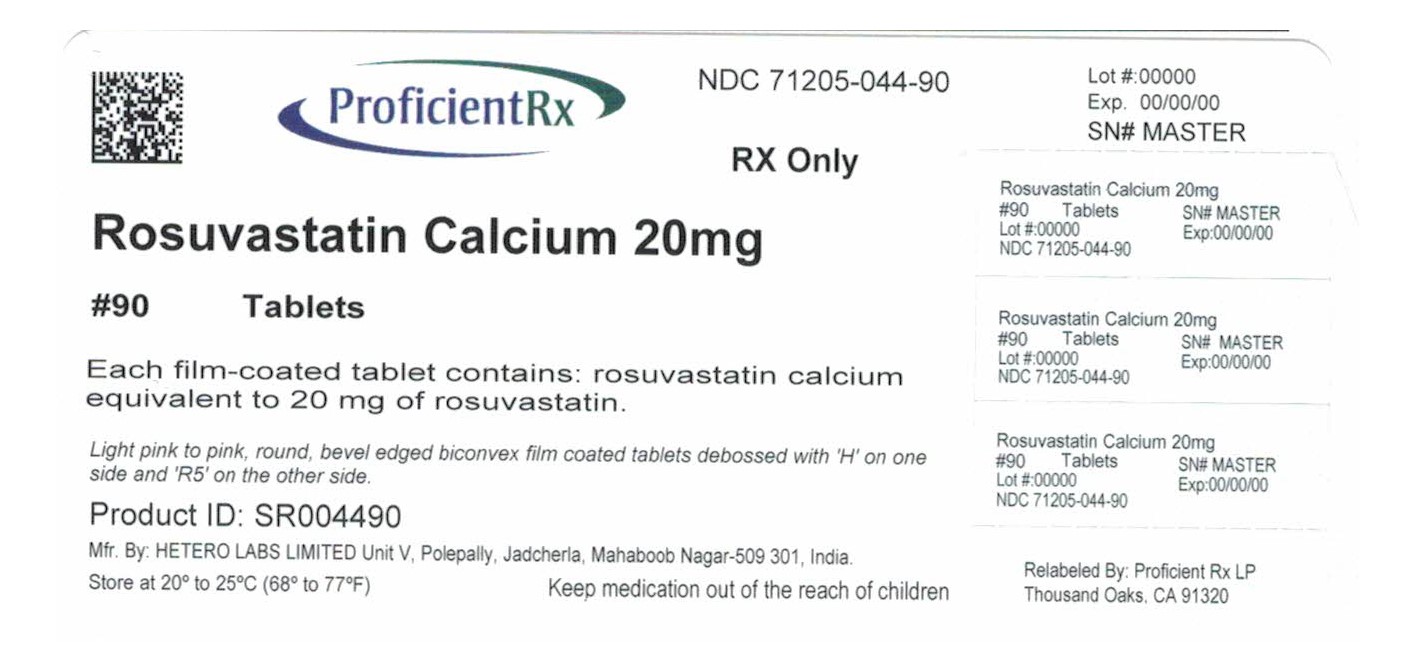
NDC 71205-0044-90: Rosuvastatin 20 mg Tablet, Film Coated, Bottle of 90
This is a package of 90 tablets of Rosuvastatin 20 mg Tablet, Film Coated from Proficient Rx LP, first listed with the FDA Oct 2016 and currently FDA-listed.
NDC Database Record
One package, one record: these facts belong to NDC 71205-044-90 alone.
- Record
- FDA NDC Directory package listing · Human prescription drug
- Code segments
- 71205 labeler · 044 product · 90 package
- Package marketed since
- Jun 1, 2018
- Sample package
- No — commercial package
- Listing certified through
- Dec 31, 2027
- Billing quantity
- 90 EA per package
- Barcode (UPC)
- 0371205044909
- FDA record last changed
- Oct 8, 2026
Other active recalls for Rosuvastatin (different manufacturers) — 1 · tap to view
Identity & Classification
Regulatory identifiers FDA, NLM and CMS codes for this package
Drug-database identifiers Medi-Span GPI and First Databank GCN / HICL / AHFS classification
- GSN (GCN sequence number): 051785
- GCN: 19154
- GPI-14 (Medi-Span): 39400060100320
- HICL (First Databank): 025009
- AHFS class code: 24:06.08.00
- RxCUI (RxNorm): 859751
Where does this data come from?
- FDA openFDA NDC Directory · synced Nov 26, 2026
- FDA label on DailyMed · label index refreshed Nov 26, 2026
- RxNorm (NLM RxNav) · catalog refreshed Nov 26, 2026
- Medi-Span GPI (licensed)
- First Databank (licensed) · refreshed Nov 26, 2026
RxNorm Drug Class
This medicine belongs to the HMG-CoA Reductase Inhibitor class.
Where does this data come from?
- RxClass (NLM) · catalog refreshed Nov 26, 2026
Clinical
- It lowers cholesterol and triglycerides when diet alone isn’t enough. Some tablet labels also include slowing atherosclerosis and lowering the risk of heart attack and stroke in ad...
- Take one tablet by mouth once a day, at any time, with or without food. Swallow it whole. If you miss a dose, skip it and take your next one as usual, without doubling up.
- The most common are headache, nausea, muscle aches, tiredness, constipation and joint pain. Most people tolerate it well. Call your doctor if muscle pain, tenderness or weakness is...
- Some medicines raise rosuvastatin levels and muscle risk, including cyclosporine, gemfibrozil and many antivirals. Tell me about everything you take. If you use an aluminum and mag...
Patient education
Drug interactions
Supplement & herbal interactions
Some supplements/herbs that may interact with Rosuvastatin — tap one for details:
Rosuvastatin may be associated with lower levels of 1 nutrient — worth a chat with your pharmacist, not a cause for alarm.
Where does this data come from?
- MedlinePlus (NLM) · refreshed Nov 26, 2026
- FDA label on DailyMed · label index refreshed Nov 26, 2026
Ask a licensed pharmacist directly — free, answered by our team.
Pricing
A drug doesn't have one price. Each row is a different public payment system, and none is what you'd pay at the counter — that depends on your insurance. The ⓘ on each row explains what it measures.
| Price system | Per each | Per package |
|---|---|---|
| Retail pharmacies payNADAC · weekly | Not in the retail survey — common for institutional, discontinued, or low-volume packs. | |
| Medicaid paysCMS SDUD · 12 mo | No recent Medicaid claims on file for this NDC — rare and low-volume NDCs are suppressed in the public data. | |
| Medicare drug plans payPart D · Q2 2026 | $0.1900 | $17.10 / 90 tablets |
Where does this data come from?
- CMS NADAC weekly file
- CMS ASP pricing files · refreshed Nov 20, 2026
- CMS Medicaid State Drug Utilization Data · refreshed Nov 28, 2026
- CMS Part D plan pricing files · refreshed Nov 24, 2026
- VA National Acquisition Center price file
Packaging — All Sizes for This Product
| Package NDC | Description | Marketing start | Marketing end | Status |
|---|---|---|---|---|
| 71205-0044-30 71205-044-30 Main listing | 30 TABLET, FILM COATED in 1 BOTTLE | 2018-06-01 | — | Active |
| 71205-0044-60 71205-044-60 | 60 TABLET, FILM COATED in 1 BOTTLE | 2018-06-01 | — | Active |
| 71205-0044-90 You're viewing this | 90 TABLET, FILM COATED in 1 BOTTLE | 2018-06-01 | — | Active |
You're viewing the largest of 3 pack sizes for this product.
Pack size FAQ
What quantity is in this package?
How does this package differ from NDC 71205-0044-30?
What NDC number is used to bill for this package of Rosuvastatin 20 mg Tablet, Film Coated?
Therapeutic Equivalents
| Product | Labeler | Pack | NADAC/unit | TE | Status | Price vs. this |
|---|---|---|---|---|---|---|
| Rosuvastatin 20 mg 11788-0132-05 | AiPing | 500 tablets | $0.046 | AB | Availability likely | — |
| Rosuvastatin Calcium 20 mg 13668-0181-05 | Torrent | 500 tablets | $0.046 | AB | Availability likely | — |
| Rosuvastatin Calcium 20 mg 13668-0722-05 | TORRENT | 500 tablets | $0.046 | AB | Availability likely | — |
| Rosuvastatin Calcium 20 mg 16714-0990-01 | NorthStar | 90 tablets | $0.046 | AB | Availability likely | — |
| Rosuvastatin Calcium 20 mg 24658-0263-45 | PURACAP | 45 tablets | $0.046 | AB | Availability likely | — |
| Rosuvastatin Calcium 20 mg 27808-0157-01 | Cranbury | 90 tablets | $0.046 | AB | Availability likely | — |
| Rosuvastatin 20 mg 50228-0118-10 | ScieGen | 1000 tablets | $0.046 | AB | Availability likely | — |
| Rosuvastatin 20 mg 50268-0710-15 | AvPAK | 1 tablet | $0.046 | AB | Availability likely | — |
| Rosuvastatin Calcium 20 mg 60687-0256-01 | American | 1 tablet | $0.046 | AB | Availability likely | — |
| Rosuvastatin Calcium 20 mg 67877-0441-05 | Ascend | 500 tablets | $0.046 | AB | Availability likely | — |
| Rosuvastatin Calcium 20 mg 72603-0366-01 | NorthStar | 90 tablets | $0.046 | AB | Availability likely | — |
| Rosuvastatin Calcium 20 mg 82009-0019-10 | Quallent | 1000 tablets | $0.046 | AB | Availability likely | — |
| Rosuvastatin 20 mg 82009-0190-05 | Quallent | 500 tablets | $0.046 | AB | Availability likely | — |
| Rosuvastatin 20 mg 16729-0286-15 | Accord | 90 tablets | $0.057 | AB | FDA listed | — |
| Crestor 20 mg 00310-7580-90 | AstraZeneca | 90 tablets | $8.801 | AB | Availability likely | — |
| Rosuvastatin Calcium 20 mg 00615-8534-05 | NCS | 15 tablets | — | AB | FDA listed | — |
| Rosuvastatin 20 mg 31722-0884-31 | Camber | 100 tablets | — | AB | FDA listed | — |
| Rosuvastatin 20 mg 33342-0263-07 | Macleods | 30 tablets | — | — | FDA listed | — |
| Rosuvastatin Calcium 20 mg 42677-0303-01 | Shandong | 90 tablets | — | AB | FDA listed | — |
| Rosuvastatin calcium 20 mg 42708-0191-30 | QPharma, | 30 tablets | — | AB | FDA listed | — |
| Rosuvastatin Calcium 20 mg 50090-2449-00 | A-S | 30 tablets | — | AB | FDA listed | — |
| Rosuvastatin Calcium 20 mg 50090-5676-00 | A-S | 90 tablets | — | AB | FDA listed | — |
| Rosuvastatin Calcium 20 mg 50090-6422-00 | A-S | 30 tablets | — | AB | FDA listed | — |
| Rosuvastatin Calcium 20 mg 50090-6519-00 | A-S | 30 tablets | — | AB | FDA listed | — |
| Rosuvastatin Calcium 20 mg 50090-6522-00 | A-S | 30 tablets | — | AB | FDA listed | — |
| Rosuvastatin calcium 20 mg 50090-6524-00 | A-S | 30 tablets | — | AB | FDA listed | — |
| Rosuvastatin Calcium 20 mg 50090-7004-00 | A-S | 30 tablets | — | AB | FDA listed | — |
| Rosuvastatin Calcium 20 mg 50090-7005-00 | A-S | 90 tablets | — | AB | FDA listed | — |
| Rosuvastatin 20 mg 50090-7730-00 | A-S | 30 tablets | — | AB | FDA listed | — |
| Rosuvastatin 20 mg 50090-7793-00 | A-S | 90 tablets | — | AB | FDA listed | — |
| Rosuvastatin 20 mg 51407-0850-10 | Golden | 1000 tablets | — | AB | FDA listed | — |
| Rosuvastatin Calcium 20 mg 51655-0235-52 | Northwind | 30 tablets | — | AB | FDA listed | — |
| Rosuvastatin calcium 20 mg 51655-0309-52 | Northwind | 30 tablets | — | AB | FDA listed | — |
| Rosuvastatin Calcium 20 mg 51655-0996-52 | Northwind | 30 tablets | — | AB | FDA listed | — |
| Rosuvastatin 20 mg 55154-0159-00 | Cardinal | 1 tablet | — | AB | FDA listed | — |
| Rosuvastatin Calcium 20 mg 57237-0170-05 | Rising | 500 tablets | — | AB | FDA listed | — |
| Rosuvastatin Calcium 20 mg 60290-0045-01 | Umedica | 30 tablets | — | AB | FDA listed | — |
| Rosuvastain Calcium 20 mg 62135-0692-90 | Chartwell | 90 tablets | — | AB | FDA listed | — |
| Rosuvastatin Calcium 20 mg 63187-0865-30 | Proficient | 30 tablets | — | AB | FDA listed | — |
| Rosuvastatin Calcium 20 mg 65862-0295-05 | Aurobindo | 500 tablets | — | AB | FDA listed | — |
| Rosuvastatin Calcium 20 mg 68071-2379-02 | NuCare | 120 tablets | — | AB | FDA listed | — |
| Rosuvastatin 20 mg 68071-3847-02 | NuCare | 120 tablets | — | AB | FDA listed | — |
| Rosuvastatin calcium 20 mg 68462-0263-01 | Glenmark | 100 tablets | — | AB | FDA listed | — |
| Rosuvastatin Calcium 20 mg 68788-4047-02 | Preferred | 20 tablets | — | AB | FDA listed | — |
| Rosuvastatin Calcium 20 mg 68788-7612-02 | Preferred | 20 tablets | — | AB | FDA listed | — |
| Rosuvastatin 20 mg 68788-8533-02 | Preferred | 20 tablets | — | AB | FDA listed | — |
| Rosuvastatin 20 mg 68788-8698-02 | Preferred | 20 tablets | — | AB | FDA listed | — |
| Rosuvastatin Calcium 20 mg 69367-0361-01 | Westminster | 100 tablets | — | AB | FDA listed | — |
| Rosuvastatin Calcium 20 mg 69434-0007-02 | Zhejiang | 90 tablets | — | AB | FDA listed | — |
| Rosuvastatin calcium 20 mg 70377-0008-11 | Biocon | 30 tablets | — | AB | FDA listed | — |
| Rosuvastatin Calcium 20 mg 70518-1819-00 | REMEDYREPACK | 90 tablets | — | AB | FDA listed | — |
| Rosuvastatin calcium 20 mg 70518-4199-00 | REMEDYREPACK | 90 tablets | — | AB | FDA listed | — |
| Rosuvastatin 20 mg 70518-4296-00 | REMEDYREPACK | 45 tablets | — | AB | FDA listed | — |
| rosuvstatin 20 mg 70756-0055-12 | Lifestar | 1000 tablets | — | — | FDA listed | — |
| Rosuvastatin 20 mgthis 71205-0044-90 | Proficient | 90 tablets | — | AB | FDA listed | — |
| Rosuvastatin calcium 20 mg 71205-0099-30 | Proficient | 30 tablets | — | AB | FDA listed | — |
| Rosuvastatin Calcium 20 mg 71205-0279-30 | Proficient | 30 tablets | — | AB | FDA listed | — |
| Rosuvastatin Calcium 20 mg 71205-0390-30 | Proficient | 30 tablets | — | AB | FDA listed | — |
| Rosuvastatin Calcium 20 mg 71209-0045-04 | Cadila | 90 tablets | — | AB | FDA listed | — |
| Rosuvastatin Calcium 20 mg 71335-0302-01 | Bryant | 30 tablets | — | AB | FDA listed | — |
| Rosuvastatin Calcium 20 mg 71335-0905-01 | Bryant | 30 tablets | — | AB | FDA listed | — |
| Rosuvastatin Calcium 20 mg 71335-1098-01 | Bryant | 30 tablets | — | AB | Discontinued | — |
| Rosuvastatin calcium 20 mg 71335-1741-01 | Bryant | 30 tablets | — | AB | FDA listed | — |
| Rosuvastatin 20 mg 71335-2406-01 | Bryant | 30 tablets | — | AB | FDA listed | — |
| Rosuvastatin 20 mg 71335-9669-01 | Bryant | 30 tablets | — | AB | FDA listed | — |
| Rosuvastatin calcium 20 mg 71610-0187-45 | Aphena | 45 tablets | — | AB | FDA listed | — |
| Rosuvastatin Calcium 20 mg 71610-0234-15 | Aphena | 15 tablets | — | AB | FDA listed | — |
| Rosuvastatin 20 mg 71610-0796-15 | Aphena | 15 tablets | — | AB | FDA listed | — |
| Rosuvastatin 20 mg 71610-0922-45 | Aphena | 45 tablets | — | AB | FDA listed | — |
| Rosuvastatin Calcium 20 mg 72205-0004-05 | Novadoz | 500 tablets | — | AB | FDA listed | — |
| Rosuvastatin Calcium 20 mg 82804-0090-90 | Proficient | 90 tablets | — | AB | FDA listed | — |
Where does this data come from?
- FDA openFDA NDC Directory · synced Nov 26, 2026
- FDA Orange Book · refreshed Nov 6, 2026
- CMS NADAC weekly file
Availability & Generic Status
This product is an FDA-approved generic. Other versions of the same drug are listed under Therapeutic equivalents, least expensive first.
Where does this data come from?
- FDA Orange Book · refreshed Nov 6, 2026
What It Looks Like
Where does this data come from?
- FDA label on DailyMed · label index refreshed Nov 26, 2026
Inactive Ingredients / Excipients
Inactive ingredients, also called excipients, are components of the drug product other than the active ingredient. They may include fillers, dyes, coatings, preservatives, flavors, or other formulation ingredients.
Avoiding an ingredient? See Rosuvastatin inactive ingredients by manufacturer: every current product's list side by side, so you can ask your pharmacy for the version that does not list it.
Tap an ingredient (hover on desktop) to see what it is and why it’s used.
-
UNII 68401960MK
Crospovidone is a synthetic polymer made from polyvinylpyrrolidone. It acts as a disintegrant, helping tablets break apart quickly in the stomach so the medicine dissolves and absorbs into the body.
-
UNII L06K8R7DQK
A synthetic blue dye approved by the FDA for use in medications and foods. It serves as a colorant to make pills and liquids visually distinct and easier to identify.
-
UNII WZB9127XOA
A synthetic red dye used to color medications and make them easier to identify. It serves as a colorant in tablets, capsules, and liquid formulations.
-
UNII H77VEI93A8
A synthetic yellow dye used to color medications. It helps identify the drug and make it visually distinctive, with no effect on how the medicine works.
-
UNII RFW2ET671P
Hydroxypropyl cellulose is a plant-derived thickening agent made from cellulose. It acts as a binder to hold tablet ingredients together and as a film-former to coat tablets or control how fast the medicine releases.
-
UNII 3NXW29V3WO
Hypromellose is a plant-based thickener made from cellulose. It's used in medicines as a binder to hold ingredients together, a coating for tablets, and a thickener for liquids.
-
UNII EWQ57Q8I5X
Lactose monohydrate is a natural sugar derived from milk. It serves as a filler and binder in tablets and capsules, helping create the proper size, texture, and consistency of the medicine.
-
UNII 70097M6I30
Magnesium stearate is a salt made from magnesium and stearic acid, a fatty substance. It's used in tablets and capsules as a lubricant and glidant to help ingredients flow smoothly during manufacturing and prevent sticking.
-
UNII OP1R32D61U
Microcrystalline cellulose is a purified form of cellulose, a natural fiber from plant sources. It acts as a binder and filler in tablets and capsules, helping hold ingredients together and give the medicine its shape and size.
-
UNII 8MDF5V39QO
A white powder form of baking soda that acts as a buffer and pH regulator in medicines. It helps maintain the right acid-base balance and may aid tablet disintegration.
-
UNII 7SEV7J4R1U
A powder made from a naturally occurring mineral. In medicines, talc works as a glidant and anti-caking agent, helping tablets and capsules flow smoothly during manufacturing and preventing clumping.
-
UNII 15FIX9V2JP
Titanium dioxide is a bright white mineral powder commonly used as a colorant and opacifying agent. It makes pills and tablets white or lighter in color and helps make coatings non-transparent.
-
UNII XHX3C3X673
Triacetin is a clear, oily liquid made from glycerin and acetic acid. It works as a plasticizer and solvent in medicines, helping soften coatings and improve how liquids mix together in formulations.
13 inactive ingredients listed in the exact product block matched to this NDC.
Where does this data come from?
ingredient classCode="IACT" elements from the exact product block matched by this NDC. Label-section narrative from DailyMed / the openFDA label index is shown separately when available.- FDA label on DailyMed · label index refreshed Nov 26, 2026
- FDA openFDA NDC Directory · synced Nov 26, 2026
Inactive ingredient FAQ
Are inactive ingredients the same for every manufacturer?
Why might an inactive ingredient be missing?
Can inactive ingredients matter?
Manufacturer & Labeler
More NDCs from Proficient Rx LP labeler code 71205
- benzonatate 200 mg Capsule NDC 71205-037-10
- Triamcinolone Acetonide 5 mg/g Ointment NDC 71205-038-15
- Dutasteride .5 mg Capsule NDC 71205-039-30
- Betamethasone Valerate 1 mg/g Cream NDC 71205-040-15
- Glipizide 5 mg Tablet NDC 71205-041-30
- Valsartan and Hydrochlorothiazide 320 mg; 12.5 mg Tablet, Film Coated NDC 71205-042-30
- Sotalol Hydrochloride 80 mg Tablet NDC 71205-046-30
- Sertraline Hydrochloride 100 mg Tablet, Film Coated NDC 71205-047-30
- Alendronate Sodium 70 mg Tablet NDC 71205-048-04
- Allopurinol 300 mg Tablet NDC 71205-049-30
- Ipratropium Bromide and Albuterol Sulfate .5 mg/3mL; 3 mg/3mL Solution NDC 71205-051-05
- Rosuvastatin calcium 10 mg Tablet, Film Coated NDC 71205-052-30
Where does this data come from?
- FDA openFDA NDC Directory · synced Nov 26, 2026
- Drugs@FDA
Full Prescribing Information FDA SPL
Indications and Usage
1 INDICATIONS & USAGE Pediatric use information for patients 7 to 17 years of age is approved for AstraZeneca’s CRESTOR (rosuvastatin calcium) tablets. However, due to AstraZeneca’s marketing exclusivity rights, this drug product is not labeled with that pediatric information. Rosuvastatin calcium tablet is an HMG Co-A reductase inhibitor indicated for: • adult patients with hypertriglyceridemia as an adjunct to diet ( Error!
Hyperlink reference not valid. ) • adult patients with primary dysbetalipoproteinemia (Type III hyperlipoproteinemia) as an adjunct to diet ( Error! Hyperlink reference not valid. ) • adult patients with homozygous familial hypercholesterolemia (HoFH) to reduce LDL-C, total-C, and ApoB ( Error! Hyperlink reference not valid. ) Limitations of use ( Error!
Hyperlink reference not valid. ): Rosuvastatin calcium tablets have not been studied in Fredrickson Type I and V dyslipidemias.
1.3Hypertriglyceridemia Rosuvastatin calcium tablets are indicated as adjunctive therapy to diet for the treatment of adult patients with hypertriglyceridemia.
1.4Primary Dysbetalipoproteinemia (Type III Hyperlipoproteinemia) Rosuvastatin calcium tablets are indicated as an adjunct to diet for the treatment of adult patients with primary dysbetalipoproteinemia (Type III Hyperlipoproteinemia).
1.5Adult Patients with Homozygous Familial Hypercholesterolemia Rosuvastatin calcium tablets are indicated as adjunctive therapy to other lipid-lowering treatments (e.g., LDL apheresis) or alone if such treatments are unavailable to reduce LDL-C, Total-C, and ApoB in adult patients with homozygous familial hypercholesterolemia.
1.8Limitations of Use Rosuvastatin calcium tablets have not been studied in Fredrickson Type I and V dyslipidemias.
Dosage and Administration
2 DOSAGE & ADMINISTRATION •Rosuvastatin calcium tablets can be taken with or without food, at any time of day. ( Error! Hyperlink reference not valid. ) •Dose range: 5 to 40 mg once daily. Use 40 mg dose only for patients not reaching LDL-C goal with 20 mg. ( Error! Hyperlink reference not valid. ) •Adult HoFH: Starting dose 20 mg/day ( Error! Hyperlink reference not valid. )
2.1General Dosing Information The dose range for rosuvastatin calcium tablets in adults are 5 to 40 mg orally once daily. The usual starting dose is 10 to 20 mg once daily. The usual starting dose in adult patients with homozygous familial hypercholesterolemia is 20 mg once daily.
The maximum rosuvastatin calcium tablet dose of 40 mg should be used only for those patients who have not achieved their LDL-C goal utilizing the 20 mg dose [ Error! Hyperlink reference not valid. ]. Rosuvastatin calcium tablets can be administered as a single dose at any time of day, with or without food.
The tablet should be swallowed whole. When initiating rosuvastatin calcium tablets therapy or switching from another HMG-CoA reductase inhibitor therapy, the appropriate rosuvastatin calcium tablets starting dose should first be utilized, and only then titrated according to the patient’s response and individualized goal of therapy. After initiation or upon titration of rosuvastatin calcium tablets, lipid levels should be analyzed within 2 to 4 weeks and the dosage adjusted accordingly.
Pediatric use information for patients 7 to 17 years of age is approved for AstraZeneca’s CRESTOR (rosuvastatin calcium) tablets. However, due to AstraZeneca’s marketing exclusivity rights, this drug product is not labeled with that pediatric information.
2.3Dosing in Asian Patients In Asian patients, consider initiation of rosuvastatin calcium tablets therapy with 5 mg once daily due to increased rosuvastatin plasma concentrations. The increased systemic exposure should be taken into consideration when treating Asian patients not adequately controlled at doses up to 20 mg/day [ Error! Hyperlink reference not valid. and Error! Hyperlink reference not valid. )].
2.4Use with Concomitant Therapy Patients taking cyclosporine The dose of rosuvastatin calcium tablets should not exceed 5 mg once daily [ Error! Hyperlink reference not valid. , Error! Hyperlink reference not valid. and Error!
Hyperlink reference not valid. ]. Patients taking gemfibrozil Avoid concomitant use of rosuvastatin calcium tablets with gemfibrozil. If concomitant use cannot be avoided, initiate rosuvastatin calcium tablets at 5 mg once daily.
The dose of rosuvastatin calcium tablets should not exceed 10 mg once daily [ Error! Hyperlink reference not valid. , Error! Hyperlink reference not valid. and Error!
Hyperlink reference not valid. ]. Patients taking atazanavir and ritonavir, lopinavir and ritonavir, or simeprevir Initiate rosuvastatin calcium tablets therapy with 5 mg once daily. The dose of rosuvastatin calcium tablets should not exceed 10 mg once daily [ Error!
Hyperlink reference not valid. , Error! Hyperlink reference not valid. and Error! Hyperlink reference not valid. ].
2.5Dosing in Patients with Severe Renal Impairment For patients with severe renal impairment (CLcr <30 mL/min/1.73 m2) not on hemodialysis, dosing of rosuvastatin calcium tablets should be started at 5 mg once daily and not exceed 10 mg once daily [ Error! Hyperlink reference not valid. and Error! Hyperlink reference not valid. )].
Dosage Forms and Strengths
3 DOSAGE FORMS & STRENGTHS 5 mg: Light yellow to yellow, round, bevel edged biconvex film coated tablets debossed with "H" on one side and "R3" on the other side. 10 mg: Light pink to pink, round, bevel edged biconvex film coated tablets debossed with "H" on one side and "R4" on the other side. 20 mg: Light pink to pink, round, bevel edged biconvex film coated tablets debossed with "H" on one side and "R5" on the other side.
40 mg: Light pink to pink, oval, bevel edged biconvex film coated tablets debossed with "H" on one side and "R6" on the other side. Tab let s: 5 m g, 10 m g, 20 m g, a nd 40 mg ( Error! Hyperlink reference not valid. )
Contraindications
4 CONTRAINDICATIONS Rosuvastatin calcium tablets are contraindicated in the following conditions: •Patients with a known hypersensitivity to any component of this product. Hypersensitivity reactions including rash, pruritus, urticaria, and angioedema have been reported with rosuvastatin calcium tablets [ Error! Hyperlink reference not valid. )]. •Patients with active liver disease, which may include unexplained persistent elevations of hepatic transaminase levels [ Error!
Hyperlink reference not valid. )]. •Pregnancy [ see Use in Specific Populations (8.1, Error! Hyperlink reference not valid. )]. •Lactation. Limited data indicate that rosuvastatin calcium is present in human milk.
Because statins have the potential for serious adverse reactions in nursing infants, women who require rosuvastatin calcium tablets treatment should not breastfeed their infants Error! Hyperlink reference not valid. )]. •Known hypersensitivity to product components ( Error! Hyperlink reference not valid. ) •Active liver disease, which may include unexplained persistent elevations in hepatic transaminase levels ( Error!
Hyperlink reference not valid. ) •Pregnancy ( Error! Hyperlink reference not valid. , Error! Hyperlink reference not valid. , Error!
Hyperlink reference not valid. ) •Lactation ( Error! Hyperlink reference not valid. , Error! Hyperlink reference not valid. )
Warnings and Cautions
5 WARNINGS AND PRECAUTIONS Skeletal muscle effects (e.g., myopathy and rhabdomyolysis): Risks increase with use of 40 mg dose, advanced age (≥65), hypothyroidism, renal impairment, and combination use with cyclosporine, atazanavir/ritonavir, lopinavir/ritonavir, or simeprevir. Cases of myopathy and rhabdomyolysis with acute renal failure secondary to myoglobinuria have been reported. Advise patients to promptly report to their physician unexplained and/or persistent muscle pain, tenderness, or weakness and discontinue rosuvastatin calcium tablets if signs or symptoms appear.
( Error! Hyperlink reference not valid. , Error! Hyperlink reference not valid. , Error!
Hyperlink reference not valid. ) • Liver enzyme abnormalities: Persistent elevations in hepatic transaminases can occur. Perform liver enzyme tests before initiating therapy and as clinically indicated thereafter. ( Error!
Hyperlink reference not valid. )
5.1Skeletal Muscle Effects Cases of myopathy and rhabdomyolysis with acute renal failure secondary to myoglobinuria have been reported with HMG-CoA reductase inhibitors, including rosuvastatin calcium tablets. These risks can occur at any dose level, but are increased at the highest dose (40 mg). Rosuvastatin calcium tablets should be prescribed with caution in patients with predisposing factors for myopathy (e.g., age ≥65 years, inadequately treated hypothyroidism, renal impairment).
The risk of myopathy during treatment with rosuvastatin calcium tablets may be increased with concurrent administration of some other lipid-lowering therapies (fibrates or niacin), gemfibrozil, cyclosporine, atazanavir/ritonavir, lopinavir/ritonavir, or simeprevir [ see Dosage and Administration (2) and Drug Interactions (7)] . Cases of myopathy, including rhabdomyolysis, have been reported with HMG-CoA reductase inhibitors, including rosuvastatin, coadministered with colchicine, and caution should be exercised when prescribing rosuvastatin calcium tablets with colchicine [ Error!
Hyperlink reference not valid. )]. Rosuvastatin calcium tablets therapy should be discontinued if markedly elevated creatine kinase levels occur or myopathy is diagnosed or suspected. Rosuvastatin calcium tablets therapy should also be temporarily withheld in any patient with an acute, serious condition suggestive of myopathy or predisposing to the development of renal failure secondary to rhabdomyolysis (e.g., sepsis, hypotension, dehydration, major surgery, trauma, severe metabolic, endocrine, and electrolyte disorders, or uncontrolled seizures).
There have been rare reports of immune-mediated necrotizing myopathy (IMNM), an autoimmune myopathy, associated with statin use. IMNM is characterized by: proximal muscle weakness and elevated serum creatine kinase, which persist despite discontinuation of statin treatment; muscle biopsy showing necrotizing myopathy without significant inflammation; improvement with immunosuppressive agents. All patients should be advised to promptly report to their physician unexplained muscle pain, tenderness, or weakness, particularly if accompanied by malaise or fever or if muscle signs and symptoms persist after discontinuing rosuvastatin calcium tablets.
5.2Liver Enzyme Abnormalities It is recommended that liver enzyme tests be performed before the initiation of rosuvastatin calcium tablets, and if signs or symptoms of liver injury occur. Increases in serum transaminases [AST (SGOT) or ALT (SGPT)] have been reported with HMG-CoA reductase inhibitors, including rosuvastatin calcium tablets. In most cases, the elevations were transient and resolved or improved on continued therapy or after a brief interruption in therapy.
There were two cases of jaundice, for which a relationship to rosuvastatin calcium tablets therapy could not be determined, which resolved after discontinuation of therapy. There were no cases of liver failure or irreversible liver disease in these trials. In a pooled analysis of placebo-controlled trials, inc… [Excerpted — this section continues on DailyMed.]
Adverse Reactions
6 ADVERSE REACTIONS The following serious adverse reactions are discussed in greater detail in other sections of the label: •Rhabdomyolysis with myoglobinuria and acute renal failure and myopathy (including myositis) [ Error! Hyperlink reference not valid. ] •Liver enzyme abnormalities [ Error! Hyperlink reference not valid. )] Most frequent adverse reactions (rate ≥2%) are headache, myalgia, abdominal pain, asthenia, and nausea.
( Error! Hyperlink reference not valid. ) To report SUSPECTED ADVERSE REACTIONS, contact Hetero Labs Limited at 1-866-495-1995 or FDA at 1-800-FDA-1088 or www.fda.gov/medwatch
6.1Clinical Studies Experience Because clinical studies are conducted under widely varying conditions, adverse reaction rates observed in the clinical studies of a drug cannot be directly compared to rates in the clinical studies of another drug and may not reflect the rates observed in clinical practice. In the rosuvastatin calcium tablets controlled clinical trials database (placebo or active-controlled) of 5394 patients with a mean treatment duration of 15 weeks, 1.4% of patients discontinued due to adverse reactions.
The most common adverse reactions that led to treatment discontinuation were: •myalgia •abdominal pain •nausea The most commonly reported adverse reactions (incidence ≥2%) in the rosuvastatin calcium tablets controlled clinical trial database of 5394 patients were: •headache •myalgia •abdominal pain •asthenia •nausea Adverse reactions reported in ≥2% of patients in placebo-controlled clinical studies and at a rate greater than placebo are shown in Table 1. These studies had a treatment duration of up to 12 weeks. Table 1.
Adverse Reactions1 Reported in ≥2% of Patients Treated with Rosuvastatin Calcium Tablets and > Placebo in Placebo-Controlled Trials (% of Patients) Adverse Reactions Rosuvastatin Calcium Tablets 5 mg N=291 Rosuvastatin Calcium Tablets 10 mg N=283 Rosuvastatin Calcium Tablets 20 mg N=64 Rosuvastatin Calcium Tablets 40 mg N=106 Total Rosuvastatin Calcium Tablets 5 mg- 40 mg N=744 Placebo N=382 Headache 5.5 4.9 3.1 8.5 5.5 5 Nausea 3.8 3.5 6.3 0 3.4
3.1Myalgia 3.1 2.1 6.3 1.9 2.8
1.3Asthenia 2.4 3.2 4.7 0.9 2.7
2.6Constipation 2.1 2.1 4.7 2.8 2.4 2.4 1 Adverse reactions by COSTART preferred term. Other adverse reactions reported in clinical studies were abdominal pain, dizziness, hypersensitivity (including rash, pruritus, urticaria, and angioedema) and pancreatitis. The following laboratory abnormalities have also been reported: dipstick-positive proteinuria and microscopic hematuria [ Error!
Hyperlink reference not valid. ]; elevated creatine phosphokinase, transaminases, glucose, glutamyl transpeptidase, alkaline phosphatase, and bilirubin; and thyroid function abnormalities. In a clinical trial, involving 981 participants treated with rosuvastatin 40 mg (n=700) or placebo (n=281) with a mean treatment duration of 1.7 years, 5.6% of subjects treated with rosuvastatin calcium tablets versus 2.8% of placebo-treated subjects discontinued due to adverse reactions. The most common adverse reactions that led to treatment discontinuation were: myalgia, hepatic enzyme increased, headache, and nausea.
Adverse reactions reported in ≥2% of patients and at a rate greater than placebo are shown in Table 2. Table 2. Adverse Reactions1 Reported in ≥2% of Patients Treated with Rosuvastatin Calcium Tablets and > Placebo in a Trial (% of Patients) Adverse Reactions Rosuvastatin Calcium Tablets 40 mg N=700 Placebo N=281 Myalgia 12.7
12.1Arthralgia 10.1
7.1Headache 6.4
5.3 Dizziness 4
2.8Increased CPK 2.6
0.7Abdominal pain 2.4
1.8ALT >3x ULN 2 2.2 0.7 1 Adverse reactions by MedDRA preferred term. 2 Frequency recorded as abnormal laboratory value. In a clinical trial, 17,802 participants were treated with rosuvastatin 20 mg (n=8901) or placebo (n=8901) for a mean duration of 2 years. A higher percentage of rosuvastatin-treated patients versus placebo-treated patients, 6.6% and 6.2%, respectively, discontin… [Excerpted — this section continues on DailyMed.]
Drug Interactions
7 DRUG INTERACTIONS • Cyclosporine: Combination increases rosuvastatin exposure. Limit rosuvastatin calcium tablets dose to 5 mg once daily. ( Error!
Hyperlink reference not valid. , Error! Hyperlink reference not valid. , Error! Hyperlink reference not valid. , Error!
Hyperlink reference not valid. ) • Gemfibrozil: Combination should be avoided. If used together, limit rosuvastatin calcium tablets dose to 10 mg once daily. Error!
Hyperlink reference not valid. , Error! Hyperlink reference not valid. , Error! Hyperlink reference not valid. ) • Atazanavir/ritonavir, lopinavir/ritonavir, or simeprevir: Combination increases rosuvastatin exposure.
Limit rosuvastatin calcium tablets dose to 10 mg once daily. ( Error! Hyperlink reference not valid. , Error!
Hyperlink reference not valid. , Error! Hyperlink reference not valid. , Error! Hyperlink reference not valid. ) • Coumarin anticoagulants: Combination prolongs INR.
Achieve stable INR prior to starting rosuvastatin calcium tablets. Monitor INR frequently until stable upon initiation or alteration of rosuvastatin calcium tablets therapy. ( Error!
Hyperlink reference not valid. , Error! Hyperlink reference not valid. ) • Concomitant lipid-lowering therapies: Use with fibrates or lipid-modifying doses (≥1 g/day) of niacin increases the risk of adverse skeletal muscle effects. Caution should be used when prescribing with rosuvastatin calcium tablets.
( Error! Hyperlink reference not valid. , Error! Hyperlink reference not valid. , Error!
Hyperlink reference not valid. )
7.1Cyclosporine Cyclosporine increased rosuvastatin exposure (AUC) 7‑fold. Therefore, in patients taking cyclosporine, the dose of rosuvastatin calcium tablets should not exceed 5 mg once daily [ Error! Hyperlink reference not valid. ), Error! Hyperlink reference not valid. ), and Error! Hyperlink reference not valid. ].
7.2Gemfibrozil Gemfibrozil significantly increased rosuvastatin exposure. Due to an observed increased risk of myopathy/rhabdomyolysis, combination therapy with rosuvastatin calcium tablets and gemfibrozil should be avoided. If used together, the dose of rosuvastatin calcium tablets should not exceed 10 mg once daily [ Error! Hyperlink reference not valid. ].
7.3Protease Inhibitors Coadministration of rosuvastatin with certain protease inhibitors has differing effects on rosuvastatin exposure. Simeprevir, which is a hepatitis C virus (HCV) protease inhibitor, or combinations of atazanavir/ritonavir or lopinavir/ritonavir, which are HIV-1 protease inhibitors, increase rosuvastatin exposure (AUC) up to threefold [see Table 4 – Error! Hyperlink reference not valid. )].
For these protease inhibitors, the dose of rosuvastatin calcium tablets should not exceed 10 mg once daily. The combinations of fosamprenavir/ritonavir or tipranavir/ritonavir, which are HIV-1 protease inhibitors, produce little or no change in rosuvastatin exposure. Caution should be exercised when rosuvastatin is coadministered with protease inhibitors [ Error!
Hyperlink reference not valid. , Error! Hyperlink reference not valid. and Error! Hyperlink reference not valid. ].
7.4Coumarin Anticoagulants Rosuvastatin calcium tablets significantly increased INR in patients receiving coumarin anticoagulants. Therefore, caution should be exercised when coumarin anticoagulants are given in conjunction with rosuvastatin calcium tablets. In patients taking coumarin anticoagulants and rosuvastatin calcium tablets concomitantly, INR should be determined before starting rosuvastatin calcium tablets and frequently enough during early therapy to ensure that no significant alteration of INR occurs [ Error!
Hyperlink reference not valid. and Error! Hyperlink reference not valid. ].
7.5Niacin The risk of skeletal muscle effects may be enhanced when rosuvastatin calcium tablets are used in combination with lipid-modifying doses (≥1 g/day) of niacin; caution should be used when prescribing with rosuvastatin calcium tablets [ see Warnings and Precaut… [Excerpted — this section continues on DailyMed.]
Use in Specific Populations
8 USE IN SPECIFIC POPULATIONS • Females of reproductive potential: Advise females of reproductive potential to use effective contraception during treatment with rosuvastatin calcium tablets ( Error! Hyperlink reference not valid. ) • Severe renal impairment (not on hemodialysis): Starting dose is 5 mg, not to exceed 10 mg. ( Error!
Hyperlink reference not valid. , Error! Hyperlink reference not valid. , Error! Hyperlink reference not valid. ) • Asian population: Consider 5 mg starting dose.
( Error! Hyperlink reference not valid. , Error! Hyperlink reference not valid. ) See 17 for PATIENT COUNSELING INFORMATION and FDA- approved patient labeling.
Pediatric use information for patients ages 7 to 17 years of age is approved for AstraZeneca’s CRESTOR (rosuvastatin calcium) tablets. However, due to AstraZeneca’s marketing exclusivity rights, this drug product is not labeled with that pediatric information.
8.1Pregnancy Risk Summary Rosuvastatin calcium tablets are contraindicated for use in pregnant women since safety in pregnant women has not been established and there is no apparent benefit to therapy with rosuvastatin calcium tablets during pregnancy. Because HMG-CoA reductase inhibitors decrease cholesterol synthesis and possibly the synthesis of other biologically active substances derived from cholesterol, rosuvastatin calcium tablets may cause fetal harm when administered to pregnant women. Rosuvastatin calcium tablets should be discontinued as soon as pregnancy is recognized [ Error!
Hyperlink reference not valid. ]. Limited published data on the use of rosuvastatin are insufficient to determine a drug-associated risk of major congenital malformations or miscarriage. In animal reproduction studies, there were no adverse developmental effects with oral administration of rosuvastatin during organogenesis at systemic exposures equivalent to a maximum recommended human dose (MRHD) of 40 mg/day in rats or rabbits (based on AUC and body surface area, respectively).
In rats and rabbits, decreased pup/fetal survival occurred at 12 times and equivalent, respectively, to the MRHD of 40 mg/day [see Data]. The estimated background risk of major birth defects and miscarriage for the indicated population is unknown. In the U.S. general population, the estimated background risk of major birth defects and miscarriage in clinically recognized pregnancies is 2 to 4% and 15 to 20%, respectively.
Data Human Data Limited published data on rosuvastatin have not shown an increased risk of major congenital malformations or miscarriage. Rare reports of congenital anomalies have been received following intrauterine exposure to other statins. In a review of approximately 100 prospectively followed pregnancies in women exposed to simvastatin or lovastatin, the incidences of congenital anomalies, spontaneous abortions, and fetal deaths/stillbirths did not exceed what would be expected in the general population.
The number of cases is adequate to exclude a ≥3 to 4-fold increase in congenital anomalies over the background incidence. In 89% of the prospectively followed pregnancies, drug treatment was initiated prior to pregnancy and was discontinued at some point in the first trimester when pregnancy was identified. Animal Data Rosuvastatin crosses the placenta in rats and rabbits and is found in fetal tissue and amniotic fluid at 3% and 20%, respectively, of the maternal plasma concentration following a single 25 mg/kg oral gavage dose on gestation day 16 in rats.
A higher fetal tissue distribution (25% maternal plasma concentration) was observed in rabbits after a single oral gavage dose of 1 mg/kg on gestation day 18. Rosuvastatin administration did not indicate a teratogenic effect in rats at ≤25 mg/kg/day or in rabbits ≤3 mg/kg/day (doses equivalent to the MRHD of 40 mg/day based on AUC and body surface area, respectively). In female rats given 5, 15 and 50 mg/kg/day before mating and continuing through to gestation day 7 resulted in decreased fe… [Excerpted — this section continues on DailyMed.]
Pregnancy
8.1Pregnancy Risk Summary Rosuvastatin calcium tablets are contraindicated for use in pregnant women since safety in pregnant women has not been established and there is no apparent benefit to therapy with rosuvastatin calcium tablets during pregnancy. Because HMG-CoA reductase inhibitors decrease cholesterol synthesis and possibly the synthesis of other biologically active substances derived from cholesterol, rosuvastatin calcium tablets may cause fetal harm when administered to pregnant women. Rosuvastatin calcium tablets should be discontinued as soon as pregnancy is recognized [ Error!
Hyperlink reference not valid. ]. Limited published data on the use of rosuvastatin are insufficient to determine a drug-associated risk of major congenital malformations or miscarriage. In animal reproduction studies, there were no adverse developmental effects with oral administration of rosuvastatin during organogenesis at systemic exposures equivalent to a maximum recommended human dose (MRHD) of 40 mg/day in rats or rabbits (based on AUC and body surface area, respectively).
In rats and rabbits, decreased pup/fetal survival occurred at 12 times and equivalent, respectively, to the MRHD of 40 mg/day [see Data]. The estimated background risk of major birth defects and miscarriage for the indicated population is unknown. In the U.S. general population, the estimated background risk of major birth defects and miscarriage in clinically recognized pregnancies is 2 to 4% and 15 to 20%, respectively.
Data Human Data Limited published data on rosuvastatin have not shown an increased risk of major congenital malformations or miscarriage. Rare reports of congenital anomalies have been received following intrauterine exposure to other statins. In a review of approximately 100 prospectively followed pregnancies in women exposed to simvastatin or lovastatin, the incidences of congenital anomalies, spontaneous abortions, and fetal deaths/stillbirths did not exceed what would be expected in the general population.
The number of cases is adequate to exclude a ≥3 to 4-fold increase in congenital anomalies over the background incidence. In 89% of the prospectively followed pregnancies, drug treatment was initiated prior to pregnancy and was discontinued at some point in the first trimester when pregnancy was identified. Animal Data Rosuvastatin crosses the placenta in rats and rabbits and is found in fetal tissue and amniotic fluid at 3% and 20%, respectively, of the maternal plasma concentration following a single 25 mg/kg oral gavage dose on gestation day 16 in rats.
A higher fetal tissue distribution (25% maternal plasma concentration) was observed in rabbits after a single oral gavage dose of 1 mg/kg on gestation day 18. Rosuvastatin administration did not indicate a teratogenic effect in rats at ≤25 mg/kg/day or in rabbits ≤3 mg/kg/day (doses equivalent to the MRHD of 40 mg/day based on AUC and body surface area, respectively). In female rats given 5, 15 and 50 mg/kg/day before mating and continuing through to gestation day 7 resulted in decreased fetal body weight (female pups) and delayed ossification at 50 mg/kg/day (10 times the human exposure at the MRHD dose of 40 mg/day based on AUC).
In pregnant rats given 2, 10 and 50 mg/kg/day of rosuvastatin from gestation day 7 through lactation day 21 (weaning), decreased pup survival occurred at 50 mg/kg/day (dose equivalent to 12 times the MRHD of 40 mg/day based body surface area). In pregnant rabbits given 0.3, 1, and 3 mg/kg/day of rosuvastatin from gestation day 6 to day 18, decreased fetal viability and maternal mortality was observed at 3 mg/kg/day (dose equivalent to the MRHD of 40 mg/day based on body surface area).
Pediatric Use
8.4Pediatric Use Pediatric use information for patients 7 to 17 years of age is approved for AstraZeneca's CRESTOR (rosuvastatin calcium) tablets. However, due to AstraZeneca’s marketing exclusivity rights, this drug product is not labeled with that pediatric information.
Geriatric Use
8.5Geriatric Use Of the 10,275 patients in clinical studies with rosuvastatin calcium tablets, 3159 (31%) were 65 years and older, and 698 (6.8%) were 75 years and older. No overall differences in safety or effectiveness were observed between these subjects and younger subjects, and other reported clinical experience has not identified differences in responses between the elderly and younger patients, but greater sensitivity of some older individuals cannot be ruled out. Elderly patients are at higher risk of myopathy and rosuvastatin calcium tablets should be prescribed with caution in the elderly [see Warnings and Precautions (5.1) and Error!
Hyperlink reference not valid. ].
Overdosage
10 OVERDOSAGE There is no specific treatment in the event of overdose. In the event of overdose, the patient should be treated symptomatically and supportive measures instituted as required. Hemodialysis does not significantly enhance clearance of rosuvastatin.
Clinical Pharmacology
12 CLINICAL PHARMACOLOGY
12.1Mechanism of Action Rosuvastatin calcium tablets are a selective and competitive inhibitor of HMG-CoA reductase, the rate-limiting enzyme that converts 3-hydroxy-3-methylglutaryl coenzyme A to mevalonate, a precursor of cholesterol. In vivo studies in animals, and in vitro studies in cultured animal and human cells have shown rosuvastatin to have a high uptake into, and selectivity for, action in the liver, the target organ for cholesterol lowering. In in vivo and in vitro studies, rosuvastatin produces its lipid-modifying effects in two ways.
First, it increases the number of hepatic LDL receptors on the cell-surface to enhance uptake and catabolism of LDL. Second, rosuvastatin inhibits hepatic synthesis of VLDL, which reduces the total number of VLDL and LDL particles.
12.3Pharmacokinetics Absorption In clinical pharmacology studies in man, peak plasma concentrations of rosuvastatin were reached 3 to 5 hours following oral dosing. Both Cmax and AUC increased in approximate proportion to rosuvastatin calcium tablets dose. The absolute bioavailability of rosuvastatin is approximately 20%.
Administration of rosuvastatin calcium tablets with food did not affect the AUC of rosuvastatin. The AUC of rosuvastatin does not differ following evening or morning drug administration. Distribution Mean volume of distribution at steady-state of rosuvastatin is approximately 134 liters.
Rosuvastatin is 88% bound to plasma proteins, mostly albumin. This binding is reversible and independent of plasma concentrations. Metabolism Rosuvastatin is not extensively metabolized; approximately 10% of a radiolabeled dose is recovered as metabolite.
The major metabolite is N-desmethyl rosuvastatin, which is formed principally by cytochrome P450 \ 2C9, and in vitro studies have demonstrated that N-desmethyl rosuvastatin has approximately one-sixth to one-half the HMG-CoA reductase inhibitory activity of the parent compound. Overall, greater than 90% of active plasma HMG-CoA reductase inhibitory activity is accounted for by the parent compound. Excretion Following oral administration, rosuvastatin and its metabolites are primarily excreted in the feces (90%).
The elimination half-life (t 1/2 ) of rosuvastatin is approximately 19 hours. After an intravenous dose, approximately 28% of total body clearance was via the renal route, and 72% by the hepatic route. Specific Populations Race A population pharmacokinetic analysis revealed no clinically relevant differences in pharmacokinetics among Caucasian, Hispanic, and Black or Afro-Caribbean groups.
However, pharmacokinetic studies, including one conducted in the US, have demonstrated an approximate 2-fold elevation in median exposure (AUC and C max ) in Asian subjects when compared with a Caucasian control group. Gender There were no differences in plasma concentrations of rosuvastatin between men and women. Pediatric use information for patients ages 8 to less than 10 years is approved for AstraZeneca's CRESTOR (rosuvastatin calcium) tablets.
However, due to AstraZeneca’s marketing exclusivity rights, this drug product is not labeled with that pediatric information. Geriatric There were no differences in plasma concentrations of rosuvastatin between the nonelderly and elderly populations (age ≥65 years). Renal Impairment Mild to moderate renal impairment (CLcr ≥30 mL/min/1.73 m2) had no influence on plasma concentrations of rosuvastatin.
However, plasma concentrations of rosuvastatin increased to a clinically significant extent (about 3-fold) in patients with severe renal impairment (CLcr <30 mL/min/1.73 m2) not receiving hemodialysis compared with healthy subjects (CLcr >80 mL/min/1.73 m 2 ). Hemodialysis Steady-state plasma concentrations of rosuvastatin in patients on chronic hemodialysis were approximately 50% greater compared with healthy volunteer subjects with normal renal function. Hepatic Impairment In patients with chronic alcohol liver disease, plasma concentrations… [Excerpted — this section continues on DailyMed.]
Mechanism of Action
12.1Mechanism of Action Rosuvastatin calcium tablets are a selective and competitive inhibitor of HMG-CoA reductase, the rate-limiting enzyme that converts 3-hydroxy-3-methylglutaryl coenzyme A to mevalonate, a precursor of cholesterol. In vivo studies in animals, and in vitro studies in cultured animal and human cells have shown rosuvastatin to have a high uptake into, and selectivity for, action in the liver, the target organ for cholesterol lowering. In in vivo and in vitro studies, rosuvastatin produces its lipid-modifying effects in two ways.
First, it increases the number of hepatic LDL receptors on the cell-surface to enhance uptake and catabolism of LDL. Second, rosuvastatin inhibits hepatic synthesis of VLDL, which reduces the total number of VLDL and LDL particles.
How Supplied / Storage and Handling
16 HOW SUPPLIED/STORAGE AND HANDLING Rosuvastatin Calcium Tablets are supplied as: 20 mg: Light pink to pink, round, bevel edged biconvex film coated tablets debossed with 'H' on one side and 'R5' on the other side. They are supplied as follows. Bottle of 30 Tablets NDC 71205-044-30 Bottle of 90 Tablets NDC 71205-044-90 Storage Store at 20º to 25ºC (68º to 77ºF) [see USP Controlled Room Temperature]. Protect from moisture.
Description
11 DESCRIPTION Rosuvastatin calcium is a synthetic lipid-lowering agent for oral administration. The chemical name for rosuvastatin calcium is (3R, 5S, 6E) -7-[4-(4-Fluorophenyl)-6-(1-methylethyl)-2-[methyl (methylsulfonyl) amino]-5-pyrimidinyl]-3,5-dihydroxy-6-heptenoic acid calcium salt with the following structural formula: The molecular formula for rosuvastatin calcium is (C 22 H 27 FN 3 O 6 S) 2 Ca and the molecular weight is 1001.14. Rosuvastatin calcium is a white to almost white powder that is sparingly soluble in methanol.
Rosuvastatin calcium is a hydrophilic compound with a partition coefficient of 1.14 by HPLC. Rosuvastatin calcium tablets for oral administration contain 5, 10, 20, or 40 mg of rosuvastatin and the following inactive ingredients: Each tablet contains: crospovidone, FD&C blue #2/indigo carmine aluminum lake, FD&C red #40/allura red AC aluminum lake, hydroxypropyl cellulose, hypromellose, lactose monohydrate, magnesium stearate, microcrystalline cellulose, sodium bicarbonate, talc, titanium dioxide and triacetin. Additionally 5 mg tablets contain FD&C yellow #5/tartrazine aluminum lake and 10 mg, 20 mg and 40 mg tablets contain FD&C yellow #6/sunset yellow FCF aluminum lake. structure
Information for Patients
17 PATIENT COUNSELING INFORMATION Advise the patient to read the FDA-approved patient labeling (Patient Information). Patients should be instructed not to take 2 doses of rosuvastatin calcium tablets within 12 hours of each other. Skeletal Muscle Effects Patients should be advised to report promptly unexplained muscle pain, tenderness, or weakness, particularly if accompanied by malaise or fever or if these muscle signs or symptoms persist after discontinuing rosuvastatin calcium tablets.
Concomitant Use of Antacids When taking rosuvastatin calcium tablets with an aluminum and magnesium hydroxide combination antacid, the antacid should be taken at least 2 hours after rosuvastatin calcium tablets administration. Embryofetal Toxicity Advise females of reproductive potential of the risk to a fetus, to use effective contraception during treatment, and to inform their healthcare provider of a known or suspected pregnancy. [ Error! Hyperlink reference not valid. and Error!
Hyperlink reference not valid. , Error! Hyperlink reference not valid. )]. Lactation Advise women not to breastfeed during treatment with rosuvastatin calcium tablets [ Error!
Hyperlink reference not valid. and Error! Hyperlink reference not valid. )]. Liver Enzymes It is recommended that liver enzyme tests be performed before the initiation of rosuvastatin calcium tablets and if signs or symptoms of liver injury occur.
All patients treated with rosuvastatin calcium tablets should be advised to promptly report any symptoms that may indicate liver injury, including fatigue, anorexia, right upper abdominal discomfort, dark urine or jaundice. Manufactured for: Camber Pharmaceuticals, Inc. Piscataway, NJ 08854 Manufactured by: HETERO TM HETERO LABS LIMITED 2038142 Unit V, Polepally, Jadcherla, Mahaboob Nagar-509 301, India.
Barcode Revised: July 2016 Repackaged and Relabeled by: Proficient Rx LP Thousand Oaks, CA 91320 camber1.jpg hetero
Pharmacokinetics
12.3Pharmacokinetics Absorption In clinical pharmacology studies in man, peak plasma concentrations of rosuvastatin were reached 3 to 5 hours following oral dosing. Both Cmax and AUC increased in approximate proportion to rosuvastatin calcium tablets dose. The absolute bioavailability of rosuvastatin is approximately 20%.
Administration of rosuvastatin calcium tablets with food did not affect the AUC of rosuvastatin. The AUC of rosuvastatin does not differ following evening or morning drug administration. Distribution Mean volume of distribution at steady-state of rosuvastatin is approximately 134 liters.
Rosuvastatin is 88% bound to plasma proteins, mostly albumin. This binding is reversible and independent of plasma concentrations. Metabolism Rosuvastatin is not extensively metabolized; approximately 10% of a radiolabeled dose is recovered as metabolite.
The major metabolite is N-desmethyl rosuvastatin, which is formed principally by cytochrome P450 \ 2C9, and in vitro studies have demonstrated that N-desmethyl rosuvastatin has approximately one-sixth to one-half the HMG-CoA reductase inhibitory activity of the parent compound. Overall, greater than 90% of active plasma HMG-CoA reductase inhibitory activity is accounted for by the parent compound. Excretion Following oral administration, rosuvastatin and its metabolites are primarily excreted in the feces (90%).
The elimination half-life (t 1/2 ) of rosuvastatin is approximately 19 hours. After an intravenous dose, approximately 28% of total body clearance was via the renal route, and 72% by the hepatic route. Specific Populations Race A population pharmacokinetic analysis revealed no clinically relevant differences in pharmacokinetics among Caucasian, Hispanic, and Black or Afro-Caribbean groups.
However, pharmacokinetic studies, including one conducted in the US, have demonstrated an approximate 2-fold elevation in median exposure (AUC and C max ) in Asian subjects when compared with a Caucasian control group. Gender There were no differences in plasma concentrations of rosuvastatin between men and women. Pediatric use information for patients ages 8 to less than 10 years is approved for AstraZeneca's CRESTOR (rosuvastatin calcium) tablets.
However, due to AstraZeneca’s marketing exclusivity rights, this drug product is not labeled with that pediatric information. Geriatric There were no differences in plasma concentrations of rosuvastatin between the nonelderly and elderly populations (age ≥65 years). Renal Impairment Mild to moderate renal impairment (CLcr ≥30 mL/min/1.73 m2) had no influence on plasma concentrations of rosuvastatin.
However, plasma concentrations of rosuvastatin increased to a clinically significant extent (about 3-fold) in patients with severe renal impairment (CLcr <30 mL/min/1.73 m2) not receiving hemodialysis compared with healthy subjects (CLcr >80 mL/min/1.73 m 2 ). Hemodialysis Steady-state plasma concentrations of rosuvastatin in patients on chronic hemodialysis were approximately 50% greater compared with healthy volunteer subjects with normal renal function. Hepatic Impairment In patients with chronic alcohol liver disease, plasma concentrations of rosuvastatin were modestly increased.
In patients with Child-Pugh A disease, C max and AUC were increased by 60% and 5%, respectively, as compared with patients with normal liver function. In patients with Child-Pugh B disease, C max and AUC were increased 100% and 21%, respectively, compared with patients with normal liver function. Drug-Drug Interactions Rosuvastatin clearance is not dependent on metabolism by cytochrome P450 3A4 to a clinically significant extent.
Rosuvastatin is a substrate for certain transporter proteins including the hepatic uptake transporter organic anion-transporting polyprotein 1B1 (OATP1B1) and efflux transporter breast cancer resistance protein (BCRP). Concomitant administration of rosuvastatin calcium tablets with medications that are inhibitors of these transporter p… [Excerpted — this section continues on DailyMed.]
Clinical Studies
14 CLINICAL STUDIES
14.3Hypertriglyceridemia Dose-Response Study: In a double-blind, placebo-controlled dose-response study in patients with baseline TG levels from 273 to 817 mg/dL, rosuvastatin calcium tablets given as a single daily dose (5 to 40 mg) over 6 weeks significantly reduced serum TG levels (Table 9). Table 9. Dose-Response in Patients with Primary Hypertriglyceridemia over 6 Weeks Dosing Median (Min, Max) Percent Change from Baseline Dose Placebo (n=26) Rosuvastatin Calcium Tablets 5 mg (n=25) Rosuvastatin Calcium Tablets 10 mg (n=23) Rosuvastatin Calcium Tablets 20 mg (n=27) Rosuvastatin Calcium Tablets 40 mg (n=25) T ri gl ycer ides 1 ( -40, 72) -21 ( -58, 38) -37 ( -65, 5) -37 ( -72, 11) -43 ( -80, - 7) nonHD L -C 2 ( - 13, 19) -29 ( -43, - 8) -49 ( -59, -20) -43 ( -74, 12) -51 ( -62, - 6) V LDL -C 2 ( -36, 53) -25 ( -62, 49) -48 ( -72, 14) -49 ( -83, 20) -56 ( -83, 10) T ot al -C 1 ( -13, 17) -24 ( -40, - 4) -40 ( -51, -14) -34 ( -61 , -11) -40 ( -51, - 4) LD L -C 5 ( - 30, 52) -28 ( -71, 2) -45 ( -59, 7) -31 ( -66, 34) -43 ( -61, - 3) HD L -C -3 ( - 25, 18) 3 ( -38, 33) 8 ( -8, 24) 22 ( -5, 50) 17 ( -14, 63)
14.4Primary Dysbetalipoproteinemia (Type III Hyperlipoproteinemia) In a randomized, multicenter, double-blind crossover study, 32 patients (27 with є2/є2 and 4 with apo E mutation [Arg145Cys] with primary dysbetalipoproteinemia (Type III Hyperlipoproteinemia) entered a 6-week dietary lead-in period on the NCEP Therapeutic Lifestyle Change (TLC) diet. Following dietary lead-in, patients were randomized to a sequence of treatments in conjunction with the TLC diet for 6 weeks each: rosuvastatin 10 mg followed by rosuvastatin 20 mg or rosuvastatin 20 mg followed by rosuvastatin 10 mg.
Rosuvastatin calcium tablets reduced non HDL-C (primary end point) and circulating remnant lipoprotein levels. Results are shown in the table below. Table 10.
Lipid-modifying Effects of Rosuvastatin 10 mg and 20 mg in Primary Dysbetalipoproteinemia (Type III hyperlipoproteinemia) After Six Weeks by Median Percent Change (95% CI) from Baseline (N=32) Median at Baseline (mg/dL) Median percent change from baseline (95 % CI) Rosuvastatin Calcium Tablets 10 mg Median percent change from baseline (95% CI) Rosuvastatin Calcium Tablets 20 mg Total-C 342.5 -43.3 (-46.9,-37.5) -47.6 (-51.6,-42.8) Triglycerides 503.5 -40.1 (-44.9, -33.6) -43 (-52.5, -33.1) NonHDL-C 294.5 -48.2 (-56.7, -45.6) -56.4 (-61.4, -48.5) VLDL-C + IDL- C 209.5 -46.8 (-53.7, -39.4) -56.2 (-67.7, -43.7) LDL-C 112.5 -54.4 (-59.1, -47.3) -57.3 (-59.4, -52.1) HDL-C 35.5 10.2 (1.9, 12.3) 11.2 (8.3, 20.5) RLP-C 82 -56.4 (-67.1, -49) -64.9 (-74, -56.6) Apo-E 16 -42.9 (-46.3, -33.3) -42.5 (-47.1, -35.6)
14.5Homozygous Familial Hypercholesterolemia Dose-Titration Study: In an open-label, forced-titration study, homozygous FH patients (n=40, 8 to 63 years) were evaluated for their response to rosuvastatin calcium tablets 20 to 40 mg titrated at a 6-week interval. In the overall population, the mean LDL-C reduction from baseline was 22%. About one-third of the patients benefited from increasing their dose from 20 mg to 40 mg with further LDL lowering of greater than 6%.
In the 27 patients with at least a 15% reduction in LDL-C, the mean LDL-C reduction was 30% (median 28% reduction). Among 13 patients with an LDL-C reduction of <15%, 3 had no change or an increase in LDL-C. Reductions in LDL-C of 15% or greater were observed in 3 of 5 patients with known receptor negative status.
Pediatric use information for patients 7 to 17 years of age is approved for AstraZeneca’s CRESTOR (rosuvastatin calcium) tablets. However, due to AstraZeneca’s marketing exclusivity rights, this drug product is not labeled with that pediatric information.
Nonclinical Toxicology
13 NONCLINICAL TOXICOLOGY
13.1Carcinogenesis & Mutagenesis & Impairment Of Fertility In a 104-week carcinogenicity study in rats at dose levels of 2, 20, 60, or 80 mg/kg/day by oral gavage, the incidence of uterine stromal polyps was significantly increased in females at 80 mg/kg/day at systemic exposure 20 times the human exposure at 40 mg/day based on AUC. Increased incidence of polyps was not seen at lower doses. In a 107-week carcinogenicity study in mice given 10, 60, or 200 mg/kg/day by oral gavage, an increased incidence of hepatocellular adenoma/carcinoma was observed at 200 mg/kg/day at systemic exposures 20 times the human exposure at 40 mg/day based on AUC.
An increased incidence of hepatocellular tumors was not seen at lower doses. Rosuvastatin was not mutagenic or clastogenic with or without metabolic activation in the Ames test with Salmonella typhimurium and Escherichia coli , the mouse lymphoma assay, and the chromosomal aberration assay in Chinese hamster lung cells. Rosuvastatin was negative in the in vivo mouse micronucleus test.
In rat fertility studies with oral gavage doses of 5, 15, 50 mg/kg/day, males were treated for 9 weeks prior to and throughout mating and females were treated 2 weeks prior to mating and throughout mating until gestation day 7. No adverse effect on fertility was observed at 50 mg/kg/day (systemic exposures up to 10 times the human exposure at 40 mg/day based on AUC). In testicles of dogs treated with rosuvastatin at 30 mg/kg/day for one month, spermatidic giant cells were seen.
Spermatidic giant cells were observed in monkeys after 6-month treatment at 30 mg/kg/day in addition to vacuolation of seminiferous tubular epithelium. Exposures in the dog were 20 times and in the monkey 10 times the human exposure at 40 mg/day based on body surface area. Similar findings have been seen with other drugs in this class.
13.2Animal Pharmacology & OR Toxicology Central Nervous System Toxicity CNS vascular lesions, characterized by perivascular hemorrhages, edema, and mononuclear cell infiltration of perivascular spaces, have been observed in dogs treated with several other members of this drug class. A chemically similar drug in this class produced dose-dependent optic nerve degeneration (Wallerian degeneration of retinogeniculate fibers) in dogs, at a dose that produced plasma drug levels about 30 times higher than the mean drug level in humans taking the highest recommended dose.
Edema, hemorrhage, and partial necrosis in the interstitium of the choroid plexus was observed in a female dog sacrificed moribund at day 24 at 90 mg/kg/day by oral gavage (systemic exposures 100 times the human exposure at 40 mg/day based on AUC). Corneal opacity was seen in dogs treated for 52 weeks at 6 mg/kg/day by oral gavage (systemic exposures 20 times the human exposure at 40 mg/day based on AUC). Cataracts were seen in dogs treated for 12 weeks by oral gavage at 30 mg/kg/day (systemic exposures 60 times the human exposure at 40 mg/day based on AUC).
Retinal dysplasia and retinal loss were seen in dogs treated for 4 weeks by oral gavage at 90 mg/kg/day (systemic exposures 100 times the human exposure at 40 mg/day based on AUC). Doses ≤30 mg/kg/day (systemic exposures ≤60 times the human exposure at 40 mg/day based on AUC) did not reveal retinal findings during treatment for up to one year. Juvenile Toxicology Study In a juvenile study, rats were dosed by oral gavage with 10 or 50 mg/kg/day from weaning for 9 weeks prior to pairing, throughout pairing and up to the day before necropsy for males or up to gestation day 7 for females.
No effects on sexual development, testicular and epididymal appearance or fertility were observed at either dose level. Pediatric information is approved for AstraZeneca’s CRESTOR (rosuvastatin calcium) tablets. However, due to AstraZeneca's marketing exclusivity rights, this drug product is not labeled with that pediatric information.
Carcinogenesis, Mutagenesis, Impairment of Fertility
13.1Carcinogenesis & Mutagenesis & Impairment Of Fertility In a 104-week carcinogenicity study in rats at dose levels of 2, 20, 60, or 80 mg/kg/day by oral gavage, the incidence of uterine stromal polyps was significantly increased in females at 80 mg/kg/day at systemic exposure 20 times the human exposure at 40 mg/day based on AUC. Increased incidence of polyps was not seen at lower doses. In a 107-week carcinogenicity study in mice given 10, 60, or 200 mg/kg/day by oral gavage, an increased incidence of hepatocellular adenoma/carcinoma was observed at 200 mg/kg/day at systemic exposures 20 times the human exposure at 40 mg/day based on AUC.
An increased incidence of hepatocellular tumors was not seen at lower doses. Rosuvastatin was not mutagenic or clastogenic with or without metabolic activation in the Ames test with Salmonella typhimurium and Escherichia coli , the mouse lymphoma assay, and the chromosomal aberration assay in Chinese hamster lung cells. Rosuvastatin was negative in the in vivo mouse micronucleus test.
In rat fertility studies with oral gavage doses of 5, 15, 50 mg/kg/day, males were treated for 9 weeks prior to and throughout mating and females were treated 2 weeks prior to mating and throughout mating until gestation day 7. No adverse effect on fertility was observed at 50 mg/kg/day (systemic exposures up to 10 times the human exposure at 40 mg/day based on AUC). In testicles of dogs treated with rosuvastatin at 30 mg/kg/day for one month, spermatidic giant cells were seen.
Spermatidic giant cells were observed in monkeys after 6-month treatment at 30 mg/kg/day in addition to vacuolation of seminiferous tubular epithelium. Exposures in the dog were 20 times and in the monkey 10 times the human exposure at 40 mg/day based on body surface area. Similar findings have been seen with other drugs in this class.
Package Label / Principal Display Panel
PACKAGE LABEL.PRINCIPAL DISPLAY PANEL 20 mg 90s count 71205-044-90
Reported Adverse Events (FAERS)
Top reported reactions
Age at onset
Reporter sex
Serious outcomes
Where does this data come from?
About This NDC Listing & Data Coverage
What data is (and isn’t) available for this NDC — tap to expand
| NDC identity (package / product / labeler codes) | Available |
| Labeler | Available |
| Product & package description | Available |
| Marketing category & status | Available |
| Active ingredient / dosage form / route | Available |
| FDA label (SPL via DailyMed) | Available |
| Package photos | Available |
| Inactive ingredients (structured) | Available |
| NADAC pharmacy acquisition price (CMS) | — Not published for this NDC CMS publishes NADAC only for NDCs reported in its retail-pharmacy survey. |
| Orange Book / therapeutic-equivalence data | Available |
| HCPCS J-code billing crosswalk | — Not published for this NDC Most self-administered / retail products have no J-code — that is normal. |
| Medicaid utilization (CMS SDUD) | — Not published for this NDC CMS reports utilization only for NDCs with Medicaid claims above its privacy threshold. |