
NDC 71205-0141-00: Metformin Hydrochloride 750 mg Tablet, Extended Release, Bottle of 100
This is a package of 100 tablets of Metformin Hydrochloride 750 mg Tablet, Extended Release from Proficient Rx LP, first listed with the FDA Apr 2008 and currently FDA-listed. It is the main listing for this product, which comes in 5 package sizes.
NDC Database Record
One package, one record: these facts belong to NDC 71205-141-00 alone.
- Record
- FDA NDC Directory package listing · Human prescription drug
- Code segments
- 71205 labeler · 141 product · 00 package
- Package marketed since
- Oct 1, 2018
- Sample package
- No — commercial package
- Listing certified through
- Dec 31, 2027
- Barcode (UPC-A, from the NDC)
- 3 7120514100 4
- FDA record last changed
- Oct 8, 2026
Other active recalls for Metformin Hydrochloride (different manufacturers) — 1 · tap to view
Identity & Classification
Regulatory identifiers FDA, NLM and CMS codes for this package
- RxCUI (RxNorm): 860981
Where does this data come from?
- FDA openFDA NDC Directory · synced Nov 26, 2026
- FDA label on DailyMed · label index refreshed Nov 26, 2026
- RxNorm (NLM RxNav) · catalog refreshed Nov 26, 2026
- Medi-Span GPI (licensed)
- First Databank (licensed) · refreshed Nov 26, 2026
RxNorm Drug Class
This medicine belongs to the Biguanide class.
Where does this data come from?
- RxClass (NLM) · catalog refreshed Nov 26, 2026
Clinical
Metformin is used to treat type 2 diabetes (condition in which the body does not use insulin normally and, therefore, cannot control the amount of sugar in the blood). Metformin is in a class of drugs called biguanides. Metformin helps to control the amount of glucose (sugar) in your blood. It decreases the amount of glucose you absorb from your food and the amount of glucose made by your liver. Metformin also increases your body's response to insulin, a natural substance that controls the amount of glucose in the blood. Metformin is not used to treat type 1 diabetes (condition in which the b...
Read the full MedlinePlus article ↗- Metformin helps control blood sugar in people with type 2 diabetes. It works alongside diet and exercise, not instead of them.
- Metformin tablets and oral solution are taken with meals. Extended-release tablets are usually taken once daily with the evening meal, swallowed whole. Taking it with food helps wi...
- Diarrhea, nausea, gas and stomach discomfort are the most common, particularly at the start. Starting low and increasing slowly helps. Call your doctor if they are severe or don't...
- Avoid excessive alcohol. Alcohol increases metformin's effect on lactate and raises the risk of lactic acidosis.
Patient education
Drug interactions
Supplement & herbal interactions
Some supplements/herbs that may interact with Metformin Hydrochloride — tap one for details:
Metformin Hydrochloride may be associated with lower levels of 4 nutrients — worth a chat with your pharmacist, not a cause for alarm.
Where does this data come from?
- MedlinePlus (NLM) · refreshed Nov 26, 2026
- FDA label on DailyMed · label index refreshed Nov 26, 2026
Ask a licensed pharmacist directly — free, answered by our team.
Pricing
A drug doesn't have one price. Each row is a different public payment system, and none is what you'd pay at the counter — that depends on your insurance. The ⓘ on each row explains what it measures.
| Price system | Per each | Per package |
|---|---|---|
| Retail pharmacies payNADAC · weekly | Not in the retail survey — common for institutional, discontinued, or low-volume packs. | |
| Medicaid paysCMS SDUD · 12 mo | No recent Medicaid claims on file for this NDC — rare and low-volume NDCs are suppressed in the public data. | |
| Medicare drug plans payPart D · Q2 2026 | $0.1129 | $11.29 / 100 tablets |
Where does this data come from?
- CMS NADAC weekly file
- CMS ASP pricing files · refreshed Nov 20, 2026
- CMS Medicaid State Drug Utilization Data · refreshed Nov 28, 2026
- CMS Part D plan pricing files · refreshed Nov 24, 2026
- VA National Acquisition Center price file
Packaging — All Sizes for This Product
| Package NDC | Description | Marketing start | Marketing end | Status |
|---|---|---|---|---|
| 71205-0141-00 You're viewing this Main listing | 100 TABLET, EXTENDED RELEASE in 1 BOTTLE | 2018-10-01 | — | Active |
| 71205-0141-20 71205-141-20 | 20 TABLET, EXTENDED RELEASE in 1 BOTTLE | 2018-10-01 | — | Active |
| 71205-0141-30 71205-141-30 | 30 TABLET, EXTENDED RELEASE in 1 BOTTLE | 2018-10-01 | — | Active |
| 71205-0141-60 71205-141-60 | 60 TABLET, EXTENDED RELEASE in 1 BOTTLE | 2018-10-01 | — | Active |
| 71205-0141-90 71205-141-90 | 90 TABLET, EXTENDED RELEASE in 1 BOTTLE | 2018-10-01 | — | Active |
You're viewing the largest of 5 pack sizes for this product.
Pack size FAQ
What quantity is in this package?
How does this package differ from NDC 71205-0141-20?
What NDC number is used to bill for this package of Metformin Hydrochloride 750 mg Tablet, Extended Release?
Therapeutic Equivalents
| Product | Labeler | Pack | NADAC/unit | TE | Status | Price vs. this |
|---|---|---|---|---|---|---|
| Metformin Hydrochloride 750 mg 29300-0399-01 | Unichem | 100 tablets | $0.051 | AB | Availability likely | — |
| Metformin Hydrochloride 750 mg 42385-0978-01 | Laurus | 100 tablets | $0.051 | AB | Availability likely | — |
| Metformin Hydrochloride 750 mg 42806-0633-01 | Epic | 100 tablets | $0.051 | AB | Availability likely | — |
| Metformin Hydrochloride Extended Release 750 mg 49483-0624-01 | TIME | 100 tablets | $0.051 | AB | Availability likely | — |
| Metformin Hydrochloride 750 mg 50268-0551-15 | AvPAK | 1 tablet | $0.051 | AB | Availability likely | — |
| Metformin Hydrochloride 750 mg 67877-0414-01 | Ascend | 100 tablets | $0.051 | AB | Availability likely | — |
| Metformin Hydrochloride 750 mg 68094-0804-50 | Precision | 100 tablets | $0.051 | AB | Availability likely | — |
| Metformin 750 mg 70010-0492-01 | Granules | 100 tablets | $0.051 | AB | Availability likely | — |
| Metformin Hydrochloride 750 mg 72578-0036-01 | Viona | 100 tablets | $0.051 | AB | Availability likely | — |
| Metformin hydrochloride ER 750 mg 76385-0129-01 | UNICHEM | 100 tablets | $0.051 | AB | Availability likely | — |
| Metformin ER 750 mg 82009-0118-01 | Quallent | 100 tablets | $0.051 | AB | Availability likely | — |
| Metformin Hydrochloride 750 mg 82009-0181-01 | Quallent | 100 tablets | $0.051 | AB | Availability likely | — |
| Metformin Hydrochloride 750 mg 62756-0143-01 | Sun | 100 tablets | $0.054 | — | Discontinued | — |
| Metformin hydrochloride 750 mg 33342-0240-11 | Macleods | 100 tablets | $0.055 | AB | FDA listed | — |
| Metformin Hydrochloride 750 mg 51224-0107-50 | TAGI | 100 tablets | $0.069 | AB | FDA listed | — |
| Metformin Hydrochloride 750 mg 10135-0824-05 | Marlex | 500 tablets | — | AB | FDA listed | — |
| Metformin Hydrochloride 750 mg 25000-0102-03 | MARKSANS | 30 tablets | — | AB | FDA listed | — |
| Metformin hydrochloride ER 750 mg 42291-0824-10 | AvKARE | 1000 tablets | — | AB | FDA listed | — |
| Metformin Hydrochloride Extended Release 750 mg 43063-0902-30 | PD-Rx | 30 tablets | — | AB | FDA listed | — |
| Metformin Hydrochloride 750 mg 50090-5246-00 | A-S | 90 tablets | — | AB | FDA listed | — |
| Metformin Hydrochloride 750 mg 50090-6839-00 | A-S | 90 tablets | — | AB | FDA listed | — |
| Metformin 750 mg 50090-7372-00 | A-S | 90 tablets | — | AB | FDA listed | — |
| Metformin 750 mg 50090-7373-00 | A-S | 90 tablets | — | AB | FDA listed | — |
| Metformin Hydrochloride 750 mg 50090-7534-00 | A-S | 90 tablets | — | AB | FDA listed | — |
| Metformin Hydrochloride 750 mg 50090-7535-00 | A-S | 90 tablets | — | AB | FDA listed | — |
| Metformin Hydrochloride 750 mg 51655-0077-26 | Northwind | 90 tablets | — | AB | FDA listed | — |
| Metformin Hydrochloride 750 mg 51655-0368-52 | Northwind | 30 tablets | — | AB | FDA listed | — |
| Metformin Hydrochloride 750 mg 59651-0549-01 | Aurobindo | 100 tablets | — | AB | FDA listed | — |
| Metformin ER 750 mg 62207-0492-40 | Granules | 3500 tablets | — | AB | FDA listed | — |
| Metformin Hydrochloride 750 mg 63629-9147-01 | Bryant | 100 tablets | — | AB | FDA listed | — |
| Metformin Hydrochloride 750 mg 65162-0179-03 | Amneal | 30 tablets | — | — | FDA listed | — |
| Metformin Hydrochloride 750 mg 65841-0039-01 | Zydus | 100 tablets | — | AB | Discontinued | — |
| Metformin Hydrochloride 750 mg 67046-1556-03 | Coupler | 30 tablets | — | AB | FDA listed | — |
| Metformin Hydrochloride 750 mg 68788-7205-01 | Preferred | 100 tablets | — | AB | Discontinued | — |
| Metformin Hydrochloride 750 mg 69238-2126-01 | Amneal | 100 tablets | — | — | FDA listed | — |
| Metformin Hydrochloride 750 mg 70518-2709-00 | REMEDYREPACK | 30 tablets | — | AB | Discontinued | — |
| Metformin Hydrochloride 750 mg 70518-4163-00 | REMEDYREPACK | 30 tablets | — | AB | FDA listed | — |
| Metformin Hydrochloride 750 mgthis 71205-0141-00 | Proficient | 100 tablets | — | AB | FDA listed | — |
| Metformin Hydrochloride 750 mg 71335-0776-01 | Bryant | 30 tablets | — | AB | FDA listed | — |
| Metformin Hydrochloride Extended Release 750 mg 71335-0889-01 | Bryant | 30 tablets | — | AB | Discontinued | — |
| Metformin Hydrochloride 750 mg 71335-2504-01 | Bryant | 30 tablets | — | AB | FDA listed | — |
| Metformin 750 mg 71335-2524-01 | Bryant | 30 tablets | — | AB | FDA listed | — |
| Metformin Hydrochloride 750 mg 71335-9752-01 | Bryant | 30 tablets | — | AB | FDA listed | — |
| Metformin hydrochloride ER 750 mg 71610-0666-60 | Aphena | 90 tablets | — | AB | FDA listed | — |
| Metformin Hydrochloride 750 mg 71610-0740-53 | Aphena | 60 tablets | — | — | FDA listed | — |
| Metformin hydrochloride ER 750 mg 71610-0867-53 | Aphena | 60 tablets | — | AB | FDA listed | — |
| Metformin Hydrochloride 750 mg 72162-1293-01 | Bryant | 100 tablets | — | AB | FDA listed | — |
| Metformin hydrochloride ER 750 mg 72789-0106-01 | PD-Rx | 100 tablets | — | AB | FDA listed | — |
| Metformin Hydrochloride 750 mg 72789-0451-30 | PD-Rx | 30 tablets | — | AB | FDA listed | — |
| Metformin Hydrochloride 750 mg 72789-0472-01 | PD-Rx | 100 tablets | — | AB | FDA listed | — |
| Metformin Hydrochloride 750 mg 72789-0548-93 | PD-Rx | 180 tablets | — | AB | FDA listed | — |
| Metformin Hydrochloride Extended Release 750 mg 82804-0148-00 | Proficient | 100 tablets | — | AB | FDA listed | — |
Where does this data come from?
- FDA openFDA NDC Directory · synced Nov 26, 2026
- FDA Orange Book · refreshed Nov 6, 2026
- CMS NADAC weekly file
Availability & Generic Status
This product is an FDA-approved generic. Other versions of the same drug are listed under Therapeutic equivalents, least expensive first.
Where does this data come from?
- FDA Orange Book · refreshed Nov 6, 2026
What It Looks Like
Where does this data come from?
- FDA label on DailyMed · label index refreshed Nov 26, 2026
Inactive Ingredients / Excipients
Inactive ingredients, also called excipients, are components of the drug product other than the active ingredient. They may include fillers, dyes, coatings, preservatives, flavors, or other formulation ingredients.
Avoiding an ingredient? See Metformin inactive ingredients by manufacturer: every current product's list side by side, so you can ask your pharmacy for the version that does not list it.
Tap an ingredient (hover on desktop) to see what it is and why it’s used.
-
UNII K679OBS311
Carboxymethylcellulose sodium is a plant-derived thickening agent made from cellulose. In medicines, it acts as a binder to hold ingredients together, a disintegrant to help the tablet break apart, or a thickener in liquids.
-
UNII D9C330MD8B
Copovidone is a synthetic polymer made by combining two types of plastic-like molecules. It acts as a binder and film-former to help hold tablet ingredients together and improve how the medicine dissolves in your body.
-
UNII 3NXW29V3WO
Hypromellose is a plant-based thickener made from cellulose. It's used in medicines as a binder to hold ingredients together, a coating for tablets, and a thickener for liquids.
-
UNII 70097M6I30
Magnesium stearate is a salt made from magnesium and stearic acid, a fatty substance. It's used in tablets and capsules as a lubricant and glidant to help ingredients flow smoothly during manufacturing and prevent sticking.
-
UNII OP1R32D61U
Microcrystalline cellulose is a purified form of cellulose, a natural fiber from plant sources. It acts as a binder and filler in tablets and capsules, helping hold ingredients together and give the medicine its shape and size.
5 inactive ingredients listed in the exact product block matched to this NDC.
Where does this data come from?
ingredient classCode="IACT" elements from the exact product block matched by this NDC. Label-section narrative from DailyMed / the openFDA label index is shown separately when available.- FDA label on DailyMed · label index refreshed Nov 26, 2026
- FDA openFDA NDC Directory · synced Nov 26, 2026
Inactive ingredient FAQ
Are inactive ingredients the same for every manufacturer?
Why might an inactive ingredient be missing?
Can inactive ingredients matter?
Manufacturer & Labeler
More NDCs from Proficient Rx LP labeler code 71205
- Promethazine Hydrochloride 25 mg Tablet NDC 71205-126-10
- Terbinafine Hydrochloride 250 mg Tablet NDC 71205-127-14
- Montelukast Sodium 5 mg Tablet, Chewable NDC 71205-128-30
- Verapamil Hydrochloride 120 mg Tablet, Film Coated NDC 71205-129-30
- Good Neighbor Pharmacy Artifical Tears Lubricant Eye Drops Polyvinyl alcohol, Povidone .5 g/100mL; .6 g/100mL Solution/ Drops NDC 71205-134-15
- Etodolac 400 mg Tablet, Film Coated, Extended Release NDC 71205-140-30
- Esomeprazole Magnesium 40 mg Capsule, Delayed Release NDC 71205-143-30
- drospirenone and ethinyl estradiol Kit NDC 71205-144-28
- Ezetimibe 10 mg Tablet NDC 71205-145-30
- Spironolactone 25 mg Tablet, Film Coated NDC 71205-146-30
- Spironolactone 50 mg Tablet, Film Coated NDC 71205-147-30
- Spironolactone 100 mg Tablet, Film Coated NDC 71205-148-30
Where does this data come from?
- FDA openFDA NDC Directory · synced Nov 26, 2026
- Drugs@FDA
Full Prescribing Information FDA SPL
Boxed Warning
WARNING: LACTIC ACIDOSIS Postmarketing cases of metformin-associated lactic acidosis have resulted in death, hypothermia, hypotension, and resistant bradyarrhythmias. The onset of metformin-associated lactic acidosis is often subtle, accompanied only by nonspecific symptoms such as malaise, myalgias, respiratory distress, somnolence, and abdominal pain. Metformin-associated lactic acidosis was characterized by elevated blood lactate levels (> 5 mmol/Liter), anion gap acidosis (without evidence of ketonuria or ketonemia), an increased lactate/pyruvate ratio; and metformin plasma levels generally > 5 mcg/mL (see PRECAUTIONS ).
Risk factors for metformin-associated lactic acidosis include renal impairment, concomitant use of certain drugs (e.g. carbonic anhydrase inhibitors such as topiramate), age 65 years old or greater, having a radiological study with contrast, surgery and other procedures, hypoxic states (e.g., acute congestive heart failure), excessive alcohol intake, and hepatic impairment. Steps to reduce the risk of and manage metformin-associated lactic acidosis in these high risk groups are provided (see DOSAGE AND ADMINISTRATION , CONTRAINDICATIONS , and PRECAUTIONS ).
If metformin-associated lactic acidosis is suspected, immediately discontinue metformin hydrochloride extended-release tablets and institute general supportive measures in a hospital setting. Prompt hemodialysis is recommended (see PRECAUTIONS ).
Indications and Usage
INDICATIONS AND USAGE Metformin hydrochloride extended-release tablets are indicated as an adjunct to diet and exercise to improve glycemic control in adults and children with type 2 diabetes mellitus.
Dosage and Administration
DOSAGE AND ADMINISTRATION There is no fixed dosage regimen for the management of hyperglycemia in patients with type 2 diabetes with metformin hydrochloride extended-release tablets or any other pharmacologic agent. Dosage of metformin hydrochloride extended-release tablets must be individualized on the basis of both effectiveness and tolerance, while not exceeding the maximum recommended daily doses. The maximum recommended daily dose of metformin hydrochloride extended-release tablets in adults is 2,000 mg.
Metformin hydrochloride extended-release tablets should generally be given once daily with the evening meal. Metformin hydrochloride extended-release tablets should be started at a low dose, with gradual dose escalation, both to reduce gastrointestinal side effects and to permit identification of the minimum dose required for adequate glycemic control of the patient. During treatment initiation and dose titration (see Recommended Dosing Schedule ), fasting plasma glucose should be used to determine the therapeutic response to metformin hydrochloride extended-release tablets and identify the minimum effective dose for the patient.
Thereafter, glycosylated hemoglobin should be measured at intervals of approximately 3 months. The therapeutic goal should be to decrease both fasting plasma glucose and glycosylated hemoglobin levels to normal or near normal by using the lowest effective dose of metformin hydrochloride extended-release tablets, either when used as monotherapy or in combination with sulfonylurea or insulin. Monitoring of blood glucose and glycosylated hemoglobin will also permit detection of primary failure, i.e., inadequate lowering of blood glucose at the maximum recommended dose of medication, and secondary failure, i.e., loss of an adequate blood glucose lowering response after an initial period of effectiveness.
Short-term administration of metformin hydrochloride extended-release tablets may be sufficient during periods of transient loss of control in patients usually well-controlled on diet alone. Metformin hydrochloride extended-release tablets must be swallowed whole and never crushed or chewed. Occasionally, the inactive ingredients of metformin hydrochloride extended-release tablets will be eliminated in the feces as a soft, hydrated mass.
(See Patient Information printed below.) Recommended Dosing Schedule Adults The usual starting dose of metformin hydrochloride extended-release tablets is 500 mg once daily with the evening meal. In general, clinically significant responses are not seen at doses below 1,500 mg per day. Dosage increases should be made in increments of 500 mg weekly, up to a maximum of 2,000 mg once daily with the evening meal.
The dosage of metformin hydrochloride extended-release tablets must be individualized on the basis of both effectiveness and tolerability. If glycemic control is not achieved on metformin hydrochloride extended-release tablets 2,000 mg once daily, a trial of metformin hydrochloride extended-release tablets 1,000 mg twice daily should be considered. If higher doses of metformin are required, metformin hydrochloride tablets should be used at total daily doses up to 2,550 mg administered in divided daily doses, as described above.
(See CLINICAL PHARMACOLOGY: Clinical Studies . ) Patients receiving metformin hydrochloride tablets treatment may be safely switched to metformin hydrochloride extended-release tablets once daily at the same total daily dose, up to 2,000 mg once daily. Following a switch from metformin hydrochloride tablets to metformin hydrochloride extended-release tablets, glycemic control should be closely monitored and dosage adjustments made accordingly (see CLINICAL PHARMACOLOGY: Clinical Studies ). Pediatrics Safety and effectiveness of metformin hydrochloride extended-release tablets in pediatric patients have not been established.
Recommendations for Use in Renal Impairment Assess renal function prior to initiation of metformin hydrochloride ext… [Excerpted — this section continues on DailyMed.]
Contraindications
CONTRAINDICATIONS Metformin hydrochloride extended-release tablets are contraindicated in patients with: 1. Severe renal impairment (eGFR below 30 mL/min/1.73 m 2 ) (see WARNINGS and PRECAUTIONS ). 2. Known hypersensitivity to metformin hydrochloride. 3. Acute or chronic metabolic acidosis, including diabetic ketoacidosis, with or without coma. Diabetic ketoacidosis should be treated with insulin.
Warnings
WARNINGS WARNING: LACTIC ACIDOSIS Postmarketing cases of metformin-associated lactic acidosis have resulted in death, hypothermia, hypotension, and resistant bradyarrhythmias. The onset of metformin-associated lactic acidosis is often subtle, accompanied only by nonspecific symptoms such as malaise, myalgias, respiratory distress, somnolence, and abdominal pain. Metformin-associated lactic acidosis was characterized by elevated blood lactate levels (> 5 mmol/Liter), anion gap acidosis (without evidence of ketonuria or ketonemia), an increased lactate/pyruvate ratio; and metformin plasma levels generally > 5 mcg/mL (see PRECAUTIONS ).
Risk factors for metformin-associated lactic acidosis include renal impairment, concomitant use of certain drugs (e.g. carbonic anhydrase inhibitors such as topiramate), age 65 years old or greater, having a radiological study with contrast, surgery and other procedures, hypoxic states (e.g., acute congestive heart failure), excessive alcohol intake, and hepatic impairment. Steps to reduce the risk of and manage metformin-associated lactic acidosis in these high risk groups are provided (see DOSAGE AND ADMINISTRATION , CONTRAINDICATIONS , and PRECAUTIONS ).
If metformin-associated lactic acidosis is suspected, immediately discontinue metformin hydrochloride extended-release tablets and institute general supportive measures in a hospital setting. Prompt hemodialysis is recommended (see PRECAUTIONS ).
Adverse Reactions
ADVERSE REACTIONS In worldwide clinical trials over 900 patients with type 2 diabetes have been treated with metformin hydrochloride extended-release tablets in placebo- and active-controlled studies. In placebo-controlled trials, 781 patients were administered metformin hydrochloride extended-release tablets and 195 patients received placebo. Adverse reactions reported in greater than 5% of the metformin hydrochloride extended-release tablets patients, and that were more common in metformin hydrochloride extended-release tablets- than placebo-treated patients, are listed in Table 6 .
Table 6: Most Common Adverse Reactions (>
5.0Percent) in Placebo-Controlled Studies of Metformin Hydrochloride Extended-Release Tablets Reactions that were more common in metformin hydrochloride extended-release tablets- than placebo-treated patients. Adverse Reaction Metformin Hydrochloride Extended-Release Tablets (n = 781) Placebo (n = 195) % of Patients Diarrhea 9.6
2.6Nausea/Vomiting 6.5
1.5Diarrhea led to discontinuation of study medication in 0.6% of patients treated with metformin hydrochloride extended-release tablets. Additionally, the following adverse reactions were reported in ≥ 1.0% to ≤ 5.0% of metformin hydrochloride extended-release tablets patients and were more commonly reported with metformin hydrochloride extended-release tablets than placebo: abdominal pain, constipation, distention abdomen, dyspepsia/heartburn, flatulence, dizziness, headache, upper respiratory infection, taste disturbance.
Cholestatic, hepatocellular, and mixed hepatocellular liver injury have been reported with postmarketing use of metformin.
Drug Interactions
Drug Interactions (Clinical Evaluation of Drug Interactions Conducted with Metformin Hydrochloride Tablets) Glyburide In a single-dose interaction study in type 2 diabetes patients, coadministration of metformin and glyburide did not result in any changes in either metformin pharmacokinetics or pharmacodynamics. Decreases in glyburide AUC and C max were observed, but were highly variable. The single-dose nature of this study and the lack of correlation between glyburide blood levels and pharmacodynamic effects, makes the clinical significance of this interaction uncertain (see DOSAGE AND ADMINISTRATION: Concomitant Metformin Hydrochloride Extended-Release Tablets and Oral Sulfonylurea Therapy in Adult Patients ).
Furosemide A single-dose, metformin-furosemide drug interaction study in healthy subjects demonstrated that pharmacokinetic parameters of both compounds were affected by coadministration. Furosemide increased the metformin plasma and blood C max by 22% and blood AUC by 15%, without any significant change in metformin renal clearance. When administered with metformin, the C max and AUC of furosemide were 31% and 12% smaller, respectively, than when administered alone, and the terminal half-life was decreased by 32%, without any significant change in furosemide renal clearance.
No information is available about the interaction of metformin and furosemide when coadministered chronically. Nifedipine A single-dose, metformin-nifedipine drug interaction study in normal healthy volunteers demonstrated that coadministration of nifedipine increased plasma metformin C max and AUC by 20% and 9%, respectively, and increased the amount excreted in the urine. T max and half-life were unaffected.
Nifedipine appears to enhance the absorption of metformin. Metformin had minimal effects on nifedipine. Drugs that reduce metformin clearance Concomitant use of drugs that interfere with common renal tubular transport systems involved in the renal elimination of metformin (e.g., organic cationic transporter-2 [OCT2] / multidrug and toxin extrusion [MATE] inhibitors such as ranolazine, vandetanib, dolutegravir, and cimetidine) could increase systemic exposure to metformin and may increase the risk for lactic acidosis.
Consider the benefits and risks of concomitant use. Such interaction between metformin and oral cimetidine has been observed in normal healthy volunteers in both single- and multiple-dose, metformin-cimetidine drug interaction studies, with a 60% increase in peak metformin plasma and whole blood concentrations and a 40% increase in plasma and whole blood metformin AUC. There was no change in elimination half-life in the single-dose study.
Metformin had no effect on cimetidine pharmacokinetics. In healthy volunteers, the pharmacokinetics of metformin and propranolol, and metformin and ibuprofen were not affected when coadministered in single-dose interaction studies. Metformin is negligibly bound to plasma proteins and is, therefore, less likely to interact with highly protein-bound drugs such as salicylates, sulfonamides, chloramphenicol, and probenecid, as compared to the sulfonylureas, which are extensively bound to serum proteins.
Other Certain drugs tend to produce hyperglycemia and may lead to loss of glycemic control. These drugs include the thiazides and other diuretics, corticosteroids, phenothiazines, thyroid products, estrogens, oral contraceptives, phenytoin, nicotinic acid, sympathomimetics, calcium channel blocking drugs, and isoniazid. When such drugs are administered to a patient receiving metformin hydrochloride extended-release tablets, the patient should be closely observed for loss of blood glucose control.
When such drugs are withdrawn from a patient receiving metformin hydrochloride extended-release tablets, the patient should be observed closely for hypoglycemia. Carbonic anhydrase inhibitors Topiramate or other carbonic anhydrase inhibitors (e.g., zonisamide, acetazolamide or dichlorphenamide) frequently… [Excerpted — this section continues on DailyMed.]
Pregnancy
Pregnancy Teratogenic Effects Pregnancy Category B Recent information strongly suggests that abnormal blood glucose levels during pregnancy are associated with a higher incidence of congenital abnormalities. Most experts recommend that insulin be used during pregnancy to maintain blood glucose levels as close to normal as possible. Because animal reproduction studies are not always predictive of human response, metformin hydrochloride extended-release tablets should not be used during pregnancy unless clearly needed.
There are no adequate and well-controlled studies in pregnant women with metformin hydrochloride extended-release tablets. Metformin was not teratogenic in rats and rabbits at doses up to 600 mg/kg/day. This represents an exposure of about 2 and 6 times the maximum recommended human daily dose of 2,000 mg based on body surface area comparisons for rats and rabbits, respectively.
Determination of fetal concentrations demonstrated a partial placental barrier to metformin.
Pediatric Use
Pediatric Use Safety and effectiveness of metformin hydrochloride extended-release tablets in pediatric patients have not been established.
Geriatric Use
Geriatric Use Controlled clinical studies of metformin hydrochloride extended-release tablets did not include sufficient numbers of elderly patients to determine whether they respond differently from younger patients, although other reported clinical experience has not identified differences in responses between the elderly and younger patients. In general, dose selection for an elderly patient should be cautious, usually starting at the low end of the dosing range, reflecting the greater frequency of decreased hepatic, renal, or cardiac function, and of concomitant disease or other drug therapy and the higher risk of lactic acidosis.
Assess renal function more frequently in elderly patients (see WARNINGS , PRECAUTIONS , and DOSAGE AND ADMINISTRATION ).
Overdosage
OVERDOSAGE Overdose of metformin hydrochloride has occurred, including ingestion of amounts greater than 50 grams. Hypoglycemia was reported in approximately 10% of cases, but no causal association with metformin hydrochloride has been established. Lactic acidosis has been reported in approximately 32% of metformin overdose cases (see WARNINGS ).
Metformin is dialyzable with a clearance of up to 170 mL/min under good hemodynamic conditions. Therefore, hemodialysis may be useful for removal of accumulated drug from patients in whom metformin overdosage is suspected.
Clinical Pharmacology
CLINICAL PHARMACOLOGY Mechanism of Action Metformin is an antihyperglycemic agent which improves glucose tolerance in patients with type 2 diabetes, lowering both basal and postprandial plasma glucose. Its pharmacologic mechanisms of action are different from other classes of oral antihyperglycemic agents. Metformin decreases hepatic glucose production, decreases intestinal absorption of glucose, and improves insulin sensitivity by increasing peripheral glucose uptake and utilization.
Unlike sulfonylureas, metformin does not produce hypoglycemia in either patients with type 2 diabetes or normal subjects (except in special circumstances, see PRECAUTIONS ) and does not cause hyperinsulinemia. With metformin therapy, insulin secretion remains unchanged while fasting insulin levels and day-long plasma insulin response may actually decrease. Pharmacokinetics Absorption and Bioavailability Following a single oral dose of metformin hydrochloride extended-release tablets, C max is achieved with a median value of 7 hours and a range of 4 to 8 hours.
Peak plasma levels are approximately 20% lower compared to the same dose of metformin hydrochloride tablets, however, the extent of absorption (as measured by AUC) is similar to metformin hydrochloride tablets. At steady state, the AUC and C max are less than dose proportional for metformin hydrochloride extended-release tablets within the range of 500 to 2,000 mg administered once daily. Peak plasma levels are approximately 0.6, 1.1, 1.4, and 1.8 mcg/mL for 500, 1,000, 1,500, and 2,000 mg once-daily doses, respectively.
The extent of metformin absorption (as measured by AUC) from metformin hydrochloride extended-release tablets at a 2,000 mg once-daily dose is similar to the same total daily dose administered as metformin hydrochloride tablets 1,000 mg twice daily. After repeated administration of metformin hydrochloride extended-release tablets, metformin did not accumulate in plasma. Within-subject variability in C max and AUC of metformin from metformin hydrochloride extended-release tablets is comparable to that with metformin hydrochloride tablets.
Although the extent of metformin absorption (as measured by AUC) from the metformin hydrochloride extended-release tablets increased by approximately 50% when given with food, there was no effect of food on C max and T max of metformin. Both high and low fat meals had the same effect on the pharmacokinetics of metformin hydrochloride extended-release tablets. Distribution The apparent volume of distribution (V/F) of metformin following single oral doses of metformin hydrochloride tablets 850 mg averaged 654 ± 358 L.
Metformin is negligibly bound to plasma proteins, in contrast to sulfonylureas, which are more than 90% protein bound. Metformin partitions into erythrocytes, most likely as a function of time. At usual clinical doses and dosing schedules of metformin hydrochloride tablets, steady state plasma concentrations of metformin are reached within 24 to 48 hours and are generally < 1 mcg/mL.
During controlled clinical trials of metformin hydrochloride tablets, maximum metformin plasma levels did not exceed 5 mcg/mL, even at maximum doses. Metabolism and Elimination Intravenous single-dose studies in normal subjects demonstrate that metformin is excreted unchanged in the urine and does not undergo hepatic metabolism (no metabolites have been identified in humans) nor biliary excretion. Renal clearance (see Table 1 ) is approximately 3.5 times greater than creatinine clearance, which indicates that tubular secretion is the major route of metformin elimination.
Following oral administration, approximately 90% of the absorbed drug is eliminated via the renal route within the first 24 hours, with a plasma elimination half-life of approximately 6.2 hours. In blood, the elimination half-life is approximately 17.6 hours, suggesting that the erythrocyte mass may be a compartment of distribution. Specific Populations Patients with Type 2 Diabetes… [Excerpted — this section continues on DailyMed.]
Mechanism of Action
Mechanism of Action Metformin is an antihyperglycemic agent which improves glucose tolerance in patients with type 2 diabetes, lowering both basal and postprandial plasma glucose. Its pharmacologic mechanisms of action are different from other classes of oral antihyperglycemic agents. Metformin decreases hepatic glucose production, decreases intestinal absorption of glucose, and improves insulin sensitivity by increasing peripheral glucose uptake and utilization.
Unlike sulfonylureas, metformin does not produce hypoglycemia in either patients with type 2 diabetes or normal subjects (except in special circumstances, see PRECAUTIONS ) and does not cause hyperinsulinemia. With metformin therapy, insulin secretion remains unchanged while fasting insulin levels and day-long plasma insulin response may actually decrease.
How Supplied / Storage and Handling
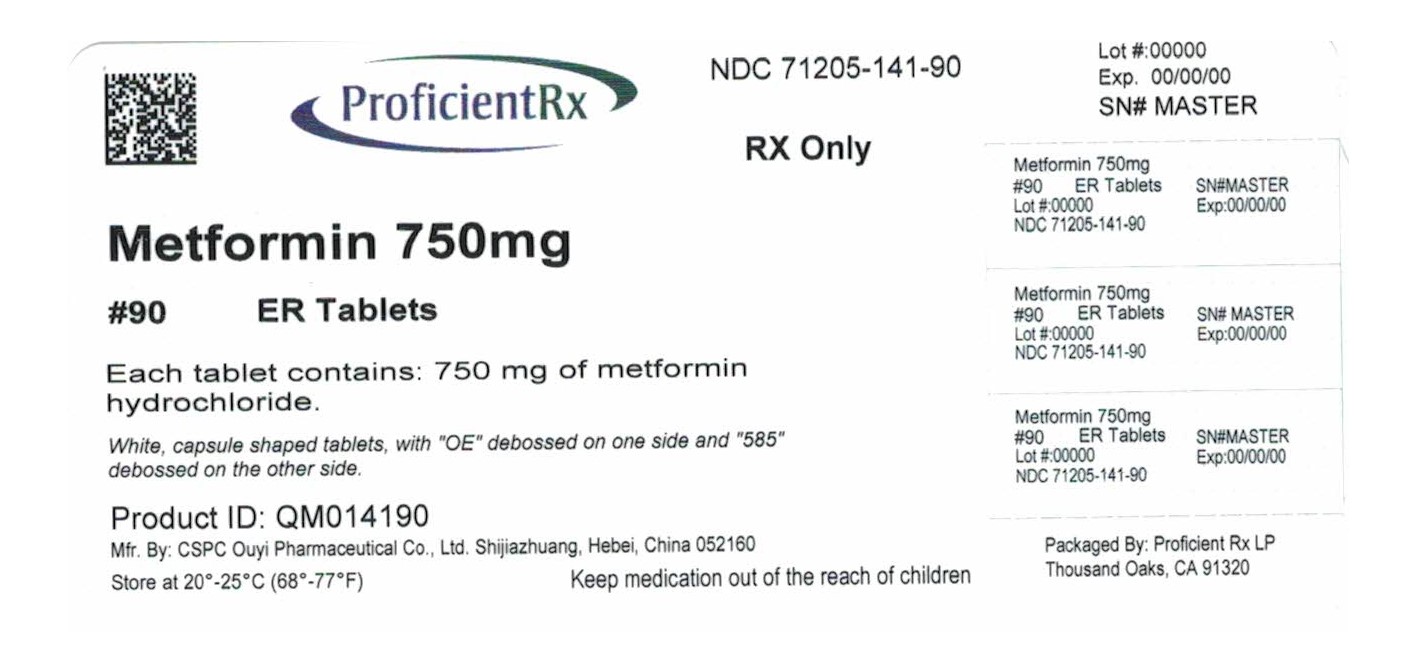
HOW SUPPLIED Metformin hydrochloride extended-release tablets USP, 750 mg are white, capsule shaped tablets, with "OE" debossed on one side and "585" debossed on the other side. They are available as follows: Bottles of 20 NDC 71205-141-20 Bottles of 30 NDC 71205-141-30 Bottles of 60 NDC 71205-141-60 Bottles of 90 NDC 71205-141-90 Bottles of 100 NDC 71205-141-00 Storage Store at 20° to 25°C (68° to 77°F); excursions permitted to 15° to 30°C (59° to 86°F). [See USP Controlled Room Temperature.] Dispense in well-closed, light-resistant containers.
Storage and Handling
Storage Store at 20° to 25°C (68° to 77°F); excursions permitted to 15° to 30°C (59° to 86°F). [See USP Controlled Room Temperature.] Dispense in well-closed, light-resistant containers.
Description
DESCRIPTION Metformin hydrochloride extended-release tablets, USP is an oral antihyperglycemic drug used in the management of type 2 diabetes. Metformin hydrochloride ( N,N -dimethylimidodicarbonimidic diamide hydrochloride) is not chemically or pharmacologically related to any other classes of oral antihyperglycemic agents. The structural formula is as shown: Metformin hydrochloride is a white to off-white crystalline compound with a molecular formula of C 4 H 11 N 5 ∙ HCl and a molecular weight of 165.63.
Metformin hydrochloride is freely soluble in water and is practically insoluble in acetone, ether, and chloroform. The pK a of metformin is 12.4. The pH of a 1% aqueous solution of metformin hydrochloride is 6.68.
Metformin hydrochloride extended-release tablets, USP contain 500 mg or 750 mg of metformin hydrochloride as the active ingredient. In addition, each tablet contains the following inactive ingredients: copovidone, carboxymethylcellulose sodium, hypromellose, microcrystalline cellulose and magnesium stearate. The USP dissolution test is pending.
Chemical Structure
Information for Patients
Information for Patients Patients should be informed of the potential risks and benefits of metformin hydrochloride extended-release tablets and of alternative modes of therapy. They should also be informed about the importance of adherence to dietary instructions, of a regular exercise program, and of regular testing of blood glucose, glycosylated hemoglobin, renal function, and hematologic parameters. The risks of lactic acidosis, its symptoms, and conditions that predispose to its development, as noted in the WARNINGS and PRECAUTIONS sections, should be explained to patients.
Patients should be advised to discontinue metformin hydrochloride extended-release tablets immediately and to promptly notify their health practitioner if unexplained hyperventilation, myalgia, malaise, unusual somnolence, or other nonspecific symptoms occur. Once a patient is stabilized on any dose level of metformin hydrochloride extended-release tablets, gastrointestinal symptoms, which are common during initiation of metformin therapy, are unlikely to be drug related. Later occurrence of gastrointestinal symptoms could be due to lactic acidosis or other serious disease.
Patients should be counselled against excessive alcohol intake, either acute or chronic, while receiving metformin hydrochloride extended-release tablets. Metformin hydrochloride extended-release tablets alone do not usually cause hypoglycemia, although it may occur when metformin hydrochloride extended-release tablets are used in conjunction with oral sulfonylureas and insulin. When initiating combination therapy, the risks of hypoglycemia, its symptoms and treatment, and conditions that predispose to its development should be explained to patients and responsible family members.
(See Patient Information printed below.) Patients should be informed that metformin hydrochloride extended-release tablets must be swallowed whole and not crushed or chewed, and that the inactive ingredients may occasionally be eliminated in the feces as a soft mass that may resemble the original tablet.
Precautions
PRECAUTIONS General • Lactic acidosis There have been postmarketing cases of metformin-associated lactic acidosis, including fatal cases. These cases had a subtle onset and were accompanied by nonspecific symptoms such as malaise, myalgias, abdominal pain, respiratory distress, or increased somnolence; however, hypotension and resistant bradyarrhythmias have occurred with severe acidosis. Metformin-associated lactic acidosis was characterized by elevated blood lactate concentrations (> 5 mmol/L), anion gap acidosis (without evidence of ketonuria or ketonemia), and an increased lactate: pyruvate ratio; metformin plasma levels were generally > 5 mcg/mL.
Metformin decreases liver uptake of lactate increasing lactate blood levels which may increase the risk of lactic acidosis, especially in patients at risk. If metformin-associated lactic acidosis is suspected, general supportive measures should be instituted promptly in a hospital setting, along with immediate discontinuation of metformin hydrochloride extended-release tablets. In metformin hydrochloride extended-release tablets treated patients with a diagnosis or strong suspicion of lactic acidosis, prompt hemodialysis is recommended to correct the acidosis and remove accumulated metformin (metformin hydrochloride is dialyzable with a clearance of up to 170 mL/min under good hemodynamic conditions).
Hemodialysis has often resulted in reversal of symptoms and recovery. Educate patients and their families about the symptoms of lactic acidosis and, if these symptoms occur, instruct them to discontinue metformin hydrochloride extended-release tablets and report these symptoms to their healthcare provider. For each of the known and possible risk factors for metformin-associated lactic acidosis, recommendations to reduce the risk of and manage metformin-associated lactic acidosis are provided below: • Renal impairment The postmarketing metformin-associated lactic acidosis cases primarily occurred in patients with significant renal impairment.
The risk of metformin accumulation and metformin-associated lactic acidosis increases with the severity of renal impairment because metformin is substantially excreted by the kidney. Clinical recommendations based upon the patient's renal function include (see DOSAGE AND ADMINISTRATION , CLINICAL PHARMACOLOGY ): • Before initiating metformin hydrochloride extended-release tablets, obtain an estimated glomerular filtration rate (eGFR) • Metformin hydrochloride extended-release tablets are contraindicated in patients with an eGFR less than 30 mL/min/1.73 m 2 (see CONTRAINDICATIONS ). • Initiation of metformin hydrochloride extended-release tablets is not recommended in patients with eGFR between 30 to 45 mL/min/1.73 m 2 . • Obtain an eGFR at least annually in all patients taking metformin hydrochloride extended-release tablets.
In patients at risk for the development of renal impairment (e.g., the elderly), renal function should be assessed more frequently. • In patients taking metformin hydrochloride extended-release tablets whose eGFR falls below 45 mL/min/1.73 m 2 , assess the benefit and risk of continuing therapy. • Drug interactions The concomitant use of metformin hydrochloride extended-release tablets with specific drugs may increase the risk of metformin-associated lactic acidosis: those that impair renal function, result in significant hemodynamic change, interfere with acid-base balance, or increase metformin accumulation.
Consider more frequent monitoring of patients. • Age 65 or greater The risk of metformin-associated lactic acidosis increases with the patient's age because elderly patients have a greater likelihood of having hepatic, renal, or cardiac impairment than younger patients. Assess renal function more frequently in elderly patients. • Radiologic studies with contrast Administration of intravascular iodinated contrast agents in metformin-treated patients has led to an acute decrease in renal function and the occurrence of l… [Excerpted — this section continues on DailyMed.]
Nursing Mothers
Nursing Mothers Studies in lactating rats show that metformin is excreted into milk and reaches levels comparable to those in plasma. Similar studies have not been conducted in nursing mothers. Because the potential for hypoglycemia in nursing infants may exist, a decision should be made whether to discontinue nursing or to discontinue the drug, taking into account the importance of the drug to the mother.
If metformin hydrochloride extended-release tablets are discontinued, and if diet alone is inadequate for controlling blood glucose, insulin therapy should be considered.
Pharmacokinetics
Pharmacokinetics Absorption and Bioavailability Following a single oral dose of metformin hydrochloride extended-release tablets, C max is achieved with a median value of 7 hours and a range of 4 to 8 hours. Peak plasma levels are approximately 20% lower compared to the same dose of metformin hydrochloride tablets, however, the extent of absorption (as measured by AUC) is similar to metformin hydrochloride tablets. At steady state, the AUC and C max are less than dose proportional for metformin hydrochloride extended-release tablets within the range of 500 to 2,000 mg administered once daily.
Peak plasma levels are approximately 0.6, 1.1, 1.4, and 1.8 mcg/mL for 500, 1,000, 1,500, and 2,000 mg once-daily doses, respectively. The extent of metformin absorption (as measured by AUC) from metformin hydrochloride extended-release tablets at a 2,000 mg once-daily dose is similar to the same total daily dose administered as metformin hydrochloride tablets 1,000 mg twice daily. After repeated administration of metformin hydrochloride extended-release tablets, metformin did not accumulate in plasma.
Within-subject variability in C max and AUC of metformin from metformin hydrochloride extended-release tablets is comparable to that with metformin hydrochloride tablets. Although the extent of metformin absorption (as measured by AUC) from the metformin hydrochloride extended-release tablets increased by approximately 50% when given with food, there was no effect of food on C max and T max of metformin. Both high and low fat meals had the same effect on the pharmacokinetics of metformin hydrochloride extended-release tablets.
Distribution The apparent volume of distribution (V/F) of metformin following single oral doses of metformin hydrochloride tablets 850 mg averaged 654 ± 358 L. Metformin is negligibly bound to plasma proteins, in contrast to sulfonylureas, which are more than 90% protein bound. Metformin partitions into erythrocytes, most likely as a function of time.
At usual clinical doses and dosing schedules of metformin hydrochloride tablets, steady state plasma concentrations of metformin are reached within 24 to 48 hours and are generally < 1 mcg/mL. During controlled clinical trials of metformin hydrochloride tablets, maximum metformin plasma levels did not exceed 5 mcg/mL, even at maximum doses. Metabolism and Elimination Intravenous single-dose studies in normal subjects demonstrate that metformin is excreted unchanged in the urine and does not undergo hepatic metabolism (no metabolites have been identified in humans) nor biliary excretion.
Renal clearance (see Table 1 ) is approximately 3.5 times greater than creatinine clearance, which indicates that tubular secretion is the major route of metformin elimination. Following oral administration, approximately 90% of the absorbed drug is eliminated via the renal route within the first 24 hours, with a plasma elimination half-life of approximately 6.2 hours. In blood, the elimination half-life is approximately 17.6 hours, suggesting that the erythrocyte mass may be a compartment of distribution.
Clinical Studies
Clinical Studies Metformin Hydrochloride Extended-Release Tablets A 24-week, double-blind, placebo-controlled study of metformin hydrochloride extended-release tablets, taken once daily with the evening meal, was conducted in patients with type 2 diabetes who had failed to achieve glycemic control with diet and exercise (HbA 1C 7.0% to 10.0%, FPG 126 to 270 mg/dL). Patients entering the study had a mean baseline HbA 1C of 8.0% and a mean baseline FPG of 176 mg/dL. After 12 weeks treatment, mean HbA 1C had increased from baseline by 0.1% and mean FPG decreased from baseline by 2 mg/dL in the placebo group, compared with a decrease in mean HbA 1C of 0.6% and a decrease in mean FPG of 23 mg/dL in patients treated with metformin hydrochloride extended-release tablets 1,000 mg once daily.
Subsequently, the treatment dose was increased to 1,500 mg once daily if HbA 1C was ≥ 7.0% but < 8.0% (patients with HbA 1C ≥ 8.0% were discontinued from the study). At the final visit (24-week), mean HbA 1C had increased 0.2% from baseline in placebo patients and decreased 0.6% with metformin hydrochloride extended-release tablets. A 16-week, double-blind, placebo-controlled, dose-response study of metformin hydrochloride extended-release tablets, taken once daily with the evening meal or twice daily with meals, was conducted in patients with type 2 diabetes who had failed to achieve glycemic control with diet and exercise (HbA 1C 7.0% to 11.0%, FPG 126 to 280 mg/dL).
Changes in glycemic control and body weight are shown in Table 2 . Table 2: Summary of Mean Changes from Baseline All patients on diet therapy at Baseline in HbA 1C , Fasting Plasma Glucose, and Body Weight at Final Visit (16-week study) Metformin Hydrochloride Extended-Release Tablets Placebo 500 mg Once Daily 1,000 mg Once Daily 1,500 mg Once Daily 2,000 mg Once Daily 1,000 mg Twice Daily Hemoglobin A 1C (%) (n = 115) (n = 115) (n = 111) (n = 125) (n = 112) (n = 111) Baseline 8.2 8.4 8.3 8.4 8.4
8.4Change at FINAL VISIT -0.4 -0.6 -0.9 -0.8 -1.1 0.1 p-value All comparisons versus Placebo < 0.001 < 0.001 < 0.001 < 0.001 < 0.001 - FPG (mg/dL) (n = 126) (n = 118) (n = 120) (n = 132) (n = 122) (n = 113) Baseline 182.7 183.7 178.9 181.0 181.6 179.6 Change at FINAL VISIT -15.2 -19.3 -28.5 -29.9 -33.6 7.6 p-value < 0.001 < 0.001 < 0.001 < 0.001 < 0.001 - Body Weight (lbs) (n = 125) (n = 119) (n = 117) (n = 131) (n = 119) (n = 113) Baseline 192.9 191.8 188.3 195.4 192.5 194.3 Change at FINAL VISIT -1.3 -1.3 -0.7 -1.5 -2.2 -1.8 p-value NS Not statistically significant NS NS NS NS - Compared with placebo, improvement in glycemic control was seen at all dose levels of metformin hydrochloride extended-release tablets and treatment was not associated with any significant change in weight (see DOSAGE AND ADMINISTRATION for dosing recommendations for metformin hydrochloride extended-release tablets).
A 24-week, double-blind, randomized study of metformin hydrochloride extended-release tablets, taken once daily with the evening meal, and metformin hydrochloride tablets, taken twice daily (with breakfast and evening meal), was conducted in patients with type 2 diabetes who had been treated with metformin hydrochloride tablets 500 mg twice daily for at least 8 weeks prior to study entry. The metformin hydrochloride tablets dose had not necessarily been titrated to achieve a specific level of glycemic control prior to study entry.
Patients qualified for the study if HbA 1C was ≤ 8.5% and FPG was ≤ 200 mg/dL. Changes in glycemic control and body weight are shown in Table 3 . Table 3: Summary of Mean Changes from Baseline All patients on metformin hydrochloride tablets 500 mg twice daily at Baseline in HbA 1C , Fasting Plasma Glucose, and Body Weight at Week 12 and at Final Visit (24-week study) Metformin Hydrochloride Tablets Metformin Hydrochloride Extended-Release Tablets 500 mg Twice Daily 1,000 mg Once Daily 1,500 mg Once Daily Hemoglobin A 1C (%) (n = 67) (n = 72) (n = 66) Baseline 7.06 6.99 7.0… [Excerpted — this section continues on DailyMed.]
Carcinogenesis, Mutagenesis, Impairment of Fertility
Carcinogenesis, Mutagenesis, Impairment of Fertility Long-term carcinogenicity studies have been performed in rats (dosing duration of 104 weeks) and mice (dosing duration of 91 weeks) at doses up to and including 900 mg/kg/day and 1,500 mg/kg/day, respectively. These doses are both approximately 4 times the maximum recommended human daily dose of 2,000 mg based on body surface area comparisons. No evidence of carcinogenicity with metformin was found in either male or female mice.
Similarly, there was no tumorigenic potential observed with metformin in male rats. There was, however, an increased incidence of benign stromal uterine polyps in female rats treated with 900 mg/kg/day. There was no evidence of a mutagenic potential of metformin in the following in vitro tests: Ames test ( S. typhimurium ), gene mutation test (mouse lymphoma cells), or chromosomal aberrations test (human lymphocytes).
Results in the in vivo mouse micronucleus test were also negative. Fertility of male or female rats was unaffected by metformin when administered at doses as high as 600 mg/kg/day, which is approximately 3 times the maximum recommended human daily dose based on body surface area comparisons.
Patient Package Insert
Patient Information Metformin Hydrochloride Extended-Release Tablets, USP (met for' min hye" droe klor' ide) Read this information carefully before you start taking this medicine and each time you refill your prescription. There may be new information. This information does not take the place of your doctor's advice.
Ask your doctor or pharmacist if you do not understand some of this information or if you want to know more about this medicine. What are metformin hydrochloride extended-release tablets? Metformin hydrochloride extended-release tablets are used to treat type 2 diabetes.
This is also known as non-insulin-dependent diabetes mellitus. People with type 2 diabetes are not able to make enough insulin or respond normally to the insulin their bodies make. When this happens, sugar (glucose) builds up in the blood.
This can lead to serious medical problems including kidney damage, amputations, and blindness. Diabetes is also closely linked to heart disease. The main goal of treating diabetes is to lower your blood sugar to a normal level.
High blood sugar can be lowered by diet and exercise, by a number of medicines taken by mouth, and by insulin shots. Before you take metformin hydrochloride extended-release tablets, try to control your diabetes by exercise and weight loss. While you take your diabetes medicine, continue to exercise and follow the diet advised for your diabetes.
No matter what your recommended diabetes management plan is, studies have shown that maintaining good blood sugar control can prevent or delay complications of diabetes, such as blindness. Metformin hydrochloride extended-release tablets help control your blood sugar in a number of ways. These include helping your body respond better to the insulin it makes naturally, decreasing the amount of sugar your liver makes, and decreasing the amount of sugar your intestines absorb.
Metformin hydrochloride extended-release tablets do not cause your body to make more insulin. Because of this, when taken alone, they rarely cause hypoglycemia (low blood sugar), and usually do not cause weight gain. However, when they are taken with a sulfonylurea or with insulin, hypoglycemia is more likely to occur, as is weight gain.
Tell your doctor if you are pregnant or plan to become pregnant. Metformin hydrochloride extended-release tablets may not be right for you. Talk with your doctor about your choices.
You should also discuss your choices with your doctor if you are nursing a child. Can metformin hydrochloride extended-release tablets be used in children? Metformin hydrochloride extended-release tablets have not been studied in children.
How should I take metformin hydrochloride extended-release tablets? Your doctor will tell you how much medicine to take and when to take it. You will probably start out with a low dose of the medicine.
Your doctor may slowly increase your dose until your blood sugar is better controlled. You should take metformin hydrochloride extended-release tablets with meals. Your doctor may have you take other medicines along with metformin hydrochloride extended-release tablets to control your blood sugar.
These medicines may include insulin shots. Taking metformin hydrochloride extended-release tablets with insulin may help you better control your blood sugar while reducing the insulin dose. Continue your exercise and diet program and test your blood sugar regularly while taking metformin hydrochloride extended-release tablets.
Your doctor will monitor your diabetes and may perform blood tests on you from time to time to make sure your kidneys and your liver are functioning normally. There is no evidence that metformin hydrochloride extended-release tablets cause harm to the liver or kidneys. Tell your doctor if you: • have an illness that causes severe vomiting, diarrhea or fever, or if you drink a much lower amount of liquid than normal.
These conditions can lead to severe dehydration (loss of water in your body). You may need to stop tak… [Excerpted — this section continues on DailyMed.]
Package Label / Principal Display Panel
PRINCIPAL DISPLAY PANEL - 750 mg Tablet Bottle Label NDC 71205-141-90 Metformin Hydrochloride Extended-Release Tablets, USP 750 mg PHARMACIST: Dispense the Patient Information provided separately to each patient. Rx Only 71205-141-90
Reported Adverse Events (FAERS)
Top reported reactions
Age at onset
Reporter sex
Serious outcomes
Where does this data come from?
About This NDC Listing & Data Coverage
What data is (and isn’t) available for this NDC — tap to expand
| NDC identity (package / product / labeler codes) | Available |
| Labeler | Available |
| Product & package description | Available |
| Marketing category & status | Available |
| Active ingredient / dosage form / route | Available |
| FDA label (SPL via DailyMed) | Available |
| Package photos | Available |
| Inactive ingredients (structured) | Available |
| NADAC pharmacy acquisition price (CMS) | — Not published for this NDC CMS publishes NADAC only for NDCs reported in its retail-pharmacy survey. |
| Orange Book / therapeutic-equivalence data | Available |
| HCPCS J-code billing crosswalk | — Not published for this NDC Most self-administered / retail products have no J-code — that is normal. |
| Medicaid utilization (CMS SDUD) | — Not published for this NDC CMS reports utilization only for NDCs with Medicaid claims above its privacy threshold. |