
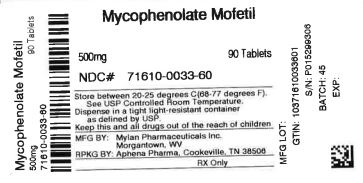
Mycophenolate Mofetil 500 mg Tablet, Film Coated, 60-count
Other active recalls for Mycophenolate Mofetil (different manufacturers) — 2 · tap to view
🆔 Identity & classification
Where does this data come from?
🏭 Manufacturer & labeler
Where does this data come from?
🩺 Clinical
Mycophenolate is used to prevent transplant organ rejection (attack of the new organ by the immune system) in people who have received kidney, heart, or liver transplants. Mycophenolate is in a class of medications called immunosuppressive agents. It works by weakening the body's immune system so it will not attack and reject the transplanted organ.
Read the full MedlinePlus article ↗- Your immune system is designed to attack anything it sees as foreign — including your transplanted organ. Mycophenolate mofetil works by slowing down the immune cells that would ot...
- What exactly does mycophenolate mofetil do — and why do I have to take it forever?
- The most common ones are digestive — diarrhea, nausea, stomach pain, and vomiting. Those are uncomfortable but usually manageable. The ones that warrant a call to your transplant t...
- What side effects should I actually expect, and which ones mean I need to call someone?
Patient education
Supplement & herbal interactions
Some supplements/herbs that may interact with Mycophenolate Mofetil — tap one for details:
Where does this data come from?
Ask a licensed pharmacist directly — free, answered by our team.
💊 What it looks like
Where does this data come from?
🧪 Inactive Ingredients / Excipients
Inactive ingredients, also called excipients, are components of the drug product other than the active ingredient. They may include fillers, dyes, coatings, preservatives, flavors, or other formulation ingredients.
💡 Tap an ingredient (hover on desktop) to see what it is and why it’s used.
-
UNII M28OL1HH48
Croscarmellose sodium is a plant-based substance derived from cellulose. It acts as a disintegrant, helping tablets and capsules break down quickly in the digestive system so the medicine can be absorbed.
-
UNII 1K09F3G675
Ferric oxide red is an inorganic iron compound used as a colorant in medicines. It gives tablets, capsules, or other dosage forms a red or reddish tint for identification and appearance.
-
UNII EX438O2MRT
Ferric oxide yellow is a naturally occurring iron compound used as a colorant in medications. It gives tablets, capsules, and other forms a yellow or golden hue for identification and appearance.
-
UNII 70097M6I30
Magnesium stearate is a salt made from magnesium and stearic acid, a fatty substance. It's used in tablets and capsules as a lubricant and glidant to help ingredients flow smoothly during manufacturing and prevent sticking.
-
UNII OP1R32D61U
Microcrystalline cellulose is a purified form of cellulose, a natural fiber from plant sources. It acts as a binder and filler in tablets and capsules, helping hold ingredients together and give the medicine its shape and size.
-
UNII 3WJQ0SDW1A
Polyethylene glycol is a synthetic liquid or solid polymer used in medicines as a solvent, lubricant, and humectant. It helps dissolve active ingredients, reduces friction during manufacturing, and retains moisture in the final product.
-
UNII 532B59J990
Polyvinyl alcohol is a synthetic polymer made from plant-derived materials. It's used as a binder to hold ingredients together, a film-former in coatings, and a thickener in liquid formulations.
-
UNII FZ989GH94E
Povidone is a synthetic polymer made from a plastic-like material. It acts as a binder to hold tablet ingredients together and as a disintegrant to help the tablet break apart in your stomach so the medicine can be absorbed.
-
UNII ETJ7Z6XBU4
Silicon dioxide is a naturally occurring mineral used as a glidant and anti-caking agent. It helps powder ingredients flow smoothly and prevents clumping during manufacturing and storage.
-
UNII 368GB5141J
A detergent and foaming agent derived from coconut or palm oil. In medications, it helps break down and mix oil and water-based ingredients, aids in tablet disintegration, and improves how the drug dissolves and spreads in the mouth or digestive system.
-
UNII O8232NY3SJ
A plant-based carbohydrate derived from corn kernels. It acts as a filler to add bulk, a binder to hold ingredients together, and a disintegrant to help the tablet break apart in your stomach for absorption.
-
UNII 7SEV7J4R1U
A powder made from a naturally occurring mineral. In medicines, talc works as a glidant and anti-caking agent, helping tablets and capsules flow smoothly during manufacturing and preventing clumping.
-
UNII 15FIX9V2JP
Titanium dioxide is a bright white mineral powder commonly used as a colorant and opacifying agent. It makes pills and tablets white or lighter in color and helps make coatings non-transparent.
13 inactive ingredients listed in the exact product block matched to this NDC.
Where does this data come from?
ingredient classCode="IACT" elements from the exact product block matched by this NDC. Label-section narrative from DailyMed / the openFDA label index is shown separately when available.Inactive ingredient FAQ
Are inactive ingredients the same for every manufacturer?
Why might an inactive ingredient be missing?
Can inactive ingredients matter?
💲 Pricing
A drug doesn't have one price. Each row is a different public payment system, and none is what you'd pay at the counter — that depends on your insurance. The ⓘ on each row explains what it measures.
| Price system | Per each | Per package |
|---|---|---|
| Retail pharmacies payNADAC · weekly | Not in the retail survey — common for institutional, discontinued, or low-volume packs. | |
| Medicaid paysCMS SDUD · 12 mo | No recent Medicaid claims on file for this NDC — rare and low-volume NDCs are suppressed in the public data. | |
| Medicare drug plans payPart D · Q2 2026 | $0.2914 | $17.48 / 60 tablets |
Where does this data come from?
🔁 Therapeutic equivalents
| Product | Labeler | Pack | NADAC/unit | TE | Status | Price vs. this |
|---|---|---|---|---|---|---|
| Mycophenolate Mofetil 500 mg 00054-0166-25 | Hikma | 100 tablets | $0.270 | — | Availability likely | — |
| Mycophenolate Mofetil 500 mg 00781-5175-01 | Sandoz | 100 tablets | $0.270 | AB | Availability likely | — |
| Mycophenolate mofetil 500 mg 00904-7078-61 | Major | 1 tablet | $0.270 | AB | Availability likely | — |
| mycophenolate mofetil 500 mg 16729-0019-01 | Accord | 100 tablets | $0.270 | AB | Availability likely | — |
| Mycophenolate mofetil 500 mg 23155-0836-01 | Heritage | 100 tablets | $0.270 | AB | Availability likely | — |
| Mycophenolate Mofetil 500 mg 31722-0879-01 | Camber | 100 tablets | $0.270 | AB | Availability likely | — |
| Mycophenolate Mofetil 500 mg 50268-0558-15 | AvPAK | 1 tablet | $0.270 | AB | Availability likely | — |
| Mycophenolate Mofetil 500 mg 59651-0638-01 | Aurobindo | 100 tablets | $0.270 | AB | Availability likely | — |
| Mycophenolate mofetil 500 mg 60687-0438-01 | American | 1 tablet | $0.270 | AB | Availability likely | — |
| Mycophenolate mofetil 500 mg 64380-0725-06 | Strides | 100 tablets | $0.270 | AB | Availability likely | — |
| Mycophenolate Mofetil 500 mg 67877-0225-01 | Ascend | 100 tablets | $0.270 | AB | Availability likely | — |
| Mycophenolate Mofetil 500 mg 72888-0185-01 | Advagen | 100 tablets | $0.270 | AB | Availability likely | — |
| CellCept 500 mg 00004-0260-01 | Genentech, | 100 tablets | $17.304 | AB | Availability likely | — |
| Mycophenolate Mofetil 500 mg 50090-4275-00 | A-S | 180 tablets | — | AB | FDA listed | — |
| Mycophenolate mofetil 500 mg 55154-3571-00 | Cardinal | 1 tablet | — | AB | FDA listed | — |
| mycophenolate mofetil 500 mg 63629-9582-01 | Bryant | 120 tablets | — | AB | FDA listed | — |
| Mycophenolate mofetil 500 mg 68071-3767-06 | NuCare | 60 tablets | — | AB | FDA listed | — |
| Mycophenolate Mofetil 500 mg 68254-5003-01 | CONCORD | 30 tablets | — | AB | FDA listed | — |
| Mycophenolate mofetil 500 mg 70518-2767-01 | REMEDYREPACK | 1 tablet | — | AB | FDA listed | — |
| Mycophenolate mofetil 500 mg 70518-4377-00 | REMEDYREPACK | 1 tablet | — | AB | FDA listed | — |
| Mycophenolate Mofetil 500 mgthis 71610-0033-53 | Aphena | 60 tablets | — | — | FDA listed | — |
| Mycophenolate mofetil 500 mg 73190-0010-01 | AvKARE | 100 tablets | — | AB | FDA listed | — |
| Mycophenolate mofetil 500 mg 82804-0033-30 | Proficient | 30 tablets | — | AB | FDA listed | — |
Where does this data come from?
⏳ Availability & generic status
This product is an FDA-approved generic. Other versions of the same drug are listed under Therapeutic equivalents, least expensive first.
Where does this data come from?
📊 Medicare Part D spend CMS · PART D · 2026 (Q1)
📦 Packaging — all sizes for this product
| Package NDC | Description | Marketing start | Status |
|---|---|---|---|
| 71610-0033-70 | 120 TABLET, FILM COATED in 1 BOTTLE, PLASTIC (71610-033-70) | 2018-01-19 | Active |
| 71610-0033-53 You're viewing this | 60 TABLET, FILM COATED in 1 BOTTLE, PLASTIC (71610-033-53) | 2019-07-01 | Active |
| 71610-0033-60 | 90 TABLET, FILM COATED in 1 BOTTLE, PLASTIC (71610-033-60) | 2019-07-01 | Active |
| 71610-0033-80 | 180 TABLET, FILM COATED in 1 BOTTLE, PLASTIC (71610-033-80) | 2019-07-01 | Active |
| 71610-0033-90 | 240 TABLET, FILM COATED in 1 BOTTLE, PLASTIC (71610-033-90) | 2019-07-01 | Active |
| 71610-0033-92 | 270 TABLET, FILM COATED in 1 BOTTLE, PLASTIC (71610-033-92) | 2019-07-01 | Active |
| 71610-0033-98 | 540 TABLET, FILM COATED in 1 BOTTLE, PLASTIC (71610-033-98) | 2019-07-01 | Active |
You're viewing the smallest of 7 pack sizes for this product.
Pack size FAQ
What quantity is in NDC 71610-0033-53?
What is the difference between NDC 71610-0033-53 and NDC 71610-0033-60?
What NDC number is used to bill for this package of Mycophenolate Mofetil 500 mg Tablet, Film Coated?
🧭 About this NDC listing & data coverage
What data is (and isn’t) available for this NDC — tap to expand
| NDC identity (package / product / labeler codes) | ✓ Available |
| Labeler | ✓ Available |
| Product & package description | ✓ Available |
| Marketing category & status | ✓ Available |
| Active ingredient / dosage form / route | ✓ Available |
| FDA label (SPL via DailyMed) | ✓ Available |
| Package photos | ✓ Available |
| Inactive ingredients (structured) | ✓ Available |
| NADAC pharmacy acquisition price (CMS) | — Not published for this NDC CMS publishes NADAC only for NDCs reported in its retail-pharmacy survey. |
| Orange Book / therapeutic-equivalence data | — Not published for this NDC Applies only to products approved under an NDA/ANDA; many listings are out of scope. |
| HCPCS J-code billing crosswalk | — Not published for this NDC Most self-administered / retail products have no J-code — that is normal. |
| Medicaid utilization (CMS SDUD) | — Not published for this NDC CMS reports utilization only for NDCs with Medicaid claims above its privacy threshold. |
Questions about this listing
Why is there no price listed?
Is the NDC printed on the package the same as the 11-digit billing NDC?
What do the three segments of this NDC mean?
Is this package still being marketed?
Does this product come in other package sizes?
Who lists this product with the FDA?
Do I need a prescription for this product?
Where does this data come from?
📄 Full prescribing information FDA SPL
🚨 Boxed Warning ▾
WARNING Embryofetal Toxicity, Malignancies and Serious Infections: Use during pregnancy is associated with increased risks of first trimester pregnancy loss and congenital malformations. Females of reproductive potential (FRP) must be counseled regarding pregnancy prevention and planning (see WARNINGS and PRECAUTIONS ). Immunosuppression may lead to increased susceptibility to infection and possible development of lymphoma.
Only physicians experienced in immunosuppressive therapy and management of renal, cardiac or hepatic transplant patients should prescribe mycophenolate mofetil. Patients receiving the drug should be managed in facilities equipped and staffed with adequate laboratory and supportive medical resources. The physician responsible for maintenance therapy should have complete information requisite for the follow-up of the patient (see WARNINGS and PRECAUTIONS ).
🎯 Indications and Usage ▾
INDICATIONS AND USAGE Renal, Cardiac, and Hepatic Transplant Mycophenolate mofetil is indicated for the prophylaxis of organ rejection in patients receiving allogeneic renal, cardiac or hepatic transplants. Mycophenolate mofetil should be used concomitantly with cyclosporine and corticosteroids.
⏱️ Dosage and Administration ▾
DOSAGE AND ADMINISTRATION Renal Transplantation Adults A dose of 1 g administered orally twice a day (daily dose of 2 g) is recommended for use in renal transplant patients. Although a dose of 1.5 g administered twice daily (daily dose of 3 g) was used in clinical trials and was shown to be safe and effective, no efficacy advantage could be established for renal transplant patients. Patients receiving 2 g/day of mycophenolate mofetil demonstrated an overall better safety profile than did patients receiving 3 g/day of mycophenolate mofetil.
Pediatrics (3 Months to 18 years of Age) The recommended dose of mycophenolate mofetil oral suspension is 600 mg/m 2 administered twice daily (up to a maximum daily dose of 2 g/10 mL oral suspension). Patients with a body surface area of 1.25 m 2 to 1.5 m 2 may be dosed with mycophenolate mofetil capsules at a dose of 750 mg twice daily (1.5 g daily dose). Patients with a body surface area > 1.5 m 2 may be dosed with mycophenolate mofetil capsules or tablets at a dose of 1 g twice daily (2 g daily dose).
Cardiac Transplantation Adults A dose of 1.5 g bid oral (daily dose of 3 g) is recommended for use in adult cardiac transplant patients. Hepatic Transplantation Adults A dose of 1.5 g bid oral (daily dose of 3 g) is recommended for use in adult hepatic transplant patients. Mycophenolate Mofetil Capsules and Tablets The initial oral dose of mycophenolate mofetil should be given as soon as possible following renal, cardiac or hepatic transplantation.
Food had no effect on MPA AUC, but has been shown to decrease MPA C max by 40%. Therefore, it is recommended that mycophenolate mofetil be administered on an empty stomach. However, in stable renal transplant patients, mycophenolate mofetil may be administered with food if necessary.
Patients should be instructed to take a missed dose as soon as they remember, except if it is near the next scheduled dose, and then continue to take mycophenolate mofetil at the usual times. Patients with Hepatic Impairment No dose adjustments are recommended for renal patients with severe hepatic parenchymal disease. However, it is not known whether dose adjustments are needed for hepatic disease with other etiologies (see CLINICAL PHARMACOLOGY: Pharmacokinetics ).
No data are available for cardiac transplant patients with severe hepatic parenchymal disease. Geriatrics The recommended oral dose of 1 g bid for renal transplant patients, 1.5 g bid for cardiac transplant patients, and 1.5 g bid administered orally in hepatic transplant patients is appropriate for elderly patients (see PRECAUTIONS: Geriatric Use ). Dosage Adjustments In renal transplant patients with severe chronic renal impairment (GFR < 25 mL/min/1.73 m 2 ) outside the immediate posttransplant period, doses of mycophenolate mofetil greater than 1 g administered twice a day should be avoided.
These patients should also be carefully observed. No dose adjustments are needed in renal transplant patients experiencing delayed graft function postoperatively (see CLINICAL PHARMACOLOGY: Pharmacokinetics and PRECAUTIONS: Patients with Renal Impairment ). No data are available for cardiac or hepatic transplant patients with severe chronic renal impairment.
Mycophenolate mofetil may be used for cardiac or hepatic transplant patients with severe chronic renal impairment if the potential benefits outweigh the potential risks. If neutropenia develops (ANC < 1.3 x 10 3 /µL), dosing with mycophenolate mofetil should be interrupted or the dose reduced, appropriate diagnostic tests performed, and the patient managed appropriately (see WARNINGS: Neutropenia , ADVERSE REACTIONS , and PRECAUTIONS: Laboratory Tests ).
⛔ Contraindications ▾
CONTRAINDICATIONS Allergic reactions to mycophenolate mofetil have been observed; therefore, mycophenolate mofetil is contraindicated in patients with a hypersensitivity to mycophenolate mofetil, mycophenolic acid or any component of the drug product.
⚠️ Warnings ▾
WARNINGS (see boxed WARNING ) Embryofetal Toxicity Mycophenolate mofetil can cause fetal harm when administered to a pregnant female. Use of mycophenolate mofetil during pregnancy is associated with an increased risk of first trimester pregnancy loss and an increased risk of congenital malformations, especially external ear and other facial abnormalities including cleft lip and palate, and anomalies of the distal limbs, heart, esophagus, kidney and nervous system (see PRECAUTIONS: Pregnancy ). Pregnancy Exposure Prevention and Planning Females of reproductive potential must be made aware of the increased risk of first trimester pregnancy loss and congenital malformations and must be counseled regarding pregnancy prevention and planning.
For recommended pregnancy testing and contraception methods (see PRECAUTIONS: Pregnancy Exposure Prevention and Planning ). Lymphoma and Malignancy Patients receiving immunosuppressive regimens involving combinations of drugs, including mycophenolate mofetil, as part of an immunosuppressive regimen are at increased risk of developing lymphomas and other malignancies, particularly of the skin (see ADVERSE REACTIONS ). The risk appears to be related to the intensity and duration of immunosuppression rather than to the use of any specific agent.
As usual for patients with increased risk for skin cancer, exposure to sunlight and UV light should be limited by wearing protective clothing and using a sunscreen with a high protection factor. Lymphoproliferative disease or lymphoma developed in 0.4% to 1% of patients receiving mycophenolate mofetil (2 g or 3 g) with other immunosuppressive agents in controlled clinical trials of renal, cardiac, and hepatic transplant patients (see ADVERSE REACTIONS ). In pediatric patients, no other malignancies besides lymphoproliferative disorder (2/148 patients) have been observed (see ADVERSE REACTIONS ).
Combination with Other Immunosuppressive Agents Mycophenolate mofetil has been administered in combination with the following agents in clinical trials: antithymocyte globulin (ATGAM ®† ), OKT3 (Orthoclone OKT ®† 3), cyclosporine (Sandimmune ®† , Neoral ®† ) and corticosteroids. The efficacy and safety of the use of mycophenolate mofetil in combination with other immunosuppressive agents have not been determined. Serious Infections Patients receiving immunosuppressants, including mycophenolate mofetil, are at increased risk of developing bacterial, fungal, protozoal and new or reactivated viral infections, including opportunistic infections.
These infections may lead to serious, including fatal outcomes. Because of the danger of oversuppression of the immune system which can increase susceptibility to infection, combination immunosuppressant therapy should be used with caution (see ADVERSE REACTIONS ). New or Reactivated Viral Infections Polyomavirus associated nephropathy (PVAN), JC virus associated progressive multifocal leukoencephalopathy (PML), cytomegalovirus (CMV) infections, reactivation of hepatitis B (HBV) or hepatitis C (HCV) have been reported in patients treated with immunosuppressants, including mycophenolate mofetil.
Reduction in immunosuppression should be considered for patients who develop evidence of new or reactivated viral infections. Physicians should also consider the risk that reduced immunosuppression represents to the functioning allograft. PVAN, especially due to BK virus infection, is associated with serious outcomes, including deteriorating renal function and renal graft loss (see ADVERSE REACTIONS: Postmarketing Experience ).
Patient monitoring may help detect patients at risk for PVAN. PML, which is sometimes fatal, commonly presents with hemiparesis, apathy, confusion, cognitive deficiencies, and ataxia. Risk factors for PML include treatment with immunosuppressant therapies and impairment of immune function (see ADVERSE REACTIONS: Postmarketing Experience ).
In immunosuppressed patients, physicians should consider PML in the differe…
🤒 Adverse Reactions ▾
ADVERSE REACTIONS The principal adverse reactions associated with the administration of mycophenolate mofetil include diarrhea, leukopenia, sepsis, vomiting, and there is evidence of a higher frequency of certain types of infections e.g., opportunistic infection (see WARNINGS: Serious Infections and WARNINGS: New or Reactivated Viral Infections ). Mycophenolate Mofetil Oral The incidence of adverse events for mycophenolate mofetil was determined in randomized, comparative, double-blind trials in prevention of rejection in renal (two active, one placebo-controlled trials), cardiac (one active-controlled trial), and hepatic (one active-controlled trial) transplant patients.
Geriatrics Elderly patients (≥ 65 years), particularly those who are receiving mycophenolate mofetil as part of a combination immunosuppressive regimen, may be at increased risk of certain infections (including cytomegalovirus [CMV] tissue invasive disease) and possibly gastrointestinal hemorrhage and pulmonary edema, compared to younger individuals (see PRECAUTIONS ). Safety data are summarized below for all active-controlled trials in renal (two trials), cardiac (one trial), and hepatic (one trial) transplant patients.
Approximately 53% of the renal patients, 65% of the cardiac patients, and 48% of the hepatic patients have been treated for more than one year. Adverse events reported in ≥ 20% of patients in the mycophenolate mofetil treatment groups are presented below. Table 9: Adverse Events in Controlled Studies in Prevention of Renal, Cardiac or Hepatic Allograft Rejection (Reported in ≥ 20% of Patients in the Mycophenolate Mofetil Group) Renal Studies Cardiac Study Hepatic Study Mycophenolate Mofetil 2 g/day Mycophenolate Mofetil 3 g/day Azathioprine 1 to 2 mg/kg/day or 100 to 150 mg/day Mycophenolate Mofetil 3 g/day Azathioprine 1.5 to 3 mg/kg/day Mycophenolate Mofetil 3 g/day Azathioprine 1 to 2 mg/kg/day (n = 336) (n = 330) (n = 326) (n = 289) (n = 289) (n = 277) (n = 287) % % % % % % % Body as a Whole Pain 33 31.2 32.2 75.8 74.7 74
77.7Abdominal pain 24.7 27.6 23 33.9 33.2 62.5
51.2Fever 21.4 23.3 23.3 47.4 46.4 52.3
56.1Headache 21.1 16.1 21.2 54.3 51.9 53.8
49.1Infection 18.2 20.9 19.9 25.6 19.4 27.1
25.1Sepsis - - - - - 27.4
26.5Asthenia - - - 43.3 36.3 35.4
33.8Chest pain - - - 26.3 26 - - Back pain - - - 34.6 28.4 46.6
47.4Ascites - - - - - 24.2
22.6Hematologic and Lymphatic Anemia 25.6 25.8 23.6 42.9 43.9 43 53 Leukopenia 23.2 34.5 24.8 30.4 39.1 45.8 39 Thrombocytopenia - - - 23.5 27 38.3
42.2Hypochromic anemia - - - 24.6 23.5 - - Leukocytosis - - - 40.5 35.6 22.4
21.3Urogenital Urinary tract infection 37.2 37 33.7 - - - - Kidney function abnormal - - - 21.8 26.3 25.6
28.9Cardiovascular Hypertension 32.4 28.2 32.2 77.5 72.3 62.1
59.6Hypotension - - - 32.5 36 - - Cardiovascular disorder - - - 25.6 24.2 - - Tachycardia - - - 20.1 18 22
15.7Metabolic and Nutritional Peripheral edema 28.6 27 28.2 64 53.3 48.4
47.7Hypercholesteremia - - - 41.2 38.4 - - Edema - - - 26.6 25.6 28.2
28.2Hypokalemia - - - 31.8 25.6 37.2
41.1 Hyperkalemia - - - - - 22
23.7Hyperglycemia - - - 46.7 52.6 43.7
48.8Creatinine increased - - - 39.4 36 - - BUN increased - - - 34.6 32.5 - - Lactic dehydrogenase increased - - - 23.2 17 - - Hypomagnesemia - - - - - 39
37.6Hypocalcemia - - - - - 30 30 Digestive Diarrhea 31 36.1 20.9 45.3 34.3 51.3
49.8Constipation 22.9 18.5 22.4 41.2 37.7 37.9
38.3Nausea 19.9 23.6 24.5 54 54.3 54.5
51.2Dyspepsia - - - - - 22.4
20.9Vomiting - - - 33.9 28.4 32.9
33.4Anorexia - - - - - 25.3
17.1Liver function tests abnormal - - - - - 24.9
19.2Respiratory Infection 22 23.9 19.6 37 35.3 - - Dyspnea - - - 36.7 36.3 31
30.3Cough increased - - - 31.1 25.6 - - Lung disorder - - - 30.1 29.1 22
18.8Sinusitis - - - 26 19 - - Pleural effusion - - - - - 34.3
35.9Skin and Appendages Rash - - - 22.1 18 - - Nervous System Tremor - - - 24.2 23.9 33.9
35.5Insomnia - - - 40.8 37.7 52.3 47 Dizziness - - - 28.7 27.7 - - Anxiety - - - 28.4…
🔄 Drug Interactions ▾
Drug Interactions Drug interaction studies with mycophenolate mofetil have been conducted with acyclovir, antacids, cholestyramine, cyclosporine, ganciclovir, oral contraceptives, sevelamer, trimethoprim/sulfamethoxazole, norfloxacin, and metronidazole. Drug interaction studies have not been conducted with other drugs that may be commonly administered to renal, cardiac or hepatic transplant patients. Mycophenolate mofetil has not been administered concomitantly with azathioprine.
Acyclovir Coadministration of mycophenolate mofetil (1 g) and acyclovir (800 mg) to 12 healthy volunteers resulted in no significant change in MPA AUC and C max . However, MPAG and acyclovir plasma AUCs were increased 10.6% and 21.9%, respectively. Because MPAG plasma concentrations are increased in the presence of renal impairment, as are acyclovir concentrations, the potential exists for mycophenolate and acyclovir or its prodrug (e.g., valacyclovir) to compete for tubular secretion, further increasing the concentrations of both drugs.
Antacids with Magnesium and Aluminum Hydroxides Absorption of a single dose of mycophenolate mofetil (2 g) was decreased when administered to ten rheumatoid arthritis patients also taking Maalox ®† TC (10 mL qid). The C max and AUC (0-24h) for MPA were 33% and 17% lower, respectively, than when mycophenolate mofetil was administered alone under fasting conditions. Mycophenolate mofetil may be administered to patients who are also taking antacids containing magnesium and aluminum hydroxides; however, it is recommended that mycophenolate mofetil and the antacid not be administered simultaneously.
Proton Pump Inhibitors (PPIs) Coadministration of PPIs (e.g., lansoprazole, pantoprazole) in single doses to healthy volunteers and multiple doses to transplant patients receiving mycophenolate mofetil has been reported to reduce the exposure to mycophenolic acid (MPA). An approximate reduction of 30% to 70% in the C max and 25% to 35% in the AUC of MPA has been observed, possibly due to a decrease in MPA solubility at an increased gastric pH. The clinical impact of reduced MPA exposure on organ rejection has not been established in transplant patients receiving PPIs and mycophenolate mofetil.
Because clinical relevance has not been established, PPIs should be used with caution when coadministered to transplant patients being treated with mycophenolate mofetil. Cholestyramine Following single-dose administration of 1.5 g mycophenolate mofetil to 12 healthy volunteers pretreated with 4 g tid of cholestyramine for 4 days, MPA AUC decreased approximately 40%. This decrease is consistent with interruption of enterohepatic recirculation which may be due to binding of recirculating MPAG with cholestyramine in the intestine.
Therefore, mycophenolate mofetil is not recommended to be given with cholestyramine or other agents that may interfere with enterohepatic recirculation. Cyclosporine Cyclosporine (Sandimmune ®† ) pharmacokinetics (at doses of 275 to 415 mg/day) were unaffected by single and multiple doses of 1.5 g bid of mycophenolate mofetil in ten stable renal transplant patients. The mean (± SD) AUC (0-12h) and C max of cyclosporine after 14 days of multiple doses of mycophenolate mofetil were 3290 (± 822) ng•h/mL and 753 (± 161) ng/mL, respectively, compared to 3245 (± 1088) ng•h/mL and 700 (± 246) ng/mL, respectively, one week before administration of mycophenolate mofetil.
Cyclosporine A interferes with MPA enterohepatic recirculation. In renal transplant patients, mean MPA exposure (AUC 0-12h ) was approximately 30% to 50% greater when mycophenolate mofetil is administered without cyclosporine compared with when mycophenolate mofetil is coadministered with cyclosporine. This interaction is due to cyclosporine inhibition of multidrug-resistance-associated protein 2 (MRP-2) transporter in the biliary tract, thereby preventing the excretion of MPAG into the bile that would lead to enterohepatic recirculation of MPA.
This infor…
🆘 Overdosage ▾
OVERDOSAGE The experience with overdose of mycophenolate mofetil in humans is very limited. The events received from reports of overdose fall within the known safety profile of the drug. The highest dose administered to renal transplant patients in clinical trials has been 4 g/day.
In limited experience with cardiac and hepatic transplant patients in clinical trials, the highest doses used were 4 g/day or 5 g/day. At doses of 4 g/day or 5 g/day, there appears to be a higher rate, compared to the use of 3 g/day or less, of gastrointestinal intolerance (nausea, vomiting, and/or diarrhea), and occasional hematologic abnormalities, principally neutropenia, leading to a need to reduce or discontinue dosing. In acute oral toxicity studies, no deaths occurred in adult mice at doses up to 4000 mg/kg or in adult monkeys at doses up to 1000 mg/kg; these were the highest doses of mycophenolate mofetil tested in these species.
These doses represent 11 times the recommended clinical dose in renal transplant patients and approximately 7 times the recommended clinical dose in cardiac transplant patients when corrected for BSA. In adult rats, deaths occurred after single-oral doses of 500 mg/kg of mycophenolate mofetil. The dose represents approximately 3 times the recommended clinical dose in cardiac transplant patients when corrected for BSA.
MPA and MPAG are usually not removed by hemodialysis. However, at high MPAG plasma concentrations (> 100 mcg/mL), small amounts of MPAG are removed. By increasing excretion of the drug, MPA can be removed by bile acid sequestrants, such as cholestyramine (see CLINICAL PHARMACOLOGY: Pharmacokinetics ).
🧬 Clinical Pharmacology ▾
CLINICAL PHARMACOLOGY Mechanism of Action Mycophenolate mofetil has been demonstrated in experimental animal models to prolong the survival of allogeneic transplants (kidney, heart, liver, intestine, limb, small bowel, pancreatic islets, and bone marrow). Mycophenolate mofetil has also been shown to reverse ongoing acute rejection in the canine renal and rat cardiac allograft models. Mycophenolate mofetil also inhibited proliferative arteriopathy in experimental models of aortic and cardiac allografts in rats, as well as in primate cardiac xenografts.
Mycophenolate mofetil was used alone or in combination with other immunosuppressive agents in these studies. Mycophenolate mofetil has been demonstrated to inhibit immunologically mediated inflammatory responses in animal models and to inhibit tumor development and prolong survival in murine tumor transplant models. Mycophenolate mofetil is rapidly absorbed following oral administration and hydrolyzed to form MPA, which is the active metabolite.
MPA is a potent, selective, uncompetitive, and reversible inhibitor of inosine monophosphate dehydrogenase (IMPDH), and therefore inhibits the de novo pathway of guanosine nucleotide synthesis without incorporation into DNA. Because T- and B-lymphocytes are critically dependent for their proliferation on de novo synthesis of purines, whereas other cell types can utilize salvage pathways, MPA has potent cytostatic effects on lymphocytes. MPA inhibits proliferative responses of T- and B-lymphocytes to both mitogenic and allospecific stimulation.
Addition of guanosine or deoxyguanosine reverses the cytostatic effects of MPA on lymphocytes. MPA also suppresses antibody formation by B-lymphocytes. MPA prevents the glycosylation of lymphocyte and monocyte glycoproteins that are involved in intercellular adhesion to endothelial cells and may inhibit recruitment of leukocytes into sites of inflammation and graft rejection.
Mycophenolate mofetil did not inhibit early events in the activation of human peripheral blood mononuclear cells, such as the production of interleukin-1 (IL-1) and interleukin-2 (IL-2), but did block the coupling of these events to DNA synthesis and proliferation. Pharmacokinetics Following oral and intravenous administration, mycophenolate mofetil undergoes rapid and complete metabolism to MPA, the active metabolite. Oral absorption of the drug is rapid and essentially complete.
MPA is metabolized to form the phenolic glucuronide of MPA (MPAG) which is not pharmacologically active. The parent drug, mycophenolate mofetil, can be measured systemically during the intravenous infusion; however, shortly (about 5 minutes) after the infusion is stopped or after oral administration, mycophenolate mofetil concentration is below the limit of quantitation (0.4 mcg/mL). Absorption In 12 healthy volunteers, the mean absolute bioavailability of oral mycophenolate mofetil relative to intravenous mycophenolate mofetil (based on MPA AUC) was 94%.
The area under the plasma-concentration time curve (AUC) for MPA appears to increase in a dose-proportional fashion in renal transplant patients receiving multiple doses of mycophenolate mofetil up to a daily dose of 3 g (see Table 1). Food (27 g fat, 650 calories) had no effect on the extent of absorption (MPA AUC) of mycophenolate mofetil when administered at doses of 1.5 g bid to renal transplant patients. However, MPA C max was decreased by 40% in the presence of food (see DOSAGE AND ADMINISTRATION ).
Distribution The mean (± SD) apparent volume of distribution of MPA in 12 healthy volunteers is approximately 3.6 (± 1.5) and 4 (± 1.2) L/kg following intravenous and oral administration, respectively. MPA, at clinically relevant concentrations, is 97% bound to plasma albumin. MPAG is 82% bound to plasma albumin at MPAG concentration ranges that are normally seen in stable renal transplant patients; however, at higher MPAG concentrations (observed in patients with renal impairment or delayed renal g…
🧬 Mechanism of Action ▾
Mechanism of Action Mycophenolate mofetil has been demonstrated in experimental animal models to prolong the survival of allogeneic transplants (kidney, heart, liver, intestine, limb, small bowel, pancreatic islets, and bone marrow). Mycophenolate mofetil has also been shown to reverse ongoing acute rejection in the canine renal and rat cardiac allograft models. Mycophenolate mofetil also inhibited proliferative arteriopathy in experimental models of aortic and cardiac allografts in rats, as well as in primate cardiac xenografts.
Mycophenolate mofetil was used alone or in combination with other immunosuppressive agents in these studies. Mycophenolate mofetil has been demonstrated to inhibit immunologically mediated inflammatory responses in animal models and to inhibit tumor development and prolong survival in murine tumor transplant models. Mycophenolate mofetil is rapidly absorbed following oral administration and hydrolyzed to form MPA, which is the active metabolite.
MPA is a potent, selective, uncompetitive, and reversible inhibitor of inosine monophosphate dehydrogenase (IMPDH), and therefore inhibits the de novo pathway of guanosine nucleotide synthesis without incorporation into DNA. Because T- and B-lymphocytes are critically dependent for their proliferation on de novo synthesis of purines, whereas other cell types can utilize salvage pathways, MPA has potent cytostatic effects on lymphocytes. MPA inhibits proliferative responses of T- and B-lymphocytes to both mitogenic and allospecific stimulation.
Addition of guanosine or deoxyguanosine reverses the cytostatic effects of MPA on lymphocytes. MPA also suppresses antibody formation by B-lymphocytes. MPA prevents the glycosylation of lymphocyte and monocyte glycoproteins that are involved in intercellular adhesion to endothelial cells and may inhibit recruitment of leukocytes into sites of inflammation and graft rejection.
Mycophenolate mofetil did not inhibit early events in the activation of human peripheral blood mononuclear cells, such as the production of interleukin-1 (IL-1) and interleukin-2 (IL-2), but did block the coupling of these events to DNA synthesis and proliferation.
📦 How Supplied / Storage and Handling ▾
HOW SUPPLIED Mycophenolate Mofetil Tablets, USP are available containing 500 mg of mycophenolate mofetil, USP. The 500 mg tablet is a light pink film-coated, oval, unscored tablet debossed with MYLAN on one side of the tablet and 472 on the other side. They are available as follows: NDC 71610-033-70 bottles of 120 tablets Storage and Handling Store at 20° to 25°C (68° to 77°F). [See USP Controlled Room Temperature.] Dispense in a tight, light-resistant container as defined in the USP using a child-resistant closure.
PHARMACIST: Dispense a Medication Guide with each prescription.
📦 Storage and Handling ▾
Storage and Handling Store at 20° to 25°C (68° to 77°F). [See USP Controlled Room Temperature.] Dispense in a tight, light-resistant container as defined in the USP using a child-resistant closure. PHARMACIST: Dispense a Medication Guide with each prescription.
📋 Description ▾
DESCRIPTION Mycophenolate mofetil is the 2-morpholinoethyl ester of mycophenolic acid (MPA), an immunosuppressive agent; inosine monophosphate dehydrogenase (IMPDH) inhibitor. The chemical name for mycophenolate mofetil is 2-Morpholinoethyl ( E )-6-(4-hydroxy-6-methoxy-7-methyl-3-oxo-5-phthalanyl)-4-methyl-4-hexenoate. It has a molecular formula of C 23 H 31 NO 7 , a molecular weight of 433.5, and the following structural formula: Mycophenolate mofetil, USP is a white to almost white crystalline powder.
It is practically insoluble in water (43 mcg/mL at pH 7.4); the solubility increases in acidic medium (4.27 mg/mL at pH 3.6). It is freely soluble in acetone, soluble in methanol, and sparingly soluble in anhydrous ethanol. The apparent partition coefficient in 1-octanol/water (pH 7.4) buffer solution is 238.
The pKa values for mycophenolate mofetil are 5.6 for the morpholino group and 8.5 for the phenolic group. Mycophenolate mofetil is available for oral administration as capsules containing 250 mg of mycophenolate mofetil and tablets containing 500 mg of mycophenolate mofetil. Mycophenolate Mofetil Capsules USP, 250 mg contain the following inactive ingredients: colloidal silicon dioxide, croscarmellose sodium, magnesium stearate, microcrystalline cellulose, pregelatinized starch (corn), and sodium lauryl sulfate.
The empty gelatin capsule shells contain black iron oxide, FD&C Blue No. 2, gelatin, red iron oxide, titanium dioxide, and yellow iron oxide. In addition, the imprinting ink contains the following: ammonium hydroxide, black iron oxide, propylene glycol, and shellac glaze.
Mycophenolate Mofetil Tablets USP, 500 mg contain the following inactive ingredients: colloidal silicon dioxide, croscarmellose sodium, magnesium stearate, microcrystalline cellulose, polyethylene glycol, polyvinyl alcohol, povidone, pregelatinized starch (corn), red iron oxide, sodium lauryl sulfate, talc, titanium dioxide and yellow iron oxide. Chemical Structure-Mycophenolate mofetil
💬 Information for Patients ▾
Information for Patients See Medication Guide Inform females of reproductive potential that use of mycophenolate mofetil during pregnancy is associated with an increased risk of first trimester pregnancy loss and an increased risk of congenital malformations, and advise them as to the appropriate steps to manage these risks, including that they must use acceptable contraception (see WARNINGS: Embryofetal Toxicity and PRECAUTIONS: Pregnancy Exposure Prevention and Planning ). Discuss pregnancy testing, pregnancy prevention and planning with females of reproductive potential.
In the event of a positive pregnancy test, females should be counseled with regard to whether the maternal benefits of mycophenolate treatment may outweigh the risks to the fetus in certain situations. Females of reproductive potential must use acceptable birth control during entire mycophenolate mofetil therapy and for 6 weeks after stopping mycophenolate mofetil, unless the patient chooses to avoid heterosexual intercourse completely (abstinence) (see PRECAUTIONS: Pregnancy Exposure Prevention and Planning: Table 8 ).
For patients who are considering pregnancy, discuss appropriate alternative immunosuppressants with less potential for embryofetal toxicity. Risks and benefits of mycophenolate mofetil should be discussed with the patient. Give patients complete dosage instructions and inform them about the increased risk of lymphoproliferative disease and certain other malignancies.
Inform patients that they need repeated appropriate laboratory tests while they are taking mycophenolate mofetil. Advise patients that they should not breastfeed during mycophenolate mofetil therapy.
💬 Medication Guide ▾
MEDICATION GUIDE MYCOPHENOLATE MOFETIL CAPSULES USP, 250 mg and MYCOPHENOLATE MOFETIL TABLETS USP, 500 mg (mye'' koe fen' oh late moe' fe til) Read the Medication Guide that comes with mycophenolate mofetil capsules and mycophenolate mofetil tablets before you start taking it and each time you refill your prescription. There may be new information. This Medication Guide does not take the place of talking with your doctor about your medical condition or your treatment.
What is the most important information I should know about mycophenolate mofetil? Mycophenolate mofetil can cause serious side effects: Increased risk of loss of a pregnancy (miscarriage) and higher risk of birth defects. Females who take mycophenolate mofetil during pregnancy have a higher risk of miscarriage during the first 3 months (first trimester), and a higher risk that their baby will be born with birth defects.
If you are a female who can become pregnant: your doctor must talk with you about acceptable birth control methods (contraceptive counseling) to use while taking mycophenolate mofetil. you should have one pregnancy test immediately before starting mycophenolate mofetil and another pregnancy test 8 to 10 days later. Pregnancy tests should be repeated during routine follow-up visits with your doctor. Talk to your doctor about the results of all of your pregnancy tests. you must use acceptable birth control during your entire mycophenolate mofetil therapy and for 6 weeks after stopping mycophenolate mofetil, unless at any time you choose to avoid sexual intercourse (abstinence) with a man completely.
Mycophenolate mofetil decreases blood levels of the hormones in birth control pills that you take by mouth. Birth control pills may not work as well while you take mycophenolate mofetil, and you could become pregnant. If you take birth control pills while using mycophenolate mofetil you must also use another form of birth control.
Talk to your doctor about other birth control methods that you can use while taking mycophenolate mofetil. If you plan to become pregnant, talk with your doctor. Your doctor will decide if other medicines to prevent rejection may be right for you.
If you become pregnant while taking mycophenolate mofetil, do not stop taking mycophenolate mofetil. Call your doctor right away. In certain situations, you and your doctor may decide that taking mycophenolate mofetil is more important to your health than the possible risks to your unborn baby.
You and your doctor should report your pregnancy to: • Mycophenolate Pregnancy Registry (1-800-617-8191) • Mylan Pharmaceuticals Inc. at 1-877-446-3679 (1-877-4-INFO-RX) The purpose of this registry is to gather information about the health of you and your baby. Increased risk of getting serious infections. Mycophenolate mofetil weakens the body’s immune system and affects your ability to fight infections.
Serious infections can happen with mycophenolate mofetil and can lead to death. These serious infections can include: Viral infections. Certain viruses can live in your body and cause active infections when your immune system is weak.
Viral infections that can happen with mycophenolate mofetil include: Shingles, other herpes infections, and cytomegalovirus (CMV). CMV can cause serious tissue and blood infections. BK virus.
BK virus can affect how your kidney works and cause your transplanted kidney to fail. Hepatitis B and C viruses. Hepatitis viruses can affect how your liver works.
Talk to your doctor about how hepatitis viruses may affect you. A brain infection called Progressive Multifocal Leukoencephalopathy (PML). In some patients, mycophenolate mofetil may cause an infection of the brain that may cause death.
You are at risk for this brain infection because you have a weakened immune system. You should tell your doctor right away if you have any of the following symptoms: Weakness on one side of the body You do not care about things that you usually care about (apathy) You are confused…