
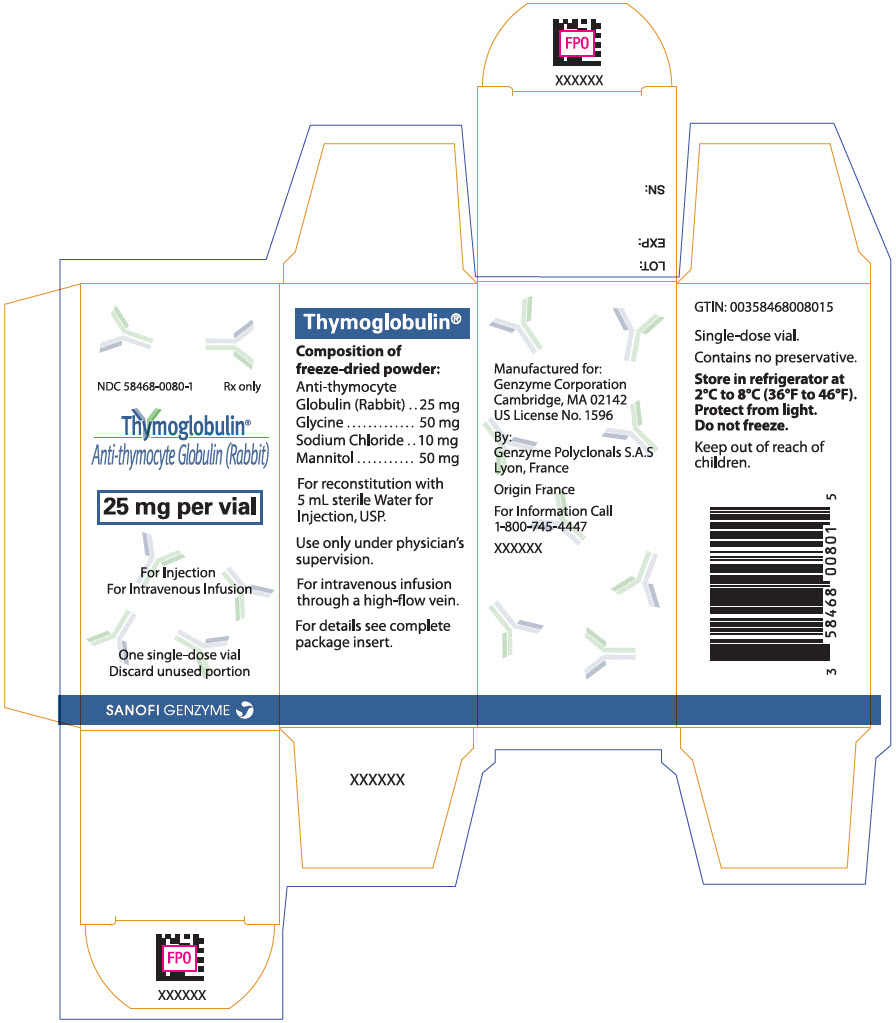
Thymoglobulin Anti-thymocyte Globulin (Rabbit) 5 mg/mL Injection, Powder, Lyophilized, For Solution — NDC 58468-0080-1 (Billing 58468-0080-01)
This is a package of Thymoglobulin Anti-thymocyte Globulin (Rabbit) 5 mg/mL Injection, Powder, Lyophilized, For Solution from Genzyme Corporation, marketed since Dec 1998 and currently FDA-listed. It is this product's only package size.
NDC database record
One package, one record: these facts belong to NDC 58468-0080-1 alone.
- Record
- FDA NDC Directory package listing · Human prescription drug
- Code segments
- 58468 labeler · 0080 product · 1 package
- Package marketed since
- Dec 30, 1998
- Sample package
- No — commercial package
- Listing certified through
- Dec 31, 2027
- Barcode (UPC-A, from the NDC)
- 3 5846800801 5
- FDA record last changed
- Jul 24, 2026
Identity & classification
Regulatory identifiers FDA, NLM and CMS codes for this package
Drug-database identifiers Medi-Span GPI and First Databank GCN / HICL / AHFS classification
- GSN (GCN sequence number): 028256
- GCN: 84010
- GPI-14 (Medi-Span): 99402540302120
- HICL (First Databank): 011948
- AHFS class code: 90:28.04.92
- RxCUI (RxNorm): 107047
Where does this data come from?
- FDA openFDA NDC Directory · synced Oct 1, 2026
- FDA label on DailyMed · label index refreshed Oct 6, 2026
- RxNorm (NLM RxNav) · catalog refreshed Oct 1, 2026
- Medi-Span GPI (licensed)
- First Databank (licensed) · refreshed Oct 1, 2026
RxNorm drug class
This medicine belongs to the Immunoglobulin G class.
Where does this data come from?
- RxClass (NLM) · catalog refreshed Oct 1, 2026
Clinical
Anti-thymocyte globulin is used to prevent or treat kidney transplant rejection (attack of the transplanted organ by the immune system of the person receiving the organ). It is also used to treat aplastic anemia (condition in which the body does not make enough new blood cells). Anti-thymocyte globulin is in a class of medications called Immunosuppressants. It works by decreasing the activity of the immune system.
Read the full MedlinePlus article ↗Patient education
Supplement & herbal interactions
Where does this data come from?
- MedlinePlus (NLM) · refreshed Oct 1, 2026
- FDA label on DailyMed · label index refreshed Oct 6, 2026
Ask a licensed pharmacist directly — free, answered by our team.
Pricing
A drug doesn't have one price. Each row is a different public payment system, and none is what you'd pay at the counter — that depends on your insurance. The ⓘ on each row explains what it measures.
| Price system | Per mL | Per package |
|---|---|---|
| Retail pharmacies payNADAC · weekly | Not in the retail survey — common for institutional, discontinued, or low-volume packs. | |
| Medicaid paysCMS SDUD · 12 mo | No recent Medicaid claims on file for this NDC — rare and low-volume NDCs are suppressed in the public data. | |
| Medicare drug plans payPart D · quarterly | No Part D plan price is available for this NDC in our data. | |
| Medicare Part B allowsASP · J7511 | $1,057.791 / J7511 unit | — |
Where does this data come from?
- CMS NADAC weekly file
- CMS ASP pricing files · refreshed Sep 20, 2026
- CMS Medicaid State Drug Utilization Data · refreshed Oct 8, 2026
- CMS Part D plan pricing files · refreshed Sep 24, 2026
- VA National Acquisition Center price file
Billing & reimbursement
Where does this data come from?
- CMS ASP NDC-HCPCS crosswalk · refreshed Sep 22, 2026
- DMEPDAC NDC-HCPCS crosswalk
- openFDA NSDE billing units · refreshed Oct 7, 2026
Packaging — all sizes for this product
| Package NDC | Description | Marketing start | Marketing end | Status |
|---|---|---|---|---|
| 58468-0080-01 You're viewing this Main listing | 1 VIAL, GLASS in 1 CARTON / 5 mL in 1 VIAL, GLASS | 1998-12-30 | — | Active |
Therapeutic equivalents
| Product | Labeler | Pack | NADAC/unit | TE | Status | Price vs. this |
|---|---|---|---|---|---|---|
| Thymoglobulin 5 mg/mLthis 58468-0080-01 | Genzyme | 1 vial | — | — | FDA listed | — |
Where does this data come from?
- FDA openFDA NDC Directory · synced Oct 1, 2026
- FDA Purple Book · refreshed Oct 5, 2026
- CMS NADAC weekly file
Availability & biosimilar status
Biologics have no small-molecule generics; biosimilar competition is tracked in the FDA Purple Book.
Where does this data come from?
- FDA Purple Book · refreshed Oct 5, 2026
Inactive Ingredients / Excipients
Inactive ingredients, also called excipients, are components of the drug product other than the active ingredient. They may include fillers, dyes, coatings, preservatives, flavors, or other formulation ingredients.
💡 Tap an ingredient (hover on desktop) to see what it is and why it’s used.
-
UNII TE7660XO1C
Glycine is an amino acid used in medicines as a buffer to help stabilize pH and improve taste. It may also serve as a filler or binder to give the product proper form and consistency.
-
UNII 3OWL53L36A
A natural sugar alcohol derived from seaweed or synthesized in the lab. It's used as a filler to add bulk, a sweetener in sugar-free formulas, and a disintegrant to help tablets break apart in the stomach.
-
UNII 451W47IQ8X
Sodium chloride is common table salt. It's used in medicines as a buffer to maintain proper pH, as a filler to add bulk, or to adjust the osmotic balance in liquid formulations.
3 inactive ingredients listed in the exact product block matched to this NDC.
Where does this data come from?
ingredient classCode="IACT" elements from the exact product block matched by this NDC. Label-section narrative from DailyMed / the openFDA label index is shown separately when available.- FDA label on DailyMed · label index refreshed Oct 6, 2026
- FDA openFDA NDC Directory · synced Oct 1, 2026
Inactive ingredient FAQ
Are inactive ingredients the same for every manufacturer?
Why might an inactive ingredient be missing?
Can inactive ingredients matter?
Manufacturer & labeler
More NDCs from Genzyme Corporation labeler code 58468
- Thyrogen THYROTROPIN ALFA .9 mg/mL Injection, Powder, Lyophilized, For Solution NDC 58468-0030-2
- Fabrazyme AGALSIDASE BETA 5 mg/mL Injection, Powder, Lyophilized, For Solution NDC 58468-0040-1
- Fabrazyme AGALSIDASE BETA 5 mg/mL Injection, Powder, Lyophilized, For Solution NDC 58468-0041-1
- XENPOZYME olipudase alfa-rpcp 20 mg/5.1mL Injection, Powder, Lyophilized, For Solution NDC 58468-0050-1
- XENPOZYME olipudase alfa-rpcp 4 mg/1.1mL Injection, Powder, Lyophilized, For Solution NDC 58468-0051-1
- ALDURAZYME laronidase 2.9 mg/5mL Injection, Solution, Concentrate NDC 58468-0070-1
- Renvela SEVELAMER CARBONATE 2400 mg Powder, For Suspension NDC 58468-0131-2
- Renvela SEVELAMER CARBONATE 800 mg Powder, For Suspension NDC 58468-0132-2
- Renvela SEVELAMER CARBONATE 800 mg Tablet, Film Coated NDC 58468-0133-1
- Lumizyme ALGLUCOSIDASE ALFA 5 mg/mL Injection, Powder, For Solution NDC 58468-0160-1
- LEMTRADA ALEMTUZUMAB 12 mg/1.2mL Injection, Solution, Concentrate NDC 58468-0200-1
- Aubagio teriflunomide 14 mg Tablet, Film Coated NDC 58468-0210-1
Where does this data come from?
- FDA openFDA NDC Directory · synced Oct 1, 2026
- Drugs@FDA
Full prescribing information FDA SPL
🎯 Indications and Usage ▾
1 INDICATIONS AND USAGE THYMOGLOBULIN is indicated for the prophylaxis and treatment of acute rejection in adult and pediatric patients receiving a kidney transplant in conjunction with concomitant immunosuppression. THYMOGLOBULIN is an immunoglobulin G indicated for the prophylaxis and treatment of acute rejection in adult and pediatric patients receiving a kidney transplant in conjunction with concomitant immunosuppression. ( 1 )
⏱️ Dosage and Administration ▾
2 DOSAGE AND ADMINISTRATION The first dose should be infused over at least 6 hours; doses on subsequent days should be infused over at least 4 hours. ( 2.2 ) Premedication with corticosteroids, acetaminophen, and/or an antihistamine prior to each infusion is recommended. ( 2.2 ) The THYMOGLOBULIN dose should be reduced by one-half if the white blood cell (WBC) count is between 2,000 and 3,000 cells/mm 3 or if the platelet count is between 50,000 and 75,000 cells/mm 3 .
Stopping THYMOGLOBULIN treatment should be considered if the WBC count falls below 2,000 cells/mm 3 or if the platelet count falls below 50,000 cells/mm 3 . ( 2.3 ) Indication Dose Prophylaxis of acute rejection 1.5 mg/kg of body weight administered daily for 4 to 7 days Treatment of acute rejection 1.5 mg/kg of body weight administered daily for 7 to 14 days For complete dosing instructions, see full prescribing information. ( 2 )
2.1Dosing Information For intravenous use only Prophylaxis of Acute Rejection The recommended dosage of THYMOGLOBULIN for prophylaxis of acute rejection in patients receiving a kidney transplant is 1.5 mg/kg of body weight administered daily with the first dose initiated prior to reperfusion of the donor kidney. The usual duration of administration is 4 to 7 days. Treatment of Acute Rejection The recommended dosage of THYMOGLOBULIN for treatment of acute rejection in patients receiving a kidney transplant is 1.5 mg/kg of body weight administered daily for 7 to 14 days.
Dosing for THYMOGLOBULIN is different from dosing for other anti-thymocyte globulin (ATG) products because protein composition and concentrations vary depending on the source of ATG. The prescribing physician must ensure that the dose prescribed is appropriate for the ATG product being administered.
2.2Recommended Dosing Regimen Administer the first dose of THYMOGLOBULIN over a minimum of 6 hours; administer doses on subsequent days over at least 4 hours [see Warnings and Precautions (5.2) ] . Premedicate with corticosteroids, acetaminophen, and/or an antihistamine 1 hour prior to each infusion of THYMOGLOBULIN to reduce the incidence and intensity of infusion-related reactions [see Warnings and Precautions (5.2) and Adverse Reactions (6.1) ] .
2.3Dose Modifications Monitor patients for adverse reactions during and after infusion. Monitor total white blood cell and platelet counts during and after THYMOGLOBULIN therapy. Reduce the THYMOGLOBULIN dose by one-half if the white blood cell (WBC) count is between 2,000 and 3,000 cells/mm 3 or if the platelet count is between 50,000 and 75,000 cells/mm 3 .
Consider stopping THYMOGLOBULIN treatment if the WBC count falls below 2,000 cells/mm 3 or if the platelet count falls below 50,000 cells/mm 3 .
2.4Recommended Concomitant Medication THYMOGLOBULIN is used with concomitant immunosuppressants. Administer prophylactic antifungal and antibacterial therapy if clinically indicated [see Warnings and Precautions (5.4) ] . Antiviral prophylactic therapy is recommended for patients who are seropositive for cytomegalovirus (CMV) at the time of transplant and for CMV-seronegative patients scheduled to receive a kidney from a CMV-seropositive donor [see Warnings and Precautions (5.4) ].
2.5Instructions for Dilution and Administration Reconstitution After calculating the number of vials needed, using aseptic technique, reconstitute each vial of THYMOGLOBULIN with 5 mL of Sterile Water for Injection, USP (SWFI). Allow THYMOGLOBULIN vials to reach room temperature before reconstituting the lyophilized product. Aseptically remove caps to expose rubber stoppers.
Clean stoppers with germicidal or alcohol swab. Aseptically reconstitute each vial of THYMOGLOBULIN lyophilized powder with the 5 mL of SWFI. Rotate vial gently until powder is completely dissolved.
Each reconstituted vial contains 25 mg or 5 mg/mL of THYMOGLOBULIN. Inspect solution for particulate matter after reconstitution. Should some particulate matter remain, continue to ge… [Excerpted — this section continues on DailyMed.]
💊 Dosage Forms and Strengths ▾
3 DOSAGE FORMS AND STRENGTHS THYMOGLOBULIN for injection: 25 mg anti-thymocyte globulin (rabbit) as a sterile lyophilized powder, in single-dose 10 mL vials for reconstitution. Single-dose 10 mL vial containing 25 mg of anti-thymocyte globulin (rabbit) lyophilized, sterile powder. ( 3 )
⛔ Contraindications ▾
4 CONTRAINDICATIONS THYMOGLOBULIN is contraindicated in patients with history of allergy or anaphylactic reaction to rabbit proteins or to any product excipients, or who have active acute or chronic infections that contraindicate any additional immunosuppression [see Warnings and Precautions (5.2 , 5.4) and Adverse Reactions (6.2) ] . Allergy or anaphylactic reaction to rabbit proteins or to any product excipients, or active acute or chronic infections which contraindicate any additional immunosuppression ( 4 )
⚠️ Warnings and Cautions ▾
5 WARNINGS AND PRECAUTIONS THYMOGLOBULIN should only be used by physicians experienced in immunosuppressant therapy in transplantation. ( 5.1 ) Hypersensitivity and infusion-related reactions: THYMOGLOBULIN infusion could result in an anaphylactic reaction. Close compliance with the recommended infusion time may reduce the incidence and severity of infusion-related reactions.
( 5.2 ) Cytopenias including anemia, neutropenia, and thrombocytopenia have occurred with THYMOGLOBULIN administration ( 6 ) and require monitoring of blood counts. Adjust dose accordingly to reverse cytopenias. Thrombotic microangiopathy (TMA) has occurred in patients treated with THYMOGLOBULIN for kidney transplantation, particularly when concomitantly administered with calcineurin inhibitors.
( 5.3 ) Infection: Infections and reactivation of infections have been reported. Monitor patients and administer anti-infective prophylaxis. ( 5.4 ) Malignancy: Incidence of malignancies may increase.
( 5.5 ) Immunization with attenuated live vaccines is not recommended for patients who have recently received THYMOGLOBULIN. ( 5.6 ) THYMOGLOBULIN may interfere with rabbit antibody–based immunoassays and with cross-match or panel-reactive antibody cytotoxicity assays. ( 5.7 )
5.1Management of Immunosuppression To prevent over-immunosuppression, physicians may wish to decrease the dose of the maintenance immunosuppression regimen during the period of THYMOGLOBULIN use.
5.2Hypersensitivity and Infusion-Related Reactions Severe hypersensitivity and infusion-related reactions, including fatal anaphylaxis and severe cytokine release syndrome (CRS), have been reported with the use of THYMOGLOBULIN [see Adverse Reactions (6) ] . Severe acute CRS can cause serious cardiorespiratory events and/or death. Close compliance with the recommended dosage and infusion time may reduce the incidence and severity of infusion-related reactions.
Slowing the infusion rate may minimize the risk of infusion-related reactions. If a hypersensitivity or infusion-related reaction occurs, terminate the infusion immediately and provide supportive treatment according to clinical practice.
5.3Cytopenias Cytopenias including anemia, neutropenia, and thrombocytopenia have occurred with THYMOGLOBULIN administration [see Adverse Reactions (6) ] . Monitor blood counts after THYMOGLOBULIN administration. Adjust dose accordingly to reverse cytopenias [see Dosage and Administration (2.3) ] .
Thrombotic microangiopathy (TMA) has occurred in patients treated with THYMOGLOBULIN for kidney transplantation, particularly when concomitantly administered with calcineurin inhibitors.
5.4Infection THYMOGLOBULIN is routinely used in combination with other immunosuppressive agents. Infections (bacterial, fungal, viral and protozoal), reactivation of infection (particularly cytomegalovirus [CMV]) and sepsis have been reported after THYMOGLOBULIN administration in combination with multiple immunosuppressive agents [see Adverse Reactions (6) ] . These infections can be fatal.
Monitor patients carefully and administer appropriate anti-infective treatment when indicated [see Dosage and Administration (2.4) ] .
5.5Malignancy Malignancies with fatal outcomes have been reported in patients treated with THYMOGLOBULIN [see Adverse Reactions (6) ]. Use of immunosuppressive agents, including THYMOGLOBULIN, may increase the risk of malignancies, including lymphoma or lymphoproliferative disorders.
5.6Immunizations The safety of immunization with attenuated live vaccines following THYMOGLOBULIN therapy has not been studied; therefore, immunization with attenuated live vaccines is not recommended for patients who have recently received THYMOGLOBULIN.
5.7Laboratory Tests THYMOGLOBULIN may interfere with rabbit antibody–based immunoassays and with cross-match or panel-reactive antibody cytotoxicity assays. THYMOGLOBULIN has not been shown to interfere with any routine clinical laboratory tests that do not use immunoglobulins.
🤒 Adverse Reactions ▾
6 ADVERSE REACTIONS The most common adverse reactions and laboratory abnormalities (incidence >5% higher than comparator) are urinary tract infection, abdominal pain, hypertension, nausea, shortness of breath, fever, headache, anxiety, chills, increased potassium levels in the blood, low counts of platelets and white blood cells. ( 6 ) To report SUSPECTED ADVERSE REACTIONS, contact Genzyme Corporation at 1-800-633-1610 or FDA at 1-800-FDA-1088 or www.fda.gov/medwatch.
6.1Clinical Trials Experience Because clinical trials are conducted under widely varying conditions, adverse reaction rates observed in the clinical trials of a drug cannot be directly compared to rates in the clinical trials of another drug and may not reflect the rates observed in practice. The most common adverse reactions and laboratory abnormalities (incidence >5% higher than comparator) are urinary tract infection, abdominal pain, hypertension, nausea, shortness of breath, fever, headache, anxiety, chills, increased potassium levels in the blood, and low counts of platelets and white blood cells.
Prophylaxis of Acute Rejection The safety of THYMOGLOBULIN compared to Active Comparator for the prophylaxis of acute rejection in patients receiving a kidney transplant were evaluated in a randomized, open-label, international, multicenter trial in patients receiving solitary kidneys from deceased donors (n=278; Study 1). Table 1: Adverse Reactions Adverse reactions are treatment emergent adverse events (TEAE) reported as related to the study agent in at least 1 patient. and Laboratory Abnormalities Reported More Frequently (incidence Number (percentage) is shown regardless of causal relationship. >5%) Following THYMOGLOBULIN versus Active Comparator basiliximab Adverse Reaction [n (%) ] THYMOGLOBULIN (N=141) Active Comparator (N=137) Urinary tract infection 55 (39%) 36 (26%) Pyrexia 39 (28%) 25 (18%) Headache 26 (18%) 17 (12%) Hyperlipidemia 21 (15%) 9 (7%) Anxiety 20 (14%) 12 (9%) Chills 13 (9%) 5 (4%) Laboratory Abnormalities Hyperkalemia: blood potassium ≥5.5 mmol/L; Leukopenia: WBC <3000 cells/mm 3 .
Thrombocytopenia: platelet count <75,000 cells/mm 3 . Hyperkalemia 81 (57%) 70 (51%) Leukopenia 89 (63%) 20 (15%) Thrombocytopenia 23 (16%) 7 (5%) Malignancies Six patients in the THYMOGLOBULIN group developed malignancies (Epstein-Barr virus-induced lymphoma of the cavum, Epstein-Barr virus-positive large B-cell lung lymphoma, Epstein-Barr virus-induced lymphoma of the brain, squamous cell carcinoma, renal cancer, and recurrent basal cell carcinoma). In the Active Comparator group, 1 patient developed renal cancer.
Infections Infections occurred in 76% of THYMOGLOBULIN-treated patients (severe in 23%), and in 63% of Active Comparator-treated patients (severe in 15%). Infections occurring in ≥5% of the patients in either treatment group during the 12-month follow-up are summarized in Table 2. Urinary tract infection was the most frequent type of infection, and was reported as severe in 9% of THYMOGLOBULIN-treated patients and in 2% of Active Comparator-treated patients.
CMV infections were reported more frequently in the Active Comparator group, with an incidence of 6% (severe in 1%) in THYMOGLOBULIN-treated patients and of 18% (severe in 7%) in Active Comparator-treated patients. Patients who were CMV-positive at the time of transplant, as well as CMV-negative recipients of transplants from CMV-positive donors, were required to receive antiviral prophylaxis for 3 months after transplant. Table 2: Infections Reported in ≥5% of Study Patients Infection THYMOGLOBULIN All (N=141) THYMOGLOBULIN Severe/Unknown (N=141) Active Comparator basiliximab All (N=137) Active Comparator Severe/Unknown (N=137) Urinary tract infections Urinary tract infection group includes: Urinary tract infections, Urinary tract infection fungal, Urinary tract infection bacterial, Bacterial pyelonephritis, Urosepsis.
59 (42%) 12 (9%) 39 (29%) 3 (2%) Sepsis Sepsis group includes: Sepsis, Escher… [Excerpted — this section continues on DailyMed.]
🔄 Drug Interactions ▾
7 DRUG INTERACTIONS No drug interaction studies have been performed. THYMOGLOBULIN can stimulate the production of antibodies that cross-react with rabbit immune globulins [see Clinical Pharmacology (12.3) ] .
👥 Use in Specific Populations ▾
8 USE IN SPECIFIC POPULATIONS
8.1Pregnancy Risk Summary Animal reproduction studies have not been conducted with THYMOGLOBULIN. It is also not known whether THYMOGLOBULIN can cause fetal harm. THYMOGLOBULIN should be given to a pregnant woman only if the benefit outweighs the risk.
8.2Lactation Risk Summary THYMOGLOBULIN has not been studied in nursing women. It is not known whether this drug is excreted in human milk. Because other immunoglobulins are excreted in human milk, breastfeeding should be discontinued during THYMOGLOBULIN therapy.
8.3Females and Males of Reproductive Potential Contraception Females There is a lack of information on the risks associated with the administration of THYMOGLOBULIN during pregnancy. Therefore, effective contraception is recommended during and for a minimum of 3 months after treatment.
8.4Pediatric Use The safety and effectiveness of THYMOGLOBULIN in pediatric patients have been established in pediatric patients for the prophylaxis and treatment of acute rejection. The use of THYMOGLOBULIN in pediatric patients was supported by extrapolation of adult data from Study 1, Study 2 and Study 3 [see Adverse Reactions (6) and Clinical Studies (14) ].
🤰 Pregnancy ▾
8.1Pregnancy Risk Summary Animal reproduction studies have not been conducted with THYMOGLOBULIN. It is also not known whether THYMOGLOBULIN can cause fetal harm. THYMOGLOBULIN should be given to a pregnant woman only if the benefit outweighs the risk.
🧒 Pediatric Use ▾
8.4Pediatric Use The safety and effectiveness of THYMOGLOBULIN in pediatric patients have been established in pediatric patients for the prophylaxis and treatment of acute rejection. The use of THYMOGLOBULIN in pediatric patients was supported by extrapolation of adult data from Study 1, Study 2 and Study 3 [see Adverse Reactions (6) and Clinical Studies (14) ].
🆘 Overdosage ▾
10 OVERDOSAGE THYMOGLOBULIN overdosage may result in leukopenia (including lymphopenia and neutropenia) and/ or thrombocytopenia, which can be managed with dose reduction [see Dosage and Administration (2.1 , 2.3) ] .
🧬 Clinical Pharmacology ▾
12 CLINICAL PHARMACOLOGY
12.1Mechanism of Action The mechanism of action by which polyclonal antilymphocyte preparations suppress immune responses is not fully understood. Possible mechanisms by which THYMOGLOBULIN may induce immunosuppression in vivo include: T-cell clearance from the circulation and modulation of T-cell activation, homing, and cytotoxic activities. THYMOGLOBULIN includes antibodies against T-cell markers such as CD2, CD3, CD4, CD8, CD11a, CD18, CD25, CD44, CD45, HLA-DR, HLA Class I heavy chains, and ß2 micro-globulin.
In vitro , THYMOGLOBULIN (concentrations >0.1 mg/mL) mediates T-cell suppressive effects via inhibition of proliferative responses to several mitogens. In patients, T-cell depletion is usually observed within a day after initiating THYMOGLOBULIN therapy. THYMOGLOBULIN has not been shown to be effective for treating antibody-mediated (humoral) rejections.
12.3Pharmacokinetics After an intravenous dose of 1.25 to 1.5 mg/kg/day (over 4 hours for 7–11 days) 4–8 hours post infusion, THYMOGLOBULIN levels were on average 21.5 mcg/mL (10–40 mcg/mL) with a half-life of 2–3 days after the first dose, and 87 mcg/mL (23–170 mcg/mL) after the last dose. During the THYMOGLOBULIN Phase 3 randomized trial for the treatment of acute rejection, of the 108 of 163 patients evaluated, anti-rabbit antibodies developed in 68% of the THYMOGLOBULIN-treated patients, and anti-horse antibodies developed in 78% of the Active Comparator-treated patients.
No controlled studies have been conducted to study the effect of anti-rabbit antibodies on repeat use of THYMOGLOBULIN. However, to ensure that T-cell depletion is achieved upon retreatment with THYMOGLOBULIN, monitoring the lymphocyte count is recommended. T-cell counts based on data collected from a limited number of patients (n=12) in this study, are presented in the chart below.
These data were collected using flow cytometry (FACSCAN, Becton-Dickinson). chart
🧬 Mechanism of Action ▾
12.1Mechanism of Action The mechanism of action by which polyclonal antilymphocyte preparations suppress immune responses is not fully understood. Possible mechanisms by which THYMOGLOBULIN may induce immunosuppression in vivo include: T-cell clearance from the circulation and modulation of T-cell activation, homing, and cytotoxic activities. THYMOGLOBULIN includes antibodies against T-cell markers such as CD2, CD3, CD4, CD8, CD11a, CD18, CD25, CD44, CD45, HLA-DR, HLA Class I heavy chains, and ß2 micro-globulin.
In vitro , THYMOGLOBULIN (concentrations >0.1 mg/mL) mediates T-cell suppressive effects via inhibition of proliferative responses to several mitogens. In patients, T-cell depletion is usually observed within a day after initiating THYMOGLOBULIN therapy. THYMOGLOBULIN has not been shown to be effective for treating antibody-mediated (humoral) rejections.
📦 How Supplied / Storage and Handling ▾
16 HOW SUPPLIED/STORAGE AND HANDLING
16.1How Supplied THYMOGLOBULIN is supplied as a single-dose clear glass 10 mL vial containing 25 mg of lyophilized (solid) THYMOGLOBULIN. Each carton contains one THYMOGLOBULIN vial (NDC 58468-0080-1).
16.2Storage and Handling Store in refrigerator at 2°C to 8°C (36°F to 46°F). Protect from light. Do not freeze.
Do not use after the expiration date indicated on the label. Reconstituted THYMOGLOBULIN is physically and chemically stable for up to 24 hours at room temperature; however, room temperature storage is not recommended. As THYMOGLOBULIN contains no preservatives, reconstituted product should be used immediately.
Infusion solutions of THYMOGLOBULIN must be used immediately. Any unused drug remaining after infusion must be discarded.
16.1How Supplied THYMOGLOBULIN is supplied as a single-dose clear glass 10 mL vial containing 25 mg of lyophilized (solid) THYMOGLOBULIN. Each carton contains one THYMOGLOBULIN vial (NDC 58468-0080-1).
📦 Storage and Handling ▾
16.2Storage and Handling Store in refrigerator at 2°C to 8°C (36°F to 46°F). Protect from light. Do not freeze.
Do not use after the expiration date indicated on the label. Reconstituted THYMOGLOBULIN is physically and chemically stable for up to 24 hours at room temperature; however, room temperature storage is not recommended. As THYMOGLOBULIN contains no preservatives, reconstituted product should be used immediately.
Infusion solutions of THYMOGLOBULIN must be used immediately. Any unused drug remaining after infusion must be discarded.
📋 Description ▾
11 DESCRIPTION THYMOGLOBULIN ® (anti-thymocyte globulin [rabbit]) is a purified, pasteurized, immunoglobulin G, obtained by immunization of rabbits with human thymocytes. This immunosuppressive product contains cytotoxic antibodies directed against antigens expressed on human T-lymphocytes. THYMOGLOBULIN is a sterile, lyophilized powder for intravenous administration after reconstitution with sterile Water for Injection, USP (SWFI).
Each single-dose 10 mL vial contains 25 mg of anti-thymocyte globulin (rabbit), 50 mg glycine, 50 mg mannitol and 10 mg sodium chloride. After reconstitution with 5 mL SWFI, each vial of reconstituted product contains approximately 5 mg/mL of THYMOGLOBULIN, of which >90% is rabbit gamma immune globulin (IgG). The reconstituted solution has a pH of 6.5 to 7.2.
Human red blood cells are used in the manufacturing process to deplete cross-reactive antibodies to non–T-cell antigens. The manufacturing process is validated to remove or inactivate potential exogenous viruses. All human red blood cells are from U.S.-registered or FDA-licensed blood banks.
A virus removal step (nanofiltration, using a 20 nm filter) and a viral inactivation step (pasteurization, i.e., heat treatment of active ingredient at 60°C/10 hr) are performed for each lot. Each THYMOGLOBULIN lot is released following potency testing (lymphocytotoxicity and anti-CD2 binding inhibition), and cross-reactive antibody testing (hemagglutination, platelet agglutination, and fibroblast toxicity assays on every lot).
💬 Information for Patients ▾
17 PATIENT COUNSELING INFORMATION Advise patients receiving THYMOGLOBULIN that they will be monitored by a physician experienced in immunosuppressive therapy for the management of kidney transplant patients [see Warnings and Precautions (5.1) ] . Hypersensitivity and Infusion-Related Reactions Advise patients of the signs and symptoms of infusion-related reactions (flu-like symptoms, e.g., fever, chills, nausea, muscle or joint pain) and the need to take premedications as prescribed. Determine if the patient has known allergies to rabbits or rabbit proteins.
Determine if the patient has had significant exposure to rabbits [see Warnings and Precautions (5.2) and Adverse Reactions (6.2) ] . Cytopenias Inform patients of the increased risk of thrombotic microangiopathy (TMA). TMA is a severe condition characterized by the formation of microscopic blood clots in small blood vessels, leading to organ damage, most commonly the kidneys [see Warnings and Precautions (5.3) ] .
Infections Inform patients of the increased risk of infection while taking immunosuppressive therapy. Instruct patients to immediately report signs or symptoms of infection and to take prophylactic anti-infectives as prescribed [see Warnings and Precautions (5.4) and Adverse Reactions (6.2) ] . Malignancies Inform patients of the increased risk of malignancies, especially skin cancer, while taking immunosuppressive therapy.
Instruct patients to limit exposure to sunlight and UV light by wearing protective clothing and using sunscreen with a high protection factor [see Warnings and Precautions (5.5) and Adverse Reactions (6.2) ] . Immunizations Advise patients that they should not receive immunizations with live viral vaccines if they have been recently treated with THYMOGLOBULIN [see Warnings and Precautions (5.6) ] .
🧬 Pharmacokinetics ▾
12.3Pharmacokinetics After an intravenous dose of 1.25 to 1.5 mg/kg/day (over 4 hours for 7–11 days) 4–8 hours post infusion, THYMOGLOBULIN levels were on average 21.5 mcg/mL (10–40 mcg/mL) with a half-life of 2–3 days after the first dose, and 87 mcg/mL (23–170 mcg/mL) after the last dose. During the THYMOGLOBULIN Phase 3 randomized trial for the treatment of acute rejection, of the 108 of 163 patients evaluated, anti-rabbit antibodies developed in 68% of the THYMOGLOBULIN-treated patients, and anti-horse antibodies developed in 78% of the Active Comparator-treated patients.
No controlled studies have been conducted to study the effect of anti-rabbit antibodies on repeat use of THYMOGLOBULIN. However, to ensure that T-cell depletion is achieved upon retreatment with THYMOGLOBULIN, monitoring the lymphocyte count is recommended. T-cell counts based on data collected from a limited number of patients (n=12) in this study, are presented in the chart below.
These data were collected using flow cytometry (FACSCAN, Becton-Dickinson). chart
🔬 Clinical Studies ▾
14 CLINICAL STUDIES
14.1Prophylaxis of Acute Rejection in Patients Receiving a Kidney Transplant Study 1 (NCT00235300) THYMOGLOBULIN was evaluated in an open-label, randomized, active-controlled study in kidney transplant patients (n=278) at increased risk of acute rejection or delayed graft function. The treatment failure rate within 12 months post-transplantation was statistically significantly lower in the THYMOGLOBULIN group than in the Active Comparator group (25% vs 38%; p=0.02), based on the composite endpoint (biopsy-proven acute rejection [BPAR], graft loss [GL], or death, with "lost to follow-up" considered as a treatment failure).
The individual elements of the composite endpoint were BPAR (13% vs 21%), GL (8% vs 10%), and death (4% vs 4%) for the THYMOGLOBULIN and Active Comparator groups, respectively (Table 7). Table 7: Prophylaxis of Acute Rejection – Treatment Failure within 12 Months (Study 1) Parameter THYMOGLOBULIN (N=141) Active Comparator basiliximab (N=137) Difference Two-sided 95% confidence intervals of difference between treatment groups (THYMOGLOBULIN – Active Comparator) are based on normal approximation of binomial distribution.
(95% CI) P-value P-value obtained by comparison of treatment groups using Fisher's exact test. BPAR= biopsy-proven acute rejection; CI=confidence interval Composite endpoint 35/141 (25%) 52/137 (38%) -13% (-23.9% to -2.3%)
0.02BPAR 18/141 (13%) 29/137 (21%) -8% (-17.2% to 0.4%) – Graft loss 11/141 (8%) 13/137 (10%) – – Death 6/141 (4%) 6/137 (4%) – – Lost to follow-up Lost to follow-up is defined as not having BPAR, GL, or death within 12 months after transplantation, and last visit date was prior to the lower bound of 12-month window (12 months ± 30 days after transplantation). 7/141 (5%) 11/137 (8%) – – The composite endpoint is defined as the occurrence of any of the following: BPAR (Grade I–III), graft loss, death, or lost to follow-up.
Except for patients counted as "lost to follow-up," a patient can be counted in more than one category for the individual components (BPAR, graft loss, death). In Study 1, patients received either THYMOGLOBULIN (n=141) 1.5 mg/kg daily for a total of 5 doses (Day 0 to Day 4) or Active Comparator (n=137) 2 doses of 20 mg each (Day 0, Day 4). For both treatment groups, the first induction treatment was initiated prior to the reperfusion of the kidney.
All patients received triple maintenance immunosuppression (cyclosporine, mycophenolate mofetil, and corticosteroids) throughout the 12 months of the study. Recipient disease characteristics were balanced between the 2 treatment groups with similar distribution of prior transplant, degree of sensitization and number of mismatched human leukocyte antigens (HLA). Overall, the mean percentage of pretransplant panel-reactive antibody (PRA) was 6% and the historical peak was 14%.
The number of patients having a higher level of sensitization with PRA >20% was similar in the THYMOGLOBULIN (9%) and Active Comparator (10%) groups. The mean number of mismatched HLAs was evenly distributed across the 2 treatment groups. Study 2 (NCT00682292) THYMOGLOBULIN was evaluated in an open-label, parallel-arm, randomized, active-controlled, investigator-sponsored study in kidney transplant patients (n=230) at higher immunological risk of rejection.
The noninferiority of THYMOGLOBULIN to Active Comparator was achieved with treatment failure rates of 25% versus 34%, with an estimated treatment group difference (THYMOGLOBULIN – Active Comparator) of -9% (95% CI: -19.9% to 3.6%), based on the composite endpoint (BPAR, GL, or death, with lost to follow-up considered as a treatment failure) in the 12 months after transplantation. The individual elements of the composite endpoint were BPAR (11% vs 21%), GL (15% vs 11%), and death (4% vs 3%) for the THYMOGLOBULIN and Active Comparator groups, respectively (Table 8).
Table 8: Prophylaxis of Acute Rejection – Treatment Failure within 12 Months (Study 2) Parameter THYMOGLOB… [Excerpted — this section continues on DailyMed.]
📄 Recent Major Changes ▾
Warnings and Precautions ( 5.3 ) 6/2026
📄 Package Label / Principal Display Panel ▾
PRINCIPAL DISPLAY PANEL - 25 mg Vial Carton NDC 58468-0080-1 Rx only Thymoglobulin ® Anti-thymocyte Globulin (Rabbit) 25 mg per vial For Injection For Intravenous Infusion One single-dose vial Discard unused portion sanofi Principal Display Panel - 25 mg Vial Carton
About this NDC listing & data coverage
What data is (and isn’t) available for this NDC — tap to expand
| NDC identity (package / product / labeler codes) | ✓ Available |
| Labeler | ✓ Available |
| Product & package description | ✓ Available |
| Marketing category & status | ✓ Available |
| Active ingredient / dosage form / route | ✓ Available |
| FDA label (SPL via DailyMed) | ✓ Available |
| Package photos | ✓ Available |
| Inactive ingredients (structured) | ✓ Available |
| NADAC pharmacy acquisition price (CMS) | — Not published for this NDC CMS publishes NADAC only for NDCs reported in its retail-pharmacy survey. |
| Orange Book / therapeutic-equivalence data | — Not published for this NDC Applies only to products approved under an NDA/ANDA; many listings are out of scope. |
| HCPCS J-code billing crosswalk | ✓ Available |
| Medicaid utilization (CMS SDUD) | — Not published for this NDC CMS reports utilization only for NDCs with Medicaid claims above its privacy threshold. |