
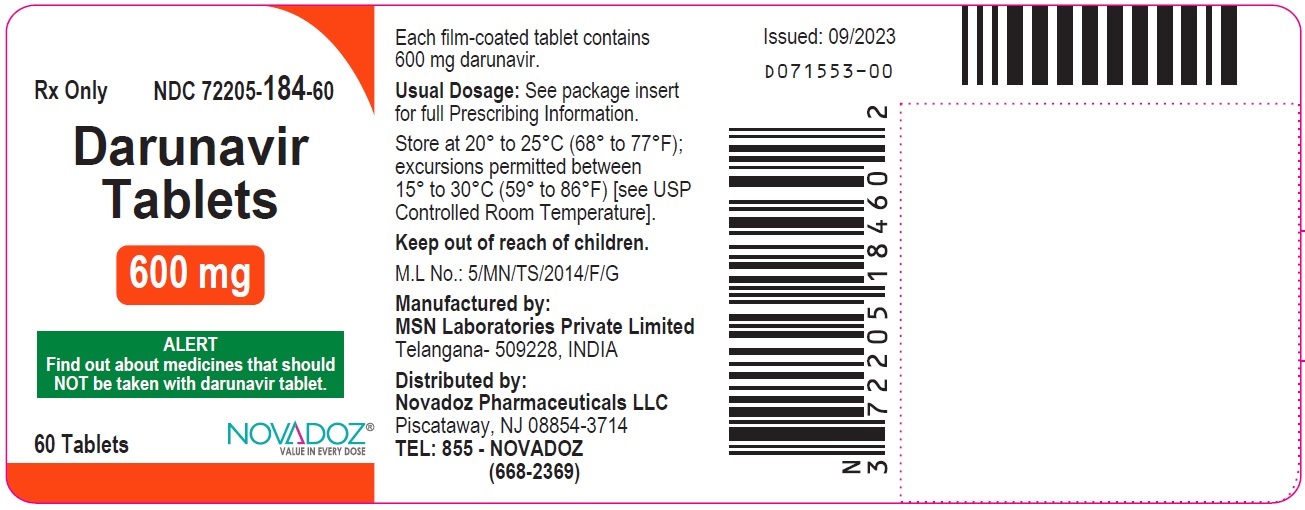
Darunavir 600 mg Tablet, Film Coated, 60-count — NDC 72205-184-60 (Billing 72205-0184-60)
This is a package of 60 tablets of Darunavir 600 mg Tablet, Film Coated from Novadoz Pharmaceuticals LLC, marketed since Nov 2023 and currently FDA-listed; retail pharmacies pay about $1.16 per tablet (NADAC). It is this product's only package size.
NDC database record
One package, one record: these facts belong to NDC 72205-184-60 alone.
- Record
- FDA NDC Directory package listing · Human prescription drug
- Code segments
- 72205 labeler · 184 product · 60 package
- Package marketed since
- Nov 29, 2023
- Sample package
- No — commercial package
- Listing certified through
- Dec 31, 2026
- Billing quantity
- 60 EA per package
- Barcode (UPC)
- 0372205184602, 0372205185302
- Medicaid fills, this package
- 237 prescriptions in the last four reported quarters
- FDA record last changed
- Jul 24, 2026
Identity & classification
Regulatory identifiers FDA, NLM and CMS codes for this package
Drug-database identifiers Medi-Span GPI and First Databank GCN / HICL / AHFS classification
- GSN (GCN sequence number): 063719
- GCN: 99434
- GPI-14 (Medi-Span): 12104520000325
- HICL (First Databank): 033842
- AHFS class code: 08:18.08.08
- RxCUI (RxNorm): 670026
Where does this data come from?
- FDA openFDA NDC Directory · synced Oct 8, 2026
- FDA label on DailyMed · label index refreshed Oct 6, 2026
- RxNorm (NLM RxNav) · catalog refreshed Oct 1, 2026
- Medi-Span GPI (licensed)
- First Databank (licensed) · refreshed Oct 8, 2026
RxNorm drug class
This medicine belongs to the Protease Inhibitor class.
Where does this data come from?
- RxClass (NLM) · catalog refreshed Oct 1, 2026
Clinical
Darunavir is used to treat human immunodeficiency virus (HIV) infection. Darunavir is in a class of medications called protease inhibitors. It works by decreasing the amount of HIV in the blood. Although darunavir does not cure HIV, it may decrease your chance of developing acquired immunodeficiency syndrome (AIDS) and HIV-related illnesses. Taking these medications and making other lifestyle changes may decrease the risk of giving the HIV virus to other people.
Read the full MedlinePlus article ↗- It treats HIV-1 infection in adults and children 3 years and older. You take it with ritonavir and other HIV medicines. It works by blocking an enzyme the virus needs to mature.
- Ritonavir boosts darunavir to levels high enough to work, and food helps your body absorb it. Without them, the medicine may not control the virus well. Please don't skip either on...
- Why do I have to take it with ritonavir and food?
- The most common are diarrhea, nausea, rash, headache, belly pain, and vomiting. Rash is often mild and may go away as you keep taking it. Call your doctor if the rash is severe or...
Patient education
Supplement & herbal interactions
Some supplements/herbs that may interact with Darunavir — tap one for details:
Where does this data come from?
- MedlinePlus (NLM) · refreshed Oct 1, 2026
- FDA label on DailyMed · label index refreshed Oct 6, 2026
Ask a licensed pharmacist directly — free, answered by our team.
Pricing
A drug doesn't have one price. Each row is a different public payment system, and none is what you'd pay at the counter — that depends on your insurance. The ⓘ on each row explains what it measures.
| Price system | Per ea | Per package |
|---|---|---|
| Retail pharmacies payNADAC · weekly | $1.163 | $69.77 / 60 tablets |
| Medicaid paysCMS SDUD · 12 mo | $2.86 | $171.88 / 60 tablets |
| Medicare drug plans payPart D · Q2 2026 | $3.22 | $193.04 / 60 tablets |
Where does this data come from?
- CMS NADAC weekly file · file of Oct 7, 2026
- CMS ASP pricing files · refreshed Sep 20, 2026
- CMS Medicaid State Drug Utilization Data · through Q1 2026
- CMS Part D plan pricing files · refreshed Sep 24, 2026
- VA National Acquisition Center price file
Packaging — all sizes for this product
| Package NDC | Description | Marketing start | Marketing end | Status |
|---|---|---|---|---|
| 72205-0184-60 You're viewing this Main listing | 60 TABLET, FILM COATED in 1 BOTTLE, PLASTIC | 2023-11-29 | — | Active |
Therapeutic equivalents
| Product | Labeler | Pack | NADAC/unit | TE | Status | Price vs. this |
|---|---|---|---|---|---|---|
| Darunavir 600 mg 31722-0568-60 | Camber | 60 tablets | $1.163 | AB | Availability likely | — |
| Darunavir 600 mg 59651-0085-60 | Aurobindo | 60 tablets | $1.163 | AB | Availability likely | — |
| Darunavir 600 mg 60219-1144-06 | Amneal | 60 tablets | $1.163 | AB | Availability likely | — |
| Darunavir 600 mg 60687-0808-21 | American | 30 tablets | $1.163 | AB | Availability likely | — |
| Darunavir 600 mg 68180-0345-07 | Lupin | 60 tablets | $1.163 | AB | Availability likely | — |
| Darunavir 600 and 800 mg 600 mg 69097-0248-03 | Cipla | 60 tablets | $1.163 | AB | Availability likely | — |
| Darunavir 600 mgthis 72205-0184-60 | Novadoz | 60 tablets | $1.163 | AB | Availability likely | — |
| darunavir 600 mg 76282-0737-60 | EXELAN | 60 tablets | $1.163 | AB | Availability likely | — |
| Prezista 600 mg 59676-0562-01 | Janssen | 60 tablets | $34.890 | AB | Availability likely | +2900% |
| Darunavir 600 mg 31722-0088-60 | Camber | 60 tablets | — | AB | FDA listed | — |
| Darunavir 600 mg 43598-0704-05 | Dr.Reddys | 500 tablets | — | AB | FDA listed | — |
| Darunavir 600 mg 70771-1745-05 | Zydus | 500 tablets | — | AB | FDA listed | — |
| Darunavir 600 mg 72578-0147-05 | Viona | 500 tablets | — | AB | FDA listed | — |
Where does this data come from?
- FDA openFDA NDC Directory · synced Oct 8, 2026
- FDA Orange Book · refreshed Oct 3, 2026
- CMS NADAC weekly file · file of Oct 7, 2026
Availability & generic status
This product is an FDA-approved generic. Other versions of the same drug are listed under Therapeutic equivalents, least expensive first.
Where does this data come from?
- FDA Orange Book · refreshed Oct 3, 2026
What it looks like
Where does this data come from?
- FDA label on DailyMed · label index refreshed Oct 6, 2026
Inactive Ingredients / Excipients
Inactive ingredients, also called excipients, are components of the drug product other than the active ingredient. They may include fillers, dyes, coatings, preservatives, flavors, or other formulation ingredients.
🧪 Avoiding an ingredient? See Darunavir inactive ingredients by manufacturer: every current product's list side by side, so you can ask your pharmacy for the version that does not list it.
💡 Tap an ingredient (hover on desktop) to see what it is and why it’s used.
-
UNII 2S7830E561
Crospovidone is a synthetic polymer derived from povidone. It acts as a disintegrant, helping the tablet or capsule break apart quickly in the stomach so the active ingredient can be absorbed.
-
UNII 1K09F3G675
Ferric oxide red is an inorganic iron compound used as a colorant in medicines. It gives tablets, capsules, or other dosage forms a red or reddish tint for identification and appearance.
-
UNII EX438O2MRT
Ferric oxide yellow is a naturally occurring iron compound used as a colorant in medications. It gives tablets, capsules, and other forms a yellow or golden hue for identification and appearance.
-
UNII 9XZ8H6N6OH
A plant-based cellulose derivative used as a binder to hold tablet ingredients together, a thickener in liquids, and a coating agent to control how fast the medicine dissolves.
-
UNII 70097M6I30
Magnesium stearate is a salt made from magnesium and stearic acid, a fatty substance. It's used in tablets and capsules as a lubricant and glidant to help ingredients flow smoothly during manufacturing and prevent sticking.
-
UNII OP1R32D61U
Microcrystalline cellulose is a purified form of cellulose, a natural fiber from plant sources. It acts as a binder and filler in tablets and capsules, helping hold ingredients together and give the medicine its shape and size.
-
UNII 0BZ5A00FQU
Polacrilin potassium is a synthetic polymer that absorbs water and swells. It acts as a disintegrant, helping tablets or capsules break apart quickly so the active ingredient can be absorbed in your body.
-
UNII G2M7P15E5P
Polyethylene glycol 3350 is a synthetic polymer used as a solvent, humectant, and thickening agent in medicines. It helps dissolve other ingredients, retain moisture in the product, and achieve the desired consistency.
-
UNII 532B59J990
Polyvinyl alcohol is a synthetic polymer made from plant-derived materials. It's used as a binder to hold ingredients together, a film-former in coatings, and a thickener in liquid formulations.
-
UNII ETJ7Z6XBU4
Silicon dioxide is a naturally occurring mineral used as a glidant and anti-caking agent. It helps powder ingredients flow smoothly and prevents clumping during manufacturing and storage.
-
UNII 451W47IQ8X
Sodium chloride is common table salt. It's used in medicines as a buffer to maintain proper pH, as a filler to add bulk, or to adjust the osmotic balance in liquid formulations.
-
UNII 7SEV7J4R1U
A powder made from a naturally occurring mineral. In medicines, talc works as a glidant and anti-caking agent, helping tablets and capsules flow smoothly during manufacturing and preventing clumping.
-
UNII 15FIX9V2JP
Titanium dioxide is a bright white mineral powder commonly used as a colorant and opacifying agent. It makes pills and tablets white or lighter in color and helps make coatings non-transparent.
13 inactive ingredients listed in the exact product block matched to this NDC.
Where does this data come from?
ingredient classCode="IACT" elements from the exact product block matched by this NDC. Label-section narrative from DailyMed / the openFDA label index is shown separately when available.- FDA label on DailyMed · label index refreshed Oct 6, 2026
- FDA openFDA NDC Directory · synced Oct 8, 2026
Inactive ingredient FAQ
Are inactive ingredients the same for every manufacturer?
Why might an inactive ingredient be missing?
Can inactive ingredients matter?
Manufacturer & labeler
More NDCs from Novadoz Pharmaceuticals LLC labeler code 72205
- pomalidomide 3 mg Capsule NDC 72205-178-21
- pomalidomide 4 mg Capsule NDC 72205-179-21
- Pantoprazole Sodium 40 mg/10mL Injection, Powder, For Solution NDC 72205-180-07
- Pirfenidone 267 mg Tablet, Film Coated NDC 72205-181-26
- Pirfenidone 801 mg Tablet, Film Coated NDC 72205-182-36
- Bortezomib 3.5 mg/3.5mL Injection, Powder, Lyophilized, For Solution NDC 72205-183-01
- Darunavir 800 mg Tablet, Film Coated NDC 72205-185-30
- Chlorpromazine Hydrochloride 25 mg/mL Injection NDC 72205-190-25
- Chlorpromazine Hydrochloride 25 mg/mL Injection NDC 72205-191-25
- Isosulfan blue 10 mg/mL Injection, Solution NDC 72205-195-01
- Carmustine Kit NDC 72205-198-01
- Clopidogrel 75 mg Tablet, Film Coated NDC 72205-199-01
Where does this data come from?
- FDA openFDA NDC Directory · synced Oct 8, 2026
- Drugs@FDA
Full prescribing information FDA SPL
🎯 Indications and Usage ▾
1 INDICATIONS AND USAGE Darunavir tablets, co-administered with ritonavir (darunavir/ritonavir), in combination with other antiretroviral agents, is indicated for the treatment of human immunodeficiency virus (HIV-1) infection in adult and pediatric patients 3 years of age and older [see Use in Specific Populations (8.4) and Clinical Studies (14)] . Darunavir tablets are a human immunodeficiency virus (HIV-1) protease inhibitor indicated for the treatment of HIV-1 infection in adult and pediatric patients 3 years of age and older.
Darunavir tablets must be co-administered with ritonavir (darunavir/ritonavir) and with other antiretroviral agents. ( 1 )
⏱️ Dosage and Administration ▾
2 DOSAGE AND ADMINISTRATION Testing: In treatment-experienced patients, treatment history genotypic and/or phenotypic testing is recommended prior to initiation of therapy with darunavir/ritonavir to assess drug susceptibility of the HIV-1 virus ( 2.1 , 12.4 ) Monitor serum liver chemistry tests before and during therapy with darunavir/ritonavir. ( 2.1 , 2.2 , 5.2 ) Treatment-naïve adult patients and treatment-experienced adult patients with no darunavir resistance associated substitutions: 800 mg (one 800 mg tablet) taken with ritonavir 100 mg once daily and with food.
( 2.3 ) Treatment-experienced adult patients with at least one darunavir resistance associated substitution: 600 mg (one 600 mg tablet) taken with ritonavir 100 mg twice daily and with food. ( 2.3 ) Pregnant patients: 600 mg (one 600 mg tablet) taken with ritonavir 100 mg twice daily and with food. ( 2.4 ) Pediatric patients (3 to less than 18 years of age and weighing at least 10 kg): dosage of darunavir tablets and ritonavir is based on body weight and should not exceed the adult dose.
Darunavir tablets should be taken with ritonavir and with food. ( 2.5 ) Darunavir/ritonavir is not recommended for use in patients with severe hepatic impairment. ( 2.6 )
2.1Testing Prior to Initiation of darunavir/ritonavir In treatment-experienced patients, treatment history, genotypic and/or phenotypic testing is recommended to assess drug susceptibility of the HIV-1 virus [see Microbiology (12.4) ] . Refer to Dosage and Administration (2.3) , (2.4) and ( 2.5 ) for dosing recommendations. Appropriate laboratory testing such as serum liver biochemistries should be conducted prior to initiating therapy with darunavir/ritonavir [see Warnings and Precautions (5.2) ].
2.2Monitoring During Treatment with darunavir/ritonavir Patients with underlying chronic hepatitis, cirrhosis, or in patients who have pre-treatment elevations of transaminases should be monitored for elevation in serum liver biochemistries, especially during the first several months of darunavir/ritonavir treatment [see Warnings and Precautions (5.2) ].
2.3Recommended Dosage in Adult Patients Darunavir tablets must be co-administered with ritonavir to exert its therapeutic effect. Failure to correctly co-administer darunavir tablets with ritonavir will result in plasma levels of darunavir that will be insufficient to achieve the desired antiviral effect and will alter some drug interactions. Patients who have difficulty swallowing darunavir tablets can use the 100 mg per mL darunavir oral suspension.
Treatment-Naïve Adult Patients The recommended oral dose of darunavir tablets are 800 mg (one 800 mg tablet or 8 mL of the oral suspension) taken with ritonavir 100 mg (one 100 mg tablet or capsule or 1.25 mL of a 80 mg per mL ritonavir oral solution) once daily and with food. An 8 mL darunavir oral suspension dose should be taken as two 4 mL administrations with the included oral dosing syringe. Treatment-Experienced Adult Patients The recommended oral dosage for treatment-experienced adult patients is summarized in Table 1.
Baseline genotypic testing is recommended for dose selection. However, when genotypic testing is not feasible, darunavir tablets 600 mg taken with ritonavir 100 mg twice daily is recommended. Table 1: Recommended Darunavir/ritonavir Dosage in Treatment-Experienced Adult Patients Baseline Resistance Formulation and Recommended Dosing Darunavir tablets with ritonavir tablets or capsule Darunavir oral suspension (100 mg/mL) with ritonavir oral solution (80 mg/mL) With no darunavir resistance associated substitutions a One 800 mg darunavir tablet with one 100 mg ritonavir tablet/capsule, taken once daily with food 8 mL b darunavir oral suspension with 1.25 mL ritonavir oral solution, taken once daily with food With at least one darunavir resistance associated substitutions a , or with no baseline resistance information One 600 mg darunavir tablet with one 100 mg ritonavir tablet/capsule, taken twic… [Excerpted — this section continues on DailyMed.]
💊 Dosage Forms and Strengths ▾
3 DOSAGE FORMS AND STRENGTHS Darunavir Tablets 600 mg: Beige colored, oval-shaped, bi-convex, film-coated tablets, debossed with “M” on one side and “600” on other side. 800 mg: Brown colored, oval-shaped, bi-convex, film-coated tablets, debossed with “M” on one side and “800” on other side. Tablets: 600 mg and 800 mg ( 3 )
⛔ Contraindications ▾
4 CONTRAINDICATIONS Co-administration of darunavir/ritonavir is contraindicated with drugs that are highly dependent on CYP3A for clearance and for which elevated plasma concentrations are associated with serious and/or life-threatening events (narrow therapeutic index). Examples of these drugs and other contraindicated drugs (which may lead to reduced efficacy of darunavir) are listed below [see Drug Interactions (7.3 )] . Due to the need for co-administration of darunavir with ritonavir, please refer to ritonavir prescribing information for a description of ritonavir contraindications. • Alpha 1-adrenoreceptor antagonist: alfuzosin • Anti-gout: colchicine, in patients with renal and/or hepatic impairment • Antimycobacterial: rifampin • Antipsychotics: lurasidone, pimozide • Cardiac Disorders: dronedarone, ivabradine, ranolazine • Ergot derivatives, e.g. dihydroergotamine, ergotamine, methylergonovine • Herbal product: St.
John’s wort (Hypericum perforatum) • Hepatitis C direct acting antiviral: elbasvir/grazoprevir • Lipid modifying agents: lomitapide, lovastatin, simvastatin • Opioid Antagonist: naloxegol • PDE-5 inhibitor: sildenafil when used for treatment of pulmonary arterial hypertension • Sedatives/hypnotics: orally administered midazolam, triazolam Co-administration of darunavir/ritonavir is contraindicated with drugs that are highly dependent on CYP3A for clearance and for which elevated plasma concentrations are associated with serious and/or life-threatening events (narrow therapeutic index).
( 4 )
⚠️ Warnings and Cautions ▾
5 WARNINGS AND PRECAUTIONS Drug-induced hepatitis (e.g., acute hepatitis, cytolytic hepatitis) has been reported with darunavir/ritonavir. Monitor liver function before and during therapy, especially in patients with underlying chronic hepatitis, cirrhosis, or in patients who have pre-treatment elevations of transaminases. Post-marketing cases of liver injury, including some fatalities, have been reported.
( 5.2 ) Skin reactions ranging from mild to severe, including Stevens-Johnson Syndrome, toxic epidermal necrolysis, drug rash with eosinophilia and systemic symptoms and acute generalized exanthematous pustulosis, have been reported. Discontinue treatment if severe reaction develops. ( 5.3 ) Use with caution in patients with a known sulfonamide allergy.
( 5.4 ) Patients may develop new onset diabetes mellitus or hyperglycemia. Initiation or dose adjustments of insulin or oral hypoglycemic agents may be required. ( 5.6 ) Patients may develop redistribution/accumulation of body fat or immune reconstitution syndrome.
( 5.7 , 5.8 ) Patients with hemophilia may develop increased bleeding events. ( 5.9 ) Darunavir/ritonavir is not recommended in pediatric patients below 3 years of age in view of toxicity and mortality observed in juvenile rats dosed with darunavir up to days 23 to 26 of age. ( 5.10 )
5.1Importance of Co-administration with Ritonavir Darunavir must be co-administered with ritonavir and food to achieve the desired antiviral effect. Failure to administer darunavir with ritonavir and food may result in a loss of efficacy of darunavir. Please refer to ritonavir prescribing information for additional information on precautionary measures.
5.2Hepatotoxicity Drug-induced hepatitis (e.g., acute hepatitis, cytolytic hepatitis) has been reported with darunavir/ritonavir. During the clinical development program (N=3063), hepatitis was reported in 0.5% of patients receiving combination therapy with darunavir/ritonavir. Patients with pre-existing liver dysfunction, including chronic active hepatitis B or C, have an increased risk for liver function abnormalities including severe hepatic adverse events.
Post-marketing cases of liver injury, including some fatalities, have been reported. These have generally occurred in patients with advanced HIV-1 disease taking multiple concomitant medications, having co-morbidities including hepatitis B or C co-infection, and/or developing immune reconstitution syndrome. A causal relationship with darunavir/ritonavir therapy has not been established.
Appropriate laboratory testing should be conducted prior to initiating therapy with darunavir/ritonavir and patients should be monitored during treatment. Increased AST/ALT monitoring should be considered in patients with underlying chronic hepatitis, cirrhosis, or in patients who have pre-treatment elevations of transaminases, especially during the first several months of darunavir/ritonavir treatment. Evidence of new or worsening liver dysfunction (including clinically significant elevation of liver enzymes and/or symptoms such as fatigue, anorexia, nausea, jaundice, dark urine, liver tenderness, hepatomegaly) in patients on darunavir/ritonavir should prompt consideration of interruption or discontinuation of treatment.
5.3Severe Skin Reactions During the clinical development program (n=3063), severe skin reactions, accompanied by fever and/or elevations of transaminases in some cases, have been reported in 0.4% of subjects. Stevens-Johnson Syndrome was rarely (less than 0.1%) reported during the clinical development program. During post-marketing experience toxic epidermal necrolysis, drug rash with eosinophilia and systemic symptoms, and acute generalized exanthematous pustulosis have been reported.
Discontinue darunavir/ritonavir immediately if signs or symptoms of severe skin reactions develop. These can include but are not limited to severe rash or rash accompanied with fever, general malaise, fatigue, muscle or joint aches, blisters, or… [Excerpted — this section continues on DailyMed.]
🤒 Adverse Reactions ▾
6 ADVERSE REACTIONS The following adverse reactions are discussed in other sections of labeling: Hepatotoxicity [see Warnings and Precautions (5.2 )] Severe Skin Reactions [see Warnings and Precautions (5.3 )] Diabetes Mellitus/Hyperglycemia [see Warnings and Precautions (5.6 )] Fat Redistribution [see Warnings and Precautions (5.7) ] Immune Reconstitution Syndrome [see Warnings and Precautions (5.8 )] Hemophilia [see Warnings and Precautions (5.9)] Due to the need for co-administration of darunavir with ritonavir, please refer to ritonavir prescribing information for ritonavir-associated adverse reactions.
The most common clinical adverse drug reactions to darunavir/ritonavir (incidence greater than or equal to 5%) of at least moderate intensity (greater than or equal to Grade 2) were diarrhea, nausea, rash, headache, abdominal pain and vomiting. ( 6 ) To report SUSPECTED ADVERSE REACTIONS, contact Novadoz Pharmaceuticals LLC at 1-855-668-2369 or FDA at 1-800-FDA-1088 or www.fda.gov/medwatch.
6.1Clinical Trials Experience Because clinical trials are conducted under widely varying conditions, adverse reaction rates observed in the clinical trials of a drug cannot be directly compared to rates in the clinical trials of another drug and may not reflect the rates observed in clinical practice. Treatment Naïve-Adults: TMC114-C211 The safety assessment is based on all safety data from the Phase 3 trial TMC114-C211 comparing darunavir/ritonavir 800/100 mg once daily versus lopinavir/ritonavir 800/200 mg per day in 689 antiretroviral treatment-naïve HIV-1-infected adult subjects.
The total mean exposure for subjects in the darunavir/ritonavir 800/100 mg once daily arm and in the lopinavir/ritonavir 800/200 mg per day arm was 162.5 and 153.5 weeks, respectively. The majority of the adverse drug reactions (ADRs) reported during treatment with darunavir/ritonavir 800/100 mg once daily were mild in severity. The most common clinical ADRs to darunavir/ritonavir 800/100 mg once daily (greater than or equal to 5%) of at least moderate intensity (greater than or equal to Grade 2) were diarrhea, headache, abdominal pain and rash.
2.3% of subjects in the darunavir/ritonavir arm discontinued treatment due to ADRs. ADRs to darunavir/ritonavir 800/100 mg once daily of at least moderate intensity (greater than or equal to Grade 2) in antiretroviral treatment-naïve HIV-1-infected adult subjects are presented in Table 6 and subsequent text below the table. Table 6: Selected Clinical Adverse Drug Reactions to darunavir/ritonavir 800/100 mg Once Daily a of at Least Moderate Intensity (≥Grade 2) Occurring in ≥2% of Antiretroviral Treatment-Naïve HIV-1-Infected Adult Subjects (Trial TMC114-C211) System organ class, preferred term, % Darunavir/ritonavir 800/100 mg once daily + TDF/FTC N=343 lopinavir/ritonavir 800/200 mg per day + TDF/FTC N=346 Gastrointestinal Disorders Abdominal pain 6% 6% Diarrhea 9% 16% Nausea 4% 4% Vomiting 2% 4% General Disorders and Administration Site Conditions Fatigue <1% 3% Metabolism and Nutrition Disorders Anorexia 2% <1% Nervous System Disorders Headache 7% 6% Skin and Subcutaneous Tissue Disorders Rash 6% 7% N=total number of subjects per treatment group; FTC=emtricitabine; TDF=tenofovir disoproxil fumarate a Excluding laboratory abnormalities reported as ADRs.
Less Common Adverse Reactions Treatment-emergent ADRs of at least moderate intensity (greater than or equal to Grade 2) occurring in less than 2% of antiretroviral treatment-naïve subjects receiving darunavir/ritonavir 800/100 mg once daily are listed below by body system: Gastrointestinal Disorders: acute pancreatitis, dyspepsia, flatulence General Disorders and Administration Site Conditions: asthenia Hepatobiliary Disorders: acute hepatitis (e.g., acute hepatitis, cytolytic hepatitis, hepatotoxicity) Immune System Disorders: (drug) hypersensitivity, immune reconstitution syndrome Metabolism and Nutrition Disorders: diabetes mellitus Musculoskeletal and Connectiv… [Excerpted — this section continues on DailyMed.]
🔄 Drug Interactions ▾
7 DRUG INTERACTIONS Co-administration of darunavir/ritonavir with other drugs can alter the concentrations of other drugs and other drugs may alter the concentrations of darunavir. The potential drug-drug interactions must be considered prior to and during therapy. ( 4 , 5.5 , 7 , 12.3 )
7.1Potential for darunavir/ritonavir to Affect Other Drugs Darunavir co-administered with ritonavir is an inhibitor of CYP3A, CYP2D6, and P-gp. Co-administration of darunavir and ritonavir with drugs that are primarily metabolized by CYP3A and CYP2D6 or are transported by P-gp may result in increased plasma concentrations of such drugs, which could increase or prolong their therapeutic effect and adverse events. Darunavir co-administered with ritonavir with drugs that have active metabolite(s) formed by CYP3A may result in reduced plasma concentrations of these active metabolite(s), potentially leading to loss of their therapeutic effect (see Table 10).
7.2Potential for Other Drugs to Affect Darunavir Darunavir and ritonavir are metabolized by CYP3A. In vitro data indicate that darunavir may be a P-gp substrate. Drugs that induce CYP3A activity would be expected to increase the clearance of darunavir and ritonavir, resulting in lowered plasma concentrations of darunavir and ritonavir.
Co-administration of darunavir and ritonavir and other drugs that inhibit CYP3A, or P-gp may decrease the clearance of darunavir and ritonavir and may result in increased plasma concentrations of darunavir and ritonavir (see Table 10).
7.3Established and Other Potentially Significant Drug Interactions Table 10 provides dosing recommendations as a result of drug interactions with darunavir/ritonavir. These recommendations are based on either drug interaction studies or predicted interactions due to the expected magnitude of interaction and potential for serious adverse events or loss of efficacy. The table includes examples of potentially significant interactions but is not all inclusive [ see Contraindications (4) and Clinical Pharmacology (12.3) ], and therefore the label of each drug that is co-administered with darunavir/ritonavir should be consulted for information related to the route of metabolism, interaction pathways, potential risks, and specific actions to be taken with regard to co-administration.
Table 10: Established and Other Potentially Significant Drug Interactions: Alterations in Dose or Regimen May be Recommended Based on Drug Interaction Studies or Predicted Interaction (see Contraindications (4) for a list of examples of contraindicated drugs ) [see Clinical Pharmacology (12.3) for Magnitude of Interaction, Tables 15 and 16 ] Concomitant Drug Class Drug Name Examples Effect on Concentration of Darunavir Or Concomitant Drug Clinical Comment HIV-1-Antiviral Agents: Nucleoside Reverse Transcriptase Inhibitors (NRTIs) didanosine « darunavir « didanosine Didanosine should be administered one hour before or two hours after darunavir/ritonavir (which are administered with food).
HIV-1-Antiviral Agents: HIV-Protease Inhibitors (PIs) indinavir (The reference regimen for indinavir was indinavir/ritonavir 800/100 mg twice daily.) lopinavir/ritonavir saquinavir Other HIV protease inhibitors, except atazanavir [see Drug Interactions (7.4)] darunavir indinavir ¯ darunavir « lopinavir ¯ darunavir « saquinavir The appropriate dose of indinavir in combination with darunavir/ritonavir has not been established. Appropriate doses of the combination have not been established. Hence, it is not recommended to co-administer lopinavir/ritonavir and darunavir, with or without ritonavir.
Appropriate doses of the combination have not been established. Hence, it is not recommended to co-administer saquinavir and darunavir, with or without ritonavir. As co-administration with darunavir/ritonavir has not been studied, co-administration is not recommended.
HIV-1-Antiviral Agents: CCR5 co-receptor antagonists maraviroc maraviroc When used in combination with d… [Excerpted — this section continues on DailyMed.]
👥 Use in Specific Populations ▾
8 USE IN SPECIFIC POPULATIONS Pregnancy: Total darunavir exposures were generally lower during pregnancy compared to postpartum period. The reduction in darunavir exposures during pregnancy were greater for once daily dosing compared to the twice daily dosing regimen. ( 8.1 , 12.3 ) Lactation: Women infected with HIV should be instructed not to breastfeed due to the potential for HIV transmission.
( 8.2 ) Pediatrics: Not recommended for patients less than 3 years of age. ( 8.4 )
8.1Pregnancy Pregnancy Exposure Registry There is a pregnancy exposure registry that monitors pregnancy outcomes in women exposed to darunavir during pregnancy. Healthcare providers are encouraged to register patients by calling the Antiretroviral Pregnancy Registry (APR) 1-800-258-4263. Risk Summary Prospective pregnancy data from the APR are not sufficient to adequately assess the risk of birth defects or miscarriage.
Available limited data from the APR show no statistically significant difference in the overall risk of major birth defects for darunavir compared with the background rate for major birth defects of 2.7% in a U.S. reference population of the Metropolitan Atlanta Congenital Defects Program (MACDP) [see Data]. The rate of miscarriage is not reported in the APR. The estimated background rate of miscarriage in clinically recognized pregnancies in the U.S. general population is 15-20%.
The background risk of major birth defects and miscarriage for the indicated population is unknown. Studies in animals did not show evidence of developmental toxicity. Exposures (based on AUC) in rats were 3-fold higher, whereas in mice and rabbits, exposures were lower (less than 1-fold) than human exposures at the recommended daily dose [see Data].
Clinical Considerations The recommended dosage in pregnant patients is darunavir 600 mg taken with ritonavir 100 mg twice daily with food. Darunavir 800 mg taken with ritonavir 100 mg once daily should only be considered in certain pregnant patients who are already on a stable darunavir 800 mg with ritonavir 100 mg once daily regimen prior to pregnancy, are virologically suppressed (HIV-1 RNA less than 50 copies per mL), and in whom a change to twice daily darunavir 600 mg with ritonavir 100 mg may compromise tolerability or compliance [see Dosage and Administration (2.4) and Clinical Pharmacology (12.3) ].
Data Human Data Darunavir/ritonavir (600/100 mg twice daily or 800/100 mg once daily) in combination with a background regimen was evaluated in a clinical trial of 36 pregnant women during the second and third trimesters, and postpartum. Eighteen subjects were enrolled in each BID and QD treatment arms. Twenty-nine subjects completed the trial through the postpartum period (6-12 weeks after delivery) and 7 subjects discontinued before trial completion, 5 subjects in the BID arm and 2 subjects in the QD arm.
The pharmacokinetic data demonstrate that exposure to darunavir and ritonavir as part of an antiretroviral regimen was lower during pregnancy compared with postpartum (6-12 weeks). Exposure reductions during pregnancy were greater for the once daily regimen as compared to the twice daily regimen [see Clinical Pharmacology (12.3)] . Virologic response was preserved.
In the BID arm, the proportion of subjects with HIV-1 RNA <50 copies/mL were 39% (7/18) at baseline, 61% (11/18) through the third trimester visit, and 61% (11/18) through the 6-12 week postpartum visit. Virologic outcomes during the third trimester visit showed HIV-1 RNA ≥50 copies/mL for 11% (2/18) of subjects and were missing for 5 subjects (1 subject discontinued prematurely due to virologic failure). In the QD arm, the proportion of subjects with HIV-1 RNA <50 copies/mL were 61% (11/18) at baseline, 83% (15/18) through the third trimester visit, and 78% (14/18) through the 6-12 week postpartum visit.
Virologic outcomes during the third trimester visit showed HIV-1 RNA ≥50 copies/mL for none of the subjects and were missing for 3 subjects (1… [Excerpted — this section continues on DailyMed.]
🤰 Pregnancy ▾
8.1Pregnancy Pregnancy Exposure Registry There is a pregnancy exposure registry that monitors pregnancy outcomes in women exposed to darunavir during pregnancy. Healthcare providers are encouraged to register patients by calling the Antiretroviral Pregnancy Registry (APR) 1-800-258-4263. Risk Summary Prospective pregnancy data from the APR are not sufficient to adequately assess the risk of birth defects or miscarriage.
Available limited data from the APR show no statistically significant difference in the overall risk of major birth defects for darunavir compared with the background rate for major birth defects of 2.7% in a U.S. reference population of the Metropolitan Atlanta Congenital Defects Program (MACDP) [see Data]. The rate of miscarriage is not reported in the APR. The estimated background rate of miscarriage in clinically recognized pregnancies in the U.S. general population is 15-20%.
The background risk of major birth defects and miscarriage for the indicated population is unknown. Studies in animals did not show evidence of developmental toxicity. Exposures (based on AUC) in rats were 3-fold higher, whereas in mice and rabbits, exposures were lower (less than 1-fold) than human exposures at the recommended daily dose [see Data].
Clinical Considerations The recommended dosage in pregnant patients is darunavir 600 mg taken with ritonavir 100 mg twice daily with food. Darunavir 800 mg taken with ritonavir 100 mg once daily should only be considered in certain pregnant patients who are already on a stable darunavir 800 mg with ritonavir 100 mg once daily regimen prior to pregnancy, are virologically suppressed (HIV-1 RNA less than 50 copies per mL), and in whom a change to twice daily darunavir 600 mg with ritonavir 100 mg may compromise tolerability or compliance [see Dosage and Administration (2.4) and Clinical Pharmacology (12.3) ].
Data Human Data Darunavir/ritonavir (600/100 mg twice daily or 800/100 mg once daily) in combination with a background regimen was evaluated in a clinical trial of 36 pregnant women during the second and third trimesters, and postpartum. Eighteen subjects were enrolled in each BID and QD treatment arms. Twenty-nine subjects completed the trial through the postpartum period (6-12 weeks after delivery) and 7 subjects discontinued before trial completion, 5 subjects in the BID arm and 2 subjects in the QD arm.
The pharmacokinetic data demonstrate that exposure to darunavir and ritonavir as part of an antiretroviral regimen was lower during pregnancy compared with postpartum (6-12 weeks). Exposure reductions during pregnancy were greater for the once daily regimen as compared to the twice daily regimen [see Clinical Pharmacology (12.3)] . Virologic response was preserved.
In the BID arm, the proportion of subjects with HIV-1 RNA <50 copies/mL were 39% (7/18) at baseline, 61% (11/18) through the third trimester visit, and 61% (11/18) through the 6-12 week postpartum visit. Virologic outcomes during the third trimester visit showed HIV-1 RNA ≥50 copies/mL for 11% (2/18) of subjects and were missing for 5 subjects (1 subject discontinued prematurely due to virologic failure). In the QD arm, the proportion of subjects with HIV-1 RNA <50 copies/mL were 61% (11/18) at baseline, 83% (15/18) through the third trimester visit, and 78% (14/18) through the 6-12 week postpartum visit.
Virologic outcomes during the third trimester visit showed HIV-1 RNA ≥50 copies/mL for none of the subjects and were missing for 3 subjects (1 subject discontinued prematurely due to virologic failure). Darunavir/ritonavir was well tolerated during pregnancy and postpartum. There were no new clinically relevant safety findings compared with the known safety profile of darunavir/ritonavir in HIV-1-infected adults.
Among the 31 infants with HIV test results available data, born to the 31 HIV-infected pregnant women who completed trial through delivery or postpartum period, all 31 infants had test results that were negativ… [Excerpted — this section continues on DailyMed.]
🧒 Pediatric Use ▾
8.4Pediatric Use Darunavir/ritonavir is not recommended in pediatric patients below 3 years of age because of toxicity and mortality observed in juvenile rats dosed with darunavir (from 20 mg/kg to 1,000 mg/kg) up to days 23 to 26 of age [see Warnings and Precautions (5.10) , Use in Specific Populations (8.1) and Clinical Pharmacology (12.3 )]. The safety, pharmacokinetic profile, and virologic and immunologic responses of darunavir/ritonavir administered twice daily were evaluated in treatment-experienced HIV-1 infected pediatric subjects 3 to less than 18 years of age and weighting at least 10 kg.
These subjects were evaluated in clinical trials TMC114-C212 (80 subjects, 6 to less than 18 years of age) and TMC114-228 (21 subjects, 3 to less than 6 years of age) [see Adverse Reactions (6.1) , Clinical Pharmacology (12.3) and Clinical Studies (14.4) ]. Frequency, type, and severity of adverse drug reactions in pediatric subjects were comparable to those observed in adults [see Adverse Reactions (6.1) ]. Refer to Dosage and Administration (2.5) for twice-daily dosing recommendations for pediatric subjects 3 to less than 18 years of age and weighing at least 10 kg.
In clinical trial TMC114-C230, the safety, pharmacokinetic profile and virologic and immunologic responses of darunavir/ritonavir administered once daily were evaluated in treatment-naïve HIV-1-infected pediatric subjects 12 to less than 18 years of age (12 subjects) [see Adverse Reactions (6.1) , Clinical Pharmacology (12.3) and Clinical Studies (14.4)] . Frequency, type, and severity of adverse drug reactions in pediatric subjects were comparable to those observed in adults [see Adverse Reactions (6.1) ]. Once daily dosing recommendations for pediatric patients 3 to less than 12 years of age were derived using population pharmacokinetic modeling and simulation.
Although a darunavir/ritonavir once daily dosing pediatric trial was not conducted in children less than 12 years of age, there is sufficient clinical safety data to support the predicted darunavir exposures for the dosing recommendations in this age group [see Clinical Pharmacology (12.3) ] . Please see Dosage and Administration (2.5) for once-daily dosing recommendations for pediatric subjects 3 to less than 18 years of age and weighing at least 10 kg. Juvenile Animal Data In a juvenile toxicity study where rats were directly dosed with darunavir (up to 1,000 mg/kg), deaths occurred from post-natal day 5 at plasma exposure levels ranging from 0.1 to 1.0 of the human exposure levels.
In a 4-week rat toxicology study, when dosing was initiated on post-natal day 23 (the human equivalent of 2 to 3 years of age), no deaths were observed with a plasma exposure (in combination with ritonavir) 2 times the human plasma exposure levels.
🧓 Geriatric Use ▾
8.5Geriatric Use Clinical studies of darunavir did not include sufficient numbers of patients aged 65 years and over to determine whether they respond differently from younger patients. In general, caution should be exercised in the administration and monitoring of darunavir in elderly patients, reflecting the greater frequency of decreased hepatic function, and of concomitant disease or other drug therapy [see Clinical Pharmacology (12.3) ].
🆘 Overdosage ▾
10 OVERDOSAGE Human experience of acute overdose with darunavir/ritonavir is limited. No specific antidote is available for overdose with darunavir. Treatment of overdose with darunavir consists of general supportive measures including monitoring of vital signs and observation of the clinical status of the patient. Since darunavir is highly protein bound, dialysis is unlikely to be beneficial in significant removal of the active substance.
🧬 Clinical Pharmacology ▾
12 CLINICAL PHARMACOLOGY
12.1Mechanism of Action Darunavir is an HIV-1 antiviral drug [see Microbiology (12.4) ].
12.2Pharmacodynamics Cardiac Electrophysiology In a thorough QT/QTc study in 40 healthy subjects, darunavir/ritonavir doses of 1.33 times the maximum recommended dose did not affect the QT/QTc interval.
12.3Pharmacokinetics Pharmacokinetics in Adults General Darunavir is primarily metabolized by CYP3A. Ritonavir inhibits CYP3A, thereby increasing the plasma concentrations of darunavir. When a single dose of darunavir 600 mg was given orally in combination with 100 mg ritonavir twice daily, there was an approximate 14-fold increase in the systemic exposure of darunavir.
Therefore, darunavir should only be used in combination with 100 mg of ritonavir to achieve sufficient exposures of darunavir. The pharmacokinetics of darunavir, co-administered with low dose ritonavir (100 mg), has been evaluated in healthy adult volunteers and in HIV-1-infected subjects. Table 11 displays the population pharmacokinetic estimates of darunavir after oral administration of darunavir /ritonavir 600/100 mg twice daily (based on sparse sampling in 285 patients in trial TMC114-C214, 278 patients in trial TMC114-C229 and 119 patients [integrated data] from trials TMC114-C202 and TMC114-C213) and darunavir /ritonavir 800/100 mg once daily (based on sparse sampling in 335 patients in trial TMC114-C211 and 280 patients in trial TMC114-C229) to HIV-1-infected patients.
Table 11: Population Pharmacokinetic Estimates of Darunavir at darunavir/ritonavir 800/100 mg Once Daily (Trial TMC114-C211, 48-Week Analysis and Trial TMC114-C229, 48-Week Analysis) and darunavir/ritonavir 600/100 mg Twice Daily (Trial TMC114-C214, 48-Week Analysis, Trial TMC114-C229, 48-Week Analysis and Integrated Data from Trials TMC114-C213 and TMC114-C202, Primary 24-Week Analysis) Parameter Darunavir / ritonavir 800/100 mg once daily Darunavir / ritonavir 600/100 mg twice daily TMC114-C211 N=335 TMC114-C229 N=280 TMC114-C214 N=285 TMC114-C229 N=278 TMC114-C213 + TMC114-C202 (integrated data) N=119 AUC24h (ng.h/mL) a Mean ± Standard Deviation 93026 ± 27050 93334 ± 28626 116796 ± 33594 114302 ± 32681 124698 ± 32286 Median (Range) 87854 (45000-219240) 87788 (45456-236920) 111632 (64874-355360) 109401 (48934-323820) 123336 (67714-212980) C0h (ng/mL) Mean ± Standard Deviation 2282 ± 1168 2160 ± 1201 3490 ± 1401 3386 ± 1372 3578 ± 1151 Median (Range) 2041 (368-7242) 1896 (184-7881) 3307 (1517-13198) 3197 (250-11865) 3539 (1255-7368) N=number of subjects with data a AUC24h is calculated as AUC12h*2.
Absorption and Bioavailability Darunavir, co-administered with 100 mg ritonavir twice daily, was absorbed following oral administration with a T max of approximately 2.5-4 hours. The absolute oral bioavailability of a single 600 mg dose of darunavir alone and after co-administration with 100 mg ritonavir twice daily was 37% and 82%, respectively. In vivo data suggest that darunavir /ritonavir is an inhibitor of the P-glycoprotein (P-gp) transporters.
Effects of Food on Oral Absorption When darunavir tablets were administered with food, the C max and AUC of darunavir, co-administered with ritonavir, is approximately 40% higher relative to the fasting state. Within the range of meals studied, darunavir exposure is similar. The total caloric content of the various meals evaluated ranged from 240 Kcal (12 gms fat) to 928 Kcal (56 gms fat).
Distribution Darunavir is approximately 95% bound to plasma proteins. Darunavir binds primarily to plasma alpha 1-acid glycoprotein (AAG). Metabolism In vitro experiments with human liver microsomes (HLMs) indicate that darunavir primarily undergoes oxidative metabolism.
Darunavir is extensively metabolized by CYP enzymes, primarily by CYP3A. A mass balance study in healthy volunteers showed that after a single dose administration of 400 mg 14 C-darunavir, co-administered with 100 mg ritonavir, the majority of the radioactivity in the plasma was due… [Excerpted — this section continues on DailyMed.]
🧬 Mechanism of Action ▾
12.1Mechanism of Action Darunavir is an HIV-1 antiviral drug [see Microbiology (12.4) ].
📦 How Supplied / Storage and Handling ▾
16 HOW SUPPLIED/STORAGE AND HANDLING Darunavir 600 mg tablets are supplied as Beige colored, oval-shaped, film-coated tablets debossed with “M” on one side and “600” on the other side. Darunavir 800 mg tablets are supplied as brown colored, oval-shaped, film-coated tablets debossed with “M” on one side and “800” on the other side. Darunavir tablets are packaged in bottles in the following configuration: 600 mg tablets — bottles of 60 (NDC 72205-184-60) 800 mg tablets — bottles of 30 (NDC 72205-185-30) Darunavir Tablets Store at 20° to 25°C (68° to 77°F); excursions permitted between 15° to 30°C (59° to 86°F) [see USP Controlled Room Temperature].
Keep darunavir tablets out of reach of children.
📋 Description ▾
11 DESCRIPTION Darunavir is an inhibitor of the human immunodeficiency virus (HIV-1) protease. Darunavir tablets contain the active ingredient darunavir, present as darunavir (amorphous) which has the following chemical name: [(1S,2R)-3-[[(4aminophenyl)sulfonyl](2-methylpropyl)amino]-2-hydroxy-1-(phenylmethyl)propyl]-carbamic acid(3R,3aS,6aR)hexahydrofuro[2,3-b]furan-3-yl ester. Its molecular formula is C 27 H 37 N 3 O 7 S and its molecular weight is 547.66.
Darunavir (amorphous) has the following structural formula: Darunavir (Amorphous) is a white to off-white powder which is soluble in dichloromethane, sparingly soluble in methanol and insoluble in water. Darunavir 600 mg tablets: Beige colored, oval-shaped, biconvex, film-coated tablets, debossed with “M” on one side and “600” on other side. Darunavir 800 mg tablets: Brown colored, oval-shaped, biconvex, film-coated tablets, debossed with “M” on one side and “800” on other side.
Each tablet also contains the inactive ingredients colloidal silicon dioxide, crospovidone, hydroxypropyl cellulose, magnesium stearate, polacrilin potassium, silicified microcrystalline cellulose and sodium chloride. The 600 mg tablet film coating contains iron oxide yellow, iron oxide red, polyethylene glycol 3350, polyvinyl alcohol-partially hydrolyzed, talc, and titanium dioxide. The 800 mg tablet film coating, contains iron oxide red, polyethylene glycol 3350, polyvinyl alcohol-partially hydrolyzed, talc, and titanium dioxide. darunavir-structure
💬 Information for Patients ▾
17 PATIENT COUNSELING INFORMATION Advise the patient to read the FDA-approved patient labeling (Patient Information and Instruction for Use). Instructions for Use Advise patients to take darunavir and ritonavir with food every day on a regular dosing schedule, as missed doses can result in development of resistance. Darunavir must always be used with ritonavir in combination with other antiretroviral drugs.
Advise patients not to alter the dose of either darunavir or ritonavir, discontinue ritonavir, or discontinue therapy with darunavirwithout consulting their physician [see Dosage and Administration (2) ] . Hepatotoxicity Inform patients that drug-induced hepatitis (e.g., acute hepatitis, cytolytic hepatitis) has been reported with darunavir co-administered with 100 mg of ritonavir. Advise patients about the signs and symptoms of liver problems [see Warnings and Precautions (5.2) ].
Severe Skin Reactions Inform patients that skin reactions ranging from mild to severe, including Stevens-Johnson Syndrome, drug rash with eosinophilia and systemic symptoms, and toxic epidermal necrolysis, have been reported with darunavir co-administered with 100 mg of ritonavir. Advise patients to discontinue darunavir/ritonavir immediately if signs or symptoms of severe skin reactions develop. These can include but are not limited to severe rash or rash accompanied with fever, general malaise, fatigue, muscle or joint aches, blisters, oral lesions, conjunctivitis, hepatitis and/or eosinophilia [see Warnings and Precautions (5.3) ].
Drug Interactions Darunavir/ritonavir may interact with many drugs; therefore, advise patients to report to their healthcare provider the use of any other prescription or nonprescription medication or herbal products, including St. John’s wort [see Contraindications (4) , Warnings and Precautions (5.4 , 5.5 ) and Drug Interactions (7) ]. Contraception Instruct patients receiving combined hormonal contraception or the progestin only pill to use an effective alternative (non-hormonal) contraceptive method or add a barrier method during therapy with darunavir /ritonavir because hormonal levels may decrease [see Drug Interactions (7.3) and Use in Specific Populations (8.3) ].
Fat Redistribution Inform patients that redistribution or accumulation of body fat may occur in patients receiving antiretroviral therapy, including darunavir/ritonavir, and that the cause and long-term health effects of these conditions are not known at this time [see Warnings and Precautions (5.7 )]. Immune Reconstitution Syndrome Advise patients to inform their healthcare provider immediately of any symptoms of infection, as in some patients with advanced HIV infection (AIDS), signs and symptoms of inflammation from previous infections may occur soon after anti-HIV treatment is started [see Warnings and Precautions (5.8 )].
Pregnancy Registry Inform patients that there is an antiretroviral pregnancy registry to monitor fetal outcomes of pregnant women exposed to darunavir [see Use in Specific Populations (8.1) ]. Lactation Instruct women with HIV-1 infection not to breastfeed because HIV-1 can be passed to the baby in breast milk [see Use in Specific Populations (8.2) ]. Manufactured by: MSN Laboratories Private Limited Telangana – 509 228, INDIA Distributed by: Novadoz Pharmaceuticals LLC Piscataway, NJ 08854-3714 Issued on: 11/2023
🧬 Pharmacokinetics ▾
12.3Pharmacokinetics Pharmacokinetics in Adults General Darunavir is primarily metabolized by CYP3A. Ritonavir inhibits CYP3A, thereby increasing the plasma concentrations of darunavir. When a single dose of darunavir 600 mg was given orally in combination with 100 mg ritonavir twice daily, there was an approximate 14-fold increase in the systemic exposure of darunavir.
Therefore, darunavir should only be used in combination with 100 mg of ritonavir to achieve sufficient exposures of darunavir. The pharmacokinetics of darunavir, co-administered with low dose ritonavir (100 mg), has been evaluated in healthy adult volunteers and in HIV-1-infected subjects. Table 11 displays the population pharmacokinetic estimates of darunavir after oral administration of darunavir /ritonavir 600/100 mg twice daily (based on sparse sampling in 285 patients in trial TMC114-C214, 278 patients in trial TMC114-C229 and 119 patients [integrated data] from trials TMC114-C202 and TMC114-C213) and darunavir /ritonavir 800/100 mg once daily (based on sparse sampling in 335 patients in trial TMC114-C211 and 280 patients in trial TMC114-C229) to HIV-1-infected patients.
Table 11: Population Pharmacokinetic Estimates of Darunavir at darunavir/ritonavir 800/100 mg Once Daily (Trial TMC114-C211, 48-Week Analysis and Trial TMC114-C229, 48-Week Analysis) and darunavir/ritonavir 600/100 mg Twice Daily (Trial TMC114-C214, 48-Week Analysis, Trial TMC114-C229, 48-Week Analysis and Integrated Data from Trials TMC114-C213 and TMC114-C202, Primary 24-Week Analysis) Parameter Darunavir / ritonavir 800/100 mg once daily Darunavir / ritonavir 600/100 mg twice daily TMC114-C211 N=335 TMC114-C229 N=280 TMC114-C214 N=285 TMC114-C229 N=278 TMC114-C213 + TMC114-C202 (integrated data) N=119 AUC24h (ng.h/mL) a Mean ± Standard Deviation 93026 ± 27050 93334 ± 28626 116796 ± 33594 114302 ± 32681 124698 ± 32286 Median (Range) 87854 (45000-219240) 87788 (45456-236920) 111632 (64874-355360) 109401 (48934-323820) 123336 (67714-212980) C0h (ng/mL) Mean ± Standard Deviation 2282 ± 1168 2160 ± 1201 3490 ± 1401 3386 ± 1372 3578 ± 1151 Median (Range) 2041 (368-7242) 1896 (184-7881) 3307 (1517-13198) 3197 (250-11865) 3539 (1255-7368) N=number of subjects with data a AUC24h is calculated as AUC12h*2.
Absorption and Bioavailability Darunavir, co-administered with 100 mg ritonavir twice daily, was absorbed following oral administration with a T max of approximately 2.5-4 hours. The absolute oral bioavailability of a single 600 mg dose of darunavir alone and after co-administration with 100 mg ritonavir twice daily was 37% and 82%, respectively. In vivo data suggest that darunavir /ritonavir is an inhibitor of the P-glycoprotein (P-gp) transporters.
Effects of Food on Oral Absorption When darunavir tablets were administered with food, the C max and AUC of darunavir, co-administered with ritonavir, is approximately 40% higher relative to the fasting state. Within the range of meals studied, darunavir exposure is similar. The total caloric content of the various meals evaluated ranged from 240 Kcal (12 gms fat) to 928 Kcal (56 gms fat).
Distribution Darunavir is approximately 95% bound to plasma proteins. Darunavir binds primarily to plasma alpha 1-acid glycoprotein (AAG). Metabolism In vitro experiments with human liver microsomes (HLMs) indicate that darunavir primarily undergoes oxidative metabolism.
Darunavir is extensively metabolized by CYP enzymes, primarily by CYP3A. A mass balance study in healthy volunteers showed that after a single dose administration of 400 mg 14 C-darunavir, co-administered with 100 mg ritonavir, the majority of the radioactivity in the plasma was due to darunavir. At least 3 oxidative metabolites of darunavir have been identified in humans; all showed activity that was at least 90% less than the activity of darunavir against wild-type HIV-1.
Elimination A mass balance study in healthy volunteers showed that after single dose administration of 400 mg 14 C-darunavi… [Excerpted — this section continues on DailyMed.]
🧬 Pharmacodynamics ▾
12.2Pharmacodynamics Cardiac Electrophysiology In a thorough QT/QTc study in 40 healthy subjects, darunavir/ritonavir doses of 1.33 times the maximum recommended dose did not affect the QT/QTc interval.
🔬 Clinical Studies ▾
14 CLINICAL STUDIES
14.1Description of Adult Clinical Trials The evidence of efficacy of darunavir/ritonavir is based on the analyses of 192-week data from a randomized, controlled open-label Phase 3 trial in treatment-naïve (TMC114-C211) HIV-1-infected adult subjects and 96-week data from a randomized, controlled, open-label Phase 3 trial in antiretroviral treatment-experienced (TMC114-C214) HIV-1-infected adult subjects. In addition, 96-week data are included from 2 randomized, controlled Phase 2b trials, TMC114-C213 and TMC114-C202, in antiretroviral treatment-experienced HIV-1-infected adult subjects.
14.2Treatment-Naïve Adult Subjects TMC114-C211 TMC114-C211 is a randomized, controlled, open-label Phase 3 trial comparing darunavir/ritonavir 800/100 mg once daily versus lopinavir/ritonavir 800/200 mg per day (given as a twice daily or as a once daily regimen) in antiretroviral treatment-naïve HIV-1-infected adult subjects. Both arms used a fixed background regimen consisting of tenofovir disoproxil fumarate 300 mg once daily (TDF) and emtricitabine 200 mg once daily (FTC). HIV-1-infected subjects who were eligible for this trial had plasma HIV-1 RNA greater than or equal to 5000 copies/mL.
Randomization was stratified by screening plasma viral load (HIV-1 RNA less than 100,000 copies/mL or greater than or equal to 100,000 copies/mL) and screening CD4+ cell count (less than 200 cells/mm 3 or greater than or equal to 200 cells/mm 3 ). Virologic response was defined as a confirmed plasma HIV-1 RNA viral load less than 50 copies/mL. Analyses included 689 subjects in trial TMC114-C211 who had completed 192 weeks of treatment or discontinued earlier.
Demographics and baseline characteristics were balanced between the darunavir/ritonavir arm and the lopinavir/ritonavir arm (see Table 19). Table 19 compares the demographic and baseline characteristics between subjects in the darunavir/ritonavir 800/100 mg once daily arm and subjects in the lopinavir/ritonavir 800/200 mg per day arm in trial TMC114-C211. Table 19: Demographic and Baseline Characteristics of Subjects in Trial TMC114-C211 Darunavir/ritonavir 800/100 mg once daily + TDF/FTC N=343 lopinavir/ritonavir 800/200 mg per day + TDF/FTC N=346 Demographic characteristics Median age (years) (range, years) 34 (18-70) 33 (19-68) Sex Male 70% 70% Female 30% 30% Race White 40% 45% Black 23% 21% Hispanic 23% 22% Asian 13% 11% Baseline characteristics Mean baseline plasma HIV-1 RNA (log 10 copies/mL) 4.86
4.84Median baseline CD4+ cell count (cells/mm 3 ) (range, cells/mm 3 ) 228 (4-750) 218 (2-714) Percentage of patients with baseline viral load ≥100,000 copies/mL 34% 35% Percentage of patients with baseline CD4+ cell count <200 cells/mm3 41% 43% FTC=emtricitabine; TDF=tenofovir disoproxil fumarate Week 192 outcomes for subjects on darunavir/ritonavir 800/100 mg once daily from trial TMC114-C211 are shown in Table 20. Table 20: Virologic Outcome of Randomized Treatment of Trial TMC114-C211 at 192 Weeks Darunavir/ritonavir 800/100 mg once daily + TDF/FTC N=343 lopinavir/ritonavir 800/200 mg per day + TDF/FTC N=346 Virologic success HIV-1 RNA <50 copies/mL 70% a 61% Virologic failure b 12% 15% No virologic data at Week 192 window c Reasons Discontinued trial due to adverse event or death d 5% 13% Discontinued trial for other reasons e 13% 12% Missing data during window c but on trial <1% 0% N = total number of subjects with data; FTC=emtricitabine; TDF=tenofovir disoproxil fumarate a 95% CI: 1.9; 16.1 b Includes patients who discontinued prior to Week 192 for lack or loss of efficacy and patients who are ≥50 copies in the 192-week window and patients who had a change in their background regimen that was not permitted by the protocol. c Window 186-198 Weeks. d Includes patients who discontinued due to adverse event or death at any time point from Day 1 through the time window if this resulted in no virologic data on treatment during the specified window. e Other includes: withdrew… [Excerpted — this section continues on DailyMed.]
🧪 Nonclinical Toxicology ▾
13 NONCLINICAL TOXICOLOGY
13.1Carcinogenesis, Mutagenesis, Impairment of Fertility Carcinogenesis and Mutagenesis Darunavir was evaluated for carcinogenic potential by oral gavage administration to mice and rats up to 104 weeks. Daily doses of 150, 450 and 1,000 mg/kg were administered to mice and doses of 50, 150 and 500 mg/kg was administered to rats. A dose-related increase in the incidence of hepatocellular adenomas and carcinomas were observed in males and females of both species as well as an increase in thyroid follicular cell adenomas in male rats.
The observed hepatocellular findings in rodents are considered to be of limited relevance to humans. Repeated administration of darunavir to rats caused hepatic microsomal enzyme induction and increased thyroid hormone elimination, which predispose rats, but not humans, to thyroid neoplasms. At the highest tested doses, the systemic exposures to darunavir (based on AUC) were between 0.4- and 0.7-fold (mice) and 0.7- and 1-fold (rats), relative to those observed in humans at the recommended therapeutic doses (600/100 mg twice daily or 800/100 mg once daily).
Darunavir was not mutagenic or genotoxic in a battery of in vitro and in vivo assays including bacterial reserve mutation (Ames), chromosomal aberration in human lymphocytes and in vivo micronucleus test in mice. Impairment of Fertility No effects on fertility or early embryonic development were observed with darunavir in rats.
📄 Carcinogenesis, Mutagenesis, Impairment of Fertility ▾
13.1Carcinogenesis, Mutagenesis, Impairment of Fertility Carcinogenesis and Mutagenesis Darunavir was evaluated for carcinogenic potential by oral gavage administration to mice and rats up to 104 weeks. Daily doses of 150, 450 and 1,000 mg/kg were administered to mice and doses of 50, 150 and 500 mg/kg was administered to rats. A dose-related increase in the incidence of hepatocellular adenomas and carcinomas were observed in males and females of both species as well as an increase in thyroid follicular cell adenomas in male rats.
The observed hepatocellular findings in rodents are considered to be of limited relevance to humans. Repeated administration of darunavir to rats caused hepatic microsomal enzyme induction and increased thyroid hormone elimination, which predispose rats, but not humans, to thyroid neoplasms. At the highest tested doses, the systemic exposures to darunavir (based on AUC) were between 0.4- and 0.7-fold (mice) and 0.7- and 1-fold (rats), relative to those observed in humans at the recommended therapeutic doses (600/100 mg twice daily or 800/100 mg once daily).
Darunavir was not mutagenic or genotoxic in a battery of in vitro and in vivo assays including bacterial reserve mutation (Ames), chromosomal aberration in human lymphocytes and in vivo micronucleus test in mice. Impairment of Fertility No effects on fertility or early embryonic development were observed with darunavir in rats.
📄 Recent Major Changes ▾
Contraindications ( 4 ) 4/2022
📄 Package Label / Principal Display Panel ▾
PACKAGE LABEL.PRINCIPAL DISPLAY PANEL Darunavir tablets-600 mg-60's count-container-label Darunavir tablets-800 mg-30's count-container-label darunavir-600mg-cntr-label darunavir-800mg-cntr-label