
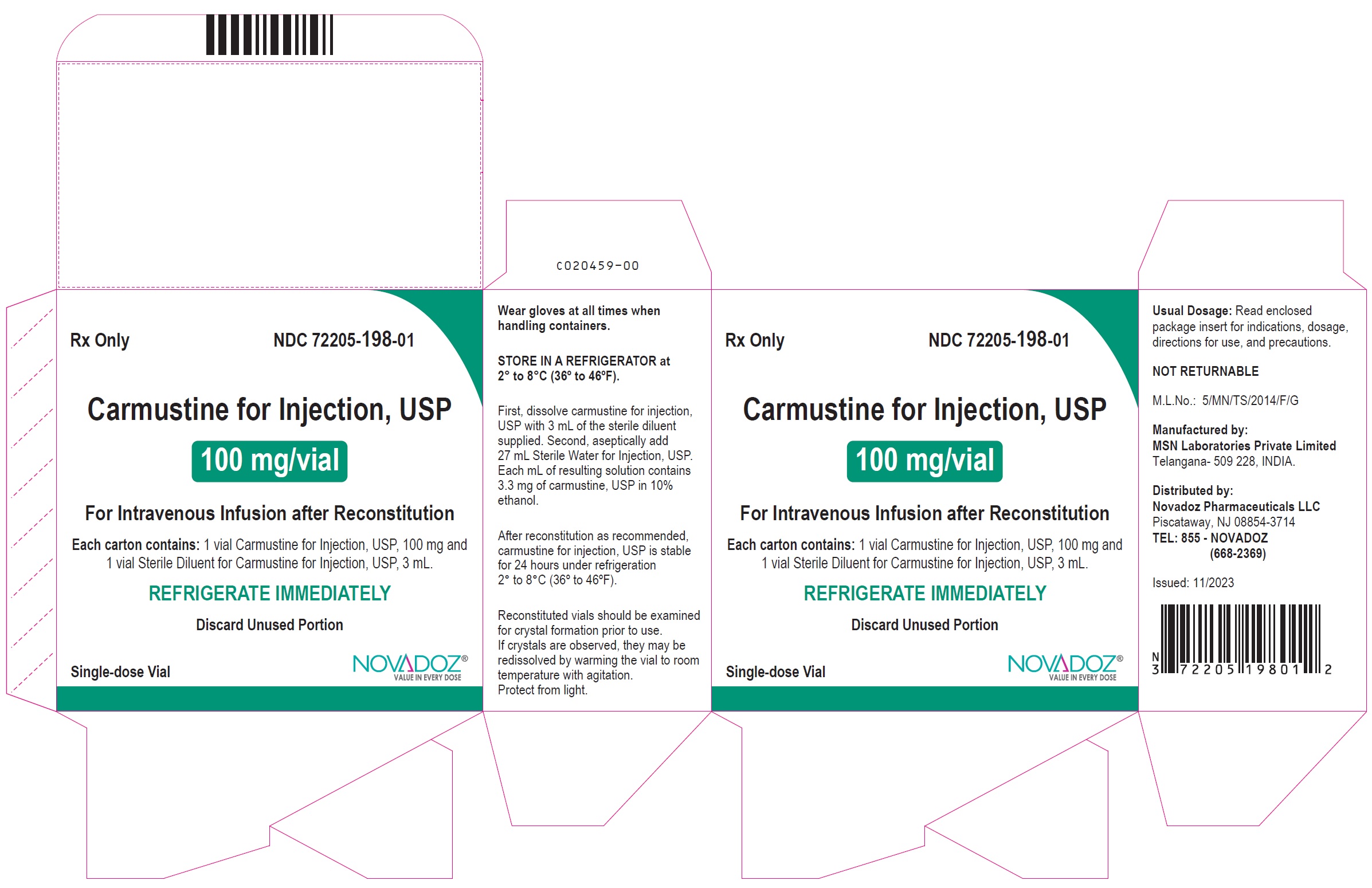
Carmustine Kit — NDC 72205-198-01 (Billing 72205-0198-01)
This is a package of Carmustine Kit from Novadoz Pharmaceuticals LLC, marketed since May 2023 and currently FDA-listed. It is this product's only package size.
NDC database record
One package, one record: these facts belong to NDC 72205-198-01 alone.
- Record
- FDA NDC Directory package listing · Human prescription drug
- Code segments
- 72205 labeler · 198 product · 01 package
- Package marketed since
- Nov 23, 2023
- Sample package
- No — commercial package
- Listing certified through
- Dec 31, 2026
- Barcode (UPC)
- 0372205197015, 0372205196018, 0372205198012
- FDA record last changed
- Jul 24, 2026
Identity & classification
Regulatory identifiers FDA, NLM and CMS codes for this package
Drug-database identifiers Medi-Span GPI and First Databank GCN / HICL / AHFS classification
- GSN (GCN sequence number): 008782
- GCN: 38440
- GPI-14 (Medi-Span): 21102010002105
- HICL (First Databank): 003901
- AHFS class code: 10:00.00.00
- RxCUI (RxNorm): 309012
Where does this data come from?
- FDA openFDA NDC Directory · synced Oct 8, 2026
- FDA label on DailyMed · label index refreshed Oct 8, 2026
- RxNorm (NLM RxNav) · catalog refreshed Oct 1, 2026
- Medi-Span GPI (licensed)
- First Databank (licensed) · refreshed Oct 8, 2026
RxNorm drug class
This medicine belongs to the Alkylating Drug class.
Where does this data come from?
- RxClass (NLM) · catalog refreshed Oct 1, 2026
Clinical
Carmustine injection is used to treat certain types of brain tumors. Carmustine injection is also used along with prednisone to treat multiple myeloma (a type of cancer of the bone marrow). It is also used with other medications to treat Hodgkin's lymphoma (Hodgkin's disease) and non-Hodgkin's lymphoma (cancer that begins in the cells of the immune system) that has not improved or that has worsened after treatment with other medications. Carmustine is in a class of medications called alkylating agents. It works by slowing or stopping the growth of cancer cells in your body.
Read the full MedlinePlus article ↗- It is a chemotherapy drug. The injection treats brain tumors, multiple myeloma, Hodgkin's lymphoma and non-Hodgkin's lymphomas. The Gliadel wafer is placed in the brain for certain...
- The injection is given slowly through an IV over at least 2 hours, and it is usually repeated no more often than every 6 weeks. You will get anti-nausea medicine first. The Gliadel...
- Carmustine can lower your platelets and white blood cells, often 4 to 6 weeks after a dose. Blood is checked weekly for at least 6 weeks after each dose. The results guide your nex...
- Call about bleeding, bruising, fever or signs of infection. Also report a new cough or trouble breathing, pain or swelling at the IV site, or signs of a new cancer. With Gliadel, r...
Patient education
Supplement & herbal interactions
Some supplements/herbs that may interact with Carmustine — tap one for details:
Carmustine may be associated with lower levels of 1 nutrient — worth a chat with your pharmacist, not a cause for alarm.
Where does this data come from?
- MedlinePlus (NLM) · refreshed Oct 8, 2026
- FDA label on DailyMed · label index refreshed Oct 8, 2026
Ask a licensed pharmacist directly — free, answered by our team.
Pricing
A drug doesn't have one price. Each row is a different public payment system, and none is what you'd pay at the counter — that depends on your insurance. The ⓘ on each row explains what it measures.
| Price system | Per each | Per package |
|---|---|---|
| Retail pharmacies payNADAC · weekly | Not in the retail survey — common for institutional, discontinued, or low-volume packs. | |
| Medicaid paysCMS SDUD · 12 mo | No recent Medicaid claims on file for this NDC — rare and low-volume NDCs are suppressed in the public data. | |
| Medicare drug plans payPart D · quarterly | No Part D plan price is available for this NDC in our data. | |
| Medicare Part B allowsASP · J9050 | $240.011 / J9050 unit | — |
Where does this data come from?
- CMS NADAC weekly file
- CMS ASP pricing files · refreshed Sep 20, 2026
- CMS Medicaid State Drug Utilization Data · refreshed Oct 8, 2026
- CMS Part D plan pricing files · refreshed Sep 24, 2026
- VA National Acquisition Center price file
Billing & reimbursement
Where does this data come from?
- CMS ASP NDC-HCPCS crosswalk · refreshed Sep 22, 2026
- DMEPDAC NDC-HCPCS crosswalk
- openFDA NSDE billing units · refreshed Oct 7, 2026
Packaging — all sizes for this product
| Package NDC | Description | Marketing start | Marketing end | Status |
|---|---|---|---|---|
| 72205-0198-01 You're viewing this Main listing | 1 KIT in 1 CARTON * 3 mL in 1 VIAL * 30 mL in 1 VIAL, SINGLE-DOSE | 2023-11-23 | — | Active |
Therapeutic equivalents
| Product | Labeler | Pack | NADAC/unit | TE | Status | Price vs. this |
|---|---|---|---|---|---|---|
| Carmustine 00781-3474-32 | Sandoz | 1 kit | — | — | FDA listed | — |
| Carmustine 10702-0361-99 | KVK-Tech, | 1 kit | — | AP | FDA listed | — |
| Carmustine 23155-0649-41 | Heritage | 1 kit | — | AP | FDA listed | — |
| Carmustine 23155-0790-41 | Heritage | 1 kit | — | AP | FDA listed | — |
| carmustine 43598-0628-57 | Dr. | 1 kit | — | AP | FDA listed | — |
| Carmustine 46708-0659-02 | Alembic | 1 kit | — | AP | FDA listed | — |
| Carmustine 62332-0659-02 | Alembic | 1 kit | — | AP | FDA listed | — |
| Carmustine 68475-0503-01 | Navinta | 1 kit | — | AP | FDA listed | — |
| carmustine 70121-1482-02 | Amneal | 1 kit | — | AP | FDA listed | — |
| carmustine 70710-1525-09 | Zydus | 1 kit | — | AP | FDA listed | — |
| Carmustine 71288-0126-90 | Meitheal | 1 kit | — | AP | FDA listed | — |
| Carmustinethis 72205-0198-01 | Novadoz | 1 kit | — | AP | FDA listed | — |
| carmustine 75907-0327-11 | Dr. | 1 kit | — | AP | FDA listed | — |
Where does this data come from?
- FDA openFDA NDC Directory · synced Oct 8, 2026
- FDA Orange Book · refreshed Oct 3, 2026
- CMS NADAC weekly file
Availability & generic status
This product is an FDA-approved generic. Other versions of the same drug are listed under Therapeutic equivalents, least expensive first.
Where does this data come from?
- FDA Orange Book · refreshed Oct 3, 2026
What it looks like
Where does this data come from?
- FDA label on DailyMed · label index refreshed Oct 8, 2026
Inactive Ingredients / Excipients
Inactive ingredients, also called excipients, are components of the drug product other than the active ingredient. They may include fillers, dyes, coatings, preservatives, flavors, or other formulation ingredients.
🧪 Avoiding an ingredient? See Carmustine inactive ingredients by manufacturer: every current product's list side by side, so you can ask your pharmacy for the version that does not list it.
Where does this data come from?
IACT rows and label-wide narrative are kept separate; availability and product-level specificity depend on the submitted label.- FDA label on DailyMed · label index refreshed Oct 8, 2026
- FDA openFDA NDC Directory · synced Oct 8, 2026
Inactive ingredient FAQ
Are inactive ingredients the same for every manufacturer?
Why might an inactive ingredient be missing?
Can inactive ingredients matter?
Manufacturer & labeler
More NDCs from Novadoz Pharmaceuticals LLC labeler code 72205
- Bortezomib 3.5 mg/3.5mL Injection, Powder, Lyophilized, For Solution NDC 72205-183-01
- Darunavir 600 mg Tablet, Film Coated NDC 72205-184-60
- Darunavir 800 mg Tablet, Film Coated NDC 72205-185-30
- Chlorpromazine Hydrochloride 25 mg/mL Injection NDC 72205-190-25
- Chlorpromazine Hydrochloride 25 mg/mL Injection NDC 72205-191-25
- Isosulfan blue 10 mg/mL Injection, Solution NDC 72205-195-01
- Clopidogrel 75 mg Tablet, Film Coated NDC 72205-199-01
- Roflumilast 500 ug Tablet NDC 72205-200-06
- Roflumilast 250 ug Tablet NDC 72205-201-24
- Dabigatran 75 mg Capsule NDC 72205-202-34
- Dabigatran 110 mg Capsule NDC 72205-203-34
- Dabigatran 150 mg Capsule NDC 72205-204-34
Where does this data come from?
- FDA openFDA NDC Directory · synced Oct 8, 2026
- Drugs@FDA
Full prescribing information FDA SPL
🚨 Boxed Warning ▾
WARNING: MYELOSUPPRESSION and PULMONARY TOXICITY Myelosuppression Carmustine for injection causes suppression of marrow function (including thrombocytopenia and leukopenia), which may contribute to bleeding and overwhelming infections. [see Warnings and Precautions (5.1) and Adverse Reactions (6) ]. Monitor blood counts weekly for at least 6 weeks after each dose. Adjust dosage based on nadir blood counts from the prior dose [see Dosage and Administration (2.1) ].
Do not administer a repeat course of carmustine for injection until blood counts recover. Pulmonary Toxicity Carmustine for injection causes dose-related pulmonary toxicity. Patients receiving greater than 1,400 mg/m 2 cumulative dose are at significantly higher risk than those receiving less.
Delayed pulmonary toxicity can occur years after treatment, and can result in death, particularly in patients treated in childhood [see Adverse Reactions (6) and Use in Specific Populations (8.4) ]. WARNING: MYELOSUPPRESSION and PULMONARY TOXICITY See full prescribing information for complete boxed warning • Suppression of marrow function, notably thrombocytopenia and leukopenia, is the most common and severe of the toxic effects of carmustine for injection. Monitor blood counts.
(5, 6). • Pulmonary toxicity from carmustine for injection appears to be dose related. Patients receiving greater than 1,400 mg/m2 cumulative dose are at significantly higher risk than those receiving less ( 5, 6 ).
🎯 Indications and Usage ▾
1 INDICATIONS AND USAGE Carmustine for injection is indicated as palliative therapy as a single agent or in established combination therapy in the following: Brain tumors glioblastoma, brainstem glioma, medulloblastoma, astrocytoma, ependymoma, and metastatic brain tumors. Multiple myeloma in combination with prednisone. Relapsed or refractory Hodgkin's lymphoma in combination with other approved drugs.
Relapsed or refractory Non-Hodgkin's lymphomas in combination with other approved drugs. Carmustine for injection is a nitrosourea indicated as palliative therapy as a single agent or in established combination therapy with other approved chemotherapeutic agents in the following: ( 1 ) 1. Brain tumors glioblastoma, brainstem glioma, medulloblastoma, astrocytoma, ependymoma, and metastatic brain tumors ( 1 ) 2.
Multiple myeloma-in combination with prednisone ( 1 ) 3. Relapsed or refractory Hodgkin's lymphoma in combination with other approved drugs ( 1 ) 4. Relapsed or refractory Non-Hodgkin's lymphomas in combination with other approved drugs ( 1 )
⏱️ Dosage and Administration ▾
2 DOSAGE AND ADMINISTRATION • Recommended Dosage: As a single agent, 150 to 200 mg/m 2 carmustine for injection intravenously every 6 weeks as a single dose or divided into daily injections such as 75 to 100 mg/m 2 on 2 successive days. Adjust dose for combination therapy or in patients with reduced bone marrow reserve ( 2.1 ) • Administer reconstituted solution only as a slow intravenous infusion over at least 2 hours. ( 2.2 )
2.1Dosage The recommended dose of carmustine for injection as a single agent in previously untreated patients is 150 to 200 mg/m 2 intravenously every 6 weeks. Administer as a single dose or divided into daily injections such as 75 to 100 mg/m 2 on two successive days. Lower the dose when carmustine for injection is used with other myelosuppressive drugs or in patients in whom bone marrow reserve is depleted.
Administer carmustine for injection for the duration according to the established regimen. Premedicate each dose with anti-emetics. Adjust doses subsequent to the initial dose according to the hematologic response of the patient to the preceding dose.
The following schedule is suggested as a guide to dosage adjustment: Nadir After Prior Dose Percentage of Prior Dose to be Given Leukocytes/mm 3 Platelets/mm 3 >4,000 >100,000 100% 3,000 to 3999 75,000 to 99,999 100% 2,000 to 2999 25,000 to 74,999 70% <2,000 <25,000 50% The hematologic toxicity can be delayed and cumulative. Monitor blood counts weekly. Do not administer a repeat course of carmustine for injection until circulating blood elements have returned to acceptable levels (platelets above 100 Gi/L, leukocytes above 4 Gi/L and absolute neutrophil count above 1 Gi/L).
The usual interval between courses is 6 weeks. Evaluate renal function prior to administration and periodically during treatment. For patients with compromised renal function, monitor for toxicity more frequently.
Discontinue carmustine for injection if the creatinine clearance is less than 10 mL/min. Do not administer carmustine for injection to patients with compromised renal function. Monitor transaminases and bilirubin periodically during treatment. [see Adverse Reactions (6) ].
2.2Preparation and Administration of Intravenous Solution Dissolve carmustine for injection with 3 mL of the supplied sterile diluent (Dehydrated Alcohol Injection, USP). Aseptically add 27 mL Sterile Water for Injection, USP. Each mL of resulting solution contains 3.3 mg of carmustine for injection in 10% ethanol.
Such solutions should be protected from light. The reconstituted solution is a clear, colorless to yellowish solution. Once reconstituted, the solution must be further diluted with Sodium Chloride Injection, USP or 5% Dextrose Injection, USP.
Examine reconstituted vials for crystal formation prior to use. If crystals are observed, they may be re-dissolved by warming the vial to room temperature with agitation. Parenteral drug products should be inspected visually for particulate matter and discoloration prior to administration, whenever solution and container permit.
After reconstitution as recommended, carmustine for injection is stable for 24 hours under refrigeration (2° to 8°C, 36° to 46°F) in glass container. Examine reconstituted vials for crystal formation prior to use. If crystals are observed, they may be redissolved by warming the vial to room temperature with agitation.
Vials reconstituted as directed and further diluted with 500 mL Sodium Chloride Injection, USP or 5% Dextrose Injection, USP, in glass or polypropylene containers to a concentration of 0.2 mg/mL, should be stored at room temperature, protected from light and utilized within 8 hours. These solutions are also stable 24 hours under refrigeration (2° to 8°C, 36° to 46°F) and an additional 6 hours at room temperature protected from light. Administer reconstituted solution by slow intravenous infusion over at least two hours.
Administration of carmustine for injection over a period of less than two hours can lead to pa… [Excerpted — this section continues on DailyMed.]
💊 Dosage Forms and Strengths ▾
3 DOSAGE FORMS AND STRENGTHS Carmustine for Injection, USP is a lyophilized pale yellow flakes or congealed mass containing 100 mg carmustine, USP in an amber colored glass vial for single-dose use. It is supplied with 3 mL of dehydrated alcohol injection, USP (sterile diluent for carmustine for injection) for reconstitution. For injection: 100 mg of carmustine lyophilized powder in a single-dose vial for reconstitution and a vial containing 3 mL sterile diluent (Dehydrated Alcohol Injection, USP) ( 3 )
⛔ Contraindications ▾
4 CONTRAINDICATIONS Carmustine for injection is contraindicated in patients with previous hypersensitivity to carmustine for injection or its components. • Hypersensitivity ( 4 )
⚠️ Warnings and Cautions ▾
5 WARNINGS AND PRECAUTIONS • Administration Reactions: Extravasation may occur; monitor infusion site closely during administration ( 5.3 ) • Carcinogenicity: Potentially carcinogenic to humans. Monitor patient periodically for such signs and apprise the patient of the symptoms for which they need to seek medical help. ( 5.4 ) • Ocular Toxicity: Has occurred when administered via unapproved intraarterial intracarotid route.
( 5.5 ) • Embryo-Fetal toxicity: Can cause fetal harm. Advise females of reproductive potential of the potential risk to a fetus and to avoid pregnancy. ( 5.6 )
5.1Myelosuppression Bone marrow toxicity is a dose-limiting, common and severe toxic effect of carmustine for injection occurring 4-6 weeks after drug administration (thrombocytopenia occurs at about 4 weeks post-administration persisting for 1 to 2 weeks; leukopenia occurs at 5 to 6 weeks after a dose of carmustine for injection persisting for 1 to 2 weeks; thrombocytopenia is generally more severe than leukopenia; anemia is less frequent and less severe compared to thrombocytopenia and/or leukopenia) Complete blood count should therefore be monitored weekly for at least six weeks after a dose.
Repeat doses of carmustine for injection should not be given more frequently than every six weeks. The bone marrow toxicity of carmustine is cumulative and therefore the dosage adjustment must be considered on the basis of nadir blood counts from prior dose [see Adverse Reactions (6) ]. Greater myelotoxicity (e.g., leukopenia and neutropenia) has been reported when carmustine was combined with cimetidine [see Drug Interactions (7) ].
5.2Pulmonary Toxicity Cases of fatal pulmonary toxicity with carmustine for injection have been reported. Pulmonary toxicity characterized by pulmonary infiltrates and/or fibrosis has been reported to occur from 9 days to 43 months after treatment with carmustine for injection and related nitrosoureas. Pulmonary toxicity from carmustine for injection is dose-related.
Patients receiving greater than 1,400 mg/m 2 cumulative dose are at significantly higher risk than those receiving less. However, there have been reports of pulmonary fibrosis in patients receiving lower total doses. Interstitial fibrosis (with lower doses) occurred rarely.
Additionally, delayed onset pulmonary fibrosis occurring up to 17 years after treatment has been reported in patients who received carmustine for injection (in cumulative doses ranging from 770 to 1,800 mg/m 2 combined with cranial radiotherapy for intracranial tumors) in childhood and early adolescence. Other risk factors include past history of lung disease and duration of treatment. Baseline pulmonary function studies should be conducted along with frequent pulmonary function tests during treatment.
Patients with a baseline below 70% of the predicted forced vital capacity (FVC) or carbon monoxide diffusing capacity (DLCO) are particularly at risk.
5.3Administration Reactions Injection site reactions may occur during the administration of carmustine for injection. Rapid intravenous infusion of carmustine for injection may produce intensive flushing of the skin and suffusion of the conjunctiva within 2 hours, lasting about 4 hours. It is also associated with burning at the site of injection although true thrombosis is rare.
Given the possibility of extravasation, close monitoring of the infusion site for possible infiltration during drug administration is recommended. A specific treatment for extravasation reactions is unknown at this time.
5.4Carcinogenicity Long-term use of nitrosoureas, such as carmustine for injection, has been reported to be associated with the development of secondary malignancies. Carmustine was carcinogenic when administered to laboratory animals [see Nonclinical Toxicity (13.1 )]. Nitrosourea therapy, such as carmustine for injection, has carcinogenic potential in humans.
Patients treated with carmustine for injection should be monitored long-term for development of… [Excerpted — this section continues on DailyMed.]
🤒 Adverse Reactions ▾
6 ADVERSE REACTIONS The following serious adverse reactions are described elsewhere in the labeling: Myelosuppression [see Warnings and Precautions (5.1 )] Pulmonary toxicity [see Warnings and Precautions (5.2) ] Administration Reactions [see Warnings and Precautions (5.3) ] Carcinogenicity [see Warnings and Precautions (5.4) ] Ocular Toxicity [see Warnings and Precautions (5.5 )] The following adverse reactions associated with the use of carmustine for injection were identified in clinical studies or postmarketing reports.
Because some of these reactions were reported voluntarily from a population of uncertain size, it is not always possible to reliably estimate their frequency or establish a causal relationship to drug exposure. Cardiac Disorders Tachycardia and chest pain. Eye Disorders Conjunctival edema, conjunctival hemorrhage, blurred vision and loss of depth perception Gastrointestinal Toxicity Nausea, vomiting, anorexia, and diarrhea Hepatotoxicity Increased transaminase, increased alkaline phosphatase, increased bilirubin levels Infections and Infestations Opportunistic infection (including with fatal outcome).
Neoplasms Benign, Malignant and Unspecified (including cysts and polyps) Acute leukemia, bone marrow dysplasias. Nephrotoxicity Progressive azotemia, decrease in kidney size, renal failure Nervous System Disorders Headaches, encephalopathy, and seizures Pulmonary Toxicity Pneumonitis, interstitial lung disease Reproductive System and Breast Disorders Gynecomastia Skin and Subcutaneous Tissue Disorders Burning sensation, hyperpigmentation, swelling, pain, erythema, skin necrosis, alopecia, allergic reaction Vascular Disorders Veno-occlusive disease.
Most common adverse reactions (>1%) are nausea, vomiting, renal toxicity, pneumonitis, pulmonary toxicity, myelosuppression ( 6 ) To report SUSPECTED ADVERSE REACTIONS, contact Novadoz Pharmaceuticals LLC at 1-855-668-2369 or FDA at 1-800-FDA-1088 or www.fda.gov/medwatch.
🔄 Drug Interactions ▾
7 DRUG INTERACTIONS • Cimetidine: Increased myelosuppression with concomitant use. ( 7.1 ) • Phenobarbital: Induces carmustine metabolism, reducing exposure. May lead to reduced efficacy. ( 7.1 ) • Phenytoin: Carmustine for injection may reduce the efficacy of phenytoin. ( 7.2 )
7.1Effects of Other Drugs on Carmustine for Injection Cimetidine: Greater myelosuppression (e.g., leukopenia and neutropenia) has been reported when oral cimetidine has been coadministered with carmustine. Consider alternative drugs to cimetidine. Phenobarbital: Phenobarbital induces the metabolism of carmustine and may compromise antitumor activity of carmustine for injection. Consider alternative drugs to phenobarbital.
7.2Effects of Carmustine for Injection on Other Drugs Phenytoin: Carmustine for injection when coadministered with phenytoin may reduce phenytoin serum concentrations. Consider alternative drugs to phenytoin.
👥 Use in Specific Populations ▾
8 USE IN SPECIFIC POPULATIONS • Lactation: Advise lactating females not to breastfeed ( 8.2 )
8.1Pregnancy Risk Summary Carmustine for injection can cause fetal harm when administered to a pregnant woman based on the mechanism of action [see Clinical Pharmacology (12.1) ] and findings in animals [see Data]. Limited available data with carmustine for injection use in pregnant women are insufficient to inform a drug-associated risk of major birth defects and miscarriage. Carmustine was embryotoxic in rats and rabbits and teratogenic in rats (thoracoabdominal closure, neural tube, and eye defects and malformations of the skeletal system of the fetus) when given in doses lower than the maximum cumulative human dose based on body surface area.
Consider the benefits and risks of carmustine for injection for the mother and possible risks to the fetus when prescribing carmustine for injection to a pregnant woman. Adverse outcomes in pregnancy occur regardless of the health of the mother or the use of medications. The estimated background risk of major birth defects and miscarriage for the indicated population is unknown.
In the U.S. general population, the estimated background risk of major birth defects and miscarriage in clinically recognized pregnancies is 2-4% and 15-20%, respectively. Data Animal Data Intraperitoneal (IP) administration of carmustine to pregnant rats 14 days prior to mating and during the period of organogenesis at cumulative doses ≥ 26 mg/kg (158 mg/m 2 ), approximately 0.1 times the maximum cumulative human dose of 1,400 mg/m 2 , resulted in pre-implantation loss, increased resorptions (including completely resorbed litters), and reduced the number of live births in the presence of maternal toxicity.
Carmustine administered IP to pregnant rats during the period of organogenesis at cumulative doses ≥ 4 mg/kg (24 mg/m 2 ), approximately 0.02 times the maximum cumulative human dose based on a mg/m 2 basis, resulted in reduced fetal weight and various malformations, which included thoracoabdominal closure defects, neural tube defects, and eye defects, including microphthalmia/anophthalmia, and skeletal anomalies in the skull, sternebra, vertebrae and ribs, and reduced skeletal ossification) in the presence of maternal toxicity.
Embryo-fetal death was observed at cumulative doses ≥ 8 mg/kg (48 mg/m 2 ), approximately 0.03 times the maximum cumulative human dose on a mg/m 2 basis. Intravenous (IV) administration of carmustine to rats at a cumulative dose of 50 mg/kg (300 mg/m 2 ), approximately 0.2 times the maximum cumulative human dose on a mg/m 2 basis, during the last quarter of pregnancy resulted in the death of offspring within 4 months. Carmustine administered IV to rabbits during the period of organogenesis resulted in spontaneous abortions in mothers and growth defects in the fetus, mainly at cumulative doses ≥ 13 mg/kg (156 mg/m 2 ), approximately 0.1 times the maximum cumulative human dose on a mg/m 2 basis.
8.2Lactation Risk Summary There is no information regarding the presence of carmustine in human milk, the effects on the breastfed infant, or the effects on milk production. Because many drugs are excreted in human milk and because of the potential for serious adverse events (e.g., carcinogenicity and myelosuppression) in nursing infants, nursing should be discontinued while taking carmustine for injection.
8.3Females and Males of Reproductive Potential Contraception Advise female patients to avoid pregnancy during treatment with carmustine for injection because of the risk of fetal harm [see Use in Specific Populations (8.1) ]. Advise female patients of reproductive potential to use highly effective contraception during and for up to six months after completion of treatment. Advise males with female sexual partners of reproductive potential to use effective contraception during carmustine for injection treatment and for at least three months after the final dose of carmustine for injection [see Non… [Excerpted — this section continues on DailyMed.]
🤰 Pregnancy ▾
8.1Pregnancy Risk Summary Carmustine for injection can cause fetal harm when administered to a pregnant woman based on the mechanism of action [see Clinical Pharmacology (12.1) ] and findings in animals [see Data]. Limited available data with carmustine for injection use in pregnant women are insufficient to inform a drug-associated risk of major birth defects and miscarriage. Carmustine was embryotoxic in rats and rabbits and teratogenic in rats (thoracoabdominal closure, neural tube, and eye defects and malformations of the skeletal system of the fetus) when given in doses lower than the maximum cumulative human dose based on body surface area.
Consider the benefits and risks of carmustine for injection for the mother and possible risks to the fetus when prescribing carmustine for injection to a pregnant woman. Adverse outcomes in pregnancy occur regardless of the health of the mother or the use of medications. The estimated background risk of major birth defects and miscarriage for the indicated population is unknown.
In the U.S. general population, the estimated background risk of major birth defects and miscarriage in clinically recognized pregnancies is 2-4% and 15-20%, respectively. Data Animal Data Intraperitoneal (IP) administration of carmustine to pregnant rats 14 days prior to mating and during the period of organogenesis at cumulative doses ≥ 26 mg/kg (158 mg/m 2 ), approximately 0.1 times the maximum cumulative human dose of 1,400 mg/m 2 , resulted in pre-implantation loss, increased resorptions (including completely resorbed litters), and reduced the number of live births in the presence of maternal toxicity.
Carmustine administered IP to pregnant rats during the period of organogenesis at cumulative doses ≥ 4 mg/kg (24 mg/m 2 ), approximately 0.02 times the maximum cumulative human dose based on a mg/m 2 basis, resulted in reduced fetal weight and various malformations, which included thoracoabdominal closure defects, neural tube defects, and eye defects, including microphthalmia/anophthalmia, and skeletal anomalies in the skull, sternebra, vertebrae and ribs, and reduced skeletal ossification) in the presence of maternal toxicity.
Embryo-fetal death was observed at cumulative doses ≥ 8 mg/kg (48 mg/m 2 ), approximately 0.03 times the maximum cumulative human dose on a mg/m 2 basis. Intravenous (IV) administration of carmustine to rats at a cumulative dose of 50 mg/kg (300 mg/m 2 ), approximately 0.2 times the maximum cumulative human dose on a mg/m 2 basis, during the last quarter of pregnancy resulted in the death of offspring within 4 months. Carmustine administered IV to rabbits during the period of organogenesis resulted in spontaneous abortions in mothers and growth defects in the fetus, mainly at cumulative doses ≥ 13 mg/kg (156 mg/m 2 ), approximately 0.1 times the maximum cumulative human dose on a mg/m 2 basis.
🧒 Pediatric Use ▾
8.4Pediatric Use Safety and effectiveness in children have not been established. Delayed onset pulmonary fibrosis occurring up to 17 years after treatment has been reported in a long-term study of patients who received carmustine for injection in childhood and early adolescence (1-16 years). Eight out of the 17 patients (47%) who survived childhood brain tumors, including all the 5 patients initially treated at less than 5 years of age, died of pulmonary fibrosis. [see Adverse Reactions (6.1)].
🧓 Geriatric Use ▾
8.5Geriatric Use Clinical studies of carmustine for injection did not include sufficient numbers of subjects aged 65 and over to determine whether they respond differently from younger subjects. Other reported clinical experience has not identified differences in responses between the elderly and younger patients. In general, dose selection for an elderly patient should be cautious, usually starting at the low end of the dose range, reflecting the greater frequency of decreased hepatic, renal, or cardiac function, and of concomitant disease or other drug therapy.
Carmustine for injection and its metabolites are known to be substantially excreted by the kidney, and the risk of toxic reactions to this drug may be greater in patients with impaired renal function. Because elderly patients are more likely to have decreased renal function, care should be taken in dose selection, and renal function should be monitored.
🆘 Overdosage ▾
10 OVERDOSAGE The main result of overdose is myeloablation. No proven antidotes have been established for carmustine for injection overdosage.
🧬 Clinical Pharmacology ▾
12 CLINICAL PHARMACOLOGY
12.1Mechanism of Action The mechanism of action of carmustine is not fully understood. While carmustine alkylates DNA and RNA, it is not cross-resistant with other alkylators. As with other nitrosoureas, it may also inhibit several key enzymatic processes by carbamoylation of amino acids in proteins. The metabolites may contribute to antitumor activity and toxicities of carmustine.
12.2Pharmacodynamics The exposure-response relationship for efficacy or safety is unknown.
12.3Pharmacokinetics Distribution Carmustine crosses the blood-brain barrier. Levels of radioactivity in the CSF are greater than or equal to 50% of those measured concurrently in plasma. Elimination Following a short intravenous infusion, the reported elimination half-life ranges from 15 minutes to 75 minutes.
Metabolism Carmustine may be inactivated through denitrosation reactions catalyzed by both cytosolic and microsomal enzymes, including NADPH and glutathione-S-transferase. Excretion Approximately 60% to 70% of a total dose is excreted in the urine within 96 hours. Approximately 10% is eliminated as respiratory CO 2 .
🧬 Mechanism of Action ▾
12.1Mechanism of Action The mechanism of action of carmustine is not fully understood. While carmustine alkylates DNA and RNA, it is not cross-resistant with other alkylators. As with other nitrosoureas, it may also inhibit several key enzymatic processes by carbamoylation of amino acids in proteins. The metabolites may contribute to antitumor activity and toxicities of carmustine.
📦 How Supplied / Storage and Handling ▾
16 HOW SUPPLIED/STORAGE AND HANDLING
16.1How Supplied Carmustine for injection,USP. Each package includes a vial containing 100 mg carmustine, USP and a vial containing 3 mL sterile diluent. NDC 72205-198-01
16.2Storage and Handling Store product and diluent in a refrigerator (2° to 8°C, 36° to 46°F). Stability Store the unopened vial of the dry drug in a refrigerator (2° to 8°C, 36° to 46°F). Store the diluent vials in a refrigerator (2° to 8°C, 36° to 46°F).
The recommended storage of unopened carmustine for injection vials provides a stable product for up to 2 years. Compatibility/ Incompatibility with Containers The intravenous solution is unstable in polyvinyl chloride container. DO NOT USE PVC Containers.
Administer carmustine for injection solution from the glass bottles or polypropylene container only. Ensure the polypropylene containers used are PVC free and DEHP free. Important Note Carmustine for injection has a low melting point (30.5° to 32.0°C or 86.9° to 89.6°F).
Exposure of the drug to this temperature or above will cause the drug to liquefy and appear as an oil film on the vials. This is a sign of decomposition and vials should be discarded. If there is a question of adequate refrigeration upon receipt of this product, immediately inspect the vial in each individual carton.
Hold the vial to a bright light for inspection. The carmustine for injection will appear as a very small amount of dry flakes or dry congealed mass. If this is evident, the carmustine for injection is suitable for use and should be refrigerated immediately.
📋 Description ▾
11 DESCRIPTION The active ingredient in carmustine for injection, USP is a nitrosourea with the chemical name 1,3-bis (2-chloroethyl)-1-nitrosourea and a molecular weight of 214.06. The drug product is supplied as sterile lyophilized pale yellow flakes or a congealed mass, and it is freely soluble in ether and soluble in methanol. Carmustine for injection is administered by intravenous infusion after reconstitution, as recommended.
The structural formula of carmustine is: Carmustine for injection, USP is available in 100 mg single-dose vials of lyophilized material. Sterile diluent for constitution of carmustine for injection, USP is co-packaged with the active drug product for use in constitution of the lyophile. The diluent is supplied in a vial containing 3 mL of Dehydrated Alcohol Injection, USP. carmustine-structure
💬 Information for Patients ▾
17 PATIENT COUNSELING INFORMATION Myelosuppression [see Warnings and Precautions (5.1) ]. A serious and frequent toxicity of carmustine for injection is delayed myelosuppression and usually occurs 4 to 6 weeks after drug administration. Hence, patients should be advised to get blood counts monitored weekly for at least 6 weeks.
The bone marrow toxicity of carmustine for injection is cumulative. Pulmonary Toxicity [see Warnings and Precautions (5.2) ]. Advice patients to contact a health care professional immediately for any of the following: shortness of breath, particularly during exercise, dry, hacking cough, fast, shallow breathing, gradual unintended weight loss, tiredness, aching joints and muscles, clubbing (widening and rounding) of the tips of the fingers or toes.
Seizures [see Adverse Reactions (6) ] Inform the patient that they may suffer from fits and advise them to get medical attention immediately in such cases. Pregnancy [see Warnings and Precautions (5.6) and Use in Specific Populations (8.1 and 8.3 )] Advise pregnant women and females of reproductive potential that carmustine for injection exposure during pregnancy can result in fetal harm. Advise female patients to contact their healthcare provider with a known or suspected pregnancy.
Advise women of reproductive potential to avoid becoming pregnant. Advise females of reproductive potential to use effective contraception during treatment. Lactation [see Use in Specific Populations (8.2) ] Advise the female patient to discontinue nursing while taking carmustine for injection.
Manufactured by: MSN Laboratories Private Limited Telangana – 509 228, INDIA Distributed by: Novadoz Pharmaceuticals LLC Piscataway, NJ 08854 -3714 Issued on: 11/2023
🧬 Pharmacokinetics ▾
12.3Pharmacokinetics Distribution Carmustine crosses the blood-brain barrier. Levels of radioactivity in the CSF are greater than or equal to 50% of those measured concurrently in plasma. Elimination Following a short intravenous infusion, the reported elimination half-life ranges from 15 minutes to 75 minutes.
Metabolism Carmustine may be inactivated through denitrosation reactions catalyzed by both cytosolic and microsomal enzymes, including NADPH and glutathione-S-transferase. Excretion Approximately 60% to 70% of a total dose is excreted in the urine within 96 hours. Approximately 10% is eliminated as respiratory CO 2 .
🧬 Pharmacodynamics ▾
12.2Pharmacodynamics The exposure-response relationship for efficacy or safety is unknown.
🧪 Nonclinical Toxicology ▾
13 NONCLINICAL TOXICOLOGY
13.1Carcinogenesis, Mutagenesis, Impairment of Fertility Carmustine is carcinogenic in rats and mice, producing a marked increase in tumor incidence in doses approximating those employed clinically. Nitrosourea therapy does have carcinogenic potential in humans [see Adverse Reactions (6.1)]. Carmustine was mutagenic and clastogenic in multiple in vitro and in vivo genetic toxicology studies.
Male rats treated with carmustine at cumulative doses ≥ 36 mg/kg (216 mg/m 2 ), approximately 0.15 times the maximum cumulative human dose on a mg/m 2 basis, showed decreases in reproductive potential when mated with untreated female rats (e.g., decreased implantations, increased resorption rate, and a decrease in viable fetuses).
📄 Carcinogenesis, Mutagenesis, Impairment of Fertility ▾
13.1Carcinogenesis, Mutagenesis, Impairment of Fertility Carmustine is carcinogenic in rats and mice, producing a marked increase in tumor incidence in doses approximating those employed clinically. Nitrosourea therapy does have carcinogenic potential in humans [see Adverse Reactions (6.1)]. Carmustine was mutagenic and clastogenic in multiple in vitro and in vivo genetic toxicology studies.
Male rats treated with carmustine at cumulative doses ≥ 36 mg/kg (216 mg/m 2 ), approximately 0.15 times the maximum cumulative human dose on a mg/m 2 basis, showed decreases in reproductive potential when mated with untreated female rats (e.g., decreased implantations, increased resorption rate, and a decrease in viable fetuses).
📚 References ▾
15 REFERENCES 1. “OSHA Hazardous Drugs.” OSHA. http://www.osha.gov/SLTC/hazardousdrugs/index.html
📄 Package Label / Principal Display Panel ▾
PACKAGE LABEL.PRINCIPAL DISPLAY PANEL Carmustine for Injection USP, 100 mg/vial Sterile Diluent (Dehydrated Alcohol Injection, USP), 3 mL Carmustine for Injection USP, 100 mg/vial Carton Label carmustine-injection-label carmustine-diluent-label carmustine-carton-label
About this NDC listing & data coverage
Kit / multi-component package
This NDC identifies a kit — a package containing more than one component. Structured data (pricing, ingredients, equivalents) is often reported per component rather than for the kit NDC itself, which can make this page look thinner than the components' own pages.
What data is (and isn’t) available for this NDC — tap to expand
| NDC identity (package / product / labeler codes) | ✓ Available |
| Labeler | ✓ Available |
| Product & package description | ✓ Available |
| Marketing category & status | ✓ Available |
| Active ingredient / dosage form / route | ✓ Available |
| FDA label (SPL via DailyMed) | ✓ Available |
| Package photos | ✓ Available |
| Inactive ingredients (structured) | — Not published for this NDC The labeler did not submit a structured excipient list, or no SPL is available. |
| NADAC pharmacy acquisition price (CMS) | — Not published for this NDC CMS publishes NADAC only for NDCs reported in its retail-pharmacy survey. |
| Orange Book / therapeutic-equivalence data | ✓ Available |
| HCPCS J-code billing crosswalk | ✓ Available |
| Medicaid utilization (CMS SDUD) | — Not published for this NDC CMS reports utilization only for NDCs with Medicaid claims above its privacy threshold. |