
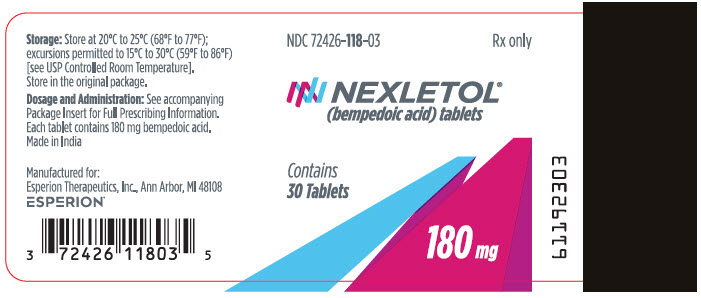
NDC 72426-0118-03: Nexletol Bempedoic Acid 180 mg Tablet, Film Coated, Bottle of 30
This is a package of 30 tablets of Nexletol Bempedoic Acid 180 mg Tablet, Film Coated from Esperion Therapeutics, Inc., first listed with the FDA Mar 2020 and currently FDA-listed; retail pharmacies pay about $13.80 per tablet (NADAC). It is the main listing for this product, which comes in 3 package sizes.
NDC Database Record
One package, one record: these facts belong to NDC 72426-118-03 alone.
- Record
- FDA NDC Directory package listing · Human prescription drug
- Code segments
- 72426 labeler · 118 product · 03 package
- Package marketed since
- Mar 6, 2020
- Sample package
- No — commercial package
- Listing certified through
- Dec 31, 2027
- Billing quantity
- 30 EA per package
- Barcode (UPC)
- 0372426118035
- Medicaid fills, this package
- 12,749 prescriptions in the last four reported quarters
- FDA record last changed
- Jul 24, 2026
Identity & Classification
Regulatory identifiers FDA, NLM and CMS codes for this package
Drug-database identifiers Medi-Span GPI and First Databank GCN / HICL / AHFS classification
- GSN (GCN sequence number): 080782
- GCN: 47755
- HICL (First Databank): 046382
- AHFS class code: 24:06.07.00
- RxCUI (RxNorm): 2282408
Where does this data come from?
- FDA openFDA NDC Directory · synced Nov 26, 2026
- FDA label on DailyMed · label index refreshed Nov 26, 2026
- RxNorm (NLM RxNav) · catalog refreshed Nov 26, 2026
- Medi-Span GPI (licensed)
- First Databank (licensed) · refreshed Nov 26, 2026
RxNorm Drug Class
This medicine belongs to the Adenosine Triphosphate-Citrate Lyase Inhibitor class.
Where does this data come from?
- RxClass (NLM) · catalog refreshed Nov 26, 2026
Clinical
Bempedoic acid is used to lower cholesterol (a fat-like substance that can build up and clog blood vessels causing heart attacks or strokes or other health problems) reduce the risk of heart attack and stroke Bempedoic acid is in a class of medications called adenosine triphosphate-citrate lyase (ACL) inhibitors. It works by blocking the production of cholesterol in the liver.
Read the full MedlinePlus article ↗- It lowers LDL cholesterol in adults with high cholesterol, including the inherited form called heterozygous familial hypercholesterolemia. It is also used to lower the risk of hear...
- You take one tablet by mouth once a day, with or without food. Your prescriber will usually check your cholesterol about 8 to 12 weeks after you start. Follow your prescriber’s dir...
- Common ones include cold-like symptoms, muscle spasms, back pain, stomach discomfort and limb pain. Call your doctor right away for tendon pain, swelling or a rupture, for sudden j...
- What side effects should I expect, and when should I call my doctor?
Patient education
Drug interactions
Supplement & herbal interactions
Some supplements/herbs that may interact with Bempedoic Acid — tap one for details:
Where does this data come from?
- MedlinePlus (NLM) · refreshed Nov 26, 2026
- FDA label on DailyMed · label index refreshed Nov 26, 2026
Ask a licensed pharmacist directly — free, answered by our team.
Pricing
A drug doesn't have one price. Each row is a different public payment system, and none is what you'd pay at the counter — that depends on your insurance. The ⓘ on each row explains what it measures.
| Price system | Per ea | Per package |
|---|---|---|
| Retail pharmacies pay NADAC · weekly | $13.803 | $414.10 / 30 tablets |
| Medicaid paysCMS SDUD · 12 mo | $13.79 | $413.73 / 30 tablets |
| Medicare drug plans payPart D · Q2 2026 | $13.88 | $416.36 / 30 tablets |
See this NDC in the NADAC Price Lookup: every NDC at its price and what a fill costs the pharmacy →
Where does this data come from?
- CMS NADAC weekly file · file of Nov 25, 2026
- CMS ASP pricing files · refreshed Nov 20, 2026
- CMS Medicaid State Drug Utilization Data · through Q2 2026
- CMS Part D plan pricing files · refreshed Nov 24, 2026
- VA National Acquisition Center price file
Packaging — All Sizes for This Product
| Package NDC | Description | Per unit | Per pack | Marketing start | Marketing end | Status |
|---|---|---|---|---|---|---|
| 72426-0118-03 You're viewing this Main listing | 30 TABLET, FILM COATED in 1 BOTTLE, PLASTIC | $13.80 / ea | $414.10 | 2020-03-06 | — | Active |
| 72426-0118-09 72426-118-09 | 90 TABLET, FILM COATED in 1 BOTTLE, PLASTIC | — | — | 2020-03-06 | — | Discontinued by firm |
| 72426-0118-99 72426-118-99 | 7 TABLET, FILM COATED in 1 BLISTER PACK Sample | — | — | 2020-03-06 | — | Active |
You're viewing one of 3 pack sizes for this product.
In Medicaid, this is the most-dispensed pack of this product — about 100% of fills over the last four reported quarters. See all packs ↓
Pack size FAQ
What quantity is in this package?
How does this package differ from NDC 72426-0118-99?
What NDC number is used to bill for this package of Nexletol Bempedoic Acid 180 mg Tablet, Film Coated?
Prices are the latest CMS NADAC pharmacy acquisition cost per NDC; per-pack figures are per-unit × pack quantity, shown only when the pack is denominated in the same measure NADAC prices.
Therapeutic Equivalents
| Product | Labeler | Pack | NADAC/unit | TE | Status | Price vs. this |
|---|---|---|---|---|---|---|
| Nexletol 180 mgthis 72426-0118-03 | Esperion | 30 tablets | $13.803 | — | Availability likely | — |
Where does this data come from?
- FDA openFDA NDC Directory · synced Nov 26, 2026
- FDA Orange Book · refreshed Nov 6, 2026
- CMS NADAC weekly file · file of Nov 25, 2026
Availability & Generic Status
We did not find an FDA-approved generic match for this exact strength, form and route. Patent/protection dates below may affect future generic timing.
Why the date isn’t exact: Generic timing can change because patents may be challenged, settled, licensed, added, removed, or worked around with a narrower label — and FDA approval does not always mean a pharmacy can get the generic today.
Our estimate: sometime in 2033 sometime that year
How sure: Toss-up. Still unsettled, because no settlement has been made public yet.
Why then: The patent fight is likely to end in an agreement that sets the launch. The terms are not public yet.
That is before the June 2040 date above, which is common: a court ruling or a deal with the brand’s maker often lets a generic in before the last patent runs out.
See the full forecast for generic Nexletol →What do these terms mean?
- Patent
- Legal protection listed in the Orange Book that may delay generic approval or launch. Issued by the U.S. Patent & Trademark Office.
- Substance patent
- Covers the active drug molecule itself — the hardest to design around. A generic generally can’t launch until it expires.
- Formulation (product) patent
- Covers a specific formulation or dosage form. A generic can sometimes work around it with a different formulation.
- Method-of-use patent
- A patent covering one specific approved use of the drug — not necessarily the whole molecule. A generic can sometimes launch with a “skinny label” that carves out the protected use and keeps the others.
- Skinny label
- A generic label that omits a still-patented use when the FDA allows it — letting a generic reach the market for the unprotected uses.
- Exclusivity
- FDA-granted marketing protection, separate from patents — e.g. 5-yr new chemical entity, 7-yr orphan drug, or a +6-month pediatric extension.
- Paragraph IV
- A generic applicant’s formal challenge to a listed patent. It can potentially lead to earlier generic entry, but often involves litigation or a settlement.
- RLD / RS
- Reference Listed Drug — the brand product the FDA uses as the reference for generic applications. Reference Standard — the product the FDA expects generics to compare against in bioequivalence testing.
- TE / AB rating
- FDA therapeutic-equivalence rating. An AB rating generally means the FDA considers a generic therapeutically equivalent to — and substitutable for — the brand.
- LOE (loss of exclusivity)
- The latest patent or exclusivity currently listed — the loss-of-exclusivity / latest-listed-protection date shown on this page. Paragraph-IV challenges and settlements can move the real date earlier; FDA approval and a manufacturer’s decision to market can move it later.
Built from the FDA Orange Book. The bars above are scaled to each protection’s expiry; the red LOE marker is the last one to lapse.
| Patent | Type | Use code | Expires |
|---|---|---|---|
| US 11744816 ↗ | Method of use | U-3883 | Mar 14, 2036 |
| US 11926584 ↗ | Method of use | U-3873 | Jun 19, 2040 |
| US 12404227 ↗ | Drug substance | U-4258 | Jun 19, 2040 |
| US 11760714 ↗ | Drug product | — | Jun 19, 2040 |
| US 7335799 ↗ | Drug substance | — | Dec 3, 2030 |
| US 12398087 ↗ | Drug substance | — | Jun 19, 2040 |
| US 11613511 ↗ | Drug substance | — | Jun 19, 2040 |
| Code | What it grants | Expires |
|---|---|---|
| I-943 | New indication (3-year) | Mar 22, 2027 |
| I-944 | New indication (3-year) | Mar 22, 2027 |
Is there a generic version of NEXLETOL 180 MG TABLET?
The FDA approved a generic — why can’t I get it at my pharmacy yet?
Why do different websites show different generic release dates?
What does “FDA listed” mean?
What does a patent or protection date mean here?
What does “current Orange Book estimate” mean?
Can a generic come out before the last patent expires?
Can a generic come out after the listed dates?
What is the difference between patents and exclusivity?
Why are there multiple patent dates?
Where does this data come from?
- FDA Orange Book · refreshed Nov 6, 2026
What It Looks Like
Where does this data come from?
- FDA label on DailyMed · label index refreshed Nov 26, 2026
Inactive Ingredients / Excipients
Inactive ingredients, also called excipients, are components of the drug product other than the active ingredient. They may include fillers, dyes, coatings, preservatives, flavors, or other formulation ingredients.
Avoiding an ingredient? See Bempedoic Acid inactive ingredients by manufacturer: every current product's list side by side, so you can ask your pharmacy for the version that does not list it.
Tap an ingredient (hover on desktop) to see what it is and why it’s used.
-
UNII 9XZ8H6N6OH
A plant-based cellulose derivative used as a binder to hold tablet ingredients together, a thickener in liquids, and a coating agent to control how fast the medicine dissolves.
-
UNII EWQ57Q8I5X
Lactose monohydrate is a natural sugar derived from milk. It serves as a filler and binder in tablets and capsules, helping create the proper size, texture, and consistency of the medicine.
-
UNII 70097M6I30
Magnesium stearate is a salt made from magnesium and stearic acid, a fatty substance. It's used in tablets and capsules as a lubricant and glidant to help ingredients flow smoothly during manufacturing and prevent sticking.
-
UNII 7T9FYH5QMK
A plant-derived powder that serves as a binder and filler in tablets and capsules. It helps hold ingredients together, adds bulk, and aids in smooth tablet disintegration when swallowed.
-
UNII 3WJQ0SDW1A
Polyethylene glycol is a synthetic liquid or solid polymer used in medicines as a solvent, lubricant, and humectant. It helps dissolve active ingredients, reduces friction during manufacturing, and retains moisture in the final product.
-
UNII 532B59J990
Polyvinyl alcohol is a synthetic polymer made from plant-derived materials. It's used as a binder to hold ingredients together, a film-former in coatings, and a thickener in liquid formulations.
-
UNII ETJ7Z6XBU4
Silicon dioxide is a naturally occurring mineral used as a glidant and anti-caking agent. It helps powder ingredients flow smoothly and prevents clumping during manufacturing and storage.
-
UNII 5856J3G2A2
A starch-based powder made from potatoes and processed with sodium. It acts as a disintegrant, helping the tablet or capsule break apart quickly in the stomach so the medicine can be absorbed.
-
UNII 7SEV7J4R1U
A powder made from a naturally occurring mineral. In medicines, talc works as a glidant and anti-caking agent, helping tablets and capsules flow smoothly during manufacturing and preventing clumping.
-
UNII 15FIX9V2JP
Titanium dioxide is a bright white mineral powder commonly used as a colorant and opacifying agent. It makes pills and tablets white or lighter in color and helps make coatings non-transparent.
10 inactive ingredients listed in the exact product block matched to this NDC.
Where does this data come from?
ingredient classCode="IACT" elements from the exact product block matched by this NDC. Label-section narrative from DailyMed / the openFDA label index is shown separately when available.- FDA label on DailyMed · label index refreshed Nov 26, 2026
- FDA openFDA NDC Directory · synced Nov 26, 2026
Inactive ingredient FAQ
Are inactive ingredients the same for every manufacturer?
Why might an inactive ingredient be missing?
Can inactive ingredients matter?
Manufacturer & Labeler
More NDCs from Esperion Therapeutics, Inc. labeler code 72426
Where does this data come from?
- FDA openFDA NDC Directory · synced Nov 26, 2026
- Drugs@FDA
Full Prescribing Information FDA SPL
Indications and Usage
1 INDICATIONS AND USAGE NEXLETOL is indicated: to reduce the risk of major adverse cardiovascular events (cardiovascular death, myocardial infarction, stroke, or coronary revascularization) in adults at increased risk for these events who are unable to take recommended statin therapy (including those not taking a statin). as an adjunct to diet and exercise, in combination with other low-density lipoprotein cholesterol (LDL-C) lowering therapies, or alone when concomitant LDL-C lowering therapy is not possible, to reduce LDL-C in adults with hypercholesterolemia, including heterozygous familial hypercholesterolemia (HeFH).
NEXLETOL, an adenosine triphosphate-citrate lyase (ACL) inhibitor, is indicated: to reduce the risk of major adverse cardiovascular events (cardiovascular death, myocardial infarction, stroke, or coronary revascularization) in adults at increased risk for these events who are unable to take recommended statin therapy (including those not taking a statin). ( 1 ) as an adjunct to diet and exercise, in combination with other low-density lipoprotein cholesterol (LDL-C) lowering therapies, or alone when concomitant LDL-C lowering therapy is not possible, to reduce LDL-C in adults with hypercholesterolemia, including heterozygous familial hypercholesterolemia (HeFH).
( 1 )
Dosage and Administration
2 DOSAGE AND ADMINISTRATION Administer 180 mg orally once daily with or without food. ( 2.1 )
2.1Recommended Dosage The recommended dosage of NEXLETOL is 180 mg administered orally once daily. NEXLETOL can be taken with or without food. After initiation of NEXLETOL, analyze lipid levels within 8 to 12 weeks.
Dosage Forms and Strengths
3 DOSAGE FORMS AND STRENGTHS NEXLETOL is available as: Tablets: 180 mg, white to off-white, oval shaped, debossed with "180" on one side and "ESP" on the other side. Tablets: 180 mg ( 3 )
Contraindications
4 CONTRAINDICATIONS NEXLETOL is contraindicated in patients with a prior serious hypersensitivity reaction to bempedoic acid or any of the excipients in NEXLETOL. Serious hypersensitivity reactions, such as angioedema, have occurred [see Adverse Reactions (6.2) ]. History of a serious hypersensitivity reaction to bempedoic acid or any of the excipients in NEXLETOL. ( 4 )
Warnings and Cautions
5 WARNINGS AND PRECAUTIONS Hyperuricemia: Elevations in serum uric acid have occurred. Assess uric acid levels periodically as clinically indicated. Monitor for signs and symptoms of hyperuricemia, and initiate treatment with urate-lowering drugs as appropriate.
( 5.1 ) Tendon Rupture: Tendon rupture has occurred. Discontinue NEXLETOL at the first sign of tendon rupture. Avoid NEXLETOL in patients who have a history of tendon disorders or tendon rupture.
( 5.2 )
5.1Hyperuricemia NEXLETOL inhibits renal tubular OAT2 and may increase blood uric acid levels [see Clinical Pharmacology (12.3) ] . In the primary hypercholesterolemia trials [see Clinical Studies (14.2) ] , 26% of NEXLETOL-treated patients with normal baseline uric acid values (versus 9.5% placebo) experienced hyperuricemia one or more times, and 3.5% of patients experienced clinically significant hyperuricemia reported as an adverse reaction (versus 1.1% placebo). Increases in uric acid levels usually occurred within the first 4 weeks of treatment initiation, persisted throughout treatment, and returned to baseline following discontinuation of treatment.
After 12 weeks of treatment, the mean placebo-adjusted increase in uric acid compared to baseline was 0.8 mg/dL for patients treated with NEXLETOL. In the cardiovascular outcomes trial [see Clinical Studies (14.1) ], 16.4% of NEXLETOL-treated patients experienced clinically significant hyperuricemia reported as an adverse reaction (versus 8.2% placebo). Elevated blood uric acid may lead to the development of gout.
In the primary hypercholesterolemia trials, gout was reported in 1.5% of patients treated with NEXLETOL and 0.4% of patients treated with placebo. In the cardiovascular outcomes trial, gout was reported in 3.2% of patients treated with NEXLETOL and 2.2% treated with placebo. Advise patients to contact their healthcare provider if symptoms of hyperuricemia occur.
Assess serum uric acid when clinically indicated. Monitor patients for signs and symptoms of hyperuricemia, and initiate treatment with urate-lowering drugs as appropriate.
5.2Tendon Rupture NEXLETOL is associated with an increased risk of tendon rupture or injury. In the primary hypercholesterolemia trials [see Clinical Studies (14.2) ] , tendon rupture occurred in 0.5% of patients treated with NEXLETOL versus 0% of placebo-treated patients and involved the rotator cuff (the shoulder), biceps tendon, or Achilles tendon. Tendon rupture occurred within weeks to months of starting NEXLETOL.
In the cardiovascular outcomes trial [see Clinical Studies (14.1) ] , tendon rupture events occurred in 1.2% of NEXLETOL-treated patients versus 0.9% of placebo-treated patients. Tendon rupture may occur more frequently in patients over 60 years of age, in those taking corticosteroid or fluoroquinolone drugs, in patients with renal failure, and in patients with previous tendon disorders. Discontinue NEXLETOL immediately if the patient experiences rupture of a tendon.
Consider discontinuing NEXLETOL if the patient experiences joint pain, swelling, or inflammation. Advise patients to rest at the first sign of tendinitis or tendon rupture and to contact their healthcare provider if tendinitis or tendon rupture symptoms occur. Consider alternative therapy in patients with a history of tendon disorders or tendon rupture.
Adverse Reactions
6 ADVERSE REACTIONS The following clinically significant adverse reactions are described elsewhere in the labeling: Hyperuricemia [see Warnings and Precautions (5.1) ] Tendon Rupture [see Warnings and Precautions (5.2) ] Common adverse reactions in the ( 6.1 ): Primary hypercholesterolemia trials (incidence ≥ 2% and more frequent than placebo) were upper respiratory tract infection, muscle spasms, hyperuricemia, back pain, abdominal pain or discomfort, bronchitis, pain in extremity, anemia, and elevated liver enzymes.
Cardiovascular outcomes trial (incidence ≥ 2% and 0.5% greater than placebo) were hyperuricemia, renal impairment, anemia, elevated liver enzymes, muscle spasms, gout, and cholelithiasis. To report SUSPECTED ADVERSE REACTIONS, contact Esperion at 833-377-7633 (833 ESPRMED) or FDA at 1-800-FDA-1088 or www.fda.gov/medwatch.
6.1Clinical Trials Experience Because clinical trials are conducted under widely varying conditions, adverse reaction rates observed in the clinical trials of a drug cannot be directly compared to rates in the clinical trials of another drug and may not reflect the rates observed in clinical practice. The data in Table 1 reflect exposure to NEXLETOL in two placebo-controlled primary hypercholesterolemia trials that included 2,009 patients treated with NEXLETOL for 52 weeks (median treatment duration of 52 weeks) [see Clinical Studies (14.2) ] .
The mean age for NEXLETOL-treated patients was 65 years, 29% were female, 95% were White, 3% were Black or African American, 1% were Asian, and 1% were other races; 3% identified as Hispanic or Latino ethnicity. All patients received NEXLETOL 180 mg orally once daily plus maximally tolerated statin therapy alone or in combination with other lipid-lowering therapies. At baseline, 97% of patients had CVD and about 4% had a diagnosis of HeFH.
Patients on simvastatin 40 mg/day or higher were excluded from the trials. In the primary hypercholesterolemia trials, adverse reactions led to discontinuation of treatment in 11% of NEXLETOL-treated patients and 8% of placebo-treated patients. The most common reasons for NEXLETOL treatment discontinuation were muscle spasms (0.5% versus 0.3% placebo), diarrhea (0.4% versus 0.1% placebo), and pain in extremity (0.3% versus 0.0% placebo).
Adverse reactions reported in at least 2% of NEXLETOL-treated patients and more frequently than in placebo-treated patients are shown in Table 1. Table 1. Adverse Reactions (≥ 2% and greater than placebo) in NEXLETOL-Treated Patients with Primary Hypercholesterolemia and CVD or HeFH (Trials 2 and 3) Adverse Reaction Placebo Background therapy included statin and ± other lipid-lowering therapies (N = 999) % NEXLETOL (N = 2,009) % Upper respiratory tract infection 4.0
4.5Muscle spasms 2.3
3.6Hyperuricemia Grouped term that includes other related terms 1.1
3.5Back pain 2.2
3.3Abdominal pain or discomfort 2.2
3.1Bronchitis 2.5
3.0Pain in extremity 1.7
3.0Anemia 1.9
2.8Elevated liver enzymes 0.8
2.1In the cardiovascular outcomes trial, in which 7,001 patients were exposed to NEXLETOL and 6,964 patients were exposed to placebo for a median of 3.1 years [see Clinical Studies, (14.1) ] , adverse reactions led to discontinuation of treatment in 11% of NEXLETOL-treated patients and 10% of placebo-treated patients. Adverse reactions reported in at least 2% of NEXLETOL-treated patients and 0.5% greater than placebo are shown in Table 2. Table 2.
Adverse Reactions (≥ 2% and 0.5% greater than placebo) in NEXLETOL-Treated Patients with CVD or at High Risk for CVD (Trial 1) Adverse Reaction Placebo (N=6,964) % NEXLETOL (N=7,001) % Hyperuricemia Grouped term that includes other related terms 8 16 Renal impairment Renal impairment includes laboratory related terms including glomerular filtration rate decreased, blood creatinine increased and hematuria 9 11 Anemia 4 5 Elevated liver enzymes 3 4 Muscle spasms 3 4 Gout 2 3 Cholelithiasis 1 2 Other Adverse Reactions Tendon Rupture In the hyperchole… [Excerpted — this section continues on DailyMed.]
Drug Interactions
7 DRUG INTERACTIONS Table 3 includes a list of drugs with clinically important drug interactions when administered concomitantly with NEXLETOL and instructions for preventing or managing them. Table 3. Clinically Important Drug Interactions with NEXLETOL Simvastatin Clinical Impact: Concomitant use of NEXLETOL with simvastatin causes an increase in simvastatin concentration and may increase the risk of simvastatin-related myopathy [see Clinical Pharmacology (12.3) ] .
Intervention : Avoid concomitant use of NEXLETOL with simvastatin greater than 20 mg. Pravastatin Clinical Impact: Concomitant use of NEXLETOL with pravastatin causes an increase in pravastatin concentration and may increase the risk of pravastatin-related myopathy [see Clinical Pharmacology (12.3) ] . Intervention: Avoid concomitant use of NEXLETOL with pravastatin greater than 40 mg.
Fibrates Clinical Impact: Concomitant administration of fibrates with NEXLETOL resulted in increased triglycerides and decreased high-density lipoprotein cholesterol (HDL-C) in some patients in clinical studies and post-marketing reports. Reversibility of both increased triglycerides and decreased HDL-C levels was observed when either NEXLETOL or fibrate therapy was discontinued. Intervention: Monitor triglycerides and HDL-C four weeks after initial concomitant use of NEXLETOL and a fibrate and periodically thereafter.
If increased triglycerides or decreased HDL-C levels are detected, discontinue NEXLETOL or fibrate therapy based on clinical judgment. Monitor triglycerides and HDL-C levels until levels return to baseline. Simvastatin: Avoid concomitant use of NEXLETOL with simvastatin greater than 20 mg.
( 7 ) Pravastatin: Avoid concomitant use of NEXLETOL with pravastatin greater than 40 mg. ( 7 ) Fibrates: Concomitant use of NEXLETOL with fibrates may increase triglycerides and decrease high-density lipoprotein cholesterol. ( 7 )
Use in Specific Populations
8 USE IN SPECIFIC POPULATIONS Pregnancy: Based on mechanism of action, may cause fetal harm. ( 8.1 )
8.1Pregnancy Risk Summary Discontinue NEXLETOL when pregnancy is recognized unless the benefits of therapy outweigh the potential risks to the fetus. There are insufficient data on NEXLETOL use in pregnant women to evaluate for a drug-associated risk of major birth defects, miscarriage, or adverse maternal or fetal outcomes. In animal reproduction studies, bempedoic acid was not teratogenic in rats and rabbits when administered at doses resulting in exposures up to 11 and 12 times, respectively, the human exposures at the maximum clinical dose, based on AUC (see Data ) .
NEXLETOL decreases cholesterol synthesis and possibly the synthesis of other biologically active substances derived from cholesterol; therefore, NEXLETOL may cause fetal harm when administered to pregnant women based on the mechanism of action [see Clinical Pharmacology (12.1) ] . In addition, treatment of hypercholesterolemia is not generally necessary during pregnancy. Atherosclerosis is a chronic process and the discontinuation of lipid-lowering drugs during pregnancy should have little impact on the outcome of long-term therapy of primary hypercholesterolemia for most patients.
The estimated background risk of major birth defects and miscarriage for the indicated population is unknown. In the U.S. general population, the estimated background risk of major birth defects and miscarriage in clinically recognized pregnancies is 2-4% and 15-20%, respectively. Report pregnancies to the Esperion Therapeutics, Inc.
Adverse Event reporting line at 1-833-377-7633. Data Animal Data Bempedoic acid was not teratogenic when given orally at doses of 60 and 80 mg/kg/day, resulting in 11 and 12 times the systemic exposure in humans at the maximum recommended human dose (MRHD) of 180 mg to pregnant rats and rabbits, respectively. In an embryofetal development study in rats, bempedoic acid was given orally to pregnant rats at 10, 30, and 60 mg/kg/day during the period of organogenesis from gestation day 6 to 17.
There were increases in the incidence of non-adverse fetal skeletal variations (bent long bones and bent scapula and incomplete ossification) at doses ≥ 10 mg/kg/day (less than the clinical exposure) in the absence of maternal toxicity. At maternally toxic doses, bempedoic acid caused decreases in the numbers of viable fetuses, increases in post-implantation loss, and increased total resorptions at 60 mg/kg/day (11 times MRHD) and reduced fetal body weight at ≥ 30 mg/kg/day (4 times the MRHD). No adverse development effects were observed when bempedoic acid was given to pregnant rabbits during the period of organogenesis (gestation day 6 to 18) at doses up to 80 mg/kg/day (12 times MRHD).
In a pre- and post-natal development study in pregnant rats given oral doses of bempedoic acid at 5, 10, 20, 30 and 60 mg/kg/day throughout pregnancy and lactation (gestation day 6 to lactation day 20), there were adverse effects on delivery in the presence of maternal toxicity, including: increases in stillborn pups, reductions in numbers of live pups, pup survival, pup growth and slight delays in learning and memory at ≥ 10 mg/kg/day (at exposures equivalent to the MRHD).
8.2Lactation Risk Summary Bempedoic acid was detected in breast milk of lactating women who received six consecutive daily doses of 180 mg bempedoic acid. The mean daily infant dose of bempedoic acid through breast milk was approximately 0.03 mg/day (95% CI: 0.02; 0.05) with a mean calculated daily infant oral dosage of 0.012 mg/kg/day based on a standard infant milk intake of 150 mL/kg/day. The mean (SD) relative infant dose (RID) was approximately 0.5 (0.2)% of the maternal weight-adjusted dosage (see Data ) .
Concentrations of ESP15228, the active metabolite, in breast milk were below the limit of quantitation (20 ng/mL) in 7 of 8 subjects studied. There is no information regarding the effects of NEXLETOL on… [Excerpted — this section continues on DailyMed.]
Pregnancy
8.1Pregnancy Risk Summary Discontinue NEXLETOL when pregnancy is recognized unless the benefits of therapy outweigh the potential risks to the fetus. There are insufficient data on NEXLETOL use in pregnant women to evaluate for a drug-associated risk of major birth defects, miscarriage, or adverse maternal or fetal outcomes. In animal reproduction studies, bempedoic acid was not teratogenic in rats and rabbits when administered at doses resulting in exposures up to 11 and 12 times, respectively, the human exposures at the maximum clinical dose, based on AUC (see Data ) .
NEXLETOL decreases cholesterol synthesis and possibly the synthesis of other biologically active substances derived from cholesterol; therefore, NEXLETOL may cause fetal harm when administered to pregnant women based on the mechanism of action [see Clinical Pharmacology (12.1) ] . In addition, treatment of hypercholesterolemia is not generally necessary during pregnancy. Atherosclerosis is a chronic process and the discontinuation of lipid-lowering drugs during pregnancy should have little impact on the outcome of long-term therapy of primary hypercholesterolemia for most patients.
The estimated background risk of major birth defects and miscarriage for the indicated population is unknown. In the U.S. general population, the estimated background risk of major birth defects and miscarriage in clinically recognized pregnancies is 2-4% and 15-20%, respectively. Report pregnancies to the Esperion Therapeutics, Inc.
Adverse Event reporting line at 1-833-377-7633. Data Animal Data Bempedoic acid was not teratogenic when given orally at doses of 60 and 80 mg/kg/day, resulting in 11 and 12 times the systemic exposure in humans at the maximum recommended human dose (MRHD) of 180 mg to pregnant rats and rabbits, respectively. In an embryofetal development study in rats, bempedoic acid was given orally to pregnant rats at 10, 30, and 60 mg/kg/day during the period of organogenesis from gestation day 6 to 17.
There were increases in the incidence of non-adverse fetal skeletal variations (bent long bones and bent scapula and incomplete ossification) at doses ≥ 10 mg/kg/day (less than the clinical exposure) in the absence of maternal toxicity. At maternally toxic doses, bempedoic acid caused decreases in the numbers of viable fetuses, increases in post-implantation loss, and increased total resorptions at 60 mg/kg/day (11 times MRHD) and reduced fetal body weight at ≥ 30 mg/kg/day (4 times the MRHD). No adverse development effects were observed when bempedoic acid was given to pregnant rabbits during the period of organogenesis (gestation day 6 to 18) at doses up to 80 mg/kg/day (12 times MRHD).
In a pre- and post-natal development study in pregnant rats given oral doses of bempedoic acid at 5, 10, 20, 30 and 60 mg/kg/day throughout pregnancy and lactation (gestation day 6 to lactation day 20), there were adverse effects on delivery in the presence of maternal toxicity, including: increases in stillborn pups, reductions in numbers of live pups, pup survival, pup growth and slight delays in learning and memory at ≥ 10 mg/kg/day (at exposures equivalent to the MRHD).
Pediatric Use
8.4Pediatric Use The safety and effectiveness of NEXLETOL have not been established in pediatric patients.
Geriatric Use
8.5Geriatric Use Of the 3,009 adult patients in the primary hypercholesterolemia trials of NEXLETOL, 1,753 (58%) were 65 years of age and older, while 478 (16%) were 75 years of age and older. Of the 13,970 adult patients in the cardiovascular outcomes trial [see Clinical Studies (14.1) ] , 8,204 (59%) were 65 years of age and older, while 2,107 (15%) were 75 years of age and older. No overall differences in safety or effectiveness of NEXLETOL have been observed between patients 65 years of age and older and younger adult patients.
Overdosage
10 OVERDOSAGE There is no clinical experience with NEXLETOL overdose. In the event of an overdosage, consider contacting the Poison Help line (1-800-222-1222) or a medical toxicologist for additional overdosage management recommendations.
Clinical Pharmacology
12 CLINICAL PHARMACOLOGY
12.1Mechanism of Action Bempedoic acid is an adenosine triphosphate-citrate lyase (ACL) inhibitor that lowers LDL-C by inhibition of cholesterol synthesis in the liver. ACL is an enzyme upstream of 3-hydroxy-3-methyl-glutaryl-coenzyme A (HMG-CoA) reductase in the cholesterol biosynthesis pathway. Bempedoic acid and its active metabolite, ESP15228, require coenzyme A (CoA) activation by very long-chain acyl-CoA synthetase 1 (ACSVL1) to ETC-1002-CoA and ESP15228-CoA, respectively.
ACSVL1 is expressed primarily in the liver. Inhibition of ACL by ETC-1002-CoA results in decreased cholesterol synthesis in the liver and lowers LDL-C in blood via upregulation of low-density lipoprotein receptors.
12.2Pharmacodynamics Administration of bempedoic acid alone, or in combination with other lipid modifying agents, decreases LDL-C, non-high density lipoprotein cholesterol (non-HDL-C), apolipoprotein B (apo B), and total cholesterol (TC) in patients with hypercholesterolemia. Cardiac Electrophysiology At a dose of 240 mg (1.3 times the approved recommended dose), bempedoic acid does not prolong the QT interval to any clinically relevant extent.
12.3Pharmacokinetics Bempedoic acid pharmacokinetic parameters are presented as the mean [± standard deviation (SD)] unless otherwise specified. The steady-state maximum plasma concentration (C max ) and area under the curve (AUC) following multiple-dose administration of bempedoic acid at 180 mg/day were 20.6 ± 6.1 µg/mL and 289.0 ± 96.4 µg∙h/mL, respectively. Bempedoic acid steady-state pharmacokinetics were generally linear over a range of > 60 mg to 220 mg (approximately 33% to 122% of the recommended dosage of 180 mg daily).
There were no time-dependent changes in bempedoic acid pharmacokinetics following repeat administration at the recommended dosage, and bempedoic acid steady-state was achieved after 7 days. The mean accumulation ratio was approximately 2.3-fold. The steady-state C max and AUC of the active metabolite (ESP15228) of bempedoic acid were 2.8 ± 0.9 µg/mL and 51.2 ± 17.2 µg∙h/mL, respectively.
ESP15228 likely made a minor contribution to the overall clinical activity of bempedoic acid based on systemic exposure, relative potency, and pharmacokinetic properties. Absorption Pharmacokinetic data indicate that bempedoic acid is absorbed with a median time to maximum concentration of 3.5 hours when administered as NEXLETOL 180 mg tablets. Effect of Food Concomitant food administration had no effect on the oral bioavailability of bempedoic acid.
Distribution The bempedoic acid apparent volume of distribution (V/F) was 18 L. Plasma protein binding of bempedoic acid, its glucuronide and its active metabolite, ESP15228, were 99.3%, 98.8% and 99.2%, respectively. Bempedoic acid does not partition into blood cells.
Elimination The steady-state clearance (CL/F) of bempedoic acid was 11.2 mL/min after once-daily dosing; renal clearance of unchanged bempedoic acid represented less than 2% of total clearance. The mean ± SD half-life for bempedoic acid in humans was 21 ± 11 hours at steady-state. Metabolism The primary route of elimination for bempedoic acid is through metabolism of the acyl glucuronide.
Bempedoic acid is also reversibly converted to an active metabolite (ESP15228) based on aldo-keto reductase activity observed in vitro from human liver. Mean plasma AUC metabolite/parent drug ratio for ESP15228 following repeat-dose administration was 18% and remained constant over time. Both compounds are converted to inactive glucuronide conjugates in vitro by UGT2B7.
Bempedoic acid, ESP15228 and their respective conjugated forms were detected in plasma with bempedoic acid accounting for the majority (46%) of the AUC 0-48h and its glucuronide being the next most prevalent (30%). ESP15228 and its glucuronide represented 10% and 11% of the plasma AUC 0-48h , respectively. Excretion Following single oral administration of 240 mg of bempedoic acid (1.3 times the approved… [Excerpted — this section continues on DailyMed.]
Mechanism of Action
12.1Mechanism of Action Bempedoic acid is an adenosine triphosphate-citrate lyase (ACL) inhibitor that lowers LDL-C by inhibition of cholesterol synthesis in the liver. ACL is an enzyme upstream of 3-hydroxy-3-methyl-glutaryl-coenzyme A (HMG-CoA) reductase in the cholesterol biosynthesis pathway. Bempedoic acid and its active metabolite, ESP15228, require coenzyme A (CoA) activation by very long-chain acyl-CoA synthetase 1 (ACSVL1) to ETC-1002-CoA and ESP15228-CoA, respectively.
ACSVL1 is expressed primarily in the liver. Inhibition of ACL by ETC-1002-CoA results in decreased cholesterol synthesis in the liver and lowers LDL-C in blood via upregulation of low-density lipoprotein receptors.
How Supplied / Storage and Handling
16 HOW SUPPLIED/STORAGE AND HANDLING How Supplied NEXLETOL tablets are supplied as follows: Tablet Strength Description Package Configuration NDC No. 180 mg White to off white and oval, debossed with "180" on one side and "ESP" on the other side Bottle of 30 tablets with child-resistant cap 72426-118-03 Storage and Handling Store at 68°F to 77°F (20°C to 25°C); excursions permitted to 59°F to 86°F (15°C to 30°C) [see USP Controlled Room Temperature] . Store and dispense in the original package.
Storage and Handling
Storage and Handling Store at 68°F to 77°F (20°C to 25°C); excursions permitted to 59°F to 86°F (15°C to 30°C) [see USP Controlled Room Temperature] . Store and dispense in the original package.
Description
11 DESCRIPTION NEXLETOL tablets, for oral use, contain bempedoic acid, an adenosine triphosphate-citrate lyase (ACL) inhibitor. The chemical name for bempedoic acid is 8-hydroxy-2,2,14,14-tetramethyl-pentadecanedioic acid. The molecular formula is C 19 H 36 O 5 , and the molecular weight is 344.5 grams per mole.
Bempedoic acid is a white to off-white crystalline powder that is highly soluble in ethanol, isopropanol and pH 8 phosphate buffer, and insoluble in water and aqueous solutions below pH 5. Structural formula: Each film-coated tablet of NEXLETOL contains 180 mg of bempedoic acid and the following inactive ingredients: colloidal silicon dioxide, hydroxyl propyl cellulose, lactose monohydrate, magnesium stearate, microcrystalline cellulose, and sodium starch glycolate. The film coating comprises of partially hydrolyzed polyvinyl alcohol, polyethylene glycol, talc, and titanium dioxide.
Chemical Structure
Information for Patients
17 PATIENT COUNSELING INFORMATION Advise patients to read the FDA-approved patient labeling (Patient Information). Risk of Hyperuricemia Advise patients of the risk of elevated serum uric acid levels, including development of gout. Inform patients that serum uric acid levels may be monitored during treatment with NEXLETOL.
Patients with signs or symptoms of hyperuricemia should contact their healthcare provider if symptoms occur [See Warnings and Precautions (5.1) ] Risk of Tendon Rupture Inform patients of the risk of tendon rupture. Advise patients to rest at the first sign of tendinitis or tendon rupture and to immediately contact their healthcare provider if tendinitis or tendon rupture symptoms occur [see Warnings and Precautions (5.2) ]. Risk of Myopathy with Concomitant Use of Simvastatin or Pravastatin Advise patients to notify their healthcare provider(s) if they are taking, or plan to take simvastatin or pravastatin.
The risk of myopathy occurring with the use of simvastatin or pravastatin may be increased when taken with NEXLETOL [see Drug Interactions (7) ]. Pregnancy Advise pregnant women of the potential risk to a fetus based on NEXLETOL's mechanism of action. Advise females to inform their healthcare provider of a known or suspected pregnancy.
Advise patients that there is a pregnancy safety study that monitors pregnancy outcomes in patients exposed to NEXLETOL during pregnancy. Encourage these patients to report their pregnancy to Esperion at 1-833-377-7633 [see Use in Specific Populations (8.1) ].
Pharmacokinetics
12.3Pharmacokinetics Bempedoic acid pharmacokinetic parameters are presented as the mean [± standard deviation (SD)] unless otherwise specified. The steady-state maximum plasma concentration (C max ) and area under the curve (AUC) following multiple-dose administration of bempedoic acid at 180 mg/day were 20.6 ± 6.1 µg/mL and 289.0 ± 96.4 µg∙h/mL, respectively. Bempedoic acid steady-state pharmacokinetics were generally linear over a range of > 60 mg to 220 mg (approximately 33% to 122% of the recommended dosage of 180 mg daily).
There were no time-dependent changes in bempedoic acid pharmacokinetics following repeat administration at the recommended dosage, and bempedoic acid steady-state was achieved after 7 days. The mean accumulation ratio was approximately 2.3-fold. The steady-state C max and AUC of the active metabolite (ESP15228) of bempedoic acid were 2.8 ± 0.9 µg/mL and 51.2 ± 17.2 µg∙h/mL, respectively.
ESP15228 likely made a minor contribution to the overall clinical activity of bempedoic acid based on systemic exposure, relative potency, and pharmacokinetic properties. Absorption Pharmacokinetic data indicate that bempedoic acid is absorbed with a median time to maximum concentration of 3.5 hours when administered as NEXLETOL 180 mg tablets. Effect of Food Concomitant food administration had no effect on the oral bioavailability of bempedoic acid.
Distribution The bempedoic acid apparent volume of distribution (V/F) was 18 L. Plasma protein binding of bempedoic acid, its glucuronide and its active metabolite, ESP15228, were 99.3%, 98.8% and 99.2%, respectively. Bempedoic acid does not partition into blood cells.
Elimination The steady-state clearance (CL/F) of bempedoic acid was 11.2 mL/min after once-daily dosing; renal clearance of unchanged bempedoic acid represented less than 2% of total clearance. The mean ± SD half-life for bempedoic acid in humans was 21 ± 11 hours at steady-state. Metabolism The primary route of elimination for bempedoic acid is through metabolism of the acyl glucuronide.
Bempedoic acid is also reversibly converted to an active metabolite (ESP15228) based on aldo-keto reductase activity observed in vitro from human liver. Mean plasma AUC metabolite/parent drug ratio for ESP15228 following repeat-dose administration was 18% and remained constant over time. Both compounds are converted to inactive glucuronide conjugates in vitro by UGT2B7.
Bempedoic acid, ESP15228 and their respective conjugated forms were detected in plasma with bempedoic acid accounting for the majority (46%) of the AUC 0-48h and its glucuronide being the next most prevalent (30%). ESP15228 and its glucuronide represented 10% and 11% of the plasma AUC 0-48h , respectively. Excretion Following single oral administration of 240 mg of bempedoic acid (1.3 times the approved recommended dose), approximately 70% of the total dose (bempedoic acid and its metabolites) was recovered in urine, primarily as the acyl glucuronide conjugate of bempedoic acid, and approximately 30% was recovered in feces.
Less than 5% of the administered dose was excreted as unchanged bempedoic acid in feces and urine combined. Specific Populations No clinically significant differences in the pharmacokinetics of bempedoic acid were observed based on age, gender, race, weight, renal impairment (mild, moderate, and severe renal impairment or renal failure), or mild (Child-Pugh Class A) and moderate (Child-Pugh Class B) hepatic impairment. The effect of severe (Child-Pugh Class C) hepatic impairment on bempedoic acid pharmacokinetics is unknown.
Drug Interaction Studies Cytochrome P450 Substrates In vitro metabolic interaction studies suggest that bempedoic acid, as well as its active metabolite and glucuronide forms are not metabolized by and do not interact with cytochrome P450 enzymes. Transporter-mediated Drug Interactions In vitro drug interaction studies suggest bempedoic acid, as well as its active metabolite and glucuronide form, are not substrates… [Excerpted — this section continues on DailyMed.]
Pharmacodynamics
12.2Pharmacodynamics Administration of bempedoic acid alone, or in combination with other lipid modifying agents, decreases LDL-C, non-high density lipoprotein cholesterol (non-HDL-C), apolipoprotein B (apo B), and total cholesterol (TC) in patients with hypercholesterolemia. Cardiac Electrophysiology At a dose of 240 mg (1.3 times the approved recommended dose), bempedoic acid does not prolong the QT interval to any clinically relevant extent.
Clinical Studies
14 CLINICAL STUDIES
14.1Cardiovascular Outcomes Trial in Adults With CVD or at High Risk for CVD Trial 1 (NCT02993406) was a randomized, double-blind, placebo-controlled, event-driven trial in 13,970 adult patients with established CVD (70%) or at high risk for a CVD event but without CVD (30%) who were not receiving recommended statin dosages. Patients with established CVD had documented history of coronary artery disease, symptomatic peripheral arterial disease, and/or cerebrovascular atherosclerotic disease. Patients without established CVD were considered at high risk for CVD based on meeting at least one of the following criteria: (1) Diabetes mellitus (type 1 or type 2) in females over 65 years of age or males over 60 years of age; (2) A Reynolds Risk score > 30% or a SCORE Risk score > 7.5% over 10 years.
Reynolds risk score and SCORE risk score evaluate a 10-year risk of having a cardiovascular (CV) event. The Reynolds risk score is based on the following risk factors: sex, age, smoking status, systolic blood pressure, total cholesterol, HDL cholesterol, high sensitivity C-reactive protein (hsCRP), and familial history of CVD events. LDL-C is an additional risk factor considered in SCORE risk score; or (3) A coronary artery calcium score >400 Agatston units at any time in the past.
Patients were randomized 1:1 to receive either oral NEXLETOL 180 mg per day (n = 6,992) or placebo (n = 6,978), alone or as an add on to other background lipid-lowering therapies. Background therapy could include less than low-intensity statin dosages. Overall, 95.3% of adult patients were followed until the end of the trial or death.
The median follow-up duration was 3.4 years. Baseline Demographics and Disease Characteristics At baseline, the mean age was 66 years (range 21 to 92 years), 59% were 65 years of age and older, 15% were 75 years of age and older, 48% were female, 91% were White, 2% were Black or African American, 4% were American Indian or Alaska Native, 2% were Asian, and 1% were other races; 17% identified as Hispanic or Latino ethnicity. Selected additional baseline characteristics included hypertension (85%), diabetes mellitus (46%), current tobacco user (22%), eGFR < 60 mL/min per 1.73 m 2 (21%), and a mean body mass index of 30 kg/m 2 .
The mean baseline LDL-C was 139 mg/dL. At baseline, 38% of patients were taking at least one lipid-modifying therapy, including less than low-intensity statin dosages (23%), ezetimibe (12%), or fibrates (5%). Most patients were taking at least one other CV medication including acetylsalicylic acid (57%), selective beta blockers (52%), angiotensin converting enzyme inhibitors (40%), or angiotensin receptor blockers (32%).
Efficacy Results The risk for the primary composite endpoint (MACE-4: time to first occurrence of CV death, nonfatal myocardial infarction, nonfatal stroke, or coronary revascularization; p= 0.0037) and the key secondary composite endpoint (MACE-3: time to first occurrence of CV death, nonfatal myocardial infarction, or nonfatal stroke; p= 0.0058) was significantly reduced in NEXLETOL-treated patients compared to placebo-treated patients (see Table 4 ). The difference between the NEXLETOL and placebo groups in mean percent change in LDL-C from baseline to Month 6 was -20% (95% CI: -21%, -19%).
Table 4: Major Cardiovascular Events in Adults with Established CVD or at High Risk for CVD (Trial 1) NEXLETOL N=6,992 Placebo N=6,978 NEXLETOL vs. Placebo Endpoint n (%) n (%) Hazard Ratio (95% CI) CI = confidence interval; MACE = major adverse cardiac event. a Hazard ratio and corresponding 95% CI were based on a Cox proportional hazard model fitting treatment as explanatory variable. This table also presents the time to first occurrence for each of the components of MACE-4; patients may have been included in more than one category Primary Composite Endpoint Cardiovascular death, non-fatal myocardial infarction, non-fatal stroke, coronary revascularization (MACE-4) 819 (11.7) 927… [Excerpted — this section continues on DailyMed.]
Nonclinical Toxicology
13 NONCLINICAL TOXICOLOGY
13.1Carcinogenesis, Mutagenesis, Impairment of Fertility Bempedoic acid was negative for mutagenicity in an in vitro Ames assay and negative for clastogenicity in the vitro human lymphocyte chromosome aberration assay. Bempedoic acid was negative in both in vivo mouse micronucleus and in vivo rat bone marrow micronucleus/liver comet assay. In a 2-year rat carcinogenicity study, Wistar rats were given oral doses of bempedoic acid at 3, 10 and 30 mg/kg/day.
An increased incidence of liver hepatocellular adenomas and hepatocellular adenomas combined with carcinomas, thyroid gland follicular cell adenoma and follicular cell adenomas combined with carcinomas, and pancreatic islet cell adenomas combined with carcinomas were observed in male rats at the dose of 30 mg/kg/day (exposure equivalent to the maximum recommended human dose (MRHD), based on AUC). In a 2-year mice carcinogenicity study, CD-1 mice were given oral doses of bempedoic acid at 25, 75 and 150 mg/kg/day. Bempedoic acid-related increases in the incidence of liver hepatocellular adenomas, hepatocellular carcinomas and hepatocellular adenomas combined with carcinomas in male mice were observed at 75 and 150 mg/kg/day (exposures equivalent to the MRHD).
Observations of liver and thyroid tumors are consistent with PPAR alpha agonism in rodents. The human relevance of pancreatic islet cell tumor findings is unknown. In fertility and early embryofetal development study in rats, bempedoic acid was given orally to male and female rats at 10, 30 and 60 mg/kg/day.
Males were dosed for 28 days prior to mating and females were dosed 14 days prior to mating through gestation day 7. No adverse effects on fertility were observed in females in the absence of maternal toxicity. No effects were observed on male fertility outcomes, but decreases in sperm counts were observed at 60 mg/kg/day (9 times the MRHD).
Carcinogenesis, Mutagenesis, Impairment of Fertility
13.1Carcinogenesis, Mutagenesis, Impairment of Fertility Bempedoic acid was negative for mutagenicity in an in vitro Ames assay and negative for clastogenicity in the vitro human lymphocyte chromosome aberration assay. Bempedoic acid was negative in both in vivo mouse micronucleus and in vivo rat bone marrow micronucleus/liver comet assay. In a 2-year rat carcinogenicity study, Wistar rats were given oral doses of bempedoic acid at 3, 10 and 30 mg/kg/day.
An increased incidence of liver hepatocellular adenomas and hepatocellular adenomas combined with carcinomas, thyroid gland follicular cell adenoma and follicular cell adenomas combined with carcinomas, and pancreatic islet cell adenomas combined with carcinomas were observed in male rats at the dose of 30 mg/kg/day (exposure equivalent to the maximum recommended human dose (MRHD), based on AUC). In a 2-year mice carcinogenicity study, CD-1 mice were given oral doses of bempedoic acid at 25, 75 and 150 mg/kg/day. Bempedoic acid-related increases in the incidence of liver hepatocellular adenomas, hepatocellular carcinomas and hepatocellular adenomas combined with carcinomas in male mice were observed at 75 and 150 mg/kg/day (exposures equivalent to the MRHD).
Observations of liver and thyroid tumors are consistent with PPAR alpha agonism in rodents. The human relevance of pancreatic islet cell tumor findings is unknown. In fertility and early embryofetal development study in rats, bempedoic acid was given orally to male and female rats at 10, 30 and 60 mg/kg/day.
Males were dosed for 28 days prior to mating and females were dosed 14 days prior to mating through gestation day 7. No adverse effects on fertility were observed in females in the absence of maternal toxicity. No effects were observed on male fertility outcomes, but decreases in sperm counts were observed at 60 mg/kg/day (9 times the MRHD).
Patient Package Insert
PATIENT INFORMATION NEXLETOL ® (NEX-le-tol) (bempedoic acid) tablets, for oral use This Patient Information has been approved by the U.S. Food and Drug Administration Revised: 01/2026 What is NEXLETOL? NEXLETOL is a prescription medicine used: to lower the risk of major adverse cardiovascular (CV) events such as death from cardiovascular disease, heart attack, stroke, or heart procedures like stent placement or bypass surgery in adults at increased risk for these events who are unable to take recommended statin treatment (a cholesterol lowering medicine) or are not taking a statin. along with diet and exercise and other cholesterol-lowering medicines, or alone when use with other cholesterol-lowering medicines is not possible, to reduce low-density lipoprotein (LDL, or bad cholesterol) in adults with high blood cholesterol levels called hypercholesterolemia, including a type of high blood cholesterol called heterozygous familial hypercholesterolemia (HeFH).
It is not known if NEXLETOL is safe and effective in children. Do not take NEXLETOL if you are allergic to bempedoic acid or any of the ingredients in NEXLETOL. See the end of this leaflet for a complete list of ingredients in NEXLETOL.
Stop taking NEXLETOL and call your healthcare provider or go to the nearest hospital emergency room right away if you have any signs or symptoms of an allergic reaction including: swelling of your face, lips, mouth or tongue wheezing severe itching fast heart beat or pounding in your chest trouble breathing skin rashes, redness, or swelling dizziness or fainting Before you start taking NEXLETOL, tell your healthcare provider about all your medical conditions, including if you: have or had gout. have or had tendon problems. are pregnant or think you may be pregnant.
Tell your healthcare provider right away if you become pregnant while taking NEXLETOL. You and your healthcare provider will decide if you should take NEXLETOL while you are pregnant. If you are pregnant during NEXLETOL treatment, you are encouraged to call Esperion at 1-833-377-7633 to share information about the health of you and your baby. are breastfeeding or plan to breastfeed.
NEXLETOL may pass into your breastmilk. You and your healthcare provider should decide if you will take NEXLETOL or breastfeed. have severe liver problems. NEXLETOL may affect the way other medicines work, and other medicines may affect how NEXLETOL works.
Tell your healthcare provider about all the medicines you take, including prescription and over-the-counter medicines, vitamins, and herbal supplements. Especially tell your healthcare provider if you take or plan to take: simvastatin or pravastatin (other cholesterol-lowering medicines). Taking simvastatin or pravastatin with NEXLETOL may increase your risk of developing muscle pain or weakness (myopathy). fibrates (triglyceride-lowering medicines).
Taking a fibrate medicine with NEXLETOL may lead to increases in triglycerides (fat in the blood) and decreases in high-density lipoprotein (HDL, good cholesterol). Know the medicines you take. Keep a list of them to show your healthcare provider and pharmacist when you get a new medicine.
How should I take NEXLETOL? Take NEXLETOL exactly as your healthcare provider tells you to take it. Check with your healthcare provider or pharmacist if you are not sure.
Take 1 NEXLETOL tablet by mouth each day. You may take NEXLETOL with or without food. Your healthcare provider may do blood tests to check your LDL-C levels between 8 to 12 weeks after starting treatment with NEXLETOL.
In case of overdose, get medical help or contact a live Poison Center expert right away at 1-800-222-1222. Advice is also available online at poisonhelp.org. What are possible side effects of NEXLETOL?
NEXLETOL may cause serious side effects, including: increased levels of uric acid in your blood (hyperuricemia). This can happen within 4 weeks of you starting NEXLETOL and continue throughout your treatment. Your healthcare provider may… [Excerpted — this section continues on DailyMed.]
Recent Major Changes
Indications and Usage ( 1 ) 11/2025
Package Label / Principal Display Panel
PRINCIPAL DISPLAY PANEL - 180 mg Tablet Bottle Label NDC 72426-118-03 Rx only NEXLETOL ® (bempedoic acid) tablets Contains 30 Tablets 180 mg PRINCIPAL DISPLAY PANEL - 180 mg Tablet Bottle Label